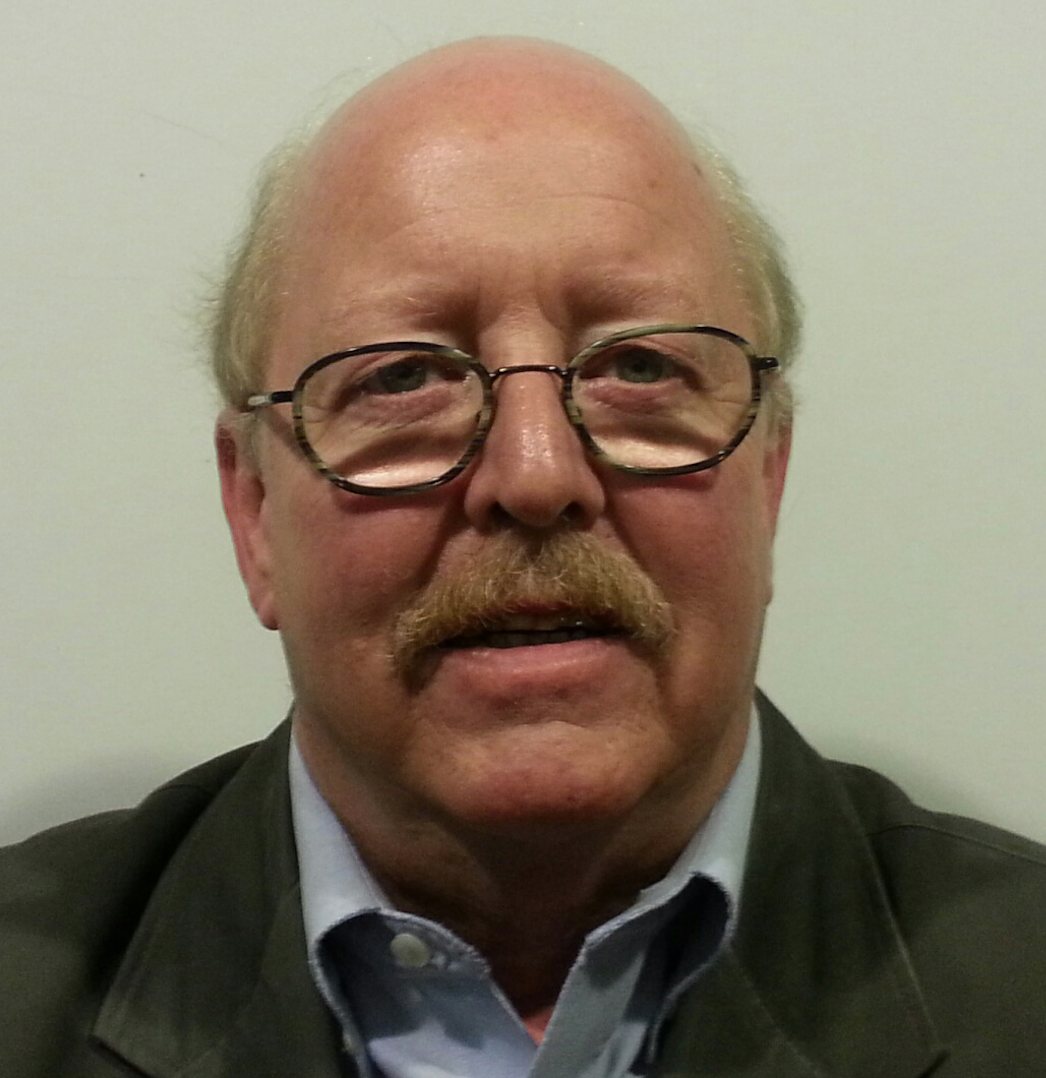
Area business people and entrepreneurs will have two opportunities on Nov. 7 to participate in a leadership training workshop, “Leading Teams that Matter,” conducted by Pete Smith, an internationally-acclaimed guide and coach in the fields of leadership, management, personal growth and development.
Smith’s workshop is sponsored by Fort Hays State University’s Management Development Center, the Hays Area Chamber of Commerce, Sunflower Electric Power Corporation, and FHSU’s Society for Human Resource Management Student Chapter.
Before suffering a life-changing stroke in 2010, Smith worked in education, first as a history teacher and career counselor, then as a director of high school programs. After his stroke, he questioned the significance of his life and reinvented himself to use his experience to become a teacher and leader to help people focus on what is important and significant in their personal and professional lives.
The leadership training workshop will be offered first from 8 a.m. to 11 a.m. on Wednesday, Nov. 7, in the university’s Memorial Union and again that afternoon, from 2 to 5 p.m., also in Memorial Union.
Participants will learn how to position teams for a high level of performance year after year by developing a framework designed to attract the best people, develop a culture of choice and trust, be attentive to detail, and intentionally expand individual comfort zones.
Registration is available online through the Registration link in the sidebar of the page at www.fhsu.edu/mdc.
Registration is $119, but Hays Area Chamber of Commerce members qualify for a 15-percent discount. To receive the discount, or to learn more about this event or additional upcoming trainings, contact Hannah Hilker at 785-628-4121 or by email to [email protected].
The night before the workshops, Smith will deliver a free address in the union’s Fort Hays Ballroom.
The 11th annual “Let Your Voice Be Heard!” poster competition is now open in Fort Hays State University’s Memorial Union on the feature wall near Starbucks.
Forty-one posters created by students in the History of Graphic Design class were chosen for the competition.
The posters discuss themes of the American Democracy Project (voting, civic engagement, social issues, national and world issues, controversial issues).
Cast your vote for your three favorite posters through Friday. The winners will be revealed Monday, Oct. 22.
Martin HawverWe’re all waiting to see who grows up to be governor…and state treasurer and insurance commissioner, aren’t we?
Now, nearly everyone cares, or at least wants to know, whom their governor is, but state treasurer and insurance commissioner?
It’s largely because there is a handful of state senators who are in those races, and if they get elected, there’s going to be back-filling to do, to replace those senators with new senators who will get two years on the job before they stand for election.
Those fill-in senators will be selected by Republican and Democrat party officials—precinct committeemen and committeewomen—and if the right candidates win the governorship or state treasurer or insurance commissioner, they give up their Senate seats for better-paying fulltime jobs.
And relatively quietly, there are already some Republicans and Democrats who are chatting with those precinct committee officials to see whether they can take those Senate seats abandoned by the statewide office winners.
Take the governor’s race.
If Democrat Sens. Laura Kelly, of Topeka, and Lynn Rogers, of Wichita, are elected as governor and lieutenant governor, they will leave two Senate seats to be filled by their districts’ Kansas Democrat Party officials. The seats stay within the party, so Democrats will continue to have nine senators, just two new faces.
If Secretary of State Kris Kobach and his runningmate Wink Hartman are elected, well, they just get new jobs. Kobach abandoned his secretary of state office for the governor’s race.
If independent Greg Orman is elected governor, his lieutenant governor runningmate John Doll, who used to be a Republican, will leave his Senate seat for a replacement, presumably as Republicans which was what Doll was before dropping the party membership.
If Sen. Marci Francisco, D-Lawrence, is elected treasurer, there’s going to be a new face in the Senate for the next two years.
If Sen. Vicki Schmidt, R-Topeka, is elected insurance commissioner, the remaining two years of her four-year Senate term will be filled by those party officials.
Those replacements? For Democrats it probably isn’t going to shift votes on the Senate floor. Oh, and Democrat representatives are being quiet about their aspiration to the Senate. They need to be reelected first, and they all appear to have the common sense not to talk out loud about giving up the House seats they are campaigning for now. That wouldn’t sound good on the doorstep, would it?
It’s the insurance commissioner race where there is likely to be more political consequence. Republicans now have 30 Senate seats and depending on whether Sen. Richard Hilderbrand, R-Galena, who was appointed to the seat after now-State Treasurer Jake LaTurner left the chamber, wins over Democrat Bryan Hoffman, of Mulberry, the number will not change.
But…already there are some House members and political groupies quietly looking at the seat Schmidt will give up if elected. Nobody’s talking yet, but there are very conservative Republicans looking at taking Schmidt’s chair, and there are moderate Republicans looking, too.
Why the interest in the Schmidt seat? It’s because she is a moderate Republican who often votes with Democrats on tax, school finance and social issues.
That means, for Senate leadership purposes, she might just as well be a Democrat, and if she is gone and replaced with a conservative, well, it means that vetoes can be overridden, and that there is a solid conservative majority in the chamber. For the Senate’s conservative leadership, it doesn’t get much better than that. A majority to pass bills and a super-majority to knock down vetoes.
Nov. 6? The election will be important, but depending on the winners, it may get even more interesting…
Syndicated by Hawver News Company LLC of Topeka; Martin Hawver is publisher of Hawver’s Capitol Report—to learn more about this nonpartisan statewide political news service, visit the website at www.hawvernews.com
RENO COUNTY— A Kansas man who entered a plea in a sexual battery and kidnapping case will face a preliminary hearing after he was allowed to withdraw his plea.
Pedraza
Victor Pedraza Jr., 21, will now face all of the original charges, including three counts of rape, kidnapping, arson, battery-domestic violence, possession of marijuana, possession of drug paraphernalia and criminal damage which were dismissed as part of a plea agreement.
On Monday, the state notified the court and the defendant that there will be no additional offers made in the case.
Pedraza is accused in the beating of a college student from Japan he had been dating off and on. He then set her passport and documents on fire. Police say the victim was tied to a bed and beaten, then forced into sex three times. The state originally entered the agreement so the victim would not have to return to the U.S. to testify. The state wanted to have the victim testify via Facebook from Japan to avoid the cost of flying her to Hutchinson, which could cost thousands of dollars
A preliminary hearing is scheduled for October 24.
Four transgender residents of Kansas sued the state on Monday, challenging its refusal to allow them to change the sex listed on their birth certificates.
Luc Bensimon is one of four transgender individuals suing Kansas officials over the state’s refusal to to allow them to change the sex listed on their birth certificates. Credit DAN MARGOLIES
The lawsuit, filed in federal court in Kansas City, Kansas, argues that Kansas’ policy violates the due process and equal protection clauses of the Constitution. It also argues that it violates the plaintiffs’ free speech rights under the First Amendment.
“I’m here to seek justice,” said Nyla Foster, a transgender woman and one of the plaintiffs. “My birth certificate does not reflect the gender I identify as, and I’m here to correct it so I can move forward with my life.”
Kansas, Ohio and Tennessee are the only three states that don’t allow people to change their birth certificates to reflect gender identities that differ from genders assigned at birth.
Although Kansas law does provide for the correction of a person’s gender identity – driver’s licenses, for example, can be amended – the Kansas Division of Vital Statistics claims it does not have the authority to amend birth certificates to account for gender transition.
Nyla Foster, one of the four plaintiffs suing Kansas officials, says her birth certificate does not reflect ‘the gender I identify as.’ CREDIT DAN MARGOLIES /
The suit names as defendants Jeff Anderson, secretary of the Kansas Department of Health and Environment; Elizabeth W. Saadi, the Kansas state registrar; and Kay Haug, director of the state’s vital statistics office, a unit of the Department of Health and Environment.
Theresa Freed, a spokeswoman for the department, said the issue has already been litigated in a Kansas court.
“The court in that case determined that the amendment of a birth certificate regarding gender is not required,” Freed said in an email. “We would not be able to speak to the allegations of this particular lawsuit, as we have not yet been served.”
Freed was referring to a ruling in a case brought by Topeka resident Stephanie Mott, who sued the state in 2016 so that she could list her gender as female on her birth certificate. A Shawnee County judge ruled against her.
Freed added that the department doesn’t have the authority to change an individual’s birth certificate, “with the exception of minor corrections or by court order.”
“Gender identity would not be considered a minor correction,” she said.
In addition to Foster, the plaintiffs suing state officials are Luc Bensimon; Jessica Hicklin; an individual identified only as C.K.; and the Kansas Statewide Transgender Education Project Inc., better known as K-STEP. They’re represented by Lambda Legal, a national organization that advocates for lesbian, gay, bisexual and transgender people, and the law firm of Bryan Cave Leighton Paisner.
At a press conference in front of the federal courthouse in Kansas City, Kansas, on Monday, Omar Gonzalez-Pagan, an attorney with Lambda Legal, explained why the organization was challenging the state’s policy.
“A birth certificate is more than a piece of paper,” he said. “It is the quintessential identity document that follows a person from birth till death.”
Gonzalez-Pagan said birth certificates can determine access to education, employment, healthcare, travel and the ability to obtain other identification documents.
Foster said she was challenging Kansas’ policy “because it is the last document that doesn’t reflect who I truly am.”
“It creates different barriers for me as far as getting a job, applying for housing or health insurance,” she said.
Luc Bensimon, Foster’s fellow-plaintiff, said the state’s policy made it easier for people to discriminate against him, “on top of the discrimination I already confront based on my disability.”
Bensimon has a mild form of cerebral palsy.
“It’s frustrating,” he said. “For me, it’s not about the individuals here but about the generation coming up.”
In recent years, Kansas has been hostile to the idea of expanding legal protections to include LGBT individuals.
And in 2015, then-Gov. Sam Brownback rescinded an executive order by former Gov. Kathleen Sebelius offering legal protection against discrimination to LGBT employees of the state.
Pedro Irgonegaray, the attorney who represented Stephanie Mott two years ago in her unsuccessful effort to amend her birth certificate, described Kansas’ LGBT policies as “regressive, abusive, uneducated and misguided.”
“We need to be more enlightened in how we deal with transgender individuals,” he said. “Unfortunately, transgender individuals, females, in particular, are the subject of abuse, violence, for no other reason than that their gender identity is incongruent with their sexual organs. And until we evolve as a state to set aside superstitions about transgender individuals and recognize the science involved, I fear that these abuses are going to continue.”
Dan Margolies is a senior reporter and editor in conjunction with the Kansas News Service. You can reach him on Twitter @DanMargoli
—————–
KANSAS CITY, Kan. (AP) — A federal lawsuit is challenging a Kansas policy that prohibits changing the gender designation on birth certificates for transgender people.
Lamba Legal says Kansas is one of three states, along with Tennessee and Ohio, with similar policies.
The lawsuit was filed Monday on behalf of four people and the Kansas Statewide Transgender Education Project. It seeks an order forcing state officials to provide birth certificates that reflect a transgender person’s sex consistent with their gender identity.
The Kansas Department of Health and Environment said in an email that the issue was previously litigated in a state court.
Its spokeswoman said the department does not have the authority to change a birth certificate except to make minor corrections or by a court order. Gender identity is not considered a minor correction.
TOPEKA —Four Sumatran tiger cubs were born Monday at the The Topeka Zoo and Conservation Center. Zoo staff and around 400-600 people watched the birth live from streaming web cams available here.
Photo courtesy Topeka Zoo
Second time mother Jingga is doing a perfect job taking care of the litter. Immediately after each was born, she began cleaning them and helped them into position to nurse.
The pairing between 8 year old Jingga and 7 year old, Sanjiv, was recommended by AZA’s Tiger Species Survival Program. Sanjiv is a first time father. Sumatran tigers live solitary lives in their range territories and he won’t have an active role in raising the cubs.
“Our Sumatran tigers represent one of our most well rounded conservation programs,” said Zoo Director Brendan Wiley. “We actively participate in breeding a critically endangered species and our community supports active conservation initiatives in their range territory.”
The cubs are currently in a den box inside the tiger building. Most of their first three months will be spent inside either in or near the den box. “When they get to be about three months old, they are typically big enough and steady enough to begin venturing outside when the weather is warm enough. They are after all tropical tigers,” said Wiley. Until they start venturing outside, the KTWU live streaming web cams will be the best way to see them.
If Jingga cooperates, the cubs will be weighed Tuesday. One key health indicator is weight gain and their weight at one day old will serve as the base line data.
Sumatran Tigers are the smallest of the tiger species and are critically endangered. There are less than 500 left in the wild. There are thirty zoos in North America that are working with Sumatran tigers. Collectively they manage a population of about 78 tigers with a goal of getting the population up to 150 animals. At 150 animals, it is estimated that healthy genetic diversity could be managed for 100 years. During that 100 year time frame, it is hoped that zoos can fix enough of the issues in their range territories to make it safe enough to begin reintroducing tigers back into the wild.
WASHINGTON – The Kansas congressional delegation today called on Federal Communications Commission (FCC) Chairman Ajit Pai to restore sufficiency and predictability to the Universal Service Fund (USF) High Cost program’s budget. The letter was signed by every member of the delegation, including U.S. Senators Jerry Moran (R-Kan.) and Pat Roberts (R-Kan.) and U.S. Representatives Roger Marshall (KS-01), Lynn Jenkins (KS-02), Kevin Yoder (KS-03) and Ron Estes (KS-04).
“Full funding of the program, as designed, helps ensure that rural Kansans have access to high-quality, affordable broadband and voice services comparable to those available in urban areas as mandated by the Telecommunications Act of 1996,”the members wrote.“These services are necessary if rural communities are to compete in a global economy. The insufficient and uncertain USF budget continues to hamper rural providers’ efforts to strategically invest in rural broadband at a time when the federal government has made rural broadband a national priority.”
“In Kansas, the budget control mechanism resulting from insufficient funding is estimated to eliminate support that carriers would otherwise have received for deployment of broadband by nearly $13,000,000 over the 2018-2019 twelve-month period,” the members continued. “As a result, providers need to postpone or even cancel broadband investments, which reduce the availability of rural broadband and increase consumer broadband rates in rural areas. These reductions also put at risk the ability of providers to pay back loans for investments already made. Nearly 50 percent of Kansas land mass is served by rural carriers, and their services remain invaluable to the rural communities they serve.”
Full text of the letter can be found here and below.
The Honorable Ajit Pai
Chairman
Federal Communications Commission
445 12th Street, S.W.
Washington, D.C. 20554
Dear Chairman Pai:
We write to urge immediate action by the Federal Communications Commission (FCC) to restore sufficiency and predictability to the Universal Service Fund (USF) High Cost program’s budget. Full funding of the program, as designed, helps ensure that rural Kansans have access to high-quality, affordable broadband and voice services comparable to those available in urban areas as mandated by the Telecommunications Act of 1996. These services are necessary if rural communities are to compete in a global economy.
The insufficient and uncertain USF budget continues to hamper rural providers’ efforts to strategically invest in rural broadband at a time when the federal government has made rural broadband a national priority. Therefore, we appreciated your commitment at the FCC oversight hearing held by the Senate Commerce, Science, and Transportation Committee on August 16, 2018, to take action by the end of the year.
As you are aware, the USF High Cost program remains a critical tool for millions of rural Americans along with the economic competitiveness of rural businesses that the program aims to serve. Additionally, all four of the universal service initiatives rely on the health of this program’s budget. However, the High Cost program’s budget has remained at stagnant levels since 2011. It remains critical that all components of the USF evolve with innovations in technology while also accounting for inflationary adjustments in future budgets. Accordingly, the FCC’s recent USF High Cost order and responses to its Further Notice of Proposed Rulemaking reinforce the need for sufficient and predictable support for the long-term health of the program.
In Kansas, the budget control mechanism resulting from insufficient funding is estimated to eliminate support that carriers would otherwise have received for deployment of broadband by nearly $13,000,000 over the 2018-2019 twelve-month period. As a result, providers need to postpone or even cancel broadband investments, which reduce the availability of rural broadband and increase consumer broadband rates in rural areas. These reductions also put at risk the ability of providers to pay back loans for investments already made. Nearly 50 percent of Kansas land mass is served by rural carriers, and their services remain invaluable to the rural communities they serve.
As mentioned in prior letters and in-person discussions emphasizing the importance of the USF High Cost program’s budget, we urge the FCC to establish a sufficient and predictable budget that will eliminate the digital divide of broadband availability and affordability while recognizing the long-term benefits that these assets provide. We appreciate the Commission’s thoughtful actions and acknowledgement of this vital program that assures affordable broadband for rural American consumers and businesses.
WICHITA – A man on Monday admitted he was armed while selling a dangerous mixture of fentanyl and heroin, according to U.S. Attorney Stephen McAllister.
Perkins -photo Finney County
Adrian Lashawn Perkins, 41, Garden City, Kan., pleaded guilty to one count of unlawful possession of firearms in furtherance of drug trafficking. The case began when Perkins sold drugs to undercover investigators.
When they served a search warrant at Perkins’ apartment, investigators found packages of fentanyl-laced heroin and four guns including a 9 mm handgun on the floor, a .22 caliber pistol under a couch, a 9 mm handgun under the mattress at the foot of a bed, and a 9 mm handgun in an unlocked safe next to the bed.
Fentanyl is a powerful synthetic opioid that is considered dangerous even in small amounts. The Justice Department has issued warnings to first responders urging them to protect themselves from exposure to it.
Sentencing is set for Jan. 3. The parties have agreed to recommend a sentence of seven years in federal prison. McAllister commended the Garden City Police Department, the Finney County Sheriff’s Office and Assistant U.S. Attorney Matt Treaster for their work on the case.
Dane G. Chaney, age 59, passed away peacefully in his mountain home on Wednesday, October 10, 2018 in Divide, Colorado. He was born on December 5, 1958 in Tribune, Kansas to Charles L. Chaney and Margaret V. (Basgall) Chaney.
He was born with blue baby syndrome and was immediately transported to Denver for a blood transfusion, which saved his life. Soon after he was baptized in Sharon Springs, Kansas at the Holy Ghost Catholic Church, which his grandfather, Alexander Basgall, helped to build.
Growing up in the middle of five sisters was tough, but it was the girls who had to fight Dane for bathroom time. But growing up with lots of sisters and hardworking parents had its perks – he learned how to cook and clean, how to work hard, fair and honest, and how to love his family. Some might say he had the biggest heart of them all.
He learned plumbing from his dad while working at C&M Hardware, which was owned by his parents. He worked there throughout high school and continued afterwards. He was a football player and homecoming king at Wallace County High School, where he graduated in 1976.
He married his high school sweetheart, Marilyn A. Wehner, on November 4, 1978 in the same church he was baptized. At the age of 21, Marilyn and Dane bought C&M Hardware and ran it as Sunset True Value. They welcomed their first child and daughter, Janelle Renee on July 21, 1983. After selling Sunset True Value, they moved to Colorado Springs, Colorado in 1985 to help run Pikes Peak True Value. In 1987 they moved to Tulare, California, where he was the manager of FISCO Farm and Home store. During their time in California, they welcomed two sons, Jeron Charles on May 23, 1989 and Joshua Francis on June 11, 1992. He was an active parishioner at St. Aloysius Catholic Church. The family stayed busy with frequent visits from family and friends, taking them to Pismo Beach, Sequoia National Park, Disneyland, and checking out local wineries.
Wanting to be closer to home, they moved to Denver, Colorado in 1994. Dane decided to go back to his plumbing roots and got his Master Plumber’s License. In Colorado, they spent their free time boating at the lake, enjoying picnics in the mountains and attending family gatherings. After 25 years of marriage, Dane and Marilyn divorced, but maintained a healthy relationship to continue raising their two youngest sons.
Dane met Cindy S. Meyer in 2007 with a single rose and a smile. They shared a loving 11 years together filled with dancing the night away at Tom Petty concerts, watching the stars, moon, and meteor showers, and sharing their love of God’s word. In October 2017, Dane sold his house in Colorado Springs to his son Jeron and purchased a cabin in Divide, Colorado. His last days were spent with Cindy working on making it their dream mountain home to grow old together in.
He loved to grill, play cards and horseshoes, root for the Broncos, and collect anything and everything related to eagles. He was incredibly hardworking and always willing to help anyone who needed it. Even through the many challenges of life, he always exuded positivity and knew that God had a plan for him.
Dane was a true nature lover, spending as much time as he could outdoors, whether it was going on mountain hikes, working in the yard, or just enjoying a quiet peaceful evening on the porch or in the hammock to enjoy the tranquillity that God provided around him.
He was preceded in death by his mother, Margaret V. Chaney; and his nephew Marc W. Graham.
He is survived by his father, Charles L. Chaney; three children and son-in-law, Janelle R. (Peter) Kusch, Jeron C. Chaney, and Joshua F. Chaney; his significant other and life partner, Cindy S. Meyer; his five sisters and their husbands, Darletta K. (Denny) Collins, Kathy A. (Gary) Robinson, Rodene L. (Gary) Doty, Teresa J. (Roger) Havel, and Denise M. (Wayne) Weyerman; and many aunts, uncles, nieces, nephews, and cousins.
A Memorial Mass will be held on Friday, October 19, 2018 at 10:00 AM MT at the Holy Ghost Catholic Church in Sharon Springs with Father Andrew Rockers officiating. Private family inurnment will be held in the Sharon Springs Cemetery.
A Rosary Service will be held on Thursday, October 18, 2018 at 7:00 PM MT at the Church in Sharon Springs.
Memorial contributions may be designated to the American Eagle Foundation at www.eagles.org/donate, Children’s Hospital Colorado and may be left at the services or mailed Koons-Russell Funeral Home, 211 N. Main Ave., Goodland, KS 67735, or you can donate blood at your local Red Cross.
Service arrangements have been entrusted to Koons-Russell Funeral Home in Sharon Springs.
WICHITA, Kan. (AP) — Records show that a Wichita woman had fled with her six children and summoned police three weeks before her estranged husband ran her off the road, shot and killed her.
Kristen Florio-Gile -photo GoFundMe
Wichita police and court records show 33-year-old Kristin Florio-Gile had taken at least three steps to protect herself and her children from Randy Gile. Florio-Gile was killed on Oct. 6 before Gile shot himself.
Her family says the system failed Florio-Gile.
Records show Wichita police arrested Gile for felony aggravated assault after he threatened Florio-Gile on Sept. 15. He bonded out of jail within a day.
Police had an order to arrest him again in early October for allegedly violating a protective order. The appointment for considering charges was Oct. 10, four days after Florio-Gile was killed.