A magnitude 4.7 earthquake with an epicenter 13 kilometers Southwest of Cherokee, Okla. was felt throughout Kansas at 1:42 a.m. Thursday, including the city of Hays, where area residents quickly took to social media in an effort to get an explanation for the shaking, in an area where few residents have ever felt an earthquake.
The Hays P0lice Department confirmed several calls had come into their department immediately after the quake, but they had no further information at the time.
The United State Geologic Service published a map of reports of the earthquake, with reports coming in from as far North as Naperville, Ill. and as far South as Tucson, Ariz. One report had also come from Denver, Colo.
Over 20 people from Hays reported feeling the earthquake to the USGS by 4 a.m.
Within half an hour of the earthquake over 500 people had already reported it to the USGS website with Waynoka, Okla. reporting the worst damage from the quake, listed as “light,” by the website.
By 4 a.m. the number of reports climbed to over 4,000.
Hays Post will provide updates as they become available.
Late Wednesday night, traffic was backed up for nearly 2 miles in the westbound lane of Interstate 70 as the Ellis County Rural Fire Department worked to put out a fire that consumed the trailer of a semi-truck around mile marker 151.
The fire was being treated as a hazardous materials spill as fumes were being produced by the fire that were considered dangerous, according to officers on the scene.
Members of the Hays Fire Department were on site assisting as the Ellis County Sheriff’s Department and Kansas Highway Patrol were also on the scene directing traffic off of I-70 onto Yocemento Road, just a few miles west of Hays.
At approximately 12:35 a.m. Thursday a single lane of traffic was being allowed to pass the scene allowing the backed up traffic – mostly semi trucks – to clear by 1 a.m.
The lane was closed again briefly as the semi was loaded onto a trailer while firefighters continued to douse the wreckage with water and break apart debris with a back-hoe.
Officers on scene had no further information about the cause of the fire, which began just after 8 p.m. Wednesday.
The condition of the driver is also unknown at this time.
Hays Post will provide updates as they become available.
The long running science show “Nova” has made its most recent episode of “Making North America” — titled “Life” — available online. The program features unique geologic features of northwestern Kansas including Monument Rocks, a popular attraction south of Interstate 70 approximately an hour west of Hays.
The episode was the second of three that has aired on PBS this month. The last episode will broadcast at 9 p.m. Wednesday.
The full episode featuring the area can be found here.
WAKEENEY — Three and a half days into the first-degree murder trial of Scott Bollig, prosecutors have rested their case Tuesday following testimony from Dr. Lyle Noordhoek, board certified pathologist and medical examiner, who testified the death of the unborn child of Bollig and Naomi Abbott was due to an outside force.
“My conclusion was that this was not a natural miscarriage,” he said. He also testified the cause of the miscarriage was ingestion of the abortion inducing drug mifepristone.
Bollig is accused of secretly lacing pancakes Abbott was eating with the drug.
Following Noordhoek’s testimony, prosecutors closed their case, allowing the defense to begin calling witnesses, but before the first witness was called, Bollig’s attorney Dan Walter asked the court to dismiss two charges against Bollig.
Those two charges had been added after the initial charges had been filed after evidence allegedly surfaced that Bollig had communicated with an ex-girlfriend, Angel Abbott, about the pregnancy and was working with her to ensure the pregnancy was terminated without Naomi Abbott’s knowledge.
The defense argued “no evidence” of conspiracy had been presented during the prosecution’s case. Walter argued further that there was no proof the alleged conspiracy occurred in Trego County.
District Judge Glenn Braun, however, said “sufficient facts have been shown,” and the question is better in the hands of the jury.
One of the first witnesses to be called by the defense was Brandon Payne, EMS director of Trego County, who spoke with Abbott following the morning Bollig allegedly laced the pancakes.
“It is my belief she knew something was going on,” he said, telling the jury that morning her disposition was happier than it had been in the days before and that she made a special note to him of watching Bollig make the pancakes.
The defense also brought forward Linda Anderson, who also testified Abbott knew what was going on.
Anderson testified that her former husband, Steve Anderson, was friends with Naomi Abbott’s ex-husband, Ron Abbott. She further testified Ron Abbott and Steve Anderson had a conversation in her presence that alleged Naomi Abbott knew she was taking the mifepristone, but became frighted later and so blamed Bollig. Linda Anderson also claimed Ron Abbott had told her Naomi Abbott had put the pill in the pancakes.
However, that testimony was quickly refuted when Ron Abbott took the stand later.
“I don’t remember that conversation,” he said.
He also testified he had not told Steve or Linda he had helped Naomi Abbott in any way and she had never told him she had caused her own miscarriage. Ultimately, he said Linda Anderson’s story was not true.
The defense calledDelbert Bollig, Scott’s father, to the stand, where he testified Dawn Chase, a dispatcher at the WaKeeney Law Enforcement Center, told him Naomi was guilty.
Chase testified shortly after disputing the claim.
“I don’t believe I ever said Naomi was guilty,” she said.
Wrapping up the witness for the defense Tuesday was Ashley Garza, WaKeeney assistant chief of police.
Garza worked with Naomi Abbott and testified that Naomi Abbott had felt Bollig was “coming along,” in his attitude to being a father following the alleged time the mifepristone had been ingested.
Prior to that, Garza testified, Bollig “wished she would fall down down the stairs and have a miscarriage,” a similar comment to others that came through testimony to have been said by Bollig.
O’Loughlin Elementary School 1401 Hall St. Hays – Nov. 9
Routine inspection found one violation –
Working containers used for storing poisonous or toxic materials such as cleaners and sanitizers taken from bulk supplies shall be clearly and individually identified with the common name of the material.
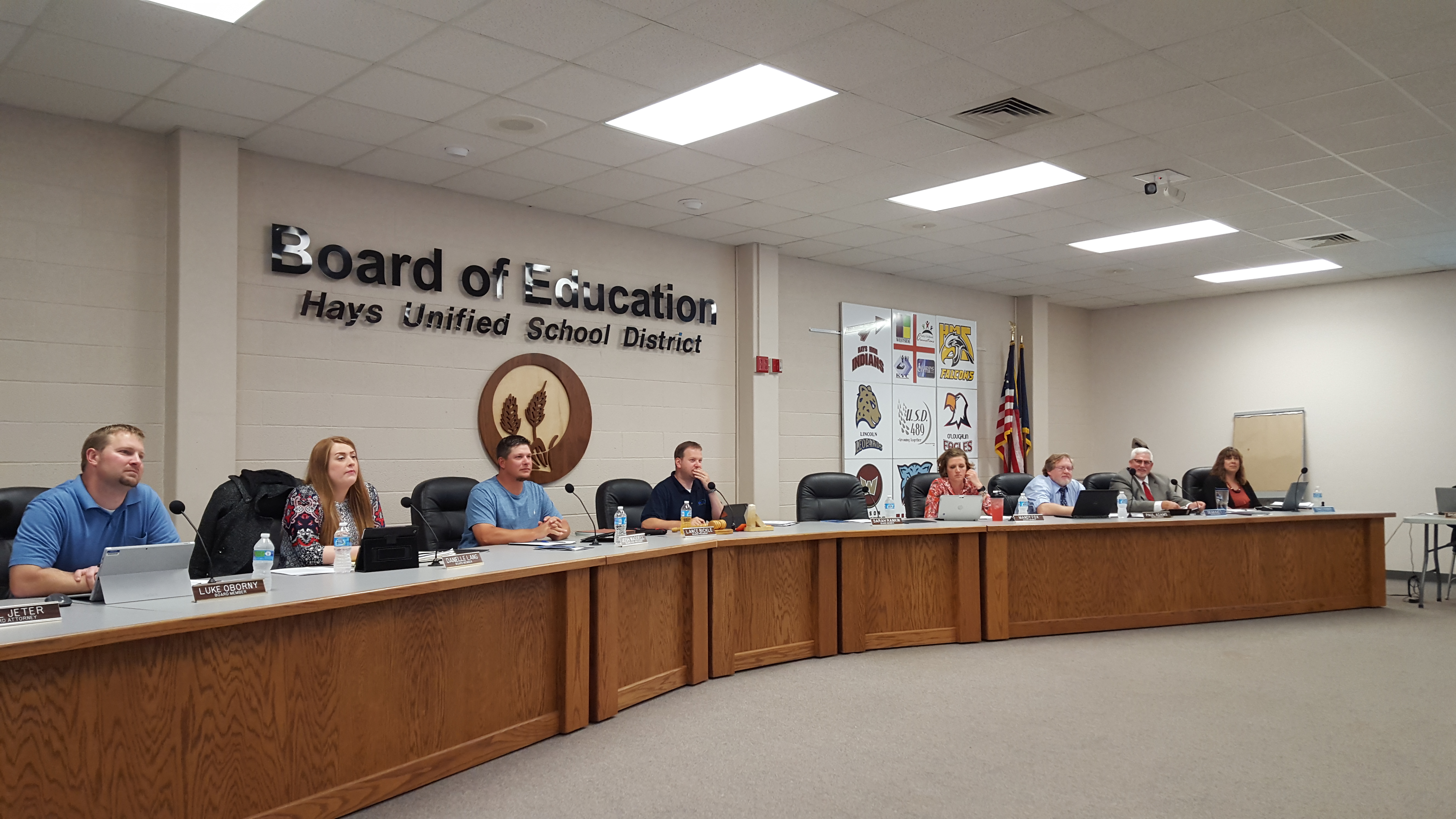
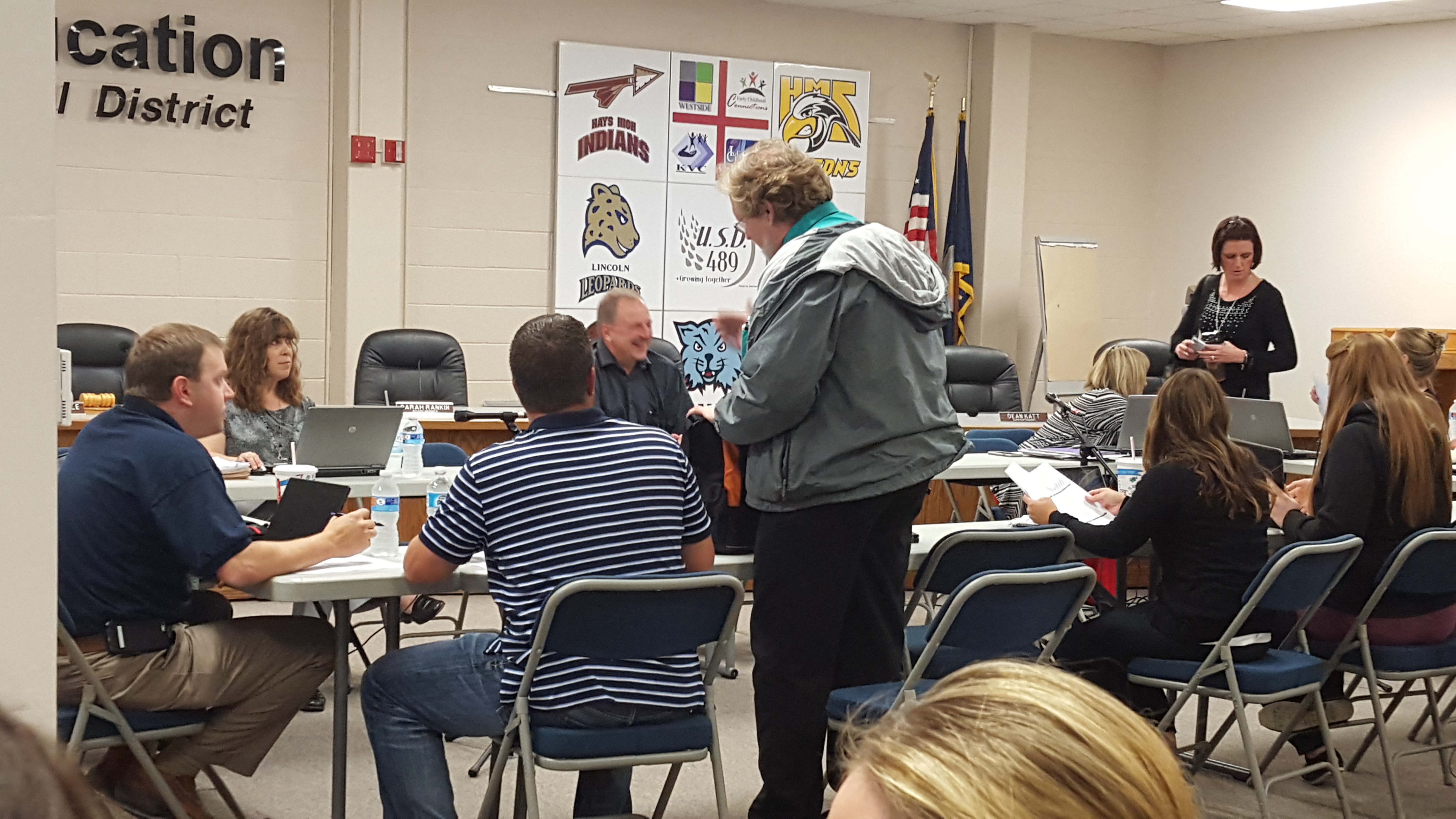
During the regular meeting of the Hays USD 489 Board of Education Monday night, the board pinned down the scope of the work to be pursued by a bond issue in the fall of next year.
After active debate, the lowest of the four options was unanimously voted on by the board at an estimated price of $94 million. That plan would leave Lincoln open as an elementary school and use the Rockwell Administration Center in its current capacity, with only necessary updates being done at the facility. Further updates to the building would be set a few years down the road.
Initially, the board discussed implementing all of the recommendations by the Facility Needs Committee.
“The group did an excellent job,” said Paul Adams, board member. “There is not a lot of fluff.”
Other members quickly echoed the idea that none of the schools should lose any part of the recommendations.
“I’m terrified if we take something out we’ll regret it later,” said Luke Oborny, board member.
The one area the board was willing to cut in order to lower the final price tag was Rockwell.
“I think it’s important we focus on kids,” said Dean Katt, USD 489 superintendent. “It’s so important we get these other things done.”
The board also wants to ensure each building has the ability to keep attendees safe in times of inclement weather — a need amplified by a tornado warning for Ellis County during the board meeting.
A part of the bond issue would ensure each building in the district have a shelter for students, something many of the buildings are currently missing. These rooms would also serve in various capacities, such as a gym or an auditorium.
The board also discussed the reason for such a large measure at this time is the amount of deferred maintenance that has built up over the last three decades.
Nearly one third of the total bond is deferred maintenance, Obony said.
Now that the board has determined a scope for the project, the next step is to determine the best way to fund the bond measure.
The board will consider increasing mills to fund the bond, a sales tax increase or both. Also under consideration is the length of bond repayment, which will dramatically influence the amount of interest that will be assessed on the principal during the duration of the mill levy.
WAKEENEY — During Monday’s testimony in the first-degree murder trial of Scott Bollig, who stands accused of causing the death of an unborn child, jurors heard evidence from a Kansas Bureau of Investigation toxicology supervisor who testified Naomi Abbott, Bollig’s ex-girlfriend, had the abortion-inducing drug mifepristone in samples taken after the loss of her unborn child.
The defense objected to the admission of the testimony, saying there are time lapses from when the samples were taken until they reached the KBI lab.
After dismissing the jury, Judge Glenn Braun heard the defense argue that a clear chain of custody could not be determined, so the testimony should not admissible. However, Braun ruled the evidence was admissible, but could be argued to be less credible by the defense as the lack of a clean chain of custody speaks to the validity of the evidence, not the admissibility, according to state law.
After the initial objections, Larry Mann of the KBI testified at least some of the samples brought to the KBI lab in Topeka did contain the drug mifepristone.
Traces of the drug were found in blood and serum samples obtained from Abbott, from two different sample times.
Despite finding traces of the drug in Abbott’s blood, it was not present in the placenta, something Mann testified he was not qualified to explain.
Detailed analysis of the samples were consistent with a 200-mg pill being ingested, Mann said, finding the time amount of drug left in Abbott’s system would also be consistent with the time Bollig allegedly altered Abbott’s breakfast with the drug.
The trial is set to continue at 8:30 a.m. Tuesday.
In a letter sent Monday, parents of students at Hays Middle School were notified that students in a seventh-grade science classroom were exposed to mercury.
According to the letter, “students in a seventh-grade science classroom were exposed to very low levels of mercury for a short period of time.”
The letter indicated administrators were notified at 2 p.m. Monday of the incident that occurred on Friday, Nov. 13, and the room was closed to students and staff. It was then further scanned and cleaned by two members of the Kansas Department of Health and Environment.
“The ventilation is going tonight. They will do their tests in the morning and make sure everything is clear,” Dean Katt superintendent of Hays USD 489, told school board members Monday night.
The contamination was a “very low level, very small amount,” Katt said.
If the room is found to still have any contamination, further action will be taken and parents and students will be notified.
The Hays USD 489 Board of Education is scheduled to meet at 6:30 p.m. Monday in the Toepfer Board Room in the Rockwell Administration Center, 323 W. 12th, to once again work out details about a proposed bond issue that might come to vote this spring.
The board will “continue to discuss the scope, amount, timeline, and type of election for a bond issue,” according to the agenda for the meeting.
Purchasing options for district transportation needs is also on the agenda for the meeting along with a vote for the SEIU and BOE negotiated agreement for 2015-16.
WAKEENEY — Friday’s testimony at the first-degree murder trial of Scott Bollig included mostly routine testimony by medical staff that treated Naomi Abbott, confirming the viability of her pregnancy. The jury then heard from a technology specialist from the Kansas Bureau of Investigation.
That specialist testified about details of conversations between Bollig and a former girlfriend, Angel Abbott, hinting that the termination of the pregnancy, for which Bollig is being tried, was planned in advance.
Angel Abbott is currently married to Naomi’s ex-husband and was cited earlier as a co-conspirator in the case, but is not currently under indictment.
The testimony came from Derek Welsh, digital forensic examiner of the cyber crimes investigation department of the KBI.
Using software known as Cellebrite, Welsh testified he was able to pull information from Bollig’s smartphone giving a “bit by bit” copy of the memory of the phone, including text messages, call logs and files.
During that process, a series of text messages allegedly were found between Angel Abbott and Bollig discussing Naomi Abbott’s pregnancy.
The messages, Welsh said, confirmed Bollig had seen an image of the baby after Naomi Abbott’s sonogram. Furthermore, the conversation between the two directly discussed how Bollig would give Abbott the first pill of the five ordered by Bollig and Angel Abbott would deliver the rest, Welsh testifed.
Ultimately, the pregnancy was terminated after the prosecution claims the first pill was delivered by Bollig via breakfast to Naomi Abbott. This would have made any further medication delivery unnecessary.
Testimony is scheduled to resume at 8:30 a.m. Monday in the Trego County courthouse.
WAKEENEY — In the first day of the trial of Scott Bollig on Thursday, jurors heard emotional testimony from Naomi Abbott – Bollig’s former girlfriend – and WaKeeney Police Chief Terry Eberle centering around the events that led up to Bollig being charged with first-degree murder of Abbott’s unborn child.
During the prosecution’s examination, Abbott testified that Bollig did not seem interested in having the child, telling the jury he had said to her repeatedly, “It could all go away very easily,” suggesting Abbott abort the pregnancy even after she had decided she wanted the child, making the relationship very tense.
She also testified Bollig said he did not want to be involved at all but did not want Abbott to move out of the state, as she was planning, as it would deny his family the opportunity to be with the child.
Although Abbott described a normal pregnancy, including a doctor’s visit that included a sonogram, she testified that changed quickly after having breakfast with Bollig on a Sunday in late January 2014.
During that morning, Abbott told jurors nothing was out of the ordinary as Bollig cooked pancakes for the couple. But, by the following Thursday, she had sought medical treatment for extreme nausea and dehydration.
Following that visit, she said she was admitted to the hospital for IV treatment of a urinary tract infection, chlamydia, dehydration, nausea and extreme cramping.
The following morning, Abbott said she awoke finding herself covered in blood.
“I knew something was definitely wrong,” she testified.
After being assisted by medical staff to the bathroom, she said she felt as if something had passed through.
It was later confirmed she had lost the baby.
Later that evening, Abbott testified Bollig visited the hospital for the first time and offered to drive Abbott home.
Abbott was discharged that evening, only to be pulled over by law enforcement during the drive home and asked to return to the hospital for blood tests and to sign paperwork that would allow for an autopsy of the baby.
During the time required to submit to the test and fill out paperwork, Bollig left, but, at that time, Abbott said she didn’t believe Bollig had done anything wrong and continued their relationship.
“I still saw him,” she said, but indicated he wanted the relationship to go back to “the way things were before” the pregnancy. She said he failed to be sympathetic to her grief.
Things changed, however, she testified, when he admitted to Abbott he had done something to terminate the pregnancy, but did not go into details. He informed her he intended to confess to police the next day, she told jurors.
Even with the confession, however, and a order of no contact for Bollig, Abbott admitted that she had visited with him.
During cross-examination, the defense brought to light Abbott had pursed the relationship, even visiting Bollig at his home in April, testifying she had told him that she desired for “it all to be over.” During that visit, she testified she asked for a hug and told Bollig she was still in love with him.
The couple had also shared texts and pictures – sometimes intimate – until Bollig’s phone was taken as evidence, cross-examination revealed.
Following testimony from Abbott, Eberle was examined by the prosecution and the defense. During his testimony, he said Bollig had came into his office on Feb. 20 after meeting with Abbott the night before — the night Abbott testified he confessed — to tell to Eberle he had sprinkled a drug called mifepristone on pancakes eaten by Abbot.
Eberle testified Bollig provided evidence to Eberle and a Kansas Bureau of Investigation officer that he had bought the pills online and admitted to crushing the pills in preparation for breakfast, when he sprinkled the crushed pill on top of pancakes he served to Abbott.
During the examination of Eberle, however, the defense found several errors in testimony he had given at a preliminary hearing, mostly on specific dates and times conversations had happened.
The defense also questioned why no recordings of the confession had been made, including a written confession by Bollig.
“He didn’t want to do that,” Eberle said about a written statement, and said it was not procedure to record meetings in his department at that time.
Testimony is scheduled to continue at 9 a.m. Friday.
In a letter sent to the Hays USD 489 Board of Education on Wednesday, the O’Loughlin Parent Teacher Association is seeking further action on their request for the return of 40 iPads that were purchased by the association for use by kindergarten and first-grade classes at the school.
The subject was brought the board’s attention at last week’s work session, but was decided that district policy should not be changed in order to accommodate the request.
Further, the topic was not put onto the agenda for next Monday’s board meeting.
Members of the USD 489 Board of Education settle in Monday in preparation of discussions on an upcoming $93 million bond issue.
“Every other time that we have had a gift or anything the PTA or Home and School given to the school, it becomes school property,” said Dean Katt, USD 489 superintendent, during the work session.
Following the iPads being given to the district, the district enacted a 1-to-1 technology policy, putting mobile computing systems in the hands of every student.
“As we went through and decided to go 1-to-1, all of these devices from here, Washington, Roosevelt, anyplace that we had them, that were compatible to a new one, that we were going to use were figured into district numbers,” Katt said last week.
The PTA suggested the iPads were given to the district on loan and should now be returned now that the district is funding devices for each student.
“We feel you are working under an assumption that these 40 mini iPads were gifted to the school, which in turn become district property, without any documentation to say such,” Alaina Cunningham, PTA co-president, wrote in her letter to the board.
Without written documentation, district policy is clear for items bought for district use, district officials said.
“The board policy actually states currently that anything that is purchased by any asset organization that is distributed is district property.” said Sarah Wasinger, USD 489 board clerk.
Further, Katt said the PTA had never indicated their desire for the items to be loaned rather than given to the district.
“We don’t do on loans,” Katt said. “We never talked about any of that. … Our board policy … is very specific about becoming district property.”
Cunningham noted in her letter the lack of communication was the fault of the district and, as such, the PTA should not be held liable for the misunderstanding.
“It was discussed at our meetings when we purchased them that it would be our responsibility to maintain them,” Cunningham said. “That this would not be an expense the district would take on or nor would we ask them to. With that being said, it is clear to us these iPads were not purchased and gifted to the school.”
The PTA further stated the district failed to fully inform the PTA of its policies.
“No one offered to speak with us about our technology purchases and the district’s intent,” Cunningham wrote. “The new policy put in place in February 2015 was not officially brought to our attention until this matter was being addressed. We feel this has set a precedent as to future purchases by the PTA. It has made us aware of how to protect our students and ourselves. It has shown us the proper documentation we need in place, but above all else it has hindered the relationship with our PTA and the school board.”
After the iPads were given to the district they have been maintained under the assumption they had become district property.
“In essence, the district assumed responsibility of property protection, maintenance, purchase of software all of the things that would make it a useful functional device?” Paul Adams asked during the work-session.
The answer was a simple “Yes” from Katt.
The board’s legal counsel also sided with the assumption that, without a prior agreement, board policy should be upheld.
“With your policy and no understanding or any documentation saying it’s a loan, I don’t see why it wouldn’t be a straight-up gift,” said Michael Baxter, board legal council.
Gifts are often given to the school by the PTA and Home and School groups, for use by the district.
“Every school has purchased those types of items,” Katt said. “This could come back to playground equipment. Home and Schools have purchased all kinds of equipment, from water fountains to carpet to you name it. That’s the dilemma we’re in, if we say, OK, we’ll buy those back, or give them back, playground equipment anything else then it’s the same thing.”
After discussion, the board decided that no further action is required.
“I don’t see any reason to vote on this, it’s board policy and I don’t see any reason to change it,” said Lance Bickle, USD 489 board president.
However, the PTA wants further action on the issue.
“We would like to request that this issue be fully addressed,” Cunningham wrote.
But after the lack of action by the board at the work session, the decision seems settled as far as the board is concerned.
“Whether it is bitter or not, it is policy,” Adams said.
The text of the PTA letter follows:
November 11, 2015
To Whom It May Concern:
I am writing to you on behalf of the O’Loughlin PTA. We recently raised concern regarding the 40 mini iPads that the PTA purchased last year. These iPads were purchased with funds raised by O’Loughlin families in order to better the education of their children. There is a lot of time and effort spent by the O’Loughlin parents and students to raise these funds. The iPads were purchased with the intent for the PTA to own, maintain and determine use as needed by staff request. The PTA feels this letter is necessary to better inform you of our stand. We do not feel all of our points were presented at the recent work session.
It was the kindergarten teachers whom brought the initial request for 20 mini iPads to us last year. The request was brought to us because the current iPads that the district owned and that were in use at O’Loughlin were outdated. They were unable to do any more system upgrades to them due to their age. The staff was unable to use them as a learning tool and unable to load new programs due the lack of new technology. Over the next several months there was much discussion and debate as to what the PTA should do. It was a large sum of money, but we felt it was a much-needed learning tool that would facilitate the education of our children. Some of the staff had attended classes over the summer to aide in classroom use of technology; the purchase of these iPads would allow them put this in place in the classroom. The PTA then decided to purchase 40 mini iPads for the kindergarten and first grade teachers to use for centers and other such classroom learning. The thought behind doubling the requested purchase amount was so that if the need should arise for use in other grade levels we would have these available. Purchasing the iPads in bulk gave us a better rate, as we are sure you are well aware.
These iPads were purchased with the intent for the O’Loughlin PTA to own and maintain. The iPads were invoiced to the O’Loughlin PTA and a check was issued by the PTA payable to Apple. The iPads were so kindly set-up by Brian Drennon, but not at our request, if this is a service we should have been billed for then we would appreciate a late invoice. It was discussed at our meetings when we purchased them that it would be our responsibility to maintain them. That this would not be an expense the district would take on or nor would we ask them to. With that being said it is clear to us these iPads were not purchased and gifted to the school.
It was brought to our attention early this fall that the O’Loughlin staff was unable to locate the PTA purchased iPads upon the start of the new school year. After several weeks of unanswered questions as to the where a bouts of the 40 mini iPads it was brought to our attention by an outside source that the district had included them in their 1:1 K2 ratio count. This is when we contacted superintendent, Dean Katt to discuss the dispursement of the iPads throughout the district. We feel you are working under an assumption that these 40 mini iPads were gifted to the school, which in turn become district property, without any documentation to say such. We raise the question that if the district had not gone paperless and we still had our 40 mini iPads would they have been willing to repair or replace them due to damage if they were working under their assumption of them being a gift.
We want to share, that even more importantly, than the money lost by O’Loughlin PTA, due to this assumption, that there is a lack of communication from the school board to the home and school associations within our district. No one offered to speak with us about our technology purchases and the districts intent. The new policy put in place in February 2015 was not officially brought to our attention until this matter was being addressed. We feel this has set a precedence as to future purchases by the PTA. It has made us aware of how to protect our students and ourselves. It has shown us the proper documentation we need in place, but above all else it has hindered the relationship with our PTA and the school board. It has made the PTA rethink future purchases of tangible items. We hope you will see our stance as we have listened and heard yours. We would like to request that this issue be fully addressed.
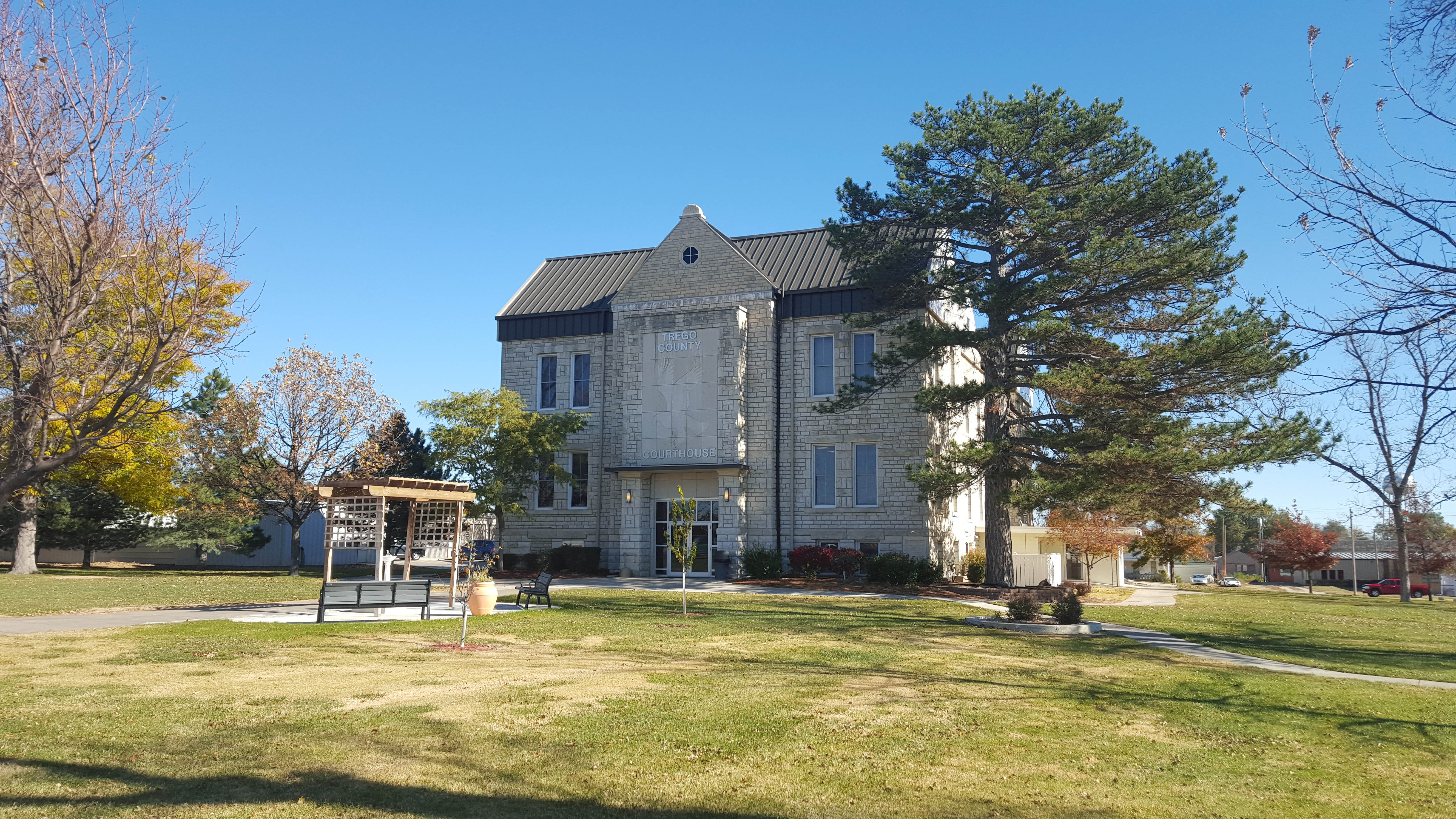
WAKEENEY — Jury selection was scheduled to conclude today in the first-degree murder trial of Scott Robert Bollig in Trego County District Court, according to court dockets.
In addition to the murder charge, Bollig also faces charges of aggravated battery, distribution of adulterated food, conspiracy to commit first-degree murder and conspiracy to commit aggravated battery.
Those charges were brought after Bollig, a WaKeeney resident, allegedly put a drug in his former girlfriend’s food that terminated her pregnancy before the tenth week. Investigators say Bollig, age 30 at the time of his February 2014 arrest, is accused of obtaining the abortion-inducing drug, mifepstrone, then crushing and sprinkling it on pancakes that were later eaten by the woman.
Testimony is scheduled to begin Thursday, and the trial is scheduled through Nov. 20. District Judge Glenn Braun is presiding over the case.