We have a brand new updated website! Click here to check it out!

Now That’s Rural: Stockton’s Cody Foster, Advisors Excel

Ron Wilson is director of the Huck Boyd National Institute for Rural Development at Kansas State University.

By RON WILSON
Huck Boyd National Institute for Rural Development

“Giving back.” It is a simple but powerful concept. Today we’ll meet a Kansas entrepreneur with small town roots who created a remarkable marketing organization that assists independent insurance agents and financial advisors across the nation. They also emphasize the importance of giving back to their community.

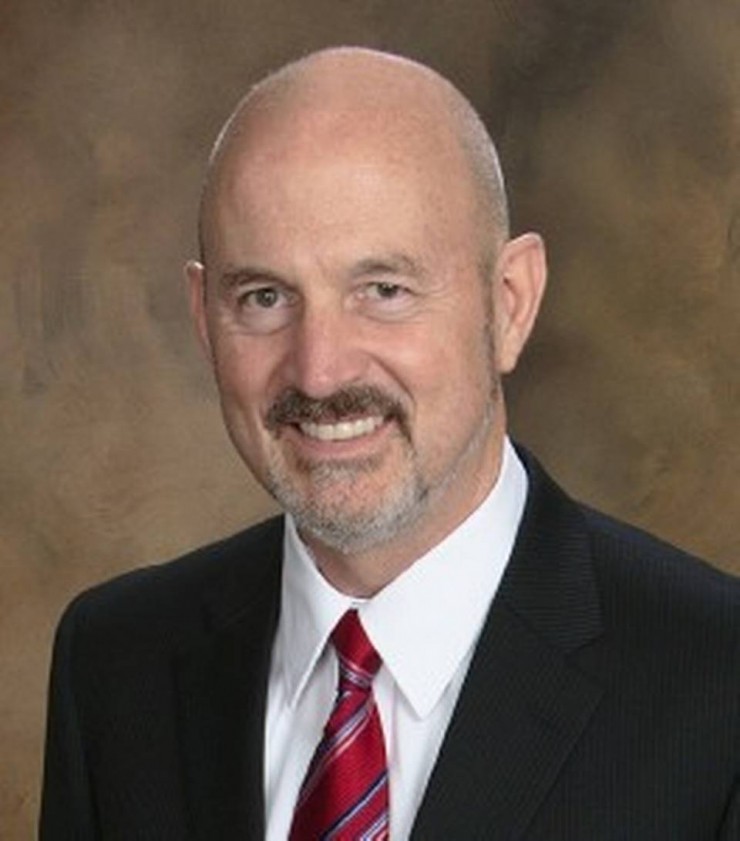
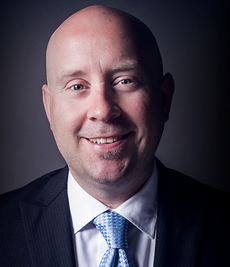
Cody Foster is co-founder of Advisors Excel, an industry-leading financial and insurance marketing organization in Topeka. Cody grew up in Stockton. His grandparents owned the café in town, but when he was in the fifth grade, his grandma had to run the café by herself. “As the oldest grandchild, I worked with my grandma a lot,” Cody said.

Cody Foster

When he finished high school, Cody found that a former citizen of Stockton had endowed a college scholarship which enabled Cody to go to Washburn University. “I was the first person in my family to go to college or graduate,” he said.

But while a junior in college, Cody got distressing news: The café had failed financially, and Grandma lost the café. “I was headed for a career in PR and sports marketing, but after what happened to my grandmother, I figured I better learn something about finance,” Cody said.

He took a job as a bank teller and later worked at a bank call center while finishing his degree. He still thought about his grandmother. “I wanted to be in a position where people I cared for wouldn’t have to go through something like that again,” he said.

Through his college roommate, he got a job with an insurance brokerage service. After several years, he and the roommate became financial advisors on their own. They found that no one was providing the services necessary to support financial advisors. Along with another Washburn grad, in 2005 they decided to create a company to do just that.

What should this company be named? They might have hired a consultant and spent thousands of dollars on market research, but they didn’t. “One of the guys said, `We want to be a place where advisors excel,’” Cody said. The name stuck. Advisors Excel became the name of the company.

Today, Advisors Excel serves customers across the nation in virtually all 50 states. “Our clients are independent financial advisors, who are mostly focused on helping people with retirement and retirement income planning,” Cody said. The company offers annuities and life insurance, representing some 40 major companies; is a registered broker dealer; and has a new service that is an SEC-registered investment advisory firm called AE Wealth Management. The new service has boomed, growing to nearly $3 billion in assets in less than two years.

Advisors Excel began with the three co-founders and now employs 500 people. The company has an in-house ad agency that produces websites and more than 115 radio programs on finance each week.

Cody and his cofounders believe strongly in community service. Advisors Excel exemplifies giving back. Teams of AE employees regularly volunteer with various charities, from neighborhood cleanups to the rescue mission. “It’s estimated that we’ve donated a million dollars and 5,500 man hours of community service,” Cody said. Perhaps this reflects his small-town community values. Stockton is a rural community of 1,329 people. Now, that’s rural.

What is his advice to entrepreneurs? “The business that provides most value will ultimately prevail,” Cody said. “We’re constantly asking how we can add value. Every interaction (with a customer) is an experience, and we want it to be a positive one. And, you’re only as good as the people you have around you.”

For more information about his company, go to www.advisorsexcel.com.

Seven years ago, Cody took another step. He started a college scholarship program at his old high school in Stockton, named after two long-time teachers there. “It was the right thing to do,” Cody said. “If it hadn’t been for the man who endowed the scholarship that I used years ago, I don’t know where I’d be.”

Giving back. We commend Cody Foster and the people of Advisors Excel for making a difference by giving back to their community and providing exceptional value to their customers.

Audio and text files of Kansas Profiles are available at https://www.kansasprofile.com. For more information about the Huck Boyd Institute, interested persons can visit https://www.huckboydinstitute.org.

————————————————
The mission of the Huck Boyd National Institute for Rural Development is to enhance rural development by helping rural people help themselves. The Kansas Profile radio series and columns are produced with assistance from the K-State Research and Extension Department of Communications News Media Services unit. A photo of Ron Wilson is available at https://www.ksre.ksu.edu/news/sty/RonWilson.htm. Audio and text files of Kansas Profiles are available at https://www.kansasprofile.com. For more information about the Huck Boyd Institute, interested persons can visit https://www.huckboydinstitute.org.

-30-

K-State Research and Extension is a short name for the Kansas State University Agricultural Experiment Station and Cooperative Extension Service, a program designed to generate and distribute useful knowledge for the well-being of Kansans. Supported by county, state, federal and private funds,

LETTER: Appreciative of the Hays Fire Department

Hays firefighters Keith Mermis and Tanner Pabst pose with grandchildren of former Hays city commissioner Glenn Staab (Photo courtesy Glenn Staab)

On Friday, Dec. 22, we were getting the house ready for our family to stay the night; five adults and three grandkids were joining us for the evening.

As Dottie was getting the house ready, I dropped by. I suggested we should get a new battery for carbon monoxide detector. She informed me it needed more than a battery, as it was broke.

She suggested I call my brother and see if he had any of the detectors at his store. He said he didn’t, but he told me the Hays Fire Department was giving them away.

I drove to the HFD office at 11 a.m. and told the lady at the desk, Lisa Beilman, my problem. I asked how much for a new detector and she said they were free and would be installed by the HFD. I told her that my wife had installed them before and that we needed it today and I was sure they were busy.

She informed me that they would probably be able to install it that day.

Within about 30 minutes, I received a call from the HFD and they would be over between 2- 2:30 p.m. HFD Firemen Keith Mermis and Tanner Pabst arrived at 2:30 and were finished about 3.

Our grandkids are 10, 8 and 6 years old. When the firemen arrived, I showed the grandkids the firetruck outside and they were excited.

As they were getting ready to leave, I asked Keith & Tanner if they would pose with our grandkids by the truck. They agreed right away.

The firemen grabbed their helmets and heavy coats and handed them to our grandkids. Our grandson wore the hat and coat and one of the granddaughters wore the helmet and one wore the coat.

I want to thank these two firemen for making our grandkids’ day.

I want to thank the Hays Fire Department for this great service of installing CO2 and fire detectors.

I am sure Dottie and I are on a long list of people who truly appreciate this great service.

Glenn D. Staab, Hays

News From the Oil Patch, Jan. 2

By JOHN P. TRETBAR

Kansas Common Crude at CHS in McPherson starts the new year at $50.75/bbl, compared to $44 last year at this time, $27.25 in 2016, and $73.25 on January 1, 2014.

The final weekly rig count summary of the year from Baker Hughes showed the oil rig count unchanged for the second week in a row. The nationwide total for the week ending December 29 was 929, reflecting a drop of two rigs seeking natural gas. Canada reports a seasonal drop of 74 to 136 active rigs.

The Kansas Corporation Commission reports 112 new intent-to-drill notices filed last month, bring the total for the year to 1,561. That’s an improvement over last year’s dismal 1,166, but far below the 7,104 intents filed statewide in 2014. There were two new intents filed in Barton County, which makes 47 for the year. One new intent in Ellis County brings the annual total to 47. There were no new intents filed in Russell County, where operators filed 24 during the rest of the year. There were three new intent notices filed in Stafford County, which makes 34 for the year.

A labor headhunter in Midland, Texas tells Bloomberg that Permian Basin oil producers will need to hire more than 3,000 more truck drivers at the rate the play is growing today. That could be a tough sell to those fired during the oil-price collapse of 2014. About 3,000 oil truckers are currently at work in the region. That’s more than the tally before the price bust.

The Interior Department has quietly rolled back an Obama-era policy aimed at protecting migratory birds, stating in a solicitor’s opinion that it will no longer prosecute oil and gas, wind and solar operators that accidentally kill birds.

Regulators in the Trump administration are proposing to roll back safety measures put in place after the 2010 Deepwater Horizon oil spill, a revision that would reduce the role of government in offshore oil production and return more responsibility to private companies.

The prolific Permian Basin in west Texas and southeastern New Mexico reached a new oil-production record, beating it’s previous record, set in 1973, by more than 25 million barrels. IHS Markit says it will revise final production figures after year-end production reports are in, but the company asserts the Permian will produce roughly 2.75 million barrels per day, or more than 815 million barrels for the year.

In a recent survey by the British bank Barclays, 90 percent of U.S. oil producers said they expect oil field costs to climb next year. The Houston Chronicle reports that increased revenue will be good news for oil field service companies, which have slashed payrolls and prices to keep business alive during the price downturn.

Industry analysts warn that because of the recent downturn in the oil and gas industry, global energy companies have focused on cost cuts and not on conventional or off-shore exploration. A report in the Daily Oklahoman notes that global discoveries have dropped to the lowest levels in at least 70 years, seven billion barrels. In 2012 the totals for new conventional discoveries were more than four times higher.

Russia led all nations in crude exports to China for the ninth month in a row last month. Russia’s shipments to China were up 11 percent from a year ago.

Arguments mounted over China’s alleged transfer of crude oil to ships bound for North Korea. The South Koreans acknowledged they have seized one of the ships believed involved. The Lighthouse Winmore was intercepted on its return trip, and remained in South Korea. Officials say that on October 19, instead of going to Taiwan as scheduled, the vessel transferred its crude cargo to a North Korean ship and three others in international waters. The transfer was one of more than 30 reportedly captured in US satellite photographs. Numerous Chinese officials said China said there had been no sanction-breaking oil sales by Chinese ships to North Korea.

SELZER: Review your investment coverage as you begin the new year

Ken Selzer, Kansas Insurance Commissioner

As we begin 2018, it is a good idea to evaluate your insurance and investment coverage. With the changing insurance needs of families, and the changing landscape of the insurance industry, it is now even more important that you stay on top of your financial decisions for choices and coverage.

Our staff at the Kansas Insurance Department (KID) and the Office of the Kansas Securities Commissioner offer these tips and reminders to help with your review.

Homeowners/Renters Insurance

This is a great time to update your home inventory and make sure your homeowners or renters policy is current for your needs. For example, if your holiday decorations are still out of storage, take some photos or video of them. Note any antique items and their value so you can talk with your insurance agent to ensure that they are properly covered.

Now that your gifts are open, remember to add them to your home inventory, too. Include as many details as you can and take a photo of each item. Most basic home insurance policies have standard limits for big-ticket items like electronics, art, jewelry or sporting equipment. You may need special coverage, so be sure to call your agent as soon as possible to discuss changes for your policy.

If you are starting a home inventory from scratch, the National Association of Insurance Commissioner’s (NAIC) free smartphone app, myHOME Scr.APP.book, takes some of the headache out of the process. Download the app for your smartphones. Also, on our ksinsurance.org website, you can print a hard copy of our Personal Home Inventory booklet; or, you can call us at 800-432-2484 to request a mailed hard copy. 

Auto Insurance

Winter can be a challenge for all drivers. Whether you are trying to escape the weather for some place warmer or just preparing for another drive to work in the snow, there are a few insurance items you should review.

Make sure your coverage is appropriate for your life situation. Liability is the part of the policy that pays for any injury or damage if you cause an accident. If your liability insurance is too low, it is possible that you could be sued for any damages above your liability limits.

Also take a look at your deductibles for comprehensive and collision coverage. This is the amount you will pay if your car is damaged or totaled without fault of another driver. Raising or lowering deductible amounts can affect your premium.

Before hitting the road, make sure you have a copy of your insurance card and your insurance agent or company’s number in the car. It is also a good idea to have a way to record details of an accident if you are in one. The NAIC smartphone application WreckCheck walks you through the process of gathering information following an accident. You can then email your notes directly to your agent.

Health Insurance

Many families recently went through the open enrollment process for their health insurance at work, through the online insurance marketplace or through Medicare Open Enrollment. This means you may have new insurance cards and paperwork coming in the mail. It is a good idea to get all this information together before winter illnesses or accidents happen.

Make sure to check your medical provider lists to verify that visits to your doctor and any specialists are still covered by your policy, because in-network or preferred provider lists could change. Also read through your documents and make note of your copays for in-network and out-of-network providers so you are not surprised later.

When you are planning a vacation away from home, check with your insurance carrier to identify urgent care centers and hospitals that accept your insurance coverage near your destination and along the way. Be sure to ask your carrier about applicable co-pays and deductibles.

Investments

The start of the new year is a great time to evaluate your investments and determine whether you are on track to meet your goals. Schedule an appointment with your financial professional to review your investment objectives and your portfolio’s performance; re-evaluate your asset allocation to determine if adjustments are needed; and ask questions about investments.

Do the homework of reviewing your brokerage account statements before you meet with your financial professional. Brokerage account statements, mailed either monthly or quarterly, help you “keep score” of your investment’s activity and performance. Report any discrepancies to your financial professional right away, and always put your concerns in writing. Also, maintain a copy of your correspondence. For more, go to www.KansasMoney.gov .

More Information

If you have further questions, call the KID Consumer Assistance Division toll free (in Kansas) at 800-432-2484.

 Ken Selzer, CPA, is the Kansas Commissioner of Insurance.

Exploring Outdoors Kansas: The art of mentoring

Ah, the exuberance of youth! I trapped coyotes for a couple weeks before deer firearms season in early December, with the poorest results since I was a beginning trapper.

Meanwhile Jared Austin, the young lad I mentored last year continued to send me picture after picture of coyotes and bobcats he was catching. In the 2 ½ weeks I trapped, I caught only 5 coyotes and had to leave 4 properties because the landowners fenced them for grazing or knifed-in nitrogen while I had traps there. I also seemed to enjoy trapping coyotes less this year than I can ever remember because the ground was so terribly hard and dry, making it miserable to get traps anchored in the cement-like soil and making it nearly necessary to extract them from the ground with a crane.

Steve Gilliland

My young friend was evidently doing things correctly while I was not, so I deduced maybe it was time for the teacher to become the student again, and Thursday morning I rode along with him to observe. For starters he’s trapping on the outskirts of a major town on properties that have not been trapped for years, if ever, so the predator population is high. Plus his exuberance for trapping is almost overwhelming. He couldn’t care less that the ground is hard or frozen or about any other roadblocks nature has thrown our way, he just loves to trap!

This all got me thinking about the process of mentoring someone and teaching them what we know about a sport we love, so allow me to offer some observations I’ve collected. Most important by far is to make sure the persons introduction to the sport is a good experience. If a person’s first time fishing is in a pond where they catch very few fish, and they get snagged on tree limbs and rocks with every cast, they have good reason not to go again. Just this morning I was to go goose hunting with a couple guys. They texted me before I left and asked my opinion about postponing the hunt since it was 11 degrees below zero. I said that was OK with me, but I would still go if they wanted. Then they told me that a young son wanted to go along and they felt it was just too cold for him.

Sometimes concessions must be made to help someone enjoy your sport. Joyce and I built a nice elevated deer blind a few years back, but I don’t know if I would have built it had she not wanted to hunt too. She sometimes reminds me of the first time I took her deer hunting. It was in southwest KS and she’d decided to sit with me one evening. She had no intention of EVER hunting deer, but decided she would tag along just to be there. We sat in a patch of weeds on a couple small camp chairs overlooking a draw in a pasture. Just before dusk, I told her to watch the top of a certain hill in the distance, and right on cue, mule deer began popping over the top of that hill and heading into the draw below us. She tells me she was dumbfounded that I knew that would happen, and she’s been a deer hunter ever since, harvesting several nice Kansas whitetails.

So making the necessary concessions or arrangements to make a person’s first hunt, fishing trip or campout is a good experience for them will go a long way toward ensuring that person will stick with their chosen sport for life.

An important detail to learn about a person you might mentor is how they learn the best. Some of us learn best by doing, some of us learn best by being shown, and some of us learn best by a combination of the two. Making use of the best learning process for the person will make it easiest for them to learn basic skills they’ll need to be successful at the sport you’re teaching them. I learn best by being shown something a few times before I try it on my own. When teaching my young trapping friend what I knew about trapping, he told me right up front he learned best by doing, so I showed him very little, but talked him through most everything while he actually did it himself. It’s OK to help your protégé prevent mistakes, but missing a shot at a strutting tom turkey because they shot before you recommended, or losing a big fish because they failed to use the net like you suggested is all part of the learning process for them, and they’ll never make that mistake again.

I also feel it’s of utmost importance to talk to people about God’s Creation while you teach them to hunt, fish, and trap or in any way enjoy the outdoors. Tell them about things you see around you, explain how nature works and why the animals they harvest are made like they are or why they do what they do. My wife laughs at me in total disagreement when I tell her I’m not competitive, but if the sport you’re teaching someone involves harvesting game, try to instill in them the enjoyment and appreciation of having the opportunity and freedom to do so, even when they fail to harvest their quarry.

So there, for what it’s worth you have my two cents about mentoring. The only way our outdoor sports will continue to be enjoyed is by passing our love of them down to the next generation. Oh, and one more thing, try to be happy when your protégé out-hunts or out-traps you. It’s easy for me because I’m not competitive remember? Take someone outdoors with you and help them learn to Explore Kansas Outdoors!

Steve Gilliland, Inamn, can be contacted by email at [email protected].

BEECH: Food safety considerations for holiday food

Linda Beech

Gifts of food are some of the most popular holiday items to share with business associates, friends and family members. But, once the holidays are past, how long can the food be safely kept on hand to eat and enjoy?

That was my question to Karen Blakeslee, coordinator of the Extension Rapid Response Center at Kansas State University. We discussed the tins of popcorn, candies, jellies, sausages and other foods which may still be lingering in homes and offices. The good news is that some holiday food gifts can be safely enjoyed for weeks or even months to come.

Here is a list of some of the popular holiday food gifts and recommendations for safe storage and use:

Popped popcorn- store in airtight containers away from moisture to prevent toughness or stickiness if sugar-coated. Caramel-type popcorn has a shelf life of up to 6 months, cheese coated popcorn has a shelf life of 2-3 months. Watch for rancidity.

Summer Sausage and other fully-cured meat sticks- once these meat products are cut open and the outer coating is unsealed, they should be consumed within 3 weeks. Unopened, uncut products may be kept for 3 months in the refrigerator. The high salt content makes freezing a less-desirable option, so store only one to two months in the freezer for best quality.

Firm cheeses- Blocks of cheese which have been opened will keep at good quality in the refrigerator for 3 to 4 weeks. Be sure to wrap well to prevent drying or molding. Unopened blocks of cheese will keep in the refrigerator for up to 6 months if well sealed. Firm cheeses may also be frozen for 6 months, well sealed, however the texture may be more crumbly when thawed.

Nuts- Mixed nuts, roasted peanuts, chopped pecans or other shelled nuts should be refrigerated after opening and frozen for longer storage. Unsalted varieties last longest before becoming stale or rancid. Opened containers of nuts at room temperature will be at best quality for two weeks. Unopened nuts may be kept on the shelf for 3 months; freeze for longer storage. Nuts in the shell should be used within 4 months for freshest quality.

Candy- Well-wrapped chocolate will keep at room temperature for 7-8 months, but varieties containing nuts or other ingredients should be eaten sooner. Formed candies such as truffles, pralines, and commercial boxed candies can be frozen for storage and defrosted in the refrigerator before being brought to room temperature for eating. Some chocolates may appear discolored with a white surface residue due to fat separation in storage. This condition affects only the appearance, the chocolate is still safe to eat.

Jams and Jellies- Unopened jars may be kept on the shelf for 12 months, but longer storage may cause the color to fade or darken. Both homemade and commercial varieties of sweet spreads should be kept tightly covered and stored in the refrigerator after opening. It is possible for jams and jellies to mold at refrigerator temperatures, so discard products that become moldy.

Homemade Baking Mixes in a jar or other container may be kept at room temperature for 6 to 9 months, unless they contain nuts which cause them to become stale more quickly. Bake the cookies or brownies within that time, or plan to use the mix as a kitchen decoration only. Soup mixes consisting of dried beans and pasta may be kept at room temperature for up to a year, unless there are other ingredients in a seasoning packet which might require the mix to be used sooner.

The “famous” holiday fruitcake- Some may say it lives forever! However, as with any food item, there is a limit to the lifespan of fruitcake as well. The fruitcake may be frozen for long-term storage up to one year. Store a cut fruitcake in air-tight wrapping in the refrigerator for 6 months. Fruitcake varieties which contain higher levels of alcohol will have better storing quality.

Take inventory of any holiday food gifts which might be lingering in your cupboards or refrigerator. Make a plan to consume or freeze any holiday hold-overs as recommended by these guidelines.

For more information on safe food storage, contact the Hays (785-628-9430) or Great Bend (620-793-1910) offices of the Cottonwood Extension District and ask for a copy of the K-State Research and Extension publications “Safe Food Storage: Refrigerator-Freezer” and “Safe Food Storage: Cupboard”. You can also search the K-State Research and Extension Bookstore at www.bookstore.ksre.ksu.edu by title or publication number (MF3130 and MF3131, respectively) to find the fact sheets online. These helpful publications should be on hand in every kitchen to answer those difficult food safety and storage questions.

Linda K. Beech is Cottonwood District Extension Agent for Family and Consumer Sciences.

MADORIN: Old stories about new beginnings

Native Kansan Karen Madorin is a local writer and retired teacher who loves sharing stories about places, people, critters, plants, food, and history of the High Plains.

Fresh beginnings make people reflect as well as anticipate. I’m no different as I behold the clean canvas of a brand-new year. Like many of you, genealogy and ancestry sites have captured my interest, and I’m intrigued by ancestors who migrated to begin fresh lives and kept on traveling. I’m curious about why so many kin made it to Kansas and stayed. As I explore their stories over the next few months, I hope your families examine your sunflower roots as well.

Our first Kansas ancestors arrived by train from Devizes, Ontario, Canada, in 1872. Although former brickmakers, they homesteaded along the Kansas/Nebraska border in Norton County, KS. While they exchanged longitudes, latitudes, and occupations, they maintained familiarity with their previous home by naming their new home Devizes, Kansas. According to family records, they donated land for a school, post office, and cemetery. Only the cemetery remains. Like so many start ups at the end of the 1800s, this little community withered til little except headstones remain to remind us of hopes that once existed in this isolated place.

This particular group of immigrants came not only to claim land, but also souls. Though Grandpa Reuben missed the Second Great Awakening of the earlier 1800s, he discovered a deep faith and committed himself and his family to the demands of a prairie Methodist Circuit rider. This meant he frequently left wife, children, and parents to develop the homestead while he and his pony traveled drainages with names of Beaver, Sappa, Prairie Dog, Solomon, Deer, and more. No matter the weather, he crisscrossed mostly empty miles, holding services for those settled far from town.

His tiny wife Hannah grew up as a daughter of ship captain who navigated Lake Michigan. Marrying Grandpa meant exchanging her predictable life for the exact opposite. I’m certain she surprised to herself by starting a family in a sod house far from any large body of water.

She made do in those first homes, offered bread and coffee to roaming Cheyenne, hid children in native grass to protect them from hostile natives, lived off missionary barrel goods sent by established eastern congregations, buried children, and in-laws, and lived to ripe old age before dying in Ford, Kansas.

Grandpa writes about arriving soon after the Rebellion when Kansans still reeled from the border wars. He detailed insect and weather-related devastation and expressed his satisfaction that many settlers hungered to hear the Lord’s message.

As I read his memoirs, I note town names have changed. Lenora was once Spring City while Glade was Marvin. He shared his frustrations with getting actual church buildings constructed. In Kensington, he and the Baptist preacher held services in the local saloon Sundays when it closed for regular business. He and the Methodists of Agra raised funds to build a sanctuary that was soon destroyed by a tornado. They didn’t give up. The community rallied and rebuilt their church.

With a love of history and so many roots in Kansas, I’ve stories to share. Perhaps our tales intersect with yours. I’m eager to hear from those with details to fill empty blanks in our saga.

Native Kansan Karen Madorin is a local writer and retired teacher who loves sharing stories about places, people, critters, plants, food, and history of the High Plains.

HAWVER: Respectful behavior, and finding some way to define that

Martin Hawver

Starting at 2 p.m. Jan 8, though hopefully years earlier, the Legislature will be galvanized over the issue of respectful interaction between legislators, legislative staff, lobbyists and young legislative interns.

The issue, of course, is the result of complaints of sexual harassment or obviously improper interaction between interns and others in the Statehouse. The Women’s Foundation of Kansas City, which is advising legislative leadership on interaction in the workplace—yes, the Statehouse is a workplace—last week issued recommendations for the 2018 Legislature, which starts Jan. 8.

This issue is atop finding an answer to the likely $600 million price tag for a constitutional school funding formula, seeing a potential change of occupants in the governor’s office, plus highways, health care for the poor, just about everything else the state does.

The sexual harassment issue is focused on those college kids who are getting their feet wet in seeing how a legislature actually operates, the ins and outs and shuffles and tradeoffs and concessions made almost daily by people who are elected to the Legislature. It’s different than in the schoolbooks.

The issue itself evaporates if Statehouse denizens would just behave the way their mothers taught them, be polite and respectful, and not use one’s authority to harass or embarrass those who aren’t elected by a majority of voters in their districts. We’re guessing that no candidate’s palm cards note that the office-seeker is handsy.

Just telling the occupants of the Statehouse to act right and respectfully isn’t going to solve the problem. The Women’s Foundation of Kansas City is going to find itself with some political power to dispense because among its recommendations is to increase the number of women in leadership roles at the Capitol.

Leadership in the Statehouse is determined by votes, or almost as often by close working relationships based on trust—and votes.

What seems simple good behavior becomes more difficult when “fraternization” includes interns, legislative staff, elected officials and lobbyists. It’s the hall talk, the dinners and drinks, the fraternization that has long been the oil in the machine. There is good respectful fraternization and the other kind based on gender and power.

Oh, and the Women’s Foundation is also suggesting accountability and monitoring of sexual harassment, ranging from definitions of sexual harassment to safe reporting of that conduct, to representation and respect for complainants and consequences for violators. Oh, and no secret settlement deals to hide those who harass others.

Lots of work, but it all comes down to respectful behavior, and finding some way to define that.

The issue is serious, needs to be dealt with, but it also provides a grandstand for legislators who offer up bills dealing with the subject and, of course, higher visibility for the Women’s Foundation which wants more women in leadership roles in government, elected and appointed, and a broader base of government leaders that for decades in Kansas has been powerful, or at least relatively powerful, men.

What happens? Look for lawmakers to find ways to take public, well-orchestrated positions in favor of respectful treatment of women in the Statehouse. Ever think that just being respectful like they were taught as children turns out to be a campaign issue? Most probably wish that it wasn’t necessary.

Kansans, of course, want the collegiate legislative interns and others respected. The trick for lawmakers will be to balance needed work on the issue with an otherwise full plate of spending, budgeting, and representing and protecting their districts. Very little is very simple in the Statehouse. We’ll see how this comes out…

Syndicated by Hawver News Company LLC of Topeka; Martin Hawver is publisher of Hawver’s Capitol Report—to learn more about this nonpartisan statewide political news service, visit the website at www.hawvernews.com.

Eber’s Editorial: End of 2017

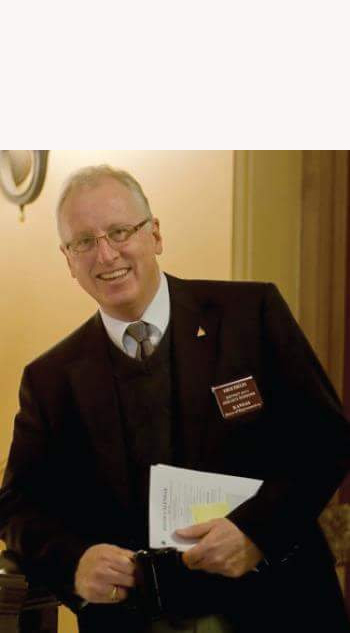
Eber Phelps, D-Hays, is the 111th Dist. state representative.

Thank you for your questions, ideas, and sharing your concerns over the last year. During this holiday season, I am grateful for the opportunity to serve you and to be part of returning Kansas back to sanity and solvency. We have always been a pragmatic, common-sense state, and with a few years trying other strategies, we are getting back to the basics that made our state great.

I wish you a joyous holiday season and a happy, healthy, safe, and prosperous New Year!

Here is the 2018 House Legislative Calendar to give you an idea of our schedule for the spring.

Please join me at the following legislative forum after the 2018 legislative session begins on January 8th:

  • Saturday, February 3rd at 8:30 a.m. at the Robbins Center at Fort Hays State University

Since I last wrote, I have been busy representing you at various conferences and learning opportunities throughout the district and across the state:

  • Transportation bus tours sponsored by Economic Lifelines in Dodge City on September 24th and in Salina on December 4th
  • An Electric Cooperatives tour in Garden City on October 3rd
  • Education Forums in Wakeeney on November 8th and in Salina on November 9th
  • KanCare update in Great Bend on December 2nd
  • Farmer’s Appreciation Night in October
  • Kansas Hospital Association event with area hospital administrators, Dec. 18.

Under the Dome
A secret Kansas government
You pay the bills, you should know what they’re for, that’s the point of transparency. While Kansas has been known for our forthrightness, that environment has changed significantly under Gov. Sam Brownback as he hid the damage his policies caused. You already know about our drastically underfunded schools. The Brownback Administration also borrowed from KPERS to pay for Brownback’s failed tax plan and left our roads and bridges in dire need of repairs. Then, we heard news about six-figure contracts awarded to unqualified consultants at the Department of Commerce. If that wasn’t bad enough, we have missing, unaccounted for, and dying kids in our foster care system.

Change started last session by ending the failed tax plan instead of tax cuts.


While I was gone for a few years, I remember how the legislature and state departments used to work, so upon my return to the legislature this year, I wasn’t surprised when the Kansas City Star revealed how hard it has become for Kansans to really know what’s going on.

There’s no doubt our state is in poor condition right now. I want my service in Topeka to help restore faith in Kansas government. Change started last session by ending the failed tax cuts, even though President Trump and Republicans in Congress are set to repeat the disastrous Brownback “experiment” at the national level. The Hays Post recently ran an article to that effect. In Kansas, I’m hopeful the news of increases in actual and projected state revenue for the remainder of this fiscal year and FY 2019 are good signs.

Removing the cloak of secrecy in Topeka will go a long way to moving our state forward. Some of you may know the audio for House and Senate floor action is streamed live. That’s a good start, but I also want to see live video streaming, which will now be the case in most committee rooms for hearings. Live video coverage of floor proceedings is a change that needs to be made through the House and Senate rules drafted at the start of each new legislative session. I support this rule change.

Meanwhile, I promise to let you know how I vote and why. In addition, I pledge moving forward to have my vote recorded on all committee votes, which is currently not required by the rules. You can always reach me through social media and my email, as well as meet with me at my public forums. Speaking of votes, you can review mine from the 2017 session by going here.

Schools remain top budget priority
The Legislature relies heavily on the Consensus Revenue Estimating Group to base its budgets, which is now on a two-year (or biennial) cycle. Because the Legislature ended the Brownback tax cuts, revenue estimates went up by $230 million more than we expected. The good news is that we have more money to pay our bills and start the lengthy process of reversing all the damage done to critical state programs during the Brownback years.

School Finance
School funding will again dominate the legislative session in 2018. While we made some progress last year with modest increases in school funding, we have a long way to go before we can even say that our schools are adequately funded.
The recent decision by the Kansas Supreme Court on school funding prompted the Legislature to form a special joint committee, the Special Committee on a Comprehensive Response to the School Finance Decision. The committee met to hear testimony on how the state should respond to the many policy issues and budget questions caused by the decision.

I am very disappointed in recent comments by Republican leaders in the House and Senate who said they will not consider raising additional tax revenue to support adequate school funding. After several years of severely underfunded budgets, I’m not sure how we can meet the Court’s decision without additional funding. Many state programs are already at a breaking point.

In addition, I oppose the strategy to change the Kansas Constitution with an amendment that would prevent the courts from closing schools next year or change the definition of an “suitable” education in Kansas. Many believe it will take at least $600 million more in funding to satisfy the Court’s ruling. Five of the justices on the Court faced the voters in 2016, and all were retained. I firmly believe the Court is not the problem. We simply must provide more funding for Kansas schools. To not do so would harm Kansas children for generations to come.
Just this week, Attorney General Derek Schmidt asked the legislature to complete its work in March so his office can prepare arguments for the court in April. We have much work to do and little time to accomplish them.

It is a special honor to serve as your state representative. I both value and need your input on the various issues facing state government. Please feel free to contact me with your comments and questions. My office address is Room 43-S, 300 SW 10th, Topeka, KS 66612. You can reach me at (785) 296-4683 or call the legislative hotline at 1-800-432-3924 to leave a message for me. Additionally, you can e-mail me at [email protected]. You can also follow the legislative session online at www.kslegislature.org.

INSIGHT KANSAS: Tales of two Emporias

A century ago, William Allen White made Emporia famous because it embodied the can-do spirit of small town America. The Veteran City has been in the news again lately, and now the messages are decidedly mixed. Forbes calls it a “charming, walkable and bikeable town with 14 buildings on the National Register of Historic Places,” but according to The Onion, there is “no better place in America to get the hell out of and never look back” What gives, Emporia?

Michael A. Smith is a professor of Political Science at Emporia State University.

First, the good: Forbes contributor Laura Begley Bloom and collaborator Laura Cabera ranked Emporia second in the nation for affordable entrepreneurship opportunities. Gushing like realtors, they praised the town’s “active main street, restaurants and a bustling performing arts theatre.”

“You’ll fall in love with this town,” they added, noting that the median rent here is only $600/month—not bad for a town with two high-speed Internet providers.

They could have effused still more. They overlooked the town’s famous Dirty Kanza (DK) bicycle races and the disc golf championships, which draw competitors from across the country and worldwide. Locals enjoy tai chi and yoga lessons at area studios. There is a microbrewery, winery, chamber orchestra, farmer’s market, and chocolatier. Finally, Emporia is a rehabber’s paradise—even historic mansions can be had for less than $200K. In short, this is a great little college town for creative professionals to start small businesses and sample local amenities.

The counter-punch was as savage as it was inevitable. In an unsigned piece, The Onion’s snarky satirists claimed that “factors such as housing conditions and the overall health of residents make [Emporia] ideal for packing one’s bags and never looking back.”

They added, “the local economy provides a range of dead-end jobs for people to quit because they don’t want to wake up 40 years from now having wasted their lives like their old man…”

Ouch.

The Onion may be satirical, but it cannot be ignored. Much like fake news, satire creates first impressions that stick around long after we forget the actual facts. The Onion’s editors probably chose Emporia at random, but some points hit home.

Lyon County ranks among the three poorest in Kansas, with nearly twenty percent of residents lacking health insurance. Except among schoolteachers, labor unions are virtually nonexistent, despite several factories and a large meatpacking operation. Many workers with a high school education or less put in long hours doing repetitive, mechanical work for low pay. If they become seriously injured or sick, they may eke out a living on Disability until eligibility for Social Security—unless they are undocumented. Methamphetamine and opioid addictions lurk not far beneath the surface. Racism still haunts the town, too. A Somali community was rejected when they tried to settle here about 15 years ago, while the large and growing Hispanic population has stayed, but with no representation in city government. Local charities send schoolchildren home with food hidden inside their backpacks so it does not get stolen. Fifty percent of residents live in rental housing, some of it so dilapidated that tenants are afraid to fill their bathtubs lest they fall right through the floor. City code inspectors are underfunded and overwhelmed.

Forbes and The Onion are both correct. Why? Emporia is a town where the different social classes live mostly separate lives today. One group samples local confections, rehabs historic homes, and stays in shape; the other just tries to survive. The divide is usually college-educated versus high-school or less, white collar versus blue collar, and increasingly, Caucasian vs. Hispanic.

Sound familiar?

White made Emporia famous because it represented a certain vision of America. Today, with its deep class and racial divisions, this town still has a lot to teach us about the nation’s economy, culture, and society, circa 2018.

Michael A. Smith is a Professor of Political Science at Emporia State University.

Now That’s Rural: The Schoen Family, Downs

Ron Wilson is director of the Huck Boyd National Institute for Rural Development at Kansas State University.

By RON WILSON
Huck Boyd National Institute for Rural Development

“Family.” As the football team comes running out of the locker room, the word “family” is displayed on a wooden block held up high by the players. Lots of athletic programs use the word family to describe their relationship with the fans. Today we’ll meet a family which literally has family members playing in not one, but two, college sports at the same time.

Kelly and Kristi Schoen are the parents of this athletic family. Their two sons are making their marks in college athletics in two different sports.

Kelly Schoen is originally from a farm near the rural community of Downs, Kansas, population 873 people. Now, that’s rural.

Kelly went to K-State and got a finance degree. Kristi is from Manhattan and also went to K-State where the two met and ultimately married. Kelly got an MBA at Creighton and went to work for a large accounting and consulting firm in the Kansas City area. He later became CFO of another company and started Freedom Bank in Overland Park with some partners in 2006. Today he specializes as a consultant in strategic planning, corporate transactions, and mergers and acquisitions.

“I really enjoy it,” Kelly said. “Our bank serves the community and works a lot with small- and medium-sized entrepreneurial businesses.”

Kelly and Kristi have three children. “They don’t send you home from the hospital with an owner’s manual,” Kelly said. “When you start to raise your own kids, you reach back to those values of faith, family and hard work that you learned from your parents and grandparents. We were taught to value education and to always do your best.”

Their older daughter Chandler learned the value of caring for others. She is a nurse in Kansas City and is working toward a doctorate in nursing practice.

The Schoens’ two sons also excelled in academics as well as athletics. Mason, the older son, was a two-year letterman on the Blue Valley Northwest High School basketball team. As a senior and team captain, his team went undefeated and won state.

Mason chose to go to K-State and earn a finance degree while walking-on with the K-State basketball team. Today he is the lone senior on the K-State basketball roster. He has made the Big 12 Commissioner’s Honor Roll for six straight semesters, was a National Association of Basketball Coach’s Honors Court Recipient, and made the 2017 Academic All-Big 12 First Team.

His younger brother Dalton was a standout multi-sport athlete as well, but his college sport of choice was football. He considered the Ivy League and then looked at the top engineering schools in the Midwest, including K-State. When a walk-on position opened up on the K-State football team, he made that his choice.

For years, there has been a pattern of Kansas kids who develop remarkably in the K-State football program. Dalton Schoen seems to be another example.

2017 was his break-out year as a wide receiver. The season started with a bang. In the first game, he took his first catch of the year 70 yards for a touchdown. That sounds like a lot, but his next touchdown catch was for 82 yards against Texas! (This has to make for a pretty good average.)

During the 10 games in which Dalton played, he averaged more than two catches per game. It was especially exciting to see the catches he made in crunch time. Against Texas Tech, for example, he caught five passes for more than 100 yards, including the two-point conversion that sent the game to overtime for an eventual win.

The two Schoen brothers lived together in the summertime and now get to see each other at the athletic training table. “All that work and preparation has paid off,” Kelly Schoen said. “From a parent standpoint, I’m just happy that they get to live their dreams.”

Family. That’s a good term for the relationship of sports teams and fans. We commend Kelly, Kristi, Chandler, Mason and Dalton Schoen for making a difference with their values and hard work. It’s good to see that it’s all in the family.

HAWVER: School funding mandate will force difficult decisions in 2018

Martin Hawver

OK, so what if the Legislature next session decides to boost spending for public K-12 schools, as it presumes the Kansas Supreme Court wants it to do by about April 1?

Well, if the Legislature—or especially the House where all of its members stand for re-election in 2018 or maybe some just decide not to run for another two-year excursion into state government—decides to just write the check without raising anyone’s taxes, it means about a 17 percent cut in spending for everything else government does.

Sounds simple. Cut 17 percent from everything, and give that 17 percent to schools, and the court will probably be satisfied, and all this litigation over what is adequate school funding is over…for a while.

The long division shows that if a rumored $600 million in additional funding for schools will settle the lawsuit, it’s about a 17 percent cut on all state general fund spending.

Well, of course, there’s no decision yet on just how much the state needs to spend on K-12, and how quickly, but at least a couple state agencies during hearings last week dutifully presented information about what a 17 percent budget cut would mean to their agencies. Posed, of course, in the most frightful manner designed to get lawmakers to think about not doing that sweep of cash.

That’s the key. Making that 17 percent cut in funding so shocking, so dangerous, so perilous, that lawmakers quit considering budget cuts.

So, what spooked members of the latest committee to hear about the need for K-12 money?

Start with the Department of Corrections. Now, there are probably lots of ways to cut spending, buck or two here, a buck or two there, but the Kansas Department of Corrections said to cut its budget 17 percent it would close three prisons.

Oh, and let about 2,500 felons loose. Just open the gates and watch them wander off to the nearest liquor store or maybe car that they could jump-start. Corrections didn’t say whether it would let loose check forgers, bank robbers or tax evaders, just 2,500 folks who probably need to be in prison, or at least in someone else’s neighborhood.

Wonder how the Kansas Judicial Department will respond to a 17 percent budget cut?

Well, one solution, apparently the ickiest one that the Judiciary could come up with, is closing the courthouses for 70 days a year. That might make getting warrants a little slow, or might mean that Kansans can only get divorces on Mondays, Wednesdays and Fridays, and thousands of other inconveniences.

Other state offices would either close, lay off staff, quit some programs that they provide, and well, nothing very good happens.

What’s the object of having state departments illustrate what would happen if suddenly $600 million was removed from virtually every program except K-12 funding?

Well, it immediately means that lawmakers will have to give some serious thought to boosting state aid to schools. From somewhere…

That overturns the basic, budget touch-up and pass a few bills that Kansans will like into a major fight between those who agree with the court that the state isn’t spending enough on schools and those who think the court might give the Legislature a year or two to come up with the money, and figuring out how to make that more gradual increase in funding guaranteed. Flat guaranteed, not one of those deals in which the last year of promised and written into law increases are backed out of in a year or two.

Or, we guess, lawmakers could establish a new committee to choose the 2,500 felons who get released, maybe based on where they would move to if they are set free…

Syndicated by Hawver News Company LLC of Topeka; Martin Hawver is publisher of Hawver’s Capitol Report—to learn more about this nonpartisan statewide political news service, visit the website at www.hawvernews.com.

MADORIN: Winter solstice

I can’t imagine living in early times without scientific knowledge regarding the year’s shortest day and longest night, the winter solstice. Before easy access to candles, kerosene, and electricity, this was a worrisome season. Little besides faith the sun would return comforted the ancients through increasingly long nights.

Native Kansan Karen Madorin is a local writer and retired teacher who loves sharing stories about places, people, critters, plants, food, and history of the High Plains.

The word solstice itself comes from the Latin solstitium. Sol meant sun and stitium stoppage. According to the Family Education Network, the winter solstice occurs either December 21 or 22. For several days before the solstices and for several days after, it appears that time stands still. In a world bombarded with more information than it can process, it comforts me to imagine, that for a moment, the sun momentarily stands in place each June and December.

It must have comforted our ancestors also. Anthropologists have found evidence that many early societies developed means to mark equinoxes and solstices. Stonehenge is one well-known example. In North America, some experts theorize Native American medicine wheels peppering our landscape may have served a similar purpose. Though I don’t recommend building a Stonehenge or a medicine wheel in the backyard, much can be said for beginning one’s day before the sun rises and making time to watch its first rays break the horizon.

Kansans have experienced some spectacular sunrises since Thanksgiving. One morning it appeared that fingers of crimson fire tore away the darkness. Other mornings reveal themselves in pastel hues gently probing their way into the eastern sky. Making a point of spending time watching the sun come up and taking note of when it happens puts life in perspective. I find myself hating to sleep in. I don’t want to miss sunrise or the day’s continually shifting shadows.

In the same vein, I’ve found it soothing to note when the sun sets on our western hill. Painters and photographers recognize and celebrate the power a fiery sunset or a rosy orb gradually fading into violet darkness holds over a viewer. Marking evolving shadows dropping into the West connects us to forgotten rhythms.

For those who don’t want to or can’t watch the sun rise and set, computers make it easy to track the earth’s rhythms. Anyone can see sunrise and sunset times on the weather page or by installing the Weather Bug on a computer.

Solstices are a reminding, a remembering of rhythms our hearts know but our minds forgot. They are about belief in rebirth. They are about faith. They are about knowing darkness will descend and lengthen but, given time, light will return.

It is not a coincidence that we choose to celebrate our religious and secular holidays with displays of light during this dark time of year. The beckoning warmth of Christmas lights and electric candles on windowsills reminds humanity that light will overcome dark and days will grow longer. I hope you stopped for a moment and remained still, especially at sunrise and sunset, to mark this year’s winter solstice December 21.

Native Kansan Karen Madorin is a local writer and retired teacher who loves sharing stories about places, people, critters, plants, food, and history of the High Plains.

Copyright Eagle Radio | FCC Public Files | EEO Public File