We have a brand new updated website! Click here to check it out!

DOCTORS NOTE: Oct. 25

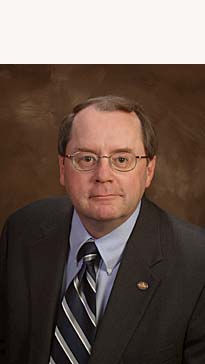
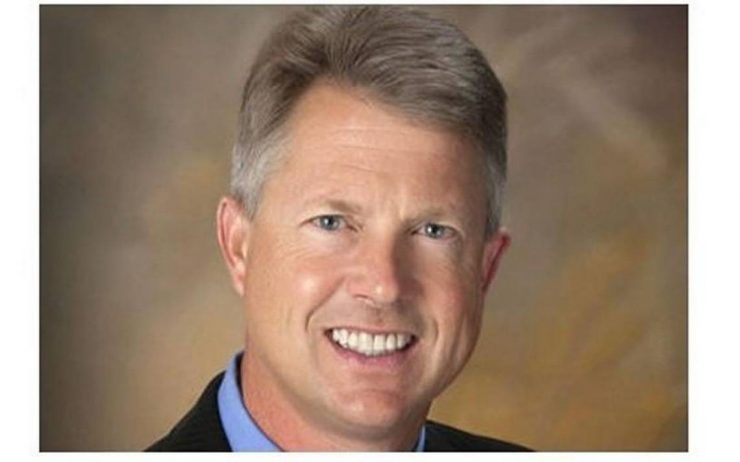
Dr. Roger Marshall, R-Great Bend, is the First District Kansas Congressman.

Over the past weeks, I have been working on legislation to help our farmers and livestock markets and recently was happy to introduce it in Congress. It is the Securing All Livestock Equitably (SALE) Act. This bill will ensure that sale barns across the country are afforded the financial protections and security that they deserve in a very complicated industry.

Every weekend for two years growing up, I spent my Saturdays working at a sale barn in El Dorado, Kansas. While that was hard work, today’s world of cattle farming is a little more complicated than when I was sorting heifers and steers.

Unfortunately, our friends at those sale barns are at times left holding hot checks. My bill will help protect those businesses and the producers working with them by setting up a trust until the original seller has been paid, ensuring that producers and livestock auctions have a legal recourse in the event of a dealer default and/or bankruptcy.

As always, if you have any questions, concerns or know of ways my office can be of assistance, don’t hesitate to contact us.

In the House

Internship Opportunities In My Office

Have you ever wondered what it is really like to work for Congress? If so, I encourage you to apply to my internship program that runs year round! Internships provide an opportunity for students to work closely with me and my staff, and assist our efforts to represent Kansans on Capitol Hill. You can apply directly from my website. I am excited to have some of you join me in working for Kansas and the First District! Applications for the Spring semester internship are due by November 13th. (Seen left with Fall ’17 intern class)


Roundtable in Ellis County

While in the district last week, I took the time to sit it on a roundtable with Ellis County business and community leaders (shown right). I enjoy having the opportunity to meet with and hear from the people in my district. This was a valuable opportunity to discuss how the upcoming tax reform and the farm bill will directly impact those in Ellis County. This was yet another great reminder to me that decisions we make in Congress every day, impact the lives of Kansans.


Kansas Global Trade Services

Last week I had the honor of speaking at the US-EU SME Best Practices Workshop, hosted by Kansas Global Trade Services (shown right). As a member of both the House SmallBusiness and Agriculture committees, I understand the profound impact trade has on my district and continue to advocate for free and fair trade opportunities. I would like to thank everyone that attended, and participated. It is great to see so many others as passionate about trade as I am!

SCHROCK: Accreditation, Chinese style

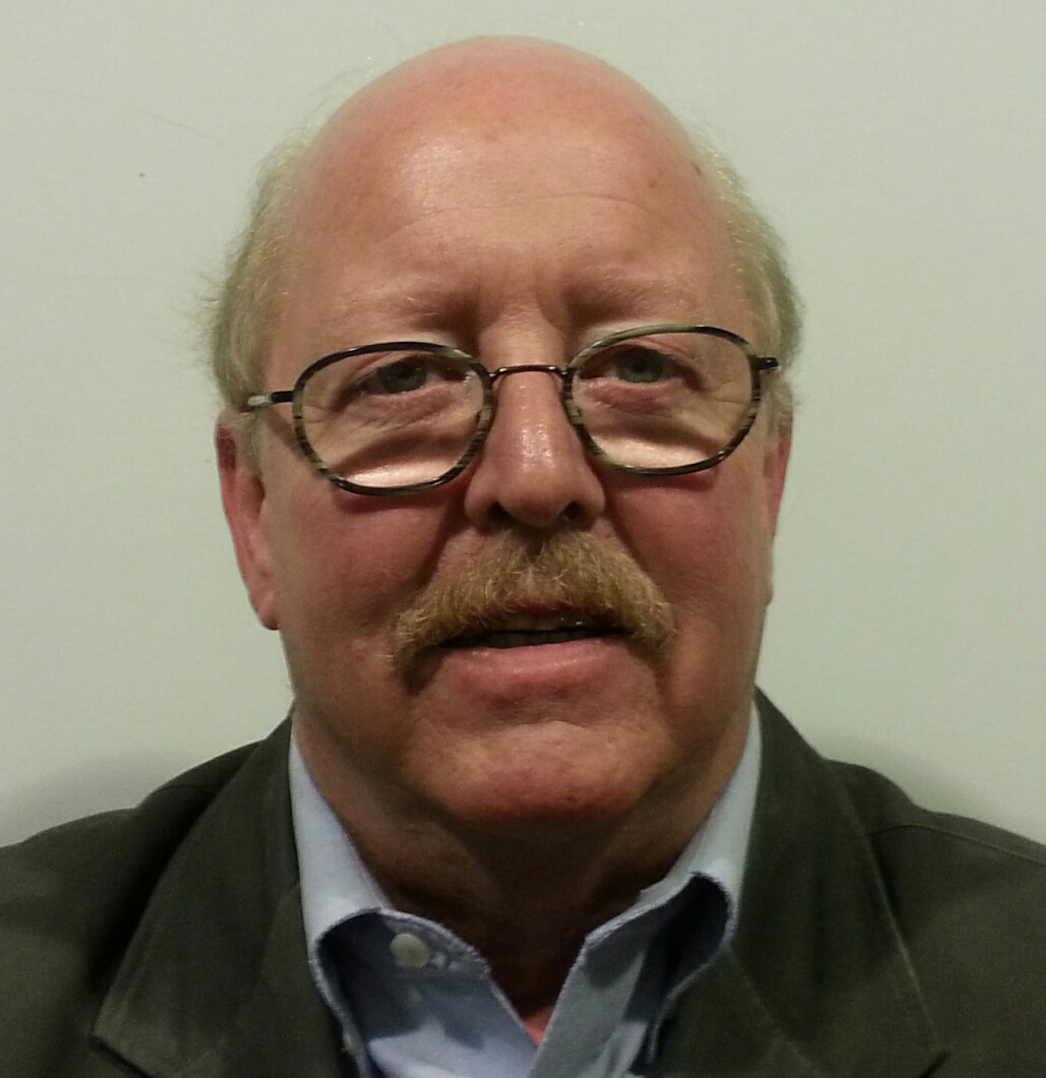
John Richard Schrock is a professor at Emporia State University.

Last week was the visit from the inspection team from Beijing. I am at a national university, and that means that there will be national inspection teams. In the U.S., all universities are state-sponsored or independent and there are no equivalent national universities. In China there are roughly 40 nationally-funded universities as well as some Chinese Academies of Science that award degrees. The Ministry of Education inspection team was here all week.

There was the standard public relations banner welcoming them and the campus was kept very clean (but it normally is, anyway). Tarnished bronze signs indicating “Key Laboratory” (select, nationally funded) were replaced by new chrome signs. But classes met as normal.

The department chair led a portion of the team through the museum inspecting the actual condition of the collection. They already had all of the university data on classes, student numbers and facilities. You could say that they had been given the maps, but now they were here to confirm the ground truth. There were the standard meetings with groups of faculty. –And with groups of students.

But I asked a teaching/research colleague, “Do individual members of the team also chat with random members of the faculty?” –Yes!

“Do some sit down in the student commons and talk with random students?” –Yes!

“Do they check rigor of teaching by looking at sample tests at random?” –Yes!

With some of the team wandering around in an unscheduled way, they can actually detect most of what is really going on in the classroom. –Whether faculty meetings are honest discussions. –Whether rigor is being maintained in coursework, etc. Any idea of lying or misrepresenting anything to them is unthinkable.

Friday was the last day, with an exit ceremony. But there was no pronouncement whether the university passed inspection. There will be a detailed closed discussion back in Beijing. I have no doubt that this university will “pass” (it matches or excels any Kansas university). But I suspect that this inspection might have detected weaknesses in some program or staffing or some facilities, and that will be relayed via back channels.

It is therefore ironic that this is the very same week that in America, the University of North Carolina at Chapel Hill got off free after a NCAA investigation of academic‑athletic fraud. For nearly two decades, Chapel Hill had athletes who got credit for classes they did not attend and work they did not do. To quote the Chronicle of Higher Education summary: “The association not only stopped short of levying the extreme penalties that some observers had expected, but refrained from applying virtually any penalties at all.” This decision was by an athletic body. But all of that time, UNC-Chapel Hill was also fully accredited.

If accreditation in the U.S. was similar to the Beijing inspection, some teacher or student at Chapel Hill would have likely squealed. But U.S. accreditation visits are a brief, highly choreographed dance, the team having already supposedly read through virtual reams of online paperwork written by university folks who scored high in “creative writing.” By having institutions only address some selected “measureable outcomes,” the system is easily gamed. A large faculty meeting with administrators in attendance ensures appropriate answers. And a selection of hand-picked naive students are no better.
The simple evidence for much of U.S. accreditation being a farce lies in the fully accredited status of schools that were closed due to providing no genuine and substantial education, and to “schools” that award credit for just taking tests, and to “schools” that graduate “nurses” that have never set foot in a hospital, etc.

But the UNC Chapel Hill incident also shows that nothing is changing to force U.S. accreditation to detect such problems tomorrow.

Nor is K—12 education in Kansas any better off, where annual U.S.D. paperwork reports (now submitted online of course) are also accepted on faith alone.

The solution is the very procedures that I saw here in China last week: actual checking the ground truth at the school. Unfortunately, neither the KBOR nor KSDE has a single person who has the authority and the responsibility to inspect on site and in person. So if you like reading fiction, Topeka has a lot of accreditation literature just for you.

John Richard Schrock is a professor at Emporia State University.

News From the Oil Patch, Oct. 24

By JOHN P. TRETBAR

Rig counts were up in Kansas but down nationwide last week. Independent Oil & Gas Service reports 15 active drilling rigs in eastern Kansas, up one, and 27 west of Wichita, up three. They’re drilling on two leases in Stafford County. Baker Hughes reported a drop of seven oil rigs and a drop of eight gas rigs for a total of 913 nationwide. Canada reports 202 active rigs, down ten for the week.

For the first time in nearly a year and a half, Baker Hughes lists an active rig in Kansas on its weekly rig count summary. The oilfield service firm has not even included Kansas in its “Major State Variances”since July, after listing zero active rigs across the state for about a year prior to that. By comparison, the Independent Oil & Gas Service reports during that same period have shown between two and three dozen active rigs in the Sunflower State. The latest Baker Hughes reports show one active rig in Kansas. Independent lists 42.

Kansas operators filed 28 permits to drill at new locations last week, nine in the eastern half of the state and 19 in western Kansas. That includes one new permit in Stafford County. So far this year, we’ve seen 1,140 new permits filed in Kansas.

Independent Oil & Gas Service reports 34 new well completions across the state over the last week, 1,040 so far this year. There were 15 in eastern Kansas and 19 west of Wichita, out of which nearly half were dry holes. Two completions were reported in Barton County last week.

A lawyer confirms settlements in lawsuits filed against two oil companies by a Prague, Oklahoma resident injured in an earthquake nearly six years ago that her lawyer says was caused by saltwater disposal wells. KFOR-TV reports Sandra Ladra reached a confidential settlement with New Dominion earlier this month and with Spess Oil Company in July. Details were not released.

U.S. refineries from Ohio to Minnesota are capitalizing on access to cheap crude from Western Canada and North Dakota oilfields. Reuters reports that’s helping the region break a historic dependence on fuel from the Gulf Coast while redrawing oil trade maps.

Continental Resources said Tuesday it has agreed to sell more than 1 million barrels of oil to China in its first oil export contract. Oklahoma City-based Continental will sell 33,500 barrels of oil per day in November to Atlantic Trading and Marketing, which will ship the oil overseas.

A pair of GOP senators the push for more petroleum exports. Sens. Bill Cassidy and Marco Rubio are proposing fast-track approval for relatively small-scale volumes of liquefied natural gas. The Hill reports their bill would allow government approval, “without modification or delay,” for exports of up to 51.1 billion cubic feet per day of LNG to nearly any country. Currently, all natural gas exports from the contiguous United States must be extensively reviewed and certified by the Energy Department as being in the “public interest” before they can proceed.

A group at MIT has found a way to use electricity to convert methane into derivatives of methanol, a liquid that can be made into automotive fuel or used as a precursor to a variety of chemical products. This new method may allow for lower-cost methane conversion at remote sites, and could slow down the huge amounts of the gas flared at oil wells. The findings were described in the journal ACS Central Science, and could pave the way to making use of a significant methane supply. Current estimates show that 150 billion cubic meters of the gas are wasted each year.

A group of “zombies” were stopped outside the entrance to the Oklahoma State Capitol on Saturday in a staged event by groups supporting oil production tax increases to prevent cuts to health, education and other services. The event was filmed for online sharing and comes as state lawmakers are in special session to address a $215 million budget hole.

Extension agent receives national communication award

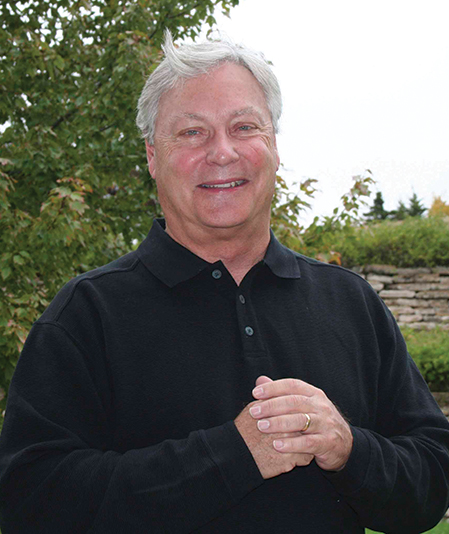
Linda Beech

Linda Beech, Family and Consumer Sciences Agent of the Cottonwood Extension District- Hays office, was honored recently at the National Extension Association for Family and Consumer Sciences annual conference in Omaha, Nebraska. She received the first place national Written News Communication Award at the conference awards ceremony on Oct. 19.

In receiving the award, Beech was recognized for a personal news column that encouraged readers to donate a variety of nutritious foods to community food drives so those in need might have healthier diets.

The Written News Communication Award encourages excellence in communication for a news article, special feature story or a personal column. Beech’s commitment to communicating information to meet the needs of individuals, families and communities is exemplary. This award is sponsored by the NEAFCS membership and awards fund.

HENSLEY: It’s time to do the right thing for the children of Kansas

Sen. Anthony Hensley (D-Topeka) is the Kansas Senate Minority Leader.

The Kansas Supreme Court ruled for the twelfth time since 2003 that the State of Kansas has failed to “make suitable provision for finance of the educational interests of the state” as required by Article 6, Section 6 of the Kansas Constitution. While there are Republican legislators eager to attack the integrity of our state Supreme Court justices, such a tactic is short-sighted and unproductive.

On March 2, 2017, the Court clearly instructed the Kansas Legislature to implement a constitutional school finance formula that was both adequate and equitable, meaning sufficient school funding and reasonably equal access to that funding. The Court also admonished the Legislature to “show its work” in order to justify the decisions it made in crafting this formula. Their admonition was something the Legislature should have taken seriously. Unfortunately, it didn’t.

The Gannon trial record contained 662 exhibits totaling 18,727 pages and 3,673 pages of transcript testimony. The Republican leadership hired and paid a Legislative Counsel $65,000 to help us “show our work” and defend our decisions in court. This ultimately resulted in the production of a legal brief from the Legislative Counsel attempting to defend the Legislature’s action. This brief was wholly insufficient and underscored the fact that the Legislature’s final product, Senate Bill 19, was a result of political posturing, not facts and data.

So, who is to blame? Certainly not the Kansas Supreme Court. They are merely doing their job as a co-equal branch of government. The blame belongs to those who promoted the passage of Senate Bill 19. Now is the time to put politics aside and begin work immediately to craft a constitutional school finance formula and create a legislative record that demonstrates our final product is based on sound decisions, not politics. Otherwise, the Legislature is choosing to ignore its constitutional duty and will be the cause of a statewide school shutdown.

It’s time to do the right thing for the children of Kansas.

Sen. Anthony Hensley (D-Topeka) is the Kansas Senate Minority Leader.

HAWVER: Outsourcing of income tax filings has an odd feel

Martin Hawver

Every now and again, something that probably makes great business sense just doesn’t feel quite right in your stomach.

The Kansas Department of Revenue plans to hand over to a private bank the tedious and for most purposes dull and simple job of opening up your Kansas income tax filing envelope, sorting out the papers, sending the check you wrote to a bank to channel to the State General Fund, and forwarding the tax filing to other state employees to make sure it is accurate.

It’s called contracting-out, and it operates much the same as building roads. Those folks with the jack hammers and high-visibility vests you see in construction zones aren’t state employees. They work for construction companies that won the contract to build the road.

It’s one thing when it is putting down asphalt, or maybe roofing a state office building.

But it just has a little different feel when those contract workers—who will know your name, where you live and how much money you made last year—don’t work for the state, where there are strict rules we’ve come to expect as a matter of culture. Probably the same rules remain, yet…

The whole issue of contracting out state jobs to private businesses is something that caught fire with the results of a $3 million study for government efficiencies—read cost-savings—by outsourcing state responsibilities, by cutting services, by basically running state government like a lean business.

On a strictly business basis, it probably makes sense to out-source that basic receipt of income tax filings from Kansans…but it has a funny feel to it, doesn’t it?

This is where that wallet-to-stomach debate starts.

Sure, it’s probably cheaper to hire non-state employees, probably a step or two up from the minimum wage, to do work that the state and all Kansans know needs to be done. Everyone talks about efficiencies in government, in lowering the operating costs of the state so your tax bill will be lower.

It’s one thing when to save money state forms for nearly everything are printed on both sides of the piece of paper. But it feels a little different when someone who doesn’t work for the state, a Cabinet secretary, or the governor, or essentially, for us…is opening our income tax forms.

Maybe that feeling is because we’ve come to respect and trust those unknown, unseen state employees.

That trust is probably the biggest asset that state employees as a group bring with them to their jobs. And it is worth something to the employees and to us taxpayers who hire them. It might cost a little more to have state employees handling our tax forms, our checks, but there’s the aspect of trust.

An estimated 40 state jobs would be eliminated and who knows what happens to those state employees after the out-sourcing? Does it matter whether the laid-off workers are civil servants, or whether they are “unclassified” which means they have no basic job protections and due process rights when their jobs are ended? They might find other jobs within state government or with other agencies but essentially those jobs are gone from state employment.

The Kansas Legislature has made a lot of change in the state’s civil service law, and encouraged workers through pay hikes to abandon that job protection and right to due process, which was essentially their guarantee that if they do good work and do it right they won’t be laid off just because of who they know.

And, contracting out those tax jobs? Well, at least you don’t have to report your weight on the tax forms…

Syndicated by Hawver News Company LLC of Topeka; Martin Hawver is publisher of Hawver’s Capitol Report—to learn more about this nonpartisan statewide political news service, visit the website at www.hawvernews.com

LETTER: Is Christian nation an oxymoron?

It is ironic that the same people who would have our country defined as a Christian nation are also against government programs to help the poor and sick.  Take self-proclaimed Christian columnist Susan Brown, who in a recent HDN op-ed quoted an intellectual agnostic who condemns “social justice” as a threat to the status quo social order.  Let me remind Ms. Brown that social justice was what Jesus was all about, the exact kind of social justice her and her agnostic colleague define.  Merely reading the gospels, we see that the main things Jesus “did” were healing the sick, making sure the poor get their basic needs met and providing assistance to the disadvantaged, of which contemporary efforts by the government Ms. Brown and Mr. Hayek malign as “redistribution of wealth.”   Characterized this way, it naturally brought to Ms. Brown’s mind the story of Robin Hood, whom she accepts as a heroic character, but not for his efforts to take from the greedy aristocrats and give to the needy poor, only his chivalry and green tights. 

Ms. Brown is right about Marx hating religion.  But it wasn’t God that Marx hated, it was elites’ use of religious dogma to justify and perpetuate an immoral economic system that creates massive poverty for the masses, while channeling more and more wealth to the “righteous” few at the top.  Marx would cite Ms. Brown’s arguments as perfect modern-day examples of the “false consciousness” elites try to create, the assumption that they deserve to have thousands of times more than the rest of us and any societal effort to redistribute their precious accumulation of wealth back down to the poor and struggling is morally wrong.  It is the social injustice of this unfair system of rewards that makes redistribution of wealth necessary to have a just society, if not to enable the very poorest to merely survive. 

Marx knew that the greed that fuels runaway economic stratification fosters societal dysfunction and hypothesized that it would eventually incite revolution.  We are seeing an excellent example of this dysfunction in the pharmaceutical CEO’s working to inundate society with their profitable, and highly addictive, opioids, which have created an unprecedented epidemic that will require billions of dollars of public funds to adequately address.  Tobacco CEOs did the same thing in the 1950s and have managed to keep legal and profitable the most addictive and deadly drug of them all.  But don’t tax the very corporations making billions pushing these addictive and deadly drugs on the public in order to help the victims of their gluttonous profiteering, right Ms. Brown?   That would be immoral and bad for the economy.

Gary Brinker, Hays

SCHLAGECK: And I quote

John Schlageck writes for the Kansas Farm Bureau.

Quotations are like rare stones in rings of gold. They provide insight that can move, illustrate and entertain. They can do many things like remove the wheat from the chaff, provide a cowardly lion with courage or simply clear away all the cobwebs from a darkened corner.

For a writer, quotations can add zip to a story or help provide credence to your tale. I collect quotations and some still reside in a couple manila envelopes. A few are taped on my kitchen refrigerator. Others lie scattered on the wooden floor of my middle desk drawer.

I often refer to three or four books of quotations in my office book case, and every once in a while I still take out my scissors and cut from magazines, newspapers and any other form of paper when I find one I consider especially good.

Sometimes, I even grab a pen and scrawl them down on a scrap of paper or if that’s not in sight, the palm of my left hand. I must write it down so I won’t forget. Most of these quotations are short on words but still say it quite well.

After rummaging through my collection, I offer these up to for your reading pleasure. Some are written by famous people, some not so famous.

If we take people as we find them, we may make them worse, but if we treat them as though they are what they should be, we help them to become what they are capable of becoming. – Johann Wolfgang von Goethe

Of those to whom much is given, much is required. – John F. Kennedy

If you don’t vote, someone else is voting for you on issues that are important in your life. – Voltaire

Too much of a good thing is wonderful. – Mae West

Life is what happens when you are making other plans. – John Lennon

Earth is here so kind, that just tickle her with a hoe and she laughs with a harvest. – Jerrold

What is defeat? Nothing but education, nothing but the first step to something better. – Wendell Phillips.

One thorn of experience is worth a whole wilderness of warning. – Lowell

To live in hearts we leave behind, is not to die. – Campbell

Why should the devil have all the good tunes? – Rowland Hill

Men are what their mothers made them. – Emerson

No man is more cheated than the selfish man. – Henry Ward Beecher

Judge a man, not by his answers, but by his questions. –Voltaire

Tools were made and born were hands, every farmer understands. – William Blake

In youth we learn; in age we understand. – Marie Ebner-Eschenbach

An old connoisseur of wines was run over by a truck and some wine was poured on his lips to revive him. ‘Pauillac, 1973,’ he mumbled and died. – French legend

Have courage for the great sorrows of life and patience for the small ones; and when you have laboriously accomplished your daily task, go to sleep in peace. God is awake. – Victor Hugo

The air of ideas is the only air worth breathing. – Edith Wharton

The best days are the first to flee. – Virgil

Nothing good is ever lost. It stays a part of a person – becomes part of one’s character. – Rosamunde Pilcher

Too late we know the good from the bad: the knowledge is no pleasure then, being memory’s medicine rather than the wine of hope. – R. D. Blackmore

John Schlageck is a leading commentator on agriculture and rural Kansas.

LETTER: Unanswered questions on USD 489 bond issue

After studying the information on the USD 489 website, I am leaning toward voting no on the school bond proposal. The information provided is biased and lacks sufficient information and explanation of why some buildings will be renovated and others replaced. Although I have been impressed with Superintendent John Thissen’s prompt answers to my questions, I would have had far fewer questions if the website had provided more information. Below are some concerns/questions I still have regarding the proposal, which I think are better addressed for the whole community.

1. Much information on the current condition of the schools was provided, but little on the costs of renovating vs. replacing each school, including costs of addressing specific needs for each building and costs of demolition of Wilson Elementary School.

2. There was no explanation of the criteria used to decide whether or not to renovate or replace each building.

3. If the district can’t sell the abandoned Lincoln and Washington elementary schools, how much will it cost to demolish these buildings?

4. Would adding more classrooms to existing buildings and hiring new teachers address the classroom-space needs more effectively? Personally, I have greater faith in quality teachers and effective involvement of parents/legal guardians in the education of their kids than I do in “21st Century Learning Environments.”

5. Why was the survey of Hays residents ignored when the majority said they wanted smaller, more frequent bond issues and 83% didn’t want property taxes on a $150,000 home to increase by more than $10 per month?

I can see from the information on the USD 489 website that our schools have some tremendous needs and I strongly support addressing them. However, I don’t think we’ve been provided enough information to make an informed vote on whether this proposal best addresses those needs, especially at a time when state taxes will likely increase to meet the constitutionally required spending for adequacy and equity among districts.

Helen Hands, Hays

LETTER: $154M tax increase will last an entire generation

On Nov. 7, 2017, the voters will go to the polls to vote on the USD 489 school board’s proposed $154 million tax increase on property owners.  Before making a decision, voters should consider a few things.

First, the school board is seeking to put a proverbial anchor around the necks of property owners by increasing their taxes for the next 30 years! Think about that for a moment. I have a 30-year-old child who lives in Hays and owns property with her husband. If voters approve this $154 million tax increase, she will pay for it until she is 60.  This proposed tax increase will last an entire generation of people. 

Second, the negative impact on our local economy which is already suffering from low agricultural and oil prices and decelerating retail sales seems to be lost on the educationalists (not a real word, just a made-up term which attempts to characterize the “no amount of money is too much to spend on our children” crowd) who came up with the plans.  More importantly, they failed to inform the public that with a negative tax multiplier of 3, private spending will be reduced by $3 for each dollar rise in taxes.  According to academic research brought to light by Hays City Commissioner Henry Schwaller IV, that equates to a negative local economic impact of $452 million.

Let me use a biblical analogy. The $154 million tax increase passes; it triggers a local economic downward death spiral; it begets tax increases on property owners for the next 30 years; which begets less spending by consumers on cars, at restaurants and retail stores; which begets seniors on fixed, limited incomes forced to restrict their spending; which begets even less sales tax revenues for the city of Hays (which are already decreasing) to fund its budget; which begets city spending cuts or even more property tax increase (only choices available); which begets lower real estate valuations and a housing rents price war; which begets even less spending by consumers locally, less sales tax revenue, higher property taxes due to lower valuations, etc. The $154 million tax increase thus effects an economic downward spiral until some sort of bottom is reached in the next 30 years.

Third, it’s not as if people didn’t tell the school board they wanted more frequent less expensive bond proposals. The school board’s own polling informed them that 60% of the community desires this.  Also 58% of those polled said they were willing to spend no more than $0-$10 per month so, dismissively, the school board decides to raise taxes by about $17 per month on the average valued house in Hays.  Unfortunately, in what appears to be the norm, the school board, the out-of-town architects, the school administrators and vision team members simply chose to ignore the wishes of the community.  And the school board’s slick four colored “informational” brochures purposely leave out the facts that the condition of the schools that truly are needs (two new elementary schools simply are wants, not needs) can be addressed with far less money than the school board is willing to consider.

It’s no secret that the “educationalists” are counting on those who are opposed to the gargantuan $154 million tax increase to stay at home on election day. The only question remaining is will the voters prove them correct? Will property owners who believe that such a massive tax increase in their taxes is a tad too much make the classic mistake on election day and stay at home because they naively believe voters will never trust the school board to spend the $154 million wisely? Or has the school board once again failed to grasp and appreciate the depth and breadth of the opinions of the community at large who believe that new brick and mortar and right size classrooms doesn’t equal better educational results and who tried to tell the school board that smaller and frequent is the way to go.

In the end, this much is certain. If the $154 million tax increase passes, people will pay increased property taxes for the next 30 years. Nothing like economically tying the community’s hands behind its back for an entire generation.

Thomas M. Wasinger

Exploring Outdoors Kansas: From quail to elk, Kansas never disappoints


Every November, upland bird hunting becomes to Kansas what biscuits are to gravy. Each year Jeff Prendergast, Small Game Specialist with the Kansas Dept of Wildlife, Parks and Tourism (KDWPT) at Hays coordinates production of a statewide Kansas Upland Bird Hunting Outlook. This year’s 2017 report states “Overall, good cover and habitat conditions appear to have mitigated poor weather, thereby maintaining stable bird numbers for this fall. Winter habitat will remain good with lots of cover available for birds to utilize.”

Steve Gilliland

This year several local farmers have told me they are seeing lots of pheasants and more quail than they’ve seen for years. Concerning pheasant hunting specifically, the 2017 report states “Pheasant hunting in Kansas should be fair to good this year. Excellent conditions in 2016 combined with high overwinter survival led to another increase in the pheasant survey this year and returned the index to the pre-drought average.

The best areas this year will likely be in the northern half of the Kansas pheasant range.” As for quail, the report predicts “Quail hunting in Kansas should be good to locally great in 2017. Precipitation patterns observed over the past 5 years has altered vegetation, increasing both the quality and quantity of habitat, allowing for a modern quail boom. The bobwhite survey in 2017 was the highest recorded since the survey began 20 years ago.” If you would like to read the 2017 Kansas Upland Bird Hunting Outlook in its entirety, broken down region-by-region, email me and I’ll send you the file.

Elk on the Maxwell Game Reserve

Over the years, the opening day of Kansas pheasant season has spawned many traditional family pheasant hunts, and several years ago I was honored to be part of one such hunt, the Schmidt Family pheasant hunt. In the mid 1960’s, Elmer Schmidt began hosting an annual family pheasant hunt on opening morning of pheasant season. Those first hunts consisted of Elmer and his brothers, brothers-in-law and nephews. As time passed, sons and sons-in laws, and eventually grandsons joined the mix; often the group numbered in the high twenties.

The day always started with a full course hot breakfast at Elmer’s farm next to Lake Inman. Even in later years after Elmer moved to town, the day still began with an extravagant breakfast at his place, and pheasants were still cleaned each year in his driveway. The year I joined them the group consisted of one son, a son-in-law, several grandsons, a handful of nephews and a few friends who had become part of the opening-morning clan over the years.

Elmer has been gone since 2004, but his son David still lives in the home place next to Lake Inman, and that year lunch was prepared and served in his shop by his wife Elaine and their daughters. Fastened to the inside wall above the door was a group of pheasant tail feathers, the results of the last several year’s “Longest Feather” contest.

After lunch, each hunter choose the longest tail feather from his mornings harvest, and stood in line as each feather was carefully and skillfully compared against its rivals until the absolute longest pheasant tail feather of the morning was found and fastened in its place amidst the others. Besides fresh pheasant and fresh quail breast for the dinner table, this camaraderie and these traditions are what Kansas pheasant hunting is all about.

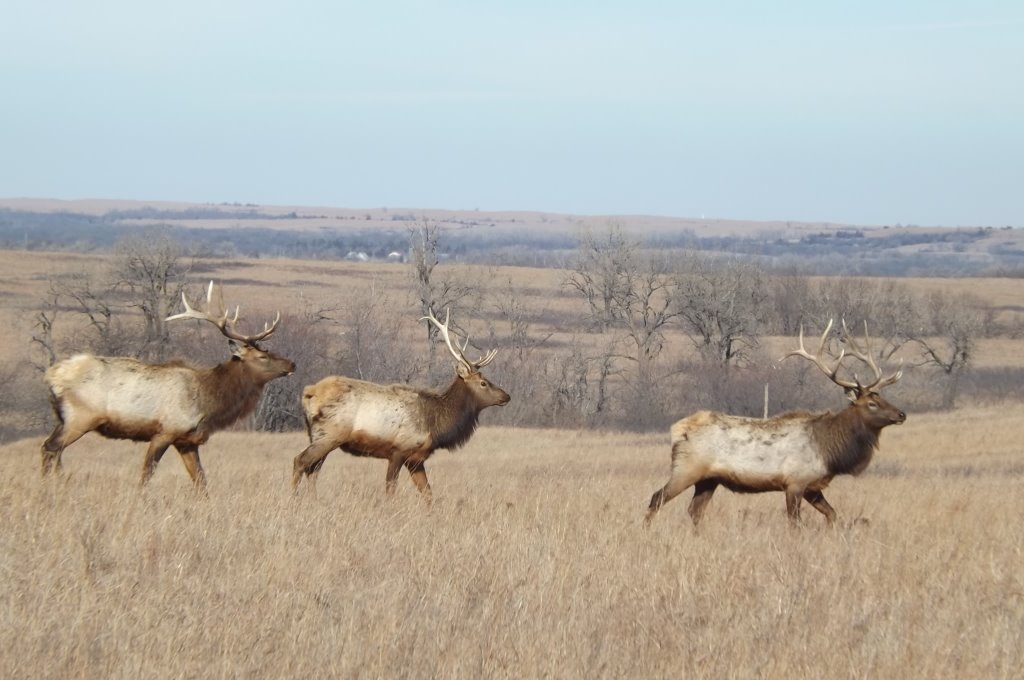
Elk on the Maxwell Game Reserve

Kansas is probably as little known for its elk hunting as it is widely known for its pheasant hunting, but according to Matt Peek, wildlife research biologist with KDWPT, there are a fair number of wild elk roaming Kansas. Elk were common in Kansas during pre-settlement days. Later a herd was started in Maxwell Wildlife Refuge, and in the 1980’s elk from Maxwell and several other sources were introduced onto Cimarron National Grasslands and onto Fort Riley. Today the Ft Riley herd numbers about 250 and can be hunted only with one of about 25 tags issued each year. The herd at Maxwell can number 100 depending on the time of year and is closed to hunting.

The elk herd on the Cimarron Grasslands is a free range herd whose number is always changing and no hunting is allowed on the Grasslands. Over the last 10 to 15 years, solitary animals or small bands have been spotted in most western KS counties. In recent years, elk have been harvested legally in Anderson and Coffey counties, and most recently elk were road-killed in both McPherson and Saline counties. Peek estimates the number of elk outside Maxwell, Fort Riley and the Cimarron Grasslands to be a couple hundred, and says they are “Very scattered and are comprised of individuals and small herds that move around a lot, sometimes in-and-out of Kansas into neighboring states.” The good news is that all those animals can legally be harvested with a tag purchased over the counter. Check out the KDWPT website for season dates.

So there you have it, from quail to elk, Kansas outdoors never disappoints. Just when you think you’ve experienced every hunting opportunity Kansas has to offer, something new pops up! Continue to Explore Kansas Outdoors.

Steve Gilliland, Inman, can be contacted by email at [email protected].

MADORIN: Masters of everything and nothing

Dramatic stories of natural catastrophes fill newsfeeds almost daily. Earthquakes, floods, fires, hail storms, tornados, and hurricanes dominate headlines, reminding us that humans hold little power over weather and geological activities. Discussion of recent events led to an emotional discussion during art class the other day. Eventually our group wondered how people who lived here before us handled such phenomena when they occurred during their lives?

Native Kansan Karen Madorin is a local writer and retired teacher who loves sharing stories about places, people, critters, plants, food, and history of the High Plains.

Depending on how far back we’re talking, we agreed that many of those individuals lived migratory lifestyles. It made me think about what I know about native people of the Great Plains. Using human, horse, and dog power, they transported tanned hides and wooden supports used to construct temporary homes with them as they followed wildlife herds. These creatures provided not only food, but also materials used to construct homes, tools, bedding, and clothing. Their Walmart had hooves.

The nature of these transient beasts meant they constantly moved, seeking grasses that thrived across this region from Texas to Canada. Herds large enough to darken the plains for miles quickly devoured this solar generated calorie resource. When the grass was gnawed to the ground, they moved shifted locale, leaving it to regrow before their next pass through the area. As a result, humans whose lives depended on the great, shaggy beasts packed up and trekked after them.

While some imagine the hardships of such a life, researchers tell us it was beneficial. Food was fresh, and tribes usually abandoned camp long before human wastes fouled water and soil that sustained them. As part of nature’s cycles, they understood the waxing and waning of the moon as well as the always changing seasons. They knew where their food and resources came from and how to preserve them for later use. They were more in touch with the realities of existence than modern urban dwellers.

Like us, they were susceptible to natural disasters. Oral histories and records kept on animal skins reveal accounts of apocalyptic events. The difference is that their mobility encouraged a high degree of adaptability. Reconstructing a hide tipi required resources and labor, but it didn’t require a lifelong mortgage to replace it. Because they moved where game moved, fire meant a lost season of grass in one locale, not a lost herd that had to be rebuilt–if finances permitted.

When such events occurred, whole tribes moved on, lending support to the weakest in the group. They maintained their cyclical behaviors until cultural conflict made that impossible. Equivalent catastrophes today often isolate individuals or families who then depend on strangers or impersonal government entities to help them rebuild lives. Not only do people lose homes and possessions, businesses, farms, vineyards, and ranches succumb to raging floods and flames. Lifetime dreams vanish overnight.

While technology and civilization provide temperature controlled climates inside four walls, it’s worth considering what modern humans give up to enjoy such comfort. Unless we consciously contemplate our relationship with nature and its pros and cons, it’s easy to think we’re the masters of the universe. That is until a natural disaster reminds us we aren’t in control of anything but how we respond to what happens to us.

Native Kansan Karen Madorin is a local writer and retired teacher who loves sharing stories about places, people, critters, plants, food, and history of the High Plains.

YOUTH LITERACY: Playing with words

Joe McKenzie
The first in a 4-part series regarding the importance of reading to and with young children in support of a new literacy initiative the Dane G. Hansen Foundation in northwest Kansas.

It’s easy to think that words and talking come naturally to children; that a child’s brain will simply develop the way it was meant to be or wired to be. But, there is much more to it than that.

With a little effort and an intention to talk to and interact with a baby on an on-going basis, a child’s vocabulary and brain will develop to a greater capacity than that of a child who hears fewer words on a daily basis. The frequency of verbal communication a child experiences shapes a child’s brain development.

Basically, babies need words. Their brains are ripe for development and everyday words are the ticket. Talk to babies. Whisper to them. Sing to them. Laugh with them. Have serious conversations with them. Read the paper out loud to them. Talk. Help them make those early connections to words. Act as if you were the narrator of the world around you. Here are some ideas.

Put “Babies need words” on your to-do list. Talk, talk, talk. From good morning sunshine to good night moon, look these children in the eye, smile and talk to them. You might find that they are great listeners.

Create a list of new words. Organize them by themes, such as animals, weather, household appliances and sports. Then share them with your baby or toddler.

Set a timer on your talking. Talk for one minute about something. Smile and be expressive. Make eye contact. When the timer goes off – silence. Wait 30 seconds while the child processes your barrage of words. Reset the timer. Do this 3 times and you’ll have shared more than 500 words in about 5 minutes! Imagine if you did that just twice a day. You’ll have shared more than a million words in your baby’s first 3 years.

Sing to your baby or with your child. I can’t sing either, but kids don’t care. To a baby, you are a star who is lovingly giving them a private concert. Repeat the chorus over and over, as you dance with them around the room – and the words will add up.

You don’t need a discount coupon to find thousands of great words in the grocery store and mall. They are all free. Slow down and find some new words to share. Singing at the supermarket is completely optional – talking to the kids is not.

Go to your local library with infants and children. Borrow some free books and enjoy daily picture books with vivid illustrations. The bonus of the public library is that you can find other parents, caregivers and children and join a community conversation.

Don’t just count the ways you love the children around you. Say them out loud. It’s okay to be silly and love them as much as every star in the whole wide universe. Remember: they need to hear those words.

And finally, listen. Eventually, your children will astound you with their words. They won’t be making them up. They’ll have heard them – from you. This is their developing brain in action. Celebrate that – with words of praise and love.

Joe McKenzie has been the director of the Salina Public Library since 1989. He holds an MLS from the University of Denver.

Learn more about the importance of reading to your children at NWKansasReads.org.

Copyright Eagle Radio | FCC Public Files | EEO Public File