We have a brand new updated website! Click here to check it out!

Now That’s Rural: Pathways to a Healthy Kansas

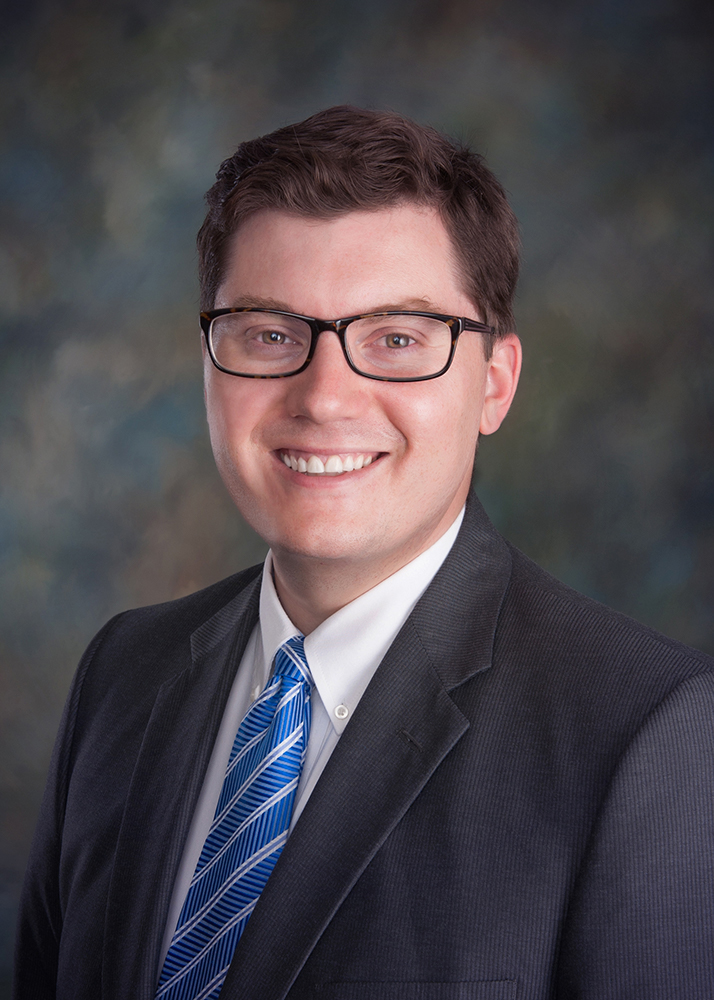
Ron Wilson is director of the Huck Boyd National Institute for Rural Development at Kansas State University.

By RON WILSON
Huck Boyd National Institute for Rural Development

When on the move, it is always important to find the right pathway. Today we’ll learn about an organization which is helping local communities find the right pathways – in this case, toward healthier living.

During the past two weeks, we’ve learned about K-State Research and Extension’s Culture of Health initiative and local examples of initiatives to support healthy living.

Last week we learned about a food basket program in Leoti. That program was supported by a larger initiative which goes back more than 10 years.

In 2007, Wichita County launched a coalition with a great purpose and a great acronym. The name was Wichita County AIM Coalition. The AIM stands for Add more fruits and vegetables, Increase physical activity, and Minimize screen time. Those are excellent goals toward which to, um, take aim.

The AIM Coalition, including K-State Research and Extension Wichita County, has been very active. They helped start the Healthy Check Challenge, began a 5K fun walk and run, purchased equipment at the fitness center, provided healthy snacks for events, supported walking trail kiosks and exercise stations, provided swimming lesson scholarships, encouraged participation in Walk Kansas, and more.

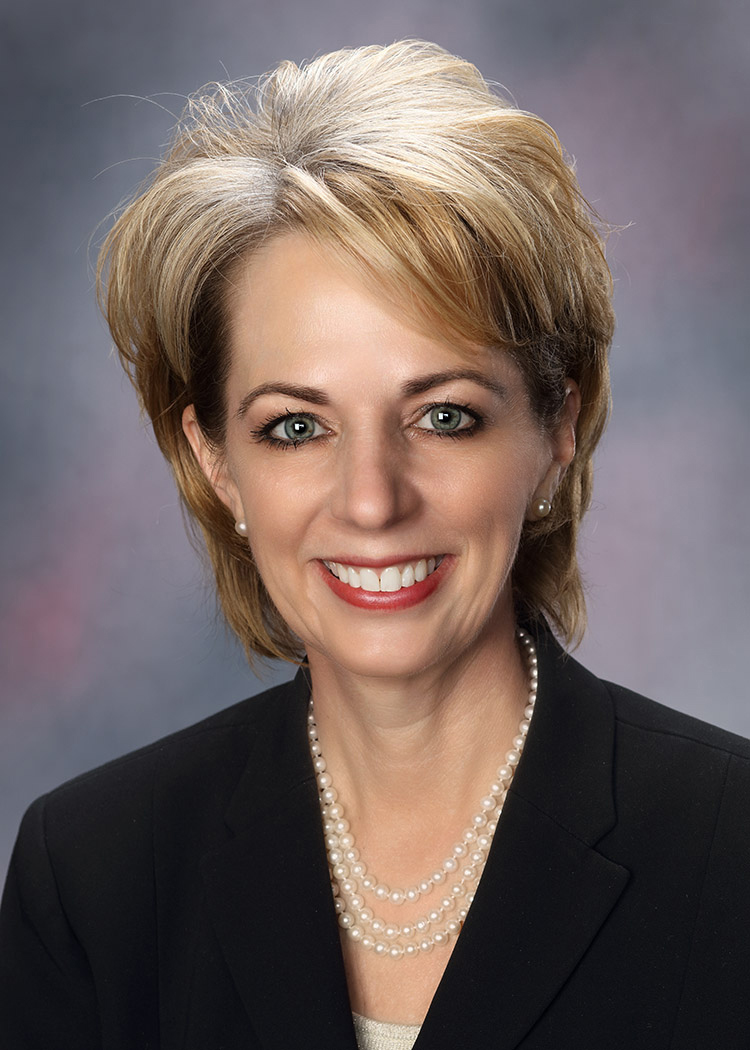
In recent years, the AIM Coalition accessed a program launched by Blue Cross Blue Shield of Kansas. That program is called Pathways to a Healthy Kansas. Virginia Barnes is the director of Blue Health Initiatives for Blue Cross Blue Shield of Kansas.

According to the Pathways website, this is the largest community grant program ever funded by Blue Cross and Blue Shield of Kansas. The Pathways program is to provide community coalitions with the tools and resources needed to remove barriers and engage their communities in ways that enable healthy eating and tobacco-free, active living to become a way of life.

The grant funding for each community included a coordination grant of $100,000, with the opportunity to apply for non-competitive implementation and achievements grants amounting to an additional $400,000.

The first round of grants was made in 2016 and included the Wichita County AIM Coalition and seven others. An additional eight coalitions were awarded grants in the second round of funding in 2017.

These grants literally span the state, from Chanute in the southeast to St. Francis in the northwest. They are supporting lots of grassroots efforts to encourage healthy living. Blue Cross Blue Shield of Kansas also offers an online community toolbox of announcements, success stories, and helpful resources.

One example of a success story is the produce basket program in Leoti, as we featured last week. “One of the best things about this program – besides promoting healthy eating and promoting the local grocery store – is that it is proving to be replicable,” said Blue Health Director Virginia Barnes.

For example: Another Pathways grant recipient, Rawlins County, chose to implement the produce basket program at Jamboree Foods in Atwood. In its first week, 95 produce baskets were ordered and the program has grown from there.

“We are proud to partner with Jamboree Foods to provide this great opportunity for our residents,” said Emily Green of K-State Research and Extension – Rawlins County. Atwood is a rural community of 1,194 people. Now, that’s rural.

“Blue Cross and Blue Shield of Kansas is committed to the health of all Kansans,” Virginia Barnes said. “We know that access to healthy fruits and vegetables is one important way to help people live healthy lives and reduce their risk of developing a preventable condition such as diabetes or heart disease. We are thrilled to be able to support communities as they find new ways to improve the health of their residents and strengthen food access in their communities through programs such as Simply Produce,” she said.

For more information, go to www.bcbsks.com/pathways.

When on the move, it is important to be on the right pathway. We commend the Wichita County AIM Coalition, Emily Green, Virginia Barnes of Blue Cross Blue Shield of Kansas, and all those who are making a difference by encouraging healthy behaviors in their communities. Committed individuals, local coalitions, and supportive philanthropy can help keep us on a healthy path.
INSIGHT KANSAS: All politics is (not) local

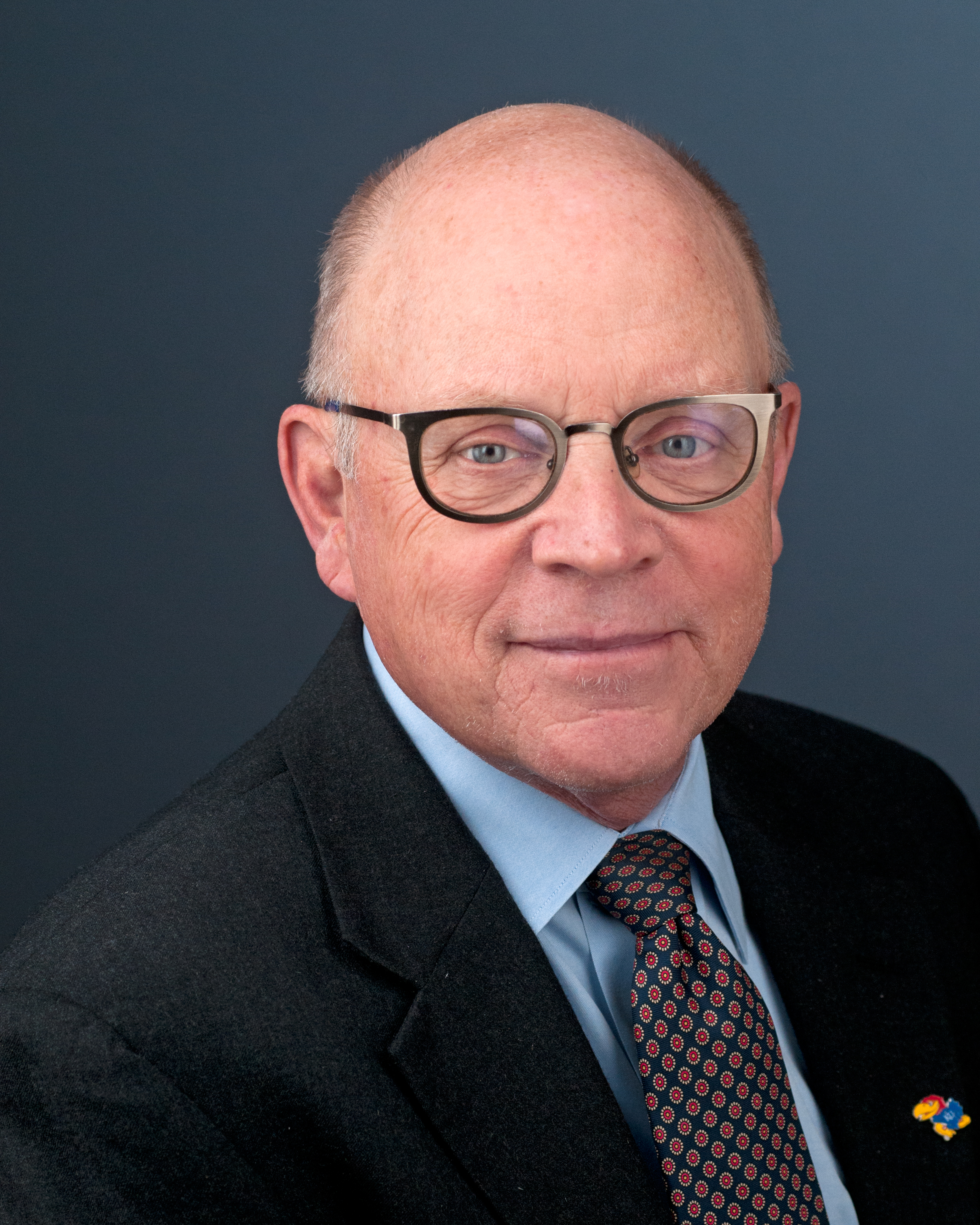
Burdett Loomis, Professor, Political Science, College of Liberal Arts and Science, University of Kansas

Former Speaker of the U.S. House Tip O’Neill famously said, “All politics is local.” He was referring specifically to congressional races, where responding to local issues from a national perspective – farm subsidy payments, Social Security checks, small business loans, etc. – was crucial to winning re-election. O’Neill’s aphorism still applies, but only to an extent, as House districts trend more blue or red over time.

Indeed, today most politics is national, not local; we can decry partisanship and polarization, but they are facts of contemporary political life. Sometimes, however, the price of partisanship is simply too high. This is one of those times.

Republicans in the U.S. House and Senate, as well as those in the Kansas Legislature, must come to terms with their unblinking support for President Donald Trump, whose excesses place him outside the mainstream of American politics. To be sure, he retains a 42 or 43 percent job approval rating and a hard core of supporters, but many of them question his fitness, capabilities, and policy preferences. For example, across several polls, more than 40 percent of Republicans think that immigrants strengthen the country.

If Republican legislators simply address their own partisan constituents’ preferences, it’s reasonable that they continue to back President Trump. But that type of representation – the all-politics-is-local kind implies that legislators are simply delegates who do what their voters wish reflects only one way to view representation. An equally significant perspective views legislators as “trustees,” who, once elected, use their own best judgment as they approach political issues.

In reality, lawmakers are both delegates and trustees, but this latter role needs to be taken seriously, especially with Trump. In short, Kansas’s national legislators, along with their state counterparts, must address contentions that Donald Trump is unfit for the position he holds and subsequently voice their concerns, even if on balance they support him.

At the national level, only Sen. Jerry Moran has expressed – sporadically – any serious concerns over Trump’s pronouncements and policies. Immigrant children separated from their parents? Nothing. Allowing Putin to interfere with our elections? Nada. Posting a grossly insensitive photo with a grin and a “thumbs up,” while Melania holds the orphaned child of two parents who died protecting him? Zip.

The list goes on, even when Kansas farmers are the target of unthinking tariff policies. Rep. Roger Marshall from the Big First congressional district reported an April conversation with the president as to the farm economy. He expressed his concerns, and the president responded. “Thanks to the farmers who are being patriots for getting us through this.” Subsequently, the impact on Kansas famers has only worsened but with little acknowledgment and no actions from Marshall or fellow representatives Estes and Watkins.

Even Pat Roberts, the chair of the Senate Agriculture Committee, while complaining about the impact of tariffs, has done virtually nothing within the Republican-controlled Senate.

With Trump’s net approval rating currently standing at +5 percent in Kansas, legislators-as-delegates could argue that they are reflecting their constituents’ wishes. Still, representation is far more than that. Legislators must use their intelligence, experience, and proximity to power in assessing the overall fitness of a president to govern. And they have been silent, as the president cozies up to dictators and mass murderers, continually labels immigration an “invasion” and cannot provide even the appearance of empathy to a nation distraught over mass shootings.

Legislators, speak out.

Burdett Loomis is an emeritus professor of political science at the University of Kansas.

MASON: Hansen Foundation invests in success of FHSU’s budding entrepreneurs

Dr. Tisa Mason, FHSU president

One of the many aspects of Fort Hays State University that I really value is how focused we are on making sure our students do not just sit in a classroom but that they actually have an opportunity to apply what they are learning to real-life situations – they “get their hands dirty,” so to speak. We excel at this, and that makes learning rewarding, practical and effective.

As I think about the abundance of opportunities our students have to really engage in their education, I think about the faculty who take the time to design and oversee these amazing experiences, and then I think of the numerous and generous donors who provide funding to support them. Indeed, our university is very blessed.

One of our many generous philanthropists is the Dane G. Hansen Foundation. This past week I spent time with the foundation’s trustees talking about their extraordinary vision and support of entrepreneurship in Northwest Kansas and Hansen Hall on our campus specifically – just one of many ways the Hansen Foundation supports active learning at Fort Hays State.
The Dane G. Hansen Scholarship Hall is a three-story, residential home to 33 students. Each student has a private room, and each floor has a community lounge.

The residents of Hansen Hall are immersed in a living and learning community focused on inspiring creativity, innovation, and opportunities to develop an entrepreneurial mindset that they will carry through their lives – clearly the hallmarks of FHSU! They will spend the year traveling, competing, learning from successful business people and developing skills that will eventually help them become successful, following in the footsteps of the hall’s namesake: Dane G. Hansen.

Soon the students will arrive to begin an incredible year. This year’s residents, representing 16 different majors, will begin building relationships and networks that will support them long after they leave FHSU – emphasizing our belief that entrepreneurs are not confined to business majors.

I loved spending time with the Hansen Foundation trustees. Dr. Melissa Hunsicker Walburn, interim dean of the W.R. and Yvonne Robbins College of Business and Entrepreneurship, talked about the larger vision of business, community connections and how various programming options at FHSU are elements in a vision of an entrepreneurial education program.

She described how our programming includes a variety of inspirational speakers, numerous competitions to challenge students and hone their skills, and opportunities to venture out and connect with thriving businesses that contribute to the regional economy. Most importantly, they are able to connect with business people on a personal level to gain advice and insight.

This year’s activities will also include a Lender’s Rodeo, which involves a partnership with the Robbins Banking Institute and the Small Business Development Center. The event will bring together ideas and financing opportunities.

A highlight from last year’s schedule of events was listening to recent graduate Hayden Hutchinson talk about his experiences as a student fully immersed in the Hansen Hall living and learning community. He was enthusiastic about the friends he made, the environment that turned those friendships toward potential business partnerships, and the thrill of the competitions.

Hayden was on teams that won two Faulkner Challenges, an annual event that provides professional experience in business plan development. One year, Hayden’s team won with a plan for a technology-sensing solution that can rapidly alert law enforcement to live shooter events. Hayden was also the founder of the college’s Collegiate Entrepreneur’s Organization.

I equally enjoyed listening to Dustin Roths describe the highs and lows of his adventures as a budding entrepreneur while he was a student at FHSU. Dustin went on to found Diamond R Jewelry on his 26th birthday.

It is such a gift to have the opportunity to listen to our alumni and former students, their post-graduate stories, and how their lives were influenced by FHSU. I cannot help but smile as they draw me into compelling stories, enthusiasm and wisdom. It does my heart good when I think about how their thriving businesses contribute in so many ways to the prosperity of their communities.

Jason Williby, president and CEO of the FHSU Foundation, shared with the trustees the fact that the Hansen Foundation’s investment in Hansen Hall has been the catalyst for many other programs. The commitment and vision that built the hall enabled FHSU to grow our entrepreneurship activities to their current scale and quality. Their investment also led others to contribute financially to the vision of an entrepreneurial ecosystem with Hansen Hall at its heart.

We are so grateful to the Hansen Foundation for believing in our vision and in our students, and for their ongoing generous support. Together, our eagerness to innovate is pushing students to be their best and cultivating the understanding that their successes become a community success and a university success. We couldn’t be more proud of the partnership we have forged with the Dane G. Hanson Foundation.

Kansas Farm Bureau Insight: Back-to-school quandary

By KIM BALDWIN
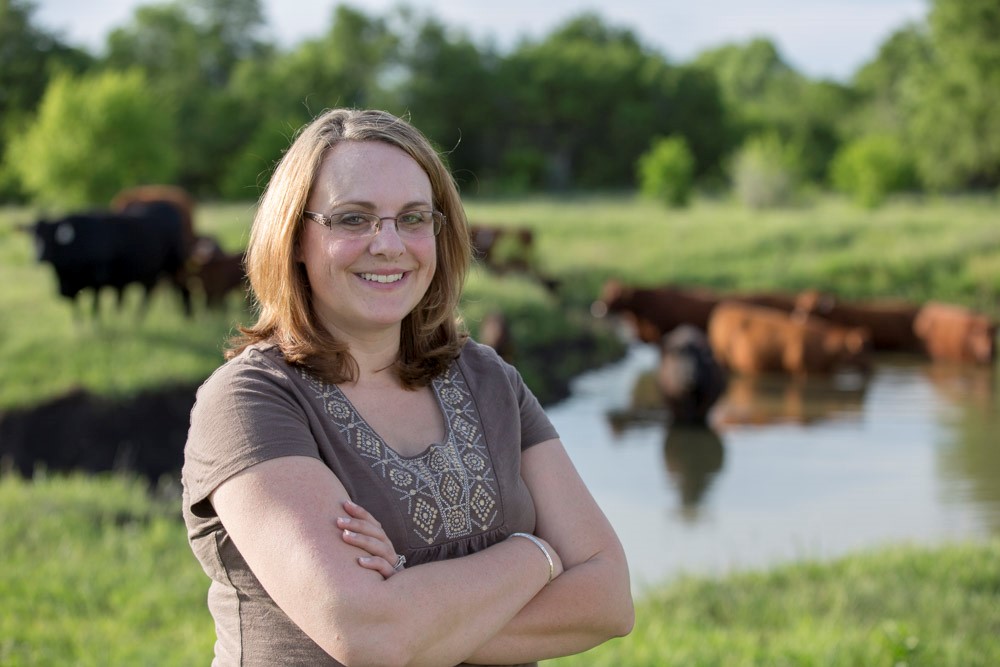
McPherson County farmer and rancher

It’s that time of the year again when summertime store displays change, and parents begin filling shopping carts with glue bottles, wide-ruled paper, crayon boxes, flashy backpacks, trendy lunch boxes and a variety of specific items on school supply shopping lists.

In a nutshell, it’s back-to-school time!

For the past few weeks my husband and I have been planting little messages into our conversations with our kiddos to begin building excitement for the new school year.

Statements like, “I’m so excited you already know some of the kids in your class,” and, “I bet they’re going to have chocolate milk as an option during lunch again this year,” are ways we try to hype up the kids for a new school year.

We know that preparing our kids for a change in their schedules is ultimately helpful for the entire family.

While driving home from swim lessons recently, my son and I were reflecting on all of the fun this summer brought. From visiting local libraries and museums with the babysitter, road trips taken out of the state with grandparents, eating meals in the field with our harvest crew, swim time at the community pool, and freedom to do kid things on the farm, both of my children have had a memorable summer.

It was during this drive that my son said, “I don’t want to go back to school!”

It wasn’t one of those statements that sometimes falls out of a child’s mouth before fully thinking things through. This was delivered in a clear, matter-of-fact manner.

He repeated, “I DO NOT want to go back to school!”

As a former teacher, I was a bit taken aback.

Upon further questioning, my son confessed he didn’t want to go back to school because he didn’t want to miss anything going on at the farm.

Don’t get me wrong, my boy loves school. He loves learning and crafts and friends and lunch and recess and PE and chocolate milk and his teachers.

He also loves being home on the farm. He loves helping his daddy with irrigation duties, eating meals with everyone in the field, riding in tractors, playing with his pups and digging in the dirt.

It was clearly a difficult situation he had found himself in. It is this summer where my son’s understanding of the world has matured enough to know that when he heads back to school later this month, the day-to-day operations on the farm will not stop while he’s gone.

Although I’m a bit sad my boy is experiencing this internal turmoil, I’m also proud to know he takes his place on the farm seriously, and he feels like he has an important role within our family’s operation.

My husband and I have now had to modify our messaging approach to build the excitement for returning to school. And while we still mention the probability of chocolate milk as an option that will be served at lunch, we’re now also mentioning that going to school and getting a good education will ultimately help the farm — especially if our boy wants to farm full-time someday.

Time will tell if our family’s transition back to school will be a smooth one this year. Either way, we’ll continue to build excitement and support the value of learning which will ultimately benefit our family and our farm.

“Insight” is a weekly column published by Kansas Farm Bureau, the state’s largest farm organization whose mission is to strengthen agriculture and the lives of Kansans through advocacy, education and service.

LETTER: Kansas Interfaith Action condemns Public Charge Policy change as ‘inhumane and unjust’

Rabbi Moti Rieber is the executive director of Kansas Interfaith Action.

Kansas Interfaith Action (KIFA) today condemned the Trump Administration’s new policy on “Inadmissibility on Public Charge Grounds” as inhumane and unjust.

Immigrants are part of the fabric of our communities. To single them out in this way is a direct contravention of the Scriptural command to ‘treat the immigrant the same as a native-born citizen’ (Lev. 14:34).

The new “public charge” policy, which appeared yesterday on the Federal Register’s website, was proposed months ago for public comment and the comments were overwhelmingly in opposition. Nonetheless, the Trump administration has moved forward with the proposal as part of its anti-immigrant program. There is no reasonable public policy justification for this change—only hatred toward the immigrant.

Under current policy, a public charge is defined as an immigrant who is “likely to become primarily dependent on the government for subsistence.” The proposed rule radically expands the definition to include any immigrant who simply “receives one or more public benefits,” including services to which they are legally entitled, such as nutrition, health care, or housing. This shift drastically increases the scope of who can be considered a public charge to include not just people who receive benefits as the main source of support, but also people who use basic-needs programs to supplement their earnings from low-wage work.
(Kansas Action for Children)

KIFA sees this policy change as part of the Trump Administration’s wide-ranging assault on immigrants. From drastically cutting the number of refugees accepted into the United States, to criminalization of asylum seekers at the southern border, and now this attack on legal immigrants, the Administration is seeking to harass, limit and force out immigrants of all kinds.

Kansas Interfaith Action condemns this new policy. People of faith from across the spectrum oppose the Administration’s policy attacks on immigrants. Care and concern for the immigrant is a core faith value. The Administration’s actions are an affront to morality, as well as to the US’ ethos of ‘Give me your tired, your poor, your huddled masses yearning to breathe free,’ as emblazoned on the Statue of Liberty.

Kansas Interfaith Action invites congregations and individuals wishing to “welcome the immigrant’’ to join with the organization to help register and encourage people to vote, advocate just immigration policies, and stand with immigrants in their communities.

Rabbi Moti Rieber is executive director of KIFA.

Kansas Interfaith Action, based in Lawrence, is a statewide, multi-faith issue-advocacy organization that “puts faith into action” by educating, engaging and advocating on behalf of people of faith and the public regarding critical social, economic, and climate justice issues.

News From the Oil Patch, Aug. 13

By JOHN P. TRETBAR

In its latest weekly report, the government said our gasoline stockpiles grew by 4.4 million barrels, a figure the auto club AAA called “astonishing.” After four consecutive declines, the national average price for a gallon of regular was $2.648 on Monday. That’s down six cents from last Monday, nearly 13 cents lower than a month ago, and 21 cents lower than last year at this time. The average across Kansas is $2.447. We found prices as low as $2.22/gallon in Hays. It’s going for $2.33 across Great Bend. You’ll save about two dollars on your 15-gallon fill-up compared to a month ago.

China and South Korea appear ready to join the U.S. and Britain in offering military protection for oil tankers in the Persian Gulf, according to Reuters quoting an ambassador and local newspaper reports. According to EIA estimates, 76 percent of the petroleum that moved through the Strait of Hormuz last year went to Asian markets, including China, India, Japan, South Korea, and Singapore. Germany and other European nations have said they would not commit military vessels to the escort mission.

The U.S. Energy Information Administration reports another near-record for weekly crude oil production. For the week ending August 2, operators pumped 12.253 million [[“twelve point two five three million”]] barrels per day. That’s the fourth-highest weekly production total ever, and an increase of nine thousand barrels per day over the week before.

U.S. Crude inventories increased by 2.4 million barrels. The government reported total inventories of nearly 439 million barrels, about two percent above the five year average for this time of year.

Imports averaged 7.1 million [[“seven point one million”]] barrels per day last week, an increase of 485,000 from the week before. The four-week average for U.S. imports is down nearly 15% compared to the same four weeks a year ago.

Independent Oil & Gas Service reports another drop in its statewide drilling rig count. There are 11 active rigs in eastern Kansas, down one, and 20 west of Wichita, down two. Operators were drilling on one Russell County lease, and were about to spud one well in Barton County and three in Ellis County.

Baker Hughes reported 934 active drilling rigs across the U.S. Friday, a decline of six oil rigs and two seeking natural gas. The count in Alaska was down four and Oklahoma was down two. Texas was down one while New Mexico was up two rigs. Canada reported 140 active drilling rigs, up three for the week.

Regulators approved 17 permits for drilling at new locations across Kansas last week, three east of Wichita and 14 in Western Kansas, including two in Barton County, three in Ellis county and one in Stafford County. There are just 586 new drilling permits in Kansas so far this year. Independent Oil & Gas Service reports 26 newly-completed wells for the week, 869 so far this year. There were five wells completed in eastern Kansas, and 21 west of Wichita, including one in Ellis County.

The government predicted the spread between national and international benchmark crude-oil prices will narrow next year. The U.S. Energy Information Administration predicted Brent crude will average $65 per barrel in 2020, and that West Texas Intermediate will average about $5.50 less, or just under $60. That would put the spread about a dollar less than the agency’s previous prediction.

The bigger players are increasing their stakes in the Permian Basin of Texas and New Mexico, even as smaller energy companies are pulling back. Exxon Mobil and Chevron are keeping their promises to ramp up production in the Permian. According to the Houston Chronicle, Exxon Mobil is by far the Permian’s most active driller with more than 50 rigs operating, increasing production there by nearly 90 percent in 12 months. Chevron and Occidental Petroleum produce more than 420,000 barrels of oil equivalent per day from the region. The Permian, now the world’s most productive oil and gas basin, is producing about 4.2 million barrels of crude oil a day, more than one-third of the nation’s record output of more than 12 million barrels a day. The basin, by far the central focus of the shale boom, also is the country’s second-most prolific natural gas producer.

Domestic railroad freight traffic continues to decline in weekly and year-on-year comparisons. But, oil-by-rail continues to grow, and remains one of only two types of freight to show gains on the nation’s railroads. During the week ending August 3, 12,561 rail cars filled with petroleum and petroleum products hit the rails. That’s an increase of nearly 16% over the same week last year. The year-too-date total is 21% higher than last year. Canadian traffic was up 24%. The Association of American Railroads Senior Vice President John T. Gray said total combined U.S. rail traffic is down three and a half percent, held back by declines in coal, grain and inter-modal shipments.

HAWVER: Time for Kan. lawmakers to focus on the distractions

Martin Hawver

Time to remind Kansans that a key skill in Kansas politics is distraction.

Yes, remember that you don’t have to be much of a magician if your assistant is sexy enough that she’s the one the audience watches, not whether that rabbit actually came out of the hat the magician is wearing.

Democrats do it, Republicans do it. Heck, even third-party politicians practice distraction. Right now, it’s the Republicans who are getting in gear due to a recent series of events.

The fuses: Last week, it was the need for the Kansas Department of Corrections to contract with a private for-profit corporation to hold at least 360 Kansas prisoners in an Arizona prison because Kansas doesn’t have the space for them.

The week before was the Kansas Department of Revenue demanding that all out-of-state merchants collect Kansas sales tax on sales made into Kansas.

Oh, and then there was the relatively distracting response to the massacres in Texas and Ohio.

It’s early, but so far, the Kansas Legislature and its Republican leaders who are still angry that the state elected Democrat Gov. Laura Kelly to be its governor are doing their best at distraction from the real issues and finding solutions that are politically acceptable to them and their supporters.

The prisoner issue: During the past eight years, conservative former Gov. Sam Brownback consistently cut spending on the Department of Corrections along with other agencies in order to make his dramatic tax-cut program workable, or at least appear to be workable. With years of prison aging and with below-market salaries for prison guards essentially frozen, Kansas prisons filled and then over-filled; the state just ran out of space for prisoners and for guards to manage them.

While lawmakers don’t like the idea of moving Kansas convicts out of state at $75 a day, they’re not really eager to take responsibility for the crisis and instead have special committees which are watching every dollar in spending proposed by Democrat Kelly that has become necessary after years of not spending money on prisons.

The sales tax issue that might well see the state hauled into court for its absolute sales tax collection rule? Well, that’s state law which the Legislature couldn’t get amended this year because it tacked the so-called “safe harbor” amendment exempting those out of state merchants with small sales into the state onto bills with millions of dollars of state income tax cuts for the well-heeled and corporations that the governor vetoed because the state needs the money. So, we’re seeing that sales tax problem become a distraction from the big tax cuts lawmakers voted for but couldn’t get passed.

Oh, and as part of the distraction, there’s the potentially small reduction in sales taxes on food which were part of the bill vetoed by Kelly. Hmmm…lawsuits and a Democrat not signing a food sales tax reduction. Not a bad political distraction, is it?

And the response to the Texas and Ohio massacres? The distraction here is that the state needs more mental health services for those with guns to keep them from using those guns in hate crime rampages. Nope, no mention of taking guns away from the mentally ill, the hate-mongers, under a “red flag” law, or even making it harder for those people to obtain guns. Let’s instead talk about mental health. Again, not a bad distraction, and one that doesn’t raise the blood pressure of the National Rifle Association.

Distraction? Nope just look over there…

Syndicated by Hawver News Company LLC of Topeka; Martin Hawver is publisher of Hawver’s Capitol Report—to learn more about this nonpartisan statewide political news service, visit the website at www.hawvernews.com

Exploring Kansas Outdoors: Don’t scratch that itch!

Steve Gilliland

My mom was so allergic to poison ivy I still believe to this day she could have caught it by merely looking at the plants. I remember her being hospitalized once with poison ivy so bad on her hand that it resembled raw hamburger. My dad on the other hand could’ve rolled around in the stuff and never known it. One night a few years back I went to change a flat tire on our mobile deer blind which was still in the woods, and found it to be afloat in a sea of the healthiest poison ivy I’d ever seen. I chopped it down all around the tire, wore gloves and was pretty careful as I worked, but three or four days later I had a small patch of rash on one arm, the first time I ever “got” poison ivy.

Each stem of a poison ivy plant has three shiny, pointed green leaves, thus the old saying “Leaves of three, let them be.” The troublemaker is the oil called “Urushiol” that is found on poison ivy plants. Urushiol by itself is fairly harmless, but when absorbed by our skin, our body attacks to it as an intruder and the red, itchy rash follows. Urushiol is found in ALL parts of a poison ivy plant ALL year round, and has actually been found to be present in plants that have been dead for up to five years. Animals and pets do not react to urushiol but can carry it on their fur or hide and infect humans that way. It can also remain indefinitely on clothing and tools. Liquid from poison ivy blisters WILL NOT spread poison ivy; urushiol must be absorbed by our skin to cause a reaction and by the time a rash develops the oil has long since been absorbed. Sensitivity to poison ivy is thought to be genetic so it can run in the family; someone sensitive to poison ivy can also have a reaction from the smoke of burning poison ivy plants.

To keep this from reading like a pamphlet about poison ivy you’d pick up at the County Extension office, I’ve put together a little fun trivia about the “leaves-of-three” plant, plus few not-so-common facts and cures for poison ivy rash.

Five hundred people could itch from the amount of urushiol found on the head of a pin. It’s estimated that 85% of the world’s population would have an allergic reaction to poison ivy. Samples of urushiol several centuries old have still been found to cause skin irritation on sensitive people.

If using water to attempt to rinse urushiol off your skin before it’s absorbed, ALWAYS rinse with COOL water as hot water will actually open skin pores and speed absorption.

Capsaicin cream, labeled for arthritis pain can suppress the itch of poison ivy rash for hours.

Apple cider vinegar, rubbing alcohol or lemon juice poured liberally over your skin can rinse off urushiol if done soon enough after contact. Either liquid can also help heal poison ivy rash if drizzled over the rash or used on a compress.

Other ways to soothe poison ivy rash include coating the rash with cucumber slices or a paste made from cucumber, and rubbing the rash with the inside of a banana peel or cool melon rind.

Witch hazel, strongly brewed tea, buttermilk or yogurt dabbed on poison ivy rash with a cotton ball can help draw toxins out of the rash and dry up seeping blisters.

Aloe Vera juice will soothe poison ivy rash like it soothes sunburn.

One cup of oatmeal ground into a fine powder, put into an old pair of pantyhose and used like a teabag in a tub of cool bathwater can provide relief from the intense itching of poison ivy rash.

Three teaspoons of baking soda mixed with one teaspoon of water makes a good paste to spread over poison ivy rash to aid in healing and offer temporary relief from itching.

In summary, lots of things can give relief from the itch of poison ivy rash, but the only sure way to prevent a reaction is to rinse off the urushiol oil before it can be absorbed into the skin. The opening lines of the old Coasters song “Poison Ivy” say “she comes on like a rose but everybody knows she’ll get you in dutch, you can look but you better not touch; poison ivy, poison ivy, at night when you’re sleepin’ poison ivy comes creeping around.” …Continue to Explore Kansas Outdoors!

Steve Gilliland, Inman, can be contacted by email at [email protected].

MARSHALL: Doctor’s Note Aug. 12

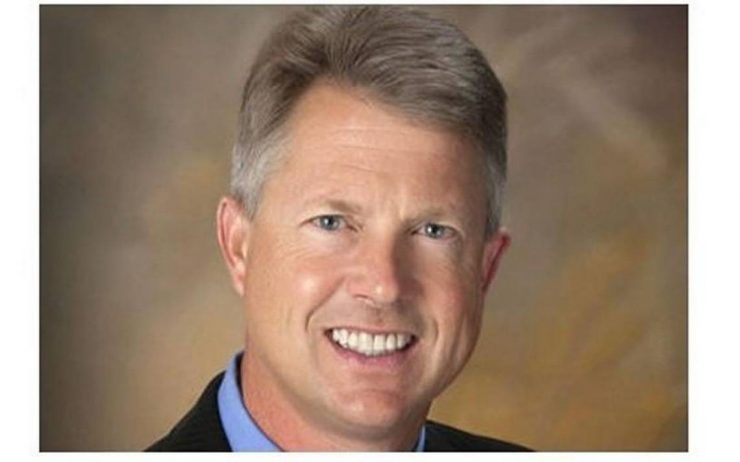
Dr. Roger Marshall, R-Great Bend, is the First District Kansas Congressman.

Friends,

As summer is wrapping up and kids are preparing to return to school, I’m happy to be back in the district holding meetings and events with all of you. While Congress is not in session, that does not mean the work in Washington has stopped. Just last week, the Center for Medicare & Medicaid Services (CMS) strengthened the Medicare program by finalizing its National Coverage Determination for innovative new cancer therapies that will help our seniors.

I was honored to work with CMS Administrator Seema Verma to lead this effort. Back home, this decision will ensure coverage for Kansas patients receiving care at the Cancer Center of Kansas, The University of Kansas Cancer Center, and other certified sites of care.

To learn more about this important issue and the work being done to protect our seniors, Click Here.

SBA Offers Disaster Assistance

The Small Business Administration (SBA) announced low-interest federal disaster loans are available to Kansas businesses and residents affected by flooding that occurred June 22 – July 6, 2019. The disaster declaration makes SBA assistance available in Butler, Chase, Dickinson, Harvey, Marion, McPherson, Morris and Saline counties.

Low-interest federal disaster loans are available to businesses of all sizes, most private nonprofit organizations, homeowners and renters whose property was damaged or destroyed by this disaster. An outreach center will be open on the days and times indicated below. No appointment is necessary.

MARION COUNTY  
Disaster Loan Outreach Center
Civic Center
West Community Room
118 East Grand Ave.
Hillsboro, KS  67063

Opens 8 a.m. Tuesday, August 6

Mondays – Fridays, 8 a.m. – 5 p.m.
Closes 5 p.m.  Thursday, August 15

Applicants may apply online, receive additional disaster assistance information and download applications at https://disasterloan.sba.gov/ela. Applicants may also call SBA’s Customer Service Center at (800) 659-2955 or email [email protected] for more information on SBA disaster assistance. Individuals who are deaf or hard‑of‑hearing may call (800) 877-8339. Completed applications should be mailed to U.S. Small Business Administration, Processing and Disbursement Center, 14925 Kingsport Road, Fort Worth, TX  76155

The deadline to apply for property damage is Sept. 30, 2019. The deadline to apply for economic injury is May 1, 2020.

USDA Invests in Rural Infrastructure Improvements

The USDA announced  the agency is investing $181 million across 10 states, to upgrade electric systems, including financing for smart grid technologies that improve system operations and grid security.

Of those due to receive funding, Ninnescah Rural Electric Cooperative Association in Pratt will receive $6.5 million for building and improving 89 miles of electric line. Ninnescah provides electric services to over 4,200 customers in Kansas. These improvements are critical to building and expanding electric infrastructure in rural communities.


New Funding for Community Health Centers 

Last week was National Health Center Week, which is an annual celebration to raise awareness about the mission and accomplishments of American health centers over the past five decades.

As part of this celebration, the Department of Health and Human Services announced the agency is awarding $400 million dollars to improve mental health services and combat the opioid epidemic. $200 million of this award will go to community health centers (CHC) which are vital to the health of rural communities. These investments will enable CHCs to expand access to integrated substance use disorder and mental health services.

Seventeen health centers in Kansas will receive a total of $2,839,000, or $167,000 each, to support more patients and expand services. Funding will go towards hiring more mental health professionals, professional development and training, and IT and telehealth services.

Additionally, funding will go to efforts to defeat the opioid epidemic, by empowering communities through outreach and partnerships with local organizations.

To see the full list of awardees from Kansas, please Click Here.


Kansas Community College Ranked Best in U.S.

Recently, several Kansas community colleges were recognized as being among the best community colleges in the U.S., including Cloud County Community College, Concordia, which ranked #1 in the country! The rankings were based on graduation and transfer rate, cost, and student-to-faculty ratio.
Independence Community College also ranked #13, and Salina Technical Area College ranked #19. Congratulations to these outstanding schools for being recognized for their excellence in education. To see the full rankings, Click Here.

Hale Library Opening

Kansas State University will soon reopen the newly renovated first floor of Hale Library when Fall classes begin on August 26, 2019, following a devastating fire in May 2018.
The new space will have collaborative seating arrangements and technology-equipped, reservable study rooms, which were a priority for K-State students.
For more information about the rebuilding of Hale Library, Click Here.

Shannon’s Stars Competes at National Baton Twirling Championship

Congratulations to Shannon’s Stars Baton Twirling Club from Salina, who traveled to South Bend, Indiana to compete in the National Baton Twirling Championship at the America’s Youth on Parade event in July. This event is the most prestigious event of the year for baton twirling, and brings together the best baton twirlers and teams in the nation.
Shannon’s Stars team of 16 performers won multiple team events, including two 1st place prizes, 51 top 10 placements, and seven individual national champions! I’m proud of these superstars from Kansas’ First District. Congratulations to you all!

Volunteers Needed!

My office is looking for volunteers to help out at my booth at the Kansas State Fair on Friday, September 6, through Sunday, September 15. Volunteers are needed to hand out fliers and take down contact information from constituents with questions.

Gate admission and WiFi will be provided – couples are welcome! If you are interested, please contact my District Director, [email protected] for more info.

Dr. Roger Marshall, R-Great Bend, is the First District Kansas Congressman.

FIRST FIVE: Countering conspiracy theories with critical thinking

Katharine Kosin

By Katharine Kosin and Kirsti Kenneth
Freedom Forum Institute

The First Amendment protects all kinds of speech we don’t like, but nothing in those 45 words prevents us from critically evaluating what we believe — or choose to retweet.

El Paso, Texas, and Dayton, Ohio, have now joined the growing list of American cities that have suffered the horrors of mass shootings.

While both investigations are still unfolding, authorities currently believe that the El Paso gunman’s motivations might be explained by a manifesto posted online under his name shortly before the shooting. This manifesto touched on several conspiracy theories, including claims of a “Hispanic invasion of Texas” and that corporations controlled the government, while also praising a manifesto by the New Zealand mosque shooter that advanced a theory of “white extinction.”

The FBI also has begun labeling such conspiracy theories as domestic terrorism threats. There is renewed public discussion about the potential consequences of conspiracy theories and the presence of places on the internet like 8chan, where users have been known to encourage acts of violence.

When Infowars founder Alex Jones promoted a baseless theory claiming the parents of children slain at the Sandy Hook Elementary School shooting were “crisis actors,” some of the parents he named became targets of harassment. At a societal level, the spread of conspiracy theories about vaccines or medical treatments can lead to the spread of viruses like measles or Ebola.

Kirsti Kenneth

Belief in conspiracy theories is not confined to extremists. A study by University of Chicago political scientists J. Eric Oliver and Thomas J. Wood between 2006 and 2011 surveyed Americans about seven common conspiracy theories, ranging from “Barack Obama was born outside the U.S.” to “The U.S. government planned 9/11 to justify war in the Middle East” and “Aircraft vapor trails contain chemical agents being deliberately deployed into the atmosphere.” They found that at least 50 percent of Americans consistently believed in at least one of the seven theories presented.

As First Amendment advocates, we don’t seek to censor conspiracy theories. As ugly and unbelievable as some may be, such views are constitutionally protected from government action unless the speech is deemed an immediate incitement to crime and violence, constitutes a true threat to an individual or causes an immediate breach of the peace. Some conspiracy theories do grow from a seed of truth that deserves closer scrutiny.

Rather than ban production and publication of conspiracy theories, we should educate students and ourselves how to act responsibly and ethically when it comes to this type of content. Pausing to think critically before liking or sharing conspiracy-fueled posts or articles can go a long way toward stopping the spread of damaging misinformation. What constitutes critical thinking in these instances: Asking if claims are supported by facts and evidence, if they come from reliable sources, if they’re meant to entertain, raise awareness or simply inflame? Consider these questions before you act. According to a 2018 Pew Research Center survey, 71 percent of U.S. adults trust the information they get from friends and family, so be thoughtful about the content you may be passing on. Not every story is worth endorsing with your text, tweet or share.

But responsibility doesn’t stop there.

While government cannot regulate speech protected by the First Amendment, news creators, social media platforms and tech companies may need to reexamine their practices and regulations. Reporters covering conspiracy theories should weigh the value of the revelations against the added visibility the story will bring to a possibly damaging theory.

Social media platforms must reconsider algorithms that prioritize shocking and outrageous content, surfacing conspiracy theories in front of people who weren’t actively looking for them and enabling their spread. YouTube and Facebook say they’re working to address this.

Cloudflare, a company that protects websites from denial-of-service attacks, has announced it will drop 8chan as a client because it said 8chan had crossed the line from “content that we find reprehensible” to “directly inspir[ing] tragic events.”

There is a range of explanations as to why some people buy into preposterous theories. No matter the root of the belief, once someone accepts one of these theories as true, psychology makes it much more likely they’ll reject any contradictory evidence that comes their way.

In the wake of these latest tragedies, a sense of helplessness often accompanies the grief. But now is not the time to lose heart. Conspiracy theories aren’t going away, but it is possible to help limit their spread and harmful effects.

Contributing to this column were Barbara McCormack, vice president of education at the Freedom Forum Institute, and Pierce McManus, NewseumED’s digital communications and outreach director. Katharine Kosin, NewseumED museum educator, and Kirsti Kenneth, NewseumED’s curriculum developer, can be reached for media inquiries at [email protected].

LATURNER: ‘Bucks Back to Business’ to get unclaimed money in hands of Kansas businesses

Jake LaTurner, Kansas State Treasurer

During my time as Kansas State Treasurer, we have innovated several new ways to reach out to Kansas taxpayers and return their unclaimed property, with great success.  We’ve been able to give back record numbers of money for the past two years running, and we are not about to stop now.

This month we are launching an initiative we call “Bucks Back to Business,” which involves partnering with counties all across Kansas to get unclaimed property back in the hands of Kansas businesses.

At the state treasurer’s office, we are on the phone all week long reaching out to businesses in Kansas letting them know we have money that belongs to them that we’d like to return.

As you can imagine, we are finding that with the increasing number of telephone scammers calling people, it is difficult for business owners to believe us when we tell them we have money for them, and we’d like to give it back for free. While it sounds too good to be true, it is our mission to get these dollars back to their rightful owners. So, we decided to try a different approach.

For the next several months we will be traveling across Kansas meeting with local chambers of commerce and city and county officials talking to them about how we can best reach Kansas businesses in their home towns and encourage those business owners to claim their cash. It is our hope that with the help of these trusted neighbors and friends, more business owners will feel safe and confident contacting us. We plan to get to as many counties as we can this year and hope to keep putting more money back in Kansans’ pockets.

In the meantime, anyone wanting to check for themselves or others can always go to our website Kansascash.com and see if we have any unclaimed property waiting to be returned to them.

And please remember, we never charge for web searches, processing claims, or returning money. Anyone who asks for a fee, you can be sure is not the Kansas State Treasurer’s Office.

Jake LaTurner is the Kansas State Treasurer.

KRUG: Settling in to the school routine

Donna Krug

Earlier this week, I was visiting with my daughter who has 3 school age kids. Her challenge of the day was to move the bedtime up as the first day of school approaches. That’s right folks, school bells will be ringing soon. Families with kids adapted to a summer schedule filled with ball games, camp, swimming lessons and 4-H activities and now the schedule is about to change again.

With the start of school, it is the perfect time to call a family meeting and get everyone on board with the new routine.

Research shows that kids ages 3 to 6 need 10 to 12 hours of sleep each day. As youngsters begin pre-school or the early grades it is important to have a set bedtime with a routine that encourages success. Perhaps you want to target 8 p.m. as bedtime. If so you will want to begin the wind down process around 7. Perhaps a warm bath and bed time story would help your child to relax. Planning what will be worn the next day or eaten for breakfast also encourages a less hectic morning when the alarm goes off.

Whatever you want to adopt as a routine, now is a good time to start working toward your final goal. If the summer schedule has been lax, start moving the bedtime up a few minutes each day until your target is reached. That should help make the first day of school a success.

If you live close enough to school can your children safely walk or bike to school? Research shows that starting your day with some physical activity (i.e. walking to school) encourages better concentration and behavior in the classroom. If your schedule allows it, do a trial run with your child; either walking or biking on a safe route to the front door of the school.

Here’s hoping your school year gets off to a great start!

Donna Krug is the District Director and Family & Consumer Science Agent with K-State Research and Extension – Cottonwood District. You may reach her at: (620)793-1910 or [email protected]

CLINKSCALES: Grandparenting and camping are about the same

Randy Clinkscales

I have a 22-month-old grandson, Alex. It seems like yesterday he was born. Every time I see him he is different. In late September of last year my wife and I got to keep Alex for a week while his parents were on a trip. Then he was just a little over a year old. We had a pretty good idea about what all he wanted.

Recently, my wife and I desperately wanted to have some time with Alex, so we talked my son and daughter-in-law into “loaning” him to us for a week. But this time, in July of 2019, we knew we were dealing with a different person.

As the time came near, I think my wife and I both got more and more nervous. We knew Alex now had opinions; he was a lot more mobile; and half his life was no longer spent sleeping. Indeed, most of his life was consumed with zooming around.

We met my son and daughter-in-law in Salina, took “possession” of Alex (or perhaps he took possession of us), and away we went. My daughter-in-law, Caley, gave us a bag full of stuff for Alex.

I realized then how much this was going to be like camping. As with a camping trip, the biggest thing that you have to do is plan it, and then get everything set up.

We pulled out a crib, put it in the appropriate place, put sheets on it and got out blankets (it was the equivalent to his tent). We put in his favorite blanket, his Teddy bear, and the things he likes to sleep with (the equivalent of his sleeping bag).

We set up a video machine, so we could watch his movements while he was asleep and hear him if he became upset. We began planning food choices.

We started making plans for “entertainment”: there would be trips to the Sternberg Museum, the library, the municipal swimming pool, the county fair, walks with the dogs, trips to the park, playing throughout the house, reading books, and the like.

We had to child proof the house by putting locks on cabinets and by placing fragile things out of reach.

Finally, it was that first night. We got him fed, and kind of like camping, hoped that he liked what we fixed. We had spent the day rushing around trying to be sure he was happy, and not missing his parents too much. He seemed to be adjusting better than we.

After dinner we had our first bath. Caley had given us some pretty good instructions about what he likes to have happen. On knees, we played with him in the bathtub.

Finally, the ultimate test: rocking him to sleep and getting him into bed. We had one surprise when we picked Alex up. Caley announced that Alex was no longer on the bottle! We were not allowed to use a bottle.

But we got him to sleep, and kind of like that first day of camping, it was such a relief, yet still kind of a restless sleep that night as I kept one eye on the monitor and listened for Alex.

The rest of the week went great. Sure we had some small meltdowns here and there, but overall it was great. My wife had to carry the water during the day, but early in the morning and after work I was able to pitch in and spend a lot of quality time with Alex. I took a Friday off work, so he and I could just spend some quality time together.

It did remind me of camping. So much of the work of camping is just getting ready to go. You are packing food, bedding, and tents. You are planning for good weather, and for bad weather. You bring bandages and first aid kits, and then you venture out. Just like with camping there are bruises, cuts, bites and burns. As you go camping, your car is just full of stuff. You wonder if you need all of that or if you have overcompensated. But then, you are camping and having a great time.

Let me turn this to the law for a moment. A lot of times when I visit with a family, and we talk about what their goals are, some are very specific and some are general. Those decisions are not always easy.

But for many families the tough part is “getting in the weeds.” There is so much stuff that we need to gather together: deeds, bank account statements, investment information, titles, lists of property, and much more. In fact, I can tell you that most of the time that our office spends is involved in gathering information, listing that information, and getting that information transferred and/or titled correctly. Drafting of the actual documents is not the most time consuming thing. It is all the other stuff.

Why? Just like it is with Alex or with camping, you never know what is going to happen. All that stuff, and all the precautions that we put in the documents, is so that if something happens we are prepared. All the stuff we have to gather together is so that we do not have problems later on.

Planning can be exasperating. I understand that. For some families it is more exasperating than others. For many families, they just have never organized anything before.

I have to admit I was amazed at my daughter-in-law’s organization. Almost everything that we needed was in the pack. Oh, we still needed the “tent,” and some other camping tools, but most everything else was there available for us.

So, estate planning is like camping. A lot of the work that you do is just getting ready before you actually spend that first night. Do not get discouraged. With a good guide you will be able to get everything together, and enjoy the “trip.”

Randy Clinkscales of Clinkscales Elder Law Practice, PA, Hays, Kansas, is an elder care attorney, practicing in western Kansas. To contact him, please send an email to [email protected]. Disclaimer: The information in the column is for general information purposes and does not constitute legal advice. Each case is different and outcomes depend on the fact of each case and the then applicable law. For specific questions, you should contact a qualified attorney.

Copyright Eagle Radio | FCC Public Files | EEO Public File