We have a brand new updated website! Click here to check it out!

HAWVER: Kan. lawmakers, schools await court decision on funding

Martin Hawver

There’s a lot of breath-holding going on among legislators over what might happen a week or so after July 18—that’s the day when the Kansas Supreme Court hears arguments on whether the Legislature did or didn’t adequately finance public education in Kansas.

Sometime, probably in August, maybe September, the court is going to rule on whether the state is constitutionally financing education in Kansas public schools.

The group of school districts that is challenging the state’s relatively new school finance formula maintains that the Legislature just isn’t spending enough money to make sure that all students—and especially those who aren’t performing to grade level averages—do better.

The state, defending the Legislature’s new plan, essentially is saying that it took special steps for those under-performing students to see additional funds allocated for their education—and has established a might-be-tough test for districts to make sure they are spending that additional “weighting” money for the under-performing kids.

Lawmakers were of course sharply divided on school finance—the money part—and policy—how to get enough money to school districts to get those students educated to the “Rose standards,” the baseline for determining whether kids from border to border are getting the education they need to be successful.

And, the additional $292 million lawmakers agreed to spend in the upcoming school year in the bill passed this session is either enough if you buy that targeting argument the state makes or not nearly enough because there’s no good prediction of whether it will work.

In the middle, remember, are the schoolchildren’s futures, whether it be jumping into the job market right out of high school or getting additional training or education, so that they can support themselves and their families-to-be, or at least moving out of their parents’ homes.

In two hours of carefully crafted arguments before the Supreme Court on July 18 the basic positions will be nailed down: The schools say the state isn’t spending enough, the state will maintain that it is and has set down rules to make sure the money is spent for the best possible outcome for the students.

Of course, money is tight in the state’s budget, even after a massive income tax increase this session. There’s the possibility that the Legislature didn’t raise taxes enough to constitutionally finance public education, and there’s the possibility that the basic management of public education is flawed.

And…don’t forget, the Supreme Court has in the past threatened not-very-convincingly to close public schools, maintaining that the appropriation for schools is unconstitutional because it doesn’t accomplish the goal of equally educating the state’s children.

While those oral arguments are going on, and everyone is watching the justices to see whether they appear to be buying the arguments from either side of the lawsuit, there’s a much broader issue the justices will be deciding.

With a new legislature set to start in January, an election year for all statewide offices and the Kansas House of Representatives (only the Senate above the fray due to its four-year terms), the decision of the court likely will shape the future of the leadership of the state.

Sure, it’s about the students, which many forget are the future of the state, but it is also about the leadership of the state. There is a possibility that no matter how cannily lawmakers established a program to improve the education of about 25% of the state’s schoolchildren who aren’t doing well, there just isn’t enough money there to work with.

It’s the money, of course, but it’s also about a lot more if those under-performing 25% of Kansas schoolchildren don’t have much of a future.

Syndicated by Hawver News Company LLC of Topeka; Martin Hawver is publisher of Hawver’s Capitol Report—to learn more about this nonpartisan statewide political news service, visit the website at www.hawvernews.com
MADORIN: Tooth Fairy Magic

Native Kansan Karen Madorin is a local writer and retired teacher who loves sharing stories about places, people, critters, plants, food, and history of the High Plains.

Summer is magical, and magic reminds me of elves, fairies, and mermaids. Speaking of enchanted beings, my granddaughter recently lost her first tooth and required a Tooth Fairy visit. Seeing the pictures of her with a gap in her smile made me remember when our daughters and I lost ours. Losing those pearly whites was so special that I kept our girls’ first tiny choppers in my jewelry box to remind me of those precious days. While these treasures gross out our grown children, seeing them lying in that velvet tray transports me back in time.

Like many kids, I was five when I first noticed a wiggly bottom front tooth. Older cousins explained to me about the Tooth Fairy exchanging that no longer useful dentin for silver embossed with a presidential bust. In our family, we mixed water with salt in a jelly glass and dropped in our freshly pulled tooth. We watched it sink before we left it on the kitchen table overnight. At first light, my brother or I’d find a bright coin an unseen TF left in its place, launching dreams of tootsie rolls, gum, and rolls of caps for our toy pistols.

This was heady business in a simpler world where kids rarely possessed loose change. Few youngsters had means to spend hours deciding how to unload silver burning a hole in their pocket at the local dime store. As a result, I adored this fairy, ranking her alongside Santa in importance. Oddly, I never questioned why our magic visitor liked to swim in salt water.

Imagine my distress when I accidentally dropped a freshly yanked baby tooth down the bathroom drain. There went the shopping trip I’d imagined as I spent weeks flicking it forward and backward with my tongue. I was visiting my aunt and uncle, and dad’s brother saved that spending spree. As I stood behind his shoulder; snaggle- toothed, teary-eyed, and hiccupping, he uncoupled pipes below the sink to retrieve my escaped trophy.

Our little granddaughter wasn’t quite so lucky. She apparently didn’t get the message I did from older relatives and didn’t know her tooth possessed cash value. When she showed her surprised mom the fresh hole in her gum, my daughter asked where the tooth went. “I swallowed it,” this kindergartner replied.

Fortunately, her inventive mother recollected her own good times finding quarters at the bottom of a glass. She checked with other moms to learn the going rate for lost teeth and arranged a Tooth Fairy visit to their house. This will surely motivate our grandson to check the sturdiness of his choppers. However, he’s got a wait since he’s only three.

In some families, the Tooth Fairy retrieves lost teeth from beneath sleeping children’s pillows and leaves cash behind. I’ve seen special pillows with pockets to hold the tooth and coins. How our family ended up with a salt-water diving Tooth Fairy, I’ll never know. Maybe she’s related to mermaids, another favorite creature. On a different note, my girls’ teeth got clean before they ended up in my box of treasures. Oddly, no one has ever asked how they got there.

Exploring Outdoors Kan.: Camera or cellphone? That’s the question

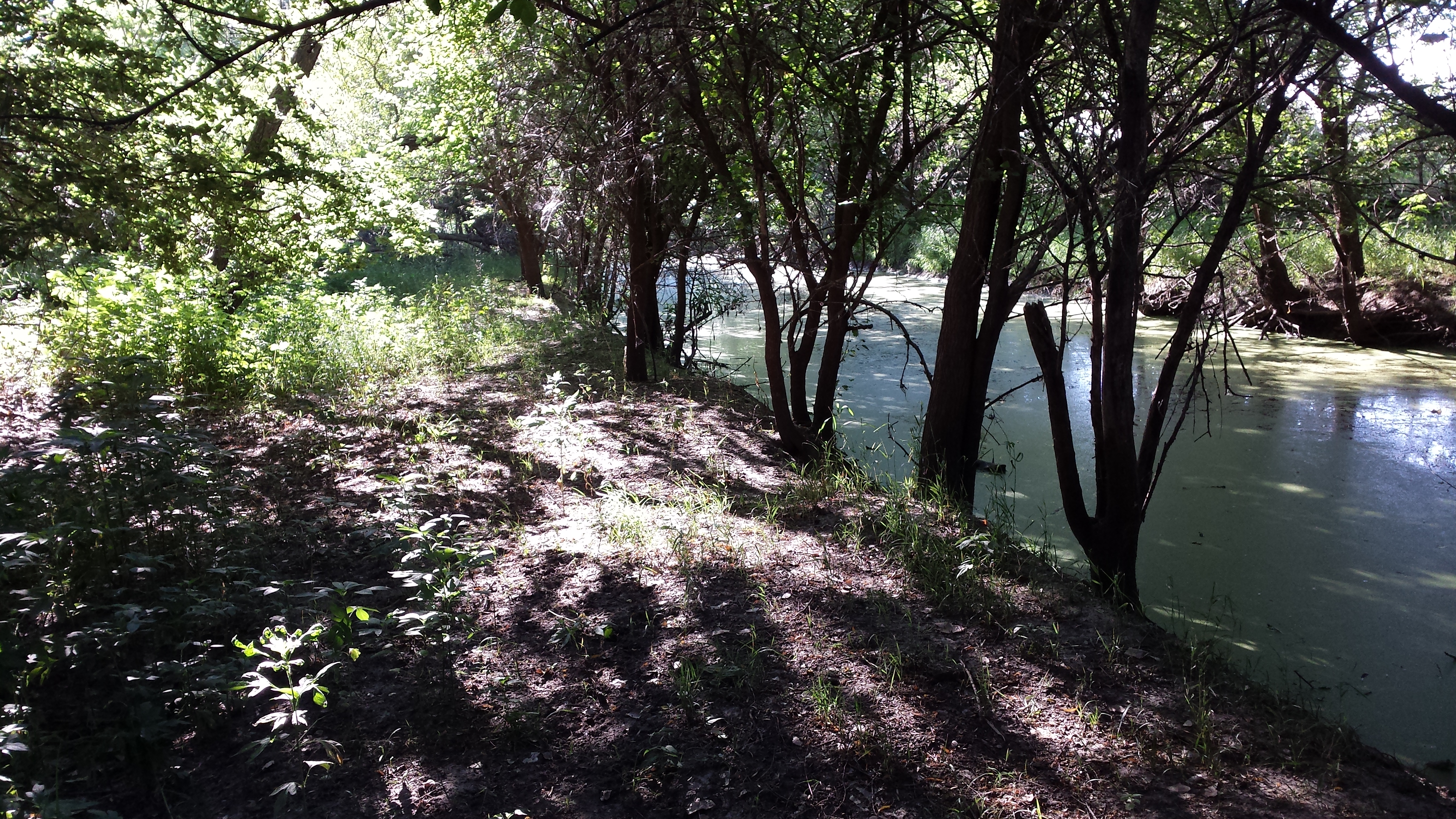
A friend had been seeing a bald eagle at the wetlands just outside of town, and it seemed like a good reason for an early morning walk around my stomping grounds out there, and as I crept along the gravel road toward the wetlands, sure enough, perched high in an old dead cottonwood snag sat one lone stately bald eagle.

Steve Gilliland

I walk there mostly in the winter when the trails have been mowed and the grass and weeds have been frosted and tromped down by waterfowl hunters, so this morning’s excursion found the wetlands in her working clothes so-to-speak. I stepped out of the truck into a literal sea of yellow; no, someone had not peed in the pool, these were yellow wildflowers that were thick as ticks on a hound’s back and waist high. I knew everything would be wet with dew, so I wore my chest waders and was I ever glad I did. The wetlands manager told me the beavers were back and causing drainage problems again, so I decided to look into that before paying a visit to the eagle.

I’d gone a hundred yards or so when the flowers ahead exploded with quail; like the fireworks the night before, they erupted a couple at a time seemingly from nowhere, showing no sign of their presence until they were in the air in front of me. No sooner had they entered the air space over the nearby pond when a pair of cackling pheasants joined them from somewhere amidst the cattails. All that ruckus stirred-up a gazillion little frogs in the grass, and splashes dotted the surface of the pond as they all scurried for the safety of deeper water. There were ponds all around me and every few steps sent cranes (blue herons) and white egrets into the air; I lost count after a couple dozen, probably more cranes than I would see the entire rest of the summer.

When I got to the drainage ditch that runs the entire length of the wetlands and drains all the various ponds and the two “sinkholes” it was easy to see that the beavers had constructed a nice wall of mud across the front of their dam where we had previously cut notches to drain standing water from nearby farm ground. The farm ground was dry now and the dam was presently doing no harm, so catching those rascals might be an adventure for another time.

I parked and walked in from another direction to get a view of the beaver dam from the other side. The trail ran parallel to the drainage ditch, and walking along it was like strolling along a lazy river. Small trees lined the banks on both sides and farther out in one direction massive cottonwoods stood like giant sentries guarding a small swamp. Here and there the sun filtered through the canopy above and danced on ripples in the ditch.

Though I had gone only a few hundred yards from where I first walked, this was like an entirely different world. Raccoon tracks littered the ground and small frogs dove for the cover of the ditch with each step. The only thing thicker here than the coon’ tracks were the hoards of poison ivy plants wherever the ground got a little sunshine. Other than them, few plants grew here at all. A glimpse of the beaver dam from this side confirmed what I’d seen before, so I wound my way back to the truck and prepared to approach the eagle if it was still there.

The eagle continued its vigil from high in the old dead cottonwood, so I stepped into the soybean field that skirted around behind its perch. I couldn’t see the eagle or the tree anymore and was afraid it had skedaddled, but rounding a corner in the field brought me face-to-face with it at less than a hundred yards. I used to be a die-hard camera-carrying fanatic, but the last while have just used my cell phone, as it’s so convenient and most of the photos I take are close ups anyway. So there I stood, offered one of the best photo opportunities ever and my cell phone was in my pants pocket. As I fumbled to extract my stupid phone from my pants pocket INSIDE my waders, the photo opportunity took wing and was gone.

I’ve often wished there existed a pair of glasses that was actually a camera where the mere press of a button photographed what you saw through the lenses; boy howdy it would have paid for itself on the spot! I’ve driven past the wetlands numerous times since and have not seen the eagle again. Although as I sat there on the road early this morning before church, a wild mink scurried across in front of me; that almost made up for the foolhardiness of not carrying my camera… almost. Continue to Explore Kansas outdoors!

Steve Gilliland, Inman, can be contacted by email at [email protected].

NORWOOD: Assisting offenders reintegration into communities

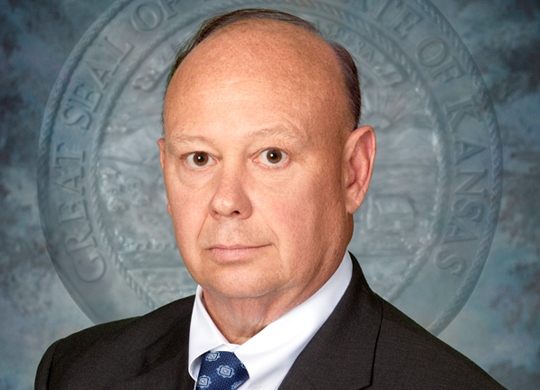
Joe Norwood, Secretary of Kansas Department of Corrections

Every year, more than 5,000 adult men and women who have been incarcerated are released from Kansas prisons and return to our communities. This process, called reentry, is important because we have the opportunity to set these men and women up for a successful transition back into society.

In Kansas, these offenders are assisted through this difficult transition by reentry staff of the Kansas Department of Corrections (KDOC) and partner organizations. I am proud to announce that Gov. Sam Brownback recently designated July 10-14 as Reentry Week in the state of Kansas to celebrate the work of staff, contract providers, mentors and volunteers in this process. As Secretary of KDOC, I observe on a daily basis the essential role these staff play in the security of Kansas communities.

Offenders who don’t have natural supports, job skills, a positive environment or the skills to navigate treatment and service systems are at risk of returning to crime and prison. This return to incarceration is known as “recidivism.” The goal of our reentry programs is to reduce recidivism and ensure successful transitions back into society.

Through evidence-based programs, core effective correctional practices, robust reentry and discharge planning, treatment and services from community providers, and the support of family, friends and mentors, Kansas has cut recidivism from over 55 percent to about 35 percent since 1999. Offenders who participate in KDOC’s Mentoring 4 Success recidivate at just 8.7 percent during their first 12 months after release, a testament to the great work of volunteer mentors who assist in the reentry process.

Today more than ever, offenders are leaving prison with more preparation, job skills, pro-social supports, connection to services, and a continuum of care. This leads more offenders to a law-abiding life, increases their chance of success, increases public safety and results in fewer victims.

Open houses at all Kansas correctional facilities and parole offices are scheduled for July 10-14 to provide the public with more information about the importance of this work. Check the schedule of events and feel free to visit and learn more about reentry programs. And take the opportunity to thank KDOC’s reentry staff, partner organizations and volunteers for making Kansas a safer place to live.

Joe Norwood is Secretary of the Kansas Department of Corrections.

Going strong after 225 years: Our love-hate relationship with the First Amendment

Lata Nott

Common practice for liberals and conservatives now is to take turns calling each other enemies of the First Amendment. The results of this year’s “State of the First Amendment” survey gave us the opportunity to consider these insults — and after the numbers are crunched, who is the real enemy of the First Amendment?

Well, no one. And, everyone.

Most of our fellow citizens, regardless of their political ideology, are quite fond of the First Amendment, at least in the abstract. The people who think that the First Amendment goes too far are a minority — 22.5 percent of us. A majority of Americans (67.7 percent) thinks that the press plays an important role as a watchdog on government; a slightly narrower majority (58.8 percent) thinks that freedom of religion should extend to all religious groups, even those widely considered extreme or fringe.

That’s the good news: Even in a time of great political turmoil, we’re generally supportive of the First Amendment’s protections.

The bad news: When it comes down to specific applications of the First Amendment, we’re less positive, and also deeply divided along ideological lines. Both liberals and conservatives have certain pain points where they balk at the amount of protection that the First Amendment provides.

Liberals are more likely than conservatives to think:
Colleges should be able to ban speakers with controversial views.
People should not be able to express racist comments on social media.
Meanwhile, conservatives are more likely than liberals to think:
Government officials who leak information to the press should be prosecuted.
Journalists should not be able to publish information obtained illegally, even if it serves the public interest.
Government should be able to determine which media outlets can attend briefings.
Government should be able to hold Muslims to a higher standard of scrutiny.
Worth noting: Some of these differences in attitude may not be a direct result of whether you’re a liberal or a conservative; instead, they might be circumstantial. Do more liberals support press freedoms because that’s a core value of liberal ideology — or because the press is a watchdog on the government, which liberals don’t currently control?

Do more conservatives think that colleges shouldn’t be able to ban speakers because of a greater commitment to free speech — or because most banned speakers, at least in recent years, have tended to be conservative? It will be interesting to see in subsequent years if attitudes change as circumstances change.

One thing that unites the majority of Americans right now: Most of us, liberals and conservatives, prefer to read or listen to news that aligns with our own views.

That’s true even if you think that the news media reports with a bias, as most Americans do (56.8 percent). Apparently, we’re not inclined to correct that bias by taking in multiple and varied news sources. Instead, we’re more likely to double down on the news that fits in with our pre-existing ideological perspectives.

This finding is both obvious and disheartening: Everyone likes reading and hearing news that confirms what they already believed. That’s one of the factors that keep us so divided.

Lata Nott is executive director of the First Amendment Center of the Newseum Institute. Contact her via email at [email protected], or follow her on Twitter at @LataNott.

SCHROCK: Mushroom clouds

John Richard Schrock is a professor at Emporia State University.

When F.D.R. proclaimed that “We have nothing to fear but fear itself,” we had not yet developed nuclear warfare. Today, with nuclear armaments expanding in North Korea and the increasing threat of non-governmental terrorists securing or building nuclear bombs, there is good reason to be very worried.

We came closer to nuclear annihilation in the Cuban missile crisis under President Kennedy than most of us realize. In the bio-documentary of Robert McNamara, “Fog of War,” we hear the taped committee discussion where Kennedy faces two replies from the Soviet Union. J.F.K. wisely follows the civilian advice to respond to the less militaristic message. As a high school student at that time, I joined the rest of America in sighing relief that all ended well.

But we came much closer to an exchange of nuclear missiles and worldwide devastation than we knew. William J. Perry, the U.S. Secretary of Defense from 1994 to 1997 was a young photo analyst at the time. In his book “My Journey at the Nuclear Brink,” he reveals the pure luck that prevented a civilization-ending war. The Soviet fleet that approached our Cuban blockade included submarines equipped with nuclear torpedoes. Because underwater communication was difficult, the Soviet submarine captains had been given full authorization to decide whether to open fire. When our fleet attempted to force a submarine to the surface, the submarine captain gave the order to fire nuclear torpedoes at our destroyer. It was only by chance that the fleet commander, Vasili Arkhipov, was aboard that submarine and countered the order—and prevented World War III.

But the U.S. had risky commanders as well, including General Curtis LeMay whose advice to go ahead and bomb the Cuban missile sites was rejected by Kennedy. Only long afterward did we learn that the Soviet commanders manning those Cuban missiles, similar to the submarine captains, had been given discretion to launch without further orders. We now know that had General LeMay’s plan been enacted, there is little doubt that some of those nuclear missiles—including warheads targeted at Washington, DC—would have gotten through.

To a hammer, every problem looks like a nail. In the cases of Generals Douglas MacArthur and Curtis LeMay, every problem had a military solution with nuclear options included. There are notable exceptions, including Dwight Eisenhower and George Marshall. But our history has shown the wisdom of a civilian Secretary of Defense.

We laugh at the naive “duck-and-cover” school exercises of the early Cold War era. But although the deadly and long-lasting effects of nuclear blasts and fallout radiation are now better understood, they are nearly completely missing from the modern school curriculum.

The actual effects of nuclear warfare are barely perceived by a public that would simply rather not know. Ironically, one of the more accurate portrayals was filmed in Lawrence, Kansas. “The Day After” aired in November, 1983 on ABC stations. Although it was seen by over 100 million people, there is little evidence today of any residual appreciation for the civilization-ending impact of a full scale nuclear war. The decades-long “nuclear winter” and other effects of these weapons remain beyond the comprehension of supposedly well-informed modern citizens.

Nor do today’s generals really understand the destructive force of nuclear warfare. Thanks to the test ban treaty, we no longer have any generals who have witnessed a nuclear bomb. Harold Agnew, a physicist from our Manhattan Project, explains “…you don’t know what heat is until you’ve seen the heat from a ten megaton, fifteen megaton hydrogen bomb. The most impressive thing about the heat is it doesn’t stop, it just gets hotter and hotter and you start to really worry even though you’re twenty some miles away….” Agnew believed that if generals felt the intensity of that distant inferno firsthand, they would never order a thermonuclear bombing. No audio-visuals, no modern media in 3-D, could ever replace the feel of that heat penetrating your body. But today’s generals whose only imagery of the H-bomb is from conventional weapons and abstract videos made this a more dangerous world.

So, where is a school curriculum that helps our next generation understand these things—if there is to be another generation?

Now That’s Rural: Doug McKinney, Career Exploration

Ron Wilson is director of the Huck Boyd National Institute for Rural Development at Kansas State University.

By RON WILSON
Huck Boyd National Institute for Rural Development

“Our biggest export from rural Kansas isn’t wheat or corn – it’s our young people.” That statement describes one of our rural communities’ major dilemmas, which is the outmigration of youth. Today we’ll learn about an initiative in north central Kansas which is helping make young people aware of the opportunities they have locally without having to move away.

Doug McKinney is executive director of the North Central Regional Planning Commission which serves 12 counties in north central Kansas, plus providing other services beyond that region. The commission’s main office is centrally located in the region, in Beloit.

Doug explained that he and other community representatives were invited to a Kansas Department of Education forum in Topeka in December 2016. State Commissioner of Education Randy Watson invited school districts and others to come to this forum on the topic of summertime career exploration and leadership development. The one-day forum featured a school district in New York state that used summer programming to address several problems found in that school district.

“In New York, they had a lot of issues with juvenile delinquency and low graduation rates,” Doug said. “Our issues are different from theirs, but we did see how special programming in the summertime could address community needs.”

Several partners in this region of Kansas then got together to plan a special initiative to be held in the summertime. Led by Jeff Travis, the Beloit school superintendent, the other partners included Eric Burks, president North Central Kansas Technical College (NCK Tech); Heather Hartman, Mitchell County economic development director, and Doug from the North Central Regional Planning Commission. A K-6 technology teacher, Cris Adams, and high school counselor Stephanie Litton coordinated the program.

The partners designed what was called Career Exploration and Leadership Development week for middle-schoolers. Sessions included hands-on activities related to science, health care, law enforcement, agriculture, and entrepreneurship. (Full disclosure: I was a presenter at one session where we discussed rural entrepreneurs.) The weekly schedule included three days of speakers, lunch, and tours.

In the spring, students were offered the opportunity to participate in this innovative program. Sessions were held during three weeks in June. During those three weeks, the students learned about science and biology from Kansas Wildlife, Parks and Tourism; robotics and machining skills from NCK Tech; and much more from specific businesses. The students visited Brush Art in Downs, Cunningham Cable and Telephone, Brady’s Lakeside in Glen Elder, Ringneck Ranch at Tipton, and Agmark, Agco, Kettle, and Carrico Equipment in Beloit. Several employers emphasized the extensive need for skilled technical workers. The students were even guests of the local Rotary club.

“The goal is for them to learn about career opportunities right here in their own backyard,” Doug said. Exposing youth to local opportunities may serve to help them start careers locally or come back to the community at a later age or stage of life. “We hope they will remember this place when they’re older and wiser, say, at age 25,” Doug said with a smile.

In year one of the program, 14 youth participated. Most were from Beloit but there were also students from neighboring rural communities such as Glasco, population 498, and Simpson, population 86 people. Now, that’s rural.

Informing rural youth about local career opportunities can make their education more productive as well as provide the possibility that they can build a career or return to the community later on.

“The Smoky Hills Educational Service Center, which serves our region, says this is unique,” Doug said. “We are doing a more formal evaluation, but the feedback from parents says that this was a topnotch experience.”

The greatest export from rural Kansas is not wheat or corn, it is our young people – but this group of partners is helping their young people become aware of opportunities locally. We salute Doug McKinney and all the partners who are part of this innovative effort who are making a difference by opening doors for young people. When it comes to the next generation of business leaders in our rural communities, perhaps we can grow our own.

BEECH: Rethink your drink

Linda Beech is Ellis County Extension Agent for Family and Consumer Sciences with Kansas State Research and Extension.

Thirsty? The heat of summer increases the need to drink plenty of fluids. But which beverages can we choose to quench our thirst without sinking the grocery budget?

Drinks are one of the easiest places to save money on your food bill. In order to do this, we have to be willing to let go of old, expensive habits and open the door to newer, cheaper ones.

When we’re thirsty, it’s a signal that our bodies need water. Nutritious beverages like milk and fruit juice also play a valuable role in maintaining good health.

But, most other beverages besides water, milk and juice are diet and budget luxuries. These include such favorites as soda pop, sports drinks, fruit drinks, lemonade, coffee, tea, and almost any other beverage you can imagine. They add calories, caffeine, sugar, fizz and flavor to our diet. They do not add significant nutritive value. When we buy these types of luxury beverages, we are paying for someone to combine water and flavorings and then package them in a container that probably costs more than the beverage itself.

This doesn’t mean we need to give up our favorite drinks. It does mean that we need to recognize them for the luxuries they are. Then it’s a lot easier to put them in their proper place in the budget.

One way to approach the beverage budget is to assign a priority ranking for the drinks we may want to buy. Below is one example. Your list may be different, but it gives an idea of how to begin to rethink your drinks with the budget in mind:

  • High Priority – Tap water, lowfat or fat free milk, fruit juice concentrates.
  • Medium Priority – Canned and bottled 100% juices, nonfat dry milk powder, unsweetened cocoa powder, store brand instant coffee and tea, cheap ground coffee and tea bags.
  • Low Priority – Whole or 2% milk, store brand soda-pop, store brand powdered fruit-flavored drink mixes and lemonade, most bottled fruit-flavored drinks and punches.
  • Seldom or Never- Fresh and refrigerated juices, chocolate milk, flavored coffee and tea, juice boxes or pouches, bottled water, name brand soda-pop, energy drinks, sports drinks, beer and other alcoholic beverages.

Your list won’t look exactly like this one, but it may be similar. Where there is room in the budget for a luxury beverage, by all means– indulge a little. Occasional treats make sticking to a tight budget a lot easier. Just be sure the important things are purchased first. For example, buying your favorite soda pop on sale is no bargain if you don’t have enough milk or juice to last until the next paycheck.

For more information on eating well on a budget, check out the K-State Research and Extension human nutrition website at: https://www.ksre.k-state.edu/humannutrition/nutrition-topics/eatingwell-budget/index.html. You can also find helpful tips for healthy beverages at: www.ksre.k-state.edu/humannutrition/nutrition-topics/beverages-healthydrinks/index.html.

INSIGHT KANSAS: Jerry’s Choice

Once to every man and nation comes the moment to decide,
In the strife of Truth with Falsehood, for the good or evil side;
Some great cause, God’s new Messiah, offering each the bloom or blight,
Parts the goats upon the left hand, and the sheep upon the right,
And the choice goes by forever ‘twixt that darkness and that light.

— James Russell Lowell, “The Present Crisis” (1844)

Memorialized as an iconic hymn and used by the NAACP in 1910 as inspiration for its newspaper, “The Crisis,” Lowell’s powerful words should not be used lightly in addressing the issues of the day. Still, his verse focuses our attention on decisions made by those in power at critical junctures.

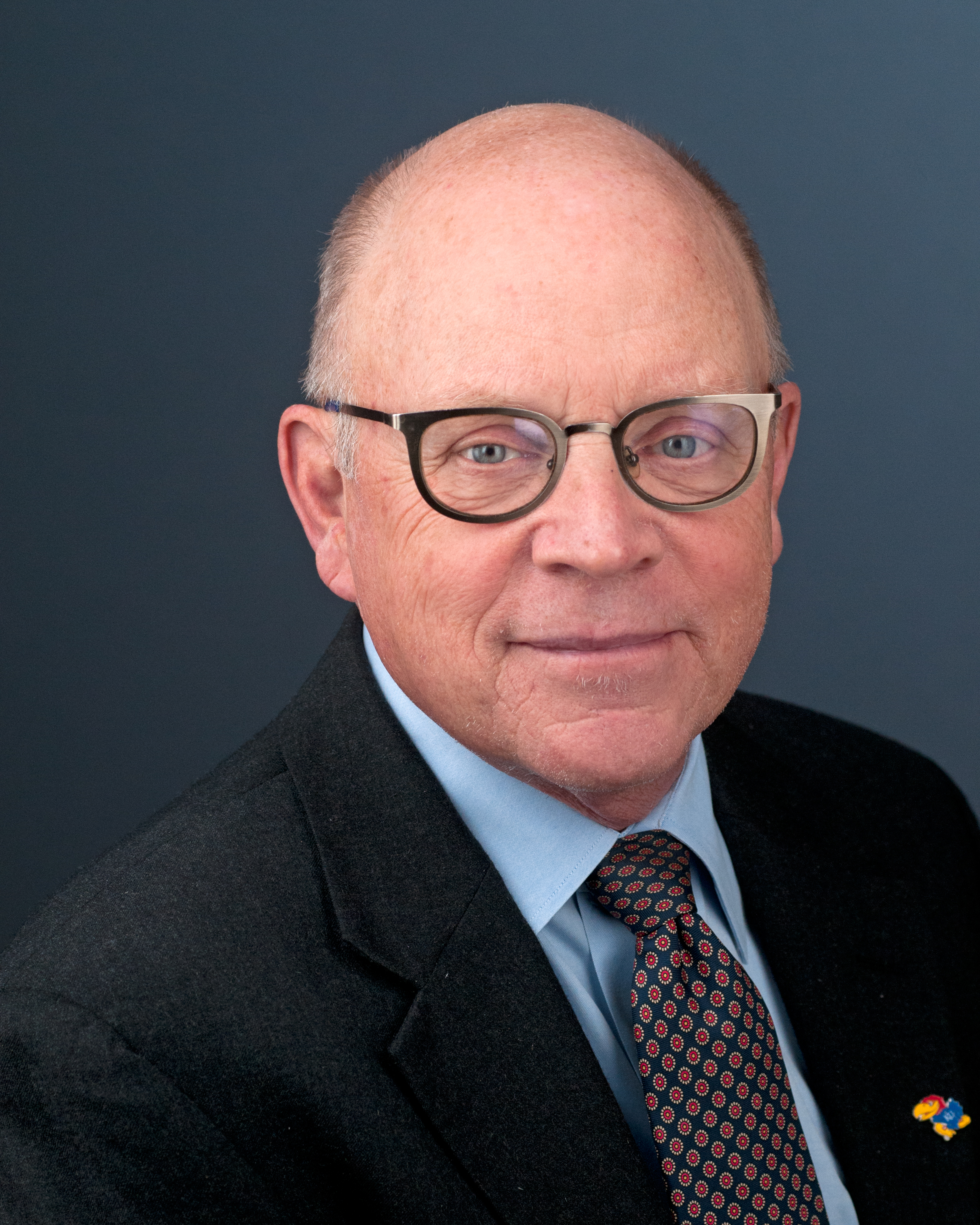
Burdett Loomis, Professor, Political Science, College of Liberal Arts and Science

Without question, these words apply directly and profoundly to U.S. Senator Jerry Moran in July, 2017. Never in his three decades of public service has the senator faced a more important choice than his vote on the bill to “repeal and replace” the Affordable Care Act.

Of course, this vote is important in determining the ultimate fate of the ACA. But Moran’s decision may be even more important in determining the ultimate assessment of his overall Senate career. Will he forever be a safe GOP vote, with modest impact, as was the case with Sam Brownback? Or will he be a legislator of real consequence, like Bob Dole, Nancy Kassebaum, or Frank Carlson?

Great legislators are not born, but made. Dole is widely and rightly remembered for his 15 years in leadership between 1981 and 1996. But his early Senate years, while dotted with some significant accomplishments, such as working with George McGovern to pass the initial food stamp law, scarcely indicated that he would become one of the Senate’s great lawmakers.

One can argue that Dole, Kassebaum, and Carlson served in a different, less partisan era. True, to a point, but Dole’s strong, even virulent, partisanship was balanced by an overriding desire to pass legislation – especially on major issues like Social Security, tax reform, and disability rights. To that end, he often worked effectively with that great Democratic partisan and legislator, Ted Kennedy.

Jerry Moran’s willingness to challenge his party leaders and president stands out because he has rarely taken such a step. Nevertheless, as a House member in 2003, he did oppose Medicare D, a poorly designed drug bill. On policy grounds he was right, but his vote earned him the lasting enmity of Speaker Dennis Hastert. In that sense, he took a major stand and reaped the consequences.

The American Health Care Act (ACHA) is a far more pernicious proposal than Medicare D ever was. To his credit, Senator Moran is one of only two GOP senators to face his constituents in public meetings this week as he wrestles with how to vote on whatever the final bill will be.

If he stays the course and opposes this legislation, he will, like Senator Kassebaum, provide some cover to other, wavering Republican senators. This is how power, influence, and respect can accumulate. Such a course of action is not electorally risk-free, but Moran has five years to work on behalf of Kansans to improve their health care.

Legislating is not easy, but that did not dissuade his noteworthy Senate predecessors. In visiting with Jerry over the next few days and weeks, we should encourage him to continue to exhibit the independence and (as he likes to call it) common sense that Kansans expect, appreciate, and deserve. Echoing James Russell Lowell, this is his time and our nation.

Burdett Loomis is a professor of political science at the University of Kansas.

SELZER: Know fact from fiction about insurance coverage

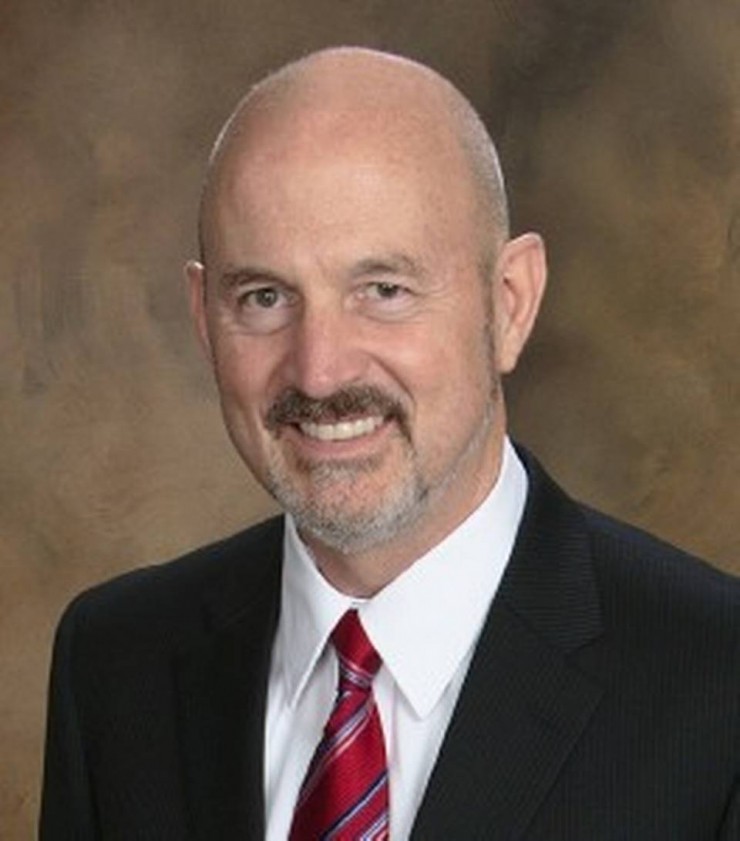
Ken Selzer, Kansas Insurance Commissioner

Taking the time to read the fine print of health, auto and home insurance policies may not always happen with consumers. But it pays to understand what you’re purchasing so there are no surprises if you ever need to file a claim.

Below is a list of nine common insurance misconceptions that may occur from a lack of policy knowledge. They were compiled from questions to our Kansas Insurance Department Consumer Assistance Division and the National Association of Insurance Commissioners (NAIC). Our answers follows each one.

· My spouse wants a life insurance policy, but I don’t think it’s necessary.
While life insurance covers the life of the policyholder, it is the policyholder’s family who benefits from the coverage. If a family’s primary breadwinner passes away, how will that person’s income be replaced? Also, consider potential losses incurred by the passing of a stay-at-home parent who cleans, takes care of children, and manages a home. It could cost a lot of money to replace these services. Understanding your family’s needs will help determine whether a life insurance policy makes sense.

· I only need collision and liability coverage for my vehicle.
Liability coverage protects you and your family if you’re at fault during an accident, and it will cover damages to property, vehicles or people up to your policy limits. Collision coverage will cover costs to repair your vehicle (minus the deductible) in a collision such as hitting a pole, a vehicle or another object. However, if your vehicle is stolen, or flooded, or if you hit a deer, you’ll need comprehensive coverage to recoup your loss. Think about all your risks and the potential costs of replacing a vehicle when deciding on coverage.

· If I lend my car to a friend, and my friend has an accident, his/her insurance will cover it.
It may seem only fair that a friend’s insurer would cover the accident, but auto insurance follows the vehicle, not the driver. So your insurer would bear the primary responsibility for any damage a friend causes while borrowing your vehicle. If the damage exceeds your policy limits, then your friend’s policy would kick in as secondary.

· I don’t need any additional rental car insurance because my credit card will cover me.
Many credit cards will only cover collision insurance, not liability. That means you’ll be on the hook for the other driver’s damages if you’re at fault. Also, depending on where you travel, your credit card company may restrict coverage. However, your own auto insurance policy might cover a rental car, so be sure to call the company as well. Don’t make assumptions; take time to find out what’s covered.

· Health insurance is available for purchase whenever I need it, no matter what.
Not true. To purchase coverage in the individual market or from the federal marketplace, you must either purchase during open enrollment or experience a qualifying life event, such as marriage, birth of a child, divorce or death. Additionally, if you get a new job that offers health insurance, you may have to wait 30-60 days before your coverage takes effect.

· Health insurance will pay the same, no matter where I receive care.
Insurers negotiate payment rates with networks of providers. If you use a provider outside your insurer’s network, your insurer may not cover the entire bill, and you may be required to pay more out-of-pocket. Check to see if your provider is in your insurer’s network to avoid a surprise bill.

· My state’s minimum auto liability coverage is sufficient.
If you’re at fault for an accident where you damage an expensive vehicle or more than one vehicle, your minimum property damage limits might not cover the full costs of the damage. Have you checked what your liability limit is for bodily injuries? Serious injuries or even death can translate into millions of dollars in settlement fees. In this case, you’re personally responsible for the costs not covered by your auto insurance policy.

· A tree in my backyard fell and hit my home; therefore, the removal and damages are covered.
If the tree was damaged by water or wind, you may not be able to get it replaced, depending on the language of your policy. If not, you’re covered for damages to your home and any of your belongings that were also damaged. You will have to pay your deductible, but your homeowners insurance typically will also cover the cost of removing the tree and even replacing it.

· Homeowners insurance means I’m covered for flooding losses.
Think again. Flood insurance is not covered as part of standard homeowners and renters insurance policies. If you want to be covered for flood damage, you’ll have to purchase coverage specific to flooding. If you live in a flood zone or if your home could be flooded by an overflowing creek or pond, or even water running down a hill, look into buying flood insurance. And buy it before you need it, because there is a 30-day waiting period after purchase before the coverage takes effect.

As always, if you have insurance questions, contact our Consumer Assistance Division by calling 1-800-432-2484, or by going online to www.ksinsurance.org to use our Chat feature on our home page.

Ken Selzer, CPA, is the Kansas Commissioner of Insurance.

Now That’s Rural: Earl Roemer, Nu Life Market

Ron Wilson is director of the Huck Boyd National Institute for Rural Development at Kansas State University.

By RON WILSON
Huck Boyd National Institute for Rural Development

Food is necessary for life. For those with food allergies, the right kind of food is vital. When someone with gluten intolerance or another food allergy finds a tasty food which is healthy for them, it can be like a new lease on life. Today we’ll meet a Kansas entrepreneur whose company is helping supply those needs with a Farm to Family food safety program.

Earl Roemer is founder and president of Nu Life Market in Scott City. Nu Life Market business development manager Rachel Klataske shared his story with me.

Earl’s family has farmed in the High Plains of Kansas for four generations. As do many western Kansas farmers, his family grew grain sorghum – also called milo – as a feed grain crop for livestock.

Earl became intrigued by grain sorghum’s potential as a human food source. “Earl is a scientist by training and a farmer by background,” Rachel said.

He started researching the potential use of grain sorghum as a human food crop. According to one account, the early grain sorghum products “tasted like cardboard and the texture was like sand.” Now they are much improved. K-State food science professor Dr. Fadi Aramouni helped with research which significantly improved the quality and appeal of the product. K-State researchers even developed an award-winning recipe based on sorghum flour.

In 2007, Earl founded his own business to produce and market sorghum-based products and sell sorghum ingredients to other food companies. The company was named Nu Life Market. Facilities were built in Scott City to accommodate the careful processing which allergen-free products require.

With the increased interest in gluten-free products such as sorghum flour, the demand for Nu Life Market products has grown significantly as has the company’s workforce. For example, Rachel Klataske studied bakery science at K-State and was a product developer for Post cereals in Michigan before coming back to Kansas. She is now business development manager for Nu Life Market and her husband Ryan Klataske is a cultural anthropologist who has taught at K-State.

Sorghum is an ancient grain. Traces of it have been found from 8,000 years ago in Egypt. In recent years, it has been grown in the U.S. as a water-conserving alternative to corn. Kansas is dominant in sorghum production. An estimated 52 percent of U.S. sorghum production comes from Kansas alone.

The gluten-free and other properties of sorghum flour, such as its non-GMO status, now make it especially popular as a human food ingredient. “Some sorghum varieties are even higher in antioxidants than blueberries,” Rachel said.

The Nu Life Market processing facility was carefully designed and constructed in Scott City. “No allergen-containing grain comes into the facility,” Rachel said. The facility is dairy-, peanut-, and soy-free. As mentioned, Nu Life Market implemented a Farm to Family food safety program. This includes strict selection of fields, careful cleaning of equipment to prevent cross-contamination, processing in its dedicated facility, certification by the Gluten Free Certification Organization, and accredited third-party testing of the finished products. The flours are milled into a silky, fine particle size which is ideal for gluten-free baking. Packaging is designed to extend the product’s shelf life.

“Demand for our products is growing very fast,” Rachel said. Sorghum can be found in more than a thousand products, such as gluten free baked goods, cereal bars and snacks, represented by some 80 brands. Nu Life Market is shipping its products coast to coast and beyond.

“Since production of this grain uses less water, we are helping the environment and helping people’s lives,” Rachel said.

That is an impressive contribution by this company, created by a family which still farms at the nearby rural community of Healy, population 387 people. Now, that’s rural.

For more information, see www.nulifemarket.com.

When people with food allergies find good foods which are healthy for them, it is like a new lease on life. We commend Earl Roemer, Rachel Klataske, and all those involved with Nu Life Market for making a difference in people’s lives. They are responding to a new market for producers and providing good new products to consumers – from farm to family.

MADORIN: Great Plains miller invasion is bear feast

Most of us living in western Kansas open our mailboxes or newspapers to find multitudes of miller-moths hiding in dark crevices. After slapping at the annoying creatures, we scrub away miller dust their wings deposit. If they escape, they squirt orange fluid that scientists call meconium, which gives an idea of its ingredients. Most people can’t find anything good to say about this insect invasion except, “Thank goodness they don’t eat fabric, wood, or carpets.”

Native Kansan Karen Madorin is a local writer and retired teacher who loves sharing stories about places, people, critters, plants, food, and history of the High Plains.

In pre-miller life, these invaders were army cutworms that can wreak havoc in winter wheat fields and alfalfa patches. In high population years, cutworms assume the “army worm” custom of massing in Biblical plague formations to travel over fields or highways.

After they mature in spring, they tunnel into soft earth to pupate. Following a three to six week period underground, they emerge as flitting moths, capable of squeezing through door and window cracks where they slink into inviting darkness.

Fortunately, they don’t hang around all summer. These are high elevation, cool weather, wildflower-nectar and evergreen pollen loving creatures. They migrate from the heat saturated plains into the high, cool reaches of the Rockies. By August, nature balances her scales, and army cutworm moths that survived this journey soon find themselves providing winter fat stores for furry, four-legged eating machines.

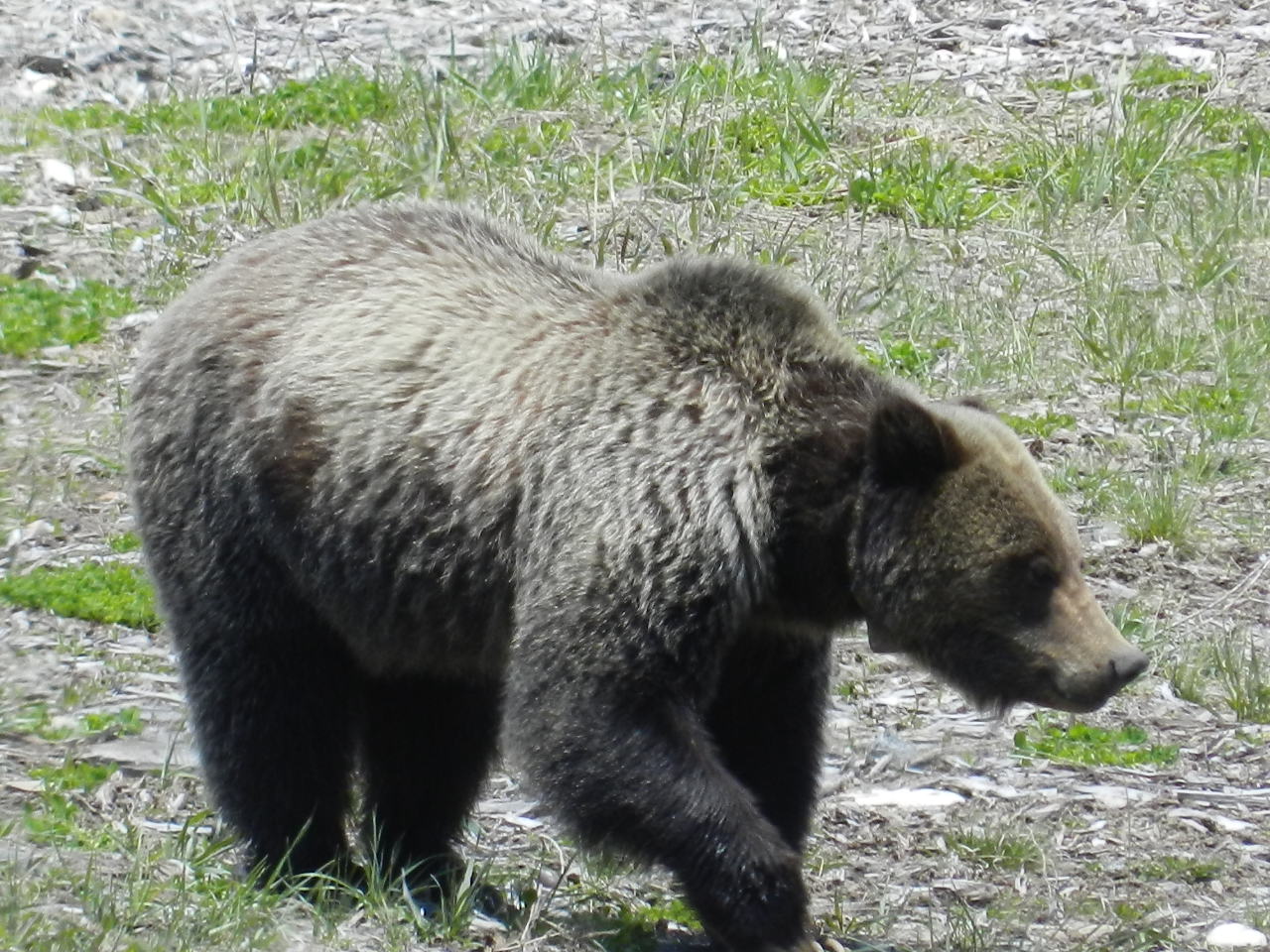
Grizzlies and black bears love miller-moths. Recall that these insects love dark crevices. Vast mountain rockslides offer innumerable hidey-holes for migrating throngs. Bears follow insect hordes to boulder and scree-strewn slopes where they then feast upon the winged creatures. Though bears typically feed in isolation, enormous amounts of available calories incline them to dine in mass upon these rock fields. According to researcher Hillary Robison who observes bears in and around Yellowstone Park, “It’s kind of like a salmon stream. We’ve seen bears feeding within several hundred yards of each other. . . .”

People with sensitive noses notice unpleasant odors coming from dead moths. The scent results from a high fat content that turns rancid when miller-moths die. This lipid concentration is what draws grizzlies to rocky mountainsides and triggers their focused digging into crannies. The bruins work so hard turning over stones to find these insects that they wear down their three to four inch claws as they eat up to 40,000 moths a day to store calories for winter survival.

Robison’s research examines how far Yellowstone moths travel from Great Plains farmlands and reveals an unexpected connection between the Great Plains and bear survival in Yellowstone. Of interest to Yellowstone tourists, silvertips looking for moths in high elevations each summer won’t be inclined to trouble park visitors at lower elevations. According to Robison, “If they are spending a month up in these Yellowstone moth sites in the summer, they could eat close to half their needs for the year.”

While I don’t like moth dust, orange splats on the woodwork, or having winged hordes fly out of my newspapers, I have a new appreciation for these metamorphic wonders. I enjoy knowing miller-moths that hovered about my yard light fatten grizzlies for winter hibernation.

Native Kansan Karen Madorin is a local writer and retired teacher who loves sharing stories about places, people, critters, plants, food, and history of the High Plains.

SCHLAGECK: Develop dialogue

John Schlageck writes for the Kansas Farm Bureau.

More often than we’d like to admit we sometimes shoot ourselves in the foot when talking about the challenges we face in farming and ranching. These conversations with friends, neighbors and family take place at the local café, filling station, after church or Friday evening ball games.

During these visits, farmers and ranchers sometimes conclude that consumers and non-aggies don’t like them. Or, their urban acquaintances don’t listen to them or care one iota about raising crops or caring for livestock.

Most people don’t need to know much about farming today. They probably think about agriculture less than 30 seconds a year and 20 seconds of that time is based on misinformation.

Why should they?

Do farmers and ranchers wonder what a Detroit automaker does? Who he or she is? And what about their family?

While non-farm and ranch people harbor misconceptions about agriculture, believe me, they like farmers and ranchers. They admire this profession.

It’s important to bridge this informational gap between farm and ranch producers and consumers. But navigate this divide skillfully.

No one wants to be educated or preached to. Humans like to engage in conversations. They like give and take. Usually, if a person is knowledgeable about a profession like raising cattle, another person who doesn’t know about the livestock industry may be curious and willing to listen.

And while no one understands agriculture like farmers and ranchers, we must encourage and foster dialogues with those who know little about this profession. This includes people outside our comfort zone – someone we may not talk to about what we do like city cousins, foodies, medics, lawyers, etc.

Take the opportunity to conduct such conversations on a flight to another state or country. Develop dialogue with people at a professional meeting, just about anywhere and with anyone who isn’t savvy about agriculture.

Times continue to change and so do attitudes and opinions. Forty years ago, people expressed little interest in agriculture.

As a fledgling photo journalist in the mid-1970s, I can’t remember someone asking me about agriculture at a social event. This just didn’t happen even though many of my friends knew I worked in journalism and wrote about farming and ranching.

Agriculture wasn’t hip, cool or fly back then. Today the tables have turned and people are quite interested in where their food comes from. They don’t hesitate to walk up to you, cocktail in hand and ask, “Tell me about antibiotics, beef production, GMOs.”

Talk to them. Tell your story. Exude passion about your chosen profession.

But remember – ask them about their profession, who they are and what makes them tick.

Then, listen.

Develop relationships and build on those dialogues. Before we can expect someone to listen to us talk about how important international trade is to our bottom line, we must listen to them tell us about their home and garden, their chosen career or whatever else they choose to talk about at the time.

There is a voice that doesn’t use words – listen.

John Schlageck is a leading commentator on agriculture and rural Kansas.

Copyright Eagle Radio | FCC Public Files | EEO Public File