We have a brand new updated website! Click here to check it out!

Now That’s Rural: Paula Peters, Culture of Health

Ron Wilson is director of the Huck Boyd National Institute for Rural Development at Kansas State University.

By RON WILSON
Huck Boyd National Institute for Rural Development

Could the extension service do for health what it has done for agriculture through the years? During the past century, American agriculture – with assistance from agricultural research and extension – has been transformed from subsistence farming to an agricultural system that is the envy of the world. Could similar progress occur in the health arena? To do so would require a deep cultural change that would value health as a priority. In short, we might say it requires a culture of health.

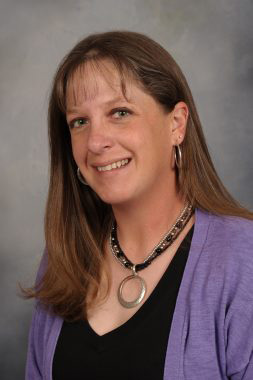
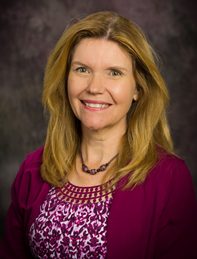
Dr. Paula Peters is associate director of extension programs for K-State Research and Extension. The term “extension” refers to the state- and county-based educational outreach programs which extend helpful research results from the nation’s land-grant universities to the public.

“For years, (extension) has done work on nutrition, foods, and physical activity,” Paula said. In a larger sense, extension has worked to support the health of families, farms and communities since the extension service was founded in 1914.

In 2014, the national Extension Committee on Policy supported the development of a national framework for extension work in public and community health. That report included the aspirational statement that extension could do for health what it has done for agriculture.

In Kansas, even before that time, the Kansas Health Foundation provided an endowment to support extension work in health. Those funds supported an Office of Community Health for several years.

“We wanted to build the capacity of our local extension agents to work in the health area,” Paula said. Funds were redirected to support grass-roots health-related extension initiatives.

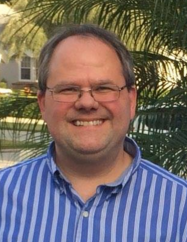
Peters

This initiative reflected the fact that a deep, cultural commitment to health was needed. The initiative was called Culture of Health. “People think of improving physical health, but we are looking more broadly than that,” Paula said. “It’s also mental health, financial health, the health of the community itself.”

The initiative began with a series of facilitated community conversations with extension professionals and community partners around health issues. Then grants were offered to county and district extension units. The grant applications required that a local needs assessment be completed and that the work be implemented through collaborative coalitions.

In February 2019, K-State Research and Extension awarded $170,000 in grants for 32 projects in 51 counties across the state. These supported multiple kinds of health-related projects, such as healthy food access, physical activity, mental well-being, anti-poverty, and much more. Because they were implemented through local coalitions, agencies worked together in beneficial ways.

As a person who loves a good acronym, I appreciated projects with titles like Johnson County EATS – Easy, Affordable Tasty Solutions, Atchison County’s BOOK – Believing in Opportunities for Our Kids – and Meade County’s CATCH – Coordinated Approach To Community Health. Meade is a rural community of 1,721 people. Now, that’s rural.

Beyond the, um, catchy titles, this work dealt with serious, long-term issues. For example, the Marais des Cygnes Extension District worked on suicide prevention and mental health intervention. The Twin Creeks Extension District worked on a produce buying incentive program for low income buyers at a local farmer’s market.

In addition, the state extension team sponsored adult mental health first aid training for more than 100 extension professionals in spring 2019. “We’re not counselors but we can connect people to the resources they need.”

Another training was held in June 2019 on policy systems and environment. “We need to do more policy work to assure that healthy behaviors are supported and sustainable,” Paula said.

Most of all, this has led to a new level of collaboration on health issues. “It’s been fun to watch our agents reach to their collaborators and also each other,” Paula said.

Can extension do for health what it has done for agriculture? If Paula and her team have their way, it will. We commend Paula Peters, her specialists, and all those extension agents who are making a difference by improving our healthy behaviors. They remind us that health isn’t just going to the doctor. This is about a culture of health.

And there’s more. Next week we’ll learn about a local initiative for a basket-full of health.
INSIGHT KANSAS: Anxiety is a public health problem

Michael A. Smith is a Professor of Political Science at Emporia State University.
I can perceive the increasing anxiety among my students. Today, they come to the office not only to discuss courses, internships, and post-graduation plans, but also to apologize for missed classes and changing behavior due to new doses of medication, personal and family drama, and other stressors. My colleagues and I are receiving more and more training about warning signs, counseling referrals, and conducting interventions, alongside the usual degree reports and add/drop slips. K-12 teachers tell me they see this as well, and I also see it in my younger colleagues.

The data show it, too. Anxiety is on the rise. The American Psychiatric Association ran a 1000-respondent poll in 2017, finding that two-thirds of respondents identified themselves as extremely or somewhat anxious– a 36% jump from 2016. These answers were most common among the millennial generation. Health and safety for self and family were the most common concerns. The poll was repeated in 2018 and found another 5% increase. Surveys in other developed countries also show increases.

Why should political scientists be concerned? First, professors are, first and foremost, teachers, and our first responsibility is our students’ well-being. Second, research should explore the rising anxiety levels and our divisive, fear and anger-driven political climate, manifested in figures like former Kansas Secretary of State and current U.S. Senate candidate Kris Kobach. Third, labeling anxiety a public health problem is a public policy issue.

Labeling anxiety as a public health problem would benefit those struggling with it. One feature of American culture–particularly rural culture —is to treat all health problems as resting with the individual, and solvable only by the individual. Thus, many people with anxiety wonder if there is something “wrong” with them. Acknowledging the public health aspect lets sufferers know that they are not alone and removes the stigma from seeking help. This is a good start, but we can do more.

K-12 schools, universities, and employers may need to consider developing codified procedures for handling the increasing number of claims asserting that classes, assignments, deadlines, and work days were missed due to changes in medication. Handling such claims on a case-by-case basis may no longer be feasible. Of course, insurance coverage for mental health is also a policy issue, requiring a balance between data-driven best practices, on the one hand, and flexibility on the other, since there is no one-size-fits all treatment that works for everybody. Unfortunately, many anxiety sufferers are treated primarily through trial and error, particularly with types and doses of medication. Funding for new research — for example, at KU Medical Center and its extensive research facilities — may help us find a better way than just seeing what sticks.

Finally, changes in our culture may be required. Many of my students, for example, see it is a badge of honor to cram in as many courses as possible, as well as to spend long hours at off-campus, part-time jobs, while also intervening to deescalate family dramas. The inevitable results are high stress and chronic sleep deprivation, which mutually reinforce one another into a toxic spiral. We need to re-think our cultural messages. While achievement is great, within reason, a shift in cultural norms toward balance and self-care is needed, too.

Michael A. Smith is a Professor of Political Science at Emporia State University.

MASON: A place where stories of transformation are written

Dr. Tisa Mason, FHSU president

One of the things I love most about being president of Fort Hays State University is that I get to hear stories from our alumni about the life-changing power of a college education and the caring, hard-working people of this amazing institution.

This week, I want to share alumnus Michael Durall’s personal story of transformation. It is a story that begins in the 1960s with a “shy, uncertain young man” who credits the people of our university with encouraging him to persist and discover the person he was meant to be.

Fort Hays Kansas State College changed my life forever

By Michael Durall, B.A. ’70

I enrolled at Fort Hays Kansas State College in the fall of 1964. At that time, tuition was $125 per semester, and many students paid in cash. I remember standing in line at the Registrar’s Office in the Coliseum to pay. I could hear the basketball team practicing on the nearby court, where the Beach/Schmidt Performing Arts Center is today.

I worked various jobs that paid $1.25 per hour. At first, I lived at home to save money. When I eventually shared an apartment, the going rate was about $30 per guy, per month. We shared one landline phone and divvied up the cost.

I was a naïve, shy and uncertain young man. I hadn’t studied much in high school and shouldn’t have gone to college, but I just didn’t know what else to do. I flunked out my freshman year. I worked construction for about eighteen months, and when I returned most of my beer-drinking and poker-playing buddies had moved on.

I still didn’t know what I wanted to do. I changed majors a number of times, trying to find a path.

But by then, the Vietnam War was heating up, with body counts increasing daily. The civil rights and the women’s liberation movements were also gaining momentum. No one realized that the ’60s would be one of the most tumultuous eras in American history.

I remember a silent anti-war vigil on the corner of 12th and Main on a Saturday morning, led by a number of local clergy. They stood silently for an hour while police with sniper rifles were on the roof of the bank building across the street. Things like that weren’t supposed to happen in Hays, Kansas. A poll revealed that about 60 percent of Americans believed the National Guard did the right thing by killing four unarmed students at Kent State.

The once peaceful world I knew evaporated forever, lost in an alarming, unpredictable, and surrealistic turn of events.

Amidst this turbulence, one seemingly innocuous event at Fort Hays State remains etched in my memory. It falls into the category of late-night conversations that many college students remember as life altering, more than anything they learned academically.

I was a student in the late Bob Lowen’s journalism class. I was seated next to a married female student who was a few years older than I. By any imaginable calculation, she was out of my league. She told me she had gotten straight A’s, then added, “It’s not so much my grades that are important. Rather, I’m becoming a person who is increasingly interested in the world and the people who inhabit it.”

I felt like I had been struck by lightning. This was the person I wanted to be. I began to take my education more seriously. I looked at my professors in a new light, and realized how much time, effort and skill was required to teach effectively at the college level. Being an English major, I was exposed to the world’s great literature. In art history classes, the late John Thorns opened a visual world of art and sculpture that I hadn’t known even existed.

I also realized that if I wanted to become more knowledgeable about the world and its people, there were certain requirements. These included not making snap judgments about people based on their appearance; being a reliable friend; becoming strong enough to stand against prejudice when I encountered it; and being slow to criticize and quick to forgive.

Fortunately, in the years since I was a student, I’ve been able to travel. In gratefulness, I funded a travel fellowship at Fort Hays for about five years that allowed students from small Kansas towns to travel anywhere in the world. Since I had been given much, I felt an obligation to give in return.

Looking back to the days I was a student, I don’t even remember my classmate’s name. But I am eternally grateful for Fort Hays Kansas State College giving me the opportunity to be in that particular place and time. Becoming curious about the world and the people in it helped me become who I am today.

BOOR: Sessions will explain changes in 2018 Farm Bill

Alicia Boor

The 2018 Farm Bill was passed in December 2018. Though it has much in common with the previous farm bill, there are some significant differences.

To address the differences and give producers the most up to date information, Kansas State University Agricultural Economics department and K-State Research and Extension are holding regional programs around the state. These in-depth Farm Bill meetings will cover the new provisions of the programs, economic decisions to consider when making a decision, and present a new decision tool for producers to use.

Specifically, the discussion will look at commodity programs, particularly the economics of the ARC/PLC decision and the OSU-KSU Farm Program Decision Aid. There will also be discussion of SCO and changes in crop insurance.

One of these meetings will be held in Great Bend on Aug. 29 at the Great Bend Convention Center, 3111 10th Street. Speakers are Dr. Mykel Taylor, Dr. Monte Vandeveer, Robin Reid, and Dr. Dan O’Brien, as well as local extension agents and FSA personnel.

There will also be sessions Aug. 26 in the Hill City and Aug, 27 in Goodland and Leoti.

There will be no fee to attend this program, but pre-registration will be required. Registration is now open at https://bit.ly/2MTDsTi or by calling 620-793-1910. You can also email Alicia Boor at [email protected] for any questions or to register.

Alicia Boor is an Agriculture and Natural Resources agent in the Cottonwood District (which includes Barton and Ellis counties) for K-State Research and Extension. You can contact her by e-mail at [email protected] or calling 620-793-1910

LETTER: Support for military/veterans scholarship at FHSU appreciated

The FHSU Student Veterans Association would like to thank all the donors that helped make the new Military and Veterans Scholarship at Fort Hays State University a reality.

Without support from university staff, community organizations, and our generous donors this could not have happened. The FHSU-SVA would like to take this opportunity to specifically thank the Hays VFW, Post 9076; the Russell VFW, Post 6240; and all the donors who participated in the I Fed the Tiger campaign for your generosity and your continued support.

The awards for the Fall 2019 semester are the first from a scholarship specifically designated for currently serving and veteran military members and the SVA hopes to continue the scholarship for many years.

For more information about the FHSU Student Veterans Association or the scholarship please contact [email protected].

Spencer Goff
FHSU Student Veterans Association vice president

MARSHALL: Details of Market Facilitation Program for affected ag producers

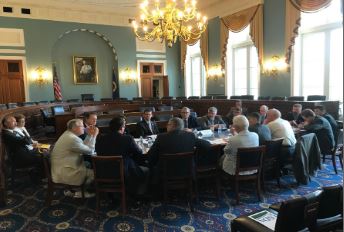
U.S. House Agriculture Committee with USDA Undersecretary Bill Northey

I joined others members of the House Agriculture Committee in meeting with USDA Undersecretary Bill Northey last Thursday. Undersecretary Northey presented details of the Market Facilitation Program (MFP), implementation of the 2018 Farm Bill commodity and crop insurance provisions, as well as the status of disaster supplemental assistance.

I also heard from and asked questions of administrators of the Farm Service Agency, Risk Management Agency, and the Natural Resources Conservation Service.

Secretary of Agriculture Sonny Perdue has announced further details of the $16 billion package announced in June aimed at supporting farmers and ranchers while the Trump administration continues to work on free, fair, and reciprocal trade deals around the world.

The Market Facilitation Program (MFP) provides direct assistance to producers with commodities that have been impacted by retaliatory tariffs and will be made in up-to three tranches, with the second and third evaluated as market conditions and trade opportunities dictate. USDA will begin making first tranche payments in mid-to-late August which will be comprised of the higher of either 50% of a producer’s calculated payment or $15 per acre, which may reduce potential payments to be made in future tranches. If future market conditions warrant, the second and third tranches will be made in November and early January, respectively.

MFP payments are based on a single county payment rate multiplied by a farm’s total plantings of MFP-eligible crops in aggregate in 2019 and are not dependent on the type of eligible crop planted. Additionally, a producer’s total payment-eligible plantings cannot exceed total 2018 plantings. County payment rates range from $15 to $73 per acre in Kansas, depending on the impact of unjustified trade retaliation for the county. To see the payment rate for your county, Click Here.

Dairy producers who were in business as of June 1, 2019, will receive a per hundredweight payment on production history, and hog producers will receive a payment based on the number of live hogs owned on a day selected by the producer between April 1 and May 15, 2019.

Eligibility in the 2019 program is not contingent upon participation in the 2018 MFP program. Signup for the 2019 MFP will take place at your local FSA office and will run from Monday, July 29 through Friday, December 6, 2019. Acreage of non-specialty crops and cover crops must be planted by August 1, 2019 to be considered eligible for MFP payments. As a result of the flooding this spring, producers who filed a prevented planting claim and planted an FSA-certified cover crop, with the potential to be harvested, qualify for a $15 per acre payment. Acres that were not planted in 2019 will not be eligible for MFP payments.

A second program – Agricultural Trade Promotion (ATP) – will utilize up to $100 million to help locate new and emerging markets around the world to establish new export opportunities for our producers. The third program – Food Purchase and Distribution Program (FPDP) – calls for USDA to purchase up to $1.4 billion worth of surplus commodities from farmers and ranchers across the country for donation to our nation’s food banks.

Dr. Roger Marshall, R-Great Bend, is the First District Kansas Congressman.

Kansas Farm Bureau Insight: Mapping the future

Glenn Brunkow

By GLENN BRUNKOW
Pottawatomie County farmer and rancher

This week is Kansas Farm Bureau’s Centennial Tour. This event will celebrate Kansas agriculture across the state and highlight its diversity and ingenuity. There will be lots of good food, celebration and, most importantly, great fellowship. Kansas Farm Bureau has a lot to celebrate, and it will be a party from one end of this great state to the other.

While we should reflect on our accomplishments and what we have achieved over the last 100 years, this is also the time to look toward the next 100. What will this organization look like in 2119? Who will our members be? What will agriculture look like, and how will we grow our food in the next century? All are questions we should ask but also all are questions I guarantee we do not have the answers to.

In the next couple of months, we will get a report from our Strategic Planning Committee, which was convened to take a stab at what KFB will look like in the future. Committee members represent a cross section of Kansas Farm Bureau and the diversity of agriculture it represents.

In true grassroots, Farm Bureau style, each individual Farm Bureau member had the opportunity to provide input about the future of our organization and what it should look like. Everything was scrutinized, and every path was explored. No rocks were left unturned. What are we doing right and what could be improved? The committee worked tirelessly, and many hours, much energy and thoughtful contemplation went into the final document.

I cannot wait to see this road map we will be given to start our journey into the next 100 years. More importantly, I am so proud to be part of an organization that has the foresight to plan while celebrating the past. That kind of forward thinking is what has made Farm Bureau the voice of agriculture and a place for everyone involved in the production of food and fiber.

I am sure the next 100 years will bring even more innovation to our industry. I am sure we cannot even begin to imagine what changes will happen. I am also equally sure that Kansas Farm Bureau will be able to adapt, change and continue to be a resource for Kansas farmers and ranchers.

So, this week, lets renew old friendships, celebrate our accomplishments and enjoy the journey of the past 100 years. While we are doing that, we will be looking at the road into the future knowing Kansas Farm Bureau will continue to lead the way and continue to be the most inclusive, general farm organization in Kansas with a place for all producers. Here is to 100 years of accomplishments and to the next 100 years of growth and success.

“Insight” is a weekly column published by Kansas Farm Bureau, the state’s largest farm organization whose mission is to strengthen agriculture and the lives of Kansans through advocacy, education and service.

News From the Oil Patch, July 30

By JOHN P. TRETBAR

Monday’s cash price for light sweet crude on the Nymex was $56.85/barrel. By midday Tuesday the near-month futures contract was up 28 cents to $57.15. London Brent was up 36 cents a barrel to $64.07. Monday’s price for Kansas Common crude at CHS in McPherson was $47 a barrel.

Independent Oil & Gas Service reports 17 newly-completed wells for the week, 823 so far this year. Operators filed 32 permits for drilling at new locations. That’s 550 so far this year. There is one new permit in Barton County, two in Ellis County and one in Stafford County.

Independent Oil & Gas Service reported ten active drilling rigs in eastern Kansas, up two from last week, and 26 in Western Kansas, up one. Operators are drilling on one lease in Ellis County and preparing to spud a well on another. Drilling also was underway at one site in Barton County. Baker Hughes reported 946 active rigs nationwide, down three oil rigs and down five seeking natural gas. North Dakota’s count was down eight rigs from the week before. Louisiana was down four and Oklahoman was down two.

The government reported a decline in U.S. crude oil inventories. In its weekly report, the Energy Information Administration said current stockpiles total 445 million barrels, down 10.8 million barrels from the week before. U.S. crude oil production slowed down last week. The government reported total crude production of 11.259 million barrels per day for the week ending July 19. That’s down nearly 700-thousand barrels from the week before. Imports averaged seven million barrels per day, an increase of nearly 200,000 barrels per day.

As much as $9 billion will be needed over the next decade just to throw away dirty water in the world’s busiest shale field. That’s according to analysis by research firm Raymond James & Associates as reported by Bloomberg. As the Permian Basin in Texas and New Mexico shifts further into what analyst Marshall Adkins calls “manufacturing mode,” water produ tion growth will create the need for nearly 1,000 additional salt water disposal wells by the year 2030.

Health officials in Colorado are proposing new regulations on the oil and gas industry to reduce air pollution. In an effort to comply with federal ozone limits, regulators on Monday proposed mandatory inspections twice a year to find and repair leaks, eliminating some permit exemptions, and requiring comprehensive annual self-reporting on pollution levels.

The U.S. continues to ship more oil by rail than in years past, but the increases are slowing. According to the Association of American Railroads, 12,121 tanker cars shipped petroleum and petroleum products during the week ending July 20, an increase of more than nine percent over the same week a year ago. The cumulative total so far this year is 22% higher than the same figure a year ago. Canada’s oil-by-rail traffic last week increased more than 35% compared to a year earlier.

Reuters and other international news agencies have been following a controversy involving contaminated Russian oil. The Russian plunged into crisis in April when buyers discovered some of Russia’s crude shipments were contaminated with organic chloride, a chemical used in oil recovery but which can damage refining equipment. Since then, several tankers loaded with the tainted crude have struggled to sell their cargoes. In the latest turn, French oil company Total reportedly sold a cargo of contaminated Russian oil to a firm in Poland for its refinery in Lithuania. The Polish firm is diluting the contaminated product with clean oil so it can be processed.

ExxonMobil and its partners expect production to reach 750,000 barrels per day over the next 5 years in the most prolific offshore discovery in recent years. The first oil is expected soon from the Stabroek block off the coast of Guyana. Forbes magazine reports funding is pouring into the country, making Guyana the fastest-growing economy in the Caribbean. Energy analyst group Rystad Energy found that Guyana leads the world in offshore crude oil discoveries since 2015.

Lloyd’s of London reports some huge spikes in war-risk insurance premiums for ships sailing through the Persian Gulf. Market sources tell Lloyd’s List those premiums jumped an additional $500,000 in one case.

Saudi Aramco expects to complete the expansion of an oil pipeline across that country by September, as the kingdom tries to bypass the Strait of Hormuz. The long-planned expansion will give Saudi Arabia the option to ship more oil from the Red Sea rather than the Persian Gulf. The Web site “World Oil” reports the state-owned oil company will finish the project by September, increasing the line’s capacity from five to seven million barrels per day.

The U.S. Department of Energy’s Office of Fossil Energy announced five projects selected to receive a total of nearly $40 million in matching federal funding for research and development of advanced technologies for Enhanced Oil Recovery, or EOR. The projects are hosted in North Dakota, Texas, Wyoming and Michigan. The government hopes to reduce technical risks and expand methods for onshore enhancements in both conventional and unconventional reservoirs.

HAWVER: Kelly has the upper hand in Supreme Court battles

Martin Hawver

President Donald Trump congratulates himself on his appointment/U.S. Senate confirmation of more than 100 federal judges, including two U.S. Supreme Court justices.

Now, it appears that Kansas Gov. Laura Kelly might be able to tout, maybe more discreetly, her success in packing the Kansas Supreme Court.

With the retirement in September of Justice Lee Johnson, and the just-announced retirement of Chief Justice Lawton Nuss in December, Kelly will get final say on two appointees to the court that often battles the Legislature with decisions that kill laws the Legislature passed. Look at abortion, look at school finance.

Now, if there’s something that the Legislature hates, it is any institution that has veto power over its action. That’s just the three-division state government at work — the executive, the legislative and the judicial branches. Legislators have always thought that they are the big dogs in the management of the state, and lawmakers growl at any other branch that won’t bow to their authority.

Lawmakers weren’t happy with the abortion decision, which essentially guarantees the right to abortion in Kansas. At least a majority of them, and the Republican leadership.

Oh, and lawmakers also want the court out of the business of deciding what is “adequate” in the way of state financing of public education. The court has loudly and frequently said it will determine just what is adequate to provide every Kansas schoolchild access to a good education from border to border.

So, having a Democrat governor with the power to appoint Supreme Court justices is a big deal. And now Kelly gets to appoint two justices to the seven-member court, and likely have a chance to make those appointees see state law the way she sees it.

The Legislature, or at least its overwhelming Republican majorities in each chamber, is not happy that a Democrat governor gets to interview and find a candidate for the court that is likely to be less conservative than the majority of legislators.

Already, the Senate has a proposed constitutional amendment warming up that would give the Senate the final say—to confirm or reject—a gubernatorial appointment to the high court. Sounds a little like conservative Republican state senators want to have the same power as federal senators, doesn’t it?

It takes a constitutional amendment, which means that if lawmakers OK the proposal, it will be November 2020 before it can be put before voters in the state to empower the Kansas Senate to have the final say on who gets to wear those nice black robes.

By that time, Kelly’s appointees to the Supreme Court will have already redecorated their offices and gotten comfortable on the bench. Oh, Kelly’s appointments will have to stand for retention to their posts to earn their full six-year terms on the court, but that’s not a major issue…justices face conservative opposition, but haven’t been tossed off the court by voters in recent memory.

So, Kelly, and her moderate Republican and Democrat predecessors, will retain the majority on the court. Former Gov. Sam Brownback got just one Supreme Court appointment, his former chief counsel Caleb Stegall, arguably the most conservative justice in recent memory.

The nominations for Kelly to choose from for each job? We won’t know who they are until the five-lawyer, four-nonlawyer Supreme Court Nominating Commission winnows the jobseekers to just three for each chair to present to the governor for her selection.

It looks like the court will retain its socially moderate position and not be afraid to take a swipe at the conservative GOP legislature for the next few years.

Wonder how that’s going to work out…

Syndicated by Hawver News Company LLC of Topeka; Martin Hawver is publisher of Hawver’s Capitol Report—to learn more about this nonpartisan statewide political news service, visit the website at www.hawvernews.com

Exploring Outdoors Kansas: There’s a new critter in town

Steve Gilliland
A new critter is fast becoming a common sight in central Kansas. It has a tiny head with a long pointy little snout and perky little ears, much like an anteater. It’s armor-plated from head to toe, sort of like a mini rhinoceros. It has claws so long they seem out of proportion to the rest of its body. Its tail is as long as its body, and is jointed and armor plated clear to the tip.

Yup, you guessed it, it’s an armadillo.

Although very common throughout Texas and much of Oklahoma, it was once thought they could never survive our central and northern Kansas winters due to their intolerance to cold. Biologists are now rethinking that since they are obviously surviving well here in central Kansas and are not uncommon even into parts of Nebraska. A few years ago I spent a day with a trapper west of here in Stafford Co. checking bobcat traps in the middle of January.

At one stop, we walked up an old farm lane lined with big cedar trees and he showed me where armadillos had been scratching and foraging in the thick mat of needles and cedar debris under the trees; their distinctive three-toed scratch marks gave them away. It is now believed that soft and sandy soil allowing them to easily forage for grubs and worms and to dig burrows is more important to their survival than temperature.

The Nine Banded Armadillo is the state mammal of TX, and originally came from South America. They are covered, front and rear, with hard, immoveable shell-like material. This armor is connected around the middle of their body with nine bands of moveable boney plate, much like an accordion, which allows them to move around and to roll into a ball when threatened. They have very poor eyesight but extremely sensitive hearing. It’s believed they can hear grubs several inches under the ground. An instinctive reaction to jump straight into the air when startled is probably why they seem to be frequent road kill victims.

Because their metabolism requires a constant intake of food, they cannot tolerate long periods of severe weather, and are extremely sensitive to cold. They are classified as omnivorous, meaning they will eat practically anything; however, earthworms, grubs, insects and insect larvae make up the vast majority of their diet. The long claws and narrow pointed snout equip them perfectly for digging out this food. These dining habits are both a blessing and a curse. Armadillos rid lawns of destructive grubs, but they also relish beneficial earthworms, and the whole process wreaks havoc with the yards and gets them into hot water with landowners and golf course superintendents.

As if the outward appearance of Nine Banded Armadillos does not make them unique enough, their reproductive process makes them even more amazing. They typically breed in July, but the fertilized embryo lies in a sort of dormant state in the female until November, when it begins to grow. She gives birth to four young in March. These four young are always the same sex, and are identical quadruplets, because they form from the same egg! Armadillos are the only known mammals that give birth to multiple young from the same egg with any regularity.

I believe Nine Banded Armadillos continue moving northward into Kansas for a couple reasons. While we have cold snaps every winter, as a whole our winters are not that bad anymore and obviously the armadillo has found a way to adapt to them. Now visualize the “zillions” of acres of sand hills and otherwise sandy soil in central KS, all of which make for easy digging and burrowing. Add to that all the golf courses with their lovely greens and fairways and the innumerable acres of lawns into which we Kansans pour millions of dollars and hours each year to keep pristine. Viola! Armadillo Heaven!

I predict we should “bone up” on our Armadillo removal techniques, as I don’t foresee them leaving this “armadillo heaven” anytime soon. In fact, since we see so many dead along the road, Joyce suggests we name the armadillo as our “Kansas state road kill.”
Continue to Explore Kansas Outdoors.

Steve Gilliland, Inman, can be contacted by email at [email protected].

BOOR: K-State vet urges producers to plan for animal heat stress

Alicia Boor

Compared to recent years, Kansas’ weather has been mostly nice to the state’s cattle producers this summer. As temperatures rise, it is a good idea for livestock producers to keep in mind how their livestock react to the summer heat.

Kansas State University beef veterinarian A.J. Tarpoff is sounding the bells for livestock producers to take some extra measures to protect their herds during days in when temperatures are forecast to top 100 degrees.

“Water, water and lots of water,” said Tarpoff, who noted that the beef industry loses an estimated $369 million each year due to the effects of heat stress. “Whenever we have a heat stress event, that is the most essential nutrient for animals, times five.

“I say, ‘times five’ because the question always comes up about how much water do cattle need, and the answer is that they need five times the amount of water that they are taking up in dry matter.”

For a cow that is consuming 30 pounds of dry matter, that comes out to about 20 gallons per day. Multiply that by the number of cattle in an operation, and the need for water grows exponentially.

Tarpoff said cows try to cool themselves by panting heavily (evaporative cooling), and somewhat by sweating – though they are inefficient sweaters compared to humans. Cows accumulate a heat load during the day and rely on cooler, nighttime temperatures for relief.

Producers can aid in cooling not only by providing more water, but also by changing some of their management strategies during the hottest days.

For example, Tarpoff notes, producers should consider providing most of the cattle’s feed later in the day, as much as 70 percent. Doing so will help to reduce digestive heat, or the heat that accumulates when cattle eat.

“This time of year, we may be providing that ration at 6 or 6:30 in the evening so we can push back that digestive heat load into the cooler hours of the night,” Tarpoff said. “That can make a big impact on how much these animals deal with during the heat of the day.”

Producers should also try to avoid lower quality straw hay or other foods that are fibrous, which create more heat in the animal’s rumen. Feedlot rations and lush green grass are better options for helping animals control digestive heat, Tarpoff said.

In feedlots or other confined settings, producers should provide plenty of water and shade (if available), and use sprinklers to cool pen floors. Tarpoff said they also should minimize handling of animals because the more they have to move, the more heat they produce.

The Kansas Mesonet Network at Kansas State University maintains a Cattle Comfort Index that combines the effect of temperature, humidity, wind and solar radiation. Tarpoff said it’s an excellent online source for producers to monitor when making plans for heat and potential nighttime cooling.

The Cattle Comfort Index is available online at https://mesonet.k-state.edu/agriculture/animal.

Alicia Boor is an Agriculture and Natural Resources agent in the Cottonwood District (which includes Barton and Ellis counties) for K-State Research and Extension. You can contact her by e-mail at [email protected] or calling 620-793-1910

FIRST FIVE: Let’s get ‘mad as hell’ about vital information we won’t get to see

Gene Policinski

The U.S. Supreme Court last month said we can’t see certain kinds of information we may well need to participate in democracy as self-governing citizens. To paraphrase a line from “Network,” the movie and play recently on Broadway, we should be “mad as hell” about it.

The court ruled, 6-3, in Food Marketing Institute v. Argus Leader Media, the that the Freedom of Information Act (FOIA) does not provide the public with access to records from private companies given to a federal agency if the agency obtained the information with a promise to keep it secret.

In the decision, the court voided a decades-long practice — supported by lower court decisions — that such “confidential” information could be released unless it caused “substantial harm” to the business, with an eye to toward disclosures in the public interest related to safety concerns, or to the exposing of waste, fraud or abuse, among other points.

Justice Neil Gorsuch wrote in the majority opinion — agreeing with a grocery trade group — that current law provides that agencies and private companies don’t even need to have a specific reason for secrecy — just a company tag on records it considers “confidential” justifies denial of an FOIA request.

The decision is likely to decrease public access to vital records, such as information about private companies that receive federal funds. It will hamper — if not stymie — the obtaining of information the public can use to determine things like fraud, overcharging and the quality of work. The decision also comes as it’s ever more likely a private company will be contracted to carry out government projects or duties.

In the case at hand, the Sioux Falls, S.D., Argus Leader newspaper sought information in 2011, through an FOIA request, on the number of in-state stores participating in the federal food stamp program, as well as store-by-store data on the amount of purchases made using food stamps.

Argus Leader news director Cory Myers said after the decision that “this is a massive blow to the public’s right to know how its tax dollars are being spent, and who is benefiting.”

Justice Stephen Breyer disagreed with the decision, saying the “the whole point of the Freedom of Information Act — first signed into law in 1966 — is ‘to give the public access to information it cannot otherwise obtain.’”

Breyer said that given public and private sector tendencies to treat all information as private if not required to be disclosed, “the ruling … will deprive the public of information for reasons no better than convenience, skittishness or bureaucratic inertia.”

Whatever the reason the Supreme Court saw for supporting non-disclosure under FOIA based on a company’s self-designation, a democratic republic based in the ultimate authority of an informed and engaged electorate requires the highest degree of government openness and transparency.

We cannot decide how our government is doing if we don’t know what our government is doing — and that holds true for those places where government intersects with business.

Gene Policinski is president and chief operating officer of the Freedom Forum Institute. He can be reached at [email protected], or follow him on Twitter at @genefac.

Now That’s Rural: Don Whitten, Beecher Bible and Rifle Church

Ron Wilson is director of the Huck Boyd National Institute for Rural Development at Kansas State University.

BY RON WILSON
Huck Boyd National Institute for Rural Development

Where do bibles and rifles connect? That unlikely combination can be found in the history of Kansas, and particularly in one historic rural community church. This church is continuing to serve its members and its historic legacy.

Don Whitten is a member of the Beecher Bible and Rifle Church in Wabaunsee. He told me this remarkable history. It all began in the 1850s era of Bleeding Kansas, when the people of the territory were involved in a vicious debate over whether Kansas would become a slave state or a free state. Advocates for both sides flooded Kansas territory. For example, abolitionists in Connecticut raised money to send a group of free-state colonists west.

A famous New York preacher, Henry Ward Beecher, raised money for the cause and sent crates of rifles and bibles to the colonists. According to legend, the rifles were covered with bibles so as to get through the pro-slavery state of Missouri.

In 1856, the Connecticut colonists came to Wabaunsee. In the following year, they organized the First Church of Christ there. A new stone church was dedicated in 1862. This became the site of one of the most influential Congregational churches in Kansas.

By the 1930s, population had fallen, church membership dwindled and the church closed. In 1950, it re-opened. Today, the Beecher Bible and Rifle Church is an independent, non-denominational church which still meets in the original but remodeled stone building. Services are held each Sunday at 9:45 a.m. with Pastor Lynn Roth officiating.

Local residents George and June Crenshaw actively supported the church. Friends of theirs named the Thompsons donated funds for a new building and education center next to the old stone church building. The new building was dedicated in 1993.

Don Whitten has compiled the history of the church. He is a career military man who retired from Fort Bliss, Texas and moved to Wabaunsee, Kansas. He and his wife arrived in Wabaunsee in 1971 in the middle of a big snowstorm. When a neighbor, Inez Drake, learned of their situation, she thoughtfully alerted a snowplow crew to clear the streets before the Whitten’s moving truck arrived the next day.

Another neighbor, Mrs. Morgan, came over and invited them to her church at Wabaunsee. “We turned her down because we didn’t even have our clothes here yet,” Don said. Mrs. Morgan persisted in following weeks. “After the third or fourth time, I told my wife, `Let’s go to that church and get that old lady off our back,’” Don said. “We came to that church the next Sunday and we’ve come ever since.”

The Whittens appreciated the warm welcome of the congregation and the preaching, fellowship, and rich history. It was the first inter-racial Congregational church in Kansas. The late Mrs. Morgan herself was African-American and a long-time member. Her picture is displayed inside the church entrance.

Another long-time tradition at the church is Old Settler’s Day, held annually on the last Sunday of August. On Sunday, Aug. 25, 2019, a potluck lunch will be held at the church, followed by a historical program. This year, that program will be presented by me. The public is invited to attend at no charge.

This church and the community and region which it serves are rich in history. The building is listed on the National Register of Historic Places. It is located along the Native Stone Scenic Byway and along the route of the Underground Railroad which ran through the Kansas River valley.

That’s a lot of history to be found in a rural community. Wabaunsee is an unincorporated town with a population of perhaps 100 people. Now, that’s rural.

For more information, look for Beecher Bible and Rifle Church HERE.

Where do bibles and rifles connect? In this case, they connect with Kansas history in a rural community church. We commend Don Whitten, Lynn Roth, and all those involved with the Beecher Bible and Rifle Church for making a difference by serving the community and honoring this history. I hope both the bibles and the rifles hit their mark.

Audio and text files of Kansas Profiles are available at https://www.kansasprofile.com. For more information about the Huck Boyd Institute, interested persons can visit https://www.huckboydinstitute.org.

————————————————
The mission of the Huck Boyd National Institute for Rural Development is to enhance rural development by helping rural people help themselves. The Kansas Profile radio series and columns are produced with assistance from the K-State Research and Extension Department of Communications News Media Services unit. A photo of Ron Wilson is available at https://www.ksre.ksu.edu/news/sty/RonWilson.htm. Audio and text files of Kansas Profiles are available at https://www.kansasprofile.com. For more information about the Huck Boyd Institute, interested persons can visit https://www.huckboydinstitute.org.

Copyright Eagle Radio | FCC Public Files | EEO Public File