We have a brand new updated website! Click here to check it out!

MASON: HCI helps connect Hispanic students with America’s promise

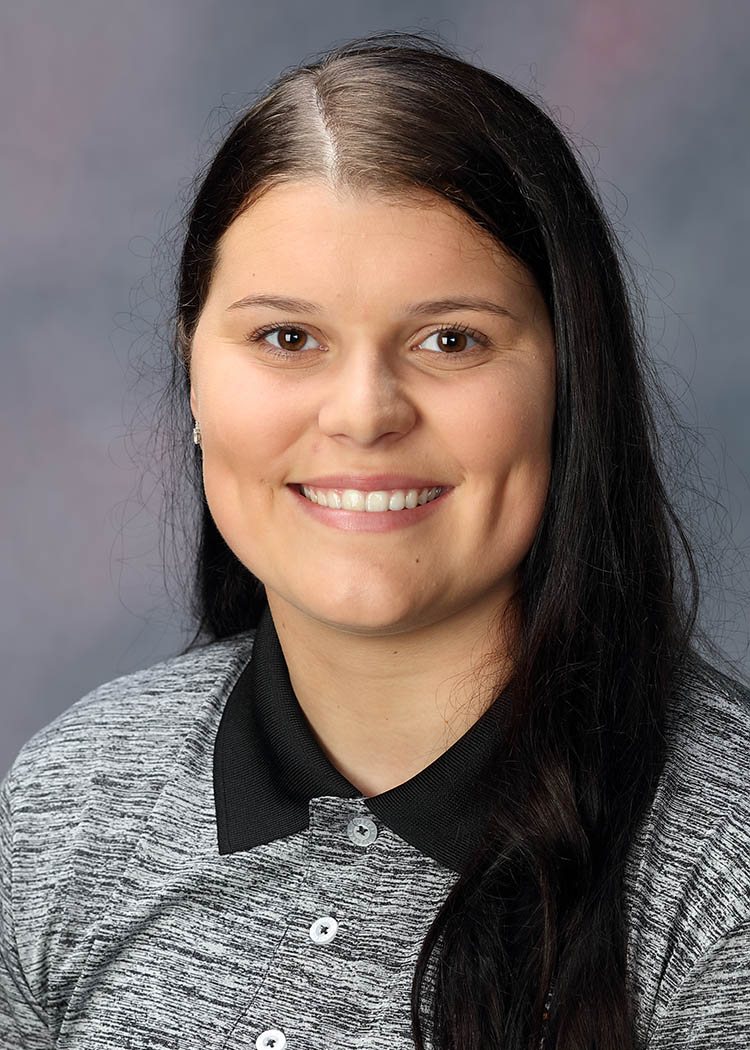
Dr. Tisa Mason, FHSU president

One of my favorite summer activities is meeting the students and families who participate in Fort Hays State University’s Hispanic College Institute (HCI). For the past several years we have intentionally focused on initiatives which enhance opportunities, access, and support for Hispanic students to succeed in college. HCI is our most valuable contribution to fulfilling our promise.

Why is this timely? Ten counties in the southwest corner of Kansas have more than twice the percentage of Hispanic population than the state average. This past year, some of the regional high school senior classes were comprised primarily of Hispanic students: 81 percent in Liberal; 77 percent in Ford County; 65 percent in Garden City. Clearly, the education of this population is critical to the success of our state.

We are leading the way in meeting the higher educational needs of this growing population in Kansas and across the Midwest. HCI has already engaged over 275 Hispanic high school juniors and seniors from across the states of Kansas, Colorado, Missouri, Nebraska, and Oklahoma.

The HCI is a free, four-day residential program that prepares Hispanic high school students to enter and succeed in higher education. It is designed to bring in Hispanic educators and community leaders from all over the Midwest to build confidence in HCI students. The majority of the curriculum provides opportunities to get connected with Hispanic community leaders, college students, and university leaders who can relate to the students’ experiences and challenges. All students go through the college application process, learn about scholarship opportunities and financing college, and participate in mock classes and academic programs. They also take part in community service projects and create an issues-to-action presentation to cultivate our institutional mission to build engaged citizen-leaders.

The Institute is also valuable for the Hispanic students who are already Tigers and who serve as HCI Tiger Team leaders. Many were participants in the Institute when they were in high school, and now they help guide, support and inspire the students who will come after them. At the same time, they gain real-life experience as leaders and mentors, and practice the joy of “paying it forward.”

Each year, the university also brings in a dynamic keynote speaker and role model. This year’s students had the opportunity to learn from Oscar Rodriquez Jr., a 2005 FHSU graduate. Oscar, a native of Liberal, played football at Fort Hays State as a safety while earning his bachelor’s degree in physical education and health. He has just started his first season as the Zips’ secondary coach at the University of Akron. In 2015, Bruce Feldman from Fox Sports highlighted his heroic comeback from cancer to resume his coaching career.

Oscar was an NFL Bill Walsh Fellowship participant in 2018 with the Chicago Bears, and he has coached and mentored seven student athletes who are playing in the NFL. As an engaged citizen-leader, Oscar founded the Coaches Against Cancer Foundation and is involved in the Big Brothers Big Sisters program.

Of course, my absolute favorite part of the HCI is listening to student stories. I was captivated by the students’ honesty about what they were learning and the deep friendships they were forming. Grace Johnson (Wichita), a rising junior at Bishop Carroll High School, spoke with great enthusiasm and affection about the value of experiencing college life from living in a residence hall, being in a classroom, and touring a college town. I was especially pleased with how the Institute incorporates the city of Hays, because I know our close-knit community fuels the success of students through a deep and sincere connection.

I smiled as Grace described the late night conversations with her HCI roommate and the lasting friendships she formed with her small group – called a familia. She talked about the confidence she gained in her leadership, communication, teamwork, problem solving and conflict management skills, and about how she felt more prepared for college life. Grace shared: “I didn’t know coming into HCI how to deal with conflict. Now, I know not only how to avoid it, but to work through it with others.”

Most importantly, I loved listening to students capture the essence of why we invest so much into programs like the HCI: “I am more compelled than ever to go to college, succeed, and graduate” said Grace.

The education of students matters to us. We get to know students and help them discover their talents and their dreams. With each conversation, we see their potential and are inspired to walk with them and to challenge them. We provide access to the opportunity to learn and to thrive. The HCI is just one of many examples of how we deliver on America’s promise to help people and communities prosper.
Kansas Farm Bureau Insight: Plentiful harvests

By KIM BALDWIN
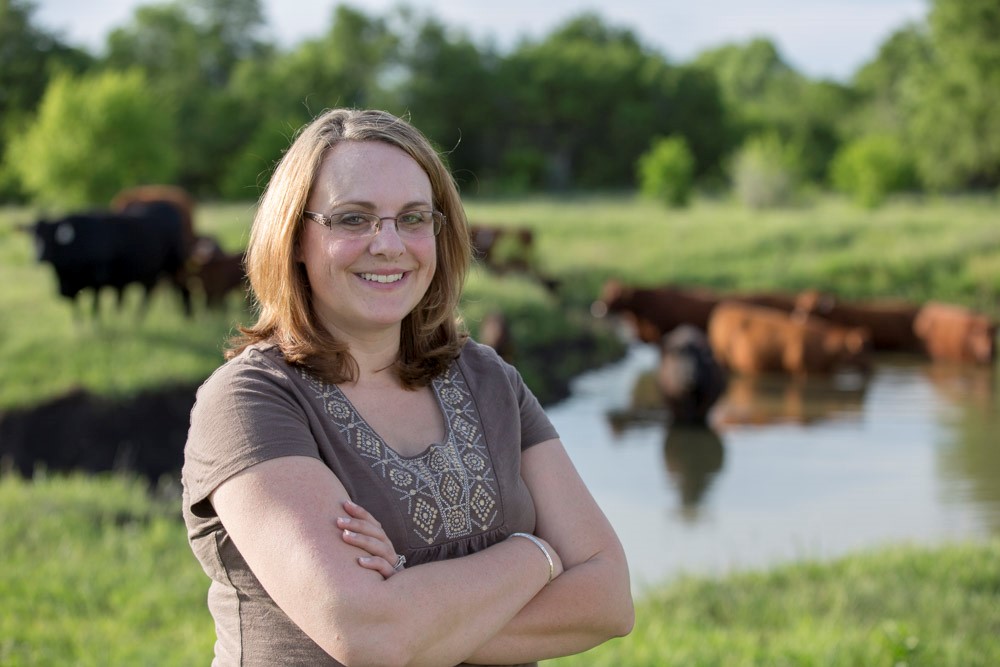
McPherson County farmer and rancher

We recently wrapped up our wheat harvest. Although our crew experienced a short harvest in comparison to previous years, we are still very thankful for the crop and for the safety of our workers.

Historically, our wheat harvest generally wraps up around the start of another season: Vacation Bible School.

Families have many choices to consider when sending their kids to a VBS in our area. Whether it’s in the morning, evening or over the weekend, there’s a VBS that works for every family’s schedule.

Some VBS programs are known for their well-organized activities, convenient transportation services, expertly designed T-shirts, deliciously prepared meals, fun incentives or live music from contemporary bands.

In the small town where my children attend school, all of the churches join forces — regardless of denomination — and organize one big, week-long community VBS. While the location changes annually, the collaborative spirit remains consistent year after year. The numbers of children in attendance are quite impressive, and it truly is a tradition for our small town.

Beyond the borders of our town, a group of small country churches — including my family’s church — have also faithfully pooled their resources to provide a week of VBS for any child, from any family, from any community. It’s officially known as Monitor Community Vacation Bible School, but I refer to it as our “Simple Little Country VBS.”

Our VBS averages 25 kids from pre-kindergarten to ninth grade in attendance every year. I’ve taught the oldest group of students ever since I moved to Kansas nearly 10 years ago.

We work on a limited budget. Snacks might consist of cheese and crackers, homemade trail mix or popsicles. Recreation includes games of Red Rover or freeze tag in the church’s yard. Crafts are simple creations that become cherished masterpieces using items like rocks and sticks that have been gathered from outside. Music consists of an experienced piano player and songs sung long before my husband attended as a child. We dig into the daily messages using finger puppets, or reenactments by the older students, or discussions. And regardless of age, the kids work hard on their memory verses throughout the week.

The week wraps up with an evening program where people from area country churches show up to support the kids and listen to them sing their songs and view the student-produced skits from our week of lessons. Afterward, we all enjoy fellowship in the church basement while munching on homemade cookies everyone has provided.

It’s a beautiful testimony to the spirit of our community. And while there may not be many of us, we recognize the importance of continuing our little country VBS.

Given all of the options available to families within our county when it comes to VBS, I’m always quite surprised we have the consistent numbers that we do. I’d almost classify it as a miracle.

It shouldn’t surprise me though. There’s something powerful about the simplistic nature of our week. While our VBS is small, it is still mighty. There’s something that happens that brings kiddos and our small group of workers back year after year.

It’s simple and sweet, and it’s one of the many reasons why I love our simple, little country VBS.

While we’re finalizing our scale tickets and getting some much-needed rest from our wheat harvest, I can’t help but be thankful for the plentiful harvests that take place throughout our area during this time of the year.

“Insight” is a weekly column published by Kansas Farm Bureau, the state’s largest farm organization whose mission is to strengthen agriculture and the lives of Kansans through advocacy, education and service.

Now That’s Rural: John and Jina Kugler, Bug Hounds LLC

Ron Wilson is director of the Huck Boyd National Institute for Rural Development at Kansas State University.

By RON WILSON
Huck Boyd National Institute for Rural Development

Let’s go to a retirement home in Illinois where a contractor is using a highly sensitive bed bug detection system. This system is self-propelled, 100% natural, highly accurate in detecting bed bugs, and when it’s done, it just might climb up on your lap and lick your face. This detection system is a dog. Today we’ll learn about an innovative Kansas couple that is building a business using canines for locating bed bugs.

John and Jina Kugler are the founders of this business known as Bug Hounds LLC. John grew up at Lebanon, Kansas, where he enjoyed hunting dogs. He met Jina in school and they later married. K-State drew John and Jina to Manhattan. She studied education and became a teacher and is now a school counselor in Wamego. John is a manager of a public facility in Topeka.

One day a bed bug surfaced in his facility, so he arranged for a pest control company to come clean out the problem. The company brought in a dog as a locator.

“I was skeptical,” John said. After he saw the dog work successfully, he was convinced that this was a service which others could use. After lots of research, he and Jina began their own business to offer this service, called Bug Hounds LLC.

“We are not exterminators, we’re locators,” John said. “However, we have expanded our locating business to include Convectex heat treatment equipment rental.” The Kuglers have trained dogs with an amazing knack for locating bed bugs by scent.

Their lead dog is a beagle named Beddy with an amazing sense of smell. Beddy has 300 million olfactory receptors. The part of her brain devoted to analyzing smell is 40 times that of a human. This enables Beddy to be able to smell out a bed bug at any stage, whether egg, nymph, or adult.

Bed bugs need to feed on human blood. They got their name because a bed was a great source for them to find human contact, but chairs or other personal contact items are also common hosts. In other words, bed bugs can be anywhere there are people. Bug Hounds enables anyone to locate the bed bugs for treatment.

The company website describes their service as “discrete and accurate bed bug location for businesses and individuals.”

“The huge advantage of the dogs is to pinpoint exactly where the bed bugs are,” Jina said. Otherwise, a person could spend thousands of dollars on wasted treatments.

When assisting a customer, the Bug Hounds crew would typically go into a customer’s home or business after hours and walk the facility with a dog and a tap stick. Tapping the stick can disrupt bed bugs, causing them to emit even more scent. The dogs are trained to alert by stopping or pawing at the site of the bed bugs. These amazing dogs are 95% to 98% accurate.

In some cases, Bug Hounds will contract with a place of business to do repeat, regular screenings. Bug Hounds has been hired by pest control companies to locate bugs, but they work with anyone. Bug Hounds serves private residences also.

Having a clean house is no protection against bed bugs. The pests will go wherever there are people. “We’ve found bed bugs in cluttered houses, and we’ve found bed bugs in really nice and clean places,” John said. An adult female averages laying 500 eggs.

Bug Hound’s business has taken them as far away as Illinois and Oklahoma City. Son Jayson has now joined the company, along with three more dogs. The dogs need constant training, which they love. “We’ve tripled our business,” John said.

That’s impressive for a business founded by a man from the rural community of Lebanon, population 218 people. Now, that’s rural.

For more information, go to www.bug-hounds.com.

It’s time to leave this facility in Illinois, where an amazing, four-legged detection system has located exactly where the bed bug pests can be found. We salute John, Jina, and Jayson Kugler for making a difference with this unusual type of canine entrepreneurship. This business has successfully gone to the dogs.

HAWVER: Kelly, Kan. GOP spar over food stamps

With a flurry of philosophical in-fighting, Kansas has subtly turned that human malady of being “able bodied” into a character flaw that should be punished, or at least not tolerated when distributing food stamps.

You remember the issue: The Kansas Department for Children and Families (DCF), or at least a handful of its managers, decided that it would give about $110 a month in food stamps to about 5,500 single, no-dependents, able-bodied Kansans between 18 and 49 years old. Nope, not forever, just for three additional months above the three-month per 36-month period of assistance for those who are poor. Oh, and to those who haven’t found a 20-hour-a-week job or participated in state-managed employment training and job search activities.

Those three extra months—July, August and September—were incidentally falling at the end of the three-year restart of the federal food stamp eligibility program in which the federal government pays for those food stamps and pays the state half its administrative costs in distributing them.

House Majority Leader Dan Hawkins, R-Wichita, recalled that back in 2015 the Gov. Sam Brownback governorship managed to convince the more-conservative-than-now Legislature to clean up the state’s Temporary Assistance for Needy Families program to make sure that those welfare recipients weren’t scamming the federal government out of money through the state welfare qualification standards.

The concept: Those welfare recipients should be working like everyone else and supporting themselves, no spending on vacations or other frivolous activities, just survival, if they met the training and job-search and minimum employment standards.

Now, that’s a pretty good standard. People ought to work for a living if they can, maybe get a little assistance while they are in a tough spot, but basically get back to work.

Well, Hawkins pushed Attorney General Derek Schmidt into closing down the new, short-term food stamp program by threatening Gov. Laura Kelly with a lawsuit: She was disregarding the 2015 law, which she had voted against while a senator, which limited eligibility for food stamps and even outlawed asking the feds for some wriggle room in distributing food stamps.

Kelly decided that it would cost the state more money than it is worth to defend the three-month program against the state attorney general. Probably a fair call, not spending state money on lawyers to defend handing out federal money to the poor.

But, at some point, you almost have to wonder whether the response to DCF spending that federal money on poor people—and probably some are scammers, but probably others have aged out of foster care or are jobless veterans or just can’t find work they can handle—is worth the political scrap it fueled. It’s probably one of those situations where lawmakers could have looked the other way—until Oct. 1—given away food stamps and later said, “Darn.”

Everyone out there who thinks that we’re paying too much in federal taxes and aren’t getting enough back for it, well, you remain correct. The state is sending back those food stamps, so they will go to poor people in other states, where we don’t have to walk around people begging on the sidewalk or at stoplights or at exits from malls, who will spend the money at grocery stores in other states.

Syndicated by Hawver News Company LLC of Topeka; Martin Hawver is publisher of Hawver’s Capitol Report—to learn more about this nonpartisan statewide political news service, visit the website at www.hawvernews.com

Exploring Kansas Outdoors: Insect removal technicians

Steve Gilliland
As we walked up the sidewalk and across the patio at my grandson’s house the other night we had to watch our footing as the ground practically moved beneath our feet. Dozens of tiny toads the size of quarters hopped in every direction with each step. An adult toad the size of a peach, probably dad or grandpa, perched at the top of the porch. We usually have multitudes of toads at the Gilliland ranch every summer, tumbling from beneath the tomato plants or leaping from under the lilacs. This year though, oddly enough our place seems to be “toad deficient.” I miss the little blighters as they are nature’s ground crew for insect control.

Toad… the name itself conjures up visions of witches adding eyes of newts and wings of bats to a bubbling caldron of potion, or a derogatory remark about a person’s physical appearance. They’re fat and pudgy, their blotchy skin is covered with lumps and warts, their spring mating call sounds like a poor lost calf calling for its mother and they pee on anyone attempting to pick them up. You gotta’ love em’! Their saving grace comes in the form of a voracious appetite for insects.

A few years back during a pervious really wet spring like this year’s, I spoke with Wildlife Diversity Coordinator for the state of Kansas, Ken Brunson, about the myriad of tiny toads that were literally everywhere that year. Just when I thought life was as simple as a toad, was a toad, was a toad, Ken informed me that toads have names too. Ken said that 95% of the toads seen in Kansas are either Woodhouse’s Toads, or Great Plains Toads. Eastern Kansas also has some American toads and Spadefoot toads. Ken linked that year’s abundance of tiny toads to the abundance of standing water in places where there hadn’t been water for ages, and the flood waters forced many from their homes near the streams and swamps where they hatched, and sent them scrambling for higher ground (sound familiar?)

Whatever their clan, all toads begin their life as jelly covered strands of eggs laid in the shallows of swamps, streams and ponds. In about one week the eggs hatch into tadpoles. Next, hind legs begin to grow, then front legs, then lungs replace the gills, the tail is absorbed into the body, and finally, two to three weeks after hatching, the youngsters hop out onto dry land. Woodhouse and Great Plains toads both grow to be three to five inches long when fully mature.

Although not particularly athletic, toads are efficient predators and do have a ravenous appetite for insects. Research suggests that a toad is capable of eating two-thirds its body weight in insects daily. Worms of all kinds seem to be favorites as they’re probably easier to catch (and I’m sure more filling!) A study done on Great Plains toads in Oklahoma found that because of their fondness for dining on over-wintering cutworms, these toads were estimated to be worth twenty-five dollars apiece per year to the agriculture industry there. Their taste for bugs can easily be seen in their droppings. The black cigar shaped droppings found in driveways and on sidewalks this time of year are in fact toad poo. When they have acres of yards, gardens and fields to potty in, I’ll never understand why they feel the need to go on the sidewalk or in the driveway (the least they could do is cart it away when they leave.) Next time you see some, take a stick and poke it apart; you’ll see it’s comprised entirely of undigested bug parts like legs and wings.

Contrary to the old-wives tale, handling a toad does not cause warts. The warts on their skin and the glands behind their eyes do however produce a toxin capable of making you sick if accidentally ingested. You’ve witnessed this toxin at work if you have ever seen your dog frothing and foaming at the mouth after playing with a toad in the yard.

With that in mind, I guess my advice to you concerning toads would be three-fold. 1) If you suddenly find your dog foaming and frothing at the mouth, don’t shoot it, it probably just licked a toad; 2) Don’t lick a toad yourself, and 3) ALWAYS hold a toad way out in front of you with both hands or you’re liable to get your shoes wet. So whenever a fat pudgy toad surprises you in the garden or flower bed, tip your hat to them and thank them for the service they provide. Continue to Explore Kansas Outdoors!

Steve Gilliland, Inman, can be contacted by email at [email protected].

News From the Oil Patch, July 15

BY JOHN P. TRETBAR

The government reports U.S. crude oil producers set records last year for total production and year-over-year growth. According to the Short Term Energy Outlook from the U.S. Energy Information Administration, total production for 2018 averaged 11 million barrels per day, up 1.6 million barrels per day over the year before. EIA predicts domestic production will average 12.4 million barrels per day this year and 13.3 million barrels per day next year. The government says most of the growth will come from the Permian Basin in Texas and New Mexico.

Weekly crude-oil production totals from the government topped 12.3 million barrels per day for the week ending July 5. That’s the second-largest weekly total ever, just 52,000 barrels per day less than the highest-ever total reported June 6. Production was 99,000 barrels per day more than a week earlier, and nearly 1.4 million barrels per day more than a year ago at this time.

The U.S. Energy Information Administration says domestic crude-oil stockpiles dropped by 9.5 million barrels from a week earlier to 459 million barrels. That’s about four percent above the five-year average for this time of year. Imports averaged 7.3 million barrels per day, which is right at the four-week average, but down 284,000 barrels from a week earlier.

Baker Hughes last week reported a big drop in its weekly rotary rig count. In the U.S., the total was 958 active rigs, down four oil rigs and a drop of two rigs exploring for natural gas. The count in Texas was down seven rigs. Canada reported 117 active rigs, down three for the week.

Independent Oil & Gas Service reports drilling underway at two sites in Ellis County. Operators are about to spud two wells in Barton County and one in Ellis County. There are six active drilling rigs in eastern Kansas, down one for the week, and 24 west of Wichita, which is unchanged.

Operators last week received 15 permits for drilling at new locations across Kansas, which brings the year-to-date total to 489. There were six new permits filed in eastern Kansas and nine west of Wichita, including one each in Barton and Ellis counties. Independent Oil and Gas Service reported 14 newly-completed wells for the week, 791 so far this year. There were 14 completions east of Wichita, and 12 in Western Kansas, including one in Stafford County and one dry hole in Ellis County.

U.S. producers moved nearly 13,000 rail tanker cars carrying petroleum and petroleum products during the last week of June, up 14 percent over the same week a year ago. The spike continues in oil-by-rail, brought on by increased production without sufficient pipeline capacity. But the Association of American Railroads reports the increases are not as high as they have been over the last two years. The year-to-date cumulative average for the first six months of the year is 23.2% higher than the same figure last year. Canada’s oil-by-rail traffic increased 21.8% over the same week last year. For the first half of the year, Canada’s cumulative rail-tanker traffic is up 24.3%.

Venezuela’s embattled energy industry has an unlikely new ally, despite President Trump’s sanctions aimed at ousting President Nicolás Maduro. Despite the U.S. administration’s push to disrupt the financial resources available to Venezuela’s leadership, Chevron Corp. is working to bolster one of the Maduro government’s chief economic pillars. Bloomberg reports the second-biggest U.S. oil company is helping tap four fields in Venezuela while testing new injection technologies at one of them. Chevron is also helping pay for supplies, expenses, and even health care for workers at the state-owned oil producer PDVSA to keep the crude flowing.

The law regarding energy production in Colorado has taken a dramatic turn over the last few months. After a series of wins for the oil and gas industry, lawmakers in the state enacted a bill that gives broad local authority to regulate or block oil and gas production activity. The new law also requires the state to prioritize public health and safety over energy production. New state and local regulations are in progress across Colorado. Last month County Commissioners in Boulder County enacted an “emergency moratorium” on all new permits for oil and gas exploration, a move that blocks the drilling of 100 new wells in the county by Crestone Peak Resources. A public hearing was planned Tuesday at which county leaders could cancel or extend the moratorium.

The State of Colorado is considering a requirement that drillers track and report methane emissions from their oil and gas wells. The state’s current methods of collecting such data have produced what some call inaccurate information, and state air quality officials want to change that. State environmental regulators are considering requiring oil and gas operators to routinely measure and report their methane emissions, beginning as early as June of 2020.

MARSHALL: Doctor’s Note July 15

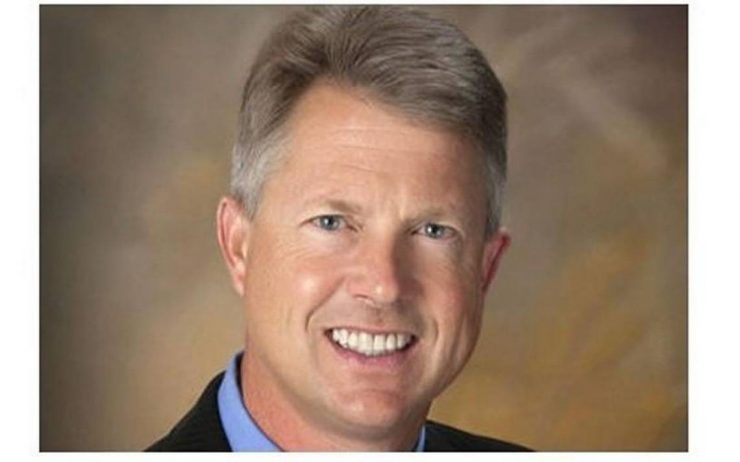
Dr. Roger Marshall, R-Great Bend, is the First District Kansas Congressman.

Friends,

It was a busy week in Washington as Congress has returned to work on the Hill after the Fourth of July holiday.

I enjoyed my time back home and feel newly energized in my mission to serve on behalf of Kansans in DC. Despite constant rains and delays, I am glad to see that wheat harvest is in full swing in the Big First, with above average yields being recorded in several counties across the state. It’s the hard work by Kansas Agriculturalists that has made us the top winter wheat producing state in the nation yet again – with nearly 1.4 Billion dollars’ worth of winter wheat produced in 2018, as reported by the USDA last week. This accomplishment, and many others by our farmers and ranchers, demonstrates how much we have to gain by passing trade agreements like USMCA, and why ratifying the agreement in Congress continues to be one of my top priorities.

Food For Peace

The Food for Peace initiative started as an idea by Kansan Peter O’Brien from the Cheyenne County Farm Bureau and eventually became law when President Dwight D. Eisenhower codified it in 1954. The Food for Peace program commits the United States to donating surplus grains and other food products to developing countries in lieu of monetary donations, seeking to support our partners around the world while simultaneously encouraging future trade opportunities. To date the program has reached more than 4 billion people who struggle with food insecurity, helping families around the world lead more healthy and productive lives. I was proud to have supported its reauthorization as part of the 2018 Farm Bill and with the program’s 65th anniversary on Wednesday my fellow colleagues and I gathered to show our continued commitment to addressing hunger and food insecurity around the world.

Rural Broadband Connectivity

The Commodity Exchange, Energy and Credit Subcommittee held a hearing on Thursday morning to discuss the importance of broadband access and ways increased connectivity can continue to help communities across rural America. From access to telemedicine services, educational resources, or new precision agriculture technologies, an internet connection allows folks in rural communities to have the same opportunities as those in big cities while still preserving our rural way of life. Broadband access has been a top issue at many of my recent town halls, and I appreciated the opportunity to discuss this issue with my colleagues on the Agriculture Committee.

Meeting with Sorghum CEO

On Wednesday, National Sorghum Producers CEO, Tim Lust, came by the office to talk about the current economic climate in the grain industry. I am proud to report that Kansas continues to the be number one sorghum producing state and we are seeing good numbers out of the Big First so far this year.

We discussed the ongoing trade dispute with China, USMCA, some potential domestic growth opportunities from his sector, mainly from the gluten free market, and also the ongoing work to implement the 2018 Farm Bill.

My door is always open to producers and I thank Tim for making the trip to DC to meet with me.

Supporting the Working Blind and Disabled in the AbilityOne Program

This week, I joined my colleagues in the House and Senate in sending a letter to the Department of Veterans Affairs (VA) clarifying Congress’ decades long commitment in providing meaningful employment for the disabled through the AbilityOne Program. AbilityOne, a public-private partnership, provides vocational assessments, employment training, and placement assistance to both the disabled and disabled veterans. This program provides jobs not only at our VA facilities, but also on our military bases and other federal agencies.

I have long followed policies affecting this program and was surprised to learn of recent changes that could take away any current AbilityOne contracts from non-profit organizations employing the blind or severely disabled – many of which include disabled veterans. In our letter, I ask that the VA find a balance of maintaining current employment contracts with non-profits and Service-Disabled Veteran-Owned Small Businesses.

To learn more about the issue and read our letter, Click Here.


Fighting for a Cure

During my time in Congress, I’ve met with many patient advocates passionate about health care and it is incredibly rewarding to hear from young Kansans discussing policies they care about. This week, I met with a Russell County high school student named Kalli, who is serving as the 2019 Children’s Congress delegate of JDRF, a leading global type 1 diabetes patient organization. Kalli, along with her mother, shared their personal story of living with type 1 diabetes and the realities of managing Kalli’s health care costs. “A positive attitude and an amazing support system,” are what Kalli said are her two secret weapons to living a healthy life.

A community leader and athlete, Kalli gave me a photo journal that contained stories of her perseverance, but she and her mother also brought their personal story to the intersection of policy. Kalli asked that I continue supporting the Special Diabetes Program for Type 1 Diabetes. The program, which is up for reauthorization this year, is a collaborative effort between the National Institutes of Health and the Centers for Disease Control and Prevention to conduct research on the prevention and cure for type 1 diabetes. I assured her that I would continue to fight for those suffering from this disease and that I would continue to support innovation that leads to better devices for diabetes management, and hopefully one day, a cure.

NTCA’s Women in Telecom Fly In

On Wednesday, a handful of female telecommunications executives from across Kansas met with my staffer, Katie Moore, along with staff from the rest of the Kansas House Delegation. These women represent companies that are working hard to deploy broadband service across rural communities in our state, and came to D.C. to highlight issues they face in achieving that goal. Updating broadband maps across the country to give federal agencies a better idea of where to direct funding remains a top issue, impacting many internet service providers across Kansas. I appreciate them taking the time to share their concerns with my office, and look forward to working with them on these issues moving forward.

Infrastructure Innovation

For months now, we have been working on an infrastructure package, and I have met with many constituents to discuss the importance of surface transportation programs as part of that goal. On Thursday afternoon, the Science Committee’s Research and Technology Subcommittee discussed how research is a critical part of investing in our national infrastructure, from developing more resilient building materials to the adoption of new transportation technologies innovation continues to drive the conversation. Investing in research can help keep costs low while also improving safety and efficiency in transportation-related sectors.

Welcoming Our New Interns to DC

I want to give a warm welcome to our second session of summer interns: Sarah, Seth, and Aaron. Sarah is here representing the town of Paradise, where she grew up on a 250-head registered Angus cattle ranch. She is going into her junior year at Kansas State University and is majoring in business marketing with a minor in agricultural economics. Seth comes to us from Natoma. Going into his senior year at West Point, Seth is majoring in US history. Another Wildcat, Aaron, is also going to be a Senior and is double majoring in history and political science, and is also part of the Air Force ROTC program. I am glad to have them as a part of our team and look forward working with them this summer.

Reintroducing the ACCESS Act 

This week I joined Representatives Richard Hudson (R-NC) and Larry Bucshon, M.D. (R-IN) in introducing H.R. 3656, the ACCESS Act, a bill that would provide much needed reforms to medical malpractice. As an OBGYN before serving in Congress, I served as an expert witness in medical liability lawsuits and have seen the many flaws of the system from the inside out.

The ACCESS Act would limit the fees trial lawyers can charge in a health care lawsuit and establishes a fair share rule where damages are allocated in direct proportion of fault. It also ensures that expert witnesses representing either side of a dispute practice medicine in the state where the alleged malpractice was performed.

The Congressional Budget Office estimates these reforms would save well over $50 billion over a 10-years. They also estimate premiums for medical malpractice would drop an average of 25-30% over time. Thankfully, much needed malpractice reform was addressed in Kansas over 20 years ago and I’m thankful that many of our Kansas associations are supportive of this bill.

To learn more about the bill, Click Here.

Dr. Roger Marshall, R-Great Bend, is the First District Kansas Congressman.

KRUG: Unusual finds at area farmers markets

Donna Krug

I had fun pulling together the handout material for my recent 4th Friday program at the Great Bend Senior Center, titled, “Field to Fork.” I wanted to highlight the wonderful produce available at our Farmer’s Markets, so I stopped by the day before my program and found just what I was looking for. I found fresh beets and kohlrabi that would be fun to share the next day. I turned to one of my favorite resources, The Rolling Prairie Cookbook, by Nancy O’Connor, for a description and recipes using these fun vegetables.

If your beets come with the greens attached, so much the better – you have two vegetables. Before storing in the refrigerator cut the greens off the root, leaving approximately two inches of greens attached to the crown to prevent bleeding. For longer storage life, do not wash your beets before you refrigerate them, as wet beets tend to rot.

Preparing beets is simple. They are delicious and gorgeous when eaten raw. Peel and coarsely grate as an addition to salads or to add crunch and variety to sandwiches. Baking beets with the skins on or steaming beets are also great ways to prepare beets. One of my favorite recipes in O’Connors book is for “Quick Grated Beets.” Begin by washing, peeling and coarsely grating 4 medium sized beets. Heat 1 tablespoon olive oil in a skillet. Add beets, and stir to coat well. Sprinkle with 1-3 tablespoons fresh lemon juice, cover and cook for approximately 10 minutes. Stir occasionally and add water or vegetable stock to prevent scorching. Cook until just tender and season with salt and pepper. You can also sprinkle with fresh dill or parsley before serving.

Kohlrabi is a bit more unusual. It can be one of those intimidating vegetables. It has the look of an organic green Sputnik, with a taste like fresh, crunchy, broccoli stems accented by radish. It is a round bulb with a swollen stem that grows aboveground. The bulbs should be stored, unwashed, in a plastic bag. They will hold for about a week in the refrigerator. Smaller kohlrabi are the sweetest and most tender. Bulbs much bigger than the size of a tennis ball won’t be as tasty and often have a pithy flesh.

Tender, young kohlrabi is delicious eaten raw. Peel the outer skin with a paring knife. Slice, dice, or grate and add to salads. Use on raw vegetable platters or serve with a creamy dip. Substitute in recipes calling for radishes. Over the holiday weekend I grated a kohlrabi and John added it to a vegetable stir fry. Kohlrabi can also be steamed or boiled. For this preparation, don’t peel until after they are cooked.

Whatever vegetable you find at farmer’s market, you are sure to enjoy putting something locally grown on your plate. If you missed the program “Field to Fork” and would like to have a handout with recipes, just give me a call or send me an email. See you at the market!

Donna Krug is the Family and Consumer Science Agent and District Director for K-State Research & Extension – Cottonwood District. You may reach her at: (620)793-1910 or [email protected]

COLUMN: How bovine embryo transfer affects the human population

Regan Kats

EDITOR’S NOTE: This essay on a topic in agriculture was researched and written by a student as part of a project in a senior animal science class at Fort Hays State University. The project director is Dr. Brittany Howell, associate professor of agriculture.

By REGAN KATS
Prairie View senior

Every day at exactly 12:34, I crave a juicy hamburger. Luckily for me, I can buy one from any number of the millions of restaurants in the country. I can’t imagine a world where I wouldn’t be able to buy one because we ran out of beef.

Embryo transfer (ET) is the process of harvesting fertilized, 7-day-old embryos from a donor female, and then injecting a single embryo into a recipient female, also known as recips, to carry out the pregnancy. The ET process can first be traced back to the 1890s, when Walter Heape performed the first successful procedure in rabbits. It wasn’t until 1949 that the first successful bovine transfer was accomplished. While the technology surrounding ET is constantly developing, the basis for what is used commercially today mostly came about in the 70s.

Lots of people associate artificial insemination (AI) and embryo transfer as the same thing. However that is far from the case. Artificial insemination is the practice of using previously harvested semen from one bull in order to inseminate more cows than the bull could physically service. This provides more extensive use of a superior bull over a wider range of cows. Using ET with one bull’s semen will result in all the offspring being full siblings, butr they won’t all be genetically identical. Because ET involves fertilization of the eggs in the cow, one way or another the semen has to be deposited into the uterus. One of the benefits of ET is that the semen can be utilized at a cheaper cost than AI, as it’s cheaper to buy three units to inseminate a donor cow than it is buying a unit per cow for your entire herd. In order to be able to harvest multiple eggs, the cow has to be super-ovulated through multiple injections of follicle-stimulating hormone. Another version of ET is through in vitro fertilization. Similar to the process that women go through, eggs are harvested from the female and then fertilized in a sterile lab environment.

Many purebred seedstock producers utilize embryo transfer to provide leaps and bounds of genetic improvement in one breeding season. ET allows for a donor cow to be flushed several times during a year. Therefore a producer can become more efficient in the use of higher producing females. Another way to lower operating costs is to use cheaper commercial cows as recipient cows. Millions of seedstock catalogs are sent around the country every year, and lots of similarities can be found in the pedigrees. Many buyers will find a sire group of bulls they like or some fancy heifers that descend from certain cows. ET helps producers generate and offer more of the genetics that consumers want to buy. Not only can producers sell high demand genetics, but the cattle are often more consistent and predictable.

Embryo transfer isn’t always the most cost effective choice. Commercial cattlemen don’t often need or want to personally flush their cows, but they can still utilize the benefits of ET. The easiest route is through the purchase of ET bulls. More often than not, the producers sell more than just one ET bull from a mating. By buying these bulls, commercial cattlemen can generate a more consistent calf crop without the added labor of the AI process. Another way to benefit as a commercial producer is renting out cows as recip cows. Sometimes purebred producers don’t have enough cows to use as recips, or maybe don’t have enough grass to run them. This opens the door for commercial producers to earn a little extra money.

According to FarmBureau.org, farm and ranching families only comprise 2 percent of the U.S. population. So, how does ET affect the other 98 percent? With the exponential growth of the world’s population, more and more food needs to be produced to meet the growing demand. The only way to accomplish to this increasingly difficult task is to produce more with less. In crops, farmers strive for higher yields, and in beef production we are trying to produce more pounds of beef per head at the cheapest cost of gain.

To do this, producers have to be aware of the type of cattle we produce and constantly strive to improve not only our own herd but the industry as a whole. As with the growing population, the genetic advancements need to be growing exponentially as well. First we had AI, and it helped us to start producing more pounds of beef with fewer animals. Now the human population is gaining and growing faster than the beef industry has been able to keep up with. With ET and the huge genetic advancements it can provide, the beef industry now has another weapon in its arsenal to combat the challenges it faces today.

The use of ET benefits a wide range of people – everyone from the purebred breeder carefully selecting the next mating to the young diner waitress serving hamburgers at lunch. Luckily for me, when I get hungry from working out on the ranch I can come into town and sink my teeth into the only food that can satisfy my hunger – beef.

Regan Kats, a 2016 Logan High School graduate, is a senior majoring in animal science at Fort Hays State University. Regan is the son of Michael and Shannon Kats, Prairie View.

BOOR: ‘Perfect’ conditions for mosquitos

Alicia Boor

The current wet weather and standing water has provided “perfect” conditions for mosquitoes. The three primary strategies that must be implemented to avoid mosquito problems and bites are: source reduction, personnel protections and insecticides.

Source Reduction:
It is important to routinely eliminate or reduce all mosquito breeding sites. This will effectively decrease mosquito populations by removing stagnant or standing water from items or areas that may collect water. These include: wheelbarrows, pet food or water dishes, saucers underneath flower pots, empty buckets, tires, toys, wading pools, birdbaths, ditches, and equipment. In addition, check gutters regularly to ensure they are draining properly and are not collecting water.

Personnel Protection:
Protect yourself from mosquito bites by delaying or avoiding being outdoors during dawn or dusk when most mosquitoes are active. Use repellents that contain the following active ingredients: DEET or picaridin. Generally, DEET provides up to 10 hours of protection whereas picaridin provides up to 8 hours of protection. A product with a higher percentage of active ingredient will result in longer residual activity or repellency. For children, do not use any more than 30% active ingredient. Furthermore, do not use any repellents on infants less than two months old. Clothing can be sprayed with DEET or permethrin. However, be sure to wash clothing separately afterward. Before applying any repellent, always read the label carefully.

Insecticides:
For stationary ponds, there are several products that may be used, such as Mosquito Dunks and/ or Mosquito Bits. Both contain the active ingredient, Bacillus thuringiensis subsp. Israelensis which is a bacterium ingested by mosquito larvae that results in death. The bacterium only kills mosquito larvae with no direct effects to fish or other vertebrates. Avoid making area-wide applications of contact insecticides because these are generally not effective, and may potentially kill many more beneficial insects and pollinators (e.g. bees) than mosquitos.

The following items will not control mosquitoes:
Mosquito repellent plants (citronella plants)
Bug zappers
Electronic emitters
Light traps or carbon dioxide traps.

Alicia Boor is an Agriculture and Natural Resources agent in the Cottonwood District (which includes Barton and Ellis counties) for K-State Research and Extension. You can contact her by e-mail at [email protected] or calling 620-793-1910

First Five: When is a religious symbol not a religious symbol?

Benjamin P. Marcus is religious literacy specialist at the Religious Freedom Center of the Freedom Forum Institute.

By BENJAMIN MARCUS
Freedom Forum Institute

Can a Latin cross ever be anything other than a symbol of the crucifixion and resurrection of Jesus? Can religious symbols or practices — Christian, Hindu, Native American or other — take on other meanings?

In the “Peace Cross Case” — American Legion v. American Humanist Association — the U.S. Supreme Court was presented with the question of whether it was constitutional for a 32-foot cross, maintained by taxpayer dollars, to remain on Maryland state property, where it has been since 1925.

Justice Samuel Alito, a Roman Catholic, wrote: “The cross came into widespread use as a symbol of Christianity by the fourth century and it retains that meaning today. But there are many contexts in which the symbol has also taken on a secular meaning. Indeed, there are instances in which its message is now almost entirely secular.”

Perhaps the most important question raised by the ruling: Are courts or government agencies competent to adjudicate what is religious and what is not?

I think not. But the more we include religion in government-funded, public spaces, the more that courts and government agencies will be asked to determine the meaning and significance of religious symbols and practices.

Let’s go back to the Peace Cross Case. The cross in question was completed by the American Legion in 1925 to honor fallen soldiers from Bladensburg, Md., during World War I. A Roman Catholic priest and a Baptist pastor took part in the dedication ceremony and U.S. Rep. Stephen W. Gambrill asked attendees to think of the cross as “symbolic of Calvary.”

What did the court say? The cross can stay. It does not violate the Establishment Clause. Why? Justice Alito — writing the majority opinion and joined by Chief Justice Roberts and justices Breyer, Kagan and Kavanaugh — explained that though the cross is certainly religious for some folks, “With sufficient time, religiously expressive monuments, symbols and practices can become embedded features of a community’s landscape and identity. The community may come to value them without necessarily embracing their religious roots.”

Perhaps this ruling, and the court’s reasoning, should not surprise us. After all, 25 years ago, in the majority opinion in Lynch v. Donnelly, the U.S. Supreme Court repeatedly referred to wreaths, garlands, reindeer, carolers and even Santa Claus as “secular images” and “secular figures.” Tell that to the Christian carolers singing “O Come, O Come Emmanuel.” Or to Saint Nicholas of Myra.

The upshot? If religious communities want to spare themselves the pain of having a court say that a Latin cross or Santa are not primarily religious symbols for some people in some circumstances, then religious communities should reconsider whether it is in their best interest to ask governments to play a role in creating or maintaining religious symbols or practices in the public square.

Ultimately this is about what we want our government saying about religion. History tells us that individuals and communities ascribe new meanings to religious symbols and even religious ritual practices, in different times and places. The American Academy of Religion — the world’s largest and most respected professional association for scholars who study religion — affirms that a central premise of the study of religion is that religious interpretations and expressions change over time as they influence and are influenced by culture. But should we ask the government in a religiously diverse democracy to dictate how society should understand specific religious symbols or practices?

To be fair to courts, deciding whether a symbol or practice is religious, secular or both can be an incredibly difficult task that vexes even the most savvy theologians and religious studies scholars. It is precisely because answers to questions of definition and classification are so nuanced — and so important — that we should avoid putting the government in a position to make the call whenever possible.

Take yoga as a reminder of what is at stake. The type of yoga practiced today by tens of millions of Americans in the United States is often considered a secular physical activity that promotes mindfulness. Yet it has its origins in a Hindu religious practice. In 2015, the Court of Appeal for the Fourth Appellate District in California was asked to decide whether a yoga program in a physical education class is a religious activity that violates the California Constitution’s ban on the establishment of religion. Its answer: no. You might agree with the decision. But have you contemplated its effect on the religious identities of the Hindu Americans who started a Take Back Yoga campaign in 2010 because they mourned the fact that “Hinduism has lost control of [yoga’s] brand?”

Or take lacrosse. I would guess that fewer Americans recognize the connection — historic and contemporary — between the stick-and-ball sport and religion. Yet members of the Haudenosaunee, including the Onondaga Nation, consider the game to be sacred. From the Onondaga Nation website: “It is a game that was given by the Creator, to be played for the Creator, and has been known to have healing power.” What pain do we inflict on Haudenosaunee communities when we ignore the religious significance of the game while playing it in our public schools?

I do not mean to suggest it is easy to determine the extent to which yoga and lacrosse are religious — and by extension whether they should be allowed in public schools. But I know that when courts and government agencies decide that yoga and lacrosse are not entirely religious, they can compound the pain of religious communities that already consider themselves marginalized.

Back to Bladensburg. The Supreme Court affirmed the religious significance of the Latin cross, but they also suggested that the cross might be understood as both a religious and secular symbol in certain contexts. That should give pause to those Christians who feel sidelined by secularism but support governmental ownership and upkeep of the Peace Cross.

In the aftermath of the case, Harvey Weiner, the national judge advocate of the Jewish War Veterans of the United States Inc., lamented the suggestion that the Peace Cross is not primarily a symbol of Christ: “Alas, to Christians, that a war memorial Latin cross has significant meanings other than being the ultimate symbol of Christianity.”

So next time you want the government to support a religious practice or display your most cherished religious symbol, consider whether you are willing to have the government later say that those symbols or practices are not entirely religious after all.

Benjamin P. Marcus is religious literacy specialist at the Religious Freedom Center of the Freedom Forum Institute. His email address is: [email protected].

INSIGHT KANSAS: GOP conducts costly experiment with lives of poor Kansans

H. Edward Flentje is professor emeritus at Wichita State University.

Most Kansans are aware of former Governor Sam Brownback’s failed tax experiment, but fewer know of his equally flawed experimentation with the lives of Kansas children and families in poverty.

Beginning in 2011, Brownback initiated restrictions on federal aid through “temporary assistance for needy families,” or TANF, intended for poor families.

TANF provides cash assistance for families living in poverty as a result of job loss, divorce, health issues, domestic violence, the birth of a child, or other such disruptions in life. TANF encourages a transition from welfare to work, and states can design their own programs. TANF benefits are fully underwritten by the federal government, but federal law limits TANF lifetime benefits to no more than five years.

TANF typically serves families comprised of a single parent, predominately a mother, with two or more children, most aged five and under. TANF cash assistance for a family of four is roughly $500 per month.

Republican lawmakers followed Brownback’s lead, eventually writing more stringent TANF restrictions into law. Lifetime TANF benefits were lowered from five years to four years in 2011, shortened again to three years in 2015, and cut further to two years in 2016. Stricter work regulations were added as well.

Kansas Republicans theorized that forcing poor Kansans off welfare quickly would motivate them to find a job. Thus, the number of Kansas families assisted through TANF has been cut by three-fourths since 2011, and the state now ranks near the bottom among the 50 states in making TANF benefits available for needy families.

Blocking available TANF benefits did not open a path out of poverty, as Republicans imagined. Most beneficiaries worked before, during, and after exiting TANF, but, after losing TANF benefits, work was irregular. According to research on TANF in Kansas conducted by the national Center for Budget and Policy Priorities, during the first year after exiting TANF, “nearly two-thirds of the parents had no earnings or earnings 50 percent below the poverty line.” Four years after exiting TANF over half the families had earnings below 50 percent of the poverty line.

Further, a new Kansas study by Professors Donna Ginther of the University of Kansas and Michelle Johnson-Motoyama of Ohio State concludes that recent TANF restrictions substantially increase the likelihood that affected children will enter foster care. The researchers found that TANF time limits alone dramatically increase the probability that children will be removed from parents and enter foster care. In total, they estimate 10,085 Kansas children have entered or eventually will enter foster care due to recent TANF restrictions, such as time limits or work sanctions

The costs to Kansas taxpayers of restricting TANF benefits and pushing children into foster care are huge. Kansas taxes pay none of the cost of TANF benefits but do pay 69 percent of the cost of foster care. An average 20-month stay in foster care for a single child costs Kansas taxpayers roughly $30,000. As a result, these researchers conservatively estimate that children who have entered or will eventually enter foster care, as a consequence of TANF restrictions begun in 2011, will cost $264 million in Kansas taxes.

Brownback sought to remake Kansas into a national model for red-state governance, but his experiment with the lives of these vulnerable Kansans is failing. This social engineering continues to contribute to the breakup of families, pushes children into foster care, and costs Kansas taxpayers millions. Republican lawmakers should acknowledge this human and financial tragedy and put an immediate end to this flawed social experiment.

H. Edward Flentje is professor emeritus at Wichita State University and served with former Kansas Governors Bennett and Hayden.

COLUMN: The art of culling

Makenna Fritts

EDITOR’s NOTE: This essay on a topic in agriculture was researched and written by a student as part of a project in a senior animal science class at Fort Hays State University. The project director is Dr. Brittany Howell, associate professor of agriculture.

By MAKENNA FRITTS
Ness City junior

We can sometimes hold on to something way past when we should have let it go. Many ranchers and cow/calf operators are guilty of holding on too long to cows that need to be culled. Perhaps it’s a young replacement heifer for the herd, a favorite cow that lost a calf or didn’t breed back, or that mean-tempered cow that’s put you over the fence at least once or twice. Whatever the reason, she’s costing money (feed, pasture rent, vaccine, or medical bills) without a return of income.

Culling cows comes down to a few basic issues such as age, health, breeding history, udder soundness, and mothering ability. Having good records on every cow makes the culling decision less of a guessing game and more about hard facts.

There’s a decline in the reproduction of a cow at 8-10 years of age and an even steeper decline at 12 years of age or older, according to a Drovers article titled “Proper Cow Culling Is Important to Your Business.” At 12 years of age the cow will also wean 25-percent less in a calf’s weaning weight than the previous year, said Dr. Kurt Vogel, DVM for Heritage Veterinary Services, Utica. Harlan Hughes in a recent Beef Magazine article referenced CHAPS (Cow Herd Analysis Performance System) and suggested 2.3 percent of cows are culled due to old age.

When it comes to the health of the cow, keep a close eye on the soundness of hooves, legs and eyes. A cow with foot rot infection, arthritic, or stifle joint issues won’t travel a pasture like they should, and their body condition score (BCS) is going to go down because of these mobility issues that reduce their capability to graze and travel to a water source.

Also according to Drovers, cancer eye is a big health problem due to the fact that it’s a leading cause for condemning beef carcasses. If the cow is culled when the cancer growth is small, before it engulfs the eyeball and invades the lymph nodes, the carcass can be used for a beef product and not be condemned as unfit for human consumption.

Some ranchers or cow/calf operators put less culling pressure on the breeding history of the cow. Vogel says a cow needs to raise a calf every year, or she needs to be sold. Pregnancy checking will eliminate feeding an animal that doesn’t have a calf at the end of the calving season.

CHAPS suggested that 5 percent of the cows culled are culled due to them being open (not pregnant), said Hughes. Depending on the rancher or cow/calf operator, a cow might be culled if she loses her calf, has calving difficulties, or if she aborts her calf. At the end of the day, if the cow isn’t producing and raising a calf, she’s not paying her way and she’s costing the operator time and income.

Udder soundness is important when it comes to weaning weights in the calves. A cow with big teats makes it difficult for new born calves to suck and get valuable colostrum needed for a healthy immune system, and cows with large, funnel shaped teats might indicate a previous case of mastitis (inflammation of breast tissue that sometimes involves an infection) and renders the quarter milk production, said Drovers. A cow with one bad udder quarter is going to wean 30 pounds less in calf weight, said Vogel. A cow with good udder health and good milk production makes for a healthy calf.

It’s vital that a cow displays good mothering ability. You don’t want a cow that gives birth to a calf and walks away, leaving it to get chilled during winter conditions or become vulnerable to predators. Inadequate mothering ability makes the rancher or cow/calf operators’ life just a little more difficult, because more man hours are required to get the cow/calf pair into a barn or corral and make sure the cow and calf bond. However, if the cow is too aggressive, the rancher or cow/calf operator has to determine if she’s too great a risk to the operator’s safety.

When culling any cow, make the most income. While a cow/calf producer’s yearly focus may be on annual calf sale revenue, 15-30 percent of a cow/calf operators’ yearly gross revenue comes from the sale of culled cows from the herd, according to Greg Henderson, in another Drovers article. Those percentages really put into perspective how important it is to cull the cow herd at the best time when the market is high.

Over the last 30 years, the best time to take cull cows to market is March through May, and the least opportune time to market them is November through January, said Drovers. Therefore, holding onto fall cull cows and selling at a later date might realize a higher profit by allowing the cows to gain weight and additional fat. Watching local cattle markets and timing sale decisions could make a difference in revenue for any size operation.

There are no annual revenue guarantees for ranchers and cow/calf operator. Every day has its challenges, but keeping accurate records on each cow in any operators’ herd is the key to making good culling decisions. Cows that fall short of culling management criteria should be considered for culling.

Makenna Fritts, a 2016 Ness City High School graduate, is a junior majoring in agronomy at Fort Hays State University. She is the daughter of Aaron and Stephanie Pavlu, Ness City.

Copyright Eagle Radio | FCC Public Files | EEO Public File