We have a brand new updated website! Click here to check it out!

INSIGHT KANSAS: Careless Kansas

I’ve lived in the Midwest my entire adult life. By temperament, I’m a Midwesterner – relatively pragmatic, optimistic within reason, and generally kind (I hope). I’ve lived in Minnesota, Wisconsin, Indiana, Illinois, and – for the past 37 years – Kansas.

Traveling through this region I see both similarities and differences among the states and their cultures. The geography of the region reinforces the notion of space, whether in the rolling hills of Wisconsin or the flat expanses of downstate Illinois or Western Kansas. Small towns differ, to be sure, but there’s a similar struggle and pride that pops up, town after town.

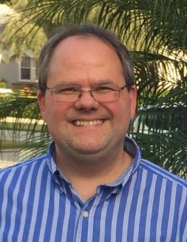
Burdett Loomis
Burdett Loomis

Over time, Midwestern states have been reasonably well governed, although there is a range.

My initial intent for this column was to contrast Minnesota, a high-tax, high-service state with a Democratic governor to Kansas, a state with declining income taxes, declining services and a GOP governor. I expected Minnesota to shine, but while its economic performance has exceeded that of Kansas, the comparisons are more mixed than I anticipated.

Driving through Minneapolis, there is an overwhelming sense of energy and enterprise – lots of building and increasing high-tech investments. Indeed, overall a new economic assessment by Governing magazine ranked Minnesota 15th in the nation, while Kansas came in at 38th. But in terms of jobs created, the two states were similar, although recent Kansas losses may have pushed the state a bit farther behind.

More generally, across our region, economic conditions have generally muddled along, with no state ranking higher than Minnesota (tied with Nebraska) and the rest of our neighboring states coming in between 20th and 30th.

The weakest states in the recent rankings all have their own stories, often revolving around the decline in energy prices. The strongest reflected a mix of relatively high tax (Massachusetts) and low tax (Colorado) states, although in general higher taxes accompanied greater prosperity in our weak-oil economy.

What the most prosperous states have done, however, is to have vigorous discussions about tax and spending policies. And they have adjusted their policies when problems have emerged.

Minnesota income tax rates are relatively high and progressive, which have not kept high-income individuals from moving there. At the same time, Minnesotans pay no sales tax on food (compared to more than nine percent in many Kansas communities), nor on over-the-counter drugs. And most clothing is exempted. Thus, families spending $10,000 on food, drugs, and clothing over the course of a year pay around $900 less in Minnesota than in Kansas.

In short, Minnesota is a high-tax state, but its burdens fall disproportionately on the upper middle class and the wealthy. Equally significant, Minnesota legislators and its governor have had lengthy, substantive discussions about economic policy. For example, they are currently arguing about extending the Minneapolis light rail system, debating its prospective distribution of costs and benefits.

Conversely, since 2012 Kansas tax policy has been made willy-nilly. The governor and the Legislature bought the Laffernomics promise of low-tax prosperity, passed a jury-rigged bill in 2012, and then subsequently increased sales taxes that disproportionately affect the least affluent. Astoundingly, there has been little serious deliberation about tax policies; rather, they have been hastily packaged at the end of legislative sessions.

Likewise, spending cuts have been ad hoc and theme-less, as funds are sliced here or there, time and again, to avoid deficits.

States all do things differently and sometimes make poor policy decisions, but Kansas has been especially reckless and thoughtless. It’s time we elect legislators who can have actual policy discussions and produce sensible legislation that seeks to benefit all our citizens.

Is making careful decisions too much to ask?

Burdett Loomis is a professor of political science at the University of Kansas.
SCHLAGECK: Using technology responsibly

John Schlageck writes for the Kansas Farm Bureau.

BY JOHN SCHLAGECK

The conversations are endless. Consumers want and some demand to know the origin, safety and nutrition contained in the food they eat or feed to their families.

Little more than a couple decades ago, it seemed like most people could give a hoot about their food. Heck, 20 years ago the only time the media paid any attention to food was to tell consumers when prices went up.

It’s obvious farmers, ranchers and other people who want to sell food want to tell the public about their product. But are they being heard? Does their message resonate with today’s savvy consumer?

Or is it being sidelined by well-funded, well-managed and strategically placed ads and social media?

During the last several years, agendas championed by some environmental groups have been less than kind to agriculture. Some have flooded the public with figures on soil losses, pesticide-related mishaps and alleged failed attempts at using pesticides to reduce infestation.

Technology has often been labeled the No. 1 environmental enemy. But here’s the flip side of that coin and one agriculture must tell over and over again.

For food producers, farmers and ranchers, technology is viewed as the application of knowledge. As humans, we survive by adapting the environment to our needs.

Someone much wiser than me once said, minus technology, we would be just like other primates – confined to tropical regions and subject to extinction due to environmental changes. To survive, we must disturb the environment, conserve resources and continually create them.

Resources are made not born. Land, ores, petroleum, etc. – the raw materials of this planet – are not inherently resources. They do not inherently further human purposes.

We as humans must determine what is useful and how to use it. Topsoil becomes a resource when a farmer nurtures the soil and plants wheat seed for example. Ores become resources when metals are extracted from them.

During the past two centuries, technology has been creating resources more rapidly than humans have been consuming them. By every measure of price and availability, resources have become more abundant.

Without science and technology, today’s farmers and ranchers would be unable to feed the masses outside the agricultural industry. Farmers use technology responsibly. They constantly use new farming methods and practices. Their minds are like the fertile soil they farm – always ready to embrace new ideas

But new ideas and new farm technology is costly. It is in the best interest of farmers to use it carefully and sparingly. Misuse would add to production costs, which would result in an even lower return on investment.

Farmers use agricultural herbicides and pesticides only when necessary. When they use these plant protectants, farmers follow label directions designed to safeguard the public.

When ranchers use antibiotics and other animal health products for their stock, they follow proper drug use practices. When new advances in biotechnology are discovered, farmers must abide by stringent testing and monitoring practices that ensure only safe products in the marketplace.

Food produced in the United States is safe. More than 50 years of Food and Drug Administration testing has shown the majority of our fruits and vegetables have no detectable pesticide residues. This underscores that American farmers use pesticides properly.

Every year billions of dollars are spent to support food and agricultural safety and quality inspection, according to the General Accounting Office. The private sector, combined with state and local governments spend an estimated $9 billion on similar activities.

Farmers and ranchers support efforts to evaluate and enhance the current regulatory and food monitoring system. Agricultural producers are willing to work with others to maintain safe food, but this industry must avoid policy changes that are based on fear, emotion and public manipulation.

Decisions affecting the course of agricultural production are critically important and will have far reaching implications on our quality of life. We must be careful when determining long-term policies.

Farmers and ranchers must continue to maximize their production capacity with an ever-watchful eye on food safety, quality and the environment.

John Schlageck, a Hoxie native, is a leading commentator on agriculture and rural Kansas.

At The Rail: Putting a price tag on adequacy

By MARTIN HAWVER

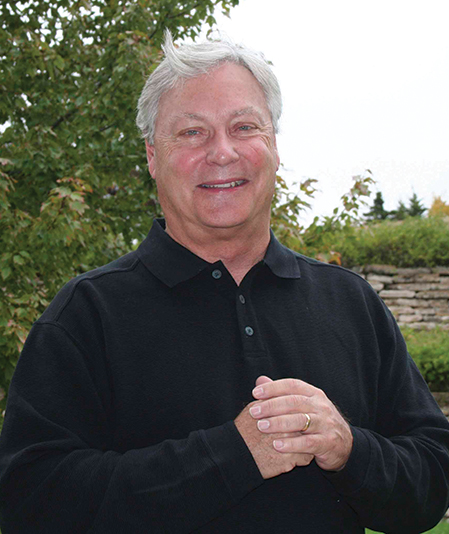
Martin Hawver
Martin Hawver

While we’re all waiting for that 9 a.m. Sept. 21 hearing before the Kansas Supreme Court on the K-12 school finance lawsuit—and the likely post-general election decision—there are some interesting issues floating around the Statehouse on the Gannon vs. Kansas case.

This portion of the near-eternal battle between Kansas school districts and the state is over just how much money the state needs to spend on K-12 education. The test? It’s the constitutional requirement that “the Legislature shall make suitable provision for finance of the educational interests of the state.” That means making sure that all school districts have enough money to meet the educational standard set by the Legislature, and that the Legislature appropriates enough money to make sure they can.

That standard is the one Kansas lawmakers recently bought into when they adopted the so-called “Rose Standards” for accomplishment. Those standards? They mirror closely those adopted by Kentucky in 1989 after a school finance lawsuit. Yes, that sounds a little old, 1989, but they sound pretty good.

Those standards for computing whether schools are doing their job—and whether the state is providing enough money to allow schools to do that job—may be a little difficult to test. Among those standards: communication skills; knowledge of economic, social and political systems; understanding of governmental processes; knowledge of one’s own mental and physical wellness; grounding in the arts; and sufficient preparation in academic or vocational fields to enable students to choose a career and enter either higher education or the workplace.

Now, those all sound like the skills that we want Kansas schoolchildren to carry out of their high schools along with their diplomas. Doesn’t get much better than that, does it?

The state is just starting to test schoolchildren on those skills, and those tests are still being touched-up so that we can tell whether those students are meeting those goals, or some percentage of students are meeting those goals so we can believe we’ve given them a good start for the rest of their lives.

But, that hearing is going to be Sept. 21, and the whole issue gets a little intense because measuring those standards will be difficult. Figuring out what meeting those standards will cost in districts which range from just a few square miles to hundreds of square miles will be tricky. You gotta get the kids to the school building and make sure that they’re fed enough that they aren’t hungry during maybe that class where they are being “grounded in the arts.”

Oh, and while the court will be considering whether it can come up with a number that it will require the Legislature to meet on financing schools, chances are slim that it will be able to, say, subtract the cost of football or basketball or debate or such from the Legislature’s responsibility to provide equal opportunity for the state’s 278 school districts to offer those Rose standard teachings to the students.

It all gets very complicated, and while the school districts challenging the state’s level of funding for K-12 maintain that they don’t have enough state money to meet those standards, the state is maintaining that they have enough money if they’d just spend it on teaching those Rose standards in the classroom with less administrative costs.

What’s the right number for the court to order lawmakers to pony-up? Is that—you gotta love the word— “justiciable.”  This spring’s decision by the court that the Legislature wasn’t equitably appropriating its share of Local Option Budgets and capital outlay funds was relative simple. It was a matter of long division that the Legislature probably should have known wasn’t right. But to make sure the Legislature fixed that relatively simple “equity” issue, the Supreme Court did have to threaten to close the schools if lawmakers didn’t fix it.

That equity issue was simple, and relatively cheap—about $42 million or so in additional state funding to fix. But putting a pricetag on adequacy so school districts have enough money to teach to those Rose standards—some estimates are $500 million or more in additional funds—yes, things get complicated quickly.

The Legislature is waiting to see what number the court comes up with…if it determines that it can determine just what adequacy is going to cost.

Syndicated by Hawver News Company LLC of Topeka; Martin Hawver is publisher of Hawver’s Capitol Report—to learn more about this nonpartisan statewide political news service, visit the website at www.hawvernews.com

LETTER: Herman issues debate challenge to Billinger

Alex Herman
Alex Herman

The most recent Kansas Department of Labor jobs report issued Friday brought yet another example of how badly Governor Brownback’s economic plan is failing.

The Brownback recession continues to worsen. The dire state of the Kansas economy results directly from the Brownback agenda, blindly supported by his allies like Rep. Rick Billinger.

Just in July, 5,600 hardworking Kansans have fallen victim to the disastrous experiment Gov. Brownback and his Republican allies thrust on Kansas.

As your senator, I will work tirelessly to repair the damage Governor Brownback and Rep. Billinger have inflicted on our great state. The good people of Northwest Kansas cannot afford to continue down this dead-end path.

In light of the continued failure of the Brownback agenda, I am challenging Rep. Billinger to a series of debates across our district. I think it’s important that he explain to the hard-working people of the 40th Senate district why he has voted in lock-step with governor Brownbacks’ agenda. I look forward discussing the path forward to ensure Kansas once bright future is restored.

The Senate 40th district is composed of Cheyenne, Rawlins, Decatur, Norton, Sherman, Thomas, Sheridan, Graham, Wallace, Logan, Gove, Trego, Ellis, and parts of Phillips counties.

Alex Herman, (D-Hays), is a candidate for the Senate 40th District.

INSIGHT KANSAS: No more booing the refs — democracy’s at stake

I do not know if American democracy will survive this bizarre election year, but if it does not make it, I can predict the cause of death. The smoking gun will be the growing, highly toxic, self-serving, and baseless belief that whenever one’s favored candidate, party, or issue loses an election, it must be because “the system” was “rigged” by the winning side.

Nonsense.

Michael A. Smith is a Professor of Political Science at Emporia State University.

While GOP Presidential nominee Donald Trump spews this bile on the national stage, we also have problems right here in Kansas. Secretary of State Kris Kobach will not quit insisting that restrictive new voting laws are needed to prevent rampant voter fraud, despite the failure of his or any other office to find any substantial evidence that it exists, not to mention Kobach’s recent string of losses before the courts. False allegations of voter fraud are particularly damaging, not only because they undermine voters’ confidence in a system that works quite well, but also because they cannot be disproven, since they were never based on facts or analysis in the first place.

On the other side of the aisle, critics have wondered if the particularly high voter turnout for Republicans in large, high-turnout precincts is due to some sort of tampering with the voting machines. Not so fast: these precincts tend to be located in higher-income, suburban areas such as Olathe and Maize—areas that vote heavily Republican, where demographics alone explain the results.

Supporters of Sen. Bernie Sanders were devastated by his loss Hillary Clinton in the Democratic primary, but Clinton finished more than three and a half million votes ahead. Sanders became an icon his supporters, but Clinton got the numbers. No voter is always going to like the results of our process, but when we lose, instead of throwing brickbats and broken bottles at the officials like disgruntled sports fans, we need to take the high road. Senator Morris Udall said it perfectly. After losing a hard-fought primary election to Jimmy Carter, Udall exclaimed, “the people have spoken. Damn them!”

Udall was mad at the voters, but he knew better than to vent his frustration with any “system is rigged” foolishness.

Nobel laureate Kenneth Arrow used mathematics to demonstrate that no system of counting votes can guarantee an absolutely fair outcome, every time. Just ask Al Gore, who won the popular vote but lost the presidency in 2000 amid a circus of butterfly ballots and hanging chads. Hillary Clinton knows, too– she narrowly lost the Democratic presidential nomination to Barack Obama in 2008 despite her slight edge in popular votes. Complications such as races with more than two candidates, low-turnout elections, unstable public attitudes, the electoral college, and convention superdelegates can skew outcomes in close races. No wonder the Democrats have pledged to eliminate two-thirds of their superdelegates by 2020. Even then, democracy will still be imperfect– all systems are imperfect– but it still beats the alternatives.

Democracy is also vulnerable. The only thing holding it in place is us. It cannot survive unless we all take one for the team sometimes, even when it hurts. As Winston Churchill said, “democracy is the worst system in the world… except for all the others.”

Indeed.

MADORIN: Continuing a 100 Year Legacy

Karen Madorin
Karen Madorin

Kansans live in the Central Flyway so we directly benefit from the Migratory Bird and Treaty Act and Migratory Bird Hunting and Conservation Stamp Act ( aka the Duck Stamp Act). In general, waterfowl hunters and birders profit most, but every Sunflower State resident can appreciate migrant birds winging across our skies or landing on nearby waterways and refuges.

In a century, hunters and other conservation efforts have protected and managed migratory species so that we expect to see cranes, geese, ducks, and other transient waterfowl. That wasn’t always so. Because so many market hunters decimated populations to sell either meat or feathers, populations suffered. According to one source, “As many as 15,000 canvasbacks were shot in a single day on Chesapeake Bay during the 1870s.”

When concerned hunters noted declining numbers, they contacted legislators. In response, Congress passed the Lacey Act (1900) and the Weeks Maclean Act (1913) that prevented transportation of illegally taken game across state lines, spring waterfowl hunting, and migratory game bird marketing. Soon after, the Migratory Birds and Treaty Act (1916) strengthened initial efforts.

Unfortunately, lack of funding made it difficult to enforce these laws and support President Theodore Roosevelt’s refuge system. Some might consider it ironic that hunters stepped in to meet this need. I ask who better to identify this concern?

To complicate matters, waterfowl populations declined from 100 million to 20 million during the Dust Bowl drought years. Franklin Roosevelt sought solutions from the Beck Commission. Their response was to conserve more habitat. Unfortunately, inadequate finances left planners with empty coffers.

duck stamp 1Ducks Unlimited explains that FDR appointee Jay Darling was an avid duck hunter and a conservation-minded editorial cartoonist. As head of the Bureau of Biological Surveys (eventually the US Fish and Wildlife Service), Darling supported and designed the first Federal Duck Stamp in 1934. It depicted a pair of mallards. Initially, that stamp cost each hunter $1.00. Like most expenses, this one has increased. The 2016 edition sells for $25.00. Fortunately, 98% of that fee directly supports habitat development. Since the program’s initiation, sales exceed 700 million dollars. According to the Federal Wildlife Service, the result is more than 5.7 million acres of conserved habitat.

Not only has does this act support waterfowl conservation and management, it also encourages wildlife art. Artists compete annually to display their efforts on this collectible stamp. Depictions include Darling’s first two mallards to mergansers, wood ducks, Canada geese, and now trumpeter swans.

duck stamp 2Thank goodness, hunters protected this resource and funded habitat development. However, you don’t have to hunt to enjoy the results. You can view waterfowl at any of our state refuges and lakes. Collectors can haunt auctions and antique shops in search of stamps, decoys, and other ephemera. Photographers can combine Kansas sunrises and sunsets to perfect shots of transient visitors. Gourmets can explore endless recipes for delicious goose or duck dinners. Only lack of imagination limits possibilities.

That said, non-hunters as well hunters can support migratory bird populations by buying a Federal Duck Stamp online, at the post office, or local sporting good outlet. In a little over a 100 hundred years, responsible hunters/conservationists have made sure these species continue to thrive.

Native Kansan Karen Madorin is a local writer and retired teacher who loves sharing stories about places, people, critters, plants, food, and history of the High Plains.

BEECH: Preserving fresh food? New Extension resources available

Linda Beech is Ellis County Extension Agent for Family and Consumer Sciences with Kansas State Research and Extension.

Food waste is a problem that complicates efforts to feed a growing world. The Food and Agriculture Organization of the United Nations estimates that roughly one third of the food produced in the world for human consumption every year — approximately 1.3 billion tons — is lost or wasted.

Home food preservation is an important strategy for reducing food waste and saving food from a time of plenty for a time of need. Fresh produce is plentiful at this time of year, so many families are looking to freeze, can, or dehydrate food to save it for later.

Kansas State University and the University of Missouri Extension services have teamed up to produce some new resources to help cooks safely capture the tastes of the summer to enjoy well past the growing season.

A series of 17 new instructional videos is now available to teach the safety principles and latest techniques for high-quality home food preservation. Each brief video is a reliable review of the topic in seven minutes or less. You can find the videos on the K-State Research and Extension food preservation website at www.rrc.k-state.edu/preservation or on the K-State YouTube channel at https://tinyurl.com/j2beqfk.

Another KSU-MU partnership is a new food preservation newsletter for Extension agents which is published six times a year. Consumers can find archived issues of the newsletter at the Extension food preservation website listed above.

New this year, too, is the availability of Extension preservation information in Spanish. Ten publications on safe home food preservation have been translated into Spanish and are now available on the Extension food preservation website.

Another local Extension resource on food preservation is returning with new information. Back for a second year is my “Canners Corner” series on Tuesdays in the Hays Daily News. This series of brief articles about home canning debuted on the Tuesday food page last fall and was recognized with a regional Extension communication award. I’ll start the series again next week and we’ll print 7 or 8 articles as the canning season continues through the fall. Watch for “Canners Corner” food preservation tips inside the canning jar graphic in the Tuesday newspaper through early October.

This is the time of year when gardens, farms and orchards are producing their best. Peaches are starting to come into season and melons are appearing in farmer’s markets and produce stands. Fresh vegetables like cucumbers are available to make into pickles and sweet corn is being picked. Summer squash such as zucchini and yellow squash are ready, and tomatoes are starting to ripen to eat fresh or to preserve.

Don’t let this delicious fresh produce go to waste. If you’re interested in knowing more about food preservation, check out these new Extension resources or contact the Ellis County Extension Office for questions or more information.

Now That’s Rural: Verne Claussen, Mill Creek Lodge

Ron Wilson is director of the Huck Boyd National Institute for Rural Development at Kansas State University.

By RON WILSON
Huck Boyd National Institute for Rural Development

Go west of Alma a few miles and one will find a gem – not a literal jewel, but a beautiful place. It is a historic farmstead with fabulous buildings which have been painstakingly restored and repurposed, and now are open to the public for lodging and events.

Verne and Marilyn Claussen are owners of a newly opened facility called Mill Creek Lodge at Volland Point. This is on a ranch which belonged to Verne’s parents. Verne went to K-State and then Houston College of Optometry, becoming an eye doctor. After a fellowship at Yale, he came back to Kansas and bought another place near Alma. He served as an optometrist in the region for 43 years before retiring.

Meanwhile, he was puzzling over what to do with his parents’ farm. This place has a rich history. J.R. Fix and his wife Rebecca homesteaded the place in 1865 after Fix had served in the Civil War. The couple had one son who died in infancy. Then they had a daughter – and then another daughter – and then another and another. All told, there were eight daughters born to the Fix family.

This meant they needed a spacious place to live. They also needed a large barn to house the workhorses needed for the farming, plus a place for the farmhands to live.  The Fix family expanded the buildings through the years.

The place remains a working ranch, now known as the Claussen Ranch. But what about the buildings on the farmstead? By 2013, the barn was no longer suitable for everyday farm use, for example.

“I wanted to make it into something where people could come out and enjoy the rural lifestyle,” Verne said. He took on a wonderful restoration of the house and buildings so as to create a place for lodging, meetings, and special events. That was the beginning of Mill Creek Lodge at Volland Point. The grouping of buildings has been designated a historic district by the National Register of Historic Places.

Since J.R. Fix and his wife had all those daughters, each daughter needed a bedroom so the Fix family built a majestic three-story Italianate home. “The house was in real good shape,” Verne said.

In 2015, Verne restored the house with heating, air conditioning, and modern plumbing and electricity. He also brought in period chandeliers and antique furniture. Verne named each one of the guest rooms for the daughter who lived there. So, guests can stay in the Pearl bedroom or the Mabel bedroom, for example. There is no doubt about which room is which – those two daughters actually carved their names into the wood floor.
The nearby tenant house for the farmhands was restored and expanded also. Then came the barn, which received a total makeover. The exterior look was largely preserved, but windows, heat and air conditioning, water and bathrooms were installed.

“The barn had been built in two phases,” Verne said. “The first part was to hold the horses, hay and wagons, and the second part was a corn crib to the west.” Verne remembers putting hay in this barn as a kid. Now the barn has been converted into a thoroughly modern but rustic-looking meeting area with multiple restrooms. The hayloft area can hold up to 250 people and the horse stall area can hold another 100. The north side of the old corn crib is now a receiving kitchen for caterers, and the south side is a bunkhouse. A spring-fed, hand-dug well is inside a cave nearby.

Mill Creek Lodge at Volland Point is now host to weddings, meetings, family reunions, and hunting in season. Up to 29 people can stay there overnight. The lodge is located 7 ½ miles west of the rural community of Alma, population 785 people. Now, that’s rural. More information can be found at www.millcreeklodgevollandpoint.com.

Go west of Alma a few miles and one will find a gem – not a literal jewel, but a beautiful place. We salute Verne and Marilyn Claussen for making a difference by restoring and repurposing these historic buildings in rural Kansas. I think it is a treasure.

SCHLAGECK: Back to school with good food

John Schlageck writes for the Kansas Farm Bureau.

With school starting across Kansas this unfortunately can mean the return of unhealthy lunches which can certainly be labeled as fast food, most of which come to schools shipped in already prepared packaging. If you have or have had children in school, you know what I mean.

Beanie weenies, chicken nuggets, high-carb mac and cheese, fried snacks and sugary soft drinks are popular fare served at school cafeterias across the Wheat State. Still, school lunch programs can play a key role in teaching and reinforcing healthy eating behaviors by integrating activities like on-site gardens, nutrition education, locally sourced foods and endeavors that affirm the value of mealtimes.

You don’t have to have eagle eyes to see this nation has a problem with obesity and that challenge has spread to this country’s youngsters. Did you know approximately 17 percent of U.S. children and adolescents aged 2-19 are obese, according to the U.S. Center for Disease Control? That’s nearly triple the amount in 1980.

It’s time we turn this train around. Initiatives that connect our youth to fresh, healthy foods, a healthy lifestyle with plenty of exercise and healthy eating habits will go a long way toward changing this obesity endemic.

What’s happening here may seem more difficult than it really is. Looking back in our not too distant past, many Americans ate a balanced diet consisting of plenty of fruits, vegetables, grains and protein. Eating healthy isn’t easy, but it isn’t impossible either. It does take discipline, restraint and the willingness to make life-altering changes in what have become bad-choice, unhealthy eating habits.

What better place to begin than with the future of our youngsters? Talk about an idealistic endeavor.

Let’s begin with one of the most important steps – connecting local farmers to schools. In communities across Kansas, local food producers provide beef, lamb, pork, poultry, fruits, grains and vegetables at local markets or directly from their farms.

Why can’t they provide farm-fresh foods for our school children?

Well this is happening – and right here in Kansas. In Clark County, in southwestern Kansas, local stockmen donate cattle to help feed students at Ashland High School. This generous contribution is known as the USD 220 beef program.

Between 15 and 20 livestock producers pledged to provide beef for this new program. With this many contributors, each producer donates one animal every two years.

This new strategy, allows the school district hopes to significantly reduce its food costs, engage the community, reward livestock producers and provide for its students.

Another program I recently read about includes the state of Vermont. Here a successful farm to school movement throughout the last 10 years has aided school lunch programs from state money. Nearly 60 percent of the schools have participated. Children of Vermont have benefited with farm-fresh foods and local farmers have expanded their business into a market worth more than $40 million.

School gardens can provide hands-on opportunities for children to cultivate and grow their own food. In high poverty areas of north Texas, school gardens not only nurture healthy lifestyles and respect for the environment, they can also provide academic achievement through the primary experiences of gardening.

Nutritional education should be a part of every public school in this country. So funding is tight. That’s a given. What if we engaged professional volunteers to run a broad range of topics that address nutrition?

You know, farmers and ranchers, agri-business types and maybe even people with nutritional backgrounds.

Our goal should be to feed our children while they are in school, but feed them with nutritious meals that will help them grow up to be healthy, well-adjusted adults. It’s time to cut back on a diet that focuses on processed foods delivered in boxes.

Children spend seven to eight hours nine to 10 months out of every year in schools across our nation. These same schools have our children under their wing more time than we as parents and grandparents during each day school is in session. Let’s reverse this trend of snacking and eating less than nutritious foods in our school systems.

Your children, grandchildren and mine deserve the best and healthiest foods available – fresh, locally produced and made from scratch served up at their schools.

John Schlageck, a Hoxie native, is a leading commentator on agriculture and rural Kansas.

HAWVER: The fallout of that 5 percent budget cut

martin hawver line artWe’re about to see an interesting economic/management/political experiment play out in the dusky, complicated business of assembling a two-year budget plan for the next two fiscal years of Kansas government.

The director of the budget has told state agencies under the governor’s control to find ways to cut their budgets by 5%. Hmmm….5% doesn’t sound like a lot of money, does it?

It’s the difference between leather seats and maybe a sunroof on your next new car, or chicken rather than trout at the restaurant.

Reason for the request is, of course, that the state is losing money; its taxes aren’t bringing in the amount of money that the governor wishes it would and costs for nearly everything are rising. And…of course, Gov. Sam Brownback would like to spend the last two years of his second and last term in the governor’s office providing Kansans with the services that they want, so they’ll think good of him in case he wants to look for a job when he leaves the state-provided housing at Cedar Crest.

But that 5% is a rough one, and most of us would like that sunroof and trout if we could have it.

The procedure for asking for that budget cut from state agencies isn’t new…but the 5% is higher than in previous requests for agencies to pare their spending.

That’s where the under-the-covers swapping of spreadsheets, paring of expenses and such become interesting.

Practically, agencies might take a big view and assess what they do and for whom and how to do it most economically. That makes sense. But it puts the Cabinet secretaries—and their accountants and budget minions—in the gunsights of lobbyists, unions and those who work with their agencies who will be fighting for more money for their clients and members and the public who uses those services.

Take for example, highways. A 5% budget cut to an already pretty well scoured budget means that lobbyists for highway contractors, contractors’ employees and drivers will be watching that proposed budget cut and probably not liking it.

Same for those who depend on state aid to public schools, community colleges and higher education, and for state assistance to farming, to parks and recreation and tourism, and nearly every other enterprise on which the state spends money.

Of course, there’s some logic to asking those agencies to come up with their own budget-cutting plans. Those agencies know what services they provide are most important to Kansans, and probably know where there’s a little extra money being spent, or where the qualifications for state assistance are a little loose and such.

So they’re the best people to look for that 5%.

But, they are also the people who know best where a 5% cut can become politically and socially dangerous. Don’t want the budget cut? Suggest that the cut comes from school lunches, or “yield” signs on highways or those signs that tell you the maximum weight that a bridge is likely to be able to support. Get it? Propose cuts that the agency chiefs know that the governor won’t want to put in his budget that he hands to the Legislature in January.

Yes, it’s an internal administration game that can be played several ways…either to reduce state spending to the level that no new taxes are needed, or to make the “other Cabinet secretary” take cuts that will make new taxes unnecessary—at least until the Kansas Supreme Court decision on the adequacy of state aid to public schools…

No telling whether we’ll ever see the individual agency give-ups to get to that 5% cut, or whether we’ll have to gauge which agencies made the cuts internally and which were imposed on them by the governor.

It’ll be worth watching…

Syndicated by Hawver News Company LLC of Topeka; Martin Hawver is publisher of Hawver’s Capitol Report—to learn more about this nonpartisan statewide political news service, visit the website at www.hawvernews.com.

MADORIN: Follow that sign to shake up an adventure

Karen Madorin
Karen Madorin

While I’m not much for adventures that involve crowds, loud noise, or frenetic activity, I enjoy out of the ordinary explorations. We unexpectedly hit the magic button on our latest road trip and found ourselves looking through several families’ no longer needed treasures and eating Indian tacos. Even better, a Shoshone grandmother prepared our food under blue Wyoming skies. While we ate, we enjoyed visiting with her husband, a tribal artist whose work hangs in offices and homes around the world.

The key to our unplanned side trip was a garage sale sign stuck along the ditch of a road through a reservation. Once we spied the invite, we said, “Let’s see what they’ve got.” The irony in that comment is that both of us are over sixty and have plenty our own loot we could sell and not miss. Despite knowing we have dust collectors decorating our home, we can’t help but inspect what other people have spent a lifetime acquiring. Heck, who knows when you’ll find a petrified dinosaur tooth or a Made in Occupied Germany teacup?

While we didn’t find dinosaur dental work or rare porcelain, we did find aged buffalo horns, an antique hunting knife, a heavy chef’s skillet, local literature, and homemade Indian tacos made by a professional.

Over decades, I’ve learned garage sales are perfect places to sample local foods. In Northwest Kansas, I’ve bought German bierocks, hertzen, spitzbuben, and Bohemian kolaches. You know when you see the “homemade” sign, you’re in for a treat. There’s something about a woman serving her family recipes that makes her put her best work into what ends up as food for gods.

The lesson learned on this journey was that women everywhere share this tradition. The silver-haired elder shaping a dough ball before frying it in hot oil was every bit as proud of her traditional food as women in Ellis, Rooks, Rush, Russell, and Trego Counties who tempt taste buds with mouthwatering fare. As she swiftly formed an oval, the cook explained she could never make her recipe in batches that served less than 80 people. With that kind of practice, it’s no wonder forming those discs looked so easy.

I like making fry bread myself, but this woman’s was better than mine. As I listened to the bread sizzle on the camp stove, I told her how I mixed my simple ingredients. In a flash, she identified two ways to improve my recipe. Ironically, one of those was the addition of butter flavored Crisco to the flour mixture until it crumbled like pie dough before adding liquid. She also let me know my use of milk darkened and hardened my product. After seeing her golden results, she’s right.

We ate under mid-August rays, savoring chili, lettuce, tomato, and cheese –topped fry bread and discussing Indian art, native colleges, and garage sale bargains. By the end of our meal, we knew one another’s names as well as our preferences for serving this traditional staple.

Following our instincts and turning into that garage sale was the best part of our expedition. We may not have found an ancient fossil, but every time I make fry bread I’ll smile and recall this chance encounter where I learned to cook from an expert.

Native Kansan Karen Madorin is a local writer and retired teacher who loves sharing stories about places, people, critters, plants, food, and history of the High Plains.

Exploring Kan. Outdoors: Shootin’ gals and catfish tags

BullCityBlack500x125 (1)

I love watching women and kids become involved in the Kansas outdoors, and this fall there seem to be numerous opportunities for that to happen around the state.

The National Rifle Association has a program for women shooters called Women on Target (WOT). On Saturday Sept. 10, WOT will sponsor a women’s-only shooting event at the Friends of Fancy Creek Shooting range at the Fancy Creek area of Tuttle Creek State park near Randolph, KS. The event is designed to help women become more comfortable and familiar with firearms, and will provide instruction in basic handling and shooting skills with handguns, rifles, muzzleloaders and archery.

Steve Gilliland
Steve Gilliland

There is a $50 registration fee that covers loaner equipment, ammunition, instruction, eye and ear protection and lunch. Space is limited to 36 participants and I don’t think they’ll have any trouble filling this up, so call Marci Ritter at 785 293 4406 or email her at [email protected]. NO EXPERIENCE NECESSARY.

• • • 

If you’re looking for a way to introduce a kid to the world of outdoor sports including shooting, hunting, fishing and trapping, mark your calendar to attend the 19 Annual Youth Outdoor festival at Hays. Hays area businesses, conservation and shooting sports groups will sponsor the event at the Hays City Sportsman’s Club from 9 to 3 on Saturday August 20. Kids will have the opportunity to shoot trap and skeet, archery equipment, air rifles and BB guns, muzzleloaders and small bore rifles, plus there will be a casting competition, paintball target shooting and a fur harvesting demonstration.

Expert volunteer instructors will supervise the youth at every station and all equipment will be supplied. Lunch is provided and prizes including guns, fishing tackle and other outdoor equipment will be given away. For more information call Kent Hensley at 785 726 3212 or Troy Mattheyer at 785 726 4212. And as if that weren’t enough, the entire day is FREE!

• • • 
Catfish tagging; I know this sounds a lot like snipe hunting or maybe a video game like Pokemon Go. But really, biologists from the Kansas Dept of Wildlife, Parks and Tourism (KDWPT) are catfish tagging at Tuttle Creek Reservoir. The blue cat population there at Tuttle Creek is still fairly young, and biologists are tagging them to help understand them better. Blue cats are collected with an electrofishing boat that temporarily stuns them, allowing biologists to place yellow information tags just below the dorsal spine on all fish 14 inches or longer.

When the fish are eventually caught, reporting that information will help determine how well they are growing, how far they are moving upstream of the lake and how many fish are migrating downstream out of the lake. If you happen to catch a tagged blue catfish at Tuttle Creek, please follow the instructions on the tag to report your catch. Most fish being tagged have been between 16 and 22 inches, the largest being 27 inches long weighing 8.3 pounds.

• • •

And while we’re talkin’ fishing, how would you like to become a Certified Fishing Instructor for youth and families? Saturday, August 20 from 9 to noon, the KDWPT and a group called Fishing’s Future will host an Angler Education Instructor certification course at the Lakewood Discovery Center, 250 Lakewood Drive in Salina. This will be a free course for anyone aspiring to teach fishing techniques to kids and families.

Participants will learn how to work with kids, how to create a class curriculum, and how to present pertinent fishing information like current fishing regulations, fish habitat and equipment use. Students must go online to the KDWPT website and complete the Aquatic Nuisance Species (ANS) certification course and bring their certification card with them to class. Participants will also be required to sign a release allowing KDWPT to run a background check on them. For further information and to register for the class, go to the website www.fishingsfuture.org.

You have heard it said many-a-time that our youth are the future of the sports of hunting, fishing and trapping, and I would also add to that our ladies as well, so anything we can do to get them interested and to keep them interested in the outdoors is a win-win situation. Kudos to those folks who promote and sponsor these events, and continue to Explore Kansas Outdoors.

Steve Gilliland, Inman, can be contacted by email at [email protected].

BullCityBlack500x125 (1)

Copyright Eagle Radio | FCC Public Files | EEO Public File