We have a brand new updated website! Click here to check it out!

KidsAndCars.org: GM’s new technology will help avoid child heatstroke deaths

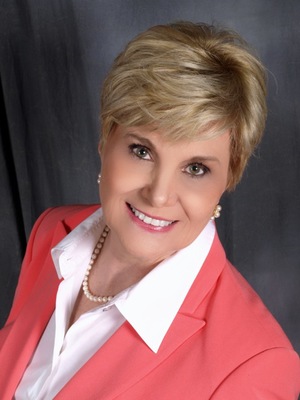
Janette Fennell
Janette Fennell, president and founder of KidsAndCars.org

By JANETTE FENNEL
KidsAndCars.org

Today’s long-awaited announcement by General Motors makes this a significant step in achieving the goal of keeping children safe, by providing a reminder to drivers exiting their vehicle that a child may still be in the back seat.

Photo courtesy GM
Photo courtesy GM

GMC is adding a “Rear Seat Reminder” as a standard feature to its 2017 Acadia SUV, the company announced Monday. The system appears to be an industry first.

Though this may not be the complete answer, it certainly holds great promise, and is an important step forward. “Adding a new safety system that reminds drivers to check for children in rear seats certainly has the potential to save lives.”

KidsAndCars.org challenges all automakers to provide technology on their vehicles to help prevent children from being unknowingly left behind in the backseat of any vehicle. The exciting GM announcement is an industry first technology that should also be provided on all 2017 vehicles, not just one.

Already this year 12 children have succumbed to the heat in a car compared to 5 at this same time last year, a 240% increase. Since 1990, more than 750 children have died in these preventable tragedies.

Parked cars heat up very quickly, which poses a major health threat to children and pets. Couple that with drivers overestimating the brain’s ability to multitask when suffering from sleep deprivation, stress and the constant changes in their daily routine – all too often with tragic results.  New technology must be added as quickly as possible on vehicles to help prevent these needless deaths and injuries.

This can and does happen to the most loving, responsible and attentive parents; no one is immune. There is no greater tragedy for a parent or caregiver than to suffer the loss of a child due to heatstroke.

Through the “Look Before You Lock” educational campaign, the first of its kind, KidsAndCars.org has already distributed more than 750,000 safety information cards to birthing hospitals nationwide. This education campaign will continue, but at the same time technology is needed to prevent these tragedies.

Remember the following “Look Before You Lock” safety tips from KidsAndCars.org:

  • Make it a routine to open the back door of your car every time you park to check that no one has been left behind.
  • Put something in the back seat to remind you to open the back door every time you park – cell phone, employee badge, handbag, etc.
  • Keep a stuffed animal in baby’s car seat. Place it on the front seat as a reminder when baby is in the back seat.
  • Arrange for your babysitter or child care provider to call you if your child hasn’t arrived as scheduled.
  • Make sure children cannot get into a parked car.
  • Keep vehicles locked at all times, even in the garage or driveway.
  • Keys and remote openers should never be left within reach of children.
  • If a child is missing, immediately check the inside and trunk of all vehicles in the area very carefully.Janette Fennell is president and founder of KidsAndCars.org, the only national nonprofit child safety organization dedicated solely to preventing injuries and deaths of children in and around vehicles.

HAWVER: Kansas school mess gets some clarity .. maybe

martin hawver line art

Things got pretty simple last week on this school finance foul-up.

Remember, Democratic leaders stood outside Gov. Sam Brownback’s office threatening to have legislators petition to call a special session of the Legislature to begin Monday, June 20, to fix the portion of the school finance formula that the Kansas Supreme Court has held unconstitutional—and so egregious that the high court would shut down schools on July 1 if it isn’t fixed.

That was good for some photographs and news coverage…except that just Wednesday, Brownback called the special session on his own order…signing a piece of paper telling the Legislature to show up, presumably in clean shirts…at 8 a.m. Thursday, June 23, to knock out whatever is needed to prevent the court from closing schools.

Look at it from the long view, and Brownback probably made the right call.

Instead of starting on Monday, start on Thursday and hope the Legislature wants to get home and members restart their re-election campaigns.

Now, that all seems pretty simple. Get a committee or two in early, have them assemble a bill that will meet the court’s demands, and on June 23 bring back legislators, or at least as many as will come, and knock out the bill.

Practically, the bill has to do just one thing: Send another $38 million to $43 million to school districts that would see reductions in state matching for their Local Option Budgets. It’s complicated, that LOB formula. Lawmakers earlier this year passed a school finance bill that used not the Supreme Court-blessed LOB formula, but another formula for state aid for capital outlay support which apparently is OK for capital outlay, but not for LOB.

So the fix is relatively simple. Get the language that the court has already approved for LOB, toss in the money, and…see how the votes go.

Hard to figure, because that minimalist $38 million to $43 million means some districts will see a reduction in state LOB aid—and make sure that the schools stay open—but it means some districts will get less money under the formula than they’d planned on. That brings up about $12 million in so-called “hold-harmless” money, which makes sure that no school district—or legislators campaigning for re-election in those districts—will lose state aid, or their legislators get blasted for bringing less money home to their districts.

The early arguments break out several ways. Just pass the bill that meets the Supreme court’s demand, and let the governor come up with the money…or maybe even find the money to finance it.

Or, they could put in the hold-harmless agreement, and come up with another $12 million or so, or let the governor come up with the money.

It comes down to something that simple…unless there’s some acting-out by legislators about the Supreme Court running the state, imposing on the Legislative and Executive branch powers and threatening to close schools.

There’s an apparent interesting sideline to keep lawmakers from drinking at lunch or later…this proposed constitutional amendment that would allow voters a chance to strip the court of authority to close down schools if the Legislature finances them unconstitutionally. That’s the diversion we talk about — you don’t have to be much of a magician if your assistant is pretty because who’ll be looking at you?

That blast the court, limiting its authority provision, will be good for debate that might make the simple fix-bill relatively easy to pass. Or not…

The special session? Could be two days, or stretch through the weekend and into the next week…against that June 30 deadline to pass a bill so the courts don’t shut down the schools.

Could be simple…but we’re trying to think of the last time the Legislature did anything easily…

Syndicated by Hawver News Co. of Topeka, Martin Hawver is publisher of Hawver’s Capitol Report. To learn more about this nonpartisan statewide political news service, visit www.hawvernews.com.

Exploring Kan. Outdoors: It’s only a matter of time

BullCityBlack500x125 (1)

As a trapper, I enjoy trying to match wits with God’s critters, and beavers, believe it or not can on occasion be very clever and hard to catch.

When the new four-lane highway was built along Inman, a spot that was merely a big puddle along a drainage creek became a couple acre pond that’s a couple feet deep and holds water until the weather gets very dry.

Steve Gilliland
Steve Gilliland

Every time I pass that pond, I look for signs of beavers there, as it has all the makings of a good beaver pond. Just this week as Joyce drove past that pond, she saw what could have been a beaver swimming there, so it became time for a field trip to find out.

I first clamored up and over the railroad tracks to check for beaver signs along the creek opposite the pond. The grass beyond the tracks was lush and thick and shoulder high, and with each step I sank a foot deep into a mat of decayed stocks and vegetation left there from each time the creek flooded over the past who-knows-how-many years.

It was a little spooky to tell you the truth; I could barely see what was in front of me and then to feel my foot sink with each step into something else I couldn’t see! There seemed to be no signs of beaver along the creek, so I moved on.

Going the opposite direction the creek first passes beneath the railroad, then under both lanes of the new highway, so I had to navigate the underside of three bridges worth of nesting swallows to get to the pond. I was still a good fifty yards away from the first highway bridge when a literal cloud of twittering swallows suddenly filled the air, probably numbering in the hundred’s.

Back-and-forth they flew; under the bridge then out again until I was well clear of their space. Their mud-nest colonies lined the underside of the bridge like so many tiny baskets pasted against the otherwise intimidating concrete structure. They never became aggressive or dive-bombed me like they used to do cats when they caught them out in the open on the farm when I was a kid, but they gladly escorted me from the area. After clearing the bridges the creek basically became a muddy path full of cattails for a couple hundred yards until it reached the pond. At the pond, the cattails spread out 30 yards wide and then gave way to the water proper.

Some years ago on a nearby property I trapped beavers in a small marsh that formed alongside a deep, wide creek. The marsh was very shallow, but the beavers had pushed mud up against the marsh bank all across one end, allowing the water to become deeper. Looking at this pond from the highway, it appeared to have gotten the same treatment; another reason to suspect beavers had moved-in.

The pond is often partially covered with a mat of moss, and as I waded into the water and stood in front of the 7 foot tall cattails, what appeared to be mud shoved up against them at the waterline proved instead to be thick slabs of moss, evidently deposited there as the recent high water abated. I picked up a big chunk of the dried moss and tossed it onto the bank; it was thick and stiff enough to pass for cowhide.

As evidence of beaver’s presence in the pond, I looked for dens dug into the bank or a mound-shaped hut of some sort in the water, piles of cut sticks in the water stored for future food, well used trails in the mud leading from the pond into trees along the creek and trees or sticks cut and freshly chewed on.

I got scolded by red winged blackbirds perched high up on cattail leaves, serenaded by bull frogs, nearly carried away by hoards of mosquitoes and warned to mind my own business by legions of swallows, but I found zero confirmation of beavers living in or near the pond. I’m still convinced it’s only a matter of time!

Continue to Explore Kansas Outdoors.

Steve Gilliland, Inman, can be contacted by email at [email protected].

BullCityBlack500x125 (1)

Beech: New food label changes aim to better inform consumers

Linda Beech
Linda Beech
Many Americans are concerned about the ingredients in their food. New changes to the food label by the U.S. Food and Drug Administration aim to lessen their concerns, as the new labels will now highlight calories per serving as well as sugar added by the manufacturer.

Sandy Procter, Kansas State University nutrition specialist, said she is looking forward to the changes.
“This change in the Nutrition Facts label is a long time coming,” Procter said. “We’re looking forward to having an improved source of information on food so consumers can make a wiser choices.”

Procter said that the new label will be easier to read, since the print will be larger. Now the number of calories per serving will jump out at consumers to make them more aware of how many calories a serving, or a full package, actually contains.

Added sugar is another item on the new food label. Currently, the label only shows how much total sugar is in the food, but this can be misleading.

“Many foods have natural sugar in them; case in point is milk,” Procter said. “The sugar in milk– lactose– is considered part of the total sugar, but it certainly isn’t sweetener that has been added to the product.”

Another example is orange juice. The new added sugar line under “Total Sugars” will help consumers easily see the difference between 100 percent fruit juice and sugary alternatives.

Along with changes in the way calories and sugar are listed on the label, the way vitamins are presented will change.

“Vitamin A and vitamin C are still important nutrients, but in the U.S., most of us get ample amounts of those in our diets,” Procter said. “So, those two nutrients are coming off the Nutrition Facts label and are being replaced by two that are identified in the Dietary Guidelines for Americans 2015-2020 as “nutrients of concern”– potassium and vitamin D.”

The changes aim to make it easier for consumers to decide what is a healthy choice for them. Putting more relevant information on the label and making it easier to read gives consumers a better idea of what is actually in the food.

“We know that obesity, diabetes and weight-related health problems are some of the most threatening that our country has to tackle,” Procter said. “Those public health problems need public health solutions, and this is a great step in helping the consumer to easily be able to make healthful decisions at the point of sale.”
These changes don’t go into effect immediately, however. Manufacturers are allowed a short time to make the necessary changes to their product labels.

“There are about two years until (the new labels) are enforced,” she said. “If a company has less than $10 million dollars in revenue, it may have a year longer than that. The change is not intended to be a burden on a company, so the changes are not mandated to happen overnight. I expect to see some companies move to these guidelines relatively soon though, because they’ve been proposed for quite a while now.”

It’s important to note that these changes do not apply to meat, poultry and processed egg products, Procter said, as the U.S. Department of Agriculture regulates those products.

For more information, see the explanation of the new regulations at the FDA website: https://www.fda.gov/Food/GuidanceRegulation/GuidanceDocumentsRegulatoryInformation/LabelingNutrition/ucm385663.htm.

Linda K. Beech is Ellis County Extension Agent for Family and Consumer Sciences.

Schumacher: ‘Stupid is as stupid does’

Tim Schumacher
Tim Schumacher

The ad started with a frustrated fisherman spending his time with a line in the water with no action. Then along comes the “newest and latest,” a battery operated lure in the shape of a minnow with a flashing light inside.

As any fisherman will tell you, the closer you can come to the real things in creating a lure to use to catch a fish, the better. In fact, many fly fishermen go to great lengths to tie their own flies to “match the hatch,” which allows them to actually present a fly as close to the real thing at the right time as possible. So it comes as a great surprise that a fish would fall for the circus act of a plastic minnow that looks like it swallowed a flashing light bulb on the way to the weeds that morning.

But wait, the commercial includes a segment where the fisherman casts his line to a stopwatch, and low and behold, the gentleman catches a fish in the first 10 seconds. This goes along with their warranty that if you don’t catch a fish in the first 10 seconds of a cast, you get your money back. Who would possibly turn this down? Only $19.95. But wait, “if you act now, or are one of the next 250 callers, we’ll double your order.” Two for the price of one, that’s too good to be true.

And then there’s the ads that claim that if you take this pill you will have a body just like the man in the picture with a skinny waist, monstrous arms and legs, and abs that could be used for moguls at any ski resort.

And even though it’s known that in order to lose weight you simply need to burn off more calories than you take in, anyone can attest to the many magic pills that contest this simple belief. We won’t even get into the pills that enlarge certain parts of the male anatomy, but again it’d take a person hiding in a cave not to have seen these claims through ads also.

The Internet has made all of this communication happen in a substantially accelerated fashion. This means as a consumer, it is more important than ever to become an educated buyer. And this knowledge spans each and every industry, not just fishing, your health and hygiene, but also includes the insurance and investment industries.

There are the folks that claim the world is going to fall apart tomorrow, so make sure you buy their product to survive. Although the financial world appears bleak from time to time, it is highly unlikely that the dollar is going to disappear anytime, soon, and your retirement fund is not going to be taken from you to share with everyone equally.

Between Internet, toll-free numbers and inflated marketing, certain challenges appear that, quite frankly weren’t even an issue 25 years ago. Sometimes it’s a real challenge to keep up with technology.

Take the time to discuss your situation with someone of great expertise as well as honesty and integrity. This way, no matter what the issue is, you can make a more informed decision before actually diving into a purchase.

Otherwise you may end up with huge muscles, a skinny waist, and minnows flashing all around your body to go along with your empty pocket book. Good luck!

Tim Schumacher represents Strategic Financial Partners in Hays.

INSIGHT KANSAS: On food labels, Roberts, Pompeo favor federal override of state laws

Once upon a time, conservatives were quick to denounce federal power grabs at the expense of the states. Bob Dole even said that he carried a copy of the Constitution’s 10th Amendment in his pocket — that amendment being the one protecting the states’ reserve powers.

Sometimes, states’ rights took on ugly racial overtones. The 1960s-era rallies against federal overreach were really directed at blocking federal efforts to end segregation in the South, and later at racially-charged controversies like court-ordered school desegregation.

Michael A. Smith is a Professor of Political Science at Emporia State University.

Yet the issue is not just about race. For example, conservatives today still denounce certain federal agencies, none more so than the Environmental Protection Agency, as treading on territory that rightly belongs to state governments.

Then again, times change. The conservative case for less federal power over states rests on the assumption that the states will have lower taxes, fewer regulations, and a more pro-industry climate. Today, states with liberal policymaking majorities often pass laws going well beyond federal regulations. California has done this for years with auto emissions. Oregon recently banned hydrologic fracturing, or “fracking,” for oil and gas, and also pledged to phase out the use of coal for electricity by 2030. Now comes Vermont’s new food labeling law, and Kansas Congressman Mike Pompeo and Senator Pat Roberts are none too happy about it.

Set to take effect July 1, Vermont’s law would be the first in the nation requiring the labeling of food containing Genetically Modified Organisms (GMOs, or bioengineered foods). Larger states like California may follow suit. Pompeo and Roberts have led the efforts in the House and Senate, respectively, to preempt the Vermont law. Pompeo got the “Safe and Accurate Food Labeling Act” passed in the House, but it failed in the Senate. Nicknamed the “Deny Americans the Right to Know” (DARK) act by opponents, the federal legislation relies on the Constitution’s Interstate Commerce Clause, the basis of federal regulatory power since the 1930s.

Most GMO ingredients are either modified to produce their own insecticide, as with cotton and corn, or to resist herbicides and insecticides sprayed on them, as with soybeans and again with corn. A new report on the topic by the National Academies of Science, Engineering, and Medicine found exaggerated claims on both sides of the controversy. GMOs are not miracle crops, having had little impact on the annual increases in crop yields.

But the researchers also found no evidence of increases in cancer and other illnesses among the general public due to the consumption of GMO foods. Activists continue to object. For example, one study found that genetically engineered soybeans had lower nutritional content and more herbicide glyphosate — aka Monsanto’s Roundup — in the food after processing. The study compared GMO soybeans to those raised conventionally and also to organic soybeans.

The proposed legislation would still allow voluntary or state-regulated labeling of foods that do not contain GMO/bioengineered ingredients. Instead, the issue is whether food that does contain GMOs should be labeled. Pompeo, Roberts, Monsanto and their allies fear that these labels will needlessly scare consumers. Critics counter that they have a right to know what is in their food. The legislation passed the House and died in the Senate but Roberts, Chair of the Senate Agriculture Committee, is said to be in informal talks to revive the bill before July 1.

Critics charge Roberts and Pompeo with selling out to Monsanto, but that may not be fair. Conservatives have long advocated limiting government regulation over the private sector. The question is, what happened to another goal—limiting federal interference with the state governments?

To respond effectively to critics, these two Kansas legislators need to better-define their conservatism.

Michael A. Smith is a Professor of Political Science at Emporia State University.

LETTER: Time to put a date on Kan. special session

The Kansas House and Senate Minority leaders have been circulating a petition ordering Governor Brownback to call legislators back to Topeka for a special session to fix the budget, especially in the area of school finance and following the directive of the Kansas Supreme Court, in order to avoid closing of schools across Kansas.

As of today, Brownback announced he will call for a special session but with no specific date. I fear this is simply another delay tactic, the petition should contain a specific date for the special session to avoid further delays.

I am calling on Sue Boldra and all other legislators in this region of the state, who have been supporting the “Brownback Experiment,” to do their job and uphold the Kansas Constitution. Defying or ignoring the court’s decision is no longer an option. It is time to admit the huge tax cut experiment has failed and the sun is not shining on Kansas, instead, the state is under a dark cloud of mortgaging our future. It is time for Boldra and other legislators to get the job done.

Please join me in demanding that Sue Boldra either sign a petition calling on the Governor to call a special session with a specific date or write a letter requesting a special session with a specific date. This is a self-inflicted problem and it is time to repair the situation.

Eber Phelps, Hays

First Amendment: ‘I am America’

Charles C. Haynes is director of the Religious Freedom Center of the Newseum Institute.

“I am America,” Muhammad Ali famously declared. “I am the part you won’t recognize. But get used to me – black, confident, cocky; my name, not yours; my religion, not yours; my goals, my own. Get used to me.”

And get used to him we did. So much so that when Ali is memorialized this week, millions of people throughout the United States and millions more across the globe will join in honoring the man known simply as “The Greatest.”

At a moment when Americans are deeply divided, it will be tempting to focus on the safe, comfortable Ali as portrayed by the media in his later years: world icon, crippled by illness, lionized by leaders from across the political spectrum, honored by President George W. Bush with the Presidential Medal of Freedom.

What we need this week, however, is to be reminded of the passionate, combative Ali: “black, confident, cocky” fighter for civil rights, proud Muslim, conscientious objector, humanitarian and provocateur extraordinaire.

The former is a domesticated Ali, a celebrity we can whitewash without disturbing our self-satisfaction at “how far we have come” toward achieving racial justice, religious freedom for all, and equality of opportunity for every American.

The latter is the authentic Ali, the disruptive, courageous advocate for social justice who used his fame, wit and influence to speak truth to power. This is the hero we need, the hero we cannot and must not forget.

Today Ali is almost universally beloved, including by many who once reviled him.

But when he refused on religious grounds to fight the Vietnam War nearly 50 years ago, he quickly became the most hated man in America. He compounded his political heresy by joining the Nation of Islam and shedding his “slave name” to become Muhammad Ali.

Stripped of his world heavyweight title, convicted for draft evasion, he dedicated his life to fighting for religious freedom, decrying racial injustice and speaking out against the war.

In June 1971, the U.S. Supreme Court unanimously reversed his conviction, finding Ali’s conscientious objector claim to have been “religiously based and sincerely held.” Although he paid a high cost, Ali’s defiance strengthened and expanded our nation’s commitment to liberty of conscience.

How ironic, then, to hear words of praise for Ali from those who demonize American Muslims, turn a blind eye to racial inequality and police brutality, and ignore the devastation of poverty.

Ali’s life is not a salve for America’s conscience – it is a sharp prick that should inspire us to action. We don’t have to agree with his politics or share his religion to share his commitment to work for justice, religious freedom and equality for all.

After all, an American is not defined by race, religion or creed. An American is defined by adherence to the principles and ideals that flow from the Constitution with its Bill of Rights.

Liberty of conscience, freedom to dissent, the right to peacefully protest and petition – these are the fundamental, inalienable rights that animated Ali’s lifelong struggle for freedom and justice. Exercising those rights on behalf of the oppressed and marginalized is what makes him a true American hero.

“I am America,” Ali proclaimed.

For the sake of fulfilling the vision of a nation with “liberty and justice for all,” I hope and pray that he was right.

Charles C. Haynes is vice president of the Newseum Institute and founding director of the Religious Freedom Center.  [email protected]

HAWVER: Kan. election season about to get interesting

martin hawver line art

OK, let’s look at the 2017 post-election Kansas Legislature.

The numbers so far: It’s four Democrats in the Senate and 18 Republicans and 17 Democrats in the House. Numbers seem a little…thin? Well, that’s just what we knew at noon last Wednesday, when filings for legislative seats were officially closed.

Those four senators and 33 House members filed for re-election and didn’t find any major party candidates who wanted to give them a challenge, plus two newbies who filed for the House didn’t attract any opposition. So those four in the Senate and 35 in the House will be the only major party names on the ballot for their seats, and if they’re careful they get sworn in around 2 p.m. Jan. 9.

The rest of the Legislature? That continues to build.

At the Aug. 2 primary election, another 17 seats will be filled for good, with the winner of the primary election unchallenged by a major party candidate at the general election in November.

The split? In the House 15 districts have just Republican primaries with no Democrat opposition for the general election and two districts are Democrat primary-only affairs, with no Republican opposition for the person who walks away with the win in August.

So…when the vote counting is over after the primary election, we’ll have 52 House members who skate through the general election. That produces a House with 33 Republicans and 19 Democrats. Oh, there are no primary-only Senate races, so we’re still at four Democratic senators who skate through the general.

***

Let’s not forget that there are six Libertarian Party candidates who will show up on the November ballot. That’s one in the Senate, five in the House, and while Libertarians in previous years have generally received less than 10 percent of the vote in districts in which they were on the ballot…things look a little different this year, largely because of the presidential race. Some of those Libertarian candidates might get enough votes to…probably not get elected, but pare away at generally Republican candidate totals, which in some districts might give Democrats a better shot at winning a close election.

And, there will undoubtedly be a write-in candidate or two, or independents, and depending on their fame or notoriety, might just shift election results between the two major parties.

***

Everyone else? That’s the real issue and it is going to get extremely tricky for old-timers at watching election politics play out.

Two years ago, Gov. Sam Brownback carried 24 Senate districts and then-House Minority Leader Paul Davis, D-Lawrence, 16 in the gubernatorial election. That means that Democrat Davis carried eight districts that Republicans won in the Senate.

And in the House, where Brownback carried 76 districts, there was still that straight-ticket split. In 2014, 23 of the chamber’s 97 Republicans were elected to the House from districts that Davis carried, and two of the House’s 28 Democrats won in districts that Brownback carried.

A lot has happened in the two years since the 2014 elections.

The budget, well, it’s virtually vanished, the school finance issue is still looming over the Legislature, and the governor isn’t excited about making any changes to the portion of the K-12 finance law that the Supreme Court has held is unconstitutional and might…just might…lead to closing schools July 1. While it was, of course, all legislative action that put the state in this shape, people tend to think “governor” when it comes to placing blame…or supporting low taxes and challenging the Supreme Court.

And, it’s going to take some work by Republicans—Democrats don’t really have much to do here—to make it clear to voters that they are either with the governor on issues or not with the governor. It’s that simple.

Don’t forget that in the GOP primary races, it’s easy for challengers to incumbents to point at the current office-holder and link him/her with the governor for no good reason except that in many districts the pair were elected, maybe not as a matched set, but at least as being members of the same party. That’s not a bad tactic for Democrats, either, linking even Brownback opponent Republicans as just riding the same elephant.

This is going to be fun to watch…maybe…

Syndicated by Hawver News Co. of Topeka, Martin Hawver is publisher of Hawver’s Capitol Report. To learn more about this nonpartisan statewide political news service, visit www.hawvernews.com.

SCHLAGECK: Good shop day

John Schlageck writes for the Kansas Farm Bureau.

Outside the machine shop, a steady rain beat the steel roof like a drum. The sky was socked in with clouds and activity in Kiowa County farm country moved slowly.

Inside the building south of Mullinville, Rick Sherer took advantage of the rainy conditions to pull maintenance on his 9760 rotary combine before the upcoming wheat harvest.

“I believe it’s important to learn about your machines,” Sherer says. “If you don’t know a lot about ‘em and things go wrong, John Deere can’t always come out whenever you want them to.”

Sage wisdom from a farmer stockman who’s been in this vocation for more than 40 years. At 62, Sherer takes a little more time to enjoy and experience life to the fullest.

For him this means drawing chalk figures on the sidewalk with his grandchildren – even in the whirlwind of harvest. It may also mean playing with them inside the shop. Almost everything in the machine shop has something to do with his grandchildren.

This includes electric cars, trucks and toys. A clear, gallon jar filled with taffy, tootsie rolls and other candy sits on the steel work bench within reach of his four grandkids.

Their names, date, time of birth, weight and length are neatly displayed on the side of the first-aid cabinet at the far-end of his bench.

“My grandchildren mean a great deal to me,” Sherer says. “I like to reflect on them daily. To look at their names refreshes my memory those were good days.”

The Kiowa County farmer also likes to visit with friends, neighbors and family when they stop by. Several chairs can be found near the work bench.

Farming has been a good way of life for Sherer. While he remains a successful ag producer in Kiowa County, money is not the sole reason for farming because as he says, “you don’t always make money.

“I don’t believe, I’ve ever woke up one day that I didn’t enjoy going to work,” he says. “Sure some days are better than others but I wouldn’t still be farming if I didn’t like it.”

There are three things about his life on the farm he cherishes above all the rest: fine fences, a good looking field of wheat and seeing cattle grazing on wheat pasture.

“I like five-wire fences,” Sherer says. “I’ve got a lot of ‘em. They cost a lot of money, but I enjoy them. In the long run, they’ve saved me money.”

There’s something magical for Sherer, just driving down the road looking at a solid five-wire fence. To him it’s neat, it’s clean and well-built.

“And when others drive by they think, “It’s going to be there for 50 years. He won’t have to touch that fence again.”

As for a good looking field of golden grain waving in the Kansas wind, there’s nothing prettier, Sherer says. Farmers sow the wheat, watch it grow and turn colors. From planting until harvest takes approximately nine months.

“It’s like giving birth,” he says. “It’s beautiful.”

As for the cattle, Sherer never tires of seeing them grazing in the open pasture. If they’re gaining weight, he’s happy.

Being an Angus man, the cattle he likes to see most are Angus. He also likes quality stock, in top shape and well cared for.

“I probably overfeed mine a bit,” Sherer says. “But I don’t want ‘em thin.”

A good relationship with the local veterinarian along with a sound herd-health program is essential, he says. It’s also important to build strong relationships with others in the community.

Talking about Steve Goering who managed the Mullinville elevator for years, Sherer says, “You couldn’t ask for a better man and Steve is a true friend.”

He believes the same about local extension agent, Barrett Smith.

“We all appreciate seeing him around the country,” Sherer says. “He not only comes to our farm, but I know he visits other farms and towns in the area. I hear about it.”

For the Kiowa County farmer stockman these are all “good” things.

“You appreciate these people,” Sherer says. “They are an essential part of our operations. They’re the best.”

John Schlageck, a Hoxie native, is a leading commentator on agriculture and rural Kansas.

1st Amendment: ‘A journalist by any other name’ … should just report

Gene Policinski is senior vice president of the First Amendment Center.

Donald Trump is mad at the press. Many in the press are mad at Donald Trump. And much of the public apparently is mad at both.

Whew. Welcome to the “marketplace of ideas,” 2016-style. Lots of heat. Occasionally, a little bit of light. And this year, all taking place at the hyper-space speed of social media.

It’s not like we haven’t seen this before — long before — in the heady air around the presidency, just slower. Revolutionary War writer and activist Thomas Paine and second term President George Washington traded insults of “hypocrisy and treachery” and “careless, ungrateful, virulent” in a Philadelphia newspaper in 1796, near the end of Washington’s second term.

And as Theodore Roosevelt’s time in office was ending, he directed government attorneys in 1909 to sue newspaper publisher Joseph Pulitzer for libel because of stories and editorials questioning the purchase of the company building the Panama Canal and Roosevelt’s claims about the decision.

Of course, both of those involved presidents after election. Trump, and other candidates for offices high and low, now may feel more empowered to lash out at reporters and news operations during campaigns because they no longer need the “press” to reach voters.

To be sure, television, political talk shows and newspaper articles still count, but can be countered as never before with instant viral tweets, and more. And the web’s direct reach doesn’t need — or permit — the press-as-gatekeeper of information.

The spark for the latest brushfire on the campaign trail was — as we know from a rush of online and televised chatter —Trump’s anger at being asked to provide evidence on the occasion of Memorial Day that he had indeed raised and distributed $6.5 million to various veterans’ groups, as he claimed earlier. Questions in, insults out, and so it began — again.

The nation’s Founders regularly faced political and personal criticism and harsh questions —much more vulgar and regular than what we see today. But they still placed strong protection for a free press among our core freedoms.

Our governing system of checks and balances relies on give-and-take, with an unfettered — and often unruly and imperfect press — to inform us so that we may make the hard decisions required for self-governance.

We ought to be concerned when “checks” — most recently, a large one written by Silicon Valley billionaire Peter Thiel — have the potential to distort a long-standing legal balance protecting those who report or opine about elected officials and other public figures — whether full time or in the occasional tweet or post.

Granted, the case at hand involving Theil, who apparently financed a libel action brought by former pro wrestler Hulk Hogan against the sensational web news provider Gawker, is tawdry and not one on which a free press would like to hang constitutional hopes.

A jury awarded the wrestler $140 million in damages over Gawker’s post of a sex tape involving Hogan. Jurors apparently found persuasive the argument that writing about the tape probably was a First Amendment protected act of publishing — but that showing the actual video was unwarranted and invaded Hogan’s privacy.

The specter of billionaire-funded lawsuits against internet startups or financially pressured traditional media would seem enough of a threat in itself. Throw in Trump’s campaign-fueled, vitriolic promise to work to weaken libel law protections for the media he disdains, and that combination is a lot scarier than a few outbursts and insults.

A landmark United States Supreme Court decision in 1964, New York Times Co. v. Sullivan, set out that public officials (later extended to public figures) had to prove a writer or publication had knowingly or recklessly disregarded the truth before being able to win a defamation lawsuit. In the unanimous decision, the Court said it ruled that way because of a “profound national commitment to the principle that debate on public issues should be uninhibited, robust, and wide-open.”

A long-held view among working journalists is that they are not the story — but increasingly it’s clear that in the 2016 presidential race, they are, after years in which polls show the public’s view of the news media as an unbiased, accurate source of news has declined dramatically. And that lack of public trust, not sparring matches with politicos over personal characteristics, is where a real threat to freedom of the press resides.

While the Gawker trial’s salacious sex tape details and Trump’s tantrums deserve to be reported, journalists ought to keep in mind that challenge from the Founders was to be both a smart surrogate for citizens and a thick-skinned watchdog on government.

Issues, not insults, should be the stuff of campaign reporting — regardless of what candidates say. Reporters should ask tough questions and ignore the personal attacks. Focus more on what the candidates will do if elected and less on what they’re saying as tactics of diversion or distraction.

Over time, “accurate” and “fair” will prove more lasting labels than some momentary verbal slap from a politician. It would be a shame to see the mighty protections of Times v. Sullivan — indeed of the First Amendment itself — rolled back because the nation simply saw no need to protect “click-bait” journalism.

Gene Policinski is chief operating officer of the Newseum Institute and senior vice president of the Institute’s First Amendment Center. [email protected]

Copyright Eagle Radio | FCC Public Files | EEO Public File