We have a brand new updated website! Click here to check it out!

EXPLORING KAN. OUTDOORS: The Circle of Life

BullCityBlack500x125 (1)

Its spring in the Kansas outdoors and all the critters are on the prowl around chicken coops and corrals looking for quick easy meals to feed dens and nests full of youngins’.

I’ve already had a call from a local sheep farmer asking me to come trap coyotes and a bobcat hanging around his sheep pens. Those coyotes and that cat would undoubtedly be hanging out there anyway, but usually at night, unseen. This time of the year emboldens predators to hunt and prowl during the day when they would otherwise never think of it.

Steve Gilliland
Steve Gilliland

In late spring a few years ago, my friend was busy in the big round top shed that sits toward one corner of his yard, when his little Blue Heeler dog began raising cane from outside. He stuck his head out the door to see what was agitating the dog and noticed the roosters and the rest of the chickens in his chicken pen crowing, cackling and nervously milling about.

He glanced behind the barn nearest the pen and noticed something bounding around wildly just behind the corral, less than 50 yards away. He headed around the barn and through the corral and found a whitetail doe jumping and dodging frantically around something in the field drive ahead. That “something” turned out to be a pair of coyotes with a small whitetail fawn pinned to the ground between them.

My friend ran toward the melee shouting and waving his arms, the doe retreated into a nearby patch of weeds and the coyotes scattered toward parts unknown, leaving the lifeless looking fawn on the ground before him. Even though only a few scratches were apparent, the fawn lay there limp and listless. He said that as he stroked its small spotted body, the light suddenly came back into its eyes. It jumped to its feet and after getting its bearings, instinctively headed for cover. As he watched from a distance, the doe joined the fawn and they disappeared into a thicket some distance away.

Like springtime on the farm, springtime in the wild is a season filled with babies everywhere. Just as that whitetail doe had her fawn to protect and feed, you can bet those coyotes had a den full of hungry little mouths to feed also. It is no coincidence that there is more prey available in the form of young, easily caught critters at this time each year, just exactly when every wild animal needs extra prey to feed its young.

Isn’t it amazing how everything seems to come full circle back to the fact that God knew exactly what He was doing when he engineered the order of things! Even with the glut of easily caught lunches right now in the wild, predators are still opportunists at heart and will not think twice about grabbing a young farm animal if given the chance. As spring turns into July and August, increased predation seen in the spring will slow again, but in the meantime, there are a few extra precautions that can be taken to at least make the opportunists think twice about grabbing’ something from the coop or corral.

Even though you can’t keep an eye on poultry and young farm animals 24/7, giving them a place under roof to spend the night will help dramatically. Giving poultry a place to spend the night behind a closed door is a good thing any time of the year. Remember, despite their willingness to prowl more during daylight right now, a predator’s favorite time to hunt is still after dark.

Playing a radio at night and keeping a couple lights lit in the barn where sheep and goats spend the night will help make predators think humans are there.

The most effective predator prevention is probably the presence of a good watch dog, even if it’s small. Dogs of any size make predators nervous, and even though any coyote, bobcat or raccoon worth its salt can easily overpower most small dogs especially if they catch them out in the open, a noisy little mutt relentlessly yapping away at them as they slink around the barn or sheep pen will usually make them back off and look for quieter pickin’s.

Yup, its spring time in the Kansas outdoors again, and all the critters have families to feed. Unfortunately that means predators too, so as they follow their God-given instincts to protect and feed their young, young farm animals might be taken if the chance arises. Don’t get me wrong, I’m not condoning that, after all, I’m a coyote trapper. But I am saying that understanding why it happens helps me look at it from a slightly different perspective ….Continue to Explore Kansas Outdoors!

Steve Gilliland, Inman, can be contacted by email at [email protected].

BullCityBlack500x125 (1)

SCHROCK: Being friends with science

John Richard Schrock is a professor at Emporia State University.

As I write this at my summer desk in the entomology museum at Northwest Agricultural and Forestry University Entomology Museum in Yangling, China, about one hour west of Xi’an, workers have been continually carting new insect drawers through the walkway to the insect museum. And this is the second day they have been bringing in these supplies. The collections here already form the largest collections of leafhoppers in the world, and they are expanding all of their collections.

What makes this more ominous for the United States is that our National Science Foundation has placed a moratorium on museum grants for the 2016 year, putting on hold the same types of activities I describe above for China. Collection curators across the United States are tightening their belts and holding their breath. But as we observe both the U.S. and state legislatures downsize funding for most things “science” including emergency requests for the Zika virus, there is a stark contrast between the public and political attitudes toward science in China and the United States.

This became even clearer last week when Chinese President Xi Jinping addressed the Chinese national conference on science and technology in Beijing on May 30, 2016. His address reflected the attitude of Chinese today that so reminds me of the U.S. attitude toward science in the 1950s and 1960s.

Door-to-door surveys of Americans back then asked “Will tomorrow be better than today?”

And Americans responded enthusiastically “Yes!” Not only were our economic conditions generally improving, but we were going to the Moon!

Ask that question in this last decade (Great Recession, greater income disparity, two-party gridlock) and the answer in America is a resounding “No!” And data show that while America has never had as many millionaires as we have today, the average American has good reason to believe that our children will have a more difficult life.

Ask about science today and far too many Americans likewise fear advances in embryo research, cloning, and GM agriculture. Many see science as another politicized or commercial activity, from global warming to driver-less cars.

China reminds me of the U.S. in our former science enthusiastic decades. Yes, China is going to the Moon. But they know tomorrow will be better than today because today is dramatically better than yesterday. They joke that the national bird is the crane—the construction crane, that is—because construction is still moving full steam ahead and cranes are everywhere.

I edit the English of nearly a hundred Chinese science papers per year and most of them are partly underwritten by their National Natural Science Foundation. The criteria for promotion at all of China’s universities is publication—modeled after the U.S. Carnegie I Research Universities—and it is highly rewarded. As a result, the number of Chinese authors of research published in the top science journals Nature and Science is poised to overtake the number of American authors.

China’s President Xi Jinping laid out the clear goal that “China should establish itself as one of the most innovative countries by 2020 and a leading innovator by 2030” according to Xinhua News. The final objective is to become the “world-leading science and technology power”—read that as “Number One” in the world—by the 100th anniversary of the founding of the People’s Republic of China in 2049. They are backing up those words by doubling their national natural science foundation budget over the next few years. Yes: double!

The contrast between the parade of new insect drawers that is occurring behind me as their collection expands 55 percent, versus the year-long freeze in U.S. museum spending my colleagues face back home, is ominous.

I again recall the words of India’s first Prime Minister Nehru: “The future belongs to those countries that make friends with science.”

And right now, the U.S. is not very science friendly.

INSIGHT KANSAS: Politics devolve to mental disorder

Since World War II, America has achieved such remarkable accomplishments that it may be the stuff of legends when world history is written 1,000 years from now.

Yet at the moment we are trapped in both antics and seemingly serious business that suggest a national collective mental illness. If this was one individual, we’d notice that personality, the ability to relate socially, reasoning, and rational decision making were negatively affected.

Dr. Mark Peterson
Dr. Mark Peterson

An individual could be treated, but can a nation experience such a disruption and recover? As a society we have retained our aggressive abilities, and our appetites for the “seven deadly sins.” What’s more alarming is the apparent ability of a good many of those who claim control over their higher mental functions (our leaders) to pander to and reinforce the baser attitudes and behaviors of those who seem to be most seriously affected by this mental disease.

Consider a few illustrations. The first example has to be the current condition of the Republican Party. Once the party of Lincoln, it focused on ending slavery, overcoming racial injustice, both subsidizing and regulating industry, and supporting universal public elementary, secondary and broadly available higher education with ample public resources. While it was never left wing or populist in its big tent approach to building an electoral majority, the GOP found ways to address popular needs while defending the public purse and working to hold down the cost of government.

The GOP always had its elements that were libertarian, nativist, anti-Keynesian, worried about subversive conspiracies or something else that would send us and the republic to socialist perdition. The moderate core, however, constituted the base of Republican power and fiscal responsibility. The first signs of center decay and fringe dominance came with Barry Goldwater’s nomination.

Then came the election of Ronald Reagan, Mr. “Morning in America.” The post-Reagan Republican history is well-known. Now we watch as the Republican Party further devolves into Donald the Bombastic and the Trumpkins. What is scarier still is to watch the parade of seemingly rational, respectable national Republican figures migrate from regarding Trump as “a cancer on conservatism,” to “I suspect I’m going to be helping him in a myriad ways.”

On the Democratic side multitudes of adult Americans endorse ideas of fantastic redistributions of other peoples’ money occurring with ease. This miraculous condition is to become real with the passage of new laws in Congress (or perhaps just the signing of presidential orders), with no effective objection in the federal court system. Instantly upon the inauguration of Bernie Sanders, free high-quality college educations; universal, no-cost-to-the-consumer healthcare for all; and a boundless supply of well-paying middle-class jobs for people who presently do not fit in our ‘post-industrial’ economy will materialize and quickly revolutionize America.

Nowhere in this fever-dream of egalitarianism is there a shred of connection with the realities of pluralist politics. These fantasies easily rival a Great Wall of the Southern Border paid for by Mexico.

Here in Kansas we’ve abandoned rational discussion about improving our state’s economy and reinstituting an effective, fair system of taxation for bluster over critical policy issues like the relocation of Guantanamo detainees to Ft. Leavenworth, the accommodation of some Syrian refugees, and most recently whether the members of the juvenile LGBTQ community can use public locker and restrooms appropriate to their identities. Our state’s leaders appear to be capitalizing on the current public mental disorder. It could be kindness.

Realistically, can a society in such perilous mental disorder be expected to make wise choices about policies and who represents them? Let us all hope the disease has not advanced as far as events indicate it has.

Dr. Mark Peterson teaches political science at the college level in Topeka.

SELZER: Time for a homeowners insurance checkup

Ken Selzer, Kansas Insurance Commissioner
By KEN SELZER
Kansas Commissioner of Insurance

What is the value of your home’s contents that are covered by insurance? Is a flood covered? If someone is hurt while visiting, will your insurance pay medical expenses?

Whether you are a renter or a homeowner, our staff members at the Kansas Insurance Department (KID) suggest an annual review of your homeowners insurance policy. This lets you brush up on what is covered and evaluate whether the coverage is still adequate (or too much) for your current situation.

When you (and your agent) review your homeowners policy, be sure to find the answers to these three questions:

What does my homeowners or renters policy cover?
A homeowners insurance policy covers the structure, belongings and legal obligations if someone is injured at your home. A renters policy does not insure the structure, but otherwise provides similar coverage.

Check the type of replacement value provided in the policy. Actual cash value (ACV) is the amount it would take to repair damage to a home or to replace its contents, after allowing for depreciation. Replacement cost is the amount it would take to rebuild or replace a home and its contents with similar quality materials or goods, without deducting for depreciation.

Liability insurance protects you from legal obligations arising from accidents involving visiting non-residents. With a few exceptions, such as auto or boating accidents, all-purpose liability coverage follows wherever you go. An umbrella policy can extend the liability limits of a homeowners or renters policy if the policy limit is insufficient.

Homeowners and renters policies typically include limited medical expense payments for injuries occurring on your premises to visiting non-residents.

How much coverage do I need?
Making a home inventory is the best way to determine the appropriate level of coverage needed for contents. An inventory is also a useful tool to have in case of a loss. When compiling the inventory, make sure to include as much detail as possible about the items.

Homeowners do not need to insure the value of the land a home sits on, but coverage should include any outdoor structures on the property.

What are my deductibles and discounts?
Deductibles and discounts are generally the easiest places to save money. Most companies offer discounts for people who have more than one type of insurance policy with them, and for people who have had few claims or are long-term customers.

When it comes to the deductible — which is the amount you have to pay if there is a loss — usually the higher it is, the lower the premium. It’s normal to consider raising a deductible to save on premium, but remember, your share of the bill will be that much more following a claim.

After reviewing the policy, also ask these questions:

Are there any losses – like flood or earthquake – I need to worry about that are not covered in my current policy? Neither flood nor earthquake is covered by a standard homeowners or renters policy. There are optional insurance policies for both disasters.

Has anything changed in my coverage in the last year? When talking with an agent, ask if there are any anticipated changes when the policy renews.

More Information
For more general information about homeowners or renters insurance and the basic coverages in a policy, go to www.ksinsurance.org and read or download our publication “Homeowners and Renters Insurance.” You can download our Personal Inventory publication there too.

For specific questions about coverages or about an insurance company or agent, use the KID online chat feature on the home page of our website, or call the KID Consumer Assistance Hotline (in Kansas) at 800-432-2484.

MORAN’S MEMO: The meaning of Memorial Day

U.S. Sen. Jerry Moran, R-Kan.

By U.S. SEN. JERRY MORAN (R-Kan.)

The last week in May marks a special event, a day when we as Americans gather to remember and celebrate the selfless acts of those who served in defense our country. Each year on Memorial Day, we demonstrate our respect and appreciation for the liberty and safety secured by the actions of our nation’s military men and women.
We remember those who lost their lives and we take the opportunity to keep the fallen and their families in our thoughts. We spend time with our loved ones, we give thanks to the veterans we know, and we reflect on what it means to be an American.

Yet memorializing our veterans, especially those who lost their lives in the line of duty, isn’t just about pausing to recognize their contributions as we did this week on Memorial Day. We have a year-round duty to provide the highest quality care and timely benefits to veterans. Americans have great respect for our servicemembers, current and former, but too many veterans across the country continue to struggle to receive the care they deserve from the VA.
One issue that continues to affect Kansas veterans is exposure to toxic substances while serving in the military. Exposure to Agent Orange in Vietnam, neurotoxins in the Gulf War, and chemical weapons and burn pits in Iraq and Afghanistan can lead to lasting damage to both the veterans who served and to their family members. This type of exposure leaves painful, residual wounds of war long after the military operation is over.

I often hear from Kansans who are suffering from the impacts of toxic exposure and who feel the VA is failing them. The VA may not acknowledge their service-related conditions because they took years to develop, instead of their own set requirement that covered conditions must develop within six months. The VA refuses coverage for care that is required as a direct result of exposure to toxins, claiming the link between service and these problems is unproven and labeling them as “unexplained illnesses.” The kinds of conditions developed – ranging from skin, dental and vision problems to lifelong diseases such as diabetes, Parkinson’s, fibromyalgia and cancer – do damage to our veterans’ health, quality of life, and ability to hold down jobs and care for their families.

We have a long way to go to improve care for those suffering from toxic exposure. Most problematic is that the VA has conducted no research to address the health conditions that many see in their children and grandchildren as a result of the exposure to toxic substances.

In order to change the VA’s current standard for disability claims related to toxic exposure, we must force the VA to support more scientific research. To this end, I introduced the Toxic Exposure Research Act last year to address research on toxic exposure and the potential connection to heath conditions affecting descendants of veterans who were exposed to toxic substances during their military service. This legislation unanimously passed the Senate Veterans Affairs’ Committee and is now headed to the Senate floor coupled with other bills to reform the VA.
Absent this necessary research, our veterans and their families will continue to suffer without the help they deserve from the VA.

We can prevent the long-term wounds of war for future generations by understanding the health risks and symptoms of toxic exposure through scientific research conducted today. Those who serve our country with honor do not expect their choices to serve in the military to impact the future health of their children or grandchildren.

Providing quality health care and benefits for veterans who are still with us today is just as important as offering praise, admiration and gratitude for those who lost their lives in service to our nation.

Letter: All Kansas lottery $$ should go to funding education

opinion letter
FROM SALINA POST

By Tom Wilbur

An open letter to Governor Sam Brownback:

The State of Kansas needs to take all of the lottery monies it receives directly from the people of Kansas, and commit them to funding education, like Missouri does. In 2015, 85% of lottery proceeds— right at $42 million— went to the “economic development fund” in our State. Trying to attract out of territory businesses to a State where educational funding fundamentals aren’t sound— is simply an act of futility. And that’s where a lot of our lottery money goes– “economic development”. It’s a nationwide dart throw– a form of shell game, in and of itself. Show us the results of these efforts. I doubt they’re stellar.

Kansas attempts to bring business to Kansas with teaser funding dollars that don’t compare and can’t compete to the firepower of much larger States. We’ve seen big businesses leave Wichita and Salina under your watch, and other areas across the State, because incentives elsewhere are much larger, and more freely distributed. Again, demonstrate how well the lottery money you’ve spent has improved the business climate here. Enlighten us as to the positive number of jobs these specific economic funds you’ve gathered from lotteries have impacted the State, compared to the number of jobs we’ve lost.

You, and the Kansas legislature, should make this adjustment by tapping these lottery funds, and upgrading our schools and districts with well-funded education brought to bear by well-paid teachers with a target for well-educated young people. Let’s quit pretending we can play the “buy big businesses” game, and do education right. You’ve lowered taxes claiming it will make Kansas businesses flourish. That’s a failed experiment– coming directly from you. You are responsible.

Our bank, and all Kansas banks, are committed to helping small businesses grow, across this great State of Kansas. We work hard every day with Kansas entrepreneurs, farmers, manufacturers and businesses of all shapes and sizes generating new jobs, and new growth for our communities. We support these businesses looking to expand with sound funding sources and guidance. Home grown businesses have deeper roots, and are most likely to stay here—and we dig in to help them prosper.

Let’s get back to the fundamentals, and make Kansas great again. It’s time to wake up, and get the appropriate funding model in place, before it’s too late. You politicians should get to work on funding education correctly, now. Use those lottery funds. Do something to bring respect back to the office of Governor again, because frankly, your ratings on your accomplishments to date aren’t looking too good. The people of Kansas and hundreds of financial institutions across the State will do our best to grow, support, and help prosper good Kansas businesses.

You do your part— Governor, and stop leading without listening.

Pay attention to the will of our residents, and your constituents, and get Kansas education funded constitutionally appropriately, and distributed fairly, to Kansas kids.

Respectfully,

Tom Wilbur

Educated at Meadowlark Ridge Grade School, Salina’s Roosevelt/Lincoln Junior High, Salina Central High School, and the University of Kansas.

President/CEO, BANK VI, Salina, Kansas.

P.S. You could help us delete Common Core curriculums, while you’re at it, sir.

HINEMAN: Constitutional game of chicken

Rep. Don Hineman, R-Dighton, 118th Dist.

By DON HINEMAN
R-Dighton

Last Friday the Kansas Supreme Court issued a ruling in the ongoing lawsuit regarding funding for Kansas public schools. The justices unanimously declared that the current funding law passed by the legislature only months ago and signed into law by Governor Brownback is unconstitutional. They logically concluded that an unconstitutional law cannot be enforced, and therefore ceases to exist. As a result there currently is no legal mechanism by which the state can fund K-12 education.

The court gave the Legislature “yet another opportunity to treat Kansas students fairly” and to “craft a constitutionally suitable solution and minimize the threat of disruptions in funding for education.” The court has made it quite plain that they are serious about this, and if the governor and legislature do not respond quickly, then the schools will be closed effective July 1. The court would accomplish this by enjoining anyone within the administration from making any payments for funding of K-12 education. Though they may not like it, I strongly suspect that those individuals will not wish to defy a direct order of the court and face the consequences of that action.

So the question is whether the Supreme Court has the authority to take such a drastic step. Those who oppose the ruling point out that the legislature has sole constitutional responsibility to appropriate funds, so they conclude that the court has no role in second-guessing the legislature’s actions. But the ruling reached the conclusion that the legislature’s plan was unconstitutional because it did not distribute funds equitably to all school districts. It also ruled that a clause which attempted to hold harmless certain school districts actually amplified the inequity by allowing them to raise more money via property taxes. Doing so increases inequity because other school districts lack the resources to do the same.

Although the legislature has a constitutional duty to appropriate funds, the court has a constitutional duty to determine whether any law enacted by the legislature is constitutional. If the court lacked this authority and responsibility, then resource-poor schools would be short-changed and many Kansas school children would be denied equal educational opportunity. This circumstance is a reminder that one of the primary reasons for the existence of the judiciary is to protect the rights of the minority from the tyranny of the majority. Those who do not value that constitutional protection are making the very foolhardy assumption that their own rights will always be among the majority. And by treating the rights of the minority with such little regard, they are tearing at the very fabric of the social contract under which we have all consented to live.

So the next move is up to the legislature. The ceremonial final day of the regular legislative session will take place on Wednesday, June 1, and many legislators will travel to Topeka to deal with a possible override of Governor Brownback’s veto of a bill which deals with multiple issues relating to property taxes. It would be possible for legislative leaders to merely extend the session to deal with this constitutional crisis but they have indicated they prefer not to do that, stating that they need time to digest the ruling and plan their response. But no one should have been surprised by the court’s ruling. Many impartial observers certainly expected this outcome.

It appears that legislators will make a one-day trip to Topeka on Wednesday and then return home, only to be called back later for an emergency legislative session to deal with this constitutional game of chicken. In the meantime, everyone associated with K-12 education will be in total limbo. School administrators don’t know if they will have schools to manage July 1. Educators are wondering whether they will have jobs and whether they will receive a paycheck after July 1. The same is true for custodians, school cooks, and bus drivers. And working parents will be faced with the difficult prospect of lining up childcare for their family if the schools remain closed.

It is estimated that it would take $38 million to $43 million to correct the constitutional defect identified by the court. That isn’t an insignificant sum, and yet not insurmountable compared to the roughly $4 billion spent annually on Kansas schools by the state. So one is left to wonder why there is so much resistance by the legislature and the governor to fixing the problem. Is it really about the $38 to $43 million or possibly about clarification of constitutional responsibilities? Although that is possibly the objective for some, I strongly suspect something else is at play here.

Consider statements made by Governor Brownback and legislative leaders following release of the ruling. Governor Brownback: “The court is engaging in political brinksmanship with this ruling”. House Speaker Ray Merrick: “The court has yet again demonstrated it is the most political body in the state of Kansas… Frankly, I find their actions disgraceful and hope Kansas voters will remember this in November when deciding whether these justices should be retained.” Senate President Susan Wagle: “Certainly this unconstitutional overreach, and making students the collateral damage of judicial activism, should weigh heavily on the minds of all Kansas voters when many of these justices are up for retention in November.”

These statements appear to confirm what I have long suspected. The constitutional crisis has been purposely crafted by Governor Brownback and legislative leadership in an attempt to discredit the judiciary. They hope to turn the Kansas voting public against the judiciary prior to the November election when five of the justices must stand for retention vote. The future of Kansas school children and everyone associated with K-12 education has been placed at risk as a result of the crass political scheming of these individuals and not through actions of the court. Certainly it took a great amount of courage for the justices to ignore the reality that their decision might lead to their removal from office and instead to perform what they perceived as their constitutional duty.

It is high time that we in the legislature set aside all the political rhetoric and get about our constitutional responsibility to equitably provide funding for all Kansas public schools. Reasonable solutions exist and it shouldn’t be difficult to reach resolution of the matter. I stand ready to work with my colleagues toward that end, and the sooner the better.

Cowboy Logic: Don’t cling to a mistake just because you spent a lot of time making it.

Quote of the Week: “The illiterate of the 21st century will not be those who cannot read and write, but those who cannot learn, unlearn, and relearn.” — Alvin Toffler, Future Shock, 1970

Sermon in a Sentence: The only true wisdom is in knowing you know nothing.

Exploring Kan. Outdoors: McPherson Valley Uplands Outdoor Life Center

BullCityBlack500x125 (1)

Pheasants Forever concentrates on saving and creating wildlife habitat, and as a member of the McPherson Area Pheasants Forever Executive Committee, Brett Reber envisioned a plot of land on which habitat enhancement techniques could be showcased for area farmers and ranchers to see.

Steve Gilliland
Steve Gilliland

Reber approached the committee with his vision and a deal was struck with the former NCRA Refinery to lease a plot of land west of McPherson for the project. When the man farming the land heard about the agreement, he insisted they had been given some of his best and most accessible ground, and suggested they use a parcel further up the road that was poorer farm ground. Reber said it was disheartening at the time because that 46 acres of land contained an old dilapidated farmstead, and as a whole needed lots of work and cleanup.

Several of the committee members including Reber had read the book by Kansas native and KU graduate Richard Louv called Last Child in the Woods; Saving Our Children from Nature-Deficit Disorder, a narrative about the broken relationship between today’s youth and nature. As they surveyed that gnarly but more nature-rich plot of land and considered its potential for true outdoor nature interaction, they sensed their mission should focus more on educating youth, so in 2008 the McPherson Uplands Outdoor Life Center was born with the mission “To create a place for McPherson County and Kansas youth to learn and develop outdoor skills and an appreciation for wildlife and natural conservation.”

The front part of the property was a big open field, and the rest of the parcel lay on the other side of a tree row and was surrounded on one end by a wooded area and a creek. That portion contained the tumble-down old farmstead and was a drainage nightmare. The first order of business was to tear down the house, the huge barn and the buildings and to clean up the years of accumulated trash and junk around them. Next, two ponds were built at two different levels to solve the drainage dilemma. Nature trails were developed that meander through the woods and along the creek, and the open fields were seeded to native grasses. A metal round top building was erected at the parking area for equipment storage and as a shelter from inclement weather.

The McPherson Area Pheasants Forever Chapter remains the principal financial supporter of the center. The building, mowing and maintenance equipment, and labor to build the ponds, the trails and the shooting range were all donated. Benches along the trails, wood duck and floating goose nesting boxes, native grass & wildflower plantings and the new geo-caching course were all constructed by boy scouts as Eagle Scout projects. Check out their website at www.mcphersonvalleyuplands.org for a list of upcoming summer events. Of special interest is a summer program called “Third Thursday” when there are FREE youth shooting clinics held the third Thursdays of June, July and August, coached by KS Wildlife and Parks and Pheasants Forever members.

What once was 46 acres that knew nothing but endless years of poor wheat crops and erosion and was nearly devoid of wildlife, has been transformed into a wonderful, primitive, outdoor classroom teeming with songbirds, pheasants, quail and deer. Reber told me “It is truly a testament to the statement if you build it, they will come; if you create habitat, you’ll get wildlife.”…Continue to Explore Kansas Outdoors!

Steve Gilliland, Inman, can be contacted by email at [email protected].

BullCityBlack500x125 (1)

SCHROCK: Open access and piracy threaten science

John Richard Schrock is a professor at Emporia State University.

A recent announcement by the European Commission calls for all research to be freely available online by 2020, a system called “open access.” This action threatens to undermine science research.

In addition, the work of a young graduate student in Kazakhstan has essentially accomplished “open access” by pirating huge collections of science papers and even books and placing them online free. Alexandra Elbakyan, apparently a brilliant computer programmer, has developed programs that steal academic papers from university websites, journal publishers and subscription service aggregators such as JSTOR, ebrary and Project MUSE.

This online piracy extends to scholarly books, as detailed in the April 22, 2016 issue of Chronicle of Higher Education. University presses affected and the number of titles pirated include: Cornell University Press (500 titles pirated), Johns Hopkins University Press (800), Harvard University Press (2,000) and Oxford University Press (over 17,000 titles stolen). The books are made free through the website Library Genesis while the scientific articles that number in the millions are on Sci-Hub.

Sadly, online surveys of scientists, including authors of these pirated articles, indicate widespread approval of this piracy. Analysis of where the most people are downloading these stolen articles indicate highest usage in: the Middle East, India, China, Russia, the United States, Brazil, and Europe.

According to the Chronicle of Higher Education, “Both sites were ordered shut down last year as a result of a lawsuit filed by a commercial journal publisher, Elsevier.” In response, Sci-Hub and Library Genesis merely switch to slightly different web addresses.

It is easy to be sympathetic to Ms. Elbakyan and her amazing success. A rationale posted on both sites “argues that the information in the articles and books should be free from commercial restraints” according to the Chronicle of Higher Education. This is the same argument that a group called SPARC has been making for decades, although they have worked for open access through legal channels. In addition, U.S. agencies have already required that federally funded research be made available free upon publication.

However, there are two major problems with open access that threaten the very core of the science enterprise: the dismantling of professional societies and the loss of a permanent science record.

The first threat is best described in a commentary sent to the New York Times by Gordon Nelson, President of the Council of Scientific Society Presidents in February 28, 2013. “A significant fraction of the scientific literature is published by nonprofit societies. Publications often represent an important core activity of those societies. Their pricing is a fraction of that of for-profit publishers. To mount a journal is not free. It requires hardware, software, management of the peer review process, editorial work (editors are often paid), maintenance of the database over decades, and printing the product…. If the new policy [open access] is implemented without consideration of the scientific societies, there could be serious damage to both science and science education.”

The second threat is the lack of a permanent archive when there is no paper copy in libraries. Despite the enthusiasm of digital idiots entrenched in academia, the life of online materials is very short. Just as we have made the change from VHS to CDs and are moving on to cloud-based services, most hardware and software becomes obsolescent in less than a decade.

Google executive Vint Cerf, co-inventor of the protocols that make the Internet work, warns of a digital “dark age” due to “bit rot” or the continuous loss of our ability to read materials barely a decade old. We are continually “migrating” our media files to new formats in time periods of less than ten years. He describes the need to “take an X-ray snapshot of the content and the operating system together, with a description of the machine it runs on, and preserve that for long periods of time.”

Teckkies are like teenagers who think their technology is immortal. But grown-ups can stop to ask, where are our files we made on MS-DOS? The cost of continually “migrating up” a science journal to new hardware and software formats rapidly exceeds the cost of having a paper copy in a library. A paper book or journal on acid-free paper lasts for at least 500 years, and you then copy it again on new acid-free paper.

Cerf reportedly told The Guardian newspaper, “If there are photos you really care about, print them off.” The same should be said for science research.

SCHLAGECK: Worry less

“Worry affects the circulation, the heart, the glands, the whole nervous system. I have never known a man who died from overwork, but many who died from doubt.” — Dr. Charles H. Mayo

Worry has been labeled the root of all evil. It has also been linked to farm accidents.

Worrying about finances, weather or personal problems while operating powerful farm equipment places farmers at risk. When a farmer loses his or her concentration on the task at hand, or makes hasty decisions in anger, accidents can happen.

John Schlageck writes for the Kansas Farm Bureau.

Numerous professionals and friends can help people with stress. The key is to seek help.

While it has been suggested over and over again, communication remains a key to reducing stress.

If you are concerned about finances, you may want to visit your banker. You may also want to talk to family members. Remember, you don’t have to share exact figures, just some of your major concerns. The important thing is to keep communication lines open.

Another method to fight stress includes renewed involvement in church, school and community. This helps expand a person’s sense of purpose and self-esteem.

Approaching tasks and challenges early with and “I can” and “I care” attitude can also help alleviate stress. If a person tackles a problem bogged down with doubt, the results can be less than favorable. It is important to develop and keep a positive outlook.

Short breaks or vacations from farming and ranching can offer a fresh perspective and help producers ease stressful situations. Agricultural tours and field[JS1] days can provide farmers with such opportunities.

Even if the break is for a couple hours, or better yet, a short weekend, this time away from the routine can often relieve some tension and clear the mind.

Participating in a farm or commodity organization may also provide relief from the day-to-day challenges facing farmers and ranchers. Serving on committees you believe in while cultivating relationships with like-minded people can also alleviate consternation.

Scheduling a yearly physical is also a good way to reduce stress. Going to a family doctor and receiving a clean bill of health can work wonders for a person’s peace of mind.

Eating healthy can help prevent illnesses and result in better decision making. People always feel better about themselves when they exercise discipline and eat right.

Remember, set realistic goals for yourself, family, land and livestock. Allow enough time for a restful night’s sleep and make quality time for your family and yourself.

The amount of time spent on tasks is not important if the end result is not productive. Most farmers and ranchers know when to let up physically, but they many may not recognize how mental strain can take its toll.

Keep the communication lines open with your family and friends. You will be safer and healthier in the long run.

John Schlageck, a Hoxie native, is a leading commentator on agriculture and rural Kansas.

HAWVER: Court decides Legislature’s clever school plan not so clever

martin hawver line artA relatively or somewhat, or maybe just not, clever plan by the Kansas Legislature this spring to meet the increasing funding needs of Kansas public schools by shuffling money within the school finance budget law was declared, well, not clever and not constitutional by the Kansas Supreme Court last week.

The decision that the Legislature had failed to provide equitable levels of state support for two provisions of school finance—the Local Option Budget and assistance with district capital outlay funds—came as lawmakers were quietly congratulating themselves on meeting those inequities by shuffling money between funds in the budget.

The court said that the ploy didn’t work, isn’t constitutional in providing equitable support for education of schoolchildren in Kansas and told the Legislature that it has to fix that problem or the roughly $4 billion that the state spends on public education can’t be spent in the fiscal year that starts July 1.

It’s just that. A novel ploy, shuffling money around, and when just applying the distinctly different court-approved formulas for LOB and capital outlay support cost maybe $40 million more than lawmakers wanted—or had—to spend, they pulled a trick. They used the capital outlay formula to compute state aid for the unrelated LOB funds support. That meant that the Legislature spent only a few bucks more than last year for school finance.

The court said that won’t work, that equity in those two programs is constitutionally important, and the Legislature didn’t meet that standard. The politically flavorful “hold harmless” provision that meant no district would lose any state aid in the shuffle just made the inequities worse for many districts.

Well, that decision lit the fuse on a number of politically explosive issues for lawmakers who generally along party lines are (Republican) blasting the court for interfering in legislative matters and threatening to close public schools this fall, or (Democrat) complaints that the majority of the Legislature just wouldn’t vote to provide equal access to the best public education for Kansas’ children.

Oh, don’t forget that the state is nearly broke for whatever reason (Republican) that crop prices, oil prices and aircraft manufacturing are slowing, or (Democrat) that the GOP-tilted legislature gave massive tax breaks to big and small business to win votes, though Democrats don’t often mention that wage-earners’ rate reductions cost the state more in lost revenue than the business cuts.

And then, there’s the big political fight, (Republican) that the court is messing with the products of the Legislature, essentially making law by demanding a costly fix to the school formula, or at least overturning the judgment of the Legislature or not understanding that the hold harmless provision was necessary to get the bill passed. The Democrat side of that scrap is a little unfocused but generally is (excuse us if you’ve heard this before) that the constitution is the constitution and it protects access to equal educational opportunity and Republicans don’t care about schools, kids, global warming, kittens, Mother’s Day, and…well, you see where this goes because just Democrats can’t pass anything or stop anything from being passed in the Legislature.

So, what happens next amidst the political posturing?

Well, because Gov. Sam Brownback single-handedly made budget cuts, that the Legislature wouldn’t or couldn’t, to provide a constitutional (there’s that word again) balanced budget, there may be enough money in the upcoming fiscal year to spend that maybe $50 million to constitutionally support those LOB and capital outlay subsidies to school districts. Or not, depending on how Kansas tax revenues hold up.

So whom do we blame? The Legislature (with appropriate exemptions for members who voted the way we want); the court for reading the Constitution, the school finance bill and deciding that they don’t match up, or…is this just a political season where there was so little money to spend on fancy or frilly programs for Kansans that the political discussion turns from “what I got you” to blaming the other guy (or branch of government)?

We’ll know when the Legislature decides how to respond to the latest court ruling, won’t we?

Syndicated by Hawver News Co. of Topeka, Martin Hawver is publisher of Hawver’s Capitol Report. To learn more about this nonpartisan statewide political news service, visit www.hawvernews.com.

Huelskamp: Honoring the fallen by caring for the living

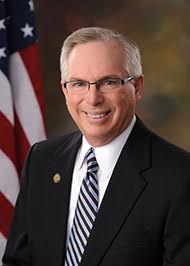
1st Dist. Congressman Tim Huelskamp, R-KS

For more than one hundred years, Americans have paused on Memorial Day to remember and mark the sacrifice of those who gave the “last full measure of devotion.” It is about our fallen heroes – children and spouses, siblings and cousins, friends and neighbors – and their fight for our freedom.

On this Memorial Day, let’s recall that President Lincoln first tasked our nation’s Department of Veteran Affairs with the noble responsibility: “To care for him who shall have borne the battle and for his widow, and his orphan.” While many Veterans are well-served by the VA, many, many others report to me that the VA has failed them and this sacred duty.

From my key position on the House Veterans Affairs Committee, I hear and see some of the worst failures of President Obama’s VA: manipulated wait times, doctors who come in drunk, employees who participate in armed robbery and deal illegal drugs, and big bonuses for ‘leadership’ at failing VA hospitals. I grill and question top VA executives, Obama appointees, and career bureaucrats for answers – but most evade accountability, almost none are fired.

Within a culture of non-accountability, some of our best hard-working employees are never recognized, while the worst bureaucrats, those who harm our veterans or cover it up, are rarely punished. In response to this crisis, I helped pass the VA Accountability Act through the House to give the VA Secretary the authority – thus the responsibility – to remove, to fire those who harm our Veterans and pad their pockets.

Shockingly though, Senate Democrats refuse to allow a vote and have blocked accountability every step of the way. Even worse, the VA Secretary – yes, the one who just said that it doesn’t matter how long Veterans are forced to wait for life-changing care – has fought this very bill. And worst of all, the man who leads the entire VA, President Obama, has chosen to stand with these failed employees and their labor unions instead of protecting our Veterans.

This troubling culture of non-accountability is not a new problem, but to have a President and his VA Secretary attack the whistleblowers, deride Veteran complaints, and argue wait times don’t matter is frankly appalling. It is an abandonment of the promise of Lincoln. And it is unacceptable.

Rest assured, on this Memorial Day and throughout the year, I will not give up this battle for accountability, for better care and benefits for our brave Veterans. They deserve no less. They deserve so much more. And I’m bound and determined to force this Administration, and the ones to come, to make accountability central to care of America’s Veterans.

Congressman Tim Huelskamp represents the First District of Kansas and holds a key position on the House Veterans Affairs Committee. His office has helped well over 1,000 Veterans with casework, much of it relating to problems with the VA.

Copyright Eagle Radio | FCC Public Files | EEO Public File