We have a brand new updated website! Click here to check it out!

SCHROCK: China avoids education schools

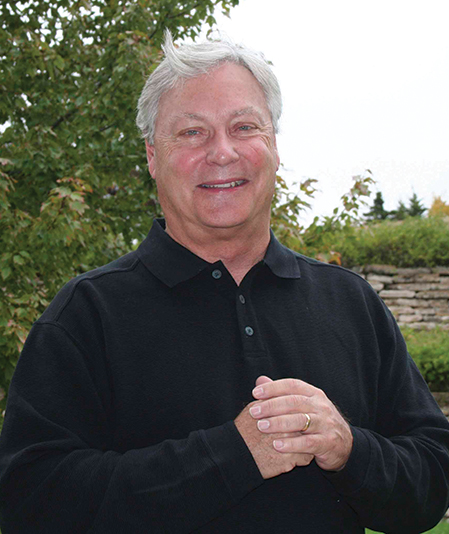
John Richard Schrock is a professor at Emporia State University.

Crossing into China on my 18th visa, this is the first time that I will not be working with teacher trainers at a Chinese normal university. Eighteen of the 26 universities I work with have “normal university” or “teacher’s college” in their name, although nearly all have become full service universities.

America dropped “normal” and “teacher” from university names in our massive expansion of American universities in the 1960’s to accommodate the “baby boom” generation. China has kept the name “normal” despite their universities also becoming full-service during their massive 16-fold university expansion beginning in 1996.

“Why did America call teacher’s colleges ‘normal’?” has been often asked and I am not sure that many American professors today would know the answer. It was derived from the French “E’cole Normale” which meant a school for teachers and had no relationship to our common usage of the word “normal.” But the education of teachers in China is nothing like “normal” American teacher training.

One major difference is that China has traditionally only required three years of college training for elementary school teachers, although some universities in the developed zones are now requiring four years. However, China teaches far more math and science in their elementary and high schools. As a result, in math and science knowledge, their high school graduates already surpass our “elementary ed” college graduates.

And except for Central China Normal University in Wuhan, China trains all of its high school teachers in the content departments. In America, the majority of high school teachers are trained in Education School programs. This is the case at the University of Kansas, Kansas State University and Wichita State University. In many of our former U.S. normal schools, represented by Fort Hays, Pittsburg and Emporia State Universities, the secondary program is also jointly overseen by the content departments. But these programs are still controlled by American accrediting agencies that require substantial and ever-changing “methods” courses. The number of credit hours in U.S. education methods can often exceed the content coursework.

Not so in China. China trains its high school teachers alongside its undergraduate students who are pursuing careers in research, industry, or professional studies. That means that in my field of biology, they receive essentially the same solid biology foundation that students receive who are pursing fish and game, pre-med, pre-dental, or other biology careers. Their professors are practicing biologists who are pursuing research in modern biology, so these teacher candidates learn up-to-date molecular biology and the full range of cutting edge anatomy, physiology, genetics, ecology, etc.

But in America, most states, similar to Kansas, go through expensive and time-wasting revisions of what “standards” we must require of our teacher training programs. Here in China, it is the constant progress of science that sets the standards. No stupid arguments over evolution or sex education or global warming. No millions of dollars spent rewriting the state of science and no professionals’ time wasted on this unending but irrelevant task of resetting “goals and outcomes,” aligning or mapping curriculum. Gravity, the Table of Chemical Elements, and human anatomy are the same worldwide. Yet the Kansas universities run by Ed Schools don’t even require their biology teachers to take anatomy and physiology!

Ed School advocates are eager to point out that some folks who are highly trained in science—perhaps straight from industry—and enter the classroom without methods training are often miserable failures. They would like you to believe that the opposite is just fine—that you can teach with Ed School training when you know absolutely nothing about the content. But any country bumpkin knows, whether in China or the United States, that you can’t teach what you don’t know.

The secondary biology teachers trained over here know a lot more science. And they do get some coursework and practice in teaching methods specific to their content department. It is nothing as expansive as the one-size-fits-all-fields, bloated and tedious busywork that is required in Ed Schools. It consists of some very practical aspects of communication and alternate ways to explain, demonstrate and test.

As a result, China has not wasted the last 40 years promoting cure-all educational fads that change every three years: individualized instruction, diagnostic instruction, open classrooms, back-to-basics, every-teacher-a-reading-teacher, every-teacher-a-special-ed-teacher, Madeline Hunter 7-step lesson plans, cooperative learning, outcomes-based education, or the current worship of all things digital.

China’s content-based teacher training has generated new generations of scientists who fill their universities and next year will surpass the United States in authorship of research in the top worldwide journals “Science” and “Nature.” And science literacy in their young general population exceeds ours.

If they don’t need education schools, why would we?

First Amendment: Without virtue, freedom fails

Charles C. Haynes is director of the Religious Freedom Center of the Newseum Institute.

Civic virtue — or the loss of civic virtue — doesn’t make the top ten list of issues pollsters ask voters to rank. But I suspect many, if not most, Americans are doing a fair amount of private handwringing these days about our collective descent into the proverbial mud.

In the brave new world of presidential politics, personal attacks, insults and ridicule are becoming the new normal. Protesters shout down candidates, partisans get into violent confrontations and users of social media create daily streams of vitriol and hate.

The easy answer, of course, is to blame Donald Trump. After all, Trump has broken every unspoken rule about how presidential candidates speak and behave (apparently a significant part of his appeal). Because Trump hurls insults, intimidates the media, mocks the disabled, the argument goes, the lid is off for the rest of us to do likewise.

But did Trump create the current climate — or did the current climate create Trump? Perhaps soul-searching about how we got to this unfortunate place should begin by asking the American people to take a good, hard look in the mirror.

After all, “we the people” give high ratings to angry radio talk show hosts, shock jocks, reality-show shouting matches and popular entertainment filled with images that demean and dehumanize others.

Of course, the loss of virtue — the inattention to character — in much of our culture is only one factor in the coarsening of our political arena. But it helps explain how an outrageous reality TV star can successfully transition to an outrageous presidential candidate aided and abetted by media outlets eager to cover demagoguery and bad behavior in pursuit of higher ratings.

If Americans continue to ignore or devalue core civic virtues such as commitment to civil discourse, respect for the rights of others, concern for the common good and compassion for those in need, our experiment in democratic freedom is doomed.

“Liberty can no more exist without virtue,” warned John Adams, “than the body can live and move without a soul.”

Absent civic virtue, ideological differences lead to censorship, as is the case on many college campuses today. Absent civic virtue, religious differences trigger anger and violence, inflicting harm on minority religious groups. Absent civic virtue, school board and city council hearings degenerate into shouting matches, tearing apart communities. In short, absent civic virtue, freedom is no longer free.

Reversing the decline in our collective commitment to civic virtue will not be easy — especially in the year of the anything-goes presidential campaign.

But if we take the long view, there is something we can do to prepare the next generation to do better: Make sure that every school teaches and models civic virtues and good character as a core part of its educational mission.

Earlier this month, while grownups were shouting past each other at the Democratic convention in Nevada, young people of strong civic character were being celebrated in Washington, DC.

At a press event on May 17, Character.org, a national organization that supports character development in schools, workplaces and communities, designated 68 schools and four districts from 15 states as National Schools and Districts of Character. (Full disclosure: I am a founding board member of Character.org.)

If you want to feel hopeful about the future of democratic freedom in America, visit a School of Character (the complete list of past and current honorees can be found at www.Character.org). From the moment you walk in the door, you can tell that this is a place where young people and adults care about one another.

In Schools of Character, students, teachers, administrators, staff and parents collaborate to create a shared commitment to core ethical values that are taught and modeled throughout the school culture. Students participate in service-learning projects, develop the skills of civil dialogue, learn to address differences with understanding and respect, and in many other ways, prepare to be engaged, ethical citizens in a democracy.

Educating for civic virtue works: In Schools of Character, bullying is rare, cheating declines, test scores go up, drop out rates are low, attendance and graduation rates are high. Isn’t that the learning environment we want for every student in every school?

Legislatures and courts alone cannot protect our fundamental freedoms, especially the freedoms protected by the First Amendment. Our freedom is ultimately sustained by the civic virtue of citizens.

“Human rights can only be assured among a virtuous people,” wrote George Washington. “The general government can never be in danger of degenerating into a monarchy, an oligarchy, an aristocracy, or any despotic or oppressive form so long as there is any virtue in the body of the people.”

Charles C. Haynes is vice president of the Newseum Institute and founding director of the Religious Freedom Center. [email protected]

INSIGHT KANSAS: Candidate filings signal change

Candidate filings for state legislative seats in Sedgwick County show cracks in the iron-clad, far-right block that has dominated state politics for the last four years. These cracks may portend fundamental change in the direction of state government.

Political party candidates have until noon this coming Wednesday, June 1, to file for a seat in the Kansas Senate or House of Representatives. All 165 legislative seats will be on the ballot in the August 2 primary and the November 8 general elections.

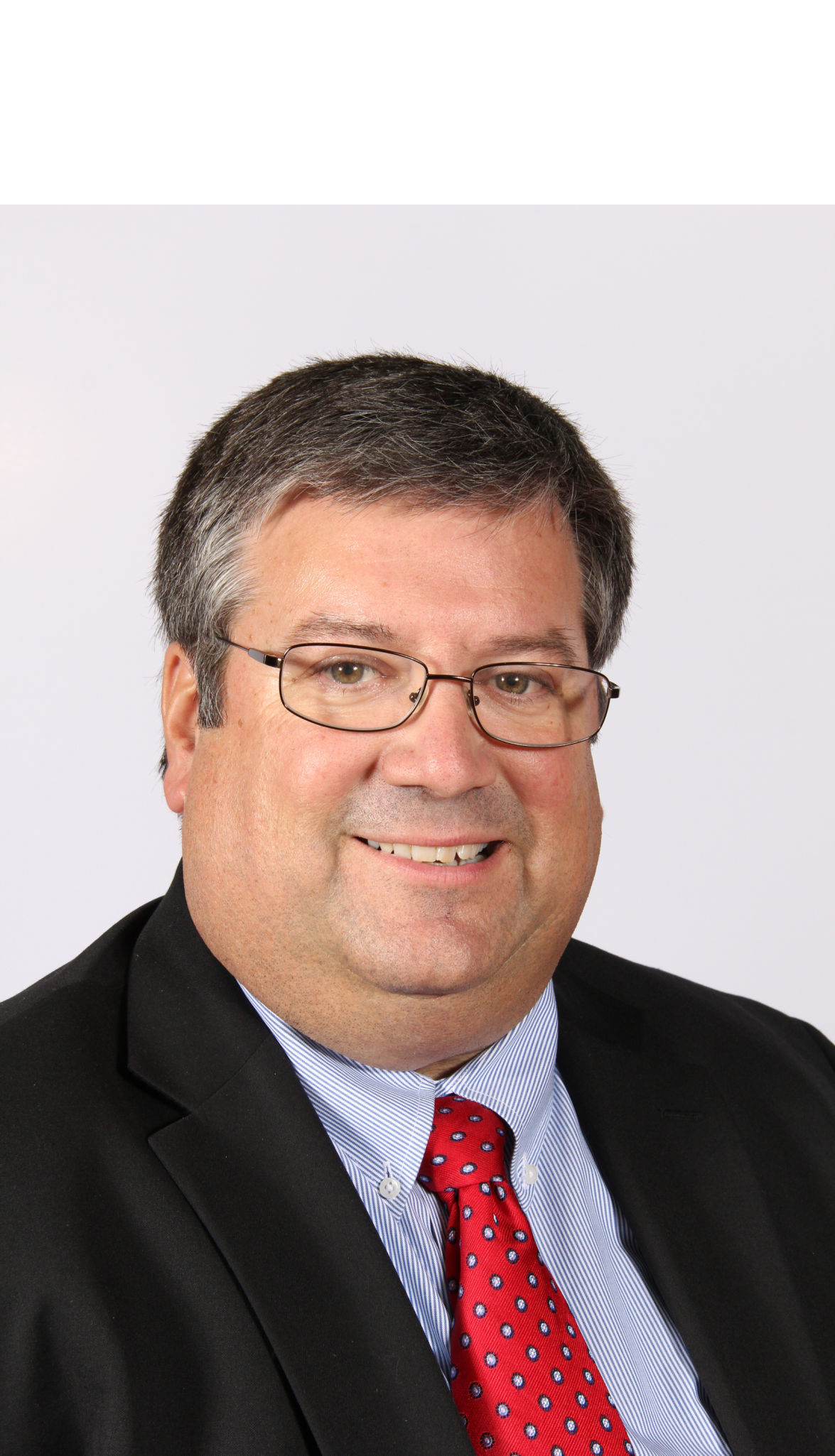
H. Edward Flentje is professor emeritus at Wichita State University.

Sedgwick County may not be a perfect bellwether in predicting state elections, but the preferences of Sedgwick County voters have been in sync with Kansas voters in electing every governor in the past seven gubernatorial elections.

Further, Sedgwick County reflects the shift in state politics in that same period. In 1991, 15 Democrats and 13 Republicans represented Sedgwick County voters in the Kansas Legislature. In the 2016 session those numbers had dramatically flipped as 23 Republicans and nine Democrats represented the county.

Except for independent Republican Senator Carolyn McGinn, 22 of these Republicans formed an ideological block tightly aligned with Governor Sam Brownback and the far right. They consistently did the bidding of the Kansas State Chamber of Commerce, earned high rankings on the scorecards of Americans for Prosperity, and yielded to the litmus tests of Kansans for Life and the Kansas State Rifle Association.

Further, 20 of the 22 voted this past legislative session to punt on the budget, that is, to adopt an unbalanced budget authorizing $100 million more in spending than available revenues. These Republicans surrendered their constitutional duty to adopt a balanced budget to the governor. Voters now know the results of the governor’s action—slashing health care for vulnerable Kansans, cutting state universities once again, delaying highway projects, and deferring pension payments.

A number of factors point to significant change. Seven far-right incumbents have announced they are not seeking reelection, leaving their seats more open to competition. The remaining Republican incumbents face the dilemma of their alliance with Brownback, a governor with the highest disapproval numbers in the nation, and their failing tax experiment that has led to unbalanced budgets, unfair tax increases, mountains of new state debt, and stagnant economic growth.

Early filings also show that Republicans unaligned with the far right and Democrats are contesting more seats than in prior elections. As of this past Thursday morning, Democrats are competing in 26 races, including 13 against incumbent Republicans. Surprisingly, six incumbent Democrats, as well two running in open seats, have no opposition at this time.

The far-right stronghold of eastern Sedgwick County may be ripe for change. In three seats, Republican primary voters will have a choice of candidates who support high-quality public schools and believe Brownback’s tax experiment is not working: Roger Elliott (87th House district) and Randy Banwart (99th House district) in open seats; and Troy Tabor challenging incumbent Ty Masterson (16th Senate district). Although these are predominantly Republican districts, Democrats are also fielding candidates: Tonya Howard in the 87th House seat, Gabriel Costilla in the 16th Senate seat, and Anabel Larumbe against incumbent Susan Wagle (30th Senate district).

The choices before Sedgwick County voters, as well as many voters across the state, are crystal clear. Do you continue to support those candidates allied with Brownback and the extreme right? Or do you opt for a change in the direction of state government?

H. Edward Flentje is professor emeritus at Wichita State University.

HAWVER: Budget manipulation will help conservatives seeking re-election

martin hawver line art

Probably because there was no immediate outroar, you got the feeling in the Statehouse that the reaction was generally good for Gov. Sam Brownback’s decision last week to sign most of the budget bill and take the state revenue shortages out of care for the state’s ill and poor.

What?

Yes, his choices were clearly to either cut funding to schools by more than $50 million in the upcoming school year or take roughly the same amount from state programs that provide health care to Kansans without insurance, without much money, and who still need medical care.

Cut spending on schools and you not only get parents of all income levels angry — and the state’s education industry more politically active in the upcoming elections in which the entire House and Senate stand for re-election — but you get the friends, neighbors and grandparents of those schoolchildren upset. And, a lot of those folks vote both in primary and general elections.

Cut spending on health care for the poor who need state assistance to maintain their health, get their children checked before they head to schools and suffer any manner of illness, and, well, those folks don’t vote in very high numbers. Many Kansans who vote probably can’t name a friend or relative who depends on Medicaid (given the catchy name KanCare in Kansas).

Now, that probably outlines pretty clearly why the governor who isn’t on the ballot this year and is unlikely to be in the future chose the health care of the poor for cuts to make the budget balance, or at least appear on paper to balance.

The Legislature, and its members who are after another term or two, can say that they defended K-12 education with their proviso in the budget bill that the governor would have had to line-item veto in order to cut funding for schools, and they won that showdown.

But there wasn’t anything specific about cutting funds for health care for the poor in the budget bill, and the governor won’t face any challenges for those cuts which he could make with his own budgetary authority and without legislative oversight.

So, while you are campaigning, you can say you’ve saved schools a roughly 4 percent reduction in funds, instead allowing without much rancor that same amount of cuts to programs for health care for the poor, who you might or might not bump into at the lottery ticket window or gas pump or garage sale or grocery store.

So at least for conservatives, mostly Republicans, though not all of them, the governor has allowed them to talk about continuing to finance schools, and if on any doorstep in the state any candidate is asked about health care for the poor, they can say, yes, they heard something about that, but they didn’t do it.

Except…of course, if someone behind the screen door wants to know why there wasn’t enough money to take care of schools and the poor, we imagine, a smart campaigner will—depending on the neighborhood—divert the discussion to low taxes or maybe to the renaming of a local highway off-ramp after a well-known constituent.

So that’s why there wasn’t a lot of talk about the governor’s signing of the budget into law. No telling which way that discussion would go, and in an election year, even Democrats and moderate Republicans are unlikely to pledge to support tax increases next session to make sure that the K-12/health care for the poor decision doesn’t crop up again.

Now, it’s just waiting for the monthly state revenue figures to roll in and we learn whether the governor has pared that health care for the poor line item enough to make it to July 1, when a whole new fiscal year opens.

Syndicated by Hawver News Co. of Topeka, Martin Hawver is publisher of Hawver’s Capitol Report. To learn more about this nonpartisan statewide political news service, visit www.hawvernews.com.

SCHLAGECK: Never forget

John Schlageck writes for the Kansas Farm Bureau.

Few experiences are more powerful or moving than a visit to a cemetery on Memorial Day. Unlike a military cemetery where rows upon rows of graves give silent testimony to the human cost of war, in most Kansas cemeteries the stories of the dead – young, old, male and female – tell a story about the community.

But like their battlefield counterparts, cemeteries that dot the Kansas countryside are the resting place for veterans. Some of these graves are filled with young men who barely reached adulthood when they died. Their stories tell of dreams unfulfilled, of promises and potentials cut short.

When visiting these places, it is possible to be overcome with a sense of yearning. It is also possible to feel something larger, a sense of finality and rest, and a sense of peace.

The soldiers from World War I, World War II, the Korean conflict, Vietnam, Desert Storm, Iraqi Freedom and Afghanistan are at rest in these cemeteries. They live on in the memory of their families and friends and, in a larger sense, in the memory and gratitude of the nation they gave their lives for. Lingering among the memories is always the nagging question: Did they die in vain?

On Memorial Day, Kansans will once again gather in cemeteries in Iola, Valley Falls, Meade, Washington, Hoisington or Grinnell to recall and reassure themselves that the lives and deaths of these young men and women had meaning.

When we think of our liberties this Memorial Day, remember that some gave all. Remember those veterans who died so we could remain free.

Only a handful of those who served in World War I remain, and the number who served in World War II dwindles daily. Vietnam veterans have reached middle age and today’s young men and women are the veterans of wars in Afghanistan and Iraq.

For many their story remains the same. They grew up as farm kids in the Midwest or some other region of our country. Those from the Midwest grew up with the feel of the prairie earth beneath their feet, the wide-open sky overhead and the rhythm of the seasons in their blood.

At an early age, most of the young men and women learned to cultivate the soil, plant crops and harvest the bounty with their parents. Like many farm boys and girls, they understood machinery and the use of tools. They developed self-reliance and initiative.

Soon, many found themselves in another field far from home. This field was a battlefield in Europe, the Far East, Vietnam or the Middle East. These veterans become the unsung heroes of war.

But these young men and women were not repairing a combine in a harvest field or operating a small business on Main Street. Instead, they were patching up a tank under enemy fire, threading their way through the jungles of Vietnam, avoiding anti-personnel mines in Iraq or keeping an eye peeled for snipers in Afghanistan.

This Memorial Day, mothers, fathers, families and friends will travel to cemeteries across Kansas and our country. Once on those hallowed grounds, they will pause to remember and pray for the young men and women who did not return from war.

The blowing of taps always brings out what Memorial Day is about. For many, coming out to a cemetery on Memorial Day somehow eases the pain and loss of loved ones.

At the same time let’s give thanks and remember those veterans who are still with us. Let’s not forget those serving around the world today in the armed forces.

John Schlageck, a Hoxie native, is a leading commentator on agriculture and rural Kansas.

Exploring Kan. Outdoors: Cowboy church and trapping conventions

BullCityBlack500x125 (1)

A while back, I told you about our adventure watching the prairie chickens southeast of Winfield with our hosts Bob and Margaret Massey who operate 4M Ministries.

After losing a son in a tragic farm accident in 1972, Bob and Margaret sensed God telling them to use their home, their ranch and their unique style of down-home hospitality to help meet special needs of people around them. 4M Ministries was founded and over the years the Massey ranch has been a Christian boys ranch, and a temporary haven for abused wives and their children and for missionaries awaiting reassignment, among other things.

Steve Gilliland
Steve Gilliland

Since 4M Ministries is smack in the middle of ranching country, they have long felt the need for a Saturday evening cowboy church to provide a worship opportunity for cowboys and ranchers who have cattle to care for on Sunday morning. They are happy to announce the first cowboy church service at the Heritage Center there at Mark Massey Memorial Ministry (4M Ministries) will be Saturday evening May 28 at 7 PM. There will be singing, a short message by Dane Massey (one of two sons who are full time pastors) and cookies and refreshments afterward. This will be true cowboy church held in true cowboy country. Margaret told me “Boots are expected and cow manure is accepted!”

• • •

Now you may think it’s a bit early to be talking about trapping, which is by nature a fall and winter sport, but to die-hard trappers it’s never too early to talk trapping. Most states have their own state trapping associations which hold annual rendezvous each year in their respective states.

There are also two national trapping associations that have their annual conventions at different locations around the country each year. This July 7, 8 and 9, the Fur Takers of America (FTA) will hold their annual rendezvous at the Douglas County Fairgrounds, 2100 Harper Rd, Lawrence, KS. There will be trapping supply companies from all over America, as well as a full slate of trapping demonstrations each day presented by nationally renowned trappers from across the country. These will be the guys and gals that write the trapping books and make the trapping videos!

This event is being sponsored by our own Kansas Fur Harvesters Association and is a big deal for our state. Even if you don’t trap but are interested in hunting, fishing and the outdoors, this event is something you should experience.

Check out the FTA website for more details at www.furtakersofamerica.com.

• • •

For my fishing buddies, good-natured ribbing is always part of the fishing trip, so to end this week’s column I’ve come up with a few zingers targeting those of us who maybe shouldn’t be fishermen.

If choosing what to wear on the boat each day makes you more emotional than landing a 4 pound walleye, you probably shouldn’t be a fisherman.

If it upsets you greatly when the color of the lure your using clashes with the color of your reel, you probably shouldn’t be a fisherman.

If you feel the need to eulogize every night crawler you thread on a hook, you probably shouldn’t be a fisherman.

And finally, if you think “trolling” has something to do with ugly, wart-covered beasts that live under bridges, you probably should not be a fisherman…Continue to Explore Kansas Outdoors!

Steve Gilliland, Inman, can be contacted by email at [email protected].

BullCityBlack500x125 (1)

KNOLL: I’ve got feelings

Les Knoll
Les Knoll

How often have we heard “sticks and stones can break my bones, but words will never hurt me.”

OK, voters, ladies especially, so the GOP presidential nominee Donald Trump said some things that hurt people’s feelings. Big deal — and that’s not to say I approve of his crude and off-the-wall remarks.

What is a big deal and what can really hurt is not having the money to put food on the table.

Let me get this straight. Some people are going to vote for Hillary because Trump said some things they didn’t like?

Let me get this straight. Hillary’s husband assaulted some women, then Hillary tried to destroy the women, but Hillary is better than Trump?

What about all the good things Trump has said such as creating jobs, taking out ISIS, closing the borders, etc.? Of course, those are just words but the real hurt to all of us will be if we don’t turn around this economy, get people back into the labor force with job creation, getting the excessive number of people off food stamps, and getting more people out of poverty, all of which has been caused by liberal socialist Obama policies.

I will take my chances with Trump who could potentially turn this country around. The other frontrunner won’t. Not a chance Hillary will do that. When Obama leaves office, he will live in Washington and make sure Hillary continues down the same path as he did when leaving office.

Action speaks louder than words. There’s a long history of abysmal behavior with Hillary in our government especially as Secretary of State and her private email server.

Trump has yet to show what he can do. Facts, logic, reality and common sense clearly shows going the other way with Hillary will literally hurt all of us – man, woman, and child.

Les Knoll lives in Victoria and Gilbert, Ariz.

INSIGHT KANSAS: Brownback and the politics of delusion

Is Governor Sam Brownback delusional? Seriously.

I’ve had numerous recent conversations, with reporters, editors, and various politicos, that have directly addressed the question of whether Governor Sam Brownback is delusional in clinging to policies that (a) do not work and (b) damage the state in myriad ways.

Burdett Loomis
Burdett Loomis

Let’s start with one formal definition of delusional: “Maintaining fixed false beliefs, even when confronted with facts.”

“Delusional” is a strong word, but it’s in the air, propelled in part by Donald Trump. But his delusions are fleeting, quirky, and – so far – innocuous.

Brownback is a different story. Still, one might object to labeling the governor delusional. But that discussion is already taking place, and not just in private conversations. Indeed, a Google search for “Brownback delusional” obtains almost 100,000 hits. Not quite “Trump delusional” with its 500,000-plus links, but a lot.

The examples of arguably delusional behavior are legion (Brownback as presidential candidate?), but most revolve around the state of our economy and the impact of the 2012 tax cuts in both stimulating growth and reducing income taxes to zero.

While some of governor’s legislative allies assiduously spin the facts of Kansas revenues, for Brownback and his enablers, such as the Kansas Policy Institute, spin has lurched into delusion.

At the start of the 2016 legislative session the governor flatly stated, “The tax plan is working. I hope we don’t have a tax policy debate during this legislative session.” In other words, don’t even think about increasing revenues in the face of immense shortfalls.

By virtually all accounts, in January, 2016, the tax plan was not working. In terms of revenues, income tax reductions had proven a huge failure. As former GOP governor Mike Hayden recently observed, Brownback’s myopic partisanship has driven Kansas into a “financial ditch.”

Of course, when in a ditch, the first, most rational action is to stop digging.

Notably, that’s just what Oklahoma is doing, as Republican Governor Mary Fallin and many of her fellow partisans in the legislature have addressed a fiscal crisis by embracing the federal Medicaid funding that they had previously rejected. This constitutes reality-based thinking.

Back in Kansas, however, delusion rules. We can’t adopt a privatized Medicaid scheme, because it might, somewhere down the road, cost the state a few bucks. So what have we done? Raise taxes on the poor.

Only a substantial 2015 sales tax increase kept revenues from plummeting even more disastrously. Moreover, our sales tax on food has reached historic highs, often topping nine percent in many localities, driving many Kansas shoppers to Missouri.

Brownback’s reaction? Echoing his infamous 2014 campaign line, “the sun is shining in Kansas,” he responded to recent declines in revenue estimates and actual receipts by claiming, “This is an economic problem, not a tax policy problem.” Nonsense. Kansas remains mired near the bottom of regional economies and below the national average, largely because its declining revenues have necessitated extensive, brutal cuts, most recently amounting to almost $100 million.

Medicaid reductions alone will amount to more than $57 million, which will trigger federal reductions of $72 million. The administration claims that recipients will not lose access to care. Losing $72 million of federal funds is stupid. Asserting that $129 million in cuts won’t reduce access is simply delusional.

And this is just the tip of the iceberg. For example, declining Kansas welfare numbers are labeled a great success, while in reality various rules have likely driven many families off welfare. In Orwellian fashion, the failure to serve the poor is seen as a victory.

Sadly, for Sam Brownback and the state of Kansas, delusion reigns as the order of the day.

Burdett Loomis is a political science professor at the University of Kansas.

SCHLAGECK: The farm and ranch community

John Schlageck writes for the Kansas Farm Bureau.

A century ago when this state consisted mainly of farm and ranch families, it was a common sight to see neighbors helping neighbors. They swapped farm machinery. They loaned labor back and forth to work harvest thrashing crews. A barn raising presented another opportunity for friends to help build and support the community.

Kansans have always been an active bunch. Citizens of this state have always believed they can, “Get the job done.”

Today, Kansas farmers and ranchers do their barn raising by supporting those in need across the state. A recent example is the monster wildfire that burned more than 500,000 acres of grassland in Barber and Comanche counties.

While farmers and ranchers in these counties continue to look to better times and a renewed commitment to their farm and ranch operations, they marvel at the overwhelming support they’ve received from people across Kansas and neighboring states.

In addition to encouragement and well wishes, hay and fencing equipment has arrived by the semi loads. Volunteers have offered their support and help as well.

With natural disasters there has always been a tremendous outpouring of neighbors helping neighbors. Such action warms the soul.

But this is not a new or recent phenomenon. Since Kansas was settled, farmers and ranchers have supported their communities. They’ve always appreciated main streets that are bright, clean and well maintained. They’ve actively participated in the school system, served on the county planning board, taught Sunday school and worked with other community organizations and activities. Farmers and ranchers have been part of the fabric that has made Kansas the viable state it is today.

Some people have the mistaken belief that government can control the economy and provide a better life for its citizens. This is unrealistic, and in the case of Kansas, unnecessary. Both for theoretical and practical reasons, governments are unable to control the economy or create jobs.

Kansans know this. Our communities have never stood idly by and waited for the federal government to care for them. Instead they form alliances to tackle community issues, foster business development and ensure an environment where they will continue to grow.

Still, with the number of farm families dwindling each year, it is not enough for rural Kansas communities to have and follow a strategic plan for economic development. Such communities must not forget they need institutions that bring farmers into the communities on a regular basis.

This means places where rural and townsfolk can gather. This means a place where they can talk about mutual interests – children, the high school football team, the remodeled library – just about anything that relates to the welfare and well-being of the area.

Restaurants, grocery stores, a church, active participation in the school system and involvement in farm and community organizations are all ways to rekindle interest.

Vibrant communities thrive and grow when farmers participate in their towns or become actively involved in local affairs. Farmers, ranchers and businesses remain the key to growth and vitality in any rural area.

Agriculture has always been the crucial ingredient driving the economic machinery of our state.  Kansans are proud of the leadership our agricultural community provides. Working together in rural and urban areas, with progressive community leadership, we can improve our standard of living and the quality of life in Kansas.

John Schlageck, a Hoxie native, is a leading commentator on agriculture and rural Kansas.

COLUMN: Katt bids farewell to Hays USD 489

USD 489 Superintendent Dean Katt

Being the Superintendent of USD 489 since September 2013 has given me so many wonderful memories to take with me as I retire from Kansas. It was a difficult decision to make because I have enjoyed the community of Hays and working with exceptionally talented colleagues.

I am proud of the accomplishments the district and students have made over the past three years. There is something truly special about the students of USD 489. The students continue to perform over the state standards for academic testing. We have seen the HHS journalism team repeat in state titles, DECA competing at the national level, outstanding performances from all of the students that participate in music and visual arts programs, incredible performances from all of the USD 489 athletes, too many National Honor’s Society students to mention individually, FFA placing at the national level, the HHS News Team taking home state accolades, two Hays Middle School students qualifying for the National Social Studies Bee, and a Hays Middle School student winning an international award for the Lion’s Club Peace Poster Contest. This list could go on and on, but these few accomplishments attest to the talent that lives and breathes in Hays.

At the heart of the accomplishments of all of our exceptional students lies the heart and soul of USD 489, the staff. Whether it is the amazing teachers and para-educators that take the extra time to give individual attention to our students, , nurses, counselors, OT/PT staff, and psychologists for keeping students mentally and physically healthy, administration for providing positive leadership, clerical staff for helping the buildings run efficiently, nutrition services staff for feeding students and staff, or the transportation department for ensuring the students make it to school safely, or the hard-working custodial and maintenance staff for keeping the aging facilities in order, it is no wonder our students are so successful. Every staff member in the district can take pride in knowing that they individually make a difference for all of our students.

It has been my pleasure to participate in the Hays Rotary Club and the Hays Chamber of Commerce. Our local organizations are a great part of what makes Hays such a great place to live. The next superintendent will be lucky to be a part of this wonderful community.
As I reflect on all of the positive things that have happened over the past three years, I am thankful for the opportunity to see the bond issue election through on June 7th. The Facility Needs Committee, bond issue campaign volunteers, board of education, and countless staff members have toiled to provide the plan for continued success in all of our USD 489 schools. With facilities that have survived for 90+ years, the youngest being Hays High School, now 37 years old, it is hard to not notice that the bond issue would allow the district to thrive for the next 30 – 40 years.

We currently only have one school in the district with an engineered storm shelter at Hays Middle School. Safe and secure entrances do not exist at any of our buildings. Due to budget constraints, the district has not been able to keep up with deferred maintenance.

As I ready to move into my next chapter in life, I can think of no greater legacy than to have these improvements addressed in all of our Hays USD 489 schools. Early voting for the bond issue election begins on May 19th and will run through June 6th at noon. You can contact the Ellis County Clerk’s office at 785-628-9410 or visit 718 Main Street, Hays, to request the option to vote early. The polls will be open on June 7th from 7 am to 7 pm. Voters who reside in the Hays city limits will vote at the American Legion, 1305 Canterbury. District voters who reside outside of city limits will vote at St. Nicholas of Myra Parish at 2901 E. 13th Street. Hays City voters will vote on the following questions:

1.) $85,135,000 for deferred maintenance, construction of storm shelters at all schools (excluding Hays Middle School), installation of safe and secure entrances, and renovations/additions to district facilities

2.) $8,900,000 for the construction of gymnasiums at Hays Middle School and Hays High School

3.) A half-cent city sales tax that would be in place for ten years that would start at the sunset of the current county half-cent sales tax set to expire in 2018. This sales tax would help pay for the bond issue and reduce the impact on the mill levy.

District voters residing outside of city limits will vote for questions 1 and 2.
Please be sure to vote early or on June 7th. The future of Hays rests in your decision. Please consider the safety and security of all of the Hays students when you vote.
Thank you for the opportunity to serve as your superintendent of schools for the past three years. There is no other job I have enjoyed more than Hays. I wish all of the staff and board well and am confident that Hays will continue to achieve well and set a positive example for all school districts in Kansas.

Dean Katt, Hays USD 489 superintendent

RAJHES REPORT: May 16

Rep. Ken Rahjes, R-Agra, 110th Dist.

Greetings from Agra!

Before we continue our review of this past legislative session, I would like to take a moment and congratulate the district graduates from high school, universities, community colleges and technical schools. It is the beginning of a new chapter in their lives and I look forward to watching their careers take off.
One of the sub-themes in this year’s session was Transparency.

There were a couple of bills which will bring more activity to light when it comes to state government actions. SB 128 provides new transparency for the judicial branch in three separate areas. First, it opens up the names of the lawyers who select the Supreme Court Nominating Commission to the public, similar to public voting rolls. Second, it makes the Supreme Court Nominating commission meetings open to the public under the Kansas Open Meetings Act. Third, it makes the names of applicants who apply for the Court of Appeals discoverable under the Kansas Open Records Act. And, SB 22 modernizes the Kansas Open Records Act to include any recorded information made in conjunction with a public employee’s official duties, regardless of location of the information. I voted for both of these bills.

Another big issue this year was reforming the budget process.

The House passed HB 2739, which would improve the function of state government on a long-term basis by overhauling the way the state budget is constructed. Beginning next year, state agencies would provide legislative budget committees with complete program service inventories, with information such as: program function, program history, intersections with other state programs, federal funding and associated requirements, how much of a priority it is to the agency? consequences of not funding the program and statutory authority.

In the coming years, state agencies will realign their budgets with commonly accepted accounting practices. The new system will improve program transparency and accountability by putting all relevant information into one location, which allows for the comparison of program effectiveness and outcomes.

Every agency function will need to be justified instead of continuing to be funded simply because “it has always been done this way.” In this way, we are committed to ensuring every taxpayer dollar is used wisely in service of the people of Kansas. I also voted for this bill.

You still have time to send back my survey to voice your opinions on a number of issues. If you did not receive one, let me know and I will send one to you. Here are a few ways to reach me: Email: [email protected] or [email protected] ; Write 1798 E 900 Rd, Agra, KS 67621; Phone: (785) 302-8416.

Thank you for the honor of serving you as your State Representative in Topeka.

Ken Rahjes, R-Agra, is the state representative for the 110th District.

HAWVER: Kan. budget crisis leads to tense week in Topeka

martin hawver line art

By midweek, we’ll know just what Gov. Sam Brownback intends to do in the way of a budget to get Kansas through this fiscal year and at least make it appear on paper that the Legislature has appropriated enough money for the state to do its business next year.

Some legislators are fearful that the governor will line-item veto the most politically important provision in the budget bill that he has until mid-week to sign.

It’s a provision that says simply that the governor can’t reduce the amount of general state aid to school districts this fiscal year or next. Those reductions in appropriated funds—they call them “allotments” in the Statehouse—would make it relatively simple to give most state agencies a financial haircut and wind up this and next fiscal year with a balance in the budget, the constitutional bright yellow line in a legal budget.

Now, that provision in the budget bill is probably the best part of it for the lawmakers who passed the bill to the governor on a vote of 63-59 in the House and, after about an hour’s discreet lobbying, the Senate 22-18.

That provision that prevents the governor from dipping into K-12 funds is the one part of the bill that makes cuts to agency budgets that allows legislators seeking re-election to maintain that they protected the basic state appropriation to the state’s 278 public school districts.

That protection of school funds — if the governor allows it to become law by not line-item vetoing it — makes schools about the only state business that isn’t trimmed and clipped by the budget. On the campaign trail, for the vast majority of lawmakers this session, that “prevent the governor from cutting K-12 money” proviso will be the equivalent of telling constituents that they pulled a child out of the burning barn.

Now, the reason for the funds shortage isn’t hard to remember, those 2012 income tax cuts that slashed revenues to the state’s coffers and required last year’s record tax increase measure, the one that raised the sales tax, slashed income tax deductions (like home mortgage interest and property taxes) and even sent smokers out onto the porch with cigarettes that cost 2.5 cents more per smoke due to a 50-cent a pack tax hike.

***

Oh, and while some lawmakers believe that schools should share funds cuts like every other state adventure, the Kansas Supreme Court warned lawmakers in general — though we suspect it was aimed at Brownback — that while lawmakers attempted to make two aspects of school finance dealing with Local Option Budgets and capital outlay funds equitable, the other two branches of government shouldn’t cut into that base state aid that the proviso deals with.

***

So, it’s this week that legislators are awaiting action on that final budget bill, and what if anything the governor intends to do with it, and just what, if the governor leaves that proviso in place, he intends to cut in virtually other state agency to protect that school aid.

And, recall, the Supreme Court hasn’t determined just how much money the state ought to spend to provide an adequate education for all schoolchildren in Kansas. That amount — “adequacy” is a different topic than “equity” — is also based on 20-year-old study that defined what a private consulting company believed then was necessary to adequately and equitably finance public education.

See why there is some tension in the halls of the Statehouse? And, are you wondering whether the Legislature will allow the governor to veto the proviso, or wonder just what else gets cut if there is a veto and lawmakers override it?

That’s what this week is all about, and whatever happens probably will tell us whether lawmakers adjourn the 2016 session in an hour or two on June 1, or whether they hang around for another week…or so…

Syndicated by Hawver News Co. of Topeka, Martin Hawver is publisher of Hawver’s Capitol Report. To learn more about this nonpartisan statewide political news service, visit www.hawvernews.com.

Copyright Eagle Radio | FCC Public Files | EEO Public File