We have a brand new updated website! Click here to check it out!

Exploring Kansas Outdoors: PULL!

BullCityBlack500x125 (1)

The word of the day seemed to be “pull,” and each time it was uttered, gunfire echoed through the trees, welcoming us all to the McPherson Valley Uplands First Annual Sporting Clay Shoot at the McPherson Valley Uplands Outdoor Life Center 5 miles west of McPherson.

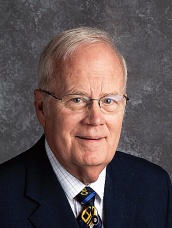
Steve Gilliland
Steve Gilliland

The facility sits on 50 acres leased from the NCRA Refinery and is operated by the Pheasants Forever McPherson Area Chapter #510 to provide outdoor activities and education to all area residents, especially kids.

Sporting clay shooting began as a European sport and was introduced here in the U.S. in the early 1980s. Unlike trap and skeet shooting, sporting clays are shot on a course where shooters move from station to station, shooting clay pigeons thrown from automatic throwers set up to emulate real world shooting conditions encountered on an actual hunt.

The course was designed, set-up and maintained by renowned sporting clay course designer Dennis Linden from McPherson. Linden owns a local electrical business and as a competitive sporting clay shooter years ago, had his own practice course. Although he no longer competes, he designs and builds sporting clay courses all across the country, most permanent, but some only temporary like the course today.

Today’s course consisted of ten stations scattered through the woods and around the pond at the Outdoor Life Center, each with two throwers. Groups of four or five shooters moved through the stations, shooting ten clays from each. The throwers were remotely controlled by one group member while the rest of the group shot. Clays were thrown at different heights and from different angles; one came clear from the other side of the pond and a couple even skimmed just inches above the ground simulating a running rabbit. At three stations both targets were even thrown simultaneously.

Kansas State Senator Rick Wilborn from McPherson shot in the first group. Wilborn is an enthusiastic outdoorsman, and when asked why he was shooting today he told me “I’ve been an avid sporting clays shooter since the sport came to the U.S. and I wanted to come out and shoot today to support what the Uplands Center is doing here, especially for our youth.”

I also found the team consisting of JC Saunders, his wife Susan, their eleven year old daughter Samantha, thirteen year old daughter Jessica and their friend, fourteen year old Logan Oborny, all from Lehigh, Kansas. JC taught Susan to shoot before they were married, and today they are the instructors for the shotgun portion of the Marion County 4H shooting sports program. The family shoots together at least a couple times a month, sometimes competitively, and the whole family hunts deer, turkeys, pheasants and quail. When I asked the kids why they would rather be here today than home doing something else, they all replied in unison “Because we get to be outdoors and shoot guns!”

The fees from today’s sporting clay shoot all go to support a program there at the Uplands Family Life Center known as “third Thursday,” where kids of all ages and their parents are invited out the third Thursday evening of the month, May – August, from 6-8 PM to a FREE supervised shooting event, where each kid is coached in shooting BB and pellet guns, .22 rifles, shotguns, bows and even slingshots, and the hotdogs and chips are also FREE.

This is how God’s Creation and HIS outdoors are meant to be enjoyed, so check out the website at www.mcphersonvalleyuplands.org and visit the Uplands Family Life Center as you continue to Explore Kansas Outdoors.

Steve Gilliland, Inman, can be contacted by email at [email protected].
BullCityBlack500x125 (1)

INSIGHT KANSAS: Generation X-ed Out

In the political arena, my generation just keeps dropping the ball.

Normally, people in their 40s would be expected to hit our stride: making major career moves, showing a little maturity, watching the kids get older, starting to think about what mark we want to leave on this world—and hoping it is good.

For those of us born in the 1960s and ‘70s, though, something has gone terribly awry.

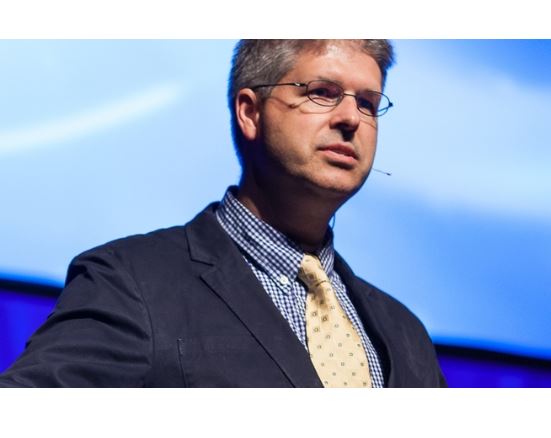
Michael A. Smith is a Professor of Political Science at Emporia State University.

In the presidential race, Democrats have passed us up entirely, as 68-year-old Hillary Clinton faces off against 74-year-old Bernie Sanders for the nomination.If elected, Clinton would tie Ronald Reagan as the oldest President.Sanders would easily break Reagan’s record.Republican Donald Trump (age 69) recently finished off Gen X-er Ted Cruz (b. 1970), who in turn seems to be universally disliked by nearly everyone who ever tried to work with him. Hope still remains for U.S. House Speaker Paul Ryan (b. 1970), who recently, and rightly apologized for the disparaging remarks he has made about the poor; now his challenge is to follow up his words with actions.

Here in Kansas, we “Xers” are not doing much better.Few of our legislative leaders are in their 40s.One exception is Senate Vice-President Jeff King (b. 1975) (R-Independence), who recently announced he is not seeking re-election, complaining that our political system makes it too hard to enact sweeping changes.

Forty-somethings in state politics also include Attorney General Derek Schmidt (b. 1968), once a rising star among moderate Republicans.Typically, the Attorney General is considered the second-most-powerful position behind the governor, but Schmidt ceded this role to Secretary of State Kris Kobach.In turn, Kobach successfully promoted legislation allowing his office to prosecute voter fraud, a task for which that office is not well-suited.Such fraud is very rare, and its prosecution would traditionally be handled by Schmidt’s office and federal authorities.Schmidt did nothing to fight this power shift.The guardian of the state’s legal system, Schmidt also says nothing when Governor tries to unseat judges that do not rule his way, nor did he defend Kansas’ merit system of selecting judges when it came under political attack.The AG’s office may still competently-handle lower-profile, yet important cases, which is crucial.However, in his more public duties, Schmidt can only be called a disappointment.He may seek the governorship, but first must figure out what he believes.

Another likely aspirant is Kobach himself (b. 1966), who once suggested that President Obama may pardon all African-Americans in prison prior to leaving office—can anyone say race-baiting?—and who continues to insist on the need for laws that have purged over 30,000 people from the state’s voter rolls in order to stop voter fraud that does not exist.Enough said.

Can either Schmidt or Kobach be stopped by Rep. Paul Davis (b. 1972) (D-Lawrence)?When opposing Governor Brownback in 2014, Davis avoided demagoguery, but he did show a certain timidity.If he tries again, Davis is going to have to move beyond defining issues in terms of certain interest groups and blocs of voters, and sketch out a vision of Kansas starkly different from the mess that will be left to the next governor. He is going to have to inspire Kansans to rebuild a broken state.This will take a lot more than a cautious campaign designed by professional consultants with computerized voter databases.It is going to take leadership.Is Generation X up to the task?

We Gen Xers are entering the second half of life, and it is time to start thinking about what we will someday leave behind.Right now, it is not looking so good. There is still time for late bloomers, but Kansas cannot wait forever.

Michael A. Smith is a Professor of Political Science at Emporia State University.

SELZER: Most teen driving fatalities happen during summer

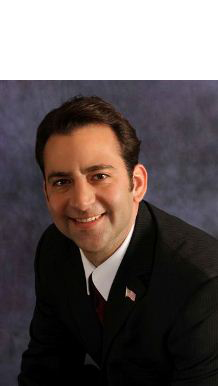
Ken Selzer, Kansas Insurance Commissioner

Schools around Kansas will soon finish the spring semester, and that means young drivers will be on the roads more, traveling to jobs, social events and recreational activities. Unfortunately, more teenage motor vehicle fatalities happen in summer than any other time of year.

While teen driving statistics are troubling, research shows teens whose parents set rules are half as likely to get in an accident. The National Association of Insurance Commissioners (NAIC), of which the Kansas Insurance Department is a member, has compiled tips for parents and teens to make driving safer and more economical this summer.

Setting Expectations
Distracted driving, especially texting and driving; speeding; and drug/alcohol use are major contributors to teen-related vehicle crashes. One way to help your teens become safer drivers is to talk openly about your expectations when they are behind the wheel. Here are some discussion items.

  • Set a driving curfew. More than 40 percent of teen auto deaths occur between 9 p.m. and 6 a.m.
    Put a limit on the number of passengers allowed in your teen’s car. For teenagers, the relative risk of a fatal crash increases as the number of passengers increases.
  • Make the smartphone off limits while driving. Talking or texting can double the likelihood of an accident.
  • Encourage your teen to exercise his or her rights as a passenger. Only 44 percent of teens say they would speak up if someone were driving in a way that scared them.

Keeping Costs Down
Parents know, too, that vehicle insurance for teenagers is expensive. That’s why it pays to follow some useful advice from insurance experts in making sure you can keep premium costs as low as possible. Here are some of them.

  • Encourage teen drivers to keep their driving records free of accidents and moving violations for at least three years. Many companies grant discounts to “safe drivers.”
  • Enroll new drivers in defensive driving courses. Some companies offer discounts for completion.
    Some companies may offer driver awareness programs, either online or with a smartphone app for young drivers. Ask your insurance agent or company if there is a discount for using these programs.
  • Encourage teen drivers to keep their grades up. Many insurance companies offer discounts or preferred rates for teens at particular Grade Point Average levels.
  • Ask your insurance company about an “accident forgiveness” clause that guarantees premiums will not increase after one minor accident.
  • Consider a higher deductible and only allowing the teen to drive the family’s oldest, least expensive car. The type of vehicle also will affect the policy premium. SUVs, convertibles and performance vehicles typically cost more to insure than other cars.

While education and preparation can help, accidents still happen. If you or your teen are involved in one, make sure you know what steps to take to stay safe and protect your identity when exchanging information for a claim. The NAIC’s free WreckCheck app for smartphones guides users through what to do — and not do — after an accident. It helps drivers collect necessary information on the spot, then immediately emails a report to your home and your insurance agent.

For more teen driving tips and resources, check our Kansas Insurance Department’s booklet “Auto Insurance and Shopper’s Guide,” which you can print from our website, www.ksinsurance.org. Also, check out our YouTube video “Teens and Safe Driving.”

Staying safe on the road just makes good sense.

Ken Selzer, CPA, is the Kansas Commissioner of Insurance.

PORTER: Exploring the deceptions of Kan. school funding

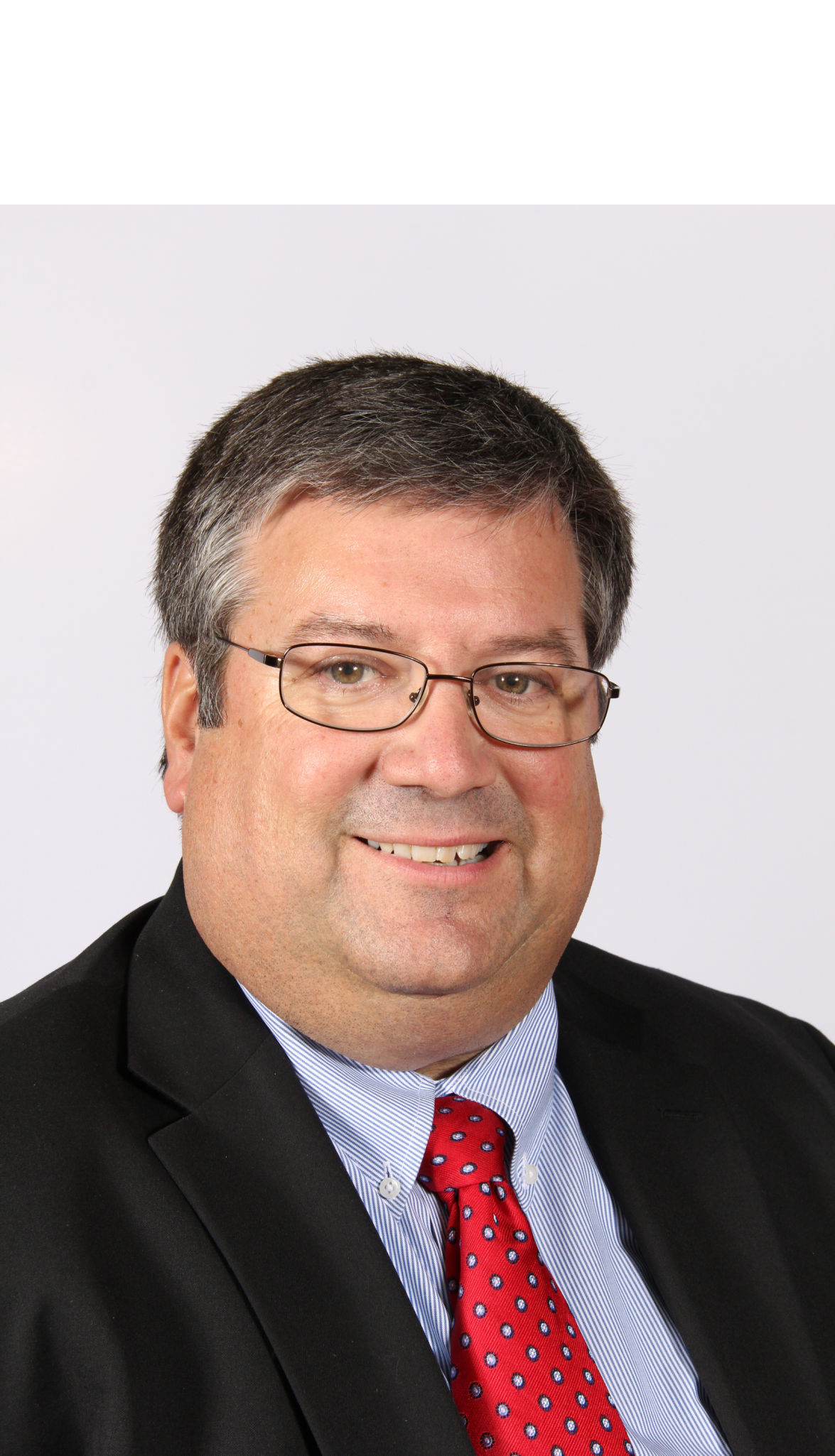
Jim Porter
Jim Porter

By JIM PORTER
Kansas State Board of Education, District 9

We are consistently hearing from those political leaders who are resisting what many of us consider to be the adequate funding of education that schools are receiving more state support than ever and that support is increasing every year. Typically they say that people need to know the facts.

Well, that is part of the story and although not a false statement it is certainly deceptive. I will make an attempt to explain the part of the story that they are not telling.

Deception #1 – Special Education Services in many cases are provided by Cooperatives or Interlocals. Schools contract with these groups to provide quality services collectively that would be very difficult to provide individually. This is a very efficient way to provide those services. Until recently special education funds were sent directly to the Cooperative or Interlocal. However, a few years ago those funds were sent to the local public school and the school then sent those funds to the provider of services. This was lauded as in increase in public school funding when; in fact, it was the same amount but just laundered through the public schools. It did increase the budget of the public school but provided no additional funds to that district.

Deception #2 – Until recently the state contribution to the Kansas Public Employees Retirement System (KPERS) was sent directly to KPERS. Now the funds are transferred to the public school account and then transferred to KPERS on the same day. Again, this was lauded as an increase to public school funding even though it was the same amount of money with just an additional transfer from the State of Kansas to the school to KEPRS.

Deception #3 – Until this year when we paid our property taxes to our counties the county sent the schools portion of those taxes to the proper school district. Now those funds are sent to the State and the state then sends those funds to the school. This looks like a tremendous increase in state funding for schools when, in fact, it is just a redistribution of funds from local to state.

These three deceptions amount to hundreds of millions of dollars that are being advertised as increases in school funding when they are only reclassifications of funds that were already being spent.

Some of our political leaders and proud of the fact that a benefit of the block grant is the schools will receive the same amount as they have in the past. However, because of inconsistent support for the past several years many schools are having to use fund balances to meet current needs. Those schools that do not have fund balances have to make cuts in services to kids to survive. Spending fund balances is like an individual using their savings account on their monthly expenses. Pretty soon the savings account is empty and the obligations continue. School districts are criticized for having fund balances but of the uncertainly of state support, which has become an increasing problem over the past few years, having those fund balances has become necessary for survival.

Keeping funding level sounds to some like a positive step, however, even though revenue may be level, expenses are not. Areas of increased expenses where school have no option include: Increased cost of insurance (property and casualty, health, etc.), supplies, utilities, increase in number of students, increase and severity of students with special needs among many others. If revenue remains level and costs increase the only option is to reduce services to children. Many schools have already reduced the school year, summer school, activities, elective options, field trips and other enrichment activities along with increasing class sizes among other things, and without additional support these reductions will continue to the determent to the school children of Kansas.

Another deceptive statement is that Kansas has many thousand new businesses. With the current tax structure allowing many business to avoid Kansas Income tax completely I would like to propose an alternative theory. Thousands of Kansas businesses have changed their status so that they qualify under the tax plan and do not have to pay taxes. Those existing Kansas businesses are listed as new businesses even though they have just changed their status. The prediction was that there would be about 190,000 businesses in Kansas who would qualify for the income tax exemption; however, the real number is more like 330,000.

To make up the difference the tax burden is being placed on the property owner and the consumer. Sales taxes have increased. Sales tax is the most regressive tax available as the lower the income the larger percentage of income goes to pay the sales tax. Political subdivisions like cities, counties, school districts, etc. are having to respond in two ways. One is to continue to reduce valuable services and the other is to raise the mill levy. When you receive your tax statement and find that it has increased, that increase is made necessary because 330,000 businesses are getting a pass on the backs of property owners and consumers.

I would urge those political leaders who are bragging about the fact that the “Sun is shining in Kansas” to stop deceptive language and tell the whole story. There are many great things about living in Kansas but our citizens deserve to know the whole story.

STRONG TOWNS: Hays, one year later

CHUCK MAROHN cu
Chuck Marohn

One year ago, I gave a Curbside Chat in Hays,which kickstarted an ongoing conversation in Hays.

We are seeing real impacts as a result of the Strong Towns message, and the willingness of people in Hays to look critically at their growth and revenue issues.

a stonger haysToday we’re sharing a document created by Hays’ government called “A Stronger Hays.”

This short, readable document clearly illustrates the problems they face from a Strong Towns angle, as well as some potential solutions. We think you’ll find it useful.

We provide these resources for you–free of charge–because we know you’re out there working to build strong towns. If you like what we do, consider supporting this movement by becoming a member today.

Chuck Marohn is the Founder and President of Strong Towns.

Exploring Kansas Outdoors: The saga of Carl and Walter

BullCityBlack500x125 (1)

The boats high-tech gear locked us onto a spot where the walleyes began biting like crazy. The water was so rough that every couple minutes a wave broke over the bough, creating a constant stream of lake water down the middle of the boat toward the drain beneath, forcing us to run the bilge pump every five minutes.

The boat’s owner and captain, who is as experienced a fisherman and boater as anyone I know muttered numerous times “I don’t know if it’s going to work for us to be out here!”… And then along came Carl; let me explain.

Steve Gilliland
Steve Gilliland

Several men from our church men’s group gathered last weekend at Kanopolis Lake for an annual fishing trip. The entire trip was up-in-the-air because of the rain and weather, but Friday morning found three of us heading to the lake in the rain. By evening, optimistic reinforcements arrived with two boats and the youngest of our group, ten year old Cooper Wilson.

By evening, the rain had temporarily slowed to a drizzle, so after a pick-me-up of burgers, beans and chips, we all donned rain gear and headed toward the back side of the spillway where water released from the reservoir empties into the river below. Less than an hour later it was too dark to see well, so after many snagged and broken lines and only a couple fish, we retreated back to the cabins and made plans for the morning.

Saturday morning after a welcome hot breakfast of biscuits and gravy, we divided ourselves between the two boats and headed out onto the main lake. The air was still nippy and the sky was totally overcast with an occasional mist falling and the water was pretty choppy; quite good walleye fishing weather if you stayed warm and dry. By evening, having caught and released dozens of small walleye, we headed in for dinner with 21 nice walleyes in the coolers. The weather was supposed to break and clear off on Sunday, so we all turned in for the night with visions of awakening in the morning to a beautiful day of fishing.

PART95146232181761895IMG95201604309518034561095HDR

Sunday morning dawned overcast, and seemed from the front porch of the cabins to be just slightly breezy, but no big deal. As we put the boats in we could see that white caps dotted the lake, and a walkway at the dock was under a foot of water, but again, thought it to be no big deal.

After a ride across the lake worthy of any amusement park, the boats high-tech gear locked the boat onto the spot described above, and just as we began to question our sanity, the boat’s owner hooked a fish that was to become the talk of the trip. All other fishing rods in the boat were brought in as back-and-forth they went. The fisherman would gain line, then the fish would take it out again. Finally, with all eyes on the two of them, the big fish was netted, and Carl the carp was brought aboard!

To understand Carl’s significance to the situation, you have to know that the boat’s owner and captain is a wizard among fishermen, and I swear can catch a “keeper” walleye from a mud puddle. But he also has a reputation for catching big carp, and because of his fishing prowess, he never hears the end of it when he does. Shortly thereafter, the third fisherman in our boat brought in a dandy big walleye which we quickly nicknamed Walter.

With Carl and Walter held high as if to celebrate another triumph of the “great hunter-gatherers,” we drove past the other boat and headed toward the dock, just another day of fishing in God’s Wonderful Creation!

Steve Gilliland, Inman, can be contacted by email at [email protected].

BullCityBlack500x125 (1)

RAHJES REPORT: May 9, 2016

Rep. Ken Rahjes, R-Agra, 110th Dist.

Greetings from Agra! The 2016 session is all but over with sine die scheduled for June 1st.

Since last we visited, a lot of activity has gone on.

During the month of April, I visited 10 school districts and talked with students and administrators to learn firsthand the challenges they are facing, but also see some of the amazing things students are doing in the classroom and on the fields of competition in preparation for their future. I also talked with several civic groups, organizations and individuals about concerns on the state budget, education, national politics and possible future legislation.

The state budget has been the biggest issue of discussion over the last few days, so let’s talk about it.

It is not a perfect document, in fact there are many things if not most I do not agree are good for the long term future of the state, but because of the pending court case regarding school finance, I did vote for the budget, as a way of protecting what is in place and not give the governor the possibility to cut K-12 education.

There were other provisions that I thought were positives, like not being able to demolish the Docking State Office Building, or selling the State Hospitals in Larned and Osawatomie. At first glance these may look like good things, but in the long run it would not put the state in a good financial position.

I consider myself a conservative and as such, do not believe we can bond our way to prosperity, I hope with the provisions in the budget bill, this will be severely limited and we can get back to using more money in KDOT to do the scheduled projects in a timely manner, not put it off another year because someone in Topeka deems our roads are “in good shape” for another year.

One of the budget “options” the governor offered legislators was to monetize the money Kansas receives as part of the mammoth tobacco settlement. Which would have meant selling of remaining payments for pennies on the dollar and using that money in the state general fund. This was a nonstarter for many of us as it would have meant the demise of most of The Children’s Cabinet programs and again would not have many good fiscal sense. In the budget, the money received will go to fund the programs and any funds over the budget will go as payment to KPERS.

We will talk more about this past legislative session in the next Rahjes Report.

Watch your mailbox, soon, I will be sending out a survey for you to voice your opinions on a number of issues.

Here are a few ways to reach me: Email: [email protected] or [email protected] ; Write me at 1798 E 900 Rd, Agra, KS 67621; Phone: (785) 302-8416

Thank you for the honor of serving you as your State Representative in Topeka.

WAYMASTER: From the Dome to Home

Rep. Troy Waymaster, R-Bunker Hill, 109th District

The Budget Bill: The Good, The Bad, The Ugly

On Wednesday, April 27, the House and Senate reconvened after a five week break to address the final legislative items before the conclusion of the 2016 Legislative session. The committee leaders from the House and Senate have met in what is referred to as Conference Committees, where they discussed legislation that has passed either one or both legislative chambers and placed that legislation into what is referred to as Conference Committee Reports. Last week we have voted on several conference committee reports for final action.

A week before we returned to Topeka, the Consensus Revenue Estimate Group released its revenue estimates for the state of Kansas for fiscal year 2016 and 2017. The revenue estimates were downgraded, prompting Governor Brownback to release three different plans in order to balance the state budget for each of the respective fiscal years. The new revenue projections have the state budget for fiscal year 2016 with a current budget hole of $140.1 million and a deficit for 2017 of $151.3 million.

Early on Monday, May 2, the House debated and voted on the conference committee report for Senate Bill 249, otherwise referred to as the omnibus budget bill that makes adjustments to the Governor’s request from April 21 for fiscal years 2016, 2017, and 2018. Although there has been much coverage regarding this bill, listed below are some of the highlights of the bill and the impacts that it will have for each year:
• $40,000 for the Interstate Compact for recognition of Emergency Medical Personnel Licensure;
• Stipulated that no state agency, or the Governor, can spend any money with the intention of demolishing the Docking State Office Building, nor reconstruct, relocate, or renovate the power plant in Docking for fiscal years 2016 and 2017;
• Prevents the Governor from making any allotments for monies appropriated for K-12 education for fiscal years 2016 and 2017. The Governor had proposed a $57 million cut to K-12 education on April 21;
• Included language regarding Larned and Osawatomie State Hospitals stating that they cannot be outsourced or privatized without legislative approval. This will be in place through 2018;
• Removed the tuition increase restrictions for fiscal year 2017 that were placed on the Regents schools in 2015;
• If an allotment is made to the Regents schools, the Budget Director will calculate the State General Fund allotment using a calculation based as a percentage that is proportionate from the institutions overall funds ;
• Regarding the delayed payment to the Kansas Public Employee Retirement System (KPERS) that the Governor announced, in order to restore the delayed payment to KPERS, revenues in excess of the April 2017 consensus revenue estimate are to be deposited into the KPERS Trust Fund;
• Includes language that any amount of state general fund monies equaling the amount received in Tobacco Settlement Funds in excess of expenditures and transfers made from the Kansas Endowment for Youth Fund be deposited in KPERS Trust Fund for the sole purpose of repaying the lapsed amount, plus 8% interest;
• If on June 30, 2018, and if the KPERS Trust Fund has not been totally repaid for the delayed contribution plus the interest, a transfer from the State General Fund will be made to the KPERS Trust Fund in the remaining amount unpaid.

These provisions of the budget are in addition to the allotments that the Governor announced on April 21 when his office addressed a joint committee meeting with the Senate Ways and Means and House Appropriations Committees.

In my opinion, there was no easy vote on this budget.

I voted “yes” for the primary reasons of protecting funding to K-12 Education and having a repayment mechanism for the delayed transfer to KPERS.

Since the Governor did not present to the Legislature a balanced budget, he is now responsible for making approximately $82 million in allotments in 2017 to state agencies in order to balance the books for the state of Kansas. I still contend that we need to have a more stable revenue stream and we cannot continue this practice of balancing the state’s erratic budget. We must revisit the tax plan of 2012 to administer financial stability and solvency.

Business Loophole Tax Bill
As many of you know, I have advocated for the past four years that there needs to be a reconsideration of the tax reduction plan that was passed during the 2012 legislative session. Even though I was not in the Legislature in 2012, I vowed during the campaign and when I was sworn in to rectify some of the inequities and imbalances of this tax plan.

I have generally focused on the portion of the tax plan that has been of most angst to many of the constituents of the 109th Kansas House District; the business tax exemption for certain business types, which now excludes approximately 330,000 businesses from paying income taxes. We had a bill last year that included an elimination of this exemption, and other tax provisions. That bill only garnered 27 votes, far from the 63 needed for passage.

This year we were able to have another bill debated and voted on the House floor. Unlike last year’s bill, this one was simply a repeal of the 2012 Tax Plan that eliminated the business tax exemption and would have placed those businesses back on the tax rolls. Even though this bill did receive many more votes than last year, it still did not receive enough for passage. The “Aye” vote count was 45, 18 short for passage out of the House and on to the Senate.

Due to the fact that this would be addressing the income taxes of businesses that were made exempt because of the 2012 tax plan, if it had passed, those provisions would not have gone into effect until January 1, 2017, and would not see a total impact to the state of Kansas until the income tax filings for that year, which would be due on April 15, 2018.

Each year that this exemption is not repealed, we delay the impact it would have by each passing year and we will continue to see an unbalanced state budget. Some contend that other provisions of the 2012 tax plan need to be addressed. However, I feel that we need to begin the conversation in order to establish financial stability for the state. This is needed due to a poorly crafted tax plan passed in 2012.

Sine Die and Contact Information
The Kansas House of Representatives adjourned the 2016 Legislative Session around 1:30 AM on Monday morning, May 2, 2016.
We will return to the statehouse on June 1, 2016 at 10 AM for what is commonly referred to as Sine Die, the absolute final day of the 2016 Legislative Session.

The term Sine Die, which means “without day,” is used to indicate the final adjournment of our annual session. Until then, and then after June 1, I will be spending my time traveling the 109th Kansas House and visiting with constituents.

As always, if you have any concerns, feel free to contact me at my home number while we are out of session. My home number is (785) 483-2822, visit www.troywaymaster.com, or email me at [email protected].
The honor to serve you in the 109th Kansas House District and the state of Kansas is one I do not take lightly. Do not hesitate to contact me with your thoughts, concerns, and questions. I appreciate hearing from the residents of the 109th House District and others from the state of Kansas, as well.

Troy L. Waymaster,
State Representative
109th Kansas House
300 SW 10th
Topeka, KS 66612

SCHLAGECK: Unspoken values

John Schlageck writes for the Kansas Farm Bureau.

Think of farmers and ranchers and this old, often forgotten tribute comes to mind. It fits farmers like seed in the soil or ranchers like a new-born calf takes to its mother’s udder.

A man’s greatest possession is his dignity and no calling bestows this more abundantly than farming. Hard work and honest sweat are the building blocks of a person’s character.

I’ve often heard friends, neighbors and family – my dad for one – quote bits and pieces of it. I’ve heard others refer to it at meetings, in church, at a sale barn, funerals and many other places where rural people live, work and congregate. It exemplifies the farm and ranch vocation.

Farming and ranching, despite its hardships and disappointments, is the most honest and honorable way a man or woman can spend days on this earth. The vocation of agriculture nurtures the close family ties that make life rich in ways money can’t buy.

Children who are raised on a farm or ranch earn values that last a lifetime. Farming and ranching provides education for life and no other occupation teaches so much about birth, growth and maturity in such a variety of ways.

Without question, many of the best things in life are free – the splendor of a sunrise, the rapture of wide open spaces, the exhilarating sight of the landscape greening each spring – true happiness comes from watching crops ripen in the field, watching children grow tall in the sun, seeing your whole family feel the pride that springs from their shared experience living, working and harvesting from the land.

Farmers and ranchers believe that through their shared vocation they are giving more to the world than they are taking from it – an honor and privilege that does not come to all men or women. Agricultural producers believe their lives will be measured ultimately by what they have done for their fellow men and women and by this standard, fear no judgment.

They believe when they grow old and sum up their days, they will stand tall and feel pride in the life they’ve lived. Farmers and ranchers believe in their vocation because it makes all of this possible.

John Schlageck, a Hoxie native, is a leading commentator on agriculture and rural Kansas.

HAWVER: Big week, ugly choices loom for Kan. budget crisis

martin hawver line art

Well, this is the week, probably, that we find out whether the most dramatic, important bills of the 2016 legislative session are signed into law by Gov. Sam Brownback.

These are the bills that will impact how Kansans live and deal with each other, and, by the way, assemble a cash-short budget for a year in which the state is cash-short. Reasons for that shortage are, of course, the 2012 tax cuts the Legislature had little interest in reversing, even for those widely criticized LLCs, owner-operated businesses and, of course, farmers.

It is that shortage that is one reason, for example, lawmakers passed to the governor a bill that will shorten from 36 months to 24 months a key welfare measure, the Temporary Assistance for Needy Families program, which is a federally funded program that the state doesn’t spend a dime on. It’s essentially a few hundred dollars a month so that the poorest of Kansans can eat and live indoors and feed their children.

And, there’s the step therapy program, estimated to save the state and its Medicaid (we call it KanCare here) contractors about $10 million a year. Basically, it’s a stutter step, prescribing cheaper medications for the poor and those with largely psychological or behavioral illnesses, and not moving them to expensive prescriptions for at least 30 days (in case the less expensive work), saving the contractors hundreds of dollars per patient.

Don’t forget the sale of the assets of the Kansas Bioscience Authority, probably $25 million worth, which will shut down one of the state’s premiere and apparently successful efforts to assist high-tech and bioscience expansion in Kansas, a source of high-paying jobs and medical research that has focused development in Kansas, of all places, not somewhere you can see an ocean.

Oh, and the delay of at least a year repaying about $97 million in employer (that’s the state) payments to the Kansas Public Employees Retirement System, on behalf of mostly educational system employees. The delay in repaying that borrowed money is supposed to bridge a revenue gap for which there is no apparent fix.

Sales tax revenues for the Kansas Department of Transportation? That’s all over, and while the governor can single-handedly just not make $185 million in sales tax transfers to KDOT in the remainder of this fiscal year and next, that $185 million results in more than $553 million of projects (including federal and other funds) not being put out for bid.

It’s a big week ahead, some ugly choices being made on behalf of Kansans, and the real problem—from just operating state government, but also politically for legislators who stand for re-election this fall—is that it doesn’t appear that it will get better next year, and maybe the year after with a governor who opposes raising taxes on business.

***

Maybe the bills that the governor will consider signing this week would seem a little less dramatic if they fixed anything but the budget shortage.

If there were a plan—which probably should have been started last year or the year before—that was designed to “downsize” government, or make it more economical or streamlined, this week’s bill signings would seem a little less discouraging.

But that didn’t happen, and now legislators are going to stand for re-election with not much to show their potential voters. Oh, a few bills are worth touting. You don’t have to brand sheep and goats anymore. You can finally get a way to sue a neighbor who flies drones over your backyard when you are sunbathing. A little something, but it’s like prom night dinner when your date tells you to look at the chicken dishes and stay away from the steaks.

Just a little disappointing, or a lot disappointing…

We’re wondering how legislators campaign on a session with those results.

Syndicated by Hawver News Co. of Topeka, Martin Hawver is publisher of Hawver’s Capitol Report. To learn more about this nonpartisan statewide political news service, visit www.hawvernews.com.

KAN. RURAL PAPERS: ‘Sound sciences or whose science?

Mary Fund
Mary Fund

It is safe to assume that we all agree that sound science, or rather good science, should be the basis for decisions— whether those be medical, engineering, biological, or agricultural, etc. But the use of the term “sound science” has enough history that the term now carries some hefty negative implications.

According to the Center for Media and Democracy and others, the term “sound science” has no specific definition, but is used subjectively. “”Sound science” is not a synonym of “good science” practices,” they write in Source Watch, “ but rather it is an ideological policy statement more about the criteria for the use of science in policy making. It is invoked mostly to call into question the validity of a given study or scientific statement.”

Sound science, they explain, is a phrase often used by corporate public relations and government agency spokesmen to describe the scientific research used to justify a claim or position. Sound science advocates are not interested in ‘good science’, objectivity, or even ‘sound’ science practices, but in politicizing science to support.”

The Kansas House, though, recently invoked “sound science” in House Resolution 6045, which slipped through the Legislature just before the regular session adjourned in late March. House Resolution 6045 supports the use of sound science to study and regulate modern agricultural technologies such as crop protection chemistries, and genetically engineered or enhanced traits and nutrients.

The resolution states that the Ks. House opposes legislation or regulatory action at any level that may result in unnecessary restrictions on the use of modern agricultural technologies.

The intent of the resolution is clear: the Kansas House is on record supporting genetically engineered crops and products. “Unnecessary restrictions” would likely mean no mandatory labeling of genetically modified food, and opposition to any future attempts to impact the unrestrained growth and development of such technologies.

Use of the term “ sound science” in HR 6045 assumes that anyone who expresses concerns about genetically modified crops or products, or indeed asks any questions about “modern agricultural practices” or the impacts on the environment or health, is relying on “unsound” science as their knowledge base. There also appears to be an assumption about “modern agricultural practices.” Is anything other than genetically modified or enhanced crop research considered modern by the resolution’s authors?

Since the advent of “tobacco science” in the 1960s and ‘70s, that deliberately kept the public misinformed about the dangers to health of smoking, the public has been understandably skeptical about scientific claims. Who does the research? Who pays for it? Who determines what information is released? And who benefits? These are all questions of critical importance that impact the answers we get.

While HR 6045 does not specifically mention GMO labeling, it appeared before the Kansas Legislature about the same time that U.S. Senator Roberts was beat back on his controversial GMO Labeling bill in D.C. Senator Roberts’ bill would have pre-empted state laws requiring mandatory labeling of GMO food and farm products and establish a national voluntary labeling law.

Roberts’ bill, as well as its predecessor that passed the U.S. House in July 2015 (H.R. 1559), is a response to the groundswell of state bills asking for mandatory labeling of GMO’s in products, and the increasing support among consumers for labeling. Studies indicate that more than 90% of Americans support mandatory labeling for GMOs in their food.

HR 1559, known as the DARK Act (Deny Americans the Right to Know) was also introduced by a Kansan, Rep. Pompeo. This bill preempts state mandatory labeling laws such as the one passed and to take effect July 1 in Vermont. Only two other states — Connecticut and Maine — have passed GMO labeling laws to date, although bills have been introduced in 30 some states.

The Roberts and Pompeo efforts have the support of Big Ag and Big Food companies, including the seed and input supply corporations like Monsanto, Dow, Syngenta, etc. But recently big food companies like Campbell’s, General Mills, and Mars have announced they will voluntarily label their products as containing GMO’s, and more companies are following suit as they listen to consumer concerns. The U.S. is one of a handful of countries around the globe that do not require mandatory labeling, or prohibit/restrict the growth of genetically modified crops and products.

GMO labeling is seen as a shot across the bow that at worst could take down or at least hamper the entire industrial agricultural system now dependent upon GMO technologies and inputs. Skeptics and opponents see it as consumer protection and an opportunity for farmers and consumers to regain independence and autonomy from a system rigged toward purchase of specific inputs and and products to benefit corporate profits.

GMO supporters trot out the “we must feed the world” argument. But skeptics and opponents to unrestrained GMO’s point to the questions emerging about the unknown ramifications on soil and crop health of year after year of GMO seeds and herbicide inputs, and the unknown long term human health impacts of consumption of food and products containing GMO’s.

Farmer adopt technologies because they think they will enhance production, convenience and profitability. Farmers shift practices when these are no longer served. Rumblings of dissatisfaction among farmers are growing louder, as weed resistance, less than expected yields, soil health issues, and costs outweighing the benefits pile up. The Organic and Non-GMO Reporter recently reported that demand for non-GMO grains inter-nationally is soaring, and that non-GMO is the fastest growing label claim. KRC receives calls from farmers in search of non-GMO seed. Major grain companies like General Mills and Ardent Mills and a host of others are actively working to increase organic acreage to fulfill product demand as well.

Farmers learned a long time ago of the dangers of putting all your eggs in one basket. The attention on GMO labeling represents a call for “good science” and presents an opportunity for another basket—for investment in science that includes a broader definition of modern agricultural practices—one that researches non-GMO alternatives and organic options, enhances diversity, and cultivates ecological and biological solutions.

While resolutions like Kansas’ HR 6045 do not carry the weight of law, they do set a stake in the ground in case anyone gets any ideas about GMO labeling in Kansas, or asking any other questions that might shake up the assumptions about the best future direction for agriculture and food production.

We are at best forewarned of what to expect—at least from the current set of Legislators.

Mary Fund is Executive Director of the Kansas Rural Center. [email protected]

INSIGHT KANSAS: Unseat the illiterates

Gov. Sam Brownback declared April to be Financial Literacy Month in Kansas. Yes, that’s true, although unbelievably ironic given the state’s current financial condition.

But don’t fault the governor for making such a declaration.

Duane Goossen crop
Duane Goossen is a Senior Fellow at the Kansas Center for Economic Growth and formerly served 12 years as Kansas Budget Director.

The purpose, to encourage Kansans to be well-prepared to manage money, credit, investments, and debt, is a fine idea. The concept of a financial literacy month has been promoted nationally, and other governors made similar declarations.

Kansas even has a website, KansasMoney.gov, devoted to improving financial literacy. During April, Kansans had the opportunity to win an I-pad mini by registering on the site, and filling out five learning modules “designed to increase your financial IQ.”

Do fault the governor, though, and the legislators backing his policies, for ignoring the very principles they believe the rest of us should use in our own personal financial management.

Take stock of what happened in Kansas during our April financial literacy month. The official revenue estimate was revised downward, plainly showing that Kansas does not have enough income to pay bills. But that’s no surprise. The Kansas budget has been upside down ever since the governor’s “fiscal experiment” kicked in three years ago, dramatically lowering income to the general fund.

The state has survived financially only by using up every dollar in the state savings account, by raiding other funds to shore up the general fund, and by borrowing. Now the governor proposes more of the same.

Here’s one of his solutions: Make only three quarterly payments into the retirement system this year, but promise to make the fourth payment next year, or the year after. Kansans, try that kind of maneuver with your personal finances and see what happens. Call your mortgage company and say you just can’t make 12 house payments this year, so you’ll do 11, but promise, promise, promise that next year you’ll do 13. Don’t expect to win an iPad Mini.

Or get this: The governor’s preferred option would sell future income that Kansas receives from the nationwide tobacco settlement, income that currently pays for early childhood programs. That amounts to a giant payday loan with a terrible interest rate. Kansas would receive a lump sum payment to plug the budget hole this year, but would pledge a much greater sum in future paychecks to pay off the loan.

And this: The governor has announced the cancellation of many planned road projects. Highway maintenance and bridge repair efforts have already been zapped. All so that even more money can be taken from the highway fund to pay general fund bills.

The governor’s “solutions” leave Kansas poorer and less flexible while insuring that the state’s budget problems will repeat the very next year. If you do not have enough money to pay your bills, cleaning out your savings account or taking out a high-interest payday loan or no longer maintaining your house and car will not fix your problem. That’s financial literacy 101.

The governor and lawmakers are flunking state financial literacy, and Standard and Poor’s essentially told them so at the end of April by putting Kansas on a negative credit watch. Kansas already has one of the least favorable credit ratings for U.S. state governments. S&P warned that if Kansas opted for more gimmicks over real solutions, the state’s credit rating, its financial report card, would notch down again.

Election season looms with every Kansas House and Senate seat on the ballot. It’s nice that April was designated for citizens to improve their financial literacy, but it seems most Kansans already have a better grasp than their lawmakers. Before voting, check out legislative candidates carefully. If a candidate supported Brownback’s fiscal experiment and wants to stay the course, being a financially literate voter requires marking your ballot for somebody else.

Duane Goossen is a Senior Fellow at the Kansas Center for Economic Growth and formerly served 12 years as Kansas Budget Director.

Extension program on gluten and your good health

Linda Beech
Linda Beech

Many of us are doing what we can to be healthier, and some have determined that eliminating gluten from their diet is part of that new lifestyle, but K-State Research and Extension wants people to educate themselves before making that leap.

The Ellis County Extension Office will host the program “Gluten and Your Good Health” on Tuesday, May 10 at noon at the Extension Office meeting room, 601 Main Street in Hays.

Those who attend will learn the research-based health benefits of avoiding gluten for people with specific health conditions and the nutritional consequences of this restrictive diet. Also learn why gluten avoidance is not the solution for many of today’s diet questions.

This program is presented by Erin Petersilie, Walnut Creek Extension District agent.

There is no charge for this noon-hour class. Bring a lunch to enjoy during the program, if desired. Register at the Extension Office, 785-628-9430.

What is gluten? Gluten is a protein in wheat, rye, barley, and some related grains that provides the elastic, chewy properties in breads and other baked products. The word “gluten” comes from a Latin origin meaning “glue.” This glue-like characteristic allows bread dough to stretch, but not break, as it rises.

Bakers and food producers select flours for the amount of gluten they contain. For example, high-protein flour works well for pasta and bread, while low-protein flour is used for tender cakes and pastries.

Gluten has long been considered part of a sound diet for healthy people; however, it isn’t essential.

“The body doesn’t need gluten to be healthy,” said Sandy Procter, nutrition specialist for K-State Research and Extension. “Products have been developed that contain alternative ingredients and can accomplish many of the same characteristics we attribute to gluten, without the negative effects that some people experience when they eat gluten-containing foods.”

For some people, good health depends on the elimination of gluten and wheat foods from the diet, she said. People diagnosed with celiac disease and other gluten-related disorders must adopt a gluten-free diet to control symptoms.

“The recent popularity of gluten-free diets is due in part to increased diagnosis of such conditions,”Procter said, “and also because of the dramatic health benefits noted by some who eliminate gluten from their diet in a personal effort to relieve symptoms. Still, others consider adopting a gluten-free diet for reasons unrelated to celiac disease or gluten intolerance, as they believe it to be a healthful eating plan that helps them to lose weight and improve their nutrition.”

While it is not considered dangerous to eat gluten-free, Procter warns consumers to not omit any entire food group from their meals unless advised by their health care provider. Gluten-free diets have not been shown to be effective weight-loss programs. But, if gluten avoidance is needed, she encourages including other grains that don’t contain gluten so important nutrients such as iron, folic acid and other B vitamins are not limited in the diet.

“There are many gluten-free grain foods available,” she said, “and many of the choices are enriched with important nutrients and good sources or fiber.”

If you or a loved one is has been told to follow a gluten-free diet, or are considering making gluten-free changes in your lifestyle, the May 10th Extension program will provide helpful, factual information. The program is free, but advance registration is helpful to ensure adequate materials. Call the Ellis County Extension Office, 785-628-9430, to let us know that you plan to attend.

Linda K. Beech is Ellis County Extension Agent for Family and Consumer Sciences.

Copyright Eagle Radio | FCC Public Files | EEO Public File