We have a brand new updated website! Click here to check it out!

JORGENSEN: Older adults 2.5 times more likely to die in fires

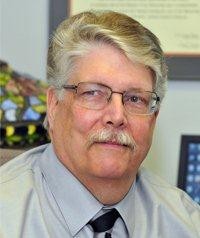
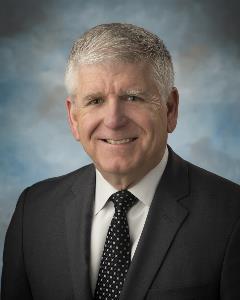
Doug Jorgensen, State Fire Marshal, Kansas

May is Older Americans Month, and the Office of the State Fire Marshal and the Kansas Department for Aging and Disability Services (KDADS) want older Kansans to be fire safe

Nationally, May is recognized as Older Americans Month, a time to acknowledge the contributions of past and current older persons in our country.

This month is also an opportunity to recognize that older Kansans are significantly more at risk than other members of the population to be victims of house fires. Our office and KDADS  joined together to offer fire safety tips to help prevent older adults from starting fires or being injured or killed by one.

In 2013, according to the U.S. Fire Administration (USFA), older adults (ages 65 and older) represented 14 percent of the United States population but suffered 36 percent of all fire deaths. In Kansas, of the 37 total fire-related deaths in 2015, 16 victims were over the age of 65 – representing 43% of the total fire deaths.

The USFA research also shows that older adults are 2.5 times more likely to die in a fire than the general population. The risk worsens as we age, with people ages 85 and older 3.6 times more likely to die in a fire.

These tips will help keep seniors safe from the dangers of fire:

Home Heating

* When space heaters are on, keep them at least three feet away from anything that can burn, such as curtains or furniture.

* If you’re exiting the room, or if you’re going to bed, make sure that your turn off and unplug the space heater.
Have a Fire Safe Home

* Have smoke detectors installed outside each sleeping area and replace the battery two times a year-every time that you change your clocks for Daylight Savings Time.

* If you must smoke, never smoke in bed. Never smoke in a home where medical oxygen is used.

* Walk through your home and identify any possible exits in case of a fire. Make a fire escape plan and practice it.

Cooking Safety

* Never wear loose clothes or clothes with long sleeves when cooking. Remember to use oven mitts when handling hot pans. And NEVER leave the kitchen while you’re cooking.

* Check the kitchen after you finish cooking to make sure the oven burners and other appliances are turned off.

Finally, if there’s fire or smoke. Get out and stay out. Call 911 from outside the home and wait for firefighters to arrive.

For more fire safety tips and a video about fire safety for seniors, visit www.firemarshal.ks.gov<https://www.firemarshal.ks.gov>.

Doug Jorgensen is the State Fire Marshal of Kansas.
McCARTHY: May is Asthma Awareness Month

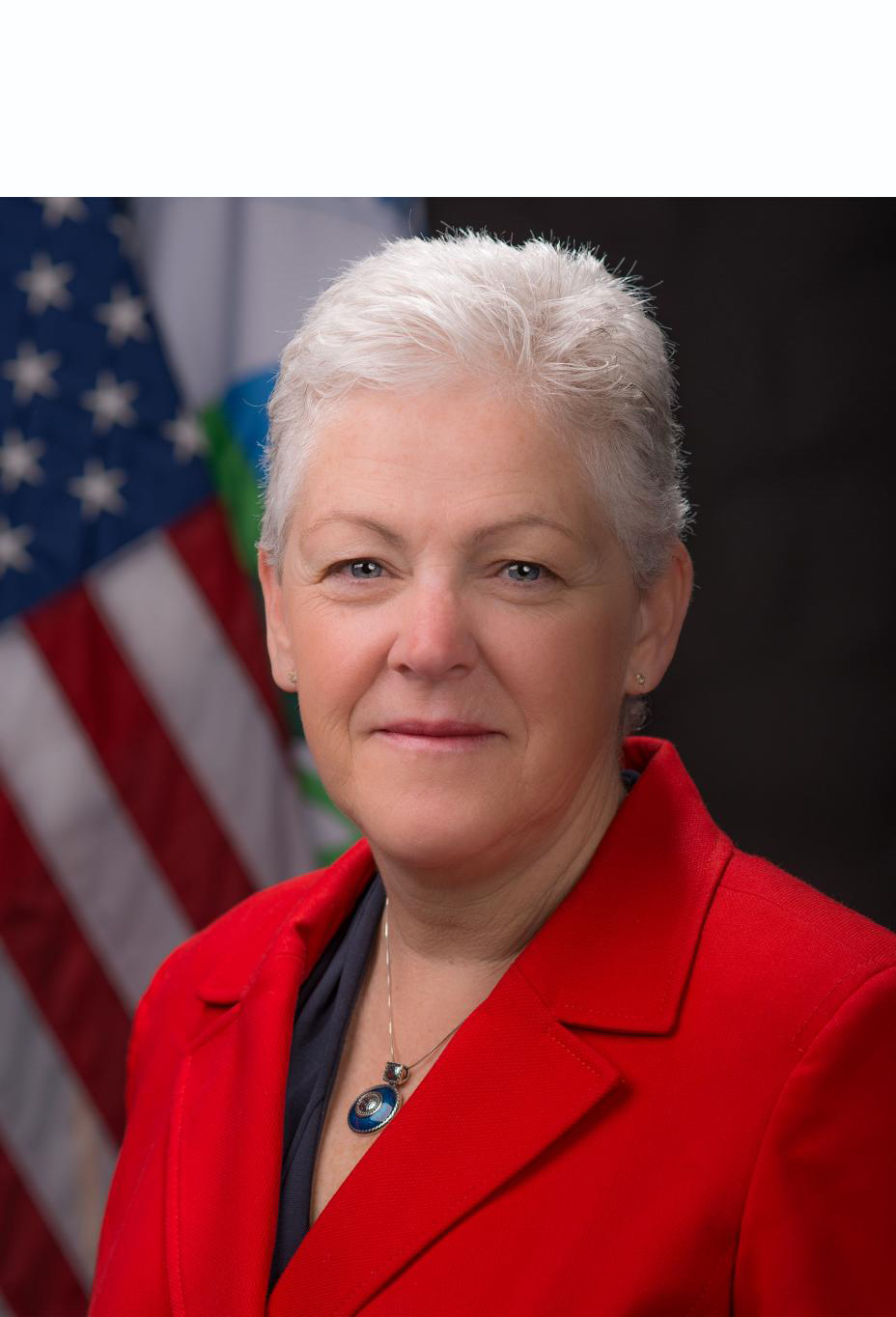
Gina McCarthy
Gina McCarthy, EPA Administrator

May is Asthma Awareness Month, when the U.S. Environmental Protection Agency (EPA) spotlights ways people can take simple steps to help prevent asthma attacks. EPA also honors local asthma management programs for their leadership in improving the lives of people living with asthma, especially those in underserved communities.

Asthma is fundamentally connected to the health of our environment – whether it’s the air outside, or in our homes. By working together across the environmental, housing, social, and medical sectors, we can do even more to raise awareness about this critical public health issue and protect those who are most vulnerable, including the more than 6 million children in the U.S. with asthma.

On Thu., May 12, EPA will honor the winners of the agency’s National Environmental Leadership Award in Asthma Management. Each winner is an outstanding national model for comprehensive asthma care. These four winners are: AmeriHealth Caritas of Philadelphia; Urban Health Plan of Bronx, N.Y.; New England Asthma Innovation Collaborative of Boston; and Public Health – Seattle and King County of Seattle. For more information on these winners, go to www.epa.gov/asthma/national-environmental-leadership-award-asthma-management.

girl blowing bubblesAsthma is a respiratory disease that makes breathing difficult. Asthma affects nearly 24 million Americans, including more than six million children—with poor and minority children affected disproportionately. The economic impacts of asthma amount to more than $50 billion per year from direct and indirect costs, such as medical bills and missed school and work days. EPA’s comprehensive asthma program helps those with asthma through environmental research and education, as well as through community-focused outreach that aims to increase sustainable access to home visits.

Asthma sufferers can take some important actions to help control their symptoms and still maintain active lifestyles with three simple steps: Identify and avoid environmental asthma triggers; create an Asthma Action Plan with help from your doctor; and pay attention to your local air quality conditions through the https://airnow.gov website and Air Quality Index app for your smart phone.

To learn more about preventing asthma attacks, go to www.epa.gov/asthma.

Gina McCarthy is the Administrator of the Environmental Protection Agency.

1st Amendment: Let’s celebrate ‘our’ World Press Freedom Day, today

Gene Policinski is senior vice president of the First Amendment Center.

“World Press Freedom Day” is today — and let’s be blunt: Most of you didn’t know, and it’s likely a substantial number of you don’t care, even now that you do know.

Is it in the name?

“World” may seem too distant. “Press” has become an ugly word and many politicians’ punching bag in this presidential campaign year, or a disrespected occupational category. “Freedom” as a word may have some appeal — but most of us in this nation, in survey after survey, appear to take our freedoms for granted. So, even that word is not that big a grabber.

And with all of those lackluster bummer words ahead of “Day,” admittedly the entire title lacks the cultural sizzle of New Year’s Day or Independence Day, the sentimental tug of soon-to-be observed Mother’s Day, or even the kitschy zing of Groundhog Day.

So, how to get people to care?

Perhaps a little campaign to rename it something closer to the truth: “Rapidly disappearing around the globe, endangered even here in the United States, increasingly threatened by demagogues and dictators, digital disruption and disappearing advocates, Press Freedom Day.”

A mouthful, to be sure. But an accurate reflection of the just-updated World Press Freedom Map at the Newseum which now shows — based on the new report by the nonpartisan group Freedom House — that six of every seven people live in nations where the press is not free.

Please do notice that it’s not called “World Perfect Press Freedom Day.” While we have every right to demand and expect a news report marked by accuracy, clarity, diligence in pursuit of the truth, and unbiased and fair reporting, the failure to meet those standards should bring scorn to the specific practitioner — not abandonment of the principle.

Yet, the Newseum Institute’s annual State of the First Amendment national survey and many others show a regular decline in the public’s view of the press — as a watchdog on government, as a source of news, and even as an essential part of daily life.

Here’s another thing about today that you probably didn’t know, though I cannot imagine not caring. Khadija Ismayilova, journalist and contributor to the Azerbaijani service of Radio Free Europe, today will receive the Guillermo Cano World Press Freedom Prize 2016. She was sentenced last year to seven-and-a-half years imprisonment for “abuse of power and tax evasion” — charges that are just subterfuge for punishing a journalist with the courage to report honestly about government corruption. In more and more nations, governments are dropping the truncheon and picking up the gavel, using trumped-up criminal charges or specious defamation laws to silence journalists. Less bloody. Perhaps even more effective, unless the world calls out the government bullies publicly on the tactic.

On this World Press Freedom Day, there is some good news. The Washington Post’s Jason Rezaian was freed in January after spending 18 months in an Iranian jail after he apparently terrified that nation’s leaders simply by reporting on the daily lives of their fellow citizens.

But then there’s Austin Tice, a correspondent missing in Syria since 2012. For those who consider journalists as something other than positive role models, consider this: Tice is a National Merit finalist, an Eagle Scout, was enrolled in the University of Houston’s Honors College before his 16th birthday, and is a former U.S. Marine Corps officer with multiple combat deployments. On Aug. 13, 2012, he went missing — and his family and our government still are searching for him. When he comes home, let’s have “Austin Tice Press Freedom Day.”

Then again, if the Digital Age is really all about the consumers of news rather than the providers, why don’t we just rename this now-annual event something more universal? Much of the world has the ability to instantly reach all of connected humanity with a computer or mobile device, a few keystrokes and a web connection.

In the larger sense, we’re all “press” every time we post, tweet or blog — whether we want that title or not. Media critics and advocates alike are fond of noting “the press” has no more and no less privileges under the First Amendment than any other U.S. citizen.

So let’s call it “OUR World Press Freedom Day.” Have a great day.

Gene Policinski is chief operating officer of the Newseum Institute and senior vice president of the Institute’s First Amendment Center. [email protected]

HAWVER: If they don’t have to pay taxes, then why do I?

martin hawver line artMembers of the Kansas House last week either shot themselves in the foot…or didn’t. It’s too early to tell.

The issue was that bill that would essentially kill the now famous/infamous Kansas income tax exemption for Limited Liability Companies, some small corporations, the self-employed and, yes, many farmers.

If there is a genuine lightning rod for voter interest, it is probably who pays taxes and who doesn’t…and then why do I have to?

It comes out that simple.

For the last two years, as Kansas tax revenues have grown slowly and the state’s budget balance has shrunk, and now disappeared, the focus on those business tax cuts has sharpened. We all know about the 330,000 Kansans who don’t pay income tax to the state while most of the rest of Kansans do…though at lower rates that were part of the LLC tax elimination legislation that nobody talks about out loud.

That business tax elimination has become even more questionable as the Legislature had to raise sales taxes last year.

So, when the House demanded a vote on repealing the tax exemption of those 330,000 Kansans that we all read about but don’t know by name and address, the chamber killed the bill, 74-45. So, 74 members thought the tax exemption is OK, 45 don’t.

[polldaddy poll=9406048]

Count on every vote to become the subject of a campaign flyer or phone call or social media attack. And, the House wanted that recorded vote?

You almost have to wonder why. Republican or Democrat, that’s probably the vote that will be the most volatile of the campaign season. A vote to eliminate that tax exemption is a vote to raise taxes. A vote against reimposing the income tax on those LLCs, and you are not raising taxes. Who’s against not raising taxes?

Which is where it will be interesting this election cycle on House races. (Killing the bill in the House means the Senate didn’t have to vote on it.)

Those 45 folks who voted to tax LLCs can if they are bright point out that many of those LLCs are small but prosperous and the owners of those tax-free enterprises live next door, down the street or around the corner, or work out at the same health club that taxpayers do.

Those 74 who voted against the tax, well, we’re figuring that voting “no” on raising taxes is about as far as they’re going to want to do in explaining their votes at campaign forums or on doorsteps this summer.

There are probably districts where there is strong opposition to those LLCs not paying taxes, and there are districts where those LLC owners will help finance the campaigns and vote for House members who voted to let them retain their tax-free status.

That’s what makes the vote interesting…. Those 45 votes to re-impose taxes on LLCs included 31 Republicans, generally the party that isn’t for taxing, well, about anything. Wonder what their opponents are going to have on their campaign flyers?

And, the vote against re-imposing those new taxes included half the House’s Democrats, who generally aren’t shy about taxing the rich or businesses.

Real question might be why the House would want to vote on the issue at all. If those 330,000 tax-free Kansans all lived in the same district, well, we know about helping your constituents, which is good politics. But the problem there is that unless they put “LLC” on their business cards, it’s hard to know which of your neighbors, or voters, are benefitting from the exemption.

Some are probably wondering why some legislator didn’t think of a requirement that those LLC owners, to qualify for the tax exemption, would have to get “LLC” tattooed on their necks…

Syndicated by Hawver News Co. of Topeka, Martin Hawver is publisher of Hawver’s Capitol Report. To learn more about this nonpartisan statewide political news service, visit www.hawvernews.com.

SCHLAGECK: Yolks for healthy folks

John Schlageck writes for the Kansas Farm Bureau.

When it comes to protein, eggs remain the gold standard, because the high quality protein in eggs provides the mental and physical energy we all need.

Yes, eating eggs is good news if you want to remain healthy. Eggs provide a healthy immune system, optimal brain health and may check hunger pains.

Research shows a deficiency in protein can deplete immune cells and contribute to the body’s inability to make antibodies. Amino acids including glutamine and arginine are now being considered as nutrition therapy in pre-surgery patients because of their ability to stimulate the immune system. Conveniently, those amino acids are found in eggs.

Eggs should be part of a diet that also includes fish and meat that are chock full of complete proteins.

But what about all the cholesterol in eggs?

No doubt, eggs remain one of the most concentrated sources of cholesterol.

Medical research indicates, however, that cholesterol in food has a much smaller effect on blood levels of total cholesterol and harmful Low Density Lipoprotein (LDL) cholesterol than does the mix of fats in your diet.

There is some evidence that eating whole eggs increases High Density Lipoprotein (HDL) the good cholesterol that protects the heart.

Heart disease risk increased among men and women with diabetes who ate one or more eggs a day. People with both diabetes and heart disease should limit the eggs they eat to no more than three per week, according to the Harvard School of Public Health.

For healthy folks, nutrients specific to the egg yolk can help promote health. Like most cholesterol-rich foods, eggs are filled with necessary nutrients. The yolk contains most of an egg’s fat-soluble vitamins, essential fatty acids and nutrients.

Medical research maintains yolks are one of the richest dietary sources of choline. This essential amino acid nutrient contributes to brain health by maintaining the structure of your brain cell membranes. The variety of nutrients in an egg yolk is so inclusive, eggs offer better insurance than a multi-vitamin.

A diet rich in choline provides the body with so-called happy hormones. When they break down, these hormones produce serotonin, dopamine and norepinephrine.

Egg yolks also contain a big dose of sulfur. Sulfur helps with everything from vitamin B absorption to liver function. This nutrient aids collagen and keratin production, which creates and maintains healthy hair, strong nails and glowing skin.

Egg whites are also a low-calorie, low-fat source of protein. Some research indicates diets rich in high-quality protein found in eggs, may help promote weight loss and prevent weight gain in adults.

There’s evidence meals high in protein will, during the long term, reduce body fats, according to Heather Leidy, Ph.D. in nutrition and exercise at the University of Missouri. High-protein breakfasts may be especially helpful in weight loss because they may help control appetite and decrease food intake throughout the rest of the day.

No doubt about it – eggs are good for our health.

John Schlageck, a Hoxie native, is a leading commentator on agriculture and rural Kansas.

SCHROCK: Virtual unreality

John Richard Schrock is a professor at Emporia State University.

Headlines have declared that this spring has seen the breakthrough in “virtual reality” (VR) media. Facebook released the Oculus Rift headset on March 28. Right behind it was the HTC Vive and the SONY PlayStation VR.

The hype behind VR is that it creates an “immersive environment” similar to the real world. First pitched in the 1990s—VR was poor quality and an immediate failure. But this new technology has Goldman Sachs predicting the VR industry will become bigger than television in the next ten years.

The new VR systems provide goggles with high definition resolution and a flicker speed far beyond what the human eye can detect. This is combined with movement sensors that detect head tilt and give the wearer the impression that they are in a real visual environment. Stereo headphones provide directional sound. A person wearing this head mounted display can “look around” and believe that they are in an artificial world.

More advanced “haptic” systems add the senses of smell and touch, the later through wired gloves or other devices. The goal is to convince the user of their “telexistence” or “telepresence.” So far, all of these expensive headsets also require expensive and specialized personal computers.

The industry hype that these “virtual worlds” possess all of the qualities of real world interactions has not been lost on the educational futurists who can hardly wait to have the first school on their block to brag about having this advanced technology.

Unfortunately, this simulation technology is worse than useless. Besides being orders of magnitude more expensive than genuine learning experiences, it lacks three important properties that real experiences have: true interaction, test-truthfulness, and real consequences. We know this because computer simulations invaded our classrooms as soon as personal computers became commonplace.

They all claim to be “interactive.” This was printed on the label of every simulation from 8-inch floppy discs to current thumb drives and cloud-based media. But the “interaction” of typing a keyboard or clicking a mouse to crossbreed fruit flies is nothing like actually handling the real flies (and having most of them drown in banana culture). And while we may lift our kids into the “seat” of a video-arcade “racing car,” we certainly know not to accept this performance as readiness to drive a real car.

Only the real world provides “test truthfulness.” Cross a hundred generations of fruit flies with dominant and recessive traits in simulation and the 3-to-1 ratio comes out textbook perfect. Not so in the real world. The value of real labs and other real experiences is that there is variation from the norm. Sure you can “program in” the variation; but the students’ know that variation was scripted as well. The real world is not scripted.

“Real consequences” are vital to learning in the real world. Even the student who flunks out of high school is careful to drive on the right side of the road. Why? To not stay in the lane is to face the real consequences of crashing. Get “killed” in a videogame or VR simulation and you just quit and walk away.
We can blindfold students for a day and tell them that this is what it is like to be blind. But it is not! At the end of the day the student can remove the blindfold. The blind person cannot.

Woody Allen once said: “I hate reality, but it’s still the best place to get a good steak.”

Reality is also be best place to get a good education.

Water $mart Landscape awards offered by HBC and city

Janis Lee, HBC vice-chair
Janis Lee, Hays Beautification Committee member

The Hays Beautification Committee in conjunction with the City of Hays is sponsoring a Water $mart Landscape Award program for 2016 with categories for both Residential and Commercial landscapes.

A Water $mart Landscape is a sustainable and drought-tolerant landscape with low-water use plants and turf to maximize water efficiency.

The goal of the award program is to increase awareness of water conservation in the Hays community by promoting creative low-water (Water $mart) Landscaping.

The Water $mart Landscape Award may be presented to a residential and a commercial Hays water customer with a Water $mart Landscape that exemplifies superior design and follows the seven principles of water smart landscape:

  1. Planning and design
  2. Low-water use plants
  3. Practical turf areas
  4. Efficient irrigation
  5. Soil amendment
  6. Mulches
  7. Maintenance

1. Planning and design includes proper plant groupings and size. Slopes, exposure, soil amendments and water needs must also be taken into consideration.

2. Low-water use plants: Plants materials used should be the correct type for the Hays area.

3. Practical turf areas: Turf areas are to be properly laid out with warm season grasses being used in lieu of fescue/bluegrass.

4. Efficient irrigation: Does the landscape use driplines, high efficiency nozzles or subterranean irrigation.

5. Soil amendment: Soil was amended or tested in the proper manner to provide healthy establishment and healthy growth of drought-tolerant landscape and turf.

6. Mulches: Does the landscape plan have proper use of wood mulches and proper use of rock and gravel outside the planting zones.

7. Maintenance: Was the Water $mart Landscape properly maintained during establishment. At appropriate times, pruning, mowing, fertilizing, watering and insect/disease were completed to maintain a healthy Water $mart Landscape.

Requirements for nomination include that the nominee landscape area is within the city limits of Hays, the selected Water $mart Landscape must be visible to the public, and the Water $mart Landscape must have been installed at least one year prior to the nomination to demonstrate healthy establishment and proper care.

All are encouraged to submit nominations by June 1 to the Hays Parks Department or contact them at (785) 628-7375.

Nominations will be judged by the Hays Beautification Committee. Finalists will be contacted to schedule an on-site visit.

One winner will be chosen from each category, commercial and residential. Winners will be notified by June 30 and will receive an award and a certificate identifying them as a Water $mart Landscape winner. The winners will be presented their award during a regular scheduled Hays city commission meeting in July.

HBC encourages all residential and commercial property owners to consider enhancing/replacing landscaping with drought tolerant plantings so that we can make better use of one of our most precious resources – water.

HBC meets monthly on the third Thursday at noon at the Parks Department office. All meetings are open to the public and you are invited to join us. If you have any questions or comments regarding this article contact the Hays Parks Dept. at (785) 628-7375.

Janis Lee is a Hays Beautification Committee member.

Exploring Kan. Outdoors: In praise of front porches

BullCityBlack500x125 (1)

Ranking right up there with man’s greatest accomplishments like five-gallon buckets, Ziploc bags and double stuff Oreos has to be the front porch. Call them stoops, decks, verandas or whatever else you please, the front porch is crucial in maintaining life as we know it.

I just got back from spending a few days with my brother and his family at their secluded cabin in the middle of the southeastern Ohio woods. A splendid front porch of fifty feet or more spans the entire length of their cabin, suspended ten feet above the driveway below, and even higher above the gurgling creek beyond. From that front porch the coming day is planned and the completed day is discussed.

Steve Gilliland
Steve Gilliland

From it, deer, turkey, pig and mushroom hunts are designed in advance, and successes or failures of each are analyzed later. I believe it to be the premier bird watching platform in the state. From there, innumerable species of song birds are seen and heard as they visit the porches many feeders, and geese and wood ducks call as they fly back and forth through the valley below.

Most nights find someone on the front porch well into the darkness listening for the coyote howls that echo eerily through the surrounding hills, and hoping to be serenaded by the several varieties of owls calling the forest home.

Besides the usual accumulation of comfy chairs, a barbecue grill and bird feeders, my brother’s front porch offers some very unique but necessary furnishings. A couple empty Pringles cans, now repurposed as arrow holders are fastened to porch posts. There are several bow hunters in the family, so the cans hold the variety of different arrows necessary to cover every possible target, whether it be chipmunks, squirrels or coons’ at the deer feeder along the creek, a simple archery target in the meadow or “Bucky” the deer decoy prominently situated on the hillside below.

Another feature possibly unique to this front porch is an assortment of tennis and badminton rackets hung from nails on the posts. As temperatures warm, large wood bees and big bumble bees seem to flock to the porch, and nothing zings them across the porch railing like a well placed shot from a badminton racket. When the family’s all present, this “bee batting” quickly turns into a competition.

DSCF0018

One recent bout pitted Gage, who is five, against our dad (his great grandfather) the patriarch of the whole tribe, who is 90. Around the porch they went after the invading bee, great granddad spending most of his time protecting himself from the wild, roundhouse swings of the little one, until someone’s lucky shot hammered the bee.

Yes, there’s just something about sitting on a front porch that brings calmness and clarity to the world around us. Maybe congress should meet on a front porch somewhere (I’m just sayin’!) And I can’t help but think that if world summits were held on someone’s front porch, the world would be a better place for it; any grievances could be settled on the spot with badminton rackets. And of course it would help immensely if the front porch, like my brothers was out in the middle of God’s creation…Continue to Explore Kansas Outdoors (even from your front porch!)

Steve Gilliland, Inman, can be contacted by email at [email protected].

BullCityBlack500x125 (1)

Schumacher: Prince’s death offers valuable planning lesson

Tim Schumacher
Tim Schumacher

In this financial page sometimes it’s advantageous to use real life examples to assist, educate, and motivate others with their own planning.

On April 21, 2016, one of the most prolific musicians of all time died an untimely death at the age of 57. Prince’s music spanned a 40 year period and he was declared one of the richest music entertainers of all time.

Prince was very meticulous about being in control of his music career. He owned both the recording and publishing rights to all of his compositions and, because of one of his many wonderful talents, also played most of the instruments on his recordings.

Unfortunately, that same meticulous attitude was not used with the thought of someday taking his last breath on this Earth. So the very voice that was needed to direct his dollars, copyright proceeds, property, and songs that had never been recorded,was no longer there. Someone other than Prince is now in control of his estimated $300 million estate. That someone turns out to be the state of Minnesota and the IRS. Without a will, Minnesota follows the line of descendants, which in Prince’s case would be a sister and 5 half-siblings. These six would split the proceeds evenly. His parents pre-deceased him, and he had no children. So this may or may not be what Prince would have intended to happen.

Establishing a will or trust essentially enables your voice to still be there to direct your entire life’s earnings exactly where you want them to go after your death.

The problem lies in the fact that as humans, we think we’re indestructible and that we’ll always have another day to do this very important planning.

It has been communicated to Prince’s sister, Tyka Nelson, that she has an obligation to at least try to locate Prince’s will. However if you were in line to inherit one sixth of $300 million, how hard would you be looking? So, at a time when everyone should be grieving the loss of a loved one, instead they are working on locating a will, and dealing with all the business aspects of someone exiting this world and leaving assets behind. With the proper planning ahead of his death, a value could have been established for the many things that weren’t just green dollars. How do you put a value on a vault full of unpublished songs, or the copyright capability of his music extending on long after his death and the revenue that this would have provided? This all could have been established long before this wonderful musician’s death with the help of Prince and the IRS.

And because of the lack of planning Uncle Sam is likely to take half of the estate, and they don’t want music manuscripts, or copyrights which undoubtedly were a substantial part of his estate, but rather green dollars. Will some things have to be liquidated in order to pay the government close to $150 million? Probably so, and the IRS doesn’t give you long to come up with these dollars. Proper planning would have avoided many of these challenges facing the loved ones and their representatives, now.

Complicating these issues, there very well could be lawsuits that appear as different relatives try to claim their expected or promised share. If Prince’s voice remained, even with his absence through a will or trust, there would be no question as to where his proceeds would go.

Understand it does not necessarily have to be a famous musician in a far-away state, and certainly $300 million is not required to do some planning ahead of time. When is the best time to do this? The time is now, as you take care of it and don’t have to concern yourself with it anymore, unless you have substantial changes in your financial picture. Why now, because now is better than later, and that later as is evidenced in Prince’s case, never happened.

In your search for a proper attorney to help you in these matters, make sure it is someone that does this kind of work all the time. If you were having brain surgery, you would certainly not want a surgeon that just performed surgeries 10 percent of the time. There are attorneys that specialize in criminal cases, divorces, land acquisitions, etc. but it would be in your best interest to secure an estate tax attorney that does this kind of planning 100% of the time. With all of the ever-changing rules, it would be preferable to have someone that is current on all these requirements. It is puzzling to think that some very famous musicians, athletes, and entertainers that have access and funds available to have the very best planners in the estate tax area, have done little or nothing to prepare for the inevitable, and that is their death.

Prince is gone, his music lives on, and hopefully this is an example that motivates you to take the proper action to avoid many of the aforementioned issues. Good luck!

Tim Schumacher represents Strategic Financial Partners in Hays.

1st Amendment: With Bible bill vetoes, governors uphold religious freedom

Charles C. Haynes is director of the Religious Freedom Center of the Newseum Institute.

The culture wars took an expected turn this month when two Republican governors vetoed “Bible bills” in the reliably red states of Idaho and Tennessee.

The Idaho legislation would have permitted the Bible to be used “for reference purposes” in teaching literature, history, government and other subjects in public schools. To placate critics, amendments had deleted any mention of geology, astronomy and biology, and added “other religious texts.”

In his veto message, Idaho Gov. C.L. “Butch” Otter wrote that although he has “deep respect and appreciation for the Bible as religious doctrine,” allowing the bill to become law would violate the Idaho Constitution’s prohibition on teaching “religious tenets or doctrines” in public schools.

A week later in Tennessee, Gov. Bill Haslam vetoed legislation that would have made the Bible the state’s official book. “In addition to the constitutional issues with the bill,” said Haslam, “my personal feeling is that this bill trivializes the Bible, which I believe is a sacred text.”

During the heated debate leading up to Haslam’s veto, proponents argued that the measure was not an endorsement of religion, but merely official recognition of the “great historical and cultural significance” of the Bible in Tennessee. Opponents countered that making the Bible the state book promotes one religion over others in violation of both the state and federal constitutions.

Both Bible bills suffered from vague, overly broad language that would have undoubtedly led to years of controversy and litigation.

What did the Idaho legislature mean by use of the Bible for “reference purposes” in public school classrooms? Could teachers invoke biblical authority when teaching history, literature and other subjects? If so, that would be unconstitutional.

Or did the legislature mean that teachers may refer to the Bible in some objective way when teaching? If so, the bill would be unnecessary because current law already permits academic teaching about the Bible, where appropriate, in the public school curriculum.

If the Idaho constitution is currently construed by educators to prohibit objective teaching about the Bible, then the legislature could clear that up by making the distinction between unconstitutional “teaching religious tenets” and constitutional “teaching about religion.” The bill Gov. Otter vetoed failed to make that distinction — and thus would have only made matters worse.

The Tennessee bill was equally murky. Did the legislature intend to designate sacred scripture as the official state book, which would be unconstitutional? Or did the lawmakers merely want to acknowledge the historical and economic impact of the Bible, which ignores the religious meaning and significance of the scriptures?

During legislative debates in both states, proponents appeared to want to have it both ways: Elevate the Bible because it is the word of God, but do so with ambiguous, secular language designed to pass constitutional muster.

Otter and Haslam, both religious men, wisely rejected these roundabout attempts to use the engine of government to privilege the Christian faith. Ironically, by protecting the autonomy of religion, their vetoes did more to preserve the authenticity of the Bible than legislation could ever accomplish.

For many Christians and Jews, when the Bible is co-opted by the state, it ceases to be the prophetic word of God. An “official Bible” can no longer speak truth to power; it becomes instead an echo of the powers that be.

Preventing the entanglement of religion and government — the source of much repression and violence throughout history — is, of course, the genius of the First Amendment. The vitality of religious life in America is living proof that religion flourishes best in a society where every person is free to choose in matters of faith without government involvement or coercion.

Kudos, then, to two conservative, Republican governors who had the courage to stand up for religious freedom, despite the political price. Their vetoes of misbegotten “Bible bills” are good news for the First Amendment — and good news for the Good Book.

Charles C. Haynes is vice president of the Newseum Institute and founding director of the Religious Freedom Center. [email protected]

INSIGHT KANSAS: Wallowing in a sea of nostalgia

Kansans have a new law, Senate Bill 443 creating the “Kansas State Cage Elevator,” an iron enclosure about eight feet on a side that sits at the southeast corner of the state capitol’s rotunda. There it has served untold numbers of Kansans traveling between the floors of the capitol building since 1923.

The accordion grate door, polished brass fittings, long black tension bearing cables, and all the rest constitute an early 20th Century exemplar of the massive over-engineering and heft that bespeaks eternal service. The cage elevator is a beauty, and although not yet rare, the law guarantees that barring destruction of the building, it will continue to serve until one day it may well be the “last of its kind, anywhere.”

Dr. Mark Peterson
Dr. Mark Peterson

It isn’t just commemoration of the elevator that matters in this enactment. There is more here in the language of the statute. In the legalistic, run-on writing of legislation with its declaratory “whereases” and conjunctive “; ands” there is a sort of Whitmanesque tribute to our glorious past. At a time when the future seems to threaten so many of us, there is comfort in the words of SB443.

The statute aims to draw the public’s attention, and most especially the attention of school children, to the state’s industrial heritage while they gaze at the elevator in the capitol’s rotunda.

Is this not in fact the great problem for Kansas? We have a poetic, justified, and nostalgic view of what went before – the brutal industrial beauty; its steadfast reliability and solidity; the touchstone quality so useful for idealizing the past. Who has the equally poetic, hopeful, and clear-eyed vision for the future?

The recognition of historic persons, places and events, the memorialization of the unique and unusual, the satisfaction of charmingly sincere requests from petitioning schoolchildren are common in state legislatures all across the country. Who would object to recognizing the fallen favorite son or the wistful writings of four decades duration by some sage beloved by the readers of a small-town weekly? What would Kansas be without “Home on the Range,” the Ornate Box Turtle, Western Meadowlark, Tylosaurus, or our famous folk — William Allen White, Amelia Earhart, Phog Allen, Alf Landon, and Walter Beech? Now we have a state statute to revere not only a thing but a concept as well.

Men (almost exclusively) once made good and proud livings working to produce the forged and formed parts and fittings of the Kansas State Cage Elevator. That is no longer the case.

Joseph Schumpeter, a noted market economist, called the process “creative destruction” — the fitful disruption and destruction of a productive activity with new or better technology or other market innovations that end the economic utility of one thing, replacing it with something else – think buggies and horsewhips replaced by automobiles, or computer-driven robotics replacing assembly-line workers in the Kansas City factories of GM and Ford. These disruptions have improved overall productivity, raised national and state GDPs, reduced consumer costs, and in general increased wealth. What they have not done is provide a path to a promising future for those displaced.

Should we not turn our attention to humanely managing the long de-population of the western counties that continue to shrink through emigration and micro-urbanization? Can we come up with techniques for sustaining public education, so very necessary for those who lack resources or options for privatized schooling, or must we instead endure unhelpful solutions like shortened school years? Can we shape a positive future, or will Kansas simply wallow in the sea of nostalgia until all the buoyancy is lost?

Dr. Mark Peterson teaches political science at the college level in Topeka.

CEP: What’s next for Obama’s key climate initiative

climate and energy project logoThe United States Supreme Court has been in the news a lot in the last few months. The death of Justice Anthony Scalia injected political controversy into an already contentious presidential election, and raised the stakes for several high profile cases. One of those cases involves an attempt to prevent the implementation of new Environmental Protection Agency (EPA) regulations of carbon dioxide. In this post I’ll get you caught up on the progression of the case and tell you what’s next for the Obama key climate initiative.

Following the announcement of the President Obama’s Clean Power Plan in August, 15 states including Kansas submitted an Emergency Petition at the D.C. Circuit Court to ‘stay’ the new regulations. A ‘stay’ is just a fancy way of saying that someone wants an action postponed until a pending matter is taken care of (here is a legal dictionary definition if you are interested). In this case, these states were asking the Court to delay the immediate implementation of the Clean Power Plan until the Court decided a lawsuit on whether or not the new rules were constitutional. The D.C. Circuit denied the request for a stay but granted a request for an expedited hearing on the case (labelled West Virginia et al. vs U.S. Environmental Protection Agency, et al).

In January, 29 states including Kansas then asked the Supreme Court to issue a stay on the Clean Power Plan. On February 9th, the Court granted the request for a stay on a 5-4 decision. This means that no state is required to begin abiding by the emissions reduction targets in the Clean Power Plan until the judicial system finishes deciding the case.

Currently the case is waiting to be decided at the D.C. Circuit Court of Appeals. This court is a federal court of appeals and is one level of jurisdiction below the Supreme Court. For a great detailed description of how the federal court system works, check out this article from the Federal Judicial Center. The D.C.Circuit Court will hear oral arguments on the case on June 2nd and a final decision will be issued later this summer or early in the fall. Unfortunately the case will likely not end there.

Regardless of who wins at the D.C. Circuit, legal experts say the other side is likely to appeal the case for immediate review at the Supreme Court. However, the outcome of this round of court battles could implicate the final outcome of the case should it reach the Supreme Court because of Justice Scalia’s recent death. This is where things get tricky.

While the D.C. Circuit Court is made up of eleven active judges, they hear oral arguments for cases in three judge panels. The three judges who will decide the EPA suit are Karen Henderson, Judith Rogers, and Sri Srinivasan. As followers of the D.C. Circuit have noted, this is a favorable panel for the EPA given their ideological leaning and past rulings on environmental cases. Analysts familiar with the case say the District Court will likely uphold the Clean Power Plan, setting the stage for a battle at the Supreme Court.

This is good news for the environment because of an interesting judicial procedure triggered by the death of Justice Scalia. If the case goes to the Supreme Court and is heard by the current panel of eight justices rather than the full panel of nine, a 4-4 tie vote is in play.

Scalia was one of the five conservative leaning Justices who supported the stay. With his absence, it is likely that four Justices will support the regulations and the other four will oppose them (based on the votes cast for the stay motion and the ideological leanings of the Justices).

When the Supreme Court ties on a decision, the ruling of the lower court (in this case, the D.C. Circuit Court) is upheld. This means that if the appellate court upholds the Clean Power Plan and the Supreme Court vote is a 4-4 tie, the regulations would go into effect.

The Clean Power Plan was the cornerstone of the U.S. commitment to reduce carbon pollution at the Paris Climate Conference, and ensuring its continued implementation is essential to international efforts to mitigate climate change. While it is important to ensure that new regulations are given thorough consideration by our judicial system, it is also imperative that action is taken now to reduce greenhouse gas emissions.

States should be proactive and begin developing plans to transition to clean fuel sources.

Kansas shouldn’t wait until the lengthy judicial process has concluded to prepare its own plan to contribute to climate solutions.

At CEP, we have already put together some ideas for how Kansas can meet the Clean Power Plan targets in an affordable and cost-effective way. I would caution against recent efforts in Topeka to discourage such action, and am hopeful that Kansas can be a model for the rest of the country in leading the way towards a clean energy economy.

Chris Carey is an intern with Climate and Energy Project. The non-profit organization is headquartered in Hutchinson.

Copyright Eagle Radio | FCC Public Files | EEO Public File