We have a brand new updated website! Click here to check it out!

SCHLAGECK: Goodbye, Lorna Doone

John Schlageck writes for the Kansas Farm Bureau.

“Goodbye, sweet girl – it’s time to go,” I said looking into those eyes that  showed love, devotion and friendship. My eyes and those of son, Ben, overflowed with tears.

We were taking our beloved sheltie, Lorna Doone, to the vet. This was her last ride.

Weak and failing, she couldn’t jump into the SUV anymore. Gone were the days when that graceful blur of brown, black and white fur bounded into the back seat with ease. On this day, I gently placed her in the seat next to my son.

Lorna Doone loved to ride in cars. She’d bark and bark when we asked, “Do you want to go for a ride?”

Once in the car I’d quickly roll down the window so she could stick her head out and take in the fast flowing air.

My family enjoyed 17 wonderful years with Dooney. She retrieved tennis balls, Frisbees, hedge apples – about anything round she could fit into her mouth. Our sweet girl never knew when to stop fetching and only when we ceased throwing would this wonderful game end.

When the small walnuts dropped from our giant walnut trees, Lorna heard them hit the ground, smelled them out and brought these little marble-sized nuts to us. She expected us to play fetch with them.

She loved to chase squirrels in our yard and kept these little rodents running for their lives. As they scolded her from high above in the trees, she barked her disapproval of them trespassing in her domain.

Lorna smiled all the time. We referred to her as the happiest dog in the world. When she wagged her tail her whole rear end moved.

Our sheltie served as a constant companion throughout my son’s childhood. Having arrived in our household a full year before Ben, she always tried to dominate her younger sibling even when he grew to be a teenager and towered above her.

Dooney bossed Ben and growled at him whenever she believed he interfered with her playful activities.

She assumed the role of scout that trotted out front when the boys explored the woods surrounding our house. Like a horse, she pulled the small wagon filled with Ben’s toys.

Lorna also barked incessantly when it was time for her to eat. With a built-in clock that rivaled any Rolex, she knew to the minute when it was time to eat. She also stood next to the utility room where her feast awaited.

Guard dog?

Without a doubt. Nothing wandered into our yard and evaded the notice of Miss Doone. She patrolled day and night with razor-sharp eyes. Even when she slept, her super-sonic ears missed nothing. They pointed straight up as did her tail that curled to the right. Her look said, “Enter at your own risk.”

How do these four-legged fur balls burrow so deep in our hearts?
It hurts when they go. But when you ask yourself, “Would I give up having known them to make the pain go away?”

The answer remains, of course, “no.”

A dog like, Lorna Doone, only comes around once in a lifetime. That said, Miss Bea, our new sheltie appears to be a worthy companion. Just like her predecessor, she tears up the leaves and yard ensuring her territory remains off limits to squirrels and other rodents.

Bea also announces the arrival of friends, family, UPS delivery and anything else who ventures near her home. While she’s a bit stand-offish at times, she’s still a happy girl and we’re happy to have her in our lives.

As for Lorna Doone, her memory lingers in our minds. Who knows, maybe one day we’ll see her again, listen to the thump, thump, thump of her tail and look into that smiling, happy face.

John Schlageck, a Hoxie native, is a leading commentator on agriculture and rural Kansas.
HAWVER: Kansas budget work will be ugly … or not

martin hawver line art

Legislators return to the Statehouse this week to consider whether they want to do some really politically ugly stuff to balance the state budget this year…or not.

It’s that simple.

The latest financial report shows that the state is going to have to come up with about $140 million—either new revenues (virtually impossible) or spending cuts, more likely—to get out of this fiscal year with a constitutionally required positive ending balance in the treasury. Doesn’t have to be much, just a few bucks give the state a constitutional balanced budget.

Now, there is talk about the two-year budget cycle, and that the state will need $151 million in higher revenues or budget cuts for the upcoming fiscal year which starts July 1, but, well, we understand that the Legislature will meet again next year to work on that.

So, it’s just the get-out-of-town $140 million that is the real goal of lawmakers during their wrapup session so they can get out on the campaign trail and back to life as many of us know it.

Gov. Sam Brownback has an idea…or rather three of them…that would let the Legislature do some politically unattractive and unpopular bill-passing in the wrap-up session, and while he has a favorite, he wants lawmakers to choose.

Legislators (no show of hands, er, votes, yet) will have to decide whether they want to vote on ugly revenue-saving bills or leave it up to the governor, who has authority to make spending cuts called “allotments” all by himself.

Hmmm… Let’s look at that again. The Legislature where members of the House and Senate stand for election this year can make spending cuts and money transfers, all of which will wind up on their election opponents’ campaign flyers.

Or, lawmakers can ignore the fiscal sleight of hand proposed by Brownback, who as chief executive officer of the state would have to make the spending cuts himself.

Let’s see…legislative cuts and shuffles will cost candidates votes this fall, while there isn’t a lot of political downside to pointing at the governor who is in the last three years of his last term and saying “he did it.”

The governor has made much of the duty of the Legislature to pass a balanced budget—which it believed it had with this year’s budget bill, before those new revenue estimates were made public last week.

So, now it is clearly who wants to do the icky budget-cutting because, practically, every dollar cut from this year’s budget means that some interest group is going to be mad.

That makes the real question simple: Mad at whom?

The governor already has authority to make across-the-board budget cuts, and with a little tweaking of the law—and without a dollar sign in sight—lawmakers could hand him authority to make narrowly focused cuts in spending. That essentially leaves to the governor what gets cut, which is a fairly remarkable power to hand the governor.

But then…it’s the guy whose name won’t be on the ballot this fall making politically powerful decisions, not the Legislature.

Nope, the governor isn’t really interested in seeing all that responsibility handed back to him, but then again, if you were in the Legislature, and standing for re-election this fall, do you want your DNA on anything that will make voters mad?

The governor has supporters in the Legislature, many of them Republicans he campaigned for. Most were happy for his help which helped them land seats in the Legislature, but memories tend to be short in the Statehouse.

So this week and probably part of next week may just turn out to be pivotal for some legislative races. The choices are to help the governor or to help yourself and your campaign.

Wondering which way the Legislature will go?

Syndicated by Hawver News Co. of Topeka, Martin Hawver is publisher of Hawver’s Capitol Report. To learn more about this nonpartisan statewide political news service, visit www.hawvernews.com.

LETTER: Yosemite Sam (Brownback)

SoundOff

Now hold on just a gulldern minute! My name is Yosemite Sam (Brownback), and I’m the roughest, toughest, ruthless, he-man hombre’ to ever cross the Rio Grande.

So when I say that the budget is a mess because of the breckafreckin,’ rickasnackin,’ flapawreckin,’ puterluna global commodities, that’s exactly what I want to blame it on.

Forget the fact that those long-eared, fur bearin’ flat-footed varmints predicted that we would have more gulldern money to spend. And I don’t care if that bushwackin’ barracudan’ pension plan has been under-funded for a long time. I took a blockaflockin’ stab at fixing that in 2012. Now forget, I say forget the fact that I reversed everything that I did in doublecrossin’ well-forgottin’ 2014. It helped me get reelected ya’ doggone crazy galoots. Great horny toads, I blew to smithereenies the gulldern taxes of 330,000 flaparappin,’ six-shootin,’ high falutin’ small businesses, and when I say whoa on taxes, I mean whoa, camel.

I tried to give the sackarackin’ state of Kansas some help when I raised sales taxes on those ripparopin’ gottabesmokin’ flea-bitten varmints that use tobacco. And I’m going to try to make you feel a little better by telling you that smackin’frackin gulldern Oklahoma is heading off to the last roundup, too.

And after I get done pointin’ fingers at everyone else, because you know it’s gulldern not my fault, I’m comin’ back, and I ain’t comin’ back to play marbles.

And I know we started out in 2014 with a lot of smashin’frashin’ cash, $700 million to be exact in cash reserves, I don’t know where all the mishin’mashin,’ not-my- pashin’ dollars went. I guess we’re spending more than we’re bringin’ in. But don’t get your frackin’sackin’ feathers all ruffled, I know how to kick the can down the road, I mean to say I know how to fix this gulldern problem.

The ritzasnickin’ education system is in such good financial shape, right now, I’m tinkering with the idea of cutting 3% off their funding. And on top of that, I may delay the nickinsackin’ sent-me-packin’ $93 million that’s supposed to be contributed to your pension plan, because, as you all know, the pension plan is in crickarickin’ I’m-a-chicken, terrific shape, too.

And even though there’s now federal legislation in place that allows the trucker’s pensions to be cut if it would improve the solvency of the fund, you gulldern know that will never happen in this state of Confusion, er’ I mean Kansas.

So whatever you do, you better start saying your prayers, varmint, becuz’ I’m a gonna come to you to help straighten my, er, this mess up.

Tim Schumacher, Hays

SCHROCK: ‘Personalized education’ is impersonal education

John Richard Schrock is a professor at Emporia State University.

Online high schools are a disaster. In a letter published in Education Week, the director of education giving at the Walton Family Foundation found that “…over the course of a school year, the students in virtual charters learned the equivalent of 180 fewer days in math and 72 fewer days in reading than their peers in traditional charter schools, on average.

This is stark evidence that most online charters have a negative impact on students’ academic achievement. The results are particularly significant because of the reach and scope of online charters: They currently enroll some 200,000 children in 200 schools operating across 26 states. If virtual charters were grouped together and ranked as a single school district, it would be the ninth-largest in the country and among the worst-performing.”

This is particularly condemning since the Walton Foundation is “the largest private funder of charter schools.”” They go on to caution: “As states think about the future of online education, they should rethink their expectations and policies…. Funders, educators, policymakers, and parents cannot in good conscience ignore the fact that students are falling a full year behind their peers in math and nearly half a school year in reading, annually. For operators and authorizers of these schools to do nothing would constitute nothing short of educational malpractice.”

As the ineffectiveness of online education is recognized on a far wider scale by employers as graduates of for-profit online operations fail to perform in the workplace, the Techno-Educational Complex has pivoted to another claim for computerized education: “personalized instruction.”

Any veteran teacher recognizes this digital reincarnation of the “individualized instruction” movement from the 1970s. It failed then for reasons that it will again fail today, but only after we spend huge sums for computers and after another generation of students fall behind, just as in the virtual high schools described above.

“Personalized instruction” resurrects the old 1970s programmed learning but uses computers to take students on lonely journeys through academic subjects, responding to variations in their learning speed. Unlike a class where most students are learning together, each student taps away alone on a keyboard following machine-based instruction. Similar to the virtual school, teachers and classmates are irrelevant.

But any good teacher knows that teachers and classmates are not irrelevant, but critical supports to most students’ education. For instance, if you are showing a video clip to a sequence of classes, you stay in the classroom and watch it all the way through with each class. To step out because you have seen it many times before sends the message to the students that they don’t need to watch it either. Bottomline: the teacher and the students are in a journey together and good instruction depends on everyone being “in the moment” of the lesson.

And when one student does not understand what the teacher just said, a classmate can explain it to them in alternative student-level words. Similar to everyone watching a ball game or parade, everyone is in the spirit of learning as a group. Each of us grew as students even on our worst days because we gained strength from the whole class moving ahead together.

And our teacher knew us and celebrated with us as we came to know and do things we did not know that we could do. Because of what our teachers taught us to become, years later when we write or speak well, we can think how our writing or speech teacher would be proud of us.

But when we learn on our own from reading a book or watching a video, we never think that the book author or screen performer would be proud of what we learned. They never “knew” us.

Nor does that so-called “personalized instruction computer” actually “know us.” Computer algorithms do not a teacher make.

But “personalized instruction” is the current educational moment. It is purposely marketed by ed-tech companies that want to continue sucking huge sums of money from our school budgets.

It will not improve student learning.

But it will make technology companies a lot of money.

Exploring Kansas Outdoors: Turkey in the Hay

BullCityBlack500x125 (1)

The only absolute in turkey hunting is that there are no absolutes to turkey hunting. What spooks them and sends them scurrying in the opposite direction one day seems another day not to bother them in the least.

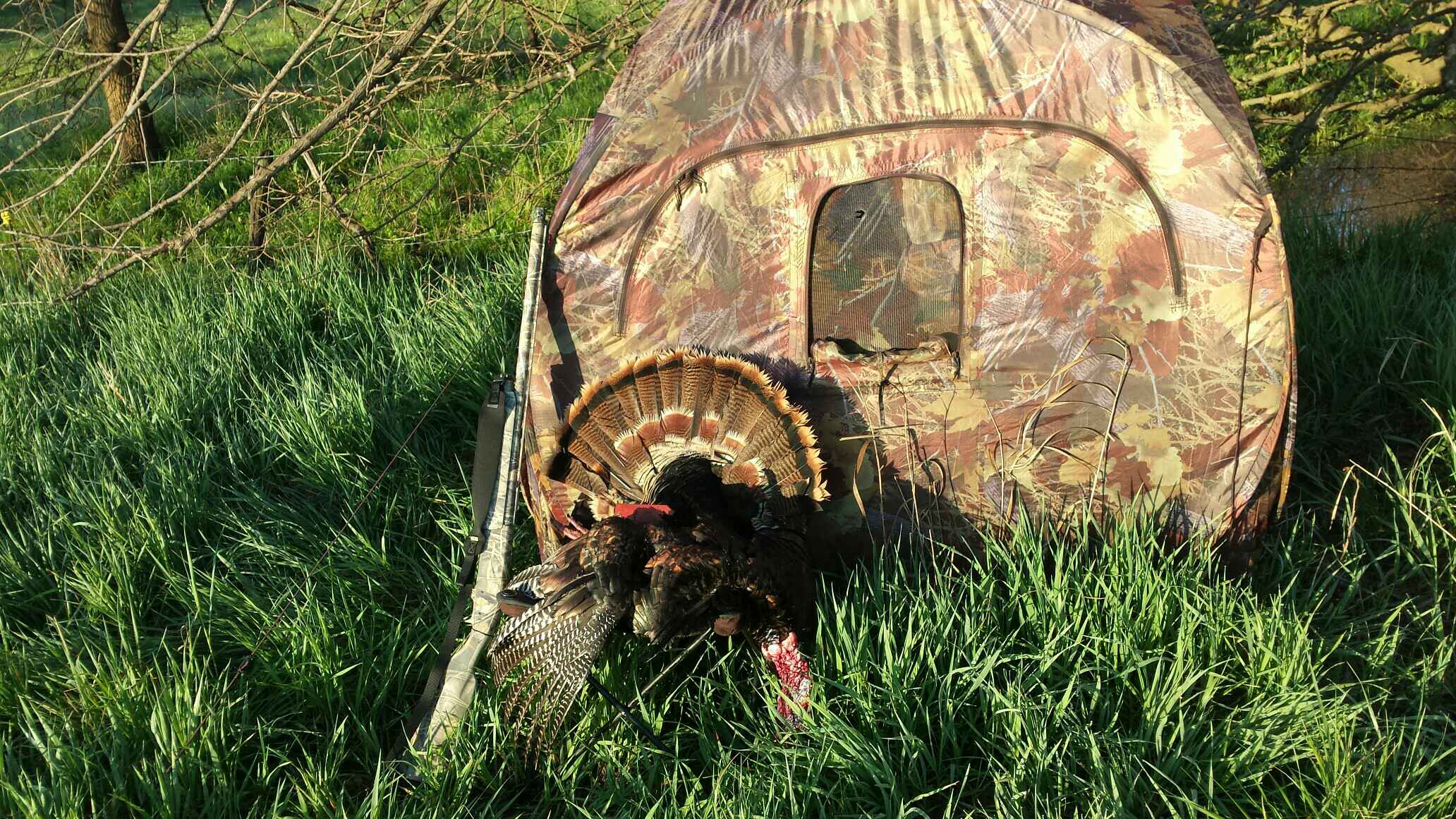
This morning I was able to get out turkey hunting for the first time this season. I sat in a pop-up blind on the edge of a hayfield on my sister and brother-in-laws property.

Steve Gilliland
Steve Gilliland

The hayfield is long and narrow, bordered on one long side by a wooded pasture, and bordered on the other long side by a neighbor’s property where a pond sits just across the property line below a dike that is several feet taller than the hayfield. The back end of the hayfield borders a crop field and a woodlot. I have a hanging corn feeder at the back corner along the neighbor’s property, and I put up my pop-up blind just across from it along the opposite side.

I was certain turkeys roosted in the woodlot and they also often roost clear in the back of the neighbor’s property in large cottonwoods above his pond, so that seemed like the best spot for the blind to cover both possibilities.

I parked the pickup about 6 AM, which was a little late as the horizon was already faintly aglow with the morning sun. As soon as I eased the truck door shut a gobbler cut loose over the neighbors pond, but much nearer than I had planned, meaning my blind was on the verge of being too close.

Bright moonlight drenched the hayfield and I’m sure that gobbler saw my every move as I walked the hundred yards or so and planted decoys of a hen and a young gobbler in front of the blind. I have been in that situation before where I mistakenly or unknowingly set up too close to roosted birds, and you can usually cross them off the list before your hunt even starts as they’ll most likely skedaddle as soon as they hit the ground. No sooner had I mentally written him off than 2 more toms gobbled from the woodlot in front of me; the hunt was still on so I situated myself in the blind facing them.

20160422_073003

I made my best lonely hen call every few minutes and all 3 gobblers continued to answer me for awhile, but after the sun was up the gobbling dwindled to sparse utterance from the 2 birds in the woodlot, then all was quiet. Fearing the silence meant the hunt was now over, I sat there mostly just to say I had stuck it out for awhile.

Suddenly I heard wings beating and 3 hens from the woodlot flew into the hayfield and made a beeline for the corn feeder that had gone off and scattered the morning’s corn. I shifted my chair just enough to watch them, and to my amazement, down the dike from the neighbor’s pond came none other than the gobbler from the neighbors that I had written off! He mingled with the hens and followed them back across the hayfield after they had eaten their fill, stopping in the corner forty yards in front of me. He fanned out his tail, then strutted, twirled and stomped around showing all his best moves, evidently enamored with my plastic hen decoy and wondering why she wouldn’t join him for breakfast. He showed no signs of coming any closer, so I put the sights on his head and I had my turkey for the year.

It rarely happens like this the first hunt of the year, in fact it often takes several tries, adjusting your strategy each time until you figure out just what will work. Yes, it rarely happens this way the first hunt of the year, but like I said, there are no absolutes in turkey hunting…Continue to Explore Kansas Outdoors.

Steve Gilliland, Inman, can be contacted by email at [email protected].

BullCityBlack500x125 (1)

BEALL: Reentry Week — Beyond the Prison Gates

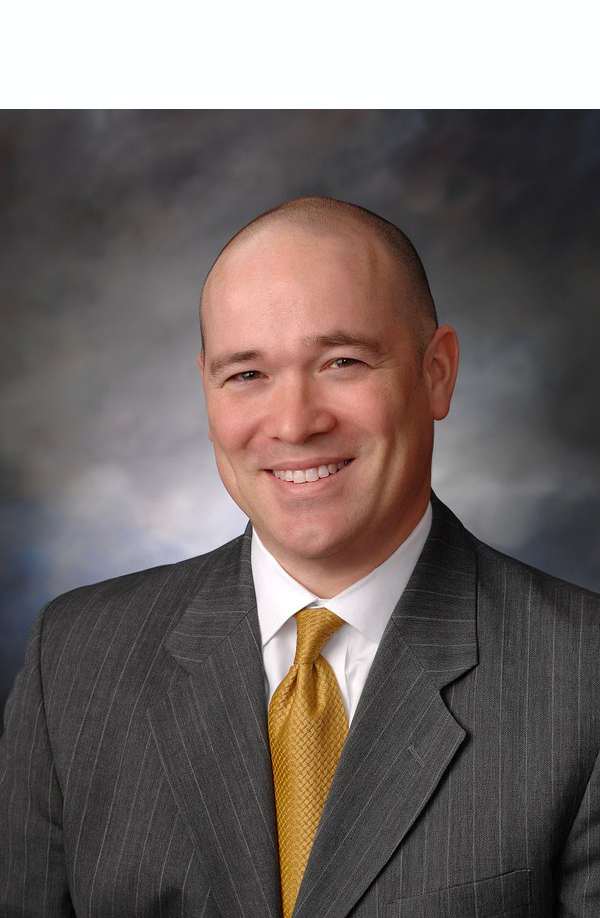
Tom Beall , Acting U.S. Attorney for District of Kansas

Each year, more than 600,000 individuals return to our neighborhoods after serving time in federal and state prisons, and another 11.4 million people cycle through local jails. Nearly a quarter of Americans have had some sort of encounter with the criminal justice system – mostly for relatively minor, non-violent offenses.

In law enforcement, we have a duty to make our criminal justice system fairer, more efficient, and more effective at reducing recidivism and helping formerly incarcerated individuals contribute to their community. That is why I am joining U.S. Attorney General Loretta Lynch in inviting Kansans to observe National Reentry Week during April 24 through April 30.

The U.S. Probation and Pretrial Services offices in Kansas work to assist people who have struggled with the laws and legal system. Any person convicted of a felony understands that nearly every aspect of life will be more difficult than before. Probation officers work with people on probation or supervised release, offering substance abuse treatment, mental health treatment, assistance finding housing or employment or both, educational opportunities or other life-changing programs. For anyone willing to make the effort, probation officers and staff are ready and willing to help. Likewise the federal Bureau of Prisons in Kansas works to provide drug treatment, vocational training and other programs aimed at reducing recidivism.

At the Department of Justice, supporting successful reentry is an essential part of our mission to promote public safety. By helping individuals return to productive, law-abiding lives, we can reduce crime across the country and make our neighborhoods better places to live. I am proud of the strides we have made and I will continue to support and advance reentry programs that promote opportunity and give formerly incarcerated individuals a better chance to rejoin our communities.

Tom Beall is the Acting United States Attorney for the District of Kansas.

Getting ‘SLAPP’d’ for getting involved — new protections considered

Gene Policinski is senior vice president of the First Amendment Center.

Have you ever been SLAPP’d?

SLAPP stands for “Strategic Lawsuit Against Public Participation,” and it’s a technique as old as lawsuits to stifle competition brought by the rapacious moguls of the early Industrial Age, and as modern as lawsuits against online critics.

A section of the Communications Decency Act shields online sites from defamation suits and other kinds of civil actions over content posted by third parties — but not the people who post the material. Nearly one-half of states provide some protection against SLAPP lawsuits — some limited only to communication with the government — but a new U.S. House proposal, HR 2304, would add to those defenses, proponents say.

Rep. Blake Farenthold, R-Texas, introduced the “Speak Free Act” last June, co-sponsored by Rep. Anna G. Eshoo, D-Calif. In an interview Tuesday, Farenthold said the legislation is needed to protect people “who don’t have $50,000” to spend on legal fees to, for example, defend against a lawsuit over a negative review posted on social media.

The “Speak Free” proposal tentatively is set for a hearing in the House Judiciary subcommittee in late May.

In response to a threat of legal action, many people simply take down the negative review or comment — which Farenthold sees as counter to the point of free speech. A broadcaster who also has worked in the computer field, Farenthold said he supports the First Amendment concept that “a review is, by definition, an opinion and there’s no defamation in opinion.”

Farenthold and others see increased concern over SLAPP actions — which, while expanding in recent years, still represent a small number within the total number of lawsuits annually — as reflective of the rise of “peer-to-peer” sites where people looking for specific services can find reviews and comments.

The proposed law would allow defendants to transfer lawsuits from state to federal courts, particularly valuable in 22 states that do not have an anti-SLAPP law or in those with weak protection. Farenthold said the law also will provide a means in federal court to quickly resolve a SLAPP lawsuit “before the legal fees run up.”

The combination of breadth and speed has appeal on both Democratic and Republican sides of the aisle, and to conservatives seeking “tort reform” to reduce lawsuits and liberals aiming to protect civic activists. Farenthold said he has not seen significant push-back from companies, which might have been expected to oppose the act. “Overall, I think more people in business have the view that you don’t need to worry … if you are providing good service.”

Bipartisan support encourages Evan Mascagni, policy director for the Public Participation Project, a nonprofit group supporting such legislation — who noted two earlier Congressional attempts failed to gain such backing. In an interview, Mascagni said, “The First Amendment is not a partisan issue. Americans understand the importance of free speech and petition activity in our society.”

Another possible factor in increased attention to the bill is the attention paid this year to lawsuits and counterlitigation actions by GOP presidential front-runner Donald Trump, who also has called for weakening protections in existing defamation law that limit retaliatory lawsuits by public figures.

Anti-SLAPP supporters also note that the range of SLAPP actions is wide: From a lawsuit brought by a California nursing home lawsuit against two women involving an email sent to a legal aid lawyer, to actions against consumers complaining about a tax advice service, to news outlets for reporting unflattering personal details about a public figure. And some warn that even the potential for a lawsuit, despite speedy resolution, will deter some private citizens from even contacting government officials about a complaint.

Retaliatory lawsuits that seek mainly to punish are a misuse of legal remedies intended to repair the reputations of those wrongly damaged, produce truthful information or spur government response — not to be a tactic to punish public participation.

A longstanding thesis about the First Amendment is that “the antidote to speech you don’t like is more speech, not less.” Nary a mention of legal threats, expensive fees and drawn-out court battles in the 45 words that define our core freedoms.

Gene Policinski is chief operating officer of the Newseum Institute and senior vice president of the Institute’s First Amendment Center. [email protected]

BEECH: How to raise a saver

Linda Beech
Linda Beech

As parents, we naturally want what’s best for our kids. We want them to be happy, healthy, curious and respectful. And we hope that someday, they will grow into successful adults with independent, fulfilling lives.

How best to accomplish this? Well, along with teaching the ABCs, 123s, and right from wrong, teaching your child the basics of financial literacy can help you raise a saver and lay the foundation for your child’s secure financial future. Here are some great tips from 360 Degrees of Financial Literacy from the American Institute of CPAs:

The early years, 3 to 7
Children this age may think that money magically appears from special machines whenever Mom or Dad pushes a few buttons, but there is one money concept they can understand. They know people need money to buy things–chances are they’ve tagged along with you to the grocery store a few times and watched you fill up your cart. Young children often model the behavior of their parents, so on these shopping trips, when you think your child is receptive, you might say things like “I can’t buy this right now, I have to save more money and buy it another time” or “These apples are a really good price today–I can buy a few more.” These types of comments will get your child thinking about money and spending.

Once children can identify coins and dollar bills, give them a piggy bank or clear plastic jar to keep any money they earn or receive as gifts. Tell them they can buy something they want once they save a certain amount (make sure the item/price is appropriate and within short-term financial reach). Taping a picture of the item on the bank can provide a visual goal. Of course, children need a way to earn some money. Consider giving your child a weekly allowance and/or payment for small jobs around the house. Some parents tie an allowance to chores; others expect certain duties as part of everyday family life, but pay more for extra work. The overall goal is to get your child excited about earning money and seeing the coins and bills pile up.

The middle years, 8 to 12
These years are the prime time to lay a solid financial foundation. Children this age are more financially and materially aware–they have a general idea of what things cost (at least the things they want), they see (and desire) the possessions their friends have, they’re bombarded by advertising, they get asked what they’d like for their birthday, and they often have a say in the new clothes and school supplies they get every year. And they aren’t shy about pointing out all the other items they want–electronics, sports equipment, room decor. It’s enough to make any parent cringe.

The first thing to do? Explain the difference between “needs” and “wants.” Continue to give your child an allowance, and encourage a 50-25-25 rule (or some variation) that earmarks 50% for immediate spending needs, 25% for the purchase of big-ticket items, and 25% for long-term savings. Consider matching a portion of that last 25% so your child is more motivated to save. Help your child open a bank savings account for long-term savings, and explain how interest and compounding works.

Help your child set financial goals, both short-term (a skateboard or sweatshirt) and long-term (a car or laptop). When it comes to spending, explain–and model–the concepts of delayed gratification, prioritizing purchases, and making tradeoffs. Help your child learn to get the most value for his or her money by selecting quality merchandise, comparison shopping, waiting for sales, and discouraging impulse buying. Let your child see that you, too, can’t buy everything you want all the time.

Introduce the concept of budgeting by explaining how your family’s budget works. Without going into detailed numbers, explain how income you receive from your job must be used to pay for needs like food, housing, utilities, and clothing, and how any money left over is set aside for emergency savings, long-term savings, and for “wants” like trips to the movies, restaurants, and new toys and gadgets.

The teen years
Children this age often seem to be ever-growing financial sinkholes–$10 here, $20 there, a laptop, sports equipment, an instrument, school trips, gas for the car, not to mention looming college expenses. Build on the saving, goal-setting, and budgeting lessons from earlier years. Be more specific about what things cost in your family’s budget, and explain that in addition to paying day-to-day expenses and saving for college, you’re also saving for your own retirement.When your child is old enough, encourage him or her to get a job to help pay for some typical high-school expenses and to increase savings. Teach your child how to use an ATM/debit card, balance and reconcile a checking/debit account, use online banking features, if available, and live on a budget–skills they’ll need in college.

These two helpful websites have more information on teaching children about money: https://www.360financialliteracy.org and https://kansassaves.org. The Ellis County Extension Office offers the group program “Money on the Bookshelf” to help parents use children’s books to teach financial concepts to kids.

Contact me at 785-628-9430 to schedule a program for your group.

Linda K. Beech is Ellis County Extension Agent for Family and Consumer Sciences.

KNOLL: Nope, my head hasn’t stopped spinning

Les Knoll
Les Knoll

The race for the White House is mindboggling.

There’s such a huge difference in how our U.S. government is supposed to be run when one looks at Democrat candidates versus Republicans. That is, if the latter party carries through on their campaign promises. Our Republican controlled Congress hasn’t and I will get to the reason why.

On the Republican GOP side Kansas got it right with Ted Cruz. Nobody can say with absolute certainty what Cruz will do about our country but I’m in his corner optimistically. I might not be as enthusiastic if Trump is the nominee, but I will support either one. What choice do we have?

The answer to that last question is mindboggling and makes one’s head spin!

Many of us on the conservative side feel we need a complete change in direction for this country!

Front runner Democrat Hillary claims she will follow in the footsteps of Obama and Bernie will too for the most part. Call them the establishment although Bernie wants an even bigger socialist government than we already have.

But here’s the kicker. There are many influential Republicans that would just as soon maintain the status quo. They don’t want change. They’re sitting pretty in Washington, D.C. or wherever, even without control of the White House. To them it’s “why rock the boat” with all the changes Trump and Cruz are proposing? There’s talk all over the place that many Republicans might cross over and vote Democrat rather than vote for the two just mentioned.

And, that’s mindboggling! Did readers see what our former First Lady said? Laura Bush said she would rather vote for Hillary than Trump if he becomes the nominee. What more proof is needed that the Democrat and Republican establishment in many ways are one?

Don’t forget voters – Hillary has a disastrous past – oodles of negatives. Donald may say some things that may be off the wall, but has yet to show what he will do about changing the direction of this country. Hillary won’t change anything.

To think there are Republicans in name only (called RINOS) who would vote against a Trump or Cruz blows the mind but then again that’s why Trump and Cruz are popular. They’re not part of the establishment and have support from millions of dissatisfied voters not seen in our politics for decades.

God help us if a Democrat again becomes president and if it is a Republican, we pray the new guy in the Oval Office doesn’t cave to the establishment on either side of the aisle.

Les Knoll lives in Victoria and Gilbert, Ariz.

HINEMAN: The future of public education in Kansas

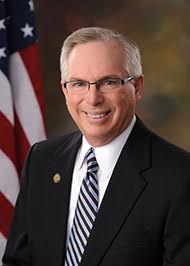
Rep. Don Hineman, R-Dighton, 118th Dist.

Public education has a long tradition in the U.S., having first germinated in Thomas Jefferson’s early advocacy. In 1837 the concept was put into practice by Horace Mann of Massachusetts, when he established a statewide system of professional teachers and common schools. Mann’s system soon spread to other states as many began to subscribe to the idea that the common school could be the “great equalizer” in American society. The schools were termed “common” because they were viewed as a civic asset held in common by all and available to all.

From its very beginnings the objective of free and universal public education went beyond mere learning to include social efficiency, civic virtue, and development of character. And in the formative days of Kansas “The Territorial Legislature believed education was key to the state’s growth and development, since a literate and skilled citizenry could help build business and industry.”

Support for public education remains strong today, as stated by Tom Brokaw: “There is a place in America to take a stand: it is public education. It is the underpinning of our cultural and political system. It is the great common ground. Public education after all is the engine that moves us as a society toward a common destiny… It is in public education that the American dream begins to take shape.”

In short, the purpose of public education was, and still remains, the creation and advancement of a well-educated citizenry.

Like any well-conceived governmental program, public education exists for the benefit of all, whether that benefit is direct or indirect. It was never intended as a government subsidy for the parents of school-age children, for if it were then logic implies that childless couples would be entitled to a refund of that portion of their taxes which went for the support of public education. They are not, of course, just as an individual without a car isn’t entitled to a refund of taxes which are devoted to creation and maintenance of public roadways.

Recent attempts have been made to divert Kansas state government funds to private education and to chip away at the concept of public education as a bedrock principle of society. It began during the 2014 legislative session, when a provision was inserted into a school finance bill to provide tax credits for corporate scholarships to private schools. That marks the first time in state history that state tax dollars have been diverted from public education to private schools.

Now a much greater threat to public education has been proposed as part of HB 2741, which would provide for a payment to the parents of home-schooled students, or those enrolled in private school, equal to 70% of per pupil state aid. Estimates put the cost of that program at $130 million to $300 million per year. Those are dollars which would be unavailable for public education, at a time when financing public education is the subject of an ongoing court dispute over adequacy of funding.

If this proposal were to become law it would cause a shrinking of the public education system as funding dwindles, leading the brightest and most capable students to increasingly choose private education instead. Public schools would be left as residual institutions for the education of the most impoverished students as well as those most difficult to educate (and therefore not accepted into private schools). The result would be vast disparities of educational opportunity for Kansas school children, and an end of the long-held concept of public education as a foundational building block of our society.

Are Kansans ready to take this step? Are we collectively willing to endorse the downsizing and impoverishment of public education? Are we willing to support the transfer of hundreds of millions of state dollars to private and home-school institutions with little of the oversight or control under which public schools must operate? This proposal is a revolutionary approach to the way Kansas supports education. It is imperative that all Kansans join in the discussion and let their opinions be known. As for me, I remain committed to the principle that public dollars are intended for and must be devoted exclusively to public education.

Kansas State Representative Don Hineman
118th District
[email protected]

Letter: Make Earth Week about people in need

In re: https://www.hayspost.com/2016/04/20/statewide-organization-to-speak-at-fhsu-about-climate-change/

Dear Editor,

With increasing populations at risk, it is now more important than ever that we help the poor adapt to climate change as it occurs—Africans suffering from drought, Inuit affected by permafrost melt, etc.

But aid agencies are unable to adequately support these vulnerable people. Overconfidence about our ability to forecast and even control future climate states has encouraged governments to dedicate most of the public money spent on climate finance to mitigation, trying to affect events that may, or may not, someday happen. The San Francisco-based Climate Policy Initiative demonstrated that, in 2014, 83% of all public climate finance went to mitigation, with only 17% going to adaptation.

When you count funds spent by private enterprise in the total, 94% of the over $1 billion spent worldwide EVERY DAY on climate finance is dedicated to mitigation, leaving a relatively trivial 6% to help people today.

One of the reasons for this imbalance is that mitigation projects are far more profitable for large corporations than are the smaller scale boots-on-the-ground strategies needed to help populations adapt.

By focusing their activism on mitigation, groups such as Citizens’ Climate Lobby unwittingly encourage a continuation of this travesty. Make Earth Week about people in need instead.

Sincerely,

Tom Harris, B. Eng., M. Eng. (Mech.)
Executive Director
International Climate Science Coalition (ICSC)
28 Tiverton Dr.
Ottawa, Ontario K2E 6L5
Canada
www.climatescienceinternational.org

JORGENSEN: Being fire safe is good for our planet

Doug Jorgensen
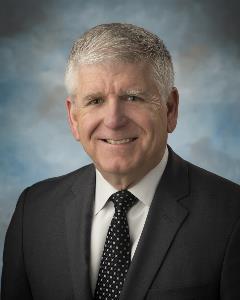
Doug Jorgensen, Kansas Fire Marshal

April 22, 2016, marks the 46th year of celebrating Earth Day, a day dedicated to focusing human energy toward environmental issues.

The Office of the Kansas Fire Marshal, which is focused every day of the year on protecting the land of Kansas and its citizens from catastrophic fires and hazardous chemical spills, offers actionable tips that Kansans can take to be both good stewards of our planet’s resources while also being fire safe.

Every Kansan has a role in preserving our state as both a beautiful and healthy place to live. We always encourage our citizens to take steps to protect their loved ones and property from fire and chemical hazards. On Earth Day, whether you have just a few minutes to spare or the entire day, everyone has time to do something which can have a positive impact on our planet while also improving their own safety from fire and chemical hazards.”

Following are activities that Kansans can take that are good for the environment and improve fire safety:

  •  Switch to LED lightbulbs. These light bulbs contain no mercury, and they operate cooler than a traditional light bulb or even a Compact Fluorescent Light (CFL) resulting in less fire risk.
  •  Take advantage of Hazard Drop Offs available on Earth Day. Get rid of old paint, cleaning chemicals, solvents, stains, etc. Not having these highly flammable chemicals on shelves will greatly reduce fire risk as well as the possibility of them contaminating ground soil.
  •  Start a compost pile of paper, leaves, etc., rather than having a burn pile which could result in floating embers starting fires elsewhere.
  •  Do a home energy audit, which could identify areas of fire risk. Get your HVAC system checked out by a licensed professional and be sure to replace filters monthly.
  •  Clean out your dryer lint trap and filter, which will make your dryer operate more efficiently and reduce fire danger.

Much of Kansas was recently involved in battling wildfires, and these out-of-control grass fires destroy property, increase the release of carbon dioxide into the air, destroy habitats, and take up a lot of natural resources, including water, which could lead to periods of needed water preservation in the area. All Kansans should take measures to be sure they are protecting themselves and their neighbors from wildfires.

Most wildfires are completely preventable. The largest amount of fires are started by “controlled” or planned fires which have either rekindled or spread out of control. These fires could have started out as simple backyard fire pits for entertaining or burning a pile of dead leaves and limbs after cleaning up a yard. Floating embers can quickly spread to dry, overgrown vegetation and shifting winds can push heat and flames where people never meant for them to go.

Homeowners can take a few simple steps, such as weeding around their property, keeping grass mowed to shorter than 4 inches, and removing leaf litter around buildings and propane tanks, to protect themselves from not only spreading wildfires but creating structure fires as well.

On this Earth Day, every Kansan should find some time to do something which not only protects our environment, but keeps themselves and their loved ones safer from fire. For more fire prevention tips, visit FireMarshal.ks.gov<https://firemarshal.ks.gov>.

Doug Jorgensen is the Kansas Fire Marshal.

INSIGHT KANSAS: Demand accountability for financial mess

In upcoming elections Kansas voters should hold their lawmakers accountable for the state’s current financial mess, that is, the stream of unbalanced budgets, unfair taxes, and unprecedented new debt. Revenue projections released earlier this week document that the mess has now reached catastrophic proportions.

As a guide to Kansas voters this column tracks the five major actions taken by majority lawmakers in their descent into financial chaos.

H. Edward Flentje is professor emeritus at Wichita State University.

The first step into chaos began four years ago, in 2012, with the forced vote on a hugely flawed tax bill (Senate Sub for HB 2117) in the Kansas House of Representatives. The bill passed with a minimum of votes required and cut income taxes benefiting primarily the wealthiest Kansans by $1 billion a year without any cuts in spending. Over 300,000 business owners were exempted from taxation while modest tax benefits for lower-income residents were eliminated.

The folly of the 2012 bill quickly became apparent, and state representatives tried to rectify the situation with another tax bill (HB 2059) in 2013. A sales tax increase and reduced income-tax deductions were adopted with a projection of $400 million a year in new tax revenues. But lawmakers continued to have faith that income taxes could be eliminated by writing new future income tax cuts of $750 million a year into the same bill.

The governor then claimed “the sun is shining,” but three acts of financial desperation in the 2015 legislative session tell a different story.

First, again by the bare minimum of 63 votes, representatives authorized state officials to borrow $1 billion with the intention of propping up the state pension fund (SB 228). A small piece of this record-high pension debt was used to pay for current-year tax cuts, and Kansas taxpayers were placed on the hook for paying off the debt for the next thirty years.

Next, in an omnibus appropriation bill (House Sub for SB 112) lawmakers suspended all debt limits on borrowing by the Kansas Department of Transportation and at the same time authorized even larger sweeps of highway funds to salvage the 2012 tax cuts. The Brownback administration of course obliged with record-breaking highway debt and sweeps approaching $500 million in this budget year.

Finally in 2015, lawmakers adopted with the bare minimum of 63 votes another futile attempt to save the 2012 tax cuts (Senate Sub for HB 2109), raising taxes in the range of $400 to $550 million a year. Sales taxes were increased once again; cigarette taxes were boosted; the cuts in income tax rates promised in 2013 were scaled back; and most individual income tax deductions were eliminated.

So, where do state finances stand after this descent into chaos? The state is broke, flat broke, lunging from one financial crisis to the next. Sales tax rates now make Kansas’ tax on food the highest in the nation. More highway funds are being swept, and highway maintenance and improvement projects are being deferred; pension payments are delayed; and universities are forced to make mid-year cuts. More cuts in core services appear likely. The promised adrenaline shot on the Kansas economy looks more like a heavy dose of sedatives as the state consistently trails the region and the nation in economic growth.

Most Kansas voters understand that the 2012 tax experiment has failed miserably and the steps taken to rescue the experiment have produced more deficit spending, less-fair taxes, and historic levels of long-term debt.

Every legislative seat will be on the ballot in August and November, and voters now have time to identify those incumbent lawmakers most responsible for creating this continuing mess. Check out voting records and insist on answers. Demand accountability at the polls.

Now is the time to find these apprentices in state finance and tell them on Election Day: “You’re fired!”

H. Edward Flentje is professor emeritus at Wichita State University.

Copyright Eagle Radio | FCC Public Files | EEO Public File