A wise teacher once said, “When you are multitasking in class, you are doing at least two things badly.”
Those words also ring true for distracted driving on Kansas highways. Besides being a safety hazard for yourself and other drivers, distracted driving offenses could factor into your vehicle insurance premiums.
April as National Distracted Driving Awareness Month.
Distracted driving is any activity that could divert a person’s attention away from driving. The activity list includes texting; using a cell phone; eating and drinking; talking to passengers; grooming; reading, including maps; using a navigation system; watching a video; and adjusting a radio or other electronic device.
Because text messaging requires visual, manual and cognitive attention from the driver, it could be considered the most alarming distraction, Commissioner Selzer said. And, in Kansas, it is illegal. A fine and possibly a red flag on your policy when your insurance is up for renewal are consequences of receiving a citation for texting and driving.
Statistics from the Kansas Department of Transportation website show that drivers in the ages 14-19 and 20-24-year-old groups have more instances of distracted driving when using electronic devices, such as texting on smartphones, than other age groups.
The National Highway Traffic Safety Administration said more than 3,100 people were killed and 424,000 people were injured in 2013 in vehicle crashes involving distracted drivers.
Distracted driving can be risky, it can be costly, and, unfortunately, it can be deadly. I urge everyone to be proactive in keeping your driving distractions under control, especially when using electronic devices.
Ken Selzer, CPA, is the Kansas Commissioner of Insurance.
Ed Cross’ recent article (“Low crude prices not long-term story, trend”) provided some outdated data on methane emissions from the oil and gas industry. He said, “According to the EPA, methane emissions from the oil and gas sector have fallen by 38 percent since 2005, including a 73 percent drop in methane emissions from wells since 2011.” On April 15th of this year, the EPA admitted that it had been underestimating methane emissions (https://tinyurl.com/go3g75m).
In the EPA’s most-recent annual report on greenhouse gas emissions (https://tinyurl.com/jg8mhya), methane emissions from the oil and gas sector actually increased 8 percent between 2005 and 2014. Since 2011, methane emissions from natural-gas production have increased slightly (0.2%).
These upward trends in methane emissions may seem insignificant, but the EPA’s revisions show that methane emissions from natural gas production are actually more than double what was previously thought. Natural gas production emits 54% of all methane generated by the U.S. energy sector. The energy sector, in turn, emits one third of all methane in the U.S., more than any other economic sector. Although methane is less persistent in the atmosphere, methane has 25 times more Global Warming Potential than CO2.
The increased methane emissions from natural-gas production show that the industry has been telling us only part of the story about its environmental stewardship. I don’t dispute the economic impact of the oil and gas industry on our economy from the local to the international level; however, we should consider its economic and environmental costs more thoroughly. If we do, we may find that the Carbon Fee and Dividend, a market-based approach, is the best, and fairest way, to transition our fossil fuel-based economy to one based on renewables (https://tinyurl.com/CarbonFeeDividend).
Helen Hands, Hays
Looking through the lenses of intellectual and developmental disabilities (IDD), whether from a national perspective or a state perspective, there are concerns in the air. As a starting place, let me begin on the national front. I will focus on one upcoming Department of Labor rule impacting Community services and supports for persons with disabilities. From there I’ll circle back and touch on the corresponding Kansas connection.
The Department of Labor (DOL), is implementing a rule change that will impact how all businesses and non-profits pay overtime for salaried employees.
Developmental Services of Northwest Kansas (DSNWK) is a non-profit and an employer of nearly three hundred and fifty staff throughout northwest Kansas. Like most businesses, we have both hourly and salaried employees and this DOL change touches those who are salaried in a major way. The DOL website would provide the details, but in keeping it simple I’ll focus on the core issue. There are several conditions that must be met for a position to be appropriately classified as salaried, one of which includes a salary ‘floor’. Such a position must have an annual wage greater than $23,660. The trouble brewing relates to the DOL rule change that proposes to more than double this salary floor for this employee group, a 113% spike. With the stroke of a pen, a mandate will begin impacting every industry with salaried workers whose annual wage is under the new salary floor of $50,400.
The proposed overtime exemption rule threatens to put unreasonable strain on already overstrained providers like DSNWK, who provide community based supports for people with intellectual and developmental disabilities.
We have long-desired to elevate the wages of our hard-working hourly and salaried employees. We are primarily funded by state and federally matched Medicaid dollars. Most do not realize this, but we do not set the rates for those dollars needed for our services. For us, the rates are set by the State of Kansas. DSNWK, and providers like us, have been hindered for nearly a decade with stagnant reimbursement rates (no adjustments since 2008) and to worsen matters, reductions in resources have been experienced.
So the Perfect Storm strikes when costs are mandated by law to increase while there is no corresponding mechanism nor mandate to increase the rates to remain legally compliant. That Perfect Storm is set to strike in the near future with troubling effects nationally and here in the heartland, Kansas.
This storm has been on the horizon for months and we’ve seized opportunities to provide public comment sharing our concerns with the DOL (in September 2015) as well as with our members of Congress along the way. Let’s shift from a national focus to Kansas.
We are all quite aware of Kansas’ current and significant budget challenges. Legislators know the important work that lay ahead and what it takes to solve that challenge. Several legislators from NW Kansas have advocated with us and with persons with IDD, stressing that we not solve the budget problem on their backs or on the backs of their support system. That support system is made up of people supporting people – men and women who’ve made it their careers to support others.
These dedicated support workers deserve a living wage.
The stagnant rates for the services that we provide have hampered our ability to keep pace for this noble work done every day. The reality of deficit budgets on top of receiving no rate adjustments has created a no-win situation. Looking back as far as 1999, the cost of living (ie. the inflation rate) in Kansas has risen by nearly 43% while service reimbursement rates have only risen by 17.8% over that same period! How many businesses can continue under such challenges? We must! I believe action is needed to now to correct our course. I’m reminded of a quote from Mahatma Gandhi that is spot on for us here in Kansas. He shared, “The measure of a civilization is how it treats its weakest members.” People with IDD have the same inherent value as you and I, where each is welcome and all belong.
In the last several years we’ve been navigating and adapting to the new KanCare system which began in 2013. We are on now on the cusps of yet another major system overhaul looming in Kansas, called Waiver Integration. Because of space limits here, I’ll reference a piece of legislation, HB 2682 and a corresponding article, calling for a slowing down of that process. The KHI article, by Andy Marso, was dated 4/1/16 (https://www.khi.org/news/article/brownback-administration-sends-mixed-messages-on-waiver-integration).
We are in an “Action-Required” zone right now and need the support from all our elected leaders representing us both in Kansas and in Washington. The please ‘prevent-further-harm-of-our-system’ message must transform to please also ‘address-the-critical-erosion-of-the-community-service-system’.
I thank each citizen for becoming more informed. Knowledge and understanding leads to both responsible citizenship and action. I am also grateful to all our elected leaders who advocate with us and those we support. We have reached out on all levels, locally, at the state level and on the national level and will continue to do so moving forward.
In closing, let me suffice to say that Concern is in the Air – requiring common-sense Action. At DSNWK we remain committed to helping our community and those with intellectual and developmental disabilities to grow and be recognized for their inherent value and importance. Our gratitude is extended to all who join us in this great work.
Jerry Michaud is President/CEO of Hays-based DSNWK.
Farmers and ranchers strive to protect our planet each and every day. On April 22, nearly 2 million agricultural producers will celebrate the 45th observance of Earth Day with the rest of us who live in this country.
Like each day’s sunrise and sunset, some take this land for granted. Conservation of our planet can be a struggle because some regard the land as a commodity that belongs to them. Others see this earth as a community to which they belong.
Farmers and ranchers belong to this second category. They love, care
and respect the land. Ag producers adhere to an ethic that enlarges the boundaries of our community to include soils, waters, plants, trees and animals – collectively – the land.
The fondest wish of farmers and ranchers is to pass their land on to their children. They work years to leave a legacy of good land stewardship.
There is no other way for land to survive the impact of technology and the demands put on it by man. Let us never forget that while our land yields fruits, vegetables and grains, it also yields a cultural harvest – one we as inhabitants all share and must nurture.
Today, less than two percent of our population makes its living directly from the land. Middlemen, countless machines and sophisticated technology separate those who do not work the land from this valuable resource. Many have no vital relation to the land. To others the land is viewed as the space between cities on which crops and grass grow or cattle graze.
As we celebrate Earth Day this April 22, let’s remember land use is not solely an economic question. Let’s remember it in terms of what is ethically and aesthetically right, as well as what is economically expedient.
The future of our land and its viability hinges on investments of time, forethought, skill and faith, rather than only investments of capital. We have continually modernized our farm equipment, plant foods, pesticides and other production inputs and we are proud of the abundance of the crops we produce.
We can never throw away these tools that have provided so much for so many. On this Earth Day, let’s renew our commitment to harmony with our life-giving land. Let’s once again reaffirm our commitment to always hold sacred the land.
This Earth Day, renew your pledge to the earth as a community to which you belong. Nurture, love and respect this land that includes soil, water, plants, trees and animals.
John Schlageck, a Hoxie native, is a leading commentator on agriculture and rural Kansas.
Ed Cross, KIOGA
By EDWARD CROSS Kansas Independent Oil & Gas Association President
The drastic drop in crude oil prices in 2015 and 2016 have had a significant impact on the small businesses that make up the Kansas oil and natural gas industry. But low crude oil prices are not the long-term story or trend.
Many oil and gas companies in Kansas and elsewhere cut capital expenditures by 75%- 80% in 2015. Some oil and gas service companies have layed off as much as 50% or more of their workforce and some producers have layed off as much as 20%-25% of their workforce. The oil and gas industry makes significant investments in developing human resources and agonize over workforce loses.
Oil production in Kansas fell by 5.5% in 2015, but a much larger decline can be expected in 2016 if oil prices stay low. Oil production decline generally lags oil price collapse as producers work to maintain production and improve operating efficiencies.
As a result of low oil prices, the industry experienced a 70% drop in drilling rig count and a 68% drop in drilling permits issued in 2015. In addition, oil and gas severance tax collections by the State of Kansas and property tax collections by counties dropped dramatically.
The economic effects are everywhere. Oil and natural gas play an integral role in nearly every aspect of our lives. With over 6,000 products produced from petroleum, much of our high standard of living can be traced to the use of petroleum. Nearly every person uses some product from petroleum in their daily lives.
If you think about all the associated service and supply companies that support the oil and gas industry combined with the consumer spending impacts of oil and gas industry payrolls, you begin to get a picture of the enormous impact of the oil and gas industry.
The longer oil prices remain low, the oil and gas industry will continue to constrict. In turn, considering the economic impact of the oil and gas industry, that would be detrimental for the economy as a whole. While we may enjoy lower gasoline prices, lower gasoline prices do not compensate for collapsing capex and rising unemployment in the U.S. economy.
Production rollover could be sooner and more severe than anticipated. Production decline rates accelerate when capital is taken away. Low oil prices have accelerated production declines and a supply/demand could be reached, perhaps later this year.
Low crude oil prices are not the long-term story or trend. The price of crude oil will recover in the future and the oil producing characteristics of Kansas uniquely positions the State for a bright energy future. Over the last decade, market forces have spurred massive amounts of new oil and natural gas production. Oil and natural gas supply 63% of U.S. energy consumption today.
President Obama’s Energy Information Administration (EIA) estimates that 25 years from now fossil fuels will account for nearly 80% of our country’s energy consumption. The International Energy Agency (IEA) projects that by 2040, world energy demand will increase by 45% and nearly 60% of that demand will be supplied by oil and natural gas. Oil is expected to remain the number one source through 2040 followed by natural gas and coal.
The men and women of the oil and natural gas industry reject the stale mindset of last century’s thinking peddled by some that oil and natural gas production and environmental stewardship are not compatible. From 2000-2012, the oil and natural gas industry spent more on low and zero carbon technologies than the federal government and nearly as much as all other industries combined. According to the EPA, methane emissions from the oil and gas sector have fallen by 38% since 2005 including a 73% drop in methane emissions from wells since 2011. Our nation’s carbon dioxide emissions are at 20-year lows.
Affordable, reliable energy is essential to our economy because energy powers everything that makes modern life possible. We need smart energy policies that promote our nation’s energy position as a leader in energy production. We need tax reform solutions that don’t compromise our ability to grow the economy. We need a regulatory approach that invites input from industry and bases rulemakings on sound science, legitimate cost/benefit analyses, and economic impact. We must abandon policies driven by a zero-sum game philosophy for energy that says we must have less oil and natural gas so that we can have more of something else.
The American public and future generations deserve better.
Wondering just what legislators are going to talk about—and the governor is going to talk to legislators about—during the upcoming veto session of the Legislature when the biggest issue is whether Kansas can make it through the fiscal year?
Think we’ve found it: Gov. Sam Brownback’s effort to end the border war between four Kansas and five Missouri counties over economic development, job and industry growth in the metropolitan Kansas City area.
That border war, with each state negotiating with businesses to move their headquarters and plants and such into their state, has Missouri companies moving to Kansas and Kansas companies moving to Missouri.
The strategic weapons for that border clash is very simply money. Kansas offers firms bonuses and preferred tax treatment for jobs coming west across the state line, and Missouri does the same thing.
So, if there can be an end to that so-called border war, both states save the money and the tax advantages they now use to lure jobs and economic development across the state line. Sounds like a reasonable but costly battle between the economic development gurus of each state.
Hey, what if companies just make their own decisions based on sound business practices? The four Kansas and five Missouri counties are close, probably no big problem driving to and from work whichever side of the state line an employer is headquartered.
Missouri has a little advantage—being to the east of Kansas—because Kansans driving to Missouri jobs have the sun in their eyes both ways, while Missourians driving to Kansas have the sun at their backs both ways.
But…Brownback’s de-escalation of the battle of financial incentives requires the Missouri legislature in the next few weeks to pass a bill that would strike down statutory tax breaks for firms moving to Missouri while Kansas’ effort…well…it’s mostly a letter to the Kansas Secretary of Commerce to stop offering Kansas’ panoply of lures if and only if Missouri strikes down its tax breaks.
Hmmm…let’s see, Missouri passes a law prohibiting lures for business. Kansas has its secretary of commerce—who is appointed by the governor who has two years left of his term—well, we guess frame, or at least laminate, Brownback’s directive.
Sound a little unequal?
Oh, and let’s not forget that those business-lures come at a cost to the state, which is nearly broke and doesn’t really have the cash to offer those business incentives. So, broke Kansas which can’t afford bullets for its eco-devo gun talks Missouri into unloading its gun by statute.
Kansas would still offer incentives for businesses to move across the state line, including letting businesses which move into Kansas essentially keep for several years the Kansas income tax that would have been paid by only newly hired workers, instead of everyone who crosses the border to go to work as under the current program. Oh, and if a Missouri firm puts up a new building that costs at least $10 million, then the business gets to keep the income tax of all its workers.
Brownback has found a sponsor for a bi-state committee to discuss how to make the plan work, how to cooperate to bring business to the entire Kansas City market area—no matter which side of the state line an enterprise locates.
But, besides the distraction from the state’s budget problems…we’re thinking that the real boon here might be which state gets to cater the lunches and dinners for that bi-state council.
Will Missouri fall for it? We’ll see, won’t we…
Syndicated by Hawver News Co. of Topeka, Martin Hawver is publisher of Hawver’s Capitol Report. To learn more about this nonpartisan statewide political news service, visit www.hawvernews.com.
John Richard Schrock is a professor at Emporia State University.
Years ago, it took a high school diploma to get a good job. Today, some employers require a college degree. The assumption is that today’s jobs require a higher level of communication and math skills and an additional two years (associates degree) or four years of advanced study is now needed.
But there is another meaning to this phrase: that the college degree is eroding in academic rigor and may represent little more knowledge and skill than the high school diploma of the last century.
There has been an explosion in high school course work awarded college credit. When dual credit was first established, the wording of the legislation made it clear that it was for a few exceptional high school students—only juniors or seniors—who could benefit from taking accelerated course work. The image was of a straight-A high school student trekking up the street to sit among college students at the local college. School administrators had to attest that the student was exceptional—a “Doogie Howser” for those who remember the television series about the youngster who attends medical school.
However, the Kansas concurrent enrollment system was soon expanded to include students who had just completed their freshman year of high school. School superintendents added the number of students taking courses for college credit to their bragging inventory. Having a large number of students graduate high school with one or even two full years of college credits is now common. It has become a false indicator of school quality.
One large Kansas district begins students on a pathway to college preparation beginning at age 4! Ninety percent of students in this non-affluent district are admitted to college and some have 24–30 college credit hours finished at high school graduation. Under the cheerleading of moving from “encourage” to “require,” their College Plus program now mandates college course work for high school students. —Everyone is now a “Doogie Howser.”
With the annual increases in college tuition, those parents who could afford it saw the savings in paying college tuition for a high school class now, to count as college credit later.
Accelerating this trend was a change in public university funding. Formerly, Kansas regents universities were funded within a corridor. As long as enrollment stayed within this corridor, the funding from the state remained stable. The Kansas Board of Regents switched to a system where each school essentially kept its tuition. And the race for students and tuition from dual credit courses was on!
What credentials do these secondary teachers need? In 2005, KBOR passed a bachelors-with-24-hours-in-field-taught requirement. But the wording allowed community and technical colleges to do the same. Kansas found itself in the strange position of allowing teachers to teach college credit courses when they did not have enough credits to teach the course in high school. [Most Kansas secondary teachers must have more than 24 hours-in-field]. For 10 years, these underqualified teachers who lack a masters degree, at both high schools and community and technical colleges in Kansas, have generated large numbers of college credit course work for high school students.
Into this academic Wild West rides the Higher Learning Commission. The HLC’s Assumed Practices for faculty roles and qualifications requires teachers of college credit courses to have the masters degree and 18 graduate hours in the field being taught. Immediately, Kansas community and technical colleges began advertising for the master’s criteria. But as soon as the HLC policy clarification indicated it would go into effect for Fall of 2017, many re-advertised at the bachelors-with-24 level.
While there are some well-qualified high school teachers teaching a college level course, the vast majority of current high school dual credit teachers lack the master’s degree/18-graduate-hours-in-field-qualification.
Kansas has been issuing college credits for over a decade for courses taught by underqualified teachers. And Kansas officials have asked HLC for more time, another 5 years, to implement the qualifications requirement.
Meanwhile, for many Kansas students, a four-year bachelors degree has already become only three or even two years of genuine college course work. Indeed, the college degree may become a high school diploma.
As a cognitively healthy adult, you have the right to be informed about the state of your health and make your own decisions about medical treatment. But, what happens if you become unable to voice your own decisions?
If a person becomes incapacitated, either temporarily or permanently, advance health care planning comes into play, according to Erin Yelland, Extension specialist at Kansas State University. Forming advance health care directives allows a person to voice his or her wishes regarding future health care, in the event that person eventually becomes unable to do so.
Unfortunately, however, only one in four U.S. adults has an advance health care directive in place, said Yelland. Many people start the planning process as older adults, but this is something any person over the age of 18 should consider. At any point in life, tragedies – such as a car accident, farming accident or sudden serious disease – can happen.
The importance of this issue for young adults will be included in the “Real World 103″ presentation on April 26, 7:00-8:00 pm, at Cody Commons in the Fort Hays State University Student Union. Speakers from the Hays Area Young Professionals group, in partnership with the Ellis County Extension Community Development program committee, will share information about advance health care planning for young people over age 18 whose parents may not be aware of their preferences and decisions.
The most common advance directives include a durable power of attorney for health care and living will. A packet with a copy of the Kansas statute forms for these directives, in addition to other important health care information, is available at the Ellis County Extension Office or online at www.ksre.ksu.edu; https://www.ksu.edu/bookstore use the Bookstore to search for MF3280 “Advance Health Care Planning in Kansas.”
Durable power of attorney for health care
In your advance health care directives, you can name someone who you would like to make decisions for you in the event that you are unable to speak for yourself. The person named to make medical decisions on another person’s behalf is called a “durable power of attorney for health care,” “medical power of attorney” or “health care agent.” This is not to be confused with naming a durable financial power of attorney, which should be handled with the help of a lawyer.
Naming a durable power of attorney for health care is a much simpler process that requires completing an easy fill-in-the-blank form and getting signatures from two witnesses.
A person’s named durable power of attorney for health care can make multiple decisions on his or her behalf, including what treatment to provide, who will administer the treatment and where the treatment should take place.
Yelland added that it is important to choose a trustworthy person, perhaps a close friend or relative, and clearly communicate any medical wishes with that person.
The living will
The living will, or an instruction list about what type of care a person would like to receive at the end of life, is also an important part of advance health care directives documentation. Unlike the durable power of attorney for health care form, the living will form does not appoint someone as a voice but rather explains in writing a person’s end-of-life wishes.
Specifically, the living will addresses a person’s wish to not accept life-sustaining procedures – being placed on a ventilator, or receiving artificial nutrition and hydration – if at least two physicians deem that person, in writing, as terminal.
“If you have specific wishes, and your wishes don’t exactly align with the Kansas statute fill-in-the-blank form, it’s recommended that you consult an attorney,” Yelland said.
Like the durable power of attorney for health care form, the living will is valid if completely filled out and witnessed by two people.
Updating and storing documentation
People should review their durable power of attorney for health care, living will and other advance health care directives documentation at least once a year to make sure it still aligns with their wishes. Also review the documents after a major life event, such as a marriage, divorce or separation.
To revoke the documentation, simply destroy it and complete new state statute forms. Keep note on who has copies of the forms, so that older copies are destroyed and replaced with new ones.
Make sure the named health care agent, close family and friends, the local hospital and a primary care physician have copies of the advance directive forms. Consider keeping a copy in the glove box of the car, on the refrigerator, or somewhere open and accessible at home.
“Don’t just keep it in a safety deposit box,” Yelland said. “If something were to happen to you, there are few people, if anyone, who have access to that box and can get the documents for you. It’s also important to note that copies of original forms are valid. So even if you keep the original in a safety deposit box, for example, if your son is your agent and he comes with a copy, that will be honored.”
The “Advance Health Care Planning in Kansas” packet available from K-State Research and Extension also has a wallet card for people to carry that allows them to list places where their advance health care documentation is stored.
Finally, people should also know that each state has its own statute forms, and it is not guaranteed that another state will accept the Kansas forms.
“If you move, it’s strongly recommended that you fill out that state’s forms,” Yelland said. “If you spend a large amount of time in another state– for example, if family members live in a different state or if you have a second home or vacation property where you spend a significant amount of time– it’s important that you fill out forms in that state as well, so that you can make sure your wishes will be honored no matter what state you’re in.”
Linda K. Beech is Ellis County Extension Agent for Family and Consumer Sciences.
Kobach dismisses voter fraud charge against Olathe woman
TOPEKA (AP) — One of the first voter fraud cases Kansas Secretary of State Kris Kobach filed after being given prosecutorial authority has been dismissed days before it was scheduled to go to trial.
The Kansas City Star reports the charge against Olathe resident Betty Gaedtke was dropped on Friday. A jury trial was slated to begin Monday.
Gaedtke and her husband, Steven, who are in their 60s, were accused of casting 2010 general election ballots in both Kansas and Arkansas. Some of the counts involved advance voting ballots.
Steven Gaedtke pleaded guilty in December to one misdemeanor count and paid the maximum $500 fine. Two other counts were dismissed.
Kobach says Steven Gaedtke signed the couple’s absentee ballots, but his wife had not.
Charles C. Haynes is director of the Religious Freedom Center of the Newseum Institute.
This week Gov. Pat McCrory of North Carolina scrambled to contain the damage caused by passage of a state law limiting bathroom access for transgender people and eliminating local anti-discrimination ordinances based on sexual orientation.
Under mounting pressure from civil liberties advocates and business interests, McCrory made what critics called cosmetic changes, notably issuing an executive order expanding the state’s employment policy for state workers to cover sexual orientation and gender identity.
Opponents of the law say McCrory’s actions are too little, too late. Absent repeal of the legislation, North Carolina will likely face more boycotts, protests and pushback from businesses threatening to cancel investments in the state.
The North Carolina legislation does not explicitly address religious freedom, but the media bundle it with the rash of religious freedom and anti-LGBT bills being introduced in state legislatures throughout the nation — more than 200 this year alone, according to the Human Rights Campaign Fund.
Although different in content and approach, these laws are all part of a national effort by religious conservatives to contain the advance of LGBT rights in the wake of the U.S. Supreme Court’s decision affirming the constitutionality of same-sex marriage.
Last month, Mississippi’s governor signed into law the most draconian of all the religious freedom bills, allowing religious objectors, including private business owners, to refuse a wide range of products and services to LGBT people. Mississippi now faces a growing backlash from the state’s largest employers, spelling big trouble for the already troubled Mississippi economy. Georgia recently avoided this fate when Gov. Nathan Deal vetoed a religious freedom bill passed by the state legislature earlier this year.
North Carolina, Mississippi, Georgia and other states with bitter, divisive and destructive battles over LGBT and religious freedom legislation are all states with no statewide civil rights laws that include sexual orientation and gender identity.
In other words, majorities of state legislators in these states want religious freedom for themselves, but are unwilling to ensure equality for LGBT people. A same-sex couple in Mississippi or North Carolina can get married today but get fired or evicted tomorrow.
This lack of reciprocity makes reasonable and balanced deliberations about bathroom privacy, religious accommodations for religiously affiliated groups or narrowly tailored opt-outs for county clerks virtually impossible in states where LGBT people have no rights — and thus no real place at the bargaining table.
Last year, Indiana learned the hard way that without first protecting LGBT people, religious freedom laws backfire. After the governor signed a religious freedom law, the nationwide backlash was swift and overwhelming. This year, faced with the loss of conferences, business investment, sports events and more, the legislature is considering a nondiscrimination bill protecting LGBT people and providing some religious exemptions.
Religious conservatives in Utah took a very different approach by joining with people from all sides to find common ground. Last March, after months of negotiation, Utah Gov. Gary Herbert signed into law compromise legislation protecting LGBT people from discrimination in housing and employment while also providing exemptions for religious institutions and protections for religious speech.
Although Utah’s law can’t be replicated everywhere since laws and conditions vary widely from state to state, Utah’s spirit of compromise — the willingness to seek a balance between LGBT rights and religious accommodations — is a model for how every state can find a shared solution if there is political will to do so.
Despite the harm opposition to LGBT protections does to the cause of religious freedom in states like North Carolina and Mississippi, many religious conservatives continue to adamantly oppose nondiscrimination laws for LGBT people. Out of religious conviction, they remain convinced that such laws would signal societal acceptance of what they consider a “lifestyle choice” that is sinful, wrong and dangerous.
But it escapes me why people of faith would countenance discrimination against any person, however much they disagree with who they are or who they love.
In a pluralistic democracy, people can and should debate differences about religion, sexual orientation and gender identity. But our common goal must be public policies that uphold both religious freedom and equality — two constitutional principles grounded in the inviolable dignity of every human being.
Charles C. Haynes is vice president of the Newseum Institute and founding director of the Religious Freedom Center. [email protected]
About 18 months ago, I wrote that the 2014 election for governor was “the most important election in your lifetime.” That declaration stands.
We knew in November 2014 that the Kansas economy was headed off the cliff, but we could not appreciate how far down we would fall. Voters actually did understand, according to exit polls, that the Governor Brownback’s income tax policies were failing.
Burdett Loomis
If the high-dollar battle (roughly $17 million) between Senator Roberts and challenger Orman had not changed the focus to Obama from Brownback, it’s likely that the governor would have lost. Instead, he narrowly won four more years to continue of the so-called Kansas experiment.
But Governor Brownback is both term-limited and not on the ballot in 2016. So Democrats and centrist, sensible Republicans simply must focus on state legislative races this year. Period.
Forget Bernie, forget Hillary, forget whoever wants to challenge Senator Jerry Moran. Don’t give a cent to national campaigns. Not a cent. Kansas needs to return to its largely successful moderate-conservative government model of the past fifty years. We need to start electing responsible, non-ideological state legislators who will find ways to reverse the Brownback Administration’s truly disastrous policies.
So – how to do that? Honestly, it’s no mystery. Recruit good candidates. Provide them with money, the “mother’s milk” of politics. Encourage them to campaign with unbounded energy, starting now and not relenting until November 8. Work hard on their behalf, including extensive communications with your friends and acquaintances.
We know this works because it always has. In Kansas, we know it works because for more than 20 years far-right Republicans have followed this formula. If the 2014 election demonstrated anything for Democrats and moderate Republicans, it was that being “right” on the issues, and especially income taxes, did not guarantee victory. Money mattered a lot, but so did the energy and hard work that have supported far-right politics in Kansas for the past two decades.
Change, however, is in the wind. Continually declining Kansas revenues, growing numbers of cutbacks, and the sub-basement approval ratings of Governor Brownback have greatly increased the incentives to challenge incumbents. Even in mid-April, seven weeks before the June 1 filing deadline, we’re seeing a lot of potentially strong candidates step up.
Although there are the usual former incumbents, such as Democrat Cindy Neighbor in Johnson County, and the young guns, like Lenexa Democrat Logan Heley, the most interesting set of candidates come from the category of “local notables.”
Historically in citizen-legislature states like Kansas, well-known community figures would spend a few years in the legislature, in effect taking their turn to serve the state. Over the past few decades, such selfless and costly service has waned. But as Baby Boomers retire and enjoy good health, more are running for state and local office – offering public service at the end of their working careers – a trend highlighted recently in The New York Times.
This year, for example, former Hutchinson CCC president Ed Berger, a Republican, and Democratic Wichita school board member Lynn Rogers are challenging sitting senators, as is veteran Overland Park city commissioner John Skubal, another Republican. These candidates face difficult races against incumbent far-right Republicans, but given the turmoil at the top of the GOP ticket and Sam Brownback’s unpopularity, it’s a welcome sign that these well-qualified individuals are getting into the game.
If 2014 was the most important election in memory, 2016 isn’t far behind. State legislative races are scarcely sexy, but they represent the essential first step in changing the capitol’s cast of characters and returning responsible rule to Topeka.
Burdett Loomis is a professor of political science at the University of Kansas.
We settled into the blind well before sunup to watch and listen to the day awaken. The glow of the new morning had barely climbed above the horizon when Greater Prairie Chickens began to fly in from the pastures around us. Just as we had been told, we heard their distinctive “booming,” like a mourning dove on steroids, before we ever saw the first arrive. One or two at a time they came until nine males boomed, strutted and scampered about, merely fifty yards away.
Steve Gilliland
Known as a “lek,” this hallowed patch of high, open ground is chosen by the males as one of several mating sights each year. Like junior high boys at the school dance, each male inflates the bright orange throat patch on each side of its head, fans out its tail, tucks its head down & forward and struts and scampers about and picks fights with his buddies, all in an attempt to attract and impress the “ladies.” The booming sound comes when those throat patches are deflated, and booms are often mixed with a hysterical assortment of clucks, purrs and twitters.
Bob and Margaret Massey are walking encyclopedias about “all things greater prairie chicken,” as they have had leks on their ground just east of Dexter, Kansas for as long as they can remember. It seems the birds like their bare, open soybean and milo stubble fields in early spring because they are the highest points around, and because they are some of the few crop fields amidst thousands of acres of rolling pasture.
Greater Prairie Chickens seem to nest only in native grasses so they do well in the tall native-grass pastures in the southern part of Kansas. In the 1990’s there were often 8 to 10 leks on or near the Massey’s property, and it was common to see 500 to 600 greater prairie chickens from blinds surrounding those leks. Word of mouth brought professional photographers and visitors from all over the US and from as far away as England, Germany and Canada. In the early 2000’s ranchers began experimenting with increased grazing practices that grazed the native grass pastures much shorter and the greater prairie chickens nearly ceased to exist in that part of the state.
Today, those grazing practices have been amended, allowing pastures to remain taller like before and the prairie chickens are returning. Another factor these birds have going for them is their ability to re-nest if their first clutch of eggs is lost.
Massey told us they are able to re-nest up to 3 times without having to rebreed again; the first clutch of eggs will number about 12, and the number of eggs will diminish each time.
The Massey’s property has a nice lodge with sleeping quarter’s upstairs and entertaining facilities and a full kitchen downstairs, plus a stocked fishing pond. In honor of a son tragically killed in a tractor accident, Massey’s ran Mark Massey Memorial Boy’s Ranch from 1973 until 1985. Since then they have also shared their facilities and the Lord with abused wives and their children, a family member struggling with addiction and Missionaries awaiting support to serve in Africa.
They also host church groups for retreats and workshops.
Today, the board of directors of their 4M Ministries is strongly considering starting a Cowboy Church on Saturdays nights to provide a worship opportunity for area ranchers who must care for cattle on Sunday mornings. So whether it’s to watch and listen to the early spring antics of greater prairie chickens and to enjoy Margaret’s homemade biscuits and gravy afterwards, or to spend a weekend with your church group in the middle of the southeastern Kansas prairie, check them out at www.4mministry.com. You’ll instantly feel like you’ve known them your whole life…Continue to Explore Kansas Outdoors!
Steve Gilliland, Inman, can be contacted by email at [email protected].
TOPEKA–Ken Selzer, CPA, Kansas Commissioner of Insurance, and Josh Ney, Kansas Securities Commissioner, are urging Kansans to review their financial preparedness and insurance priorities concerning retirement as a way to educate themselves about their future needs.
“Changes in employee benefits, longer life spans, and uncertainty with Social Security and Medicare, as well as health care, are challenges for today’s older Kansans,” Commissioner Selzer said.
“Assessing your financial preparedness for retirement is a first step to achieving financial freedom,” said Commissioner Ney.
The two commissioners offered their comments in light of National Retirement Planning Week, which is celebrated annually in April through the National Retirement Planning Coalition.
“Having income-producing insurance products as part of that retirement preparedness can be especially important,” Commissioner Selzer said. Below is a list of insurance products that could be considered in retirement strategies when a stream of retirement income is important.
Variable annuities with guaranteed lifetime withdrawal benefits—Long-term, tax-deferred insurance products that contain both investment and insurance components with optional guaranteed withdrawal benefits.
Fixed and fixed index annuities—Long-term, tax-deferred insurance vehicles which offer a guaranteed minimum interest rate.
Single premium immediate annuities—Products which provide a guaranteed income for life or a specified period in exchange for a one-time lump sum payment.
Deferred income annuities—Annuities which provide for guaranteed income but don’t begin until a specified age, such as 80 or 85.
The Securities Commissioner and Insurance Commissioner have partnered with other state agencies to create www.KansasMoney.gov, a new one-stop website for all of the financial resources Kansans may need. Retirement is a key topic covered on the website. Kansans can take the free Kansas Financial Learning Center online course, containing modules that only take between 2-10 minutes each. Throughout the month of April, Kansans are encouraged to take at least 5 modules to be entered to win an iPad mini.
“Retirement 101 is one of the modules users can take through the Kansas Financial Learning Center,” said Commissioner Ney. “We would like to encourage all Kansans to visit KansasMoney.gov this month to learn more about retirement planning best practices and ways to increase your financial IQ.”
Every day nearly 10,000 Baby Boomers enter their retirement years, according to the Insured Retirement Institute (IRI).
Whatever a person’s insurance needs are for retirement years, periodic consultation with an insurance agent and financial adviser is important, the commissioners said.
More about insurance needs in retirement is available by reading the KID booklet “Life Insurance and Annuity Basics,” which can be obtained by printing a copy from the KID website, www.ksinsurance.org; by talking to a KID Consumer Assistance Representative at 1-800-432-2484; or by going to the IRI website, www.IRIonline.org.


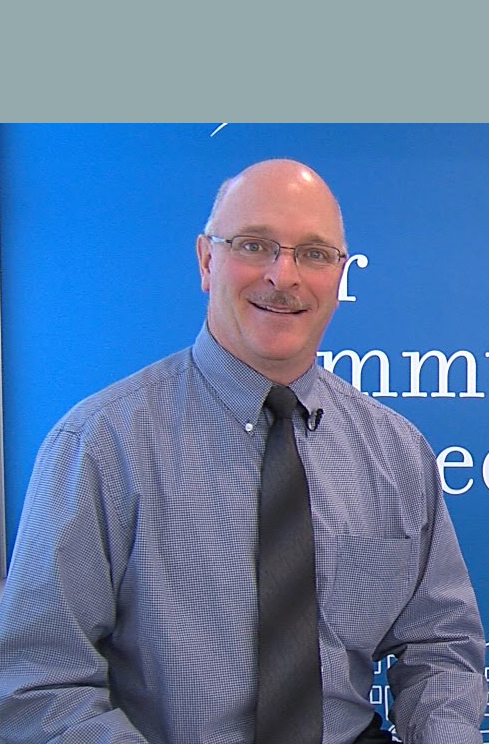

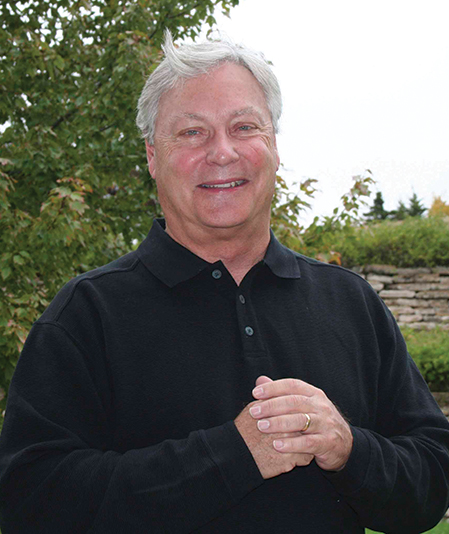









 TOPEKA–Ken Selzer, CPA, Kansas Commissioner of Insurance, and Josh Ney, Kansas Securities Commissioner, are urging Kansans to review their financial preparedness and insurance priorities concerning retirement as a way to educate themselves about their future needs.