We have a brand new updated website! Click here to check it out!

SCHROCK: Should parents dictate school content?

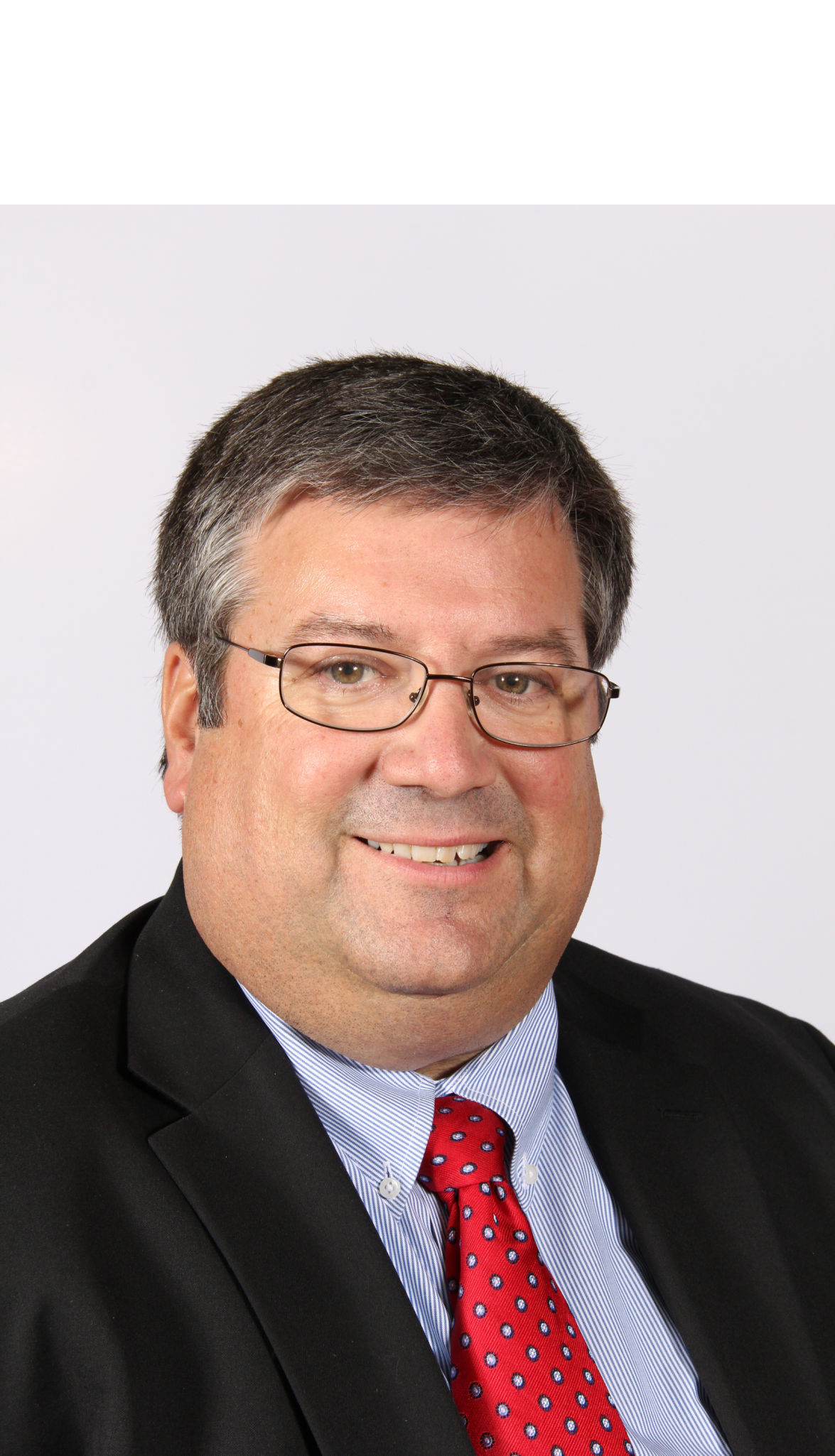
John Richard Schrock is a professor at Emporia State University.

Aside from blatantly attempting to shut down sex education through “opt-in,” Kansas HB2199 poses an interesting question: “To what extent should parents control the content taught in public schools?”

This bill requires school districts to “…provide all instructional materials on human sexuality, including any teaching plans and syllabi to any parent or legal guardian who requests such materials before such parent or legal guardian makes a decision of whether or not to allow such student to be provided such instruction.”

So why shouldn’t ALL school materials require parent approval before they are taught in the classroom?

I taught for my first five years in Kentucky where the local dialect used “Hit hain’t got no…” for “it doesn’t have any….” As teachers, one of our important roles was to help our students rise above the local grammar or they would not have much chance to succeed in society. We likewise are professionally responsible for increasing our students’ abilities in reading, science, art, music, social studies and math beyond the level of their parents.

If you think that only backwoods Kentucky might have low expectations for academics, consider the statement in the Hugoton USD application for hiring unqualified teachers under the CISD system: “The subject of math is an excellent example of how a teacher in Kansas virtually has to have a Ph.D. in math to earn highly qualified status at the high school level.” Kansas standards for math teachers do require more math than the average parent understands, but it is hardly Ph.D. level. The failure of that school’s leadership to understand the academic level in modern math reflects how 1800’s thinking survives today.

hb 2199Of course, HB2199 is narrowly targeted at sex education, assuming that a parent’s knowledge in this field is “gud enuff.” But unless a child’s parent is a medical doctor specializing in neuro-hormonal pathology, that is no longer the case. Our 21st Century understanding of basic human reproductive biology has gone way beyond lessons in “simple plumbing.” With one-couple-out-of-seven infertile, far more detailed reproductive knowledge is critical in this modern era of infertility treatments and obstetric procedures. Sometimes there is ambiguity in anatomy and the doctor cannot say “It’s a boy” or “It’s a girl.” Usually XY chromosomes result in a male and XX chromosomes cause a female; but there are variations from XO to XXY, XXYY etc. Sometimes an XY person has female anatomy while another XX person appears male. This is science that few parents know.

I remember my parents marveling at the new things I was learning in middle school in the 1950s that they had never been taught. That was an age when door-to-door surveys revealed that everyone thought tomorrow would be better than today, because today was better than yesterday. And we expected that our children would have a better life than us. That drive forward was propelled by ever-advancing education.
But today, surveys show that we believe tomorrow will not be better for us or our children. And the HB2199 fig leaf bill is an endorsement of an earlier century of ignorance.

In all public school classes, teachers require student “understanding,” not “belief.” It is important for our next generation to understand concepts even if they do not accept them.

For parents who want their child to remain ignorant about human sexuality, they already have several mechanisms to remove their student without denying the subject to other students. Local school districts are already required to offer parents either opt-out or opt-in for sex education in health. It is a local school board decision. HB2199 takes away that local control and mandates opt-in at the state level.
For those parents who have an objection to their child taking ANY course work that contradicts their religious beliefs, they can always exercise their religious “opt-out” provided by K.S.A. 72-1111(f).

House Bill 2199 is a bad bill. “Opt-in” shuts down coursework for all students, not just opt-out students. Not only is it not necessary, it is a step back in time reinforcing the ignorance of a prior century.

CEP: Benefits of Kansas Energy Efficiency Act

climate and energy project logoOne of the first tasks I was assigned to work on, when I joined CEP, was the Kansas Energy Efficiency Act (KEEA). The bill (HB 2649) would allow businesses to take advantage of an innovative energy efficiency financing mechanism called Property Assessed Clean Energy (PACE). By reducing one of the primary barriers to energy efficiency improvements, the large up-front costs associated with projects, PACE incentivizes commercial investment in clean energy. The KEEA is currently being debated in the House Insurance and Financial Institutions Committee at the Kansas State Legislature. I’d like to discuss some of the many benefits of PACE financing.

PACE is an attractive financing tool for businesses seeking to invest in clean energy and efficiency improvements. HB 2649 would allow cities and counties around the state to create energy districts with the power to issue loans to cover the cost of an energy project. The renewable energy or efficiency upgrade is installed immediately, and the business repays the cost through a property tax assessment over time. Through PACE, companies receive savings on their energy bills with long-term benefits to their pocketbook and the environment.

Additionally, a PACE loan is tied to the property itself, and continues to be paid off if the property is sold to a new owner. This minimizes risk for investors and encourages investments from companies in clean energy. Companies can take advantage of the significant economic benefits PACE projects provide. Research shows that efficiency improvements increase the value and occupancy rates of properties, and can attract customers interested in doing business with environmentally responsible companies. The Political Economy Research Institute also found that installing energy efficiency units in commercial buildings across the U.S. could add 114,000 jobs and save businesses $1.4 billion dollars annually. Such benefits cannot be overstated and reflect the crucial importance of supporting PACE in Kansas.

The Kansas Energy Efficiency Act would help our state keep pace with the other 32 states who have taken advantage of PACE financing. Kansas should be a leader in clean energy and energy efficiency development. If you have any questions about the bill, click here, or follow this link to learn about PACE financing. CEP will keep you posted regarding opportunities to support PACE legislation in Kansas.

Chris Carey is an intern with Climate and Energy Project. The non-profit organization is headquartered in Hutchinson.

LETTER: Couture-Lovelady wants to ensure right to hunt, fish, and trap in Kansas

Travis Couture-Lovelady is the
Travis Couture-Lovelady is the NRA Kansas Legislative Liaison and former 110th Dist. state representative.

Hunting and fishing are not only cherished Kansas traditions, but paired with science, they are an integral part of wildlife management and conservation. Unfortunately, misguided extremists have been trying for decades to ban hunting and fishing either outright or incrementally. That is why the National Rifle Association (NRA) is supporting HCR 5008, legislation that would lead to a statewide ballot initiative this fall that would allow the people of Kansas to amend the state Constitution to guarantee the sporting traditions you have enjoyed will still be around for future generations.

Our state’s unique culture and heritage are threatened by outside groups coming in with extreme political agendas. It has happened in other states and it will happen here. Animal rights advocates succeeding in banning dove hunting in Michigan ten years ago. A 1990 ballot initiative in California resulted in a ban on mountain lion hunting. Kansans should act now to protect our right to hunt and fish by passing a ballot initiative to amend our constitution to. The idea of a state constitutional amendment is nothing new. Vermont’s dates back to 1777. Today 19 states have an amendment protecting these basic rights.

Hunting is a part of Kansas’ cultural heritage, an important wildlife management tool, and an important part of our economy. According to the U.S. Fish and Wildlife Service, about 1.2 million people hunt, fish or watch wildlife in Kansas in a given year. They spend about $906 million on their trips and equipment. The Kansas Department of Wildlife, Parks and Tourism sold more than $24.5 million in licenses and permits last year. The state turned around and put all that money into wildlife conservation programs throughout Kansas. The state gets additional money each year for these programs from a federal excise tax. Since 1937, hunters and outdoorsmen have contributed more than 7.2 billion dollars to a variety of wildlife and wildlife habitat conservation programs, through Pittman-Robertson Act revenues associated with the purchase of firearms, ammunition and archery equipment. These conservation programs have led to dramatic increases in populations of various game species including deer, elk, antelope, turkeys and waterfowl.

Support for our state’s hunting heritage crosses party lines. As a former Republican State Representative, I cosponsored this legislation last year with my colleague, Representative Adam Lusker, a Democrat from Frontenac. I urge my former colleagues in Topeka to make HCR 5008 a priority this year. It’s time our state makes hunting, fishing, and trapping a right, not just a privilege.

Travis Couture-Lovelady is the NRA Kansas Legislative Liaison and former 110th Dist. state representative.

HAWVER: At the rail

Martin Hawver
Martin Hawver

This may be the week of tax fights, when both the folks who carefully hang up their cashmere sport coats and those who toss their wool or maybe even polyester-blend jackets square off.

On the polyester side, we have those who just can’t believe that some 330,000 Kansans aren’t paying any state income tax on the profits from their Limited Liability Corporations and such. On the cashmere side, we have Kansans who have a zero-dollar tax bill and wonder why the jean jacket crowd won’t consume more groceries and send their clothes to the dry cleaners to increase the state’s take from sales taxes—paying the consumption taxes that Gov. Sam Brownback wants to use to balance the budget.

But the real issue comes down to just which legislators want to return to the Statehouse and the free drinks and meals that lawmakers enjoy after this fall’s elections.

Let’s see how this tracks.

In the Senate, there’s a bill that would make those LLC owners, who now take “non-wage” income from their businesses tax-free, pay taxes on 70% of that income, the other 30% non-taxable. Oh, and that Senate bill would, if passed, take effect back on Jan. 1.

In the House, there’s a bill that puts the non-wage income back on the books for tax calculation and would use that new tax money to reduce the sales tax on groceries, so the help can afford to eat and feed their children.

That’s a pretty high-level view of the proposals. It’s worthwhile to remember that Brownback is on the side of the cashmere crowd and that his veto of a tax bill requires not just 63 but 84 House votes to override that veto and put the bill into law. In the Senate, it takes not just the majority 21 votes but 27 to override him.

You can count on Democrats in each chamber to either vote for taxes or take the stance that this is a fight among Republicans and they don’t want to miss lunch to participate in it.

There is, of course, this looming budget deficit, with the probability that severe cuts or financial hijinks are going to be needed to balance the budget, which means that services and programs are going to be chopped. But that’s not likely to make much difference to the cashmere class. For the denim crowd, it might mean dipping into your kid’s college fund to pay the water bill.

So it comes down—as in every election year—to where the votes are.

There are moderate Republicans who want the tax-exempt class to start writing tax checks like everyone else and there are conservative Republicans who see the revenue shortfall as a chance to shrink government and push the financing of social programs and education down to the local property taxpayers. Oh, it’s the second group which historically has been the most reliable primary election voting bloc and in most legislative districts in Kansas if you win the GOP primary you’d have to serve kale at your next fund-raiser to lose the general election.

But those Republicans who want to end the tax break? Their numbers appear to be growing, but we won’t know for sure where the party splits at the primary election. Oh, and don’t forget that the no-tax crowd is probably going to be hip deep in campaign contributions from conservative groups who can flood voters with cute pictures of conservatives with puppies and grandchildren.

The alternative to taxing that now-exempt income? So far, it’s been borrowing, either from the highway fund or making cuts to specific state agencies. But a new ploy being considered is borrowing against future tobacco industry payments of about $60 million a year for enough money to balance the budget, at least for the remaining two years of Brownback’s final term in office. Sounds a little like a payday loan, but with Audis and Mercedes parked in front of the gas station-turned lending institution.

Looks like a real fight ahead…

Syndicated by Hawver News Company LLC of Topeka; Martin Hawver is publisher of Hawver’s Capitol Report—to learn more about this nonpartisan statewide political news service, visit the website at www.hawvernews.com.

RAHJES REPORT: March 14

Rep. Ken Rahjes, R-Agra, 110th Dist.

Hello from Topeka.

You know we are heading into the final days of the legislative session, as the pace picks up and many meetings are held to try to get enough support or votes to get a particular bill out of committee and on to the floor for debate and passage.

With this being an election year, many of the bills to make it for a vote have not been controversial, but have included clean-up language or something that a majority agree to.

Things like amending the state banking code, modernizing the Kansas mortgage business act do not get the headlines, but are important non the less. Those were a couple of the things we moved out of the house this past week.

Some veteran lawmakers and legislative watchers say this session has brought more challenges than they remember, but many times with families when we are backed up against a wall, we defend and lash out to protect ourselves. The process is not pretty, nor should it be, because laws have consequences, sometimes unintended and changes need to be made. Other times the pure politics of governing has us put forth bad legislation just to score a “gotcha” rather than working together to find a true solution.

That being said, one of the good things that passed out of the House this past week was a bill on transparency, which if passed by the Senate and signed by the Governor would have many committee meetings broadcast via a live audio stream. This gives everyone an opportunity to hear what really happens in a committee, rather than hear about it second hand. I hope these moves forward.

I will be traveling the district in April, listening to you, visiting schools and businesses, hope I see you along the way.

Please reach out to me if you have concerns, questions or issues that need to be addressed. You can keep up on things by following and liking Ken for Kansas on Facebook. During the session I can be reached: Ken Rahjes, Kansas State Capitol, 168-W, Topeka, KS 66612; Phone: (785) 296-7676; Email: [email protected]; or 1798 E 900 Rd, Agra, KS 67621; Cell: (785) 302-8416 or [email protected].

You can also track bills and get specific information by going to kslegislature.org.

SCHLAGECK: Tumbling along

John Schlageck writes for the Kansas Farm Bureau.

Strong winds continue to blow across Kansas from Sharon Springs to Olathe. Regardless of where you travel in the Sunflower State, winds scoot across fields and pastures at 15-20 miles per hour. Gusts range anywhere from 30-50 miles per hour.

Traveling east to Franklin County last week, I became reacquainted with an old friend, nemesis, nuisance that is very much a part of the Kansas landscape. While being buffeted about by 40 mile-per-hour northerly breezes, countless tumbleweeds rolled across the highways. While I missed many of them, I occasionally nailed a two-footer while bumping a few others out of my path.

Tumbleweeds first gained notoriety when the Sons of the Pioneers romanticized them in song back in the late ‘30s. I remember seeing my first ones in the early ‘50s. In the early spring, summer and fall when winds howled across roads in my native Sheridan County, tumbleweeds raced across the flatland. Incidentally, I recall singing along with the Pioneers and I still remember the song well.

This plant is as much a symbol of the old Wild West as Wyatt Earp, cattle rustlers, the coyote and the rattlesnake. The image of the lonely rider and the ghostly shape of the tumbleweed bounding in silence across the endless plains has inspired a certain misty-eyed nostalgia, even in folks who have never journeyed west of Kansas City – except to travel through our state to ski in Colorado.

In truth, this weed is a blasted nuisance. Even its Latin name (Salsola pestifer) identifies it as a menace.

The tumbleweed is also known as the Russian thistle. This plant was brought to the continent in the 1870s as a contaminant in shipments of flax seed imported to western Canada. By the turn of the century, the weed had a foothold from coast to coast.

The tumbleweed can survive and grow almost anywhere. It remains one of the hardiest plants in the United States. Unfortunately, no one has found a good use for this thorny weed.

The tumbleweed can cause problems for farmers and ranchers. This nuisance weed clogs irrigation ditches, catches and accumulates litter, disrupts traffic, causes fires, poses a health threat to some livestock and even breaks down fences on windy days.

In Kansas and other western states, thousands of man hours are spent each year clearing tumbleweeds from irrigation ditches and railroad tracks. In the spring the weeds are fought with herbicides and in the fall the dried plants are sometimes burned.

Fighting tumbleweeds is a constant battle. Nearly every breezy day they bound across the prairie and every spring they sprout by the millions.

Although tumbleweeds have been in this country for approximately 150 years, no one has found a reason to cultivate this plant. One thing is certain; this nuisance weed is here to stay unless our plant scientists can find a use or method to eradicate the tumbling, tumbling tumbleweed.

So why not romanticize ‘em?

John Schlageck is a leading commentator on agriculture and rural Kansas. Born and raised on a diversified farm in Hoxie, his writing reflects a lifetime of experience, knowledge and passion.

MORAN’S MEMO: After visiting GITMO, I remain opposed to closure

Sens. Moran, Gardner and Daines meet Feb. 29 with Joint Task Force Guantanamo Commander Rear Adm. Peter J. Clarke, and Deputy Commander Brig. Gen. Jeffrey W. Burkett.

The headlines are hard to ignore: “Freed Guantanamo Bay Detainee Promotes Jihad in Somalia,” states a Feb. 26 ABC News report; “Several More Ex-Guantánamo Detainees Suspected of Militancy,” shouts a March 7 New York Times piece; and “Ex-Gitmo Detainees Returning to Terrorism Double Under Obama,” reads a March 8 article from The Hill.

Yet, for President Obama, these realities are simply an inconvenience. Shortly after taking office, he ordered the closure of the detention facility at Guantanamo Bay (GITMO) within one year.

Now, more than seven years later, Republicans and Democrats, the American people and military leaders stand in staunch opposition to his proposal to close GITMO and move detainees to American soil. With threats from Iran, the rise of the Islamic State of Iraq and the Levant (ISIL), a resurgent Russia, the military build-up by China and an unpredictable North Korea, the president should focus on enhancing our national security and protecting the American people rather than putting time and attention toward closing GITMO.

Yet, the president’s desperate push continues as the administration releases GITMO detainees at a frightening rate – creating an unnecessary risk to America. In fact, just this week the Office of the Director of National Intelligence reported that nearly a third of detainees released from GITMO have re-engaged in terrorism. And, in just one year, 12 detainees released by the president have re-engaged with terror networks.

President Obama recently submitted a “plan” to Congress in a last-ditch effort to close GITMO. The flawed plan confirms what we already know: This administration is incapable of presenting a comprehensive, legally justifiable closure and relocation strategy that maintains the safety and security of Americans. The Secretary of Defense Department has confirmed it is against the law, and U.S. Attorney General Loretta Lynch has affirmed on multiple occasions that, “the law currently prohibits a transfer to U.S. soil.”

Unfortunately, the president’s track record of executive overreach shows he has little regard for the rule of law.

This is something that is of particular concern to Kansans, as one of the U.S. facilities being considered by the president to detain GITMO terrorist detainees is the U.S. Disciplinary Barracks at Fort Leavenworth. Fort Leavenworth’s 14,000 soldiers and families and the greater Kansas City-region should not be forced to unfairly bear the burden and consequences that accompany detaining terrorists. Additionally, the critical mission of the Command and General Staff College in educating military members from ally nations across the world would be compromised. Foreign military partners will take into consideration the proximity of detainee terrorists whose allegiance to terror organizations brought devastation and terror to their home countries.

To confirm my belief that detainees should remain at GITMO, I led a congressional visit this month with Senators Cory Gardner of Colorado and Steve Daines of Montana. We spoke with military leaders including Joint Task Force Guantanamo (JTF-GITMO) Commander Rear Admiral Peter J. Clarke. His team oversees the detainees firsthand, and they provided unfiltered insights and details regarding their 24/7 mission.

The mission of JTF-GITMO is difficult as they safeguard our nation from those who wish to do us harm. However, the service members we met on the ground – including several Kansans – are fully committed to carrying out their duties. The facilities themselves are among the best in the world. They are secure, isolated and our military standing guard executes their responsibilities with the highest degree of professionalism.

As the United States continues to face threats of terrorism and conducts combat operations against ISIL, I believe captured militants should be held at Guantanamo Bay. I introduced a Senate Resolution this week with Sen. Daines and several of my Senate colleagues to push to have ISIL captives detained at GITMO. I also joined Sen. Roberts in introducing a Senate Resolution that once again reiterates Congress’ strong opposition to the administration’s unlawful plan to move detainees to the United States.

I remain committed to blocking the transfer of Guantanamo detainees anywhere in the United States, but especially to Fort Leavenworth. The president should shift his priorities to focus on threats to our nation across the globe, and away from fulfilling a flawed campaign promise.

Jerry Moran, R-KS, is a U.S Senator.

It’s Severe Weather Awareness Week in Kansas

severe wx awareness weekKDEM

TOPEKA–Old Man Winter may be heading for the door – although he may decide to hang around for a while longer; after all, this is Kansas. But even when he is gone, Kansans will still have to contend with Mother Nature and her annual “In like a lion” arrival that heralds severe weather season, bringing with it the potential for tornadoes, severe thunderstorms, high winds, hail, and flooding.

To remind Kansans to be prepared, Gov. Sam Brownback has signed a proclamation designating March 14-18 as Severe Weather Awareness Week in Kansas.

During the week, the Kansas Division of Emergency Management will urge Kansans to check their emergency kit supplies for their home, office and vehicle, and review their emergency plans to make sure they are prepared for whatever severe weather is thrown our way.

“It doesn’t take a lot of time or a lot of money to ensure you and your family are prepared,” said Angee Morgan, KDEM deputy director. “If you don’t already have an emergency kit, start now by buying a few extra batteries and high-energy snacks during your weekly shopping. Throw a change of clothes, an old pair of glasses and a pair of shoes in your kit.

“Check your first aid kit and make sure it’s complete and up-to-date,” said Morgan. “Doing a little bit each week makes it easier to prepare for unexpected events, particularly when you get the entire family involved in gathering the supplies and making an emergency plan.

“If you don’t have a specially-constructed storm shelter or a basement, do you know where the safest place in your home is? Do you know how to safely shut off the gas or electricity? If you become separated, do you have a meeting area? How will you communicate with family members who may not be at home when a disaster hits or your loved ones who will be wondering about your safety? These are the things you will need to think about when making your plan.”

Morgan said more information on emergency preparedness and building an emergency kit can be found online at www.ksready.gov.

Kansans are also urged to take part in the statewide tornado safety drill Tuesday, March 15, at 6:30 p.m. across most of the state. If severe weather is imminent for a community, the tornado drill will be cancelled for that community.

According to the National Weather Service, the first tornado of 2015 occurred April 2 in Labette County and the last tornado was on Nov. 16. Last year, there were 33 days with more than one tornado reported. The most tornadoes reported in one day was 22.

In all, there were 126 confirmed tornadoes in the state last year, 85 more than hit the state in 2014. On average, Kansas experiences 96 tornadoes a year.

BEECH: Steps to better health — Walk Kansas begins April 3

Linda Beech
Linda Beech

It’s as simple as putting one step in front of another. That’s the idea behind Walk Kansas, an eight-week program that starts April 3, designed to promote activity, good nutrition and better health. Even Kansans who are not routinely active find Walk Kansas to be an easy way to get moving.

The low-cost fitness program attracted over 16,000 participants across the state last year. It has also become a popular worksite wellness program in Kansas with many employers encouraging– or sponsoring– employees to participate. Last year, more than 300 people participated in Ellis County and logged enough miles to circle the globe 1.7 times.

Groups of six people, one serving as a captain, work together toward a common goal – typically to exercise at least 150 minutes per person per week. Though the team does not actually walk across Kansas, by exercising 150 minutes per week a team of six people would be able to cover the 423-mile distance across Kansas in eight weeks.

Teams that want a greater challenge can choose to (figuratively) walk a new meandering diagonal route across the state, which totals 750 miles and requires about 4 hours of exercise per team member per week. A third challenge is to walk the equivalent of the perimeter of Kansas – 1,200 miles – with each person on a team logging six hours of exercise per week.

The cost to participate is $8 per person which covers weekly newsletters, extra group activities and statewide program support. Optional Walk Kansas apparel can be ordered at an additional cost.

Register your team by March 24; walking begins April 3 through May 28. Teams can be registered on the newly-updated Walk Kansas website at www.walkkansas.org. Captains should initiate the process by registering the team first, then team members will receive an automatic email invitation to join the online team. Paper registration materials are also available at the Extension Office, 601 Main Street in Hays, or online at www.ellis.ksu.edu under “Health and Nutrition.”

Team members record minutes of exercise and cups of fruits and vegetables eaten each day. They can also track strengthening exercises and water consumption, if desired, and each team member can report his/her own totals on the new Walk Kansas website themselves. Or they can report weekly totals to their captain to report once a week for the whole team. The website converts minutes of exercise into miles. Teams can track their progress across or around the state on the website map.

Physical activity can be done individually or in groups, on a treadmill at home, in your neighborhood, or at a gym – whatever works for each individual. Although walking is easy for most people, any activity can count for Walk Kansas as long as it is done at a moderate to vigorous level for at least 10 consecutive minutes at a time. So, if you play basketball, ride a bike, do water aerobics or hoe in the garden, Walk Kansas is still a great fit for you.

Team members who wear an activity tracker (such as a wrist tracker or pedometer) can start counting steps for Walk Kansas after they reach the threshold of 6,000 steps in a day. Report 15 minutes of Walk Kansas activity for every 2,000 steps taken above 6,000.

Health experts know that exercising controls weight, reduces risk of premature death from heart disease, helps to alleviate arthritis, reduces the risk of diabetes, decreases blood pressure, helps older adults become stronger and remain independent, helps lower cholesterol levels, decreases anxiety and helps to alleviate depression. Physician Robert H. Butler once said, “If exercise could be purchased in a pill, it would be the single most widely prescribed and beneficial medicine in the nation.”

For more information or help to register your Walk Kansas team, contact the Ellis County Extension Office, 601 Main Street, Suite A, Hays, 785-628-9430.

Linda K. Beech is Ellis County Extension Agent for Family and Consumer Sciences.

WAYMASTER: From the Dome to Home

Rep. Troy Waymaster, R-Bunker Hill, 109th Dist.

By Rep. Troy L. Waymaster, Kansas House District 109

March 11, 2016

February Revenues Drastically Down
On Tuesday, March 1, 2016, we received the revenue numbers for the month of February and they were, somewhat, what we anticipated just not the excessive amount of being almost $54 million short of the stated projections.
Here is a breakdown of the February revenue numbers where the state of Kansas missed the projections in income, sales, and cigarette taxes, the latter two were adjusted during the tax debate last session. Income taxes were approximately $27 million below the estimates that were calculated by the Consensus Revenue Estimate Group back in November 2015. The revenue group had predicted that in the month of February the state would collect $100 million in income taxes, however, in actuality the amount was $72.9 million.

The state sales tax projections missed the intended target by over $12 million dollars. The revenue group had anticipated the collection of $176 million in sales tax, although the amount collected was $163 million for the month of February.

As I mentioned before, the cigarette tax, along with the state sales tax, were two of the taxes adjusted in the tax deliberation last spring. For cigarette taxes in the month of February, the projection called for the collection of $11 million whereas only about $9 million was collected.  Governor Brownback, in his statements last Tuesday, did not criticize the current tax policy in the state of Kansas, however, he directed the root cause of the short revenues being the downturn in the economy and falling prices in the oil and agricultural sectors.

The Governor’s response to address some of the shortfall precipitated by the dismal February revenue numbers was to reduce allotments for the regents schools in Kansas by three percent, or approximately $17 million for Kansas universities throughout the rest of the current fiscal year which ends June 30, 2016. For Fort Hays State University, the Regent school closest to our area, this results in a cut of funding of $992,367. While awaiting the March revenue figures, the Legislature will be studying areas where adjustments can be made to balance the budget for the state of Kansas.

Efficiency Study: General Government Budget Recommendations
This entire week the General Government Budget Committee focused on the recommendations from the auditing firm Alvarez and Marsal in identifying savings to the state of Kansas. Our committee heard from representatives from the auditing firm and state agencies. We heard detailed descriptions of over twenty-five recommendations that could potentially save the state over $146 million over the course of five years. Some of the recommendations that we discussed were: centralized budgeting and management; centralization of state printing services; re-bidding of state insurance; and many recommendations regarding the Governor’s office. On Thursday, the committee chairs reported the recommendations to the full Appropriations committee. We will take action on these in the coming weeks.

The Governor’s Vetoes
Last Friday, Governor Brownback vetoed the STAR (Sales Tax as Revenue) Bond provision that was included by the Senate and conferred on by the House in the supplemental budget bill that was passed in February by both chambers. The rationale behind the governor’s line-item veto is that he is attempting to entice the American Royal, one of Kansas City, Missouri’s prime fall events, to hold their event in Wyandotte County, Kansas. If the event were to relocate from Missouri to Kansas, there would be tremendous infrastructure needs that would be addressed. The event would generate the construction of livestock arenas, areas for barbeque contests, and a newly constructed hockey rink, all in the Kansas City, Kansas area known as Village West. The provision that was added to the budget bill would only apply to Wyandotte County and would prohibit new STAR bonds issuances. Since the governor has vetoed this particular provision in the budget, there is discussion on whether both chambers may decide to override the governor’s veto. If that were to occur, right now I would vote not to override the governor’s veto regarding this issue.

Another bill that Governor Brownback vetoed was Senate Bill 250, which happened to be a bill that I carried on Wednesday, February 23, which was initially an innocuous bill regarding the Department of Administration. However, during deliberation of the bill, an amendment was added halting the Governor from moving forward on a decision by his office to enter into a $20 million financing agreement, without legislative oversight, for the construction of a new power plant for the Capitol complex when, and if, the Docking Building is razed. The amendment that was included on the base bill of Senate Bill 250 prevented the Governor from moving forward on this lease purchase agreement and delayed the razing of the Docking Building for the period of two years to allow for a study and more analysis of the possible future of the Docking Building. On Thursday, March 10, there was a motion in the Senate to override the veto, however, that motion was later withdrawn and will most likely be debated in the Senate on Monday, March 14. On this bill I would vote to override the Governor.

House Chaplain and Contact Information
On Monday, March 7, 2016, Pastor Roger Dennis from St. John’s Lutheran Church, Russell, was invited to serve as the House and Senate Chaplain for the day by Senator Elaine Bowers and myself. Here are the words he shared with us:
“In a time where there are no easy answers to the challenges confronting this body, I pray. May people truly listen to each other, converse with each other, and cooperate with each other. Help all to realize it is not about them, but the people they serve. May this body meet the heavy responsibilities inherent with governance. Provide all with insightful and just deliberation marked with good stewardship of resources and compassion.”

If you have any concerns, feel free to contact my office at (785) 296-7672, visit www.troywaymaster.com or email me at [email protected].

The honor to serve you in the 109th Kansas House District and the state of Kansas is one I do not take lightly. Do not hesitate to contact me with your thoughts, concerns and questions. I appreciate hearing from the residents of the 109th House District and others from the state of Kansas.

Troy L. Waymaster,
State Representative
109th Kansas House
300 SW 10th
Topeka, KS 66612

INSIGHT KANSAS: GOP lawmakers aim to pack the courts

In 2012, Gov. Sam Brownback badgered Tim Owens, chair of the Senate Judiciary Committee, with a clear message: “let us change the way we select judges so we can get judges who will vote the way we want them to.”

In plain English the governor and allied Republican state legislators aim to pack Kansas courts with partisan judges. To date they have been largely thwarted, but Kansans should remain wary. Another round of assaults on an independent judicial branch can be expected in the remaining days of the legislative session as well as in campaigns against individual judges this coming November.

H. Edward Flentje is professor emeritus at Wichita State University.

Public attention has been consumed for now with the disastrous condition of state finance—unbalanced budgets, unfair taxation, and excessive debt, plus unconstitutional school finance, but the rendering of impartial justice by Kansas courts deserves equal concern and protection.

Ruling state lawmakers have unleashed a rising crescendo of political threats at the courts over the past five years. Led by the governor and top legislative leaders they are constantly subjecting judges and court rulings to verbal abuse.

They have threatened to shut down the courts with budget cuts.

They have tried to abolish the constitutional procedures for selecting judges on the basis of merit.

They have tried to undo administration of the courts with threats of eliminating court funding.

And last week they advanced legislation of questionable constitutionality that subjects state judges to impeachment for rulings that “usurp legislative or executive authority,” in other words, rulings that legislators do not like.

What is at stake here? These ideologues gained control of the governorship and the Kansas House in 2010, took command of the Kansas Senate in 2012, and now want to commandeer Kansas courts.

Thus far, state legislators who believe in constitutional government have helped state courts withstand this political onslaught. And the courts have proceeded with diligence in interpreting the Kansas Constitution on behalf of all Kansans and providing a check on executive and legislative actions that violate the constitution. These checks and balances represent the hallmark of democracy in the U.S., and an impartial judicial branch stands as a bedrock for our form of government.

But, this legislative session is not over. Majority lawmakers may try again to put forward constitutional amendments that eliminate or politicize procedures for selecting judges on the basis of merit or take actions that threaten court funding or impartial justice in various ways.

If court intimidation through legislative action fails, which now seems likely, Kansans should next expect these lawmakers and their allied groups to campaign against judges who stand for retention in November. Five of the seven Supreme Court justices and six of the fourteen Court of Appeals judges will appear on the ballot for voters to determine whether or not to retain those judges on the courts. Kansans for Life has already targeted a number of judges for non-retention. Groups opposing court rulings on school finance may weigh in as well.

Sorting through these retention elections will require extra vigilance on the part of voters. Ballot fatigue may occur in that judicial retention appears at the very bottom of a long ballot. Groups will be campaigning for and against individual judges, and confusion over largely unknown judges will easily arise. Moreover, state campaign laws do not apply to these statewide retention elections, so voters will not know who is advocating for or against individual judges or financing various campaigns.

In the face of a noisy presidential contest plus critical races involving all 165 state legislative seats, Kansas voters should remain aware that impartial justice and judicial independence are at risk and stand ready to oppose these attempts to pack state courts.

H. Edward Flentje is professor emeritus at Wichita State University.

SELZER: Cover the basics of life insurance

Ken Selzer, Kansas Insurance Commissioner

Life insurance protection is one of the most considerate acts that a person can do for his family, according to Ken Selzer, CPA, Kansas Commissioner of Insurance. Over the course of a lifetime, it can have great significance.

“Knowing what a life policy can do for your loved ones, and how to protect it for their future use, can be two important factors in your financial planning,” Commissioner Selzer said. “Talking over your life insurance needs with qualified insurance professionals is a good first step toward assuring your assets are used by your family.”

Commissioner Selzer emphasizes these life policy considerations.

• What kind of life insurance do you need? Term and whole life insurance are the two most common types of plans. However, there are many variations of each type, and there are a number of special-purpose policies that combine the basic policies with other elements. Talk to your insurance agent about what type works for you.

• Who is your beneficiary going to be? If you die without naming a beneficiary or beneficiaries of your policy, the benefits would be paid into your estate and then paid out according to your will or through state laws. This delays payment and could create a financial hardship for your heirs.

• How much coverage do you need? You and your agent should do a careful evaluation of your coverage needs, but a general rule of thumb is to buy life insurance that is equal to 5-7 times your annual take-home pay.

• Will I have any tax consequences? Your beneficiary(ies) will receive your insurance benefits tax free. With named beneficiary(ies), life insurance benefits do not have to go through probate or other legal delays involved in the settlement of an estate.

• Where should I keep my policy? Keep your policy in a safe place. However, do not use any place where the policy might not be readily available. Record the basic information — such as company, policy type, policy number, insured’s and beneficiaries’ names — in a separate place. Let your beneficiary(ies) know the kind of insurance policy you have, any changes you make, and where you keep the policy.

• What happens if I lose my policy? Loss of a life insurance policy will not affect your protection in any way. If a policy is lost, accidentally destroyed or stolen, ask your agent or write the company directly to obtain a duplicate.

• Do life insurance proceeds affect my family’s Social Security benefits? According to law, monthly life insurance payments will not disqualify the beneficiary from receiving full Social Security payments. Monthly life insurance benefits do not count as earned income, regardless of how much is paid each month through a policy.

• What happens when my family needs to file a claim? Family members, preferably with policy in hand, will need to notify the life insurance company in the event of a death of an insured person. Your local insurance agent should be able to discuss the steps needed to make sure the policy is paid out as quickly as possible.

• Filing a life claim. Your beneficiary will need to notify the life insurance company of your death. Again, that’s why it is important for your beneficiary to be able to locate your policy. Companies require a certified death certificate or other legal proof of death, and they may ask for the policy. The life insurance company will pay the proceeds of the policy to your beneficiary(ies) after receiving proper notification of death.

The Kansas Insurance Department now has a Life Insurance Locator Service in place for those who need assistance in locating life insurance and annuity benefits they may be owed. Those submitting a request will need to do the following:

• Complete a form you can download off our website, https://www.ksinsurance.org/healthlife/life/life-policy-search.php .
• Have the form notarized.
• Attach a copy of the certified death certificate of the policyholder.
• Send all information to the insurance department address listed on the form.

The National Association of Insurance Commissioners (NAIC) also has information on how life insurance can affect your different life stages. Go to https://www.naic.org/Releases/2016_docs/consumer_alert_life_insurance_roadmap.htm to read more.

Ken Selzer, CPA, is the Kansas Commissioner of Insurance.

SCHLAGECK: Don’t be a road hog

John Schlageck writes for the Kansas Farm Bureau.

Travel on our highways and country roads should be a two-way street. Motorists and farmers alike need to be cautious during the busy spring farming season.

Seems Kansas farmers are always doing something in their fields. No matter where you travel in our state you’ll probably wind up approaching farm tractors, trucks and other large ag equipment on the roads.

In 2014, Kansas recorded 94 accidents and three deaths as a result of roadway crashes involving motor vehicles and farm equipment.

Tractors, combines and other equipment traveling on our public roadways are required to display slow-moving vehicle (SMV) reflective triangles, and most must also display hazard lights. The SMV markers signify that the equipment is moving at less than 25 miles per hour.

Farmers should check to make sure their SMV markers are clean, bright and still reflective. Always check to make sure that reflectors and hazard lights are not blocked by equipment that is being towed. After dark, motorized equipment must have properly working headlights.

Motorists must also ensure our highways and country roads are safe.
The National Safety Council reports that even if you’re following a tractor from a distance, you’re closing the safety gap between the two of you at an average rate of about 59 feet per second. That’s the length of a football field in just five seconds.

Remember these two words while traveling on rural roads and highways – slow down. Plenty of people travel these roads today – bikers, joggers horseback riders – you name it, they’re out there. With more and more people from urban areas moving to rural areas, there’s more traffic on our roads and many of them don’t have shoulders to pull over on.

Motorists remember, relax while driving no matter which roads you travel – busy Interstate highways or a nearly deserted country road. Enjoy the beautiful countryside – but be alert. Impatience is often partly responsible for accidents involving farm vehicles.

While it is understandable that motorists become annoyed when caught behind slow-moving equipment, they need to understand that such delays are unavoidable, particularly during busy farm seasons like planting and harvest.

Today’s farmers continues to farm more acres. Often their fields are scattered throughout the county. There is no way most farmers can do their job without driving public roads. Just like so many motorists, farmers must travel to their place of business.

Give them a break. Give yourself a break. Don’t be a road hog.

John Schlageck, a Hoxie native, is a leading commentator on agriculture and rural Kansas.

Copyright Eagle Radio | FCC Public Files | EEO Public File