We have a brand new updated website! Click here to check it out!

HAWVER: Debating gun checks, Gitmo in Topeka

martin hawver line art

Sometimes us folks who spend way too much time watching the Legislature have to wonder how many different political layers there are to virtually everything that happens here — especially in an election year.

Take last week, when the House was debating an all-Republican sponsored concurrent resolution dealing with the possibility of Guantanamo Bay detainees—presumably from the Mideast—being moved to the United States, possibly the military prison at Leavenworth.

Now that’s pretty simple, and there aren’t many Kansans of voting age who if they think about it want those terrorist suspects moved into the state, even though Leavenworth has a pretty stout military prison where we’re probably safe from them. But, then their families might move into the state, or to the United States wherever those prisoners might be moved if President Barack Obama closes Guantanamo as he’s wanted to do for the last seven years and still wants to do as his term wanes.

So many political bubbles emerging from this stew.

The resolution itself tends to anger Democrats as disrespectful. “Whereas this president has continually sought to weaken our standing in the world…” is one of the phrases that rubs Democrats the wrong way.

But Republicans, especially those from the Leavenworth area, don’t want those Gitmo folks coming to town, even into a high-security prison, which some feel might be targeted for terrorist activities. Fairly simple stuff.

Republicans were reminded, though, that if the Gitmo folks wind up in this country, and even at Leavenworth, Kansas, might be slighting its duty to the nation by refusing to hold those prisoners. Lots of mention of German war prisoners held in Kansas during World War II, and if Gitmo is closed, Kansas has the patriotic duty to hold those prisoners and keep Kansans and the rest of the nation safe.

While the debate was heating up, Democrats offered an amendment to get rid of that Gitmo stuff and instead make the resolution about prohibiting folks on the national terrorist watch list from buying guns. Another not-bad idea, but sharply different than a resolution that slams Obama.

It did have a cultural problem, though, because what if that terror list was wrong, and some upstanding Kansan couldn’t buy a gun because he/she was mistakenly on the list? It’s always politically tough to mess with guns. Kansans like their guns, don’t want terrorists wandering around with guns, but what if someone wound up on that watch list accidentally who ought to be able to carry a gun?

See how this goes both ways?

But it gets more complicated. The House rules committee rejected that Democrat gun amendment because it didn’t deal with the same topic as the original resolution. And, that decision went to a vote, too.

Vote for the rules committee decision which maintained the original resolution, and you’re against moving those Gitmo prisoners and maybe their friends who might be sympathizers or terrorists into Kansas. Vote against the rules committee decision and you’re for the gun check and not-so-much the Gitmo language.

Replace the Gitmo language with the “watch list” gun prohibition? It didn’t happen. The House’s rules panel decided that the amendment to substitute the gun stuff was not germane to the Gitmo stuff, so it came to a vote. And, the Gitmo stuff won, but it required supporters to vote against prohibiting terrorists from buying guns and carrying them around the state.

Now, many people are against both the gun checks and the Gitmo transfers, and can play their votes however they think their constituents want…and put it on their websites and campaign cards.

***

Or, they might just leave it alone. The effect of either resolution would be printing it out nicely and sending copies to President Obama, Vice President Joe Biden and the six members of the Kansas congressional delegation.

That ought to keep the Gitmo folks out of Kansas.

Syndicated by Hawver News Co. of Topeka, Martin Hawver is publisher of Hawver’s Capitol Report. To learn more about this nonpartisan statewide political news service, visit www.hawvernews.com.
RAHJES REPORT: March 7

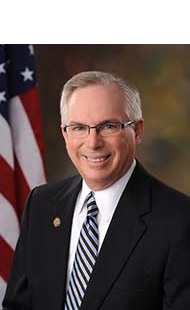
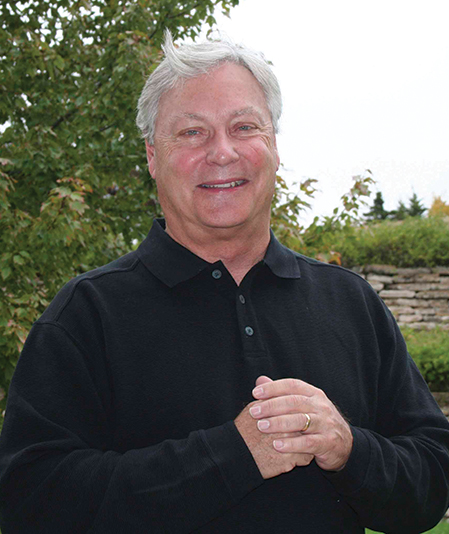
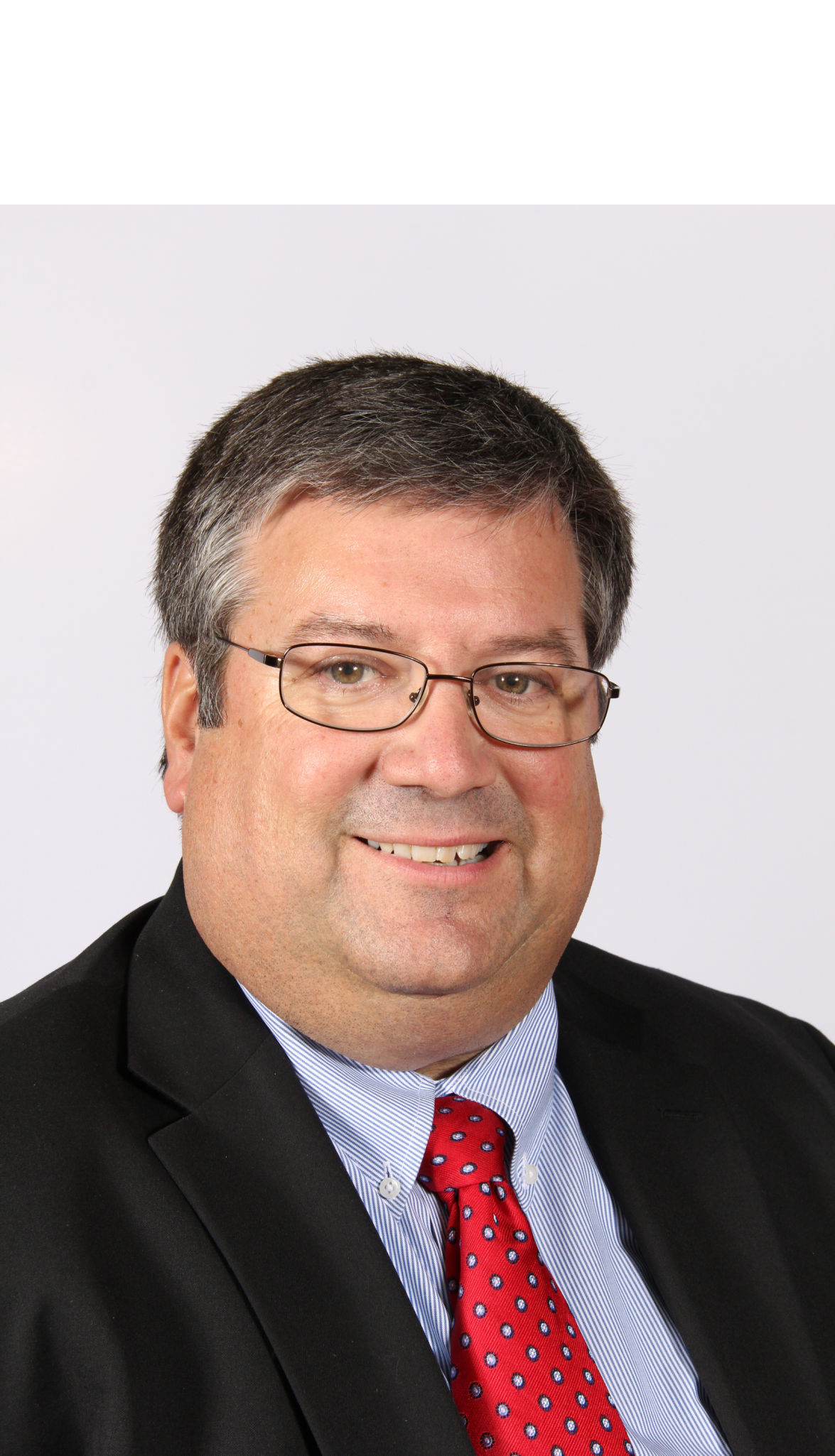
Rep. Ken Rahjes, R-Agra, 110th Dist.

Hello from Topeka.

I want to thank the Graham, Rooks and Phillips County Farm Bureaus for hosting the legislative updates in Hill City, Plainville and Agra. It is always good to listen to the concerns of the 110th District. Also, over this past weekend I participated in the Republican Caucus in Phillipsburg.

One concern voiced to me has not changed; many people want to know how the state budget will be balanced. The budget was passed in mid-February this year and was signed by the Governor on Friday and included two line item vetoes dealing with spending the governor wanted. One was the 20-million-dollar loan for the new HVAC unit for the Capital area and the other was STAR Bonds for projects in Wyandotte County, which would be used to try to lure the American Royal from the Missouri side of Kansas City to the Kansas side near the National Ag Hall of Fame. These projects may be needed, but at this time I believe we need to focus on short term solutions to balance the budget.

As tax revenues continue to come in lower than forecasted it will mean more cuts, as it looks like the votes are not there to repeal the 2012 tax plan or raise taxes in any form. We must balance the budget which means tough choices have to be made, and K-12 school funding will need to be addressed too, adding to the challenge.

One of the committees I sit on is the General Government Budget Committee. This week we are reviewing some of the recommendations of a study conducted last year to find efficiencies in state government. Some of these can be done without legislative action while others would need to be changed through the process. Recommendations range from bidding out services like state printing and managing some insurance services, to paying state bills in such a way as to gain the best advantage for the state of Kansas.

The time for the blame game is over.

We are scheduled for First Adjournment on March 25th, which leaves us limited time to do things the right way, rather than late night, all or nothing bills which have consequences that we cannot afford.

Please reach out to me if you have concerns, questions or issues that need to be addressed. You can keep up on things by following and liking Ken for Kansas on Facebook. During the session I can be reached: Ken Rahjes, Kansas State Capitol, 168-W, Topeka, KS 66612; Phone: (785) 296-7676; Email: [email protected]; or 1798 E 900 Rd, Agra, KS 67621; Cell: (785) 302-8416 or [email protected].

You can also track bills and get specific information by going to kslegislature.org. I look forward to seeing you when you are in Topeka or out and about in the district.

Extension food handler course provides vital information

Linda Beech
Linda Beech

It is a treat to eat out at a favorite restaurant or community event. Consumers expect the food to be safe. It is up to the food handlers to provide the safest meal possible.

Preparing food for the public, whether at a volunteer group fund-raiser, or at a restaurant, often means dealing with larger quantities of food than those used at home. With larger amounts of food, different food practices and special attention to detail become critical.

A Servsafe basic food handler short course for food service employees and volunteer groups will be held on Wednesday, March 23, from 1:30 to 4:00 pm at the Ellis County Extension Office, 601 Main Street in Hays. The cost is $10.00 per person and includes the Servsafe Food Handler Guide, a nationally recognized food safety training resource, plus training materials and refreshments.

The class covers basic food safety principles, personal hygiene, preventing cross-contamination, food allergens, time and temperature controls, cleaning and sanitation. This course would be appropriate for commercial food service employees, dietary staff at nursing homes, hospitals and schools, and volunteer groups who serve concession stands, church dinners, community meals or fund-raisers. A certificate of attendance will be provided to each participant.

The Centers for Disease Control estimates that each year one in six Americans gets sick from a foodborne illness. On average, 48 million people get sick, 128,000 are hospitalized, and 3000 people die from something they eat every year. Foodborne illness is highly under-reported, and outbreaks DO happen in Kansas.

The economic impact of foodborne illness is staggering. The CDC estimates that foodborne illness costs $15.5 billion annually, which includes factors such as direct medical costs, lost wages, time lost, and pain and suffering. That makes the average cost of one foodborne illness incident about $77,000. Proper food safety is important to reduce illness, but also to protect the reputation and reduce costs and legal repercussions for those who serve food to the public.

Plan now to attend the upcoming Servsafe food handler training. Register and pay fees by Friday, March 11 at the Ellis County Extension Office to ensure adequate training materials and class supplies. Drop-ins cannot be accommodated for this class. Enrollment is considered complete when fees are paid. A minimum attendance is required by the deadline to hold this class.

Obtain a registration form at www.ellis.ksu.edu/health-nutrition in the right box under “Upcoming Events.” For more information, call the Ellis County Extension Office, 785-628-9430.

Linda K. Beech is Ellis County Extension Agent for Family and Consumer Sciences.

HINEMAN: Budget troubles already

Rep. Don Hineman, R-Dighton, 118th Dist.

The Kansas House and Senate agreed on a budget during the week of February 15. That is an extraordinary event because it is likely that the legislature has never before agreed on a budget so early in the session. That accelerated schedule was made possible by the fact that we are now on a biennial budget cycle. The budgets for fiscal years 2016 and 2017 were first adopted during the 2015 session. That means that this year it was only necessary to revise those previous budgets to reflect changing circumstances since that time.

But all is not well with the budget. As passed, the budget only allowed for a year-end cash balance of $6 million… a minuscule amount when one is dealing with an annual state general fund budget of $6.3 billion. At the time I remarked that it appeared the budget was held together with baling wire and duct tape. Unfortunately it seems the baling wire has now broken and the duct tape has lost its grip. Last week we received the unfortunate news that the February revenues to the state were $53 million less than expected. The really troubling part is that disappointing revenue reports are now a recurring event. State revenues have come in below expectations in eleven of the last twelve months.

Some folks have begun to blame the revenue estimating group for missing the mark with their past estimates. I believe that blame is misplaced. The estimating group has had an excellent record in the past of producing on-target revenue estimates. It is only since the tax cut of 2012 that the estimates have begun to diverge significantly from the actual numbers. I believe that tax cut is to blame for the estimates missing the mark in recent months. It represents a dramatic shift away from long-established state tax policy. That makes it very difficult to predict the outcome. When economists attempt to predict economic activity, they are really trying to predict human behavior. The bigger the change in the economic system or tax system, the harder it becomes to accurately predict the response of the people and the economy.

The February report pushed the projected ending balance to a negative $47 million. That is a deficiency which must be corrected, because the state is required to have a positive ending balance at the end of the fiscal year on June 30. Governor Brownback immediately responded by making an allotment (reduction) of $17 million to the appropriation for regents institutions for the current fiscal year. That theoretically makes the projected ending balance a negative $30 million. It is quite likely that Governor Brownback will be forced to use his newly-granted authority to delay up to $100 million of state employer contributions into KPERS.

In retrospect the prudent thing to do, if such a dramatic change in tax policy was contemplated, would have been to initiate that change at a time when state cash reserves were large enough to effectively deal with unexpected shortfalls if things didn’t work out as expected. Instead the abrupt change in tax policy forced the state to quickly consume what cash balance we had at the time. Since then the budgets have been cobbled together with fee sweeps, transfers from KDOT, decreased contributions to KPERS, and true cuts to many vital state programs. Most recently the Kansas sales tax was raised to second highest in the nation to avoid adjusting the income tax plan.

So now the budget is underwater with nearly four months left in the current fiscal year. That means four revenue reports yet to go, and the trend has certainly not been our friend. The oil and gas industry is in a major recession and agriculture is not doing well either. But the seeds of this fiscal crisis were sown long before those industries started to slump. It is increasingly evident that the income tax cut of 2012 went too far too fast, and the expectations for the economic growth it would produce were far too optimistic.

There is no time to craft any sort of revenue plan which would provide relief over the next four months. Any anemic revenue reports over that time must be dealt with by imposing even more harmful fund transfers or cuts to programs which vitally need the dollars remaining in their budgets. Reflect for a moment on how difficult it will be on those agencies and departments to absorb cuts so late during the budget year. And yet it must be done; there is no alternative.

The time has come to quit holding on to the vain hope that the tax cut will eventually work and the economy will grow accordingly. It is not happening, and it is now time for us to deal with that reality. Core governmental functions are now being seriously compromised and we can wait no longer for the miracle to happen.

KNOLL: It makes my head spin

Les Knoll
Les Knoll

Trying to keep up with the election process for the next U.S president is no easy task.

What we see happening as candidates campaign for the most powerful office in the world seems to be unprecedented in American history. Call it a roller coaster. Call it surreal.

Media has gone bonkers covering the campaigns 24/7. It makes my head spin with 95% of the news about the upcoming November election.

One thing that’s real – people are divided like never before about what is needed to fix this country. Political pundits claim there are two Americas, the division is that huge.

On the one hand there’s Hillary Clinton, the Democrat socialist, and there’s Bernie Sanders, the ultra socialist. Hillary is running on Obama’s record, perhaps even left of him, and Bernie is far left of Hillary and our president.

On the other hand are conservatives Ted Cruz and Marco Rubio. Donald Trump claims to be a conservative but that’s open to debate. Trump, who has never held national political office before is, therefore, considered an “outsider” and has the media’s attention like no other presidential candidate in modern U.S. history.

GOP candidates John Kasich and Ben Carson have a lot to offer voters, but hanging on by a thread.

What readers should keep in mind is that Hillary and Bernie’s socialism (or call it liberalism and progressivism) represents a totally 180 degree opposite vision for this country than that of conservatism. Socialism and big government go hand in hand as is currently the case with our present Obama government. Conservatives want more liberty for individuals through free market capitalism and less government in our lives. That difference, my friends, is huge

Obama ran for president on transforming America, and in many ways has succeeded. Now we have Republican candidates who also want to transform America, but that goal is to change our government of today, back to a large extent, the way America was in its conservative past. However, one could argue the GOP establishment that has Republicans in a turmoil would prefer things as they have been the last seven years rather than support Trump or Cruz, both totally disliked by those elites in Washington. I have reason to feel like my head is spinning. Dems have their turmoil also with a radical Bernie versus Hillary the career politician currently being investigated by the FBI.

Voting Democrat or voting Republican in the upcoming November election is not presidential elections as usual. There’s far more at stake this time around. What kind of America do most voters want with a new president – and congress? As mentioned, the divide among voters is huge!

I believe this to be the most important election of my time as do many others. The belief is that making the right decision about our next White House occupant will make or break us as a country, perhaps forever.

Can Trump, the frontrunner for the GOP (disliked by the GOP establishment and elite) “make America great again,” as he claims? It makes my head spin thinking about it. Can he (or will he) make us great again if he becomes our next president? Can he unite the Republican Party?

If not for Republicans in congress last election Trump may not even be a candidate. Republicans were given the charge to stop Obama’s agendas, but reneged on that promise and Trump became a big factor. Not only are millions of voters fed up with Obama, but also fed up with all politicians in general, including Democrats and Republicans alike. Trump has weighed in on the anger and frustration of millions especially about runaway illegal immigration and our economy. He was an instant success weighing in on those two issues.

Yogi Berra said in one of his famous Yogi-isims “the future isn’t what it used to be.” That’s really funny, but does our past need to be stood on its head and not count for anything? Buyer beware regarding what kind of future you want for your children as you vote. Do you want a return to the past or an overreaching big government as you ponder the huge difference between the two?

We know what has worked in the past and it hasn’t been socialism.

Les Knoll lives in Victoria and Gilbert, Ariz.

Sens. Moran and Schatz: Reaching our wireless potential

U.S. Sen. Jerry Moran, R-KS

By Sens. Jerry Moran (R-Kan.) and Sens. Brian Schatz (D-Hawaii)

More and more Americans find themselves in a wireless world, communicating throughout their day at work, at home, or on the go. As a result, wireless and mobile data use is increasing exponentially. That means that the demand for the nation’s finite spectrum resources – the airwaves – is greater than ever.

Whether we are using a data plan on licensed spectrum or accessing the web through Wi-Fi in unlicensed bands, we’ve all experienced the frustration of a slower connection. That is because the airwaves are overcrowded. In fact, Apple and Cisco recently released reports that found the 2.4 GHz Wi-Fi band to be overloaded and no longer considered suitable for mission critical communications.

Solving this problem isn’t easy. We can’t simply create more spectrum, but technology can help us maximize its utilization. In the weeks ahead, the Senate Commerce Committee has an opportunity to advance a strategy that will ensure this public resource can reach its full potential. In order to do that, this legislation must include an aggressive proposal that will help us find ways to improve spectrum efficiency and make more capacity available for both licensed and unlicensed uses, like Wi-Fi.

U.S. Sen. Brian Schatz, D-Hi
U.S. Sen. Brian Schatz, D-HI

Legislation that will make more licensed spectrum available and facilitate deployment of supporting infrastructure is essential because it will give wireless providers the certainty they need to further develop their networks and offer innovative services to more customers. Legislation can also help us maintain our international leadership in wireless communication by providing a stable regulatory environment that will foster next generation technologies such as 5G.

But while much attention focuses on how to make new frequencies available for licensed use, we need a clear plan to support the continued innovation in unlicensed bands. Our experience with Wi-Fi in unlicensed bands is the best example of the opportunity ahead.

More than 70 million American homes use Wi-Fi to connect to the Internet. On average, each of these homes has eleven devices linked to that Wi-Fi connection. Wi-Fi is used in grade schools, on college campuses, by entrepreneurs, by businesses, by hospitals, and by communities around the country. This technology is an effective and affordable way for people from all walks of life to get online.

It is safe to say that Wi-Fi is the technology that Americans most closely associate with Internet access. Wi-Fi has also become an essential part of the nation’s wireless infrastructure through off-loading of traffic from licensed spectrum.

The unlicensed spectrum bands have empowered innovators to deliver millions of new products that we use today such as hotspots, wearable fitness trackers, Bluetooth headphones, connected medical equipment or industrial systems, and more. The goal of unlicensed spectrum is to inspire innovation by making it easy for engineers and inventors to use a slice of the nation’s airwaves to create the next new thing. Innovation in unlicensed bands has flourished in part because companies do not have to spend billions for access to this spectrum; it is open to all innovators and has few regulatory requirements. Who knew when the FCC made a few spectrum bands available for unlicensed use almost 30 years ago that Wi-Fi would emerge out of what was originally used for garage door openers? Imagine the innovation we might enable with more unlicensed spectrum in the future.

The impact of this technology for consumers and our economy is significant and its potential is unlimited. In fact, the Consumer Technology Association estimates that unlicensed spectrum contributes $62 billion annually to the American economy.

If we want to continue to empower consumers and provide entrepreneurs the space to innovate, we must continue to embrace unlicensed spectrum as a key part of our wireless strategy. It is the right thing to do for consumers and our economy.

INSIGHT KANSAS: The Trumpification of Kansas politics


With the onset of the Kansas party caucuses and Secretary of State Kris Kobach’s endorsement of Donald Trump for President, the Trump phenomenon, after hovering like an apparition for months, has finally landed in the Land of Oz.

Political professionals and electoral scholars alike have been befuddled by the astonishing rise of The Donald, who seems primed to win the Republican nomination for president. There is little question that Trump has struck a chord with millions of Americans who have fallen behind economically, who completely distrust elites and the “establishment,” and who frequently blame Washington’s immigration policies for their financial woes.

Burdett Loomis
Burdett Loomis

Trump’s stock-in-trade has been to make incredible, factually challenged, and often crude statements, as he gleefully takes on all comers – whether his primary opponents, journalists, or hecklers at his rallies. Moreover, the blunt and snarky nature of social media encourages the kind of rough-and-tumble exchanges that he glories in and excels at.

So, we should be surprised by Trump’s rise and his ability to brush aside other politicians’ counter-arguments, hundreds of fact checks, and dozens of reasoned analyses that poke countless holes in his broad-brush assertions and half-baked proposals? To an extent, it is surprising, but if we look a more closely at our own political conversations in Kansas, we can see lots of evidence that presaged Trump’s bluster.

Indeed, Kansas has experienced a “Trumpification” of politics over the past few years. Basically, various politicians and policy-makers have made outrageous, silly, and mean-spirited statements that have degraded discourse within the state.

While it’s impossible to locate an exact starting point on the decline discourse, I suggest that Rep. Virgil Peck’s (R- Montgomery County) 2011 statement, “It looks like to me if shooting these immigrating feral hogs works — maybe we have found a [solution] to our illegal immigration problem,” is an appropriate marker. Although this caused a flurry of outrage, Rep. Peck’s career went unaffected.

Then there was Senator Mitch Holmes’ (R- St. John’s) dress code for women testifying before his committee. “For ladies, low-cut necklines and mini-skirts are inappropriate,” although the good senator did admit that low-cut was “one of those things that’s hard to define.” To his credit, Senator Holmes did not suggest hunting down female lobbyists, but he certainly felt comfortable targeting them.

The Senate Judiciary Committee got into the act with a bill filed to limit the power of the state’s Supreme Court – you know, the body that determines whether a law is constitutional or not. Unhappy with the Court’s rulings, the committee proposed as grounds for judicial impeachment: “attempting to usurp the power of the legislative or executive branch of government.” Of course, in ruling on a law’s constitutionality that is precisely what the court does. Mercifully, this bill was withdrawn, but with nary a reasonable explanation. Very Trumpian.

The continuing babble from the Brownback Administration on the success (sic) of its tax cuts and economic programs constitute a whole other chapter of Trump-like blather in the face of reality, but who cares? In February, a $53 shortfall and there’s nothing more than a shrug of the shoulders and another delusional denial that tax policies were responsible. As Secretary of Revenue Nick Jordan put it, “This has got us a little bit baffled.”

Finally, before he endorsed Trump, Kris Kobach publicly labeled both the American Civil Liberties Union and the League of Women Voters as “communist” groups. The absurdity of these charges is matched only by Kobach’s ego-driven desire to play to the farthest right, most paranoid Republican factions.

So, before and after Trump’s rise to political prominence, Kansas has proved a fertile ground for absurd, airy, and scary remarks, issued with little thought and indicating a set of politicians who care almost nothing about what they say. Sigh.

Burdett Loomis is a professor of political science at the University of Kansas.

LETTER: Full funding of Agriculture and Food Research Initiative essential

By KIRK SCHULTZ and JOHN FLOROS
Kansas State University

As they go about helping farmers maintain a consistent, reasonably priced food supply, America’s agricultural scientists may soon receive a sign of our country’s confidence in their work.

For the first time since Congress created the Agriculture and Food Research Initiative, or AFRI, in the 2008 Farm Bill, President Barack Obama has recommended that the program be given full funding of $700 million. AFRI is administered by the National Institute of Food and Agriculture, part of the U.S. Department of Agriculture.

Kirk Schultz
Kirk Schultz

In last year’s budget, AFRI was funded for $350 million, the highest it has been in its eight years of existence.

The time is right to increase funding to the full $700 million. Population estimates for 2050 indicate that the world’s population will approach 10 billion people, about 3 billion more than we have today.

Fully funding AFRI is crucial in order to address growing global food demands, support a workforce that will identify solutions to complex agricultural challenges, and strengthen economies locally and nationally.

The big picture is to produce food that is safe and affordable. That’s it. American farmers are feeding the U.S. population, but our country is a heavy exporter of agricultural products, so we’re feeding portions of the world, as well.

To feed 10 billion people, experts predict that the world’s farmers will have to produce as much food over the next 35 years as we have produced in the entire history of mankind, and we will have to do it in a way that protects natural resources. We simply can’t wait any longer to meet this challenge.

Our world is in need of new scientific breakthroughs in food safety, nutrition, crop and livestock production and more to offset issues such as emerging animal and plant diseases, foodborne pathogens, children’s health risks, climate change and many others.

In 2012, Kansas State University received a grant for $25 million through AFRI to focus on preventing the incidence of Shiga toxin-producing E. coli, or STEC, in beef, a group of bacteria that causes more than 265,000 infections in the U.S. each year.

The project includes more than 50 collaborators at 18 universities and government agencies, and testing in real-life settings with industry partners. Scientists are conducting epidemiological tests, with as many as 3,000 samples studied at numerous sites across the country.

John Floros
John Floros

Because of our aggressive approach toward beef products, STEC is now a relatively minor contributor to illness. We can look at sources that infect other products, such as raw milk, fresh produce and those sorts of things.

And STEC is just one bacteria that threatens our food. We still have 2 million cases of salmonella in the food industry each year. If we put that bright light on salmonella as we did STEC, and we’re starting to do that now, we will see that level of risk go down. It just takes a lot of time, a lot of money and a lot of people lending their expertise to the problem.

We also know through research that pasture burning leads to improved grazing for livestock and as much as $70 million in additional farm profits. We know that, in Kansas, our wheat breeding efforts return as much as $18.50 for every dollar invested. And we’ve made tremendous breakthroughs in sequencing the wheat genome, learned ways to improve production of sorghum (an important food staple worldwide), and improved feed diets in swine — a science so exact that even a 1 percent improvement can result in $100 million in added profits for that industry.

America’s agricultural scientists have a track record of turning public investments into positive impacts for local economies. And yet, the National Institute of Agriculture reports that 9 in 10 proposals it receives for AFRI are not funded each year.

The issue is not a lack of good ideas; the issue is a lack of funds. A lot of good research is left on the table because of a lack of funding.

As we look to the future and feeding 3 billion more people, we can choose to farm harder, or we can farm smarter. Together, let’s choose smarter. Let’s make sure that our best scientists have the resources they need to maintain American agriculture’s status as the most efficient, safe and productive food system in the world.

Kirk Schulz is the president of Kansas State University and John Floros is the dean of the university’s College of Agriculture.

INSURANCE MATTERS: Coverage, preparation for severe weather

Ken Selzer, Kansas Insurance Commissioner

By Ken Selzer, KS Commissioner of Insurance

Whether you are an ardent weather watcher or a casual sky gazer, it’s time for Kansans to begin preparing for any potential severe weather this spring.

March is the month when many of our state’s residents begin watching the skies for any potential weather problems. And it’s a good time to begin checking your insurance policies on personal property to make sure you have the coverage and information you need.

If 2015 is any indicator, Kansans need to be ready. The National Weather Service says there were 126 tornadoes in the state last year, 26 more than the 10-year average. Fortunately, only 11 of those tornadoes were rated strong (using the EF scale 2-3).

But twisters are only part of our potential weather problems. Our statistics at the Kansas Insurance Department (KID) have shown through the years that during the spring and summer there is hardly a day when hail damage is not reported somewhere in the state. Factor in the ever-present wind, and our citizens contend with weather problems almost daily from March through August—and sometimes beyond.

Our KID staff has come up with the following checklist of questions and statements that consumers and their insurance agents can review for determining whether your insurance is ready for spring weather-related events.

Ask yourself these questions.
Do you have the right homeowners or renters insurance? Do you know what your policy covers? Is the amount of coverage adequate? Does it cover new additions or recent remodeling?

Check all limits, including coverage for contents. Keep your agent’s name and number available and easy to find, and periodically discuss coverage options with him or her.

Know your policy coverage exclusions.
Not all policies cover the following: Water damage, including flood and surface damage, whether driven by wind or not; backup of sewer or drains; and sump pump failure. These are the most common exclusions. Riders for these situations may be available to add to your existing policy. Also, check your auto policy. Comprehensive coverage (other than collision) usually pays if damage is caused by wind, hail and/or flood.

Inventory your personal property.
KID can provide you with a “Personal Home Inventory” booklet to help you list the contents of your home. Go online at www.ksinsurance.org, under “Finding a Publication,” to print off a personal copy.

You can also download the MyHomeScr.APP.book application for your smartphone from the National Association of Insurance Commissioners.

Keep a hard copy of your inventory, sales receipts and video or photographs of your personal property in a secure place outside of your home.

Recovering after a storm
If you suffer loss or damage because of severe weather damage, follow these tips:
• Contact your agent and/or insurance company immediately.
• Keep a record of conversations with your agent or company. Write down the date and time, the person’s name and a summary of the call.
• Make a list of all damaged property, and take photographs/video of it.
• Get instructions from your company’s adjuster before calling anyone to repair or replace damaged property. Your insurer’s visual inspection of your loss may be required before claims are paid.
• Keep a list of all damaged property with the date, price and place of purchase for the adjuster. Make a copy of the list and all insurance forms you fill out for your own records.

Settling your claim
If damage from a significant weather event occurs, adjusters will handle the largest losses first, but they should work to handle all claims as quickly as possible. Remember the following:
• Be present when your adjuster inspects your property.
• Insurance companies will have their own company or hired adjusters who should have appropriate employee identification. Be leery of any public adjuster who would charge you a percentage of your claim amount. Public adjusters in Kansas are not permitted to adjust personal homeowner losses.
• Beware of questionable or unfamiliar contractors in obtaining repair estimates. If possible, get more than one written estimate, and hire only local, reputable contractors to make the repairs once you get a written settlement from your insurance company.
• If you experience problems with your adjustment, you may file a written complaint with KID for assistance.

Get help if you need it.
KID has formed a department Catastrophe Team that will be at affected locations following very severe weather events. But for assistance at any time, call the KID Consumer Assistance Hotline, (in Kansas) 800-432-2484.

SCHLAGECK: The beauty of fire

John Schlageck writes for the Kansas Farm Bureau.

Every spring across the vast, open Flint Hills grasslands, you can see fires for miles. The flames lick at the blue Kansas sky as the brown, dry grass crinkles, crackles and bursts into orange.

Viewed up close or at a distance, prairie fires are mesmerizing. Beautiful and frightening at the same time, it’s hard to take your eyes away from this annual ritual.

These fires aren’t a recent phenomenon and they aren’t strictly for the viewing pleasure of those traveling up and down our highways. Long before civilization invaded the prairie, fires were ignited by lightning storms and the charred prairie restored the health of the native grasses.

Native Americans were the first practitioners of prescribed fires. They used the fire to attract the buffalo for easier hunting.

Today, farmers, stockmen and landowners continue to use fire as a range management tool while maintaining the economic viability of the Flint Hills.

The artificially ignited controlled burning of the tall-grass prairie in east-central Kansas is an annual event designed to mimic nature’s match. It has become a tradition, part of the culture of the communities and the people who inhabit this region of our state.

Fire is an essential element of the ecosystem. Burning pastures is one of the best management tools for maintaining the native prairie.

This annual pasture burning only occurs for a few days each year. It is not a procedure that is drawn out and lasts for weeks. Weather conditions dictate the length of the burning seasons most years.

Not every cattleman burns his pastures every year as is sometimes portrayed. Instead, individual ranchers and landowners survey and decide each spring, which pastures will benefit and produce a healthier, lush grass for livestock after burning. Often neighbors plan and burn together, giving them more hands to ensure a safe, controlled burn.

Forage quality and ecosystem health are both dependent on fire. Without fire, woodlands take over the Flint Hills and the livestock industry loses a fantastic resource.

Kansas State University recommends burning take place when wind speeds are between five and 15 miles per hour, relative humidity is from 40 to 70 percent and temperatures fall in the range of 55 to 80 degrees.

Landowners in all counties must notify local officials prior to planned, controlled burns. This notification is key to preventing prescribed fires from turning into accidental wildfires and ensuring burning is allowed under the existing conditions.

The Kansas Department of Health and Environment (KDHE) has a Kansas Flint Hills Smoke management plan to help alleviate air quality issues in urban areas generated by prescribed burning in the Flint Hills region. Coupled with the associated web tools, it should give producers better decision-making abilities when planning and implementing prescribed fires.

Producers can now assess how the smoke from their burns may impact urban areas downwind. Information like this can make a difference in keeping ozone within acceptable levels and keeping regulatory restrictions from impacting ranchers. This website is www.ksfire.org.

John Schlageck, a Hoxie native, is a leading commentator on agriculture and rural Kansas.

MORAN’S MEMO: Investing in research to defeat Alzheimer’s disease

U.S. Sen. Jerry Moran, R-KS

By U.S. Senator Jerry Moran (R-Kan.)

Nearly every minute, someone in our country develops Alzheimer’s disease, and more than 5 million Americans already live with this disease. It is the sixth leading cause of death in the United States, and it currently has no cure, no diagnostic test and no treatment.

As the population ages, the number of people diagnosed with Alzheimer’s will continue to grow, and if current trends persist, as many as 16 million Americans will have this terrible disease by 2050. I believe that, as a nation, we must commit to defeating one of the greatest threats to the health of Americans and the financial well-being of our country.

As a member of the Senate Health Appropriations Subcommittee, the Congressional Task Force on Alzheimer’s disease and a founding member of the Senate NIH Caucus, I believe it’s critical to support medical research. Consistent, sustained support of medical research is essential to saving and improving lives, reducing health care costs, growing our economy, and maintaining America’s role as a global leader in medical innovation.

Without a way to prevent, cure or effectively treat Alzheimer’s, it will be difficult – if not impossible – to rein in our nation’s health care costs. In 2015, the direct costs of caring for those with Alzheimer’s was about $226 billion. If the trend continues, the disease will cost more $1.1 trillion (in today’s dollars) by 2050. The costs borne by Medicare are also expected to increase by more than 400 percent, from approximately $113 billion today, to $590 billion in 2050. I support medical research because if we can find effective treatments for diseases like Alzheimer’s and dementia, we can extend quality of life for patients and also significantly reduce the cost of caring for them in years to come.

In 2013 and 2014 as Ranking Member of the Senate Health Appropriations Subcommittee that funds NIH, I worked to secure a significant increase in funding for Alzheimer’s research – at the time, the largest ever increase in Alzheimer’s disease research funding. I’ve since continued working with my subcommittee colleagues to secure considerable increases in Alzheimer’s funding over fiscal years 2015 and 2016.

This month, I was delighted to bring National Institute on Aging (NIA) Director Dr. Richard Hodes to Kansas to learn more about the important work taking place right here in Kansas – including at the University of Kansas Alzheimer’s Disease Center (KU ADC). Dr. Hodes spearheads the federal research effort to find effective ways to treat or prevent Alzheimer’s disease.

During Dr. Hodes’ visit, we met with a clinical trials patient from Overland Park. The patient explained to us that while he doesn’t have Alzheimer’s disease, he is concerned about the occurrence of Alzheimer’s disease in his family. The patient hopes his participation in KU ADC clinical trials will help researchers there gather valuable data on the disease that might benefit patients and families in the future, including his own.

As one of only 31 NIA designated Alzheimer’s Disease Centers in the United States, the KU ADC is uniquely positioned to contribute advancements in research leading to new and better ways to diagnose, treat and hopefully prevent and cure Alzheimer’s disease. KU ADC’s diverse array of research has helped bolster its reputation as the region’s premier Alzheimer’s research and clinical care hub. Researchers at KU ADC are conducting one of the first prevention studies in the world by examining the role of physical exercise in delaying or preventing Alzheimer’s disease for those at high risk who do not yet have any memory symptoms. Additionally, they are pursuing innovative new approaches to treat the disease by targeting the metabolism of brain cells.

Alzheimer’s has become a disease to define a generation, but if we focus and prioritize our research capacity, it does not need to continue as an inevitable part of aging. Medical research offers hope to those individuals and families affected by this terrible disease, and hope for our nation’s financial future.

HAWVER: Cutting sales tax on groceries raises revenue alarms

martin hawver line art

If there has ever been a ticking time bomb in the Statehouse, it’s a page and a half resolution that would let voters decide to eliminate the sales tax on groceries over the next four years.

Introduced by a dozen senators, the measure, if it passed the Senate and House, would go on the November general election ballot, just below the list of judges that some Republicans are hoping voters will stick around long enough to non-confirm.

You don’t have to be a fulltime politics watcher to know that if you can give voters a chance to eliminate that pesky sales tax on groceries, it’s going to pass.  Who likes to pay sales tax on anything? Especially groceries?

It is that near-certainty that the resolution would be overwhelmingly approved that worries some legislators who don’t like the food sales tax, either, but are looking downstream of that vote to just how they balance the budget without that revenue source.

Practically, if the sales tax on food phase-out occurred, it would create a major cash shortage for the state starting on July 1, 2017, when the food sales tax rate would drop to 4% from the current 6.5%. That’s about $150 million in revenue loss in the first budget that the newly elected House and Senate would have to come up with—or cut from spending—in the first year of their new term. Second year of that term, and the revenue drops another $130 million or so.

That makes for a rough two-year House term, revenue-wise, and it gets a dab worse when the sales tax on groceries totally evaporates on July 1, 2019, for the last two years of those four-year Senate terms that will start after this year’s elections.

Sorta like staring to cook dinner while the attached garage is on fire…

And, while the House has a bill that would drop the sales tax on groceries by a smaller amount—to 2.6% and make up for the revenue shortfall by re-imposing the state income tax on non-wage LLC and small businesses—there’s a big difference between passing a law to cut food sales taxes and putting a ban on grocery sales taxes in the state constitution.

Yes, that’s a big difference…

But the House bill, well, it’s more controllable than a constitutional ban.

So, while the House considers what to do with its bill, and the Senate Tax Committee its constitutional amendment proposal, the bigger political choice is just where legislators want to leave their DNA on the issue.

Because, be assured, every vote on the Senate side, whether it is to consider the bill for a public hearing or voting it out of committee or forcing it to a vote in the Senate, will be tracked carefully: You can be sure that sometime this October or early November, you’ll get a phone call or a postcard or a card wedged into your screen door saying who voted for or against the food sales tax measures.

In the House, while the revenue cost of that food tax reduction will show up in slim budgets for the next few years, you have to believe that a yes vote for the littler bill will become a “why not let us voters decide the issue?” style campaign talking point.

Overall, the whole sales tax on groceries issue comes down to the governor’s championing of those income tax exemptions. Reduced sales tax revenue means that those 330,000-some Kansans who don’t pay state income taxes are likely going to wind up with a tax bill.

You gotta figure that without any state income tax to pay, those non-income tax payers surely have the gas money to get to the polls on Election Day. Probably in Buicks or better.

Syndicated by Hawver News Co. of Topeka, Martin Hawver is publisher of Hawver’s Capitol Report. To learn more about this nonpartisan statewide political news service, visit www.hawvernews.com.

Exploring Kan. Outdoors: Pepe Le Pew, we smell you!

BullCityBlack500x125 (1)

A term often used around Christmas and Thanksgiving is “Seasonal Smells,” meaning scents like pumpkin pie, roasting turkey and the scent of pine; pleasant fragrances that we associate with that time of the year. We are entering a time of the year that also has a specific essence associated with it that is not quite so pleasant.

Steve Gilliland
Steve Gilliland

Anyone who has set foot outside lately and has a nose on their face has noticed the air of late smells slightly more “skunky” than usual. Also at this particular time of the year, dead skunks seem to litter the roadside. Welcome to skunk breeding season in Kansas!

For our pungent friends the skunks, breeding season begins at the first sign of spring warm up, usually late February and early March. Skunks are among the most den-dependent furbearers, meaning that more than many other furbearers, their lives rely on them having a permanent den from which to come and go daily. Skunks do not hibernate, but become very inactive during the heart of winter, when a den becomes very important. Communal denning is common during this time, and a dominant male will often share a den with a dozen or more females during this time of inactivity. Their breeding season is fast and furious, but very short, so keeping oneself close to as many females as possible pays big dividends for male skunks when skunk love is in the air.

All right, so this is skunk breeding season, but I’ve always wondered why that means we have to smell them so much more than usual. After all, they certainly don’t spray their girlfriends do they? Maybe it’s some kind of ritual mating dance that ends each time with a poof into the air? The answer is simple, and as a trapper I should have figured it out. At this time of the year male skunks might roam as far as five miles in one night looking for eligible ladies, and since all male skunks are currently of the same mind, the chances are pretty good males will encounter each other on their quests. And then, just like a bunch of jocks fighting over the cheerleaders after the junior high dance, someone’s gonna’ get sprayed!

Figure this happening several times a night for a few weeks with all the male skunks in Kansas and you have the answer.

With that solved, what about the reason for finding so many dead skunks along the road right now? I’m glad you asked, because I’ve found some interesting takes on that question too. First and the most obvious part of the answer is simply the fact that all male skunks in the kingdom are draggin’ main street right now lookin’ for girls, so the law of averages says that because of that, many will get flattened. There’s possibly more to the answer though, and that calls for a little skunk psychology lesson.

Skunks have few natural enemies and can turn even the biggest bully around on a dime with just the lift of their tail. This seems to create in them a certain cocky attitude that appears to be present even from birth. Skunks will not back down from anything; it’s as simple as that. Couple that with the fact that male skunks have a one-track-mind this time of year, and if they even notice a car coming at them, they possible see it as just another bully that will turn and run with the lift of their tail. That all equals a flat skunk! Another interesting suggestion says that skunks have black eyes that do not reflect light well like the eyes of most other animals, possibly making them hard to spot ahead of time.

By the way, if you, your dog or your car ever happen to get sprayed directly by a skunk, here is a recipe for a deodorizer that really works, and yes, I know this from experience, and that’s another story in itself: mix together 1 quart 3% hydrogen peroxide, ¼ cup baking soda and 1 teaspoon liquid dish soap (Dawn works well.) Mix this up just before use and don’t save any leftover. Bath yourself or the dog and scrub the car with this concoction.

Skunks are amazing critters that have amazingly soft, luxurious fur (once you get past the smell) and whose potent, pungent essence is invaluable to the fur-trapping industry as an additive to trapping lures. Trappers who extract the pure skunk “quill” from the animals can expect to get one to two ounces per skunk, and at about $20 an ounce that’s pretty good gas money.

Skunk essence enhances and magnifies other fragrances and is actually used in very minute amounts in perfume. Some years back there were rumors that someone was developing an aerosol spray from skunk essence called “Skunk Power” that could be used by women against an attacker. I couldn’t verify its existence but what a good idea! Native Americans are said to have used skunk oil as a healing balm and liniment; I knew our Native American ancestors were tough, but that fact gives me a whole new respect for them.

So there you have it, a little Pepe Le Pew 101 so-to-speak. When I smell a feed yard here in Kansas I just think of it as the smell of money. Even though I know they’re yet another example of God’s marvelous and diverse Creation, it’s pretty hard to think that way when the spring air is ripe with the smell of skunk. Continue to Explore Kansas Outdoors!

Steve Gilliland, Inman, can be contacted by email at [email protected].

BullCityBlack500x125 (1)

Copyright Eagle Radio | FCC Public Files | EEO Public File