We have a brand new updated website! Click here to check it out!

HINEMAN: Are KPERS retirement accounts at risk?

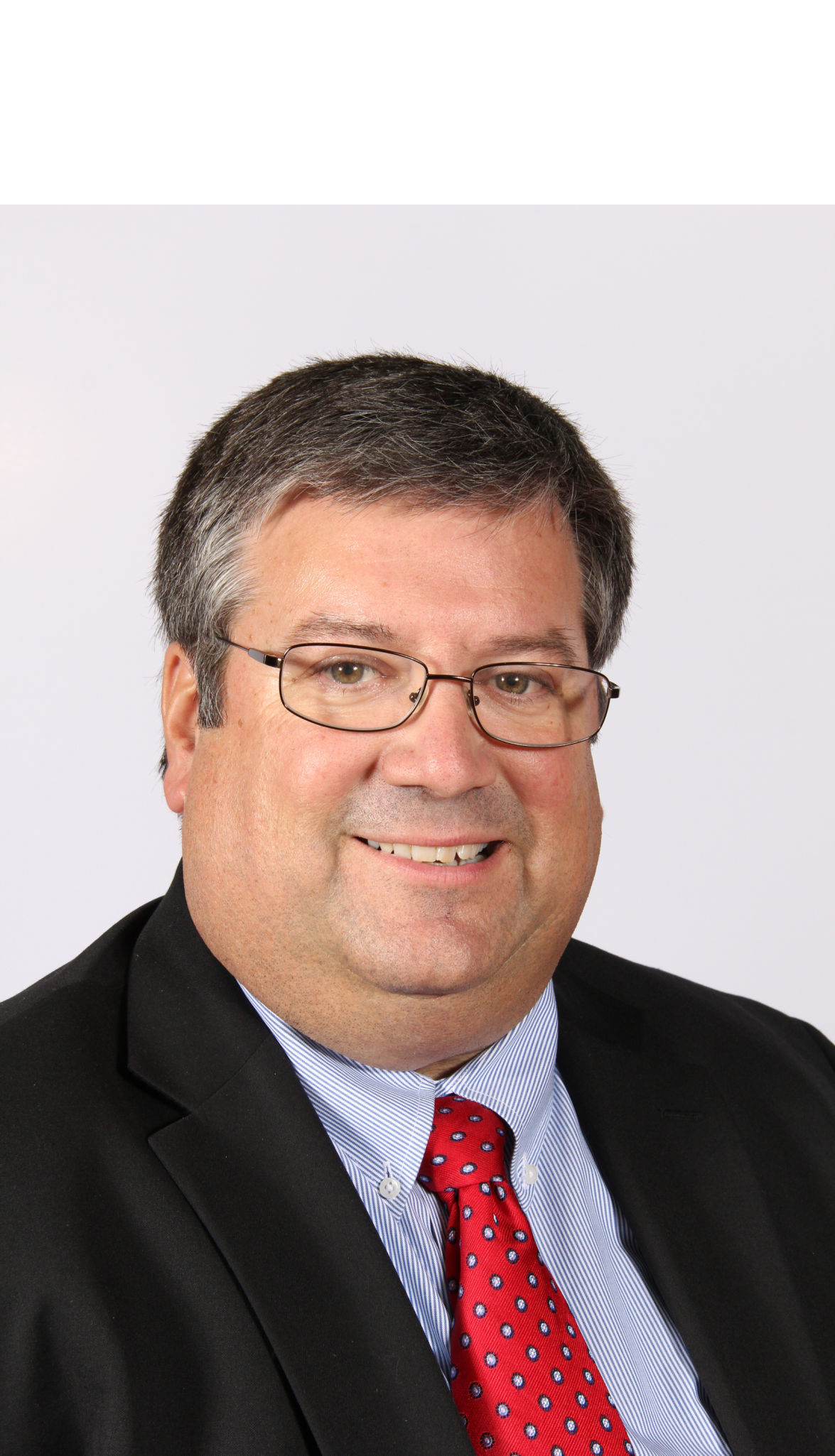
Rep. Don Hineman, R-Dighton, 118th Dist.

Controversy over the state of Kansas’ KPERS retirement system seems to be a perennial part of the legislative process.  Each year seems to bring new legislative proposals which cause anxiety among KPERS participants… both current employees who are paying into the system and retirees who are now receiving benefits.

The problem started years ago when the Kansas legislature began to shirk its statutory responsibility for funding KPERS.  While employees were required to contribute the entire percentage of their pay they had originally agreed to, the legislature shorted KPERS by making a smaller employer contribution than the state had agreed to.  That contribution rate had been calculated back then as the amount necessary to keep KPERS solvent.

Over time the legislature’s underfunding created a huge problem for KPERS and the result was a retirement system which was billions of dollars away from being actuarially sound.  That posed a real threat to the future retirement benefits of thousands of state and local government employees.    Fortunately the legislature in 2012 recognized that something had to be done and a law was passed that increased contribution rates for both employers and employees.  It was designed to eventually return KPERS to fiscal health, and that will happen if this and future legislatures live up to their commitment.  I was pleased to vote for the bill back then, and I consider it the most significant piece of good government legislation to come out of that session.

The budget which passed the legislature last week gives Governor Brownback the flexibility to delay the fourth quarter payment into KPERS (due by the end of the fiscal year on June 30) until later in the new fiscal year.  But if he does that (and I believe the dire fiscal circumstances of the state will force him to do so) then the delayed payment must be made into KPERS, with 8% annual interest, no later than September 30.

This is not the same thing as borrowing from KPERS, which implies that the state would be withdrawing past contributions to KPERS and using them for other purposes.  That has not happened and will never happen.  The IRS has very strict rules governing retirement plans such as KPERS, and withdrawing previous contributions would be a clear violation of those rules.  It would put the entire system in jeopardy.  From the perspective of the IRS, that is a much more serious event than diverting contributions before they go into KPERS.

The truth is KPERS is the only absolutely secure lockbox in Topeka.  The IRS regulations make it impossible for any legislature or governor to start using KPERS as a piggy bank.  If contributions are delayed or reduced, that means it will take longer for KPERS to reach fiscal soundness but it does not put anyone’s retirement at risk in the foreseeable future.  Unfortunately that is exactly what is currently happening.  In fiscal year 2014 Governor Brownback reduced the state’s contribution to KPERS.  And the budget passed just last week continues that practice for FY 2016 and 2017.  By doing so the state is delaying the date at which KPERS becomes solvent.  That fact alone was reason enough for me to vote no on the budget.

However there is another reason to be concerned about delaying or reducing state contributions.  Doing so is a huge red flag regarding the fiscal situation the state is currently in.  If we can’t afford to make four quarterly KPERS payments this fiscal year, what are the odds we will be able to make five payments plus interest on one of them in the next fiscal year?  The fact that this move is even being contemplated is a manifestation of a serious fiscal crisis within state government.

Aside from the fiscal red flag there is another troubling aspect to this practice.  Agreed-to KPERS contribution rates constitute an agreement between employer and employee.  For the state of Kansas to shirk its responsibility and reduce its current or future contribution rates while employees and other government employers are making their full contribution represents a serious breach of ethics and may in fact be illegal.  We ought not to do that.

State Representative Don Hineman, 118th District
[email protected]
785-296-7636    

SCHROCK: Standards Wars

John Richard Schrock is a professor at Emporia State University.

Anti-Common Core sentiment in the Kansas Legislature has resulted in another bill that would direct Kansas schools to develop new standards—yet again.  This action appears driven by a general antipathy for the federal government’s 15 years of meddling in state education policy.

Education has always been and remains a “state’s right.” President Bush extorted policy compliance by tying it to federal Title money. While Common Core was developed by the chief school officers—state commissioners and superintendents across the country—it became a federal curriculum when it was tied to federal education money under the Race to the Top competition. Despite renaming No Child Left Behind as the Every Student Succeeds Act, the NCLB policies and curricula have become embedded in state education regulations in 43 states. That includes Kansas where the College and Career Ready Standards are Common Core-inspired.

After hearing a Common Core opponent from Wisconsin testify, the Kansas House Education Committee took the anti-Common Core HB 2676 and moved it into Substitute House Bill 2292. This bill also requires that Advanced Placement and International Baccalaureate programs be aligned with the newly-required Kansas standards.

While this anti-fed action is simple-minded knee-jerk politics, the opposition’s sky-is-falling response is hardly more credible. Both sides are under the illusion that changing paperwork dramatically changes teaching practices in the classroom. Both sides are wrong.

In 1987, the State Board of Education was one of the first states to mandate sex and AIDS education. In 2005, the KSBE removed this state mandate. Those teachers who had previously included sex education before 1987 taught it competently before, during and after the mandate. Those who were not well-trained in sex education adopted anemic Sex Respect programs and dropped the topic as soon as the mandate ended. Policies changed. Classroom practices did not.

In 1999-2000, I was on the Science Standards Committee that rewrote the second revision. That was the time the State Board removed the evolution section and made national news. Two years later, after another Board election, evolution was returned. When Kansas biology teachers met for their annual meetings, it was obvious that removing evolution from the standards had increased, not decreased, the extent evolution was taught in biology classes. With the highest belief in evolution of any state surveyed, Kansas biology teachers integrated evolution into every lesson they taught. The late Professor John Moore of UC-Riverside told me to expect the Board action to cause an increase in evolution teaching. He was correct.

It is difficult for folks in high positions to realize that in a profession, practice is not determined by directives from above, but by the education of the professionals. Education schools also appear gullible to this “better education through paperwork” myth. But even if you legislate that we teach that the earth is flat, evolution is wrong, and global warming does not exist, the competent professional teacher is not going to comply. What teachers teach in the classroom is dependent on their professional training. Simply, a science education has more power than legislators or state board members.

There is only one worldwide universal science. It is the same chart of chemical elements that hangs in classrooms worldwide. And gravity does not work differently in Russia. The Advanced Placement curriculum was developed long before state standards and the International Baccalaureate  curriculum is a product of Europe.

I have no love of the educationist Next Generation Science Standards that omit animals, plants, microbes and human anatomy and physiology. But good biology teachers go ahead and teach this content anyway. Professional teachers can ignore the NGSS and they can ignore any new Kansas standards as well.

Kansas does not need to waste $9 million and two years of professionals’ time writing more standards. Indeed, issues such as this are the jurisdiction of the State Board of Education. They are none of the Kansas Legislature’s business.

BEECH: Start small, think big, make it automatic for America Saves Week

Linda Beech
Linda Beech

The last week of February is America Saves Week– a great time to take a hard look at your finances. This week, organizations across the nation and military installations around the world join together to promote the importance of saving. Organizations are embracing this year’s theme, “Make Saving Automatic,” by encouraging the use of direct deposit to savings, automatic transfers from checking to savings accounts, and automatic contributions to retirement accounts.

“The research clearly demonstrates that those with a plan are nearly two times as likely to spend less than they earn and save the difference,” said Nancy Register, director of America Saves. “America Saves Week is the perfect opportunity for everyone to set a savings goal, make a savings plan, and save automatically.”

Make 2016 your year for financial action! Even with a sluggish economy, you can make changes to improve your financial future.  Start small but think big with these suggestions from America Saves and the Consumer Federation of America:

• Start (or add to) an emergency fund. An emergency fund is your protection against unexpected expenses. Having an emergency savings fund may be the most important difference between those who manage to stay afloat and those who are sinking financially. That’s because maintaining emergency savings of $500 to $1,000 allows you to more easily meet unexpected financial challenges such as car repair or a medical bill and avoid high interest, short-term loans.

• Track your spending. If you’re looking for ways to cut back, your first course of action should be to know where your money is currently going. Knowing how you and your family spend money can help identify areas to reduce your spending. Keep track of every penny you spend for a month and see if you discover any surprises.  Then use your spending record to make a plan for next month, and for the rest of the year.

• Let go of bad habits and bank your savings. A simple behavior change, like bringing your lunch to work rather than eating out, can add up to big savings over time. Find one or two regular habits–  such as regular vending machine purchases, eating out or recreational shopping– to reduce and bank the difference.

• Go automatic! Treat savings like another bill and pay yourself first.  Set up automatic monthly transfers at your financial institution from your checking to savings account or have a portion of your paycheck directly deposited into your savings. Savers who save automatically are more likely to be successful long-term.

• Save all or part of your tax refund. With IRS Form 8888, you can choose to have all or part of your tax refund directly deposited to a savings or investment account, and even divide the savings among up to three different direct-deposit accounts if you wish. Ask your tax preparer or go to https://www.irs.gov/uac/About-Form-8888.

• Take advantage of free money at work. Many employees turn down free money from their employer by not signing up for a work-related retirement program such as a 401(k) plan. https://www.americasaves.org/strategies/work/save.asp.   As a result, in a recent America Saves survey, only about half of non-retired persons (52%) said they were saving enough for a retirement in which they would have a desirable standard of living.

This year America Saves is incentivizing savings through the #imsavingfor contest.  Individuals can submit a photo of themselves and their savings goal on the social media platform of their choice using the #imsavingfor hashtag. They can then enter to win $500 by completing the form at AmericaSavesWeek.org/imsavingfor.

Although America Saves Week focuses attention on saving and spending in February, the America Saves and Kansas Saves websites (www.americasaves.org and www.kansassaves.org) are available year-round to provide saving tips and support. Savers can also use these websites to make a savings pledge and sign up to get savings tips by email and text messages.

Linda K. Beech is Ellis County Extension Agent for Family and Consumer Sciences.

COLUMN: Learning from past can pave way for education’s future in Kansas

By Debbie Mercer, Dean, College of Education, Kansas State University
and Ken A. Weaver, Dean, Teachers College, Emporia State University

February is the anniversary of historic legislation that created Kansas’ public education system and higher education institutions. Teacher preparation programs forever linked colleges and the public schools, and fortunately education has always been paramount in Kansas and the country, even in times of turmoil.

The Kansas Territory came into existence by way of the Kansas-Nebraska Act of 1854, repealing the Missouri Compromise and the geographic line dividing the North and South. The Kansas-Nebraska Act introduced popular sovereignty, allowing each state the choice to be a slave or free state. This made Kansas a magnet for proslavery Missourians and abolitionists from the Northeast. The ideological clash inspired the term “Bleeding Kansas” and made Kansas the tipping point for the Civil War.

What does this have to do with education? In a word, everything.

A year into the chaos of the Civil War, what did President Lincoln do? He signed the Morrill Act, which established land-grant institutions in the nation. Kansas State Agricultural College, now Kansas State University, became the nation’s first operational land-grant when it was founded in February 1863. A simple truth came to light that is as true today as it was then: Education has never been easy; it just has to be a priority.

Kansas had already made education a priority in 1858 with the territorial legislature’s vote establishing the public education system and 10 institutions of higher education – three years before statehood. Our forefathers realized highly trained teachers were the cornerstone of a quality education system and laid the foundation for successfully preparing homegrown educators.

In 1867, less than a decade later, Kansas State Agricultural College — K-State — and Kansas State Normal College — now Emporia State University — produced the first graduates from public institutions. Two of K-State’s five graduates became educators, and both of Emporia State’s graduates became teachers. (A “normal” college’s sole mission was teacher preparation.) Interestingly, K-State and Emporia State share the distinction of each preparing half of the state’s first generation of Kansas educated teachers. Wildcats and Hornets stand tall and strong in the history of teacher preparation and student success in our state and nation.

Another historic link between the universities is abolitionist Issac Goodnow, a founder of Bluemont Central College, K-State’s forerunner. Goodnow was elected to the Kansas Senate and was a member of the education committee where he used his influence to establish the agricultural college. He was elected as president of the Kansas State Teachers Association in October 1863 and also served as an ex officio member of the Board of Regents for the State Normal School, or Emporia State.

We encourage those who care about education to celebrate the state’s earliest lawmakers and their vision and investment in the public school system. A collective understanding of the value of education was required in 1858, and those same values will serve us well for the next 150 years.

This article was prepared by Debbie Mercer, dean of the College of Education at Kansas State University, and Ken A. Weaver, dean of the Teachers College at Emporia State University.

INSIGHT KANSAS: The problems with the primary/caucus system

Recently, Michael Smith shared how Kansans can participate in the March 5 Presidential caucuses. Sadly, only two percent of the public will follow it. Primary elections, especially the caucuses conducted in Kansas, are a dismal exercise in internecine party bloodletting that polarizes our politics and reduces the quality of nominees for political office. The direct primary a dismal failure.

Chapman Rackaway is a Professor of Political Science at Fort Hays State University.

Since 1972, when Democratic nomination reforms functionally mandated primaries to select nominating convention delegates, the situation has progressively worsened. In a classic case of using a bazooka to kill a rat, direct binding primaries gutted political parties, unmoored the general public from their best political linkage institution, and encouraged fringe candidates to pursue party nominations. Primaries have given us Ted Cruz, Bernie Sanders, and most notably Donald Trump. Without the ability to sidestep party officials, such fringe candidate would never have serious chances at major party nominations.

Primaries are especially vile because of the gap between their democratic promise and their unrepresentative results. Reformers believed primaries would invigorate democracy, create incentives to be informed, and boost turnout. They have done the exact opposite.

In Culture War, political scientist Morris Fiorina shows how primaries encourage candidates to seek the extremes. Ideologues and those mobilized by interests with extreme goals are the participants, pushing candidates to the far left and right before requiring them to navigate to center for the general election. Why do candidates seem like hypocrites, starting extreme and becoming centrist as the campaign goes on? Because primaries make them.

Turnout is the most troubling result of primaries. In 2012, nationwide primary turnout reached a new low of fifteen percent. There are two very different types of primary election: ballot or caucus primaries.

Caucuses, the selection method used here in Kansas, is even worse than the ballot primary. Ballot primaries are elections, similar to any where voters go to their normal polling place and select candidates. Caucuses, though, are public meetings featuring speeches and organizing, vote-trading and negotiation among participants. A voter in a ballot primary can complete their citizen’s duty in minutes, whereas the typical caucusgoer is committing to at least an hour and a high level of procedural involvement. The time commitment, arcane rules for candidate selection, and uncertainty of where the events are held all contribute to low participation.

In 2012, ballot primaries ranged in turnout from thirty-one to a low of two percent, for an average of 22% according to the United States Election Project. (https://www.electproject.org/2012p) The turnout percentage is much worse in caucuses, which range from Iowa’s high of six to a low of less than one percent in multiple caucuses. Kansas tends to the average of the range, with a high of 2.9% in 2008 to a low of 0.9% in 2004.

When Bernie Sanders strongly won the New Hampshire primary over Democratic rival Hillary Clinton, Sanders railed against Clinton’s large number of uncommitted Superdelegates to the Democratic National Convention, warning them against favoring Clinton saying that to do so would be to ignore ‘the will of the people.’ When we consider that all of the 700 Superdelegates equal .0000002% of the people, and New Hampshire’s primary electorate is just .00013% of the people, is either group representative at all?

The lack of representation, absence of engagement, and polarizing results should provide more than adequate evidence that the direct primary is an antidemocratic disaster. Even returning to the old days of ‘smoke filled rooms’ and party insider choice would be better than the mess we see today. Direct election of local party leaders, who then would choose nominees, would reduce the number of elections, increase accountability, and moderate the candidates in much-needed ways.

Chapman Rackaway is a Professor of Political Science at Fort Hays State University.

SCHLAGECK: Play safe on the farm

John Schlageck writes for the Kansas Farm Bureau.

The dream of many young farm boys and girls is to ride on a tractor. For a youngster growing up on a farm, operating mammoth farm machines epitomizes raw power, responsibility and coming of age.

Nothing is more exciting to farm kids than the belch of diesel smoke, the roar of engines and rubber wheels on powerful tractors, combines or silage cutters. They draw children like a moth to a flame and, like fire, can be dangerous. Such equipment can cut, crush or trap children. It can harm the ones we want to protect the most – our children.

Livestock accidents and drowning rank closely behind machinery as potential safety hazards on the farm and ranch.

Without question rural living provides children a unique environment in which to live, play, work and grow up while learning the values of independence, self-sufficiency and responsibility. Still safety experts label agriculture one of the most hazardous occupations, and farm children are routinely exposed to the same perils as their parents.

Each year, hundreds of children are killed, and thousands more are injured in farm-related incidents, according to National Safety Council statistics.

Ag Safety Awareness Week is slated for March 6-12. This year’s theme is “Caution – Safety is No Accident.”

Brushing up on some of the potential hazards of farming can make it safer for parents and their children.

Stress that youngsters must stay away from machinery. Never let them play or hide under or around machinery like tractors.

Describe to children how horses can be fun to ride – with a helmet. Talk about how lambs and baby calves can be pleasurable to pet or feed.

Remind them that while animals are fun to be around they can also bite, trample and stomp.

Discuss with your youngsters the signs that show an animal may be dangerous. Some of them include pawing the ground, snorting, raised hair and ears laid back.

Animals – even friendly ones – can be unpredictable. Have your children stay away from large ones. Emphasize they stay away from animals with newborn or young. Tell them to remain calm, speak quietly and move slowly when around animals.

While barns, grain handling facilities and big buildings can be fun to play in, children may fall or be exposed to harmful substances like chemicals and electricity.

Wide-open spaces make ideal playgrounds. However, this isolation may lead to difficulty finding help in the event of an emergency.

Explain the dangers associated with stored grain. Stress the principles that grain can entrap a person almost immediately. Children should never play around, or in grain that is stored in bins, trucks or wagons. Emphasize that it is difficult, or can be impossible, to pull even a child out of grain if he or she becomes trapped.

As a youth, my dad always warned us again and again about swimming in ponds or rivers. Remember to warn your children about the dangers of water, especially for youngsters who may not be able to swim.

Ponds and rivers can be deep. When you first step in, the water may be up to your knees the first couple steps and the next – over your head.

There are no lifeguards on the farm or ranch. Fencing off ponds may help. Warning signs also may serve as a deterrent, but kids always find a way into the water.

Warn children about such potential hazards. Then warn them again. Saving one child’s life is worth the effort. Advise them often because they forget.

Lead by example and remember that as a parent you have been entrusted with safeguarding your children’s wellbeing. Childhood remains a special time and youngsters need to play.

Children are treasures. Take care of them. Cherish them and keep them safe.

John Schlageck, a Hoxie native, is a leading commentator on agriculture and rural Kansas.

RAHJES REPORT: Feb.22

Rep. Ken Rahjes, R-Agra, 110th Dist.

By Rep. Ken Rahjes
R-Agra, 110th Dist.

Hello from Topeka.

We are nearing “halftime” of this legislative session with what is termed “turnaround.” This means the bills which were passed in the house go to consideration in the Senate and vice-versa. At the time of writing this, we still have a number of bills to debate and vote on before a break of several days out of Topeka. We will resume the session on March 2nd and continue working on bills. A first adjournment scheduled for March 25th. The veto session is scheduled to begin on April 27th and could be short or extended depending on the number of unresolved issues.

The budget for FY 17 has been passed by both houses. I voted for the budget, as I felt it was a way to move forward and protect KPERS. I have real concerns about much of the sweeping of funds which took place to get to the ending projected balance and what measures will need to be taken if tax revenues continue to come in lower than projected. We began the process of exploring some of the suggestions from the efficiency study which was commissioned by the legislature to find savings in running state government. There were 105 recommendations, some that can be done with policy changes within certain agencies or departments while others will take action by the legislature. Many are well-intentioned, but could also bring unintended consequences that could end up costing more money than it was projected to save. I believe it is worth a try to find ways to run government services in a prudent and conservative manner.

Another issue voted on the floor of the house last week was a bill expediting licensure for Kansas doctors to be able to practice medicine in the 12 other states that have joined a new interstate license compact. The bill will not only expand practice options for Kansas doctors, but also for Kansans across the state by increasing access to specialists who may reside in others states. A patient in Kansas could be treated by a doctor from the Mayo Clinic without having to travel to Minnesota, because the Mayo physician can get an expedited Kansas license. The compact will especially help patients in rural Kansas by increasing telemedicine options from out of state specialist physicians. If doctors choose to practice telemedicine in another state they must adhere to the jurisdiction of the state medical board where their patient is located. The states that have already enacted the compact include: Nevada, Idaho, Wyoming, Utah, South Dakota, Minnesota, Wisconsin, Iowa, Illinois, West Virginia, Alabama, and Montana.

A reminder: there will be opportunities to meet and talk face-to-face on Monday February 29th from 11:00 – Noon in Hill City at Red’s Family Restaurant; Tuesday, March 1st: 1:00 – 2:00 pm at the Rooks County Health Center, Plainville and then 3:00 – 4:00 pm in Agra at the Agra City Building/Library. I hope to see many of you there. I appreciate those who attended legislative updates last weekend in Ellis, Prairie View and Norton.

Those from the 110th in Topeka this past week included: Kansas 4-H Citizenship in Action event participants Clay Pelton and Sarah Pelton, Paradise (Rooks County 4-H’ers); Hannah Peak, Kirwin; Noah Peak, Kirwin; Nathan Thomas, Stockton; Royce Turner, Phillipsburg; Anna Muir, Stockton and Patsy Maddy, Norton. Terry Nelson, Almena with the Kansas Livestock Association and Arianne Fischer, Plainville, FHSU student.

Please reach out to me if you have concerns, questions or issues that need to be addressed.

You can keep up on things by following and liking Ken for Kansas on Facebook. During the session I can be reached: Ken Rahjes, Kansas State Capitol, 168-W, Topeka, KS 66612; Phone: (785) 296-7676; Email: [email protected]; or 1798 E 900 Rd, Agra, KS 67621; Cell: (785) 302-8416 or [email protected].

You can also track bills and get specific information by going to kslegislature.org. I look forward to seeing you when you are in Topeka or out and about in the district.

HAWVER: ‘Revenge porn’ and sending cash from Kan. back to D.C.

martin hawver line art

Every now and again you can watch the Legislature literally turn on its heels in debate.

An amendment pops up that old-time Legislature-watchers figure has no chance, and then, well, it’s suddenly very popular, if a dab out of character for the House or Senate.

Such surprising votes, one in the House and another in the Senate last week, were both spurred by Democratic amendments.

First surprise was the narrow adoption of an amendment to an otherwise pretty dull bill that would make “revenge porn” a crime. That’s when half of a broken-up couple distributes on the Internet sexy or obscene photos of the other.

That apparently happens a lot nowadays because those probably obscene or embarrassing photos stay on cell phones where they can be sent out by a rejected party in a broken relationship. This is a relatively new deal; we’ve heard nothing about “revenge porn faxes,” of course.

But the key: Rep. Sydney Carlin, D-Manhattan, offered up the amendment to make that porn a crime, and after a narrow start, it kept building and building, vote by vote until, by the end, there were 96 votes for her amendment.

That’s an example of most legislators—there were still 23 of those present who voted against the amendment—not wanting their names to show up on a list of House members who don’t mind revenge porn and voted against making it a crime. Wonder how that would look on a campaign leaflet? An incumbent is apparently OK with revenge porn? Even if there is a solid technical reason that a lawmaker might have to vote against the amendment, it’s probably going to take quite a bit of time to explain, isn’t it?

The second earthmover? Over in the Senate, where the chamber was reducing welfare benefits for the poor. The concept: Help the poor learn job skills and they’ll get jobs and off of welfare. Cut the length of time that the poor can receive those benefits, and they’ll be more interested in getting the training and education needed to get good jobs and not need welfare anymore.

That’s an idea popular with nearly everyone: Kansans supporting themselves with good jobs, earning enough money to take care of themselves and their kids. Who’s against that?

Well, the bill reduced from the current 36 to 24 months of financial support under the mostly federally funded Temporary Assistance for Needy Families (TANF) program. That’s the welfare program.

Sure, there were good arguments for and against the reduction in months. Republicans said the average length of time on TANF is 16 months, and the state can for good reasons extend the 24 months by another year if circumstances require. Democrats say the Legislature last year cut the lifetime eligibility from 48 months to 36 months, and this is just another chop at support for the poor.

Not hard to figure that in the Senate, where 32 members are Republicans, the bill was going to pass.

And then, up popped Sen. Laura Kelly, D-Topeka.

She said because the state is reducing the length of those TANF payments to poor Kansans, the state doesn’t really need all the federal funds that it receives for the program. She said Kansas gets $102 million a year for those programs, and over the years has built up a $61 million reserve in that fund, essentially federal money that Kansas can’t spend on anything else so there’s really no need for Kansas to hold onto that federal money. It can’t be spent on anything else, and it can’t be swept into the ailing State General Fund, anyway.

So, her amendment set a cap of $25 million on that warehoused money and sends any amount above that back to Washington.

Republicans were a dab stunned. Send money back to Washington?

But her amendment was adopted apparently unanimously.

Who’d have thought?

Syndicated by Hawver News Co. of Topeka, Martin Hawver is publisher of Hawver’s Capitol Report. To learn more about this nonpartisan statewide political news service, visit www.hawvernews.com.

WAYMASTER: From the Dome to Home

Rep. Troy Waymaster, R-Bunker Hill, 109th Dist.

Rep. Troy L. Waymaster, Kansas House District 109
February 19, 2016

FY 2016 & 2017 Supplemental Bill
As I mentioned in the last newsletter on Wednesday, February 10, the House of Representatives debated and amended the supplemental budget bill for fiscal years 2016 and 2017. Thursday of last week, the Senate passed its version of the budget bill, Senate Substitute for House Bill 2365. By having a budget passed in both chambers, the next step of the budget process was that the budget committees of each chamber, House Appropriations and Senate Ways and Means, met to discuss, add, or subtract details into the final Conference Committee Report.

The most poignant changes that the conference committee members made to the report for fiscal year 2016 were: the addition of $3 million to address understaffing and recertification for Osawatomie and Larned State Hospitals; added language allowing the governor an enhanced allotment authority if the state’s general fund ending balance is projected to fall under $100 million; if there is a transfer from KPERS then a payment would be required with an assessed 8% interest rate by September 30, 2016; Prohibition of STAR Bonds in Wyandotte County for 2016 unless legislation is passed during the 2016 legislative session; and if the governor wishes to privatize either Osawatomie or Larned State Hospitals, thatt would require action by the state legislature.

Many of the items mentioned in the 2016 budget are also mentioned in the 2017 budget. Some of the differences are: deleted the transfer of Children’s Initiative Funding to the State General Fund and instead directed that money to the Children’s Cabinet for Grants; appropriated funds for a 2.5% pay increase for correctional officers; language was added to prevent the governor from transferring money from KPERS in 2017; included a provision that the debt service for the state highway fund cannot exceed 19%; stipulates that if there is any bonding over $5 million the only entity that can be used is the Kansas Developmental Finance Authority; and added $378,000 for safety net clinics in the Kansas Department of Health and Environment. The conference committee report passed the House on Wednesday, February 17, with a vote of 68-54. I voted “yes” on the conference committee report I voted “yes” on the conference committee report even though I do not particularly like some components of the budget bill, I acknowledge that we need to address the financial needs for the state of Kansas.

Efficiency Study: General Government Budget Committee

On Tuesday, the General Government Budget Committee, which I serve as chairman, conducted a briefing with the personnel from the auditing firm of Alvarez & Marsal, which is the firm that was contracted to complete the efficiency study. Some of the suggestions that were discussed varied from the way that the state of Kansas conducts its purchasing agreements, the selling of surplus property that is currently owned by the state of Kansas, negotiations with our vendors on making our payments on a longer payout structure and with discounts if the state would choose to pay them earlier, reduction and centralization of our fleet vehicles, and printing. Since the budget bill has now passed, in the month of March the committee will use it’s time to identify additional savings for the state.

Bills Debated in the House Last Week
In addition to the supplemental budget bill for fiscal years 2016 and 2017, the Kansas House of Representatives debated and voted on nearly twenty other bills. Here are some details of the bills that we deliberated on this past week:
• House Bill 2480 from the committee on Agriculture and Natural Resources makes a number of technical changes to the existing law regarding livestock brands. The bill passed 98-23. I voted “yes”.
• House Bill 2490 is another bill that came through the committee on Agriculture and Natural Resources which makes some changes to current statute and specifies that the Secretary of Agriculture has the allowance to expand the definition of plants, include toxicants in the list of plant pests, and expand the scope of plant pests to include those which can cause a threat to public health. This bill passed the House by a vote of 109-13. I voted “yes” on this bill, as well.
• House Bill 2518 would require that all death or stillbirth certificates and medical certifications be filed electronically with the Kansas Department of Health and Environment, beginning January 1, 2017. The House vote was 111-11, again, I voted “yes.”
• Substitute for House Bill 2289 would require that it be certified that prior to stopping the person operating or attempting to operate a vehicle, the law enforcement officer had reasonable grounds to suspect the person was committing or had committed a crime or traffic infraction, or was involved in an accident resulting in property damage or injury. HB 2289 passed out of the House, 115-7, and I voted “yes.”
• The final bill I will mention is House Bill 2503 which would require all vehicle registration applicants to pay a $2 non-refundable surcharge for each vehicle being registered and that surcharge would be credited to the Kansas Highway Patrol Staffing and Training Fund. We will vote on this bill on Monday.

Session Calendar and Contact Information
On Monday, the Speaker of the House’s office made us aware that there were going to be some alterations to the session calendar.

The new session calendar has shortened our legislative session before the April break. The last day that morning and afternoon committees may meet will now be February 18, Turn Around Day has been has been moved forward to February 23 and we will be out of session from February 24 through March 1. The new session calendar also accelerates our schedule by having the date of first adjournment on March 25. The Legislature would then be on break for most of April and would return for veto session on April 27.

If you have any concerns, feel free to contact my office at (785) 296-7672, visit www.troywaymaster.com or email me at [email protected].

The honor to serve you in the 109th Kansas House District and the state of Kansas is one I do not take lightly. Do not hesitate to contact me with your thoughts, concerns and questions. I appreciate hearing from the residents of the 109th House District and others from the state of Kansas.

Troy L. Waymaster,
State Representative
109th Kansas House
300 SW 10th
Topeka, KS 66612

EXPLORING KAN. OUTDOORS: Let’s all take a kid turkey hunting

BullCityBlack500x125 (1)

There is a young lad at my church I’d like to take turkey hunting this spring, so today I was perusing the Kansas Department of Wildlife, Parks and Tourism (KDWPT) website, making certain I understood the regulations governing youth hunting, and I learned some information about youth hunting in Kansas I did not know.

Any young person in Kansas 15 years old and younger can hunt with nothing more than a youth permit for the species they are hunting, but must be supervised by a licensed adult 18 or older.

Steve Gilliland
Steve Gilliland

A youth spring turkey tag in KS is only $7.50. By law, a youngster in KS is eligible to take Hunter’s Education as young as 11 years old, but is not required to have completed Hunter’s Ed. until age 16. Also, age 16 is when KS youth are required to have an adult resident hunting license, and to purchase adult permits and tags.

Also noteworthy is the fact that 16 year olds in KS can still participate in special youth hunts even if they possess adult licenses and permits. So to sum this all up, 16 is the magic age; at 16, KS youth must have completed Hunter’s Ed., and must begin purchasing adult hunting licenses and adult permits.

If they are 15 or younger, they can still hunt under direct supervision of an adult 18 or older, and all they need is a youth permit for the species they are hunting. Kids 12 or older can hunt by themselves if they have completed Hunter’s Ed. and have the required permit.

April 1 – 12 is set aside in KS for Youth and Disabled turkey hunters only, and the KDWPT website lists 31 special youth-only turkey hunts around the state during that time frame. I have tagged along on a couple of these spring youth turkey hunts and they are very well orchestrated and lots of work is done ahead of time to scout birds, build or erect blinds, etc.

The kids are gathered together the night before to check permits and pattern shotguns, and the guides for the hunts are always local hunters that know the area and the birds there, and they will go out-of-their way to try to help each youth hunter harvest a turkey. To view the list and get the application, go to ksoutdoors.com, click on “hunting,” then “special hunt information,” then click near the top of the page to view the entire list of special spring turkey hunts. When the page of special hunts opens, you can use the boxes at the top to narrow the list to “youth hunts” only. The application deadline is February 29, so don’t delay to get a spot in one of these special youth turkey hunts.

Every kid in Kansas who wants to hunt wild turkeys should be able to do so. There are plenty of turkeys, plenty of opportunities for them to hunt and plenty of experienced turkey hunters that could each take a young hunter with them, so we should be able to accomplish that goal.

What say you fellow turkey hunters, can we each take a kid hunting with us this year as we continue to Explore Kansas Outdoors?

Steve Gilliland, Inman, can be contacted by email at [email protected].

BullCityBlack500x125 (1)

BEECH: Know the 10 signs of Alzheimer’s disease

Linda Beech
Linda Beech

More than 5 million people in the United States have Alzheimer’s disease. Not only is Alzheimer’s the sixth leading cause of death in the country, but it also currently cannot be prevented, cured or slowed.

Mirroring the national statistics, Alzheimer’s disease is also the sixth leading cause of death in Kansas. About 12 percent of Kansans currently have the disease or related dementia.

Erin Yelland, K-State Research and Extension adult development and aging specialist, said there are 10 main signs of Alzheimer’s disease. If signs seem to be there, the first thing to do is contact a primary care physician. Early diagnosis is important.

“Alzheimer’s disease is predictable,” said Yelland. “We know certain issues are going to come up, and we know the process of decline that patients will experience. By educating yourself, you can understand what might happen, but more importantly, your family members will better understand what they are going to experience while you’re battling this disease.”

The 10 signs, according to the Alzheimer’s Association, include:

1.      Memory loss that disrupts life.
The first early sign of Alzheimer’s disease is memory loss and an evident decline in cognitive function. People in early stages might forget important dates or events, ask the same information repeatedly, or need to rely on notes or family members to provide reminders for things they used to do on their own.
Experiencing some memory loss and forgetfulness as we age is normal, Yelland added, but Alzheimer’s disease brings more dramatic instances of memory loss that disrupt daily life and functioning.

2.      Challenges in planning or solving problems.
Concentrating might become more of a problem. Forgetting to pay bills could become more frequent. Following a simple recipe could pose a challenge.

“For example, a person with normal cognitive functioning can make a peanut butter and jelly sandwich,” Yelland said. “For a person with Alzheimer’s disease, this may be a complicated task because the recall of steps gets tangled in the brain.”

3.      Difficulty completing familiar tasks at home, at work or at leisure.
Those with early onset Alzheimer’s disease will likely notice daily tasks have become a greater challenge. At home, this could mean having trouble writing a check, running the dishwasher, or finding the correct button to turn on the microwave, oven or television.  Driving to and from work or other once-familiar places becomes difficult for those with the disease.

4.      Confusion with time or place.
“Commonly, people with Alzheimer’s disease don’t remember what year it is,” Yelland said. “I might forget the date, but eventually I’ll figure it out. For people with Alzheimer’s disease, the key is that they might not eventually figure it out.”

They might also confuse seasons of the year: going outside in the winter wearing shorts and a t-shirt, or wearing a parka during the summer. They might forget where they are and how they got there.

5.      Trouble understanding visual images and spatial relationships.
Experiencing vision problems is another sign of Alzheimer’s disease. This could bring on difficulty in reading, judging distances, and determining color or contrast, all of which could lead to problems with driving.

6.     New problems with words in speaking or writing.
Those with Alzheimer’s disease might have trouble conversing with others, lose their train of thought and repeat themselves. They often struggle with finding the right word or call things by the wrong name, such as referring to a watch as “hand clock” or “wrist clock.”

This aspect can be particularly tough on families, especially if the person suffering from Alzheimer’s can’t remember a loved one’s name.  Then, the specialist suggests it is best to just be patient and don’t argue.  Stay calm, so they stay calm.

7.     Misplacing things and losing the ability to retrace steps.
Most people know that when they lose something, such as a car key, they simply have to trace their steps to find it. This is not something people with Alzheimer’s disease can do easily. They might lose an item and cannot think back to when they last saw it. They might put objects in unusual places or accuse other people of stealing something they cannot find.

8.      Decreased or poor judgment.
People with Alzheimer’s disease often experience changes in judgment and  decision-making. For example, they might use poor judgment when dealing with money. They might forget to keep themselves clean or comb their hair.

9.      Withdrawal from work or social activities.
“Oftentimes when these frustrations are happening, people with Alzheimer’s disease do realize it,” Yelland said. “They know something is happening to them, and it’s hard for them to deal with it.”
For this reason, a person with Alzheimer’s might start to retreat from others. They may not want to participate in social events or do their favorite hobbies.

10.   Changes in mood and personality.
People with Alzheimer’s disease or related dementia could experience a swing of emotions that range from confused, suspicious, depressed, fearful or anxious. Some days will likely be more pleasant than others for them. Certain times of the day might be better, too.

Yelland said there’s a sundowning phenomenon often associated with Alzheimer’s disease and dementia, meaning people are more cognitive and able to do things in the morning. By the evening, things become more difficult. For that reason, it might be best to encourage balancing the checkbook at the beginning of the day, for example, or preparing the dinner meal early in the morning so at night it’s not as much of a struggle.

About 90 percent of what is known now about Alzheimer’s disease has been discovered in the last 15 years. While it’s a complicated disease, some of the risk factors verified by research include: age (most of the people who get it are over age 60); familial history, especially if a parent, brother or sister has the disease; and the presence of a rare gene called Familial Alzheimer’s Disease or FAD.

Yelland has prepared an Extension program and fact sheet “Know the 10 Signs of Alzheimer’s Disease: Early Detection Matters,” which can be shared with interested individuals and groups.  To learn more or to schedule a presentation for your group, call me at the Ellis County Extension Office, 785-6280-9430, at 601 Main Street in Hays.

Linda K. Beech is Ellis County Extension Agent for Family and Consumer Sciences.

BLOOM: DHDC relocation will help focus on development opportunities

One year has already passed since I took over as the Director of Downtown Hays Development Corporation and what a year it was! It was a year of change,

Sara Bloom is the Downtown Hays Development Corporation Executive Director.

growth, and new adventures and 2016 will be no different.

DHDC was established 15 years ago and since its onset has felt the need to locate our office in Downtown Hays. We had not been successful in locating a property of the right size and price until now.

We are happy to announce our new address as of February 1 is 109 West 11th Street.

The need to locate Downtown was not one of discontent with our current location. We have appreciated the synergy/partnership we have shared with our Welcome Center building mates, Convention and Visitors Bureau, Heartland Community Foundation, Hays Area Chamber of Commerce and the Coalition for Economic Development, but we serve Downtown. I have made a commitment that despite our move Downtown, I will continue to collaborate with each of these entities and continue consistent conversations with all.

Our goal is to continually bring awareness to what’s happening on The Bricks of Downtown Hays. We want to see Downtown become a gathering place, an environment that enhances the quality of life, and an area that is an economic driver for our community. I feel DHDC can’t fully commit to these goals unless we are located in the area we serve.

The new location will allow us to improve connections with downtown merchants as well as local and out of town patrons, provide an avenue to focus on development opportunities, and room for growth.

You probably hear this all the time now. The Bricks in Downtown Hays is home to shopping, dining, arts, entertainment, and the historic Chestnut Street District. Now it’s finally our home too.

I hope you can all be excited with us and visit us in our new home soon because Downtown belongs to all of you as too. Your contributions have helped make Downtown Hays the premier shopping district in Northwest Kansas. We are so grateful to you for helping to create and support the heart and soul of our community.

Our work in Downtown Hays is never done. We promise to continue to work for the betterment of our community. We will be accountable to the coming generations who will be the judges of what we do today, and we will not disappoint. If you’d like to know more about the difference DHDC makes or partner in our efforts please don’t ever hesitate to call or email me. Thank you for supporting our mission.

Sara D. Bloom
Executive Director, DHDC
O. 785-621-4171
C. 785-639-6671
109 E 11th, Hays, KS 67601
www.downtownhays.com

Copyright Eagle Radio | FCC Public Files | EEO Public File