We have a brand new updated website! Click here to check it out!

At Morocco summit, Muslim leaders stand up for religious freedom

Charles C. Haynes is director of the Religious Freedom Center of the Newseum Institute.
At an historic gathering in Marrakesh, Morocco on January 27, more than 300 Muslim leaders — including many of the world’s most eminent Islamic scholars and clerics — declared that the religious freedom of minority faiths must be protected in Muslim majority nations.

The Marrakesh Declaration comes at a time of unprecedented persecution of Christians and other minority groups by extremists acting in the name of Islam in the Middle East, Africa and South Asia.

Pushing back against false and dangerous narratives about Islam, the Muslim leaders called on the entire Muslim world to reaffirm the principles of the Charter of Medina, a constitutional contract between the Prophet Muhammad and the people of Medina, “which guaranteed the religious liberty of all, regardless of faith” 1,400 years ago.

To counter extremism and promote freedom, the declaration calls for a “broad movement for the just treatment of religious minorities in Muslim countries and to raise awareness as to their rights.”

Morocco, the host country for the conference, is often cited as an example of an Islamic state that protects the rights of Christians, Jews and other religious minorities. Some of the other Muslim majority nations, however, are badly in need of the reforms called for in the declaration: Citizenship that is “inclusive of diverse groups” and initiatives, including education, that promote understanding across religions.

By sending a message to government leaders who ignore the true teachings of Islam as well as to terrorist groups that pervert the meaning of the faith, the Marrakesh Declaration stakes out an authentically Muslim position in support of religious freedom.

“Enough bloodshed,” said Shaykh Abdallah bin Bayyah, a key organizer of the conference and president of the Forum for Promoting Peace in Muslim Societies. “There is a sickness right now in the world but we have treatments for it within Islam.”

In other words, Islam is not the cause of extremism; Islam offers an answer to it. Now the challenge facing Muslim scholars and religious leaders will be to translate the declaration into societal reforms and peace efforts that effectively counter extremist movements, especially among the young.

The Marrakesh Declaration has received scant media attention in the United States. Positive news about Islam — including the many earlier statements and actions of Islamic leaders to fight extremism — rarely makes headlines. But Americans should take heed of the message coming out of Morocco.

At a time when Islam is coopted by terrorists and demonized by anti-Muslim groups, Americans need to hear the true voice of Islam. To understand why this matters, consider that hate crimes against Muslim Americans and mosques across the U.S. have tripled since the terrorist attacks in Paris and San Bernardino, California last fall, according to a study conducted by researchers at California State University.

Ignorance and fear of Islam breed anger, hate and violence. In recent months, a young girl wearing an hijab was attacked by classmates, a Muslim cab driver was shot by a passenger who was angry about ISIS, a Muslim woman at a carwash was threatened by a man at knifepoint — and the list goes on.

Just as the KKK and White Supremacist groups — which claim to be based on “Christian principles” — are not labeled “Christian extremists” by most Americans, so ISIS and other terrorist groups who act in the name of Islam should not be given the label “Islamic.”

If we can tell the difference between authentic Christianity and perverted versions of the Gospel, so we should learn to tell the difference when it comes to Islam. Our ability to work with one another, defeat our common enemy, and uphold religious freedom hangs in the balance.

Charles C. Haynes is vice president of the Newseum Institute and founding director of the Religious Freedom Center. [email protected]

SCHLAGECK: Adaptation and evolution

John Schlageck writes for the Kansas Farm Bureau.

Some environmental groups have been less than kind to agriculture. They have bombarded the public with figures on soil loss, pesticide-related mishaps and alleged failed attempts at using pesticides to reduce infestation. Their figures are oftentimes unverifiable.

Technology has often been labeled the No. 1 environmental enemy by some of these groups. Food producers – farmers and ranchers – view technology as the application of knowledge. As humans, we survive by adapting the environment to our needs.

Take away technology and man would be just like other primates – confined to tropical regions and subject to extinction due to environmental changes. To survive and progress, we must wisely use the environment, conserve resources and continually produce new food and fiber.

Some would argue that resources are made not born and I agree. Land, ores, petroleum – the raw materials of our planet – are not inherent resources. They do not inherently further human purposes.

Man determines what is useful and how to use it. Topsoil becomes a resource when a farmer tills the soil and plants wheat seed, for example. Ores become resources when metals are extracted from them.

During the past two centuries, technology has been creating resources more rapidly than humans have been consuming them. By every measure of price and availability, resources have become more abundant.

Without science and technology, today’s farmers and ranchers would be unable to feed the masses outside of the agricultural industry. Farmers use technology responsibly. They constantly learn new farming methods and practices by attending training sessions and courses. Using minimum and no-till farming practices and incorporating grass waterways and buffer strips, farmers have improved water quality and increased wildlife habitat.

But new farm technology is expensive. It is in the best interest of farmers to use it carefully and sparingly. Misuse would add to the cost of production, which would result in an even lower return on their investment.

Food produced in the United States is safe. More than four decades of Food and Drug Administration testing has shown the majority of our fruits and vegetables have no detectable pesticide residues. This underscores that American farmers use pesticides properly.

Countless laws help ensure our food is safe. Billions of dollars are spent annually to support food and agricultural safety and quality inspection. The private sector, along with state and local governments spend additional billions on similar activities.

Farmers and ranchers support efforts to evaluate and enhance the current regulatory and food monitoring system. Agricultural producers want to work with all parties toward maintaining safe food, but this industry and our society must avoid policy changes that are based solely on fear or false information.

Decisions affecting the future course of agricultural production are critically important and will have far- reaching impacts on our quality of life. We must be careful in determining long-term policies. Farmers and ranchers must continue to maximize their production capacity with an ever-watchful eye on food safety, quality and the environment.

So by all means let’s have this conversation about food safety and public health. But let’s be sure this conversation is complete, fair and factual.

John Schlageck, a Hoxie native, is a leading commentator on agriculture and rural Kansas.

RAHJES REPORT: Feb. 8

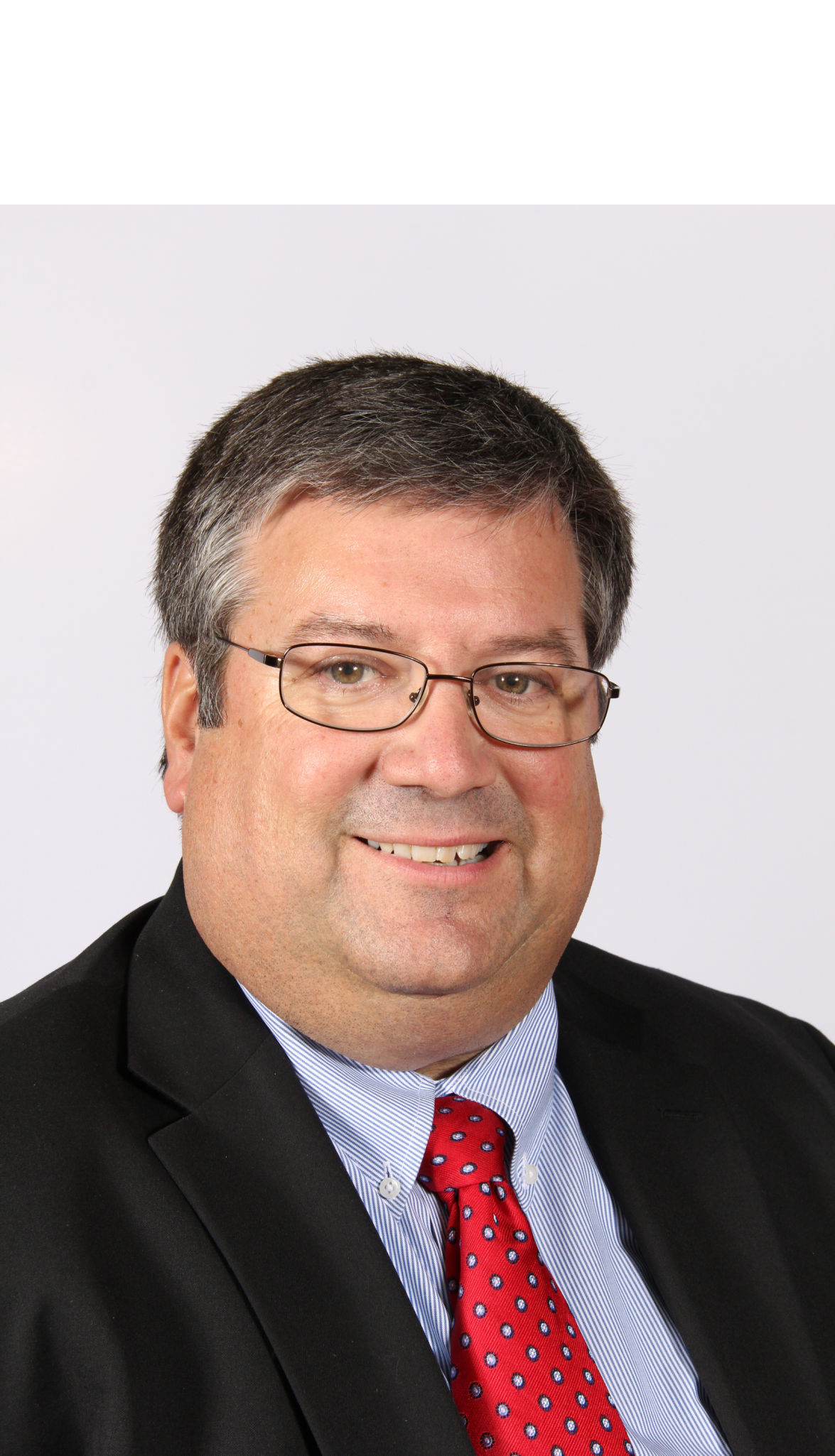
Rep. Ken Rahjes, R-Agra, 110th Dist.

By Rep. Ken Rahjes, R-Agra, 110th Dist.

Hello from Topeka.

Last week a hearing was held in the house education committee regarding HB 2504, recommending the reduction of the number of school districts in Kansas, in theory eliminating administrative and other non-classroom costs. Administrators, patrons and school board members, including Tom Benoit from Palco came to the capitol to testify that this plan is not acceptable for the future of public schools in Kansas.

Over the weekend, the Chairman of the House Education committee said the bill will not move further as there are just too many questions that do not have answers. What this means is for now we have a small victory; however, we must start asking some tough questions about what we realistically want for the future of education. The clock will not roll back to allow school funding to return to the way it was thirty or forty years ago, as our legislature continues to be made up of an urban majority. It is in our best interests to take an active role in the discussion forming the future of education rather than have state government determine what the next steps are.

Transparency is an underlying theme during this session. There have been several bills introduced which will bring more accountability and transparency to state government from what is discussed in committees to easier ways to find out where money is being spent.

Last week the house voted on a couple bills that were left over from last year. One regarding judicial selection, which would have given citizens the opportunity to vote to change the Kansas Constitution about the way Kansas Supreme Court Justices would be selected. The majority of members wanted to keep it the way it is, so it didn’t gain the necessary number of votes for it to move forward.

Five Justices are up for retention in November. I appreciate the conversations and other comments I received regarding this bill. It will be interesting to see if there is a concerted effort by any special interest groups to target them.

Another bill aimed at transparency in public schools was SB 188. It dealt with having school budget information easy to find on the home page of the school’s website. I believe most of the schools in the 110th district already comply with this. The addition to the bill was a $1,000 dollar a day penalty if a school failed to have this information posted and updated by March 1st of each year.

Again, the measure is to encourage more transparency from those who are the recipients of tax dollars. Ultimately the bill failed 58-61-6. While transparency can bring a lot of information to light, it may also bring unintended consequences and misinterpreted information, creating more problems than intended to solve. The bottom line is communication with elected officials; if there is something you don’t understand or agree with, seek answers.

Those from the 110th in Topeka this past week included: Tom Benoit, USD 269-Palco Board Member; Larry Wysell, Superintendent, USD 269-Palco; Brian Brady, First Care Clinic, Hays; Ann Pfeifer, Ellis County Treasurer; Cynthia Linner, Norton Country Treasurer; Stockton Mayor Kim Thomas; Plainville Mayor Kelli Hansen; Keith Schlaegel, Stockton City Manager; Sandy Rogers, Stockton City Commissioner; Roger Hrabe, Rooks County Economic Development Director; Chris Kollman, Stockton National Bank; Ginger Kollman, teacher, USD 271 and Mark Lowry, Stockton, President of Heritage Insurance.

Please reach out to me if you have concerns, questions or issues that need to be addressed. You can keep up on things by following and liking Ken for Kansas on Facebook.

During the session I can be reached: Ken Rahjes, Kansas State Capitol, 168-W, Topeka, KS 66612; Phone: (785) 296-7676; Email: [email protected]; or 1798 E 900 Rd, Agra, KS 67621; Cell: (785) 302-8416 or [email protected].

You can also track bills and get specific information by going to kslegislature.org.

I look forward to seeing you when you are in Topeka or out and about in the district.

HAWVER: Kan. lawmakers offer up some fresh ideas from Topeka

martin hawver line art

Sometimes, just about a quarter of the way into a legislative session, you see bills introduced that make you wonder what those legislators were thinking about last summer.

A handful of those bills…given a little thought…sounds like interesting ideas that we’re surprise nobody thought of before.

Say, that House bill after all the TV coverage of a Kansan who was incorrectly sentenced to prison for a murder that he didn’t commit. Now, he got a trial, and the evidence that would prove that he wasn’t guilty wasn’t readily available.

The solution? How about innocent people who are later found innocent and have spent years in prison get some compensation that was essentially stolen from their lives.

The answer, or at least the opening bid in a bill introduced last week: Pay the wrongly convicted felon the minimum wage ($7.25 an hour) for 40 hours a week they were in prison. Works out to $15,080 a year. You have to wonder whether that’s too high, or too low, or whether getting it in a lump sum payment changes things…

***

Some legislator probably was driving when he/she noticed the car ahead was weaving, but there’s a bill that would make it a crime to drive while holding a cell phone to your ear. No, it probably isn’t safe, and is probably less safe for others on or near the road if you tend to gesture with the other hand instead of steering. There is that loudspeaker setting on most cell phones, that are still likely to slide around the dashboard, and complicated car radios that will carry your phone calls if you can get a teenager/computer wizard to teach you how to use them.

***

Another bill would give you a way to help finance schools, beyond the property taxes and state income tax you pay. After all, who doesn’t want to support schools that educate the kids who are eventually going to support all of us as they leave the workforce and we retire?

That idea is to have the Kansas Department of Revenue add a couple lines to your income tax form—for those who actually see a tax form on paper or on a computer screen, that gives you the option to add money above what you owe to be sent to any Kansas school district you want. Revenue will take care of sending the money to the right school district.

Now, that might be handy for some folks, who decide to round-up their tax check to the nearest $10 or $20 or $50 or such, but we’re betting that many folks who use the convenient school-finance checkoff just round up to the nearest dollar.

***

There’s another idea that lawmakers will consider for the first time in memory: A proposed constitutional amendment that would prohibit the administration—any administration—from taking money from the Kansas Department of Transportation, the so-called “Bank of KDOT.” With hundreds of millions of dollars having been shuffled out of the road department and into the state’s general fund to help balance the budget, it might be a good idea for some.

Now there is, of course, that need to balance the state budget and in recent years without much revenue streaming into Topeka, that Bank of KDOT has been handy…but not necessarily popular, especially among highway contractors. Good deal? Bad deal? We’ll probably never see it pass, and if it did, remember, those proposed constitutional amendments are at the very bottom of the ballot, where many voters don’t bother reading…

***

Good ideas? Bad ideas? Or are they just ideas that might keep lawmakers busy for the session, so they don’t get into trouble? No way to know, but some of ‘em sound relatively interesting on a slow day.

Syndicated by Hawver News Company LLC of Topeka; Martin Hawver is publisher of Hawver’s Capitol Report—to learn more about this nonpartisan statewide political news service, visit the website at www.hawvernews.com.

Exploring Kan. Outdoors: Coon hunting mules and labradoodles

BullCityBlack500x125 (1)

I have a confession to make; I hate horses! This is a big step for me to admit my dislike of the beasts, because living here in Kansas and hating horses is akin to living in a retirement home and hating the Wheel of Fortune.

I grew up in central Ohio where coon hunting was a popular and noble sport, and an offshoot sport that grew out of coon hunting and was popular for a time was hunting raccoons from the backs of mules.

Steve Gilliland
Steve Gilliland

Now I cannot fathom riding a smelly, cantankerous, sweaty old mule in pursuit of a raccoon through briars, brambles, fallen tree limbs, swamps and hidden barbed wire, and in the middle of the night, no less. By night’s end most coon hunters have fallen into the river or swamp at least once, skinned and dressed a couple big greasy coon’s, and all this after thoroughly enjoying a huge pot of Texas style chili their buddy fixed before the hunt, all making for some rather unique and horrible smells at the end of a good night’s coon hunt.

So why on God’s green earth would I want to start the evening as a passenger on the back of a critter that already smells that bad from the get-go?

I can’t imagine a mule would be known for its smooth ride either, so it seems to me Mr. “bobblehead” coon hunter would be shining his head lamp about everywhere but where it was needed. To solve this problem I’d mount lights on the mule. Ace hardware has clamp-on trailer lights, so hang an old milk crate on the mule to hold the battery, then buy a half-dozen of those lights and get creative. Those big ears have to be good for something, so clamp one on each ear.

Myself, I’d clamp the other four to the loose skin under each leg and shine them downward for ground-effect lighting, (but that’s just me.) By the time I got through with my mule, it’d look like a transformer clomping through the woods.

Coonhounds are notorious for getting lost before the nights over, so what if the “coonmule” tosses me off in the middle of a briar patch and lights out on its own? I’m thinkin’ it would be easier to just shoot the thing than try to lasso it or get it to load into a stock trailer after having run loose all night.

And I can only imagine what would happen if someone found the thing standing in the middle of the road. Spotting a coonhound in the middle of the road would not seem too strange. But topping a hill on a country road in the middle of nowhere at three A.M. only to spot my coonmule standing in the road in front of you lit up like a four legged Christmas tree with high beams shooting out from both ears and all four armpits? You’d have to change shorts immediately and I guarantee you’d be in the front pew at church the following Sunday.

So far I’ve railed pretty badly against the poor mules, but as I search my soul, I have to say their tainted reputation is probably not all their fault. I think the name alone gives them a bum rap. I mean really, what does the word “mule” conjure up for you? It’s right up there with other one-syllable four-letter words like carp, crap, lard, lump, toad & turd. Just because mules are a cross between a male donkey and a female horse, why curse them from birth with a name like mule.

After all, dogs are cross bred all the time and given fine exotic names that use parts of each breed, like Afador, Cockapoo, and my personal favorite, a cross between a Labrador retriever and a Poodle, the Labradoodle. Why not be a little more creative and help lift the mule’s self esteem with a fine and noble name like Donkhorsey or Hordonk…Or maybe not!

Anyway, I know Donkhorseys and Hordonks make great working steeds and excellent pulling teams, but as far as riding them into the woods in the middle of the night as a way of chasing coons and following coon hounds, not so much! The way I see it, riding a mule to follow a coonhound ranks right up there with using a Labradoodle to chase the coon. A nickname my grandmother had for our feet was “shanks horses,” and as far as I’m concerned, shanks horses are the only thing I’ll ride into the woods chasing a coon, thank you very much!

Steve Gilliland, Inman, can be contacted by email at [email protected].

BullCityBlack500x125 (1)

SELZER: Insurance Matters

Ken Selzer, Kansas Insurance Commissioner

By Ken Selzer
Kansas Commissioner of Insurance

TOPEKA — A recent news release I read said that one in three Americans had their health records breached in 2015, either through computer hacking or information technology problems.

Medical identity thieves—whether they hack in to a third-party website or directly steal your personal information—can use your name or health insurance information to make appointments with health care providers, get prescription drugs, make claims to insurance companies, or get medical equipment.

Those fraudulent medical activities can falsify your medical records, cost insurance companies billions of dollars ($320 billion annually, according to a recent estimate), and ultimately raise the cost of your health insurance premiums. The toll is high, both in dollars and personal security.

What can you look for to protect your information? The Federal Trade Commission has compiled a list of some possible signs that your medical identity has been compromised. They include the following:

  • A bill for services you didn’t receive
  • A call from a debt collector about a medical debt you don’t owe
  • Medical collection notices on your credit report that you don’t recognize
  • A denial of insurance because your medical records show a condition you don’t have

Randy Adair, the Kansas Insurance Department’s Anti-Fraud Division Director, makes numerous presentations yearly about how to protect your personal information and what to do if you think someone has stolen it. Here are some of the points he makes.

“Free” health services may not be. Be careful in responding to offers of free health services or products that require you to provide your health plan identification number. Don’t be tricked into giving out personal information.

Don’t share insurance information by phone or email. The only exception might be if you initiated the call, and you know the person on the other end of the message can be trusted.

Keep your insurance and health records in a safe place. Better yet, shred all old documents, especially labels from prescription bottles.

If you think your information has been stolen, ask for your medical files. You have the right to those files, and you can check them for errors.

Keeping your health information secure has become a major concern of insurance companies and insurance regulators throughout the country. With the number of cybersecurity attacks that occurred during the past two years, both industry and regulatory agencies such as state insurance departments have called for increased safeguards for businesses protecting your information.

But personal responsibility in guarding and reviewing your information is your first line of defense.

We at the Kansas Insurance Department can also help. If you suspect that your information has been stolen or compromised, call our Anti-Fraud Division at 800-432-2484.

WAYMASTER: From the Dome to Home

Rep. Troy Waymaster, R-Bunker Hill

Rep. Troy L. Waymaster, Kansas House District 109

February 5, 2016

House Bill 2504: School Consolidation
This past Wednesday, February 3, the House Education committee held a hearing on House Bill 2504, commonly referred to as the School Consolidation Bill. The bill states that on July 1, 2017, and every ten years, the State Board of Education would be required to realign school district boundaries. The boundaries would be effective for school instruction and attendance on the first day of July.

House Bill 2504 also stipulates that if a home county has less than 10,000 students, the State Board of Education would realign the district boundaries so that there would be only one district in each county.

The number of school administrators and supervisory service employees employed by a realigned school district could not exceed 120% percent of the number of school administration and supervisory service employees of the school district with the largest enrollment in the prior year when the territory became part of the district.

The bill does state it would allow school districts to voluntarily consolidate before the date of realignment. School districts that would consolidate on or before July 1, 2016, could file a request that would specify the home county that a voluntarily consolidated district would be considered a part of, only if the district has territory in that particular county.

Before July 1, 2017, the Department of Education would be required to identify and list all property, including real estate and vehicles, by the district and used primarily for a district’s central administration purposes during the 2016-2017 school year.

Then before the date of July 1, 2018, the Department of Education would be required to notify each realigned school district of all listed property that it would receive. If a realigned district were in possession of two or more physical office locations, the realigned district would only be able designate one physical office location to be used for school administration purposes. If a realigned school district were be in possession of two or more vehicles, the realigned district would only be able to designate one vehicle to be used by the superintendent or other central administration staff. These designations would be posted by the Department of Education on its website for at least two years. All other vehicles and property not designated would be considered “surplus district property.” All surplus district property would be transferred to the Kansas Department of Administration. With approval of the State Finance Council, the Secretary of Administration would dispose of all surplus district property with the proceeds being deposited into the State General Fund.

The Department of Education estimates the enactment of this bill would reduce the number of school districts from 286 to 132. However, the bill would have no effect on state aid to school districts, as the bill does not make changes to the current block grant school finance funding. Because state aid to districts would not change, expenditures that would have been utilized for realigned superintendent salaries and “surplus district property,” such as administrative buildings and vehicles, would likely be reallocated within districts; however, overall expenditures for districts would not be reduced.

I am adamantly opposed to this bill and during the course of the past two weeks, I have received numerous emails, calls, and letters expressing the same position and concerns. Although I do not foresee this bill moving forward in the legislative process, however, if it does, I will do everything I can to stop it.

HCR 5005
HCR 5005 would submit to the voters of Kansas an amendment to Article 3 of the Kansas Constitution regarding the selection for Kansas Supreme Court justices. This amendment would eliminate the Supreme Court Nominating Commission and allow the Governor to appoint a qualified person to the position with confirmation of the Senate. According to this amendment, the Clerk of the Supreme Court would promptly notify the Governor when a vacancy would occur, then the Governor would then be required to make an appointment within 60 days. If there is no appointment made by the Governor, the Chief Justice of the Supreme Court would select an appointee.

In either appointment scenario, the Senate would be required to vote to consent to the appointment within 60 days of the appointment. If the Senate is not in session and will not be in session within the 60 day time limit, the Senate would be required to vote on the appointment within 20 days of the beginning of the next session. If a majority does not vote in favor of the appointment, the Governor would then be required to appoint another qualified person within 60 days of the vote, and the same procedure would be followed until a valid appointment is confirmed.

While the method of appointment would change, both the Supreme Court justices and Court of Appeals judges would continue to be subject to retention elections.
Although I do favor this selection model, very similar to the model used on a federal level, the House Concurrent Resolution failed to gain the two-thirds majority in order to proceed.
House Bill 2486: School District Bond Review Board

House Bill 2486 is another education-focused bill to which I am opposed. House Bill 2486 would establish the School District Bond Project Review Board, which would be comprised of the following members: the chairperson of the House Committee on Appropriations; the chairperson of the Senate Committee on
Ways and Means; the ranking minority member of the House Committee on Appropriations; the ranking minority member of the Senate Committee on Ways and Means; and two members of the State Board of Education.

For general obligation bonds that have been approved for issuance by a local election on or after January 1, 2016, capital improvement state aid would be paid only with approval of the review board. School districts would then submit applications to the review board for their approval. If the review board approves a district’s application, the board would be required to determine the extent of the facility being constructed or improved is to be utilized for direct instruction of students, as expressed by a percentage of the total utilization of the facility. In making a determination, the board could only consider basic building planning and design to be a part of the facility. Any architectural enhancements to a facility beyond basic building planning and design would not be considered part of the facility that would be utilized for direct instruction. The review board would certify to the State Board of Education the percentage of utilization and that percentage would be used in calculating state aid that the district would receive for bond payments.

According to the Kansas Department of Education, enactment of House Bill 2486 would likely have the effect of reducing bond and interest state aid for bond issues after January 1, 2016. The bill would not change state aid entitlements that districts currently receive for bond issues prior to January 1, 2016.

I hope that this bill does not move out of the Education committee as I do not feel that it is the authority of the state to involve itself with bonding measures that have been approved by the school district’s governing body and the voting public.

Bills Passed This Week and Contact Information
Early Friday morning the House completed Final Action on five bills, four of which passed. Those bills were: House Bill 2438 which will allow cities to submit a request to the county commissioners to join an adjoining fire district; Senate Bill 248 which allows for the repeal of key deposit funds; Senate Bill 188 which are publishing requirements under the Kanas uniform financial accounting and reporting act; Senate Bill 133 which would provide immunity from criminal prosecution for a minor seeking medical assistance due to the consumption of alcohol; and House Bill 2446 which increases the minimum motor vehicle insurance liability limit for property damage. I voted yes on the bills, except I voted no on Senate Bill 188.

If you have any concerns, feel free to contact my office at (785) 296-7672, visit www.troywaymaster.com or email me at [email protected]. The honor to serve you in the 109th Kansas House District and the state of Kansas is one I do not take lightly. Do not hesitate to contact me with your thoughts, concerns and questions. I appreciate hearing from the residents of the 109th House District and others from the state of Kansas.

Troy L. Waymaster
State Representative
109th Kansas House
300 SW 10th
Topeka, KS 66612

INSIGHT KANSAS: ‘Mad as hell’ crowd surprisingly quiet

Thomas Frank’s “What’s the Matter with Kansas?” is now 12 years old. Much of his book’s fevered language still seems extreme; still, right now much of what he implied and described has become reality or is well on its way. So much so in fact that mainstream pundits like David Brooks, Michael Gerson, Steve and Cokie Roberts, Kathleen Parker and others are in various ways expressing desperate hopes that the Trumpkins, Cruzers, and Sandersnistas will abandon fantasies and regain rationality. Alternatively, the Establishment is hoping these angry citizens will, as usual, not vote.

Peterson IK photo
Dr. Mark Peterson teaches political science at the college level in Topeka.

Here in Kansas, however, our state’s supply of the “Mad as hell, and not going to take it anymore” crowd seems surprisingly mellow. And the folks who ought to be mad — moderates, progressives, liberals, etcetera — seem unable to muster much collective strength or fervor so far.

The first evidence of this situation is the near silence from the Kansas populace regarding the insults and injuries done by the last few legislatures. The Fort Hays State University-sponsored “Kansas Speaks” public opinion survey of a few months back clearly showed substantial hostility to the Brownbackian tax changes. The reported revenue reduction and its analysis by many different groups show the income tax cuts, sales and sin tax increases, and altered exemptions and deductions to be excessive, unhelpful, beneficial to the wrong people and seriously regressive upon those least able to pay. Yet there’s little evidence of a groundswell of public activism demanding repeal or reduction of the enacted tax cuts, or workable spending reductions for that matter.

Exhibit two is the flurry of nonsensical bills introduced in these first weeks of the current legislative session, a session, readers may recall, that according to Senate President Susan Wagle, is going to complete its work and get out of town in seventy-five days rather than the ninety-plus it often takes the legislature to finish its business. So, what is the ‘work’ the legislature is planning to complete so efficiently?

After three weeks of the session we’ve watched as:

A Sharia-like dress and deportment code for one standing committee was proposed and then withdrawn;

A resolution offering constitutional protections for hunting and fishing as the primary tools of wildlife conservation is being considered;

A bill protecting the firearms selling industry and its agents from civil rights discrimination has been introduced;

And HB2507 proposes eliminating a candidate’s city of residence from the election ballot, bringing back for history buffs a hint of the “pocket boroughs” of late 18th Century British Parliaments.

Meanwhile there have been no significant efforts to resolve the state’s tax difficulties with significant spending cuts or revenue increases; no policy advanced to fix school finance; nor effort made to address water depletion and climate change issues.

The evidence suggests that electoral challengers willing and eager to undo these misguided policy choices are scarce at the moment. In spite of legislative district boundaries drawn by federal judges in 2012 that seriously disturbed ingrained partisan/ideological alignments, it appears that the likeliest contested legislative elections in Kansas in 2016 will be intra-party and will occur in the August primaries, not in the November general election. No evidence yet exists to suggest an impending change in the political power distribution in Topeka.

If the public remains unaware of, unresponsive to, or unmotivated by the time-wasting trivialities of a legislature full of incumbents who hope that by doing nothing they can maintain their holds on their seats, then the predicted fiscal calamities will keep on coming. It still seems that the sum of all Democrat and moderate Republican legislators will still fit in a couple of mini-vans to go to lunch together after the 2017 session convenes.

Dr. Mark Peterson teaches political science at the college level in Topeka.

Stockton High School Principal to legislature: KPERS may not survive district consolidation

In an open letter, Shelly Swayne, Stockton High School principal, voiced concerns about a plan under consideration by the Kansas Legislature to consolidate school districts statewide. The letter follows.

By Shelly Swayne
Stockton High School Principal

Dear Kansas Legislators and Kansas Education Committee Members:

The HB 2504 has been presented in an effort to save our state money in education.  The purpose of the bill is to cut costs to school districts who do not have an enrollment of 1500 students, and who are not already in a county- wide district.  The concept of state mandated consolidation or in this case, administrative cutbacks without local support are difficult to say the least for those of us in the heart of Kansas.

There are two types of facts and figures I want to address with you; tangible and intangible pieces of the puzzle.  The tangible facts are those that are concrete, they are able to be calculated not just estimated.  The intangible facts are indeed those that we are not able to figure, but rather they are estimated facts; even those that are our greatest fears.

The tangible fact I want to address with you is that of KPERS.  The reduction of districts as proposed will have a very real and large career impact on the current administrators, teachers and staff in those nearly 200 districts that will be affected across our state.  I fear that the 100-300 jobs that are lost across our state public schools will literally bankrupt our KPERS system.  Here is my logic:

For easy figuring, let’s say that HB2504 eliminates 150 jobs across the state, most of which will be certified professional superintendents, principals and some teachers.  Most of those folks are going to be Tier2 contributors to KPERS, which means by law they contribute 6% of their monthly gross paycheck to the system of retirement.  If the average professional salary of those eliminated positions is $60,000 yearly, then KPERS will lose employee investment to the tune of $540,000.  The state contribution to KPERS employees used to be matching, but over the course of the past decade has been cut to about half the employee piece.  This means KPERS will lose another 3% of salaries eliminated, $270,000; equaling a relatively concrete figure of $810,000 annually.  Beyond the lost investment piece of this KPERS puzzle is the fact that some of those eliminated positions will be able to put their mandatory 85 rule together, and retire.  The pressure on KPERS would then be required to pay 80% of their highest annual salary (HAS) forever.  In an already state underfunded and tattered public retirement system, I fear this HB2504 will literally bankrupt our state.

I’d like to tell you that most of the eliminated positions will be able to find new education jobs to reinvest in our system, but they won’t.  The public education system across our state has been raided, cut, eliminated, and otherwise pared down to a point where none of our districts can afford to hire anyone from anywhere.  If the educators and leaders find new positions it will likely be out of state, where they may indeed transfer their balance of already invested money in the KPERS system into their new state’s employees retirement system; eliminating a significant cash balance investment from KPERS.  It’s also very likely that these educators may choose to find whatever job they can manage, probably not much in NWKS.  In any case however, they might very well pull their balance out of KPERS to invest in a portfolio that makes much more sense with higher possible dividends.  KPERS is a nice foundation, but it is not a great payout multiplier at 1.85% when many portfolios can offer a much greater return to investment.

These are concrete numbers, tangible facts.  They are not possibilities, they are probabilities!  KPERS will not be able to withstand such a elimination of investors in a system that has not been paid into at the required rate by the state in more than 2 decades.  Furthermore, this is not just about educators, this will have a great impact on all KPERS employees.  Our commissioners, KDOT workers, city workers, KS highway patrol, state prison workers, social workers, and so many others that have paid into our system, or whom are currently collecting dividends in that system.

Beyond the concrete I would address just two intangible facts, the ones we cannot see, we can only anticipate, neither of which is a positive impact on Kansas.  First, I want to address the loss of investment in Kansas.  The Brownback administration and our legislators, many of you, have been adamantly committed to building small business growth and Kansas business growth in our state.

The tax breaks that are afforded these business owners to grow that component of our state economy is admirable.  Although I have some arguments about it, I respect the decisions made to bolster a struggling state.  The commitment to this growth that has been made in Topeka will be severely impacted by the disappearance of these districts statewide.  Every district in Kansas does local business daily, my district in the small community of Stockton does approximately $8,000 of local business monthly, and I believe without a doubt that every district makes the most out of every business in every small town that may have school and district doors closing.  These small businesses will lose significant dollars and could very well undo all that Topeka has fought hard to create.

In one fail swoop, districts will disappear and within six months so might businesses everywhere.  Although I cannot calculate these figures specifically, I can guarantee the impact will be of critical costs.

As if the school district business loss would not be enough, the 100-300 people connected to the jobs lost will also take small business purchases and shoppers elsewhere.  Depending on the size of town, district and loss of work, I would estimate that up to 30% of all small town business will be lost in the affected counties.  30% estimated loss would look like more Kansas jobs lost and some, if not many, small business closures.

Finally I want to talk about an intangible element that many in Topeka do not seem to want to address, our kids.  I get very passionate about our kids.  Kansas, many years ago, committed to our population that all Kansans are entitled by statute to a free, fully funded, public education by our state and local governments.  That education is our foundation.  There is no one in any job across our state that has not been impacted by education.  No one.  You as legislators sit in that position because the state of Kansas provided for you the opportunity to learn and teachers that touched your lives.  Whether you were educated in public school or for some of you private, a teacher and a leader at your school inspired you, they led you, they challenged you, they cared for you; I’d bet money on it!  Our kids still deserve that commitment from our legislators in the 21st century.  Our kids in all of Kansas, whether they live in a town of 80,000, 800, or 8; they deserve the education that this state has always been required to provide, and they deserve to have it without a bunch of us fighting over the politics of it all, or traveling 40-60 miles to get it.  It’s expensive to educate children at a high rate.  It always has been, this is not new.  If we do not create some revenue rather than tragically cut our state’s schools more, our children will believe that we do not find them important, that they are not valued.  I refuse to believe that, and I refuse to allow them to hear that from you.

In the end, HB2504 comes down to commitment to our state’s values.  Do we value more the opportunity to cut administrative and teaching jobs in our locally controlled schools, or do we value a balanced approach that does not tear the fabric of our state apart?  Do we want to value the hard work already done that has been committed to building business up in Kansas, or do we want to be committed to dismantling all that has already been built?  Do we value our kids across the state, the same way legislators valued you in your school days, or do we believe they are not worth the commitment?

I know that you want to solve the state’s budget issues, I have no doubt about that.  I also believe you want our education system to create young Kansas citizens that can provide leadership in the careers that they choose, hopefully right here in Kansas.  I believe that you want teachers and leaders in our schools to do great things and I hope you want us to feel valued in our work.  I believe undoubtedly that you want to build Kansas business as these educational values are instilled daily.  HB2504 is not that course.  Kansas is a great place to be, please don’t make it a great place to be “from”.

Information obtained via www.kpers.org, state funding www.ksde.com, and USD 271 monthly budget reports.

Safety tips for National Burn Awareness Week

burn awareness wk bannerKS Fire Marshal

TOPEKA–February 1-7 is recognized as National Burn Awareness Week, and Safe Kids Kansas and the Office of the State Fire Marshal aim to focus this week on reminding parents and caregivers that fire is just one cause of burn injuries to children. Scalding hot water, hot foods and beverages, heating appliances, hot pots and pans, fireworks, electrical currents and chemicals can all be the cause of serious burns to children.

Of the total child burn injuries reported to the Kansas Burn Injury Reporting System since 2010, 17% have been caused by touching hot metal objects such as furnace registers and grills. The rest of the top 5 causes of child burns are hot liquids (16%), fireworks (14%), fires (13%) and stove/oven (10%).

While fewer children are injured in bathtubs from hot water, those injuries pose the highest danger, with higher than normal percentages of burned skin and more days in the hospital than any other cause.

“During National Burn Awareness Week, we want to remind all parents to take simple precautions to prevent burn injuries,” said Doug Jorgensen, Kansas Fire Marshal. “While our office is dedicated to reducing property loss, deaths and injuries due to fire, the majority of burn injuries aren’t due to fire. By using common sense precautions, we can keep ourselves and our children safe from tragic burn injuries.”

Safe Kids Kansas and the Office of the State Fire Marshal recommend the following 4 tips to prevent scalds.

  1. Adjust your water heater. With everything going on, we know the water heater is the last thing on your mind. But a small adjustment can give you one less thing to worry about. To prevent accidental scalding, set your water heater to 120 degrees Fahrenheit or the manufacturer’s recommended setting.
  2. Don’t carry or hold a child while cooking. Instead, move a high chair in the kitchen within reach or sight before you start. Then talk to your children so they know what’s going on. It’s a great way to spend time together.
  3. Use the back burners. Kids love to reach, so to prevent hot food or liquid spills in the kitchen, simply use the back burner of your stove and turn pot handles away from the stove edge. Keep hot foods away from the edge of your counters.
  4. Place matches, gasoline and lighters in a safe place, out of children’s reach. Avoid novelty lighters or lighters that look like toys.

If a child is burned, the burned area should be placed in, or flushed with, cool water. Keep the burned area in the cool water for 10 to 15 minutes. Never use ice, ointments or butter. If the burn is severe, immediately seek emergency assistance.

For more safety tips to prevent fires and burns, visit https://firemarshal.ks.gov/agency-resources/education/burn-awareness.

SCHLAGECK: A farmer’s creed

John Schlageck writes for the Kansas Farm Bureau.

Think of farmers and ranchers and this old, often forgotten tribute comes to mind. It fits farmers like seed in the soil or ranchers like a new-born calf takes to its mother’s udder.

A man’s greatest possession is his dignity and no calling bestows this more abundantly than farming. Hard work and honest sweat are the building blocks of a person’s character.

I’ve often heard friends, neighbors and family – my dad for one – quote bits and pieces of it. I’ve heard others refer to it at meetings, in church, at a sale barn, funerals and many other places where rural people live, work and congregate. It exemplifies the farm and ranch vocation. It goes something like this.

Farming and ranching, despite its hardships and disappointments, is the most honest and honorable way a man/woman can spend days on this earth. The vocation of agriculture nurtures the close family ties that make life rich in ways money can’t buy.

Children who are raised on a farm or ranch earn values that last a lifetime and that can be learned no other way. Farming and ranching provides education for life and no other occupation teaches so much about birth, growth and maturity in such a variety of ways.

Without question, many of the best things in life are free – the splendor of a sunrise, the rapture of wide open spaces, the exhilarating sight of the landscape greening each spring – true happiness comes from watching crops ripen in the field, watching children grow tall in the sun, seeing your whole family feel the pride that springs from their shared experience living, working and harvesting from the land.

Farmers and ranchers believe that through their shared vocation they are giving more to the world than they are taking from it – an honor and privilege that does not come to all men or women. Agricultural producers believe their lives will be measured ultimately by what they have done for their fellow men and women and by this standard, fear no judgment.

They believe when they grow old and sum up their days, they will stand tall and feel pride in the life they’ve lived. Farmers and ranchers believe in their vocation because it makes all of this possible.

John Schlageck, a Hoxie native, is a leading commentator on agriculture and rural Kansas.

HAWVER: Downside of session limit in Kan. Legislature

martin hawver line art

Several bills introduced so far this session would limit the length of the legislative session, generally to 90 days one year and 60 days the next.

They sound great on the heels of a record 113-day session last year that left legislators frustrated and the public wondering why it took their elected legislators so long to do the state’s business and go back to their home districts.

This is, after all, a part-time Legislature and members sacrifice time with their families or working on their businesses or, well, probably planting flowers in their yards to do good things for their constituents and often the entire state.

Oh, and there are those who just like the Legislature, like strolling the halls and debating and hitting up lobbyists for lunch and dinner.

But insiders also know while a limit on the length of the session sounds good to many Kansans…there’s a bit of a downside, too.

Remember, it’s politics that they do here at the Statehouse, and the key to successful politics is being able to corner your opponent. Often it can be done just with a majority of the vote. Or a provision in a bill that you know a member needs—or would love to get approved—to take back to constituents as an example of their correct choice in electing that representative or senator.

While a 90-day session one year and a 60-day session another year sounds like ample time to accomplish the work of the state, this is the Statehouse, and it’s only the last couple days that really count.

Whether it is day 60 or 90, there are things like the budget that have to be passed before legislators can go home. No matter how productive the start or middle of the session, the political keys are worked out in the final day or two, and no matter what its number, those final few days represent a tool for legislative leaders.

Oh, it is a little short of, say, “stop or I’ll shoot,” but a hard deadline for adjournment means that canny scheduling—and those folks are canny when it comes to looking for political leverage—might just be another tool to push bills into law, or at least down to the second floor where the governor sits.

Wonder why last year took 113 days to wrap up the session? It was because, for good or ill, it took that long for the leadership of the Legislature to get the budget and the tax increases necessary to fund it where they wanted. Just how much spending could be cut, and once that figure was settled, how to raise the money to pay for it.

It was just that simple. If the state budget had been bulging it wouldn’t have taken that long.  Lawmakers would have just passed a budget and gone home to enjoy the summer.

Now, that’s a pretty raw-boned way to look at what can happen with a hard lid on the length of the session. Count on any hard limit, whether on days or when lawmakers stop receiving legislative pay, to be a tool for the leaders. There will undoubtedly be a way to extend the session by probably a two-thirds vote in each chamber—which at this political point, leaders probably can summon up or not, depending on what works out best for them and their legislative agenda.

So while a cap on the length of the session sounds nice, it’s not the end of the story or the politicking.

Oh, and remember, that legislators can’t take campaign contributions from political action committees, unions and such, until final sine die adjournment of the Legislature. Which might be as much reason for lawmakers to complete their work quickly, at least in election years.

Syndicated by Hawver News Company LLC of Topeka; Martin Hawver is publisher of Hawver’s Capitol Report—to learn more about this nonpartisan statewide political news service, visit the website at www.hawvernews.com.

RAHJES REPORT: Feb. 1

Rep. Ken Rahjes, R-Agra, 110th Dist.

Rep. Ken Rahjes, R-Agra, 110th Dist.

TOPEKA–Greetings from the State Capitol! As we turn the calendar to February, we pause for a moment to celebrate our great state on its 155th birthday this past week.

The Kansas House of Representatives on Thursday celebrated the birthday of Kansas. Kansas was founded on January 29, 1861 when President Buchannan signed the resolution establishing Kansas as the 34th state to join the Union. This was a critical time in our county’s history as we were about to fall into the deepest and bloodiest war in our nation’s history. The roots of our state were sown in the abolitionist movement, opposed to slavery and its expansion west. This led to many violent protests in the state which were labeled by many newspapers as Bleeding Kansas.

One of the House traditions to celebrate Kansas’ birthday is to sing ‘Home on the Range,’ the state song, this year led by Rep. Barbara Ballard of Lawrence. The song was originally a poem written in the 1870s by Dr. Brewster Higley called ‘My Western Home.’ Dr. Higley resided near Athol in Smith County. The Kansas Legislature adopted his song as the state’s official song on April 8, 1947.

Over 100 bills have been introduced in the first three weeks of the session, with many of the committees busy receiving official reports from agencies and departments which by statute have to be presented to the legislature each year along with the first round of bill hearings. This week we are starting work on the budget revisions for FY 16 and FY 17. Tax revenues are still coming in under projections so that means adjustments to nearly all the many budgets which make up the State General Fund.

My office has received many emails, letters and phone calls on some of the education bills which were introduced, none more than HB 2504.

This is the bill looking at reducing the number of school districts in Kansas from 286 to 132, which would be a 53.8 % reduction. The sponsor of the bill says schools will not close, communities will not lose their identity and no football teams will be lost, however, many of us in rural Kansas know any effort like this would have a huge impact on a way of life we have chosen. I will tell you I am strongly opposed to this measure and if it does make to the floor, I will vote against it. This is just one of several proposals legislators are looking at as Kansas needs to construct a new school finance formula, which many believe will happen in the next legislative session.

Over the weekend, I participated in a Legislative Coffee in Hays with Senator Ralph Ostmeyer and Representative Sue Boldra. There was a nice turnout with folks asking questions about a number of topics including: taxes, education, conceal carry on college campuses and rural health care. I also attended the 11th Annual Banquet of the Route 36 Chapter of Quail Forever in Phillipsburg and the Agra American Legion Groundhog Day Pancake feed. It is always great to see folks supporting their local community organizations.

Folks stopping by my office included: Dr. Pamela Steinle, surgeon at Norton County Hospital; Mindy Alexander with NexTech; Allen Roth, Hays with Kansas Association of Conservation Districts; Dave McDaniel, Mayor of Ellis; Jolene Niernberger, Ellis City Council; Johnathan Walz, Ellis School Board; Max Dibble, Phillips County Commissioner; Wanda Vincent, Norton, Norton County Register of Deeds; Charles Posson, Norton County Commissioner; Dr. Buzz Peterson, Norton County Commissioner; Scott Sproul, Norton County Economic Development; and Deb Miller, Stockton, Farmers Union Coop Manager. I also met with many others with ties to the 110th district that no longer live in our area, but still have an interest in what is going on, so it is always good to catch up.

Please reach out to me if you have concerns, questions or issues that need to be addressed. You can keep up on things by following and liking Ken for Kansas on Facebook.

During the session I can be reached: Ken Rahjes, Kansas State Capitol, 168-W, Topeka, KS 66612; Phone: (785) 296-7676; Email: [email protected]; or 1798 E 900 Rd, Agra, KS 67621; Cell: (785) 302-8416 or [email protected]. You can also track bills and get specific information by going to kslegislature.org.

I look forward to seeing you when you are in Topeka or out and about in the district.


Copyright Eagle Radio | FCC Public Files | EEO Public File