We have a brand new updated website! Click here to check it out!

SCHROCK: The academic need for school consolidation

John Richard Schrock is a professor at Emporia State University.

Kansas never really consolidated its schools. The 1950s and 1960s saw widespread school consolidation across the United States as one and two-room rural school houses were replaced with modern buildings and rooms for each grade. But, while Kansas has one percent of the nation’s students, it has 2.1 percent of the nation’s school districts. Kansas barely went halfway compared to other states.

That was the conclusion of Augenblick and Myers, a $200,000 study commissioned by the Kansas Legislature in 2002. At that same time, two Kansas superintendents at Pratt and Manhattan used a model based on our Kansas regional hospitals that serve as a “hub” to rural clinics; they proposed a model of regional school districts.

However, school consolidation has been a high-voltage “third rail.” No elected official wants to touch if for fear of being recalled, let alone not winning the next election. Consolidation is a money-saving tactic because K-12 education consumes over half of our state tax dollars. Calls for smaller government are really calls for smaller education. I have no regard for legislators who value pocket money over education and who have shown little respect for teachers and the mission of education.

But I do have concerns for the quality of education that Kansas students receive. And that is where school consolidation takes on a new perspective.

The number of teachers who retire, leave teaching or leave the state is increasing while the number of student teachers in many subjects is decreasing. As a result, more unqualified teachers are being hired to fill teacher vacancies. While rich suburban districts hire the fewer qualified candidates, many smaller rural districts have little alternative to hiring unqualified teachers.
There are still USDs where the whole kindergarten-through-high school is in one building and barely ten students graduate per year. A high school with 40 students cannot hire in-field teachers in every academic area. Kansas has an Option A second-field system where student teachers can take the equivalent of two minors and teach math-and-chemistry or English-and-social sciences. But teachers who are less-trained in their fields have less ability to teach their subject. –Chemistry without labs. —Math teachers who don’t understand calculus. –Students less-prepared to attend college.

This shortage is growing so much that cheap solutions such as alternate route, test-in, and transfer-from-science-careers options have been provided but are falling short of filling the vacancies. With 80 vacancies in chemistry teachers and less than 20 new chemistry teachers graduating from teacher programs, school administrators have to put someone in the classroom. They have maxed-out their ability to send veteran teachers back to add second field licenses. (Over half of last year’s initial science teacher licenses were from test-ins). Very few are on provisional licenses leading to full licensure. Nor are they getting waivers. I can only describe the growing number of persons heading some science classes in Kansas as “Cousin Bubbas” and the value of their students’ science credits is highly questionable.

That is where consolidation helps solve our growing teacher shortage. It could provide the next generation of Kansas students with more qualified teachers and higher quality education.

There are many cases where a county contains two or three school districts. Where small rural high schools have very small class sizes, hubbing high school students from elementary schools into one regional high school can bring students to a well-trained teacher and well-equipped lab. Prior studies show that such a hub system—widely used in other states for more than half a century—can operate with students not riding a school bus more than an hour. Most communities could maintain their elementary schools and in some cases their middle schools. The important factor is that our students would gain a better education.

The major cost of schooling is in salaries. Consolidation provides efficiencies-in-scale by eliminating some of the administrative duplication of multiple small USDs. There are initial costs as regional high schools would expand, but that expansion is limited when most of rural Kansas is losing population.

Currently, Kansas lists over 700 biology teachers but I calculate that barely 500 are qualified. If the good teachers with full credentials are pulled to the hub schools, and if the KSDE audits credentials on-site, our students get a better education. And that is what counts.

Exploring Kan. Outdoors: Something’s fishy about these veggies

BullCityBlack500x125 (1)

After 20 years handling numerous operations for the company that owns both Sub and Stuff and Spaghetti Jacks restaurants, Gary Poulson opened his first Hog Wild Pit BBQ in 1998. After opening the seventh store in 2012, Poulson sold Hog Wild and went in search of his next venture.

Steve Gilliland
Steve Gilliland

Nearly thirty-five years in the restaurant business fostered his growing concern about our food supply in the U.S. He saw our current way of growing livestock with added hormones & antibiotics and producing crops with Roundup ready seeds and GMO’s (genetically modified organisms) as unsustainable and yearned to find a way to grow healthier food for his community. Poulsons family purchased ninety acres of land north of Hutchinson, and Wholesome Meadow Farms was born.

A friend of Poulson’s sent him a link to a website about Aquaponics, the science of growing plants with no soil, but using water from fish tanks that provides the fish waste to nourish the plants. At a certain size, the fish are also harvested, sold and replaced. Aquaponics has been in use in other countries for fifty years and is heavily researched at a university in the Virgin Islands. Poulson fell in love with the sustainability of the concept and began working with a company from Wisconsin whose owners actually studied aquaponics in the Virgin Islands and now specializes in helping growers plan and build Aquaponics systems.

In 2015, a 7200 square foot greenhouse was completed with a small area just inside dedicated to a retail store. A weather station on the roof provides constant weather data to computers that control and monitor heating, cooling and all other functions of the greenhouse and calls Poulson’s cell phone if any problems are detected. Inside the greenhouse is an onsite fish nursery where there are always two to three hundred Tilapia fingerlings waiting to replace larger fish when they are harvested. Poulson says several varieties of fish will work for aquaponics, but Tilapia fingerlings he gets from New Mexico are easiest for him to buy. A mini growing area utilizes circulated water from the four nursery tanks to grow leafy green plants.

Shane Caley and Gary
Shane Caley and Gary Poulson

Across the greenhouse, about 1,000 bigger Tilapia live in four large tanks that supply water for the main growing beds. From the four main fish tanks, water is gravity fed through a Clarification tank where solid fish waste is removed. Fish waste is high in ammonia which cannot be used by plants, so next the water flows through a mineralization tank and a bioreactor tank where beneficial bacteria convert the fish waste from ammonia into plant-friendly nitrates. Lastly the nitrate-laden water flows through the various growing beds where the only pump used in the system pumps it back into the fish tanks to begin its journey again. At 1 ½ to 2 pounds the Tilapia begin producing less waste and lose their effectiveness to the system, so at that weight they will be replaced with smaller fish from the nursery and harvested to be sold along with the vegetables.

To begin the planting process, seeds are planted in little cubes of material called Rockwool in special seeding tables. Each Rockwool cube is about the size of a piece of billiard chalk with a hole in the middle. One seed is planted in each cube and the cubes stay in the seeding table for about one week, where they begin receiving circulated water from the fish tanks. From the seeding tables they are placed in plastic channels called nutrient film techniques or NFT’s, through which nitrate rich water continues to flow.

After about two weeks in the NFT’s, plants are introduced into the appropriate growing beds. Leafy green plants are set into holes in two inch thick sheets of polystyrene in what are known as rafting beds; long four foot wide raised beds where the polystyrene sheets actually float on several inches of circulating fish-tank water, allowing the roots to grow down and feed directly from the water. Fruiting vegetables like tomatoes and peppers do not like their roots in water, so they are set into beds called media beds that are built at ground level and are filled with very porous rocks made from recycled glass. These media beds are flooded then drained twice daily, allowing the porous glass rocks to absorb nutrients from the water, in turn then making it possible for the plant roots to feed from the rocks.

As the greenhouse comes into full production, all plantings will be managed with the goal of eventually harvesting every day of the year. Plans are to grow about ten varieties of leafy greens, some micro greens which are becoming ever popular in restaurants and six or eight varieties of fruiting vegetables like tomatoes and peppers.

Future projects at Wholesome Meadow Farm are a roadside market in front of their property, a one-hundred-sixty tree orchard of apples, peaches and cherries utilizing an organic mulching system to create its own ecosystem in the soil, free-range chickens in moveable pens for both meat and eggs and possibly watermelons, cantaloupes and pumpkins.

Poulson’s son-in-law Shane Caley is presently his right hand man, and Wholesome Meadow Farm will soon become a family operation as both Poulson’s wife Tami and daughter Amber Caley also join the team. They are on schedule to begin planting in force the next couple weeks, so drive by the corner of 56th street and Monroe north of Hutchinson and check them out as a new way to Explore Kansas Outdoors.

Steve Gilliland, Inman, can be contacted by email at [email protected].

BullCityBlack500x125 (1)

WAYMASTER: From the Dome to Home

Rep. Troy Waymaster, R-Bunker Hill

Rep. Troy L. Waymaster, Dist. 109

January 29, 2016

Governor’s Rescission Bill for Fiscal Year 2016
This past Wednesday, Legislative Research presented the Governor’s Rescission Bill for fiscal year 2016, House Bill 2530, to the House Appropriations Committee. The Governor’s revised fiscal year 2016 budget is a recommendation of total spending, state and federal dollars, of almost $15.6 billion, $6.4 billion from the state general fund. Governor Brownback has increased total expenditures by $238 million from the amount approved by the 2015 Legislature, however, he reduced the amount of state general fund spending by $22.7 million.

The Governor is suggesting an increase of $95.3 million for the Board of Regents and institutions. Some of his other suggestions are increases of $46.8 million in human services caseloads, $28.9 million for the Department of Aging and Disability Services in funding shifts for caseloads, $27 million in the Department of Transportation for increased fees and federal dollars, $15.9 in the Department of Labor for increased unemployment benefits, and $11 million in the Department of Corrections and Institutions for Kansas Correctional Industries.

The Governor’s state general fund spending reductions include $17.7 million for the State Children’s Health Insurance Program, $13.8 million in school finance adjustments, $2.9 million in unspent funds from the Extraordinary Needs Fund, and $1.4 million in assessed valuation for the Department of Education, which is partially offset by an increase of $16.6 million in human services caseloads.

The Governor’s Rescission Bill also stipulates that some transfer adjustments are to be made. Those adjustments to the State General Fund, totaling $27.7 million, which includes $5.6 million from the Department of Commerce, $4.7 million from the Economic Development Initiatives Fund, $3.5 million from the Department of Revenue, $2.1 million from the State Highway Fund, a reduction of $5 million for the transfer to the Kansas Bioscience Authority, and elimination of $3.5 million which is a transfer to the Job Creation Program Fund. There is also an increase of $7.5 million in revenue due to additional debt collections for Fiscal Year 2016.

The Appropriations Committee will have hearings next Tuesday and Wednesday on this bill.

Kansas Lottery Legislative Post Audit
On Tuesday, January 26, the General Government Budget Committee heard a briefing by the Legislative Post Audit that was conducted for fiscal year 2015. Legislative Post Audit found that there were no deficiencies in the Kansas Lottery’s reporting and that there were no actions on noncompliance regarding the lottery’s financial statements. We continued our hearing on the disbursement of funds from the Kansas Lottery to the Kansas State General Fund.

When the Kansas Lottery was created in 1987, the dispersion of funds was specifically stated in statute. The first $50 million is divided by the first $80,000 directed to the Problem Gambling and Addiction Fund, the remaining 85% to the Economic Development Initiatives Fund, 10% to the Correctional Institutions Building Fund, and the remaining 5% to the Juvenile Detention Fund. Any amount of over $50 million goes to the State General Fund. For fiscal year 2015, that amount was over $25 million.

Judicial Branch Funding
The 2015 Legislature passed House Bill 2005 which appropriated funding for the Judicial Branch through fiscal year 2017, although it included a provision of non-severability. The non-severability clause specified that if any of the 2014 legislation passed within Senate Substitute for HB 2338 is held invalid or unconstitutional, then all legislation in HB 2005 is deemed invalid, including the appropriated funds for the Judiciary.

Following the passage of Senate Substitute for HB 2338, District Judge Larry Solomon sued in the view that one provision within the bill was unconstitutional. The provision allowed district judges in each judicial district to elect a chief judge of such district court.

In September of last year, the Shawnee County District Court ruled in the case Solomon v. State that the legislation passed within Senate Substitute for HB 2338 was unconstitutional. The ruling considered the provision a violation of the general administrative authority of the Supreme Court over the courts of the State granted under Article 3, Sec. 1 of the Kansas Constitution.

After an appeal from the state, in December 2015 the Kansas Supreme Court upheld the Shawnee County District Court’s decision. The court’s ruling considered parts of the 2014 legislation unconstitutional and in conjunction with the non-severability clause passed in HB 2005, Kansas was presented with the risk of defunding the Judicial branch.

Last week, the House passed HB 2449 in an effort to repeal the non-severability clause and preserve the Judicial Branch funding. HB 2449 repealed the non-severability and enacts a severability clause declaring that, if any provision of HB 2005 is held invalid or unconstitutional, then the remainder of the provisions of HB 2005 shall remain in effect. With the passage of HB 2449 the House made certain the Judicial Branch remains funded.

The House passed HB 2449 on Thursday, January 21st, by a vote of 119-0.

Visitors and Contact Information
This past week I had many visitors to either my office or to Topeka. On Monday, Michael Quade with Smoky Hills Public Television was in Topeka. Also that evening, I met with representatives from Midwest Energy, Rolling Hills, and Western Electric Cooperatives.

On Tuesday, the Western Kansas Rural Economic Development Alliance had meetings in Topeka and I met with Janae Talbott, Russell County, Alicia Straub, Barton County, and Kara Jecha, Rush County.

I also met with Barbara Esfeld with the Barton County Appraisers, Sharon Wolters, Smith County Clerk, Fred Whitman, Russell County Sheriff, John Fletcher, Russell County Administrator, James Jirak, Kensington, and Ray Debey, Cawker City.

If you have any concerns, feel free to contact my office at (785) 296-7672, visit www.troywaymaster.com or email me at [email protected].

The honor to serve you in the 109th Kansas House District and the state of Kansas is one I do not take lightly. Do not hesitate to contact me with your thoughts, concerns and questions. I appreciate hearing from the residents of the 109th House District and others from the state of Kansas.
Rep. Troy L. Waymaster,
109th Kansas House
300 SW 10th
Topeka, KS 66612

INSIGHT KANSAS: Far-right ideologues damage state administration

Any Kansan paying the least bit of attention knows that right-wing Republicans have wrecked state finance through deficit spending, unfair taxes, and excessive debt. Evidence continues to mount that these same ideologues are inflicting costly damage on the administration of state government.

Recent press reports document administrative breakdowns across a number of state agencies. Deficient staffing, inadequate security, and a reported rape at Osawatomie State Hospital led federal officials to decertify the hospital and withdraw up to $1 million a month in federal funds.

H. Edward Flentje is professor emeritus at Wichita State University.

Hospital inspectors reported that “the systemic failure to supervise the provision of care, to perform required safety checks and to protect suicidal patients from hanging risks placed all patients receiving services at risk for harm.” Delayed admissions to the hospital are also shifting the financial burden for high-risk patient care onto local hospitals.

Budget cuts and insufficient staffing at state correctional institutions and the Highway Patrol threaten public safety. Excessive job vacancies at Larned State Hospital are resulting in unprecedented spending on overtime. One-quarter of the social work staff in the Department of Children and Families left their jobs last year requiring employees without credentials to do the work.

KanCare administrators continue to tangle legitimate claims from local hospitals and providers in red tape and delay payments. The Department of Administration mistakenly sent out an email notifying 3800 current and former state employees that they had been fired.

Consultants hired to find “efficiencies” in state government also identified a litany of administrative shortcomings in state administration, for example:
failure to fill vacant positions, specifically 14 tax auditors and 54 tax collectors in the revenue department, has resulted in revenue losses of $60 million a year;
36 inefficient state and state-funded operations located primarily in rural communities could be closed at a saving of $9 million a year;
unqualified personnel in state purchasing is costing $5 million a year;
poor coordination, turnover, and unskilled staff hinders progress in the effective use of information technology and results in lost productivity;
more effective administration of state-owned and rented vehicles could save $1 million a year;
administration of child support enforcement lags behind other states and is costing $600 thousand each year;
The list goes on.

The consultants conclude by highlighting a broken budget process that reflects the state’s dismal bond rating, “one of the least favorable for state governments in the United States.”

Governor Sam Brownback and his lock-step legislative allies have now had five years to demonstrate that they could govern, and they are failing. The ideological fog in which they operate is undermining the effective and efficient administration of state government. Top officials, chosen for political connections rather than merit, are often the root of the problem. Well qualified and experienced appointees are jumping ship. Budget reductions imposed on agencies to pay for reckless tax cuts exacerbate the problem.

As administrative incompetence mounts, Kansas taxpayers foot the bills. But the real losers are the state’s most vulnerable residents and members of the public whose health and safety depend on the delivery of high-quality public services every day.

That is too high a price to pay.

H. Edward Flentje is professor emeritus at Wichita State University.

Moran’s Memo: Happy Kansas Day

ks day 2016By U.S. Senator Jerry Moran (R-Kan.)

The history of Kansas is one replete with humble but aspirational men and women. Our state has raised many national leaders who, over the years, have helped Kansas and the nation overcome many obstacles. Yet, our state’s true legacy has been built by the farmers, factory workers, teachers and parents who work hard every day to improve our communities and state for the next generation. These unsung heroes have made Kansas such a special place to live. In them, the spirit of the pioneers who settled our state 155 years ago lives on.

At no point in the past century have Kansans had it easy – our state’s motto, “To the stars through difficulty,” reflects this truth. Our motto, though, captures a central feature of Kansans’ character: an innate drive to innovate, support one another, and leave behind a stronger, freer and more prosperous state and nation for the next generation. I witness these ideals time and again as I visit communities across our state.

Tradition of Innovation

Kansas has always been home to innovators – individuals who are willing to risk their livelihoods to pursue their dreams. From Amelia Earhart of Atchison to Nobel Prize winner Jack Kilby of Great Bend to Walter Chrysler of Ellis, Kansans are not afraid to break new ground in order to improve American lives. In Overland Park, lifelong Kansan and entrepreneur Chris Costello continues this legacy of innovation with his company Blooom, Inc. A rapidly-growing online financial service provider, Blooom helps people maximize their retirement investments. It was recognized as the winner of the Ewing Marion Kauffman Foundation’s “One in a Million” competition in November 2015 – a national event that awards grants to start-ups each year – and the company has received significant praise for its low-cost approach to both innovation in personal finance and for encouraging financial literacy. The Kauffman Foundation’s statistics confirm that entrepreneurial ventures like Blooom are a critical component of economic growth, creating an average of 3 million jobs each year. The creativity and tenacity entrepreneurs bring to their work are traits that have made Kansans successful throughout history.

Communities Coming Together

This past year, the Department of Defense was tasked with reducing troop totals at military bases across the country. Initial reports were that Fort Riley could be significantly impacted. Members of the Junction City, Manhattan and Fort Riley communities responded by organizing a listening session attended by the Army’s then-Director of Force Management, Major General Roger Cloutier, which would give the community an opportunity to demonstrate its support for the base. The turnout was unparalleled – more than 4,200 Kansans attended to show their love and support for our service members and their families – and it was the largest listening session audience for any session the Army held. The Big Red One at Fort Riley sacrifices for our nation to make certain that those who follow us, our kids and grandkids, are able to grow up with the same freedoms and liberties we enjoy today. The February 2015 listening session was, in my view, the perfect example of Kansans coming together for a greater cause.

Remembering the Past, Honoring the Future

It’s been eight years since the Greensburg community was destroyed by an F5 tornado. In the storm’s aftermath, we saw the very best in people all across the state as rescue crews, volunteers and donations from communities near and far flowed into the city in an outpouring of support. Greensburg residents refused to let this great tragedy define their community. The reopening of the Twilight Theater last spring is a testament to their courage to persevere in spite of enormous challenges. The theater originally opened in 1917 and has a long history as a gathering place for Greensburg residents, serving as both a movie theater and auditorium space over the years. Fortunately, what was old is new once again. The theater has entertained more than 1,000 Kansans each month since its opening and is now used as an auditorium for Kiowa County schools. I have visited Greensburg a number of times since the tornado, and each time I walk down Main Street and see the progress made I think of the modern-day pioneers who overcame difficulties in order to build a better future for their community.

Pioneers like the entrepreneurs at Blooom, those who came together to attend the Fort Riley Listening Session, and the resilient residents of Greensburg are who make our state such a special place to call home. Because of folks like them, bright days lie ahead for Kansas. I will continue to do all I can to make certain we leave behind a stronger, freer and more prosperous place to call home. May God continue to bless the great state of Kansas.

Letter: Keep your family safe this winter from carbon monoxide

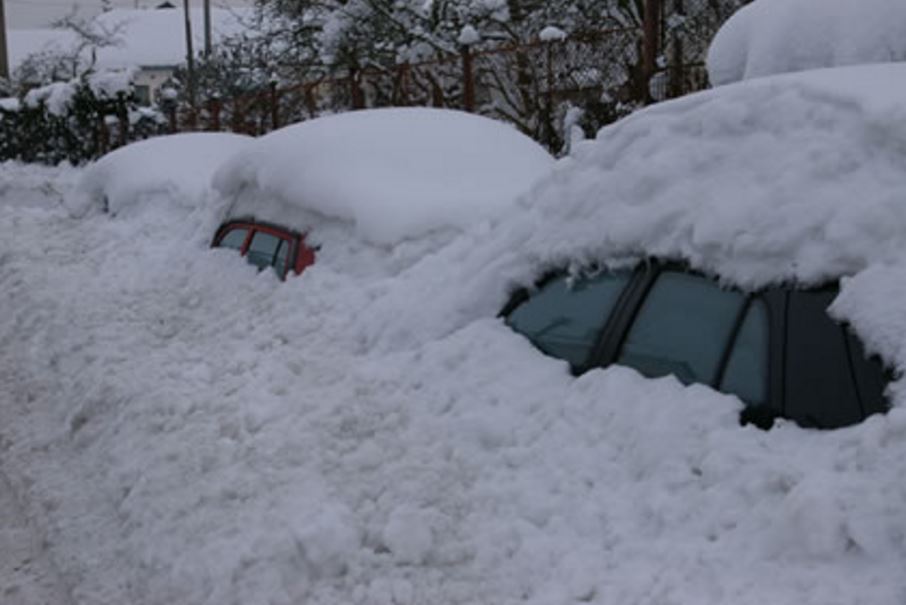
cars buried in snowKidsAndCars.org

A young New Jersey mother and her son as well as a Pennsylvania man all died of carbon monoxide poisoning on Saturday, January 23.

A 23-year-old mom, Sashalynn Rosa and her one-year-old son, Messiah died of carbon monoxide poisoning in Passaic, NJ on Saturday evening. Her 3-year-old daughter, also involved in the incident is listed in very critical condition. All three were sitting in the running car while the father was shoveling out the vehicle according to authorities. The tailpipe of their car was covered in snow causing carbon monoxide to leak into the inside of the car.

A Muhlenberg Township (about 50 miles northwest of Philadelphia) man, 56-year-old David Perrotto was also killed after his running car became trapped by snow from a plow clearing the roadway. Investigators believe he was either in the car with the motor running to take a break or trying to get out of the space when the plow came by and buried the car, blocking the exhaust and preventing him from exiting.

“These are incredibly tragic incidents that should serve as a reminder to always check to make sure no ice or snow is blocking your tailpipe before you get into your car,” said Janette Fennell, president of KidsAndCars.org.

On average, about 150 people die each year as a result of accidental carbon monoxide poisoning from motor vehicle exhaust, according to the National Center for Health Statistics. Motor vehicles are the primary cause of all unintentional carbon monoxide deaths, with a third of deaths from carbon monoxide poisoning by motor vehicles occurring in winter months, often in garages, according to the National Highway Traffic Safety Administration.

KidsAndCars.org has documented 104 adult fatalities and 36 child fatalities (age 14 and under) due to carbon monoxide poisoning involving vehicles. Of those, 19 have been attributed to keyless ignition vehicles where drivers have forgotten to turn off their keyless ignition vehicle in an enclosed garage.

Keyless ignition systems (push-button) work by allowing drivers to start their vehicles with the push of a button when the car senses that the key fob is nearby instead of a traditional key. Many new vehicles equipped with keyless ignition systems run so quietly it’s easy to forget the vehicle is still running as drivers put the vehicle into park and leave the vehicle. Furthermore, hybrid vehicles many times make no noise at all when stopped. When a car engine is left running, it spews out carbon monoxide in an attached enclosed garage and the colorless and odorless carbon monoxide fumes seep into the home.

KidsAndCars.org suggests that drivers be particularly careful to turn off their keyless ignition vehicle. This is a serious change to our normal driving behavior after decades of being assured that our vehicles are turned off because we have the key in our hand. Please pass on these safety tips to anyone who drives a keyless ignition vehicle; it may save a life.

Carbon monoxide (CO) is an odorless, colorless gas that is emitted by running vehicles and can quickly cause you to become disoriented, suddenly ill or even death. Below are a few tips to keep you and your family safe from this dangerous gas:

  • Always clear the tailpipe of a vehicle in inclement weather conditions. If the tailpipe becomes clogged with ice, snow or other debris, carbon monoxide can leak into the passenger compartment of the vehicle.
  • Do not put children or adults inside a running vehicle while clearing snow or ice off the vehicle.
  • NEVER leave a child alone in a vehicle, not even for a minute.
  • Never warm up a vehicle in any enclosed space.
  • Never leave a vehicle running in the garage, not even with the garage door open.
  • Always keep vehicles locked at all times and keep keys and remote openers out of reach of children. Children may be tempted to get into vehicles to play or hide.
  • Keyless ignitions vehicles should always be double-checked to ensure the vehicle has been turned off. Even if you take the key fob with you, the vehicle could keep running.
  • Ensure that you have working carbon monoxide detectors in all areas of the home, especially near sleeping areas. Check batteries twice a year and replace detectors every 6-10 years.
  • During busy times and changes in routine be extra cautious as distractions and multi-tasking can lead to forgetting to turn the car off, even for the fanatically detail-oriented organized person.
  • Do not allow children to play behind a running vehicle. This is dangerous for numerous reasons, the driver is unable to see them in the blindzone that exists behind all vehicles and they will be exposed to the fumes coming out of the vehicle’s exhaust system.

SCHLAGECK: The right stuff

John Schlageck writes for the Kansas Farm Bureau.

Seems like nearly everyone is trying to define the family farm. While this isn’t a new phenomenon, it’s certainly one that bears consideration – especially as population numbers in our rural communities and regions of Kansas continue to decline.

Based on these downward demographic trends, agriculture as a family farm system is best suited to compete and move forward equipped with the following attributes.

First, the family farm system should include owner operation. Within such an arrangement, the rights and responsibilities of farm, ranch and land ownership are vested in an entrepreneur who works the farm for a living, to make a profit and to literally, grow the business.

Second, independence is a cornerstone of today’s family farming operation in the Sunflower State. This includes financing from within its own resources using family labor and management to build the sweat equity and cash flow. This in turn will allow for retirement of mortgages, preferably during the lifetime of the head of the household.

Economic dispersion, where large numbers of efficient-sized farms operate with equal access to competitive markets is another vital component. While all of these elements are equally important today, opening new windows in other parts of the world must be a continuing goal if agriculture is to expand and remain viable.

The fourth key ingredient of today’s farm and ranch community is family centered – an element that has always been at the heart of this rural profession. Family farms have always, and must always, live in harmony with the workplace. Here, responsibilities are divvied up and shared by all family members and children learn the work of their parents.

A commercially diversified operation is another essential ingredient for today’s agriculture to remain successful. It does so by reducing commodity price risks while maximizing the use of farm resources. This element can provide a greater measure of self-sufficiency.

And finally, no business, especially farming and ranching, can survive without innovation and adoption of new technology to enhance productivity and the use of scarce labor.

Family farming carries with it a commitment to certain values, entirely independent of the factors impacting economics. These values, in turn, are imparted to the communities and to society as a whole. Included in such contributions are conservation, frugality, responsibility, modesty, honesty, dignity in work, belief in community, caring for future generations, neighborliness and self-reliance.

While one particular family farm may not fulfill all of these contributions, together farm families have created a system of agriculture that built a strong rural economy and a secure rural culture – a system now being threatened with extinction.

John Schlageck, a Hoxie native, is a leading commentator on agriculture and rural Kansas.

HAWVER: Courts making waves in Kansas politics

martin hawver line art

If ever there was a week when the predictability of car payments by members of the Kansas Supreme Court and the Kansas Court of Appeals was in jeopardy, it was last week.

Our Supreme Court was slapped 8-1 by the U.S. Supreme Court over its ruling that either overturned or at least delayed the death sentences meted out to the infamous Carr Brothers of 2000 Wichita massacre fame. The Kansas Court wanted more work done on the sentencing of the murderers, the U.S. Supreme Court overruled the state court.

And Friday, which was the 43rd anniversary of the U.S. Supreme Court’s Roe v. Wade decision that made the choice to have an abortion a constitutionally protected right, the local Court of Appeals couldn’t decide whether last session’s “dismemberment” abortion law is constitutional.

There were technical arguments about due process rights and such, but the decision, or non-decision tie, means that the prohibition of that specific abortion procedure remains on hold while the case is likely appealed to the Kansas Supreme Court.

Whether you are a fan of the death penalty or not, and whether you favor prohibiting a specific second-trimester abortion procedure or not, you’ll probably get the chance to read some campaign flyers and see some Internet postings about the competence or at least philosophical bent of both courts.

Count on opponents of the death penalty to be quiet, while death penalty/Wichita residents who were terrorized by that Carr Brothers case repeat the campaign they used in 2014 to target Supreme Court justices who didn’t allow the brothers to be put to death.

And, count on abortion-rights supporters to be quiet while opponents of abortion target Court of Appeals members who voted to maintain the Shawnee County District Court decision that prohibits enforcement of outlawing the abortion procedure passed by the Legislature and signed by the governor last spring.

The point of opponents of those decisions: That the state needs a new way to select those Appeals Court and Supreme Court jurists.

Supporters of the decisions say they want to keep by their view the impartial, by-the-constitution court to make important legal decisions.

Gov. Sam Brownback in his State of the State speech this month said that he’d like judges to stand for election, or at least that the governor gets to select Supreme Court justices with confirmation by the Kansas Senate, without them being vetted by a lawyer-heavy Supreme Court Nominating Commission.

Either would probably yield high court judges who think along the same philosophical lines as the governor who appoints them. Brownback has gotten his way, to a point, and now he gets to –and got to—appoint a member to the Kansas Court of Appeals without the nominating commission vetting, and the Senate confirmed his appointment. He liked it.

But judges don’t come and go with the governor, and while Brownback is living with high court justices appointed by governors more liberal than he is, you have to wonder what happens if a more philosophically moderate governor would like inheriting a far more conservative court than he/she would like?

It’s probably the broad background and understanding of the law that is important for a judge, not philosophical leanings or beliefs to shape opinions.

But governors are elected for their philosophical leanings and beliefs, and they would like to see those beliefs outlive their terms in office. That’s how they are.

So, do a couple decisions mean toss the judges you don’t agree with on specific issues? Practically, you can make pretty good arguments either way or move to a state where the history of court decisions is how you like them.

This is likely to be the year that we see the most heated campaigns for retention/non-retention of judges—oh, and maybe legislation to either directly elect or give the governor single-handed authority to name judges without those background checks the nominating commission performs.

At some point, voters patient enough to get to the bottom of the ballot where the retention votes are cast get to decide. We’ll see what their ruling is.

Syndicated by Hawver News Company LLC of Topeka; Martin Hawver is publisher of Hawver’s Capitol Report—to learn more about this nonpartisan statewide political news service, visit the website at www.hawvernews.com.

LETTER: Keeping Kansas children safe

Phyllis Gilmore
Phyllis Gilmore

According to the latest finalized federal review, Kansas has one of the safest child welfare systems in the country—ranking second among the 50 states in the category of “children are first and foremost, protected from abuse and neglect”. This success is attributed to many individuals who make up the child welfare system in Kansas—including Kansas Department for Children and Families social workers, foster care contractors, foster parents, law enforcement, judges, Guardians Ad Litem, CASAs, and those who make it a priority to report suspected cases of abuse and neglect, including family, friends, teachers, counselors, medical professionals, pastors and more.

Although less than one percent of children in Kansas are in foster care, each of these more than 6,500 children relies on this network of people to keep them safe. Without all involved working together toward a common goal of protecting the child and minimizing trauma, the system will fail this young, innocent person who deserves more. And no one wants that to happen, ever.

The child welfare system is complex and each case presents its own unique circumstances and challenges that are ever changing. Fortunately decisions made to remove a child from his/her home are not made in a vacuum. They involve a step-by-step process that is meant to ensure the best interest of the child is served, which is our only concern.

The process begins when a concerned citizen or mandated reporter calls the Kansas Protection Reporting Center. We receive approximately 65,000 calls to the hotline each year. Our trained staff assesses the case and determines if further investigation is warranted. From there, DCF will make necessary contact with law enforcement, the family and others involved. If there is concern of immediate harm, law enforcement may take the child/children into protective custody. DCF does not have authority to remove a child from his/her home. This action can only be taken by law enforcement and the court. From there, DCF will present its information to the district attorney, and the district attorney will evaluate the evidence and may take the case before the court. The judge will ultimately decide whether removal into foster care is warranted. DCF and its contractors then work quickly to achieve a permanency plan for the child—whether that’s reintegration with his/her family or adoption.

Our child welfare system is safe, but only because Kansans care. We urge you to continue to be vigilant. If you suspect abuse or neglect, don’t hesitate to call us. Your call could save a life. Report abuse or neglect at 1-800-922-5330.

Phyllis Gilmore
Secretary, Kansas Department for Children and Families

Exploring Kan. Outdoors: Squirrels – love em’ or hate em’

BullCityBlack500x125 (1)

As a youth, the after-deer-season joke between me and my buddies was the question “Well, are you eatin’ venison or bologna?” Just last week I offered to help provide meat for a Sunday school get-together and the joke became “Yup, Steve will probably be bringin’ squirrel since he didn’t get a deer.”

Steve Gilliland
Steve Gilliland

There is absolutely nothing wrong with squirrel meat; our forefathers relied heavily on squirrels as a protein source. Squirrel meat is very similar to rabbit meat and can be prepared the same ways, and even though Cousin Eddy from the National Lampoon movie “Christmas Vacation” says squirrels are high in cholesterol, they are not. Bentonville Ark., headquarters of Walmart, has an annual World Champion Squirrel Cook-Off that draws TV crews, executive chefs and visitors from around the world. Their theme is “Squirrel – its’s for Supper,” and they offer “organic tree-to-table squirrel” in dishes like squirrel pizza and squirrel flavored ice cream.

Also known as tree bacon, limb chicken and bird feeder vandals, I know of no wild animal in our society today more pampered than the squirrel. We buy corn to feed them, and then buy feeders to hold the corn. We teach them to take peanuts from our hands, and I even heard of someone who had taught the little beggars to tap on the front door when they wanted a handout.

Some years back, I did a story about two local brothers who cash-in on our squirrel feeding frenzy by growing and harvesting upwards of one thousand bushels of ear corn every year which they sell for squirrel corn.

I have to admit squirrels are fun to watch as they roll around in those glass jar feeders and cling upside down to the side of a tree. This year we bought a rig that suspends two ears of corn on a wire with a spring on it a couple feet off the ground, making them jump up and cling onto the ears long enough to get a mouthful before dropping back to the ground.

But they have a dark side too. They eat the fruit off fruit trees, the grapes off grape vines, and they litter my front lawn with acorn shells from the nearby Pin Oaks. The bird feeder industry works overtime to make their products “squirrel proof,” but I doubt there is such a thing. They will chew on about anything, and I read where their appetite for electrical wiring has caused the shut-down of the NASDAQ twice in its history.

The 2015-2016 squirrel season in KS opened June 1 and runs through Feb 28, 2016, extraordinarily long for any hunting season. Yet, the sport of squirrel hunting seems tremendously underutilized here in Kansas. Granted, we don’t have the woods and forests that make squirrel hunting so popular in some other states, but we do have plenty of squirrels (besides the zillions that inhabit our towns.)

From deer stands, I have often watched squirrels rustle about in the leaves beneath me, or heard them in the trees above and behind me as they scold me as an intruder, so I believe that our countryside has no squirrel deficiency. Smaller gauge shotguns and .22 rifles have always been the favored weapons for squirrel hunting, but many of the newer air-powered rifles would be excellent choices as squirrel guns.

Naturally nut trees are the biggest draw, but in the fall and winter, Osage Oranges (Hedge Apples) become an important food source too. Squirrel hunting is a waiting game, so find a spot in the trees along the river or near a thick fencerow where small chips of hedge apple or nut shells litter the ground, and pick yourself a comfortable seat.

Your patience will be rewarded as Mr. Bushy Tail will soon come out of hiding and begin scampering about, or scolding you from a nearby branch. In either case, bide your time, and you’ll eventually get a shot. Squirrel hunting is a good way to hone your rifle marksmanship, as they don’t stand still very long.

So dust off the old .22, sight in the scope (or adjust the open sights for you purists,) and head to the woods. Find yourself a comfy’ seat against a big tree, and don’t be surprised if the serenity of the situation puts you to sleep. The worst case scenario will be some quiet time to yourself and a nice nap. The best case scenario will be both of the above plus a squirrel dinner. Either way, you’ll Explore Kansas Outdoors, so how can you lose?

Steve Gilliland, Inman, can be contacted by email at [email protected].

BullCityBlack500x125 (1)

WAYMASTER: From the Dome to Home

Rep. Troy Waymaster, R-Bunker Hill

By Rep. Troy L. Waymaster, Kansas House District 109

January 22, 2016

Kansas State Efficiency Study
In last week’s newsletter, I mentioned some of the recommendations that were made by the consulting firm that conducted the financial audit for the state of Kansas. This week, I felt compelled to extensively explain in more detail some of those recommendations. Also, the committee I am chairman of will most likely be reviewing, discussing, and deciding whether or not these recommendations are plausible.

The auditing firm that conducted the audit recommends that the state create a newly formed Governor’s Grants Office to enable a coordinated, prioritized, and compliance driven approach to maximizing the amount and effective use of federal funds in the state’s agency budgets and expenditures. This newly formed office would provide the needed support to identify grant opportunities, prioritizing the state’s strategic goals, sharing best practices, and developing a compliance function to ensure proper execution of grant dollars received.

Another recommendation is that the Kansas Department of Children and Family would coordinate with the Kansas Department of Labor to take further steps to increase the number of employers self-reporting new hires so that additional Employment Withholding Orders can be established to collect court-ordered child support payments. They have also suggested that KDCF also partner with the Kansas Department of Revenue to deny issuances or renewal of car, boat, or recreational vehicle registration until an Employment Withholding Order or child support payment is in place.

In regards to the Department of Administration, which has received the majority of the recommendations, the auditing firm suggests liquidating surplus buildings and land inventory within the state’s portfolio, which has an estimated value of $9 million. They did indicate that the state agencies might be reluctant to sell any excess property.

As mentioned in last week’s newsletter, there are a proposed 105 recommendations that have been made by the auditing firm with a state savings of over $2 billion over the next five years. In subsequent newsletters, there will be more discussion on the other recommendations.

HCR 5010: The Call of a Constitutional Convention
Many bills and resolutions that have carried over from the 2015 legislative session, one of those resolutions is House Concurrent Resolution 5010 which I have cosponsored. HCR 5010 would serve as Kansas’ application to Congress, under the provisions of Article V of the U.S. Constitution, for the calling of a convention of states. The convention would be limited to proposing amendments to the Constitution that impose fiscal restraints and limit the power and jurisdiction of the Federal Government. The Convention can also limit the terms of office for members of Congress and officials. The concurrent resolution would be a continuing application to Congress for the convention of States until two-thirds of state legislatures have made application to Congress on the same subject. At this point, there is no indication whether or not this concurrent resolution will be debated and voted upon.

Special Committee on K-12 Student Success
During the interim, a special committee was formed from both the House and Senate, and the Special Committee on Education was created. I had hoped that the main focus and driver of this committee would have been a deliberation and creation of a new school finance formula, however, that did not materialize.

This week the Special Committee on Education released their report on K-12 Student Success to the Kansas Legislature. The committee was challenged with studying the following; however, they were not just limited to these items: the Rose Standards (a set of standards to determine student development); best funding mechanism, definition of “suitable” education; outcomes to ensure that students are well-prepared for their future endeavors; and uniform accounting across all districts.

The special committee structured their conclusions and recommendations based on those items. They recommend that the new school funding formula should be focused on each individual student, include accountability and reporting measures to ensure aid is being distributed according to the needs of each individual student, and to provide for a multi-year funding to provide budget stability to the state and local school districts.

The K-12 Student Success report commissioned the Education committee to form special subcommittees to examine and report back on some of the following topics: teacher pay; at risk funding; special education; bond and interest state aid eligibility; the cost-benefit ratio of the receipt of federal funds; the relationship between school districts and interlocals, cooperatives, and service centers; the current and future implications of school district staffing levels on KPERS; establishing the Rose capacities as the definition of “suitable” education; and investigating all extracurricular and co-curricular activities on the basis of efficiency and efficacy for a suitable education to students.

This is only a report and not pending legislation, we will see if these proposals proceed through the legislative process.

Visitors and Contact Information
This past week I had many visitors to either my office or to Topeka. On Tuesday, the Kansas Hospital Association had meetings in Topeka and I visited with Allen Van Driel with Smith County Memorial Hospital and Kiley Floyd with Osborne County Memorial Hospital.

I also had the pleasure of visiting with Angela Lawrence, USD 407 Superintendent, and Char Sohm, USD 407 Board Member, on Thursday afternoon. Also on Thursday, Mendi Alexander with Nex-Tech stopped by to converse. During the morning on Thursday, Andrew Sigle, with the Kansas Agriculture & Rural Leadership, served as a legislative shadow in the House during the morning and in the Senate during the afternoon.

If you have any concerns, feel free to contact my office at (785) 296-7672, visit www.troywaymaster.com or email me at [email protected]

The honor to serve you in the 109th Kansas House District and the state of Kansas is one I do not take lightly. Do not hesitate to contact me with your thoughts, concerns and questions. I appreciate hearing from the residents of the 109th House District and others from the state of Kansas.

Troy L. Waymaster,
State Representative
109th Kansas House
300 SW 10th
Topeka, KS 66612

Extension food safety classes for volunteer events

Linda Beech
Linda Beech

Food is a great way to bring people together, and selling food is often a key way for nonprofit groups such as 4-H clubs, churches, school groups, and community organizations to raise funds for their activities. However, cooking the large quantities of food required for events such as fundraiser dinners, concession stands, community meals, family reunions, or funeral meals is different than cooking for your family.

Most of the cooks for these events are volunteers and the events generally do not have any regulatory oversight. Because volunteers for these organizations may not be accustomed to cooking in such large quantities and may not always have the proper equipment, serious food safety problems can occur if proper practices are not followed.

The Ellis County Extension Office will provide two food safety classes for those who handle food at volunteer community events. The first will be held on Thursday, January 28 at 7:00 pm at the Ellis Public Library in Ellis. A repeat program will be held at noon on Tuesday, February 16 at the Ellis County Extension Office, 601 Main Street in Hays. All who attend will receive a checklist for quantity cooking food safety at volunteer events.

Both programs are free, but registration is necessary to ensure adequate training materials. To register for the evening session in Ellis, call the Ellis Recreation Commission at 785-726-3718. Register for the February 16 noon-hour session in Hays by calling the Ellis County Extension Office, 785-628-9430.

Unfortunately, numerous cases of foodborne illness have been linked to community volunteer food events. In addition to the great remorse that an organization’s members would feel for making someone sick, such an occurrence also can lead to a tarnished reputation or even legal repercussions for the group.

The same food safety procedures that should be used when cooking for a family should be practiced when cooking for large groups. But, in addition, some extra steps are also necessary because of the large volume of food. If your organization serves food for large events, be sure that someone from your group plans to attend one of these helpful training sessions.

The program materials were developed by food safety specialists at Kansas State University. Plan to join us to learn the food safety do’s and don’ts for quantity food events. For more information, contact the Ellis County Extension Office, 785-628-9430.

Linda K. Beech is Ellis County Extension Agent for Family and Consumer Sciences.

INSIGHT KANSAS: Flint, Mich., and Kansas tax policy

Ordinarily, Kansans would not look to a medium-sized Michigan city with a large minority population for lessons in politics and policy-making.

But Flint’s continuing water-quality disaster offers clear lessons for any state whose leaders have cut back services and placed greater tax burdens on localities.

Burdett Loomis
Burdett Loomis

As one Michigan conservative activist explained: “Governor Rick Snyder appointed an emergency manager to address Flint’s long time fiscal problems. The manager, looking to reduce costs, opted to start obtaining water from the nearby Flint River instead of paying Detroit for the supply. The river had contaminants from years of auto manufacturing, and acted corrosively on the pipes to leach out the lead.”

As the overseer of water quality for Michigan municipalities, the state’s Department of Environmental Quality (sic) failed in early 2014 to require the city to add inexpensive corrosion-control chemicals to this new – and clearly more polluted – water source. Over the next 18 months, Flint’s children experienced huge spike in lead levels in their blood.

The DEQ acknowledged its mistake and switched the city back to lake water this past October, but the long-term effects of the lead poisoning will not be known for many years.

Meanwhile, far-right Republican governor Rick Snyder, who has shrunk government aggressively in Michigan, did not declare a state of emergency until early January, 2016, and has deflected blame from his administration. Although Governor Snyder did not directly order the change in water sourcing, his administration helped create the revenue problems for Flint, implemented the defective policy, and then ignored clear evidence of a developing health crisis.

Finally, as a governor who has consistently attacked the federal government, Snyder last week requested – and President Obama granted – $27 million in emergency disaster aid to help address the evolving disaster.

As with many GOP governors, the federal government is the enemy, until it’s not.

Why is Flint’s public health crisis relevant to Kansas? First, we need to question whether such a situation could happen here. Although an exact repeat is unlikely, the anti-government attitude of Governor Brownback and the Legislature suggests that similar problems already exist, especially for the state’s most vulnerable citizens.

For example, under the Brownback administration, welfare funds – which provide no more than $400 per month for truly poor families – are cut off after 36 months, or 24 months sooner than the federal law requires. Thus, in January, 2016, 200 families lost their meager assistance, even as the Kansas poverty rate was climbing and the sales tax on food remained among the highest in the nation.

The state cannot fill its ranks of prison guards or state troopers, as budget shortfalls continue to bedevil state policymakers. Perhaps not as dramatic as lead poising, but indicative that the state cannot carry out its basic public service responsibilities.

Likewise, for some of the most vulnerable of our fellow citizens, those housed at the Osawatomie State Hospital, cutbacks have meant that the facility no longer qualifies for Medicare funding. While administration officials argue that patients will not be affected, Rep. Jim Ward (D-Wichita) makes a simple point: “The [budgetary] incompetence hurts taxpayers, as well as the safety of our citizens… Out of the state general fund, [we] will have to pay the full cost of any patients at Osawatomie.”

Conditions at prisons or mental hospitals, along with public safety on the roads, have not yet produced a story as dramatic as that of Flint’s lead poisoning.

What has become clear, however, is that Kansas’s continuing budgetary squeeze and the anti-government, anti-federal assistance stances of state officials have created a series of personal crises for those individuals – the needy, prisoners, and the mentally ill – who have the least power to affect policies that directly affect them.

And that’s just plain wrong.

Burdett Loomis is a professor of political science at the University of Kansas.

Copyright Eagle Radio | FCC Public Files | EEO Public File