We have a brand new updated website! Click here to check it out!

INSIGHT KANSAS: Reading the nation’s and Kansas report cards

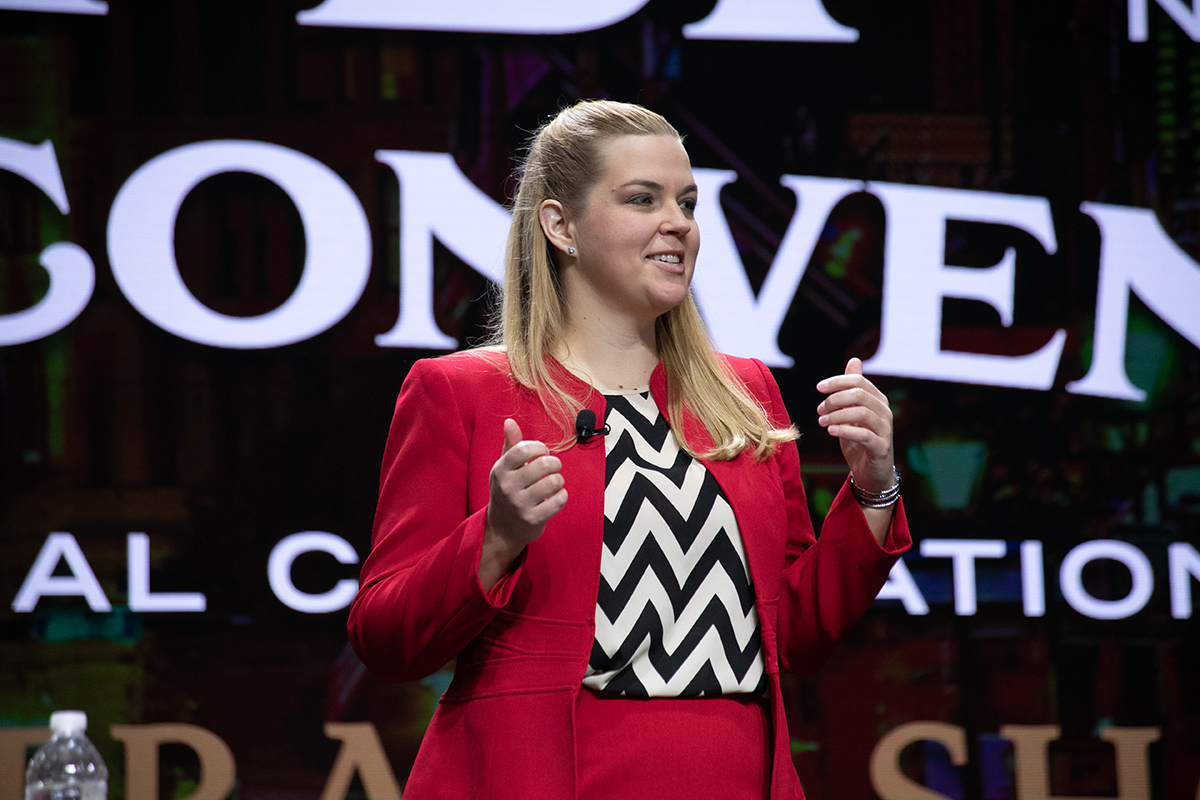
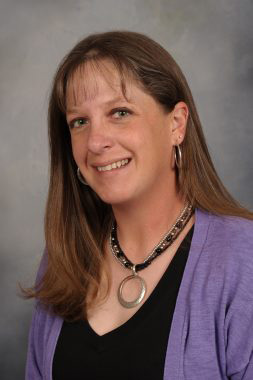
Dr. Sharon Hartin Iorio is Professor & Dean Emerita at Wichita State University College of Education.

The “nation’s report card,” or National Assessment of Educational Progress (NAEP), was released Oct. 30. Results show stagnant progress in what students know and can do on the national level and a disappointing decline in Kansas scores.

NAEP is administered every two years and is the only current assessment that compares scores across time and across states. The exam is based on a representative sample of students in Grades 4, 8 and 10 in each state with results reported at four levels of achievement—below basic, basic, proficient and advanced.

Kansas data reveal weakening performance overall and lower rates at the middle level than the elementary. The percentage of Kansas students’ scoring at proficient or advanced levels were smaller in math (33%), reading (32%) and science (34%) at Grade 8 compared to the Grade 4 level (math 40%, reading 34%, science 37%).

The total data set is massive and summary statistics drawn from data are, of course, subject to interpretation. Think-tanks, organizations and political activists already have offered varied explanations and implications.

The Urban Institute used NAEP scores and adjusted them to reflect demographic differences among the states. According to this adjustment, Kansas ranked among the bottom states in terms of decline. Across all states there was a rise in the percentage of students at below basic or basic achievement.

Analysts of these data suggest more attention be focused on students who are struggling. From this perspective Kansas schools need to continue the recent focus on helping children who have experienced trauma as well as increasing attention to pre-school programs, and students who are English language learners, who live in poverty and who need special education. But demographic and economic correlations simply reveal reality not destiny.

Kansas Association of School Board analysts looked at the NAEP data and were not surprised to see the lag in academic improvement, because during the Great Recession (2009 to 2017), nearly 2,000 school positions were cut statewide and multiple programs were reduced or eliminated.

KASB points out that 10 years ago, Kansas was one of the highest performing states, but currently ranks about the same as the national average. It will take time to implement improvements; KASB predicts NAEP scores to rise as court-ordered funding allows schools to add nurses, counselors and other personnel as well as adding and retaining highly qualified teachers.

Conservative analysts interpret the recent NAEP scores as too much money thrown at problems without meaningful accountability for schools and students, plus a lack of rigor throughout the curriculum. These are legitimate concerns; however, advocacy for adding charter schools and more tax credits while curtailing spending could set NAEP scores back even further. Cutting funds and privatizing public education cannot in themselves increase NAEP scores for the more than 90 percent of Kansas children now attending public schools.

Think of it this way: The ticket price can keep kids out of the theater, but the movie will play on. Taking constructive advice from varied perspectives—by truly increasing accountability and strengthening curriculum in tandem with building a high-performing educational team and supporting the most disadvantaged students—these together stand a good chance to increase NAEP scores. It’s time to work collectively across all groups and bring our students to the show. The world will keep moving on; will Kansas students join it?

Dr. Sharon Hartin Iorio is Professor & Dean Emerita at Wichita State University College of Education.
COLUMN: High school football playoffs — a community happening

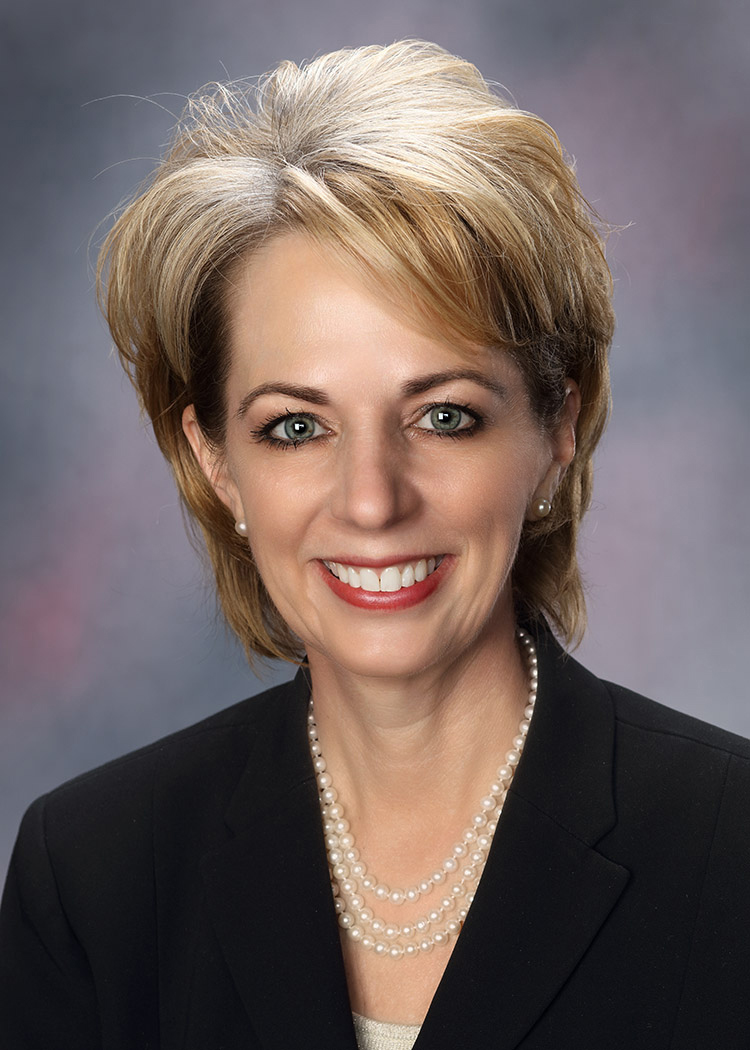
By KARISSA NIEHOFF
National Federation of State High School Associations
and BILL FAFLICK
Kansas State High School Activities Association

Many people would agree that their years in high school were some of the best years of their lives—particularly those individuals who were members of a sports team or participated in other activities such as the marching band or debate team.

In many cases, team members become lifelong friends. Reunion parties are held from time to time as teammates return to remember the fun—more so than the outcome of games or events—they had participating in high school activities. Quite often, reunions for sports teams are staged during the highlight of each sports season—the state playoffs.

And as the calendar turns to November, there is nothing like the excitement of high school football playoffs in cities across Kansas and throughout the nation every Friday night.

While each team will be trying to advance to the state championship, the outcome of the games is only a part of the experience for those individuals in attendance.

Why? Because the people in the stands at high school football playoffs are moms and dads, grandparents, aunts and uncles, sisters and brothers, neighbors down the street, fellow students, and longtime residents of the community. People in the stands know the players on the field. Win or lose, their support and love is always there.

There is no tradition in sports with the history of high school football. There are 30 rivalry games (60 high schools) that started before 1900 and continue today, the longest of which is Connecticut’s New London High School and Norwich Free Academy, which have been playing annually since 1875.

In Michigan, Battle Creek Central and Kalamazoo Central have been playing since 1896. In Massachusetts, the Wellesley-Needham Heights rivalry dates to 1882. And in Colorado, Pueblo Central and Pueblo Centennial have been matched since 1892.

Although there are more options for entertainment on a Friday night than ever before, there is still nothing to match high school football playoffs in the fall. With all the people attending games of the 14,247 high schools that play football, expect more than 10 million fans each Friday night—easily the #1 fan base in the country.

As you attend high school football playoff games this year in Kansas, remember that the players, coaches and game officials deserve your utmost support, encouragement and respect. While advancing in the playoffs is the desire of each team, the ultimate objective of high school sports and activities is to have fun and enjoy these special years.

We urge you to continue to support the high school teams in your community!

Kariss NieHoff is executive director of the National Federation of State High School Associations and Bill Faflick is executive director of the Kansas State High School Activities Association.

MASON: Honoring and serving our student veterans

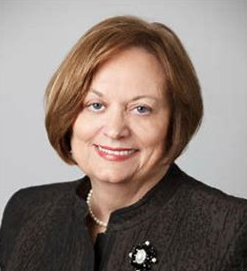
Dr. Tisa Mason, FHSU president
Veterans Day is quickly approaching, a day for honoring and thanking all of those who have served and sacrificed for our country, in war or peace. For me, this is a very personal day. I set aside time to think about all of our veterans, but especially for the selfless service of my brother Todd, who served in the Coast Guard from high school through retirement. He passed in 2017 from brain cancer. Todd’s service to our country defined him and fueled a sense of patriotism I only experienced through him. I am so proud of how he lived his life and served our country.

I am also very grateful for the strong military focus of Fort Hays State University. We not only serve members of every branch of the military, but through the efforts of Dr. Seth Kastle, (retired Army Reserve) of our faculty, and Kelsi Broadway, a Navy veteran and a member of the university staff, we have a clear understanding of the needs and responsibilities of our men and women in uniform. In fact, we have been named a Top Military-Friendly University for both our undergraduate and graduate programs.

A great example of our exemplary military-friendly initiatives is our Associate of Applied Science in Technology and Leadership, with an emphasis in leadership studies. This is the only degree of its kind specifically developed for service members. Developed in partnership with the U.S. Army and the Kansas Board of Regents Credit for Military Alignment initiative, FHSU offers enough course credit for training and experience that service members may only be required to take as few as eight classes to earn this degree.

In one year, service members can earn both an associate’s degree and simultaneously a Certificate in Leadership Studies. Once completed, a Bachelor of Science in Organizational Leadership can be earned in two additional years, and a Master of Professional Studies with a concentration in leadership studies in a fourth year. This program provides the opportunity for our service members to earn four credentials in four years!

As a student-focused university, we are always thinking about ways to be more effective in supporting our students. The Green Zone Initiative is an excellent example. This faculty and staff professional development program educates participants about the challenges and at-risk behaviors of student veterans. Our Military Focus Committee works to improve the military-connected student experience at FHSU by seeking out new ways to support the unique needs of this student population. In all aspects of student life, from financial support services to counseling and mentoring, the Military Focus Committee strives to enrich the student experience for the FHSU military-connected community.

Additionally, our military-friendly policies protect enrolled students from financial hardship should they be required to deploy or are activated. We are pioneers in using the Kansas Board of Regents Credit for Military Alignment Initiative, which increases the amount of military training and experience that directly translates to major-specific hours in many degree programs.

Our specialized staff are trained to assist with federal and state tuition assistance, VA benefits, and unofficial transcript analysis before students apply for admission. This promotes informed decision making and guides navigation through the admission, application, and degree processes. We also understand the sacrifices made by family members and offer services and support to meet their educational needs. For more information about military student services please visit our web site: https://www.fhsu.edu/military/index.

We also have a very active Student Veterans Association. One of its top priorities is to fund scholarships for military students. The SVA also works to unite the military-connected students at FHSU and to provide support and camaraderie among its members.

Last month we opened a new office on campus for the Kansas Army National Guard. This office will provide members of the Fort Hays State community with information on the educational and professional benefits of enlisting in the Kansas National Guard.

Our care and commitment go deeper than just working with enrolled students. The Community Access Point, for example, is a partnership between FHSU and the Manhattan Area Veteran Center. This partnership allows any military-connected person within commutable distance from Hays to seek out free behavioral health, mental health, or marriage counseling without having to be a part of the VA system or affiliated with FHSU.

Of course, as a leader in distance education, our strong online programming allows service members to take classes anywhere with an internet connection. In fact, I once took a call from a student in the Navy calling me from a submarine off the coast of Japan!

I am looking forward to the Veterans Day celebration on campus in the Memorial Union’s Sunset Atrium at 11:11 a.m. Monday, Nov. 11. The program will include student veteran speaker Joe Gunderson, a Hays graduate student. Taps will be played by university band member Abbey Hirsch, a senior from Abilene. Refreshments will be served.

I also urge you to think about other meaningful ways to express your gratitude to our veterans, including hanging a flag in your yard; adopting a military family for the holidays; thank veterans for their service – perhaps serve them a treat; ask a veteran about their time in their military; ask them to share with you the song that most takes them back; gather with friends and watch a patriotic movie; take flowers to a veteran’s grave; or simply say a silent prayer for those who will spend their day serving all of us.

At Fort Hays State University, we don’t simply enroll military students, we embrace them, learn from them, and serve them. My brother would be proud of our commitment to serve those who serve us and to help enrich their lives as they have enriched ours.

Kansas Farm Bureau Insight: Rising to the top

By JACKIE MUNDT
Pratt County farmer and rancher

Nearly 70,000 young people recently attended the National FFA convention in Indianapolis. I could write a book about all of the awesome things that happen at this event and how it changes lives.

One of the main purposes for the convention is to host the national competitive events for the organization. Students compete to be national champions in public speaking, agronomy, meat evaluation, entrepreneurship, the agriscience fair and several hundred other contest areas.

In recent years, these competitions have become a source of pride and excitement for me as I have watched two of my nieces vie for national championships. Last week my niece, Madi, and her teammates, Zach and Brooklyn, earned first place in the marketing plan competition, which challenges each team to write a marketing plan to increase sales for a real ag-related business. The students present and defend their plan to panels of industry and academic experts from across the country.

This competition, like all of the national competitive events, requires months (or years) of preparation, skill development, sacrifices of time, energy and so much more to be ready to compete. These students have more preparation and experience than many industry professionals do by the time they are done.

One of the judges made an interesting observation. She said in her experience people at this level are so driven that completion colors their interactions and makes them aggressive toward each other. However, she said in FFA members have a culture of cooperation even among competitors. They acted courteous and helpful even to their competitors. She wanted to know how that was possible.

The judge was right, as odd as it seems, it is common to see FFA members in the same competition share words of encouragement or lend a needed piece of equipment to another team who forgot something or had a breakdown.

The reason for this behavior is simple. FFA has a culture that emphasizes the importance of values like honesty, hard work and courtesy to others.

Helping another person in need is a simple and expected courtesy. Sure, it may give you an advantage if your competition is injured, but that is not an honest or fulfilling way to win. We teach our students to win because they earn it and to respect the effort and skills of their competitors. Another person competing at their best makes you work even harder to be your best.

In a world so full of experiences and activities, it can be easy to forget about the importance of values. Out of all the investments we can make, instilling these values is the activity that rises to the top. Young people, who understand what values are expected, develop solid character and often grow to become trusted community contributors and leaders.

How are young people in your community being raised? Do you have programs like FFA, 4-H, Boy and Girl Scouts that emphasize values? Are expectations being modeled in their schools and sports programs? Is someone teaching why values are important?

These investments in the next generation are crucial. If we teach young people important values and have high expectations of their character, I am confident that no matter their goal, they will rise to the top.

“Insight” is a weekly column published by Kansas Farm Bureau, the state’s largest farm organization whose mission is to strengthen agriculture and the lives of Kansans through advocacy, education and service.

HAWVER: Revenue report will set the stage for Kan. policy decisions

Martin Hawver

The Kansas Statehouse is going to shake Thursday afternoon, when a group of economic/tax/business experts deliver the Consensus Revenue Estimate (CRE) for the state for the upcoming fiscal year.

That obscure document will become the legislative basis for the budget for the remainder of this four-month-old fiscal year, and the number on which the upcoming legislative budget machinations will be based.

And…while the state is looking a little better in terms of revenues—that’s the taxes you have paid—there remains all that talk about a recession that would reduce state receipts.

While the CRE talks about the state of the Kansas economy and makes observations and predictions about the state’s health, the real key will be the prediction of the movement up or down and by how much of the State General Fund (SGF).

It is the SGF which is the fuel for almost everything Gov. Laura Kelly will propose in her upcoming—second—budget as governor, and almost everything the Legislature will do in this upcoming session, after which House and Senate members will stand for re-election.

Will there be enough revenue flowing into the SGF to make good on its spending approved last session for the remaining months of this fiscal year? Will there be enough revenue flowing into the SGF for meeting the state’s expenses, to pay the bills that it agreed to last year?

And…will there be enough money to expand programs that are beneficial to the state and its people, and which people?

Nope, the CRE isn’t likely to become the topic of discussion in many bars across the state, but it is going to be a major factor when the upcoming session convenes in January.

If revenues remain stable…well, that’s good news because it probably means that the state can meet its obligations—and remember, those obligations include a boost in spending on K-12 schools over the next four years which lawmakers approved last session and which the Kansas Supreme Court is going to enforce if necessary.

But for nearly everything else ranging from spending on highways to raises for state employees to ever-increasing spending on social service programs and just keeping the lights on, that CRE is the key to how Kansans live.

Will there be spare money for some sort of tax cuts that we all like? Enough that the revenue stream from, say, sales tax on food can be reduced through a tax reduction, and keep everything else running? Enough that the state can expand Medicaid to maybe 130,000 Kansans without health-care insurance, at an estimated cost of maybe $40 million?

Those are all the downstream calculations that are going to be made based on that CRE memo we’ll get later this week.

Putting together that CRE has been going on for several weeks. It’s this week that the Division of Budget, Legislative Research, the Department of Revenue and three economists from state universities will assemble their final best-guess of the money that is going to be available to finance state government for the rest of this fiscal year and next.

Remember, this is the election year legislative session, and while one can expect a little reach by lawmakers who want something catchy to campaign on, bullet points for their palm cards, such actions will cost the state money, or reduce income to the state.

And remember, also, that we are heading into an election year in which the governor’s name isn’t going to be on the ballot, and she’ll be looking into the future when she can stand for re-election and would like to have some nice moves to use in that 2022 election year.

Happy Thursday?

Syndicated by Hawver News Company LLC of Topeka; Martin Hawver is publisher of Hawver’s Capitol Report—to learn more about this nonpartisan statewide political news service, visit the website at www.hawvernews.com

Exploring Outdoors Kansas: Mud on the boots

Steve Gilliland

This time of year, when the eight-letter word “football” fills many people’s thoughts, our thoughts as hunters and trappers should dwell on another eight-letter word, “scouting.” Here in the farm country of the Midwest, game movement patterns often change from year to year and even from season to season because of annual crop rotation, weather extremes and habitat changes, among other things. Although many good hunting and trapping hotspots produce game and fur year after year, many do not because of these factors.

Annual crop rotations play a huge part in the daily lives of wildlife. Where we used to hunt deer in southern Meade County, the terrain is rather bleak and the main crop by far is wheat. There’s always some hay around for deer to eat, but the tender green wheat is their mainstay. Any changes in wheat field locations from year to year mean certain changes in deer patterns and often in their home ranges. Here around McPherson County, annual crop changes don’t have such a drastic effect because there’s always an edible field crop of some sort near a deer’s chosen home range. Crop changes here effect wildlife movement most of all. For instance, tall crops like corn and silage offer excellent cover for deer and coyotes as they travel. Movement or harvest of those crops probably won’t change where these animals hunt, feed and bed, but it will often change the way they travel to get there.

Weather extremes, namely droughts and floods change wildlife patterns dramatically. Floods have a very temporary effect as they dictate where wildlife can and cannot travel, feed, hunt and bed during those times of high water. When the waters recede, life soon goes on again as usual. Drought on the other hand can have a long-lasting effect on wildlife patterns as they are often forced to relocate nearer to the few sources of water.

Habitat changes probably have the most effect on wildlife patterns. Removing overgrown tree and fence rows, bulldozing old orchards, tearing down and cleaning up old buildings in overgrown woodlots and even new construction such as building a new home on a previously empty and overgrown lot all destroy travel ways and hunting areas of local wildlife.

So, what to do? It’s called “mud on the boots!” Physically getting out into the areas you plan to hunt and trap before season is the only way to compensate for man and natures changes. Trail cameras are a good way to do that’ especially for deer. Hanging it near a trail will soon show you if the trail is used, by what and how often. Another good way is scouring the area for tracks. Be it deer, raccoons or coyotes every creature has four feet and wherever you find tracks you can bet the animal belonging to those four paws was mighty close! Last week I drove into and walked some new property I have permission to trap. I was becoming disappointed at the few coyote tracks I saw…until I crossed over a brushy overgrown lane into another field and suddenly found more coyote tracks than I’d ever hoped to see. I had walked that field this summer and found nothing, proving my point about seasonal wildlife patterns.

Even in this age of digital trail cameras and GPS technology the best and most reliable scouting tool available to the hunter and trapper is still the farmer and land owner. If you have permission to harvest game on their land, they are usually more than happy to talk with you about where and when they see that game, especially deer and coyotes, and no one knows that better than the farmers.

Just like we have to find new ways to travel around construction projects, or choose a new place to shop when our favorite grocery store is closed, so wildlife must adapt to the ever-changing world in which they live. So, to remain successful harvesters of that wildlife, we must occasionally get “some mud on our boots” and adapt our harvesting strategies to their changes…Continue to Explore Kansas Outdoors.

Steve Gilliland, Inman, can be contacted by email at [email protected].

News From the Oil Patch, Nov. 4

BY JOHN P. TRETBAR

Baker Hughes last week reported another big drop in its weekly rotary rig count to it’s lowest total in more than two years. Across the U.S. there were 822 active rigs, down five oil rigs and three seeking natural gas. Oklahoma was down three, while Texas and New Mexico each dropped two. That makes a decline of 22 oil rigs in the last two weeks.

Independent Oil & Gas Service reports a slight drop in the Kansas rig counts. There are five active rigs east of Wichita, which is down one. In Western Kansas, the count is unchanged at 24 active rigs. Drilling is underway on two leases in Barton County, and operators are about to spud one well in Barton County and two in Ellis County.

The Kansas Corporation Commission signed off on 154 new intent-to-drill notices last month, bringing the year-to-date total to 996. There are five new intents on file in Barton County, six in Ellis County, two in Russell County and two in Stafford County.

Kansas Common crude at CHS in McPherson closed out the month of October last week at $45.25 per barrel. That’s down 75 cents from the week before but $1.50 a barrel more than the price at the start of the month. The average price for October was $44.40 per barrel. Prices jumped $1.25 on Friday, so Kansas common starts the week at $46.50 per barrel.

Operators obtained 31 permits for drilling at new locations across the state last week, which makes 907 so far this year. There were nine new permits in eastern Kansas and 22 west of Wichita, including one in Barton County, two in Ellis County, and one in Russell County.

Of the 32 newly-completed wells across Kansas last week, 17 were in the western half of the state and 15 were east of Wichita. Independent Oil & Gas Service reports four new completions in Barton County (including one dry hole), two in Ellis County, and one each in Russell and Stafford County. Operators have completed 1,167 wells statewide so far this year.

The government reported a slight dip from last week’s record U.S. crude-oil production. But, at 12.55 million barrels per day, the total for the week is still the third-best ever.

The U.S. Energy Information Administration reports domestic crude inventories rose 5.7 million barrels on the week. Stockpiles now stand at 438.9 million barrels, about one percent above the five-year seasonal average.

EIA reported crude-oil imports of 6.7 million barrels per day last week. That’s an increase of 840,000 barrels per day from the week before. The four-week average is about 6.3 million barrels per day, down more than 16% from a year ago.

Total railroad freight traffic continues to drop, and last week oil-by-rail was also down. The Association of American Railroads reported 12,993 tanker cars laden with petroleum and petroleum products for the week ending October 26. That’s down one and a half percent from the same weekly total a year ago. The cumulative total so far this year is up more than 15% from last year.

Continental Resources of Oklahoma City, the biggest player in North Dakota’s Bakken shale formation, reports a drop in third-quarter income, prompted by lower oil prices. Data from the company’s financial report show a 20% increase in average daily production. But third-quarter earnings fell by about half to $158 million, compared to $314 million a year ago.

The decision by the Carlyle Group to abandon a crude-export project off the coast of Texas marks what Reuters called “the start of a shake out” among the nine deep water terminal proposals vying to export U.S. shale oil. The five U.S. crude-export projects currently under federal review would add a combined 8.36 million barrels per day of export capacity, or about two-thirds of current U.S. crude production. The Carlyle facility, which is under review by a different federal authority, would boost that total even more. Its construction partner, Berry Group, has vowed to continue the project.

ConocoPhillips posted higher-than-expected third-quarter earnings despite lower crude prices. This marks the company’s eighth earnings “beat” in nine quarters. BP’s profits fell sharply in the third quarter, but strong refining operations helped the company beat expectations despite a one-off $2.6 billion charge linked to asset sales.

Now That’s Rural: Steve Radley, Rural Road

Ron Wilson is director of the Huck Boyd National Institute for Rural Development at Kansas State University.

By RON WILSON
Huck Boyd National Institute for Rural Development

Hollywood, Los Angeles, California, population 4 million. Yates Center, Kansas, population 1,417. These two contrasting towns do have something in common: They are each a site for film-making. Today we’ll meet a Kansas entrepreneur who recently produced a film highlighting rural Kansas. It’s today’s Kansas Profile.

Last week, we met Jessica Busteed of Yates Center’s Cornerstone Bakery, site of a recent video shoot.

Steve Radley is the writer, producer and director of this new film. He is president and CEO of NetWork Kansas.

Steve was born in Wichita, grew up in Oklahoma, and went to college at OU. His grandparents had a farm near Yates Center. That farm is still in the family. It’s where Steve and his siblings gather on holidays.

“I’ve been bird-hunting on that place since I was 5,” Steve said.

While in college, Steve majored in film and media studies and wrote a screenplay. He was one of 10 people selected nationally to participate in a film writer’s workshop in California. After graduation, he moved to LA, got an agent, and tried to work into the movie business.

“There was no clear career path and, at heart, I’m a Midwest guy,” Steve said. He moved back to Wichita, met and married his wife, and got his MBA at Wichita State. He became an entrepreneur and went into business. With that experience, he then became president and CEO of NetWork Kansas which works to support entrepreneurs across the state.

Steve Radley

Steve’s interest in film-making was put on the back burner. Then a friend in LA sent him a note about a commercial that was being shot in Wichita. Steve applied and was cast as an extra. He enjoyed it so much that he applied and was cast in a couple of movies also.

In the back of his mind was a film that he wanted to make himself, as he thought about the rural towns he was working with across the state. “The idea came visually first, as I pictured the concept of rural roads and a journey,” Steve said. He wrote a screenplay for a short film about a man who is sent on a mission to reach out to dying small towns in search of hope.

Steve worked with Andrew Kivett, an award-winning KU film student and family friend, who shot and edited the film. Steve himself played the unnamed lead role. The film was shot on location at Steve’s family farm and the nearby rural community of Yates Center, population 1,417 people. Now, that’s rural.

The film begins with Steve clad in black, waking up atop a grassy hill near a single tombstone. He meets a mysterious gentleman who instructs him to “Save the town.” Steve asks “How?” and the answer is, “Find hope.”

Steve’s character starts walking along gravel country roads. He comes to a virtually abandoned town and goes into what appears to be a café, where he engages in unscripted dialogue with the local folks and others about whether their town is dying. He again encounters the mysterious man who tells him to go on to the next town. The final image is Steve’s character walking down another road toward the sunset.

The visual images of this movie are much more powerful than words can describe. “My character is kind of a metaphor for the community,” Steve said. “I wanted to portray both the beauty and the decay in rural America,” he said. The comments from the people he visits provide a message of hope.

The five-minute long film is titled “The Rural Road.” It’s been selected to have its premiere at the White City Film Festival in Nebraska. It’s also been submitted to independent film festivals in Kansas and as far away as LA and Austin, Texas.

Hollywood and Yates Center may be markedly different, but both have provided a setting for film production. We salute Steve Radley, Andrew Kivett, and all those involved for making a difference with creativity and vision. To paraphrase the old saying, we’ll see them in the movies.

And there’s more. We’ll learn about Steve’s work at NetWork Kansas next week.

INSIGHT KANSAS: Anti-abortion activists threaten judicial independence

H. Edward Flentje is professor emeritus at Wichita State University.

Two justices of the Kansas Supreme Court recently announced their retirements, and well-established constitutional procedures are now underway to fill those vacancies.

In a desperate, preemptive strike anti-abortion activists interjected themselves into the selection process and declared two candidates under consideration ideologically unfit to fill a position on the Kansas Supreme Court.

Kansans should be assured, however, that this political dustup will not derail the constitutionally mandated process. For now, three candidates, including one of the targeted candidates, Chief Judge Evelyn Wilson of the Shawnee County District Court, have been properly screened, found to be qualified, and forwarded to Gov. Laura Kelly who must select one for final appointment to the Court.

The unusual, last-minute gambit comes as little surprise as abortion opponents have in recent years had their way with state lawmakers, specifically former Gov. Sam Brownback and Republican legislative majorities, in enacting numerous measures that restrict access to abortion.

However, these activists have tried but failed to bend the Kansas Supreme Court to their will. They have been blocked by the Kansas Constitution, which establishes an independent judiciary and prescribes that “qualifications” not politics should determine who sits on the state’s highest court.

Over 60 years ago Kansas voters overwhelmingly adopted a constitutional amendment designed to reinforce judicial independence and remove partisan political considerations from the selection of justices to the Kansas Supreme Court. That constitutional language provides for a “non-partisan” Supreme Court Nominating Commission to screen candidates and nominate “three persons possessing the qualifications of office” to the governor for consideration and appointment of one of those to the Court. Once appointed, each Supreme Court justice periodically stands before voters in a statewide retention election to determine whether the justice should be retained on the Court.

This constitutional procedure, often termed “merit selection,” has repeatedly been embraced by Kansas voters. Each of the 25 justices appointed based on qualifications has stood for retention on one or more occasions and been retained by voters. Each of the nine Kansas governors elected in this period—five Republicans and four Democrats—has appointed at least one justice to the Court.

These constitutional safeguards stand in the way of anti-abortion activists and their desire to realign the Kansas judiciary more to their political liking. Kansans for Life and its allies have sought to undo these provisions and have mounted repeated attacks on the Court. They have advocated abandoning merit selection of justices, conducted postcard campaigns to oust justices in retention elections, cheered lawmakers threatening the Court with budget cuts and impeachment, and now have tried to blackball prospective Court candidates. These actions have garnered headlines but to date have not altered the Court’s independence.

Earlier this year the Kansas Supreme Court ruled that the Bill of Rights in the state constitution guarantees each Kansan “personal autonomy” which includes “the ability to control one’s own body” and allows a woman to determine “whether to continue a pregnancy.” The Court’s decision potentially jeopardizes recently enacted abortion restrictions and gives new urgency to anti-abortion interests that seek to control the Court.

Kansans should rest assured that for now the selection of new justices for the Supreme Court will proceed steadily on the basis of merit. They should remain vigilant, however, as special interests such as abortion opponents make another push to politicize the Court and threaten the independence of the state’s judicial branch.

H. Edward Flentje is emeritus professor at Wichita State University and served with former Kansas Governors Bennett and Hayden.

CROSS: Let’s focus energy policy on lifting people up

Edward Cross is president of the Kansas Independent Oil & Gas Association

By EDWARD CROSS
Kansas Independent Oil & Gas Association

Energy is so thoroughly woven into our daily lives that few ever question whether it will be there, or where it comes from. Oil-based products are likely the first thing you touch at the beginning and end of each day, whether it is your alarm clock, cellphone, or even the toothpaste and toothbrush you use to brush your teeth. As a key component in heart valves, seat belts, helmets, life vests, and even Kevlar, petroleum is saving tens of thousands of lives daily. Furthermore, oil and gas are key components in many medicines and antibiotics such as antiseptics, antihistamines, aspirin, and sulfa drugs.

The oil and gas industry has done such a good job of creating abundant, affordable, always-available energy that the world takes it for granted. Because energy is so reliable and available, some think we no longer require it. We encounter this paradox anytime we hear from those who want to end oil and gas production but still want to benefit from oil and gas based materials and fuels.

What Americans expect and deserve are the facts. And the fact is, recent history has disproved the false premise that economic growth and significant increases in energy production must, necessarily, come at the expense of environmental improvement.

Today, the U.S. is not only the world leader in energy production, but we have some of the cleanest air in the world. From 1970-2017, the six major pollutants monitored by the Environmental Protection Agency (EPA) have plunged 73%, while the U.S. economy grew by 60%. EPA Data also shows that from 2011 to 2017, methane emissions from oil and natural gas production in the U.S. decreased by 24%. The oil and natural gas industry has proven that over the long-term, we can lead the world in energy production and environmental stewardship.

What would it mean for consumers, the economy, and future job creation if we substantially limited exploration, development, and use of fossil fuels in America’s energy supply mix? A recent study by the Energy Information Administration indicates the average American family would see their energy costs increase by $4,550 per year. It could mean a cumulative loss of $11.8 trillion in the nation’s GDP and the loss of 6 million jobs. Recent studies indicate that if the U.S. eliminated all CO2 emissions immediately, it would avert 0.07 degrees of warming by 2050. If Kansas alone eliminated all CO2 emissions, it would avert 0.001 degrees of warming by 2050. How many lost jobs is that worth?

The U.S. has a unique opportunity to show the world how energy abundance can be used as a positive force to lift people up, which is different than a zero-emissions world. We should work to ensure more people have access to safe, affordable, and reliable energy. Because to rise out of poverty and enjoy health and safety, people need more energy, not less.

We should set aside the acrimony and division that has marked too much of past energy policy discussions and work together as one nation on a positive forward-looking energy future based on the understanding that our nation’s best energy future can only be achieved through a true all-of-the-above energy strategy.

Edward Cross is president of the Kansas Independent Oil & Gas Association.

FIRST FIVE: Strange case of DOL’s proposed rule on religious exemption

Foltin

By RICHARD T. FOLTIN
Freedom Forum Institute

A proposed rule issued by the Office of Federal Contractor Compliance Programs (OFCCP) of the U.S. Department of Labor, slated soon to be issued in its final form, has been billed by the administration as an enhancement of religious freedom. But, in fact, the rule would diminish protections of employees’ religious freedom and civil rights.

On Sept. 24, 1965, building on actions taken by previous chief executives, President Lyndon B. Johnson signed Executive Order (EO) 11246, which established requirements for non-discriminatory practices in hiring and employment on the part of U.S. government contractors. As subsequently amended, the order prohibits discrimination by federal contractors based on race, color, religion, sex, sexual orientation, gender identity or national origin. OFCCP is the agency responsible for assuring that federal contractors comply with these non-discrimination obligations.

In December 2002, President George W. Bush amended EO 11246 to allow an exemption for contracting religious organizations that permits them to discriminate “with respect to the employment of individuals of a particular religion to perform work connected with the carrying on by such corporation, association, educational institution or society of its activities.” This latter language closely tracks the religious exemption provision of Title VII of the Civil Rights Act of 1964 (the section of the Civil Rights Act dealing with employment discrimination). And, following the fashion in which Title VII has been applied, the exemption does not excuse contractors from complying with the other requirements of EO 11246, even on the basis of religious belief.

Adoption of the Bush amendment was not without controversy. Rather, it raised concerns over whether or not faith-based organizations that are awarded government contracts should be allowed to engage in religious discrimination, notwithstanding that these organizations would otherwise have the benefit of Title VII’s religious exemption. In contrast, proponents of the amendment maintained that the need to protect the autonomy of religious organizations with Title VII religious exemptions isn’t diminished simply because those organizations are government contractors.

At first glance, debate over the Bush amendment parallels debate over whether or not faith-based organizations that receive government grants to provide social services should have the benefit of religious exemptions from anti-employment discrimination provisions covering those grants. That parallel between federal contractors and grantees is complicated, however, by two key differences between government contracts and government grants, each of which alters the calculation in a different direction. On the one hand, the contractual relationship is more likely to be ongoing and intertwined with government in contrast to what may be a one-off grant, leading to the conclusion that it is more problematic to provide religious contractors with religious exemptions. On the other hand, the provisions of EO 11246 have more sweeping implications for religious contractors in that the executive order’s antidiscrimination provisions apply to the entire organization, not just, as is the case with many grants, the project for which funding is provided.

Whatever the merits of the underlying Bush amendment, the proposed rule constitutes a broad and ill-advised expansion — in the name of protecting religious freedom “to the maximum extent permitted” — of the fashion in which the Bush amendment has been applied[1]:

  • The proposed rule cannot actually change EO 11246; that would require another executive order. So in theory, workers remain entitled to the full protections EO 11246 provides (i.e., even an employer entitled to invoke the religious exemption cannot, by claiming a religious basis for doing so, engage in discrimination directed at members of another protected category). Nevertheless, through the manner in which it expands the scope and availability of the religious exemption, the proposed rule raises real questions regarding the extent to which employees of federal contractors will be adequately protected from religious discrimination, as well as from other forms of discrimination, most notably when discrimination is directed at LGBTQ people. The proposed rule is, in essence, an initiative about protecting the prerogatives of employers at the expense of employees;
  • The term “religious corporation, association, educational institution or society” is newly defined to encompass significantly more employers than under Title VII case law or the current EO 11246 — notwithstanding that OFCCP acknowledges that the religious exemption in EO 11246 should be understood to have the same meaning as in Title VII. Under the proposed rule, federal contractors would be able to invoke the exemption so long as they can pinpoint a religious purpose that is a public part of their mission and demonstrate that they engage in religious exercise to further that purpose. This interpretation, which allows for-profit corporations and nominally religious entities to claim the religious exemption, is without basis in Title VII case law, sends the wrong message to employers and may put employers at risk of civil rights lawsuits under federal and state law, even as they retain their status as federal contractors;
  • Even as the proposed rule purports to interpret EO 11246’s limitation of the religious exemption to allow a newly broadened category of organizations to prefer members of a particular faith, it adopts a more lenient standard for evaluating whether or not a claim of employment discrimination is based on religion or on another protected category. This makes it more difficult for employees to challenge discrimination on the grounds that religion has been used as a pretext for discrimination on other bases. Further, by incorporating a test that is more lenient for employers, the proposed rule signals to employers that so long as they can articulate what looks like a legitimate non-discriminatory basis for an otherwise discriminatory decision, they will be able to retain their federal contracts — a situation with particularly dire implications for LGBTQ people;
  • The proposed rule misappropriates the Title VII definition of “religion,” intended to protect workers against religious discrimination, enabling companies to discriminate against employees. Title VII defines religion broadly to protect both the beliefs and practices of employees and to require employers to provide religious accommodations. Unfortunately, and perversely, the proposed rule would use this definition of religion to protect employers, not their workers, by granting a wide range of employers who contract with the federal government broad authority to engage in discriminatory practices on the basis of religion against their employees. In one notable case, an employer was found to have violated Title VII when it required its employees to attend prayer services over their objections. Because it would allow for-profit or nominally religious employers to make employment decisions on the basis of religion, the proposed rule could open the door for employers to require employees to participate in such prayer services or Bible studies, i.e., the religious practice of the employer. At the least, the proposed rule would set up a conflict as to the applicable law on this issue;
  • The proposed rule relies on an exaggerated claim that OFCCP cannot even inquire about whether or not an employer’s assertion that it has made an employment decision on the basis of religion was instead an act of discrimination on the basis of race, color, national origin or sex, including sexual orientation or gender identity. While the government must avoid taking sides on questions of religious doctrine, it is not prohibited from deciding what is and is not “religion” for purposes of deciding when religious freedom protections come into play. The proposed rule’s approach undermines the very structure of the protections of religious freedom that are part of the Constitution and federal and state statutes.

In sum, OFCCP’s proposed rule’s harmful and unnecessary expansion of the existing religious exemption for employers endangers the religious freedom and civil rights of employees across the nation. Hopefully, OFCCP will take heed of the many comments urging that it reject the proposal.

[1] The following points draw on comments filed by the American Bar Association (ABA), opposing adoption of the proposed rule. The ABA was one of thousands of organizations and individuals to weigh in, pro and con. The author played a role in drafting the ABA’s comments.

Richard T. Foltin is a senior scholar of the Religious Freedom Center of the Freedom Forum Institute. Contact him via email at [email protected], or follow him on Twitter at @rfoltin.

BOOR: Testing for hay quality

Alicia Boor

How much did the spring and summer’s weather affect the feed value of your hay?  You don’t know?  Then forage test.

Nearly every bushel of corn has similar nutrient concentration, but with hay it varies considerably.  Why does this happen?  Well, there are many causes.  For example, leafiness of the hay, or maturity of the plant when your hay was cut, or even how you handled the hay during raking and baling all can affect its feed value.

This year, weather conditions have made things more complicated.  This spring’s floods and cool, wet weather caused many folks to delay first cutting or got rain-damaged hay.  Leaf diseases, mature plants, and other factors made much alfalfa lower in quality.  During summer, we had periods of hot and very humid weather that often caused plants to burn off their easily digested nutrients at night, leaving us with hay that looks really good but is high in fiber and low in energy.

Grass hay might be even more difficult to predict.  Some fields had fewer seedheads than normal.  This might give higher quality hay, but if harvest was delayed in hopes of increasing yield or if the heat affected grass quality like it affects alfalfa, grass hay quality might actually be lower.  And when growth is stimulated by extra rain, plants use many nutrients for increased tonnage instead of quality.

And I haven’t even mentioned all the different forages used on prevented planting acres.  Different species harvested late in the year; who knows what the protein and TDN levels are like.
So you see, this year, just like always, forage testing is important.  It is the only way that you can find out for sure ahead of time what the feed value is of your hay.

So gather samples now for testing, before feeding your animals and before it’s too late.

If you have any questions, or would like more information, you can contact me by calling 620-793-1910, by email at [email protected] or just drop by the office located at 1800 12th street in Great Bend.

Alicia Boor is one of the Agriculture and Natural Resources agents for the Cottonwood District, which includes Barton and Ellis counties.

LETTER: Mix of experience, new ideas critical to future of Hays

James Meier

We need new ideas in government. But we also need people that have been there and done it. New ideas combined with institutional knowledge is the best combination to help make local government successful.

Some of the candidates think there should be more new faces. And if the voters want, that could certainly happen. Hays is unique because voters can throw a majority of the Commission out every two years if wanted.

Why should we throw them out? From what I’ve seen, it’s because a small group of people are unhappy with a road project.

The Vine Street corridor project was first discussed with me when the city received word the Ambassador hotel may be closing. At that time, we started having discussions about what the city could do to ensure that the lot could be redeveloped. Even though it is in a desirable location, the access is very poor. Developers would need a protected left turn on to Vine.

A solution for North Vine traffic has been studied for decades but nothing has ever moved forward. Several ideas were pursued before getting where we are today, include a light at 37th/Vine (KDOT required a light removal at the interstate) reverse access roads (expensive, lots of property taken) among others.

Initially, I was not in favor of a roundabout solution. Not because I have a distaste of roundabouts, but because it was a lot of money and I didn’t believe that the problem was big enough to warrant a large expenditure.

As I thought about it more, I began to wonder if Vine has become the place you don’t want to stop because you can’t get back on I-70. I’ve worked in a lot of places in western Kansas, and I tried to think of some place where I don’t stop because of the access. The only place I could think of was the Kwik Shop in Salina on Schilling across from Walmart. Once you get in, you can’t get back out because you can’t make a left turn.

Has Vine become the Schilling Exit of western Kansas? I think it has.

And now we arrive at the upset 37th St. neighborhood. I am sympathetic to them. Change is hard and there’s no way around it, this is going to be a big change. But my sympathy doesn’t mean I agree.

A lot of candidates think we just need to “find a better solution.” I’m all for that. Please, find a better solution. If there is a better solution out there that will impact citizens and businesses less, I’m all for it. (I do enjoy politicians who say we need a better solution and yet never seem to provide a better idea…)

Here are some of the “solutions” that the 37th St. neighborhood initially wanted.

  • Just close 41st after the antique mall
  • Close 41st at Country Lane
  • Make 41st one way to the west only

There were more, but all of the ideas had a common thread of doing what was advantageous for their area while hurting people living on Country Lane or 33rd, not to mention the antique mall on 41st and traffic on 33rd or 41st.

Just how much traffic are we talking about anyway? According to the latest KDOT traffic count maps, there’s 1,670 vehicle counts on 41st and 4,500 on 33rd, just off of Vine. https://www.ksdot.org/Assets/wwwksdotorg/bureaus/burTransPlan/maps/CountMaps/Cities/hays17.pdf

Is traffic going to increase on 37th St? Absolutely. But how much? Looking at the facts, it’s clear to me it’ll be whatever combination of traffic from 33rd and 41st that now decides to use 37th. With multiple stop signs on 37th between Hall and Vine, it’s only going to be local traffic. Why would I use 37th and stop multiple times when I can use 33rd or 41st and not stop at all?

That’s the logical conclusion based on facts and evidence.

One candidate is upset because they, “weren’t listened to.” Well, the Commission did listen. You may have not agreed with their view or what they said, but they did listen.

I listened to a lot of people when I was on the Commission. I spent 3 hours with a room full of upset Realtors when we bought an option on land at Commerce Parkway. I listened to over 20 upset homeowners from around the Blue Sky addition. I listened to a group of upset homeowners on Thunderbird when two of their homes flooded and they believed it was the city’s fault. I listened to multiple people over the lane reductions on Canterbury.

But if a certain candidate is to be believed, I didn’t listen in any of these circumstances except the last, because that’s the only one where I did what the “majority” wanted.

I have no idea what has happened in our culture, but listening doesn’t mean agreeing or bowing down to the loudest. Listening means really reflecting what the other side is saying and then having a conversation. It means looking at the evidence and then coming to a logical conclusion based on that evidence.

Doing what the loudest group wants at the expense of everyone else around them is not leadership.

A Commissioner never acts alone. Elections in Hays are special because when you’re trying to get in the top three, it becomes a campaign about the candidate and what they can do for the whole community. It’s not a campaign against the other guy. Anyone who thinks they will get elected by trashing the other guy may not like it so much when they both get elected and he finds himself in a minority.

Any candidate who is telling you they can single handedly solve your problems while providing no solutions and trashing the other guy has a fundamental misunderstanding of how to get something done. If you just want a loud voice who causes a stir but accomplishes nothing, then that’s your candidate. But if you want real progress, find one who can work with others. When elected, you’re a Commissioner of everyone, not just one neighborhood.

It’s easy to forget how good people have it in Hays. Our sales tax is 8.25%. That compares to 9% in Colby, 8.95% in Garden City, 8.65% in Dodge City, 8.75% in Salina, 9.15% in Topeka, etc… We have the lowest mill levy of anywhere outside Johnson County.

The city has had the same number of employees for years without diminishing services. Hays is spending more than ever on general street maintenance and paying cash to do it. We’ve paid down debt and refinanced what little debt is left to lower interest costs. We have a credit rating in the top 2% of all municipalities in the nation.

The city is so well managed, candidates can now literally campaign on spending city tax dollars on county road projects. Seriously, stop and think about that.

Most importantly, we have city employees who truly care about the city and want to see it succeed. I would put them up against any of their peers in any other city. Hays is very blessed.

The Commissioners are not perfect. I can attest to that. I made a lot of mistakes. But until Jesus is on the ballot, at least consider voting for a candidate who looks at evidence and can work with a others to make a positive change. I know for sure two of those candidates are Henry Schwaller and Ron Mellick. Mason Ruder and Michael Berges appear to have that capacity.

May God Bless the City of Hays.

James Meier, Whitewater
Former Hays City commissioner, mayor

Editor’s Note: The deadline for submitting letters to the Post regarding the 2019 election is noon Saturday.


Copyright Eagle Radio | FCC Public Files | EEO Public File