We have a brand new updated website! Click here to check it out!

Kan. Farm Bureau Insight: Anxiously awaiting harvest

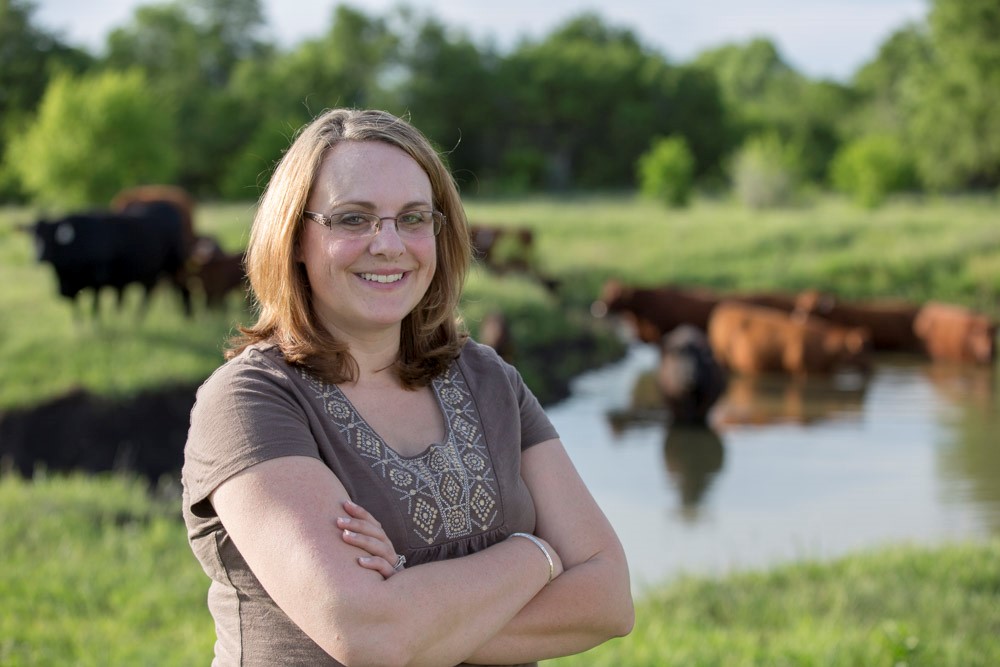
By KIM BALDWIN
McPherson County farmer and rancher

It’s beginning to look a lot like Christmas in my kitchen these days. Yes, I know it’s June. No, carols aren’t being sung, and we’re not decorating a tree. We’re beginning to bake massive batches of cookies and other goodies that will sustain our wheat crew once it’s time to harvest the grain. You see, Christmas and wheat harvest are really the only two times during the year when I do mass baking projects.

A major grocery run leads to dozens of eggs being stored in my refrigerator. Bags of chocolate chips fill my pantry. Flour ends up on the floor. Cooling racks cover my counters. Ziplock bags and my deep freeze are filled to the brim. And I set watch on my kitchen — monitoring my children and others who may dare to enter my territory to see what’s being created all in an attempt to sneak a few goodies out the door.

I take this time of year very seriously. I call in reinforcements, and we knock out the task at hand. I like to get ahead by baking in advance to avoid getting behind once harvest begins. After all, there will be plenty of meals to prepare daily once harvest starts. For me, it’s a matter of planning and organization, and not feeling overwhelmed.

Besides, I want to spread goodwill and good cheer to our harvest crew. They work hard every day during harvest trying to get the wheat out of the fields while the conditions are right. It’s hot. It’s dirty. It’s tiring. The least I can do is keep their bellies full of sweet treats.

There’s been a lot of talk around town, down the dirt roads and in fields lately. The main topic of conversation is all about when harvest will begin. I generally chuckle when this talk begins — although I am also guilty of participating. While we might like to believe we have our bullet-proof systems for prognosticating the start of wheat harvest, the fact remains we’re all just making predictions. To be honest, your guess is as good as mine.

Yes, we can make educated guesses based on the weather. We can narrow it down to single-digit days. But let’s be honest, just like Mother Nature can dupe the best meteorologist, so too can a farmer miss the mark. There are just too many factors that play into when wheat harvest will begin. The wheat might look ripe, but the ground might be too wet. Other farm tasks like planting soybeans and sorghum demand our attention. Mechanical breakdowns might stop a crew before it can even get started harvesting. Mother Nature might throw a pop-up rain shower that nobody was expecting, delaying the kick-off for another day.

Although we can’t pinpoint the exact day when we will fire up the combines and begin that rush to get the grain out of the fields, we know that wheat harvest is getting closer and closer every day. And just like when my kids mark down a calendar daily in anticipation of Santa making his visit, I too am mentally marking down the days. Anxiously awaiting the start of harvest. Until that day arrives, I’ll enjoy a few homemade cookies I’ve set aside from the mass baking operation in anticipation of the start of our wheat harvest.

“Insight” is a weekly column published by Kansas Farm Bureau, the state’s largest farm organization whose mission is to strengthen agriculture and the lives of Kansans through advocacy, education and service.
CAMPBELL: Chinch bugs damaging milo and feed crops

Stacy Campbell is Agriculture & Natural Resources Extension Agent for the Cottonwood Extension District.
There have been calls again this year concerning chinch bugs coming out of wheat fields and moving into adjacent milo, and sorghum/sudan hay fields.

The overwintered adults emerge in early spring and fly into small grains where they mate and produce the first generation. Most problems in milo or feed occur when large groups of immature, wingless nymphs migrate from maturing wheat fields and invade adjacent sorghum or sorghum/sudan hay fields where they attempt to complete development. They typically do not infest the entire field but can damage or take out several rows of milo next to the wheat.

Problems with this insect were historically confined to eastern and central Kansas, with damage beginning in May or June, but in recent years, chinch bugs have become more of a problem further west in the state.
Second generation chinch bugs have been infesting emerging panicles and causing direct damage to grain over a much wider geographic area in the state. Control of second-generation chinch bugs on large plants is difficult to achieve with contact insecticides because of their habit of hiding behind leaf sheaths, and no systemic materials are labelled for this use.

The risk of first generation damage is greater where sorghum is planted next to thin stands of wheat. Seedling sorghum is most vulnerable, and 7 to 10 bugs per plant will cause stunting, poor root development, stand reduction and even the death of some plants. Larger plants can tolerate more bugs, but severe infestations can cause stunting, lodging, and yield loss. Since corn is planted earlier and is larger and more resilient at the time of nymphal migration, damage can be minimal and usually confined to border rows. Late-season damage is typically spotty, but heading sorghum can be infested behind the panicle sheath which can cause incomplete exertion of the head.

Chinch bugs puncture vascular tissues to extract plant juices and secrete digestive enzymes that cause the breakdown of surrounding plant tissues. Feeding punctures also can allow pathogens to enter the plant. Consequently, damaged plants present a variety of symptoms including stunting, yellowing, wilting, and necrotic lesions.

The effect nymphal feeding has on plants depends to a large degree on the health and nutritional status of the plants. Growth stage and water balance are critical because small or drought-stressed plants have less ability to tolerate or recover from chinch bug feeding damage.

Using seed treatments: clothianidin (Poncho), imidacloprid (numberous products) and thiamethoxam (Cruiser) at planting can potentially decrease chinch bug damage and may protect plants for up to 3 weeks, unless the migration is heavy. Growers can use follow-up sprays on border rows if protection wears off before the end of chinch bug migration.

Before spraying the border rows of an affected field, a key consideration is to determine the growth stage that most of the chinch bugs are in. Because the nymphs are the ones feeding on the plants causing the damage, the adults do not feed and will soon fly away to lay their eggs. So if the majority of chinch bugs are in the adult stage, the damage has already been done. Adults are small, black bugs about 1/8 inch long with white wings folded over the back. Immatures or nymphs, are tiny bright red after hatching or larger red-and-black, wingless bugs, then darken as they approach maturity. A white band on the upper side of the first abdominal segment is visible until wing buds grow to cover it.

Most often the damage is noticed only after several rows of sorghum or feed have been severely stunted or killed. An insecticide spray can be used over the affected rows and approximately an additional 100 feet beyond. Also, spraying about 100 feet into the wheat stubble is advisable if chinch bugs are still coming out of the wheat field. High gallonage, 20 to 40 gallons of water per acre ensures good plant coverage and enhances the movement of material into protected plant parts such as leaf sheaths. There are several insecticides labeled for the control of chinch bugs listed in the K-State Research & Extension publication “Sorghum Insect Management 2017 which can be found on our web site at www.ellis.ksu.edu

If you have any questions or need further information contact me at the Cottonwood District Extension Office in Hays at 785-628-9430.

HAWVER: Insurance rate cap battle next session?

Martin Hawver
In a decision that is certain to mesmerize the Kansas Legislature in the upcoming election-year session, the Kansas Supreme Court has struck down the statutory cap on noneconomic damages in personal injury lawsuits.

What?

The high court ruled last week that a 2010 $250,000 cap (now $325,000 and moving to $350,000 on July 1, 2022) on noneconomic damages is not constitutional. It essentially limits juries in personal injury cases from determining the amount of compensation an injured party can receive for lifestyle changes and mental and physical damages as a result of someone’s negligence or other misdeed.

Like many court cases, this one is complicated. Like that tough piece of meat that just keeps getting bigger the more you chew it.

A woman injured when a corporation’s semi-truck plowed into the back of her car sued the firm, it took responsibility for its driver’s action, and a Sedgwick County jury determined that the plaintiff suffered the easily calculated $33,490.86 in medical expenses. You just add up the bills.

But for the noneconomic damages? The jury agreed that the injured woman suffered $301,509.14 in noneconomic damages as a result of the wreck. Now, how did a jury come up with that number? No telling. Juries meet in secret; they discuss and debate and come up with a figure.

That figure turned out to be $51,509.14 more than the sum of the economic damages and the noneconomic damages, and the judge accepted the defendant’s total damage payment with the $250,000 cap and called it a day.

And after all that complexity, the injured woman appealed the ruling and the Supreme Court decided that the Legislature doesn’t have the right to essentially toss out a jury’s decision in favor of a state statute. That simple.

But the decision instantly opens that legislative issue next session. If there’s a cap on noneconomic damages, that limits the payments to a calculable figure, and insurance companies love calculable caps. It means that no matter the circumstance, they have a cap on payouts for noneconomic damages they pay on behalf of their policyholders. It holds down that payment, meaning the insurers can calculate just what they need in the way of premiums to cover their policyholder’s losses and make a profit.

And it holds down the cost of policies, which means they can sell more of them. The public benefit? Lower insurance prices mean fewer Kansans will violate state law and drive without insurance. That protects, or at least makes recovery possible for, everyone else on the road. Nobody wants to be hit by a driver with no insurance, and your insurer would rather recoup the money it pays you from another company.

So, the fight next session? What’s possible in the way of a cap to hold down insurance rates, and what’s possible in the way of respecting the constitutional power of juries to decide cases.

Insurers will want a cap reassembled, plaintiffs and their attorneys will want no cap, and the outcome will reach across the state. A giant noneconomic damages verdict and businesses pay higher insurance rates, or their insurers are responsible for just the policy limits and the policyholder pays the overage.

Everything changes. If jury verdicts are limited, there goes their constitutionally delegated power. Might not need a full dozen anymore. If the cap is somehow reworked to become constitutional, again, there goes the delegation of justice to juries.

Oh, and we imagine that lobbyists for insurance companies will be busy next session. And…we imagine that there will be some legislators gaining weight as they are taken to dinner by lobbyists to talk over the issue…

Syndicated by Hawver News Company LLC of Topeka; Martin Hawver is publisher of Hawver’s Capitol Report—to learn more about this nonpartisan statewide political news service, visit the website at www.hawvernews.com

Exploring Outdoors Kansas: Kansas, the river

Steve Gilliland
Ike and Tina Turner sang about rollin’ on one, Huck Finn and Tom Sawyer would likely have remained obscure without one. Some are named in the Bible. There are world famous ones and there are unknown ones. Some are so wide they can barely be seen across, while others are so narrow they can nearly be stepped across… Rivers!.. They can be the lifeblood of a community, or as witnessed this spring, they can be a community’s and a state’s worst nightmare. Some, like the River Thames conjure up romance, while others, like the Amazon conjure up fear.

While still living in Ohio, using the words “river” and “Kansas” in the same sentence would have been amusing to me as I pictured this state pretty much devoid of water, let alone rivers. However, like most of my pre-Kansas-dwelling perceptions, that myth is busted! Not only do many rivers flow through our state, some actually begin here. Before tackling this subject I communicated several times with James Putnam, a team member of the US Geological Survey located in Lawrence and a walking wealth of information about our state.

I expected a short list in answer to my first question, which concerned the number of rivers that actually begin in Kansas. My plan was to simply list those few rivers along with their starting and ending points. James’ answer; “There are hundreds of rivers and creeks that begin in Kansas!” So much for plan “A.” My next question was “What distinguishes a river from a creek from a stream,” thinking this would make for some lively discussion. James directed me to a data base of information called the Geographic Names Information System (GNIS for short); a trove of information maintained by people with too much spare time whose job it is to decide things like that. GNIS says “Broad agreement on such questions is essentially impossible which is why there are no official feature classification standards.” In others words, when a geographical feature is first named, it can be classified however the naming party wants it; creek, stream, river, hill, mountain etc…. Rats; their goes plan “B.” So armed with some websites and other info James gave me, I embarked on a high tech quest in search of Kansas river trivia, and here are some of my findings.

First of all, one table of information, in alphabetical order, lists 2,468 STREAMS in Kansas, from Acker Creek in Cowley Co. to Zenithscah Creek next door in Reno Co. Since the state derives its name from a river that starts in Kansas, here are some interesting facts about the Kansas River.

The name Kansas comes from the Kanza Native American tribe that once inhabited the north eastern part of our state, and means “people of the south wind.” The Kanza tribe named the river “Kansas” and our state eventually took its name from the river.

The Smokey Hill River exiting Kanopolis Reservoir from the west, and the Republican River coming down from Nebraska join below Milford Reservoir at Junction City to begin the Kansas River (thus the name Junction City.) Fort Riley would eventually be located at this junction. Often known locally as the Kaw River, from there it meanders 170.5 miles, mostly due east, to merge with the Missouri River at a place aptly named Kaw Point. History shows that from June 26-29, 1804, the Lewis and Clark expedition camped at Kaw point and noted that it too would be a good spot for a fort.

At the Bowersock Dam near Lawrence, the Bowersock Mill and Power Co. operates the only hydroelectric power plant in the state. In the large pool created by the Bowersock Dam, the University of Kansas rowing team routinely practices. Another rowing team from the Kansas City Rowing Club practices in the final stretches of the river near its mouth. During the 1850’s steamboats routinely traveled the Kansas River, often coming west as far as Fort Riley. Steamboat traffic on the Kansas ended abruptly with the coming of the railroad.

Each time I set down to author this weekly column, I learn something new about our state, its people, its wildlife or it land. This week I learned several new things about the river for which it is named; yet another reason to Explore Kansas Outdoors!

Steve Gilliland, Inman, can be contacted by email at [email protected].

Now That’s Rural: Norton County’s Bow Creek Ranch

Ron Wilson is director of the Huck Boyd National Institute for Rural Development at Kansas State University.
By RON WILSON
Huck Boyd National Institute for Rural Development

Yak, yak, yak. That might be a teenager’s description of the sound of some long-winded grownup – such as me. But yaks are actually a type of cattle. These animals originated in the Himalayas thousands of years ago. Now they are being raised and marketed by an innovative couple in rural Kansas. Many thanks to Carolyn Applegate and Norton County magazine for this story.

Stephanie and Doug David are the owners of Bow Creek Ranch in Norton County. Doug grew up here and met and married Stephanie who is from Nebraska. They farm and raise Angus cattle near Lenora.

“In 1997, I was at the Denver stock show,” Doug said. The stock show was hosting a specialty animal sale where yaks were being sold

“I tried the yak meat and really liked it,” Doug said. He decided to try raising them.

Yaks are an unusual kind of bushy-haired bovine with handlebar-shaped horns and massive shoulders. As mentioned, they originated in the Himalayan mountains of Tibet. Tibetan culture revolves around the yak, similar to how Native American Plains Indian culture revolved around the buffalo. However, yaks are not related to the American buffalo, which are technically bison.

Today, Stephanie and Doug have 200 head of yak to go with their registered quarter horses and Angus cattle at Bow Creek Ranch, along with their retail meat business.

“We have breeding yaks and meat yaks,” Stephanie said. “We sell a full line of their meats and all-natural beef from our Angus herd.”

The yaks are a multi-purpose animal. Their soft undercoat of hair is used for fiber, but they are not shorn like a sheep. Instead, special brushes comb out the hair. The Davids have this fiber processed in Phillipsburg at the Shepherd’s Mill store, which we have previously featured.

The soft cashmere-like yak fiber can be used for weaving or knitting. “It started with yak woolen socks,” Stephanie said. “Now it’s being used for sweaters, jackets, gloves and beanies. There is no lanolin in the fiber. People who are allergic to wool can wear our clothing.”

Yak milk is high in butterfat and is said to produce exceptional cheeses, butter, and yogurt. Yaks can even be used as pack animals. Then there is the meat.

“Yak meat is naturally redder and sweeter than beef,” Doug said.

“It also offers a health benefit,” Stephanie said. Yak is estimated to be better than any other meat except ground turkey when it comes to cholesterol.

“We like to take the yak meat to weekend shows,” Stephanie said.

“Once you get someone to try it, most people like it,” Doug said. The Davids have their yak meat processed into traditional meat cuts as well as summer sausage, jalapeno sausage, ring baloney, sticks, and jerky. It is all-natural. The Davids have shipped yak meat to every corner of the U.S., from Vermont to California.

They estimate there were only 600 yaks in North America 30 years ago. Now, there might be more than 5,000. Yaks are said to be easy keepers, which means they eat only a third of what domestic cattle might consume.

As one might expect of a high-altitude animal, yaks do not do well in the southern U.S. “High humidity is not good for the yaks,” Doug said. “From here to Canada, they do really well.”

As one might also expect, the calves are really hardy. “We calve quite a bit in the winter time,” Doug said. They are now using yak bulls on Angus heifers.

Stephanie got involved in promoting this unique animal. In 2017, she became president of the International Yak Association. That’s quite an honor for someone from a rural community such as Lenora, population 235 people. Now, that’s rural.

For more information about yaks, go to www.iyak.org. For more information about the Davids, go to www.bowcreekranch.com.

Yak, yak, yak. No, that’s not just a long-winded grownup. Yaks have increased in number in North America, with benefits for both growers and consumers. We salute Stephanie and Doug David for making a difference with their agricultural innovation. With that, I’ll stop yakking.

News From the Oil Patch, June 17

By JOHN P. TRETBAR

It appears your summer vacation may be cheaper than expected, and cheaper than last year, if you’re driving. The government announced a big drop in its prediction for gasoline prices during the summer driving season. The U.S. Energy Information Administration on Wednesday reduced its average price expectations for April through September, 2019 to $2.76 [[“two seventy-six”]] per gallon. Last month EIA said that average would be $2.92 [[“two ninety-two”]] per gallon. That average last year was $2.85 [[“two eighty-five”]]. EIA expects lower crude-oil prices to drive down gasoline prices.

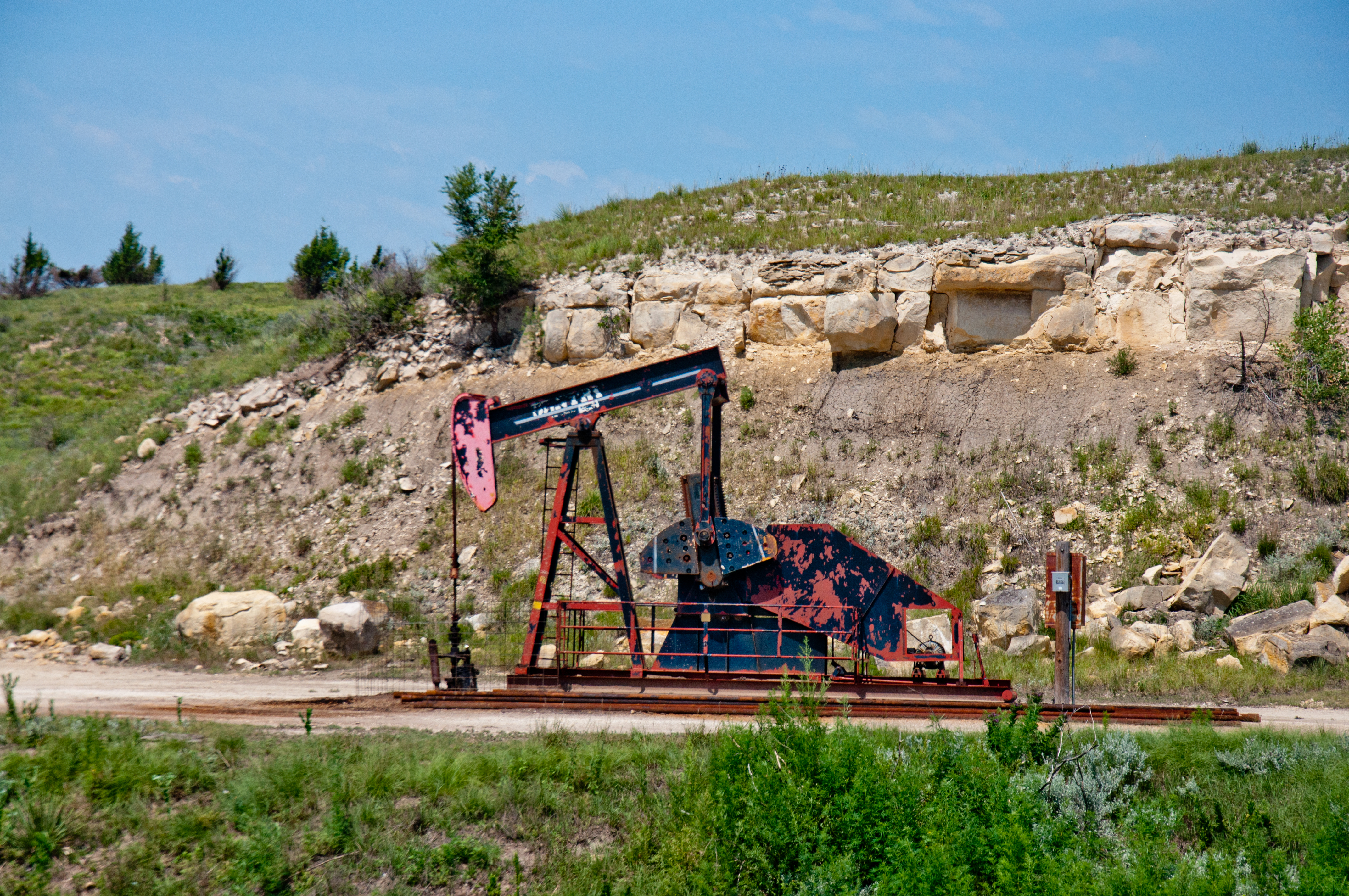
Independent Oil & Gas Service reports 21 active drilling rigs west of Wichita, up one for the week. Eastern Kansas was unchanged at two active rigs. Operators were preparing to spud one well in Barton County and one in Ellis County.

Baker Hughes reported 969 active drilling rigs across the U.S. Friday, down one oil rig and five gas rigs. The count in Texas was down six.

Regulators approved 31 permits for drilling at new locations across Kansas last week, 17 of them east of Wichita and 14 in Western Kansas, including two in Ellis County. We’ve seen 413 new drilling permits thus far in 2019.

There are just seven new well-completions reported statewide, according to weekly reports from Independent Oil & Gas Service. All seven were west of Wichita. That’s 677 newly-completed wells so far this year.

The government reported a slight drop in its crude oil production estimates for the week ending June 7, down to 12.28 Million barrels per day. That’s 98-thousand barrels less than the week before but 11.4 million barrels per day more than a year ago at this time. U.S. crude oil inventories increased by 2.2 Million barrels to 485.5 million. That’s about eight percent above the five year average for this time of year, according to weekly numbers from the U.S. Energy Information Administration. Crude-oil imports were down 316-thousand barrels per day last week to 7.6 million barrels per day. EIA says total gasoline inventories increased 800-thousand barrels are are now about two percent above the five year seasonal average.

The U.S. Supreme Court ruled last week that “federal law is the only law” on the Outer Continental Shelf. The high court ruled unanimously against workers on oil drilling platforms off California who argued they should be paid for the off-work time they spend on the platform, including sleeping. The workers had argued that California law requires them to be compensated for that time. Justice Clarence Thomas said in an opinion that “there has never been any overlapping state and federal jurisdiction there.”

U.S. and Canadian producers continue to outpace last year in oil-by-rail shipments. The Association of American Railroads reported 13,351 car loads of petroleum and petroleum products in the week ending June 8. That’s more than 21% higher than last year. Canada’s total was 18% higher year-on-year.

Crude oil production in North Dakota dipped in April to 41.7 million barrels, according to the state’s Department of Mineral Resources. That’s 1.39 million barrels per day, which is down about 600 barrels per day from the finalized March total. State regulators are keeping a close eye on crude prices, with North Dakota light sweet crude dropping ten dollars per barrel in the last month. Natural gas production in the state soared to another all-time high in April.

Regulators in Texas say producers there pumped more than 116-million barrels of total oil production in March, or about 3.7 million barrels per day. That’s nearly three million barrels more than February’s total, but about nine million barrels less than in March of last year. Crude oil production excluding diluent was over 101 million barrels in March. The Railroad Commission said the first-quarter production total in the Lone Star State very nearly matched last year at just shy of four million barrels per day.

The first non-Texas crude pipelines connecting to the Port of Corpus Christi were announced by Phillips 66 last week. The company announced joint ventures with Bridger Pipeline and Plains All American Pipeline, under which two new pipelines would bring oil and gas supplies from the Rocky Mountains and Bakken Formation in northwestern North Dakota to Cushing, Oklahoma and from there to the port in southern Texas. A spokesman for the project told us the pipelines will follow existing pipeline corridors across Western Kansas, and will not cross through Ellis or Barton counties.

KRUG: Food recalls are in the news

Donna Krug

A couple of food recalls caught my attention in a newsletter I received this week from K-State Research and Extension. One deals with frozen blackberries while the other recall is for all purpose flour sold at Aldi stores. Read on for more details.

Frozen blackberries have been linked to possible Hepatitis A contamination. Hepatitis A is a contagious liver disease that results from exposure to the Hepatitis A virus, including from food. It can range from a mild illness lasting a few weeks to a serious illness lasting several months. Illness generally occurs within 15 to 50 days of exposure and includes fatigue, abdominal pain, jaundice, abnormal liver tests, dark urine and pale stool. Hepatitis A vaccination can prevent illness if given within two weeks of exposure to a contaminated food. In rare cases, particularly consumers who have a pre-existing severe illness or are immune compromised, Hepatitis A infection can progress to liver failure.

Persons who may have consumed affected product should consult with their health care professional or local health department to determine if a vaccination is appropriate, and consumers with symptoms of Hepatitis A should contact their health care professional. You can learn more about this recall at the following website. https://bit.ly/2F1J9bB

The second recall I want to call your attention to has been issued by ALDI grocery stores. They have recalled all purpose flour due to a multistate outbreak of E.coli 026 infections. As of May 24, 2019, 17 people have been infected across eight states. No deaths have been reported.

Investigation results have shown that of those interviewed, they reported eating, licking, or tasting raw dough or batter. DNA fingerprinting identified the flour as the source of the infection.

Symptoms of E.coli infection can appear in one to three days. But the time it takes to confirm that a person is a part of an outbreak can take two to three weeks. Lear more at the following website. www.cdc.gov/ecoli/2019/flour-05-19/index.html

I checked out both web sites and printed off the recall information. The states affected with the flour recall were primarily from Ohio and the east coast. However, the blackberry recall is from certain lots sold through Kroger stores.

If you have any questions about these recalls don’t hesitate to give me a call.

Donna Krug is the District Director and Family & Consumer Science Agent for the Cottonwood Extension District – Great Bend office. You may reach her at: (620)793-1910 or [email protected]

First Five: New Assange charges raise two First Amendment alarms

Gene Policinski

Two First Amendment alarms are sounding in the wake of new federal charges against WikiLeaks founder Julian Assange, but only one is being heard by most of us — for now.

Initially, federal prosecutors charged Assange with just one crime: conspiring in 2010 with former Army Private Chelsea Manning to hack a government computer password, which allowed Manning access to a trove of classified information that she turned over to WikiLeaks.

For weeks, free press advocates worried that the Department of Justice would go beyond prosecuting Assange for computer hacking and expand the charges into journalists’ territory —publishing classified information.

These fears were not unfounded. On May 23, the unsealing of an 18-count indictment under the 1917 Espionage Act, accusing Assange of working directly with Manning to obtain secret government documents, set off Alarm #1 for most journalists. The new charges implicate the work of journalists, which often involves talking with sources and at times possessing and publishing secret documents.

In trying to thread a legal needle, Justice Department lawyers said the Assange indictment avoids a collision with the First Amendment because he is not a journalist, as they define the profession.

And therein is Alarm #2: the government defining who is and who is not a journalist. This was the very activity that the nation’s founders — who had first-hand experience with the abuses inherent in a system where the crown licensed printers and publishers — ruled out in 1791 by creating unequivocal First Amendment protection for a free press.

How did we get to these alarming places?

The broadly written Espionage Act criminalizes the taking, possession and distribution of government secrets by any unauthorized person for any reason. But federal officials through the years have acknowledged that the role of a free press historically has meant at times providing the public with information that government officials of the moment wanted to keep secret. For that reason, journalists in the U.S., particularly those reporting on national security issues, have operated for decades with the tacit acceptance that they would not be prosecuted for receiving illegally obtained information from a third party as long as there was no involvement by the journalists themselves in the actual taking of the information property.

So it mainly has been policy, not law, protecting journalists receiving stolen information related to national security. The law explicitly protects publishing that information since the 1971 Pentagon Papers decision in which a splintered U.S. Supreme Court said “prior restraint” by government to stop publication of secret materials was unconstitutional. Seen generally as a free press win, often left unsaid is that the justices left open the issue of what penalties the government could impose on journalists after publication of classified materials.

That’s why the Assange indictment, if it stands, could dramatically change the delicate balancing act that has existed until now, in which the government sought to protect its secrets by prosecuting leakers, but did not go after reporters and news outlets that produced news reports based on leaked materials.

In announcing the indictment, the Associated Press reported, justice officials said Assange was “not charged simply because he is a publisher,” but rather because he actively encouraged Manning to steal hundreds of thousands of secret documents related to U.S. military and diplomatic actions in Iraq, Afghanistan and elsewhere, cracking a password that gave Manning access to the materials and “publishing a narrow set of classified documents in which Assange also allegedly published the unredacted names of innocent people who risked their safety and freedom to provide information to the United States and its allies.”

In a telephone conference call with reporters, Assistant U.S. Attorney General John Demers said the indictment does not destroy the Department of Justice’s informal agreement not to pursue journalists for publishing leaked information, saying the department “… takes seriously the role of journalists in our democracy … Julian Assange is no journalist.”

Demers then ventured into the definition zone — triggering Alarm #2 — that the nation’s founders thought to exclude: “No responsible actor, journalist or otherwise, would purposely publish the name of individuals he or she knew to be confidential human sources in war zones, exposing them to the gravest of dangers.”

While the journalists I know would agree with that assessment, and Demers may well be sincere in his words, the important element is that such a statement must be journalism’s self-definition, not one provided by a government official or established by ordinance, edict or, in a backhanded fashion, through an indictment.

The nation’s founders knew all too well that what the government can grant, it can take away. The danger in allowing the Justice Department to expand its Assange indictment into “publishing” is that can hand current and future administrations a cover under which they may pursue, in instances of leaked secrets, those reporters they disfavor.

There is real debate among First Amendment advocates whether to recognize Assange and WikiLeaks as a non-traditional journalist/journalism or as a political activist and subversive enterprise hiding behind a false shield. The government does need to protect many secrets.

Congress could avoid touching off future alarms by writing into the 102-year old Espionage Act more specific language that reflects what it was really meant to target: Those who steal and reveal U.S. government secrets with the purpose of harming the nation and exposing its citizens to danger.

Surely such a revision could make a safe space for those whose goal is to help, not hurt, the public by relaying classified information that properly holds government accountable — and that aids and abets not crime, but self-governance.

Want a few examples? The Pentagon Papers’ history lesson, which showed how government hid its decades-long engagement in Vietnam. The revelations about the massive surveillance system that grew up in the early 2000s without Americans being aware their phone calls (and later, their email traffic) was being stored and parsed by a huge government program. The reports revealing that newly designed vehicles to protect soldiers from landmines in Iraq and Afghanistan were slow in reaching the front lines, even as dozens or more died needlessly. The list is much longer if you care to look.

In the process of revisiting that law and those stories, let’s also keep in mind the core First Amendment principle that we know journalism when we see, read or hear it, not when a government official tells us.

Gene Policinski is president and chief operating officer of the Freedom Forum Institute. He can be reached at [email protected], or follow him on Twitter at @genefac.

BOOR: Thatch control for your lawn

Alicia Boor

Thatch control for cool-season lawn grasses such as 
bluegrass and tall fescue is usually done in the fall but now is the 
time we should perform this operation for warm-season turfgrasses such 
as bermudagrass and zoysiagrass. Because these operations thin the lawn, 
they should be performed when the lawn is in the best position to 
recover. For warm-season grasses that time is June through July. 
Buffalograss, our other common warm-season grass, normally does not need 
to be dethatched.

When thatch is less than one-half inch thick, there is 
little cause for concern; on the contrary, it may provide some 
protection to the crown (growing point) of the turfgrass. However, when 
thatch exceeds one-half inch in thickness, the lawn may start to 
deteriorate. Thatch is best kept in check by power-raking and/or 
core-aerating. If thatch is more than 3/4 inch thick, the lawn should be 
power-raked. Set the blades just deep enough to pull out the thatch. The 
lawn can be severely damaged by power-raking too deeply. In some cases, 
it may be easier to use a sod cutter to remove the existing sod and 
start over with seed, sprigs or plugs.

If thatch is between one-half and a 3/4- inch, thick, 
core-aeration is a better choice. The soil-moisture level is important 
to do a good job of core-aerating. It should be neither too wet nor too 
dry, and the soil should crumble fairly easily when worked between your 
fingers. Go over the lawn enough times so that the aeration holes are 
about 2 inches apart.

Excessive thatch accumulation can be prevented by not 
over-fertilizing with nitrogen. Frequent, light watering also encourages 
thatch. Water only when needed, and attempt to wet the entire root zone 
of the turf with each irrigation.

Finally, where thatch is excessive, control should be 
viewed as a long-term, integrated process (i.e., to include proper 
mowing, watering, and fertilizing) rather than a one-shot cure. One 
power-raking or core-aeration will seldom solve the problem.

Alicia Boor is an Agriculture and Natural Resources agent in the Cottonwood District (which includes Barton and Ellis counties) for K-State Research and Extension. You can contact her by e-mail at [email protected] or calling 620-793-1910.

Prairie Doc Perspectives: Amazing medicine reverses aging

Rick Holm

I bet I hear it once a week, “It’s hell to grow old!” Of course, growing old is something we all will do, unless we die first. Alas, the future can look quite sad and depressing, especially if you think about the flab, falls, pain, blues, anxiety, thin bones, loss of libido, weakness, and memory loss that can come with aging.

But wait! Listen to the exciting news. Just out, there is a powerful potion that can prevent the aging process. That’s right … guaranteed to slow aging.

Researchers have observed how shortly after starting this terrific tonic: flab turns to muscle; falls are reduced; chronic pain and fibromyalgia seem magically lessened; depression and anxiety disappears; bones are actually strengthen; sexual function is enhanced and recharged; people experience new strength, energy, and power; and most important memory is clearly improved. What’s more, this special medication has also been shown to reduce diabetes, heart attack, stroke, and breast or colon cancer.

That’s not all. If you take advantage of this fabulous offer today, it will improve your appearance within weeks. Sounds too good to be true. It is scientifically proven, beyond a shadow of a doubt. And no other treatment plan comes even close. Nothing!

You would expect the price for this magnificent medication that brings about all these benefits to be more than the sum of one third of your income, or at least many thousands if not millions of dollars. But no! This medicine is equally available to the rich and poor alike, requiring only an extra effort on your part.

You could expect to work lots of extra hours each day to achieve these wonderful benefits. But no! You don’t have to work an extra two hours at the beginning or end of your workday, you don’t have to work even one extra hour.

Starting today we have a special opportunity. For spending only a half hour every day walking twelve blocks, yes that’s right, just twelve blocks, or whatever distance you can make in 30 minutes, you will receive most of the benefits I mentioned earlier. That’s right, only a half hour!

But wait, this offer only lasts for a short time. The longer you delay, the less you will get. If you start today, the benefits begin sooner and last longer.

That’s right…guaranteed to slow aging. Exercise is the bargain of a lifetime.

For free and easy access to the entire Prairie Doc® library, visit www.prairiedoc.org and follow The Prairie Doc® on Facebook, featuring On Call with the Prairie Doc® a medical Q&A show streaming live most Thursdays at 7 p.m. central.

FIRST FIVE: Propaganda on the ballot

By Kirsti Kenneth and Pierce McManus
Freedom Forum Institute

The 2020 presidential election is still more than 500 days away. But with more than two dozen notable candidates already in the running, campaign season is in full swing and each day brings a new wave of information about the crowd of contenders. However, not everything you hear, see or read should influence what you do in the voting booth. Alongside the policy statements and campaign promises, today’s political landscape is littered with disinformation and deceptive content intended to spread falsehoods and mislead the public. Think you’re equipped to sort out the fact-backed claims from the public relations stunts and propaganda? Well, you might just want to think again.

We all know that political campaigns utilize methods intended to persuade and provoke the public. The time-tested strategies of tightly scripted stump speeches and staged photo ops designed to stir our emotions and garner our support date back to the dawn of modern campaigning. Most of us know to think twice about the slick promises and heart-tugging moments campaigns trot out to win votes, but today’s candidates and other political players are experimenting with new methods to influence the online electorate.

Last month, right-wing internet provocateurs Jacob Wohl and Jack Burkman published a fabricated sexual assault allegation against Democratic candidate Pete Buttigieg on the blogging platform Medium. The accusation appeared under the name of a man who soon disavowed the claim. There’s also been an increase in apparent “local news” sites that are actually created by party activists. They run articles promoting certain candidates over others without disclosing the authors’ political connections to certain political action committees. And false quotes by President Donald Trump and Democratic presidential candidates continue to circulate on social media.

Many of these tactics cross the line to become propaganda: emotionally manipulative claims and disinformation designed to hijack voters’ thoughts and actions. And as you can see, it’s not just Russian bots that are to blame. Government and big business are scrambling to find solutions. Twitter is rolling out a new tool for reporting Tweets that are “misleading about voting.” The FBI and Department of Homeland Security have made permanent their task forces focusing on defending against foreign interference in elections, including propaganda and influence campaigns on social media.

But we continue to believe the most direct path to outsmarting propaganda’s manipulative messages lies in educating and empowering the public to spot problematic content and stop its destructive spread. As we voters begin to navigate a seemingly never-ending maze of campaign media and related online information, there are red flags we can all look for to sort politics from propaganda.

Propaganda simplifies the situation. Does the content cite only convenient or helpful facts while glossing over counter-arguments? Red flag. Propaganda exaggerates. Does the content present its candidate as perfect or nearly so? Red flag. Propaganda also uses our emotions against us, exploiting our weaknesses and deepest desires. Does the content you’re looking at make you feel afraid, and then conveniently promise a cure for that fear? Another red flag.

Most corrosively, propaganda seeks to divide us, setting up an “us” versus “them” scenario that broadens divisions between different people, groups and ideas.

Last month, a video of House Speaker Nancy Pelosi, a Democrat, slurring her words garnered millions of views and shares online. The video, which was later proven to be a manipulated fake, was the perfect propaganda for a polarized age. It was shared by conservative politicians and party loyalists in effort to raise speculation about Pelosi’s fitness for leadership and to rally their base. Perhaps those who shared it were unaware at the time that the video was fraudulent. Perhaps they didn’t care. Or perhaps they expected their social networks of choice to police the content distributed via those platforms. (YouTube did eventually take the video down; copies are still available via Twitter and Facebook.) But as the presidential election fans the flames of disinformation, fakery and deception, pleading ignorance or waiting for algorithmic salvation isn’t going to cut it. If you think the country is divided now, imagine how fractured we may be in a year’s time if we don’t become a more media-literate electorate, primed to weed out destructive propaganda.

To paraphrase Thomas Jefferson, an informed citizenry is vital for a free society to thrive. As we prepare for the 2020 presidential election, let’s all do our part to ensure that the information we consume and share is factually accurate. And then let’s put that knowledge into action at the voting booth.

Contributing to this column were Katharine Kosin, NewseumED museum educator and Barbara McCormack, vice president of education at the Freedom Forum Institute. Pierce McManus, NewseumED’s digital communications and outreach director, and Kirsti Kenneth, NewseumED’s curriculum developer, can be reached for media inquiries at [email protected].

CLINKSCALES: Poppa and Father’s Day

Randy Clinkscales
One of my early memories as a child was visiting with my grandparents in Hillsboro, Texas. Snow in the Hill Country of Texas is very rare. So, it was one of those rare mornings when we woke up to discover that it had snowed. It was my first snow, and I remember running outside so excited.

My grandfather had a small ranch. He needed to go check the cattle, and I bundled up and headed out with him. For whatever reason, Pop decided to cook breakfast on the ground. We were surrounded by a few inches of snow. Pop piled some stones together, put in some twigs and sticks, and started the fire. He then chopped up some bacon, fried it in an iron skillet and then mixed in eggs. The steam and smell wafted into the air. It was delicious. Forever, that is what I have always called “Pop’s breakfast”.

My grandfather was quite the man. A giant for his time (6 ft. 2 in.), he played center for the town basketball team. Games were played outside on the earth. He was married to my grandmother but died 15 years before she passed. They were married for over 50 years. In the course of 50 years, they spent one night not together. When he passed, my grandmother’s heart was broken.

I often wonder what would have happened if my grandmother would have passed away first. I just do not know that my grandfather would have been able to carry on.

My grandfather was madly in love with my grandmother. They had breakfast together each morning. They would have coffee. There would usually be biscuits and gravy.

My grandfather was never in a hurry. He always had time for a conversation. While big, he was always gentle.

Through his years, he had a variety of jobs. Pop and Mammaw married just at the beginning of the depression. Pop liked to say that they were better off than most, having a farm where they could raise their own food. Pop got a job hauling rock for the county roads. Again, he felt so fortunate.

Over time, Pop continued with working at whatever he could, and for whatever purpose. He had one goal: provide for his family.

Through the years, he was County Clerk, he sold freezers of meat (some of you are going to remember that), he was the Sheriff of Hill County, Texas, and later in life was a policeman in River Oaks, Texas (a suburb of Fort Worth).

I was always impressed by his attitude. He would “get” to go to work. It was never he “had” to go to work. He always felt fortunate that he was able to provide for his family.

His two sons (my two uncles) were hemophiliacs. One of them died while quite young. Pop never would talk about it. It was too painful.

When I was in college, my grandfather’s other son (my uncle) lost a child. The baby was stillborn. Because I was going to college near Fort Worth, I stepped up to make the funeral arrangements. It was the first time that I had ever seen my grandfather cry. I remember he and my grandmother looking at that little casket, standing arm in arm. The child was named after my grandfather.

As a police officer, I always had to laugh at Pop’s approach. We often joked that Pop would have been killed in a car but for the fact that he was in a police car and everyone moved out of the way. He really was not a good driver. He enjoyed taking his time and looking around.

He carried that approach into his duties. If he stopped someone for a minor infraction, he had the philosophy that if they would truly listen to his lecture, he would let them go. But those lectures could be long. I experienced some of them myself.

Pop was a good man. He was always honest but never critical. He was never hurtful. He never judged me, though I would go through various stages of life.

Upon my arrival to visit with Pop and Mammaw, it would not take long before the dominoes came out. The dominoes were an excuse to have a meaningful conversation at the table. When someone scored a big score, Pop had this wonderful laugh, slow and deep; proud either for himself for scoring the points, or for the person scoring the points. It did not matter to him.

Pop was eventually forced to retire. I believe he was about 67 when he reached the mandatory retirement age with the police department. They had quite a celebration recognizing Pop for all his years of service, his role as a police officer, what he meant to so many of the junior officers, and all the lives he touched in the community.

He had a stroke. We really did not think he would make it, and certainly not make it at home, but he and my grandmother were determined that he would.

Eventually, he fully recovered. The last years of my grandfather’s life were spent as a full-time companion with my grandmother. They gardened; they worked in the yard; and they fished. They would put on these funky hats, and drive to Lake Worth, just a few minutes away. I do not think it was very important to them whether they caught fish. They just enjoyed being together and relaxing.

Probably the greatest lesson that I learned from my grandfather was how to love your wife. Through the many years, their marriage was a partnership. He and Mammaw did things together. Though most of the time my grandmother was a stay-at-home mom, her role was great in the marriage. Poppa leaned on her; she leaned on him.

I never heard Poppa say one harsh word to my grandmother. I never heard him at any time diminish her capabilities or her role. In fact, there was a certain amount of awe he had for my grandmother.

I was fortunate in my life to have my father and stepfather who meant so much to me, but I was just as fortunate to have a grandfather who helped me learn what it meant to be a father, a husband, and a man.

Remember your fathers and grandfathers this year on Father’s Day. And grandfathers, remember the influence you will have on your grandchildren, even when they are 65 years old and you are long gone. You are special.

Randy Clinkscales of Clinkscales Elder Law Practice, PA, Hays, Kansas, is an elder care attorney, practicing in western Kansas. To contact him, please send an email to [email protected]. Disclaimer: The information in the column is for general information purposes and does not constitute legal advice. Each case is different and outcomes depend on the fact of each case and the then applicable law. For specific questions, you should contact a qualified attorney.

INSIGHT KANSAS: Prisons a policy, political, ethical crisis with no easy fix

Sometimes I wonder how long we will be talking about fixing the problems that Sam Brownback left Kansas. Our latest Brownback heartburn is prisons. The news that Kansas officials are considering sending inmates to a private prison in Arizona has generated understandable controversy.

Patrick R. Miller is an Assistant Professor of Political Science at the University of Kansas.

Bluntly, the Brownback Administration gutted the Kansas prison system, the legislature often enabled him, and Kansas now faces a desperate situation with no easy or cheap solution.

The Kansas press has well documented the problems in Kansas prisons: hundreds of vacant positions for corrections officers, mandatory overtime for overwhelmed and underappreciated employees, overcrowding, conditions that jeopardize prisoner health, and prison riots.

Since assuming office, Governor Laura Kelly has repeatedly used the term “triage” to describe her approach to the Brownback policy legacy. That decently describes using private prisons as an imperfect short-term option to address a gigantic mess that cannot be fixed overnight.

Part of what makes the private prison option unappealing is the company that it forces Kansas to keep—CoreCivic, formerly Corrections Corporation of America (CCA).

Locally, CoreCivic has been accused of violating wiretap laws at the Leavenworth Detention Center, and has been a central player in the Lansing prison controversy. Its facilities elsewhere have attracted media attention for inmate abuse, understaffing, and poor management. Yet, there are few options for desperate states like Kansas with overcrowded prisons since media reports estimate that CoreCivic and its competitor GEO Group hold roughly 80 percent of the national private prison market.

CoreCivic is also no stranger to Kansas politics. It and GEO Group are generous campaign donors. In 2018, CoreCivic hedged its bets, donating $2,000 to Kris Kobach and $1,000 to Kelly, even though she had publicly criticized the company. Other Kansas politicians accepting private prison campaign money include Jerry Moran, Pat Roberts, Kevin Yoder, Vicki Schmidt, Derek Schmidt, Kathleen Sebelius, and various state legislators.

But the private prison industry’s favorite Kansas politician has been Brownback, who left Kansas a prison crisis as a parting gift. He accepted campaign money from Prison Health Services, Inc., whose post-merger successor Corizon holds a state contract for health care in Kansas prisons and retains Brownback’s former chief-of-staff as its lobbyist. Kansas officials have penalized Corizon for performance failures.

The Kansas Governmental Ethics Commission reports that Brownback’s gubernatorial account took $4,000 from CCA and $7,000 from its CEO. This close relationship made even one Republican legislator publicly imply impropriety in rewarding the company the Lansing prison contract given the revolving door of Brownback staffers subsequently hired as lobbyists by the company up to present day.

The ironic twist here is how Kansas legislative leaders have now decided to insert themselves into prison policy, clutching their proverbial pearls at how the Kelly Administration is handling matters. Many of these same leaders took a mostly hands-off approach to legislative oversight under their ally Brownback, never effectively checking how his administration managed the prison system while defending the Brownback tax policies that starved that system.

Fortunately, some progress was made this year on increasing corrections funding. But the system’s problems remain, and Kansas cannot solve these problems long-term with band-aids like outsourcing prisoners to private prison companies whose political and business practices fuel every worst fear about that industry.

Long-term progress on prisons requires genuine bipartisan commitment from policymakers, something that was lacking under Brownback. It requires a legislature that truly care about the problem, and not a legislature that suddenly cares just because a Democrat is governor. It took years to torch this system, and it will take years and more unattractive short-term remedies to fix it.

Patrick R. Miller is an Assistant Professor of Political Science at the University of Kansas.

Copyright Eagle Radio | FCC Public Files | EEO Public File