We have a brand new updated website! Click here to check it out!

INSIGHT KANSAS: It’s like déjà vu all over again

Duane Goossen crop
Duane Goossen

Happy New Year, Kansans! A new legislative session begins soon, and troubled state finances once again top the agenda. Kansas staggers forward in a perpetual budget crisis that our lawmakers have been unable—or unwilling—to solve.

The basic problem is simple. Kansas does not have enough income to meet expenses.

The cause of the problem stems directly from the Brownback income tax cuts. Those tax policy changes indisputably led to a sharp decline in the state’s revenue stream. As a result, in the last three years, Kansas has consistently spent more than it takes in, a practice that makes the state poorer and poorer.

At first, lawmakers made up the difference between declining income and growing expenses by drawing down cash reserves. A $709 million bank balance went to zero in less than two years.

With the bank account empty, lawmakers began drawing hundreds of millions from other state government accounts. The highway fund has been the prime target, but many other funds, including those set aside for early childhood programs and economic development, were also sacrificed in the attempt to keep the general fund solvent.

Of course, lawmakers also tried hard to cut expenses. Funding for public schools, a prime responsibility of the state, has been pulled down far below where it should be. State hospitals and prisons remain understaffed. The current budget slashes planned maintenance on roads and bridges. Yet, even these efforts have not lowered expenses nearly enough to make them fit within the dramatically diminished revenue stream.

The budget imbalance became so acute last year that even conservative lawmakers voted to raise the sales tax rate, a move that further shifted the state’s tax burden to low- and middle-income Kansans. The sales tax increase improved the overall revenue stream, but it did not come close to solving the problem.

The Brownback tax cuts brought the revenue stream down so significantly that truly damaging expense cuts coupled with a sales tax increase have not repaired the budgetary mess.

The financial problem and its cause are easy to identify, and so is the solution. Revisit the income tax cuts, which were far too deep.

Don’t expect that, though.

Gov. Brownback has announced that he does not want to deal with any tax changes this session. Nor do the conservative legislators who voted to raise the sales tax. 2016 is an election year for all members of the Legislature, so many would prefer that Kansans forget what happened in the last legislative session. It’s also unlikely that expenses will go down. In their latest gambit to lower spending, lawmakers voted to pay a consulting firm $2.6 million to find “efficiencies” for them. The results are not all in, but the early recommendations from the contractor suggest selling KDOT woodchippers and paying bills late—a very inauspicious start.

When baseball great Yogi Berra died in September, the media replayed many of his famous witticisms. A favorite, “It’s like déjà vu all over again,” was reportedly first uttered by Yogi when Mickey Mantle and Roger Maris repeatedly hit back-to-back home runs in the 1961 season. Yogi didn’t know it then, but his phrase applies to the Kansas budget now.

Another year. Another budget crisis. Déjà vu. If our lawmakers again avoid the real solution by taking even more money from the highway fund, or by borrowing, or by exercising “creative accounting,” and if we buy the governor’s recent declaration that “we are going to be in good shape,” then Kansas will arrive at January 2017 with yet another budget crisis. But our state will be poorer and another year behind. It will be like déjà vu all over again.

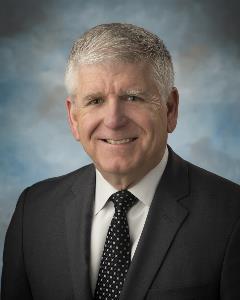
Duane Goossen is a Senior Fellow at the Kansas Center for Economic Growth and formerly served 12 years as Kansas Budget Director.

What a strange year it was for First Amendment freedoms

Gene Policinski is senior vice president of the First Amendment Center.

What a strange, challenging and dangerous year it was for First Amendment freedoms, at home and abroad.

2015 was but seven days old when terrorists, claiming to be angry over the publishing of satirical drawings of the Muslim prophet Mohammed, burst into the offices of the French weekly magazine Charlie Hebdo, killing 12 people.

The tragedy sparked a worldwide outpouring of support for free expression — remember the signs and t-shirts declaring “Je suis Charlie” — I am Charlie? But the incident also prompted draconian proposals in France to limit certain kinds of free expression and new restrictions on Muslims simply because of their religious faith. And Nov. 13 attacks in Paris in which 130 died only added fuel to that.

As the year unfolded, free expression in the United States took a hit in the most unlikely places — at least to the Boomer generation which carried the protest banners in the 1960s of the “free speech movement”: Colleges and universities. Campus critics assailed everything from ideas and opinions they believe may make some uncomfortable, to professorial musings on subjects from gender to Halloween costumes, to the notion of inviting speakers with controversial or even repugnant views.

And at some schools — most visibly, at the University of Missouri, the home to a venerable journalism program — demonstrators against racism and bigotry assaulted freedom of the press even as they exercised their rights of free speech, assembly and petition. A group of activists including students and a few faculty members tried to keep student journalists from reporting on the protests at the public university — producing both a memorable pair of online videos capturing the confrontations, and perhaps the year’s best public example of the meaning of “irony” if not civic ignorance.

On the World Wide Web front, the ongoing War on Terror produced proposals to restrict or deny use of the Internet by groups like ISIS and raised again the old notion of banning “hate speech” from public discourse. The proposals came from both conservatives and liberals, who supported such censorious activity for reasons as varied as national security, public safety or simply as the means to purge unpopular or negative views from the “marketplace” of ideas.

Internet giants such as Facebook, You Tube and Twitter already have implemented strategies to take down posts by ISIS killers and recruiters using images of unspeakable violence to promote their views and recruit new followers. But there were calls for even more social media sanitizing to counter the sophisticated online strategies of militant groups promising earthly rewards and an eternal paradise.

Taking down videos of brutal murders beheadings and rants about killing Westerners are relatively easy calls. But Eric Schmidt, who leads Google, went a step further than most in voicing the idea of an algorithm that would relentlessly prowl the corridors of the Web searching and eliminating hateful speech — an Orwellian concept of censorship-by-technology that went even further than “1984” author George Orwell imagined.

In November, leading Democratic and Republican candidates for their party’s presidential nominations called for various kinds of “Silicon Valley solutions” to terrorists on social media — while mocking those who would raise First Amendment objections to silencing speakers as an alternative to producing positive messages and dealing with social and political issues being exploited by ISIS and others.

The year ended with the specter of journalists’ deaths again in headlines.

On Dec. 21, GOP front-running candidate Donald Trump mockingly discussed killing reporters (“I hate some of these people”) at a Grand Rapids, Mich., rally, to the laughter of some attending. He questioned reports that Russia had murdered some journalists, and said “I would never do that … It’s horrible,” but then finished with the observation “some of them are such lying, disgusting people.”

Just a few days laters came the annual, somber reports by the Committee to Protect Journalists and by Reporter Without Borders on the numbers of journalist worldwide jailed or killed in 2015. The CPJ report noted that “of 69 journalists killed for their work in 2015, 40 percent died at the hands of Islamic militant groups such as Al-Qaeda and Islamic State. More than two-thirds of the total killed were singled out for murder,” rather than dying in accidents or as the result of military conflict.

Freedom House reported in its 2015 annual report that “global press freedom declined … to its lowest point in more than 10 years. The rate of decline also accelerated drastically,” with just 14% of the world’s population living in nations “where coverage of political news is robust, the safety of journalists is guaranteed, state intrusion in media affairs is minimal and the press is not subject to onerous legal or economic pressures.”

Even on New Year’s Eve, free expression was under assault. There were reports that the various Web sites and digital services operated worldwide by the BBC — the international news operation headquartered in London — faced cyberattacks that blocked or crippled operations throughout the day.

The 2016 presidential election seems certain to raise again the First Amendment-grounded debate over restrictions on campaign spending and contributions and attempts to reverse the 2010 U.S. Supreme Court’s “Citizens United” decision removing most limits on spending by corporations and unions.

Some First Amendment experts are now open to modifying a long-standing barrier to government suppression of free speech that is not a “clear and present danger” in light of the new and pervasive ability via social media and the Web to provide a far-reaching platform for those promoting negative messages.

The new year starts with “atmospherics” as measured by public opinion polls that are not kind to protecting First Amendment freedoms, from reports that a sizable number of Millennials have no problem with government officials or the Pentagon reviewing or controlling a free press and free speech in the name of public safety, to a survey showing overall faith in democratic ideals is fading among younger voters.

Still, a large majority of Americans — in the Newseum Institute’s annual State of the First Amendment annual survey — do not see those core freedoms as “going too far in the rights they protect.” And as the late founder of the Institute’s First Amendment Center, John Seigenthaler, observed: “First Amendment freedoms are never secured but are always in the process of being made secure.”

Keep that last thought in mind, in 2016. Happy New Year.

Gene Policinski is chief operating officer of the Newseum Institute and senior vice president of the Institute’s First Amendment Center. He can be reached at [email protected]. Follow him on Twitter: @genefac

First Amendment works — and will — if we still have it

Gene Policinski is senior vice president of the First Amendment Center.

Our First Amendment freedoms will work — if we still have them around to use.

Those five freedoms — religion, speech, press, assembly and petition — have been challenged at various times in our nation’s history, as many would say they are today. But the very freedoms themselves provide the means and mechanisms for our society to self-correct those challenges, perhaps a main reason why the First Amendment has endured, unchanged, since Dec. 15, 1791.

Case in point: The tragic mass shooting in Orlando, Florida, on June 12 was followed by a burst of anti-Islamic rhetoric across the country after the killer declared allegiance to ISIS. The speech, however hateful, generally was protected by the First Amendment.

But in turn, those attacks were followed by pushback in the other direction. Muslim leaders decried the use of their faith to justify hatred of the United States or homophobic terrorism. Opposition was ramped up to the idea of increased surveillance of Muslims in America and now-President-elect Donald Trump’s suggestion for a temporary ban on Muslims entering the United States.

In two rounds of national polling in the Newseum Institute’s annual State of the First Amendment survey, support for First Amendment protection for “fringe or extreme faiths” actually increased after the Orlando attack, compared with sampling done in May.

The number of people who said First Amendment protection does not extend to such faiths dropped from 29 to 22 percent. In both surveys, just over 1,000 adults were sampled by telephone, and the margin of error in the surveys was plus or minus 3.2 percentage points.

The First Amendment is predicated on the notion that citizens who are able to freely debate — without government censorship or direction — will exchange views, sometimes strongly and on controversial subjects, but eventually find common ground.

Of course, that kind of vigorous and robust exchange in the marketplace only can happen if there is a “marketplace” — freedom for all to speak — and a willingness to join with others in serious discussion, debate and discourse that has a goal of improving life for us all.

Here’s where the survey results turn ominous: Nearly four in 10 of those questioned in the 2016 State of the First Amendment survey, which was released July 4, could not name unaided a single freedom in the First Amendment.

Perhaps not identifying by name even one of the five freedoms is not the same as not knowing you have those core freedoms. But neither does the result build confidence that, as a nation, we have a deep understanding of what distinguishes our nation among all others and is so fundamental to the unique American experience of self-governance.

We have thrived as a nation with a social order and a government structure in which the exchange of views is a key to solving problems. The nation’s architects had a confidence and optimism that such exchanges in the so-called “marketplace of ideas” would ultimately work for the public good.

What would those founders think of a society in which so many seem to favor the electronic versions of divided “marketplaces” that permit only that speech of which you already approve or that confirms your existing views?

Or worse yet, a society in which the five freedoms are used as weapons — from cyberbullying to mass Twitter attacks to deliberate distribution of “fake news” — to figuratively set ablaze or tear down an opponent’s stand?

As a nation, we cannot abandon the values of our First Amendment freedoms that protect religious liberty, that defend free expression at its widest definition and that provide a right to unpopular dissent, without fundamentally changing the character of our nation.

As a people, we must stand in defense of the values set out in the First Amendment and Bill of Rights some 225 years ago, even as we face one of the deepest public divides on a range of issues in our history.

And we must revisit and renew our faith in a concept expressed in 1664 by English poet and scholar John Milton and later woven deep into the institutional fabric of America: that in a battle between truth and falsehood, “who ever knew truth put to the worse in a free and open encounter?”

This column first appeared on Dec. 15, Bill of Rights Day, in a special report in The Washington Times.

Gene Policinski is chief operating officer of the Newseum Institute and senior vice president of the Institute’s First Amendment Center. [email protected]

Make fire safety part of your New Year’s resolutions

Doug Jorgensen
Doug Jorgensen was appointed the State Fire Marshal by Governor Brownback in July 2012.

Office of the State Fire Marshal

If you’re like many Americans, you’re starting off the New Year with a resolution to improve your health. As you work towards your resolution, consider one additional step to maintain your health: fire prevention. The Office of the State Fire Marshal is urging everyone to make 2016 a healthy and fire-safe year.

Most people say they feel safest at home. But data shows 83 percent of all fire deaths in the U.S. happen in homes.

Follow these tips to ring in fire safety this New Year:
• Make sure your home is protected by working smoke alarms. Half of all home fire deaths happen at night, when people are sleeping.
• Test your smoke alarms once a month, and replace your smoke alarms when they’re 10 years old.
• Cooking is the main cause of home fires and home fire injuries. Make safety your first ingredient; stay in the kitchen when you are cooking at high temperatures. Fires start when the heat gets too high. If you see any smoke or grease starts to boil, turn the burner off.
• If you have children living in your home or visiting look for fire and burn dangers from their point of view. Never leave lighters or matches where children can reach them.

Beech: The Lowdown on Holiday Libations

You’ve no doubt heard mixed reports on whether drinking alcohol in moderation is good for your health. What is the lowdown on those holiday libations?

Linda Beech is Ellis County Extension Agent for Family and Consumer Sciences with Kansas State Research and Extension.

According to Mary Meck Higgins, KSU nutrition specialist, alcohol consumption is a controversial topic. On the positive side, research shows that light to moderate drinking reduces risks for heart disease and stroke. In middle-aged and older men and women, light to moderate alcohol intake is associated with the lowest death rates from all causes.

Alcohol can also affect health in negative ways. Young adults benefit little from drinking alcohol. Among women of all ages, even one drink per day slightly raises the risk of breast cancer. Having more than one drink per day for women, or more than two drinks for men, raises risks for motor vehicle crashes, injury, violence, birth defects, high blood pressure, heart disease, stroke and cancer. Drinking excessive amounts of alcohol also reduces one’s ability to make good decisions.

Many people in the U.S. are overweight and would benefit by taking in fewer calories. Alcohol not only provides many calories, but since it lowers one’s inhibitions, people often eat and drink more than they would have if they hadn’t had any alcohol.

So is it bottoms up– or last call? If you don’t currently drink alcohol, health experts recommend that you don’t start. Some people should not consume alcohol, including those who cannot restrict their drinking to moderate levels; those who are taking medications that can interact with alcohol; children and teens; and women who may become pregnant, are pregnant or are breastfeeding.

Adults who choose to drink alcohol are advised to do so in moderation. Moderation means no more than one drink per day for women or two drinks per day for men. One drink is defined as 12 ounces of regular beer, 5 ounces of wine or 1.5 ounces of 80-proof distilled spirits. Sip alcohol slowly and consume with food to slow its absorption.

If you do choose to drink, avoid drinking alcohol before and during driving.

Besides its negative health effects, alcohol also provides many “empty” calories– calories that do not include any accompanying nutrients. Sugary mixed cocktails provide 300 or more calories per drink. Even 1.5 ounces of distilled liquor, a glass of wine or a lite beer can set you back 100 calories. The following list shows the calories found in one cup of four popular cocktails:

8 oz. Margarita- 397 calories

8 oz. Eggnog with rum- 402 calories

8 oz Strawberry Daiquiri- 417 calories

8 oz. White Russian- 494 calories

For fewer calories at your holiday party, choose a small glass of lite beer or dilute wine with club soda or diet lemon-lime soda. Or celebrate the season with an alcohol-free fruit juice spritzer or a lowfat cup of gourmet coffee instead. Have a safe and healthy holiday!

Linda K. Beech is Ellis County Extension Agent for Family and Consumer Sciences.

Kansas Wheat Scoop No. 1927: 10 Reasons to Thank a Kansas Wheat Farmer

By Julia Debes
Kansas Wheat

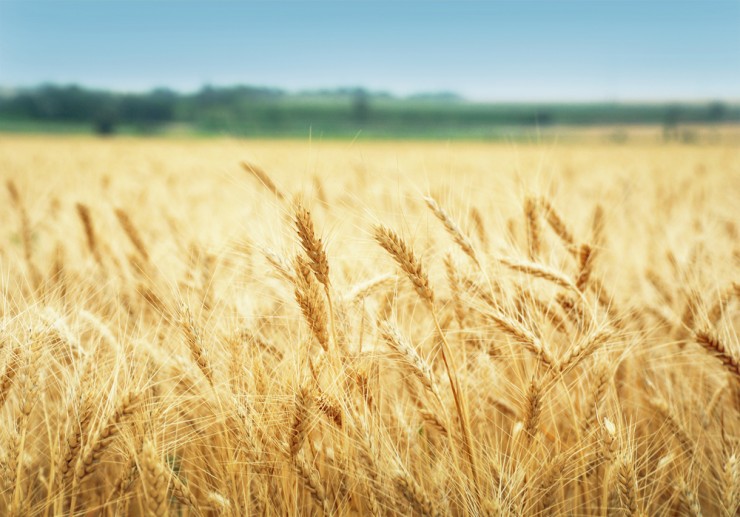
Kansas wheat farmers work hard each year to grow the nation’s largest supply of high quality hard red winter wheat. In turn, we at Kansas Wheat match that commitment to excellence. Join us this holiday season as we thank all who contribute to the success of Kansas Wheat and the National Festival of Breads. Here are some of our top highlights from 2015:

1. Record Yields in Kansas Wheat Yield Contest
Two of the three winning entries in the Kansas Wheat Yield Contest yielded more than 100 bushels per acre. Central regional winter Darren Nelson from Hutchinson yielded 108.48 bushels per acre with a blend of T158 and Everest. And Western regional winner Darwin Ediger from Meade yielded 103.18 bushels per acre with WB 4458 as well as the top prize for wheat quality. Not to be outdone, Doug Queen from Rossville, winner of the Eastern region, yielded 70.3 bushels per acre with Armor. All three winners credited management practices with achieving such high yields during such a turbulent growing season.
2. National Festival of Breads Benefits More than Finalists
Nearly 1,000 individuals attended the 2015 National Festival of Breads in June. Eight finalists from across the country competed, but Lisa Keys from Kennett Square, Pennsylvania, took the top prize with her Smokehouse Cranberry Cheese Bread. In addition to tasting some great bread, attendees donated more than 654 pounds of food to the Flint Hills Breadbasket. An additional $3,500 was raised to support the Flint Hills Breadbasket and the “Baking the World a Better Place” campaign, a joint effort of Red Star Yeast and Stop Hunger Now. We are particularly thankful for all our sponsors, including King Arthur Flour, Red Star Yeast, the Kansas Soybean Commission, C&H Sugar/Domino Sugar and Farmer Direct Foods.
3. Farmer-Funded Research Explores New Technology, Genetic Sources
Kansas wheat farmers invested in fundamental research projects at the K-State wheat breeding programs in Manhattan and Hays, including wild and novel genes, marker-assisted selection, doubled haploids, high throughput phenotyping and a genomic selection model. Researchers are even using small unmanned aerial systems, commonly referred to as drones, to measure plant health and yield potential.
4. Kansas Wheat Alliance Varieties Top Planted in State
The February 2015 “Kansas Wheat Varieties” report from the USDA National Agricultural Statistics Service reported that Kansas Wheat Alliance varieties, developed by Kansas State University, topped planting across the state. Everest was the top hard red winter wheat variety planted, accounting for 15.8 percent of the state’s 2014/15 wheat crop. Danby was the top hard white winter wheat variety planted, accounting for just less than 50 percent of the state’s white wheat production.
5. Spokespersons Share Love of Wheat
The Speak for Wheat spokesperson team continues to share wheat and wheat foods education at events across the state. The team includes relative newbies like Anita DeWeese from Pratt, who officially started as a spokesperson in spring 2015, as well as long-time supporters like Melanie Eddy from Syracuse, who started demonstrating breads in 1986.
6. TPP Agreement Completed, Opening Markets for Kansas Wheat
Kansas is the top-producing hard red winter (HRW) wheat state. And more of that high quality wheat is exported from our state than any other commodity. Thanks to new agreements like the Trans-Pacific Partnership (TPP), completed this fall, Kansas wheat will have even more global market access. Overall, the TPP agreement will eliminate tariffs on U.S. wheat and wheat products exported to 11 countries, including Japan, Vietnam and Malaysia.
7. Yields Increase, Quality Average
The overall average yield for wheat increased in 2015 to 37 bushels per acre, up from 28 bushels per acre in 2014, according to the USDA National Agricultural Statistics Service (USDA NASS). Average protein content did decrease to 12.7 percent from 13.4 percent the year before, but still remained above the 10-year average of 12.4 percent. Overall, Kansas wheat farmers produced more than 321.9 million bushels of wheat, enough to produce 23.5 billion loaves of bread.
8. Taiwan Flour Mills Commit to Buying Kansas Wheat
Demand from outside our borders help drive wheat prices, which is why Kansas Wheat works hard to build relationships with buyers from around the world. In September, Taiwan flour millers, as part of the biennial Agricultural Trade Goodwill Mission to the United States committed to purchasing 62.5 million bushels of U.S. wheat between 2015/16 and 2016/17. The deal, which includes Kansas HRW wheat, is worth $544 million.
9. Honoring Kansas Cooperatives
In October, Kansas Wheat shared stories of grain cooperatives who are making a big impact on the Kansas grain industry. The 85 farm marketing and supply co-ops in Kansas represent more than 82,600 voting members. Large and small, cooperatives invest in new infrastructure and services every year to help their members adapt to advanced technology and updated management practices.
10. Most Importantly – Thank You to Kansas Farmers
The most important people we need to thank are the Kansas wheat farmers and their families. The more than 20,000 Kansas farmers who grow wheat across the state. That includes young farmers like Jeremy Millershaski from Lakin who are just starting their farming career and couples who have honed their farming operations for decades like Ross and Judy Kinsler from Kingman and Richard and Glenda Randall from Scott City.

SCHLAGECK: Agriculture is up to the task

By John Schlageck
Kansas Farm Bureau

The end of agriculture in America is near. American agriculture will soon lose its competitive edge.

The high costs of producing food in America, compared with the costs in other countries, are pushing American producers out of business as competitors around the world develop enough to serve the same markets. Overseas producers with lower input costs will increasingly be able to undersell American producers.

John Schlageck writes for the Kansas Farm Bureau.

Critics of American agriculture contend that crop yields will not keep up with population growth. Some predict by the year 2050, arable American farmland will decrease by nearly 200 million acres.

They also say water will become scarcer for agriculture, forcing a shift of farming to regions where rainfall is plentiful. Marginal rainfall regions like the western half of Kansas, eastern Colorado and the panhandles of Oklahoma and Texas may be destined to revert back to grassland.

Should this happen, the United States will cease to be a food exporter. Our new diet will contain less meat and dairy products, more grains and beans and a sparser variety of vegetables.

Are these starling new revelations or are they predictions of those totally out of touch with the business of farming and ranching?

It is hard for farmers and ranchers to stomach such predictions especially at this point in history when American agriculture remains the envy of the world.

There is no doubt agriculture, like the rest of the U.S. economy, will continue to face challenges. True, this country is already impacted by higher input costs, dwindling avenues of trade and the constant wrath of Mother Nature.

In spite of these challenges, farmers and ranchers remain dedicated to staying on the land and continuing in their chosen vocation. They, better than anyone, understand the land they depend on for their livelihood is finite.

Care for this critical resource continues to improve. Today’s farmers are increasing their organic matter in the soil. With the continuing practice of no-till and reduced tillage farming, farmers continue to build organic matter and improve the soil tilth. There is no reason to consider this practice will be discontinued.

New and improved crop varieties are continually coming down the pike. Production practices continue to evolve and improve.

As for the question of scarce water, this is always a major concern in farm and ranch country. Producers constantly chart rainfall amounts and monitor weather conditions. In Kansas, farmers are aware of changes in the Ogallala Aquifer.

They are tuned into water and the conservation of this vital resource. Some, especially in the western half of the state are concerned about the potential of long-term climate change. If such a phenomenon should occur, there is the possibility Kansas could become more arid – more like New Mexico, for example.

Barring a major shift in our climate, crops will continue to be planted in western Kansas. Production could be less than now, but this land will be farmed and farmed wisely.

Without question, today’s crop of agricultural detractors raises some interesting possibilities. But American agriculture is up to the task. This country has the minds, machinery and dedication to continue producing for people around the globe.

John Schlageck is a leading commentator on agriculture and rural Kansas. Born and raised on a diversified farm in northwestern Kansas, his writing reflects a lifetime of experience, knowledge and passion.

At the rail

By Martin Hawver

Round one of the “who’s in charge” bout between the Kansas Legislature and the Kansas Judiciary went to the Judiciary on a 7-0 vote last week when justices decided that lawmakers stepped across the constitutional “separation of powers” boundary by telling the court who will select chief judges of the state’s 31 judicial districts.

It was meddling in the operation of a unified judicial department that the constitution clearly doesn’t allow. So, that legislative plan to allow district court judges to vote among themselves to select their district leaders

Martin Hawver
Martin Hawver

is out the window, though it did have some relatively nice-sounding “local control” aspects.

For most Kansans, the decision on who is the chief judge of their district court is not only not a big deal, but next time you’re after a bet you think you can win, ask your neighbor whom the chief judge is…and we’re betting that you’ll get no answer. Unless you are a lawyer, or another judge, or maybe the guy at the courthouse who assigns parking spaces, you have no reason to know who the chief is.

Which makes it an excellent proposition for a little Legislature-Judiciary boxing match to see who really runs things. The Legislature believed, and the governor signed into law, a bill back in 2014 that allows local judges to select their chief, with the public concept that local selections mean local control and that sounds nice, although that local control by legislative order taints the concept a bit, doesn’t it?

But we’ve just seen the first round of this Legislature-Judiciary scrap.

As big as that decision which lawmakers lost is the Legislature’s order that if it didn’t win on selection of chief judges, the appropriation to finance the court evaporates. That’s more than $100 million a year and the scrap over whether the Legislature can actually do that is Round 2.

The second round of the Legislature-Judiciary battle is just simmering now.

That second round is a provision in last year’s judicial budget bill that says if the provision for local selection of chief judges is for any reason knocked down, the judicial branch gets no budget. Hmmm…yes that non-severability clause provision sounds like a knockout punch, but if the court can knock down the first punch, can it also knock down that budget-killing second swing?

So things are getting interesting. This budget-killer of a provision means that essentially, if it is constitutional, the Supreme Court, the Court of Appeals and all those local district courts are out of business. No, the Legislature can’t kill the pay for those judges, but the provision could eliminate every dime spent on salaries of the aides and clerks and the people who actually make the courts work. It’s the folks who track cases and organize virtually everything that is done save for hammering the gavel down or telling jurors when the lunch break is.

Attorney General Derek Schmidt got a judge to delay that budget-elimination business until March 15, but we gotta wonder whether the Legislature, seeing what happened to the chief judge selection issue, is ready to give up and repeal that non-severability/budget provision.

Or…whether the legislators who want to make the Supreme Court heel when they whistle are going to wait for a court decision on that case, too.

The upside for waiting is the Supreme Court is likely to look a little over-protective of its power, and that isn’t a good attribute for those justices who stand who stand for retention votes next fall.

The downside? Makes you wonder whether those legislators who want to meddle in court business just can’t take a lesson, and after the court, what do they meddle in next?

This might—or if you work for the court might not—be interesting to watch…

Syndicated by Hawver News Company LLC of Topeka; Martin Hawver is publisher of Hawver’s Capitol Report—to learn more about this nonpartisan statewide political news service, visit the website at www.hawvernews.com

Exploring Kan. Outdoors: Do your Homework to be prepared for Extended Antlerless Deer Season

BullCityBlack500x125 (1)

Just when I thought the confusing Kansas deer hunting regulations had been
streamlined to help end most confusion, I looked at the dates for the upcomingGillilandcrop
extended antlerless-only season to find there are three different sets of dates
depending on the deer management unit in which you live. I’m not complaining
though because I feel like the varied deer populations in the state were seriously
considered this year when setting these dates.

As in years past, there is an extended deer firearms season across the state for
antlerless whitetail deer only, where any unfilled deer permit from a regular
season is valid. An antlerless deer is defined in the regulations as “a deer without
a visible antler plainly protruding from the skull.” Before you read any further, I
suggest you go to the Kansas Department of Wildlife, Parks and Tourism website,
or open a copy of the printed Kansas Hunting regulations and become familiar
with the nineteen deer management units around the state, and where they are.

The boundaries for all these units are major highways across the state, NOT
county lines, so different parts of different counties are in different management
units. All extended antlerless only seasons begin on January 1, but run for
different lengths of time, ending on different dates.

In deer management units 6, 8, 9, 10, 16 and 17, the extended antlerless season
runs for 3 days, from January 1 thru January 3.

In management units 1, 2, 3, 4, 5, 7, 11, 12, 13 and 14 the extended antlerless
season runs for 10 days, January 1 thru January 10.

Finally, in an effort to thin the deer herd in the Topeka to Kansas City corridor, the
extended antlerless season in units 10A, 15 and 19 runs for 17 days, from January
1 thru January 17. Unit 10A is Fort Leavenworth and is open only to active and
retired military personnel. Unit 19 is the metropolitan area from Topeka to Kansas
City and takes in Topeka, Lawrence, Olathe and Kansas City. Management unit 15
is in south central Kansas.

Deer management unit 18 in extreme south western Kansas has no extended antlerless season this year.

Unfilled deer permits are valid statewide, so if you have not yet filled your tag for
this year, you can hunt in the upcoming Kansas extended antlerless deer season
anywhere in Kansas except in unit 18 which has no extended season this year; just
be aware of which management unit you are hunting in and know the dates for
that unit. And remember, only antlerless whitetails can be taken. My wife
harvested a nice buck the second day of firearms season, but I have yet to fill my
tag, so I’m excited and ready to get a nice doe. As our second deer this year, it will
be the one I get to make a little jerky and summer sausage from…Continue to Explore Kansas Outdoors.

Steve Gilliland, Inman, can be contacted by email at [email protected].

BullCityBlack500x125 (1)

2015 – The Year in K-12 Education

Dr. Randy Watson became Kansas Commissioner of Education, overseeing the Kansas State Department of Education that spends 51 percent of state tax revenues in our schools across the state. Commissioner Watson had been Superintendent of USD #418, the McPherson Public School district, one of the first districts to negotiate alternative assessments under U.S.D.E. Secretary Duncan’s “Race to the Top” program that was enforcing No Child Left Behind testing.

After a statewide tour, Commissioner Watson advocated for the importance of soft skills in addition to tested subjects. Exactly how these will be measured or promoted is yet to be seen. However, the outcomes for the “Kansans Can” vision and the hyperbole of “Kansas leads the world in the success of each student” reminds many teachers of the unrealistic platitudes of NCLB (100 percent proficient by 2014) and the just-passed bipartisan “Every Student Succeeds Act.”

Meanwhile, teachers had to look hard to find any positive state or federal legislative actions that halted the decline in K-12 education support in Kansas or across the nation. The Kansas Legislature moved to block-grant funding, bragging that this increased school funding. In truth, the alleged increase incorporated restoring KPERS funding. Some Kansas schools had to end their school year early. And Kansas courts found the new plan unconstitutional.

The 2014 Kansas Legislative action removing teacher due-process (tenure) continued to have an impact on Kansas student teacher production, especially in the sciences. For the first time, some rural Kansas school districts faced shortages in applicants for elementary and vo-ag teachers. The science and special education teacher shortage is now so severe that many superintendents have given up finding qualified candidates. In a few cases where local USD contracts permit it, Kansas science teachers are being hired at higher than pay scale—in effect, the first cases of differentiated teacher pay in the state.

While Kansas was the second state to eliminate tenure, pushed by ultra-conservatives, California eliminated teacher tenure a few months later due to efforts from liberals who are pushing the same effort in New York. Yet again, teachers have no political party on their side.

Six schools joined the Coalition of Innovative School Districts, an arrangement allowed by recent Kansas legislation that would allow up to 20 percent of Kansas USDs (up to 56 USDs) to hire individuals who lack the professional qualifications for teaching to be fully-paid teachers. The reward for the CISD is a pot of money set aside for being innovative. The Kansas City Kansas Superintendent explained how she wanted the money to buy college dual credits for her remaining poor high school students while Blue Valley wanted to continue a variety of innovations they already do. The other four districts reflect the plight of rural Kansas schools who want legitimacy for hiring local untrained folks without using the alternate routes to teaching credentials already available. Their real motivation lies in the fact that these would be locally-“licensed” teachers who could not teach elsewhere, essentially in servitude to the local district. Despite total opposition in public forums, the State Board of Education approved the CISD system. It would take but one small amendment in the Legislature to un-cap the CISD and make Kansas the first state to totally de-professionalize teaching.

The growing atmosphere of disrespect toward the teaching profession contributed to an increased migration of Kansas teachers to nearby states. Missouri took advantage of teacher dissatisfaction by erecting billboard advertising for teachers along the state boarder. The Kansas governor pointed out that both Oklahoma and Missouri have lower pay scales, an action again highlighting how many politicians fail to understand the teaching profession.

The number of schools abandoning print textbooks and adopting one-to-one computing in the form of personal digital devices accelerated across Kansas. There was often minimal-to-no teacher involvement in these top-down decisions. While parents no longer had a textbook rental fee, there was a far higher cost to the schools for these devices that rarely last more than three years. Teachers have extra work to develop digital materials to replace the textbooks and load them onto computers for those students who do not have broadband access at home. Student learning time is cut. And in many cases, the online materials provide students with unreviewed and erroneous content.

The ink is barely dry on the Every Student Succeeds Act just passed in Washington, DC. The NCLB testing regimes remain embedded in the laws of 43 states although many federal penalties were removed. But new ESSA actions promote alternate route programs. And those new rookie teachers are to be hired at masters-level pay—a whole new federal overreach into state education.

Finally, high school graduation rates for both Kansas and the nation are significantly higher than a decade ago. Unfortunately, the more genuine measures of academic attainment provided by NAEP scores and college graduation rates are down. While islands of quality teaching remain, overall it is becoming harder for a bad student to fail. And fewer of our graduating students are prepared to succeed in college-level work.

Kansas Profile – Now That’s Rural: Jerry Hall – Extension Districts

By Ron Wilson, director of the Huck Boyd National Institute for Rural Development at Kansas State University.

How do institutions serving rural America deal with change? In the face of changing demands and demographics, how do those institutions respond? Some will choose to do Ron Wilson cropnothing, to hunker down and try to ride out the status quo. Others faced with declining resources will decide they must close offices and mandate consolidation. But perhaps there is a third way: To encourage voluntary collaboration while improving program quality. Today in Kansas Profile, we’ll learn about a rural Kansas leader who has firsthand experience in facing those alternatives.

Jerry Hall is an agribusinessman and extension volunteer in southeast Kansas. He was raised near the rural community of Elk City, population 311 people. Now, that’s rural.

Jerry was active in 4-H and FFA. After receiving an ag scholarship, he went to Coffeyville Community College and on to K-State where he met his wife Stephanie. He got a hog feeding job in southeast Kansas and now manages a feed mill for Springer Family Foods in Montgomery County.

Stephanie and Jerry have a daughter named Jerica. Jerica was also active in 4-H, serving as club president, county council president, and on a national livestock skill-a-thon team among many other activities. “The best part (for her) was mentoring other kids,” Jerry said. “In her last year at the state fair, a lamb which she had sold to another family ranked higher than she did in the class, but she was happy for the other kid.”

Jerry is active in the community, serving on the fair board, county 4-H foundation, and county extension council. One of those council’s key responsibilities is to prepare a budget for consideration by county commissioners. This can be a challenge, given the budget pressures of our current times. Agencies are asked to do more with less.

In the 1990s, the Kansas Legislature passed a law which created flexibility for county extension offices. The law created a format under which counties could go together to form multi-county districts, if approved by county extension councils and county commissioners. The districts are funded by local property taxes. Not only does this create more efficiency and enables counties to attract high quality agents, it allows those agents to specialize and share their expertise over more counties. Districts still have local offices and individual county fairs.

As budget pressures have grown, more counties have considered districting. Jerry Hall was serving on the Montgomery County extension council when it considered districting in 2006.

“We turned it down,” Jerry said. “We were only looking narrowly at the county right next door.”

Over time, Jerry and others began to reconsider the benefits of districting and reached out to nearby counties. After months of discussion, Crawford, Labette and Montgomery counties agreed to come together to form a multi-county district.

One issue was what to name the new district. “We threw out 12 different possibilities,” Jerry said. When someone suggested that it be called the Wildcat District, the name stuck. In July 2010, the Wildcat Extension District was created. Jerry Hall serves on the extension district board.

Jerry is a strong advocate for the resources and services offered by extension, both urban and rural. “Whether it’s young families or elderly or an ag producer needing unbiased research or somebody wanting to identify a plant in their yard, extension has something to offer every single person in every county in Kansas,” Jerry said.

Jerry is also very positive about his community’s experience with districting. “I’m a taxpayer, and we need to put this in charge of people in the community,” Jerry said.

“Our agents can be specialized rather than having to be generalists,” he said. “One can specialize in agronomy, one in economics, and one in livestock. It’s the same with our (family and consumer science) agents. They might specialize in personal finance or nutrition or aging issues, but they all help each other.”

“If I had to do it all over again, I’d support it 100 percent,” Jerry said.

How do institutions serving rural Kansas deal with change? We salute Jerry Hall for making a difference with visionary leadership to help serve rural Kansas in better ways.

Exploring Kan. Outdoors: ’Twas the night …

BullCityBlack500x125 (1)

This is a poem I wrote some years ago, and feel it bears reusing to wish you a Merry Christmas from Steve and Joyce at Exploring Kansas Outdoors, and please keep Christ in your Christmas.

Steve Gilliland
Steve Gilliland

Twas the Night before Christmas

Twas the night before Christmas and all through the house
Not a creature was stirring EXCEPT that darn mouse.
It chewed and it rustled so to honor my spouse
I set out some traps for that darn pesky mouse.

We don’t have a chimney, or mantle or poker
And the nearest we own to a fireplace is a smoker.
Our stockings were all holey and strewn under the bed
So our old hunting boots hung by the smoker instead.

Our puppy was nestled all snug in her bed
Under the laundry room table with her stuffed toy named Fred.
She quivered and whimpered; to watch her was funny
As she dreamed she would finally corral that ol’ bunny.

My pj’s were long johns, all cozy and white
And I crawled into bed and turned out the light.
Deer season had ended with no deer in the shed
So visions of deer jerky danced in my head.

My wife lay beside me in jammies of red
She was already dreaming of Claus and his sled
When out in the drive there arose such a ruckus
I sprang from my bed to see what had struck us.

I should have known not to “spring” from my bed
Cause I busted my big toe and clobbered my head.
As I limped up the hallway I grabbed my deer rifle
I’d show them I was someone with whom not to trifle!

I peered out the window and what did I see?
Why old Santa himself, alive as could be.
And there stood old Rudolf in all of his glory,
With his nose shining brightly just like in the story.

But all I could see was his head on my wall .
With that bright red nose twinkling to brighten my hall
His rack was enormous, at least twenty points,
The thought of its score made me weak in my joints

I wanted that rack, whether legal or not,
So I eased out the door to line up my shot.
I clicked off the safety and steadied myself
So I wouldn’t endanger the Jolly Old Elf.

Now remember those traps I’d set out before?
Well there happened to be one right by the door.
While I tried to be sneaky so no one would know
That trap clamped its jaws around my sore big toe.

I jerked on the trigger and the shot went astray
And ended up lodged in the front of the sleigh.
The reindeer all spooked and yanked on the sled
Dumping St Nick on the floor on his head.

They shot out the drive as slick as a whistle
And away they all flew like the down of a thistle,
But I heard him exclaim as they drove out of sight
Rudolph you blockhead; no more deer hunters tonight!

I couldn’t believe that in front of my house
I’d almost shot Santa because of that mouse
At least Rudolph’s safe I thought with a smile
But I bet this means coal in my boot for a while.

Note* the events depicted above DO NOT reflect the ethics of the author.
No reindeer were harmed in the telling of this story.

Steve Gilliland, Inman, can be contacted by email at [email protected].

BullCityBlack500x125 (1)

.

INSIGHT KANSAS: Political clarity

By Dr. Mark Peterson

In the broad traditions of this holiday season there are lots of stories of redemption and rediscovery. They often derive from personal moments of crisis – Ebenezer Scrooge is an example. Moral Peterson IK photoclarity is a personal event. This week’s column addresses political clarity for Kansans as 2015 closes – a moment of collective rediscovery, perhaps.

For example, Kansas’s privatized and malfunctioning intervention and protection system for foster and other at-risk children has been determined to be a near-criminal mess. A long-serving Republican member of the state legislature, Mike Kiegerl (R-Olathe), who has made the activities of the Department of Children and Families, particularly foster care, a personal focus, says that privatization has failed. The December report that he co-authored and submitted to the Legislative Special Committee on Foster Care Adequacy concluded that privatized services were too expensive for the poor results they’ve produced.
Two members of the legislature have helped to make their own seasons merry and bright. Representative Travis Couture-Lovelady (R-Palco), at the end of November, and Representative Steve Brunk (R-Wichita), just last week, decided that life is good without electoral campaigning and with a substantial steady paycheck. Furthermore, they appear to have learned the lesson former House Speaker Mike O’Neal did a few years ago, if you are good to your ‘friends,’ your friends will be good to you. Former Speaker O’Neal traded in his legislative gavel and consistent record supporting the anti-tax, anti-regulation, laissez-faire elements of the Kansas business community for a job as president of the Kansas Chamber of Commerce. Former Representative Couture-Lovelady took his expansive view on firearm possession and use in public places, like state funded colleges and universities, and parlayed it into a position as a multi-state lobbyist for the NRA. Representative Brunk is leaving the chairmanship of the Kansas House’s Federal and State Affairs Committee to become executive director of the pro-life Kansas Family Policy Council. The revolving door continues to spin.
After Thanksgiving, House Speaker Ray Merrick reduced his residual headaches from the last legislative session. To eliminate further foolishness from the House Committee on Health and Human Services about expanding Medicaid, Speaker Merrick removed three Republican moderate members who advocated getting additional Medicaid dollars for Kansas to keep medical services functioning in some fragile rural and inner-city locales. Doing so may reduce Speaker Merrick’s Tylenol consumption, and it may well eliminate House policy debate over Medicaid expansion in 2016.

Finally, last week Senate President Susan Wagle presented her hopes and ambitions for the coming legislative session to the Wichita Pachyderm Club. There will be no discussion about taxation this year, if she has any say about it, and as president of the Kansas Senate, of course she does. The senator was also concerned that further borrowing from KDOT, after $400 million in new bonds were issued in December with little legislative or public awareness should not be repeated. She didn’t acknowledge a connection between KDOT’s borrowing and the transfers the governor has made from that agency’s bank account to cover the general fund’s revenue shortage, but she didn’t have to. She also declared that, barring “judicial activism” on school finance, a seventy-five day legislative session is likely for 2016.

As 2015 closes and we retire to our holiday snuggeries, wishing joy and goodwill to family and friends, perhaps we can also think of the foster kids, the unwell, the unemployed, and others on hard-times and reflect on the merry band of self-interested officeholders, practitioners of false economies, defenders of the status-quo, and producers of blue smoke and fun-house images of reality that we’ve sent to represent us in Topeka. We’ll have eleven months for clear reflection and action. Perhaps next December we might optimistically wish each other a happier New Year in 2017.


Dr. Mark Peterson teaches political science at the college level in Topeka.

Copyright Eagle Radio | FCC Public Files | EEO Public File