We have a brand new updated website! Click here to check it out!

SELZER: College checklist includes insurance

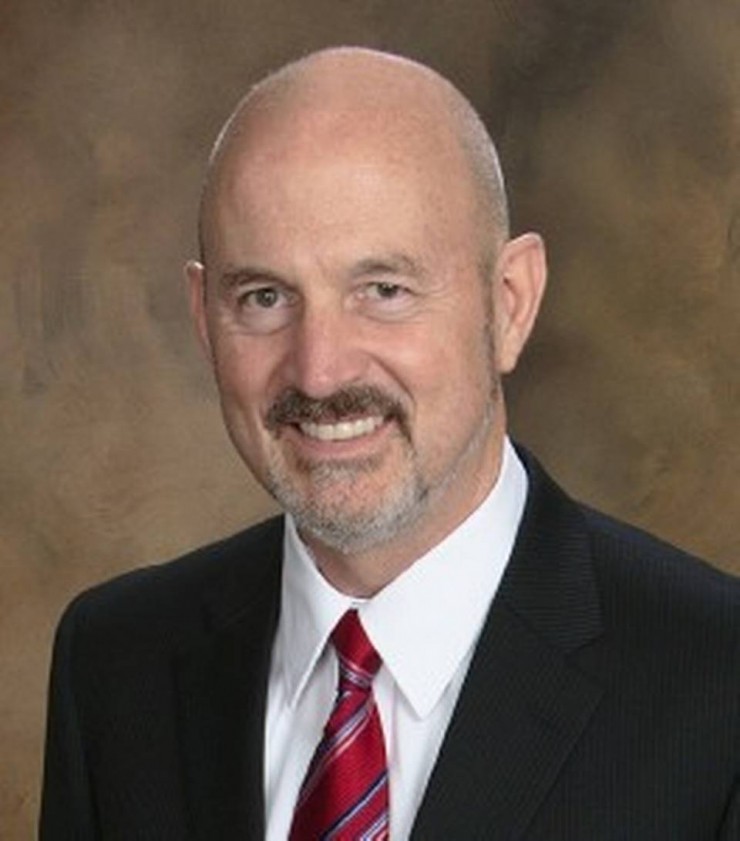
Ken Selzer, Kansas Insurance Commissioner

By Ken Selzer, CPA, Kansas Commissioner of Insurance

Many of us have watched our children head off to college. Remembering to pack everything they need is always a challenge. This is especially true when it comes to checking off “insurance” on the needs list. Although not a physical item to be included in the packing, insurance for your student is a necessary item to consider.

Our staff at the Kansas Insurance Department, as well as the National Association of Insurance Commissioners (NAIC), compiled the following insurance tips for both parents and college students to consider for the Fall 2015 semester.

Auto Insurance
If your student is taking a car to school, check with your local agent about the current vehicle insurance policy. Ask about the rates for the college’s city and state before deciding whether to keep the student’s car on the family’s auto policy.

Also, make sure your insurance company is notified each semester if your student maintains good grades, which might lead to a good student discount on the vehicle’s premium.

If your student is involved in an auto crash, the new WreckCheck mobile smartphone application from the NAIC outlines what to do immediately following the crash, taking you step by step through creating an accident report. The app is free and available in your smartphone app store.

Identity Theft
With the current concern over cybersecurity, identity theft coverage is certainly a consideration. Identity theft insurance is limited, however. It can’t protect parents or students from becoming victims of identity theft, and it doesn’t cover your direct financial losses. It does give coverage for the cost of reclaiming a person’s financial identity — such as the costs of making phone calls, making copies, mailing documents, taking time off from work without pay (lost wages) and hiring an attorney.

Parents, check first to see if your homeowners policy includes identity theft insurance while the student is away from the family home. If a student is renting an apartment, ask if his/her renters insurance covers identity theft, or if that could be added to the policy.

Renters Insurance
Parents, check with your insurance agents to determine whether your family homeowners policies extend coverage to property taken to school. If not, consider a renters policy.

Your student should realize that a landlord’s insurance policy doesn’t cover a renter’s personal belongings. Also, make sure to take photos or video of the possessions, and store an inventory list in a secure location.

To print an easy-to-use home inventory checklist and get more tips about disaster preparedness, visit www.ksinsurance.org. Smartphone users can complete an electronic property inventory by using the myHOMEScr.APP.book application from the NAIC.

Finally, before packing a student’s belongings into a car or rental vehicle, make sure to talk with your insurance agent about whether the contents are insured. Ask if your homeowners insurance policy will cover the belongings in the student’s car or rental trailer before he/she gets to campus.

Health Insurance
Nearly all young adults up to age 26 can now stay on their parents’ health insurance plans because of federal health reform legislation. Marital status, financial dependency, enrollment in school, or location don’t affect that provision.

At school, students should have copies of their insurance cards and know how/where to seek medical treatment.

If the student is insured through a network of medical providers, check to see if he/she will be in or out of the network service area while at school. That will make a difference in how much you or your student will have to pay for out-of-pocket charges.

Another coverage option is a student health insurance plan purchased through the college, although not all schools offer these plans. Check with your school regarding availability, coverage and benefits for this type of plan.

Dental and Eye Care
Routine dental care and eye care generally are not included as part of a health insurance plan, although many will cover non-cosmetic dental work that is medically necessary because of an accident. Some plans may include limited coverage for dental procedures, such as the removal of wisdom teeth, if performed in a hospital.

Also, most health insurance plans do not cover expenses related to periodic eye examinations, glasses or contact lenses, but most will cover medical care as a result of an eye disease or injury.

For more information about auto, home, life and health insurance options, as well as tips for choosing the coverage that is right for you and your family, visit our department’s website at www.ksinsurance.org, call our Consumer Assistance Representatives at 1-800-432-2484, or go to our Facebook page, www.facebook.com/kansasinsurancedepartment (be sure to “Like” us there), or see our videos on YouTube.

EWING: Thoughts on Donald Trump, Hillary Clinton

opinion letter

If the most intelligent candidate became president, we would have had other people elected in the history of the United States of America.

One example of note to Kansans, Adlai Stevenson, who was considered one of the most intelligent men of his time, would have won in 1956, beating Dwight Eisenhower. An interesting observation about General Eisenhower and the success of America winning World War II follows. Eisenhower worked for General George Patton before the war. If I remember correctly, Patton graduated first in his class at West Point. General Marshall was the Chief of the Army and he and President Harry Truman selected Eisenhower to head the American and Allied invasion of Europe on June 6, 1944. That as history has recorded was the correct decision. But, what if they had selected the most intelligent man. Patton? We will never know but only General Patton did what he did as he won more territory in the shortest time ever recorded in military history leading the victory. Could Eisenhower have done what Patton accomplished? And what if Patton had been selected to manage the invasion? Somehow these two men ended up in the right jobs doing what each was capable of doing.

I mention the above only because it has a bearing on the 2016 presidential race. I wrote an article in March expressing my view that Sarah Palin should become our next President with David Clarke, the law and order expert, as Vice President. This week, my friend received a call from the Hillary campaign asking for money. But my friend wasn’t home, so I asked the woman calling to talk to me. This is the conversation of that call. Woman said,”Hillary has been around a long time and has done lots for the American people.” I asked her to name some things that Hillary has done for the American people. The woman said she couldn’t think of anything. I said Hillary was a U.S. Senator. The woman said yes. I then said but Hillary didn’t have any legislation that she sponsored. The woman agreed. Then I said Hillary was the Secretary of State responsible for the foreign policy of America. The woman said yes she was. Then I said the Middle East was in chaos under Hillary’s watch. Then the woman said, her family supports Hillary because it’s time for a woman in the White House. Then she hung up.

This appears to be the reality of Americans today. Honesty, integrity and character doesn’t seem to matter to a lot of Americans. It appears that Hillary has several scandals to overcome, but these scandals don’t seem to have any negative impact among Democrats. This article would be too long to go into details of the alleged scandals. The bottom line of Hillary’s campaign is she is a woman, and it’s time for a woman to become President.

Back to Sarah. Sarah Palin probably isn’t the most intelligent of the candidates presently running for president. In fact, she isn’t a candidate. But Sarah Palin was a successful governor. She had to resign because of the mass lawsuits against her by people that were trying to take her down. These lawsuits required her full-time. I think she won every lawsuit against her. But, Sarah is a true patriot that wants only what is best for America. She may be the only person in the country who can rally enough Americans to vote against Hillary. She is smart enough to select intelligent and experienced people to help her if elected President.

And David Clarke as Vice President has the respect of all races to return America back into a law and order society.

But strangely enough the unfounded attacks that were on Sarah Palin are happening against Donald Trump. The leadership of the Republican Party and many of the political commentators appear to downgrade Trump because he is an independent man who is not owned by big business and Wall Street and their lobbyists as many of his detractors are. The Republican Party is dominated by big business and Wall Street. For example, this latest trade agreement like the other previous trade agreements are for big business. Each of the previous trade agreements has closed American manufacturing plants and laid off millions of middle class workers. Those jobs went overseas. The American labor participation rate in 2015 is the same as it was in 1978. That means the same number of Americans are working today as in 1978, but America has grown almost by 80 million people. Donald Trump understands the problems in America. Donald Trump understands business. He also knows how to negotiate. Trump also knows the problems of the world and would more than any of the other candidates know how to solve them. I was pleased that Donald Trump mentioned something that I had written in one of my books on how to stop American corporations from sending American jobs overseas.

Think about this. Trump has gotten people to start talking about illegal immigration. But the Republican Party leadership including Jeb Bush doesn’t like to have the attention on it. Why? It appears that the GOP’s answer to illegal immigration is to encourage big business to build American manufacturing plants all over the world which will employ thousands of foreign workers at the expense of American workers. This is the reason for the trade agreements that the USA has implemented. The more foreign workers employed in American manufacturing plants overseas means less illegals entering the USA. Plus with the cheaper labor big business has made a ton of money.

The 2016 presidential election will come down to Hillary’s push “it’s time for a woman in the White house” versus the GOP candidate who survives the madness of almost 20 contenders beating up on each other. But one Republican candidate stands out NOW who is telling the TRUTH about how things are and how to fix the problems. That is Donald Trump. But his chances of winning the GOP nomination is doubtful because people like Karl Rove (who worked for George W. Bush) and others are digging into Trump’s past of over 20 years ago as he has changed some of his views, as has almost every candidate in the race. There is no perfect GOP candidate. The three most important issues in the 2016 presidential election are (1) the economy, a weak economy takes away from having a strong military, (2) foreign policy, the USA and the world is in disarray, and (3) immigration, without a secure border and lack of enforcement of laws anyone can enter into the United States.

The voters will decide the election. It will be between Hillary and the last GOP candidate still standing. The Republicans will have only a few short months after their convention to get the American people behind the survivor and that will be a difficult task. All Hillary has to do is campaign it’s time for a woman in the White House. The woman is a big favorite to win because the majority of voters don’t pay attention to the issues.

P.S. Every couple of years Republicans who are facing a re-election campaign find they have a backbone telling voters what they want to hear but once re-elected their party loyalty is stronger than their loyalty to their voters. But one U.S. Senator is worthy of our respect and support for speaking out against the power grabbing leaders of his party who continue to support a liberal agenda. Senator Ted Cruz is a rare politician who has earned our loyalty.

Roger H. Ewing
Hays

MORAN’S MEMO: Freeing Kan. schools from Washington control

U.S. Sen. Jerry Moran, R-KS

By U.S. Senator Jerry Moran, (R-KS)

Education is essential to expanding opportunities for Kansans and Americans – it is the primary gateway to upward mobility and achieving the American Dream. The global competitiveness of our state and nation is directly related to the quality of our students’ education, from pre-K to college and beyond. Given this impact, I believe the key to excellence in education is dedicated, passionate teachers who are committed to their students and strive to unleash their unique potentials.

I often witness this special teacher-student interaction firsthand when I visit schools and classrooms across our state. When fielding thoughtful questions from a high school government class, watching students compete in a robotics competition with machines they made or submitting my annual nominations of patriotic young men and women to our nation’s Service Academies, I learn how our Kansas students are uniquely inspired by a teacher, coach or mentor who made a positive impact in their lives.

To foster this special commitment and ignite students’ creative fire, we must increase flexibility for state and local schools to tailor education initiatives around the unique needs of Kansas students. Since parents and teachers know the educational needs of their children and students best, I have long believed that federal education policies should allow local school districts to determine how to best use federal educational resources. Education is far too important to be ceded to the Washington overreach that has continually failed to improve school performance.

In 2001, I voted against passage of the No Child Left Behind Act (NCLB), the primary source of federal aid to K-12 education and most recent authorization of the 1965 Elementary and Secondary Education Act (ESEA), because it did not afford sufficient flexibility to Kansas schools. Education is a process that involves more than just preparing for and taking tests. NCLB’s one-size-fits-all federally-mandated approach attempted to standardize education, stifling the passion and creativity most needed for educational success. As Kansas ranchers say, “If you want fat cattle, you need to feed them, not just weigh them.” We must prepare students for the challenges of life, not just standardized tests.

Most ESEA programs have not been updated since expiring in 2008, so consideration of a reauthorization has been long overdue. Over the last two weeks, the Senate considered a reauthorization package called the Every Child Achieves Act (S. 1177). I voted against this bill because I believe it does not go far enough in reducing the counterproductive federal mandates currently dictating K-12 education. Under S. 1177, Washington bureaucrats will still have a substantial say in curriculum development, school testing and assessment decisions – functions best handled by states and local school districts. The measure continues to mandate testing requirements, and states would still have to submit their accountability standards to Washington for approval. Unfortunately, this legislation misses an opportunity to give responsibility back to those who best know the unique needs of students, families and educators. Under the U.S. Constitution, the federal government’s role in education is limited and common sense tells us the Founders were right.

Senate passage of S. 1177 sets up a conference with the House, which passed its ESEA reauthorization measure earlier this month. When this Senate-House conference gets underway, I will continue to advocate for freeing Kansas schools from Washington control by putting states and local school districts back in control of education policies. Educators improve the world one student at a time, and this change happens in classrooms throughout Kansas every day. I will continue working to make certain federal policies are supporting, rather than stifling, this positive energy.

KNOLL: Weighing in on immigration

Les Knoll
Les Knoll

I begin my writing challenging anybody to show where our present illegal immigration policies stand to do more good for this country than bad. The bad far outweighs any good. Amnesty, for god’s sake, is not the answer.

For starters, the answer is to secure our borders. Obama and the Democrat Party do not want a secure border.

Polls show a majority of Americans want our borders secured and don’t want amnesty. You would think the Republican controlled Congress would support most Americans but the GOP leadership in Congress would rather side with big business that wants cheap labor. The GOP leadership in Congress is not listening to their constituents – on a whole host of issues.

Like me, there had to be millions upon millions at the point of tears when watching on TV Kate Steinle’s father when he said his daughter’s last words were “help me Dad” as she lay dying following an illegal immigrant’s bullet. Juan Francisco Lopez-Sanchez, with seven felony convictions, returned to sanctuary city San Francisco even after being deported five times and for no good reason killed a 32-year-old beautiful inside and out young woman. Proof our border is unsecured. In case you haven’t heard, sanctuary cities are just that – a place for illegals to go to be left alone and not be bothered by law enforcement.

When an illegal enters this country unlawfully –hello – they are breaking the law – period! It’s the sign of the times. We have a lawless president who chooses which laws he wants to adhere to and which ones to ignore whether it’s immigration or anything else. What the heck, media, his Democrat Party, and an inept Congress, don’t hold him accountable, and most courts don’t either so our president does what he wants to.

Our president had the gall to sue my home state of Arizona because – can you believe – Arizona wanted to enforce “federal” immigration law that are on the books. There are all kinds of federal immigration laws that are being ignored by immigration agencies as per Obama’s orders.

Are there God fearing, kind, hardworking illegals coming into this country? Absolutely, but let’s do some math.

There are between 12 and 13 million illegals in this country as we speak and most but not all are Hispanic. For the sake of discussion let’s do some math. But, before I do, readers need to be aware that liberal media (mainstream media being the same thing), Obama, liberals, progressives, Democrats, and some Republicans don’t really want an honest fact finding discussion on immigration. Who in the heck are we to know the truth, if you know what I mean? Who knows best, we the people or those I just mentioned?

From 2008 to present, in Texas alone, there were 645,000 crimes committed against Texans by illegals. The statistics for all states are staggering looking at illegals committing crimes against Americans that include homicides, rapes, robberies, drugs, DUIs, etc. No, the stats for crimes of one American on another American are not the same.

Let’s say 4 out of 5 illegals are good people. One out of five, or 10 or 15 is a bad apple. How many thousands of Americans are being killed, raped, robbed, drugged, etc. if we have 12 to 13 million here unlawfully and even a small percentage out to do harm? Is it worth it? Obviously not!

Nor can we afford the price tag of paying for millions coming here with the blessing of the Mexican government to get on welfare and have American taxpayers pay the bill. .

Nor can we afford to give jobs to millions of illegals with 93 million Americans leaving the work force because they can’t find work.

Nor can we take care of every poor person on planet earth. What would we do with a billion poor people that exist in the world who would love to come to America? Besides, what we see happening with illegal immigration in this country has very little to do with helping the poor – it’s politics.

Nor can we afford to have millions coming here that have no intention of assimilating and wanting to change the culture of this country. I didn’t say all want to do that, but there are far too many who do. I should point out that many legal American Hispanics see the same problems for this country that I am writing about.

Best selling author Ann Coulter, in her new book, titles it “Adios America” and that speaks volumes, if you get the point. She says when the bathtub starts to overflow you turn off the faucet.

Last point: Do we as Americans want this country run by one party from now until eternity? If Obama has his way, illegals will get amnesty, followed by the right to vote, stuff the ballot box, and have Democrats with their liberalism forever run this country. As with the black community, those Hispanics will overwhelmingly vote Democrat. Besides guaranteeing Dems run this country until the end of time, you can bet big business donors wanting cheap labor are regular visitors at the White House.

I concur with Ann Coulter that immigration is the biggest issue of our times, and it is my contention that the negative in our immigration policies at present far and away outweighs the positive.

Les Knoll lives in Victoria and Gilbert, Ariz.

HAWVER: Brownback chums the water to get a little press

martin hawver line art

Now, when it’s summertime and finding news in the Statehouse isn’t easy, it takes a little chutzpa to fill a room with reporters, even the governor’s ceremonial office where the chief executive officers of the state hold their press conferences.

It became clear last week that Gov. Sam Brownback and his staff are clever enough to do it.

First, of course, you trickle out information about what the governor is going to talk about. That’s called chumming the water — the list of topics is the food.

Usually, those press conference announcements just say that the governor will be there, wearing a clean shirt and ready to chat. Most of those “press availabilities” wind up dealing with the Legislature, a natural disaster or the appointment of someone to some important state job.

That’s enough to get the regular Statehouse press corps—generally those of us with reserved parking spaces in the bottom level of the Statehouse’s underground parking garage where during the session legislators get to park.

But last week, Brownback’s staffers decided they’d like a little bigger audience than the “regulars” so they announced the press conference with a little more detail sure to draw press from around the state to Topeka.

And, what is generally a three TV-camera press conference became a seven-camera event.

The offerings?

Arming employees at state-operated National Guard posts and recruiting stations in response to the killings at a Tennessee National Guard base and recruiting station. Brownback wants to see whether arming workers and employees at Kansas Guard facilities would protect those Kansas soldiers from attack and drive-by shootings.

And, of course, there is the reaction to the videotaping at a lunch of a Planned Parenthood official discussing the prices for tissues from aborted fetuses. Lots of interest there, Kansas is an antiabortion state, it’s a strong Republican issue and it shows that Brownback is looking into possible legislation next session, an election-year session for members of the House and Senate when it’s likely that the strongly antiabortion legislature can agree with Brownback on something…

The school finance issue? This one broke both ways…with Brownback asserting that Kansas schoolteachers average about $7,000 a year more in earnings than Missouri teachers, but the actual numbers probably aren’t as strong as the Brownback chart indicated, because each state’s K-12 education agencies count that average income differently. It took what was a teacher salary issue important enough to create that chart into the weeds, an important part of the governor’s assertions that he has put more money into school finance.

The school finance issue remains complicated, though, after the hour-long press conference that started at 3 p.m.; there’s a chance that if the governor had just started his press availability an hour later reporters probably couldn’t have chased down Missouri education officials on a Friday after the 5 p.m. quitting time. Probably a strategic error here, facts—whatever they turn out to be this week—notwithstanding. An hour would have probably would have reaped Brownback less criticism over the weekend when there wasn’t a lot of other news going on.

The hard news of the press conference? It was “come back next week” for the list of $50 million in budget cuts that the administration, or at least its recently rechristened “Director of Budget and Business Processes” Shawn Sullivan, will identify to bring the projected State General Fund balance at the end of this fiscal year to a paltry $67 million instead of the change-under-the-sofa-cushions $17 million in a $6.371 billion budget.

Politically? Probably at least break-even for the governor except for the teacher salary and ending balance issues. But at least we learned Brownback can’t really imagine himself endorsing Donald Trump for the GOP presidential nomination…oh, and that Brownback doesn’t believe Donald Trump has his cell phone number…

Syndicated by Hawver News Co. of Topeka, Martin Hawver is publisher of Hawver’s Capitol Report. To learn more about this nonpartisan statewide political news service, visit www.hawvernews.com.

MOVIE REVIEW: ‘Southpaw’ is a plodding miss

James Gerstner reviews movies for Hays Post.

The boxing movie – usually it goes something like this: punch, punch, win, life tragedy, train, train, train, punch, punch, punch, win or lose, and finally redemption. That’s all well and fine, but it’s usually pretty similar. “Southpaw,” starring Jake Gyllenhaal and Forest Whitaker is another in a long line of “troubled protagonist trains his way to redemption” movies, but without much of the inspiration or dramatic heft of its predecessors.

Above all, “Southpaw” is a strongly titled, albeit plodding experience. This was one of those movies where my “watch checks” reached double digits. Gyllenhaal is convincing and committed; Whitaker is as gruff and secretly troubled as you could ask for; and Rachel McAdams is as charming and alluring as ever — but it’s not enough. Fancy rims and extra cup holders does not a fast or efficient car make.

“Southpaw” will likely land near the bottom of director Antoine Fuqua’s body of work, far below “Training Day” and “Shooter” but far above the hot mess that was 2004’s “King Arthur.”

southpaw-poster-2-digital

For boxing aficionados, this might be a decent bit of entertainment but for the typical movie-goer “Southpaw” has little of the inspiration and even less of the dynamic characters of films like “Rocky,” “Million Dollar Baby,” and “The Fighter.”

In all fairness, I chose to see “Southpaw” last weekend because I absolutely refused to go anywhere near the abomination that surely was “Pixels” and couldn’t get past the incredible profound eyebrows of former Victoria’s Secret model Cara Delevingne, who stars in “Paper Towns.” “Southpaw” seemed like the better choice, and maybe it was, it’s currently sits at 58% on Rotten Tomatoes as compared to “Paper Towns” 57% and “Pixels” laughable 18%. “Southpaw” is simply the best of a bad weekend at the movies.

3 of 6 stars   

SCHLAGECK: Plant the seed

John Schlageck writes for the Kansas Farm Bureau.

The farm has always been a fertile field for producing crops, but it is also an environment rich with learning experiences.

For generations, children who grow up and work with their parents on the family farm have learned valuable skills about cultivating crops. While they are learning to sow seeds, cultivate weeds and harvest grains, flowers and vegetables, they are also gaining knowledge.

Lessons learned on the farm include math, social studies and vocabulary, leadership, not to mention cooperation and responsibility.

All those skills acquired in a simple field of soil and vegetation?

Absolutely.

Tucked away in those vast acres of grass, trees and crops there’s a living outdoor classroom teeming with lessons on life. Children who learn to till the soil come to understand such basics as distance, depth and height. They learn that the bounty of plants that bears our food came from places all over the world – rice from the Far East, wheat from Russia, etc.

They see stems, leaves, seeds, flowers and bulbs in their hands, instead of in a book – an enduring way to plant words in their vocabulary.
While growing up with a land whipped by the wind, warmed by the sun and cooled by the stars, youngsters learn to respect their environment. They learn that by caring for this fertile land it will in turn care for them.

Such a valuable learning experience can provide children with the tools likely to influence family and friends to respect the land, or at least raise their level of awareness. Youngsters also learn hope is not wishful thinking of harvest success. Rather, hope is the action of planning and planting seeds. There will be those years when harvest may not occur, but the seeds of hope must be planted if there is even the thought of a next year’s bounty.

Learning outside can also be fun. If you don’t think so, ask children who’ve been on a field trip. They appreciate the opportunity to spend a day in a natural classroom where they can trade fluorescent lighting and four walls for blue sky and white clouds overhead.

When given the opportunity to grow grains, flowers and vegetables, youngsters chart the progress of the plant. They invest in the outcome and that means harvesting their hard work, care and investment.

A big farm isn’t necessary either. You can encourage students to consider growing and caring for a small plot with wheat, roasting ears or assorted vegetables, and be sure to equip the youngest with youth-sized tools. Remember they are still youngsters and do not possess the strength, knowledge and wisdom of an adult.

Suggest themes for young gardeners. Have them pick out a favorite story character – Peter Rabbit for example. Try a garden theme that appeals to a child’s literal sense, such as an alphabet garden with plants that begin with letters A to Z. They could also plant a pizza garden and grow tomatoes, peppers and onions. They could visit a dairy farm to learn about the fundamentals of caring for cows that produce the milk that results in cheese on the pizza. Or maybe a visit to a cattle ranch to experience beef cattle being cared for that ultimately winds up as hamburger on a “pie.”

Direct the children and instill in them that caring for a crop can be an adventure. Have them add excitement to the garden with decorations including scarecrows, painted stumps and tiles and child-sized benches.

Encourage children to dig in the soil for earthworms. Tell them to pick the flowers – when they’re mature. Have them pick up stones and play in the water on a hot, sticky day.

Above all, make certain the learning experience is enjoyable. Teach the children to make up songs about gardening and sing them together while working. Encourage them to keep a daily journal about each day’s activity.

Take pictures of the learning journey along the way and add them to the journal. Yes, there can be an abundance of lessons to be harvested in the soil. Take the opportunity to provide such an experience for a child you know. Sew your own seeds of future success.

John Schlageck, a Hoxie native, is a leading commentator on agriculture and rural Kansas.

Lost in translation

John Richard Schrock is a professor at Emporia State University.

“Integrity” does not translate into Chinese. The meeting in China was on integrity in science. Speakers were all given translator-earphones. I could dial any language and hear real-time translators struggle with the terms.

Most of the time, the translators used the Chinese term for “honesty” when I said “integrity.” Indeed, a person who has integrity is honest. But integrity means much more that just honesty.

Other times the translators used a Chinese term that does not translate into an English equivalent. It is used for the respect afforded to teachers or officials and somewhat approximates “authority” or “position” or “honor” due to position in society. This term however does not necessarily include honesty.

For over 20 years, Chinese students have described to me teachers who made wrong statements.

“What happens when students point out this error?” I naively asked.

“Oh no, a student can never point out that a teacher is wrong!” comes the reply. A teacher has this rank or authority that commands respect and is reflected in this Chinese word that does not translate. Unlike “integrity,” that Chinese word does not include honesty, but does include concepts of respect and authority. I teach my student teachers to say “I don’t know, but I can find out” when asked a question where they do not know the answer. In American culture, there is no need to “save face.”

During Open Forum at the last Kansas State Board of Education meeting, a chemistry teacher spoke against the motion to let six school districts hire teachers without credentials. He asserted that this action was an assault on the integrity of teachers. He had no other word, but he needed that Chinese word. The ultimate Board approval of that action was not an assault on the honesty of teachers, but eroded the teachers’ professional position of respect and authority for which we have no specific word.

Because so few Americans—only 7 percent—ever learn a second language, we often have the wrong notion that words translate word-for-word. At the Chinese conference, part of my task was to explain the errors that can be introduced when English grammar-check services revise a Chinese scientist’s paper before publication. They may substitute a common English word that “sounds better” but is not as precise as the needed technical term, and this introduces error.

To illustrate this, I held my hands before me with fingertips touching. One hand represented the various meanings of a term in one language, the other hand the various meanings of a term in the second language. But instead of four fingertips matching four fingertips, move one hand upward so only three or two fingertips touch. Yes, the right hand word has several meanings in common with the left-hand word, but also has one or more free fingers (meanings) that do not match up.

For example, you might think that color names would be uniform in all languages—and you would be wrong. The color “huang” is generally translated as “yellow” but varies from light yellow into browns. Give an American child a box of crayons and he or she will align yellow with orange and red; brown will be grouped with gray or black. But a Chinese child aligns yellows with brown in a sequence of earth tones, and not with orange-red.

From negotiating treaties to reporting international news, getting the correct meaning across is critical. Misunderstanding can result in mistrust and unnecessary conflict.

While I listened to my translator in China, I noted that she often hesitated. She translated in spurts. She knew not to translate word-for-word, but idea-for-idea. That is why online word-for-word translation programs are terribly inaccurate. That is why 93 percent of Americans are not competent to really understand another culture.

And that makes the world dangerous.

EXPLORING KANSAS OUTDOORS: Cheap early deer food

Steve Gilliland
Steve Gilliland

My brother in Ohio keeps the numerous deer feeders on his 200 acres feeding corn all year round. I don’t start feeding corn in the couple feeders I have until September or so, but I do start feeding deer on my hunting land in early summer. Let me explain.

I found out years ago that deer love fruit; people whose fruit trees get raided annually by the local deer will attest to that.

There were several cider mills near where I grew up and lots of folks took the apples that fell to the ground to those mills in the late summer and early fall and had them pressed into apple cider. Many church groups and FFA clubs also picked up fallen apples and had them pressed into cider to sell as fundraisers.

The bottom line is that most fruit that fell to the ground under apple trees there was used by someone for cider. Here in south central Kansas there are few if any cider mills so fallen fruit can be had nearly everywhere you can find it. I have accumulated a list of several apple tree owners near my home, some right here in town that are pleased-as-punch to have their fallen apples picked up.

One guy is so happy not to have to cart the apples off to the dump that he even picks them up for me and puts them in buckets I provide. My dad and I gather them by the bucket full and dump them directly under my deer feeders. Its good early nutrition for deer and our cameras get some neat pictures of does and fawns. They love good ripe pears too, and I also rake up acorns when I have the patience. I’m told that deer love apricots as well and will actually eat the flesh and leave the pit.

So if you want to feed deer early without spending money on corn, try picking up unwanted fallen fruit; the deer will love it just as much.

It’s been so hot and dry lately I couldn’t resist ending this week’s offering with a few observations about that.

It’s so hot and dry that the Obama administration has announced a water pistol buyback scheme.

It’s so hot and dry that cities around here are begging kids to pee in the pool.

It’s so hot and dry that Congress has had to take their hands out of OUR pockets to fan themselves.

It’s so hot and dry that ducklings born this year in Kansas don’t yet know how to swim.

It’s been so hot that I saw a guy with a backpack standing on the street corner with a sign that said “Will work for shade.”

And finally, it’s been so hot and dry that I heard a whistling noise in the backyard the other night that turned out to be the maple tree begging my dog to come and pee on it.

Steve Gilliland, Inman, can be contacted by email at [email protected]. Continue to Explore Kansas Outdoors!

INSIGHT KANSAS: Kobach gains power to intimidate voters

I am a white male, but most Americans are not. For many, even everyday encounters with public authority, law enforcement for example, can be terrifying. This makes me especially alarmed about a new law giving Kansas Secretary of State Kris Kobach the power to prosecute voter fraud, passed by the Kansas Legislature last month in the frenzy of last-minute legislation.

Michael A. Smith
Michael A. Smith

The law is strange. First, because prosecution power is typically vested in federal authorities, state Attorneys General, and local County Prosecutors and District Attorneys, not Secretaries of State.

Second, even Kobach himself cannot find voter fraud in Kansas. For example, his office publically named a Wichita voter who they claimed was deceased. Wichita Eagle reporters found the man raking leaves in his yard. Kobach’s office also scrutinized the voter rolls for duplicates: possibly voters registering and voting twice. He found a tiny 0.00000017% of the voters to be potentially suspicious. Later, Kobach claimed that U.S. Attorney Barry Grissom was ignoring his requests to prosecute voter fraud—but Grissom told the Eagle that Kobach had referred no such cases to him.

Given this law, Kobach’s track record of accusing innocent people of voter fraud becomes downright chilling. The chilling effect is a term used in several U.S. Supreme Court rulings, referring to laws that may prevent legal activity from happening due to intimidation. For example, in the past, the Court has intervened to protect reporters from prosecution. The justices did not want this fear to chill the constitutionally-protected freedom of the press.

Kobach’s new law may have chilling effects on voting.

Certainly voters are confused, as are poll workers—many of whom receive little training when the laws change or relevant court rulings are issued. For example, a colleague of mine had to prove to skeptical Douglas County poll workers that his passport is an acceptable photo identification for a voter. If poll workers do not understand these laws, how can voters? Under this new law, a voter facing legitimate confusion about identification, change of address, or polling place may fear prosecution for an innocent mistake—even if it is Kobach’s mistake.

Last year, I joined my colleague Chapman Rackaway of Fort Hays State (a fellow Insight Kansas writer) and Kevin Anderson of Eastern Illinois University to analyze the tumultuous history of voting laws in the U.S.A. Too often, laws purportedly designed to protect the integrity of the process have in fact been aimed at preventing certain people from voting. We also found that the proof-of-citizenship laws Kobach championed earlier, part of the so-called “SAFE Act” in Kansas and copied in several other states, link to lower voter turnout as a county’s poverty rate increases.

Registering and voting is a hassle, and not all elections are close enough to be swayed by just a few votes. Instead, we rely on civic duty and the satisfaction of doing one’s part, in order to turn out voters. Such noble aspirations dissolve quickly in a climate of fear. Kobach’s new law is not only unnecessary, it is dangerous.

Michael A. Smith as in Associate Professor of Political Science at Emporia State University and the co-author of “State Voting Laws in America: Historical Statutes and Their Modern Implications.”

When combating extremism, schools are the long game

Charles C. Haynes is director of the Religious Freedom Center of the Newseum Institute.

Propaganda works.

Consider Mohammad Abdulazeez, the young man who shot and killed five service members in Chattanooga, Tennessee last week.

According to FBI reports, Abdulazeez was inspired to “martyrdom” through listening to the hate-filled sermons of Anwar al-Awlaki, the al Qaeda recruiter killed by an American drone strike in 2011.

Or consider Dylann Roof, the suspect in the murder of nine African American churchgoers in Charleston, South Carolina earlier this summer.

From what we know at this stage in the investigation, Roof was influenced by the online racist ideology of the Council of Conservative Citizens, a white supremacist group that vilifies African Americans.

Of course, propaganda alone didn’t cause either shooter to pull the trigger. Drug abuse and mental illness were likely factors in both cases.

But propaganda — extremist, hateful, twisted ideology — clearly played a critical role in the lead-up to these demented acts of violence.

In the age of the Internet and social media, it is disturbingly easy for purveyors of hate to capture the minds of vulnerable, alienated young people in the United States and across the world.

Numbers are hard to come by. But earlier this year, the National Counterterrorism Center estimated that some 3,400 people from the U.S. and other Western countries were fighting for ISIS in Syria and Iraq.

Closer to home, the Southern Poverty Law Center (SPLC) reports that in 2014 there were over 700 active hate groups in the U.S., more than half of them white supremacist. Since the 1995 Oklahoma City bombing, there have been more than 100 terrorist plots and racially motivated rampages in America by the extreme right, usually white supremacists.

Sadly, it often takes a tragedy to create public awareness of the dangers of extremism in America. Even then, government responses range from the symbolic (taking down the Confederate flag) to modest changes in procedure (proposals to arm service members at National Guard facilities).

But fewer flags and more guns will do little to halt the spread of hate and the recruitment of young people to the rapidly growing network of extremist groups in the United States.

For the long game, the best answer to websites that preach hate and violence are schools that teach the principles of democratic freedom, social justice, and understanding of different faiths and cultures.

Fortunately, resources are available to help schools combat extremism through education. SPLC, for example, has developed a “Teaching Tolerance” program that provides — free of charge — a comprehensive anti-bias curriculum to help teachers counter the bigotry and extremism that young people are exposed to on the Internet and elsewhere in our society.

Another effective resource is Face to Faith, a free schools program sponsored by the Tony Blair Faith Foundation (Disclosure: I serve as U.S. adviser to this initiative).

Through videoconferencing and a secure online community, F2F gives students of many faiths and cultures across the world a safe space to learn about one another through direct contact.

To date, Face to Faith has connected more than 120,000 students from 20 countries in respectful and civil dialogue about global issues of shared concern.

Last month, Voice of America broadcast a story about a F2F videoconference that linked students in a predominately Muslim school in Indonesia with a religiously diverse class of students in a Fairfax County, Virginia public school.

In an honest and open exchange, students discussed a wide range of topics — from what it is like to be a Muslim in America to the problems of sectarian violence in Indonesia. Through direct engagement, students practiced civil dialogue, dispelled stereotypes and built bridges of understanding across religious, cultural and other differences.

Programs like Teaching Tolerance and Face to Faith are not add-ons or luxuries — they are essential to the mission of schools.

At a time of growing religious extremism, deep racial divides, and widespread ignorance about “the other,” every school has a civic and moral obligation to counter messages of hate by educating for a more just, tolerant and free society.

Propaganda works — but only in a vacuum.

Charles C. Haynes is vice president of the Washington-based Newseum Institute and executive director of the Religious Freedom Center. [email protected]

Neil Young’s latest album skewers Monsanto

OtherWords columnist Jim Hightower is a radio commentator, writer and public speaker.

The Canadian rocker and master storyteller Neil Young says: “Music is a universal language.”

Yes, and when created by a people’s champion like him, music can bring down the high and mighty — just as Joshua’s trumpeters brought down the walls of Jericho.

Or, in Young’s case, the walls of Monsanto.

He’s released powerful new album called The Monsanto Years. It takes on the arrogant gene manipulator and avaricious pesticide merchant for its relentless attempts to profiteer at the expense of family farmers, consumers, people’s democratic rights, and nature itself.

On the title track, Young sings: “The farmer knows he’s got to grow what he can sell, Monsanto, Monsanto/ So he signs a deal for GMOs that makes life hell with Monsanto, Monsanto/ Every year he buys the patented seeds/ Poison-ready, they’re what the corporation needs, Monsanto.”

Poor Monsanto. It says that Young’s lyrical truth has hurt its feelings.

Actually, Monsanto has no feelings, since it’s a corporation, a paper construct created solely for the purpose of maximizing the profits and minimizing the obligations of its big shareholders. Nonetheless, the global giant whined that Young’s song ignores “what we do every day to help make agriculture more sustainable.”

“Sustainable” for whom? By its daily actions, Monsanto shows that it’s working on sustainability for the corporate exploiter.

But “corporations don’t have children. They don’t have feelings or soul,” as Young puts it. “They don’t depend on uncontaminated water, clean air, or healthy food to survive. They are beholden to one thing — the bottom line. I choose to speak truth to this economic power.”

In Neil Young’s music, mighty Monsanto has met a freewheeling cultural power it can’t intimidate, buy out, censor, or escape.

OtherWords.org columnist Jim Hightower is a radio commentator, writer and public speaker.

SCHLAGECK: Make the most of mealtime

John Schlageck writes for the Kansas Farm Bureau.

In today’s harried world, seems like everyone’s schedule is filled to the brim with activities. Both parents work, kids go to school and participate in student government, sports or any number of events. Seems families meet each other coming and going. Still, most parents believe it’s more important than ever to dedicate the dinner hour to developing and nurturing relationships with family members.

While most of us are fortunate enough to eat every day, the abundance of food in our country is still something to be thankful for and not taken for granted. Farmers and ranchers provide us with the meat, vegetables, fruits, milk, juice and other items we eat each day.

Our food is safe and wholesome. It is also a real bargain with most families paying less than 11 percent of their annual income on food.

That said, it is important that time spent at the dinner table also be something we as families look forward to and appreciate. It is a time to give thanks for the bounty we enjoy. Make each and every evening meal memorable with your family.

Carve out a few moments of peace and quiet for these family gatherings. It’s important to limit distractions during mealtime. Turn off the television, radio and cellphones. Make the family the center of attention.

Have each member of the family talk about an activity in his or her day and discuss it within the family. This initiates conversation and helps keep the family connected. By carving out a moment of peace in the day, you communicate that dinner is a special, family time.

Mark milestones at meals. Throw away the old rules of calendar holidays and make your family dinner a time to remember. Use place mats and table decorations and themed meals to note special days including birthdays, test days and any other significant event worth highlighting. Remember it’s about spending time with your family.

Include teamwork at the table. Everyone should play a part. This includes menu planning so children will have a voice. They can search for recipes in cookbooks and help by setting the table, washing vegetables and cleaning up after the dinner meal is complete.

Packing the pantry is a key to dinner success. This means having an assortment of condiments on hand including plenty of mustard, barbecue sauce, salad dressing, jams and jellies, herbs, spices, olives and garlic. These will all help pull a flavorful meal together. Today with all of the convenient ingredients available at our fingertips, it’s easy for children to participate in whipping up sauces and marinades.

Don’t forget to create a bevy of flavors. This means adding variety to meals that also encourage youngsters to select and eat different foods. Remember to add color to the dinner table. By filling a plate with fruit and vegetables, colors like green, orange and red will ensure a meal that’s rich in key vitamins and nutrients. Hopefully the kids will eat and enjoy these foods too.

No doubt there are plenty of other ideas and tips that will foster family togetherness through meal preparations, rituals and traditions. These are simply a handful that are tried and true. Come up with your own. Make them part of your own family’s tradition. More importantly enjoy the food and time with your family.

John Schlageck, a Hoxie native, is a leading commentator on agriculture and rural Kansas.

Copyright Eagle Radio | FCC Public Files | EEO Public File