We have a brand new updated website! Click here to check it out!

News From the Oil Patch, June 4

BY JOHN P. TRETBAR

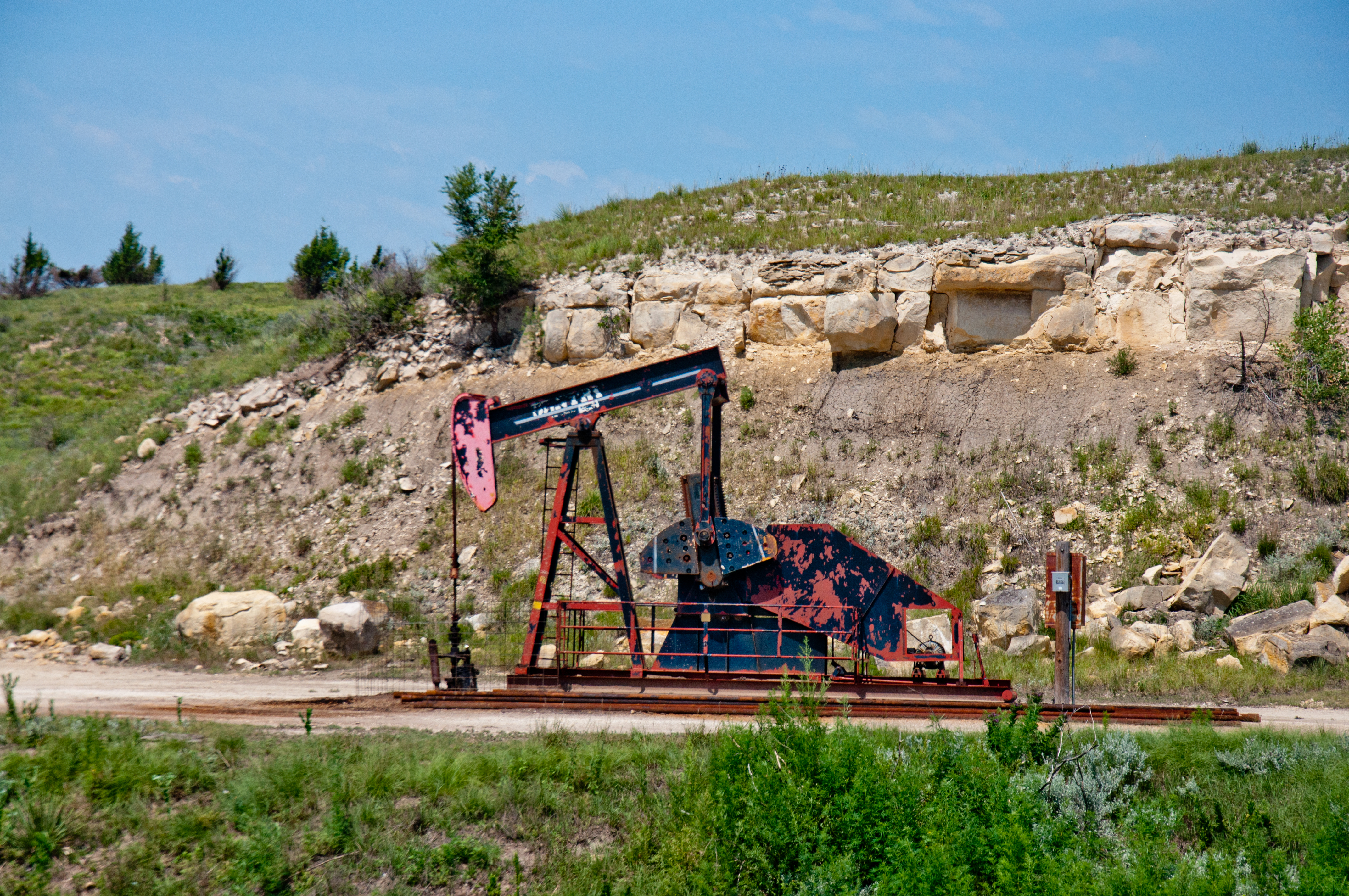
West Texas Intermediate crude for July delivery gained 21 cents on the Nymex by lunchtime Monday to trade at $53.70 a barrel. The near-month contract dropped more than five percent on Friday (5/31), to its lowest weekly finish in nearly four months.

The current posted price for Kansas Common crude at CHS in McPherson by Monday was $43.75 per barrel. That’s three dollars less than the posted price last Thursday.

The weekly rig report from Independent Oil and Gas Service showed showed a 62% drop in the number of active drilling rigs in Kansas last week. The total in Western Kansas was down 15 to just eight active rigs. That matches the statewide increase in rigs listed as “pending their next location assignment.”

Baker Hughes reported an increase of three oil drilling rigs nationwide last week to 984 active rigs. New Mexico was up two while Texas and Oklahoma each dropped one rig.

Last week saw six new drilling permits approved across Kansas, all of them west of Wichita including one in Barton County. Regulators have approved 364 permits for drilling at new locations across Kansas so far this year.

Independent Oil & Gas Service reported 18 newly completed wells last week, 655 so far this year. There were four new well-completions east of Wichita and 14 in Western Kansas including one in Stafford County.

Royal Dutch Shell and the Italian oil company Eni face additional corruption allegations over a Nigerian oil deal. Bloomberg reported the West African country’s government filed additional claims in its lawsuit, saying it believes a handful of executives, including CEOs, were tied to more than $1 billion in bribery payments. In court documents filed in early April, the Nigerian government said the oil companies’ senior managers agreed in 2011 to make a large payment for an offshore oil block, understanding the money would trickle down to government officials and senior executives from both companies. The allegations are the latest bombshells in a years-old dispute over exploration rights that has spread to courtrooms throughout Europe.

Pioneer Natural Resources Co. is asking senior managers to retire as the Texas shale oil driller shrinks spending, sells assets and raises dividends. About one third of the company’s top executives were asked to leave, according to an announcement by CEO Scott Sheffield. That announcement shortly after the explorer disclosed plans to sell or find partners for some oil fields including the divestiture of its entire South Texas portfolio. That deal was expected to trigger a pre-tax, non-cash loss of $550 million.

One of the ways Occidental Petroleum hopes to cut costs to help pay for its very expensive takeover of Anadarko Petroleum is to sell that company’s fleet of aircraft. The move is steeped in irony, as Oxy’s corporate jets were recently the focus of activists digging into the company’s shareholder returns. As reported by Bloomberg, Occidental is not selling its own planes, which became notorious as executives flew to Paris, the Hague and Omaha, Nebraska in what became a very visible effort to line up backing for its $38 billion acquisition of Anadarko. Occidental said Anadarko’s four planes would be on the company’s hit list when the takeover closed. The company said it sees about $2 billion in annual cost cuts once it closed the deal.

Mexico has moved to bolster investor confidence in its embattled state oil company. Officials including the president announced an $8 billion syndicated loan and some huge new tax breaks for the energy producer. Pemex officials signed the financing agreement with three financial groups including with JPMorgan Chase. The company will use $2.5 billion of the funds to refinance existing debt, while the remaining $5.5 billion will replace some credit lines.

One of the world’s largest oilfield services companies filed for Chapter 11 Bankruptcy protection last month. World Oil reports the move may give Weatherford International enough room and time to turn around its struggling operations. The firm announced that it has executed a restructuring agreement with a group of senior note-holders that collectively holds 62% of the company’s senior, unsecured notes. The proposed restructuring plan should significantly reduce the company’s long-term debt and related interest costs. World Oil says it should also provide access to additional financing and establish a more sustainable capital structure.

It not clear how long the rule-making process will take, but there are some in the state of New Mexico that are hailing a new law as one of the “greatest environmental accomplishments” ever to come out of the state Legislature. The Albuquerque Journal reports the law will allow the oil and gas industry’s produced wastewater to be recycled for use outside the industry. The newspaper reports New Mexico’s “Produced Water Act” takes effect in July, and could mark a sea-change in the desert state’s future. They could see some 40 billion gallons of new water resources each year. One company has already filed an application for a permit. Encore Green Environmental hopes to use wastewater from booming operations in southeastern New Mexico to increase vegetation for ranching and erosion control in desert areas.

The U.S. Energy Information Administration says New Mexico now boasts two of the top crude-oil-producing counties in the nation. Both are in the Permian Basin in the southeast corner of the state along the Texas border. EIA said Lea County was the No. 2 oil-producing county in the country in January behind North Dakota’s McKenzie County. McKenzie County produced 17.3 million barrels in January while Lea County produced 14.6 million barrels. Lea County had more than twice the number of operating rigs as McKenzie County. New Mexico’s Eddy County was listed as the No. 6 top oil-producing county, pumping 10 million barrels during January.
MARSHALL: Doctor’s Note June 3

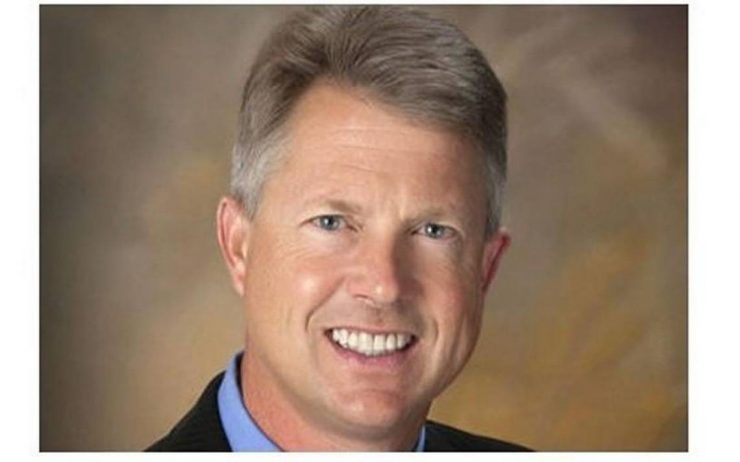
Dr. Roger Marshall, R-Great Bend, is the First District Kansas Congressman.

Friends,

Great News from The Environmental Protection Agency
We received some great news from the Environmental Protection Agency (EPA) last week. They are going to be granting approval for gasoline comprised of up to 15% ethanol (E15) to be sold year round. This has the potential to increase the demand of corn by 100-200 million bushels in the short term, and up to 2 billion bushels in the long term.

EPA also announced they are finalizing regulatory changes to modify certain elements of the renewable identification number (RIN) compliance system under the RFS, in order to bring greater transparency to the market and deter price manipulation. The changes include public disclosure if a party’s RIN holdings exceed certain thresholds and additional data collections to improve EPA market monitoring capability.

This is all great news for rural America and I am extremely pleased that the Trump Administration followed through on this action that will be so helpful to our farmers and drivers across the country.

Trade Aid Update
President Trump and USDA Secretary Perdue recently authorized $16 billion in programs to further help farmers and ranchers impacted by the ongoing trade negotiations with China.

USDA is working overtime to finalize the rulemaking and I will continue to encourage them to release more details and specific payment levels to provide farmers more clarity as they move forward with planting and crop decisions. Below are the details we have been provided thus far:

The aid package includes $14.5 billion in direct payments to farmers through the Market Facilitation Program (MFP). USDA will combine all Title 1 crops planted to create one payment for all acres planted and certified with the Farm Service Agency (FSA) prior to July 15th. These acres cannot exceed total acres planted in 2018 and the payment will not be dependent on the output or production of those acres. Dairy producers will receive a per-hundredweight payment on production history. A second and third round of payments will be announced in November and early January, if the trade dispute continues.

In line with the U.S.’s continued mission of growing trade opportunities, USDA will also be allocated $100 million to help develop new markets for U.S. agriculture goods around the world.

Additionally, $1.4 billion in surplus commodities will be purchased for distribution in food pantries and school nutrition programs.

Serving Those Who Served Us
Every day my office works to protect our current and former service members.

Since taking office in 2017, my office has helped hundreds of constituents who are experiencing issues with the Veterans Affairs (VA) Administration or the Department of Defense (DOD).

My staff recently had the opportunity to help a son honor his late father, Murrell Thomas. Mr. Thomas was a Second Lieutenant in the U.S. Army during WWII. He was captured in Sicily and endured 960 days in a war camp and was eventually sent home with no recognition for his time as a POW. Earlier this year, my office helped Mr. Thomas’s son, Robert, obtain his late father’s Prisoner of War medal and military service records. The medal is now proudly displayed in the Cloud County Historical museum in Concordia. Second Lieutenant Thomas is an American hero and my staff and I were proud to assist in ensuing he received the recognition he earned in service to our country.

Making Sure We Are Prepared
Stories of natural disasters sweeping across the country, including devastating tornadoes and flooding right here in Kansas, have been front page news. Last Thursday, Katie Moore from my office visited the Federal Emergency Management Administration’s (FEMA) Regional Office in Kansas City. She had the opportunity to meet with Regional Administrator Paul Taylor, Defense Coordinating Officer Col. Isaac Johnson, who coordinates defense support of civilian authorities, and David Gervinho, the Federal Coordinating Officer for the recent Kansas declaration. They shared resources related to emergency declarations, emergency preparedness, and provided overviews of how the team in Kansas coordinates federal agencies with state and local partners for disaster response.

They also discussed FEMA’s cell phone app, which gives the user information on how to prepare in the event of a disaster. It also includes information about emergency shelter locations during a crisis, disaster recovery centers following an event, and provides real-time alerts for up to five locations nationwide. The app is available for free on both the Apple and Android app stores. Recent events have highlighted the need for all of us across the state and country to be weather aware and prepared, especially going into summer months with more extreme weather systems!

If you would like to get more information or want to download the app Click Here.

Meeting with the Kansas City Chamber
Katie Moore and Tyler Mason from my staff attended the Kansas City Chamber’s annual Spotlight on KC event. This program is designed to highlight the federal priorities and opportunities in this unique region for staffers from both the Kansas and Missouri delegations, focusing on issues related to workforce development, transportation, infrastructure, and trade. While there are many differences between Kansas City and the towns across Western Kansas, many of the challenges they’re facing also are impacting folks back home. From workforce shortages to the need for investments in roads, bridges, and other forms of infrastructure, these conversations are beneficial to finding a solution to problems facing all Kansans. Kansas City is an important partner for much of what we do in the district. It is important that we stay engaged, as these connections often have an impact on businesses, economic development, and opportunities throughout the Big First. It was a great forum and I’m glad staff from both my DC and district offices were able to participate!

Good Luck to Kansan Auctioneers
The 2019 World Livestock Auctioneer Championship will be taking place on June 7th and 8th and I am pleased to say that there will be three contestants from the great state of Kansas. Niel Bouray from Webber, Dakota Davis from Caldwell, and Lynn Langvardt from Chapman will be among the 31 contestants seeking to bring home the title.

The competition will have two parts, an interview portion and a live sale portion. For the interview competition contestants must prove their understanding of livestock marketing history and show that they are able to express what they know in a clear and concise manner. During the sale portion, contestants will actually sell to bidders and will be evaluated based on their presentations, chant, execution of sale, and how willing the judges would be to hire the auctioneer.

Good luck to our Kansas contestants! I will be routing for you and wish you all the best in the upcoming competition.

Dr. Roger Marshall, R-Great Bend, is the First District Kansas Congressman.


YOUNKER: Crops after wheat harvest

Dale Younker is a Soil Health Specialist with the USDA Natural Resources Conservation Service in Jetmore.

With the abundance of moisture most of the state has received in the last few weeks planting a cover crop after wheat harvest may be a viable option.

A cover crop can help suppress herbicide resistant weeds, reduce evaporation, provide good quality forage for livestock and provide many other soil health benefits. Here are a few things to consider if you are thinking about planting a cover crop:

  • Have a goal in mind. Think about what you are trying to accomplish. Do want to use it for livestock grazing? Is there a compaction layer that you want to break up? Do you want to increase the ground cover because of short and thin wheat stubble? Use a seed mix that meets your goals. Don’t plant a cover crop just to plant one.
  • Does planting a cover crop make economic sense? What is going to be the potential economic return, both short and long term, in comparison to not planting one? Figure all your costs, including seed, planting, any herbicide applications prior to planting, termination costs and so on. Then compare that to what economic gain or value you may have from less herbicide operations, providing livestock forage, capturing more rainfall other benefits. Try to keep seed cost reasonable at less than $20.00 per acre.
  • Herbicides used in the wheat also need to be considered. Many popular wheat herbicides have long plant back restrictions and are persistent and effective the soil for long periods of time. Many of these herbicides may prevent some cover crop species from coming up. Make sure to check the herbicide label and if in doubt ask you’re your crop advisor or pesticide vendor.
  • One of the purposes of planting a cover crop after wheat harvest is to reduce evaporation, improve water infiltration and increase the water holding capacity of the soil. But realize upfront that cover crops do use moisture, just like any green growing plant. Depending on the amount of rainfall during the season they may use more then what they save. This could have a negative effect on the next cash crop yield. If the growing season becomes hot and dry terminating the cover crop early may be a consideration. This is especially true as we move south and west across the state.
  • Always plant in a weed free seed environment. Cover crops can be very effective in suppressing difficult to control weeds, but not if they are already present when the cover crop is being planted.
  • For most of the state the recommendation is to plant the cover crop as soon after harvest as possible, preferably right behind the combine. This allows full advantage of the moisture and growing season available to grow the cover crop. If you are trying to control weeds you need to get the cover crop planted before a flush of weeds emerge.
  • Be prepared to spray the cover crop field if weeds become an issue. This is especially important if volunteer wheat becomes an issue since it provides a “green bridge” for the wheat streak mosaic virus. The last thing you want is this virus to spread to your or a neighbor’s newly planted wheat.

For more information about this or other soil health practices you can contact me at [email protected] or contact any local NRCS office.

Dale Younker is the Soil Health Specialist with the USDA Natural Resources Conservation Service in Jetmore.

First Five: Contributions of African Americans often minimized, overlooked

Kristen Farrington is executive director of the Religious Freedom Center of the Freedom Forum Institute.

By KRISTEN FARRINGTON and SABRINA DENT
Freedom Forum Institute

As noted by Yale University professor and scholar David W. Blight, the first Memorial Day, known as “First Decoration Day,” was observed May 1, 1865 by formerly enslaved Africans to honor 257 Union soldiers buried in a mass grave at a Confederate camp in Charleston, S.C.

A parade was held, led by more than 2,000 Black children carrying flowers to honor the fallen. The commemoration included proper burial of the soldiers by the freed men. This moment, and the actions of these formerly enslaved men, would affirm the significance of human dignity despite the presence and practice of inequality in America.

Fifty-seven years later, on Memorial Day (May 30, 1922), thousands gathered on Washington’s National Mall for the dedication of the Lincoln Memorial and heard the passionate words of speaker Robert Moton: “With malice towards none, with charity towards all we dedicate our posterity, with you and yours, to finish the work which he so nobly began, to make America an example for all the world of equal justice and equal opportunity for all.”

Moton, a distinguished African-American educator, author and principal of the Tuskegee Institute, was invited to give the keynote address and yet was barred from sitting with white speakers. Can you imagine being asked to speak about equality, about the nation’s aspirations, then experiencing the humiliation of being segregated? Many believe the Lincoln Memorial was built to help heal a country torn apart by the Civil War — 154 years later, can we say we’ve healed? Has equal protection under the law resulted in all Americans experiencing equality and freedom?

Dr. Sabrina Dent is director of programs and partnerships  at the Religious Freedom Center of the Freedom Forum Institute.

In 1976, President Gerald Ford officially recognized Black History Month. Ever since, February has been a time when most Americans are intentional about learning more about the history, culture and heritage of African Americans. It’s a time of reflection and celebration that reminds us how far our country has come since the enslavement of Africans, Jim Crow, Reconstruction and the Civil Rights era. It is an opportunity to recommit ourselves to the dream of the Rev. Dr. Martin Luther King Jr. and many other leaders who imagined a better world for generations to come.

The unfortunate reality is people of color continue to experience bigotry, discrimination, racism and socio-political and economic inequities. Feb. 1, 2019 would prove this to be true when Virginia Gov. Ralph Northam found himself in the midst of a scandal for his admitted (then denied) wearing of blackface. The pain of this moment was more than a superficial blemish in the news, but rather revelation of Virginia’s deeply rooted racist past that continues haunting African Americans 400 years after the arrival of their enslaved ancestors. Northam’s actions took place during his time as a student at Eastern Virginia Medical College in 1984. He was elected governor in 2017 by more than 87 percent of African-American voters according to Vox.

The Religious Freedom Center (RFC)’s mission is to educate the public about the history and significance of religious freedom in America. The Center is very aware that depending on race, ethnicity, socio-economic status and religion, perceptions of religious freedom in America vary.

Through new research and scholarship, we are committed to raising the volume on narratives of religious minorities and under-represented Americans. We are intentionally creating spaces where stories can be heard, difficult conversations can happen and new relationships can grow.

After the Gov. Northam news broke, the RFC hosted a Dialogue on Race with members of Commonwealth Baptist Church, a predominately white congregation in Alexandria, Va., committed to understanding race relations using the tools and skills of civil dialogue. The RFC has hosted many dialogue sessions, but this particular session was challenging for both of us.

Our thoughts included, “I was exhausted and angry after the events of the weekend and tired of talking about race to white people, but I knew this was not the moment to shut down” and “I wanted to co-facilitate the dialogue, but in that moment didn’t know how to help lead the session without adding more pain to an already difficult situation. I wondered, ‘What is my role? Can I speak to this? What is the best way to be an ally?’”

In a tearful moment before the session, we — who have been engaging in dialogue as women, friends, colleagues, religious leaders and allies for years — needed to figure how to navigate the day together.

This was a teachable moment for Black people and our allies to speak up about injustices, microaggressions and other nuisances that challenge the everyday existence and human dignity of people of color. It was time to practice our dialogue skills with one another and our invited guests — to be authentic, to talk about pain, to share personal stories, to learn from one another. This was not easy, but real dialogue never is. The dialogue session that day was very powerful, but it was clear we only touched the tip of the iceberg.

Legislation, memorials and days of recognition have been significant milestones in the healing of our nation. But nothing replaces the deeper personal work of examining unconscious bias, prejudice, privilege and power and reflecting on how we continue to support systemic racism and injustice at all levels of society.

Memorial Day is a somber one as we remember those who have sacrificed so each of us may experience our constitutional freedoms. Before we move too quickly into summer, on May 30, the traditional Memorial Day, let us honor Robert Moton’s prophetic words and recommit ourselves “to make America an example for all the world of equal justice and equal opportunity for all.”

Kristen Farrington is executive director of the Religious Freedom Center of the Freedom Forum Institute. Contact her via email at [email protected]. Dr. Sabrina Dent is director of programs and partnerships  at the Religious Freedom Center of the Freedom Forum Institute. Her email address is: [email protected].

Now That’s Rural: Heather Horton, Toast

Ron Wilson is director of the Huck Boyd National Institute for Rural Development at Kansas State University.

By RON WILSON
Huck Boyd National Institute for Rural Development

“Toast of the town.” That would be quite a title. Today we’ll learn about a culinary entrepreneur who is helping her town in the food business. She operates a cake decorating enterprise and, soon, will open a new restaurant with the name of Toast.

Last week we met Heather Horton and learned about her involvement in the revitalization of the historic downtown in Pittsburg, Kansas. She is also the owner of these growing small businesses.

In 2017, USDA Rural Development awarded a grant to help build markets for local foods in southeast Kansas. That project is led by Heather Morgan, director of engagement and community development for K-State’s Technology Development Institute. She identified Heather Horton as an example of excellence in local foods entrepreneurship.

As a child, Heather had helped her parents in their family restaurant. In later years, her mother started making wedding cakes and Heather helped her decorate them.

After Heather graduated from Pittsburg State in commercial art, she decided to offer the wedding cakes as a business. In 2007, she and her husband Roger bought a building in downtown Pittsburg, renovated it, and opened for business in 2009.

The business is known as Sweet Designs Cakery. It was more than a bakery, it was a cakery. Heather specializes in designing and producing beautiful cakes for all occasions. Based on the photos on her website, these cakes can only be described as works of art. Roger joined the business in 2010. In recent years, Heather also taught culinary arts at Pittsburg High School through Fort Scott Community College.

Heather and Roger had the idea for another enterprise: A restaurant that could utilize locally-grown foods. They located a site for it in downtown Pittsburg, just a half-block from Sweet Designs Cakery. Then they needed to find a name for this new restaurant. Heather found inspiration in her childhood memories of eating toasted bread.

“I’ve loved toast since childhood,” Heather said. They chose Toast as the name of the new restaurant. Their trial runs include open-faced sandwiches and other items. Roger is test-baking artisan bread which will be offered at the new restaurant, but the menu is even more than that.

“It will be a fast casual restaurant with a full range of artistically crafted foods with a healthy twist,” Heather said. “We can offer a limitless combination of deliciousness. We’ll have beverages too, and toast has multiple meanings.”

“We’re going to try to use locally-grown food as much as possible, which means sourcing from multiple farmers,” Heather said. She has been working hard at identifying suppliers and doing some test cooking. “I’ll mostly be trying to buy up any excess produce that isn’t sold at farmers markets. That’s a win-win for us all and cuts back on waste.”

Through the USDA Rural Development grant, Heather Morgan put out a call for local growers to connect with the new restaurant. Heather Horton now has an extensive list of growers for a large variety of different products.

“For example, I have an egg lady, and I have one grower specifically for garlic,” Heather said. That seems like a pretty specific niche, but that’s the product on which that grower wants to concentrate. The restaurant will utilize fruits and vegetables from a variety of sources, including Heather’s mother.

“She’s always supportive and loves to garden,” Heather said about her mom. “She’ll supply me with fresh herbs and produce.”

Heather’s suppliers come from Pittsburg and around the region, including nearby rural communities such as Erie, population 1,150; Weir, population 686; and Mulberry, population 520 people. Now, that’s rural.

The new restaurant is expected to open in late summer of 2019. “I’m excited about the possibilities,” Heather said.

Toast of the town. That would be a wonderful title. In the case of this young entrepreneur, Toast will be her town’s newest restaurant. We commend Heather and Roger Horton for making a difference by promoting local foods. To them, I think we should raise a toast.

And there’s more. Southeast Kansas also is a source of tree nuts. We’ll learn about that next week.

INSIGHT KANSAS: The first quarter comes to an end

With last Wednesday’s sine die end to the 2019 legislative session, we can make an early assessment of Kansas politics, the Legislature, and especially Governor Laura Kelly. If a governor’s term consists of four legislative sessions, this is roughly the end of first quarter.

Burdett Loomis, Professor, Political Science, College of Liberal Arts and Science, University of Kansas

We can’t know what ultimate outcomes will be, either for policies or politics, but we can see some trends and try to understand how the remainder of the game shapes up.

Most importantly, the election of a Democratic governor has profoundly changed the nature of the game itself. For the first six years of Governor Brownback’s tenure, and especially 2013 through 2016, Brownback and his band of far-right Republican legislators held sway in Topeka. Save for an occasional must-pass piece of tax legislation, dictated by falling state revenues, there was little legislative give and take in Topeka. The overlapping agendas of the governor and Republican legislative leaders made their way into the statute books, limited only by occasional resistance within the courts.

After the 2018 election, Republican leaders had to address the stark fact that Kelly had become governor with a full array of executive powers and the willingness to use her most powerful tool – the veto. Sometimes, as with school finance, the House Speaker, the Senate President, and their allies came to terms with the demands of the governor and, in this instance, the Kansas Supreme Court.

When it came to tax cuts, however, GOP leaders could not override her vetoes of two measures to cut taxes in the wake of 2017 federal tax law changes. Despite the Republican narrative that the cuts were simply returning a state “windfall” to Kansas taxpayers, Kelly had the power to retain a fiscal cushion in the state’s coffers. But she could not prevent a successful override of a measure to pay an extra $51 million to KPERS, an act that Republicans argued was pro-education.

Moreover, the governor did not, at least in the first quarter, have the influence essential to move Medicaid expansion through the process. Despite a series of votes indicating supportive majorities in both chambers, Senate Republican leaders used their procedural power to keep expansion bottled up. Governors can and do go over the heads of recalcitrant legislative leaders; the second quarter may resolve this impasse, but it could require one more election cycle to produce a definitive result.

Administratively, Kelly has discovered that the problems she inherited were broader and deeper than even she – a 14-year legislative veteran – had suspected. The litany of problem agencies – from corrections to children and families to transportation – goes on and on. Not only did Brownback drive out skilled and devoted administrators, but over the last few years he simply didn’t care about implementing policies. They could be farmed out, privatized, and removed from state governance.
The most powerful change in the capitol transcends Kelly’s veto pen. She is the chief executive. Simply put, that means that she will govern. Her administration will continue to address problems, rather than ignoring them or pawning them off on other entities, especially those in the private sector.

The governor will need all four quarters to fully address this administrative decline, but there’s likely no one better to do it. Effective governance takes knowledge, determination, and resources – qualities that Laura Kelly embodies.

Heading toward the second quarter and a political year, the governor will keep moving the ball down the field, legislatively, administratively, and politically. Kansans should root for Kelly’s success. For it will be ours, as well.

Burdett Loomis is an emeritus professor at the University of Kansas.

CLINKSCALES: Fear — Control what you can; let go of the others

Randy Clinkscales
I have a family trip planned. All the family is going. It involves airplane flights with several changes. It involves coordinating the schedules of seven different people.

I am writing this the morning after my dreams were filled with nightmares: the fear of missing my flights, and one of the flights being rescheduled which ruined our trip.

My dream involved me not being able to get away from the office at the last minute; or some other personal issue that prevented me from getting to the airport on time. Try as I may, it seems like I was stuck in tar and the harder I tried to get free, the more tangled I got. As it got closer and closer to the departure time, the more I felt trapped, unable to untangle myself. I wondered what would happen if I missed the trip altogether and my family went on it by themselves. I woke up in a sweat. So I wrote this article.

From an objective standpoint, I know that whether I get to the flight on time is really up to me. I am several weeks out from the trip. I can adjust my schedule so I can be there on time.

On the other hand, if the flights get changed or delayed there is nothing I can do about that now. No amount of worry is going to “fix” whether the airlines have some change over which I have no control.

It really boils down to what can I fix and should plan for; and what can I not fix or plan for? For the former (me being on time) I can plan; for the latter (the airline changing its schedules), my worrying does not fix anything.

Objectively, it seems pretty simple; in practice, when it is you, it is not so simple.

The last couple of weeks have been emotionally draining, while in the end, they ended up being uplifting. A couple of families came to see us. In one case, the children and the parents were both in the room. Dad has dementia, and he knows it. He fears not being able to care for his family, of losing his memory, of becoming something that he has never been, and his loss of dignity and his pride. The family is heartbroken for dad. They are heartbroken for mom as she journeys with Dad. They fear for her safety, both physically and financially.

In another case with another family, Dad has gone through a series of health issues. Not only does he have some dementia, he has lost his eyesight and has lost a lot of functioning of his extremities. He is no longer able to bathe, feed, or dress himself. But he still knows the family. He knows that things are not good. He is angry; he is depressed; and he is terribly frustrated at his plight. His family is heartbroken at the plight that they find their father. He has always been a good, strong man. A good father; a good husband. But now the end of life is being so difficult for him. At times the entire room was sobbing in the heartbreak that they expressed to me.

With both families we visited. We broke down what kind of things we could control. We addressed those issues: financial fears; caregiver issues; short term plans for healthcare; long term plans for healthcare; and creating tools for the caregivers.

We also talked about those things we cannot control. In both cases Dad is on a journey. We need to accept that he is on this journey. We need to fix the things that we can fix, and stop worrying about the things that we cannot fix. We need to be with Dad and appreciate our opportunity to be with him on this journey.

In the end, the families were very relieved that they had a plan; and the fear was replaced by peace of mind.

Frankly, we could write books about fear and how to address it. But I know that when people come into my office fear is very real; it is tangible; whether they can control it or not, it is controlling them.

With the two families that I met with, I think part of the key to getting rid of the fear that they had, was accepting that each had a loved one on a journey with a difficult end; that they should be ready for that; and to not fear what they could not control.

Unfortunately, we can let fear paralyze all aspects of our lives. Sometimes it is difficult to step back and figure out what we can fix and what we cannot fix. Fear can throw a dark cloak over all aspects of your life.

On a lighter note, I will be at the Hays airport two hours prior to my trip departure, even if the airport is not yet open.

Randy Clinkscales of Clinkscales Elder Law Practice, PA, Hays, Kansas, is an elder care attorney, practicing in western Kansas. To contact him, please send an email to [email protected]. Disclaimer: The information in the column is for general information purposes and does not constitute legal advice. Each case is different and outcomes depend on the fact of each case and the then applicable law. For specific questions, you should contact a qualified attorney.

BOOR: Grazing wet pastures

Alicia Boor

Wet, muddy pastures require special grazing techniques

As this year’s wet weather continues, most pastures are soft and wet.  Grazing can quickly get these pastures muddy and damaged by hoof traffic.

Use special grazing techniques to limit damage in soft, muddy pastures.  The worst thing you can do is graze a pasture for several days until it’s all torn up and then move to a new area.  Trampling that occurs repeatedly over several days greatly weakens plants; doing this across a wide area can reduce production for months, even years.

In contrast, pastures muddied up by grazing only briefly usually recover quickly.  Maybe not as fast as when the ground is solid, but fast enough to minimize yield or stand loss.

Take advantage of this rapid recovery by moving animals frequently, at least once a day, to a new area.  This might require subdividing pastures with temporary electric fences to increase the number of new areas you can move cattle into.  Fencing supplies you use around corn stalks during winter should work well for this temporary use.  Once the ground firms up you can return to your normal grazing rotation.

Another option is to graze all your cattle together in one small ‘sacrifice’ area until the rest of your pasture ground gets solid again, feeding hay if needed.  This protects most of your pasture acres from trampling losses.  But it can virtually destroy the area grazed so it might need reseeding.  This may be a small price to pay, though, to protect the rest of your acres.

Don’t let mud and trampling ruin your pastures.  Temporary grazing adjustments can save grass now and for the future.

Alicia Boor is an Agriculture and Natural Resources agent in the Cottonwood District (which includes Barton and Ellis counties) for K-State Research and Extension. You can contact her by e-mail at [email protected] or calling 620-793-1910.

Kan. Farm Bureau Insight: A Baltimore bookstore

Greg Doering
By GREG DOERING
Kansas Farm Bureau

I booked a late flight home from a recent conference in Baltimore with the idea that I’d have most of the day to explore the city, or at least the areas near the hotel.

Mother Nature, however, had other plans and washed away my plans. On the way to lunch a colleague spotted a used bookstore. I can think of no better way to kill time on a rainy afternoon than to peruse stacks of books.

You can tell if a bookstore is good the moment the smell hits you. This one was fantastic. Despite the rain, inside the air was somehow dry and musty. It had an intoxicating fragrance of leather, binding glue and aging ink.

Books have always been a refuge for me on foul days. I was in middle school when, during the height of a thunderstorm, I discovered a copy of Herman Wouk’s “The Caine Mutiny” in the back of a closet at my grandparents’ home. Its blue cloth cover did little to reveal the compelling story within. It wasn’t until much later I learned Wouk’s story centered on the commander of a World War II Navy ship and won the Pulitzer Prize for fiction in 1952.

When I read “My Side of the Mountain,” by Jean Craighead George, I was determined to run away from home and live in the Catskill Mountains just like Sam Gribley. I made it all of two houses down before my mother found me in a neighbor’s backyard. After a few years passed, when I was less of a flight risk, I received the other two books in the trilogy as a Christmas present.

From time to time, I wonder what it would be like to shun modern society and live off the land in some remote corner of the world. Thankfully I live in Kansas where the weather often delivers reminders of modern conveniences, like central air and indoor plumbing.

I discovered horror writer Dean Koontz by accident in a Burlington, Colo., gas station. Returning from a family ski trip, we were trapped there during a mid-March blizzard. I thought I’d discovered the next Stephen King until my dad informed me he’d been reading Koontz since the 1970s.

While that dented my pride, I’ll forever be in my father’s debt for his book suggestions. He had a voracious appetite for the printed word, often reading several books a week. It wasn’t until I was a little older, probably in college, that the recommendations started rolling in.

First it was James Clavell’s “Nobel House” part of a six-book chronicle of a family’s decades of service to the British Empire in Asia. Cormack McCarthy’s “The Road,” Michael Connelly’s “The Lincoln Lawyer,” Tom Wolfe’s “A Man in Full,” James Michener’s “The Source,” and others followed.

Michener’s “Chesapeake” was on prominent display in the Baltimore bookstore, alongside other authors and novels based in and around the region, like journalist and essayist H. L. Mencken. Of course, there was plenty of Edgar Allen Poe, father of the modern detective story and famous Baltimore resident.

After spending a couple hours browsing through the store, I figured I needed to get serious about finding something to buy. “Chesapeake” was out because I wasn’t going to lug a 900-page tome on an airplane. I finally settled on Bill Bryson’s “A Walk in the Woods,” which chronicles the middle-aged author’s attempt to hike the Appalachian Trail. It’s what I imagine Sam Gribley doing as an adult.

The one lament I have is I should have picked up a couple more books. I was hopeful to leave the rain in Baltimore. I figured once I returned, I would spend my free time hiking and fishing, not rushing to mow the lawn between downpours. Instead of casting into a lake, I’ve been swiping my library card. It’s not a terrible trade, but I’m ready for some sunny days.

“Insight” is a weekly column published by Kansas Farm Bureau, the state’s largest farm organization whose mission is to strengthen agriculture and the lives of Kansans through advocacy, education and service.

KRUG: Flooded basements can lead to mold

Donna Krug
Since the rains have continued for another week, the water table in our area continues to rise. A one- page fact sheet from North Dakota State University, titled, “Dealing with Continuing Basemen Seepage” does a good job of describing the process through remediation. I’ll use my column space to share the most pertinent information that was written by Kenneth Hellevang, Extension Engineer.

Of course by now, the extended period of water setting in basements has made mold growth a real concern. Mold growth, which is a health hazard, is a concern any time high humidity or damp materials exist. Wet or damp materials will mold in one to three days, depending on temperature. Mold spores, which are like mold “seeds” are in the air everywhere, so the only method to prevent mold growth is to keep things dry or remove them from the damp area. Remove porous materials such as cardboard boxes, papers, carpet, rugs and clothes to keep them from becoming moldy.

Chlorine bleach is a biocide that will kill existing mold, but it does not prevent future mold growth. Mold must be removed, not just killed, to eliminate the health hazard. The EPA “Guide to Controlling Mold and Moisture in the Home” brochure that I recommended a few weeks ago, lays out the clean-up procedure well. First you clean the affected area and then you disinfect with a weak bleach solution. (1 cup bleach per gallon of water)

Many wall coverings are porous and will not only absorb water, but will wick the water above the water level. Sheetrock is very absorbent. Remove or cut the gypsum board so none of it will be in the water. Many paneling materials are also absorbent, so the same instructions should be followed.

Purchase a humidity gauge, and keep the humidity below 70 percent if possible. A dehumidifier will remove some of the water from the air. Ventilating with dry outdoor air also will reduce the humidity level. Providing both an opening for air to enter and exit is critical. Fans can help assist with moving dryer outside air through the basement.

The bottom line is that water will continue to enter the basement as long as the water table is high, so the goal is to control the water flow rather than eliminate it. Generally, the water cannot be stopped from entering the basement with products placed inside the basement because of external water pressure.

In case you missed the web address I shared last week for some excellent Extension resources related to flooding I will share it again. I have reviewed many of the links and they are very good. A specialist from Nebraska pulled materials from across the nation related to flooding at this address. https://flood.unl.edu/

Donna Krug is the Family & Consumer Science Agent and District Director for the Cottonwood Extension District. You may reach her at: (620)793-1910 or [email protected]

HAWVER: Hard to call the 2019 legislative session a win for anyone

Martin Hawver

After a week’s wailing and rending of garments, we’re going to find out whether Republicans can make a big enough deal out of the four line-item vetoes Gov. Laura Kelly inflicted on their third try at passing a budget to give them what they can call a political win.

Kelly’s vetoes last week are relatively low-dollar, and there’s not a lot of outcry from anyone affected by them except for legislative Republican leaders. Democrats have been largely silent on the line-item vetoes which are worth a total of about $54 million from the multibillion-dollar budget.

Only significant spending cut accomplished with a ballpoint pen is $51 million in accelerated repayment of money borrowed in earlier (Republican Govs. Sam Brownback/Jeff Colyer) era from the Kansas Public Employees Retirement System (KPERS).

That $51 million? It would be atop a $115 million pay-back to KPERS that lawmakers and the governor made earlier this year which most state retirees are still celebrating.

The objection to that KPERS veto? Mostly formulaic, with Republicans generally saying that Kelly is punishing the retirees, that she plans massive “grow the government” spending increases in the next years—you rarely go politically wrong by tossing money at KPERS.

For Democrats, well they are relatively quiet on their Democrat governor’s KPERS veto, mostly citing that earlier $115 million and the need for the state to hold down spending so that there is less need for tax increases in future years.

All stuff we’ve heard before from both parties. No adrenaline rush here…

The whittled-down income tax bill that Kelly vetoed? So far, hall talk puts override success as unlikely, but that’s the biggie for Republicans. Win that one, and few will notice the budget bill’s line-item vetoes. But if the GOP can’t beat Kelly on taxes, then it’s time to talk about KPERS, and those other, smaller cuts she carved into the Legislature’s budget.

And who is going to be politically excited by overriding a $705,000 cut from a Board of Pharmacy program, or $1.8 million from the Department for Aging and Disability Services or $1.2 million for Department of Education for a reading research program? Oh, they are all probably nice programs, but the majority of Kansans have never heard about them. Angering voters about those line-item vetoes would take longer than most politicians want to spend on the effort.

At this point, just a year away from the House and Senate standing for reelection, it might be politically valuable for conservative lawmakers to scratch up the paint on Kelly’s official state SUV…just to show that they’re still in the game.

It’s all about Medicaid expansion that Kelly lost this session by a handful of votes and clever parliamentary maneuvering in the Senate, and the possibility that the tax bill she vetoed might be overridden and become law.

If it comes down to a scrap over the line-item vetoes, we’ll know that the politics of the session remain up in the air. For Kelly, win on taxes, lose on Medicaid expansion. For the GOP legislature, lose on taxes, win on Medicaid expansion…or so it seems. The Medicaid battle is mostly GOP leadership with thin margins that Kelly hopes to overcome this summer.

***

Chances look good that nobody’s going to claim a real victory this session. Not the new governor, not the still-Republican (but moderating) legislature, and probably not Kansans.

Hard to consider this session just a warm-up for the real fight ahead, but at least that will make the upcoming 2020 session worth watching…

Syndicated by Hawver News Company LLC of Topeka; Martin Hawver is publisher of Hawver’s Capitol Report—to learn more about this nonpartisan statewide political news service, visit the website at www.hawvernews.com

Exploring Outdoors Kansas: Beware the dreaded ‘stick fish’

Steve Gilliland
Having gotten a whole summer’s worth of rain in 3 weeks, Kansas reservoirs and lakes are swollen and campgrounds and boat ramps are completely submerged, meaning camping, boating and for the most part fishing too are out of the question. I was reminded this week of an interesting fishing trip to a local reservoir years ago after several inches of rain.

Our boat pitched and heaved with each “white cap” that rolled under the hull, and Marion Reservoir was littered with floating debris, remnants of the nearly 4 inches of rain just days before. We usually fished there by drifting over shallow water outside French Creek cove, using night crawlers on jigs as bait.

Suddenly my wife hauled back hard on her rod, and uttered those 3 little words every fisherman longs to hear, “I’ve got one!” She worked the fish perfectly, gaining line with each crank of the reel. As I reached for the net, the monster showed itself for the first time, and I slumped horrified into the nearest seat. It was a dreaded “stick” fish, (not to be confused with a “fish stick”) and a big one! She wrestled the 4 foot long monster next to the boat, where I gingerly removed the hook. I hated to release him to haunt another fisherman, but we had no room for him in the boat. (I’m sure it was a “him” because of certain protruding anatomical features) My wife and I stared blankly at each other, numbed by the encounter.

I’m as certain as I can be that everyone who has ever fished has had an encounter like the scene I just described, but how many of us know anything about these prehistoric creatures. Their life cycle is strange and secretive to say the least. They are born in many different forms, from “helicopter” like seeds to long bean pods. The most prevalent species found in Kansas waters are the cottonwood variety, which begin life as fluffy white seeds.

Whether blown by the wind or floating on the water, the seeds of all species eventually reach a spot of dry ground, where they burrow into the soil and soon emerge as tiny seedling-like beings. Here they spend the first part of their life cycle, which determines how large they will be. The 4 foot specimen we encountered is actually small in the stick fish world, and was probably 20 to 25 years old. I have caught brief glimpses of these monsters several times the size of our catch, which must have been over 100 years old.

Eventually, whether by storm, wind or rain, the beasts are toppled into the water where the final part of their life’s journey begins. Now they float aimlessly around their chosen lake or river, like cast-out souls searching for fulfillment. On land, they had adapted to feed on nutrients from the soil. Now in their watery world, they become opportunists, often gathering into great, twisted masses on the lake or river bottom, and feeding mostly on fishermen’s bait.

During long, hot summers, when water levels dwindle, the brutes can rest for months in large tangled groups along back water shorelines. Storms and high water seem to bring them forth like night crawlers after a rain, and suddenly again they are everywhere. This is when most encounters seem to occur. When suddenly surprised by a lurking stick fish, give it plenty of space. They are usually docile, but can do considerable damage to fishing tackle or boats if run into or hooked.

I don’t mean to paint “stickies” as trash fish, because they do have some noteworthy uses. While resting in their large summer groups, they are excellent sun bathing decks for turtles, and make fine dry docks for herons and egrets. Beavers like to “borrow” them as temporary reinforcements for dams and lodges. The “cane” variety, a long, slender species, makes fine walking sticks if harvested and dried, and their tales can be formed into circular handles when fresh from the water and still pliable. Dead ones, if pulled ashore and dried in the sun, produce lots of BTU’s when burned for campfires and barbecues. The immense under water groups become choice fish habitat, and are prime “honey-holes” if found and fished over. But be forewarned, as this type of fishing does seem to provoke a large number of stick fish bites.

We escaped our stick fish encounter fairly unscathed; happy, yet awed at having been so close to such a prehistoric, secretive creature right here in the waters of central Kansas…Continue to Explore Kansas Outdoors!

Steve Gilliland, Inman, can be contacted by email at [email protected]

Prairie Doc Perspectives: Beauty is only skin deep

Dr. Rick Holm

Remember the Greek myth of Narcissus, a vain and handsome young man who was punished by a goddess for rejecting the innocent love of another. Narcissus was made to fall in love with his own reflection in a pool and he wasted the rest of his life staring at his own image.

It’s easy to criticize our society’s obsession with beauty. We all know “beauty is only skin-deep” and people’s outward appearance sometimes does not reflect their inner goodness (or lack of it). We also know that the cover-up of the wrinkles of aging, with faces pulled tight from surgery or injections of tissue expanders into lips usually make movie stars appear even more artificial and unreal.

Naturally, we all want to make a good first impression. In the wild, it’s the bird with the most colorful feathers that successfully woos the most healthy and finest specimen of the opposite sex in order to advance the species. Looking good is important for getting a job, selling a product or even making a convincing argument. To dress and appear well groomed, and to look clean and healthy, provides the appearance that someone has their act together. It is human nature and practical to want to look nice.

Our epidemic of obesity, alongside society’s definition that thin is desirable, is a disheartening paradox. More troubling is that, short of radical and dangerous surgery, weight loss programs do not last. After five years, most programs and efforts show only one in 100 are able to keep weight off. We would be healthier if we emphasized eating right rather than weight loss.

Besides, what is true beauty? Does it really matter the measure of the waist, the turn of the nose, or the color of the hair? Are we most charmed by the impression of youth or that of experience; the look of innocence, or that of confidence; the appearance of cool, or that of compassion? Certainly, what seems beautiful today will be different tomorrow.

Looking nice can be important, but, in my opinion, it’s valuable to recognize that it is a golden heart and a healthy lifestyle which makes one beautiful. Exercising well, eating a balanced reasonable diet, connecting with and caring for friends and family and, finally, loving ourselves are the elements which bring on real and lasting beauty. Narcissus wasted his life above a calm pool looking at himself. We can do better.

For free and easy access to the entire Prairie Doc® library, visit www.prairiedoc.org and follow The Prairie Doc® on Facebook, featuring On Call with the Prairie Doc® a medical Q&A show streaming live most Thursdays at 7 p.m. central.

Copyright Eagle Radio | FCC Public Files | EEO Public File