Just when you think partisan politics and political theatre can’t get any worse, the Democrats are working harder than ever to literally destroy a Trump presidency. The leftist liberals and progressives in the congressional House are crossing the line in efforts to oust our president.
You would think, following the Robert Mueller report a few weeks ago, we, as a country, could move on to issues and agendas that matter most to Americans. But no, the hatred of our president, and taking him out, is upper most in the minds of a political party, most media, and what is known as the deep state. The Trump haters are determined to carry on more than ever.
The Mueller Report, after two years of investigating, 30 million tax dollars spent, umpteen subpoenas and witnesses testifying, the case should be closed. Nobody in the Trump presidential campaign of 2016 was found to be guilty of colluding with Russia. Therefore, case closed, and he is exonerated whether Mueller says so or not. The same should hold true for obstruction as well. The Trump/Russia collusion was a hoax to begin with, and logically how do you obstruct an investigation when there isn’t even a crime to go with it from the very beginning?
When Dems on the House Judiciary Committee claim it is their constitutional duty to further investigate and it’s important to our democracy for oversight purposes I cringe. (actually, I upchuck). Since when does a political party in Congress get the right to badger and harass, day in and day out, a president of these United States? It’s not oversight, not even overreach. It’s overkill.
Democrat Chairman Jerry Nadler and his like minded members on the committee are making a mockery of our Constitution. What is taking place in a legislative body that has become an investigative one instead is making history by standing our Constitution on its head. Another black mark in American history eroding our democracy.
Mueller sent his report to Attorney General William Barr of the Department of Justice as required, and then Barr made it available to the House committee with some redactions. Under Nadler’s leadership, Barr is held in contempt for not illegally letting Nadler’s minions see everything in the 448 page report. 98% wasn’t good enough. By law, Barr can’t send everything since there is classified grand jury information. For that matter, there is no law requiring Barr to send the report to anybody in the first place, yet he is held in contempt?
The infamous Mueller Report has many flaws. It reads in part like gossip columns. It basically should simply say there was or was not a crime committed on collusion and obstruction, however, it prints out to nearly 500 pages of gibberish. Mr. Integrity and Honorable Mueller (as all the libs call him) put out a very “unprofessional” investigative report.and Dems are fit to be tied since he isn’t putting Trump in jail for a crime.
I will be surprised if Mueller agrees to testify before the Senate or House, but I personally hope he does. Too many things don’t add up. For example, why did he take the job in the first place and then hire an army of lawyers connected to the Clintons? How will he explain his scheme to keep the two year hoax alive as he refuses, after two years of investigating, to even make a final decision on obstruction? Some say he knew early on there was no collusion, but continued on for two years anyway at taxpayers expense.
My biggest question, that media never mentions, is how Mueller pretty much ignores in his report the Democrat collusion with Russia. After two years of investigating and Democrat collusion all over the place (and not by Trump), but what’s the reason for focusing on one and never on the other? How does he justify turning a blind eye to the real collusion when the two different camps are connected beyond belief?
Here’s the big secret in all of this! Along with destroying Trump, these people are now out to do the same to Barr and here’s the reason. Our relatively new AG is about to lower the boom on this whole Trump Russia thing. It’s the Democrats, through Hillary and the Democrat National Committee, with help from the FBI and CIA, that have been colluding with Russia instead.
The tables have turned. Heads will roll. Look for a whole host of investigations. Too many people to name in this writing who were part of an attempted coup of our duly elected president; a president constitutionally elected by the people, not the hierarchy. Obama spying on the Trump campaign before he became president will be huge. Former FBI Director Comey is in hot water as is CIA Director Brennan and NIA Clapper. Obama and Hillary will be at the top of the list to be investigated.
None of this will be resolved soon. It may even take years, but if we are to be known as a true democratic republic, restoration of rule of law in this country and equal justice for all is a must. Laws and justice based on whether you are Democrat or Republican have got to go.
A good argument can be made that it is a God given miracle Trump, not only survives an onslaught of hell from the left, but still succeeds in a major way of making America great again.
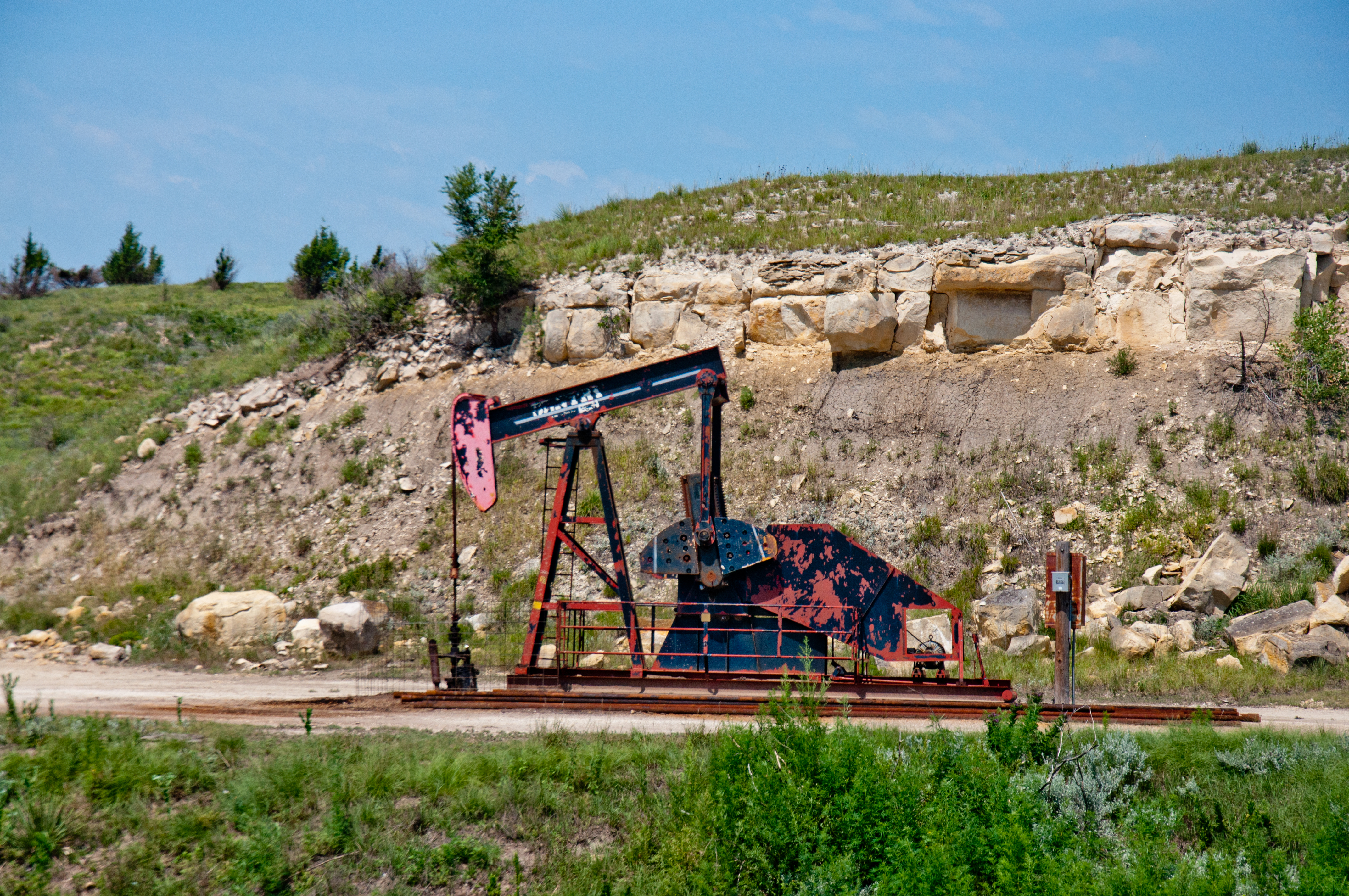
Officials blamed severe weather for a pair of oil tank fires over the weekend. The weather also forced delays in putting them out. There were no injuries reported in either incident. Officials in Herington say they were forced to put out two burning oil tanks during a severe thunderstorm Saturday morning. A lightning strike is believed to have sparked the fire. Officials said access to the site was made difficult by flooding that washed out roads.
In Barton County, a tank battery caught fire Saturday night in Ellinwood, near the intersection of South East 90 Avenue and South East 50 Road. The Ellinwood Fire Department and Barton County Sheriff’s Office responded. Sheriff Brian Bellendir said lightning sparked this fire as well. The Sheriff said at least two production tanks and a gun barrel were a total loss. The fire was a quarter mile away from the nearest road.
The U.S. Energy Information Administration reports crude-oil inventories increased by 5.4 million barrels to 472-million barrels for the week ending May 10. Stockpiles are now about two percent above the five-year seasonal average.
The government reported a slight drop in U.S. crude oil production. EIA said U.S. operators produced 12.081 million barrels per day for the week ending May 10. That’s a drop of about 95-thousand barrels per day from the week before but more than 1.3 million barrels per day more than the same week last year.
EIA reported an increase in U.S. crude oil imports of 919-thousand barrels per day to an average of 7.6 million barrels per day. The four-week average if about 9.6% less than the same period a year ago.
Independent Oil & Gas Service reported 26 active drilling rigs in Western Kansas for the week, an increase of two rigs. East of Wichita, there was just one active rig, which is down three from a week ago. An operator is about two spud one new well in Russell County. Last week’s Rotary Rig Count report from Baker Hughes showed a drop of three oil rigs and a gain of two rigs seeking natural gas. Texas and Pennsylvania each reported a drop of three rigs, while Oklahoma and Alaska were each down two. Those losses were offset by a gain of four rigs in Ohio, three rigs in Wyoming, two in Louisiana and one in New Mexico. The report noted a drop of six horizontal drilling rigs last week. The count in Canada was unchanged at 63.
Kansas regulators approved 21 new permits for drilling at new locations over the last week, five in eastern Kansas and 16 west of Wichita, including one in Russell County. There are 339 new drilling permits across the state so far this year.
Independent Oil and Gas Service reported 29 newly-completed wells across the state, 591 so far this year. There were two new completions east of Wichita, and 27 in Western Kansas, including one in Barton County.
The latest numbers from the North Dakota Department of Mineral Resources show operators there set a record for the amount of natural gas captured from oil wells, an ongoing issue in the state, which lacks adequate pipeline infrastructure to move that gas to market. The department measures that statistic in MCF, or thousand cubic feet. In March, operators captured 2.24 million MCF per day. That’s still just 80% of the gas produced, meaning 20% of the natural gas coming out of oil wells in North Dakota is being burned off at the well head.
The Houston Ship Channel reopened last weekend as cleanup continued in the wake of a collision and gasoline spill. According to the Houston Chronicle, an estimated 9,000 barrels of gasoline poured into the busy waterway. Deep-draft ships were allowed to enter and exit the channel under tow, so as to minimize their wakes. The channel was closed after a tanker collided with a tug boat pushing two barges. One of the barges leaked a gasoline product called reformate. The Chronicle reported that the man-made 50-mile channel is one of the busiest ports in the world, and said even short closures carry hefty price tags for companies that have to delay or re-route shipments.
For the week ending May 11, oil-by-rail traffic was up to more than 13-thousand rail cars, a gain of 28.6% compared to the same week last year. The year-to-date total is up more than 24% year-on-year. Canada figures gained 39.1%.
Dr. Roger Marshall, R-Great Bend, is the First District Kansas Congressman.
Friends,
Friday I voted against H.R. 5, the (IN)Equality Act. This bill might be the most irresponsible and least thought out legislation I’ve seen in my tenure in Congress. It allows males who self-identify as females the right to use the same bathrooms, locker rooms, showers, domestic violence shelters, and prisons as females. It also and forces doctors to perform abortions and transgender surgeries.
As a doctor and a Christian, I have been taught to show compassion, tolerance, and respect to all. This legislation does the exact opposite and is in direct contradiction to Kansas values.
In other news, last week the President unveiled his plan to modernize America’s legal immigration system to secure the southern border. I look forward to reviewing it and am glad to see that we are again bringing awareness to the crisis at our border and talking about solutions. NO vote on the IN’ Equality Act
I heard from many of you week, and one thing is clear- Kansans know this legislation for what it is, an ‘IN’equality Act that will threaten the safety of millions. This legislation makes many changes to the law, each one worse than the last.
It entitles males who self-identify as females the right to use the same bathrooms, locker rooms, showers, domestic violence shelters, and prisons as women or girls. All federally funded entities would be forced to interpret “sex” as including multiple and fluid gender identities. The act also requires no medical or legal changes, but rather “gender identity” be reliant on the person’s self-identified gender. This bill would violate the privacy of women and men.
As a physician that’s delivered thousands of babies, I was horrified to find out that this legislation would force doctors and health care providers to perform abortions and be faced with harsh consequences. Christian schools would be legally forced to adapt their faith to the whims of the Government’s beliefs.
I want to thank all of you who have called my office to voice your thoughts on this legislation and am like many of you outraged by this bill that will harm men women and children.
‘Hoppy’ to have Kansas Brewers in Town
Beer is a product of agriculture, and breweries are just another perfect examples of what agriculture and small businesses contribute to the national economy and local communities. Whether it’s on the ranch, in the field, or the brewery, Kansas produces some high-quality brews.
I had the great pleasure of meeting with the Kansas Brewers Association here in Washington. I recently stopped in to check out the Radius Brewing Company in Emporia. I had the chance to sit down and catch up with the owner of Radius Brewing, JJ, here in DC to discuss the beer brewing industry. As a member of the Small Brewers Caucus, I know the value of having local breweries like Radius Brewing in our communities.
National Woman’s Health Week
I cannot stress enough the importance of a healthy diet. In my previous role as an OBGYN, nutrition and medicine went hand in hand in caring for patients. I want to take a moment to talk about some nutritious everyday steps that can be taken to encourage healthy living.
Calcium and vitamin D are both essential for building and maintaining bone strength throughout your lives. With nutritious foods and calcium-rich diets, women can help prevent the onset of debilitating diseases, such as osteoporosis.
Osteoporosis is incredibly dangerous considering there are no symptoms until a fracture occurs. That’s why physicians run tests for measuring bone mass to predict fracture risk. Dairy products are a great natural source of calcium, and for the vitamin D just get out and get yourselves some sunshine, with sunscreen of course!
National Infrastructure Week
Last week was National Infrastructure Week, and in almost every meeting I took the need for an infrastructure package was raised. From maintaining our roads, bridges, and railways so that we can get our commodities to market, to expanding broadband access in rural communities, there is a lot of work to be done. Rural America faces unique challenges when it comes to infrastructure investments, however they are critical as we continue to grow the rural economy. These are true investments for our children and grandchildren’s sake, and vital for the communities across my district! Celebrating ‘Colonel’ Bob Dole
Last week we celebrated my friend, mentor and legendary Kansan, Bob Dole for his recent honorary promotion to Colonel this week.
In his own words, he is now a “full bird colonel!” Read more about his honorary promotion HERE.
‘American Hero’
Great Work Ethan!
Join me in congratulating Ethan Beckman for his winning submission for the “I Like Ike” Congressional Art Competition.
Ethan Beckman, Grainfield
Ethan, a junior at Wheatland High School in Grainfield, Kansas, submitted his original piece honoring our 34th president, Dwight D. Eisenhower.
Ethan’s submission, titled “American Hero” depicts solider, Dwight D Eisenhower, in front of an American flag and will be hanging in the capitol for the next year. Great work, Ethan!
Supporting Diabetes Research
As a supporter of robust funding for the National Institute of Diabetes and Digestive and Kidney Diseases, I understand the importance of preventing and managing one of America’s most common, costly, and chronic diseases. Diabetes can affect anyone, all races, ages, and regions are susceptible, and the economic costs of the disease continue to rise.
I am proud to have joined hundreds of my fellow colleagues in signing on in support of reauthorizing the Special Diabetes Program (SDP). The SDP funds research into diabetes and is making meaningful progress in developing new insights and therapies that are improving the lives of those suffering with diabetes. I fully support funding the SDP and am optimistic about the work that they are doing.
National Police Week
This past week we showed our appreciation to all the men and women and K-9’s who protect and serve our communities as we celebrate National Police Week.
Our law enforcement officers are on the front lines of combating the opioid epidemic, human trafficking, and domestic violence in our state. We must continue to support our more than 7,500 law enforcement officers across Kansas and law enforcement officers across the country and acknowledge the risk they put themselves in to keep our communities safe. I know these risk far too well as a son of a Sheriff. I want to also thank my father, who was the Chief of Police and Fire Chief in El Dorado, Kansas for nearly 25 years.
Thank you to all of our police officers.
Eisenhower Women’s Leadership Visit
On Tuesday, we hosted a night tour with members of the 2018-19 Eisenhower Women’s Leadership Series. On the tour, we spoke with them about the legislative process and some of my top legislative priorities.
This year’s participants included a member of our own team, someone you’re probably familiar with, our District Director Katie Sawyer. The Eisenhower Series is a six-month leadership program for women across Kansas to learn more about local, state, and federal policy and stay involved in political issues. Participants travel the state, meeting with stakeholders in various industries and end the class with a trip to Washington D.C. where they meet with members of our delegation. Programs like these are excellent at teaching Kansans how to be more influential and engaged in the legislative process.
Innovative Cancer Treatments
I spoke to a group of research scientists about the progress on immunotherapies, specifically Chimeric Antigen Receptor (CAR) T-cell therapies. These are innovative cancer treatments that work by engineering a patients’ own immune cells to recognize and fight off life-threatening cancer cells. These therapies are the first of their kind and have only recently been approved by the FDA within the last two years.
These treatments stand to be potentially much less demanding on patients bodies, possibly not even requiring inpatient hospitalization in the future! I recently led a letter to the Center for Medicare and Medicaid Services to recognize these treatment options for our Medicare patients. I am proud to carry the torch to ensure America’s seniors have access to the best new treatments to fight their cancer.
For more information, you can find my press release here.
Dr. Roger Marshall, R-Great Bend, is the First District Kansas Congressman.
By MARK TALLMAN Kansas Association of School Boards
It’s graduation season in Kansas. In high school gyms and college stadiums, in family living rooms and all-night parties, we’re celebrating those who have put in the work to complete a credential: a high school diploma, technical certificate or college degree.
That is appropriate because each education step usually has a big impact on future standard of living. The latest data from the U.S. Bureau of Labor Statistics shows that each step in the educational ladder increases employment and earnings. As would be expected, the reverse is true of poverty: each educational level lowers the chances of living in poverty.
Mark Tallman
Graduation is a sign of accomplishment. Completing twelve years of “formal schooling” used to be rather unusual. In 1940, the earliest year U.S. census information is available, only about one-third of Kansans (and Americans) had a high school diploma. Completing a four-year degree was quite rare: only five percent of the population had a bachelor’s degree in 1940.
Despite frequent criticisms that our school system is failing and programs have stagnated, Kansas educational attainment has continually improved. I can trace this in my own family history. In 1940, my parents were children. When I entered school in the 1960s, about half the population had a high school diploma. When my children were beginning school in the 1980s and 1990s, about 75 percent had completed high school; as my eldest granddaughter celebrates her “promotion” from preschool to kindergarten next fall, it’s over 90 percent.
Likewise, when my parents graduated from Fort Hays State University in the late 1950s, less than 10 percent of the population had a four-year degree; when I graduated from college in the 1980s it had only recently passed 15 percent; when my children earned degrees in the 2000s they were joining about 25 percent of the population; and today about one-third of adults have a four-year degree or higher.
By these long-term standards, educational attainment in Kansas has never been higher. There are short-term advances, as well. Since 2010, when Kansas and most other states began using the “adjusted cohort graduation rate” calculation, the overall percentage of Kansas students who graduate “on time” in four years rose from 80.7 percent to 87.3 percent in 2018. (This doesn’t count students who complete high school in more than four years or earn an equivalency.) Crucially, most subgroups of students who have lower graduation rates – those eligible for free and reduced lunch, disabled, African American and Hispanic students and English Language Learners – made even more progress, narrowing the gaps among groups.
There is good news on postsecondary graduation, as well. According to the Kansas Board of Regents Vision 2020 Progress Report, the total number of degrees or certificates awarded by public technical and community colleges and universities increased from 37,462 in 2010 to 43,843 in 2018, an increase of 17 percent, although total enrollment has actually declined.
Colleges and universities report graduation rates in two ways. First, the percentage of students who graduate in the expected time to complete a degree (two years for community colleges and four years for universities). Second, the percentage who take 50 percent longer: within three years for community colleges and six years for universities. Kansas community college and universities have increased both rates. Overall first-to-second year retention rates have also improved.
The enrollment of students in college and universities by racial and ethnic groups is similar to the overall population. Increasing numbers of students are enrolling and earning credit for postsecondary courses while in high school, which experts believe will further increase the rate of successful degree completion. The number of adults with previous prior credit but no degree returning to college has also increased.
Furthermore, Kansas compares favorably with the nation on many of these measures. Kansas’ average adjusted cohort graduation rate (percent graduating high school in four years) from 2011 to 2017 is 17th in the nation; the percent of 18-24-year-old Kansans with any postsecondary education ranks 11th.
Despite these improvements, Kansas is still struggling to keep up with needs. Economic experts predict that over 70 percent of future Kansas jobs will require a credential beyond high school. Currently, approximately 65 percent of Kansans over age 24 have some postsecondary experience, but that includes those who have not completed a degree or certificate. The Board of Regents estimates that Kansas will need an additional 5,000 bachelor’s degrees and 8,000 technical certificates and associate degrees by 2020 to meet that demand.
The Kansas State Board of Education has developed a measure called the Postsecondary Effective Rate for Kansas school districts, which looks at the percentage of each class of seniors that have both graduated from high school and either completed a degree or certificate or are enrolled in a postsecondary program within two years of graduation. Because of this two-year lag, the most recent data was for 2016, when the effective rate was 48.9 percent, up from 44.5 percent in 2012 but still far below the target of 70-75 percent.
Finally, although Kansas ranks high nationally in education attainment, there is evidence other states have been improving faster in recent years.
So, while Kansans are celebrating the achievement of graduates at all levels this spring, it is important to remember those who have not been as successful and redouble efforts to help them. That is a particularly important charge to school leaders after the Kansas Supreme Court and Legislature have directed significant new resources to help exactly those students. Let’s commit now to have many more students and families celebrating next year.
Mark Tallman is the Associate Executive Director for Advocacy for the Kansas Association of School Boards.
My brother just bought a really nice boat, and I’m jealous. I shouldn’t be, because Joyce and I learned years ago that although we both like to fish and both enjoy eating fish, neither of us will ever grace the “fisherman hall of fame.” For starters, we are both lousy fishermen.
I have fished sitting 3 feet from someone, using the same bait, on the same tackle at the same depth and caught one fish to their ten. Once when we still had a boat, we fished over the same brush pile as some friends, again, using bait and tackle they gave us and caught one fish while they filled their cooler. I’ve named it the Gilliland fishing curse. Along with that, we both despise temperatures above 80 degrees, dramatically limiting summer fishing opportunities.
My dad was quite the opposite and hated temperatures below 80, often wearing long sleeved shirts in July and rarely ever running his air conditioner. So ever year when summer dawns, I expect those inherited genes to kick-in and my tolerance for heat to grow, but if anything, it only gets worse.
We have a walleye fishing trip to Glen Elder Lake planned, where we’ll attempt once again to overpower and vanquish the dreaded Gilliland fishing curse. Until then, here are some ways I’ve come up with to tell if fishing might not be your thing either.
When someone hollers “Quick, get the net,” and you dive for your smart phone to quickly pull up the internet, you probably shouldn’t be a fisherman.
If you worry more about whether your life jacket makes you look fat than whether it would save your life, you probably shouldn’t be a fisherman.
If you insist on scrubbing your hands like a surgeon each time you dip into your snack bag, you probably shouldn’t be a fisherman.
If choosing what to wear on the boat each day makes you more emotional than landing a five pound bass, you probably shouldn’t be a fisherman.
If it bothers you immensely when the color of the lure you’re casting doesn’t match the color of your reel, you probably shouldn’t be a fisherman.
If you feel the need to read a eulogy for each night crawler you thread onto a hook, you probably shouldn’t be a fisherman.
If you show up to clean fish wearing a full chemical suit complete with gas mask, you probably shouldn’t be a fisherman.
If you think “trolling” has something to do with ugly, wart-covered creatures that live under bridges you probably shouldn’t be a fisherman.
If a deep-seated concern for “night crawler rights” leads you to make midnight covert raids on fishermen’s cabins, emptying worm boxes and pillaging bait buckets you probably shouldn’t be a fisherman.
And finally, if bending or stretching the truth even slightly makes you break into a cold sweat, stutter or lose control of your bodily functions, you DEFINITELY should not be a fisherman!
Steve Gilliland, Inman, can be contacted by email at [email protected].
Addiction can be defined as the compulsive repeated use of a drug or substance (such as alcohol) or performance of a behavior (such as gambling). Dependence is different, occurring when repeated use of a drug (such as heroine) results in physical dependence which causes an unpleasant feeling of withdrawal when the drug is stopped. Addiction and dependence can occur separately, although they often run together.
At five-years-old, I was a thumb-sucker. I recall not being proud of it as my folks seemed progressively upset about my “addiction.” The process that finally helped me quit was when I was told I would not visit my grandma in Minneapolis until I stopped sucking my thumb. I remember many struggled attempts at quitting before I finally shook the monkey off my back. Addiction is a human condition that can affect any one of us.
The people in this country are currently caught in a terrible maelstrom of opioid addiction from which human beings of all ages, races and economic status seem unable to escape. Twice as many people suffocated to death from opioids last year than died of vehicular crashes. According to the website DrugFree.org, in 2010, something like 23.5 million people in the U.S. (about one in every ten over the age of 12) were addicted to alcohol, drugs, or something. Of those addicted, only one in ten would ever get help.
One expert stated that the financial and emotional toll of addiction is greater than the combined consequences of diabetes mellitus and all cancers put together. Think of all the lung disease and cancer that results from smoking; the cirrhosis and liver failure as well as the dementia that results from alcohol; the dental problems from methamphetamine use; and all the social consequences of addiction including accidental vehicular crashes, suicides, homicides, criminal behavior and incarceration.
Despite all this doomsday talk, I think we have room for hope if we realize that none of us is immune and everyone should take precautions. We should start with an open-eyed and honest approach with our youth, teaching the truth about addiction without making addictive behaviors a “forbidden fruit.” Our country desperately needs affordable addiction and mental health treatment options, available to all, without the negative stigma (and often unhelpful incarceration) that can follow. Spending for prevention and treatment of addiction would save us all significantly more than it would cost.
We also need more research to better understand addiction and what influences addictive behavior, even that as seemingly benign as sucking one’s thumb.
For free and easy access to the entire Prairie Doc® library, visit www.prairiedoc.org and follow The Prairie Doc® on Facebook, Instagram and Twitter featuring On Call with the Prairie Doc® a medical Q&A show streaming live on Facebook most Thursdays at 7 p.m. central.
-0-
During my 30+ year Extension career my goal has always been to provide educational programs that help improve a persons’ quality of life and lead by example.
Last week I found out that the bicycle safety program my husband and I presented to all of the elementary schools in Great Bend left an impression. You see, we had ridden our tandem bike to Hoisington and stopped in at the Town and Country Supermarket to use the rest room. As we were checking out, with our hi-vis jackets and bike helmets, the young man at the cash register asked if we rode a two seated bike. When I said “Yes” he shared that when he was in 5th grade at Park School in Great Bend he remembered we came to his school and talked about bicycle safety. Wow! That was 7 years ago! It was rewarding to see that our visits about this important topic made an impression.
Over 15 million links to biking activities when I googled, “May is bike month” is a pretty good indication that there is a growing number of avid cyclists. There are reminders to make sure riders know and follow the rules of the road. Bicyclists need to ride with traffic, and acknowledge traffic signals. Some dangers to watch for include motorists backing from a parking stall or someone opening their car door in your traffic lane. While I feel wearing an approved bicycle helmet is a must, I see a lot of cyclists going without that protection. Statistics show that the number of head injuries is reduced drastically when a properly fitted helmet is worn. Make sure all riders are fitted with a bike helmet and that you review the rules with young riders.
Our eleven-year-old granddaughter, Calyn, was visiting last week and asked if she could ride one of our bikes and come with us when John took me to work on our tandem. We adjusted the bike to fit her and found a helmet that worked. Just a few short years ago, she thought the 3 mile round trip to work was too far. But she actually rode 7 miles the other morning and was pretty proud of her accomplishment.
Make bicycling a family affair at your house for the rest of May and the months to come!
Donna Krug is a family and consumer science agent with K-State Research and Extension – Cottonwood District. She may be reached at (620) 793-1910 or [email protected] K-State Research and Extension is an equal opportunity provider and employer.
By Ron Wilson, director of the Huck Boyd National Institute for Rural Development at Kansas State University.
Ron Wilson is director of the Huck Boyd National Institute for Rural Development at Kansas State University.
One million cups of coffee. That’s a lot of caffeine. It’s also much more than that since this is the term for a movement which is supporting entrepreneurs across the nation. This program is building a peer support network to help those who are starting and growing their businesses.
Amber Starling and Joe Gerken are among the organizers of the Manhattan, Kansas chapter of this group called One Million Cups. Last week we learned about another of the organizers, Darin Miller. He operates Iron Clad Coworking Space with facilities in Manhattan and in the rural community of Wamego, population 4,272 people. Now, that’s rural.
The One Million Cups concept was begun by the Ewing Marion Kauffman Foundation in 2012. The idea was simple: Great ideas are discussed over a million cups of coffee. The Kauffman Foundation wanted to create a time and place where entrepreneurs could share with each other. Coffee was provided and entrepreneurs were brought together in Kansas City. The results were remarkable.
The format began to spread across the nation. One Million Cups chapters have now sprung up in 181 communities across the country. This includes the Kansas communities of Lawrence, Topeka, Wichita, and Manhattan. The program started in Manhattan in 2017.
What happens at a One Million Cups event? The format is that two presenters have six minutes each to present an overview of their businesses. This is followed by questions and answers with the audience. The final question posed to each presenter every time is: “What can we as a community do to help you?”
As the question demonstrates, this is intended to be a supportive environment for budding entrepreneurs or business owners. Who attends this event? “We have entrepreneurs, insurance agents, realtors, bankers, chamber of commerce staff, and more,” Amber Starling said. No reservations are required and no admission is charged. Even the coffee is free.
These events are held on a regular basis. In Manhattan, One Million Cups sessions are conducted on the first Wednesday of each month at the Wareham Theater.
“This is a grassroots effort to get entrepreneurs together,” Joe Gerken said. “Being a business owner can be lonely,” he said.
“This provides a safe space for entrepreneurs to share a big idea, here’s what worked, and here’s my challenges,” Amber said. The process of presenting helps focus the entrepreneur’s ideas. The feedback from his or her peers can be especially valuable.
Joe and Amber are past presenters at One Million Cups themselves. Joe talked about the business he started which is Flint Hills Moving. This moving company is in its third year and has grown to 10 employees. “We specialize in customer service,” Joe said. The company website is www.flinthillsmoving.com.
Amber presented about her business which is Good Witch Cleaning Services, with the only certified cleaning technicians in Kansas. Her business is almost two years old and has grown to six employees. “We thrive on perfection,” Amber said. Her company website is www.goodwitchcleaning.com.
After presenting at One Million Cups, Amber and Joe had the opportunity to apply to become event organizers and were selected. They now lead the monthly discussions. “We want to draw from the outlying communities too,” Amber said.
To present at One Million Cups, entrepreneurs must apply. Not everyone gets selected. A successful applicant is assigned an organizer to help them plan and prepare their presentation.
“Most people focus on their journey,” Joe said. “We get to help connect the dots.”
“We can help them get to where they need to go,” Amber said. “And the coffee is free.”
One million cups. That’s a lot of caffeine, but it’s also the name of a program which allows entrepreneurs to share their ideas and challenges with others. We commend Amber Starling, Joe Gerken, Darin Miller, and all those involved with One Million Cups for making a difference by enabling entrepreneurs to come together in this way. If I had a new business and I didn’t want it in the red, maybe One Million Cups could help me keep it in the black. Coffee, that is.
I have never been able to bring myself to wear jeans to church. It might seem antiquated but putting on a nice dress before heading to Sunday service makes me feel like my grandmother is smiling down on me. I understand God does not care what you wear, and “Sunday Best” is no longer in fashion. This choice of wardrobe is my own way of showing respect and humility to God and His church.
As our culture evolves, so do the rules of what is acceptable, proper etiquette. Many rules of how to be proper or polite were cemented during previous generations. They are no longer expected or required.
However, good manners will never be completely forgotten. Etiquette continues to have a place in the modern world. It is just no longer expected. What were once rules have become a choice we make, a way to show respect, deference, humility, kindness and any number of other positive regards.
When I reflect on my choice to conform to proper etiquette, it is part of my character, my brand and my style. Etiquette is not a set of rules that leave me in a constant state of fear of making a mistake. I see it as a set of reminders to be kind, not to make a scene and try to make others feel comfortable.
The Collegiate Farm Bureau Chapter at our local community college has a tradition of hosting an etiquette dinner at the start of finals week for sophomores graduating from the agriculture department. I serve as the hostess for the evening’s three-course, narrated meal. During the meal, I share the rules of etiquette – how to recognize the proper fork, eat a dinner roll properly, when it is appropriate to put your elbows on the table, and to pass the salt and pepper together because they are “married.”
None of these are vital rules but they all have a purpose. They make the meal move smoothly, help participants feel more comfortable or keep the focus on good conversation. Understanding the guidelines helps turn situations that are often met with trepidation or unease into a fun and enjoyable events.
Etiquette is not meant to be a scoreboard to track who is breaking the rules. It is a way to conduct yourself, so people enjoy your company. We all can benefit from that reminder.
If you find yourself lamenting a rule of etiquette that seems to have been dismissed as a relic, ask yourself: Do you miss it because it was drilled into your head that it is proper behavior or is it something that brings value to your actions?
If there is value in the practice, be a trendsetter. Take pride in the knowledge you are living by a standard that is slightly more than what is expected. People will always notice when you are kinder than you need to be, more respectful than is deserved and humbler than you should be.
Good manners and proper etiquette will never go out of style. Don’t worry about what is proper or what other people are doing. Make the conscious choice to do what is kind, gracious or respectful to the world around you and you can be confident you have nailed etiquette in the modern world.
“Insight” is a weekly column published by Kansas Farm Bureau, the state’s largest farm organization whose mission is to strengthen agriculture and the lives of Kansans through advocacy, education and service.
Native Kansan Karen Madorin is a local writer and retired teacher who loves sharing stories about places, people, critters, plants, food, and history of the High Plains.Spring has sprung and with it comes blessings or banes, depending on perspective. Warm weather and longer days deliver bright yellow blossoms topping tan/pinkish stalks that rise from a crown of sharply indented leaves. In fact, those serrated leaves led to the plant’s common name dandelion, an adaptation of the descriptive French term dent de lion, which means lion’s tooth. This Eurasian native was familiar to ancient Chinese, Greeks, Romans, and Egyptians long before it made itself useful in Europe. Once on that continent, early residents recognized its nutritional and medicinal value and transported it to the Americas when they ventured far from home. One source declared it arrived on the Mayflower with the pilgrims.
Until recent history, humans welcomed the sharp-tasting leaves and bright blooms that popped through the earth when snow melted. Folks craving fresh greens ate them in salads or blanched them as vegetables. Tea and wine makers turned blossoms into refreshing drinks, while creative harvesters dried and ground roots into a satisfying coffee substitute. Every part of this plant is edible, so it’s understandable why early immigrants tucked dandelion seeds into their cargo.
Not only do the leaves of this herb deliver a dietary wallop full of A, C, and K vitamins, it also serves a bounty of minerals, including calcium, potassium, manganese, and iron. A nature-loving friend enjoys a daily smoothie made with tender dandelion shoots. She swears it keeps her healthy. Her story makes me think about people who’d gone months without eating fresh veggies and how their bodies would’ve craved helpings of scurvy-fighting nutrients. I suspect those first leaves peeping through the soil didn’t make it to the bud stage. Once the blooms formed, hungry settlers harvested them as well and enjoyed their anti-oxidant and anti-inflammatory benefits.
In addition to dandelions’ food value, healers used the plants to treat infections, detoxify the liver and kidneys, and serve as a diuretic. This last use, for obvious reasons, led to nicknames such as “piss-a-bed, pisacan, and wet-a-bed.”
Humans weren’t the only creatures who anticipated this early spring growth. The blooms provide one of the first nectars available to pollinators. Watch bees and butterflies flock to a yard dappled with bright yellow blooms. As a result, many modern mountain towns encourage residents to resist spraying and encourage dandelions to thrive. This aids local bees early in the season.
Despite the benefits, few contemporary humans actually eat dandelions, and those who cultivate lovely green lawns resent the ease with which theses plants invade and spread. What some might consider blessings, others see as an assault on their landscaping efforts and slave diligently to prevent their growth. My mom is a cardholding member of this category and teases me when I reference the “first bee food of the year” while protesting her attacks on these free-spirited plants. When my husband offers to save dandelion seeds to send to her, she firmly declines.
Despite our differences of opinion, we’ve discovered we appreciate one another’s yards and look forward to getting home to our own.
Native Kansan Karen Madorin is a local writer and retired teacher who loves sharing stories about places, people, critters, plants, food, and history of the High Plains.
Saudi Arabia is blaming saboteurs for damage to two of its oil tankers off the coast of the United Arab Emirates, in attacks it said posed a threat to shipping and the security of global oil supplies. Four tankers were targeted overall, as tensions with Iran escalated. Officials in the U.A.E. called it a “sabotage attack” that took place near a strategic port Sunday.
A senior source at Saudi Arabia’s ministry of energy told CNN Business that the attacks were particularly alarming because the tankers were targeted outside the Strait of Hormuz. One of the two Saudi vessels was on its way to be loaded with Saudi crude oil to be delivered to customers in the United States. A Norwegian tanker suffered hull damage after being struck by an unknown object at the waterline, according to that ship’s managers.
Weekly crude oil production figures from the U.S. Energy Information Administration showed a slight decline from the previous week’s record high. Total production reached 12.176 million barrels per day for the week ending May 3, a drop of about a 100-thousand barrels per day.
Crude oil inventories dipped by about four million barrels. E.I.A. says that at 466.6 million barrels, stockpiles are roughly equal to the five-year seasonal average.
The government says crude oil imports averaged 6.7 million barrels per day for the week through May 3, down by 721,000 barrels per day from the week before. The four-week average is about 15% below the same four-week period a year ago.
U.S. Gasoline inventories are about two percent below the five year seasonal average, after dropping 600,000 barrels.
Independent Oil and Gas Service reported only slight changes in its weekly drilling rig count in Kansas. There are four active drilling rigs east of Wichita, which is unchanged, and 24 in Western Kansas, which is down one. Baker Hughes reported 988 active rigs across the U.S., down two drilling rigs exploring for oil. The count in New Mexico was down four rigs, Texas was up one, and Oklahoma was up two. Canada reported 63 active rigs, which was up two from the week before.
Independent reported eleven wells completed last week, four in eastern Kansas and seven west of Wichita. That’s 562 new completions so far this year.
Regulators approved 14 permits for drilling at new locations in Kansas over the last week, two east of Wichita and 12 in the western half of the state. That’s 318 drilling permits so far this year. There was one new permit filed in Barton County, two in Ellis County and one in Russell County.
A company that came to Oklahoma when it acquired another firm’s Mississippian Lime holdings in Oklahoma and Kansas in 2012 has agreed to a merger with a Houston firm and will move back to Texas. Midstates Petroleum agreed to the all-stock deal with Amplify Energy, according to reporting in the Daily Oklahoman. Amplify works oil and natural gas properties in the Rockies, offshore California, Louisiana, as well as eastern and southern Texas. Midstates produces primarily from the Mississippian Lime play in northern Oklahoma.
Crude oil production as reported to the Railroad Commission of Texas for February 2019 topped out at just under 90 million barrels, compared to over 96 million barrels in February of last year. This year’s February total averaged 3.2 million [[“three point two million”]] barrels per day from 176-thousand oil wells.
US refineries have increased crude-oil imports from Iraq, Nigeria, Brazil and Angola, as a result of supply cuts of sour crude from Iran and Venezuela. That’s according to a report from Reuters Monday. May imports from those countries are expected to come in at about 1.23 million barrels per day, which is more than double April’s haul. The bump in imports from those nations versus the prior month reflects reduced supply from Venezuela and Iran due to U.S. sanctions, as well as declining OPEC production that has cut availability of heavy and medium sour grades.
Petroleum and petroleum product deliveries by rail continue to outpace last year in the U.S. and Canada. According to the Association of American Railroads, U.S. oil-by-rail shipments totaled 12,231 rail cars for the week ending May 4, which is an increase of more than 34% over last year. The total so far this year is up more than 24% above the total at the same time last year. Canada’s oil-by-rail shipments were up 36% for the period.
A federal judge has sent back to North Dakota state court a lawsuit alleging the environmental group Greenpeace conspired against the Dakota Access oil pipeline. Texas-based pipeline developer Energy Transfer Partners maintains Greenpeace and others should be held responsible for trying to disrupt pipeline construction and damage the company’s reputation and finances. Greenpeace accuses ETP of using the legal system to bully critics. The environmental group has already prevailed in federal court on the racketeering claims brought by the pipeline company. But the two sides agreed to the latest move back to state court on the remaining allegations, and U.S. District Judge Daniel Hovland recently signed off on it.
Just one day after clinching a win in the very public takeover battle for Anadarko Petroleum, executives at Occidental Petroleum survived a proxy fight during that company’s annual general meeting in Houston. Bloomberg reported that CEO Vicki Hollub defended her $38 billion pursuit of Anadarko. Her defiance capped a hectic four weeks, during which her two-year quest to buy the company became public knowledge. Chevron walked away from the fight after Oxy topped Chevron’s $33 billion merger agreement.
Statehouse insiders are already thinking ahead to next session and whether the near-certain veto of a tax-cut bill now on the governor’s desk is actually a political gift to lawmakers.
What? No tax cut this year? How can that be good?
Well, it will be. And here’s why.
First, it gives Republicans something to gripe about all summer, and into next winter, when the House and Senate both stand for election, and they’re going to want something to show their constituents that they got for them. We all like legislators who get us something we want, whether it’s legalizing crossing the highway on your ATV…or maybe a tax cut.
And remember that memories are relatively short while you’re in the voting booth or standing at the tall TV trays in the voting place checking off names on the ballot.
That crossing the highway on your ATV (that’s un-licensed All-Terrain Vehicle for us city folks who don’t have one or don’t have room in the garage for one if we even wanted one)? It’s also on the governor’s desk, House Bill 2248: For those of you who want to get T-shirts printed up it is likely to be signed into law. Expect a Statehouse rally by ATV owners? Even for the diehard off-roaders it’s probably not going to cost any legislators seeking reelection a vote.
That’s a gift for all but that handful of legislators who cast a vote for their ATV-riding constituents can pridefully tell their ATV-issue voters (who generally crossed those highways anyway but can do it legally now) that they fought for them. Not much of a fight; 110 House members and 39 Senate members voted for the bill.
Now, that’s nice, but what if the governor, as expected, vetoes the half-price tax cut bill that lawmakers sent her after she vetoed the jumbo tax-cut bill which sent most of that cut to corporations which do business in foreign countries?
Well, it means that those tax-cutting legislators get another chance to vote for tax cuts in an election year when it’s going to be recalled and a major campaign issue while most voters will remember the fight and can congratulate that tax-cut Statehouse crowd at the polling place.
A veto this year on the bill sets up the best campaign issue legislators can wish for next session.
And while a tax cut is political candy, the real fight is again going to be how next year’s state tax-cut effort (or, for conservatives, returning the state tax increases that the federal government’s tax cuts, that they liked, caused) will be targeted.
It can be either an income tax cut for low-income Kansans or a reduction in the state’s sales tax on groceries or a gift for upper middle-income Kansas taxpayers. But probably not a big a major reduction for those corporations with substantial overseas earnings which saw their state tax bills rise while their federal tax bills shrank.
Those corporations don’t vote, their employees do. So, whose name do you put on the tax-cut gift card? Probably voters. It’ll cost candidates some contributions from corporations, but not votes. The political decision next year comes down to whether a candidate’s constituents want food sales taxes or income taxes cut, or some sharing of the revenue shortfall that the state will see from either choice.
Governors don’t generally hold photo-ops when they sign a veto report, but there’s always the chance that the tax-cut champions might want to stand behind her at her desk, rending their garments as she signs the veto message that sets them up for an election year trophy with next session’s tax cut effort.
Syndicated by Hawver News Company LLC of Topeka; Martin Hawver is publisher of Hawver’s Capitol Report—to learn more about this nonpartisan statewide political news service, visit the website at www.hawvernews.com
Stacy Campbell is Agriculture & Natural Resources Extension Agent for the Cottonwood Extension District.
While grain prices are dismal and our wheat crop has considerable variation in its’ stage of development throughout the county and state. With the above average precipitation and cooler weather some wheat fields are looking good.
Weather conditions have been very favorable for continued development of stripe rust and leaf rust over the past 2 weeks. There are now reports of stripe rust moving to the upper canopy in South Central Kansas. This is significant because these leaves contribute much of the resources used to develop grain. The risk of severe yield loss increases when the disease becomes established on these leaves prior to flowering, reports Erick DeWolf, Extension Plant Pathologist.
“There are also multiple reports now of stripe rust occurring on the upper leaves of wheat varieties that were previously considered resistant to the disease. The infection types appear susceptible to moderately susceptible and are supporting ample spore production”, reports DeWolf.
Varieties previously thought resistant now showing stripe rust include: Larry, SY Monument, LCS Chrome, AG Icon. WB Grainfield is also showing signs of more disease than normal. “The stripe rust reaction for WB Grainfield has been down graded to intermediate in recent years, but now appears to be moderately susceptible to susceptible”, says DeWolf.
All these varieties have the resistance gene Yr17 but are also believed to have additional resistance genes that help hold the stripe rust in check. Some rust resistance genes become more active as the plants mature and temperatures increase. At this point, it is not clear if the resistance will become more active or not. With the disease already becoming established on the upper leaves, it seems unwise to count on this type of resistance to prevent damage.
Some growers in this area are taking action to suppress the disease with fungicides, but this activity is being slowed by rainy weather”, DeWolf said.
On Monday in the Cottonwood District – Barton County Wheat demonstration plot I was able to find very low levels of stripe rust in the lower canopy on 4 different varieties, 2 of which have had resistance to stripe rust in the past. In the Cottonwood District – Ellis County Wheat demonstration plot I was not able to find any leaf or stripe rust on Monday, but I suspect by late this week or next week that may change.
On Thursday morning I went South of Hays and randomly looked at some fields and was only able to find a few leaf rust pustules in the lower canopy in a few fields. I have received a picture of a leaf from a field in southern Ellis County that had stripe rust on it as well.
Now is the time to be out scouting your wheat fields for foliar rust diseases. Those fields that have good yield potential may be top priorities for consideration of a fungicide application, if any rust diseases are found. Remember that the flag leaf can account for as much as 40 to 50% percent of the yield due to its’ function of carbohydrate production—for grain fill, so protecting it from rust diseases is important.
Research conducted by K-State indicates that a single fungicide application made to susceptible wheat varieties when the risk of disease is high will often result in a 4 to 13 percent yield increase, with an average increase of approximately 10 percent relative to untreated wheat. Important considerations when making fungicide application decisions include application timing, timely disease scouting, and knowledge of a variety’s genetic resistance to disease.
In general, growers have access to many products that can provide very good to excellent control of stripe rust, leaf rust, and other common leaf diseases. There are also significant differences in product price. With low wheat prices, it could be important for growers to do their homework before pulling the trigger on any possible fungicide application this year. Historically, the cost of fungicide products range from about $2 to $15 per acre, with generic tebuconazole, and propiconazole products being the lowest-cost options.
I realize that with the current price of wheat it may be hard to justify another expense. This information is intended to keep farmers informed which can assist them to make the best decision possible for their operation.
Stacy Campbell is Agriculture & Natural Resources Extension Agent for the Cottonwood Extension District [email protected]