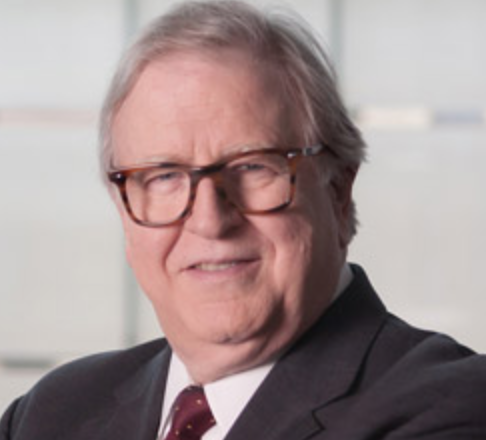
Richard P. Holm, M.D., author of Prairie Doc Perspectives, a weekly column published in Kansas, North Dakota, South Dakota and Wyoming, recently received the Nautilus Silver Book Award in the category of Aging Consciously for his recent book “Life’s Final Season: A Guide for Aging and Dying with Grace.”
“My sole purpose for writing this book was to help people…the well, the sick, those who are dying and those caring for elderly persons in the final season of their lives,” said Holm. “The Nautilus program celebrates books that inspire and connect lives and that seems to mesh well with my goal. I am honored to be among the authors to receive this award.”
For two decades, Nautilus has been held in particular high-regard for recognizing books that transcend barriers of culture, gender, race, and class. Dedicated to excellence and high standards of both message and presentation, its mission is to honor books that support the following concepts: conscious living and green values, high-level wellness, positive social change and social justice, and spiritual growth.
Last year, Nautilus received entries from 36 U.S. states and from 12 other nations in its search for Better Books for a Better World. The full roster of 2018 Nautilus Award winners, including Holm, can be found on their website.
Well into the process of writing his book, Holm at age 67, was diagnosed with cancer of the pancreas. His book tells of surviving his initial battle with the aid of chemotherapy and surgery. However, the cancer returned, and Holm finished a second round of chemo and additional surgery. He continues to confront health issues related to cancer.
Holm explains his book is more about living than dying, “Some chapters are written specifically to reduce the fear of death, but the intent of this book is that it be a guide to help individuals and caregivers in our quest to age and to eventually face dying with courage, grace, dignity and even enthusiasm.”
A native of De Smet, South Dakota, Holm earned his B.S. in medicine in 1973 from the University of South Dakota and his M.D. from Emory University School of Medicine in 1975. Holm retired after practicing medicine for nearly 40 years in Brookings, South Dakota. He and his wife, Joanie Holm, R.N., C.N.P. have four adult children and continue to live in Brookings where they are active members of the community.
In 2018 the University of South Dakota awarded its Alumni Achievement for Professional Service award to Holm. He was inducted into the South Dakota Hall of Fame and cited as “South Dakota’s Voice of Healthcare” in 2017. His state-wide weekly call-in show on South Dakota Public Television, “On Call with the Prairie Doc®,” is entering its 18th season.
“Life’s Final Season: A Guide for Aging and Dying with Grace” is currently available from Amazon.com and various bookstores throughout South Dakota. Holm participates as a Goodreads Author and ongoing updates about his work can be found on the Prairie Doc® Facebook page https://www.facebook.com/ThePrairieDoc/ and website https://www.prairiedoc.org/book.html.
Dr. Tisa Mason, FHSU presidentMy email includes a PassItOn.com quote of the day. Some days I click through them, often with a smile, but not a lot of thought. Other times I ponder them a bit more. One that immediately caught my full attention was this one about grit, which is a key characteristic of Fort Hays State University: “Grit is not just a simple elbow-grease term for rugged persistence. It is often an invisible display of endurance that lets you stay in an uncomfortable place, work hard to improve upon a given interest and do it again and again.”
Typically when I hear that term, I immediately think of our amazing student athletes and how this quality is often on display as they fight hard to perfect their performances and bring home the trophy for their alma mater. But this particular definition got me thinking about the every-day kind of grit that we often don’t notice.
Such as: the student who goes to the tutoring center over and over and over again to master the content of a difficult class; the faculty member who endures the painstaking repetition of re-doing and re-evaluating and rewriting trial after trial on a research project; or the software technician who pores over lines of code for hours on end to find the answer to “Why isn’t X working?”
I also found grit alive and well in another place where it is often overlooked – our music and theatre program. I have been enthralled by the students this year in “Mama Mia,” “Barefoot in the Park” and “The Marriage of Figaro.” Our students’ performances have captivated me with how effortless they make it look to bring characters to life before our very eyes. I knew it took time to learn their lines, but what really surprised me is how much grit is needed for them to deliver their characters.
I discovered this when I had the opportunity to visit with the charming Danni Dickerson, a junior music education major from Colorado. Danni played a leading role in all three productions this year – a challenge in itself. In fact, she often had to leave early from “Figaro” rehearsals to join the cast rehearsing “Barefoot in the Park.” I assumed she had been acting for a very long time.
Not true. In fact, she had not participated in theatre at all until she came to Fort Hays State. That is one thing I love about Fort Hays – how our environment encourages students to discover new talents and try new things.
Danni told me that when she began her college journey, she had her heart set on two things: going to a particular name-brand institution and being an orthodontist. She had dreamed about that university since she was a child, but as the college decision approached she became concerned about the cost and decided to tour Fort Hays State. That tour sealed the deal – she immediately knew she had found her college home.
Then, at pre-enrollment, she learned about the auditions for music scholarships. Since she was trying to drive down the cost of college, she decided to audition. She described the experience as very scary as well as highly successful.
From that initial audition experience of “feeling the fear and doing it anyway” she gained a music scholarship, a wonderful group of friends, an extremely encouraging and nurturing faculty – and a new major. She said she was never so clear on her life’s passion. She will teach children to sing, but more importantly she will use music to inspire their confidence, encourage them to try new things, and to embrace fear so they can take hold of incredible opportunities – just as she has done.
As I sat listening to Danni talk about her college life, I quickly realized I was listening to someone who possessed a lot of grit. She talked about terrifying auditions, taking risks, staying focused, and learning not to be so hard on herself. She knew that performing the lead role in the “Marriage of Figaro” opera was going to be a big challenge, but she was willing to put in her time and shift other priorities to perform well. She was learning and growing.
One of the biggest lessons she has learned is that she can do a lot more than she gives herself credit for. She discovered that sometimes you just have to get out of your own way – a comment that really resonated with me!
The “invisible display of endurance that lets you stay in an uncomfortable place, work hard to improve upon a given interest and do it again and again.” You cannot simply talk about being gritty. You have to live it. Danni Dickerson’s FHSU story definitely portrays grit.
Her future students will experience a dynamic, caring music teacher, and I am confident she will encourage their hearts and unleash new opportunities for each of them.
Kids today sometimes get the raw end of society. From time to time, I’ll read an article focusing on what’s wrong with them or overhear a conversation over coffee focusing on the problems with kids today.
Don’t be fooled — there’s still plenty of good out there!
I was recently privy to observing a group of teens band together and make a positive difference in the world by helping their neighbors because of the action of one. It is yet another testament proving there are great kids in the world. It just so happens these great kids come from my community in rural Kansas.
It all began when Makayla Schroeder, an 18-year-old high school senior, recognized a need and made the conscious decision to take action. She had been following reports of devastation in Nebraska so many are experiencing following the recent
floods. She wanted to pack a bag, jump in her truck and go help, but knew she had to be in school. She has less than a month until she graduates, and final exams are right around the corner.
Instead, what this young lady from central Kansas did opened the eyes of our small community and surrounding areas, left an imprint on her peers and spurred people to action.
Since she couldn’t pack her bags and go to Nebraska to help for an extended period of time, she decided to begin gathering items to assist flood victims here at home. She called her effort “Operation Feed the Critters.” She got her school advisers onboard, rallied her
friends in the local FFA chapter, made phone calls, used social media and made things happen.
It began as a post on her FFA chapter’s Facebook page letting the community know their ag shop was a collection point for Nebraska flood relief items. Her initial plan was to collect enough items to fill a pickup truck to deliver at a distribution point on a Saturday. However, a few days into “Operation Feed the Critters,” Makayla realized she would need a bigger truck.
Bags of dog food, bales of hay, milk replacer, work gloves, pallets of range cubes and other items started streaming in.
Area businesses, FFA chapters and others throughout south-central Kansas began collecting items from their staffs and communities and made trips to our small school to deliver their donations. Area stores even began offering discounts on items that were to be donated directly to the “Operation Feed the Critters” drive.
Soon, Makayla started making calls to secure a tractor-trailer.
After a week, she needed a second semi. So far, Makayla has helped send three truckloads of supplies to flood victims. All because of the initial action one Kansas teen.
Many people were involved in collecting items, loading the donations, spreading the word, and driving the semis. All of this happened because of one individual who saw an immediate need and wanted to make a difference by helping her neighbors.
Simply put, she acted.
The true beauty of it all was the ripple effect that took place when other teens jumped in to join their friend in serving others.
It’s amazing to see what the power of one person’s actions can do to make positive change. It’s even more amazing when those good things are done by kids these days.
“Insight” is a weekly column published by Kansas Farm Bureau, the state’s largest farm organization whose mission is to strengthen agriculture and the lives of Kansans through advocacy, education and service.
One of the most important programs I give is a hazardous occupation course for teenagers. Agriculture is a family- based business, and children are around dangerous situations from a very young age.
One way to make a situation less dangerous is education, learning what the dangers may be and how to avoid putting yourself in a position that has a greater likelihood of getting hurt.
On May 16th from 6-8:30 pm and also May 18th from 8 am-5pm, Cottonwood Extension District in Great Bend will hold its annual Tractor Safety class for youth ages 13-18. This class is required for teens ages 14-16 that are planning to work on a farm other than their immediate relatives.
It is encouraged for any youth that are going to be working around the farm or large machinery to also complete a tractor safety course. Farm accidents are the cause of 120,000 injuries a year and children are at a high danger when working on a farm or ranch. The 2-day course will cover the various risks that are on a farm as well as give young people the information they need to be safe when working. Cost is 15.00 and that covers the book, snacks and lunch on Saturday. Call the Extension office at 620-793-1910 to register for the class.
If you would like any more information about this opportunity for learning, please contact the Extension office for more information by calling 620-793-1910 or email me at [email protected].
Alicia Boor is an Agriculture and Natural Resources agent in the Cottonwood District (which includes Barton and Ellis counties) for K-State Research and Extension. You can contact her by e-mail at [email protected] or calling 620-793-1910.
Mr. S had gained some weight. His wife noted his snoring was getting worse and he was having spells when he would stop breathing during sleep. She informed his doctor who prescribed a home overnight oximetry test. This home test showed Mr. S’s oxygen levels were dropping dangerously low during much of night. The subsequent full sleep study indicated he would benefit from a continuous positive airway pressure or CPAP device. Five years later, the patient died from a heart attack, and the doctor found out that the CPAP machine stayed under his bed and was rarely, if ever, used. One study showed, despite its benefits, only 30 percent of those prescribed CPAP will actually use it.
An estimated 22 million Americans suffer from sleep apnea and the majority don’t know they have it. Their sleep is interrupted by snoring, choking and prolonged spells of low oxygen levels. Their days are troubled by fatigue, sleepiness, often abnormal heart rhythms and heart failure. Their risk of stroke over five years is two to three times higher than usual and risk of all-cause premature death three to five times higher. One estimate is that 38,000 annual deaths in the U.S. will occur from heart disease due to untreated sleep apnea.
Making the diagnosis is challenging. In 2016, we gave a standardized questionnaire to screen for sleep apnea to 67 people who were 70-years-old or older. Following that, we tested all 67 with home overnight oximetry. Of the 67 tested, 42 percent were normal, 31 percent had mild sleep apnea and 26 percent had moderate to severe sleep apnea. Conclusions from my study were that in this older age group, the commonly used screening questionnaires for sleep apnea misses the diagnosis half the time, about one out of four have life-threatening sleep apnea and, in this older population, women and men are equally burdened by this condition.
Anyone with heart disease, high blood pressure, obesity, a history of heavy snoring or observed spells of apnea (and maybe anyone reaching 70) would benefit from a home overnight oximetry test and, if this test is abnormal, from a full sleep study. If CPAP is prescribed, it would be wise for that individual to make every effort to use the CPAP device, knowing that this non-medicinal therapy reduces death rate by three to five times.
Many premature deaths, especially from heart disease, could be prevented by first discovering the diagnosis of sleep apnea and then, when apropos, by taking the CPAP cure.
For free and easy access to the entire Prairie Doc® library, visit www.prairiedoc.org and follow The Prairie Doc® on Facebook, featuring On Call with the Prairie Doc® a medical Q&A show streaming live most Thursdays at 7 p.m. central.
Martin HawverWell, we got last week the Consensus Revenue Estimate (CRE) for the upcoming two years of government in Kansas, and it was so low-key that you could have worn the same shirt the next day. No excitement.
That CRE, assembled by a group of state fiscal experts and university economics professors, predicts the state is going to take in about $15 million more in the next two years than most of us thought. Oh, there was good news in that the tiny predicted increases of money for the state to spend came after the Legislature and governor had spent $115 million this spring to repay money borrowed from the Kansas Public Employee Retirement System. So, the estimate on which the budget will be crafted reflects spending that most would consider reasonable.
But … there was no excitement. For a Legislature that stands for re-election next year, it wasn’t bad news — no tax increases needed to keep the Statehouse doors open — but also not enough increase in revenues to support much of a tax cut for those Kansans who will vote next fall on whether to send their legislator back to indoor parking, drinks and meals from lobbyists and, oh yes…running state government.
Practically, that CRE means that there isn’t any real need for a tax increase—except maybe taxing some of that neat stuff you buy over the Internet and wait two days to be delivered. That’s almost a freebie. Sales-tax that Internet stuff like you tax the sales at brick and mortar stores which sell the same stuff. Doesn’t sound very radical, does it?
The low CRE increase isn’t all bad news. It might actually have the effect of finally spending some money on things like, well, K-12 finance, on social workers and prison guards and those social policies that don’t show up for all of us, but which make the state a better place to live and maybe provide better lives for those who live here.
That isn’t the sort of policy/spending that leads to exciting discussions at the screen door between candidates and voters, or that leads to fascinating palm cards to hand out, but it probably means that lawmakers get to spend time concentrating on better management, more effective programs and a more businesslike government.
So, what’s possible with the meager increase in state revenues?
Look for some little tax cuts, specifically targeted to improve lives. Not the $130 million that corporations wanted. When there’s not much money to spend, lawmakers tend to focus on voters, not corporations.
And with not much money for tax cuts, that mostly-for-show one percent cut in the sales tax on food likely will be thought through a little better than what was mostly decoration on the tax cut bill vetoed by Gov. Laura Kelly. Remember that? As icing on the corporate/upper-middle class tax reduction bill, lawmakers cut the sales tax on groceries by a penny on the dollar. Spend $10 at the grocery store? You save a dime. Not exactly the way to see Kansans better finance their rent or car payments or kids’ school clothes, is it? There are surely better ways to help the poor than with pocket change that won’t even buy a candy bar.
Nope, no excitement from the revenue estimate. Sorta like catching your car door before it swings out and bangs the other car. But there’s a dab of money there and while it will take a little longer to explain, those social programs, health care, prison guards, pre-school education for children all pay off as good investments.
Just not very flashy.
Syndicated by Hawver News Company LLC of Topeka; Martin Hawver is publisher of Hawver’s Capitol Report—to learn more about this nonpartisan statewide political news service, visit the website at www.hawvernews.com
The Trump administration announced it will no longer grant waivers to countries currently importing oil from Iran. China, Japan, India, Turkey and South Korea, have continued to do business with the Islamic republic despite U.S. Sanctions. But the special wavers will not be renewed, which threatens to wipe roughly 1 million barrels per day off the market. The news sent crude futures prices up by more than three percent on Monday.
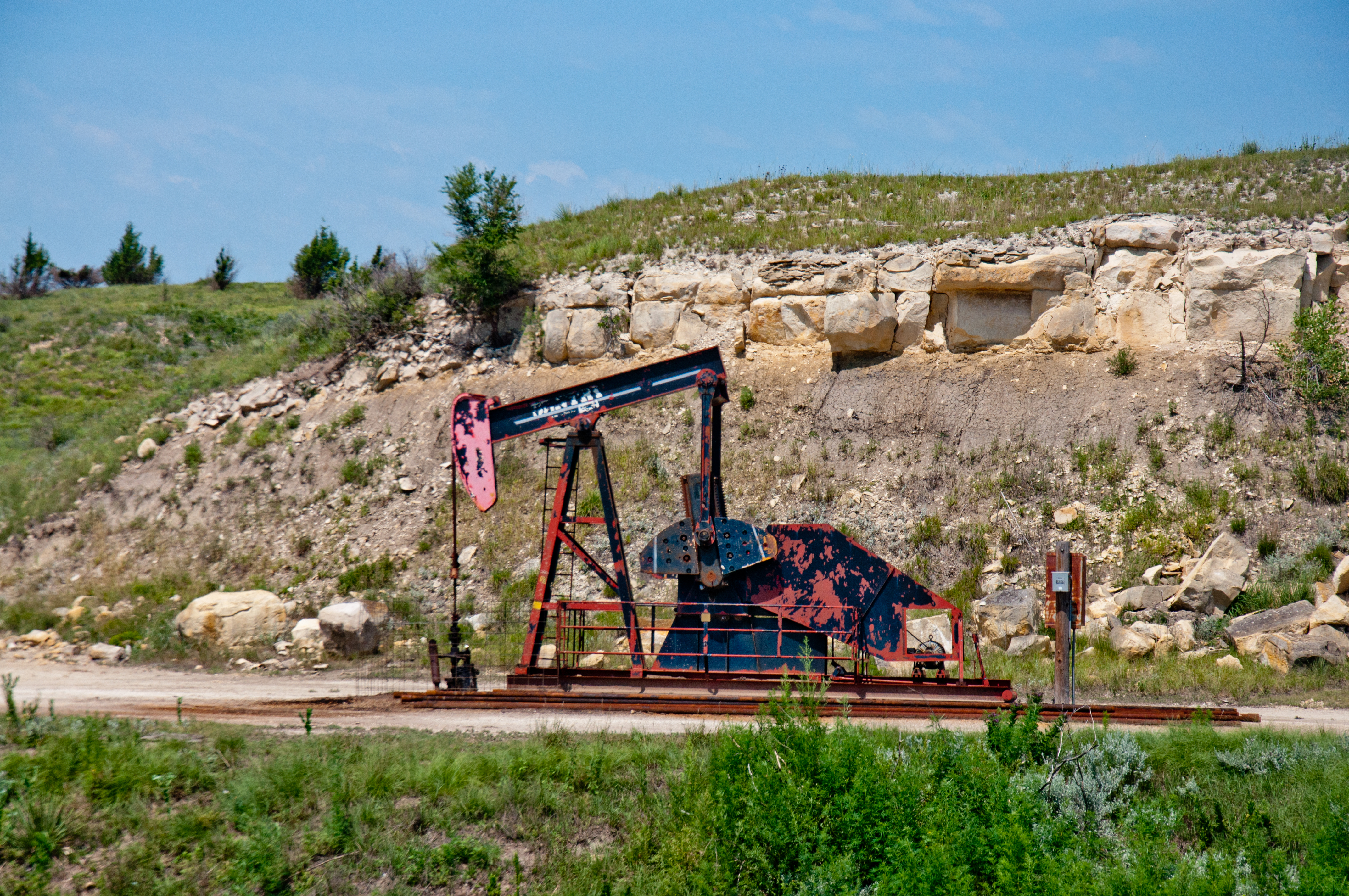
Independent Oil & Gas Service reported a slight drop in last week’s active drilling rig counts in Kansas. There were six active rigs east of Wichita, down three, and 22 in Western Kansas, down two. Drilling was underway at sites in Ellis and Stafford County. Operators are about two spud on one lease in Barton County and two in Ellis County.
Baker Hughes reported a big drop in active rigs across the U.S. for last week, down eight oil rigs and two gas rigs for a total of 1,012. Oklahoma and Texas were each down two rigs. Canada reported 66 rigs which is unchanged from the week before.
Independent Oil & Gas Service reported 17 new well completions for the week, 471 so far this year. There were four in eastern Kansas, and out of the 13 newly-completed wells in western Kansas, more than half were dry holes. There was one new completion in Ellis County.
Operators received 21 permits for drilling at new locations across Kansas last week, two east of Wichita and 19 in the western half of the state. Regulators have issued 262 new permits so far this year.
Last year the U.S. exported nearly double the amount of crude oil it sent abroad the year before. Domestic exports rose to two million barrels per day last year. According to data compiled and reported on the Web site World Oil dot com, Canada remains the largest single destination for U.S. exports, at an average 378-thousand barrels per day. That’s about 19% of the total. South Korea surpassed China to become the second-largest U.S. customer.
Industry observers report a dramatic increase in oil-by-rail shipments. According to the Association of American Railroads, U.S. shipments increased nearly 39% for the week ending April 13 compared to a year earlier, to more than 13-thousand rail cars. Canada reported a nearly 26% increase in oil-by-rail shipments.
Saudi Arabia is once again floating the idea of selling its crude oil in currencies other than the U.S. dollar, if American lawmakers pass an anti-OPEC bill. Reuters reports the Arab kingdom is preparing a strategy to deal with the possible passage of “NOPEC,” the No Oil Producing and Exporting Cartels Act. The bill is widely viewed as a non-starter, suggesting the Saudi effort is also unlikely to come to pass. Despite that, Reuters cites two sources saying the kingdom has discussed the proposal with other OPEC members.
Another source said the Saudis have broached the subject with U.S. energy officials. If the Saudis follow through, it would chip away at U.S. influence over the world’s financial markets and our ability to enforce sanctions on foreign entities. Efforts to diminish the greenback’s role in oil trading have been fairly limited to date, but would represent a coup for countries like Russia and China.
Dr. Roger Marshall, R-Great Bend, is the First District Kansas Congressman.
Friends,
Sadly, last week we saw a historical religious symbol destroyed. The Notre Dame Cathedral has stood tall since 1345 and was an icon for the country of France. I was devastated by the destruction the fire cause but am heartened by the generosity of the French people and their determination to rebuild it with speed. I look forward to seeing it stand once more.
Back at home, the Mueller Report was finally released. I have always supported its release and I am glad that we live in a country where such transparency is possible. As the full details come out I am pleased that we will be able to put this shameful chapter of American history behind us and focus on the road ahead.
Fixing our Infrastructure
I had the opportunity to tour Bergkamp, Inc in Salina, which manufactures road maintenance and preservation equipment. We discussed the importance and impact of road preservation, and the need for robust infrastructure funding throughout Kansas. Everyday, our highways are used not only to move people across the state, but also to get our commodities like corn, beef, and wheat to market. Ensuring that our roads and highways are in good condition is an important part of keeping the Kansas economy growing and rural America thriving.
Gojmerac
Welcome Home Soldier
At just 29 years old, Nicholas J. Gojmerac from Kansas City, Kansas, was fighting for our country and his life during a brutal attack on the Solomon Islands. It was 1943, we were in the middle of World War II when Gojmerac crawled through the battlefield to help a friend that had been severely wounded, in his act of bravery, he too was injured by machine gun fire. Still, he pressed on, dragging his wounded comrade off of the battleground to find safety and medical care.
Despite his heroic efforts that day to save his friend in combat, it was on that day, July 20th, 1943, that Nicholas fought his final battle, and it was the last time anyone saw Marine Corps Reserve PFC Gojmerac alive. He was listed at MIA- Missing in Action.
As a salute to his bravery and sacrifice, PFC Gojmerac was later, posthumously, awarded the Distinguished Service Cross and the Purple Heart award.
But his family and friends, for 76 years, were left with more questions than answers, unable to lay his remains to rest. Of the 16 million Americans who served in World War II, more than 400,000 died during the war. Today, more than 72,700 of those soldiers are still unaccounted for.
In September, The Defense POW/MIA Accounting Agency (DPAA) through an extensive dental and anthropological analysis, as well as circumstantial, historical and material evidence evaluation identified remains recovered from a burial site on the Solomon Islands as Nicholas J. Gojmerac.
He was transported back to Kansas, where he was laid to rest with full military honors at the at Leavenworth National Cemetery.
Welcome home soldier. Thank you for your service, your bravery, and your patriotism.
National Grain and Feed Association
Members of the National Grain and Feed Association stopped by the office to discuss a number of issues including: trade, infrastructure, transportation, and the ongoing challenges facing producers back home on the farm. As the Trump Administration continues to negotiate a new trade deal in North America, as well as others across the globe in Asia and elsewhere, we must ensure that our roads, rails, and waterways here at home can continue to support the movement of grain and goods produced by hard working Kansans to market.
Although there are many struggles currently facing the rural economy I am proud to advocate on their behalf in Washington to ensure that conditions improve as quickly as possible.
Bridging the Gap, Vietnam War Vets Give Personal Accounts of the War
I am so proud of the work that Humanities Kansas continues to do for our communities. For those unfamiliar with HK, their mission is to draw people together and generate new ideas through sharing peoples stories, starting conversations, and taking action to help Kansas Communities.
Their latest campaign was dedicated to sharing the stories of the Vietnam war through the eyes of veterans that fought in the battle. HK helped share the stories of more than 100 Kansas Vietnam veterans through audio recordings and sent them to the Library of Congress to be archived so that their personal accounts and memories from the war will never be forgotten. This oral history project connected with veterans in various communities across my district, including Salina, Onaga, and Abilene, and I had the honor of joining for the launch of the project in Jetmore last August.
It’s crucial that we continue to dive deeper to truly understand our nation’s history, especially when there’s still an opportunity to see the events through the lens of veterans and families that endured it that can provide first-hand accounts of their experiences.
By putting the spotlight on our veterans’ voices, Humanities Kansas is bridging the gap between those who lived through the war era and those who have merely read about it in their school’s history books.
Pro-Life Movement
Many Kansans are as appalled as I was at the horrible anti-life legislation we have seen come from the New York legislature. As we see more and more evil legislation being proposed it can be easy to become discouraged so I want to take the time to highlight some of the great work being accomplished from the pro-life movement at the State level.
Last week the Texas House passed a Born-Alive Infant Protection Act. This legislation is something I have been fighting tooth and nail against the anti-life Democrats to have passed in the House and I cannot express how great it feels to see states finding success. The Centers for Disease Control and Prevention reported that from 2003-2014 at least 143 infants died after being born alive during an abortion procedure. To say that this is unacceptable would be a grave understatement. Currently only six states even have to report when a baby survives an abortion, and in 2017 from those six states alone there were at least 25 babies born alive. These are living infants who need our protection.
We have also seen success with “Heartbeat Bills” in multiple states. In Kentucky they have signed a Heartbeat bill into law and are currently defending it in court. In Georgia another similar bill has passed their legislature and need only be signed by the Governor to become law. These pieces of legislation protect the life of infants as soon as a heartbeat can be detected and are important steps towards getting the Supreme Court to abolishing the detestable practice of late term abortion. I applaud the work being done by these state legislators and the pro-life community and give you all my word that I will continue my fight here in Washington.
Digital Divide Update
Last week we had more than 20 representatives from rural telecommunications companies in D.C. to discuss issues related to broadband deployment. Over the past two years, I’ve had the opportunity to meet with many of them back in Kansas and see firsthand the work they’re doing across the state! This group discussed challenges and inaccuracies with the current national broadband map, which impacts availability of federal funding for these small providers working to build out broadband infrastructure in rural communities. Last year, Congress directed the National Telecommunications and Information Administration, the Federal Communications Commission, and the U.S. Department of Agriculture to work together to update the national broadband map, so that we can better deploy broadband across the country.
KU Hospital Leaders Discuss Rural America Health Care Access
I had the opportunity to sit down with a great group from the KU Hospital Association for a great discussion centered around the needs of rural hospitals. We discussed the demographic challenges rural America faces in terms of an aging population base, and must ensure that all Kansans have access to a health care system that works for them. We need our public institutions to be working to develop systems that work for our rural population and I plan to see that they do so.
I will be advocating for the Center for Medicare and Medicaid Innovation (CMMI) to develop a program to establish new models of care for rural hospitals
We also talked about a vital program to rural hospitals, the 340B Drug Discount Program. This program allows safety-net health care organizations serving vulnerable populations to purchase prescription drugs at a discount. Kansas rural hospitals have utilized the savings to maintain capacity and provide services to patients in need. I support the 340B program and what it has done to help the people of Kansas.
KS Council on Developmental Disabilities
Kansas Council on Developmental Disabilities dropped by the Hill! We had great discussions about employment for those who have disabilities. Those with disabilities have a hard time finding jobs that are suitable for them and their needs, but it is really important that they are able to. Workforce Innovation & Opportunity Act allows men and women with disabilities to find high quality workforce and prepares them for competition in the work place. The Act will have State vocational rehabilitation agencies set aside funds and put that towards services that will help young people with disabilities transition into the workforce. I am glad to be an advocate for those who struggle with any sort of disability and help them find a perfect fit for work!
Wichita REAP Council Meeting
Last week I gave a speech at the Regional Economic Area Partnership (REAP) Council Meeting in Wichita about the importance of the agriculture community for South-Central Kansas and what is being done in Washington on their behalf. I updated the council on the process of implementing the Farm Bill. While the shutdown that ended earlier this year caused minor delays, USDA is working diligently to get back on track to make sure that all Kansans in the ag community get the support that they need.
I also informed the REAP council about ongoing trade negotiations with foreign economies. I met last week with Minister Xu Xueyuan from the Chinese embassy for trade discussions centered around the high quality beef, grain, and other agricultural exports that are produced back home. The Trump Administration has also recently started bilateral trade talks with Japan in Washington DC. As the third largest economy in the world this presents huge potential for Kansas producers. Finally, I brought the counsel up to speed on the letter I led regarding the Tariff Rate Quota (TRQ) for wheat imports into Brazil. After several decades of defiance, I am very pleased that the new leadership in Brazil has committed to finally following the World Trade Organization law and will comply with the TRQ, presenting increased export opportunities for our farmers in Kansas and across the country.
Dr. Roger Marshall, R-Great Bend, is the Kansas First District Congressman.
State Executive Director USDA Photo by Preston Keres
By DAVID SCHEMM Kansas Farm Service Agency State Executive Director
and KAREN WOODRICH Natural Resources Conservation Service Kansas State Conservationist
At USDA, we celebrate Earth Day 2019 by offering big thank-yous to farmers and ranchers here in Kansas for all they do. Every day we see their efforts to conserve natural resources while producing food, fiber and fuel for people in their communities and around the world. They are doing what needs to be done to make sure we all enjoy the benefits of clean and plentiful water and healthy soils, ecosystems and wildlife habitat.
This year’s Earth Day theme, “Protect Our Species,” highlights the responsibility we share in supporting wildlife. Two-thirds of the land in the continental United States is privately owned, and the decisions that farmers and ranchers make for their land can impact wildlife.
Working lands are what Kansas is made of. These lands work to support healthy families by providing abundant food, healthy soils, clean water and abundant wildlife. Kansas farmers, ranchers, and forest owners are keenly aware of the value of crop production, prairie ecosystems, and forests and have made great strides to protect their natural resource in harmony with day-to-day operations. Earth Day provides an opportunity to recognize the conservationists we have in our backyards, our neighborhoods, and up and down our beautiful landscape.
We at USDA believe people and wildlife can thrive together. USDA’s Farm Service Agency and Natural Resources Conservation Service assist agricultural producers with adopting conservation practices that benefit not only farms, ranches and forest lands but wildlife species. In Kansas as well as across the nation, producers and landowners have played and continue to play important roles in helping wildlife species flourish, rebound or recover.
Kansas landowners have been instrumental in preserving the largest remaining population of Lesser Prairie Chicken within their original five state native range of the species. Through Farm Service Agency, Kansas landowners enrolled over 1.1 million acres of native grass cover into the Conservation Reserve Program (CRP) in the heart of the Lesser Prairie Chicken native range, thus helping to remove the species from the endangered listing. Native covers under the CRP program offers Lesser Prairie Chicken ideal habitat for brood and nesting habitat especially when located adjacent to native rangeland and cropland.
NRCS’s Environmental Quality Incentives Program through a Regional Conservation Partnership Program with the National Fish and Wildlife Foundation provides a great opportunity for ranchers and farmers to develop and improve working lands for Monarch butterflies. Monarch butterfly migration is under way and the first monarch was spotted in Kansas on April 7, according to Journey North. If you see a monarch now and its color seems a little pale or faded, there is a good chance it has flown in from Mexico. Monarch butterflies are a species with a declining population that need milkweeds to lay their eggs and wildflowers to feed on their nectar. Kansas rangelands, roadsides, and odd areas are typical places to find milkweeds. To learn more about managing your land for monarchs or pollinators, contact NRCS at your local USDA Service Center.
USDA offers a wide array of Farm Bill programs to help Kansas producers make wildlife-friendly improvements to croplands, grazing lands and working forests, as well as benefit agricultural operations. Programs include the Conservation Reserve Program, the Environmental Quality Incentives Program and the Agricultural Conservation Easement Program. USDA also offers free conservation advice as well and financial assistance to help implement conservation practices.
If you farm or ranch, we encourage you to reach out to your local FSA and NRCS representatives at your nearest USDA service center to see if there is a program right for your operation. If you’re not a farmer or rancher, on this Earth Day please thank one for the work he or she does to put food on our tables and to conserve our natural resources and support our nation’s wildlife.
Steve Gilliland
High on a barren windy bluff overlooking Kanopolis Lake stands the weathered remnants of a project never heard of by most Kansans. Known as the eagle “hack tower,” it’s all that remains of a fourteen year endeavor to augment the population of nesting pairs of wild Golden Eagles in Kansas.
“Hacking” is a term created by falconers to encompass the entire process of rearing young birds in the wild, while giving them no visual contact with their handlers, then releasing them with hopes they will someday return to nest where they themselves were fledged.
This joint project between the KDWP and other agencies operated from 1986 through 1996 at Wilson reservoir during which time 33 young golden eagles were fledged and released into the wild. During those years, a nearby prairie dog town was destroyed, eliminating a major source of prey for the young eagles. In 1997 a group of Westar current and retired employees known as the Green Team became interested in the project’s proposed move to Kanopolis and donated time, labor and materials to construct the hacking tower that stands there in ruins today.
The hack tower stood 7 feet off the ground and consisted of 3 separate units 8 feet x 9 feet square and 6 feet tall. The units were built 4 feet apart from each other allowing an attendant to feed, water and observe the eagles while remaining unseen. The back of each cage was enclosed, but the front of each was constructed of rows of pipe, enabling the eaglets to become familiar with their surroundings and to see each other. The pipe fronts of the cages simply hinged downward when the time came to release the eagles into the wild. A sliding door in each unit allowed for watering and a large PVC pipe through the wall of each allowed for meat to be inconspicuously slipped into the cage. In 1997, when the project moved to Kanopolis, a 30 to 35 acre prairie dog town thrived adjacent to the tower.
Over the 14 years of the project, wild golden eagle chicks were obtained from Colorado and Wyoming, and captive-hatched chicks were obtained from zoos in Kansas and Alabama. The goal was to get chicks that were 7 to 8 weeks old and to open the cages when the chicks reached 11 weeks. Newly procured golden eagle chicks were put into the cages, sometimes 2 to a cage depending on the number obtained.
Each unit contained sticks and limbs for perches and a makeshift nest in the corner to keep their surroundings as natural as possible. Summer volunteers fed them chunks of domestic rabbit meat through the PVC pipe chutes and gave them water through the sliding doors, always vigilant to remain unseen so the eaglets would never associate humans with being fed. While the chicks remained confined they were closely observed either from a walkway along the back of the tower or from a blind set up nearby.
When all the birds were deemed ready for their freedom, radio transmitters were attached to each and the cage fronts lowered so the young eagles could then come and go as they pleased. Feeding was still maintained after the birds were released in hopes of keeping them in the area a little longer and to augment their diets while they learned to fend for themselves.
At this point since the eagles were no longer confined, it became a little trickier to provide food for them at the hack tower while still remaining inconspicuous. I contacted one of the guys who worked as an intern one summer during the project, and he told me stories of hiking through the prairie dog town each night after dark carrying road-killed carcasses because the domestic rabbit meat had run out. He would sneak as close to the tower as possible, fling the carcasses up onto the tower platform and retreat the way he had arrived.
This is yet another story in an amazing journal of adventures that never in a million years would I have associated with the state of Kansas. According to reports I read and participants with whom I spoke, this golden eagle reintroduction program appears to have fledged 39 young eagles into the wild during its fourteen year existence. For reasons unexplainable, and to the best of anyone’s knowledge, none of those golden eagles ever returned to nest in Kansas. The program ceased for several reasons, but the clincher seemed to be an increased difficulty in obtaining golden eagle chicks.
Today, the hacking tower stands empty, quiet and falling down and the nearby prairie dog town barely survives if at all. Even though it didn’t give the desired results, can any project that added 39 more of those majestic birds to our skies ever be called a failure? …Continue to Explore Kansas Outdoors!
Steve Gilliland, Inman, can be contacted by email at [email protected].
Gene PolicinskiFirst Amendment advocates may well be stuck sometime down the road with Julian Assange’s WikiLeaks defense — even if it sticks in some throats.
Assange currently faces extradition to the U.S. for prosecution on computer hacking charges related to WikiLeaks obtaining and posting classified military data, memos and such in 2010 from then-U.S. Army soldier Chelsea Manning. The specific charge sidesteps for now a collision with the First Amendment, which does not protect anyone from prosecution for criminal acts, such as breaking into government computers.
But as the Assange saga unfolds, a number of news outlets report that U.S. prosecutors may bring additional charges ranging from how Assange dealt with his sources to the dissemination — Assange would say “publishing” — of that stolen material. That’s where it will get sticky for journalists.
Those added charges likely would threaten legal protections afforded those who report confidential information obtained by others. One, known informally as the “over the transom” or “innocent third party” defense, protects those receiving and reporting information who are not involved in the act of obtaining it. A transom is a small window above a door that can be tilted open while the door below remains shut — hence, information dropped into a room “over the transom,” shields the party delivering it.
A 2001 Supreme Court decision in Bartnicki v. Vopper involved illegally intercepted telephone conversations. The 6-3 decision said that while the government certainly could charge persons who intercepted the calls, it could not successfully prosecute the radio host who was given a recording and played portions of those conversations over the air. The court noted the privacy aspects of the case gave way to reporting on matters of high public interest.
In the years since, journalists have relied on that ruling in reporting national security secrets and confidential city records. In turn, authorities have for various reasons focused on prosecuting the “leakers” rather than those who published the information. However, Bartnicki has not been directly tested in a national security setting — it was a civil lawsuit, not a criminal case.
At least one Justice Department prosecution came close to charging a journalist who received classified information. In 2013, Fox News reporter James Rosen was declared an unindicted co-conspirator under the Espionage Act during an investigation of a State Department employee who leaked information to him involving North Korean missile tests. The official was convicted under the Espionage Act, but Rosen was never prosecuted.
Assange, an Australian computer programmer and social activist at an early age, now loudly proclaims himself a journalist and that WikiLeaks is a news organization. But leading First Amendment lawyer Floyd Abrams has written a well-founded repudiation — WikiLeaks does no real reporting, adds no analysis or context and seemingly fails to consider the harm its “data dumps” of state secrets may cause others.
Others raise a pragmatic point — Assange’s release of state secrets has proven to be a major factor in discouraging Congress from enacting a proposed federal “shield law” that would (with no small amount of irony here) largely protect journalists from federal courts and grand juries demanding to know confidential sources.
But the American Civil Liberties Union, Committee to Protect Journalists and Assange’s lawyer Jennifer Robinson all said extraditing and prosecuting Assange sets a dangerous precedent for U.S. journalists who could to face similar charges brought by repressive foreign governments for publishing truthful information.
Some journalists and activists see a lack of support among U.S. editors and reporters as something more sinister, some writing that failing to back Assange exposes those journalists as unwilling to challenge government propaganda or power, even being “tools of the Empire.”
I’m for parsing things this way — consider Assange a political player who actively encourages information leaks and uses a journalist’s tools to influence political policy disputes, debates and decisions. Let him argue “free speech” rather than “free press.” There is an argument that even under the Espionage Act there is a defense of sorts — intent was in the public interest rather than in bringing harm to the United States. Chalk the unwillingness of many journalists in the U.S. to back Assange to something more pragmatic than philosophical. A friend and longtime journalist put it this way: “It’s how cops view someone who puts on a stolen uniform and badge.”
The U.S. government’s prosecution ultimately may rest on showing how — and to what degree — Assange cultivated Manning as a source. If he is found to have conspired with Manning on the theft, there’s no First Amendment or Bartnicki defense. Even there, though, the impact on journalists is concerning — the public is not served by restricting national security reporters to sitting in offices waiting for materials to land in their collective laps.
Any additional charges brought against Assange should be considered in the context that it is in the public interest that reporters be able to reach out to experts working on national security matters to discuss policy and even have conversations about how information might influence public views if disclosed.
Yes, that may well mean drawing a fine legal line between “cultivating” sources and conspiring with them. But we have all been well-served by disclosures in the public interest of secret or confidential government documents and information — from the Pentagon Papers to undisclosed telephone and internet surveillance programs to information that properly armored vehicles were not reaching U.S. troops overseas, causing unnecessary deaths.
Journalists are the watchdogs by which we all can know information improperly classified, withheld for political gain or around which legitimate debate should occur — a process that could also be described to operate in the interest of national security.
Gene Policinski is president and chief operating officer of the Freedom Forum Institute. He can be reached at [email protected], or follow him on Twitter at @genefac.
Ron Wilson is director of the Huck Boyd National Institute for Rural Development at Kansas State University.
By RON WILSON Huck Boyd National Institute for Rural Development
Someone has to be the first. When the U.S. military enters an international conflict, some soldier has to be the first to lead his unit into combat. That soldier is like the tip of a dagger, bravely entering a life and death conflict. Today we’ll learn the remarkable story of a young Kansas man who served his nation in this amazing way.
Mark Nutsch is the former commander of the first Green Beret unit which went in to Afghanistan after the bombing of 9-11. His harrowing and heroic true story would become a major motion picture.
Mark Nutsch grew up near Washington, Kansas. Today his family farms in Wabaunsee County near the rural community of Alma, population 783 people. Now, that’s rural. Mark came to K-State where he joined the college rodeo team.
After graduating from K-State, he joined the U.S. Army and became an officer in the special forces. He was captain of a unit called Operational Detachment-Alpha 595 and led missions to Uzbekistan and Kuwait. In early September 2001, he joined the battalion staff.
Then came Sept. 11, 2001. Terrorists hijacked planes and crashed them into New York’s Twin Towers and the Pentagon. Like many people, Mark Nutsch watched it happen and tried to make sense of it all. He was with his six-month-pregnant wife and their two young children at the time.
The U.S. military immediately began planning a response. It was called Task Force Dagger. Captain Mark Nutsch was reunited with his unit. They would ultimately be designated to be the first to go fight the Taliban.
Mark Nutsch’s 12-man unit was an experienced, mature crew. “We averaged 32 years old, had eight years’ experience, and most of us were married with two kids,” Mark said.
The unit faced the tallest of odds. They would be outgunned and outnumbered 40-to-one, in unfamiliar enemy territory with uncertain allies.
On Oct. 19, 2001, Mark and his unit were helicoptered into Uzbekistan. There they connected with local Muslim soldiers who also opposed the Taliban. They began the campaign to retake Afghanistan. But instead of jeeps or tanks, the local Afghan fighters used an unexpected type of transportation: Horses.
Fortunately, farmboy Mark Nutsch knew his way around horses. He gave some quick riding lessons to his fellow soldiers. K-State President Richard Myers, then Chairman of the Joint Chiefs of Staff, recalled receiving the unprecedented request to airlift saddles, saddle blankets and hay to the site. The military did so.
The Afghan and American fighters would eventually go through the desert and mountains on horseback to accomplish their mission. Against the odds, all 12 men in Mark Nutsch’s unit survived. Operation Enduring Freedom ended with the overthrow of the Taliban, as jubilant Afghans celebrated in the streets.
This amazing story was recounted in a best-selling book named Horse Soldiers. After the files were declassified, the story was made into a movie named 12 Strong. Mark Nutsch’s character, named Captain Mitch Nelson in the movie, is portrayed in the show by actor Chris Hemsworth who also plays Thor in the Avenger series.
In real life, Mark Nutsch received a Bronze Star with valor for his courage and leadership. He is now a consultant for Army Special Operations and has opened a whiskey distillery business. He also remains supportive of his family and the Flint Hills of Kansas.
Mark was recently named by the Flint Hills Discovery Center Foundation as National Honorary Campaign Chair for the Foundation’s Next Vistas fundraising campaign to benefit the Flint Hills Discovery Center. For more information, see www.flinthillsdiscovery.org/foundation.
Someone has to be first. Some soldier has to be the first one to lead his unit into battle on behalf of his nation. In the aftermath of 9-11, it was Captain Mark Nutsch from rural Kansas who led his team on that initial mission. Now he is continuing to serve his state and nation as a volunteer with the Flint Hills Discovery Center Foundation. We commend Mark Nutsch and all soldiers, families and veterans who are making a difference with their service. I appreciate these brave young men and women who are putting duty first.
TOPEKA – The following message is from Governor Laura Kelly regarding House Bill 2209:
House Bill 2209 makes sweeping changes to healthcare policy in Kansas. After long and careful deliberation – including in-depth discussions with both opponents and proponents — I continue to harbor serious reservations about this legislation. I believe it is fundamentally wrong to deny health coverage to anyone because they have a pre-existing condition. It troubles me that only two other states in the nation have implemented a model similar to this bill, making the long-term impact uncertain. And I am disappointed that the Kansas Insurance Department chose not to engage with the Legislature to ensure the final product included basic consumer protections and regulatory safeguards. Therefore, as a matter of principle, I cannot sign House Bill 2209.
I also fundamentally believe that governing demands a relentless pursuit of common ground. Proponents of House Bill 2209 brought this legislation forward because healthcare costs far too much. Our rural communities need help. Kansas farmers and ranchers face historic challenges in the wake of declining farm income, severe weather, and a global trade war. They openly acknowledge that this bill will not solve all the complex problems plaguing our healthcare system. In their opinion, an “all of the above” approach stands the best chance of helping the greatest number of Kansans. On these points, I wholeheartedly agree.
With that larger vision and shared goal in mind, I will allow House Bill 2209 to become law without my signature. New ideas always carry a certain level of risk. I believe the potential risks of this legislation can be mitigated if they are coupled with a stable, secure, proven healthcare option: Medicaid Expansion.
In the last decade, Medicaid Expansion has been thoroughly vetted from every imaginable angle, with over 300 studies confirming its effectiveness and necessity. We know with certainty that it will strengthen our economy, save taxpayer dollars, and provide healthcare to roughly 150,000 Kansans. A majority of the Kansas Legislature already voted for my proposal in 2017 or publicly promised to support Expansion in their 2018 campaigns. Over 70 percent of states – with both Republican and Democratic governors – have expanded Medicaid. And 77 percent of Kansans want us to do the same.
Unfortunately, leaders in the Kansas Senate continue to prioritize their own political ambitions over the health and security of Kansas families and hospitals. Despite the will of both their chamber and their state, these three Senate leaders remain devoutly committed to partisan obstructionism.
I will never govern in this manner. My priority will always be the people of Kansas, and I allow House Bill 2209 to become law as a demonstration of my genuine commitment to compromise. I challenge legislators to join me in this good-faith effort, meet me halfway, and enact Medicaid Expansion before the 2019 legislative session adjourns.