We have a brand new updated website! Click here to check it out!

SCHROCK: Teacher shortage — moving, leaving and not entering

John Richard Schrock is a professor at Emporia State University.

Teacher shortages are growing nationwide. Fewer students are entering teaching. More veteran teachers are leaving the classroom. There has always been a shortage in inner city schools, and in specific disciplines such as special education and secondary physics. But now, teacher shortages extend into all disciplines including elementary education. With no overall solutions, more states are lowering the bar, filling positions with online-“trained,” tested-out, or other alternate route “teachers.” In some states, veteran teachers call these recruits “heartbeat” teachers because that appears to be their only qualification, and experienced teachers have the burden of assisting their clueless new colleagues.

Surveys have attempted to assess the reasons for this growing shortage, but few are asking the right questions, often using a query about “school climate” without detailing what specific factors are involved: respect from administrators, threats involving test scores, support of disciplinary actions, etc.?

The National Center for Educational Statistics conducted a nationwide “Schools and Staffing Survey” seven times between 1987 through 2011 and has conducted a “National Teacher and Principal Survey” since. Nearly every state tabulates the extent of its teacher shortage, although there is much variation in the way permit teachers, emergency teachers, teachers with waivers, and other non-standard-licensed or uncertified teachers are counted in or out of the shortage. These variations make it difficult to tally a common set of reasons or extent of the real shortage.
But I have a network of former students who are now secondary teachers, along with a cohort of teachers coast-to-coast who read this column and are eager to share their concerns. Their narrative into why they are losing colleagues provides insight into the complex situations in public schools.

Those teachers fortunate enough to teach in an affluent community were mostly unaffected by the No Child Left Behind (NCLB) shift to testing. Indeed, some teachers from poorer or rural districts felt fortunate when they were hired into an affluent district. However, this has left less affluent districts with much higher rates of teacher shortage. —So, different schools, different problems.

The foremost cause of leaving teaching is their loss of professional responsibility caused by the shift to external testing under NCLB. Science teachers were first to leave when they were unable to continue offering genuine labwork and field trips. With the reputation of their school and even their job depending on test results, classwork shifted to teaching-to-the-test rote memorization. Many teachers had to stop using printed textbooks and were directed to use all-online materials. Principals would write in professional journals how the new generation of tech-savvy student teachers were to be preferred to the old veteran teachers who resisted this digital futurism. Some veteran teachers became fed up and retired early or entered science vocations outside of teaching. Teachers in other disciplines likewise retired in growing numbers, expressing relief they got out. Some teachers became mere monitors of a room of laptops under the ironically impersonal “personalized education.” In these last two decades, public school students have seen their teachers de-professionalized; this has a major impact, discouraging this next generation of students from wanting to become teachers. They wanted to change students’ lives, not drill-and-kill student interest.

The second important reason, often hidden in surveys under “school climate,” is classroom discipline and lack of administrative support. Veteran teachers remember when a student who got in trouble at school also got in trouble when they got home. Now it is likely the parent of the misbehaving student will arrive at school the next day to blame the teacher. A survey in the October 6 Education Week found that 69 percent of administrators felt their teachers were empowered to bring problems to them; only 25 percent of teachers agreed. Lack of administrative support is now a serious concern of many teachers.

Money usually is not the reason for rejecting teaching. But more teachers are now finding they cannot afford housing in their school’s community. Potential teachers value education and when the cost of higher education exceeds their ability to pay for their own children’s tuition, it is natural that they choose another vocation. States have failed to keep school teachers’ professional salaries adequate.

Universities that attempt to lure teaching candidates from other fields and train them online and send them into classrooms as rookies with a masters degree (and therefore higher salary) also anger regular licensed teachers who are well-trained and experienced, but paid less with their bachelors degrees.

Finally, lack of respect from our society at-large figures into some teachers decision to leave teaching and in the drop in students entering teaching. In countries that respect teachers, in Europe and Asia, only 2–3 percent leave teaching annually; in the United States, that figure is over 8 percent.

John Richard Schrock is a professor at Emporia State University.
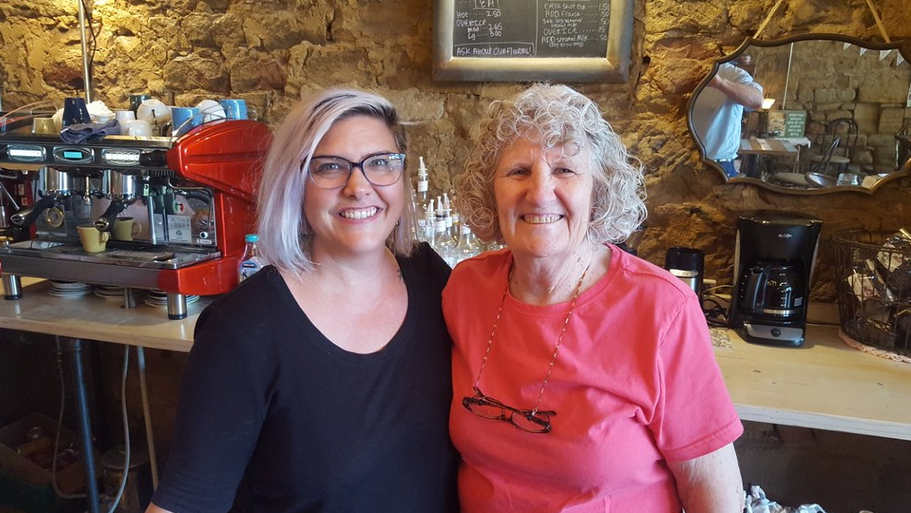
Now That’s Rural: Jessica Busteed, Cornerstone Bakery

Jessica and Linda Busteed
Ron Wilson is director of the Huck Boyd National Institute for Rural Development at Kansas State University.
By RON WILSON
Huck Boyd National Institute for Rural Development

Donuts. Muffins. Scones. Hope. Wait a minute, what was that last one? Today we’ll meet a young entrepreneur who has started a bakery in her rural community. In addition to baked goods, coffee, and lunches, the ultimate item which she intends to provide to her community is hope for the future.

Jessica Busteed and her mother-in-law, Linda Busteed, are the owners and founders of Cornerstone Bakery in Yates Center. Jessica grew up in the area, near the rural community of Toronto, population 281 people. Now, that’s rural.

After living in Texas for a time, she and her husband came back to Kansas. He is now the elementary and middle school principal at Yates Center. For several years, Jessica telecommuted to her job in Houston.

In downtown Yates Center, a couple of older abandoned buildings around the beautiful town square were being sold at a tax sale. The Busteeds were able to purchase them at a bargain price. They wanted to remodel the upstairs as an apartment. “It had suffered weather damage, but was a neat old building,” Jessica said.

Linda, Jessica’s mother-in-law, was baking pies and brownies for the local farmer’s market. Jessica also loved to bake. She was missing the types of coffee she could get in the big city.

The two women decided to remodel the native stone building and open a bakery and coffee shop. Since the stone building was located on a main corner, they named it Cornerstone Bakery.

They discussed how to decorate their new shop. “I would have gone all froufrou with girly stuff, like a café in Paris, but I wanted a farmer with muddy boots to be okay coming in here too,” Jessica said. “I want everybody to be comfortable here.”

They decorated the shop in what Jessica calls “farmhouse eclectic.” The décor includes inspirational sayings, photos, and classic album covers on one wall. Customers have even donated items to decorate the shop. One plaque in the shop said, “Life happens, coffee helps.” Another said, “Bake the world a better place.”

Baking is something that the Busteeds enjoy. Cornerstone Bakery offers donuts, muffins, scones and other baked goods along with biscuits and gravy. As business has grown, they have added a daily lunch special, often with apple pie for dessert. Lunches are typically sandwiches, quiche and casseroles with various side salads. The bakery is not open for supper. “You have to get up really early to make donuts,” Jessica said.

The bakery offers lattes and various types of flavored coffees. For example: One customer suggested an amaretto dark chocolate flavor.

For the lunch recipes, Jessica and her mother-in-law have experimented with pita bread, goat cheese, and more.

“One of our goals is to expose people to some newer foods, such as quinoa,” Jessica said. “Now people are trying it at home.”

“The community is so supportive,” she said. People purchase items and offer words of encouragement. Jessica is proud of the new energy and spirit that she sees in Yates Center.

When interviewed about the community for a recent film, Jessica said, “It’s thriving. Not only in our community but in our county, it’s growing. People are looking for ways to participate.”

“There are younger people moving back here,” she said. “I want to catch what drew them back. Older ladies will come into the shop and reminisce about good times in the town. They want to help too. New organizations in town are revitalizing the community. We need to communicate a culture of hope. There is hope and hope is contagious.”

For more information, look for Cornerstone Bakery on Facebook.

Donuts. Muffins. Scones. Hope. Well, hope may not be specifically listed on the menu, but it is a key part of what is behind the offerings at Cornerstone Bakery in Yates Center. We commend Jessica and Linda Busteed for making a difference with their delicious food and hopeful attitude in rural Kansas. I think I’ll have seconds.

And there’s more. Remember that Jessica was interviewed for a film? We’ll learn about that next week.

OPINION: Pelosi to blame for lack of North American trade deal

Wink Hartman

By WINK HARTMAN

Trade is a cornerstone of the American economy and plays an important role in the Kansas economy.

The United States needs trade deals that work for us and work in the best interests of American companies. The new U.S., Mexico, Canada Agreement is one such trade pact that will work in the best interests of American companies and Kansas. President Trump negotiated this important trade pact and now we wait for Nancy Pelosi to allow for Congress to vote to approve the deal.

In 2017, Kansas exported $2.5 billion in goods to Canada and $1.9 billion to Mexico, for a total of $4.4 billion. This figure includes $1.4 billion in transportation products, $739.6 million in agriculture, $722 million in processed foods and $404.5 million in manufacturing equipment. These numbers showcase how North American trade plays an important role in the Kansas economy and why we need the USMCA in place.

Among the provisions of the USMCA is new and innovative rules of origin which will help our manufacturing industry. These provisions include new rules that require 75 percent of auto content to be made in North America. This will grow the U.S. automotive economy, including the GM Fairfax Plant in Kansas City. The U.S. automotive industry has long been the envy of the world and we need rules in place to make sure that this industry grows. The dream that Henry Ford put forward with the Model T is one of not just access to ease of movement, but the growth of a strong manufacturing industry, in communities across the United States.

The USMCA will stop the drain of manufacturing jobs out of the United States and allow for new jobs to be created in the U.S. This will grow communities and stop economic decline. It will allow people to stay in their hometowns and keep Main Streets nationwide thriving.

The USMCA also fosters the growth of the innovation economy with new pro-growth rules for intellectual property and digital trade, along with cutting red tape for small businesses to engage in trade. This is a huge win for the Kansas economy.

Here in Kansas we have a thriving innovation economy. In Wichita, aviation companies are continuing to innovate in order to keep our country flying. The Silicon Prairie corridor in Kansas City and Johnson County is growing countless small businesses and bringing jobs to our state. The unmanned aerial systems research triangle brings together several of our universities in producing cutting edge research into UAS and allowing Kansas to become a national leader in this growing industry.

For our farmers, the USMCA has new provisions to help American dairy and poultry farmers export more to Canada. This includes new tariff rate quotas for U.S. dairy farmers, which will increase dairy exports. Dairy is an important part of the American agricultural industry, with dairy farms dotting the landscape across Kansas. The USMCA also includes new rate quotas from Canada for poultry and egg farmers.

Right now, though one thing stands in the way of the USMCA becoming reality, House Speaker Nancy Pelosi. Nancy Pelosi will not allow the USMCA come up for a vote in Congress, blocking this economic growth. Mexico has ratified the agreement and Canada has said that they will move to ratify once Nancy Pelosi allows for a congressional approval. Nancy Pelosi needs to allow this important trade agreement to come up for a vote so that all Americans and all Kansans can begin to reap the benefits.

Wink Hartman is the CEO of the Hartman Group of Companies in Wichita and was the 2018 Republican nominee for lieutenant governor.

Kansas Farm Bureau Insight: Health food? Mine’s meat

Greg Doering

By GREG DOERING
Kansas Farm Bureau

Kansas Farm Bureau’s (KFB) brand, Kansas Living, recently launched a campaign promoting the benefits of eating meat I never would have imagined necessary when I was growing up. While it wasn’t always the main attraction, meat was always on our plates for dinner. Oftentimes it was there at lunchtime, too.

Kansas Living’s “Make Mine Meat” campaign encourages the inclusion of all types of animal protein in one’s diet for its high-quality nutritional value.

Personally, I encourage everyone to eat meat because it’s delicious anytime. That’s not a slight to all the tasty, nutritious nonmeat foods out there, either. I’m an indiscriminate omnivore when I sit down at the table. Not every meal features meat, but the ones that do are generally my favorites. Those meals also help fuel my body.

“Animal protein plays an essential role in your diet,” says Eryn Carter, a registered dietitian. “Animal meat products contain all nine essential amino acids that your body cannot produce but needs in order to function.”

The “Make Mine Meat” campaign features athletes who consume meat because its nutritional value supports their active lifestyles. Unfortunately, yours truly wasn’t asked to be a model for this campaign despite my body’s ability to hide most of its athletic features. But that’s more a result of missed gym sessions and my penchant for snacking.

Meat is always on the table for DJ Rezac, who enjoys cooking almost as much as he likes eating. A cyclist, Rezac says he eats meat to power his pedals.

“Meat is muscle,” Rezac says. “If you need muscle, you need to eat meat. That’s maybe an oversimplification, but to me and my diet, red meat is the best source for zinc, iron and protein.”

Rezac’s diet isn’t breaking new ground. Fossil evidence shows humans have been eating meat and bone marrow for millions of years. Evidence of our ancestors’ carnivorous ways has been documented by butchery marks on bones dating back at least 2.6 million years, well before the birth of agriculture in 8000 B.C.

Today, in addition to boosting the performance of countless athletes, meat adds some serious kick to Kansas’ economy. The state is a top producer of meat, specifically pork and beef. Kansas ranks third nationally with 6.35 million cattle and 10th in hog and pig inventory. And it also could put an extra $100 in your grocery cart.

Participants who post a photo of their favorite meat product, recipe or reason they choose to include meat in their diets using the hashtag #MakeMineMeat on Facebook and/or Instagram will be eligible to win one of three $100 gift cards to a local grocery store so winners can purchase great-tasting, high-quality, nutritious meat. Private profiles may send a direct message of their post to Kansas Living’s Facebook or Instagram accounts.

What’s for dinner? On my plate, it’s meat.

“Insight” is a weekly column published by Kansas Farm Bureau, the state’s largest farm organization whose mission is to strengthen agriculture and the lives of Kansans through advocacy, education and service.

FIRST FIVE: Does University of Illinois policy violate freedom of the press?

Lata Nott

Earlier this year, NPR Illinois and Pro Publica conducted an investigation on the University of Illinois at Urbana-Champaign’s handling of sexual harassment complaints. What they found, according to the report they published, was that “the university helped several professors keep seemingly unblemished records even though they were found to have violated its policies: letting them resign, paying them for periods they weren’t working, promising not to discuss the reasons for their departures and, in some cases, keeping them on the faculty.”

As a follow up to this investigation, NPR Illinois and ProPublica published an online questionnaire inviting more stories of sexual misconduct at Illinois universities, including incidents where the victims “did not or could not file a report.” The questionnaire asks for names and email addresses, but promises that the information will not be shared without explicit permission.

Within days, the University of Illinois at Springfield, where NPR Illinois is based, informed the station that it couldn’t offer this confidentiality to their sources. Why? Because NPR Illinois is owned by the university, which makes its reporters, technically speaking, university employees. And Title IX requires almost all university employees to report in detail all incidents of sexual violence, sexual harassment or other sexual misconduct to the Title IX coordinator.

Naturally, this is a huge impediment to NPR Illinois being able to continue its investigation into campus sexual misconduct. Confidentiality is crucial to reporting on these cases. As NPR Illinois reporter Mary Hansen says, “Particularly when we’re dealing with people who’ve experienced harassment, they’re pretty reticent to talk to people. You have to do some trust-building first.” This trust is far more difficult to establish when a source knows that everything she/he says will be disclosed to the university (which, I might add, has a poor track record of dealing with such complaints).

NPR Illinois requested that its reporters be exempted from the mandatory reporting requirement, similar to the exemption that the University of Illinois Springfield grants to counseling center employees. When the university denied this request, the station’s leadership wrote an open letter to the university’s president and chancellor beseeching them “to recognize the First Amendment protections of journalists and the editorial independence of our news organization by reconsidering our request for an exemption.”

Does NPR Illinois have a First Amendment right to keep its sources confidential? Many courts have found that the First Amendment provides journalists with a “qualified” privilege to protect their sources, meaning they can only be forced to reveal them under certain circumstances — say, if the government has a compelling interest in obtaining the information and there’s no alternative source for obtaining it. A majority of states, Illinois included, have press shield laws that protect reporters from having to disclose their sources in state court. But what makes this case more complicated is that the University of Illinois isn’t subpoenaing the reporters at NPR Illinois to reveal their sources in court. Rather, it’s making disclosure of those sources a condition of their employment.

That’s another First Amendment issue altogether. The University of Illinois, as a public college, is a government entity. Can it punish its employees for exercising their constitutional rights? The vast majority of cases that consider this question involve incidents where government employees were fired or disciplined for their speech. The law here is complex, but the very general rule of thumb is that you balance the interests of the employee in speaking on a matter of public concern that’s not part of their official duties against the interests of the government in an efficient and disruption-free workplace. It’s difficult for employees to win these cases, because courts tend to defer to the government employer’s judgment regarding when an employee’s free speech undermines its work. But it’s harder to predict what would happen if the dispute between NPR Illinois and the University of Illinois went to court because, quite unusually, it revolves around the free press rights of government employees.

The email denying NPR Illinois’s request for an exemption states that “the university has determined that requiring journalist employees to adhere to the … reporting requirements would not violate any constitutional or other legal protections,” but that certainly isn’t settled law. Nevertheless, the university has a valid and compelling interest in enhancing campus safety by requiring its employees to report incidents of sexual misconduct.

NPR Illinois agrees and says as much in its open letter. It’s not requesting that its reporters should be exempt from mandatory reporting requirements in every circumstance, but specifically when engaged in newsgathering activities. It’s unlikely that such a narrow exemption would open the floodgates for abuse. And the benefit would be that NPR can continue to do the work that journalists are meant to do — hold powerful institutions accountable.

Lata Nott is executive director of the First Amendment Center of the Freedom Forum Institute. Contact her via email at [email protected], or follow her on Twitter at @LataNott.

Exploring Outdoors Kansas: Awesomely possumly

Steve Gilliland

Popular descriptive words and phrases come and go with generations. When I was a kid they were fairly mundane, like neat, cool or far-out. Evidently a recently concocted phrase is “awesome possum!” I’m always looking and listening for experiences or utterances that might make for a good column, and what outdoor writer worth his or her deer jerky could resist doing something with the phrase “awesome possum.” After watching some British animal rescue show the other night where a pair of baby possums were “rescued” after their mother was hit by a car, Joyce turned to me and blurted out “I want a pet possum.” Put this all together and I would probably be struck dead in my chair if I didn’t follow up with a column on our friend the Virginia Opossum.

There is probably no other critter that garners as much disdain as the lowly Virginia Opossum. They have their place in nature like every other member of God’s creation, but much like the turkey vulture, it’s often tough to see. One of the nicknames given the late country singer George Jones was “the possum,” and he did kinda’ look like one. Trappers hate to find possums in their traps; rather than killing them, my brother and I used to grab the possums by their tale and fling them as far as we could, or simply hold them at arm’s length and punt them over the nearest fence. I guess we figured that, like a boy named Sue, if they had survived to that point, they deserved to live another day.

Surprisingly, possum fur is very soft. Visitors at the Kansas Fur Harvesters booth at the Kansas State Fair usually know which pelt came from the Opossum, but most are also surprised how soft and attractive it is.

The Virginia Opossum is North America’s only marsupial, meaning that like kangaroos, they raise and carry their young in a “marsupian” or pouch. Baby possums exit their mothers pouch at two to three months old, then ride around on her back for another couple months. Possums are generally placid and usually just hiss and show you a mouth full of pointed little teeth. They are not good at defending themselves, and if threatened can fall into a sort of involuntary shock-like state, known as “playing possum.” Just for the record, thinking back on all the encounters I’ve had with possums, I have never witnessed this.

Possums are omnivorous, meaning they will eat almost anything from insects, rodents and fruit, to carrion, and seem especially fond of dog food left in Rovers bowl overnight. A fact making the rounds lately touts the possums help with slowing the spread of Lyme disease by consuming large numbers of ticks, research suggesting as many as 5000 per year. They can adapt to living nearly anywhere they find food, water and shelter, and are perfectly at home in trees. Their bare, boney prehensile tail helps them climb, but they cannot hang from their tail as some traditional stories and drawings suggest.

Going through life as a possum would be a truly humbling experience, maybe an experience we should all have to endure sometime for an hour or so just to put things in perspective…(alright, that made a whole lot more sense when it was just a thought rattling around in my head.) Anyway love em’ or hate em’, possums are survivors, so here’s hoping you have an “awesome possum” day, and Continue to Explore Kansas Outdoors.

Steve Gilliland, Inman, can be contacted by email at [email protected].

OPINION: Nobody wants to be a teacher today; we have to change that

McPherson College President Michael Schneider
By MICHAEL SCHNEIDER
McPherson College president

Katie Grose is a second-generation band teacher from Jefferson West High School in northeast Kansas. I heard her story last spring when she was at McPherson College supporting our band program. Her dad was a band teacher and so is her brother. A few years ago, Katie had reservations when her daughter wanted to carry on the family tradition and go into teaching.

The sad fact is nobody wants to be a teacher anymore. It’s especially true for young people trying to figure out what they want to be when they grow up. Becoming a teacher isn’t even on their list. It’s not on their parents’ list, either. When polled in 2018, 54 percent of parents nationwide said they did not want their child to become a teacher. Even educators themselves have been advising young people not to enter the profession.

As students headed back to school this fall, Kansas school districts continued to face a teacher shortage of epic proportions. Multiple school districts started classes without the full complement of teachers they needed, and some districts had literally no applicants for open positions this year—particularly in elementary and special education.

From Hutchinson to Meade to the suburbs of Topeka and Kansas City, district superintendents contend that teacher recruitment is more challenging today than at any time in the last two decades. And the recent report on teacher openings by the Kansas State Board of Education confirmed that teaching vacancies are up 27 percent over last year. The Kansas school year started with 815 open teaching positions. Considering the last 20 years of political hostility toward teachers, it’s not hard to figure out why.

It doesn’t get much clearer—kids in Kansas don’t want to be teachers. We have to change that.

Two years ago, with the teacher shortage making headlines and the number of teacher education graduates remaining flat, McPherson College developed solutions to address the problem. We started with the launch of an accelerated teacher education program, which includes an innovative curriculum that gets teacher education graduates into school districts faster and at a higher rate of pay.

Under our program, students can earn a combined bachelor’s and master’s degree in just four years. In addition, our program has endorsements in special education and English to Speakers of Other Languages (ESOL), which are both important needs in Kansas schools. This program saves students thousands of dollars. And—because teacher salaries are generally based on the highest level of education obtained—first-year teachers from our accelerated program typically earn a higher starting salary than first-year teachers with only a bachelor’s degree.

We’ve also launched EdChat, an annual event for high school students interested in becoming teachers. In the last two years, over 100 students participated in workshops on the latest trends in elementary and secondary education, gaining insights from national and state experts.

The feedback from our EdChat events is encouraging. Participants tell us they’ve gone home fueled with new ideas and eager to earn their education degree. They look forward to having classrooms of their own one day and can’t wait to start their careers.

These steps by McPherson College are just the beginning. There’s a lot more we can do as a college (and collectively) to get kids excited about becoming teachers. Twenty years of political squabbling forced an entire generation of Kansas students to grow up thinking that becoming a teacher was a bad idea. Thankfully, the battles over school funding are civil these days, and now maybe we all can move forward with respect and appreciation for teachers so they can focus on learning in their classrooms rather than defending their life’s work.

At McPherson College, we’re changing the conversation about teachers and promoting the idea that teaching is a rewarding career path. We hope you’ll add your voice to this conversation.

Luckily, Katie Grose’s daughter decided to become a teacher and is the third generation of her family to direct bands in the state of Kansas. Let’s do more so that Katie’s grandkids will want to be teachers too — because when kids don’t want to become teachers, it’s the adults who have failed. We can’t afford to fail.

HAWVER: Upcoming session a complex one for Kan. lawmakers

Martin Hawver

Well, Kansans, we have a little more than two months before the Legislature goes into session and becomes either dangerous or helpful.

Remember those good old days, when whoever voted to cut your taxes was a reasonably good pick for your vote in the upcoming election? Well, those days appear to be over. One reason is that the state is still in shaky financial condition, which means that if there is going to be a tax cut, it’s going to be pocket change or directed to such a small number of Kansans that we could probably notch their ears so we can tell who they are.

So, the upcoming holiday season is one in which we’re going to have to listen and watch for issues that are much more complex than we’ve had to weigh for decades.

Expand Medicaid so that between 130,000 and 150,000 Kansans can be provided health care? Even when the federal government will pick up 90 percent of the cost, and for just a dime on the dollar, we have healthier Kansans to mingle with at the mall or at the convenience store, or send your kids and grandkids to school with?

Sounds simple. Except that there are conservative Kansans who want work requirements tied to getting health care. And even at the 90 percent federal funding, it’s still going to cost the state money that it can’t easily spend.

Wrestle with what sounds good on that one…and then look at your car in the driveway.

This summer the Kansas Supreme Court held that the $235,000 cap on non-economic damages (basically reductions in physical and mental agility after the other guy has rebuilt your car) is unconstitutional. That cap, while probably high enough for the non-economic damage from not being able to dance, may require a jury to consider higher damages from the life-altering psychological changes a car crash may cause without a lid.

That removal of the cap is undoubtedly going to raise your potential liability in a wreck that is your fault—and your premiums to drive legally on Kansas streets.

What’s right there? Something to talk about because it will affect your checkbook, and the Legislature is going to figure out how much.

Oh, and then there is, as always, marijuana. Or cannabis as we’re calling it now in the Statehouse.

No doubting that there are Kansans with constant pain that makes their lives miserable and who have found that medical or some other genre of marijuana can alleviate that pain, physical and mental—even if the federal government doesn’t approve and doctors don’t know for sure.

Seems simple. Legalize its prescription by physicians. Except that, well, it is “marijuana” and some lawmakers fear that it will be mis-prescribed, or will lead to legalizing recreational marijuana in Kansas which apparently is more dangerous than, say, legalizing drinking…

So, what do we have to worry about for the next two-plus months? Strangely, it is worrying about what legislators believe will be good for Kansas and Kansans and whether they will find the right way to do what’s good without costing them votes. Because, of course, it’s all about votes for lawmakers who want to hang out in the Statehouse in 2021.

Oh, and then there’s that Internet, where anyone who disagrees with lawmakers’ decisions can spread that dissention worldwide, or at least to Kansas voters, and legislators have to explain why they voted right. That all becomes more difficult in the era of social media.

Those simple tax cuts appear out of reach, and everything else is becoming more complicated and divisive.

Best part is that nobody is yet talking about letting legislators break the skin…

Syndicated by Hawver News Company LLC of Topeka; Martin Hawver is publisher of Hawver’s Capitol Report—to learn more about this nonpartisan statewide political news service, visit the website at www.hawvernews.com

News From the Oil Patch, Oct. 28

By JOHN P. TRETBAR

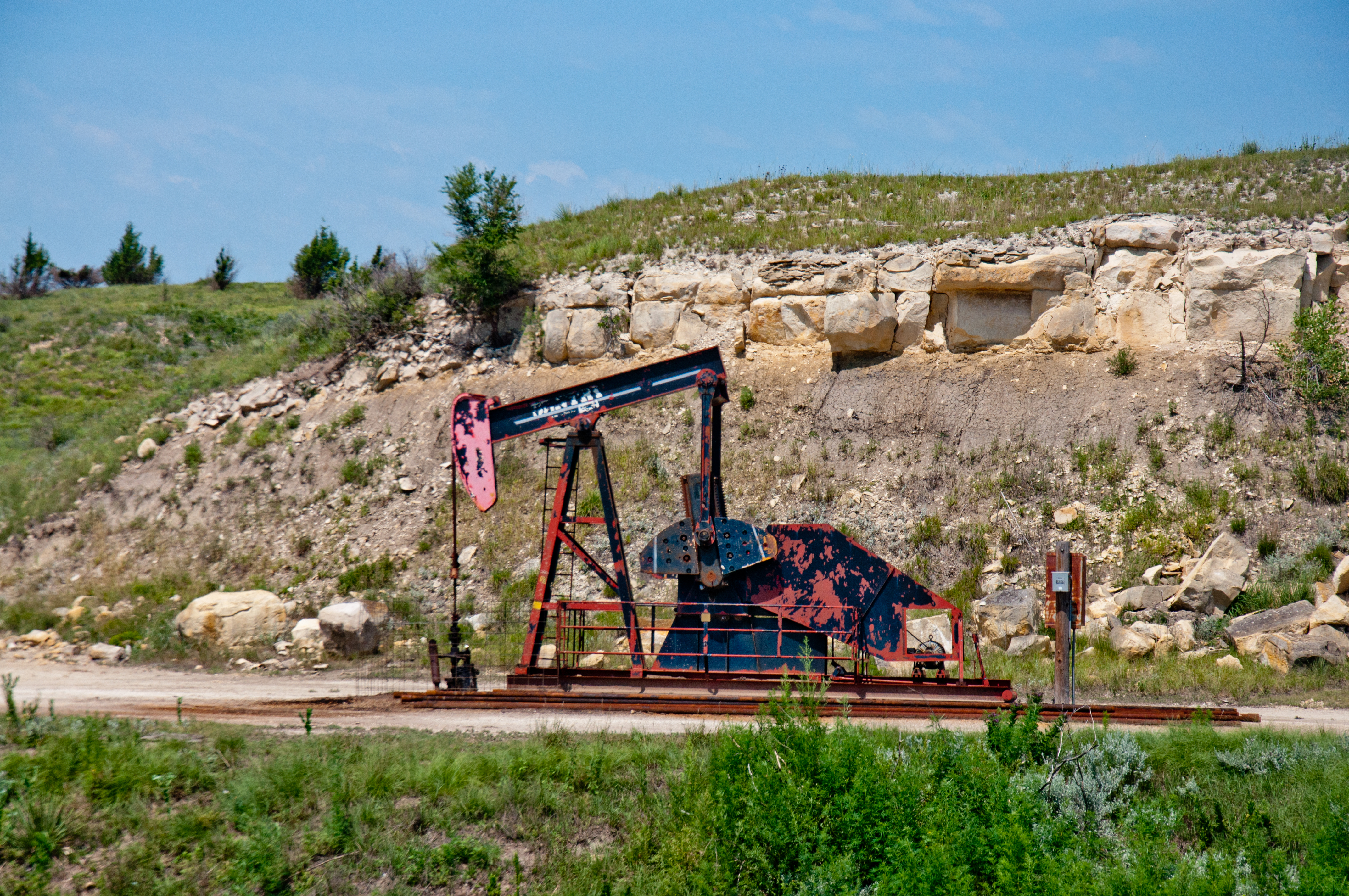
Kansas Common crude at CHS in McPherson gained half a dollar on Friday and starts the week at $47 per barrel. That’s more than three dollars higher than the price at the beginning of the month.

The government said U.S. crude-oil inventories dropped 1.7 million barrels last week. At just over 433 million barrels, U.S. stockpiles remain at the five-year seasonal average.

The Energy Information Administration reported U.S. production was unchanged at its all-time record pace from last week, at 12.585 million barrels per day. A year ago at this time operators were pumping 10.87 million barrels per day.

The government reported a drop of 438,000 barrels per day in U.S. crude-oil imports last week to 5.9 million barrels per day. The four-week average is nearly 20% less than the same period a year ago.

Baker Hughes reported a big drop in its weekly rig count on Friday. There are 830 active rigs across the U.S., down 21 rigs. The count in Oklahoma was down six, while Texas was down five.

Independent Oil & Gas Service reports a small dip in the rig count in eastern Kansas. West of Wichita it’s unchanged with drilling underway on two leases in Stafford County, and drilling ahead at sites in Barton, Ellis and Stafford counties.

Regulators approve 28 permits for drilling at new locations, 21 in eastern Kansas and seven west of Wichita, including one new permit in Ellis County. So far this year there are 876 new drilling permits on file, compared to over 1,400 at this point last year.

Independent Oil & Gas Service reports 28 newly-completed wells for the week. There were 12 east of Wichita and 16 in Western Kansas, including a dry hole in Barton County and a producing well in Ellis County.

Amid a continuing decline in U.S. freight-train traffic, oil-by-rail continues to show growth. The American Association of Railroads reports 12,718 tanker cars shipped petroleum and petroleum products for the week ended October 19, an increase of 6.3% year-on-year. Total freight traffic last week was down 8.6 percent. Canada’s oil-by-rail traffic declined just over two percent. The cumulative totals so far this year are up more than 15% in the U.S., and up more than 20% in Canada.

Reuters is reporting on a scary prospect for the patch. The largest banking lenders to the U.S. oil and gas sector are marking down their expectations for oil and gas prices that underpin loans. Major banks including JPMorgan Chase, Wells Fargo, and Royal Bank of Canada have cut their estimated values for oil-and-gas companies’ reserves, which serve as the basis for those companies to receive what are called “reserve-based loans.”

Oil-price expectations are expected drop one to two dollars from similar estimates last spring. It’s estimated that there are a few hundred companies that take such loans, which total in the billions of dollars.

INSIGHT KANSAS: Prison crisis is also a mental health crisis

Patrick R. Miller is an Assistant Professor of Political Science at the University of Kansas.

Kansas faces a prison crisis of crowded facilities and escalating costs to taxpayers. Fixing that requires addressing mental health, and the grim reality that our approach to the mentally ill is often to imprison them.

In fairness, America has evolved on this issue. Historically, states often forced the mentally ill—especially the poor—into state-run institutions where they faced involuntary sterilization. In Kansas, from 1913 to 1961, the state sterilized over 3,000 individuals, mostly with mental illnesses.

In the 1960’s, states started to deinstitutionalize the mentally ill, shifting the care burden to families, nursing homes, or other community-based settings. But states often failed to follow through on promises to fund these alternatives. This meant that more people with mental illness lacked access to adequate care, which often resulted in homelessness and incarceration.

As the state mental health apparatus withered in Kansas, the burden of care shifted to local communities that varied in their ability to meet that challenge. In many communities, county jails became the default mental health providers, and law enforcement officers increasingly became first responders to mental health crises.

Kansas also started imprisoning more people with mental illness. In 2018, the Kansas Department of Corrections reported that 33 percent of the nearly 10,000 inmates in state prisons were diagnosed with serious to severe mental illnesses, and 65 percent had some degree of mental illness. By comparison, the department reported that in 2006 only 38% of inmates were mentally ill.

Compounding that problem, experts show that mentally ill offenders are more likely to receive extended sentences and other punishments in prison due to behavioral incidents, and many return post-release because of incidents explicitly related to their illnesses.

Kansas also faces the challenge that companies contracted to provide prison services have often failed to meet contractual obligations. Local media reported earlier in 2019 that Corizon Health, which the Brownback administration hired to provide health services in Kansas prisons, had failed to provide adequate staffing and medication to cover mental health needs of prisoners.

Are there solutions?

First, Kansas has a patchwork of mental health services—and strong mental health advocates—that can help address the issue. Those providers need policy and financial support from local, state, and federal policymakers.

Second, some Kansas communities have trained law enforcement on defusing mental health crises. But how many do this and the effectiveness of that training is uncertain.

Third, as some politicians recognize, prison alternatives merit consideration. Other states have explored criminal justice reforms such as mental health courts, pretrial diversions that emphasize supervision and treatment over prosecution, and expanding services for offenders post-release to avoid reentry. Adapting those reforms to Kansas is worth exploring.

Fourth, some states have started reverting privatized prison services back to state functions. Some states have found that implementing services like mental health care effectively themselves is cheaper than contracting with corporations that require additional oversight, and that may botch program implementation in ways that increase state costs.

Yes, this costs money. But, the system now incurs great costs and sets many mentally ill Kansans up to fail. For both politicians and citizens, it is often easier to say that we care about mental illness, but harder to act on that financially. If we had cared financially decades ago, today’s prisons might not be leading mental health providers.

Patrick R. Miller is an Associate Professor of Political Science at the University of Kansas.

MASON: Some ghosts are signs of progress

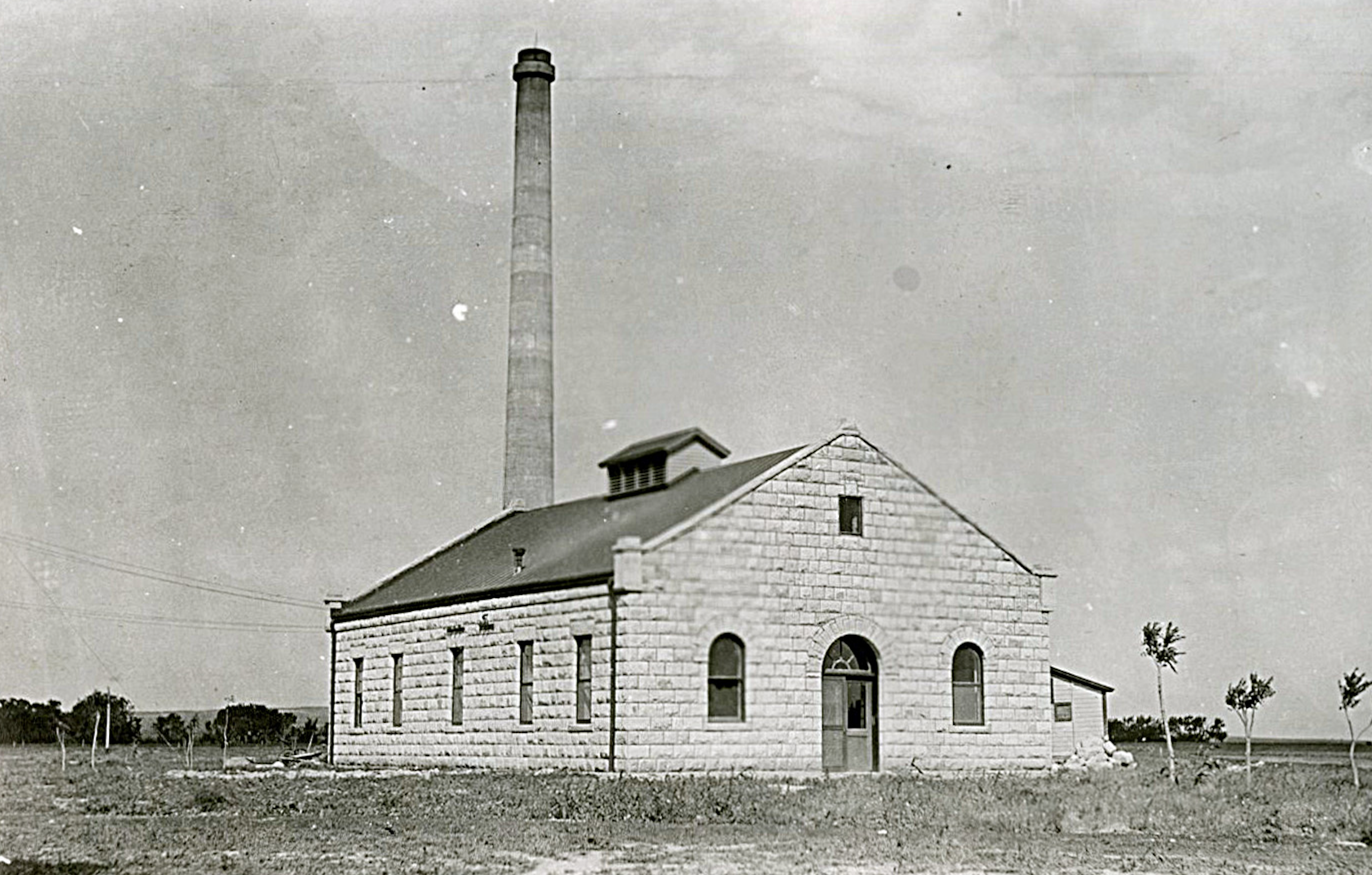
Beginnings of a campus: From right, the first Rarick Hall, the first Power Plant and its smokestack, Martin Allen Hall and Picken Hall, with both wings completed. At far left is the old Fort Hays Hospital building after it had been moved to campus.
Dr. Tisa Mason, FHSU president

With the approach of Halloween, I find myself thinking of a friend who wrote about the ghost buildings on her campus – buildings that once were a vibrant part of the life of the university community but are no longer there. Intrigued by the idea, I turned to FHSU librarians David Obermayer and Patty Nicholas to get these “ghost” stories for our own campus.

They did not disappoint. I received a lot of great information complete with photos.

The first ghostly building is the Old Fort Hospital Building (1867-1915), which became the first academic building for the Western Branch of the Kansas Normal School. Beginning in 1902, it was used as the primary academic building and housed all of the classrooms, the library, and the principal’s office.

Early Picken Hall & Old Fort Hospital: Picken Hall in the foreground and the old Fort Hays hospital building in its campus location.

The school and the hospital were originally on the site previously occupied by the military fort. The old guardhouse was used as a gymnasium while the officer’s quarters were the home of Principal Picken and his family. In 1904, the college moved to the current site of the university when the middle section of Picken Hall opened. The hospital was the only building moved onto campus from the original fort site.

Once on campus, the hospital housed the school’s first dining hall along with a woodworking and blacksmithing shop. Both the manual arts training program and the band were originally started in this building, which earned it the nickname of the “incubator” because so many new activities and were born there. More proof that our innovative roots run deep!

The first power plant (1911-1930) was located right behind Martin Allen Hall. Funded by a legislative appropriation, it provided the first campus buildings (Picken and Martin Allen halls as well as the Old Hospital) with heat, light and running water.

Lewis Field Barracks: The Lewis Field Barracks looking northwest toward Sheridan Hall.

Over the next few decades, the campus grew to include Rarick Hall in 1912, Sheridan in 1917, Custer in 1921, Forsyth Library (now McCartney Hall) in 1926, and Albertson in 1928. The Old Power Plant became dangerously overburdened. President Lewis requested funds to build a new power plant in the fall of 1930 but was denied.

Months later the power plant caught fire and burned to the ground. President Lewis requested money from the Kansas Legislature again and this time received $51,200. The new and larger plant, completed in 1932, is now home to the Moss-Thorns Art Gallery.

The art annex (1936-1967), located out by Highway 40, originally served as a campus maintenance shop. By the early 1960s, the campus faced a lack of studio and exhibit space for the fine arts and studio art programs, both of which were expanding quickly. In 1963, studio arts moved into the Art Annex using the space as studios, faculty offices, and classrooms.

In the early morning of March 5, 1967, a fire was reported by a graduate student who had been working late in the studio. Despite the best efforts of first responders, aided by students and faculty, the building was destroyed. The exact cause of the fire was unknown. Among the art lost was an entire collection of paintings by Professor Joel Moss. The Art Department’s studios were temporarily moved to one of the old barracks and then into a temporary metal building. The department remained scattered across campus until the construction of the new Rarick Hall in 1981 and now resides in our fabulous new Center for Art and Design.

Rarick Hall (1912-1978) was built with appropriations from the Kansas Legislature. Its identity has shifted throughout the years. Originally named the Agricultural Building, it was later the Industrial Building and now is home to the College of Education and the College of Arts, Humanities, and Social Sciences. It was the first building on campus to be equipped with modern labs and even had its own dining hall in the basement.

Original Power Plant: Built in 1911, this building provided the campus with heat and light until it burned in 1930.

In 1978 the original Rarick was razed, and a new Rarick Hall was built, opening in 1981. Today’s Rarick will soon undergo a major transformation.

Other ghostly academic buildings that once were vibrant centers of student learning include Davis Hall (1952-2017) and Heather Hall (1982-2014). Originally called the Applied Arts Building, the design and building process for Davis was slow, and inflation after the end of the Second World War meant that President Cunningham had to request additional funds from the legislature in 1951 to finish the project.

Once completed, the Applied Arts Building housed the Industrial Arts Department as well as the Home Economics and Fine Arts departments. In 2017, Davis was razed to make way for the new art and design building.

Heather Hall (1982-2014) was built as a TV and radio station with state-of-the-art studios and classrooms. The building sat between Forsyth Library and Malloy Hall. By 1983, Heather Hall also had a satellite dish and amplifier to help with programming. These renovations allowed KFHS Channel 12 to massively expand its reach and to begin broadcasting sports games live over Hays Cable TV.

Student housing has also seen its share of repurposing, demolishing and building in response to increasing demand. In 1943, a set of horse barns near Lewis Field were repurposed as barracks (1943-1968) and a mess hall for the U.S. Army’s aviation students.

By 1945, the aviation program had ended and at least part of the barracks buildings became men’s dormitories for civilian students. Two years later, another barracks building was moved from Walker Army Air Field to Lewis Field to serve as additional housing. By 1949, the college was again in need of housing, this time for married students, and all of the barracks were converted and expanded into housing for students and faculty with families.

Throughout the 1950s and 1960s, married student housing continued to be an issue. The Elm and Hackberry Trailer Courts were created for married couples who wanted to live in mobile homes, and Wooster Place was built for students with families.

Motel 6 is not a ghost building, but I will long remember when it temporarily became a men’s residence hall when we were once again short on student housing in 2011!

Another residence hall in the ghostly category is McGrath Hall (1942-2000). Originally, the building housed military personnel and cadets. After the Second World War, it became a residence hall for non-military male students. A south wing was added in 1952 and another section was added in 1955. In 2000 the building was demolished and new student housing, Stadium Place Apartments, was built on the site.

As the college grew, space was also needed for a women’s residence hall. Agnew Hall (1957-2010) was named after Dean Emeritus Elizabeth J. Agnew, a faculty member in the Domestic Economy Department and first dean of women. The first building on campus to be named after a woman faculty member, it had a dining room, three lounges, a recreation room, a laundry room, and a residence with a kitchen. It was completely renovated in the early 1990s, but by 2010 the building itself was just too old. It was replaced by two new student residential halls with repurposed names: the new Agnew and Heather.

Our last ghostly building is Wiest Hall (1961-2012/2017). Wiest Hall was built as a four-story men’s dormitory when our growing campus was again in desperate need of updated student housing in 1961. In 1971, a seven-story tower was added and called the Wiest Hall Annex.

In 1972 the college started hosting the Youth Conservation Corps camp during the summer, drawing students from all over Western Kansas and housing these students in Wiest Hall. In 1977 the Psychology Department moved to Wiest Hall and shortly after the Psychological Service Center, predecessor of the Kelly Center, was located in the annex.

These ghostly buildings are friendly reminders of our broad and deep innovative spirit, moments of tragedy and resilience, enduring growth, and the always appreciated helping hand from the Kansas Legislature. Though gone, they’re an important part of our history and are strongly connected to the success we enjoy today. For some readers, perhaps, the razed buildings evoke not ghost stories but powerful memories of friendship, learning, and love.


FIRST FIVE: From NBA to Trump to our ears and eyes, how free speech works

Gene Policinski

Let’s chat for just a moment about free speech.

Many of us have been talking about that very subject recently, from NBA stars and league executives to Chinese government officials, from President Trump to journalists and members of Congress.

Some ground rules for our conversation: The First Amendment protects us from government attempts to control what we say, or from punishment simply for having said it. Freedom of speech — one of five freedoms in the amendment — offers no protection from private companies or individuals who don’t like what we say or hold other views.

The First Amendment only applies in the United States. Other nations may have rules or laws that in some fashion say they protect or really do protect freedom of speech, but none has quite the same strong constitutional protection that we have in the U.S.

And even after 220-plus years, we’re still working out how First Amendment freedoms apply here to everyday situations. Let’s continue the conversation with some real-life examples.

The National Basketball Association has been working for several decades to build its audience in China, where it’s reported more people watch NBA games on TV than do people in this country. A carefully crafted combination of sports and marketing took a real hit in a matter of days recently, after a Houston Rockets executive tweeted an innocuous message of support for protesters in Hong Kong — who it’s worth noting, were protesting in part any attempt by Chinese officials to limit their free speech. The tweet: “Fight for freedom. Stand with Hong Kong.”

Chinese state television stopped broadcasting and streaming the Rockets’ games. Pre-season game broadcasts of several other NBA teams were dropped.

Government-controlled Chinese companies dropped their NBA-related sponsorships. Banners touting NBA stars and events were torn down from buildings. And state-owned news media called on NBA players and executives to be more “respectful” of that nation’s internal policies and to consider how “rioters” in Hong Kong pose a threat to life and property there.

China makes no pretense of protecting free speech when it involves the government’s policies there — so yet another lesson: While our freedom of speech is protected from our government, it affords no such defense against other governments.

President Trump this week threatened this week to sue CNN, following release of “undercover” video by the self-styled conservative media criticism operation called “Project Veritas,” which purports to demonstrate bias against him by CNN.

One hurdle such a lawsuit will face is that the First Amendment’s provision for free speech and free press don’t have a “fairness” requirement. While our laws do allow challenges to speech that is immediately threatening, or is libelous, there’s no such provision for requiring anyone — from a cable network to any one of us — to be nice or “fair” when speaking about a politician. The First Amendment does provide that Trump or any other political officeholder can use his or her own free speech rights — in his case, a Twitter account with a massive following — to counter such alleged bias.

Moving from the courtroom to Congress, there are suggestions of future laws to prevent hateful speech, speech that glorifies violence, to ban so-called “deep fake” videos (which use new technology to falsify video images and scenes) or to filter out what someone would determine are false and misleading statements about political candidates. Most, if not all, of those efforts start with good intentions: to make our society a more civil, honorable place.

But on the pragmatic level, each runs up against a free-speech concept strongly held in place so far by the U.S. Supreme Court: That such social issues and values involving free expression should be settled by public debate and discussion, not by court or legislative decision.

Yes, such debates and discussions may well have a price or penalty for participation — starting with no  guarantee of civility or fair play. NBA superstar LeBron James — despite a reputation for speaking out in defense of those challenging authority — nonetheless faced a Twitter firestorm for comments he made that many saw as critical of the original Hong Kong tweet, though he denies that intent. The exchanges between Trump and his critics carry a special vitriol, which damages his reputation with some and damages his critics’ standings with others.

In the end, we all may need to see, hear or read ideas that offend, anger or even sicken us — across the widest possible spectrum of views if only, as one Supreme Court justice once wrote, to be better prepared to argue against them.

To speak frankly, that’s how free speech works.

Gene Policinski is president and chief operating officer of the Freedom Forum Institute. He can be reached at [email protected], or follow him on Twitter at @genefac.

Kansas Farm Bureau Insight: Meet me in Manhattan

Brunkow

BY GLENN BRUNKOW
Pottawatomie County farmer and rancher

What are your plans for Dec. 1-3? Don’t tell me it is too early to plan that far out. Hobby Lobby has its Christmas decorations on sale, and pumpkin spice is everywhere. Let’s be honest. That isn’t very far away given that we are in the middle of harvest and moving cows home for the winter. I am sure the next six weeks will slip by fast.

So why are the first three days in December so important? It is the Kansas Farm Bureau Annual Meeting in Manhattan, and we will be celebrating more than 100 years of Kansas Farm Bureau. More importantly we will be looking at the next 100 years. Annual meetings are always a big event, but this year’s promises to be one of the biggest and best. You are not going to want to miss it, and that’s why we are making plans six weeks out.

If you have never attended a KFB Annual Meeting you really need to. If it has been even a couple of years since you last attended, you have missed out. Full days are planned with awards and recognition for the good work all our counties do on behalf of agriculture. You will be briefed on the latest from Topeka and Washington.

Sunday, we kick off with a townhall meeting featuring our elected officials and a banquet where we are recognizing some of our best farm families. On Monday, workshops will be offered that will appeal to all interests – I promise. General sessions will include timely topics and outstanding speakers. Tuesday is the business meeting where members finalize the policy book to guide the organization for the upcoming year. It is probably the most important day of the year in our organization. Kansas Farm Bureau packs a lot into three days.

I must be honest; the best part of annual meetings is outside of the meeting rooms and banquet halls. It’s a time for networking and seeing old friends. Often in agriculture we work long days where we don’t have much time to talk to anyone outside of family members, the guys at the parts counter or the vet. Annual meeting gives us a chance to talk to fellow farmers and ranchers from every corner of the state. It is a time to remember that we aren’t in this alone. It’s a chance to share ideas and more importantly stories with others who understand our rural lifestyle.

I hope you will take the time to make plans to attend annual meeting. I promise you won’t be disappointed. Take a minute, flip the calendar up to December and pencil in those three days. They will be here before you can say “pumpkin spice latte.” It is our time to take an active role in the life of our organization; one that has been the bedrock of agriculture for the past century and an organization poised to be the leader for the next 100 years.

“Insight” is a weekly column published by Kansas Farm Bureau, the state’s largest farm organization whose mission is to strengthen agriculture and the lives of Kansans through advocacy, education and service.

Copyright Eagle Radio | FCC Public Files | EEO Public File