On April 6, more than 100 people watched Governor Laura Kelly sign a K-12 school finance bill that will increase school funding approximately $90 million dollars in each of the next four years. Some Republicans joined Democrats to vote for the bill and Governor Kelly called the support an example of legislative compromise and her signing as a victory for schools.
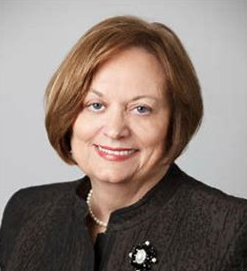
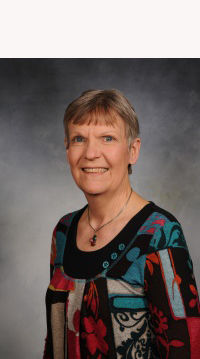
Dr. Sharon Hartin Iorio is Professor & Dean Emerita at Wichita State University College of Education.
The legislation responds to a previous Kansas Supreme Court order requiring the legislature to include costs for inflation in the 2018 five-year $525 million increase in state education appropriation. Before implementation, the court must review and rule on the adequacy of the negotiated plan.
If the amount of funding appears to be a generous handout, let’s not forget what got the state to this point. The aftermath of the 2008 economic crash led to reduction in states’ education spending across the nation. That reduction, coupled with the effect of cuts in Kansas income tax, resulted in 10 years of decline in public education funding, placing adequate resources for Kansas students in jeopardy.
The compromise legislation signed last week should go a long way to replacing the lost school funding.
Nevertheless, as clear as the path to fully-funded schools looked at the signing on April 6, public education in Kansas is still a long way from being out of the woods. There are two issues:
First, most lawmakers as well as most Kansans hope that the compromise plan will end the nine-year lawsuit over K-12 education. However, as yet there appear to be only a few shifts in the ongoing funding battle.
Conservative lawmakers have not changed their belief that school funding should be restrained to encourage efficient spending and that schools should be held more accountable for their spending and for student achievement ratings. Lawmakers advanced those beliefs in the April 6 bill through required yearly school reports.
Moreover, Schools for Fair Funding representing more than 50 districts, four of which Wichita, Hutchinson, Kansas City, KS and Dodge City sued the state for inadequate funding, recently said the $90 million expansion in state aid was insufficient. Attorneys for the four districts plan to file Kansas Supreme Court briefs to increase the funding. In addition, funding for new needs in early childhood education are on the horizon.
It’s great that a more substantial school resource foundation will be coming, but political consensus needs to solidify and move forward before our students can get the education they deserve. Here’s the second problem: The negotiated plan allows schools to spend money basically the same way as in the past.
Districts have used the increase that started in 2018 to pay teachers more, hire additional staff and reduce class sizes. These are practical, sorely needed, useful expenditures approved widely by Kansans. However, if all that happens with increased funding is to return schools to their 2008 pre-economic crash/tax cut status, students will not benefit fully.
Kansas schools can free-fall toward the past or they invest in curriculum and technology to prepare students for the challenges of citizenship in the 21st Century and future careers.
Adequate funding is necessary but not sufficient to give, in the words of Governor Kelly, “all Kansas children-no matter who they are or where they live-the opportunity to succeed.”
More funding may soon be on its way. Now the hard work of building a strong, future-focused education system will begin.
Sharon Hartin Iorio is a Professor and Dean Emerita of Wichita State University College of Education.
The world of radiology began in 1895 when a European physicist Wilhelm Röntgen noticed fluorescence behind heavy cardboard when a cathode tube was activated nearby. Röntgen used his wife’s hand to demonstrate for the first time how these unknown rays, or X-rays, could penetrate the soft tissue of her hand and illustrate the bones that lay within. Röntgen generously refused to patent his discovery which allowed the explosive growth and development of a new industry.
Unfortunately, researchers were unaware of the dangers of too much X-ray exposure and during the early years harm was done, even causing death of some experimenters before safeguards were established. Over time, as technology advanced and more X-rays were utilized, interpreting the images became an increasing challenge and the field of radiology developed. Physicians trained in interpretation helped care providers make better clinical decisions.
I was a first-year resident at Emory University Hospital in Atlanta in the fall of 1975 when the hospital purchased one of the earliest computerized tomography (CT) scanners. It was called an EMI scanner named after the British company that took a huge financial risk in order to develop the technology. Electric and Music Industries (EMI) had signed with the Beatles as their recording company in 1962 and having amassed a fortune from the exponential rise of Beatles popularity, EMI was able to fund the theoretical work of Godfrey Hounsfield which took X-rays of the head from all directions while a computer compiled the results. When all other funding resources said “no,” Hounsfield’s brainchild happened, “with a little help from his friends.”
I was rotating through neurology when the results of the EMI scans started making an impact. We were amazed how they showed tumors, blood clots and lesions inside the skull. We thought it was going to change everything, and indeed it did!
Jump to the present and see how interpretive radiologists have expanded into intervention. Now, instead of simply identifying a tumor or abscess with ultrasound, X-ray, CT, or MRI, radiologists, under the guidance of an imaging modality, can pass a needle into a deep tumor and take a biopsy, drain an abscess, open-up a blocked tube and much more. Procedures that, in the past, would have required open abdominal or chest surgery, now can be done with minimal trauma and pain with quick recovery.
As a patient who has benefited under the expert image-guided hands of an interventional radiologist, I too can sing loud and clear, “I get by with a lot of help from my friends.”
For free and easy access to the entire Prairie Doc® library, visit www.prairiedoc.org and follow The Prairie Doc® on Facebook, featuring On Call with the Prairie Doc® a medical Q&A show streaming live most Thursdays at 7 p.m. central.
-0-
The 105th annual Roundup will be held Thursday, April 18, in the auditorium at the KSU Agricultural Research Center – Hays. Registration will open at 9 a.m. (CST), with the program beginning at 10 a.m (CST).
The schedule is below:
• 9:00 Registration, commercial trade show, and rolls and refreshments
• 10:00 Welcome – Dr. John Jaeger, Beef Cattle Scientist
• 10:10 New Insights into Subseasonal, Seasonal, and Interanual Variability of Weather and Climate Extremes in the Great Plains – Dr. Jeffrey Basara, University of Oklahoma, Director, Kessler Atmospheric and Ecological Field Station and Director of Research, Oklahoma Climatological Survey
• 11:05 Bovine anaplasmosis ‐ What we know/ What we want to know – Dr. Kathryn Reif, KSU Center of Excellence for VectorBorne Diseases.
• 12:00 Lunch – An offering of Smokin’ Co. BBQ wedding roast and sides – all compliments of Golden Plains Trucking, Carrico Implement, Big Creek Veterinary Service, Boehringer Ingelheim, and Elanco Animal Health
• 12:45 A Review of Limit Feeding: An old time feeding method that deserves attention in today’s feeding and environment conditions – Dr. Dale Blasi, Beef Cattle Nutrition and Management Extension Specialist
• 1:40 Rangeland Wildfire: The Road to Recovery – Dr. Keith Harmoney, Range Scientist
• 2:15 Effect of Intensive Early Stocking Cow/Calf pairs on cow performance – Dr. John Jaeger, Beef Cattle Scientist
• 3:00 Adjourn
For more information, contact John Jaeger, [email protected], 785-625-3425, Ext.211
Registration is available by contacting Milissa at 785-625-3425, Ext.200 or [email protected].
Alicia Boor is an Agriculture and Natural Resources agent in the Cottonwood District (which includes Barton and Ellis counties) for K-State Research and Extension. You can contact her by e-mail at [email protected] or calling 620-793-1910.
Dr. Tisa Mason, FHSU presidentI love to share stories about students who through grit and determination have traversed difficult journeys and succeeded. They inspire me every day and remind me of my purpose: making a positive impact in the lives of others.
That motivation and purpose, however, is also fueled by painful memories of students who have died, some from sickness or accident, but others from mental health illnesses and substance abuse. The memory of all those students and their families are forever in my heart and have profoundly shaped my perspective in understanding the importance of community awareness, understanding, compassion, and action.
Throughout my career I have relied upon a number of colleagues who have worked with me to help individuals and the campus through struggles and tragedies – from individual professors and staff members, to crisis intervention teams, to campus police.
The death of any student is tragic, but for those who die as a result of mental illness the tragedy is compounded by the questions that remain with their friends and loved ones: Was there something we could have done? What did we miss? How could I have helped?
Those questions also haunt those of us who worked at the universities where the students studied, and always at the center of our institutional hopes are our professional counselors – a caring and experienced group of faculty and staff who quietly help so many members of our community gain the skills and knowledge to heal and to grow. They are truly gifted, kind, and remarkable.
In addition to helping individuals, these professionals also educate and shape policy so that our university grows stronger, enhances our outreach, and strengthens the overall wellbeing of our campus community.
Recently our Department of Psychology and the Kelly Center joined together to build awareness, improve the quality of health services, protect students, and discourage harmful behaviors across our campus through a partnership with the JED Foundation, created in 2000 by Donna and Phil Satow, who lost their youngest son, Jed, to suicide in 1998. They desired to use their loss to help communities strengthen their knowledge and skills and, ultimately, save lives.
At FHSU, we have been doing a lot of exemplary work in mental health promotion, but core to who we are, we know that no matter how proficient, there is always room for improvement. So the faculty and staff of the Psychology Department and the Kelly Center set out to validate all of the good work FHSU has already done to provide mental health and substance abuse services to our students and to look for ways to enhance and improve what we were doing. They accomplished this through JED Campus – an initiative of the Jed Foundation to guide schools through a collaborative process to create and implement a strategic plan to promote mental health, prevent suicide and limit substance use on college campuses.
According to FHSU’s Dr. Leo Herrman, an associate professor of psychology, the campus program framework incorporates the content of the “Comprehensive Approach to Mental Health Promotion and Suicide Prevention on College and University Campuses.” This is a collection of data-driven best-practices developed by JED and the Suicide Prevention Resource Center. It allowed us to anticipate and evaluate our clinical and programming needs, examine how we utilize both personnel and financial resources to address challenges, coordinate efforts across campus, and measure our effectiveness.
Fort Hays State’s JED Campus Initiative was a four-year process led by Gina Smith, director of the Kelly Center, and Herrman. A campus-wide committee with diverse representation from the administration, the student body, student affairs, residential life and various academic colleges worked with JED Campus to do a comprehensive review of the university’s policies, practices and resources as they relate to our students’ overall adjustment to college, mental health and general well-being.
Our campus initiative resulting from their work focused on nine key areas. It created, implemented or modified institutional policies and practices to improve the university’s environment and enhance our mental health and student adjustment services.
For instance, the committee looked for ways to identify risks and begin dealing with them early. The health form that incoming students complete for the Campus Health Center now includes questions about mental health and alcohol and drug histories. Students who self-identify as having mild or moderate mental health issues get an email outlining services available on campus, and campus care providers follow that up by helping students develop self-care plans.
We also now have a well-defined medical leave policy that can be applied consistently for mental health as well as physical issues, and we are proactive about letting new and existing students – and their families – know about it.
The initiative also addressed educating students on healthy lifestyle choices and increasing their awareness of warning signs in their own behaviors and where to seek help.
The project was comprehensive and extensive, and we have a better and safer campus with more supports and help for our students. According to Dr. Herrman, feedback from JED was positive in regards to existing programming, but work with them clearly enhanced what we were doing.
Fort Hays State was one of the first schools nationally to join the JED Campus Initiative and is still the only one in Kansas. FHSU is one of only 15 nationally to achieve Alumni Status. I am so proud of our people for caring so deeply about our community and working even harder to create a safer campus.
Every student matters. It is this ethic of care and this spirit of positive restlessness – always striving to improve – that makes Fort Hays State University so strong.
By GLENN BRUNKOW Pottawatomie County farmer and rancher
The warm sunshine of spring has melted winter’s icy grip and that means one thing — field work is about to get underway. Given the weather, especially the precipitation of the past winter, that field work will be fast and furious when the ground finally dries out. We all know that means long hours and seven-day work weeks. It can be exhausting and dangerous.
I am also sure we all are aware that farming is one of the most dangerous occupations. It’s just a bit safer than coal mining, I believe. So far in 2019, Kansas has recorded two farm-related fatalities.
It makes sense. We work long, hard hours on large machinery and often in remote areas. Farm accidents are something we have all either experienced or know someone who’s had one.
Sure, accidents can and do occur because of mechanical failures and circumstances that may be out of our control, but I would hazard a guess, most often, that is not the case. If you have not had an accident on the farm, I would imagine you have had a close call or two. When that has happened, what was your reaction?
I am not immune from this, while I have never had a serious accident, I have had a couple of close calls. These close calls were all results of mistakes that could be chalked up to one of two causes. Either I was hurrying, or I cut a corner and ignored a safety procedure. Most of the accident victims I have known have told me the same thing. “I knew better.”
I have been there. Weather is approaching, time is limited, and work is backed up. This panic mode causes us to take chances, work longer and go faster than we would normally. I don’t know about you, but it seems as though the faster I try to go, the longer a task takes me. Couple that with the danger associated with going too fast and cutting corners and it is just not worth it.
Safety is a habit and we learn habits by adopting something and doing it until it is second nature to us. Farm safety is a learned habit just like wearing our seatbelt (which, by the way, is a good practice when they are provided). If we always put them into practice, we will do them every time, even when time and Mother Nature are against us.
As farmers we account for less than 2 percent of the population, we can’t afford to lose even one producer. Please promise me that as the dark clouds are gathering on the horizon and time is of the essence, you will take the extra moment to make sure you are safe. The time probably won’t make a big difference in how much you get done, but it could be the difference between just another day and a tragedy.
“Insight” is a weekly column published by Kansas Farm Bureau, the state’s largest farm organization whose mission is to strengthen agriculture and the lives of Kansans through advocacy, education and service.
The Kansas Corporation Commission reports just 75 new intent-to-drill notices filed across the state during the month of March for a first-quarter total of 228. That compares to 422 at this time last year and 1,455 intents for the first quarter of 2013. Barton County saw just two new intents in March, for a total of nine in the first quarter, compared to 18 in the first quarter last year. Ellis County saw just one new intent filed in the first three months of the year, compared to 11 in the same period in 2018. Russell County, saw one last month and four for the first quarter. That’s an improvement over the one intent filed there during the first quarter of last year. Producers in Stafford County filed two last month and seven during the first quarter compared to ten during the first three months of 2018.
Independent Oil & Gas Service reports a nearly 18% increase in the Kansas rig count. There are 10 active rigs in the eastern half of the state, up six, and 23 west of Wichita, down one.
Shutterstock.com
Baker Hughes reported 1,025 active drilling rigs across the U.S. Friday, an increase of 15 oil rigs and four seeking natural gas. The count in Texas was up eight. New Mexico gained three. Canada reports 68 active rigs, which is down 20 for the week.
Regulators approved 30 permits for drilling at new locations in Kansas over the last week. That’s 225 so far this year. There were 16 new permits in eastern Kansas, and 14 west of Wichita, including two in Barton County and two in in Ellis County.
Independent Oil & Gas Service reports 27 new well completions across the state, ten east of Wichita and 17 in Western Kansas, including one each in Ellis, Russell and Stafford counties. So far this year, operators have completed 447 wells across Kansas.
The U.S. Energy Information Administration reports domestic crude oil inventories increased for the second week in a row. For the week ending March 29 U.S. stockpiles rose 7.2 million barrels to 449.5 million barrels. That’s equal to the five-year seasonal average.
The government has reported new records for U.S. crude production for three weeks in a row. The latest report shows production of 12.182 million barrels per day for the week ending March 29. That’s up 93 thousand barrels per day over the week before, and more than 1.7 million more than last year at this time.
U.S. crude oil imports averaged 6.8 million barrels per day for the week ending March 29, up by 223,000 barrels per day from the previous week. The four-week average is 12.1% less than the same period last year.
A non-profit Native American advocacy group on Friday filed yet another challenge to the permit allowing TransCanada to complete the Keystone pipeline. The latest permit suggests that the president’s authority to approve the pipeline is not subject to judicial review. But Bloomberg reports the new complaint filed in U.S. court in Montana argues that President Trump lacks authority to issue the permit, because the Constitution gives Congress the power to administer federal lands and regulate foreign commerce. According to the complaint, the project would pose “grave risks” to the climate, cultural resources, water resources, fish and wildlife, and human health and safety.
A federal judge says the President exceeded his authority by trying to overturn Obama-era restrictions on Arctic and offshore oil and gas drilling. In a ruling Friday, Judge Sharon Gleason reinstated the drilling ban, saying President Trump’s executive order last year exceeded his authority. Judge Gleason ruled that while sitting presidents have the power to ban development with an executive order, only Congress has the power to revoke such a ban instituted by other presidents. The bans involve about 98 percent of the Arctic coastal shelf in northern Alaska, and nearly six thousand square miles of underwater canyon complexes in the Atlantic Ocean, stretching from Virginia to the Canadian border.
North Dakota’s oil regulator plans to sue the state of Washington if it goes ahead with a proposal to reduce the volatility of Bakken crude oil transported by rail, saying it is not supported by science and would devalue the product. The Washington Senate voted last month to mandate a lower vapor pressure limit for Bakken crude shipped through the state by rail, aiming to limit fiery derailments. The Bismarck Tribune reports North Dakota regulators have requested state money to sue Washington if the legislation advances. About 200,000 barrels per day are carried by rail from North Dakota to refineries in Washington.
Continuing a nearly year-long string, the U.S. and Canada continue to increase reliance on railroads for delivery of petroleum and petroleum products. That’s according to the latest numbers from the Association of American Railroads. For the week ending March 30, domestic oil-by-rail shipments increased by nearly 28 percent over a year ago, and the year-to-date cumulative total was up 22 percent. Canada’s totals were up 13 percent for the week and 19 percent year-to-date.
Martin HawverRemember back in November, when there were five choices for governor, and a blank line where you could write in your neighbor or your dog or probably any other mammal for the state’s top job?
And remember that it came down essentially to one decision for Kansas voters: very conservative Republican Secretary of State Kris Kobach or Democrat Sen. Laura Kelly?
Well, Kelly won, of course, by more than 50,000 votes, or 48% to 43% over Kobach.
The race essentially came down to Kobach, or the best-known candidate who wasn’t Kobach. Not being Kobach was a campaign asset — he was a lightning rod for folks who didn’t care for his voter rights/immigration policies and for those who feared he would reignite the Gov. Sam Brownback fiscal era.
But just being “not Kobach” didn’t really tell us anything about whether the “not Kobach” would be a competent and persuasive governor.
With the first adjournment of the Legislature last Friday, it looks like Kelly has been persuasive. She got the GOP-pushed tax-cut bill knocked down; her veto won’t be overridden. That’s victory No. 1.
And she got her school finance plan, worth about $90 million more a year for schools for the next four years, passed. That might, just might, be enough to convince the Kansas Supreme Court that the state is “adequately” funding public schools for our kids and grandkids. Not sure, depending on the court, but it could well be victory No. 2.
Victory No. 3? That would be expansion of Medicaid health care to more than 100,000 generally poor Kansans, their children, the disabled and others who can’t afford health care. No. 3 will be the target of the governor’s intense lobbying of legislators and their constituents during the next three weeks. Kelly and Lt. Gov. Lynn Rogers will be crisscrossing the state during the Legislature’s spring break, with public events where they can try to get Kansans to tell their senators that they want Medicaid to be expanded.
The Senate has so far refused to hear the bill in committee, to consider voting it to the floor of the Senate where there are probably enough votes to pass it. It’s a different deal than two years ago. When the Legislature strongly passed Medicaid expansion, Gov. Brownback vetoed it, and either because of allegiance to the outgoing governor or maybe just because most Republicans were still referring to it as “Obamacare,” legislators couldn’t or didn’t override the veto.
That puts this year’s House-passed Medicaid bill, which the Senate’s anti-expansion leadership has specifically opposed, the target of Kelly and the health-care industry and Kansans without health coverage and lots of others in the next three weeks.
It’s the biggest test of the political power and the political strategy of the “not-Kobach” governor who got elected last November.
If successful, the effort by Kelly and others to get Medicaid expanded could reshape the Republican Party in Kansas.
It could mean that the hard-right conservativism, which got Kobach through the GOP primary election by about 400 votes over slightly more moderate then-Gov. Jeff Colyer, has seen its day. Could mean that the leaders of the Kansas House and Senate, who essentially set the rules for lawmakers and have their thumbs on the scale on nearly every vote taken, are losing horsepower.
Debate over important issues such as taxes, school finance and Medicaid expansion is a good thing. That’s how you find the upside and the downsides of major issues.
The outcome could tell us just how persuasive the new governor is…and might mean Republicans have to figure out how to deal with her…
Syndicated by Hawver News Company LLC of Topeka; Martin Hawver is publisher of Hawver’s Capitol Report—to learn more about this nonpartisan statewide political news service, visit the website at www.hawvernews.com
Steve GillilandA term often used around Christmas and Thanksgiving is “Seasonal Smells,” meaning scents like pumpkin pie, roasting turkey and the scent of pine; pleasant fragrances that we associate with that time of the year. We are entering a time of the year that also has a specific essence associated with it that is not quite so pleasant.
Anyone who has set foot outside lately and has a nose on their face has noticed the air of late smells slightly more “skunky” than usual. Also at this particular time of the year, dead skunks seem to litter the roadside. Welcome to skunk breeding season in Kansas! For our pungent friends the skunks, breeding season begins at the first sign of spring warm up, usually late February and early March, and I believe is a tad later this year because of a slightly later spring warm-up. Skunks are among the most den-dependent furbearers, meaning that more than many other furbearers, their lives rely on them having a permanent den from which to come and go daily.
Skunks do not hibernate, but become very inactive during the heart of winter, when a den becomes very important. Communal denning is common during this time, and a dominant male will often share a den with a dozen or more females during this time of inactivity. Their breeding season is fast and furious, but very short, so keeping oneself close to as many females as possible pays big dividends for male skunks when skunk love is in the air.
All right, so this is skunk breeding season, but I’ve always wondered why that means we have to smell them so much more than usual. After all, they certainly don’t spray their girlfriends do they? Maybe it’s some kind of ritual mating dance that ends each time with a poof into the air? The answer is simple, and as a trapper I should have figured it out. At this time of the year male skunks might roam as far as five miles in one night looking for eligible ladies, and since all male skunks are currently of the same mind, the chances are pretty good males will encounter each other on their quests. And then, just like a bunch of jocks fighting over the cheerleaders after the junior high dance, someone’s gonna’ get sprayed! Figure this happening several times a night for a few weeks with all the male skunks in Kansas and you have the answer.
With that solved, what about the reason for finding so many dead skunks along the road right now? I’m glad you asked, because I’ve found some interesting takes on that question too. First and the most obvious part of the answer is simply the fact that all male skunks in the kingdom are draggin’ main street right now lookin’ for girls, so the law of averages says that because of that, many will get flattened. There’s possibly more to the answer though, and that calls for a little skunk psychology lesson.
Skunks have few natural enemies and can turn even the biggest bully around on a dime with just the lift of their tail. This seems to create in them a certain cocky attitude that appears to be present even from birth. Skunks will not back down from anything; it’s as simple as that. Couple that with the fact that male skunks have a one-track-mind this time of year, and if they even notice a car coming at them, they possible see it as just another bully that will turn and run with the lift of their tail. That all equals a flat skunk! Another interesting suggestion says that skunks have black eyes that do not reflect light well like the eyes of most other animals, possibly making them hard to spot ahead of time.
By the way, if you, your dog or your car ever happen to get sprayed directly by a skunk, here is a recipe for a deodorizer that really works, and yes, I know this from experience, and that’s another story in itself: mix together 1 quart 3% hydrogen peroxide, ¼ cup baking soda and 1 teaspoon liquid dish soap (Dawn works well.) Mix this up just before use and don’t save any leftover. Bath yourself or the dog and scrub the car with this concoction.
Skunks are amazing critters that have amazingly soft, luxurious fur (once you get past the smell) and whose potent, pungent essence is invaluable to the fur-trapping industry as an additive to trapping lures. Trappers who extract the pure skunk “quill” from the animals can expect to get one to two ounces per skunk, and at about $20 an ounce that’s pretty good gas money. Skunk essence enhances and magnifies other fragrances and is actually used in very minute amounts in perfume. Some years back there were rumors that someone was developing an aerosol spray from skunk essence called “Skunk Power” that could be used by women against an attacker. I couldn’t verify its existence but what a good idea! Native Americans are said to have used skunk oil as a healing balm and liniment; I knew our Native American ancestors were tough, but that fact gives me a whole new respect for them.
So there you have it, a little Pepe Le Pew 101 so-to-speak. When I smell a feed yard here in Kansas I just think of it as the smell of money. Even though I know they’re yet another example of God’s marvelous and diverse Creation, it’s pretty hard to think that way when the spring air is ripe with the smell of skunk. Continue to Explore Kansas Outdoors!
Steve Gilliland, Inman, can be contacted by email at [email protected]
Kristen Farrington is executive director of the Religious Freedom Center of the Freedom Forum Institute.
By KRISTEN FARRINGTON Freedom Forum Institute
Religious freedom in today’s world is synonymous with controversy. Debates rage around the country on issues that touch our deepest beliefs: abortion, adoption, vaccinations, war memorials, equity and identity.
Families and communities are torn apart waiting for courts to sort out the fine and complicated lines between basic human rights and religious liberty. After waiting months if not years for court decisions, communities discover that legal rulings don’t have the power to heal fractured communities.
This part of our American story is as old and real as when the first settlers arrived on our shores, but the intensity today feels somehow different. Surely by 2019 we Americans have learned to live together despite our deepest differences!
The stark reality is that, no, we haven’t. According to several watchdog organizations and the FBI, religious intolerance and religion-based hate crimes are on the rise; bullying in schools continues to threaten the well-being of our children.
Religious leaders and educators share similar stories — we just aren’t equipped to deal with the controversy and division we are experiencing in our classrooms and communities. There is an urgency to do something, coupled with a sense of exhaustion that all we have been doing is simply not working.
Complex issues call for complex solutions. Civil dialogue is not the solution, but it needs to be an integral part.
Over the last 10 years, organizations have emerged to provide resources, training and opportunities for dialogue: Living Room Conversations, Difficult Dialogues National Resource Center, National Institute for Civil Discourse, Generation Global and the Religious Freedom Center are just a few committed to restoring civility and creating intentional spaces for difficult conversations while promoting pluralism and understanding across differences.
It is easy to dismiss the value of this work. Someone once described such efforts to me as fluffy. Make no mistake — there is nothing fluffy about dialogue or understanding our differences. Such work takes commitment, constant practice and the courage to stay engaged when things get heated.
Any person can engage in informal dialogue by learning the basic skills and finding opportunities to practice them at home, at work, with friends, neighbors and family. Formal dialogue is usually a series of dialogue sessions led by a trained teacher.
I’ve met a lot of people who don’t really understand the purpose of dialogue. At the most basic level, it means to seek understanding through words. The purpose of engagement is to learn as much as you can about each other — to share stories, beliefs and perspectives about an issue. It is a space where you can explore an issue from many different sides, so you come to understand the meaning and significance of that issue to each person in the discussion. Dialogue is a place for curiosity — a place where you can ask questions about and explore a perspective with which you completely disagree. It is a space where you can disagree and yet stay engaged.
Dialogue is not debate, deliberation, mediation, conflict resolution or problem solving. Its value often is overlooked in favor of rushing to solve a problem or dismissed because people don’t wish to engage with different beliefs, values or perspectives.
As a dialogue practitioner, I’ve had opportunity to train thousands of educators, religious and civic leaders. As the religious liberty debates rage around us, as we watch our schools, communities and places of worship become places of controversy and division, as we find ourselves caught in situations that challenge our deepest beliefs, I can attest that dialogue works. I’ve seen it transform classrooms and community groups.
I’ve seen educators, community and religious leaders become more confident in helping their students, congregations and communities navigate difficult issues. I’ve heard young people find their voices and become more confident talking about what is meaningful and significant in their lives. I’ve seen prejudice challenged, pain shared and unlikely friendships forged.
We should give it a try.
Kristen Farrington is executive director of the Religious Freedom Center of the Freedom Forum Institute.
Ron Wilson is director of the Huck Boyd National Institute for Rural Development at Kansas State University.
By RON WILSON Huck Boyd National Institute for Rural Development
“How big is your farm?” “It’s about 4-by-8.” “Oh, 4-by-8 acres? “No, 4-by-8 feet.” That imaginary conversation sounds like an unlikely discussion between Kansas farmers, but it illustrates how one young couple got their start in urban farming. They started raising microgreens on a 4-by-8 sheet of plywood. Now this innovative young couple is expanding their operation to provide local food while serving their community.
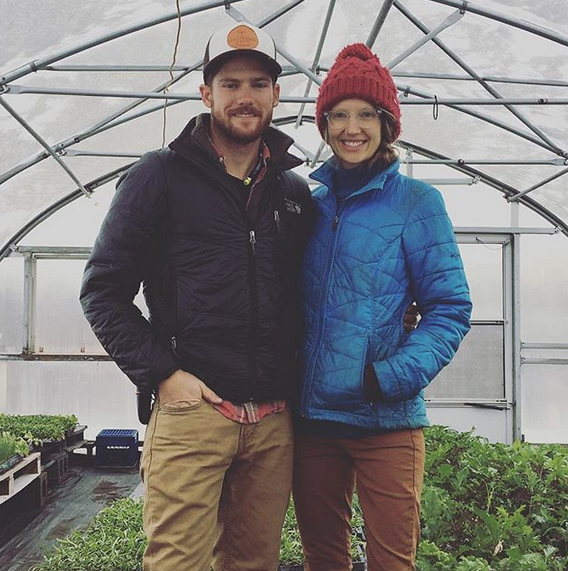
Adam and Maggie Pounds are the founders of Simple Abundance Farm in South Hutchinson, Kansas. Adam grew up at Hutchinson and went to Wichita State. Maggie went to high school at the nearby rural community of Buhler, population 1,289 people. Now, that’s rural. She went on to Bethel College.
Adam and Maggie met through friends and ultimately married. “We caught the travel bug,” Adam said. They worked a summer at Estes Park and then in Key West, Florida doing eco-tourism. Adam and Maggie are also talented musicians, playing guitar and multiple folk instruments. “Maggie sings like an angel,” Adam said.
The young couple traveled and played music. While visiting friends in the Pacific Northwest, they decided to focus on the principles which were important to them: Community, intentional living, healthy food, and an active lifestyle. They apprenticed at an organic farm in Washington state.
“As you’re traveling, you see life through a different lens,” Maggie said. Their passion for a healthy, local food system grew. They moved back to Kansas to put this into practice.
Adam and Maggie Pounds
In winter 2014, they started growing microgreens in South Hutchinson. “Our whole farm consisted of a 4×8 sheet of plywood,” Adam said. Seeds were planted in compost on trays. Plants were harvested very young. “Microgreens are tender, nutty, and tasty,” Adam said. They now have a high tunnel for additional vegetable production.
They produce sunflowers, peas, radishes, arugula, spinach, salad greens, kale, and more. “We use natural and sustainable methods to produce high yields on a minimal amount of land while protecting the environment,” Adam said.
Back when they were still interns but wanting to start a farm of their own, Maggie and Adam were on a farm tour in the northwest. While in one grower’s home, they saw a cross-stitch design on the wall that said “Simply Abundant.” The term clicked for both of them. When they got back to Kansas, they named their place Simple Abundance Farm.
The “farm” is a specialty crop operation on less than an acre in the city of South Hutchinson. “We are urban, so we’re very convenient for our consumers,” Adam said. “The city has been really great to work with us.”
“They’ve been an amazing addition to our Reno County Farmers Market,” said Pam Paulsen, K-State Research and Extension – Reno County horticulture agent. “We are huge advocates of farmers markets,” Adam said. They have also opened what they call the Farm Stand, which is a self-service market for their farm crops and other local products year-round. “Our customers get a key code so they can pick up products at their convenience,” Adam said.
They are now building a commercial kitchen which will enable them to produce shelf-stable products such as sauerkraut and kimchi. They’re also joining the Kansas Department of Agriculture’s “From the Land of Kansas” program.
Meanwhile, they’re caring for their two-year old son Arlo. “We call him quality control, he’s out there in the dirt,” Adam said.
Maggie is president of the newly-formed Central Kansas Young Farmers Coalition. She also recently lobbied for the farm bill with the National Young Farmers Coalition in Washington, D.C.
“We need to support one another, whether a farmer or consumer, to forge a path for local food production,” Maggie said.
How big is your farm? This innovative young couple got a start on a 4-by-8 sheet of plywood. Now they are producing a wide variety of fresh and flavorful produce. We salute Maggie and Adam Pounds – and Arlo too – for making a difference with their approach to urban agriculture. Their farm ground may be small, but their vision is tremendous.
At the beginning of March the state of Nebraska was hit with severe weather, a bomb cyclone, extreme temperatures, and higher than usual amounts of precipitation all of which created a ”perfect storm” and caused widespread flooding.
During the middle of March we ran a donation drive to collect goods to be taken up to individuals in need up in Nebraska.
I began this donation drive on the morning of Monday, March 18th thinking I would get a van full of donations and make a quick trip to Nebraska to drop it off on that Friday, March 22nd. As the week went on we collected items and by Thursday afternoon it looked as if the large van I was borrowing would be full. Just a few hours later on Thursday evening I had tossed the idea of driving just one van but we were considering two vans. I went into work on Friday morning and instantly knew I was going to be needing a U-Haul.
As I drove around picking up donations in Hays on Friday, I was blown away by the community involvement and support shown to our neighbors to the north and even to us as we made the trip. The donation drop off in Nebraska was set up through a former FHSU Tiger and FHSU football standout, Connor Schedeed who is working with a local group helping to restore lives and homes to normalcy to Valley, Nebraska residents.
While we were driving around in Nebraska we saw that the flooding had been much worse than we had expected to see, neighborhoods completed destroyed, homes ruined, roads washed away, fields covered in sand and debris, and so much more. I know that the impact of the flooding will be for years on Nebraska but as fellow Midwesterners we will feel its impact as well.
Thank you to the Hays community, the Fort Hays State University campus community, local businesses, and those in the surrounding communities for your outpouring of donations, hundreds of you donated to the cause. We ended up taking around 7,000 pounds of donations up to Valley. Items donated included water, clothes, food, cleaning supplies, diapers, baby wipes, donations of money, gas money and much much more.
Once again thank you for your support for this donation drive, to Nebraskans, and to us as we made this journey! The amount of donations and support we received in just being willing to take donations up was unbelievable. Hays and the surrounding communities truly are giving people.
Drew Gannon Fort Hays State University
Director of Tiger Wellness Center
WEEKLY OVERVIEW
Last week was the final week of legislative activity before First Adjournment. Late Friday afternoon, the Senate gaveled out for adjournment and will reconvene on May 1st for Veto Session.
The Senate voted on numerous conference committee reports including a school finance bill sent to the Governor for her signature and then on to the Attorney General before the deadline for the court ruling.
A conference committee is a small, bipartisan, and bicameral committee that works to smooth out the differences between the House and Senate’s version of a similar bill. Once the conference committee reaches a compromise, the negotiated bill is sent to both the House and Senate for a final vote before advancing to the governor’s desk.
When the Senate gavels in on May 1st at 10:00 a.m., we will begin Veto Session and wrap up any legislative loose ends for the year.
ADVANCE BALLOT SIGNATURES – Substitute for Senate Bill 130 would amend law concerning advance ballots, associated signature requirements, and polling places. Sub SB 130 requires county election officers to try to contact each voter who submitted an advance ballot without a signature or with a signature that does not match the signature on file and allow the voter to correct the deficiency before the commencement of the final county canvass. The bill also allows voters in a county to vote at any polling place on Election Day at the discretion of the county election official.
TURNPIKE PROJECTS – Senate Substitute for House Bill 2007 would amend requirements for tolled projects of the Kansas Turnpike Authority (KTA) and the Secretary of Transportation.
The bill would authorize the KTA to issue revenue bonds payable partly from revenues to finance turnpike projects. The bill would require the KTA, before undertaking a toll road project, to find construction of a toll expressway that can be financed partly through the investment of private funds in toll road revenue bonds and that such project and any indebtedness incurred for could be financed partly through tolls and other project related income. The bill would authorize the Secretary of Transportation to study the feasibility of constructing new toll or turnpike projects and remove authority to designate existing highways or any portion of such highways as a toll or turnpike project. The bill would require a study by the Secretary of a project for its feasibility as a toll or turnpike project to determine, after consulting with local officials, that traffic volume; local contribution. The bill would require any toll or turnpike project be constructed only to add capacity to existing highways or bridges or as a new facility where such did not exist.
AMENDING THE DEFINITION OF SERVICE-CONNECTED IN THE KP&F RETIREMENT SYSTEM – House Bill 2031 would make several revisions to the Kansas Public Employees Retirement System (KPERS) pertaining to the Kansas Police and Firemen’s Plan (KP&F), provisions relating to working after retirement, membership eligibility, and the administration of the Retirement System. The bill would allow agents of the Kansas Bureau of Investigation (KBI) to participate in the Kansas Deferred Retirement Option Program (DROP) of the KP&F which is currently authorized for troopers, examiners, and officers of the Kansas Highway Patrol (KHP). The bill also would revise the definition for “service-connected,” as that term is used to determine death and disability benefits in KP&F. The bill would add bloodborne pathogens.
AMENDING THE CHARITABLE ORGANIZATIONS AND SOLICITATIONS ACT – House Bill 2039 would amend the Charitable Organizations and Solicitations Act (COSA) to exempt from its’ registration requirement any charitable organization that is an animal shelter licensed pursuant to the Kansas Pet Animal Act. The bill also would create and amend law related to limited liability companies (LLCs) in the Kansas Revised Limited Liability Company Act (RLLCA) and Business Entity Standard Treatment (BEST) Act.
AMENDING DEFINITION OF SCHOOL BUS IN MOTOR-FUEL TAX LAW – House Bill 2087 would amend the definition of “school bus” in the Motor-Fuel Tax Law to remove a requirement that the vehicle be designed for carrying more than ten passengers and to remove use for the transportation of school personnel.
ACCESS TO MOTOR VEHICLE RECORDS – House Bill 2126 would amend law restricting access to motor vehicle records. It would allow release for any purpose not listed in Kansas law that is permissible under the federal Driver’s Privacy Protection Act as it existed on January 1, 2018.
ACCOUNTING TREATMENT OF CERTAIN DERIVATIVE INSTRUMENTS OF FIXED INDEX ANNUITIES – House Bill 2127 would create law and make several amendments to the Insurance Code.
ASSOCIATION HEALTH PLANS – House Bill 2209 allows the Kansas Farm Bureau to establish a health care benefit that offers coverage specifically for Farm Bureau members in Kansas. The bill aims to reduce the number of uninsured Kansans by creating competition and free-market options for health care. Senate Bill 32 is the Farm Bureau’s solution to addressing the critical need for KFB members to find affordable health care coverage. A recent study pointed out that 65 percent of agriculture producers view health care as the number one threat to the future of their operation. The bill would create new law and make several amendments to the Insurance Code.
PERMIT FEES FOR OVERSIZED VEHICLES – House Bill 2225 would increase fees for certain permits authorizing oversize or overweight vehicles to operate on designated routes and would require registration of escort vehicle companies.
SCHOOL FUNDING PLAN – House Substitute for Senate Bill 16 is the school finance plan that appropriates funds to the K-12 base aid for FY 2020 and FY 2021. The legislation supplements the state’s $525 million, five-year investment that passed last year, with a series of an additional $90 million over the next four years. The legislation was crafted to comply with the Kansas Supreme Court’s instructions to add an inflation adjustment and was supported by the Senate, the Board of Education, and Democratic Gov. Laura Kelly. H Sub SB 16 did include some policy placed in by the House, including the Tax Credit for Low Income Students Scholarship Program which provides a policy fix to allow for early intervention for at-risk elementary aged students.
LICENSING FOR SOCIAL WORKERS – Senate Bill 15 would provide for licensure by reciprocity for social workers at baccalaureate, master’s, and specialist clinical levels; amend requirements for licensure by reciprocity for other professions regulated by the Behavioral Sciences Regulatory Board and amend the licensure requirements for a specialist clinical social worker. The bill would also amend the Adult Care Home Licensure Act regarding the application for licensure, financial solvency, and receivership of adult care homes. Further, the bill would revise the Naturopathic Doctor Licensure Act and the Radiologic Technologists Practice Act.
AMENDING THE PHARMACY ACT OF THE STATE OF KANSAS – House Bill 2119 would amend the Pharmacy Act of the State of Kansas to require certain prescription orders be transmitted electronically and to permit a licensed pharmacist to administer a drug by injection in certain situations. The bill also would allow a business entity issued a certificate of authorization by the Board of Healing Arts (BOHA) to employ or contract with one or more licensees of BOHA for the purpose of providing professional services for which such licensees hold a valid license issued by BOHA.
VEHICLE REGISTRATION FEES FOR ELECTRIC VEHICLES – Senate Substitute for House Bill 2214 would add vehicle registration fees of $100 for all-electric vehicles and $50 for motor vehicles that are electric hybrid or plug-in electric hybrid vehicles. The new fees would be effective on and after January 1, 2020.
INSURANCE POLICY ON RESIDENTIAL REAL ESTATE – Senate Bill 78 would create law regarding assignment of certain rights or benefits under an insurance policy on residential real estate and protections related to housing for victims of domestic violence, sexual assault, human trafficking, or stalking. Specifically, the bill would state an assignment may authorize a residential contractor to be named as a co-payee for the payment of benefits under a property and casualty insurance policy insuring residential real estate.
ESTABLISHING A COMMERCIAL INDUSTRIAL HEMP PROGRAM – Senate Substitute for House Bill 2167 would require the Kansas Department of Agriculture (KDA) in consultation with the governor and attorney general, to submit a plan to the U.S. Department of Agriculture regarding how the KDA will monitor and regulate the commercial production of industrial hemp within the state, in accordance with federal law. In addition, the bill would establish the Commercial Industrial Hemp Program; make changes to the Industrial Hemp Research Program; and establish hemp processing registrations, prohibitions on specific products, sentencing guidelines, and waste disposal requirements.
ALLOWING FOR TEMPORARY PERMITS FOR SELLING AND SERVING ALCOHOL – Senate Bill 70 would amend law concerning temporary permits to serve liquor for consumption on premises; amend law concerning common consumption areas; amend law related to the issuance of licenses by the Division of Alcoholic Beverage Control (ABC), Department of Revenue; create law related to delivery of alcoholic liquors within the state and required reporting of such deliveries; amend the Liquor Control Act to allow for producers of certain fermentative products to sell wine made at a farm winery; and designate the official Kansas red and white wine grapes.
REQUIRING REPORTING AND ANALYSIS OF ECONOMIC DEVELOPMENT INCENTIVE PROGRAMS – House Bill 2223 would require analyses and reporting of economic development incentive programs which would be done by the Legislative Division of Post Audit and the Department of Commerce, and extend the maximum maturity on bonds issued to finance projects under the Kansas Rural Housing Incentive District Act. The bill would amend the Legislative Post Audit Act to authorize the Legislative Post Audit Committee to conduct a systematic and comprehensive review analysis every three years.
ABORTION PILL REVERSAL – Senate Bill 67 would require certain notifications be posted in facilities where medication abortions that use mifepristone are provided and be given by physicians providing such abortions. The bill would provide relevant definitions and create civil and criminal penalties for violating the notification requirements.
CABINET SECRETARIES CONFIRMED BY THE SENATE
Department for Aging and Disability Services and Department for Children and Families – Laura Howard, Department of Commerce – David Toland, Department of Wildlife & Parks – Brad Loveless, Department of Agriculture – Mike Beam, Kansas Racing and Gaming – Donald Brownlee and Office of the State Securities Commission – Jeffery Wagaman.
Visitors from Senate District #36
Lincoln Jr. High Students toured Topeka Tuesday and met Rep. Susan Concannon and myself in the Visitor Center before their tour of the State Capitol and the climb of 296 steps to the top of the dome.
Thank You for Engaging
Thank you for all of your calls, emails, and letters regarding your thoughts and concerns about happenings in Kansas. I always encourage you to stay informed of the issues under consideration by the Kansas Legislature. Committee schedules, bills, and other helpful information can be easily accessed through the legislature’s website at www.kslegislature.org. You are also able to ‘listen in live’ at this website or watch live at YouTube Streaming: https://bit.ly/2CZj9O0 . Please do not hesitate to contact me with your thoughts, concerns, and suggestions. An email is the best at this point in the session.
Thank you for the honor of serving you!
Senator Elaine Bowers
Kansas State Capitol Building
Room 223-E
300 SW 10th St.
Topeka, KS 66612 [email protected]
785-296-7389
Elaine Bowers, R-Concordia, is the 36th Dist. state senator and serves as the Senate Majority Whip. The 36th Senate District includes Cloud, Jewell, Lincoln, Mitchell, Osborne, Ottawa, Republic, Rooks, Russell, Smith and Washington counties and portions of Marshall and Phillips counties.
This week is designated as National Volunteer Week. What better time of year than this to say a big “Thank You” to the many volunteers who support our Extension programming efforts?
I don’t have to look far to see the volunteers who give freely of their time to help others. Our 4-H and Youth program relies heavily on volunteers to share their expertise with our youth. Recently we hosted a Fiber Arts Fun Day in Great Bend and I solicited help from some friends who could encourage children who were learning to crochet.
Volunteers are an important part of any active and growing community. Volunteers demonstrate to others that by working together, we have the fortitude to meet our challenges and accomplish our goals. National Volunteer Week is about taking action and encouraging individuals and their respective communities to be at the center of social change – discovering and actively demonstrating their collective power to make a difference.
This year marks the 45th anniversary of National Volunteer Week, demonstrating the enduring importance of recognizing our country’s volunteers for their vital contributions. Each year, it has grown exponentially, with thousands of volunteer projects and special events scheduled across the country. I hope you are thinking of ways you can become a volunteer; a mentor or a friend through an organization that you are active in. Churches and civic organizations have similar needs related to volunteerism.
Today, as people strive to lead lives that reflect their values, the expression of civic life has evolved. Whether online, at the office, or the local food bank; whether with a vote, a voice, or a wallet — doing good comes in many forms, and we recognize and celebrate them all.
For more information about volunteering and leadership opportunities feel free to give me a call at the Cottonwood District Extension office in Great Bend.
Donna Krug, is the District Director and Family & Consumer Science Agent with K-State Research and Extension – Cottonwood District. You may reach her at (620)793-1910 or [email protected]