We have a brand new updated website! Click here to check it out!

BOWERS: Senate Scene Week 9

Sen. Elaine Bowers, R-Concordia, 36th Sen. District

SENATE HIGHLIGHTS
The Kansas Senate finished the ninth week of session with committee meetings and bills coming forward. The Senate held floor debate on Wednesday and Thursday passing out bills with the possibility of these bills having hearings next week in the House which will be the last week for committees to meet and pass out bills.

FLOOR ACTION
CEMETERY DISTRICT TERRITORY VALLEY CENTER – SB 155: Senate Bill 155 would de-annex all of Valley Center territory within the Hillside Cemetery District, located in Sedgwick and Harvey counties, from the cemetery district.

SALE OF PROPERTY IN DOUGLAS COUNTY – SB 173: Senate Bill 173 would authorize the State Board of Regents to sell the Oldfather Studios in Douglas County on behalf of the University of Kansas with proceeds from the sale deposited to the restricted use account of the University of Kansas to be used for deferred maintenance.

STATE USE LAW EXTENSION – HB 2174: House Bill 2174 extends the sunset date for the State Use Law Committee which is organized within the Department of Administration.

TEMPORARY PERMITS FOR THE SELLING AND SERVING OF ALCOHOLIC LIQUOR -SB 70: Senate Bill 70 modifies and consolidates laws concerning temporary permits to serve liquor for consumption on premises.

CONSTITUTIONAL AMENDMENT DELETING REQUIREMENT FOR ADJUSTMENT OF CENSUS DATA – SCR 1605: Senate Concurrent Resolution 1605 removes the census adjustment requirement in the Kansas Constitution for military personnel and students. Currently, the state is required to contact every college student and member of the military who resides in Kansas to determine official residence. The census adjustment will ask ‘what is your permanent residence’, then adjusts the official census numbers accordingly based on that answer. This adjustment is only used for reapportionment of Kansas Senate districts, Kansas House of Representatives districts, and State Board of Education districts. During the 2010 adjustment, approximately 13,000 individuals were subtracted from U.S. Census bureau numbers because they told the State of Kansas, they considered themselves to be a resident of another state. If SCR1605 does not pass, the Secretary of State’s office anticipates needing $834,000 in state general funds to cover the costs of the adjustment as part of the 2020 Census. In addition to state savings, SCR1605 has the benefit of allowing for expedited redistricting. On average, it takes three to six months after official U.S. Census data is provided to Kansas to complete the adjustment and provide redistricting data to the Kansas Legislature. Historically, Kansas has been among the last states to complete its reapportionment requirements and SCR 1605 provides the Legislature with additional time to complete redistricting. Kansas is the only state which has this requirement.

EMERGENCY MEDICAL SERVICES-RELATED STATUTES – SB 99: Senate Bill 99 creates the designation of inactive certificate, authorizing the Board to issue an inactive certificate to persons currently certified by the Board who make a written application on a Board form and pay the corresponding fee.

HOUSE PROTECTIONS FOR VICTIMS OF DOMESTIC VIOLENCE, SEXUAL ASSAULT, HUMAN TRAFFICKING OR STALKING – SB 150: Senate Bill 150 creates law prohibiting certain actions from being taken against a tenant, lessee, or applicant for a lease because such person has been or is in imminent danger of becoming a victim of domestic violence, sexual assault, human trafficking, or stalking. An applicant, tenant, or lessee would qualify for the protections of the bill if the applicant, tenant, or lessee provides a statement regarding the circumstances to the landlord or property owner, who could also request the applicant, tenant, or lessee provide additional documentation specified by the bill. A landlord or property owner could impose a reasonable termination fee, not to exceed one month’s rent.

AUTHORIZING A STUDY OF RETAIL RATES OF KANSAS ELECTRIC RATES – Sub SB 69: Substitute for Senate Bill 69 authorizes an independent $1 million study of retail rates charged by public utilities. The bill requires the Legislative Coordinating Council (LCC), a bipartisan group of House and Senate leaders, to select a firm or organization to perform the study which is scheduled to be completed in 2020. The Kansas Corporation Commission (KCC), the state’s utility regulator, would have to cooperate with the organization hired to conduct the study. Sub SB 69 requires the study to be paid for by utility companies.

$90 MILLION SCHOOL FUNDING INFLATION PLAN – SB 142: Senate Bill 142 appropriates funds to the K-12 base aid for FY 2020 and FY 2021. The legislation supplements the state’s $525 million, five-year investment that passed last year, with a series of additional $90 million bonuses during the next four years. SB 142 was crafted to comply with the Kansas Supreme Court’s instructions to add an inflation adjustment.

ALLOWING KANSANS TO BENEFIT FROM FEDERAL TAX REFORM – SB 22: Senate Bill 22 was originally introduced in response to the Tax Cuts & Jobs Act of 2017 and the revenue windfall Kansas is expected to receive because of federal tax reform. SB 22 addresses both individual and corporate taxes by decoupling state law from federal tax provisions. The bill will provide individuals with the ability to itemize when using the federal standard deduction on their tax return. SB 22 provides Kansans with the right to deduct interest on their mortgage, property taxes, and health care expenses. The bill also provides incentives for businesses to invest and create jobs in Kansas since it places Kansas on par with surrounding states that have already decoupled from federal law, increasing Kansas’ competitiveness. The House of Representatives added two amendments before it passed the House chamber. One amendment added by the House provided a one percentage point reduction in the state’s 6.5 percent sales tax on food. The food sales tax reduction is expected to provide a $43 million reduction in sales tax, beginning October 1st. The second amendment was an internet sales tax amendment that requires out-of-state vendors to pay sales tax. Online sales tax is expected to generate about $21 million annually.

GOVERNOR KELLY SIGNS SENATE BILL 9 INTO LAW
Last Friday morning, Governor Laura Kelly signed Senate Bill 9 into law. Senate Bill 9 allocates $115 million from the state general fund to the school group of the Kansas Public Retirement System (KPERS). The $115 million pays back a previously missed KPERS payment, bringing the funding ratio to the highest point it has been in 25 years. The school group of KPERS has had the lowest funding ratio, at 61.6 percent, well below the total KPERS funding ratio which is 68.4 percent. Senate Bill 9 passed both the Senate and House unanimously.

GOVERNOR KELLY CABINET APPOINTMENTS
On day 37 of a 90-day session, Governor Kelly submitted four of her acting Cabinet secretaries for Senate confirmation. The Senate read in the Cabinet secretaries on Wednesday to send to committees for screening and consideration. Once committees have held hearings on the appointment, they will then be forwarded to the full Senate for a vote.

Current Appointments submitted include:
Commerce Secretary – David Toland
Transportation Secretary – Julie Lorenz
Secretary of Health and Environment – Lee Norman
Secretary of Revenue – Mark Burghart

From the State Library
The Kansas Constitution, including the Ordinance, Preamble, and Bill of Rights, is available to print in a pocket sized version from the State Library’s website https://kslib.info/constitution. Just click on the link and follow the instructions. A helpful diagram shows how to fold and where to cut to assemble your booklet. Helpful tip: print double sided and flip on the long edge.

Visitors from Senate District #36
We had another busy week with visitors from home including Russell High School senior students and Northern Valley students from Phillips County. The Kansas Optometric Association and the Kansas Association of Insurance Agents held their annual meeting and receptions along with the Kansas Association of Community College Trustees and Phi Theta Kappa 2019 scholars. The Kansas Department of Transportation Division of Aviation their 5th annual Aviation Day with city officials from Concordia attending.

As always, I’ll keep you updated on the activities of the Senate while we continue through the second half of the session. I always encourage you to stay informed of the issues under consideration by the Kansas Legislature. Committee schedules, bills, and other helpful information can be easily accessed through the legislature’s website at www.kslegislature.org. You are also able to ‘listen in live’ at this website. The House meets at 11:00 AM and the Senate at 2:30 PM. Please do not hesitate to contact me with your thoughts, concerns, and suggestions. An email is the best at this point in the session.

Thank you for the honor of serving you!

Senator Elaine Bowers
Kansas State Capitol Building
Room 223-E
300 SW 10th St.
Topeka, KS 66612
[email protected]
785-296-7389
www.kslegislature.org

Elaine Bowers, R-Concordia, is the 36th Dist. state senator and serves as the Senate Majority Whip. The 36th Senate District includes Cloud, Jewell, Lincoln, Mitchell, Osborne, Ottawa, Republic, Rooks, Russell, Smith and Washington counties and portions of Marshall and Phillips counties.
MARSHALL: Doctor’s Note March 18

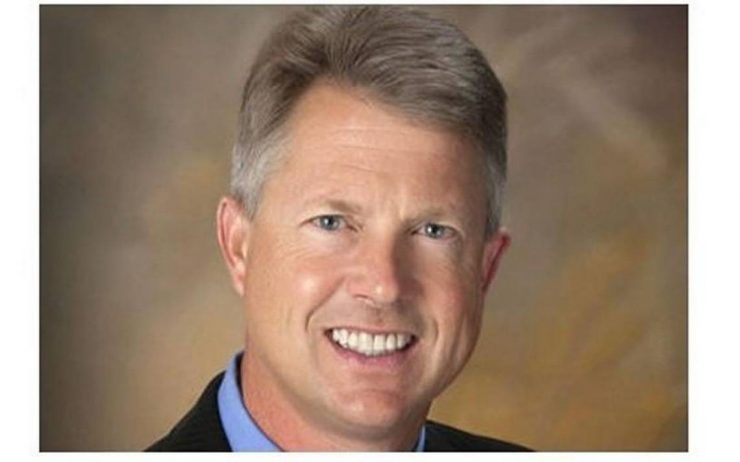
Dr. Roger Marshall, R-Great Bend, is the First District Kansas Congressman.

Hello Friends,

I am beside myself that the Senate voted to block the President’s National emergency declaration last week. Time and time again this administration has outlined the clear threat that our broken immigration system poses. I want to FIX this problem; I long for a day where our borders are secure AND our nation’s applications backlog is manageable, so that people pursuing the American dream can come to our country the RIGHT way.

Washington has a habit of making the simple, complicated. Leaders make the complicated, simple. You’re either for securing our borders and keeping Americans safe, or you aren’t. I stand with the President.

I’ve been to the border and I’ve seen the circumstances, our border patrol and DHS agents who are fighting on the front lines need our help to stop the flow of illegal drugs, sex trafficking, and violent criminals from coming into our communities.

(Editor’s Note: President Trump vetoed the block Friday afternoon.)

Agriculture Day

Last week I had the honor and privilege to speak on the House floor to celebrate National Agriculture Day. The state of Kansas has always been a leader in agriculture – ranking first in the production of grain sorghum, second in the production of wheat, third for cattle, and fourth in the production of sunflowers. Our dairy sector is also rapidly expanding and other sectors of animal agriculture are growing exponentially as well. Kansas farmers work around the clock to ensure their animals are healthy and their crops are maintained.

The number of people in agriculture today, less than 2% of our population, is but a fraction of what it was 100 years ago, but the impact of today’s agriculture industry is extraordinary. Today’s farmer feeds about 165 people and agricultural goods are still our country’s number one export. In Kansas, agriculture accounts for nearly half of the state’s total economy. In fact, our state is second in the nation for the total number of acres farmed.

On the floor, I also spoke about the importance of the relationship between co-ops and farmers. Co-ops are responsible for more than 4,600 jobs and $1.1 billion in total economic impact statewide. Cooperatives are critical to the continued success and prosperity of the American farmer, and I will do everything in my power to continue to support them.

This #NationalAgDay we celebrated our hard-working Kansas producers, the men, and women who work tirelessly in the most important industry in our nation. The strength of our country is dependent on the work our farmers and ranchers put in every day, and I am proud to celebrate with them and fight on their behalf in Washington.

EPA Focuses On Ethanol

I am thrilled to see the EPA’s new rule embrace renewable bio fuels and allow for the year-round sales of ethanol blends. Last week Environmental Protection Agency (EPA) Administrator Wheeler signed a proposed rule that would pave the way for the sale and use of E15 ethanol blends year-round. This is excellent news for the ten ethanol plants across Kansas, along with the grain producers and American consumers who will benefit from the cleaner, higher octane, and lower cost fuel blend.

Here in Kansas we produce nearly half a billion gallons of ethanol a year and this production creates more than 700 jobs, and servicing these plants also creates another 4,000 jobs across the state.

The Importance of Nutrition!

This month is National Nutrition Month, in recognition of nutrition being in the spotlight (even though for me it is something I take seriously and advocate for throughout the year) I introduced two bipartisan bills that aim to end certain food insecurities. Last week I introduced The Campus Hunger Reduction Act of 2019 and The Healthy Food Access for All Americans (HFAAA) Act.

The Campus Hunger Reduction legislation makes sure college students have access to the help that they need to be able to focus on their studies and their futures without having to worry about where they will find or whether or not they will be able to afford their next meal. We must enable our colleges and universities to build out programs and partnerships to alleviate hunger among the students they serve.

I also introduced legislation to combat food deserts. The Healthy Food Access for All Americans (HFAAA) seeks to help alleviate the fact that more than 20 million Americans live in areas where it is difficult to buy affordable fresh food. Today more than 12 million children identify as food insecure, that’s unacceptable. We need these children enjoying our Kansas commodities like nutritious beef, grain, and milk, not suffering from preventable health conditions like diabetes or obesity.

STEM Opportunities in Biotechnology and Bioscience

On Tuesday, the Research and Technology Subcommittee held its first meeting, examining opportunities and challenges with biotechnology and bioscience. Many of the panelists echoed the importance of STEM education as an important component of workforce development and US leadership in bioscience and biotechnology, especially as it relates to research and development in agriculture, energy, and manufacturing. It was a great hearing, and I look forward to continuing these important conversations about U.S. leadership in engineering biology with my colleagues here in D.C. as well as with the many fine educational and research institutions back in the district!

Internet of Things Cybersecurity Act of 2019

On Monday, I joined a handful of colleagues in introducing H.R. 1668, the Internet of Things Cybersecurity Improvement Act of 2019. As we dive deeper into the digital age, we are increasingly using devices such as fitness trackers, smart watches and thermostats that connect to various networks, however many of these devices lack adequate cybersecurity protections. The number of cyber attacks are increasing, and with that comes the need to create more secure and resilient products and services, particularly when it comes to the use of “internet of things” devices by the federal government. This bill aims to address risks posed by these devices by establishing light-touch, minimum security requirements for procurement of internet connected devices by the government.

Remembering President Bardo

Submit Your Artwork !


Please send all entries to [email protected].

Exploring Outdoors Kansas: Bye, bye Bobby and hello turkey time

Steve Gilliland
In 1998, Connie Storrie, caretaker of the Kansas Wildlife Exhibit at Central Riverside Park in Wichita, was given an orphaned baby bobcat. She named the fuzzy, one week old kitten Bobby and took him home to raise, hoping one day to release him back into the wild. It soon became apparent that Bobby, at such a young age had imprinted on Connie, so he was given a home in the wildlife exhibit at Riverside Park, which over the years has become the home to many injured and wayward animals.

The Kansas Wildlife Exhibit has been at Riverside Park since the early 1900’s and was Wichita’s only zoo until the Sedgwick County Zoo opened in 1974. Bobby became somewhat of a celebrity there and shared his home with a skunk, several birds and Chapa the beaver, an escape artist so notorious that his picture was featured on the 2017 Wichita Riverfest poster.

Bobby was 20 years old, a ripe old age for a bobcat, and sadly died last month of apparent old age.

* * *

Anytime now Kansas wild turkeys will be leaving their large winter flocks as gobblers select hens for themselves and break into smaller groups for the spring and summer. When that begins to happen and you start to see strutting tom turkeys, it’s nearly turkey time again! Spring turkey season in Kansas starts with youth and disabled hunters only season from April 1 – April 16, then archery only season April 8 – April 16, and regular firearms and archery season from April 17 – May 31.

I’m not a real seasoned turkey hunter, but I have learned a thing or two, mostly by mistake, about the pursuit of Kansas gobblers. A tried-and-true way of putting yourself on turkeys at first light is to be set up to call them as they leave the roost in the morning. You need to be close, but not too close and you need to be able to get there without being seen or heard by the still-roosted birds.

More than once I’ve set up in the morning where I saw birds late the night before and assumed I knew where they roosted, only to be scared spitless the next morning when a big tom gobbled much too near to me in the dark. My error was in not knowing for certain where they roosted and assuming I could come close enough. So if calling birds as they leave the roost in the morning is your game, either stick around long enough the night before or come back after dark and do some coyote howls or owl hoots to know for sure where they are.

Another thing I’ve learned is not to give up too easily on birds you spook. Once spooked, you will probably not get a shot at those birds anymore that day where you happen to spook them, but quietly leave and get set up somewhere ahead of them and the game is still on. A few years ago I built a blind out of brush the landowner had cut at the end of a field a couple hundred yards from where I knew a small group of turkeys was roosting.

What I hadn’t planned for were the couple lone jakes roosting by themselves just a short distance from my blind. After they had called my bluff, and the group I knew about had shunned me too, I set up again along a creek just around the corner of the same wooded pasture and started calling. The two jakes that had busted me came running enthusiastically and probably would have run over me had I not shot the first one.

Despite what the pros might say, turkey calling does not have to be precise and flawless either. Yes it’s good to know enough that your calls are not screaming bad things about a gobbler’s mother, but in my opinion it’s much more important to be in the right spot and to be well camouflaged, quiet and still. Turkey season is nearly upon us, so seize this opportunity to harvest yet another Kansas game animal as you continue to Explore Kansas Outdoors.

Steve Gilliland, Inman, can be contacted by email at [email protected].

Now That’s Rural: Todd Steinbach, Aero-Mod

Ron Wilson is director of the Huck Boyd National Institute for Rural Development at Kansas State University.
By RON WILSON
Huck Boyd National Institute for Rural Development

“Water, water everywhere and not a drop to drink.” That old saying refers to a situation where lots of resources are around us but none of them are useable. In the case of water itself, this saying reminds us that water is vital to life. Today we’ll learn about a Kansas company which specializes in cutting-edge technologies for waste water treatment. This company’s systems are being used across the nation and around the globe.

Todd Steinbach is co-owner and CEO of Aero-Mod Inc., the company which is designing and providing such water treatment systems. The company began as a project of K-State civil engineering professor Larry Schmid. In 1981, Professor Schmid and some partners founded a company to work on treatment systems for waste water. They designed and installed small treatment plants and worked on housing developments as well.

The company grew and changed through the years. After Larry Schmid, John McNellis served as president of the company. He worked with a contact in Algeria to build the business overseas. Todd Steinbach joined the business in 1994. He and partner Rob Mahan own the company today.

Aero-Mod specializes in cutting-edge waste water treatment systems. “There is oxygen demand when bacteria attack waste,” Todd said. “We are essentially treating water so that oxygen isn’t consumed.” This works kind of like an aerator in a household aquarium.

“We use naturally-occurring bacteria to make the water safe for consumption,” Todd said. These systems are built to remove nitrogen cost-effectively and produce superior effluent quality.

“We’re treating this waste water and putting it back into the rivers so that it is useable again,” Todd said. “Think of the health benefits of people having clean, unpolluted drinking water world-wide.”

Aero-Mod specializes in small- to mid-size municipal type systems. Many smaller towns used lagoon water treatment systems for years, but now are needing to upgrade. Aero-Mod systems provide that opportunity in a cost-effective way.

Aero-Mod has developed and installed municipal systems from California to Vermont, and as far away as Algeria, Costa Rica, and Chile. The company’s corporate clients include Ford Motors, General Motors, Kraft Foods, Frito-Lay, Coca-Cola, Intel Corporation, and more.

The company’s headquarters is located on the east side of Manhattan, Kansas. Aero-Mod staff design, build and market the equipment at the Aero-Mod facility.

“We have a great group of employees here,” Todd said. The company has grown to 45 employees.

“We need more engineers,” Todd said. “There are great opportunities in civil engineering. It is a very broad field. You can get into things such as water, like we’re doing here, or other environmental issues, structural design such as buildings, you can get into transportation, you can get into geotechnical things, construction materials, there’s lots of opportunities.”

Todd, a Wisconsin native, studied civil engineering at Iowa State before coming to Aero-Mod. His professor at Iowa State was a friend of Larry Schmid’s and helped make the connection with Todd and the company. “We knew nothing about Kansas,” Todd said.

Todd’s business partner Rob Mahan previously served as a consulting engineer himself. Rob comes from the rural community of Rossville, population 1,151 people. Now, that’s rural.

“For the consulting engineer (on these water projects), we can be an extension of their office,” Todd said. Such support has made a big difference as projects are bid, built, installed and maintained.

“We now offer a two-day school for water system operators,” Todd said. “Our customers know we’re there to support them.”

Demand is strong for high-quality, efficient waste water treatment systems across the nation. “We had a record year,” Todd said.

For more information about the company, see www.aeromod.com.

“Water, water everywhere and not a drop to drink.” That old saying reminds us that we all need water but the water is no good to us if it isn’t clean and safe. We commend Todd Steinbach, Rob Mahan, John McNellis, Larry Schmid, and all those involved with Aero-Mod for making a difference by providing systems for treating water for our use. I wish those systems were in use everywhere.

KRUG: Poison Prevention Week is Now

Donna Krug

March 17 – 23 is noted as National Poison Prevention Week. It is the perfect time to raise awareness among families to reduce unintentional poisonings, and promote poison prevention in our corner of the world. When our kids and grandkids were quite young I probably paid more attention to this important topic. It is interesting to note though, that people of all ages are in danger of poisonings.

A few years ago an Extension Agent in a neighboring county shared the educational program titled, “Dangerous look-a-likes.” That information has stuck in my mind, so I will share a few of the things I remember.

  • Many household cleaners are the color of Kool-aid or sports drinks. Some even smell like citrus, so it could be very dangerous to have these cleaners left in a space that is accessible by young children. Another important rule here is to make sure you leave cleaners in their original container. If you do put them in another spray bottle, make sure it is clearly marked.
  • Look inside your medicine cabinet. Many pills look so much like red hots or other small candies. Children do not know the difference so make sure medicines and supplements are kept far out of reach of young children. Do not refer to medicine or vitamins as candy and do not involve children as helpers with your medication.
  • If a person of any age ingests something that is poisonous contact the Poison Control Center at this number (1-800-222-1222) The phone number is manned 24 hours a day.

More than 2 million poisonings are reported each year to the 57 poison control centers across the country. More than 90 percent of these poisonings occur in the home. The majority of non-fatal poisonings occur in children younger than six years old. If a product label says, “Keep out of reach of children” there is a reason. Keep those dangerous things up high and in a locked cabinet. Almost half of poison exposures for children under the age of 5 are caused by medicine. Children have faster metabolisms than adults so anything they ingest will be absorbed into the bloodstream very quicly.

Take a few minutes and do a visual check around your house to make sure you have any poisons out of reach of young children.

Donna Krug is the Family and Consumer Science Agent and District Director for the Cottonwood Extension District. You may reach her at: (620)793-1910 or [email protected]

LETTER: In-depth local coverage is essential

Everyone likes getting something for free. However, the cost of the free Hays Post may come at the cost of more expensive government. Studies have shown that towns without a good local newspaper have more expensive government (tinyurl.com/y2hncz9w).

Many of you would say that the Hays Daily News is no longer worth subscribing to, especially after GateHouse Media purchased the Hays Daily News in November 2016. As a Hays Daily News subscriber, I wonder why I keep paying for a newspaper that no longer has a local editor/publisher, only comes five days a week instead of six, and is shrinking in other ways.

It’s no surprise that advertisers have abandoned the Hays Daily News too. However, I think the Hays Daily News and Hays Post are in a race to the bottom, where the losers are the citizens of Ellis County and northwest Kansas. We’re left with two local news outlets doing superficial local reporting and relying on news releases and stories picked up from other newspapers.

What we really need is in-depth coverage of local issues and editorials to keep local officials accountable for their actions. Otherwise, Hays will be left like over 1,400 other cities in the U.S. who no longer have a local newspaper. Many will blame GateHouse Media for not investing in quality journalism, but to some degree the fault is ours for not demanding and financially supporting a high-quality local newspaper. It’s not too late.

Helen Hands, Hays

INSIGHT KANSAS: Revitalizing rural Kansas takes tolerance, not tax breaks

The Kansas Legislature has appointed a new, bipartisan Rural Revitalization Committee, with Rep. Don Hineman as its chair and Lt. Governor Lynn Rogers a strong supporter. Here is a hint for them: there is only one way to bring economic growth to rural Kansas. Bring in the workers that businesses want to hire. That means thinking differently.

Michael A. Smith is a Professor of Political Science at Emporia State University.
First, here is what not to do. Do not offer tax breaks. It is a popular, but wrongheaded strategy. At the state level, the relationship between taxes and economic growth was put to the test with former Governor Brownback’s “Great Experiment” starting in 2012. The results were disastrous, with the state highway trust fund and other savings drained, schools and social services cut, and an attempt to fill the hole with regressive sales taxes, pushing Kansas’ grocery taxes up among the nation’s highest. Meanwhile, Kansas lagged the region in economic growth.

Tax cut packages do not work at the local level, either. Just ask the folks in Kansas City. In recent years, Kansas has forfeited $184 million in tax revenue to lure businesses across the state line, while Missouri has blown $120 million on the same. There is no net increase in jobs, since the businesses just move back and forth—or threaten to —in order to reap the tax breaks. Meanwhile, schools and infrastructure lose funding, and the tax burden is shifted to individuals and families. This is why the Missouri House recently passed a “truce” bill that would end this practice in the KC area, once Kansas responds with similar legislation. Come on, Kansas, do it!

Back East, New Yorkers recently told Amazon to “fugetaboutit,” withdrawing their huge tax package when they realized the staggering cost of a new headquarters. This has triggered a long-overdue, national discussion. Site-specific tax breaks are out of control.

If tax breaks will not do the trick, what will? Just ask any employer in rural Kansas. What they need are good employees. Economists call it “human capital theory.” The best way to lure businesses is to lure the workers that they wish to hire.

Start with the blue collar workforce. Among native-born Americans, the working class is getting older. For example, the average age of truck drivers is over 55. This pattern can also be found in a host of similar jobs. However, there is a growing sector of people willing, perhaps even eager, to take these jobs. They come from Mexico, Central America, Africa, south Asia, and around the world. They are immigrants, eager to live the American dream and willing to live in places that native-born young Americans may overlook. Will they be welcomed by the communities, schools, churches, and workplaces of rural Kansas, as they were at First United Methodist Church of Dodge City? Our future depends on it.

Employers also need professional workers in fields like research and development, and also management. This means college graduates, and even my students from rural Kansas agree overwhelmingly: to feel welcome, their friends who are LGBT must feel welcome, too. For them, being open and affirming has become the litmus test for tolerance. Even heterosexual young college grads use this yardstick: if their friends are welcome here, then all are welcome. Throw in a crazy-low cost of living, beautiful prairie land, good schools for the kids that may come along someday, and an easy commute back home to visit their parents, and you just might have a deal.

Rep. Hineman, forget the tax breaks. If our young blue- and white-collar workers know they are welcome here, the employers that hire them will come, too.

Michael A. Smith is a Professor of Political Science at Emporia State University.

OPINION: Child victims of sex trafficking receive mixed messages

‘If We Aren’t ‘Aggressors’ Then Why are We Arrested?’

By Dr. Karen Countryman-Roswurm
Center for Combating Human Trafficking
and Linda Smith
Shared Hope International

In February, Kansas Judge Michael Gibbens came under fire in national news for claiming that two girls, ages 13 and 14, acted as “aggressors” in a situation of exploitation in which a 67-year-old male, Eugene Soden, paid them to have sex. While public reaction to Gibbens ruling was appropriately harsh, the reality is that his decision is reflective of a much larger societal and legal paradox.

Countryman-Roswurm

Informing his ruling, Gibbens made multiple statements that less harm was done to the girls because he felt they had acted “voluntarily” and were paid. In speaking of the 13-year-old, Gibbens questioned:

“So, she’s uncomfortable for something that she voluntarily went to, voluntarily took her top off for, and was paid for?”

“I wonder, what kind of trauma there really was to this victim under those peculiar circumstances?”

As a society, we must ask, why did money sanitize what, in any other circumstance, would be considered child rape? And more concerning, how did the exchange of money shift the narrative so dramatically so as to characterize children as aggressors in the crime of which they were victims?

The answers lie in the paradox in which victims of child sex trafficking are legally apprehended and consequently, socially stigmatized. Twenty-five states, including Kansas, still allow commercially sexually exploited minors to be charged and prosecuted for prostitution and human trafficking offenses despite federal and state laws that recognize these same minors as victims of child sex trafficking. This paradox still exists despite an increase in awareness, and specific laws to protect children from such offenses over the last couple of decades.

As recently as 2018, Shared Hope International scored Kansas an “A” for having strong laws to address child sex trafficking. Yet, even within a state that has received an “A” rating, more than 79 minor human trafficking victims between 2013 and 2018 were detained in a juvenile detention center, sentenced to an average of 33 days. Criminalizing youth who have experienced the horrors of commercial sexual exploitation, and oftentimes survived traumatic experiences that predate the exploitation, is not only the gravest of injustices but also prevents survivors from receiving critical services and ongoing, specialized care.

Smith

Laws, and the manner in which they are applied, should reflect a community’s attitudes and beliefs.

The law in Kansas fixes the age of consent at 16 in apparent recognition that sexual contact between an adult and a minor is not consensual. Despite this long-standing law and an increased understanding of the damaging effects of sexual violence, victim-blaming toward sex trafficking survivors remains. Gibbens’ comments towards the children in this case, reflect a culture that seeks to diminish or justify the harm of buyers and abusers by placing responsibility within the victims. The reactions of citizens, in which nearly half of the comments on social media placed blame on the minors and used terms such as “delinquent,” “out of control,” “promiscuous,” “prostitute,” and “choice” illuminate the reality of this disconnect. Illustrating this further, in response to Gibbens’ ruling, Kansas Attorney General Derek Schmidt proposed a new law that would prevent judges from reducing sentences for adult sex offenders because a child was labeled the “aggressor.” Kansas lawmakers rejected the bill.

Thus, amidst anti-trafficking awareness campaigns and fancy fundraisers, as Kansans we must ask ourselves: How do we really view individuals who have been victimized by and survived human trafficking? If we truly care, how do we shift our culture to recognize all survivors of sexual violence, including child sex trafficking, as unequivocally blameless in the conduct that constitutes their very victimization? How do we ensure that individuals victimized are afforded services, protection, and responses free of judgement and injustice, while simultaneously developing modes of accountability for offenders?

We must put an end to the paradigms, practices, and policies that allow survivors to be criminalized for surviving their victimization while perpetrators get a pass. Instead, we must believe the experiences of child victims of commercial sexual exploitation, and hold forth the truth of their innocence.  We must protect survivors and provide access to holistic services. We must demand justice.

For more information, please visit the Center for Combating Human Trafficking (CCHT) and Shared Hope International.


About the Authors:

Dr. Karen Countryman-Roswurm is the Founding Executive Director of the Center for Combating Human Trafficking (CCHT) as well as an Associate Professor in the School of Social Work at Wichita State University. Grounded in her own life experiences of overcoming streets and systems, Dr. Roswurm has over two decades of personal, professional practice, and community-based research expertise in the Anti-Trafficking Movement.

 Linda Smith served as state legislator and Member of Congress from Washington (1983-1998). She founded Shared Hope in 1998.

MASON: By any measure, Tiger athletes are champions

Dr. Tisa Mason, FHSU president

By any measure, Tiger athletes are champions

What an incredible year it has been for Tiger Athletics! Back-to-back MIAA football championships, men’s soccer makes it to the final four – and fights through eight penalty kicks with fierce grit and determination.

And this last weekend, our women’s basketball team won the MIAA tournament championship and the right to host the NCAA II Central Region championship this coming weekend.

Also last weekend, wrestler Brandon Ball, a junior from Great Bend who was competing for a national championship in Cleveland, Ohio, ended up with a 28-2 record for the season and his second All-American.

And in Pittsburg, Brett Meyer, a Scott City senior, earned his fifth All-America honor in the mile run while competing for the national championship. Kolt Newell, a Plainville senior seeking the national high jump championship, also was named an All-American.

WOW!

I am inspired by our student-athletes. As a university, we rely on our student-athletes to tell our institutional story by how they practice and play, their character on and off the field, as well as their success in the classroom. They work hard to hone their skills – often making sacrifices in other areas of their life to excel as an athlete, and they must be good time managers to ensure their commitments to their educations and to their sports are in balance.

The office of the president affords me many ceremonial privileges for which I feel very grateful – from shaking every student’s hand as they cross the stage at commencement to standing with our four-time national champion shotgun team as they were introduced and applauded on the floor of the Kansas House of Representatives and Senate.

This year, I got to hand the MIAA trophy to Coach Chris Brown (Coach of the Year, for the second consecutive year) for the football team championship as well as to Coach Tony Hobson (also Coach of the Year) for the women’s basketball team’s regular-season MIAA championship – and to congratulate Tony himself as the winningest women’s basketball coach ever for FHSU!

I love those moments of saying, “Great job” and “I am so proud of you.” Those moments warm my heart and fill me with joy, and lately I have had lots of opportunities to celebrate our student athletes.

In February, we recognized more than 300 student athletes for their academic success. These were students who, despite the long hours they put into their sports activities, earned a 3.0 cumulative GPA in either the spring 2018 or fall 2018 semesters. We call every student athlete to the floor of the basketball arena to line up with their parents for recognition and applause from our fabulous fans.

Speaking of fans – ours are passionate about Tiger Nation. Love that! Our success has been fueled by many, many donors, as well as those who purchase tickets to our events. The financial support has enabled us to get stronger and be better. Alumnus Peter Werth flew the women’s basketball team to Connecticut so they could meet and compete against the legendary UConn team. What an incredible life-memory he created!

Alumnus Russ Pfannenstiel created the Distinguished Tiger Leadership Award to recognize one male and one female student-athlete who practice the extraordinary volunteerism and community involvement and exemplify hard work, teamwork, endurance, a positive attitude, dedication, sacrifice and commitment, and who always exhibit an uplifting personality.

Tatyana Legette, a senior basketball player from Topeka, is the 2019 Female Distinguished Tiger.
Wrestler Micquelle Robinson, a senior from Wichita, is the 2019 Male Distinguished Tiger.

It is thrilling to have all these outstanding student athletes – each with a personal story, source of motivation and inner strength, and each a champion in their own right. I am awed by these young people, who are firmly rooted in who they are and who positively engage with our campus and our community.

I am proud of them, their coaches, their faculty, and their families and friends who helped shape the hearts, minds, and characters of these champions.

RAHJES REPORT: March 14

Rep. Ken Rahjes (R-Agra), 110th Dist.

Hello from Topeka!

Congratulations to the Fort Hays State University women’s basketball team on the outstanding performance in winning the MIAA tournament in Kansas City over the weekend. They will now host the first round of post season this weekend.

Last week was one focused on protecting the taxpayers of Kansas, with the passage of SB 22.

Imagine you find a billfold on the ground, it has cash inside along with the driver’s license. What would you do? What would you tell your kids to do? Return it, right? That’s the right thing to do. When Congress passed the Tax Cuts and Jobs Act, they created unintended consequences that had some people and some businesses paying more taxes to state governments. They didn’t mean to, but that’s what happened. They created a billfold filled with cash and a driver’s license. The choice for us is whether to keep that money and spend it, or to do the right thing and return it. In Kansas we were raised to do the right thing and SB 22 returns that billfold back to its rightful owner.

When Congress made changes to the federal tax code last year, it triggered the need for states – like Kansas – to take action so that families in our state wouldn’t be penalized. That’s what this bill is about. It updates the Kansas tax code so that middle-income Kansans can continue to write-off their medical expenses, property taxes, charitable contributions and mortgage interest.

This is about fairness. Kansans shouldn’t have to pay higher taxes just because they can’t itemize on their federal taxes.

The bottom line is this: a “No” vote would raise taxes on Kansans with medical expenses. It would raise taxes on Kansans with a home mortgage. It would raise taxes on Kansans who contribute to our local charities and churches. A “Yes” vote protects those Kansans from a tax hike. That’s why I voted yes. I don’t think we should raise taxes on working families in our state.

Some people in Topeka seem determined to raise taxes. They’re trying to raise income taxes on middle-income families and homeowners. And I’m saying no. We have to stabilize the budget without constantly going back to the well for more taxes.

This “windfall” from the federal government was never intended to pad the pockets of state government. It was intended to stabilize income taxes for working families and business owners so that they wouldn’t see a tax hike at the state level.

SB 22 is not Brownback 2.0. This bill is not a general reduction in tax rates or exempting certain kinds of income from taxation. This bill was not Kansas state policy but rather a required reaction to federal law changes. Without this bill, taxes would have automatically increased for tens of thousands of Kansans on April 15. I don’t support raising taxes on Kansans, especially when that change comes courtesy of the federal government.

There is no doubt that our state government could find a way to tax this financial windfall. We have needs in many areas. But just because we could spend this money, that doesn’t mean we should. This isn’t money from new businesses or new people moving to Kansas. It isn’t money from economic growth. It is money from unintended consequences of federal policy.

This isn’t just a Kansas issue. Many states across the country have had to change their tax codes in the wake of the federal changes. Red states like Texas and North Carolina but also blue states like New York, New Jersey, Pennsylvania and Connecticut have all realized that the right thing to do is to change their laws so taxpayers aren’t penalized because of changes in tax policy. I voted for SB 22.

If you want to get more into the full content of SB 22: For Individuals – adjusts the Kansas tax code so that Kansans with itemized deductions that total between $7,000 and $24,000 can continue to itemize on their state income taxes even if they no longer itemize on their federal income taxes. Some middle-income tax filers might not itemize at the federal level this year due to recent changes Congress made to the federal tax code to raise the standard deduction. Without this bill, these middle-income tax filers would no longer be able to itemize at the state level, triggering a higher state income tax liability for these families.

For multi-national companies – clarifies language in the Kansas tax code so that changes in the federal tax code do not trigger unintended tax hikes at the state level for business owners. Right now, Kansas companies that do business outside of the United States pay taxes on those profits at the federal level. Those profits are not taxed at the state level and never have been. Without this bill, these Kansas companies would be subjected to additional taxes at the state level, making Kansas a more expensive state for businesses to operate in.

For Main Street businesses—eliminates an unfair playing field that makes it cheaper for out of state businesses to sell to Kansas customers because they don’t have to collect sales taxes like Kansas businesses do. Removes liability from individual Kansans to track, record, and report out of state purchases and places that liability on the out of state merchant where it belongs. Stops giving out state businesses an upper hand so that our local brick and mortar store owners can compete.

For every Kansan who buys groceries—lowers the food sales tax by 15% so every Kansan will see a drop in their tax burden every single time they go to the grocery store.

If you come to Topeka during the session, my office is in Room: 149-S. My phone number is (785) 296-7463 and email is: [email protected] and you can always try my cell number is (785) 302-8416.

It is my honor to serve you in the Kansas House of Representatives.

Rep. Ken Rahjes (R-Agra), is the 110th state representative and chairman of the Higher Education Budget Committee. House District 110 includes Norton and Phillips counties as well as portions of Ellis, Graham, and Rooks counties.

BILLINGER: Senate Update, March 14

Sen. Rick Billinger (R-Goodland), 40th Dist.

First of all, I would like to thank Kansas Farm Bureau for setting up the fifteen town hall meetings held in the 40th Senate district. Representative Adam Smith, Representative Ken Rahjes, Representative Barbara Wasinger, Representative Don Hineman and I were glad to hear from our constituents about their questions and concerns.

SB9 becomes law. The $115 million pays back a previously missed KPERS payment, bringing the funding ratio to the highest point it has been in 25 years. This is the first time in 25 years that we have made the actual required contribution. This payment will save the State of Kansas $630,000 per month and according to KPERS, the actuarial effect of repaying the contribution would be net savings of $186.1 million from all funds over 30 years.

Last week the House passed SB22. SB22 originally passed the Senate and was created in response to federal tax reform. The legislation was created to return the unexpected windfall from the Trump tax cuts back to taxpayers while allowing Kansans to deduct interest on their mortgage, property taxes and health care expenses through decoupling from federal law. For individuals-SB22 adjusts the Kansas tax code so that Kansans with itemized deductions that total between $7,000 and $24,000 can continue to itemize on their state income taxes even if they no longer itemize on their federal income taxes. Some middle-income tax filers might not itemize at the federal level this year due to recent changes Congress made to the federal tax code to raise the standard deduction. Without this bill, these middle-income tax filers would no longer be able to itemize at the state level triggering a higher state income tax liability for these families.

SB22 provides Kansas businesses with the full benefits of federal tax breaks on foreign income, allowing Kansas to remain competitive with neighboring states who have already done this. Right now, Kansas companies that do business outside the United States pay taxes on those profits at the federal level. Those profits are not taxed at the state level and never have been. Without this bill, these Kansas companies would be subjected to additional taxes at the state level, making Kansas a more expensive state for businesses to operate in. Kansas is only one of seven states that has not decoupled from the federal tax law.

The House added two amendments to SB22. They included a 1% reduction in the state’s 6.5% sales tax on food. The House also included an internet sales tax amendment that would require out-of-state online retailers to pay sales tax which they have not been required to do in the past. The Senate will have the opportunity to concur with the House’s adjustments or engage in compromises during conference committees.

SB32, the Farm Bureau Health Benefit plan passed out the House committee and will advance to the House floor for a full debate. I will keep everyone informed as this bill moves through the process.

Congratulations to the Fort Hays State University women’s basketball team. It was a fun afternoon to cheer on the Lady Tigers for their first MIAA Tournament championship.

Thank you to those who stopped by my office last week to visit. It is always good to see constituents from the 40th Senate District.

I am honored and grateful to represent the 40th Senate District in Kansas. Please do not hesitate to contact or call me with your questions and concerns, my office number is 785 296-7399 or my cell is 785 899-4700. If you are in Topeka stop by my office at 236-E.

Sen. Rick Billinger, R-Goodland, is the Kansas state senator for the 40th District, which includes Cheyenne, Decatur, Ellis, Gove, Graham, Logan, Norton, Rawlins, Sheridan, Sherman, Thomas, Trego and Wallace counties as well as portions of Phillips County.

HAWVER: Wrangling over taxes

Martin Hawver
The major tax cut bill of the 2019 Legislature has now passed, in slightly different forms, both the House and Senate and we’re waiting to see what happens next…and next…and possibly next as the 2017 federal tax cuts trickle down into state finances and politics.

The Legislature’s tax debate wasn’t all that exciting because, well, it’s a tax bill and it is complicated and technical. So, the excitement starts now.

Key is that both the Republican-controlled House and Senate have agreed to the major income tax cut provisions of the bill. The Senate baked the cake, with about $187 million in income tax cuts this year, about $50 million for individual income taxpayers and about $137 million for corporate income taxpayers. Next year, the ratio changes, with some individual Kansans seeing about $60 million in cuts, corporations about $51 million in cuts.

And when that cake got to the House, well, it got frosted. The House added a 1 percent cut in the state sales tax on food (from 6.5 percent to 5.5 percent) which will cost the state about $43 million in lost revenue next fiscal year and about $66 million in lost revenue (or, kept by food buyers), partially paid for by a new Internet sales tax, which might bring in about $21 million next year and maybe $33 million a year after that.

The next thing to happen will be when the Senate decides whether it wants that appealing frosting. We all want to pay less sales tax on the food or anything we buy, and those local stores don’t want Internet sellers to not have to collect Kansas sales tax that they have to charge customers, which costs them customers.

Now, part of the House’s frosting looks better than it’s actually going to taste. Dropping the sales tax on food (starting Oct. 1) is going to leave a little more change in Kansans’ pockets. And the guy buying steak gets the same percentage cut as the guy buying bologna. Hard to tell whether either will notice the sales tax cut, but the provision is probably worth mention on a campaign palm card.

And everyone who has a store is by this time tired of customers saying they can get stuff cheaper over the Internet…especially without a 6.5 percent sales tax added in as local stores must.

So, watch for the Senate to decide next week whether to negotiate those food and Internet taxes, or just OK them, and vote to send the bill to the governor.

Next after that?

It’ll be the governor likely vetoing the bill because it will upset her budget, and because nobody’s really sure yet just what that federal tax cut /expansion “trickle down” is going to mean to state revenues. Lots of guesses, lots of charts and tables and explanations, but the Department of Revenue hasn’t actually counted the dollars in additional revenue that federal tax cut will send to Kansas.

While the House and Senate stand for reelection next year, Gov. Laura Kelly’s got nearly four years to figure out how to pay for basic state responsibilities: schools, highways, possible expansion of Medicaid, pension, roads… She needs revenue to pay for all the things Kansans want and need from their government.

And next after that?

It’ll be the House and Senate trying to override the veto. The House passed the bill 76-43, and in that chamber, it takes 84 votes to override a veto. The Senate earlier passed the (un-frosted) bill 26-14, just one vote short of the 27 needed for an override.

And next after that? If it becomes law, we’ll see how House and Senate candidates tout it.

One Republican already has calculated that a 1 percent drop in the sales tax is—ready?—a 15 percent cut in the sales tax on food…

Syndicated by Hawver News Company LLC of Topeka; Martin Hawver is publisher of Hawver’s Capitol Report—to learn more about this nonpartisan statewide political news service, visit the website at www.hawvernews.com

Kan. Farm Bureau Insight: A century of service

By GLENN BRUNKOW
Pottawatomie County Farmer and Rancher

Kansas Farm Bureau turns 100 this year, and 100 has never looked so good. A lot has happened in the century KFB has been around. We have seen agriculture transition from horse-drawn equipment to modern tractors and combines that virtually drive themselves. We have gone from being an agrarian society to one where less than 2 percent of the population is involved in production agriculture. All of this is mind boggling, and I am sure beyond the imagination of the farmers and ranchers who laid the foundation of our organization.

I often try to put myself in the boots of a founding member. What was their mindset? What did they hope to accomplish? What was their vision for the fledgling farm organization? Kansas Farm Bureau was started to address concerns about commodity prices, new technology and transportation. Issues that are still at the heart of many of our discussions today.

I am sure the founding members of Kansas Farm Bureau would never have imagined their start-up would grow to become the biggest and most influential general agriculture organization in Kansas. One that has a strong voice in making the lives of its members better through legislation in Topeka and Washington, D.C. I doubt if their vision saw KFB becoming the leader in agriculture education and advocacy, and the amazing things its members do to promote the food and fiber we all produce.

I would imagine they saw the need to bring farmers and ranchers together to have a combined voice — one that could speak for all producers. They saw the need for the agriculture community to band together because as a group we are stronger than we are individually. Kansas Farm Bureau was created to improve the lives of the men and women who poured their blood, sweat and tears into the land they were entrusted with.

Over the years Kansas Farm Bureau has met the challenges, changing with the times and going the extra mile to meet the needs of its members. KFB has been there for the farmers and ranchers through droughts, floods, fires and other disasters. It has championed the cause of agriculture in the legislature making sure the voices of its members were heard.

The issues may have changed. I doubt if the founders could have envisioned defending new technology to the public or fighting for better health care coverage in rural Kansas, but the heart of Kansas Farm Bureau has remained true over the past century.

One hundred years is truly a milestone, but it is not the final one. Over this centennial year we will look at the future of Kansas Farm Bureau, and I hope we will approach it with the same vision, hope and passion that the founding members had when they came together. It is important we celebrate our past, but it is more important that we have a vision for the future.

It is my hope that when Kansas Farm Bureau celebrates its 200th birthday in 2119 the members will look back on us with the same admiration and appreciation that we have for the charter members. Yes, we have accomplished so much in 100 years, but rest assured there is much more work to be done in the next 100. It’s time to cut the cake and celebrate because 100 looks pretty good. Here is to 200 looking even better.

“Insight” is a weekly column published by Kansas Farm Bureau, the state’s largest farm organization whose mission is to strengthen agriculture and the lives of Kansans through advocacy, education and service.

Copyright Eagle Radio | FCC Public Files | EEO Public File