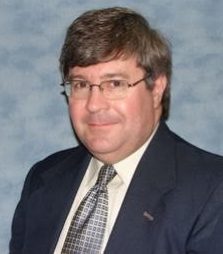
On Tuesday, March 5, 2019, while we were still on break, I received many emails and messages regarding House Bill 2228.This bill amends the current laws regarding the operation of a child care facility where the said operator must require written notice if they are operating the facility without a license. This bill also establishes civil fines for operating a child care facility without a license, addresses the health, safety, and sanitation of children in a child care facility.The bill also provides for appeal rights for operators aggrieved by an order from the Secretary of Health and Environment regarding civil fines.
House Bill 2228 would require the Secretary to provide a written notice to the operators of a child care facility without a license that a required license is state law.If the operator continues to operate without a license after being notified they then must supply one, or the Secretary can impose civil fines on the operator.There are some exceptions where a license will not be required, those being, children provided care in the home they reside in, children who are relatives of the person, and up to two children, unrelated, for not more than twenty hours a week.
Prior to our leaving for turnaround, this bill passed out of the committee of Children and Seniors.Now we wait for a vote on the House floor.
Fiscal Leaders Meeting
For the past four years, I have been invited and will be a participant in the National Conference of State Legislatures Midwest States Fiscal Leaders Meeting.The topics vary greatly from year to year, and this year is no exception.On Friday, March 8, the discussions focused on the economic impact of agriculture in the Midwest, geographically targeting economic development incentives, sharing state experiences regarding Medicaid waivers, and the final segment for that day focused on the top fiscal issues in each of our states.Saturday, March 9, the scheduled discussion was on who is “footing the bill” for higher education, stress testing our state budgets, and the changing of state tax structures.I enjoy attending these meetings each year to discuss and listen to the array of differences and similarities we have in our Midwest region.
Tax Bills on the Floor this Week
Thursday, we debated two tax bills on the House floor.The first, House Bill 2160, allows for sales tax authority for Wabaunsee county, was the less controversial bill that we debated that day.
Senate Bill 22, otherwise referred to as the “Windfall” tax bill was the second bill we debated.As you may recall, the windfall derives from the recent changes in federal tax law where Kansas taxpayers must take the standard deduction on the state income tax return if they take the standard deduction on the federal return.
Some contend that this may eliminate the opportunity for Kansans with itemized deductions below the federal standard deduction, to itemize on the state return.By amending the tax code, or decoupling from the federal tax law, we would allow taxpayers to itemize or take the standard deduction on the state’s returns.This bill passed the Senate, 26-14 and the House Tax Committee added an internet sales tax and used that tax to buy down the sales tax rate on food.The bill passed to final action, 80-42, and I voted “yes.”
Contact Information
As always, if you have any concerns, feel free to contact me (785) 296-7672, follow on twitter at @waymaster4house, visit www.troywaymaster.com or email me at [email protected].Also, if you happen to visit the statehouse, please let my office know.
It is a distinct honor to serve as your representative for the 109th Kansas House District and the state of Kansas. Please do not hesitate to contact me with your thoughts, concerns, and questions.I always appreciate hearing from the residents of the 109th House District and others from the state of Kansas, as well.
Dr. Roger Marshall, R-Great Bend, is the First District Kansas Congressman.
Friends,
March 1 is my mother’s birthday, and very fitting for her special day, it is also International Women’s Day. I admire my mom, and the many life lessons she has taught me and still teaches me to this very today. From an early age, she showed me the value of hard work, she worked a full-time job while also raising a family and caring for us around the clock.
From teaching me the importance of having the entire family sit down for dinner, to her endless advice and support, she will always amaze me! Happy birthday, mom!
Discussing Trade and Health Care with President Trump
Last past week leaders of the Republican Study Committee had the opportunity to sit down with President Trump and talk about conservative agenda for this Congress.
As the Chairman of the Health Care Task Force, I talked to the president about our plans to drive down health care costs and other market-based reforms that would give patients choice, access, and protect those with preexisting conditions. Fixing our broken health care system has been a top priority for my office since day one- As a physician for nearly 30 years, I saw many of the problems with our current system firsthand!
But before the President and I discussed health care, he singled me out to deliver one clear message to Kansas farmers- he told me to tell the folks back home that he would not sign a bad trade deal for Kansas producers. The president confidently said that they are making significant progress with China and will prioritize the approval of USMCA by Congress.
It was great to sit down and discuss both the need of our farmers and ranchers, as well as our common vision to fix our broken health care system.
International Women’s Day
March is Women’s History Month, and March 1 is International Women’s Day, so please, I challenge you to thank those women that have positively influenced your life, improved your community and contributed to the success of our great nation.
Supporting our Veterans- Addressing Suicide and Addiction
At our legislative coffee in Junction City many of you talked with me about your time serving our nation and resources available to veterans. Supporting our men and women in uniform and our nation’s veterans is a top priority for me. Last week I wrote an op-ed discussing the common issues that many veterans are facing and what we must do to help.
One of my top concerns today is veteran suicide rates. Last week the president signed the PREVENTS (President’s Roadmap to Empower Veterans and End A National Tragedy of Suicide) executive order to help put a stop to the 20 veterans who commit suicide each day in the United States. This new task force will be tasked with encouraging private-public partnerships to make mental healthcare more readily accessible to each and every veteran in the U.S.
In Kansas, we just opened a brand-new state of the art medical center, the Robert J. Dole Veterans Medical Center, that focuses on Substance Abuse Residential Rehabilitation and Treatment. This center honors the 220,000 veterans across Kansas and the 20 million veterans across the United States. It’s dedicated to helping veterans who have contemplated, or attempted suicide, veterans struggling with addiction, and those in recovery.
Substance abuse and addiction is a terrible problem in our nation and often for our veterans. I fully support the work being done by this administration and in our clinics around Kansas. For as long as I am in office I will continue to fight for the men and women who have fought for us.
Read my latest op-ed on the new veterans treatment facility in Wichita HERE.
Raising Awareness for PCOS- Polycystic Ovary Syndrome
During my time as an OB-GYN, I helped numerous women that struggled with PCOS through their pregnancies and their deliveries. Now on the Hill, I serve as the Co-Chair of the PCOS Caucus, where I am able to be the voice for millions of women across the country suffering from PCOS.
I am working with my fellow Co-Chair, Rep. David Scott, this Congress in introducing H.Res 146. H. Res 146 will designate September 2019 as PCOS Awareness Month. Furthermore, I am actively working with Scott on a letter that would have HHS do an inter-agency study on their work on PCOS and increase much-needed research. By advocating for both more awareness and research, I am hopeful we can help gather more information on this disease that impacts so many families. We want them to improve inter-agency collaboration, develop an awareness campaign, improve research output that will someday lead to better patient outcomes.
Last week I had the pleasure to speak with people who traveled from all over the country to D.C. for Polycystic Ovary Syndrome Advocacy Day. It is so great to see so many people getting involved and advocating to their lawmakers for more awareness of this disease.
Women, Infants, and Children Nutrition is so important
I had the honor of speaking at the annual WIC Leadership Conference lst week. I’ve always supported WIC and am again working on a letter to my colleagues urging them to keep the WIC program fully funded in 2019.
As an OB-GYN, I know firsthand the importance of nutrition, and I want to assure the people of Kansas that I will always work to support mothers and children. As a physician I could not stress enough to my patients the importance of their Infants and children receiving proper nutrition at an early age. I look forward to continuing my work with WIC!
Rep. Omar- Hate has no home here
Last week I voted to stand against hatred and Anti-Semitism. This Congress must make it clear to Rep. Omar that we will not tolerate her continuous anti-Semitic rhetoric and beliefs. During this time it is important to ask ourselves why an anti-Semite is still on the Foreign Affairs Committee. We can only hope that Nancy Pelosi will see how wrong it is to allow it. It’s mind-boggling to me that Democrat Leadership keeps turning a blind eye and not taking action to remove this type of hatred from this important committee.
Dr. Roger Marshall, R-Great Bend, is the Kansas First District Congressman.
Thursday, Feb. 28 marked a critical deadline known as “turnaround,” marking the official halfway point for the 2019 Legislative session. It was a busy week for the Senate, as we spent two full days debating and voting on bills ahead of the Turnaround deadline. After being on the floor all day Tuesday and Wednesday, the Legislature was on break until March 6th to give clerical staff time to process the significant amount of paperwork resulting from this week. By “turnaround,” a bill, with few exceptions, must have passed its Chamber of origin in order to be considered by the other Chamber before session is over for the year. When the Senate returned on Wednesday, the focus was to consider bills passed by the House Chamber and bills exempt from the Turnaround deadline.
FLOOR ACTION LAST WEEK
REGISTERING FLEET VEHICLES – SB 97: Senate Bill 97 authorizes the registration of certain rental vehicles in fleets and the issuance of permanent license plates to reflect that registration – must be 250 motor vehicles submitted electronically.
COMPANY SIGNS IN VEHICLES – SB 63: Senate Bill 63 authorizes the governing body of a city to adopt an ordinance to allow a driver for a transportation network company (Uber, Lyft and others), when the driver is logged on to the transportation network company’s digital network, to equip the vehicle with a device capable of displaying a light visible from directly in front of the center of the vehicle. The lighting device can display steady light and can be any color except red.
REMEDIATION REIMBURSEMENT PROGRAM – HB 2001: House Bill 2001 extends the sunset on the Kansas Remediation Linked Deposit Loan Program, the Kansas Remediation Reimbursement Program, and the Kansas Agricultural Remediation Fund from July 1, 2020, to July 1, 2030.
UNCLAIMED LIFE INSURANCE BENEFITS ACT – SB 67: Senate Bill 67 establishes the Unclaimed Life Insurance Benefits Act (Act). The bill would require an insurer to compare its insureds’ in-force policies, contracts, and retained asset accounts against a DMF, on at least a semi-annual basis. The bill would require insurers, for group life insurance, to confirm the possible death of an insured when the insurers maintain at least the Social Security number or name and date of birth, beneficiary designation information, coverage eligibility, benefit amount, and premium payment status of those covered under a policy or certificate.
SERVICE-CONNECTED DEFINITION IN POLICE AND FIREMEN’S RETIREMENT SYSTEM – SB 15: Senate Bill 15 revises the definition for “service-connected” as that term is used to determine death and disability benefits in the Kansas Police and Firemen’s Retirement System. Under current law, service-connected causes for death and disability benefits include heart disease, lung or respiratory disease, and cancer. The bill would add bloodborne pathogens.
UPDATING THE STATE BANKING CODE (SB 82): Senate Bill 82 amends provisions of the State Banking Code relating to certificate of existence, voting rights for conversion to a state charter, and the method of delivery for certain notices. The bill includes certificates of existence, conversion to a State Charter and delivery methods for certain notices.
ENTREPRENEURSHIP ACT – SB 90: Senate Bill 90 would allow financial institutions to claim the Center for Entrepreneurship tax credit beginning in tax year 2019, which would be applied to the privilege tax owed. The maximum amount of tax credits that any taxpayer could claim would be increased from $50,000 to $100,000. The total amount of tax credits that could be claimed for all taxpayers would remain capped at $2.0 million per fiscal year.
KANSAS REAL ESTATE COMMISSION LICENSING –SB 60: Senate Bill 60 modifies statutes related to licensing of real-estate brokers and the Kansas Real Estate Commission. The bill reduces real estate broker’s licenses time from five years to three years preceding the date of application for the license for which an applicant for a broker’s license may satisfy the requirement of two years’ experience as a resident salesperson or a licensee in another state. It also increases the pre-license education course from 24 hours to 30 hours, and no more than 45 hours, and renames the course the “Kansas Real Estate Fundamentals Course.” It also creates a new course titled “Kansas Real Estate Management Course,” which would be 30 to 45 hours in length and would be required for original broker’s license applicants beginning January 1, 2020.
REGULATING ASSIGNMENT OF RIGHT OR BENEFITS TO A RESIDENTIAL CONTRACTOR – SB 78: Senate Bill 78 creates law within the Kansas Consumer Protection Act regarding a post-loss assignment of rights or benefits to a residential contractor under a property and casualty insurance policy insuring residential real estate. The residential contractor would be required to provide the assignment to the insurer of the residential real estate within three days of the signing of the assignment, and the assignment would have to provide that, in addition to any other right to revoke, the named insured has the right to cancel the assignment within five business days after execution.
AT-RISK PROGRAMS – SB 16: Senate Bill 16 requires, on and after July 1, 2019, the best practices identified and approved by KSBE for at-risk programs and instruction of students receiving at-risk program services. The bill would also specify Jobs for America’s Graduates (JAG) and Boys and Girls Club as programs eligible to receive state appropriations for providing individualized support to students enrolled in unified school districts and assisting with student achievement goals.
MINIMUM SCHOOL SAFETY DRILLS EACH YEAR – SB 128: Senate Bill 128 requires the State Fire Marshal to adopt rules and regulations requiring administrators of public and private schools and educational institutions, except community colleges, colleges, and universities, to conduct at least four fire drills, two tornado drills (one in September and one in March), and three crisis drills each school year. The bill would require the three crisis drills to be conducted at some time during school hours, aside from the regular dismissal at the close of the day’s session.
MOTOR VEHICLE ACCIDENT PREVENTION COURSE –SB 94: Senate Bill 94 would require a motor vehicle accident avoidance course associated with required reduction in motor vehicle insurance premium charges to be at least four hours in duration. The bill would require the course utilize a nationally recognized driver training curriculum or a curriculum approved by a state or federal agency.
POLICE AUDIBLE AND VISUAL SIGNALS – SB 62: Senate Bill 62 authorizes the violation of certain rules of the road in the Uniform Act Regulating Traffic on Highways by the driver of a police vehicle who has reason to believe vehicle operation while using lights and audible signals could impede a law enforcement action under circumstances specified by the bill.
WIRELESS TELECOMMUNICATION SERVICES – SB 68: Senate Bill 68 make changes to law relating to valid contract franchise ordinances and their application to wireless service providers and wireless infrastructure providers. The bill would allow a city to govern a wireless services provider’s or wireless infrastructure provider’s use of the public right-of-way using any combination of a master license agreement, permitting requirement, or municipal ordinance or code. The bill also would allow a city to assess a wireless services provider or a wireless infrastructure provider a fixed right-of-way access fee for each small cell facility that a provider deploys that requires the use of the city’s right-of-way. The fee could not be based on such a provider’s gross receipts derived from services provided within a city’s corporate limits.
KANSAS STATE GRAPE – SB 53: Senate Bill 53 designates the official Kansas red Winegrape as Chambourcy, and the official Kansas white Winegrape as Vignola’s.
POSTSECONDARY TECHNICAL EDUCATION AUTHORITY – SB 71: Senate Bill 71 reauthorizes the Postsecondary Technical Education Authority (TEA) by repealing the statute specifying sunset date of June 30, 2019. The bill would also require the TEA to make an annual report to the Legislature on the performance of its functions and duties.
DATE FOR TAKING OFFICE – SB 105: Senate Bill 105 authorizes a city to determine the start date of a regular term of office for a city officer by resolution of the city. In law regarding city elections, the bill would require the start date be on or after December 1 following certification of the election and no later than the second Monday in January following certification of the election. If the city does not establish an alternative date, the bill would specify such term would begin on the second Monday in January.
EMPLOYMENT FOR BLIND OR DISABLED INDIVIDUALS – HB 2044: House Bill 2044 authorizes a new income tax credit for tax years 2019 through 2023 equivalent to 15.0 percent of expenditures on goods and services purchased from qualified vendors or non-profit certified businesses, as those terms would be defined by the bill, that provide a certain level of health insurance benefits and have at least 30.0 percent of their employees be resident Kansans with disabilities. The amount of the credit would be capped at $500,000 per each qualified vendor each tax year, and the total amount of cumulative credits allowed for the life of the program would be capped at $5.0 million. The tax credits would be nonrefundable, but unused credits could be carried forward for up to four years and applied against the liability of future tax years.
AO-K TO WORK PROGRAM – SB 199: Senate Bill 199 creates the AO-K to work program that allows certain adults to earn high school equivalency credentials through the participation of career pathway oriented postsecondary classes.
SERVICES FOR CHILDREN WITH PROBLEM SEXUAL BEHAVIOR – SB 77: Senate Bill 77 requires the Department for Children and Families (DCF) to offer services to children with problem sexual behavior and their families.
REQUIRING THE NOTIFICATION OF MISSING FOSTER CARE CHILDREN – SB 162: Senate Bill 162 requires the notification to the governor and legislature whenever a child goes missing in foster care. The Department for Children and Families (DCF) would be required to notify the governor and legislature as well as the newspaper of the county wherever the child went missing. The bill also requires DCF to issue a fine of $500 to the contractor for each day the contractor fails to report the missing child.
STATE CABIN RENTAL FEES – SB 49: Senate Bill 49 authorizes the Department of Wildlife, Parks, and Tourism to establish fees for the public use of cabins owned or operated by the department and for camping permits at state parks. SB 49 eliminates current law that requires the department to obtain approval from the Kansas Wildlife, Parks, and Tourism Commission to establish fees for the use of cabins by the public.
KANSAS CEREAL MALT BEVERAGE ACT – HB 2035: House Bill 2035 provides uniformity in the issuance of citations for violations of the Kansas Cereal Malt Beverage Act by ABC.
ALLOWING CERTAIN PODIATRISTS TO PERFORM SURGERY – SB 61: Senate Bill 61 adds podiatrists who completed a two-year post-doctoral surgical residency program prior to July 1, 2007, in reconstructive rearfoot/ankle surgery to the podiatrists who may perform surgery on the ankle, as long as they are board-certified or in the process of being certified.
AMENDING THE CRIME OF COUNTERFEITING –SB 134: Senate Bill 134 amends the crime of counterfeiting currency.
REMOVING A RESTRICTION IN UNEMPLOYMENT INSURANCE –SB 27: Senate Bill 27 repeals the provision in Kansas Employment Security Law that prohibits professional employer organizations from including a client company’s owners and officers in the same quarterly report as that company’s employees.
LICENSURE REQUIREMENTS FOR SOCIAL WORKERS – SB 193: Senate Bill 193 provides for licensure by reciprocity for social workers at baccalaureate, master’s, and specialist clinical levels and amends the requirement for licensure by reciprocity for other professions regulated by the Behavioral Sciences Regulatory Board. SB 193 allows applicants who are deficient in the qualifications or in the quality of educational experience required for licensure, to obtain provisional licenses to allow the applicant’s time to fulfill remedial or other requirements prescribed by the Board. The bill also amends the licensure requirements for a specialist clinical social worker by reducing the number of hours of postgraduate supervised professional experience required.
ADDRESSING ISSUES WITH SIGNATURES ON ADVANCE BALLOTS – Sub SB 130: Substitute for Senate Bill 130 amends law concerning advance ballots and associated signature requirements. The bill requires county election officers to try to contact each voter who submitted an advance voting ballot without a signature or with a signature that does not match the signature on file and allow the voter to correct the deficiency before the final county canvass.
CHANGES TO MUNICIPAL OFFICE ELECTIONS – SB 131: Senate Bill 131 amends law concerning the filing date for municipal offices and the date certain newly elected township officers take the oath of office. SB 131 changes the filing deadline for a candidate in a municipal election where a primary election is not authorized or required by law from September 1 prior to the general election in odd-numbered years to the day before the primary election date in both odd- and even-numbered years. The bill also changes the date a newly elected trustee, clerk, or treasurer of any township must take the oath of office, from within 20 days after being notified of such election to on or before the second Monday in January when the term of office begins.
SCHOOL BOARD ELECTIONS – SB 7: Senate Bill 7 amends current law regarding the timing of appointing a replacement school board member, timing of elections of officers of a local board of education, the date local school district board officials take office, and the timing of an election to change the method of election or voting plan for school board members. SB 7 also requires the first meeting of the Board of Education to be on or after the second Monday in January or at a later meeting if so determined by the Board at the first meeting, rather than in July.
EUDORA COMMUNITY LIBRARY DISTRICT ACT – SB 59: Senate Bill 59 allows the city of Eudora to continue to be part of a library district previously established by the City of Eudora and Eudora Township.
You can find a wealth of information at this well-designed website which focuses on Kansas with topics of business, education, government, residents and services with links to agencies and staff to help answer any question you might have. Webfile will take you directly to the Department of Revenue to file your taxes; Form finder will take you to the Secretary of States office for all types of forms for businesses; Learning Quest will direct you to the State Treasurer’s Office; the three branches of Government; and Plan your Trip to Kansas will open to the Department of Wildlife, Parks and Tourism.
UNCLAIMED PROPERTY IN KANSAS
The State of Kansas has over $350 million dollars in unclaimed property waiting for the rightful owner to find and claim. Unclaimed property stats from July 1, 2018 to March 2, 2019 include 825,558 searches, $19,702,309.57 returned with the average claim paid at $250.16. These holdings at the Treasurer’s office include bank accounts, cash, stocks, bonds, refunds (utilities), royalties, insurance proceeds and even safe deposit box contents. To search for your name, visit www.kansasastatetreasurer.com and enter your name or business name to see if your name is on this list. Senate District #36 has over 4000 entries in the thirteen counties it covers. If you would like more personal assistance, call 800-432-0386 or 785-296-4165.
Thank you for all of your calls, emails, and letters this week. Constituent correspondence helps inform my decision-making process and is taken into great consideration when I cast my vote in the Kansas Senate. I hope you’ll continue to engage with me on the issues that matter most to you, your family, and our community.
If you are on Twitter or Facebook, I encourage you to follow along with the #ksleg hashtag for real-time updates on legislative happenings in Topeka.
It is easy to “get into the weed” on pieces of legislation that seem on the surface to have universal appeal, but for those who want to pursue a more in-depth analysis of the ones which did not have such agreement, go to www.kslegislature.org and pull up “Bills & Laws,” then “Senate Bills,” before scrolling to the desired number and hitting “SN” (Supplemental Notes) for a general explanation which is written by the Legislative research & reviser staff.
Elaine Bowers, R-Concordia, is the 36th Dist. state senator and serves as the Senate Majority Whip. The 36th Senate District includes Cloud, Jewell, Lincoln, Mitchell, Osborne, Ottawa, Republic, Rooks, Russell, Smith and Washington counties and portions of Marshall and Phillips counties.
Last spring I spoke with Bryan Sowards, the KDWPT Fisheries Biologist in my area, and got a crash course in reading and interpreting their fishing forecasts, and learned more about how they put them together. That knowledge proved relevant for me this week as I looked at putting together a spring fishing trip for Joyce and me. So in an effort to keep you from consulting your local psychic, or hurling darts at a dartboard to decide where to fish this spring, try using the following information.
On the website, www.ksoutdoors.com, there are both fishing reports and fishing forecasts. Fishing REPORTS are simply information gathered by biologists from fisherman, marinas etc. at each lake and reservoir about how best to catch each species of fish in that impoundment. Fishing reports are updated weekly from March through October as information is received. Annual fishing FORECASTS are generated from data gathered from fish sampling of Federal Reservoirs, State Lakes, and on some community owned lakes and ponds.
There are three ways fish in lakes and reservoirs are sampled to obtain information for annual fishing forecasts. In late October large hoop nets are set along shorelines to sample populations of crappies and bluegills. The nets are left for one night and the number of fish trapped are counted and measured for the forecast report. To sample walleye, saugeye, wipers, stripers, white bass and catfish populations, gill nets are placed along shorelines for one night also in late October, and captured fish are counted and measured for the report. To sample largemouth bass, small mouth bass and spotted bass, a method known as electrofishing is used in the spring. Done from a boat, this technique electrifies water around the boat, temporarily stunning fish and allowing biologists to capture, weigh and measure them for the forecast report.
To access fishing REPORTS, go to the website, click on fishing, then on reports. From the list of regions, choose the region that contains the lake or reservoir you want to check, then click on the appropriate lake. To view fishing FORECASTS, click on forecasts, then from the list of fish species shown, click on the species you want to know about, then you will be given a choice of all lakes, ponds and reservoirs sampled for that species will be listed.
Down the left side of the forecast report is displayed a list of all lakes or reservoirs sampled for the species you chose. The first category will be “Density Rating” and is the number or fish over 8 inches found in each net or trap. The next two categories are “Preferred Rating “ and “Lunker Rating,” and display the number of fishover 10 inches and over 12 inches respectively found in each trap or net. The next category called “Biggest Fish” is simply the weight of the largest fish caught in the sample. The next category called “Biologists Rating” rates the impoundment as Excellent, Good, Fair or Poor according to information available to the biologist, and it may not reflect all the other categories if information is known about the fish populations there that weren’t necessarily reflected in the samples captured. The last category is “3 Year Average,” and is the average number of fish over 8 inches captured over the last 3 years of sampling. The lakes are listed by the density rating; the more fish over 8 inches captured in sampling, the higher that lake is ranked.
Fishing reports and forecasts are obviously not infallible, but are both good tools to help fishermen decide where and how they might want to spend their time and efforts. Devout Kansas fishermen are already gearing up to catch hungry catfish when the ice thaws, and the opportunities will only grow from there, so grab a kid, a spouse or a friend and take someone fishing this year as you continue to Explore Kansas Outdoors!
Steve Gilliland, Inman, can be contacted by email at [email protected].
When in life does one come to confront the tough truth that each of us will eventually die? In my years as an internist caring for young and old alike, some people understand this early, and some people never get it. In denying death, we intensify our fear of it. Usually, however, it is sometime during their 50s that people first look into the eyes of death. Put it off as we may, the hard certainty is that we are all aging and one day an end will come. Shakespeare described advanced age in his play As You Like It, Act II, Scene VII (All the world’s a stage):
“. . . Last scene of all, That ends this strange eventful history, Is second childishness and mere oblivion, Sans (without) teeth, sans eyes, sans taste, sans everything.”
Shakespeare’s description of advanced age during the 1600s is rather bleak and scary. I think, with modern medicine and the support of a loving family, we could do better. I clearly believe that advanced age and facing our own death should not fill us with dread. The following is a more hopeful version to end Shakespeare’s excerpt:
“. . . He did not have to end his life alone; If over time he’d shared his caring, raised
the worth of others, fed the love he’d sown. His death would find him kindly prized and praised, While kin sang festive songs of joy, amazed.”
Fear comes from the oldest reptilian part of our brain. Fear helps us run from attackers but can also make us run from making important choices about our health. Fear can even bring us to push forward with treatment that may cause significant suffering, even when we are very old and even when treatment is futile and it’s time to quit.
Fear of dying can prevent us from making plans about end-of-life care and, most importantly, prevent us from talking to our families about those wishes. How do we want to be cared for if we should lose mental capacity from a stroke or dementia? Do we wish to have a feeding tube, resuscitation, antibiotics when there is no quality of life left, when one doesn’t recognize family and when the only option will be residing in a bed somewhere “sans everything.”
I would rather die and be:
“. . . kindly prized and praised, While kin sing festive songs of joy, amazed.”
For free and easy access to the entire Prairie Doc® library, visit www.prairiedoc.org and follow The Prairie Doc® on Facebook, featuring On Call with the Prairie Doc® a medical Q&A show streaming live most Thursdays at 7 p.m. central.
John Richard Schrock is a professor at Emporia State University.In many regions across the United States, the number of out-of-field teachers is growing while the number of college students entering teaching continues to fall and more teachers are leaving the classroom. While pundits want to target a major cause, there are likely a combination of factors that have caused this 20-year decline that varies by region, grade level and discipline.
The National Education Association just released the 2016-2017 average starting teacher salary data; state-by-state averages are on its website. The national average starting salary was $38,617 with New Jersey at $51,179 and Missouri at $31,842. Oklahoma was second lowest; it recently increased its education budget by 19 percent, only to see its teacher shortage grow larger.
Money can be a factor driving a shortage in rich communities and in select disciplines. Even within one state, the cost-of-living can vary dramatically. In affluent areas in California and Colorado, teachers cannot afford to live in the communities where they teach. In some states, affluent suburban schools hire away teachers from sparsely populated rural districts. Failure to consolidate leaves those rural students with out-of-field teachers and fewer academic opportunities.
While graduates do not enter teaching for the money, more are leaving teaching as their salaries continue to fall behind inflation. Science teachers in particular find they can double their salary in other science jobs. While there is regional variation, in most portions of the country the purchasing power of the average teacher was greatest in the early 1970s, and has fallen behind ever since. Some teachers are frustrated with lack of student discipline and lack of administrator support. The end of corporal punishment, new “no touch” policies, and the ending of out-of-school suspension have also to some teachers leaving the classroom.
Loss of teacher tenure in Kansas, and loss of new teacher tenure in North Carolina caused immediate drop-offs of college students pursuing teaching careers, actions that students nationwide witnessed.
Some states eliminated an automatic pay raise for a master’s degree. While research showed a master’s degree in education provided no student improvement, a master’s degree in math or science did raise their students’ scores. When districts threw away that incentive across-the-board, it resulted in a decrease in teachers pursing higher degrees.
Viewed across the last 20 years, the decline in teachers shows several patterns. With the implementation of No Child Left Behind external testing in the early 2000s, many high school students observed their teachers’ loss of professional authority. By the mid-2000s, it then became harder to recruit those students, now in college, into teaching when they had seen that professional erosion. At this same time, more veteran teachers were taking early retirement while a new generation of student teachers were being trained in education schools to teach to external assessments. School administrators lauded this young malleable cohort of teachers who, unlike the veteran teachers, could be ordered from above to adopt an unending array of new reforms and be rewarded with merit pay.
This era of “transformational leadership” and reform-from-above may be coming to an end. The recent Denver strike was not just about pay, but also sent a clear signal that the ProComp merit pay system of controlling teachers by awards was no longer being tolerated.
Because a major portion of each state’s general fund goes to K–12 education, the 2008 Great Recession cut school spending nationwide. While the U.S. economy has recovered and a few states have seen boosts in funding, a recently released analysis by the Center on Budget and Policy Priorities finds about half of state funding formulas have not recovered to pre-recession levels.
However, “dissatisfaction with how I am treated as a teaching professional” ranked highest on a survey given at the beginning of this millennium. It was a greater concern than pay or student discipline. That question has not appeared on a major teacher survey since, leading education commentators to only look at other factors. Would that item be heavily marked today…or have we now lost too many of our best?
John Richard Schrock is a professor at Emporia State University.
Ron Wilson is director of the Huck Boyd National Institute for Rural Development at Kansas State University.
By RON WILSON Huck Boyd National Institute for Rural Development
“Let’s blow up a giant bale of hay!” That comment might not be what one would expect to hear in a typical corporate brainstorming session, but it was the type of tongue-in-cheek idea which surfaced among the creative marketers at one rural Kansas company. The people in this company are not only having fun, they represent one of the nation’s leading producers of agricultural, turf, and hydraulic power equipment.
Tim Penner is president and CEO of Harper Industries in Harper, Kansas. Tim explained that the company began with a man named Dewey Hostetler. “He had a knack for seeing how a farmer could use equipment,” Tim said. In his farm shop near Harper, Dewey started designing equipment for handling hay. It worked so well that it spawned a company to make these products. The business was incorporated in 1974.
As a play on his first name, the products came to be called DewEze. The DewEze product line has grown and expanded over time.
The manufacturing company grew in Harper. Tim Penner came from Nebraska and joined the company as an administrator in 1991. The company was bought by out-of-state investors, but in 1998, they decided to divest themselves of the business.
Tim Penner and his staff in Harper stepped up to buy the business. It became Harper Industries and remains a locally owned and operated business today, producing DewEze products and others.
The results are remarkable. The company has gone from a $5 million dollar business in 1998 to a $25 million business today. Employment has more than doubled and the product line has advanced.
The DewEze hay handling truck beds remain a staple of the company’s business, as these have been refined over time. “We make more of these (hay handling flatbeds) than any other company,” Tim Penner said. The product line now includes various types of bale beds, feeders and related equipment. The company is represented by some 200 dealers across the U.S. and Canada.
Penner
Another product line, Harper turf products, relates to turfgrass management. Harper Industries engineers designed a piece of self-propelled equipment that includes a self-leveling, tilting mower deck so that hillsides can be mowed safely. This product was recognized as one of the top 50 innovations by the American Society of Agricultural and Biological Engineering.
Harper Industries has continued to innovate. Company leaders point out that the hydraulic systems used for handling big round bales can have other applications too. “We are now getting into the automotive wrecker market, aerial lifts, and snow removal,” Tim said.
“People are our greatest strength and our number one asset,” Tim said. He proudly notes that the average tenure of Harper Industries employees is 11 years – remarkable in the manufacturing industry.
Company employees also like to have fun. They came up with a creative idea as an April Fools’ Day project. They decided to stage a video which demonstrated a mock new product through which big round bales were blown up in the field.
I thought this was hilarious. The video includes a producer testimonial saying how easy it is to “distribute” the hay at the touch of a button. They also videoed Luke Thornton, Harper Industries vice president of operations. With a straight face, Luke talked about how blowing up the hay bale achieved “superior hay dispersal” for the cows. The crew even used an open field to, very carefully, explode a hay bale.
The video was released right before April 1, 2018. As one might guess, it became popular on YouTube. The video reached an estimated three million people on Facebook. Wow. The video ends with the words, “DewEze – April Fools’.”
It’s just one example of the fun, creative approach followed by Harper Industries. For more information, see www.deweze.com or www.harperindustries.com.
“Let’s blow up a hay bale!” It’s probably not the typical corporate brainstorm, but it did make a fun idea for Harper Industries. We salute Tim Penner, Luke Thornton, and all the people of Harper Industries for making a difference with an innovative, successful, home-grown business in rural Kansas. I’m glad to see that their business has blown up.
It’s been a grueling winter. We’ve had record snowfalls in parts of Kansas, and cabin fever has taken its toll on all of us.
The time has come for a hearty dose of sunshine.
There could be no better time to be observing National Sunshine Week, a time for citizens and elected officials alike to recommit themselves to the ideals of open government.
National Sunshine Week is March 10 through 16. The week is a joint effort between the American Society of News Editors, the Reporters Committee on Freedom of the Press and the various associations that promote open government across the nation, including the Kansas Press Association, the Kansas Association of Broadcasters and the Kansas Sunshine Coalition for Open Government.
Why should Kansans care about this?
Because although public officials often talk a good line on transparency when running for office, when it comes time to walk the walk in Topeka or Washington, they hide behind a myriad of excuses for why secrecy is preferable.
Here are just a few of the excuses we hear almost every year at the Kansas Statehouse:
We can’t have frank discussions about the issues when the press is breathing down our necks.
We can’t record all committee votes because they will be used against us in the next election.
We can’t have a hearing on every bill filed or we’d be here forever.
We can’t get the best results legislatively unless we use procedures such as “gut and go” and bill bundling to break logjams.
We can’t afford the technology to video stream from every hearing room at the Capitol.
Do you detect a recurring theme here?
“Can’t” seems to be the stock answer to every attempt to open up the political process.
It would be far more productive to discover ways to instead say “yes we can.”
The 450 newspaper and broadcast station members of KPA and KAB try to do their part to make sure public bodies are following the law, but they could use your help. Citizens who take their participatory form of government seriously can provide effective oversight when they attend meetings, seek records or observe their public officials in action.
You may wonder how you can help.
Do your local public bodies give proper notice of their meetings, well in advance so the public can attend?
When they do meet, do they discuss policy issues in public or do they seem to have their minds made up when the meeting begins, as if they’ve ironed out all the wrinkles in advance and behind closed doors?
Do they abuse the closed session exceptions to the Kansas Open Meetings Act?
And does it ever appear the body has voted outside the public meeting room, which is illegal?
If you observe any of the above, contact your local news organization and tell a staff member what you have observed. Or you might consider writing a letter to the editor. Those who like to work in secret prefer not to be called out in public for their transgressions.
KOMA and the Kansas Open Records Act require that meetings and records of public bodies be open to the public.
While some elected and appointed officials often carry out their duties lawfully, there are some who don’t believe they owe the public anything, that they can meet when they want, where they want, sometimes without telling their constituents about it at all. Others believe they can charge such exorbitant rates for access to public records that they make such access unaffordable for citizens and even most members of the press.
When you attend meetings, seek public records and question those in authority about how they are conducting themselves, you are doing your part to help keep government open, accessible and accountable.
“Sunshine” is a perfect description of how government should operate. It means that the public’s business is discussed thoroughly in public, with the public’s participation, and it means decisions are never made behind closed doors.
Please join us in making sure meetings and records remain open to the public and that our government officials not only understand the law, but follow it.
Doug Anstaett is the former executive director of the Kansas Press Association and serves on the board of the Kansas Sunshine Coalition for Open Government.
Hays Post/Eagle Communications is a member of both the Kansas Press Association and the Kansas Association of Broadcasters.
If you’re like many Americans, the answer is the grocery store. And frankly, that disturbs me. The grocery store isn’t where food comes from – it is just from where it is distributed. In reality, far too many people are unaware of the role of American agriculture in their daily lives… and what it really takes to have food on their dinner table.
You, I and 163 other people ate today because of one American farmer… a dramatic increase from 19 people in the 1940s. Quite simply, American agriculture is doing more – and doing it better. Agriculture is this nation’s #1 export and vitally important in sustaining a healthy economy.
A majority of us know our food and fiber don’t just arrive at the grocery or clothing store… or magically appear on our dinner table or in our closet. There is an entire industry dedicated to providing consumers with the safest, most wholesome and nutritious products possible… as well as a wide range of comfortable, fashionable clothing choices. We rely on agriculture for the very necessities of life. From beef and pork to cotton and wheat, agriculture is working harder than ever to meet the needs of Americans and others around the world.
The role of farmers will become even more critical with the exploding world population. Today, approximately 7.4 billion people call earth their home. By 2050, the population is projected to reach 9.7 billion and 11.2 billion by 2100 (UN DESA, 2015a, p.3). Growth in the human population is mainly a product of declining mortality from improvements in food production, medication, sanitation, and energy sources.
And it’s not just the farmer who makes our food possible. The entire agriculture industry, all the way to the grocery store, are vital links in a chain which brings food to every consumer – and millions of people abroad.
Frankly, it’s easy to take agriculture for granted in America. Our food is readily accessible and safe. For this, we’re unbelievably fortunate…but that doesn’t mean we don’t have an obligation to recognize how it’s made possible.
Just a few generations ago, most people were a part of – and had friends or relatives involved with – agriculture. Today, that’s no longer the case. That’s why I’m writing, because agriculture is responsible for providing the necessities of life… food, fiber, and fuel. And it’s about time Americans recognize that contribution!
Americans continue to enjoy a food, fiber and fuel supply which is abundant, affordable overall and among the world’s safest, thanks in large part to the efficiency and productivity of America’s farm and ranch families.
We officially recognize our farmers and all they do to make our lives better during Agriculture Week, March 10-16, 2019, hosted by The Agriculture Council of America (www.agday.org). Agriculture Week is a good time to reflect – and be grateful for – American Agriculture! This marks a nationwide effort to tell the true story of American Agriculture and remind consumers, agriculture is a part of all of us.
Be part of America’s Agriculture, if even just for one day. Take a drive in the country with your family, as there is no prettier green than winter wheat fields waking from winter dormancy. And give a big wave if you see a farmer. I guarantee they’ll wave back.
Happy Agriculture Week! #AgDay365
Lesley Schmidt is Vice President of Education for American Agri-Women, Park City.
At first hearing, President Trump’s recent announcement of a planned presidential order to mandate free speech on college campuses might seem to be just what free expression advocates would support.
However, regrettably, they should not. Keep reading, please.
Taking a shortcut through the First Amendment in the name of free speech is not a good idea — and that’s what Trump’s approach will be, no matter how admirable the stated goal of encouraging and protecting the rights of all in university communities to speak freely.
Trump’s approach is to tie freedom of speech to federal funding for universities: “If they want our dollars, and we give it to them by the billions…Free speech. If they don’t, it will be costly. That will be signed soon,” he told the Conservative Political Action Conference annual convention.
Conservatives have long complained — in my view, with justification at some higher-ed institutions — that liberal academics have created an atmosphere where views of faculty or outside speakers from “the right” are unwelcome. In recent years, a number of high-profile, controversial speakers claiming conservative credentials have been heckled, harassed or prevented from speaking.
In 2017, conservative author Ann Coulter canceled a speech at the University of California, Berkeley, amid fears of violent student protest. At Texas Southern University, Houston, a speech by Sen. John Cornyn, R-Texas, was cancelled because of student opposition.
In announcing his initiative last weekend, Trump cited a Feb. 19 incident in which a man recruiting for a conservative group was punched by one of two men who confronted him at UC Berkeley. But even that example raises questions about how Trump’s proposed “carrot and stick” approach would work and whether it is appropriate there or elsewhere.
Neither the recruiter nor his assailant was reported to be connected to the university. The attacker was arrested, as existing law provides, regardless of where the punch was thrown. Presumably, local justice will run its course without need of a federal, campus-focused “back-up.”
How would — and should — a university be held accountable for the actions of non-university persons? How many incidents, and what kinds of incidents, must occur to rise to the level of a “free speech penalty” that will punish a campus community of thousands or tens of thousands of students? One, two, 10? Who decides and by what measure? Does a punch count 10 times more on the “penalty tally” than a shouted insult?
And what if the punch takes place on a private university campus? Do we want government bureaucrats imposing “free speech” rules on those institutions now constitutionally outside the government’s purview?
Conservatives and liberals alike would historically seem to stand together in opposing government intervention or control over such private enterprises. We ought not hysterically surrender such rights without considering what might be the next “justified” need to trample the independence of non-public colleges and universities.
Another, larger question: Just how widespread is the conflict over conservative speakers, or the entire issue of liberal versus conservative campus speech conflicts? In recent years, as the Freedom Forum Institute has gathered information, made campus visits and convened discussions nationwide, a few observations have emerged: At the vast majority of colleges and universities, speakers of all stripes come and go without objection — the larger battle is not student protest, but student distraction and disinterest regardless of subject matter.
Perhaps 50 campuses out of 4,000-plus higher-education institutions have been embroiled in controversies that directly engage free speech. Granted, in that small group, a number are high-profile or highly-respected institutions. Worrisome, but not worthy of a blanket government surveillance and review system that would be required to fairly impose such draconian penalties on entire campuses for what are likely the actions of a few.
Rather, let us say openly and clearly that colleges should be held by all of us to the high standard of being marketplaces of ideas. Make that criterion one when considering what college to attend or where to make an alumni donation.
Some would say academic freedom means the right to evaluate and exclude some ideas — to focus on the proven and accepted. However, that can quickly morph into intellectual ossification — the collegiate equivalent of what the French scholar Alexis de Tocqueville warned in the 1830s would be the greatest danger to the United States’ new and innovative commitment to free expression and democracy: The “tyranny of the majority,” in which alternative views would cease to be heard.
Let us follow principles already set out by some leaders in the academic world that decry overt or hidden censorship and disavow the false gods of safety, security and “ideas just too dangerous to be heard.”
As to the latter, yes, there are indeed dangerous ideas and inflammatory speakers with no goal other than self-promotion. But it is a futile and dangerous tactic to attempt to suppress a bad idea or arbitrarily extinguish a flame-throwing speaker — particularly in the Internet Age.
Better to propose a new idea and listen to anyone with ideas worth considering — on or off campus.
Gene Policinski is president and chief operating officer of the Freedom Forum Institute. He can be reached at [email protected], or follow him on Twitter at @genefac.
The United States and China fast find themselves in a tech arms race that could define economic and military dominance for decades to come. The Defense Advanced Research Projects Agency, or DARPA, has launched a $2 billion plan to tease out the next big ideas for artificial intelligence.
The stakes are huge. A Harvard study two years ago suggested artificial intelligence could tilt military balances in the generations to come the way the airplane and the nuclear bomb did generations ago. The economic impact of AI advances figures to be similarly game changing. And those who break into the lead will have more power machine learning and AI powers at their disposal to dominate.
Where does that leave Kansas? Not in a good place. Vast regions of the state can’t get a decent internet connection. The Kansas City area seemed to catch a break when Google brought faster home internet service to the market in 2012. Yet beyond a few small tech start-ups, it didn’t spawn the silicon prairie so many had hoped for.
That $2 billion of DARPA money? Don’t expect much of it to come here. Think instead of places such as Stanford and MIT. Farming? Yes, we’ll always need food. But the trend of bigger and fewer farms,only figures to accelerate in a world of drones and robots.
Kansas isn’t doomed. The coming National Bio- and Agro-Defense Facility could draw more brain power and tech smarts to an animal health corridor of businesses and university researchers that stretches from Manhattan to Columbia, Missouri. If 5G or some other technology solved the rural broadband problems, the cheap cost of living might bring remote workers and a new vibrancy to the state.
But applying human intelligence in how to cope with a world of artificial intelligence could determine whether Kansans can stay Kansans or if they’ll have to flee flyover country.
Scott Canon is the Kansas News Service managing editor.
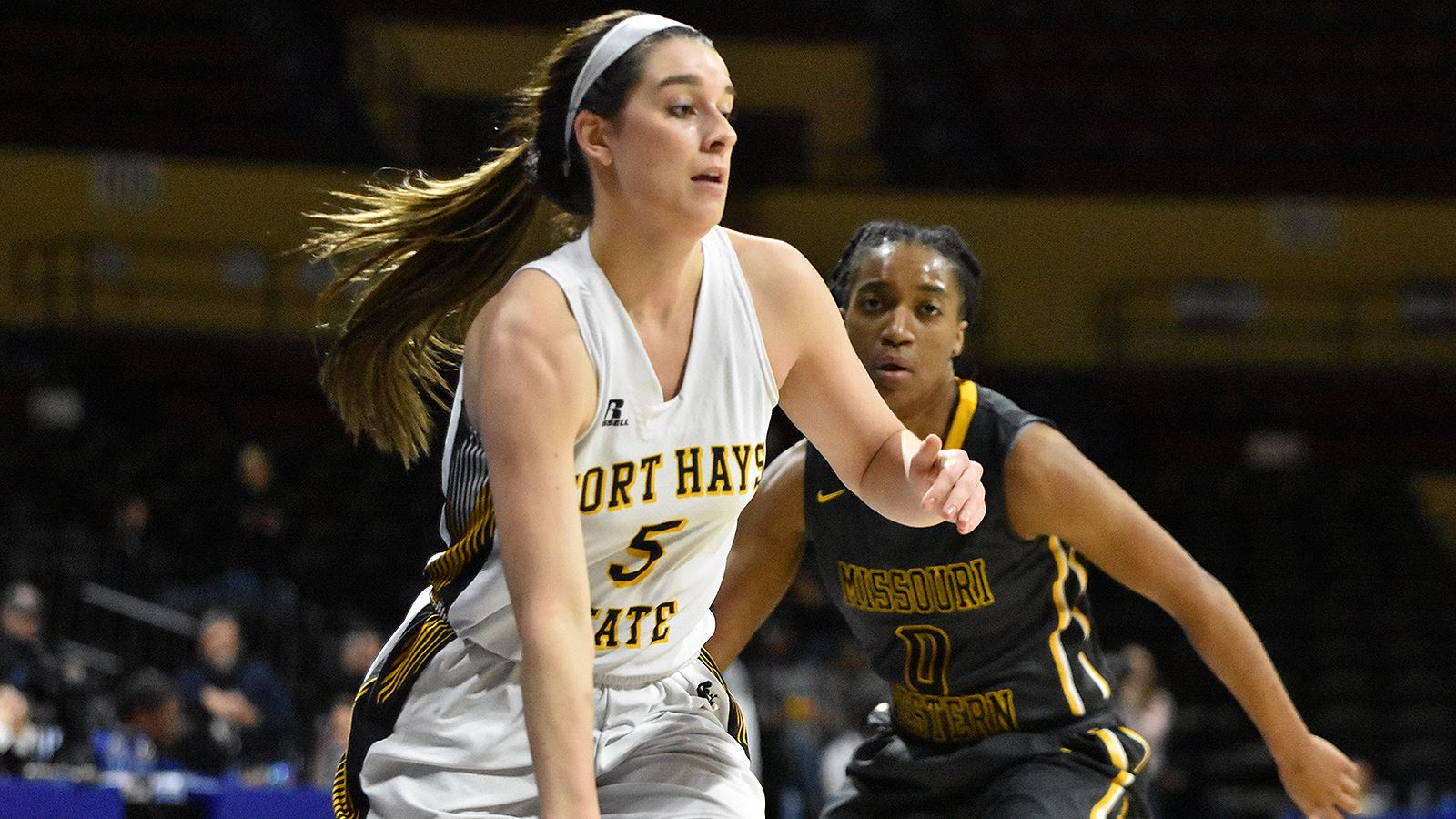
KANSAS CITY, Mo. – After fighting toe-to-toe with Missouri Western in the first half, the third-ranked Fort Hays State women’s basketball team pulled away after the break to win Thursday’s MIAA Women’s Basketball Championship quarterfinal matchup, 71-58 (March 7). The Tigers (28-1) now advance to the conference semifinals at 6 p.m. Saturday (March 9) to take on either Washburn or Emporia State inside historic Municipal Auditorium.
Taylor Rolfs provided a spark in the second half, scoring all 16 of her points in the final 20 minutes. After the Griffons closed within one point three minutes into the second half, the junior scored 10 straight points over the next three-plus minutes to pad the lead to double figures, 46-35.
Missouri Western battled back within four by the midway point of the fourth quarter, but another 10-point run helped the Tigers pull away for good. Rolfs was again responsible for the bulk of the scoring, scoring three points the old fashioned way before knocking down her third triple of the game one minute later. Belle Barbieri added a pair of layups during the stretch, with the second basket putting the Tigers up by 14 with 2:49 to play, 62-48.
Lanie Page drilled her third three-pointer in the fourth quarter before adding two free throws late to put the game on ice.
The Tigers appeared poised to break things open early after taking a six point lead by the midway point of the first quarter, 12-6. Page scored eight of those points, hitting her first three field goals over an 87-second stretch. But the Griffons would not go away easily, closing the quarter on a 12-5 run to take a lead into the second frame, 18-17.
Fort Hays State regained the lead early in the second stanza on a Barbieri layup, later leading by as many as six before MWSU went on an 8-1 run to go back in front, 29-28. Page scored the final four points of the half on a three-pointer and a free throw to put the Tigers up by three at the break, 32-29.
The Tigers shot 47.2 percent for the game, including a 51.9 percent effort in the second half. FHSU dominated on the boards, outrebounding the Griffons 39-22. With 13 turnovers compared to just nine from MWSU, the Tigers turned the ball over more than its opponent for just the third time this season, and the second time against the Griffons.
Page led the team with 19 points while adding four blocks on the defensive end. Barbieri finished the game with 13 points and nine rebounds while Tatyana Legette put up eight points, 12 rebounds and six assists.
The top-seeded Tigers advance to the MIAA semifinals for the sixth time, where they will await the winner of Friday’s matchup between No. 4 Washburn and No. 5 Emporia State.
By MARK TALLMAN Kansas Association of School Boards
What do Kansans want for their children?
Commissioner of Education Randy Watson and Deputy Commissioner Brad Neuenswander told 600 educators at the Kansans Can and Do Symposium on Tuesday that the State Board of Education tried to sum it up as follows: they want kids to be happy, have a sense of fulfillment, give back to others and have at least two educational credentials: a high school diploma and a postsecondary degree or certificate that allows them to earn a middle class living.
Those goals are embodied in the State Board’s Kansans Can outcomes, which call on all school districts to raise the high school graduation rate, increase postsecondary success, improve kindergarten readiness, provide each student an individualized, career-focused plan of student, and address social and emotional needs.
Those goals reflect the input of over 2,000 Kansans in meetings around the state four years ago, when 70 percent of community members and 81 percent of business leaders said non-academic skills are the biggest needs of students, as well as the on-going responses when parents, educators, community members are polled.
The problems: suicide rates by youth are rising. Thirteen-percent of seniors last year failed to complete a diploma. Less than half of Kansans are completing a credential beyond high school.
The reason, said the two leaders, is not a lack of effort, but that schools “are out of balance.” Schools are still structured around academic content with too little formal attention to the non-academic skills parents and employers says are important and leaving too many students unengaged or damaged by non-school factors.
The answer, they said, is the Kansas school redesign process. “The system is begging us to do something different,” said Watson. “It’s not the students that have to change. It’s the adults.”
The first wave of the State Board’s school redesign process, the seven-district, 14-school Mercury phase, launched this year. The second round, Gemini 1, 21 districts launched this year or no later than the spring of 2020. In February 2018, KSDE announced the third phase – Gemini II: The Space Walk Begins. Nineteen school districts were selected as participants for Gemini II in April 2018. With that announcement, Kansas has 47 districts and 110 schools taking part in school redesign. Applications are underway for the Apollo round, which will be begin implementation in the fall of 2020.
To address the five Kansans Can outcome, the schools in the redesign process must address the following four principles: (1) Student success skills, (2) Personalized learning, (3) Family, business, and community partnerships, and (4) Real work applications.
According to the Commissioner, those four principles will eventually be merged in the still-new state accreditation system called KESA (Kansas Education Systems Accreditation). “At some point, redesign stops being redesign, because it is what everyone will be doing,” he said.
The two leaders cautioned that there is no single path to effective school design. “We (at the state education department) don’t have the answers,” said Neuenswander. “Our goal is to remove roadblocks and help lead you through a process that matches the goals of your community with your students’ needs.”
“Look at models for ideas, not to copy,” advised Watson.
Mark Tallman is associate executive director for advocacy and communications for the Kansas Association of School Boards.