We have a brand new updated website! Click here to check it out!

KNOLL: Disneyland on the Potomac

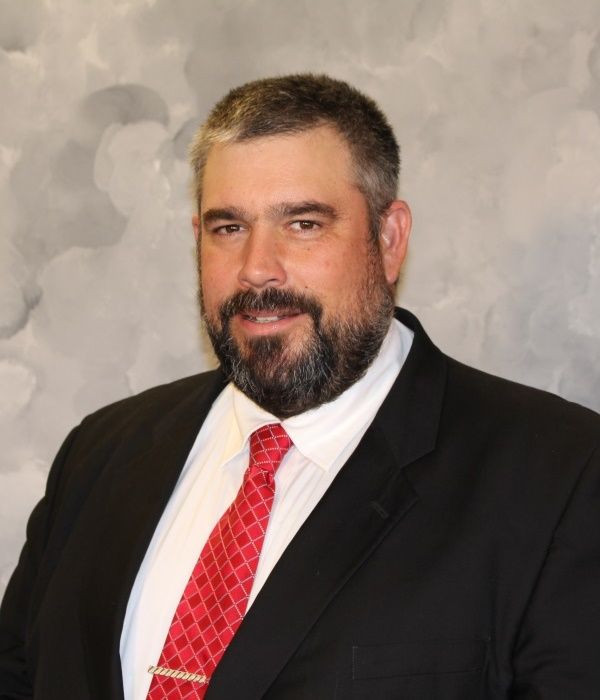
Les Knoll

Whoever coined the phrase “Disneyland on the Potomac” years ago about our government and the politics to go with that must be shocked how this whole thing has escalated like never before in our history.

In the event readers don’t understand my point, our nation’s capital Washington D.C. is located on the Potomac River, and what goes on there can be described as a fantasy world in far too many ways. Much of our government and politics seems to be unreal, more like a Disneyland or playground. It’s beyond belief what takes place.

For starters, the left, with new people in Congress as per our last election, have a Green New Deal that many of them (along with old timers) are proposing. No more fossil fuels they say. That means no airplanes or gas driven vehicles. Current heating and air conditioned buildings all to be replaced by the energy coming from wind farms and solar panels. Also, no more cows since their farts (yup, I said farts) causes carbon emissions into the atmosphere and affects climate change. The whole thing is bizarre.

Parts of our government are off the rails. It isn’t even remotely possible to make this writing sound somewhat academic considering laughable stuff coming from the left. They actually came out publicly proposing the elimination of cows for farting.

No matter that coal, natural gas and oil has given us the greatest economy in the world. No matter that the New Deal would cost trillions upon trillions of dollars that we don’t have. The Green New Deal proponents must literally believe money grows on trees. Green trees, pun intended.

It’s all about fantasy, lack of realism, lack of objectivity, lack of facts. The words “funny farm” comes to mind if you get my point. Funny farms are for the insane and much of what goes on is insanity. You would think Hollywood (the mecca of fiction) would be up in arms for taking a back seat to government and the multitude ways its become a make believe world.

Let’s take one of the biggest issues of the day involving our government, that being immigration. Approximately half of our government (and half of our voters) try to convince the other half that a wall or steel barrier at our borders won’t keep out known criminals, drug pushers, those engaged in human trafficking, etc.

Do we, as a country, want open borders? As things stand now, illegals are costing taxpayers billions in the way of welfare and law enforcement. Cheap labor takes jobs away from citizens. For every illegal that may be of benefit to this country, there are a half dozen or more who do not. But “so what” say the out in left field liberals of the Democrat Party who insanely claim walls don’t work.

And there’s the Trump Russia collusion storybook narrative. To paraphrase what America’s top talk radio host says – it’s the greatest hoax ever perpetrated on the American people in our history. For over two years there have been investigations and speculation with no evidence. Nor one iota of evidence Russia hacked into our 2016 election.

Just think! Day after day, night after night, fake news mainstream media has fooled its viewers that Trump will be destroyed for colluding. There is no evidence period, yet media has it’s viewers waking up every day thinking “this is the day” Trump goes down. CNN, MSNBC, the three networks, the Times and Post are master’s of deception. That’s a euphemism for lies and distortion. Who in the heck needs to pay ten bucks to see a movie filled with suspense and drama when one can simply turn on the TV.

No Hollywood director or producer could find a person capable of writing a better or more fictitious script. How about the fake dossier used to get FISA warrants to spy on Trump and associates claiming that Trump, while in Russia, hired hookers to urinate on a bed that Obama and Michelle slept in? And, come to find out Obama, Hillary, FBI, DOJ, and even Russia are behind this make believe story. Only in the world we live in do the hate Trumpers skate free from Russia collusion while they pin collusion on our president.

One has to laugh at how bizarre the collusion fairy tale saga has become, but no laughs when one looks at the time and money spent on fake news for over two long years to bring down a duly elected president. A con game because they wanted Hillary. By the way, there’s indisputable proof forthcoming that the collusion came from those I just mentioned, and not Trump.

Disneyland and the movies are for fun, and I injected a bit of humor in this writing, but it really comes down to a sad state of affairs in this country where reality is a figment of one’s imagination coming from our politicians, media, and half of the voters in this country.

Les Knoll lives in Victoria and Gilbert, Ariz.
Prairie Doc Perspectives: Sometimes less is best with the elderly heart

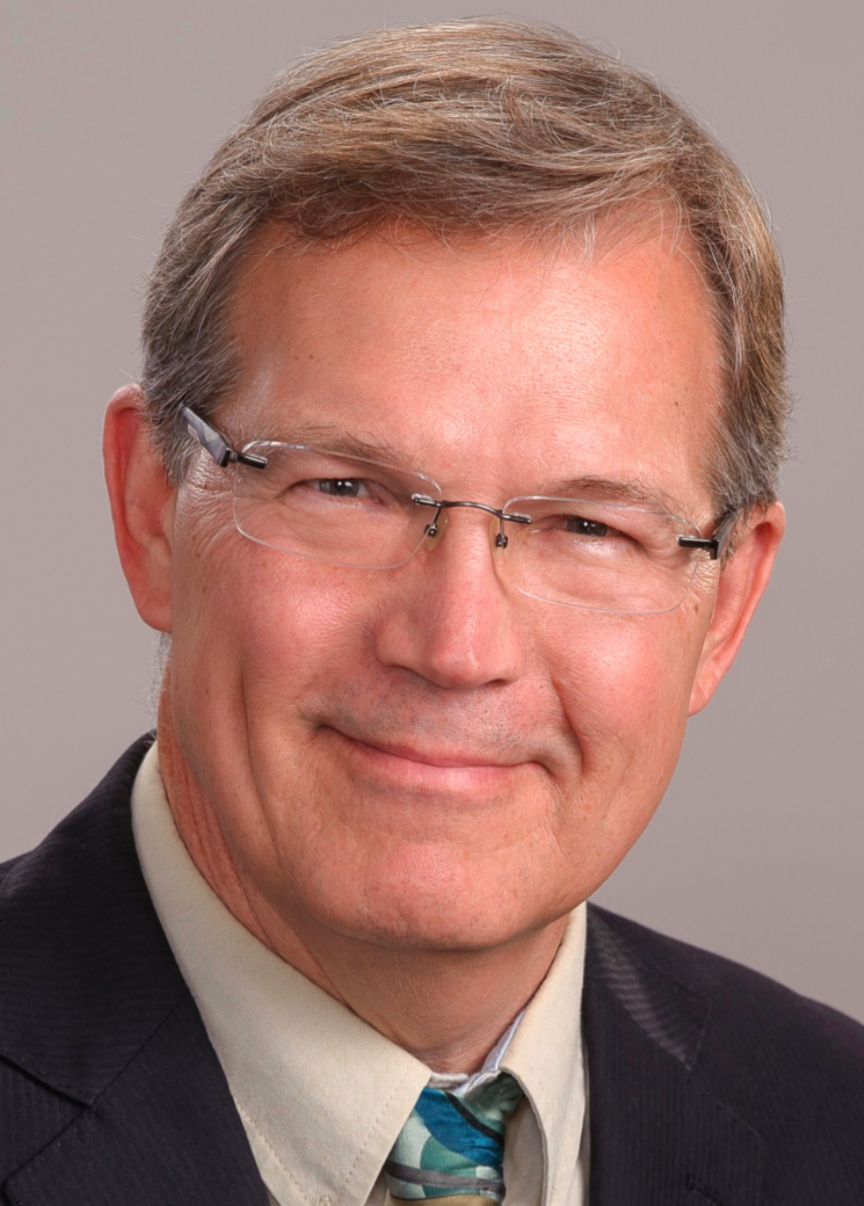
Rick Holm

A beautiful 90-year-old woman came into the emergency room after another fall. The last year had been tough for her as she had developed diastolic heart failure. Her weakness and breathlessness were helped some by diuretics, but she was troubled by extreme variations in blood pressure, high one moment and dangerously low the next. Also, she had a calcified and somewhat tight aortic valve and was on a blood thinner for atrial fibrillation.

Heart disease in the elderly includes a wide variety of conditions. The following is a partial list:
Aging coronary arteries with blockage and subsequent heart attack can be challenging to diagnose because older people don’t always have symptoms to allow intervention.

Calcification of heart valves, especially the aortic valve, can occur with age when tightening of the valve causes progressive failure of the heart’s capacity to push past that obstruction and do its work.
Heart pump weakness involves both the systolic squeeze (which pushes blood flow out of the heart through arteries) and diastolic relaxation (which allows blood flow, from veins, back into the heart). Heart weakness can result from either one or both, as aging heart muscle in the elderly becomes replaced by scar tissue. Extreme variation in blood pressure, high one moment and dangerously low the next can be a sign of diastolic heart problems.

The “broken hart syndrome,” can be a reversible systolic heart weakness caused by severe and prolonged sorrow.

Overactive blood clotting can develop in the elderly causing dangerous blood clots to the coronary arteries, the brain or anywhere. Experts say that up to 80 percent of all deaths in nursing homes result from blood clots.

Falling can cause bleeding and fracture. Falling is often the result of heart disease in general and can happen when the blood pressure drops just after standing. Falls can also occur due to neurological conditions, just plain inactivity or TOO MANY MEDICINES. If you get light headed when standing, tell your doctor, and ask her or him to consider you might be on too many medicines.

The risk of falling was simply too high to continue my 90-year-old patient on blood thinners. I stopped them and backed off a little on the diuretic which could have been worsening her blood pressure drops and causing the falls. The age-old ethic came to mind: “First of all, do no harm.” Balancing the advantages and harms of medicines in the elderly requires careful consideration, and sometime less is best.

For free and easy access to the entire Prairie Doc® library of educational videos, podcasts and blog, visit www.prairiedoc.org and follow The Prairie Doc® on Facebook, featuring On Call with the Prairie Doc® streaming live most Thursdays at 7 p.m. central.

Now That’s Rural: Dusty Turner, Moto Guzzi

Ron Wilson is director of the Huck Boyd National Institute for Rural Development at Kansas State University.

By RON WILSON
Huck Boyd National Institute for Rural Development

A motorcyclist rides into town – and then another, and another. It’s a motorcycle rally – and not just any rally, but a rally to support a rural community and ultimately, to bring people together.

Dusty Turner is organizer and promoter of special events in Kansas and Oklahoma. He grew up in northeastern Oklahoma where, at an early age, he discovered a passion for motorcycles.

One year he and a teenage friend decided they wanted to take a motorcycle trip. They calculated how far they could go on the gas money that they had and looked at a roadmap. “We saw the name Cedar Vale on a map and decided to go,” Dusty said.

“We were a couple of typical kids who set off totally unprepared,” Dusty said with a smile. “We got there and couldn’t afford a hotel room. We asked around if there was anyplace we could camp, and they sent us to Hewins Park. People were really nice.”

It was a memorable trip. The trip happened to take place around the time of Dusty’s birthday in late April. A late spring journey to Cedar Vale became an annual pilgrimage for Dusty as he grew up.

Dusty joined the military. After the service, he worked in the restaurant business and then did painting and contracting work in Oklahoma and Texas before moving back to Muskogee. Through it all, his love of motorcycles remained strong. After riding various kinds of motorcycles throughout his life, Dusty discovered a brand of motorcycles called Moto Guzzi. These motorcycles are produced by a company in Italy, and they have a small, but passionate following around the globe.

“Moto Guzzi produces maybe 8,000 motorcycles in a year,” Dusty said. (That’s in contrast to bigger companies which may produce 60,000 in a single quarter.) But Dusty and others are big fans of Moto Guzzi. “It’s a basic twin-cylinder motorcycle that’s simple to repair,” Dusty said. “It can eat up the miles, but also works well on curvy mountain roads.”

Dusty got his own Moto Guzzi and then joined an online forum of Moto Guzzi enthusiasts. He eventually became an administrator on the site.

One day, Dusty noticed that his birthday was coming up. For old times’ sake, he decided to make a motorcycle trip to Cedar Vale. “I announced on the board, `Does anybody want to meet me?’” Dusty said. “I thought I might get one or two, but we had eight.” It was so much fun that it became an annual event. Each year on the first weekend of May, a Moto Guzzi rally is now held in the community of Cedar Vale.

In the years since, the Moto Guzzi rally has attracted as many as 70 people from 30 states, from Seattle to New Jersey and as far away as Holland and Germany.

Organizers have turned the event into a fundraiser for the city of Cedar Vale, as well as an opportunity for big city visitors to experience life in a rural community. Part of the registration fees go to the city. Donation jars are put out at all events. Funds are used to support projects like the local museum and the poolhouse at the swimming pool. More than $2,000 has been raised. The Lions Club, local chamber of commerce, and museum help provide meals for donations.

The gathering takes place primarily at Hewins Park, where Dusty first camped decades ago. “We interact with the locals,” Dusty said. “The city has been great.”

Dusty is assisted in this project by a friend from the online forum who knows rural Kansas. That friend is John Peters from the rural community of Walton, population 235 people. Now, that’s rural.

It’s time to leave this Moto Guzzi rally which is helping raise money for a rural Kansas community as well as sharing small town life. We commend all the Moto Guzzi riders for making a difference with this fun initiative. It makes for a good ride.

And there’s more. This event has inspired another gathering in Cedar Vale. We’ll learn about that next week.

KRUG: Cut the clutter and get organized

Donna Krug
How did a pinhole leak in a main water supply line change my schedule last Sunday? As I was pressing a couple of shirts in the laundry room, I heard a hissing sound. When I followed the sound to our water treatment system, I saw a puddle that led me to three boxes and a large basket of soaked items.

As my husband, John, made his list for the hardware store, I started sorting through the soaked treasures.

What I found brought back a flood of memories. From the tulle left over from making my daughter, Kristen’s wedding veil, to the three shirts from my late father’s closet that I plan to make into pillows, I didn’t want to take a break for lunch. Two boxes full of denim jeans I have collected for “some day” projects and scraps of fabric leftover from quilts I have made through the years rounded out the treasures I found.

Sorting through the items that had gotten wet felt great. That thought is where I am going with this week’s news column. A publication written several years ago titled, “Cut the Clutter and Get Organized” has some great tips we can all learn from. The fact sheet suggests using the box approach to sort clutter. Sort items into boxes labeled Keep, Store, Give Away/Sell, Throw Away and, if you are indecisive, you can use a fifth box labeled Maybe. The items you intend to keep need to be returned to their proper places. Items you no longer use or no longer fit could be the beginning of your next yard sale or donation to Goodwill.

The publication goes on to provide tips for maintaining a clutter-free home. Involve family members to help keep items picked up and put away. Remember, tasks need to be appropriate for family members’ ages and abilities. And you may need to share your ideas and expectations of what is acceptable.

Feel free to give me a call or drop by either of the offices in the Cottonwood Extension District for your copy of Cut the Clutter and Get Organized. It is also available on the KSRE web site if you search for publication number MF2879.

Donna Krug is the District Director and Family & Consumer Science Agent with K-State Research and Extension – Cottonwood District. You may reach her at: [email protected] or (620)793-1910.

WAYMASTER: From the Dome to Home, Feb. 15

Rep. Troy Waymaster, R-Bunker Hill, 109th Dist.

KPERS Funding
Last week, two House committees examined the importance of mental health issues in Kansas. The House Children and Seniors committee heard a presentation on the Kansas Suicide Prevention Resource Center, along with an overview on the Community Health Centers across the state. The specific testimony that the Children and Seniors committee heard was regarding suicide prevention. Suicide deaths in the state of Kansas have increased by 45% from 1999 to 2016.

This committee also heard from the Community Mental Health Centers of Kansas. Currently, there are 26 licensed mental health centers across the state that service all 105 counties. The testimony that was provided stated that these Community Mental Health Centers are “the State’s public mental health safety net,” providing care to over 140,000 Kansans.

The Social Services Budget Committee was briefed on the report of the 2018 Kansas Mental Health Task Force.

This task force identified seven topics of concern regarding mental health: system transformation, maximizing Federal funding and funding from other sources, continuum of care for children and youth; nursing facilities for mental health, workforce, suicide prevention, and learning across the systems. The task force prioritized outcomes.

Budget Reports
Starting this week, the House Appropriations committee began with the budget reports from certain state departments agencies. On Monday, we heard the budgets of the Board of Cosmetology and the Kansas Public Employees Retirement System. We continued the rest of the week by having the specific budget chairs report out the budgets for the State Historical Society, State Library, Department of Commerce, State Banking Commissioner and the Kansas Bureau of Investigation, just to name a few. Overall, the committee had budget reports for 16 departments or agencies. We held bill hearings this week, as well. When comprising the entire budget, we use these reports from the budget committees. The committee also conducted a bill hearing on House Bill 2121, the overall budget bill and on Senate Bill 9, the $115 million payment to KPERS that passed the Senate last week.

Kansas Department of Transportation Press Conference
After the Kansas Legislature convened in early May of 2018, I served as a member of the Joint Legislative Transportation Task Force. This task force held numerous meetings all across the state of Kansas identifying the transportation needs of all regions and generating a new transportation ten-year plan. On Wednesday, February 13, the current secretary of Transportation, Julie Lorenz and Governor Laura Kelly announced the Kansas Department of Transportation’s plans to invest $160 million in transportation funding. The $160 million derives from reducing the amount of money transferred out of the State Highway Fund.

Secretary Lorenz outlined that with the additional $160 million in Fiscal Year 2020, KDOT will:
• Increase the highway preservation investment from $350 to $400 million
• Move forward with four delayed T-WORKS projects:
o US-54 in Seward County (Expansion project; let for construction Fall 2019)
o US-169 in Anderson County (Modernization project; let for construction Fall 2019)
o US-281 in Russell County (Modernization project; let for construction Spring 2020)
o US-50 in Lyon County (Expansion Project; let for construction Spring 2020)
• Reinstate the Kansas Local Bridge Improvement Program
• Implement a new cost-share program for state/local partnerships
• Enhance its safety program
• Increase City Connecting Link maintenance payments
• Increase funding for modal programs (e.g., transit, aviation, rail and bike/pedestrian)

Bills Passed by the House
Here is a list of bills that have passed the Kansas House of Representatives during the last couple of weeks:
House Bill 2044 – This bill enacts a new income tax credit for tax years 2019 through 2023 on goods and services purchased from certain vendors or non-profit businesses that provide employment to blind or disabled individuals.
House Bill 2063 – This bill allows for the taxes levied by the Pratt Airport Tax Authority to be transferred to the city of Pratt, without approval from the voters.
House Bill 2038 – This bill automatically revokes the inheritance rights of a former spouse or their relatives in the event of a divorce or annulment.
House Bill 2039 – This bill creates a new law to require district courts to extend full faith and credit to judicial orders, judgments, and other acts of tribal courts, pursuant to the Kansas Supreme Court rules.
House Bill 2033 – This bill makes an array of changes to local sales tax authorizations, especially for the following counties: Dickinson, Finney, Jackson, Russell, and Thomas.

During final action on the House Floor, I voted “Yes” on each of these bills.

Contact Information
As always, if you have any concerns, feel free to contact me (785) 296-7672, follow on twitter at @waymaster4house, visit www.troywaymaster.com or email me at [email protected]. Also, if you happen to visit the statehouse, please let my office know.

It is a distinct honor to serve as your representative for the 109th Kansas House District and the state of Kansas. Please do not hesitate to contact me with your thoughts, concerns, and questions. I always appreciate hearing from the residents of the 109th House District and others from the state of Kansas, as well.

Troy Waymaster (R-Bunker Hill) is the 109th Dist. state representative and chairman of the House Appropriations committee. The 109th District includes Osborne, Russell, and Smith counties and portions of  Barton, Jewell, Lincoln and Rush counties.

BOOR: Gardening season is right around the corner

Alicia Boor

It’s the time of year when many gardeners are looking forward to nicer days ahead spent outside tending their plants. Many use this time to plan what plants they are going to buy, and research what varieties preformed the best last year. Every year, K-State Research and Extension compiles all of their horticulture research results on their website for easy access.

If you have had trouble finding a listing of plants recommended for Kansas, visit our web page devoted to this topic. We have links to a wide variety of plants including annual flowers, perennial flowers (including breakouts for iris and daylilies), fruit, vegetables, turfgrass, low-maintenance roses and tree recommendations that are broken out by areas of the state. We also list recommended low water use plants. You can find this page at https://hnr.k-state.edu/extension/info-center/recommended-plants/.  We also have images of hundreds of the following: – Varieties of iris, daylilies, roses and peonies found in the University Gardens Collection Gardens at https://www.k-state.edu/gardens/gardens/collections/.  Annual flowers recommended for Kansas at https://www.prairiestarflowers.com/Prairie_Star_nav.html.  Perennial flowers at https://www.prairiestarflowers.com/Prairie_Bloom_nav.html.

If you find something that you would like more information on, you can always call the Extension office at 620-793-1910 or come by the office at 1800 12th Street in Great Bend and we will be happy to help you. Through K-State and your local office, we can help you have a beautiful and productive garden this year using research and knowledge to give you a head start.

Alicia Boor is an Agriculture and Natural Resources agent in the Cottonwood District (which includes Barton and Ellis counties) for K-State Research and Extension. You can contact her by e-mail at [email protected] or calling 620-793-1910.

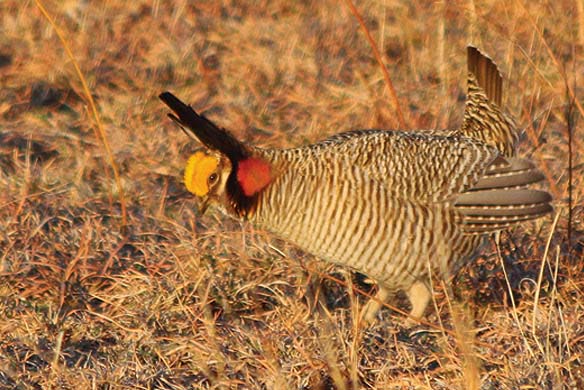
Lawsuit launched to protect imperiled Lesser Prairie Chicken

Lesser prairie chickens

WASHINGTON— Conservation groups filed a notice today of their intent to sue the Trump administration for failing to protect severely imperiled lesser prairie chickens under the Endangered Species Act.

The groups petitioned the U.S. Fish and Wildlife Service to protect the birds in September 2016. The agency promised to make a decision on that protection by the end of summer 2017, but failed to do so.

“The Trump administration’s foot dragging is placing these unique, dancing birds at serious risk of extinction,” said Noah Greenwald, endangered species director at the Center for Biological Diversity. “The Endangered Species Act has saved more than 99 percent of the species under its protection. It can save the lesser prairie chicken too, but only if the birds are listed as a threatened or endangered species.”

In 2014 the Fish and Wildlife Service listed the lesser prairie chicken as threatened. But protection was overturned on procedural grounds after a lawsuit from the Permian Basin Petroleum Association and four counties.

The bird lives in Colorado, Kansas, New Mexico, Oklahoma and Texas. It is severely threatened by habitat loss and fragmentation caused by oil and gas development, cropland conversion, livestock grazing and roads and power lines.

“Listing the lesser prairie chicken as threatened or endangered is the first step toward recovering this iconic species,” said Jason Rylander, senior counsel at Defenders of Wildlife. “The lesser prairie chicken has waited long enough for Endangered Species Act protection. It’s time for the Trump administration to act.”

In addition to habitat loss, the lesser prairie chicken is threatened by climate change. The summer of 2011 saw some of the hottest and driest conditions on record in the Southern Plains, with ground temperatures exceeding 130 degrees Fahrenheit, a critical threshold above which lesser prairie chicken eggs cannot survive.

The following year prairie chicken populations plummeted to their lowest levels in decades. Overall, global warming is expected to drive a four-fold increase in the number of 100-plus degrees days on the Southern Plains.

“These incredible birds deserve better than continuing neglect from the Trump administration,” said Taylor Jones, an endangered species advocate at WildEarth Guardians. “Threats from climate change and habitat loss continue to grow, and this species needs the strongest legal protections possible to escape extinction.”

The lesser prairie chicken — an icon of the Southern Plains — once numbered in the millions but has declined to just roughly 38,000 birds across less than 17 percent of its original range. Experts estimate the population of lesser prairie chickens at 3 million birds before the beginning of Euro-American settlement on the Great Plains.

The petitioners are WildEarth Guardians, Defenders of Wildlife and the Center for Biological Diversity.

The Center for Biological Diversity is a national, nonprofit conservation organization with more than 1.4 million members and online activists dedicated to the protection of endangered species and wild places.

Defenders of Wildlife is dedicated to the protection of all native animals and plants in their natural communities. With over 1.8 million members and activists, Defenders of Wildlife is a leading advocate for innovative solutions to safeguard our wildlife heritage for generations to come. 

WildEarth Guardians protects and restores the wildlife, wild places, wild rivers, and the health of the American West.

– SUBMITTED –

LATURNER: Financial literacy should be required for Kansas students

Jake LaTurner, Kansas State Treasurer

This past week I added my testimony of support for a bill that was put forward in the House Education Committee requiring that financial literacy be added to the State’s educational curriculum. As a former legislator, I was always somewhat reluctant of proposed legislation that added some sort of new regulation and/or requirement and I understand why some could be skeptical of the mandate HB 2166 imposes. However, after nearly two years serving as the Kansas State Treasurer, I have seen how families in our communities face a host of difficulties, many of which are rooted in a common source… Money.

Former Federal Reserve Chairman Alan Greenspan once said, “The number one problem in today’s generation and economy is lack of financial literacy”. I have come to strongly agree with Greenspan’s statement. Educators who teach financial literacy witness the positive impacts of the knowledge they instill on their students and the financial skills they impart become a shield against many of the financial problems faced in our communities and our nation.

Imagine if every Kansas student who graduated was well-versed in interest rates. Would that knowledge make them a little more judicious when spending student loan money? Would it help them be a little more strategic in the homes or vehicles they purchase and from whom they make those purchases?

Imagine if every Kansas student was well informed of the practices of predatory lending. Would knowing and understanding these traps make them less likely to fall prey to predatory lenders?

Imagine if every Kansas student knew about credit scores. Would that knowledge help them make the kinds of behavioral choices that studies show could save them hundreds of thousands of dollars in the course of their lifetime?

Imagine if every Kansas student was aware of the benefits of a Learning Quest 529 education savings account. A generation who knows and understands the value of saving for the future and passes that knowledge on to their children perpetuates a culture of responsibility and increased opportunities. As Mothers and Fathers they will pass on the gift of planning ahead. By setting up 529 accounts for their children, they will help them alleviate massive student loan debt that stunts the professional and personal development of too many Americans.

Imagine if every Kansas student knew about compound interest and how to make their money work for them. Teaching our kids before graduation that investing as low as $20 a paycheck from high school graduation until retirement can build them several hundred thousand dollars in savings thanks to the help of compounding interest. We can take big steps towards addressing our society’s retirement savings problem when our teachers help create light bulb moments for students about how small investments over time return great dividends and create secure futures.

Imagine if every Kansas student knew the importance of creating a budget and balancing their household checkbook. More money smart households means Kansans who know how to live within their means and expect the same of their elected officials who are handling revenue and spending issues at the local, state and nation level.

This is our opportunity to get ahead of the curve. To give the next generation the proper tools that set them up for success. Everyone is going to face money problems throughout their lifetime, but there are so many money problems that can be avoided by first knowing the traps and the pitfalls. Mandating financial literacy before graduation is a gift not only to our kids, but also our state, and our nation.

While I certainly support HB 2166, I also stand ready to help advance other efforts to increase financial literacy in Kansas. Our children deserve every opportunity to succeed and taking steps to help them learn more about the financial sector will help on their path to success.

Jake LaTurner
Kansas State Treasurer

LETTER: Local Farm Bureau leaders back health care proposal

Our county Farm Bureau board members support Kansas Farm Bureau’s effort to ensure farmers and ranchers have access to affordable health care. We ask Kansas legislators to vote yes on Senate Bill 32. This will allow KFB to offer its members a market-based solution for health coverage while supporting local hospitals and providers.

The cost of health care benefits is a major expense for Kansas farm families. Area producers are also battling a decline in net farm income of more than 50 percent over the past five years. KFB estimates it can offer its members a robust and competitive benefit that’s 30 percent less expensive than current market options. KFB’s health benefit will offer local farmers and ranchers a cost-effective option to receive care they need in our community.

SB 32 will provide options for area farmers and ranchers who don’t qualify for subsidies under the Affordable Care Act and can’t afford spending up to $40,000 to insure their family.

KFB’s health benefit will offer farmers and ranchers a cost-effective option to receive care they need in the communities where they live.

We strongly ask the Kansas Legislature to allow KFB to offer this coverage to its members.

Ellis County Farm Bureau President Matt Grabbe
Trego County Farm Bureau President Gerald Riedle
Rooks County Farm Bureau President Anna Luna
Russell County Farm Bureau President Gerald Machin
Gove County Farm Bureau President Kassie Remington
Rush County Farm Bureau President Maureen George
Barton County Farm Bureau President Jerry Morgenstern
Ness County Farm Bureau President Lauri Petersilie

INSIGHT KANSAS: Legislating is a marathon, not a sprint

The Kansas Legislature opened its 2019 session on January 14. It will most likely close up shop sometime in May. Governor Laura Kelly came into office with a well-defined agenda, and lots of optimistic Democrats foresaw school funding increases and Medicaid expansion moving through the legislative process.

Burdett Loomis, Professor, Political Science, College of Liberal Arts and Science, University of Kansas

Conversely, conservative Republican leaders in both chambers, their numbers buttressed by the same electorate that decisively chose Kelly over Republican Kris Kobach, have made aggressive opening moves to return the so-called “windfall” from 2017 federal tax changes back to a select number of Kansas families and corporations who may pay increased state taxes.

Meanwhile, Kansas tax revenues have fallen substantially ($49 million) below estimates for January. No one knows if that is a hiccup or the start of a trend, but it does signal a possible problem for either increased spending or reduced taxes.

And that’s just it. Legislative sessions are not sprints, they are four-month marathons, often culminating in omnibus budget packages and other deals that address a multitude of issues under severe time constraints. This comes as no surprise. Still, every legislative session is different, and sometimes, as in 2019, it will take some time just to understand where power lies and when it can be used.

Crucial here, for both Republicans and Democrats, is to determine what is the three-party breakdown of conservative Republicans, moderate Republicans, and Democrats. Although numbers will shift from issue to issue, some rough breakdown will allow Governor Kelly and legislative leaders to assess what kinds of bills can pass through the Legislature and win her signature.

The Senate’s initial salvo, passing a $191-million “windfall” tax reduction, demonstrated that the GOP-dominated Senate likely has no automatic veto-override majority of 27 votes; nor will the House. That established, the legislative process can continue, although we should not expect much in the way of short-term results. As time passes, we will get the February and March revenue reports and then, in early April, a new set of revenue estimates. Only then, perhaps, will the actual outlines of major policy decisions become clear, despite the “deadline” of April 15 for both sides to respond to the Supreme Court’s school finance decision.

All this does not mean that the Legislature will not be busy, and potentially productive, over the next couple of months. A host of younger legislators, mostly House Democrats, are eager to make their mark, with their proposals on discrimination, on spousal abuse, and other issues; likewise, legalizing medical marijuana is on the agenda, and sports betting may be.

As lawmakers address these issues, with committee hearings and, eventually, floor votes and some attempted veto overrides, legislative leaders will form a better sense of what this year’s version of the Legislature will finally look like.

Ultimately, the dual realities of a Democratic governor’s veto pen and the more conservative nature of both House and Senate will define what policies merge from the Legislature. Most likely, we will see end-game legislating and close votes that will determine what Kansas does on taxation, Medicaid expansion, and adding funds for school finance.

Recently, GOP senators, per the Kansas News Service, have challenged Laura Kelly’s political strength and her toughness. Let’s be clear, her political strength comes from her ability to veto legislation and hold her troops together to prevent overrides. Her toughness? Ha. This is a legislator who has served in the minority for 14 years and has learned all the ropes. Beyond that, she decisively defeated Mr. Macho Machine Gun in the governor’s race. She’s tough, it she’ll need all the support and all the toughness she can muster to prevail as the legislative calendar turns to May.

Burdett Loomis is an emeritus professor of political science at the University of Kansas.

MASON: Education is all about investing in lives

Dr. Tisa Mason

I keep a note on my desk that begins: “It is about the people we have helped, the stewardship we have invested in, and the seeds we have planted in the lives of others … .” I don’t recall where I saw that phrase, but I think about those words daily as I serve this university, and they make me smile because they are truly imbedded in the culture of FHSU. We may not get everything right 100 percent of the time, but our impact, kindness, and effectiveness are remarkable.

I am so lucky to be the recipient of many messages about the profound impact our faculty and staff have had on the lives of our students. Take, for example, this letter written to a freshman seminar instructor by Logan Behr, a May 2018 graduate. I shared his story at my inauguration, but it bears repeating. He wrote:

“I just wanted to reach out to let you know that I am doing well. My life is busier and fuller than I ever could have imagined. And through it all, I have never forgotten what you did for me. During freshman seminar, we took a self-evaluation quiz. Afterwards, I met with you in your office, where we learned that the evaluation gave me a 25% chance of ever earning a college degree. I was devastated. Until I heard your response: ‘That’s a bunch of BS.’ Those words gave me motivation like you wouldn’t believe. You gave me confidence that I could actually graduate. You even gave me a graduation tassel to keep me focused on that goal. This past May, I received a Bachelor of Science degree in Geology, with a minor in Business Administration, and a certificate in Geographic Information Systems. That graduation tassel still hangs on my wall as a reminder of all the opportunities I have because you invested in me.” 

Notes like this show that we walk our talk when we say that FHSU is a student-centered university, when we say that we support our students, who all come from diverse backgrounds, each an individual with unique stories, hopes, and dreams. Our faculty and staff invest in each person, taking the time to make one-to-one contact, build confidence, and nurture individual success.

At the same time that we are building the confidence of our students, we are serving our community. In an earlier column I shared a little bit about out Neuromuscular Wellness Center, which provides health-related fitness activities, functional movement, fall prevention and clinical exercise training for community members dealing with neuromuscular conditions. The people served may be stroke survivors or have been diagnosed with conditions such as Parkinson’s disease, paralysis, multiple sclerosis or a variety of similar conditions. The center in itself is a great way to serve the community and is just one of the ways in which we invest in stewardship.

Combine that example of stewardship with how our faculty use the center as a way to teach our students, and you have a powerful blend of learning and making a difference. Recently I saw a note from Schuyler Brown (’18). Schuyler is currently studying for his doctorate in physical therapy. He wrote in part:

“Anyone wishing to work with/care for patients in a therapy-based setting should be required to spend time in Dr. Charmane Kandt’s Neuromuscular Wellness Center. Looking back, my time in the Neuro Center helped me gain confidence and get comfortable with establishing a therapeutic alliance, something highly emphasized in PT school. Working with the Neuro Center also helped with establishing a sense of compassion for patients/clients. I can’t thank Charmane enough for all the things she taught me about biomechanics, gait patterns, and genuinely caring about the people you are working with.”

The seeds we have planted are clearly producing harvests in the lives of alumni. Alumna Jennifer Lapka is the founder and president of Rightfully Sewn, Kansas City, a nonprofit organization providing seamstress training to at-risk women as well as residencies for fashion designers, helping them develop business plans, form networks and connect with media opportunities and potential clients. The six women of the inaugural seamstress training group represented a wide range of demographics with four on refugee status, from Iran, Syria, Congo and Afghanistan.

Jennifer received our young alumni award this past year. Her acceptance remarks were powerful, and her impact on our world, one woman at a time, is clearly making our world a better place. Talk about putting her degree to work!

There are many, many more examples of how Fort Hays State University does more than just award degrees. We focus on the people we help, we invest in modeling and producing stewardship, and we nurture the lives of others. That is what we do every day, and it is why Tiger Nation is thriving.

HAWVER: Property tax, pot proposals focus on Kan. veterans

Martin Hawver
Everyone wants to be helpful to injured veterans. That’s just part of being an American. Those troops, whether volunteers or drafted, deserve our respect for their service…and especially if they have been injured in their jobs.

Now, does that respect make a bill more likely to pass the Kansas Legislature? We may find out this session.

Two bills specifically refer to wounded veterans for their provisions; one would put a cap on property tax increases, another would create the “Veterans First Medical Cannabis Act,” which would legalize medical marijuana and give those wounded veterans first access (for 60 days) to that medical pot.

Will respect or deference to veterans boost the vote, maybe get the bills passed, or is special treatment of veterans a gimmick to broaden support for the bills?

The property tax bill? It would freeze property taxes for some Kansans 65 and older whose household income is $50,000 or less, own outright (no mortgages) homes worth $350,000 or less…and veterans with a 50% permanent disability.

Sounds like a target group that many would like to see escape ever-rising property tax bills, like everyone else in Kansas, but a group which is identifiable and for which many Kansans have empathy.

The medical marijuana bill? It basically legalizes under an extensive, nearly exhaustive list of rules, regulations, boards and commissions the growing, prescription and use of medical marijuana.

Oh, and prescription of pot grown in Kansas for those who have medical conditions which can be alleviated by use of marijuana is for the first 60 days of the enactment of the law limited to veterans. Just veterans. After that, well, it’s a matter of what you can work out with your physician, nurse-practitioner or midwife. Yes, midwife.

No telling how this is going to work out for the legislative bills, and their beneficiaries.

The property tax lid? It is predicted to freeze property taxes for as many as 42,000 Kansas homeowners, saving them about $10 million in property taxes as their neighbors’ homes see their tax bills rising. No numbers on how many of those are veterans with a 50 percent disability.

The medical marijuana? There are polls out there that show more than 70 percent of Kansans favor legalizing medical marijuana. And, veterans have for years advocated for medical marijuana in order to help with treatment of post traumatic stress disorder and other combat-related issues, supporters of the bill say.

There’s probably a fine line somewhere on just when inclusion of specific beneficiaries of a bill helps it pass or when it doesn’t. Nobody has suggested a property tax lid for, say, law enforcement officers or schoolteachers or injured construction workers or notaries.

This isn’t a group of beneficiaries likely to be used as ornaments for otherwise tough-to-pass legislation, and it isn’t likely that they have been tricked or persuaded to become the centerpiece of bills that otherwise make pretty good sense.

It just feels a little…strange. And is a veteran’s 50 percent disability the right number for some medical reason or is it a provision that most people wouldn’t question or care to argue about?

Well, that’s how the Legislature works. There are towns where a large portion of the population has either served in the military or has family or friendship ties to veterans. There are also towns where rising property taxes threaten to force some retirees to consider trading-down or moving in with their children or to a retirement facility.

We’ll see where this goes.

Syndicated by Hawver News Company LLC of Topeka; Martin Hawver is publisher of Hawver’s Capitol Report—to learn more about this nonpartisan statewide political news service, visit the website at www.hawvernews.com

Kansas Farm Bureau Insight: Mentor and friend

By GLENN BRUNKOW
Pottawatomie County farmer and rancher

My friend and writing mentor John Schlageck decided to retire. I doubt if retire is quite the right word. If I know John, he will be the farthest thing from retired — he just won’t be coming into Kansas Farm Bureau each morning.

In any case, the idea to fill the hole with guest columnists was hatched and I was asked to help.
I admit it, I struggled to come up with an idea. After all, I write a weekly column and to ask my little-pea-picking brain to come up with two ideas in one week is a lot. Then it dawned on me, the first column should be about John.

It’s an idea he would hate. You see, John would never go for the idea because he reveled in the focus of this column staying on the farmers and ranchers he worked for and not himself.

I also contemplated writing this in the same style John would have and then realized I could not. There truly is only one John Schlageck and try as hard as I might, I could never replicate his style and voice.

His writing has a warmth and depth that I have never found anywhere else. He paints a picture with words like very few can. A picture with depth, color and detail. One that takes you to the very place and time he is describing.

Over the past decades of service to Kansas Farm Bureau, John has explored every corner of our state. He has gone to places like Sin City…I mean Sun City (it’s an inside joke that probably everyone who has ever went to Busters can understand). More importantly he has covered nearly every inch of this state meeting the very men and women he worked for. Getting to know them so he could share their stories in vivid color.

For those of you who have not met my friend, although I know there are not many, the man is even better than his writing. John has one of those personalities that fills the room without taking all the air out of it. Much like his writing, he is always focused on other people rather than himself. That is an exceedingly rare quality and one that should be held in highest regard.

Shortly after I started my column, John gave me one of the best compliments I have ever received. He told me he liked my writing because I wrote from the heart and about things I knew. Those words meant so much to me because I knew that was how he writes. John never really worked a day at Kansas Farm Bureau. He loved what he did too much to have considered it work and all of us in the Farm Bureau family benefited from that dedication.

I also don’t want this to sound like a memorial because it is far from that. It is simply the last sentence in a very good chapter. I know I echo the thoughts of many when I say we wait with anticipation to find out what exactly the next chapter will bring. I don’t know what it will be, but I know it will be good.

“Insight” is a weekly column published by Kansas Farm Bureau, the state’s largest farm organization whose mission is to strengthen agriculture and the lives of Kansans through advocacy, education and service.

Copyright Eagle Radio | FCC Public Files | EEO Public File