We have a brand new updated website! Click here to check it out!

News From the Oil Patch, Feb. 11

By JOHN P. TRETBAR

The Kansas Independent Oil & Gas Association has announced plans for its 27th Annual Mid-Year Meeting. The meeting is April 17th through the 19th at the Kansas Star Casino in Mulvane. You can find trade show contracts as well as sponsorship and registration forms at their Web site at KIOGA.org.

Independent Oil & Gas Service reported three active drilling rigs in eastern Kansas last week, up one, and 29 west of Wichita, which is unchanged. Operators are drilling on one lease in Barton County and one in Ellis County.

They’re about to spud new wells on one site in Barton County and two in Russell County.

Baker Hughes reported 1,049 active drilling rigs across the U.S., which marks an increase of seven oil rigs and a decrease of three seeking natural gas. Alaska and California each added four active rigs, while Texas dropped three and Oklahoma was down two. Canada reports 240 active rigs, which is down three.

Regulators approved 27 permits for drilling at new locations across the state last week, seven east of Wichita and 20 in Western Kansas. There are two new permits in Barton County and one in Russell County.
Independent Oil & Gas Service reports 18 newly completed wells in Kansas over the last week. Four were in the eastern half of the state, and 14 were west of Wichita. There were two new completions in Ellis County, one in Barton County and two in Stafford County.

The Kansas Geological Society recognized and named nine new oil fields in Kansas during its meeting February 5th. They also identified a new pay source in the existing “Wondra” field in Barton County.
The government’s weekly report on crude-oil imports showed an increase of 63-thousand barrels per day last week, to 7.1 million million barrels per day. The four-week average, 7.5 million barrels per day, is about 7.3% less than the same period a year ago.

Crude oil inventories increased by 1.3 million barrels last week. Total inventories last week across the U.S. reached 447.2 million barrels, about 6 percent above the five-year seasonal average.

U.S. crude oil production increased by nine thousand barrels per day last week. Total output for the week was 11.898 million barrels. That’s 1.6 million million barrels per day more than last year at this time.
U.S. and Canadian oil-by-rail traffic continued to increase last week because of pipeline constraints. According to the Association of American Railroads, nearly 13-thousand tanker cars moved petroleum and petroleum products across the U.S. during the week ending February 2nd. That’s up more than 20% over this time last year. Totals so far this year are up nearly 24% over last year. Canadian operators moved 8,602 tanker cars, an increase of 13.7% over last year. The cumulative total so far this year is more than 32 percent higher than the same figure last year.

Pipeline restraints and declining demand have natural gas prices in a tailspin, especially in West Texas. According to Reuters, prices in the Permian basin tumbled almost 90 percent to a record low last week.
TransCanada Corp. said its Keystone pipeline was likely the source of a 43-barrel oil spill in eastern Missouri that prompted two companies to shut down pipelines as a precaution. Enbridge said its nearby Platte crude line was returning to service over the weekend. TransCanada said cleanup is underway.

The North Dakota House defeated a move to increase the oil extraction tax, the second such proposal that has failed during this legislative session. A similar bill failed in the Senate. The legislation would have restored the oil-extraction tax from the current five percent to 6.5%, the level before lawmakers reduced it in 2015. But Republican opponents argued the oil tax overhaul in 2015 also removed price-based tax breaks for the industry, which has led to the state collecting an additional $942 million from the oil industry since 2016.

A measure introduced in the New Mexico Legislature to raise oil-and-gas royalty rates on state land would also charge royalties for natural gas being vented or burned off at oil wells. Industry experts say the legislation could end up pushing more development to federal lands by making state trust lands less attractive. The industry argues that venting and flaring are sometimes unavoidable given pipeline capacity shortages and other issues. But regulators under new Democratic leadership in Santa Fe are expected to begin cracking down on emissions in the patch.

Bankrupt oil companies in Canada must pay the costs of cleaning up their abandoned wells under a ruling from that country’s top court. Justices struck down a decision that allowed them to pass those costs onto an industry-funded group. The Supreme Court of Canada, in a 5-2 decision, said companies or their receivers cannot walk away from their environmental liabilities by invoking federal legislation regarding the order in which creditors are to be paid.

Another new deepwater oil-export facility could be coming soon to the Texas Gulf Coast, at least the third to be proposed in the last year. Enbridge and Kinder Morgan have applied to the U.S. Maritime Administration for the project called “Texas Colt.” The facility would be located off the coast of Freeport, Texas, and would go into service in 2022. The Oil & Gas Journal reports the facility could fully load a two million barrel Very Large Crude Carrier in about 24 hours.

Saudi Arabia cut its crude output in January by about 400,000 barrels per day. Reuters reports the kingdom has surpassed its promises to cut exports to balance the market and support prices.
RAHJES REPORT: Feb. 11

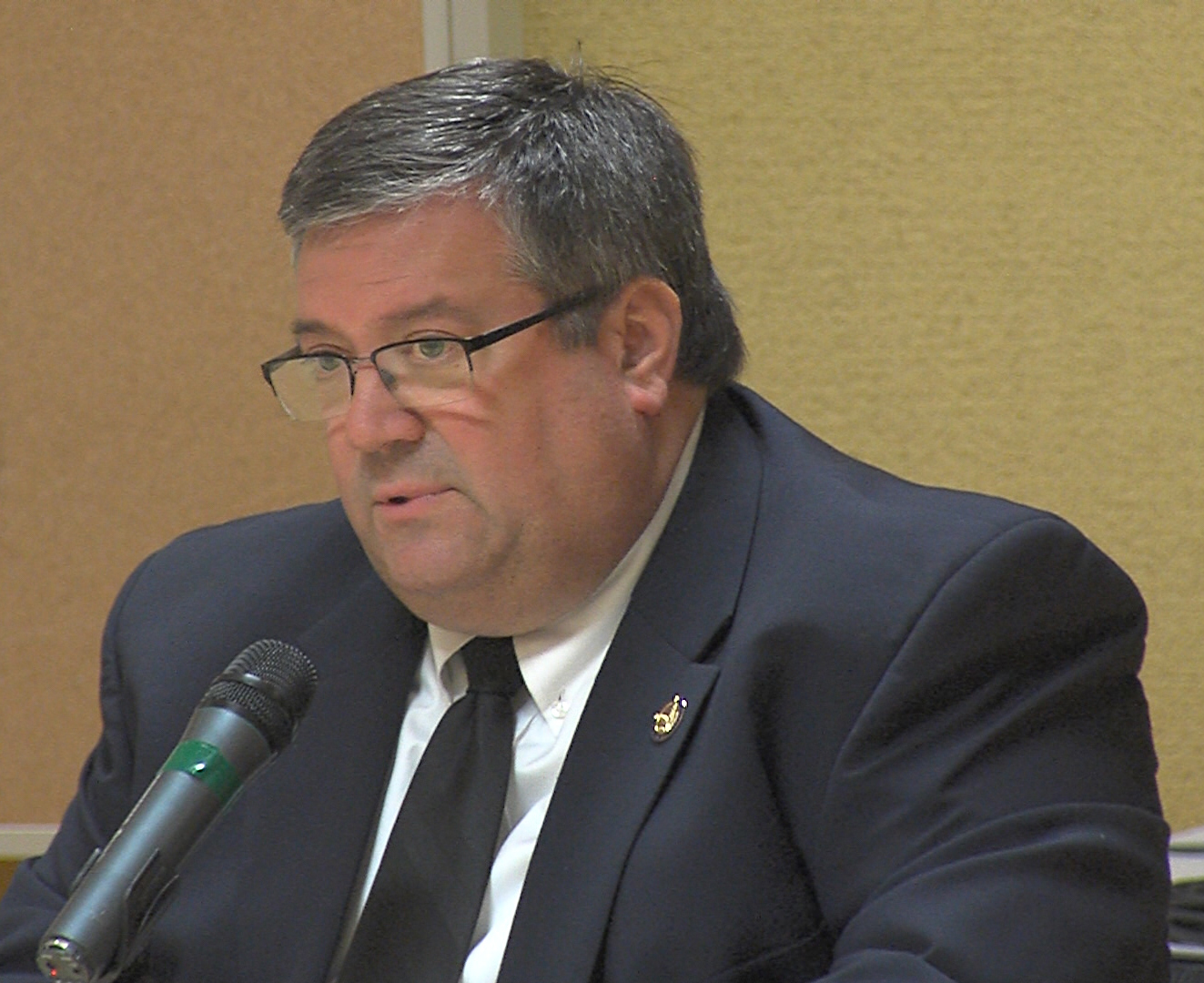
Rep. Ken Rahjes (R-Agra), 110th Dist.

Hello from Topeka! The weather much like the Kansas legislature can be a bit of a challenge, as there have been several days of bitter cold, icy streets and snow only to give way to bright sun shine and temperatures near 50 degrees. Inside the statehouse, there has been much anticipation of several bills being introduced, but it looks like they may wait until next year, as the deadline for individuals to introduce legislation has passed, but there is still time for some select committees to do so if the need arises.

Probably the highlight of the last week was on Wednesday when Chief Justice Lawton Nuss delivered the annual State of the Judiciary in the courtroom of the Kansas Supreme Court. The Chief Justice spoke about the pay of district court judges, recognizing six district court judges who attended the address (Judge Mike Ward, El Dorado; Judge Bruce Gatterman, Larned; Judge Kelly Ryan, Olathe; Judge Mary Christopher, Topeka; Judge Sally Pokorny, Lawrence; and Judge Jeff Dewey, Wichita).

The Chief Justice shared positive progress for the Judicial Branch, focusing on e-filing, which enables court documents to be filed electronically. The Judicial Branch is working to connect e-filing with a centralized electronic case management system (eCourt). This integration will give judges, court staff, and attorneys “immediate, statewide electronic access to case information and records provided by the Kansas Courts. One of the many benefits cited by the Chief Justice is to: increase efficiency and effectiveness by streamlining some activities and automating others–like improving the ability to process electronic payments. The first “Go-Live” of this system will be in June in the 8th Judicial District (Dickinson, Geary, Marion, and Morris counties) and the 21st Judicial District (Clay and Riley counties).

Other successes mentioned by the Chief Justice were: the committee that investigated the state’s municipal courts, which came back with 18 recommendations; recently formed task force studying pretrial detention practices in district courts (“to see that no person is unconstitutionally or unnecessarily deprived of his or her liberty before a decision is made on guilt or innocence). Also cited were the Self-Help centers set up in the courts of five counties: Ellis, Miami, Johnson, Shawnee, and Wyandotte. Additionally, the Supreme Court has increased access to justice by increasing the number of lawyers who can provide pro bono, or free, legal services.

Also last week, the Family First Prevention Services Act, an important piece of Federal legislation, was signed into law. The Act aims to prevent children from entering foster care by allowing federal reimbursement for mental health treatment, substance abuse treatment, and in-home parenting skill training. In addition, the Act focuses on improving the well-being of children already in foster care through an incentive to states to reduce placement of children. The basic premise is to keep children safe and supported at home and ensure that children in foster care are in the least restrictive appropriate settings.

The House Children and Seniors Committee and the House Appropriations Committees discussed how Family First would be implemented in Kansas. The Children and Seniors Committee heard HB 2103. Under the Family First Prevention Services Act, states will have the option, beginning on October 1, 2019, to use Title IV-E funds, at a 50% federal match rate, for certain evidence-based prevention services and programs. Most of the changes that are required by the Act for the state of Kansas to receive the additional federal funding will be made on a policy and regulatory level by the Kansas Department for Children and Families.” There are statutory changes that need to be made so that Kansas can qualify for the new funds.

Testimony from the Department of Children and Families noted that the Act allows states to use Title IV-E (in Social Security Act) funding for time-limited prevention services for children at risk of being placed into foster care, for the children’s parents and kinship caregivers, and pregnant and parenting youth. The Act allows children who need special services and treatment to be placed in a Qualified Residential Treatment Programs (QRTPs), with specific requirements in place so that Kansas can receive federal reimbursement. A joint committee of members of the Kansas Supreme Court Task Force on Permanency Planning and the Judicial Council Juvenile Offender/Child in Need of Care Code Advisory Committee studied the Federal Act and HB 2103 results from their efforts. Further action is planned for the bill.

The House Appropriations Committee heard Tuesday February 5 from Laura Howard, interim Secretary for Department of Children and Families and Department of Aging and Disability Services. She presented an agency overview and budget summary for the Department of Children and Families. She indicated that the Governor included funding for 26 FTE positions in child welfare in the FY 19 budget and an additional 26 FTE positions in the FY 20 budget. In relation to the Family First Prevention Services Act: $8.8 million AF is budgeted for FY 20 for evidence-based prevention programs; $36K FY 19 and $73K FY 20 for children at substance abuse treatment; $502K FY 19 and $452K FY 20 for 3 FTE, background checks, and licensing.

This past week, Kansas Farm Bureau had their day at the statehouse and was glad to welcome: Myndi Krafft and Doug Zillinger from Phillipsburg and Chris Tanner from Norton and Miranda Atchison from Kirwin. There were also days focused on economic development and tourism, it was good to see Roger Hrabe from Rooks County. Speaking of Rooks County, the group from Stockton made their annual trip to Topeka and I believe had a productive couple of days. Also, Leading Edge Kansas held meetings and we were able to catch up with Jay Shelton from Norton and Amber Atkisson from Stockton.

I enjoyed being co-host of “SportsTalk” with Tad Felts Saturday morning on My Phillips County Online and saw lots of friends at the Phillips County Livestock Association Annual meeting and banquet in Phillipsburg.

If you come to Topeka during the session, my office is in Room: 149-S. My phone number is 785-296-7463 and email is: [email protected] and you can always try my cell number is 785-302-8416.

I look forward to seeing you around the 110th District. It is my honor to by your representative.

Rep. Ken Rahjes (R-Agra), is the 110th state representative and chairman of the Higher Education Budget Committee. House District 110 includes Norton and Phillips counties as well as portions of Ellis, Graham, and Rooks counties.

BILLINGER: Senate Update Feb. 11

Sen. Rick Billinger (R-Goodland), 40th Dist.
Last Tuesday we passed SB9, 40-0, which is the KPERS bill that pays the missed payment from 2016 with interest. In 2016 the legislature postponed a $97.4M payment and promised this payment would be made in 2018 with interest.

The executive director of KPERS calculated interest to make the payment actuarily sound for FY 2018 for a total amount of $115M. By not making this payment it caused an increase of $630,000 to unfunded liability/interest expense monthly or $20,712.32 per day.

In 2018, the legislature opted to postpone the payment, to see what future revenues produced. Kansas’s revenues ended FY18 with $317M more than expected in the 4th quarter. This left the approved ending balance at $905M.

Since the payment was postponed 30 months ago it has already cost KPERS $18.9M.

I argued that it was irresponsible to build our ending balance with KPERS money and also questioned why we wouldn’t meet our obligation. There is no reason to not make this payment unless it is going to be used for something else. We made a promise we need to keep our promise.

According to KPERS, the actuarial effect of repaying the contribution would be a net savings of $186.1M from all funds over 30 years. Making the payment would result in meeting the actuarial required payment for the first time in 25 years.

The House will hold a hearing on SB9 Tuesday morning at 9:00. I am scheduled to testify in support of this bill and will encourage the House to move swiftly to pass this legislation on to the Governor. I will encourage the Governor to sign this bill.

SB22 was passed out of the Senate on Thursday by a vote of 26-14. SB22 would prevent a tax increase for middle class Kansas families and small businesses.

When Congress made changes to the Federal tax code last year, it triggered the need for states, like Kansas, to take action so families in our state wouldn’t be penalized.

That’s what this bill is about. It updates the Kansas tax code so that middle income Kansans can continue to write-off their medical expenses, charitable contributions, property taxes and mortgage interest. For individuals and small businesses, SB22 adjusts the Kansas tax code so that Kansans with itemized deductions that total between $7,000 and $24,000 can continue to itemize on their state income taxes even if they no longer itemize on their federal income tax.

Some middle-income tax filers might not itemize at the Federal level this year due to recent changes Congress made to the Federal tax code to raise the standard deduction. Without this bill, these middle-income tax filers will no longer be able to itemize at the state level, triggering a higher state income tax liability for these families and small businesses. This would be a tax increase for these families and small businesses.

Kansas is one of only seven states that have not de-coupled from the Federal government tax code.

For multi-national companies, SB22, clarifies language in the Kansas tax code so that changes in the federal tax code do not trigger unintended tax hikes at the state level for business owners.

Right now, Kansas companies that do business outside of the United States pay taxes on those profits at the federal level. Those profits are not taxed at the state level and never have been. Without this bill, these Kansas companies would be subjected to additional taxes at the state level, making Kansas a more expensive state for businesses to operate in.

Congratulations to Kansas Farm Bureau who were recognized on the Senate floor to celebrate the bureau’s 100th anniversary.

Thank you to the students, educators and program directors for presenting an overview of the JAG-K program. The success of this program is shown by the 97% graduation rate in school year 2016-2017.

I would like to thank all of the visitors who stopped by my office this week or held receptions in Topeka.

I am honored and grateful to represent the 40th Senate District in Kansas. Please do not hesitate to contact or call me with your questions and concerns, my office number is 785-296-7399 or my cell is 785-899-4700. If you are in Topeka stop by my office at 236-E.

Sen. Rick Billinger, R-Goodland, is the Kansas state senator for the 40th District, which includes Cheyenne, Decatur, Ellis, Gove, Graham, Logan, Norton, Rawlins, Sheridan, Sherman, Thomas, Trego and Wallace counties as well as portions of Phillips county.

BOWERS: Senate Scene Week 4

36th Dist. Sen. Elaine Bowers (R-Concordia)

Senate Highlights

The Kansas Senate finished a busy fourth week of session with committee meetings and bills coming forward. The Senate held floor debate on Tuesday and passed out two pieces of legislation.

Senate Floor Action

KPERS $115 Million Transfer – Senate Bill 9, transfers $115.0 million from the State General Fund to the Kansas Public Employees Retirement Fund. The payment in its entirety will be paid to the Kansas Public Employees Retirement System (KPERS)-School group.

Returning Federal Tax Windfall – Senate Bill 22 was introduced in response to the federal windfall Kansas is expected to receive as a result of Congress passing the Tax Cuts and Jobs Act (TCIA) of 2017. An unintended consequence of the Trump tax cuts would prohibit most Kansans who typically itemize deductions on their tax returns from itemizing their tax return. SB22 adjusts the Kansas tax code so that Kansans with itemized deductions that total between $7,000 and $24,000 can continue to itemize on their state income taxes even if they no longer itemize on their federal income taxes. Senate Bill 22 would allow taxpayers to itemize their tax returns and continue to deduct interest on their mortgage, property taxes, charitable contributions, and health care expenses. The issue is Kansas is a “conformity” state and now needs to decouple from this particular requirement. There is also a business component known as repatriation income and global intangible low-taxed income (GILTI). Kansas is one of a handful of states who has not addressed this new international tax phenomenon. Missouri has already addressed this and will not add this tax. Agriculture companies Cargill and Seaboard Corporation both testified in the Senate Select Tax Committee in favor of the bill. Tax rates remain the same, that is to say SB22 does not modify either individual and corporate tax rates. Individual tax rates remain unchanged: Wage Brackets of: Single/Joint – $15K/30K – 3.10%; $30K/60K – 5.25% and $30K+/60K+ – 5.70%. Corporate tax rates remain unchanged – 4% up to first $50K and 3% surcharge on earnings above $50K. Senate Bill 22 now moves to the House Tax committee for hearings where changes could occur before a full vote in the House Chamber.

Transportation Committee

Trucking 101 was presented to the Senate Transportation Committee by Tom Whitaker, Executive Director of the Kansas Motor Carriers Association. He noted when the public thinks of trucking companies they envision the large companies frequently seen on highways, however the Kansas trucking industry is made up of many small businesses. There are almost 11,000 trucking companies in Kansas and 98% of all trucking companies in Kansas operate 25 or fewer trucks and 46% operate only one truck. The trucking industry in Kansas provides 71,000+ jobs and the wages paid in Kansas are near $3.4 billion with an average annual salary of $48,000. The trucking industry in Kansas paid $359 million in federal and state roadway taxes and 49.3% of Kansas communities depend exclusively on trucks to move their goods.

Governor Kelly’s Education Funding Plan

The Senate Select Committee on Education Finance began hearings for Senate Bill 44, Governor Laura Kelly’s education plan. The bill would add $92 million per year to the $949.4 million the Legislature has already promised K-12 through the year 2023. The $92 million is an inflation figure, which is factored at a flat rate. The Senate Education Committee will continue hearings for Senate Bill 44 on Tuesday, February 12th at 1:30 pm.

Kansas Farm Bureau 100th Anniversary

On Thursday, members of the Kansas Farm Bureau gathered at the statehouse to celebrate the bureau’s 100th anniversary. In 1919, the Kansas Farm Bureau was established as a grassroots organization to strengthen and correlate the work of county Farm Bureaus to promote the development of the most profitable and permanent system of agriculture; the most wholesome and satisfactory living conditions; the highest ideals in home and community life, and a general interest in the farm business and rural life. The Kansas Farm Bureau has advocated and served Kansas farmers and ranchers through a wide range of programs, including agriculture education, leadership development, legal defense, rural development, and international trade. Through its work, the Bureau has played a critical role as the Voice of Agriculture in Kansas.

JAG-K Day at the Statehouse

Thursday, February 7th, was JAG-K advocacy day at the Kansas Statehouse. Jobs for America’s Graduates, Kansas is a non-profit organization that partners with students facing multiple barriers to success. The curriculum emphasizes graduating from high school and preparing students for post-secondary education or entering the workforce directly. The JAG-K program had a 97% graduation rate in school year 2016-2017. Students, educators, and program directors presented an overview of the program in front of the Senate Education Committee on Thursday before being recognized on the Senate floor during session. Former Concordia USD 333 Superintendent Bev Mortimer, who is now the Vice President of Programming for JAG, along with 20+ students visited Legislators in the Rotunda and committee hearings during the day.

Visitors from Senate District #36

As always, it is so nice to see visitors from home who either come to testify on bills or to attend functions with their organizations. Wednesday, the Rooks County Leadership delegation made their annual visit to Topeka. This is their 31st year in a row to visit legislators and to meet other officials during their stay. The State Independent Telephone Association held their annual meeting and reception with Blue Valley Tele-Communications, Cunningham Telephone, Nex-Tech, Twin-Valley Telephone and Wilson Telephone visiting the Utilities committee during the day and with legislators in the evening. Rural leaders from economic development offices, friends from home with the Travel Industry Association, members of Credit Unions across Kansas and Kansas Bankers Association representatives also visited with us this week for their annual events.

As always, I’ll keep you updated on the activities of the Senate while we continue through the last few weeks before turn-around. I always encourage you to stay informed of the issues under consideration by the Kansas Legislature.

Committee schedules, bills, and other helpful information can be easily accessed through the legislature’s website at www.kslegislature.org. You are also able to ‘listen in live’ at this website. The House meets at 11:00AM and the Senate at 2:30. Please do not hesitate to contact me with your thoughts, concerns, and suggestions. An email is the best at this point in the session.

Thank you for the honor of serving you!

Senator Elaine Bowers
Kansas State Capitol Building
Room 223-E
300 SW 10th St.
Topeka, KS 66612
[email protected]
785-296-7389
www.kslegislature.org

Elaine Bowers, R-Concordia, is the 36th Dist. state senator and serves as the Senate Majority Whip. The 36th Senate District includes Cloud, Jewell, Lincoln, Mitchell, Osborne, Ottawa, Republic, Rooks, Russell, Smith and Washington counties and portions of Marshall and Phillips counties.

Exploring Outdoors Kansas: The flying wedge

Shutterstock.com

A flying wedge is described simply as a body of anything moving forward in a triangular or “V” shaped formation. This V-shaped formation began as a successful military strategy in ancient times where infantry units would ban together in a wedge shaped formation and move forward to smash through enemy lines.

For a brief time in the late 1800s before it was outlawed two years later, the flying wedge was also a popular football formation where defenders locked themselves together in a V shape and moved down the field, protecting the ball carrier as they went.

Steve Gilliland

The flying V can also be used to describe my wood splitting prowess. Inevitably when splitting firewood, I’ll hit the wedge crooked and it flies across the yard. If I happen to drop a piece of firewood on my foot or scrape my shin with the splitting maul, again the wedge flies across the yard….Anyway, this time of year the flying V is quite prevalent overhead as flocks of hundreds and perhaps thousands of geese use it to navigate across the central Kansas sky.

There is science to support geese and other migratory birds traveling in a flying V shaped formation. Tom Bidrowski, State Waterfowl Biologist and Program Director for Kansas tells me it’s all about aerodynamics, and the perfect example of how that works is a racecar driver “drafting” by using the car in front of him to part the air causing less wind resistance and drag on his car.

It works the same way for a large flying V of geese. Many geese that end up in central Kansas travel 500 miles or more to migrate here, so the front birds in the V that encounter the most turbulence are usually older, stronger, mature birds. The front birds alternate places with other stronger mature birds every few minutes to conserve their strength. Every bird in the V uses the bird in front of it to “draft” and help part wind resistance for it.

Bidrowski says numerous studies over the years have attached satellite or GPS units to migrating geese to tell biologists everything from flying speed to altitude. He says those studies have shown that each goose in the V also gains lift from the wing beats of the bird in front of it, helping each goose to save up to 70% of its energy. Flying in a wide V shape also allows the group to better see all around for both security and navigational purposes.

Bidrowski also gave me some interesting facts about goose migration. He says when going back north to nest, nearly all females will find their way back to where they themselves hatched and were fledged, and the males seem to follow. When heading back south for the winter, family groups stay pretty much together and with high frequency will end up at the same area they wintered the previous year. Habitat changes either man made or natural such as droughts or dramatic crop failures will change that, forcing them to find a different area that will sustain them.

Bidrowski also told me studies have shown that long annual migration times are based on lunar cycles. The birds seem to travel around peak full moon times, choosing also to travel at night using stars and other celestial features in the night sky to navigate.

Now I have one last tidbit concerning the flying wedge. As you train your eyes skyward to watch wave-after-wave of squawking, cackling geese crawl and meander across the sky, have you ever wondered why one side of the V is always longer than the other? That’s because there are more geese on that side…Continue to Explore Kansas Outdoors.

Steve Gilliland, Inman, can be contacted by email at [email protected].

BOOR: Regional farmers’ market workshop in Hays this month

Alicia Boor
The Kansas Department of Agriculture, K-State Research and Extension and the Kansas Department of Health and Environment will host a regional workshop in Hays on Friday, Feb. 22, at the K-State Agricultural Research Center.

This is one of six regional workshops which are being held this winter to assist farmers’ market vendors and managers.

Kansas farmers’ markets not only provide a fresh food source, but also stimulate the local economy. In 2018, 95 farmers’ markets were registered with KDA’s Central Registration of Farmers’ Markets.


“Farmers’ markets provide growers a wonderful opportunity to have real interaction with consumers, and a chance to tell their farm’s story,” said Londa Nwadike, consumer food safety specialist with
K-State Research and Extension and the University of Missouri. “It’s also important for farmers to understand certain legal, safety and financial parameters before choosing to sell at a farmers’ market.”


A keynote presentation will feature tips on marketing and making a profit, and a panel will provide information selling to institutions such as restaurants, groceries and schools. KDA’s weights and measures program will also offer free scale certification for attendees. Workshop topics will include:

Pest Control Methods, Cover Crops and Soil Health
Regulations for Selling Meat, Eggs and Poultry
SNAP Program and Sales Tax for Vendors
Specialty Crops and Produce Safety
Kansas Senior Farmers’ Market Nutrition Program Training

The workshop will be held at the K-State Agricultural Research Center, 1232 240th Ave. in Hays. Onsite registration will open at 8:30 a.m. and the workshops will begin at 9:00 a.m. and conclude by 3:00 p.m. Registration for this workshop is now open and is $20 per participant. Registration includes lunch; however, lunch will only be guaranteed to those participants who register by Feb. 14. Registration forms can be found at FromtheLandofKansas.com/FMWorkshop or at local extension offices.

For more information, contact Lexi Wright, KDA’s From the Land of Kansas marketing coordinator, at 785-564-6755 or [email protected]. Workshops are also being held in Olathe, Parsons, Dodge City, Wichita and Manhattan.

KDA is committed to providing an environment that enhances and encourages economic growth of the agriculture industry and the Kansas economy. The Kansas Ag Growth Strategy has identified training for small companies via workshops as a key growth outcome for the specialty crop sector, particularly in the western half of the state. The farmers’ market workshops will provide education through partnerships to help make Kansas farmers, ranchers and agribusinesses more successful.

Alicia Boor is an Agriculture and Natural Resources agent in the Cottonwood District (which includes Barton and Ellis counties) for K-State Research and Extension. You can contact her by e-mail at [email protected] or calling 620-793-1910

MARSHALL: Doctor’s Note Feb. 9

Dr. Roger Marshall, R-Great Bend, is the First District Kansas Congressman.

First off, what a game on Tuesday! I hope you had the chance to watch the incredible win by the Kansas State Wildcats over the KU Jayhawks! Admittedly, I was checking the score throughout the State of the Union. K-State ended rival Kansas’s eight-game winning streak with their 74-67-win Tuesday night. Go Cats!

This week we heard President Trump discuss American exceptionalism and the endless opportunities for success that our nation has when we put politics aside and work together. President Trump made it clear that his vision for success is only possible when both parties come to the table.

I am hopeful that we can take President Trump’s call for unity seriously, and begin to work closer with each other understanding that we have one goal, a better America. I was sent to Washington to do what is best for Kansas and America, not bicker and play party politics. I am continuing to try to work with members up here and negotiate to find victories and ways we can work together.

To see the President’s speech, click here.

President Trump Delivers Unifying State of the Union Address

This Administration has been focused on lifting regulatory and tax burdens, unleashing our economy and most importantly keeping our country safe.

President Trump called for Congress to ‘show the world that America is committed to ending illegal immigration and putting the ruthless coyotes, cartels, drug dealers, and human traffickers out of business.’ I stand with the President on this issue and agree that we must secure our border by building the wall. Simply put, walls work, and I hope that we can find a win-win solution to the crisis on our southern border in these continued negotiations.

During the speech, Trump also outlined other priorities for the 116th congress including lowering the cost of health care and protecting patients.

As a physician, I want to lead the charge for all people to have meaningful access to health care. Of course, that includes people with pre-existing conditions, but we shouldn’t stop there. We must also help the millions of people who have been failed by the current healthcare system.

I am excited to work with the President on this critical issue.

I Know a Crisis When I See One

On Sunday, I spoke with Fox’s Molly Line about the crisis at our southern border and what I believe is necessary in order to solve it. Securing the border by building the wall is step one.

A compromise funding deal will need to be reached by next Friday to avoid another government shutdown, and it must include funding for the border wall. If an agreement is not made, this will only further highlight the Democrats unwillingness to try to work on a compromise. The American people have spoken, and they want the wall. I sincerely pray and hope that Nancy Pelosi will start to at least try to work with Republicans and even moderate Democrats within her own party to come up with a solution to secure the border and put an end to this national security and humanitarian crisis.

Watch the full clip here.

67th Annual National Prayer Breakfast

On Thursday, my wife Laina and I attended the National Prayer Breakfast where President Trump delivered a beautiful message on why faith is crucial to the success of our great nation. In his speech, he said, “We are blessed to live in a land of faith where all things are possible.  Our only limits are those we place on ourselves.”

This yearly prayer breakfast serves as a reminder of both the responsibility and privilege it is to serve our great nation. We prayed together and called on the lord to guide our hand to make the right decisions. So much of the decisions we make here in Washington rely upon strength and guidance from God. It was an honor to attend and join my colleagues and the many people across the nation that gathered to pray with us as well.

America has always done its best work when it is united, and I was pleased that President Trump reiterated his call for unity and led us in prayer asking for the Lord for strength and guidance.

It is also important to remember the deep roots Kansas has in this yearly tradition. President Eisenhower, who grew up in Abilene, Kansas, was the first president to join members in their informal prayer event in 1953. Since that year it has been honored as a nationally recognized event, and to this day, every president since Ike has attended.

Infanticide in New York

I am outraged by the new legislation in New York that supports abortions all the way until the due date of the baby. Congress, the medical community, and the American people need to stand up to this legislation and denounce these immoral, murderous procedures. This law combined with Virginia Governor Ralph Northam’s comments regarding a live birth abortion have enraged not only myself, but millions of people across the country that recognize abortion as what it is – murder. I think House Minority Whip Steve Scalise (R-LA) put it best what he said “it woke a sleeping giant.” I hope and pray that this newly awakened spirit of morality and respect for the dignity of life will win out in the end and result in an end to the practice of abortion in this country.

150 Years of Little Sweden, USA

This week, I introduced a resolution celebrating the 150th anniversary of Lindsborg, Kansas. This legislation also recognizes and applauds the people who have made the town culturally rich and vibrant.

Lindsborg, located in McPherson County, was established on February 20, 1869, by Swedish immigrants who settled in the area.

It is a great honor to sponsor this resolution that celebrates a very special town to my family. I, myself, am one-quarter Swedish and am very proud of that. My family moved to the United States from Sweden in the early 1900s, first settling around Chicago then moving to White City, KS. Eventually, they found their way to rural Butler County, where they settled on 160 acres and raised their own cattle, chicken, pigs, eventually evolving that farm into the multi-faceted Kansas farm that it is today.

Growing up in a family with Swedish roots, we still celebrate Swedish traditions today. At every Christmas dinner, we have various Swedish dishes including pickled herring, anchovies, hardtack crackers, and Swedish candies all bought from shops in Lindsborg. I greatly value my heritage and am especially proud to sponsor a resolution supporting Lindsborg, ‘Little Sweden, USA.

Qatar: US Ally or Global Menace?

On Wednesday, I had the privilege of delivering the opening remarks at the Middle East Forum’s “Qatar: U.S. Ally or Global Menace?” conference in Washington, D.C. I spoke about President Trump’s strong stance against radical Islamic terrorism and governments that support it.

I also discussed the importance of standing alongside Israel, an important ally of over 60 years with a unique bond to the United States.Today, this alliance remains stronger than it has ever been before. However, there are still many groups that threaten violence against Israel and the United States. Iran and Qatar’s well-documented support for extremism has fueled bloodshed throughout the region and around the world.The U.S. and Israel must continue to stand together to counter destabilizing activity, stop the financing of terrorism, and end the proliferation of missiles.

I am proud to stand with President Trump in his efforts to counter foreign aggression and Islamic terror and to promote peace and stability across the globe.

Legislation Honors Ft. Riley Fallen Soldiers

This week, I introduced legislation with Sen. Roberts and Sen. Moran that honors those who have made the ultimate sacrifice while serving in the First Infantry Division. The legislation allows for additions to the First Division Monument located on White House grounds. Freedom isn’t free, and this legislation is an excellent reminder of that. I am both humbled and proud to recognize these service members on this historic monument at the White House.

This monument was developed to honor the heroic efforts of the 1ID soldiers who fought in World War I and has been modified throughout the years to include Big Red One soldiers who lost their lives. This legislation will ensure those that paid the ultimate sacrifice serving our country will be honored.

Marshall Joins Bipartisan Group in Reintroducing Violence Against Women Health Act

This week, I joined a group of bipartisan legislators in reintroducing H.R. 973, the Violence Against Women Health Act. This legislation builds on the Violence Against Women Act (VAWA) by emphasizing efforts on behavioral health, adding a focus on early childhood programs, and utilizing existing resources for coordination between providers and the Department of Health and Human Services.

Since its enactment, the VAWA has funded programs for prevention of domestic violence and resources for victims of sexual assault such as rape crisis centers and hotlines. VAWA health-related programs have trained more than 13,000 health care providers to assess for and respond to domestic and sexual violence.

I am proud to support this important piece of legislation that takes the great work of the VAWA program and expands it to help even more women and families.

For more details on this legislation, please click here.

Dr. Roger Marshall, R-Great Bend, is the U.S. Representative for the First District of Kansas.

Prairie Doc Perspectives: Those dirty rotten scoundrels

Rick Holm

By RICHARD P. HOLM, MD

The phone rang, and I answered it because the call was from a nearby community. No big surprise that the caller was obviously not from anywhere near, and the caller was asking for a donation for some organization in which I had no interest. I said, in a kindly tone, “No thank you,” and hung up. They will never end the call. YOU MUST HANG UP.

Financial abuse by telephone or internet has been called “the crime of the 21st century.” People of all ages are at risk, but scammers commonly target the elderly. Those of us past 65 are more often home to answer the phone, are apt to stay on the line longer and are less likely to report a crime. Making all of this worse, telemarketing crime is challenging to prosecute and, therefore, inviting to criminals.

There are plenty of bad guys out there. The National Council on Aging has written a compendium of common fraudulent traps that can result from telephone calls or internet messages. Here are some:

• Callers may pose as Medicare representative to obtain your personal numbers for the purpose of billing Medicare for bogus services. Remember, U.S. Government agencies will NEVER initiate a call.

• Because of outrageous prices for drugs, people are lured to purchase less expensive prescriptions from internet and out-of-country pharmacies. Beware that doses of drugs may be different than desired, and sometimes unsafe substances are added.

• Callers may be selling false or dangerous anti-aging products and claim reduced wrinkles or bags under eyes. Don’t trust them. Talk to your doctor.

• Con-artists may promise to split a large sum of money with you, provided you first agree to send a “good faith” donation to help cover shipping costs. Don’t believe it.

• “Hi Grandma, do you know who this is?” Never give out the name of a family member on an unsolicited call. They usually ask you for money for a fake emergency or rescue. Always check by calling family first.

• Especially after a major disaster, callers ask for “rescue money” to help those harmed which, of course, goes to the scammers, not those in need.

• Fake investment plans are everywhere. Strangers calling or emailing you with a great investment opportunity, should not be trusted, especially if it sounds too good to be true.

Take home message: Don’t respond to calls or emails from strangers selling or pushing you into something. Don’t donate to causes that you didn’t initiate. Beware of scammers. In a kindly tone, say, “No thank you,” and JUST HANG UP.

Rick Holm is a physician from Brookings, S.D. and the author of “Life’s Final Season.” Follow The Prairie Doc Facebook page for free and easy access to the entire Prairie Doc library of educational videos, podcasts and blog, featuring On Call with the Prairie Doc streaming live most Thursdays at 7 p.m. central.

First Amendment: Student journalism more needed than ever

Gene Policinski

In more communities today than ever, student publications are doing double-duty — reporting news of schools and surrounding communities — and doing both well.

As a nation, and for anyone who supports a free press, that dual rule is worthy of notice, honor and support. We take note of the great work being done by journalists who happen to be students as we recognize the 50th anniversary of a major student-First Amendment decision by the U.S. Supreme Court.

The Freedom Forum Institute (FFI), the Newseum and the Student Press Law Center (SPLC) are declaring 2019 the “Year of the Student Journalist.”

As you might expect in today’s world, the life of student journalists and of the student press is not without challenge and obstacle, along with great dollops of good reporting.

As SPLC Executive Director Hadar Harris — with whom, in full disclosure, I and my FFI colleagues are coordinating this declared “Year” — recently wrote: “Student journalists play a key role in the civic life of their community. Not only do they report on important issues in the life of a school or school district, but as the number of professional journalists has dwindled, student journalists often also fill the gap in reporting on county, state and regional issues.”

“In 2014, a Pew research study found that student journalists made up 14 percent of the overall state house reporting corps. That number is certainly higher today. But student journalists and journalism education programs are under pressure. Student journalists have lesser First Amendment protections and are often subject to censorship, prior review, budget battles and other external pressures.”

For many who don’t often see student journalism, at the high school or college levels, the recollections are more likely than not to revolve around stories of “big games,” student elections or such. But in the 21st century, as newspaper circulation nationwide has continued to drop — more than 11 percent last year alone, reports document — more student journalists are reporting on stories and issues outside their school grounds or campuses.

In the past year, SPLC reports, students broke important stories about teacher misconduct (Utah), improper transfer of student athletes (Arkansas) and disciplinary charges by a state agency against an administrator (Vermont). Stories from students about teen pregnancy, drug abuse, mental illness and even how the recent partial federal government affected local businesses are now commonplace.

Sadly, school administrators censored those controversial stories in efforts not to make their schools look bad. In Texas, after students published editorials critical of the school administration, the paper was suspended and the unhappy principal banned all student editorials. In each case, the stories were reinstated, but the framework which allows for such censorship remains.

Just as we have not tolerated government control of what general news outlets can report, but hold them accountable for that reporting, we should adopt that same approach to student journalism. The Year of the Student Journalist will also highlight state-based student-led efforts to protect student press freedom and to prevent retaliation against advisers standing up for the First Amendment rights of their students. Such New Voices protections are in place in 14 states and are currently pending in eight more.

The legislation reflects changes in attitudes among our fellow citizens, according to the Freedom Forum Institute’s annual “State of the First Amendment” national survey. In 2014, the last year in which the direct question was included in the survey, 68 percent agreed that public school students should be allowed to report on controversial issues in their student newspapers without the approval of school authorities, while only 27 percent disagreed. When the question was first asked in 2001, Americans were almost evenly split on the question and those who strongly disagreed with the statement dominated the response.

As we saw demonstrated most tragically in the mass shootings at Marjory Stoneman Douglas High School in Parkland, Fla., nearly a year ago, student journalists can compete with professionals in reporting on even such horrific news.

As one student editor told me during a podcast interview just days later, the newspaper staff was making coverage plans even as the shots were still being fired, as they huddled in a closet for safety. The thinking: It was a big story, whether a faked attack or a real one.

Such an approach to covering the news — and the quality report that staff produced days later — is a professional approach to news that would bring credit to any newsroom.

In 1969, the U.S. Supreme Court ruled, 7-2, in Tinker v. Des Moines Independent School District that neither “students (n)or teachers shed their constitutional rights to freedom of speech or expression at the schoolhouse gate.”

Now, with that admonition in mind, and the realization that for many of us, student journalists will bring us the news of our town, school district or more, it’s time to support these journalists and their publications.

So let’s spend 2019 doing just that — in the “Year of the Student Journalist.”

Gene Policinski is president and chief operating officer of the Freedom Forum Institute. He can be reached at [email protected], or follow him on Twitter at @genefac . He was a student journalist at St. Joseph’s High School in South Bend, Ind., and on the Daily News at Ball State University.

WAYMASTER: From the Dome to Home Feb. 8

Rep. Troy Waymaster, R-Bunker Hill, 109th Dist.

KPERS Funding
The budget that was submitted by Governor Laura Kelly is contingent on the reamortization of the Kansas Public Employee Retirement System’s (KPERS) unfunded liability. This proposal has not been well received by the legislature since the cost of reamortization over thirty years would be an additional cost to the Kansas taxpayers of approximately $7.4 billion.

There was some movement this week regarding KPERS when the Kansas Senate passed Senate Bill 9, which will transfer $115 million from the state general fund to the Kansas Employees Retirement Fund to alleviate some of the reduced contributions from past years.

During the 2015 legislative session, a total of $97.4 million in KPERS contributions were not made into the retirement system. When that decision was made, it originally required the state to repay this contribution in fiscal year 2018, plus interest. However, at the time we were experiencing financial difficulties and that contribution was never made and added to the KPERS unfunded liability.

Senate Bill 9 passed out of the Senate with a vote of 40-0. This bill has now been sent to the House and the House Appropriations committee will have a hearing and work this bill.

Kansas Sports Betting
Last Wednesday, the House Federal and State Affairs Committee heard testimony on House Bill 2032, which would require that any sports gambling authorized by the Kansas Lottery be conducted exclusively at racetrack facilities. Essentially, this would legalize sports betting through the Kansas Lottery which would be able to conduct and operate sports betting. The lottery would also be allowed to enter into contracts with lottery vendors and the racetrack facilities. The language of the bill states that 0.25% of the total amount wagered is paid to the appropriate sport governing body, for example the NFL, MLB, or NBA. The amount of 6.75% of the wagered amount is deposited into either the Sports Wagering Receipts Fund or the Lottery Operating Fund.

Safe and Secure Schools Update
Last session, House Republicans, in an initiative to keep the children of Kansas safe and secure at school, drafted the Safe and Secure Schools Act. This act requires the State Board of Education to work with other agencies to develop statewide standards for safety and to craft security plans for each school district in the state. The contents were signed into law in May, 2018. Since that time, the Kansas State Department of Education and the State Board of Education have worked on creating, refining, and adopting standards. A total of $5 million was allocated in fiscal year 2019 to help schools make their buildings more secure. The districts requested a total of $13 million in improvements, unfortunately, the Governor recommended defunding this program entirely in her proposed budget for fiscal year 2020.

The federal government has also been looking into the School Safety issue, having recently published the final report of the Federal Commission on School Safety. The Commission focused on three broad categories: preventing school violence; mitigating the effects of violence on students and faculty; and responding to and recovering from attacks.

Contact Information
As always, if you have any concerns, feel free to contact me (785) 296-7672, follow on twitter at @waymaster4house, visit www.troywaymaster.com or email me at [email protected]. Also, if you happen to visit the statehouse, please let my office know.

It is a distinct honor to serve as your representative for the 109th Kansas House District and the state of Kansas.

Please do not hesitate to contact me with your thoughts, concerns, and questions. I always appreciate hearing from the residents of the 109th House District and others from the state of Kansas, as well.

Troy Waymaster (R-Bunker Hill) is the 109th Dist. state representative and chairman of the House Appropriations committee. The 109th District includes Osborne, Russell, and Smith counties and portions of  Barton, Jewell, Lincoln and Rush counties.

CLINKSCALES: Best friends you can trust

Randy Clinkscales

I have two friends with whom I hunt with each year. I met one (Lane) in college, and the other (Russel) I met though Lane, while in college. Since college, we have hunted together every year, once a year.

Though I am close to both of them, Lane and Russell were childhood friends with each other in the Dallas area, attending both church and grade school together. Both are married and each have one daughter, and those daughters are about the same age. Many Fridays, Lane and Russell have dinner together with their wives.

They are both men’s men. In many ways they represent to me all the good things about men: they are strong, reliable, honest, loyal, and trustworthy. And they are there when needed.

The last couple of years have been challenging. I had a fall on a rappelling trip that was a near death experience; Lane was diagnosed with Parkinson’s; and Russell had a significant automobile accident that resulted in surgery on his neck.

Russell’s neck surgery turned out to be more than any of us expected, though it appears to have turned out ok. However, something interesting happened afterward.

Lane called me one night after Russell’s surgery. He asked that I call Russell; that he, Lane, was concerned about Russell. I could tell the real, heartfelt worry and fear in Lane’s voice. He was shaken.

So I called Russell. Though groggy from medication, Russell assured me he was ok, but he did not want to talk about that; he wanted to talk about Lane. He said he was worried about Lane, and wondered what we were going to do. He asked me questions about Parkinson’s, and where I thought Lane was. We talked for a while. Russell was shaken.

When I got off the phone with both Lane and Russell, several things struck me. They were really worried about each other, and they could not completely express it to each other. They truly love each other, as close brothers, and know they would be lost without the other. We all realize that life is very fragile, that stuff happens, and our moments together are being used up.

My lessons from this are multiple: tell those you love that you love them, but also have someone in your life that can tell you what you need to hear.

In my practice, sometimes we get charged with saying things to a client that their family members will not say: please do not drive; you need help in the home; you need to get planning done while you have the ability to do it. It is important that my clients trust me enough to believe that I am giving good, unbiased advice.

I feel like I can trust Lane and Russell to have those hard conversations with me; that when I am failing, or if they are concerned, they will feel free to say so. One thing I do know is that they will say it out of love for me.

Be sure you have someone in your life that you trust to have those conversations with.

Randy Clinkscales of Clinkscales Elder Law Practice, PA, Hays, Kansas, is an elder care attorney, practicing in western Kansas. To contact him, please send an email to [email protected]. Disclaimer: The information in the column is for general information purposes and does not constitute legal advice. Each case is different and outcomes depend on the fact of each case and the then applicable law. For specific questions, you should contact a qualified attorney.

INSIGHT KANSAS: Democrats’ unfinished business

Democrats have found a new base—professional, suburban women. However, they had better not forget their working-class roots. Here in Kansas, Democrats won big last year with Governor Laura Kelly and Congresswoman Sharice Davids. Paul Davis nearly defeated Steve Watkins to flip the 2nd District as well. All three candidates ran solid campaigns—but their appeal was to different blocs of voters.

Michael A. Smith is a Professor of Political Science at Emporia State University.

Davids represents the new wave. She won as part of a national, Democratic strategy to win back the U.S. House by targeting districts won by Hillary Clinton. She campaigned to professional women who worry about the future of the U.S. Supreme Court, the public schools, and their own daughters. It worked, but the KC-area 3rd is the only Congressional district like that, here in Kansas.

Kelly’s campaign was quite different. Instead of an entrenched incumbent, she ran against the outrageous Kris Kobach, who was so arrogant, he did not build a campaign organization. Apparently under the impression that he could win with President Trump’s endorsement, Fox News appearances and machine gun Jeeps, Kobach conceded the get-out-the-vote “ground game” to Kelly. Could she have beaten a tougher opponent, such as former Governor Colyer?

Kelly did hit all the right notes. In addition to the big turnout of professional women, particularly in the KC area, she also won back the Davis-Trump voters: those who backed Paul Davis for Governor in 2014 and Donald Trump in 2016. Paul Davis himself won back some of these, but not quite enough– some split their tickets between Kelly and Davis’ opponent, Steve Watkins.

Trump-Kelly voters are Kansas’ answer to the under-reported phenomenon of Obama-Trump voters, prevalent in other states. Nationwide, two voters backed Obama in 2012 and then Trump in 2016, for every one that switched from Mitt Romney in ‘12 to Hillary Clinton in ‘16. They are mostly working class, white, and live in rural or exurban areas just outside small cities not unlike Topeka. Their issues include deep worries about the loss of working-class jobs in their areas, as well as the epidemics of opioids, methamphetamine, and suicide that are ravaging their communities, their grown children, and their grandchildren– particularly the ones that do not graduate from college. These horrors are fed by despair about the future and the shortage of good health care outside large, urban areas and college towns.

Obama-Trump voters are a tiebreaking 5-15% of the electorate across America’s manufacturing “rust belt”: Great Lakes states, plus the Ohio and Mississippi River valleys. They decided the last three presidential elections. Yet when I asked about them at a recent Dole Institute symposium, the Democratic consultants fell silent.

Even the panel’s Republican consultant said they were “hard to imagine”. Only the nonpartisan journalist and the exit pollster seemed aware of them. These voters are neither liberal, nor conservative. Their issues are very different from the ones that energize Davids’ supporters.

Republicans may nominate better candidates next time. Kobach and his ego are now out of elected office, along with unpopular, former Governor Brownback. If the Republicans deny the embattled Trump a re-nomination, Democrats will no longer be able to tie Republican opponents to him, as did Davids. Nor can Democrats build a majority with just upper-income, suburban districts.

Kelly’s victory in manufacturing-heavy, competitive or Republican-leaning counties like Shawnee and Sedgwick is a good start. If they succeed, Kansas Democrats can become an example for the nation.

Michael A. Smith is a Professor of Political Science at Emporia State University.

WASINGER: KPERS refinancing plan

State Rep. Barb Wasinger, R-Hays

One of the promises I made to the people of the 111th District was that I would support making the necessary payments to the Kansas Public Employees Retirement System (KPERS) to ensure that Kansas could keep the retirement promises it has made to government workers, especially teachers. As a member of the House Committee on Financial Institutions and Pensions, I am fortunately in a position to help make that happen.

Gov. Laura Kelly, however, has other ideas. Rather than make this year’s payment of $116 million to KPERS, the budget she submitted to the Legislature proposes to refinance Kansas’ already unfunded actuarial liability over a new 30-year period, at a cost to tax payers of $7.4 billion in interest.

I do not believe this is a Republican or Democratic issue, but rather just commonsense fiscal policy by which we simply take care of business and make our much-needed annual payment to KPERS based on a 2012 law which, interestingly enough, then- Senator Laura Kelly helped draft.

The bipartisan Kansas Public Employees Retirement System’s Board of Trustees condemned the Governor’s pension proposal and voted unanimously to declare its opposition in writing to legislators. KPERS trustees said that adopting Kelly’s plan would undo progress the state has made in stabilizing its public pension system.

I couldn’t agree more. The Governor’s idea makes little sense to me, and I will be voting to make this year’s required KPERS payment.

Thanks for letting me serve you.

Barb Wasinger
State Representative 111th District

Copyright Eagle Radio | FCC Public Files | EEO Public File