We have a brand new updated website! Click here to check it out!

Exploring Outdoors Kansas: Groundhog Day — the star and the legend

Steve Gilliland

Two nationally recognized events will take place this week. One involves a bunch of men, who are paid entirely too much money to run, throw and kick an air-filled pig’s skin around a field. The other event revolves around a ground-dwelling varmint whose aversion to sunlight supposedly curses the land at this time each year, with six more weeks of winter. Growing up in Ohio, we had groundhogs there like we have prairie dogs in Kansas, so let me tell you a little about the star of Ground Hog Day, the groundhog.

Also known as a “woodchuck,” which comes from the Cree Indian word “wuchak,” a groundhog absolutely resembles an overstuffed prairie dog, from its large front incisor teeth, to its short stumpy tail. They are about the size of a badger, and live in deep underground burrows usually hidden it fencerows or in the edges of woodlots. They are herbivores, and are lethal to young green plants like corn and soybeans.

When I farmed, I could walk through fields of young row crops, and see row after row eaten off to the ground for several feet into the field. While not nearly as fierce as a badger, a groundhog can give a nasty bite with its big front incisor teeth, if cornered or barred from its burrow. We had one dog that was especially adept at killing groundhogs, and it was not uncommon to find old dried up groundhog carcasses around the barn during the summer. The dog would circle and maneuver itself to get them by the scruff of the neck, them shake them furiously until their neck broke.

I remember one summer day when the corn was nearly mature, we heard a horrible ruckus of growls, screams and thrashing cornstalks coming from somewhere in a cornfield near the house. By the time we found the source, that dog and a groundhog had flattened a patch of corn the size of a pickup, and once again, the groundhog had lost. I remember another time, when a neighbor’s dog named Wimpy, which was obviously not wise to woodchucks ways, ended up with one clamped onto his nose. It took several good wallops from a two-by-four to dislodge the critter. Groundhogs hibernate each winter in a special den dug just for that purpose. Research shows that during hibernation, a groundhogs body temperature falls to less than forty degrees, its breathing slows to an amazing one breath every six minutes, and its heart rate decreases to four beats per minute; the legend known as “Groundhog Day” centers around them awakening from this nearly dead state.

Punxsutawney, Pennsylvania was settled and named by the Delaware Indians as a campsite halfway between the Allegheny and Susquehanna Rivers. When German settlers arrived in the 1700’s, they brought with them a tradition known as “Candlemas Day,” celebrated in Germany on Feb. 2nd, which happens to be the midpoint between Winter Solstice and Spring Equinox, (winter and spring.) Tradition held that if Feb. 2nd were sunny, the last half of winter would be nasty and cold, and vice-versa. In Germany, for whatever reason, hedgehogs were observed to see if a shadow was cast. In Pennsylvania, given the absence of hedgehogs, groundhogs were selected to assume that role. An old German saying read: For as the sun shines on Candlemas Day, So far will the snow swirl until May; For as the snow swirls on Candelmas Day, So far will the sun shine until May.

Shutterstock.com

Pennsylvania’s first official celebration of Groundhog Day was in 1886, when the legendary groundhog was named Punxsutawney Phil, and the first trip to Phil’s mythical home on Gobbler’s Knob, was made the following year. Today Phil’s handler is local funeral director Bill Deely, who says that Phil currently weighs fifteen pounds, and thrives on dog food and ice cream in his climate-controlled home at the Punxsutawney Library. Each Feb. 2nd, he is carried up to Gobbler’s Knob and placed in a heated burrow beneath a simulated tree stump before being pulled out at 7:25 a.m. to make his annual prediction. Common sense says there have been several Phil’s since 1886, but no one has fessed-up.

Anyway, maybe we in Kansas can come up with our own figure-head to predict something, say a coyote for instance. We could call him Carl the Coyote and put him in a big pen in the middle of a CRP field where he’d be comfortable. We’d use his big fluffy tail to predict the weather. For example, if his tail was sticking straight out to one side, it was going to be windy; if his tail was wet, it’s raining, and if Carl was suddenly gone, there was probably a tornado and we’d just have to get another Carl. After all, we’ve got plenty of them! Continue to Explore Kansas Outdoors.

Steve Gilliland, Inman, can be contacted by email at [email protected].
Extension schedules workshops on burning, winter ranch management

Alicia Boor

There are two programs that are coming up in February I wanted to highlight this week. Registration deadlines are coming up fast, so call 620-793-1910 or email me at [email protected] if you would like to attend either program or both.

Winter Ranch Management

Kansas State University will host a series of meetings to help beef producers focus on management and profit strategies for the new year.

Bob Weaber, a K-State Research and Extension cow-calf specialist, said this year’s Winter Ranch Management series is titled “Production strategies to mitigate environmental factors impacting conception and pregnancy.”  The meetings will be held at four sites in Kansas and will feature presentations and comments by extension educators on profit-enhancing strategies.

The meetings will also feature a popular ‘town-hall’ style question-and-answer session between Kansas’ cattle producers and extension specialists. Weaber said the series has a history of being a successful stretch of meetings.

Weaber, along with other state, district and local extension staff, will take part in the series to help answer producers’ questions. The specialists will answer a wide range of questions on beef cattle issues including animal health, nutrition, management, and reproduction.

Meeting topics include forage quality and availability impacts on beef cow-nutrition during late gestation and pre-breeding and also environmental factors affecting conception rates.

There will be a meeting on February 19th at the Township hall, 220 Union Street in Rush Center starting with registration at 5:30. Participants are asked to RSVP by either calling the Great Bend office of the Cottonwood District at 620-793-1910 or the Lacrosse office of the Walnut Creek District at 785-222-2710.

Burn Workshop

The past several years we have received a better than average amount of precipitation in the fall creating a large amount of grasses late in the season. These forages are now dry and have the ability to create the perfect storm for a wildfire. Prescribed burnings can reduce the amount of fuel that a fire has access to and help mitigate a massive wildfire.

K-State Research and Extension, the Midway District and the Cottonwood District are hosting a burn workshop on February 20th at Dole-Specter Conference Center, 1430 South Fossil in Russell, Kansas to help educate producers on burning. The program will begin with registration at 9 and will run until 2:30.

Participants will learn the basics of burning, and be able to run through scenarios to gain experience and confidence for creating their own burn plan to implement on their land. 

This workshop is designed to help with the understanding of the nature and behavior of fire. Some of the topics that will be covered are reasons for burning, wildlife and prescribed burning, local and state regulations, fire weather, safety, liability, use of burn contractors, planning and conducting a burn. The workshop is designed to either prepare the participants to begin using prescribed burning or to update their knowledge and abilities.


To enroll for this workshop or for more information, please contact either the Midway District at 785-483-3157 or email Clint Laflin at [email protected] or the Cottonwood District at 620-793-1910 or email Alicia Boor at [email protected].
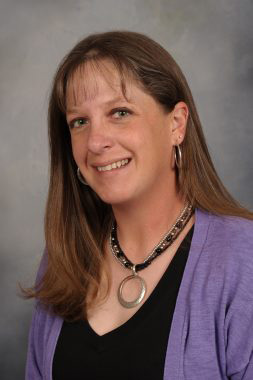
Alicia Boor is an Agriculture and Natural Resources agent in the Cottonwood District (which includes Barton and Ellis counties) for K-State Research and Extension. You can contact her by e-mail at [email protected] or calling 620-793-1910

INSIGHT KANSAS: Second thoughts about charter schools

Everyone loved Ralphie. He seemed the perfect dog for my son’s family — just the right size and age. He was good-natured, house-trained and playful. He went home with the family the day they first saw him at the rescue center.

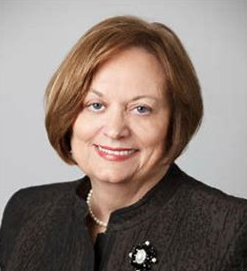
Dr. Sharon Hartin Iorio is Professor & Dean Emeritus at Wichita State University College of Education.

Out for a walk a week later, Ralphie pulled off his leash and bolted. After two hours of searching and chasing, it became clear why Ralphie had been turned back to the shelter not once, but twice.

Today, Ralphie continues to be a valued pet, but his interest in escaping is now curtailed by a strong chest-halter lead.

Learning about Ralphie made me think of my developing perspective on the charter school movement. Initially charter schools appear to be exactly what is needed to correct problems facing Kansas’ schools, and some school reformers advocate for the 2019 legislature to approve broadening the charter school statute.

Yet, examination of the effects of loosening charter regulations reveals genuine flaws that need restraint.

Charter schools are public schools but they select students who attend and have leeway to operate outside traditional public school policies according to each state’s laws.

Currently, Kansas charters must be approved by and receive oversight from the school district in which they are located, follow the same accreditation policies as the school district and must reasonably reflect the racial and ethnic make-up of the school district.

Kansas has one of the strongest charter school laws in the nation but in states with looser charter policies and less oversight than Kansas, major problems have developed.

As public schools, all charters must admit students regardless of race, ethnicity, gender or special needs; however, in some states there appears to be little enforcement of the mandate.

Texas law permits charter schools to cherry-pick students through admission requirements that include asking about students’ disciplinary histories. In California charters may require financial donations from families.

Dismissed charter students go back to their assigned school districts and this sets up opportunity for a disproportionate number of high-need students in public schools.

The siphoning of public school funding associated with charters is also troubling. In each state, including Kansas, school districts must pay the per-pupil state allocation, including additional funds for special education, to a charter located within the district (i.e., state per-pupil funds move with the student).

In a recent analysis Rutgers University professor Bruce Baker found that without careful planning, charters deplete the resources of public schools. Baker writes that when public school revenues decline, districts reduce overhead expenditures.

This situation transferred to Kansas could be especially problematic to small town and rural districts due to tight budgets and economies of scale. For example, a charter and a public school in a small district likely would have difficulty duplicating fixed expenses like the major cost of transportation. This could leave both schools with fewer dollars for music, athletics and other pursuits which most Kansans agree are needed for students.

In some states charters expand through multi-state conglomerates that often operate on for-profit models. Most charter corporations are found in large, urban areas not on the Kansas prairie, at least so far. Moreover, many Kansans fear the outside control that national charters exert.

Charters, despite possible drawbacks, offer opportunity for innovation and student advancement, if they arise from local involvement and follow the social, moral and funding restrictions set forth in current Kansas legislation. Kansas was wise in setting rigorous limits for charters. Let’s keep it that way.

Dr. Sharon Hartin Iorio is Professor & Dean Emeritus at Wichita State University College of Education.

NORLIN: Shutdown (not shut up)

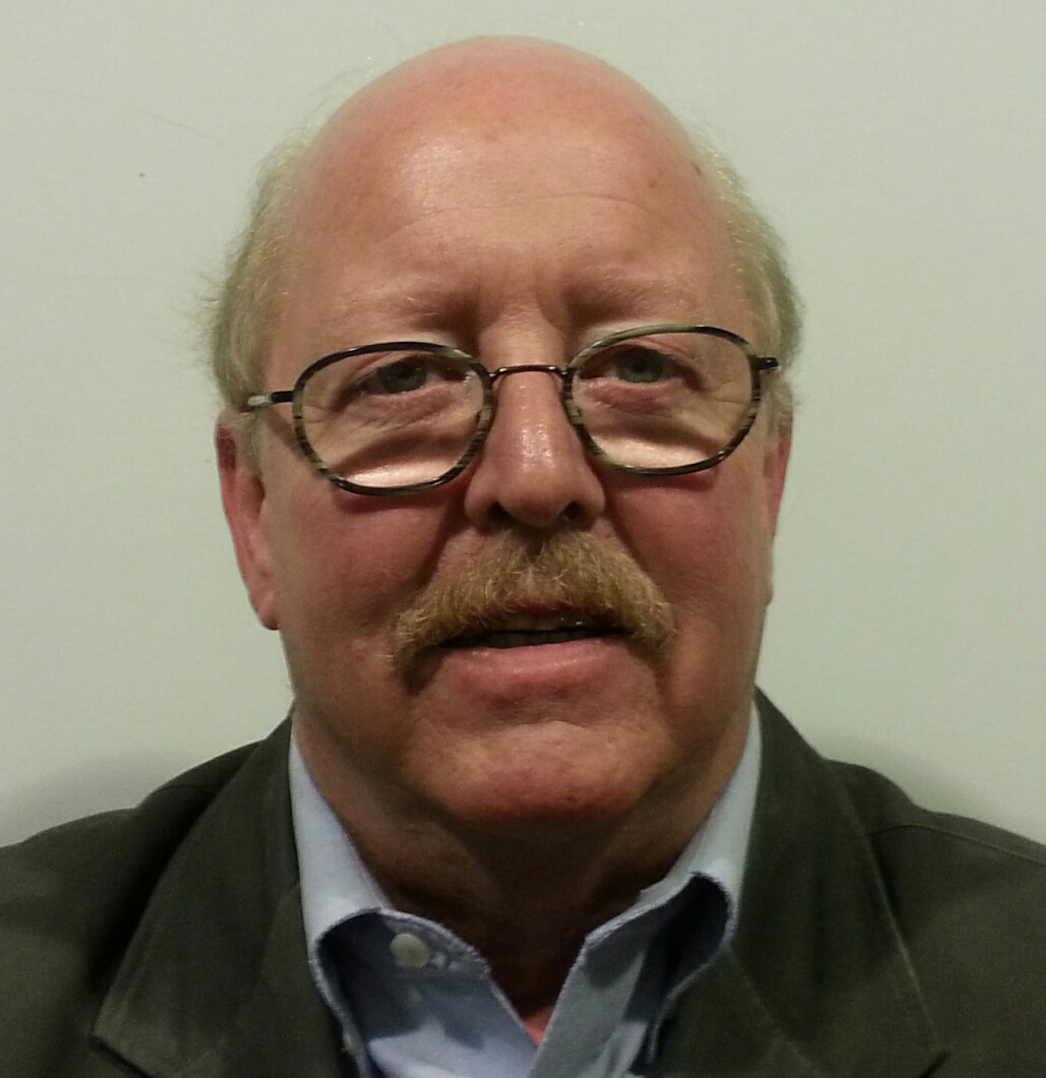
David Norlin is Chairman of the Salina Planning Commission, former President of Salina Access TV, and a former College Director of Broadcasting and English Department Chair. He has twice run for Kansas State Office.
By DAVID NORLIN

Let’s stop sighing and size it up.

The totally unnecessary cruelty and arbitrary punishments brought down like fire on the heads of our public workers give us a message: It could happen to us, if we get in the way of the Master Money-Maker—and Taker.

Those with money, get money (and power). Those who don’t, don’t. And when they do, and we don’t, here’s what happens:

Transportation Security Administration workers, who determine the safety of your flight, aren’t paid. Feel safe?

After blaming California Forest Management for not stopping wildfires, the Master stops their funding. No funding during vital planning time means they are not prepared. He writes off California.

Prison workers, including corrections officers, case managers, and secretaries can’t afford to pick up their Walgreen prescriptions, have to sleep on a cot overnight, because they can’t afford gas to get home, and don’t know where their next meal will come from—yet face the daily challenges of guarding inmates. The Master doesn’t care. Just release the prisoners, right?

Courthouses seriously consider closing. Says one Judge, “If in fact the buildings can’t stay open, we literally will have judges at their kitchen tables with a laptop computer, camera on top, looking at a defendant sitting at a U.S. marshals’ holding cell somewhere, conducting these hearings.” One contracted public defender calls it a betrayal of public servants, who already sacrifice, working for less than the private sector. “It feels like we’re on the front lines trying to fight a battle while our own forces are shooting us in the back.” The Master doesn’t care. After all, who needs a fair, just legal system?

IRS workers get their food from the local Catholic food bank, and battle serious depression. What’s their job? Collecting rightfully owed taxes necessary to sustain the nation—yet they aren’t paid to do their job. The Master and his fellow tax-dodgers grin. IRS won’t be fully functional for a year.

One of our primary national security concerns is cyber-security. (Not THE WALL.) At the Cybersecurity and Infrastructure Security Agency, normally 3,500 people are on the job. Under the shutdown, only around 2,000 man the breaches.

Threats more visible locally are Farm Services offices, the threat to WIC (women/infant/child) grants, air traffic controllers—the list goes on. Workers stand in 30-degree weather to get food.

Some “Independent Kansans” cheer the Masters on. Forgotten are the Billion or two we get back in excess of our Federal tax annual contributions. On top of that (because of our legislators), we have lost $3 Billion in Federal Medicaid dollars, paying for 90% of care for needy Kansans. But the Masters don’t care.

And the whole SNAFU may start again February 15, right after Valentine’s Day.

Even though it should be crystal clear that we, the people, are losers in this situation, some will no doubt appear on this site supporting our Clueless Commander and encouraging him to crash the ship of state onto the rocks yet again.

They are joined by our alleged Representatives Jerry Moran, Pat Roberts, and Roger Marshall. Only this morning, Moran and Marshall bleated their support for Trump’s irrational wall-at-any-cost.

One word describes a system where people are forced to work without pay, where one man (white, wealthy, non-working) calls the shots and no one objects, where the entire structure seems to rely on bullying and intimidation, where few available exits exist, where all human resourcefulness has been exhausted, and the atmosphere is so despair-laden that few think they can fight back.

What word? Slavery. (Or, your choice, Dictatorship.)

David Norlin is past Chairman of the Salina Planning Commission, former President of Salina Access TV, and an occasional Salina Journal columnist. He is a retired College English Department Chair and Director of Broadcasting. He has twice run for the Kansas Legislature.

MASON: Access to help and hope drives student success

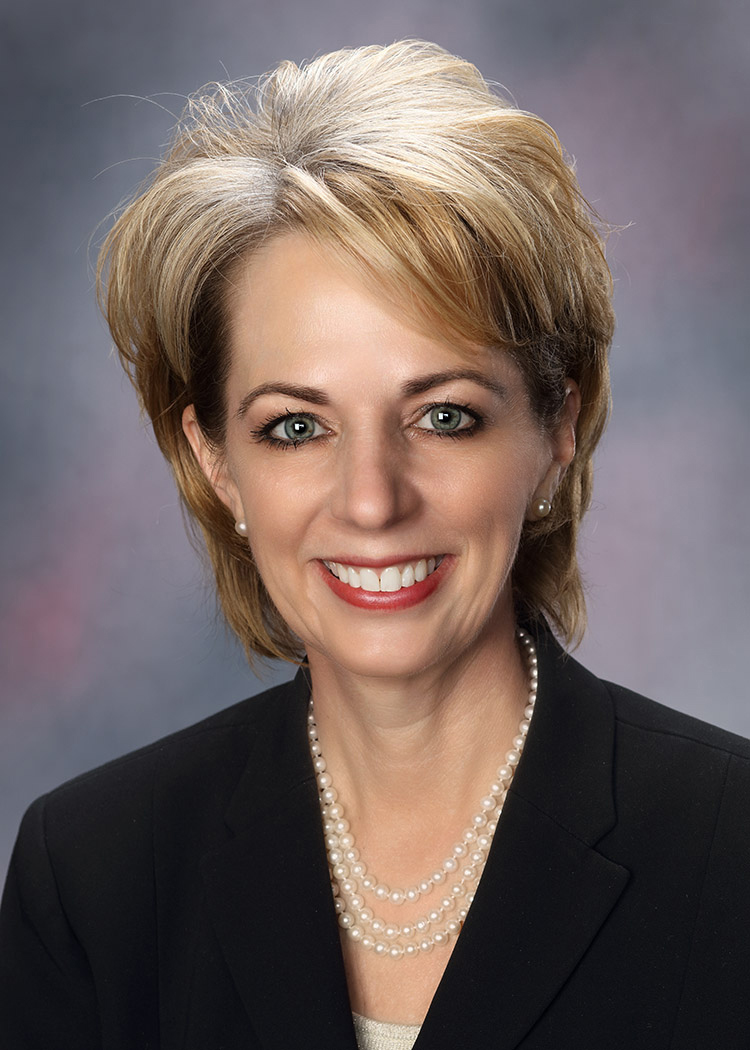
Dr. Tisa Mason
Every time I return from meeting with other presidents, I feel renewed and reaffirmed in the mission, vision, and effectiveness of Fort Hays State University.

Our team is making great progress on many important initiatives. One area in which we continue to make progress is in student persistence – continuing on from one semester, or one year, to the next. Over the past five years, FHSU has improved the freshman first-year-to-second-year rate by 5 percent and, over the same time period, online student retention has improved by 27 percent! This unusually rapid rate of improvement puts us on par with the national average.

But FHSU is not about being average. We aim higher and work harder, especially when it comes to our students. Most importantly, we recognize that behind every number is a student, a real person to whom we have an obligation to guide and encourage.

And sure, not every student who leaves FHSU early is a failure. Some may be enrolled in our pre-engineering 2+2 program specifically designed to allow our students to take the first semesters of pre-engineering classes, required by all engineering schools, and then transfer to an engineering program to finish the degree. This approach provides two years to work closely with our outstanding faculty members, in small classes, receiving personal attention and gaining a strong knowledge base.

Others may complete general education requirements and then transfer to a more expensive college with different majors as a cost-saving strategy.

But there are indeed students who are not graduating and for whom we need to find more effective ways to help. That is why we continue to adopt new strategies and evaluate and refine current practices. I am so grateful for the time and energy our faculty and staff devote to getting better at supporting our students.

An aspect I admire about FHSU is that we have the courage to be introspective and innovative. I once heard a national expert on student success call on universities to think deeply and differentiate between where students fail and where the university fails students – to adopt an “It’s on us” posture rather than simply blame students for not putting forth the effort to succeed.

Researcher Robert Pace has long demonstrated that what the institution does can profoundly shape student effort and positively impact success. Even newer research by Robert Putnam indicates that students who are not as well prepared for college often do not lack in intelligence but in savvy. Our outreach and support is more critical than we sometimes realize.

I was most intrigued by new research from Gallup indicating that hope is critical to student success. This makes sense when you think about it. Ever tried to lose weight and get negative feedback from the scale? Were you motivated to eat more fruits and vegetables? Did you feel like weighing in the next day? Discouragement steals hope. Encouragement fuels hope, which results in success.

When I work with my personal trainer – who gives me information, shows me what to do, monitors my progress, and continues to encourage me – I am hopeful, focused, excited, and successful. Each week I get stronger and can do more. My trainer reminds me not of what I cannot yet do but of the progress I have made and how much closer I am to accomplishing my fitness goals.

I am constantly thinking about how important it is to tell our students every day how great they are, to encourage their hopes and dreams, to instill in them the importance of persevering and refusing to accept failure. It is important to love them to success. It is a message I attempt to convey in my speeches and, more importantly, my daily interactions with students. This is how we create world-class athletes and how we should be creating world-class students.

And the best news – this quality of hope and student support – is already a characteristic alive and well at Fort Hays State University.

HAWVER: Kelly lays out aggressive school funding plan

Martin Hawver
Brand-new Gov. Laura Kelly has gotten one of her most politically red-hot issues introduced into the Legislature, printed out, and ready for the scrap over financing K-12 public schools in Kansas.

Her bill that she told (warned?) lawmakers about at her State of the State address pumps another $93 million into state aid for public schools, apparently the amount needed to get the Kansas Supreme Court grinning about adequate financing of public education.

And, now that those bills are printed up nicely, we’ll see just how long it takes either the House or the Senate to start considering them. So far, it appears that legislative leaders want to make sure that the ink is good and dry before they start handling the bills.

Key to that Kelly initiative is that about $93 million has been penciled out as the amount of new spending for schools that the Supreme Court has determined to be adequate. It has a lot to do with past years’ legislative action which didn’t significantly increase funding, which didn’t keep up with inflation. Inflation is a big deal when you’re spending more than $5 billion a year to help finance local public schools. A percent or two, and you’re talking real money.

Her bill puts in that $93 million in additional spending for schools this year, as the court wants. Don’t go reading through the bill for a $93 million-line item. It’s fairly obscure and deals with increasing the base state aid per pupil, and this year, as the court wants.

Now, the governor thinks paying the money, essentially settling more than two decades of school finance lawsuits, is smart. And it meshes with her aim to increase school funding.

The Legislature’s Republican leadership generally takes three tracks. One is that it’s the Legislature that decides how much money to spend, not the court; another is that legislators are spending a lot of their constituents’ money on schools now, and the third is, of course, that lawmakers have other places to spend the money.

Oh, and while it’s early in the session, Attorney General Derek Schmidt would like the Legislature to act quickly on the bill, because he’s got an April 25 date to show the Supreme Court that the state has remedied the shortcomings of the school finance issue, and a May 9 date for oral arguments before the court to deliver the answer.

And time in the generally slow legislative process is important to Schmidt.

If he shows up with a new law that ponies up the money, that makes things easier. He could almost just ask for a receipt from the court and have time for a nice lunch on May 9. Maybe something that goes with wine…

Or, the Legislature could dunk Kelly’s bill, just not passing it, cutting the amount of the new spending, or coming up with some new idea that lawmakers hope the court will buy.

That is also something that Schmidt would like to know as quickly as possible.

Because he represents the state, not just the Legislature, he’s going to have to figure out how to explain what the Legislature did, why it did it, and why it will adequately finance schools. Oh, and there’s always the chance the Legislature will come up with a plan that the governor vetoes. That makes the water a little deeper…

So, while we’re watching taxes and voting rights and possibly expansion of Medicaid and all the other partisan scraps, you might want to spend a little time wondering about schools. You won’t be alone…

Syndicated by Hawver News Company LLC of Topeka; Martin Hawver is publisher of Hawver’s Capitol Report—to learn more about this nonpartisan statewide political news service, visit the website at www.hawvernews.com

News From the Oil Patch, Jan. 29

By JOHN P. TRETBAR

Drilling activity in eastern Kansas continued to slow down last week even as it picked up west of Wichita. Independent Oil & Gas Service reports just three active drilling rigs in the eastern half of the state, down two, and 31 in Western Kansas, which is up three over the week before. Drilling is underway at one well in Ellis County, and operators are about to spud new wells in Barton and Russell counties.

Baker Hughes reported an increase of ten oil rigs in its weekly nationwide drilling rig count. Texas was down four rigs, New Mexico was up four and North Dakota added three rigs over last week.

Operators filed 12 permits for drilling at new locations across the Sunflower State last week, with just one of those in eastern Kansas. Eleven were west of Wichita, including one in Barton County.

Independent Oil & Gas Service reports operators completed 66 new wells last week across Kansas. Ten of those were dry holes including one in Ellis and one in Barton County. Out of 22 wells completed in Western Kansas last week, seven were dry holes. One producing well and one service well were completed in Barton County last week.

The government said U.S. commercial crude oil inventories increased 8.0 million barrels from the previous week. The U.S. Energy Information Administration says current stockpiles are about nine percent above the five-year seasonal average. EIA said U.S. crude production for the week was down slightly, from the all-time high reported the week before. The total for the week ending January 18 was 11.891 million barrels per day, about two million barrels more than the same week a year ago. Imports averaged 8.2 million barrels per day last week, up more than half a million from the previous week. The four-week average is about 2.1% less than a year ago.

The Lone Star State produced 25% more crude oil last year than the year before. A report from the Texas Independent Producers & Royalty Owners Association pegged the state’s production in 2018 at 1.5 billion barrels. That’s about 4.1 million barrels per day, or about 40% of total production in the United States. EIA estimates that U.S. crude oil production averaged 10.9 million barrels per day last year.

The top oil and gas regulator in Idaho has resigned amid charges he bought and sold stock in an oil and gas company doing business in his state. Governor Brad Little accepted the resignation of Conservation Commission Chairman Kevin Dickey, and said his office would work to fill the vacancy as quickly as possible.

Crude-oil production from the seven largest U.S. shale plays is forecast to climb by 62,000 barrels a day in February to 8.179 million barrels a day, with output from the Permian Basin leading the way. The U.S. Energy Information Administration said Tuesday the Permian, spanning the Texas-New Mexico border, is expected to see the largest climb among the big shale plays, with a monthly increase of 23,000 barrels a day in February.

As the State of New Mexico considers raising royalty rates for oil & gas production on state lands, lawmakers are learning that the state already cllectss a greater share of revenue from the patch than eight other states, including Kansas. Lawmakers in Santa Fed heard from the New Mexico Tax Research Institute, which reported royalties and taxes in the state already return more than 20% of the so-called “production value” of oil developments on state lands. Texas was next at more than 14%. Richard Anklam of the Institute says their new study shows Kansas with the lowest combined taxes and land income as a percentage of energy production. Anklam says thats largely because Kansas has very little production on federal land, and none on state trust lands. According to the study, the states energy operators kicked in more than $201 million to state coffers in fiscal year 2017, out of slightly more than $2 billion in total production value, or a little more than 10%. That includes personal income taxes, severance taxes, ad valorem property taxes, sales and use taxes, and revenue from the feds.

Saudi Arabia plans to build an oil refinery and a petrochemicals plant in South Africa as part of $10 billion of investments in the country. According to Reuters, the Saudi Energy Minister announced Saudi oil would be used in the planned refinery. Construction will be led by state energy company Saudi Aramco. The exact location of the refinery and petrochemicals plant will be finalised in the coming weeks.

Oil tankers exporting crude from ports in the Black Sea are contending with spiraling delays when navigating Turkey’s key shipping straits, stalling the delivery of millions of barrels rom Kazakhstan and Russia to refineries on the Mediterranean Sea and beyond. According to a report from Bloomberg, the long lines are blamed on rule changes requiring more vessels be escorted by tugboats. A local port agent estimates tankers holding about 39 million barrels of oil are being held up.

BOWERS: Senate Scene Week 1 & 2

36th Dist. Sen. Elaine Bowers (R-Concordia)

2019 Senate Scene – Week 1 and 2

As we get settled into the second week of the 2019 legislative session, most of our work is concentrated in committees where bills are being prioritized and vetted. The Senate has 13 standing committees which cover many different topics, including education, agriculture, judiciary, and utilities—to name a few. In observation of Martin Luther King Jr. Day, the legislature and state offices were closed Monday, January 21st. However, the abbreviated week did not slow committees from introducing and holding hearings on proposed legislation. Once a committee completes hearings and votes on a bill, if passed, it will then make its way to the Senate floor and the full body will begin to debate and vote on the measure. Floor debates and votes will begin in the coming weeks. If you’re interested in tracking our work, you can head to our website at https://www.kslegislature.org.

Committee Assignments

My committees will remain the same as last year with one addition which is Transportation. I am the Chairman of Ethics, Elections and Local Government; I will serve on the Judiciary and Utility committees and will remain on the Historical Preservation Committee. I also was assigned to serve on the joint Legislative Post Audit Committee. This committee will not meet often during session but during summer and fall to consider specific subjects assigned to us. The Senate President assigned me to fill a vacancy on the Children’s Cabinet and Trust Fund which meets quarterly and is directed by state statute to fund and evaluate key children’s programs across the state. As it is an elected position by the Republican Senators – I will remain the Senate Majority Whip for the next two years.

Inaugurations

On Monday, January 14th, Laura Kelly was sworn in as the 48th Governor of the State of Kansas. Governor Kelly enters the Governor’s office after serving 14 years in the Kansas Senate, representing Topeka. State officials also sworn in were Lynn Rogers, Lieutenant Governor, Derek Schmidt, Attorney General, Scott Schwab, Secretary of State, Vicki Schmidt, Insurance Commissioner and Jake LaTurner, State Treasurer. All 125 House of Representatives were sworn-in and 4 new senators – Kevin Braun (R-Kansas City) replaces Steve Fitzgerald after he resigned from the Senate in September. Vic Miller (D-Topeka) took Laura Kelly’s seat in the Senate. Eric Rucker (R-Topeka) took Vicki Schmidt’s seat in the Senate as she is now Insurance Commissioner. Mary Ware (D-Wichita) was chosen to replace Lynn Rogers in the Senate. Richard Hilderbrand (R-Galena) was also sworn in after winning his special election in November.

State of the State

On Wednesday, January 16th, Governor Laura Kelly delivered her first State of the State address. The governor laid out her agenda as she began her first term as governor. Some of her main agenda items include more money to public education, increased funding to hire more social workers for DCF, and Medicaid expansion. While Governor Kelly launched her agenda of increased spending in numerous areas, she vowed to keep her campaign promise of no increased taxes. During her address, Kelly explained she would be proposing a one-year budget with a separate proposal for a two-year education plan. Watch the full State of the State address below:

Governor’s Budget Proposal

Thursday morning, Governor Kelly presented her one-year budget proposal. The $18.4 billion proposal includes increased spending for areas such as K-12 education, DCF, and Medicaid expansion. A few highlights include a recommended $92 million inflation adjustment to state aid for K-12 public schools. This would be a phase-in of $364 million over four years. With this increase, the state’s education funding would increase 5.5 percent during the next budget year, to nearly $4.4 billion. The budget proposed a 14 percent increase in spending on foster care programs. Governor Kelly’s agenda includes the hiring of 55 additional social workers. This would increase the department’s budget 8.7 percent, to $727 million. Kelly’s budget included $14 million to initiate Medicaid expansion in Kansas. She explained that an expansion plan would be submitted to the Legislature by the end of the month. The budget provided $22 million for a 2.5 percent salary increase for state employees, excluding the judicial system and legislative branch. An additional $3 million was earmarked to increase wages for officers of the Kansas Department of Corrections. The budget proposal would complete restoration of a 4 percent, or $30 million, cut in 2017 from the Board of Regents. Kelly’s budget was built around the re-amortization of the Kansas Public Employees Retirement System which essentially refinances the remaining $8.9 billion debt over 30 years. This is meant to provide $160 million in “short-term savings” but will extend the system’s debt until the year 2049. Larry Campbell, Governor Kelly’s budget director, said the debt would become an additional cost of about $7 billion and finally the $200 million would continue to be drawn annually from KDOT to finance basic government.

Senate Floor Action

State law in Kansas requires that certain appointments by the Governor or other state officials be confirmed by the Senate prior to the appointee exercising any power, duty, or function of the office. On Thursday, January 17th, the Senate confirmed 17 governor nominated appointments and 2 attorney general nominated appointments.

If I were Mayor Contest

This year, Smith Center 7th Grader Luke Franklin, was the north central regional winner of the “If I Were Mayor” memo contest. Over 450 7th grade students submitted essays from 25 schools across Kansas. Luke attended the Topeka celebration and a special lunch recognizing Kansas Mayors in cities of all sizes during Local Government Day on January 23rd.

2019 Keep it Clean Kansas Calendar – Kansas Department of Health and Environment

This yearly calendar features the winning artwork of Kansas students grades K through 12 who entered the calendar contest. The Bureau of Waste Management has sponsored this contest since 2000 to encourage students, their families and other Kansans to respect and take care of our Kansas land, water and air. Lexi Meitler, a kindergartener at Minneapolis Grade School drew the artwork for the January calendar page. Jordyn Wisinger at Phillipsburg High School was the 2019 Grand Prize Winner and is the front cover artist of the KDHE calendar. Calendars are available at no cost at KDHE by calling Julie Coleman at 785-296-1600.

Following the Kansas Legislature

You can view video streaming of both chambers via the Kansas Legislature YouTube page. In addition, many committees are now audio streamed. The Kansas Legislature website is easy use with Senate and House calendars and journals as well as the rosters of both chambers. Here are the relevant links:

Website: https://www.kslegislature.org

YouTube Streaming: https://bit.ly/2CZj9O0

Committee Hearings: https://sg001-harmony.sliq.net/00287/Harmony/en/View/Calendar/

Page Dates

The Page program is designed for students in middle school, junior high or high school. Working as a page in the Kansas Legislature is an excellent way to learn more about the legislative process. I was a page in 1981 for Representative Bill Fuller and I still have my black and white photo as a memento in my office. The dates assigned to us are Tuesday, February 12th, Wednesday, February 27th, Monday, March 11th, and Monday, March 25th. Other dates may be available upon request. Please call my office and speak to Randi or email [email protected] or [email protected] to reserve a space.

Office Information

My office remains in the same suite, 223E (East wing second floor) next to the cage elevator. Randi Walters who has worked in the Capitol for 16 years as an assistant and a committee assistant is in our office and Caitlin O’Toole is our Intern who is a KU Political Science major from Prairie Village. When visiting the Capitol, look for the kiosks in the Visitors Center where you will be able see the calendar of the day, events and directions to find the offices of Capitol staff and legislators.

As session progresses, not every bill introduced will make it to the governor’s desk, but that doesn’t mean opinions, facts and testimony weren’t heard. Your participation in the state legislature is vital. As we continue to weed through the different bills, I hope to hear from you. I want to know how legislation will impact you and our district, or the ideas you have to improve a bill. An email with your thoughts (not a form letter) is truly the best way to reach us as we sit in committees for most of the day and seldom get to stay at our desks for long periods.

Thank you for the honor of serving you!

Senator Elaine Bowers
Kansas State Capitol Building
Room 223-E
300 SW 10th St.
Topeka, KS 66612
[email protected]
785-296-7389
www.kslegislature.org

Elaine Bowers, R-Concordia, is the 36th Dist. state senator and serves as the Senate Majority Whip. The 36th Senate District includes Cloud, Jewell, Lincoln, Mitchell, Osborne, Ottawa, Republic, Rooks, Russell, Smith and Washington counties and portions of Marshall and Phillips counties.

SCHLAGECK: A reason to believe

John Schlageck writes for the Kansas Farm Bureau.
After 45 years covering agriculture in Kansas and Missouri, I will “pull the pin” (retire) from Kansas Farm Bureau Jan. 31. I’ll put my pen in the desk drawer, close my computer, hang up my camera and turn off the phone. Don’t worry, Insight will continue.

But I will not forget this vocation of agriculture and more importantly the men, women and children who call this vocation their own.

Who knows?

After a few months, I may put pen to paper and write about this most honorable profession once more.

The opportunity to advocate on behalf of agriculture for 45 years has given me a reason to believe. No other career I could have embarked on would have fulfilled my inner need to remain connected to a life I was born into 70 years ago in northwestern Kansas.

My family and four others literally carved the community of Angelus out of the prairie during the waning years of the 19th Century. Before settling in northwestern Kansas, they’d settled in up-state New York by way of Germany in the early 1830s. From there they moved to a small farm near Milwaukee, Wis. A decade later, on to Wein, Mo. and finally the short-grass prairie on the great High Plains.

Growing up in a family of hard working, dedicated German and French immigrants, I was destined to “tell the story of agriculture.” I will carry a place in my heart for the farmers and ranchers who remain a part of this vocation as long as I inhabit this old world.

After four decades of writing a weekly column, starting “Kansas Living” magazine, producing “Insight” on the radio, “Voice of Ag” radio spots, writing speeches for three Kansas Farm Bureau presidents, video production and managing KFB’s print media department, far too many events occurred to mention them all. Here are a few highlights:

Droughts, killing freezes, brutal winters with blizzards and loss of livestock, farm bills including the Freedom to Farm spearheaded by Kansas’s own Sen. Roberts, Russia’s Boris Yeltsin cutting wheat at the Rau farm in Sedgwick County followed by a visit from the white combine.

The advent of animal welfare including PETA and HSUS, Waters of the U.S. in a semi-arid western Kansas, the over appropriation of irrigation out of the Ogallala Aquifer, yearly Governor’s tours, Farm Bureau members lobbying congress in D.C. led by KFB President John Junior Armstrong in ’78.

So much history, so much fun and so many wonderful farm families. The opportunity to visit farms and ranches in all 105 counties. The chance to visit with members – in their pickups, combines or drive through a pasture filled with fleshy momma cow-calf pairs – as they proudly showed me their farms and shared the intimate details of their lives and livelihood.

I also witnessed the sorrow and pained hurt in the eyes of a wheat farmer a few minutes after a hailstorm hammered his crop into the ground. Followed by his vision and hope for the next great year. I’ll never forget and always cherish these moments.

I will remember always the friendships forged with farmers and ranchers throughout Kansas. We all share a love of this business of agriculture, each other and our Farm Bureau organization.

This continues to make Farm Bureau the best. We care on a personal level. Our families and lives became intertwined.

We share common concerns. Kansas agriculture remains a moving target, always changing. What’s right for you, may be wrong for me. Still, in Farm Bureau, we work together to find solutions for our shared industry.

At the end of the day, week, month or year, we love our great organization. We’re unafraid to tilt at windmills like the brave Don Quixote. We toil behind the scenes “to finish the task,” driven by dedicated farm and ranch leaders and dedicated staff, we make a difference in the agricultural vocation.

While it may seem like a long, hard road, it’s been an exhilarating ride. One I wouldn’t change for anything. I’m truly honored and humbled to have served with each one of you.

God bless.

John Schlageck is a leading commentator on agriculture and rural Kansas. Born and raised on a diversified farm in northwestern Kansas, his writing reflects a lifetime of experience, knowledge and passion.

RAHJES REPORT: Jan. 28

Rep. Ken Rahjes, R-Agra, 110th Dist.

Hello from Topeka!

This past week saw mostly bill introductions and the beginning of committee work. The Higher Education Budget committee met for the first time and received an overview of education in Kansas and setting the course for the session work. It will be another couple of weeks before we are presented with the baseline numbers and begin hearing from our higher education institutions.

In this report I wanted to share some of the things going on in other committees:

Mental Health Issues in Schools – On Thursday, the Kansas State Board of Education Report on Mental Health Issues in Schools and similar information on children’s mental health were presented to the House Education Committee. The board’s report identifies that 20% of children and youth have an identified need for mental health services, but only one-third of those children have received services. In addition, for those children who did receive services, more than 70% received services from their school. The presentation also stressed the need to prevent suicide, and the board’s prime recommendation included suicide awareness and prevention training. Specifically, the board recommended required staff training on signs of abuse, neglect, and sexual abuse, and would also like to see school districts revisit or revise policies related to mandating reporting of signs of abuse.

Essential Federal Employees in Kansas – On Friday, Representative Adam Smith from Weskan introduced a bill in the Rural Revitalization Committee to address concerns of Federal employees furloughed in Kansas due to the government shutdown. Some employees are working without pay and are not allowed to collect unemployment. Friday marked the second pay period these employees have been going to work without a paycheck. Under Representative Smith’s proposal, these employees would be able to collect unemployment and then be required to pay it back once an employee receives backpay from the Federal government. While this problem stems from D.C., we believe it is important for Kansans to take care of our own in the meantime.

Itemized Deduction Briefing – Also on Thursday, the tax committee heard from The Department of Revenue, the Kansas Society of CPAs, and the Kansas Realtors Association. Due to recent changes in federal law, Kansas taxpayers must take the standard deduction on their state income tax return if they take the standard deduction on federal return. In the same token, Kansans cannot itemize on their state returns if they do not itemize on their federal return. The federal standard deduction was nearly doubled, increasing from: 1) Federal Standard Deduction 2) Tax Year 2017: $6,350 for single filers, $12,700 married filing jointly 3) Tax Year 2018: $12,000 for single filers, $24,000 married filing jointly. 4) Kansas Standard Deduction and 5) $3,000 for single filers, $7,500 or married filing jointly. This eliminates the opportunity for Kansans with itemized deductions below the federal standard deduction, to itemize on their state return. Amending the state tax code, or decoupling from the federal tax code, will allow taxpayers the freedom to itemize or take the standard deduction on their state returns regardless of which route they take when filing their federal return.

Tax Foundation Testifies about Kansas Tax Climate – Nicole Keading, Director of Federal and Special Projects for the Tax Foundation, presented to the House Taxation Committee. She gave an overview of Kansas tax rates, state business tax climate index, the Wayfair decision, and conformity. She noted that literature shows that some taxes burden economic growth more than others. Those are gross receipts taxes, corporate income taxes, and individual income taxes. In speaking about state tax policy, she divided her discussion into four large categories: tax rates; tax collections; tax burdens; and tax structure.

In looking at tax rates, Kansas is in the middle of rankings on individual income tax rate for 2018 with a 5.7% rate. Individual income tax rates for neighboring states are: Colorado (4.63%), Nebraska (6.84%), Missouri (5.9%), and Oklahoma (5.0%). Kansas ranks higher than other states on the corporate tax rate at 7.0%. Neighboring states: CO (4.63%), NE (7.81%), MO (6.25%), and OK (6.0%). On sales tax, Kansas has the 8th highest combined sales tax rate (state/local), with 8.68%. Neighboring state rates are: CO (7.52%), NE (6.89%, no tax on food), MO (8.08%), and OK (8.93%). The Tax Foundation also calculates the tax burden for states. Tax burden reflects the portion of income that goes to taxes. The Tax Foundation found that Kansas’ burden is 9.5, which is the 23rd highest tax burden in the nation.

This past week there were several folks from the district in Topeka: Phillips County Commissioner Max Dibble; Phillipsburg City Council Chair Mike James; Norton County Commissioner Bud Posson; Stockton Mayor Kim Thomas; Ellis Mayor Dave McDaniel; Phillips County Register of Deeds Robert Keessee and several folks from our community hospitals, but due to the weather we were not able to catch up. I had a great time Sunday night at the Hill City Area Chamber of Commerce Banquet, Diana Crouch and crew always put on a great event. Congratulations to the award winners.

If you come to Topeka during the session, my office is in Room: 149-S. My phone number is 785-296-7463 and email is: [email protected] and you can always try my cell number is 785-302-8416.

I look forward to seeing you around the 110th District. It is my honor to by your representative.

Rep. Ken Rahjes (R-Agra), is the 110th state representative and chairman of the Higher Education Budget Committee. House District 110
includes Norton and Phillips counties as well as portions of Ellis, Graham, and Rooks counties.

BILLINGER NEWSLETTER: Jan. 28

Sen. Rick Billinger, R-Goodland, 40th Dist.

Before this year’s session started I agreed to sponsor a bill, SB 9, which would make a postponed KPERS payment from 2016 that the legislature had promised to pay with interest in 2018. In 2018, the legislature opted to postpone the payment, to see what future revenues produced. Kansas’s revenues ended FY18 with $317 million more than expected. This left the approved ending balance at $905 million. Eighteen Republican senators, including myself, have signed on to sponsor SB 9. Some Democratic senators want to stall this payment. We made a promise to make this payment with interest and believe we should not build our ending balances by breaking promises.

Last Tuesday, the Senate Ways & Means Committee heard testimony on SB 9, which would transfer $115 million from the state general fund to the KPERS system. One hundred percent of the payment would be applied to the public-school group, a group that carries the largest unfunded liability. Ways & Means heard from Executive Director of KPERS, Alan Conroy, who explained to the committee that not making the payment would cause an increase of $630,000 to the unfunded liability/interest expense monthly. Making the payment would result in meeting the actuarial required payment for the first time in 25 years.

Thank you for those hundreds of people who gathered at the Statehouse, Tuesday, January 22, in freezing rain to participate in the annual Kansas March for Life. In particular I would like to thank people from the 40th Senate District who braved bad roads to attend this rally, including people as far away as St. Francis, KS. Many gathered due to the anticipated ruling by the Kansas Supreme Court that would say the constitution provides a right to an abortion. The march and rally took place on the 46th anniversary of the Roe vs Wade decision. In light of the New York Legislature adopting the Reproductive Health Act, allowing abortions up until the point of birth, it is more important than ever that we continue to fight for the unborn.

Hard Facts: Aviation in Kansas has a $20.6 billion economic impact and is responsible for 91,300 jobs. According to the Kansas Department of Labor, Kansas’ December unemployment rate was 3.3% compared to the 3.9% national rate.

Middle School and High School students (12 years of age or older) are invited to come to our Kansas State Capitol, in order to be my sponsored Senate Page for a day. The dates available are February 11th, 18th, 25th and March 11th. Please contact my office, if you know a student who may have an interest in being a Senate Page.

I am honored and grateful to represent the 40th Senate District in Kansas. Please do not hesitate to contact or call me with your questions and concerns, my office number is 785 296-7399 or my cell is 785 899-4700. If you are in Topeka stop by my office at 236-E.

Sen. Rick Billinger, R-Goodland, is the Kansas state senator for the 40th District, which includes Cheyenne, Decatur, Ellis, Gove, Graham, Logan, Norton, Rawlins, Sheridan, Sherman, Thomas, Trego and Wallace counties as well as portions of Phillips county.

MARSHALL: Doctor’s Note Jan. 28

Dr. Roger Marshall, R-Great Bend, is the First District Kansas Congressman.

Friends,

Friday a short-term funding agreement was made to reopen the government and pay federal employees. The president announced that he would reopen the government for three weeks, with hopes that by February 15th we will pass a border security agreement that includes funding for the wall. I find myself both relieved but also increasingly frustrated with this Congress and its dysfunction. I feel for those who have been struggling during this time, and I worry that once this temporary deal expires in three weeks, they will be faced with the same uncertainty if Democrats are not willing to negotiate.

I remain firm in my belief that we must secure our southern border and put an end to this decades-old crisis once and for all. It is unfathomable that some of my colleagues continue to ignore the reality of the lives lost due to criminals and drugs flowing into the United States.

There is absolutely a solution out there where both parties would receive clear victories. It is time for everyone in Washington – Republican and Democrats alike –to quit with the partisan games, provide the funds needed to secure our southern border adequately.

Continuing My Work On The House Agriculture Committee

I am proud to say that I will be again serving the Big First and our Ag industry on the House Agriculture committee. In the 115th Congress, the House Ag team was able to achieve many monumental accomplishments like passing a five-year Farm Bill, that will provide certainty to so many people across Kansas. I am eager to be back with this great team and represent our farmers and ranchers as well as agribusinesses and so many other vital parts of our Ag industry. We have a great deal of work to do for farm country, including advocating for new trade deals, protecting and implementing the 2018 Farm Bill and expanding rural broadband access and reducing the regulatory burden on our farmers. I will also be staying on the Science Space and Technology committee.

President Trump will Veto Anti-Life Legislation

I will always serve to protect the most vulnerable and guard the innocent, unborn children. Life begins at conception, and as a physician for 25 years that delivered 10,000 babies, I will always choose life.

I signed a letter to the president, with 168 of my colleagues, requesting that he commit to vetoing any legislation that weakens the protections for the unborn. I am proud that he answered our call to action and subsequently sent a letter to Speaker Nancy Pelosi (D-CA) promising to veto any legislation that House Democrats might pass that would violate the sanctity of life and change or weaken the protections for human life.

I commend our president for his steadfast position on this critical issue and his quit action to defend of the most vulnerable.

Martin Luther King Jr. Day

Last week the nation celebrated the life of a Civil Rights icon, Dr. Martin Luther King Jr. We took a moment to reflect on the progress we have made as a country and all the work the Reverend did to unify a nation that was broken.

Lately, I have been thinking about what Dr. King would say if he were alive today to see the diverse partisanship in Congress. His message would be clear – we must unify to make change. We must keep working together on civilly finding common ground. We must look even beyond the rules of civility. We must begin accepting when two or more minds work together with different opinions because there is always a common goal to be found.

Dr. Roger Marshall, R-Great Bend, is the First District Kansas Congressman.

Now That’s Rural: Kansas firsts

Ron Wilson is director of the Huck Boyd National Institute for Rural Development at Kansas State University.

By RON WILSON
Huck Boyd National Institute for Rural Development

“We’re number 1!” That cry goes up in sports arenas across the country. Today, around Kansas Day, the state of Kansas can point to many Kansas firsts. These are accomplishments in addition to sports where our state was number one in historic developments.

Marci Penner is executive director of the Kansas Sampler Foundation, author, and passionate advocate for rural Kansas. Her organization’s website, www.kansassampler.org, plus Kansapedia and other online sources list numerous cases where Kansas was number 1.

For example, the first U.S. patent for a helicopter was issued to Kansans William Purvis and Charles Wilson of Goodland. They invented the helicopter in 1909. A replica of their original helicopter can be viewed at the High Plains Museum in Goodland.

In addition to helicopters, other Kansans made their mark in aviation. The booming airplane production in Wichita led to that city being called the “air capital of the world.”

In the 1920s, Clyde Cessna of Kingman, Lloyd Stearman of Wellsford, and Walter Beech worked on one of those pioneering airplane companies in Wichita. Walter Beech and his wife Olive Ann from Waverly started their own business, Beech Aircraft Company, in 1932. When Walter became ill, Olive Ann Beech took over the company. Olive Ann was the first woman to receive the National Aeronautic Association’s Wright Brothers Memorial Trophy.

Of all women in aviation, Amelia Earhart was the most famous. Earhart, from Atchison, was the first woman to fly across the Atlantic Ocean. She was preceded by the first man to fly solo non-stop across the Atlantic. His name was Charles Lindbergh. When Lindbergh was barnstorming as a young pilot, he lived near Bird City.

On a more down to earth note, the world’s first bulldozer was invented by J. Earl McLeod and Jim Cummings in Morrowville.

There are many, many other Kansas firsts. Several involve women in politics. Susanna Salter of Argonia was the first woman elected mayor in the U.S. in 1887. She was a member of the Prohibition Party, which reminds me that Kansas was the first state to pass a law to prohibit all alcoholic beverages (that one didn’t work out so well.)

In 1949, banker Georgia Neese Clark of Richland was appointed by President Harry Truman as the first woman Treasurer of the United States. That meant her signature was printed on millions of dollars’ worth of U.S. currency.

In 1978, Nancy Landon Kassebaum was elected to the U.S. Senate, becoming the first woman elected to a full term in the Senate without being preceded by a husband. She would later retire to the family ranch near Burdick.

Kansas women and minorities made their mark in other fields also. Hattie McDaniel of Wichita was the first African-American woman and, for that matter, the first African-American of any gender, to win an Academy Award for her role in “Gone with the Wind.” Another woman founded the first black women’s academy in New England. She came to Kansas and is buried at the rural community of Elk Falls, population 107 people. Now, that’s rural.

In sports, Lynette Woodard of Wichita was the first woman to play for the Harlem Globetrotters. In politics, Charles Curtis of Topeka was the first Native American to become U.S. vice president.

Some firsts are less prominent. The nation’s first chain restaurant was the Harvey House restaurants which served Kansas railroad travelers. A Harvey House Museum is in Florence. Decades later, the country’s first national hamburger chain was founded when White Castle opened in Wichita.

The world’s first synthetic diamond was made by Dr. Willard Hersey on the McPherson College Campus in 1926. Also in McPherson was an amateur athletic basketball team sponsored by the local oil refinery. In 1936, the first year that basketball was an Olympic sport, the Globe Refiners from Kansas became the first basketball team to win a gold medal in the Olympics.

“We’re number 1!” These are some of the Kansas firsts which we find in our history. We salute Marci Penner and others who are making a difference by finding and sharing these Kansas accomplishments. I appreciate the way that they have helped put Kansas first.

Copyright Eagle Radio | FCC Public Files | EEO Public File