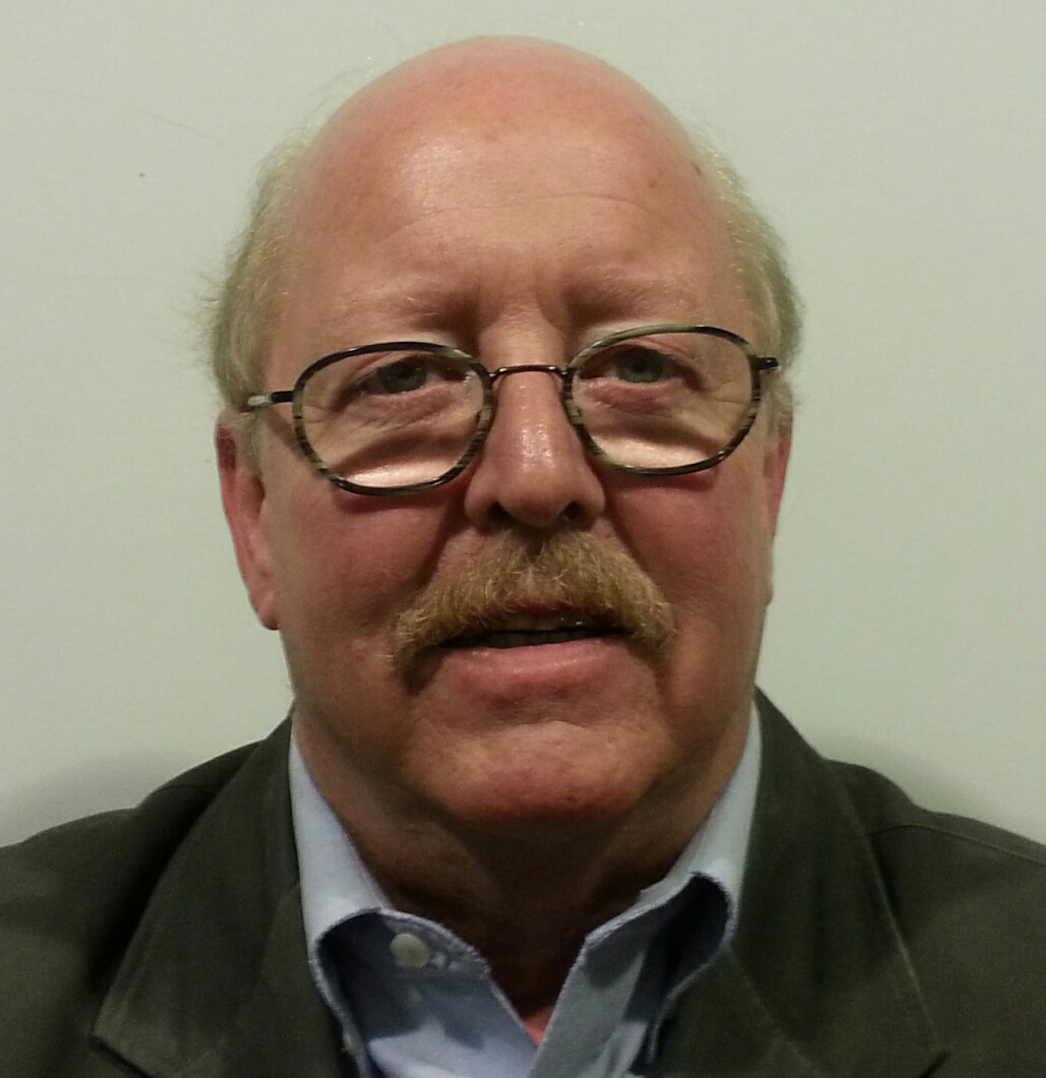
John Richard Schrock is a professor at Emporia State University.
“You should probably know that one of your ancestors was an American President,” my Mom told me one day. I was in fifth grade, so probably about 11 years old. And I had never heard my relatives talk about an ancestor who was President.
“Which one?” I asked.
“James K. Polk,” she answered, and went on with her housework with no further words.
I could hardly wait to get to school. I was a kid who did my homework. So I always had extra time while the teacher worked with other students. A nod from the teacher and I headed straight back to the reference books. I was already working my way through the encyclopedia page-by-page, reading those things that were most interesting (and most were). But I had not yet arrived at the “P’s’.
And there it was: James K. Polk.
My first question was what his middle initial “K” stood for (remember, I am just in fifth grade). It is “Knox.” My Dad worked on road construction—we moved around a lot—and I had just spent the prior semester going to school in Knox, Indiana. Strange to name a place after a person’s middle name. “Probably some other Knox” I correctly guessed. But what did this president do? I read on.
Oh, dear!
You do not see prominent statues of President Knox in the Capitol or read much about him today. He was the great invader, the man who put our nation’s “Manifest Destiny” into action with vengeance. At that time, the U.S. had no West Coast. Mexico extended up through what is now California. And Britain held all property from there northward to Alaska (at that time Russian).
There were two major parties back then, the Whigs and the Democrats. Polk was an expansionist and the 1844 Democratic platform advocated that the entire region held by Britain, from Oregon north to the southern edge of Alaska, should be claimed for America. That northern limit was at a latitude of 54 degrees 40 minutes North, leading expansionists to shout “Fifty-four forty or fight!”
At the Democratic Convention, Polk was a “dark horse” candidate, only nominated by the ninth ballot. As our 11th President, Polk settled the dispute with Britain by extending the Canadian boundary along the 49th parallel. Britain wanted to avoid war. The treaty was signed in 1846.
Then he started “Polk’s War.” Most Americans, including Congress, were not in favor of this war just to seize land. Polk was a skilled liar, a politician and supremely arrogant.
As a little kid, I could read between the lines where the encyclopedia tried to smooth over the atrocities. Today, the book “Invading Mexico” by Joe Wheelan provides even more details.
What is now New Mexico, Arizona and California belonged to Mexico. Mexico had won them in a war with Spain 25 years earlier. But Mexico was no military power, having lost their war with Texas 10 years earlier.
Polk sent a message to the retired General Santa Anna (the general who lost Texas) in Cuba asking him to now help the U.S. against Mexico. Instead, Santa Anna returned to Mexico, became president, and led their unsuccessful defense of Mexico.
The Polk War took a terrible toll on Mexico civilians due to our massive shelling of villages. American troops eventually occupied Mexico City. Polk’s War ended with the Treaty of Guadalupe Hidalgo on February 2, 1848. Our North and South now debated how slavery would expand into these new territories and the drumbeat to our Civil War quickened. That is why you will find no national monuments to this Mexican War of 1846-48. Polk was a one-term President and died in 1849.
It takes the long hindsight of history to fully evaluate a Presidency. There are certainly other candidates for “worst President in history.” Andrew Jackson, William McKinley, Warren Harding and James Buchanan often make scholars’ “worst list” too. That is a lot of embarrassed descendants.
As a little kid, I remember thinking how it might be wise if we let people run for President only if they had no offspring. Then there would be no need for little kids to hide their ancestry.
John Richard Schrock is a professor at Emporia State University.
Appropriations Committee
The Kansas Legislature had a condensed week this week while we observed Martin Luther King, Jr. Day on Monday, an ice and snow storm blanketed Topeka Tuesday night. Due to the ice and snow, the Kansas Legislature did not reconvene until late Wednesday morning. Due to the delay and the safety of our staff, the Appropriations Committee canceled the meeting for Wednesday morning.
On Thursday, the Appropriations Committee did have hearings from a varied list of agencies. Due to Governor Kelly’s budget proposal on reamortizing the unfunded liability for the Kansas Public Employee Retirement System (KPERS), we had the executive director, Alan Conroy, give a presentation on the status of the KPERS system.
We then had an update from the Kansas Department of Agriculture that presented the current details of the agriculture sector. Their main focus was regarding commodity prices, credit, trade, agriculture economics, and the recently passed farm bill by Congress.
The final information briefing was an overview of the Joint Legislative Transportation Task Force, of which I was a member. The Research Department detailed the subject matter of each meeting we had across the state of Kansas and the future transportation plan.
Kansas Watershed Annual Meeting
On Tuesday, January 22nd, Senator Dan Kerschen, chairman of the Senate Agriculture and Natural Resources committee, and I spoke at the Kansas Watershed Annual meeting. Senator Kerschen gave a detailed explanation about some of the bills that were passed last session regarding agriculture. I discussed the current budgetary status for the state of Kansas. I also gave an overview of Governor Kelly’s budget that was released last Thursday and the direction that I see the House Appropriations committee will take to address the state budget. Thank you to all of the individuals that were there from the Wet Walnut Creek Watershed in Rush County.
Bills Introduced
As with any legislative session, there are numerous bills that have already been introduced by either committee, individual legislators, or interest groups.
In the Appropriations Committee, the only bill introduced, at this time, is Governor Kelly’s bill to address the Kansas Supreme Court decision for K-12 education. It was introduced as a formality; other education bills, I presume, will also be introduced.
Some other legislation that has been introduced vary from eliminating day light savings time in Kansas, restrictions on legislators becoming lobbyists, to election crimes and penalties. As the session continues, I will focus on some of the noteworthy items of legislation that have been introduced.
Contact Information
As always, if you have any concerns, feel free to contact me (785) 296-7672, follow on twitter at #waymaster4house, visit www.troywaymaster.com or email me at [email protected]. Also, if you happen to visit the statehouse, please let my office know.
It is a distinct honor to serve as your representative for the 109th Kansas House District and the state of Kansas. Please do not hesitate to contact me with your thoughts, concerns, and questions. I always appreciate hearing from the residents of the 109th House District and others from the state of Kansas, as well.
Troy Waymaster (R-Bunker Hill) is the 109th Dist. state representative and chairman of the House Appropriations committee. The 109th District includes Osborne, Russell, and Smith counties and portions of Barton, Jewell, Lincoln and Rush counties.
Alicia BoorSevere winter weather is not only hard on people but can be a life and death struggle for birds.
Though birds also require water and shelter, food is often the resource most lacking during cold weather. Many different bird food mixes are available because various species often prefer different grains. However, there is one seed that has more universal appeal than any other: black oil sunflower. If you are new to the bird-feeding game, make sure there is a high percentage of this seed in your mix. White proso millet is second in popularity and is the favorite of dark-eyed juncos and other sparrows as well as the red-winged blackbird.
As you become more interested in bird feeding, you may want to use more than one feeder to attract specific species of birds. Following is a list of bird species with the grains they prefer.
• Cardinal, evening grosbeak and most finch species – sunflower seeds, all types.
• Rufous-sided towhee – white proso millet.
• Dark-eyed junco – white and red proso millet, canary seed, fine cracked corn.
• Many sparrow species – white and red proso millet.
• Bluejay – peanut kernels and sunflower seeds of all types.
• Chickadee and tufted titmouse – peanut kernels, oil (black) and black-striped sunflower seeds.
• Red-breasted nuthatch – oil (black) and black-striped sunflower seeds.
• Brown thrasher – hulled and black-striped sunflower seeds.
• Red-winged blackbird – white and red proso millet plus German (golden) millet.
• Mourning dove – oil (black) sunflower seeds, white and red proso plus German (golden)millet.
Extended cold periods can also make water unavailable. A heated birdbath can be a tremendous draw for birds during times when all other water is frozen. Energy use is usually less than what most people expect IF the heater has a built-in thermostat.
If you would like more information, Chuck Otte, Agriculture Extension Agent for Geary County has a series of backyard birding guides at https://gearycountyextension.com/NRMW.htm
Alicia Boor is an Agriculture and Natural Resources agent in the Cottonwood District (which includes Barton and Ellis counties) for K-State Research and Extension. You can contact her by e-mail at [email protected] or calling 620-793-1910
The longer the government shutdown persists, the more aware we all become of just how many functions the federal government actually performs.
Last week, the Daily Caller published an anonymous op-ed from a senior Trump official who stated s/he hopes the shutdown “lasts a very long time, till the government is changed and can never return to its previous form…Senior officials can reprioritize during an extended shutdown, focus on valuable results and weed out the saboteurs. We do not want most employees to return, because we are working better without them.”
Some results of the shutdown? Farmers have been unable to secure USDA loans. Three people have died while visiting our currently-unstaffed national parks. And thanks to the shortage of TSA agents at airports, a passenger managed to make it through security and onto a flight with a gun in his bag.
I can’t speculate about the identity of the official. I can’t speak to the validity of his/her complaints about government inefficiency — I’ve never been a federal government employee (although my husband is one). But I can safely say that, no, things are not working better without them.
The ripple effects of the shutdown can be seen in a lot of unexpected places. Here are just a handful of ways it’s impacting our First Amendment rights:
We’re less informed about what’s going on in our own country. How’s our economy doing? Are the Trump tariffs actually working? Is it a good time to buy a house, start a business or invest in the stock market? No one knows. As the Brookings Institution reports, “The people who collect, analyze and release all the basic data tracking the path of the economy and its principal aspects are on furlough.” Ordinarily, businesses and consumers rely on these reports to make critical and informed decisions. That’s why the First Amendment protects public access to this information. But there’s not a lot it can do when there’s no information to access.
Businesses can’t communicate with their customers. Last week, D.C. brewery Atlas Beer Works filed a lawsuit claiming the shutdown is violating its First Amendment right to speak to consumers. The Alcohol and Tobacco Tax and Trade Bureau can’t review and approve Atlas’ new labels for its seasonal beer, the brewery can’t ship its kegs interstate without those labels and in the meantime 40 barrels of perishable, apricot-infused India pale ale might go bad. You may scoff at the idea of a beer label as free speech, but as Atlas’ lawyers point out, “It cannot sell, and no one will purchase, random, unidentified liquids.” The requirement for a government agency to review this sort of communication protects consumers from the harm that false or misleading labels could cause.
Prominent First Amendment court cases have ground to a halt. While the courts are still operating, many of them have suspended work on civil cases involving U.S. government lawyers, among them the Pen American Center’s First Amendment lawsuit against President Trump.
While the majority of the Department of Justice (DOJ)’s lawyers are still working during the shutdown, they’re a bit overtaxed right now. Just last week, they had to contend with a lawsuit brought by several groups of federal workers against the government for forcing them to work without pay. The DOJ lawyers defending the government in court were also working without pay.
To add insult to injury, there are limits to how they can express their displeasure about this. A law, the Hatch Act, prohibits federal employees from engaging in political activity when they’re at work and new guidelines have stated that hanging up a “resistance” poster or advocating for impeachment falls into that category. But while there’s been some concern that the new guidelines are too restrictive on the speech of federal employees, the Hatch Act is grounded in a noble purpose. It was passed to protect federal employees from political coercion and ensure their advancement is based on merit and not political affiliation. At the heart of this is a belief in the value of career civil servants, people who are experienced in the way that government runs and do their jobs to the best of their abilities regardless of who’s in power.
That’s why it’s disheartening to read the anonymous Trump official’s call to “weed out saboteurs” in the government, or President Trump’s tweets that most of the federal workers going without pay are Democrats (implying he has less of a reason to care about the shutdown than his Democratic opponents in Congress). He’s using partisan terms to dismiss hundreds of thousands of people who have sworn to do their jobs in a non-partisan fashion.
Lata Nott is executive director of the First Amendment Center of the Freedom Forum Institute. Contact her via email at [email protected], or follow her on Twitter at @LataNott.
By a very small margin, Barbara (Barb) Wasinger was elected our new state representative, but I recently learned from a colleague who had visited her to discuss ways to increase voter participation of her allegations that certain residents of the 111th District tried to steal the election from her.
Who are these unscrupulous characters who wanted to torpedo this fine Republican’s chances for high office? According to Representative Wasinger, they are the notorious FHSU students. Apparently, Ms. Wasinger feels like the District can take their tuition money, their food money, their rent money, their beer money and the money they spend in the mall and downtown stores. They also pay city and state sales tax on most of these purchases. But when it comes to District representation in state government, their political participation is not welcome, if not illegitimate. These students “live” somewhere else, so let them vote somewhere else, seems to be her attitude, even though they spend well over half of their time and money in Hays.
If you think of what Hays would be without FHSU students, another WaKeeney, and the fact that state legislators control FHSU, determine state funding levels to offset tuition costs and set the tax structure that determines how much taxes college students pay, it seems blatantly unfair and un-American to deny them any say in who their state representative will be. Somewhere I heard, “No taxation without representation.” The City already burdens them with additional sales tax they wouldn’t pay at other Kansas universities. Now Wasinger wants them to pay state sales tax with no representation in the state legislature.
It is no secret. The tide is turning. Women, young people, ethnic minorities and now college students are finally realizing that the Republican Party caters to white, male fat-cats like Donald Trump, most of his cabinet and about 5% of his base. They are desperate at this point and looking for any way to suppress the Democratic vote. FHSU students will not be made second-class citizens just because they move to Hays to attend college or because they lean toward liberal political policies.
Ms. Wasinger will see a voter registration drive on the FHSU campus in 2020 that will show her what real democracy looks like. I invite her to speak at a Times Talk session to explain in detail the election fraud these students perpetrated on her campaign. Perhaps our champion against voter fraud, Kris Kobach, can help her stop the corruption she alleges. Nothing is more important for democracy than a valid and inclusive election.
Kansans chose divided government in 2018, electing a Democratic governor and a conservative-tilting Republican legislature. The facts: 57% of Kansas voters did not support Kris Kobach. And many Republicans in the legislature, including some noted conservatives, represent districts where most voters supported Laura Kelly. These Republicans who find themselves caught between their voters and their own politics offer a great test of how representative democracy works in Kansas.
Patrick R. Miller is an Assistant Professor of Political Science at the University of Kansas.
Let’s look at some numbers. The Kansas House has 125 districts. Of those, Kelly won 65 districts and Kobach won 60. Of 40 Senate districts, Kelly won 21 and Kobach won 19. Independent Greg Orman won no districts.
Democrats have it easy here. Every Democrat in the legislature represents a district that Kelly won. That means they can support her agenda and generally represent the desires that their voters expressed last November.
The math is not as kind to Republicans. Ten Republicans in the Senate and 24 in the House represent districts that Kelly won. This includes notable conservatives like former Kobach campaign manager J.R. Claeys in Salina, Brenda Landwehr in Wichita, and Mary Pilcher-Cook in Shawnee. It also includes much of Republican leadership. All four Senate Republican leaders—Susan Wagle, Jeff Longbine, Jim Denning, and Mike Peterson—represent Kelly districts. House Speaker Ron Ryckman represents a Kelly district. House Majority Leader Dan Hawkins escapes joining the Kelly district club by less than 1%, though only 46% of his voters supported Kobach.
What does this mean? At the core of representative democracy is representation, meaning to act on behalf of others as an elected representative. Let’s imagine that you are Senate President Susan Wagle, and you represent her district where 53% of voters chose Kelly. Who do you represent? Your district broadly? Only voters who supported you? Just your party? Just yourself and your opinions? Or, if you are considering a US Senate run as she is, is your attention on Republican primary voters statewide?
Realistically, different legislators see their roles as representatives differently. To be sure, those politicians were elected in their own right and it would be unrealistic to expect Republicans in Kelly districts to accept her agenda without question. We are a democracy of checks and balances. But it is also unrealistic for them to dismiss her agenda on partisan grounds if her leadership is what voters in their districts chose.
To make divided government work, there must be compromise between the personal agendas of politicians and the desires of the voters they represent. That is equally true for Kelly and Republicans. Kelly made her agenda clear in 2018, and voters put the ball in the Republican court by electing her. So how will Republicans react? Will they double down on Sam Brownback-ish policies in areas like taxes, spending, education, or Medicaid expansion? Will legislative leaders and committee chairs use their power to deny hearings on proposals that they personally dislike but which Kansans broadly support in polls?
Kansas voters will decide in 2020 how this political marriage is working. Kelly will not be on the ballot, though voters can reward or punish Republicans for their actions. But accountability does not just magically happen. Voters will only reward Democrats if Democrats recruit serious candidates and contest winnable districts. And the 57% of Kansas voters who voted against returning to Brownback policies in 2018 should not assume that their job as citizens is done just because Kelly won. Complacency like that lets politicians ignore you, not represent you.
Patrick R. Miller is an Assistant Professor of Political Science at the University of Kansas. Kate Davis provided data assistance. Data are from the Open Elections Data Project.
Welcome to the 2019 Session. The first day was filled with pageantry and ceremony of the inauguration of Laura Kelly as the 48th Governor of Kansas along with the swearing in of all 125 members of the Kansas House of Representatives. This year I will serve as a member of the Appropriations and Taxation Committees and will be Chairman of the Higher Education Budget Committee.
Also last week, Governor Kelly delivered her first State of the State address and budget proposal. It is a one year budget that she says can be handled without a tax increase. I will work with her to craft a budget that provides for the needs of our citizens and does it is a fiscally responsible manner.
Division of the Budget Director Larry Campbell provided details on the Governor’s Budget Report (GBR) to a Joint Committee of House Appropriations and Senate Ways and Means. The GBR can be found online at budget.kansas.gov.
Some of the highlights include: A one-year budget for all state agencies, with the exception of K-12 and the biennial budgets (Fee Boards), which are budgeted for two years. The K-12 budget is actually for two years and is proposed as a standalone piece that she would like to see enacted by the end of February in order to satisfy the Kansas Supreme Court. Although many of us want to see meaningful legislation discussed and passed early in the session, it will be a heavy lift to go through all the steps by the end of next month. Not only is the K-12 budget separated out, it includes an inflation rate of 1.44 percent from FY ’19 through FY ’23. This would be an increase of $363.6 million.
The long term plan call for the ending of State Highway Fund transfers by FY ’23, but there are $238 million in transfers from the fund to the State General Fund in her proposed budget. The Governor’s Budget does not address comprehensive transportation funding. There is also money for Medicaid Expansion and the Children’s Health Insurance Program known as CHIP. The federal government is reducing its participation in the CHIP program so if we want to keep this level of coverage, this is what is will take. Another proposal is to pay of the Pooled Money Investment Board (PMIB) loan 5 years early, requiring a revenue transfer of $264.3 million SGF to fully pay off the $317.2 million loan in FY ’19. While this is a noble idea, and I would like to see it happen, we may need to stay with the original payback terms. The GBR also restores remaining FY ’17 SGF allotment to the Board of Regents in FY 2020 at a cost of $8.9 million.
One proposal has received a lot of media attention and that is the reamortization of KPERS. I have also received many emails and phone calls regarding this issue: Reamortizing the unfunded actuarial liability over a new 30-year period would cost the taxpayers of Kansas an additional $7 billion with a short-term “savings” of $145 million. This is not a partisan issue. Governor Brownback proposed this also in a previous budget and it was soundly rejected by the legislature, I assume this time around it will not be well received by members of the house and senate.
There is more to talk about, we will do that next week. It is always good to see people from the district come to the capitol. Leah David from Norton and Jaden Smith from Almena were in town for a Citizenship Day through the Career Technical Student Organizations of Kansas. These young ladies are also NWKS FFA District officers.
If you come to Topeka during the session, my office is in Room: 149-S. My phone number is 785-296- 7463 and email is: [email protected] and you can always try my cell number is 785-302-8416.
I look forward to seeing you around the 110th District. It is my honor to by your representative.
Rep. Ken Rahjes (R-Agra), is the 110th state representative and chairman of the Higher Education Budget Committee.
Edward Cross is president of the Kansas Independent Oil & Gas Association.
By EDWARD CROSS Kansas Independent Oil & Gas Association
Debate continues across the country on our nation’s energy future. What is our best energy policy going forward?
Few doubt that energy has improved lives and enabled human progress. Yet one of the biggest challenges facing the world is the polarized debate over the future of energy. Facts and economics are too often replaced with assertions and emotions.
Discussion about fossil fuels and alternative energy sources often degenerate into a battle to delegitimize the other side. This is a recipe for inaction. And it keeps billions of people trapped in energy poverty. Almost 40% of humanity has access to only rudimentary forms of energy and a very low standard of living. The world expects and deserves better.
Energy Policy – In the 1970s, many experts forecasted a permanent energy shortage in the U.S. Fast-forward to today and we see the U.S. is the top producer of oil and natural gas in the world. Technological developments and efficiency gains have resulted in U.S. oil production doubling since 2008. U.S. oil production is now projected to grow another 50% over the next decade. The energy shortage predicted in the 1970s has not come true. In reality, we did not have an energy shortage in the 1970s, but had a shortage of imagination and loss of confidence in our ability to innovate.
Concerns About Carbon – Fossil Fuels are needed throughout the world to lift people up, which is different than a philosophy of embracing a zero-emissions world. Over 80% of the energy that the peoples of the world use to survive come from fossil fuels, because that is the cheapest, most plentiful, most reliable source ever developed. Anyone who cares about our environment and climate recognize that cheap, plentiful, reliable energy is essential.
Burning fossil fuels to generate electricity or provide power necessarily releases carbon dioxide (CO2) into the atmosphere. Carbon dioxide is a gas we exhale every time we breathe. Erupting volcanoes, decaying trees, wildfires, and the animals on which we rely for food all emit CO2. This by-product, which is essential for plant life and an unavoidable aspect of human life, is at the center of today’s climate change controversies.
There is vigorous debate about the effects of carbon emissions. The United Nation’s Intergovernmental Panel on Climate Change (IPCC) released its latest climate change report in October 2018. In case you hadn’t heard, we are all doomed. Yet, the world mostly yawned. But an EPA report released later in October 2018 shows the world may not be ending after all. According to new EPA data, greenhouse gas emissions, mostly CO2, fell 2.7% from 2016 to 2017. This downward trend is occurring even as U.S. oil and gas production grows dramatically.
Beware of Crocodile Tears – All too often state and federal proposals to tax carbon directly or launch new carbon tax schemes have much more to do with raising revenue than helping our environment. For those who prefer higher taxation to spending cuts, having an entirely new source of revenue is appealing. However, taxing carbon only takes more resources from the private sector to support swelling state and federal government.
A recent study analyzed probable effects of a U.S. carbon tax that starts at $20 per ton and then rises 4% per year, which is in line with recent proposals. The study suggested that such a tax would decrease household consumption, due to the increased cost of goods. The average household would have to pay 40% more for natural gas, 13% more for electricity, and more than 20 cents per gallon extra for gasoline. Costs would rise even more in subsequent years.
Price hikes like these can only mean lower standards of living and less opportunity. Families that spend a bigger portion of their household income on transportation, utilities and household goods are hurt, not helped, by carbon tax schemes that make traditional forms of energy more expensive.
Taxing carbon to tackle climate change is one of those big ideas that have long held a bipartisan sway. However, recent polls continue to show climate change lagging behind health care, jobs, immigration, and the federal budget deficit among voters’ priorities. In addition, fuel-tax riots in Paris in December and the defeat of a carbon-fee ballot measure in the state of Washington in November shows the difficulty of getting people to support a levy on the energy sources that heat their homes and power their cars. Public support for climate action appears to be broad, but it is shallow. Addressing climate change enjoys widespread approval, until climate action comes with a tangible price tag.
Citizens around the world will continue to reject climate policies that cost them personally, either by direct taxation or by undermining the competitiveness of their own economies.
The good news is that recent polls show that the American voter clearly want policymakers to set aside outdated assumptions and partisan talking points and work together on safe, responsible, and fact-based energy policy that grows our economy, creates well-paying jobs, and maintains our nation’s global energy leadership. Voters’ clearly expect their elected leaders to place what’s best for our state and nation’s economy and energy future above partisan ideology and political posturing.
A Better Way – The energy policy choices our nation makes today are among the most important and far-reaching policy decisions we will make in the 21st century. If we are to continue our nation’s positive energy trends, we must implement energy policies based on current reality and our potential as an energy leader. American energy policy should focus on what’s important: American jobs, American energy security, and American global energy leadership.
The U.S. currently has a better, more sensible approach to energy development than any other country in the world, both short-term and long-term. Where government policy has been absent, free markets have filled the void with great success.
Energy prices affect all corners of the economy, and keeping up with demand is essential for maintaining a high standard of living. Thankfully, that doesn’t require abandoning efforts to protect the environment. The key is to avoid placing unnecessary political or legal obstacles in the way of innovation and expansion. Let America’s entrepreneurs continue modernizing our energy technology as they work to meet growing demand. That’s a prescription for economic prosperity and a cleaner environment.
Just a few years ago, no one would have imagined the U.S. could increase production of oil and natural gas while cutting carbon emissions, which are now the lowest they have been in nearly seven decades. The oil and gas industry has proven that over the long-term, it is possible lead in energy production and environmental stewardship. By focusing on more efficient use of energy, it is possible to lower emissions without imposing a carbon tax or even more environmental restrictions.
An American energy policy that values innovation over regulation can turn energy policy challenges into great opportunities for economic growth and energy security. This approach is not just good business, it’s good stewardship and a much better strategy for improving the quality of life for all.
The fact is our nation’s 21st century oil and gas renaissance has made domestically produced oil and natural gas economical and abundant. This market-driven success has helped our nation achieve significant emission reductions. The oil and gas industry has helped prove, conclusively, that oil and gas production and environmental stewardship are compatible.
Going forward into 2019, we need smart pro-growth energy policies. Americans support developing domestic energy resources and believe that can be done in a way protective of our environment. Policymakers at all levels should pursue energy policies that drives economic growth, lower costs for consumers, protects the environment, increases American competitiveness, and uses our considerable energy resources as a way to lift people up. For our part, the oil and natural gas industry will continue our high standard of environmental stewardship.
Edward Cross is president of the Kansas Independent Oil & Gas Association.
Ever look at one of those new computer programs that sounds good? Like the ones to let you know whether the dog has jumped the fence? Or whether the cat is comfortable? Who doesn’t want that?
Well, after you hit the button and enter your credit card number, you get the chance to read a dozen pages of small type that are “terms and conditions.”
The Legislature doesn’t generally quickly hit the “agree” button, and this year, more than many years, there is a chance lawmakers aren’t going to hit that button on the governor’s budget.
Yes, the governor’s State of the State address sounded pretty good. More money for schools to finally get the state out of the lawsuit asserting that it isn’t “adequately” funding public schools, to protect the safety and security of children, and to swipe less money from the Kansas Department of Transportation so it can get back to building or at least improving the safety of roads and bridges.
That’s the program most of us want on our phones and computers, and generally in Kansas.
Those “terms and conditions” to get that program were explained in the budget that Gov. Laura Kelly presented on Thursday, and there are fingers on the “do not accept” button.
Key, of course, is her proposal to refinance the Kansas Public Employees Retirement System (KPERS), which those fun-loving actuaries say is “actuarially underfunded” by essentially stretching by 30 years the payments to make it “actuarially funded.”
That stretching of the state’s payments, as one does with a mortgage or car loan, will solve the problem, but at an interest cost that is large. That interest cost upsets conservatives, but the state doesn’t have the money to pay cash and stretching the payments by reamortizing the fund eventually gets it to the place actuaries say it should be.
That refinancing of KPERS? It frees up millions of dollars now that can be used to settle the K-12 school finance problem that the Kansas Supreme Court seems very serious about and may reduce by about $100 million the money that is swept from the Kansas Department of Transportation budget so it can improve our transportation system.
Oh, and it also frees up money for Kelly’s insistence (that got her elected governor rather than conservative Republican Secretary of State Kris Kobach?) that the state expand Medicaid (KanCare) health services to about 150,000 more poor Kansans and their children.
Republicans, who by numbers control the Legislature, don’t want that. They say it will cost the state too much money and it is a child of the “ObamaCare” Affordable Care Act that they oppose.
But, looking at Kelly’s one-year budget (rather than two-year, or biennial, budget that was thought up by former Republican Gov. Sam Brownback), it’s the KPERS refinancing that makes it work.
So, we’ll get conservatives who don’t want to refinance KPERS working to rile the 100,000 KPERS pension recipients and the 152,000 Kansans who are paying into the system to battle the governor and her supporters.
And, we’ll see whether parents of schoolchildren who want schools to stay open side with the governor since the KPERS savings will be used to meet Supreme Court orders on school finance. We’ll also maybe see roadbuilders who get more work by cutting the swiping of highway money decide that 30 years is about right for KPERS financing.
This might be interesting this year. Now, where’s the dog, and is the cat happy?
Syndicated by Hawver News Company LLC of Topeka; Martin Hawver is publisher of Hawver’s Capitol Report—to learn more about this nonpartisan statewide political news service, visit the website at www.hawvernews.com
Governor Kelly Presents State of the State Address
On Tuesday evening, January 16, Governor Laura Kelly addressed both legislative bodies in the Kansas House Chamber to administer her state of the state address which included her vision for the state of Kansas. Governor Kelly implored the legislature to proceed with caution as she contends that the state of Kansas is continuing a “fragile recovery.”
Governor Kelly’s main points focused on addressing education funding, the expansion of KanCare, and foster care. She also stipulated that she would like the process of addressing education finance to be a separate bill from the budget to have that move more quickly through the process.
Another main focus of the governor is on our rural communities and rural economic development. She mentioned that her administration, the Department of Commerce, and the House committee on Rural Revitalization will address the economic needs of our rural areas of the state.
The governor’s state of the state address was Governor Kelly’s first address to the legislature on her approach and vision.
Governor Kelly’s Budget
Early Wednesday morning, January 18, both the House Appropriations and Senate Ways and Means committees met jointly to have the Division of Budget release the details of Governor Kelly’s budget. The governor has opted to revert back to a one-year budget as opposed to a two-year budget, which has been the practice for some years. Her budget is contingent on reamortizing the KPERS payments, not allowing the transfer $238 million to the Kansas Department of Transportation, adding $134 million for K-12 Education funding, funding for vacant positions at our correctional facilities, Kansas Armory upgrades, just to mention a few. There are many more details in her budget, which the budget committees and Appropriations committee will address during the session.
Transportation Taskforce
During the 2018 legislative session, the Joint Legislative Transportation Taskforce was created due to T-Works ending in 2020. This task force was created in order to conduct meetings across the state and identify transportation needs in all of the different regions. I was a member of this task force and attended the meetings in communities all-across the state in order to identify those projects that may be included in the state of Kansas’ next comprehensive transportation plan. We identified that the main focus for the new transportation plan should be: preservation of our existing infrastructure, completing T-Works and the 23 delayed projects, and, finally, new construction. The 2019 legislature will be drafting the new transportation plan. I will definitely keep all informed on the progress of the new plan.
As always, if you have any concerns, feel free to contact me (785) 296-7672, follow on twitter at #waymaster4house, visit www.troywaymaster.com or email me at [email protected].
Also, if you happen to visit the statehouse, please let my office know.
It is a distinct honor to serve as your representative for the 109th Kansas House District and the state of Kansas. Please do not hesitate to contact me with your thoughts, concerns, and questions. I always appreciate hearing from the residents of the 109th House District and others from the state of Kansas, as well.
Troy Waymaster, (R-Bunker Hill), is the 109th Dist. state representative and chairman of the House Appropriations committee. The 109th District includes Osborne, Russell, and Smith counties and portions of Barton, Jewell, Lincoln and Rush counties.
Baker Hughes reported a huge drop in its weekly rotary rig count on Friday: 1,050 active rigs. That’s down 21 oil rigs and four gas rigs. Texas was down eleven rigs and Oklahoma was down ten. Independent Oil and Gas Service reported a ten percent drop weekly count of active Kansas operators. There are five active drilling rigs in eastern Kansas, down four for the week, and 28 west of Wichita, which is unchanged. Operators are about to spud two new wells in Barton County and one in Ellis County.
Out of 18 permits for drilling at new locations approved in the last week, just one was east of Wichita. There were 17 in Western Kansas, including two new permits in Barton County and one in Stafford County.
Independent Oil & Gas Service reported eleven new well completions for the week in eastern Kansas. There was one producing well reported in Ellis County out of 16 completions west of Wichita. Six of those sixteen were dry holes. Of the 98 wells completed so far this year, 20 came up dry.
U.S. crude production last year saw record growth to record heights, 10.9 million barrels per day, up 1.6 million barrels per day over the year before. The Energy Information Administration now predicts U.S. production will jump to 12.1 million barrels per day this year and up to 12.9 million next year.
U.S. crude oil production spiked again last week, reaching an all-time record. The Energy Information Administration said domestic production was more than 11.9 million barrels per day, up 202-thousand barrels from the week before and more than 2.1 million barrels more than a year ago at this time.
EIA’s monthly price forecast predicts London Brent will average $61 a barrel this year, with West Texas Intermediate about eight dollars less. But by the end of the year EIA predicts that spread between benchmarks will shrink to four dollars, with WTI at $61 and London Brent at $65 a barrel by the end of 2020.
Crude oil inventories dropped 2.7 million barrels from the previous week but remained about 8% above the five year average for this time of year. The government said crude imports averaged 7.5 million barrels per day last week, down by 319,000 barrels per day from the previous week. U.S. crude oil imports last year dropped dramatically, down 1.6 million barrels per day from the year before at 2.4 million barrels per day. The government says net imports will continue to fall to an average 1.1 million barrels per day this year, and predicts less than 100-thousand barrels per day in 2020 as the U.S. As we told you back in November, the United States was briefly a net exporter of crude and petroleum products. EIA now predicts that will happen again during the fourth quarter of 2020.
The U.S. Energy Information Administration says domestic refineries will be much busier by the end of this year. That’s when a new international agreement lowers the maximum sulfur content of marine fuel oil used in ocean-going vessels. EIA says total U.S. refinery runs will spike four percent to a record 17.9 million barrels per day in 2020. Beginning next year, the International Maritime Organization is lowering the maximum sulfur content of marine fuel from 3.5% to 0.5% for ocean-going vessels.
The Colorado Supreme Court says state law does not allow regulators to make public health and the environment their top priority when setting rules for oil and gas drilling. The ruling said state law requires regulators to “foster” oil and gas production, while protecting public health and the environment. But the court says regulators must take into account whether those protections are cost-effective and technically feasible. The ruling is a victory for the industry.
North Dakota reported another record month for oil and gas production. The Department of Mineral Resources says the state produced more than 1.39 million barrels per day in October, the latest numbers available. November will not be far behind, with a preliminary estimate of 1.37 million barrels per day. The state also posted records in October for natural-gas production, permits, and the number of producing wells. The statewide gas-capture rate is going down since regulators relaxed the rules. Operators burned off more than 21% of the gas produced at oil wells in the state in November.
The Association of American Railroads reports continued growth in oil-by-rail shipments in the U.S. and Canada. Domestic traffic for the week ending January 5 was up 25% over a year ago. Oil by rail in Canada is up nearly 52% over last year, as pipeline capacity shortages continue to slow deliveries.
John Schlageck writes for the Kansas Farm Bureau.For more than two centuries some perched high atop barns, silos, homes and sheds throughout much of rural America during the 19th and 20th centuries. These silent sentinels guarded buildings from lightning that attacked from the heavens.
Even going back to the ‘30s, ‘40s and early ‘50s just about every house or barn sported one or more of these gadgets on the roofs.
Lightning rods, invented by Benjamin Franklin in 1749, were iron rods sharpened to a point and designed to draw the electrical fire silently out of a cloud before it could come near enough to strike. Typically, the rods measured a half-inch in diameter, and were connected to a metal cable hidden within the structure, or sometimes attached to the outside of a building.
The size of the rods varied depending on the height of the building and the type of metal. Regardless of the size, the cables crawled their way down to Earth where they were anchored. Grounded, the lightning rod directs the lightning strike’s energy harmlessly into the ground, thus sparing the building.
During the 19th Century, the lightning rod became a decorative motif. Lightning rods were embellished with ornamental glass balls (now prized by collectors). The ornamental appeal of these glass balls were also used in weather vanes.
The main purpose of these balls, however, was to provide evidence of a lightning strike by shattering or falling off. If after a storm a ball is discovered missing or broken, the property owner should then check the building, rod and grounding wire for damage.
Today, one can drive all over the countryside and never spot a lightning rod on a house. Occasionally, I spot one still sticking up on top of an old barn somewhere in rural Kansas.
While few people rely on lightning rods today, many select surge protection for telecommunications and cable. Twenty years ago, most people used a land-line telephone, a television and an electrical line.
Now most use high-end electronics and other technology that remains highly susceptible to any kind of electrical surge. A lightning rod system protects against a direct strike. Surge protection guards against an indirect strike.
With the new technology most of the old lightning rods wound up in the dump or continue to rust in the weather on old abandoned barns – the few remaining upright. Still, because they were once so prominent across the rural United States, people have begun collecting them. Others are being used for decoration.
Some of the more sought-after designs were once made from copper with a starburst tip, other vintage lightning rods consisted of ornate, hammered aluminum with a cobalt-blue ball. But beware, some are now replicas and made of plastic.
Any more, most folks don’t see the need to spend money on these relics from the past. Today’s modern technology has also resulted in the end of the notorious lightning rod salesmen of yesteryear.
You know those flim-flam men who used to travel the countryside, looking for houses without lightning rods. Once they spotted such a house, they’d swoop down and unleash a hard-pressure sales pitch concerning the grave dangers of lightning strikes and burning down of unprotected homes and buildings.
Following the collection of a tidy sum of money, they’d install a cheap rod on top of the house, and often not even bother to attach a ground wire. The whole business, of course, was totally useless.
Lest we forget, the world remains filled with shyster salesmen of various sorts. As far as I know however, selling lightning rods is not one of their current scams.
John Schlageck is a leading commentator on agriculture and rural Kansas.
Ron Wilson is director of the Huck Boyd National Institute for Rural Development at Kansas State University.By RON WILSON Huck Boyd National Institute for Rural Development
Two worlds. When a person from one country comes into a different country, it can feel to them like they have entered another world. That feeling caused one woman to create a bilingual newspaper so as to help others through such transitions. She has gone on to provide outstanding leadership for the Hispanic community in the Kansas City region.
Clara Reyes is the founder and owner of Dos Mundos, which literally translated means Two Worlds. Dos Mundos is the Spanish and English language newspaper in Kansas City.
Clara grew up in Guadalajara, Jalisco, Mexico. She wanted to pursue a career as a dentist and graduated from the University of Guadalajara. In 1964, she traveled to Kansas City to explore pursuing her education in dentistry. While there, she met Manuel Reyes and a romance ensued.
After a brief courtship, he followed her to Guadalajara where they were married. Then they moved to his home area in Overland Park.
“When I came from Mexico, I didn’t know any English,” Clara said. She quickly found that tasks which came easy to a U.S. citizen, such as opening a checking account or paying a telephone bill, were monumental challenges for someone unfamiliar with the language or the culture. She wished she had a bicultural, Spanish-language aid to help her adapt to her new country.
Clara spent several years as a student, homemaker, mother of two and then a real estate agent in Kansas City. “I saw people from Mexico who wanted to buy a house but didn’t know how to get loans or sign up for utilities,” Clara said.
She set out to find assistance for them. “I went to the gas company and they said, `Yes, we want to help and we have bilingual information, but we don’t know how to disseminate it,’” Clara said. The Chamber of Commerce indicated something similar. “They said, `We need some way to communicate with the Hispanic community.’”
In 1981, with support of her husband and children, Clara began a bilingual newspaper which could help inform the Hispanic community. “We started with a typesetter in our basement,” Clara said. The newspaper was called Dos Mundos, meaning two worlds. The company logo shows two globes connecting with each other.
Rather than producing the paper only in Spanish, she chose to use both Spanish and English. “We did it in bilingual form because we wanted others to read and know our needs also,” Clara said.
Dos Mundos was the first bilingual newspaper in Kansas City. It has now grown to become the largest and most read Hispanic paper in the area. The company’s market profile shows that the circulation region extends beyond Kansas City to rural communities such as Oskaloosa, Ottawa and Mound City, population 694 people. Now, that’s rural.
Clara Reyes’ company also operates three Spanish music and language radio stations in Kansas City. She is extremely active in community affairs.
Clara has served as president of the Coalition of Hispanic Women against Cancer, was a co-founder of the Southwest Boulevard Business Association, and has been a board member for the Hispanic Chamber of Commerce of Greater Kansas City, the National Federation of Hispanic Owned Publications, the Salvation Army, and many more. She has also received the international Ohtli Award from the Mexican consulate in Kansas City.
“Clara Reyes was our Huck Boyd Lecture speaker several years ago, and it was so interesting to learn how she started Dos Mundos with the help of her husband and children,” said Gloria Freeland, director of the Huck Boyd National Center for Community Media in K-State’s A.Q. Miller School of Journalism and Mass Communications. “For more than 35 years, her publication has filled a real need in her community and beyond. Her work demonstrates that communication can be used to unite people and strengthen communities.”
Two worlds. Just as the Dos Mundos newspaper has helped to connect the Hispanic world with the English one, Clara Reyes has been a leader in connecting people in Kansas City. In doing so, she has made a world of difference.