We have a brand new updated website! Click here to check it out!

Exploring Outdoor Kansas: Just ASK

Steve Gilliland

You gotta’ love it when an idea is good enough to take off and become more than just an idea, and especially when that idea gets more people out into the Kansas outdoors. Such is the case with an all new program launched by the Kansas Dept of Wildlife, Parks and Tourism (KDWPT) named Adaptive Sportsmen of Kansas, (ASK.)

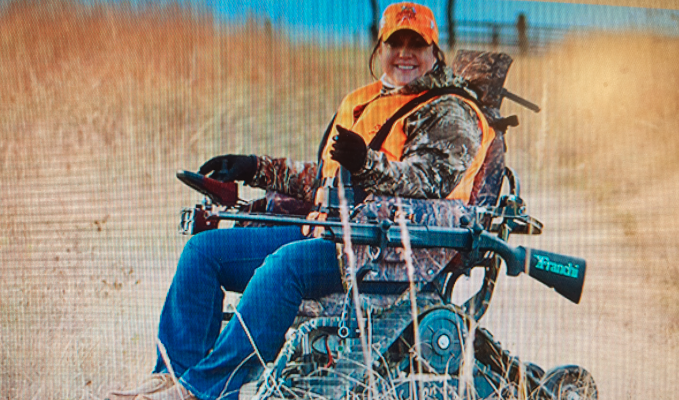
Accessibility to outdoor activities has always been a barrier to people with mobility disabilities; the ASK program seeks to help remove those barriers by providing electric all-terrain track chairs for disabled sportsmen and women to use. Eight Action ST22 Trackchairs have been purchased and are available for free use on a first-come, first-serve basis at hunts and other pre-approved outdoor events put on by the KDWPT and ASK program sponsors including Bushnell Optics and the National Wild Turkey federation.

Each chair is joystick controlled and has a four-point harness to hold the rider safely in the chair on rough terrain. They also have front stabilizer wheels, padded armrests, an LED headlight, gun holder, fishing rod holder, head and foot rest and a storage box. ASK Program Administrator Jessica Rice told me they have also purchased remote controls so a second party can control the chair remotely in situations where the rider needs both hands to control a gun or fishing rod. Jessica, who goes by Jess, says anyone with a mobility disability is welcome to use the chairs. Additional funds for the chairs came from money we sportsmen pay for license fees, etc through the Pittman-Robertson Act.

Photo courtesy of Kansas Dept of Wildlife, Parks and Tourism website

Rice told me they recently took a disabled veteran from Arizona who was sponsored by the Pay-It-Forward Foundation on a guided deer hunt near Topeka. The weather forecast was for nasty, snowy weather and they weren’t sure how the new chairs would perform in the snow. She said the Trackchair performed flawlessly in several inches of snow and allowed the veteran to harvest both a buck and a doe from the chair.

Jess says the national Wild Turkey Federation and Bushnell Optics have both become valued sponsors of the ASK program, and backing from additional corporate partners is being pursued. More events are being planned where the chairs can be utilized, and Bushnell has also committed to donating optics for use at applicable events. For more information on the ASK program or to request use of one of the new Trackchairs, call Jess Rice at 913-278-2362, or email her at [email protected] ; yet another great way for people with mobility disabilities to Explore Kansas Outdoors.

Steve Gilliland, Inman, can be contacted by email at [email protected].
Billinger newsletter, Jan. 20

State Sen. Rick Billinger, R-Goodland

Monday, January 14, 2019, the gavel fell and we began the 2019 session. Even though it was not an election year for the Senate we had five Senators sworn in, four are new Senators and one replaced a Senator last year and he was reelected in November.

This year I will serve on the same committees as I have served the prior two years. If anyone is interested in attending any of these meeting they are as follows: Agriculture and Natural Resources 8:30-9:30 a.m., Financial Institutions, Insurance, Pensions and Benefits of which I am Vice Chairman 9:30-10:30 a.m. From 10:30-12:00 I serve as Vice Chairman of Senate Ways & Means. On the Ways & Means committee I serve on five budget sub committees. I will still be a member of the Buildings and Construction Committee. The Chairman of this committee is alternated from the House to the Senate each year, so I will no longer be the Chairman of this committee. The other committees I serve on are: 911 Commission, The Disabilities Concerns Commission and the office of Technology Commission. We have several rural group caucuses, which I participate in along with serving on the Transportation Task Force, which will recommend a new ten-year highway improvement plan.

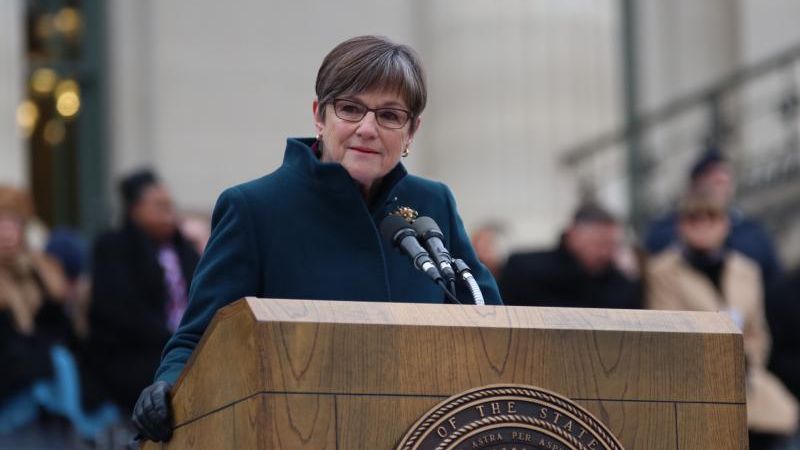
On Wednesday, Governor Laura Kelly, delivered her first State of the State address. Some of her main agenda items include, more money to public education, increased funding to hire more social workers for DCF, and Medicaid expansion. Governor Kelly launched her agenda of increased spending in numerous areas, but vowed to keep her campaign promise not to increase taxes. Governor Kelly explained she would be proposing a one-year budget with a separate proposal for a two-year education plan. Kelly recommended a $92 million inflation adjustment to state aid for K-12 public schools. This would be a phase in of $364 million over four years. With this increase, the state’s education funding would increase 5.5% during the next budget year, to nearly $4.4 billion. The budget proposed a 14% increase in spending on foster care programs. Kelly’s agenda includes hiring 55 additional social workers, which would increase the department’s budget 8.7%, to $727 million. The budget includes $14 million to initiate Medicaid expansion in Kansas. The budget provided $22 million for a 2.5% salary increase for state employees, excluding the judicial system and legislative branch. An additional $3 million was earmarked to increase wages for officers of the Kansas Department of Corrections. The budget proposal would complete restoration of a 4%, or $30 million, cut in 2017 from the Board of Regents. Most of the money was previously restored to universities, but Kelly offered the final $8.9 million to be recovered. This restoration does not include previous cuts from 2008. Governor Kelly’s budget was built around the re-amortization of the Kansas Public Employees Retirement System which essentially refinances the remaining $8.9 billion debt over 30 years. This is meant to provide $160 million in “short-term savings” but will extend the system’s debt until the year 2049. Larry Campbell, Governor Kelly’s budget director, said the debt would become an additional cost of approximately $7 billion. Senate leadership issued the following in response: “Governor Kelly’s budget is simply taking a different path that inevitably spends us right back into the red. She is willing to fund her irresponsible spending agenda at the expense of our Kansas retirees while placing an additional $7 billion burden on our future generations.” The budget will continue to draw $200 million annually from KDOT to finance basic government.

Thursday the Senate voted to confirm seventeen governor nominated appointments and two attorney general nominated appointments.

HARD FACTS: According to the Kansas Department of Commerce, in 2018 Kansas added over 11,000 new jobs and $1.7 billion in capital investment. GEICO announced a new service center in Lenexa, adding 500 new jobs. Spirit Aerosystems announced another major expansion with plans to add over 1,400 new jobs in the Wichita area. Since December 2017, Kansas gained 20,100 seasonally adjusted total nonfarm jobs and 17,200 private sector jobs.

I am honored and grateful to represent the 40th Senate District in Kansas. Please do not hesitate to contact or call me with your questions and concerns, my office number is 785 296-7399 or my cell is 785 899-4700. If you are in Topeka stop by my office at 236-E.

BOOR: Seminar will help farmers and ranchers plan for future

The past several years have been a challenge to be in agriculture to say the very least. Farmers and ranchers currently are experiencing one of the biggest downturns in history with many drawing parallels to the 1980s.

Planning for the future is critical for both the short-term viability of the farm business as well as for the long-term growth and sustainability of the farming legacy.

The Cottonwood District along with the South Central Kansas Farm Management Association will be hosting a program that will offer a variety of outlook talks to assist in planning for the upcoming years. Having a grasp of input costs and projected prices can assist in making equipment purchasing decisions, land rental arrangements, cattle and grain marketing plans, and more. Managing a farm’s financials will also be discussed, as it pertains to the current economic times.

The scheduled sessions for the day are as follows:

“Understanding Your Financial Position”- Bryan Manny
“Determining Your Cost of Production and how it relates to marketing” – Clay Simons and Aaron Meisenheimer
“Recognizing Signs of Extreme Stress and Who’s There to Help.”- Alicia Boor
“Making Communication a Part of Your Business”- Joni James and Camille Claassen

The seminar is sponsored by Barton County Kansas Farm Management, Barton County Farm Bureau, and First Kansas Bank. It will be held on January 29th in Hoisington at the Knights of Columbus – 114 N. Main Street. The program begins with registration at 9 am and will end at 4. You must RSVP at 620-793-1910 or by email at [email protected] by January 22 to ensure that enough materials will be available.

OPINION: Moran is ‘part of the resistance’

Jim McLean

He’ll cringe when he reads this but, Republican U.S. Sen. Jerry Moran is part of “the resistance.”

Not always in obvious ways. Moreover, not in ways that come close to comforting those who view President Donald Trump as a clear and present danger to the nation.

But in his own quiet, Kansas way, Moran resists the chaos of Trump’s Washington by advocating for a return to “regular order” in the U.S. Senate and the nation.

Different in style but still much like his late colleague, Sen. John McCain of Arizona.

An institutionalist, Moran says there is no excuse for the federal shutdown. For the failure of Congress and the White House to negotiate compromises and fund the government.

Just before Christmas, Moran voted against a stopgap measure that would have averted a shutdown — but only for a few weeks. He said congressional leaders on both sides of the aisle had grown used to cutting corners, taking the easy way out. “Punting” instead of staying at the negotiating table and resolving differences.

“We’ve done this too many times,” he said.

Indeed, they have. Congress managed to pass all of its required appropriations bills only four times since the mid-1970s.

To resolve the current stalemate, Moran is urging his colleagues and the White House to agree to a compromise. One that would give the president some of the border security funding he wants in exchange for reinstating protections for undocumented immigrants brought into the country as children.

There are other examples of Moran breaking ranks.

Just the other day, despite pressure from the White House and GOP leaders, Moran voted with Senate Democrats to stop the administration from lifting some of the sanctions imposed on Russia for its attack on our democracy. His vote backed penalties on three companies controlled by oligarch closely tied to both Russian President Vladimir Putin and Paul Manafort, the one-time manager of Trump’s 2016 campaign.

Moran was one of only 11 Republican senators to support the resolution, which fell three votes short of the number needed to advance it to a final vote.

He also was quick to speak out when the New York Times reported recently that Trump was once again on the verge of pulling the U.S. out of NATO. Moran made his opposition clear, saying a “unified NATO alliance is essential to sustaining American security and prosperity.”

A few weeks earlier, Moran criticized the president’s abrupt decision to withdraw U.S. troops from Syria. That decision triggered the resignation of Defense Secretary James Mattis, whom Moran praised as a leader who provided needed “stability” during a time of “transition and uncertainty.”

Perhaps Moran’s most celebrated maverick moment came in July 2017 when he voted against an Obamacare repeal bill that Trump and Republican leaders desperately wanted. He cast his “no” vote on a procedural motion that temporarily stopped the repeal effort in its tracks.

Characteristically, Moran didn’t oppose replacing Obamacare with something else. He just didn’t like the closed-door process used to write the bill or that it was little more than a Republican power play.

“Trying to do something with one party alone is a mistake,” Moran told me at the time. “I’ve called for all 100 senators to be involved in the process by which we repeal and replace or we fix the Affordable Care Act.”

Moran the institutionalist. Imagine every member of the Senate — Republican and Democrat alike — participating in an open process of give-and-take resulting in something that resembles consensus on an important piece of legislation.

Naïve perhaps. Nevertheless, an ideal worth shooting for.

So there’s no misunderstanding, I’m not making the case that Jerry Moran is a one-man bulwark against the chaos and disorder of the Trump presidency.

He carefully picks his battles. And when he does speak up, his criticism of the president is often muted.

But that’s understandable. He’s a right-center Republican from a state that Trump carried by a wide margin. Plus, he’s cautious by nature. Just ask his congressional colleagues or those he served with in the Kansas Legislature.

But he’s also a Kansan. As such, he understands that much of what is under attack these days belongs to the legacy of fellow Kansan Dwight Eisenhower. The post-World War II order built by the U.S. and its European allies to defend democracy and keep the peace.

Jim McLean is the chief political reporter for the Kansas News Service. He’s covered politics and state government for more than 35 years. You can reach him on Twitter @jmcleanks

OPINION: The Color Purple

Gov. Laura Kelly (R-KS)

We should be decades beyond commenting on what women politicians wear. We don’t, usually, notice what kind of suits the dudes in office are sporting. Men, especially, should steer clear of this topic.

Notice anyway that Kansas Gov. Laura Kelly wore purple pants and purple boots at a chilly inauguration on Monday. Maybe she just liked the outfit. Maybe the pants and boots were particularly toasty. But because the color’s handy, let’s draw some symbolism from it.

She’s a blue governor in a red state. Is Kansas becoming more purple? Maybe. It replaced one Republican congressman with a Democratic congresswoman. Kelly’s win over Kris Kobach, a Democrat over a Republican, might also suggest the state’s hue is trending magenta. And a few moderate Republican lawmakers recently declared themselves Democrats.

But is the state really becoming a blend of red and blue? Or is it becoming more distinctly red and blue?

Remember that Kobach barely beat then-Gov. Jeff Colyer in the Republican primary. They differed little on policy. Lower taxes. Smaller government. Less regulation. No abortion. Their differences were more in style. Had Colyer won the primary — again, he lost by this much — it’s entirely plausible that he’d be governor today. Kelly was propelled to office every bit as much by antipathy for confrontation-happy Kobach as she was by support for the mild messages she used in her campaign.

What’s more, Democratic governors aren’t that novel here. Of the last 10 governors, half have been Democrats.

Those party switchers? They were already occasionally voting with Democrats. Their switches came with some tactical benefits.

Yes, more Democrats got elected to the Kansas House this year. But so did more deeply conservative Republicans. It was the moderate, purple middle that faded a tad.

Or there’s another way to look at our color theme. In Alice Walker’s novel, The Color Purple, it was a reference to a bruise. Kelly certainly looks at state government as wounded by tax cuts that begat revenue drops that begat budget cuts.

As she looks to restore spending — for better foster care, smoother highways, safer prisons, more robust schools — she’ll struggle against a Republican leadership in the Legislature that’s even more conservative than it was a year ago. Some of those folks will run for the U.S. Senate and have every reason to appeal to the right-wing base of the GOP. And they’ve already signaled that they’ll fight back against Democratic tax-and-spend tendencies.

She ended her State of the State speech declaring it was time to get to work. She needs to brace for a fight.

Scott Canon is the managing editor of Kansas News Service.

WAYMASTER: From the Dome to Home Jan. 18

Rep. Troy Waymaster, R-Bunker Hill, 109th Dist.

On Tuesday evening, January 16, Governor Laura Kelly addressed both legislative bodies in the Kansas House Chamber to administer her state of the state address which included her vision for the state of Kansas. Governor Kelly implored the legislature to proceed with caution as she contends that the state of Kansas is continuing a “fragile recovery.”

Governor Kelly’s main points focused on addressing education funding, the expansion of KanCare, and foster care. She also stipulated that she would like the process of addressing education finance to be a separate bill from the budget to have that move more quickly through the process.

Another main focus of the governor is on our rural communities and rural economic development. She mentioned that her administration, the Department of Commerce, and the House committee on Rural Revitalization will address the economic needs of our rural areas of the state.

The governor’s state of the state address was Governor Kelly’s first address to the legislature on her approach and vision.

Governor Kelly’s Budget
Early Wednesday morning, January 17, both the House Appropriations and Senate Ways and Means committees met jointly to have the Division of Budget release the details of Governor Kelly’s budget. The governor has opted to revert back to a one-year budget as opposed to a two-year budget, which has been the practice for years. Her budget is contingent on reamortizing the KPERS payments, not allowing the transfer $238 million to the Kansas Department of Transportation, adding $134 million for K-12 Education funding, funding for vacant positions at our correctional facilities, Kansas Armory upgrades, just to mention a few. There are many more details in her budget, which the budget committees and Appropriations committee will address during the session.

Transportation Taskforce
During the 2018 legislative session, the Joint Legislative Transportation Taskforce was created since T-Works will be concluding in 2020. This task force was created in order to conduct meetings across the state and identify transportation needs in all of the different regions. I was a member of this task force and attended the meetings in communities all-across the state to identify those projects that may be included in the state of Kansas’ next comprehensive transportation plan. We identified that the main focus for the new transportation plan should be: preservation of our existing infrastructure, completing T-works and the 23 delayed transportation projects, and, finally, new construction. The 2019 legislature will be drafting the new transportation plan. I will definitely keep all informed on the progress of the new plan.

Contact Information
As always, if you have any concerns, feel free to contact me (785) 296-7672, follow on twitter at #waymaster4house, visit www.troywaymaster.com or email me at [email protected]. Also, if you happen to visit the statehouse, please let my office know.

It is a distinct honor to serve as your representative for the 109th Kansas House District and the state of Kansas. Please do not hesitate to contact me with your thoughts, concerns, and questions. I always appreciate hearing from the residents of the 109th House District and others from the state of Kansas, as well.

Troy Waymaster, (R-Bunker Hill), is the 109th Dist. state representative and chairman of the House Appropriations committee.

INSIGHT KANSAS: Windfall politics, past and present

Burdett Loomis, Professor, Political Science, College of Liberal Arts and Science, University of Kansas

As the governor, a skilled legislative veteran, prepared to deliver Kansas’s State of the State address, the multiple demands for state funding loomed large. The Supreme Court had mandated substantial additional monies for a critical state function. The highway fund was scraping bottom, placing Kansas’s reputation for excellent roads at risk. Moreover, the governor faced the implications of federal tax laws changes, which provided the state with so-called “windfall” revenue at the expense of taxpayers.

The Legislature had blown apart highway funding deals for two years and had deferred any action on the windfall. The court had grown impatient. What to do?

2019? Hardly.

The year was 1989, and Governor Mike Hayden, a past speaker, needed to unblock a legislative logjam that threatened his priorities. Given his legislative experience, Hayden’s circumstances were surprising. He knew how the Legislature worked and how to cut deals.

Yet, during his first two years as governor Hayden failed to make the deals that could move the process along. He deferred addressing the windfall, even as he pushed for a major highway package. In 1987, the year after his election, he called a legislative special session to address roads. The former House leader saw his proposal torn to shreds, as lawmakers resisted his proposals.

Hayden wisely refrained from pushing highway legislation in 1988, choosing to work with a newly elected body in 1989. Regaining his political acumen from his legislative days, Hayden made three important moves. First, he implored the Legislature to address the windfall as the initial order of business, thus sweeping this contentious issue off the table. Second, he encouraged a large highway coalition to back substantial spending, thus building support around the state and across party lines. Third, regarding the Supreme Court’s mandate to construct a new prison to alleviate unconstitutional conditions and overcrowding, he gave legislators running room to come up with a deal to satisfy the justices.

In the end, Mike Hayden’s combination of speed (the windfall), patience (highways), and deferral (the prison) paid off in victories across the board. The key to this success was moving quickly on the windfall; the tax cuts, after some modest delays, passed on March 2. For the rest of the session, legislators could focus on other issues.

Fast forward thirty years. With rebounding revenues, multiple needs, and fresh off a remarkable electoral victory, Laura Kelly noted in her State of the State address the host of issues that require attention. Moreover, the last two elections have mandated a change in direction from the Brownback years.

But where to go, and in what sequence?

Most Democrats have resisted “returning the windfall,” in that we don’t know its size and that we require revenue to address pressing needs. Understandable, but this ignores the fact that Republicans solidly control both House and Senate.

This past Sunday, the Kansas City Star opined that addressing the impact of federal taxes (the “windfall”) should be put off. Maybe. But it might well be more productive to negotiate a deal that links action on the windfall to legislative guarantees for votes on school finance and Medicaid. Both issues likely have the political support to pass.

Conversely, if windfall politics hold other actions hostage, legislative wrangling could easily replace productive negotiating. This would deny Kansans the policies that they have supported over the past two elections.

Tough choices, but as Mr. Dooley put it more than a century ago, “Politics ain’t beanbag.” Good luck, Governor.

Burdett Loomis is emeritus professor of political science at the University of Kansas and author of Time, Politics, and Policies: A Legislative Year, focusing on the 1989 legislative session.

MASON: Celebrating those who lift us up

Dr. Tisa Mason

January signals a new year, with new hopes, opportunities, and aspirations. As I think forward each year, I also pause to think about my journey to the here and now. One thing always present in my mind is the number of people who helped me get to where I am today – the people who believed in me and supported me in so many ways – family members, neighbors, friends, colleagues, teachers, clergy, and supervisors.

I know how very fortunate I am to have been surrounded by so many people who invested in me. I also know that not everyone in this world is as fortunate as I am. And so, as a new year begins and resolutions abound, I often think about reaching up and reaching down: reaching up to thank those who helped me (after all, I do genuinely believe one cannot say “thank you” too much), and reaching down to find opportunities to offer an encouraging word, to help develop a skill or to invest in someone else’s dream.

At Fort Hays State University, I witness so many stories of how our faculty and staff encourage, support, and inspire our students. Those stories fill me with energy and hope. Those stories provide evidence that we walk our talk about being a student-centered university.

Take for example the words of Aaron Elsasser in describing Eric Deneault, an assistant professor of applied technology: “He is always there to listen when you need a friend. He is always looking for ways to make his curriculum enjoyable for students, along with ideas and activities to keep the students involved and willing to learn. With these lessons in class, he also pushes you to do your best. He always told me the sky is the limit. … He has a game plan for everything he does. He has not only taught me the things I need to know for my class, but the values of life.”

Every day, I experience the essence of this truly heartfelt mentoring relationship at our university – on campus, virtually, and internationally. This is our magnetic north.

Several years ago, I was introduced to National Mentoring Month. Launched in 2002 by MENTOR: The National Mentoring Partnership, and the Harvard T.H. Chan School of Public Health, the month of January is designated as a time for all of us to think more deeply about the need for mentors, as well as how all of us – individuals, businesses, schools, faith communities, and nonprofits – can work together to amplify mentoring activity, thereby contributing time and effort to help assure positive outcomes for others. This year the national program features these key dates and activities:

Jan. 4: I Am A Mentor Day. A day for volunteer mentors to celebrate their roles and reflect on the ways mentees have enhanced their world.

Jan. 17: International Mentoring Day. A day of international conversations on social media where photos, video and powerful, mentoring stories are shared.

Jan. 21: Martin Luther King Jr. Day of Service. A day to share in the inspirational words of MLK and to elevate the spirit of service through volunteerism. At Fort Hays State University, our community will celebrate MLK Day of Dreams in the Memorial Union from 11 a.m. to 1 p.m. Stop by to browse a poster tour of MLK’s life while enjoying a cup of hot chocolate. Take time to write your hopes and dreams for our country on a campus display board.

Jan. 31: #ThankYourMentor Day. A day for all who have real-life mentoring experiences to thank those who helped them on their path to adulthood and beyond. Let’s do this. Won’t you join me on Jan. 31 and send a note, an email, or make a call to say “thank you” to someone who helped you?

It is not really about a month or a collection of activities, though. It is about people lifting up and supporting others every day, in a wonderful variety of ways. I hear so many beautiful stories about how people at the university and in our local community invest in one another. I see it, hear it, and feel it in action constantly – not just during the month of January. This focus on believing in and working towards positive outcomes for others makes me feel good about being a member of this community. This natural flow of generous spirit in Hays America is another reason why this place feels like home.

Note: Learn more about MENTOR and the many resources offered at www.mentoring.org.

CLINKSCALES: The first step

Randy Clinkscales

My oldest son, Josh, works in my office. Once a year, he and I retire to the woods to review the office for the year. It helps us make a plan for the upcoming year.

As I write this, Josh and I are conducting our annual meeting. This year, however, a very cold front and snowstorm has left us with five-degree weather. We have been cooped up for a couple days. Josh’s dog, Kolbe is with us. Two days indoors without a walk has left Kolbe pacing the floor.

So, I decided to take Kolbe for a walk.

I was not particularly excited about going outside. But for Kolbe’s sake, I bundled up, put on a stocking cap, and found some not so heavy gloves to wear. Out the door we went.

Within 20 yards of the house, I realized a couple things: it was really, really, cold; and my coat was not near as warm as I had hoped.

I started to rethink my decision to walk this cold day, but Kolbe was so excited to finally be out. Into the snow and cold I continued—thinking this is the kind of weather that I could die in!

After about 10 minutes, I began to both warm up and adjust to the cold. Kolbe and I walked for 40 minutes or so through the woods. Yes, it was cold and the wind biting, but it was a beautiful and satisfying walk.

It reminded me of a phone call that Josh had engaged in earlier this same day. I do not know all of the details yet, but a woman had called our office the day before. Her husband has Alzheimer’s, and has had it for some time. I think the initial phone call to our office was a cry for help, but she was not ready to do anything yet. Josh decided to call her this morning as a follow-up. He talked to her about what was going on. She was overwhelmed, and in fact paralyzed, and did not know when, if, or about what type of help she wanted, or needed. After a while, she agreed to an appointment. It was a great first step.

When facing chronic illness, there are so many moving parts: The chronic illness/disease itself; its progression and what that is going to look like; available health care alternatives; fragmented health care; accessing health and care resources; paying for care; family support or lack of support; cost of care; legal implications and necessary documents; insurance coverage; assuring good care; finding the best care; and caregiver burnout and management. Establishing a comprehensive plan that addresses those components is important.

What is the first step? Make an appointment with an elder law attorney, one that can create a road map for you and who can guide you through the process.

I know this sounds self-serving, and it is, but it also comes from the heart. I was involved in the same situation, as a caregiver. I was so involved that I felt overwhelmed, drowning, and at times paralyzed facing decisions.

Luckily, I found a great support system through a care coordinator, and some legal help through my office, but the first step was for me to reach out to those resources.

While making the appointment is not the only thing you need to do, it is the first step, and I know it is hard, but go that first step. At least find out what your alternatives are, and then you can move to the next step.

Randy Clinkscales of Clinkscales Elder Law Practice, PA, Hays, Kansas, is an elder care attorney, practicing in western Kansas. To contact him, please send an email to [email protected]. Disclaimer: The information in the column is for general information purposes and does not constitute legal advice. Each case is different and outcomes depend on the fact of each case and the then applicable law. For specific questions, you should contact a qualified attorney.

COLUMN: Dear Mom and Dad — cool it

By KARISSA NIEHOFF
Executive Director of the National Federation of State High School Associations
and BILL FAFLICK
Executive Director of the Kansas State High School Activities Association

If you are the mother or father of a high school athlete here in Kansas, this message is primarily for you.

When you attend an athletic event that involves your son or daughter, cheer to your heart’s content, enjoy the camaraderie that high school sports offer and have fun. But when it comes to verbally criticizing game officials or coaches, cool it.

Make no mistake about it. Your passion is admired, and your support of the hometown team is needed. But so is your self-control. Yelling, screaming and berating the officials humiliates your child, annoys those sitting around you, embarrasses your child’s school and is the primary reason Kansas has an alarming shortage of high school officials.

It’s true. According to a recent survey by the National Association of Sports Officials, more than 75 percent of all high school officials say “adult behavior” is the primary reason they quit. And 80 percent of all young officials hang up their stripes after just two years of whistle blowing. Why? They don’t need your abuse.

Plus, there’s a ripple effect. There are more officials over 60 than under 30 in many areas. And as older, experienced officials retire, there aren’t enough younger ones to replace them. If there are no officials, there are no games. The shortage of licensed high school officials is severe enough in some areas that athletic events are being postponed or cancelled—especially at the freshman and junior varsity levels.

Research confirms that participation in high school sports and activities instills a sense of pride in school and community, teaches lifelong lessons like the value of teamwork and self-discipline and facilitates the physical and emotional development of those who participate. So, if the games go away because there aren’t enough men and women to officiate them, the loss will be infinitely greater than just an “L” on the scoreboard. It will be putting a dent in your community’s future.

If you would like to be a part of the solution to the shortage of high school officials, you can sign up to become a licensed official at HighSchoolOfficials.com. Otherwise, adult role models at high school athletic events here in Kansas are always welcome.

News From the Oil Patch, Jan. 15

By JOHN P. TRETBAR

Kansas Common crude at CHS in McPherson dropped a dollar Friday, and will start the week at $41.75 per barrel. That’s $3.50 more than a week ago, but is a dollar lower than the price a month ago and nearly $13 less than a year ago.

The national average price for a gallon of regular gasoline went up last week for the first time since October. The automotive club AAA reported Monday’s average of $2.24 is up a penny on the week, but is 15 cents lower than a month ago and is down 28 cents year-on-year. The average across Kansas was up three tenths to $1.965. It’s down to $1.94 at several locations in Hays, and as cheap as $1.92 in Great Bend.

Energy activity declined in our area during the fourth quarter of 2018, according to the Energy Survey from the Federal Reserve Bank of Kansas City. The KC Fed interviewed executives across the district which includes Kansas and Oklahoma about their current activity and economic outlook. This marks the first time in nearly three years they’ve noted a quarterly decline in their “drilling and business activity index.” More than half of the executives said lower oil prices caused them to slightly or significantly reduce their capital spending plans in the year ahead. About 35% said they would not reduce capital spending or that it was too soon to tell.

Baker Hughes reported a drop of four oil-drilling rigs last week, and an increase of four rigs actively seeking natural gas. Oklahoma was down four rigs, while Texas and Louisiana were each down two. Canada reported a season increase of 104 rigs to 184 for the week.

Independent Oil & Gas Service reports nine active drilling rigs east of Wichita last week, down one, and 28 in Western Kansas, up one. They’re preparing to spud a new well in Ellis County. Drilling is underway at one lease in Barton County and one in Stafford County.

Independent reports 28 new well completions for the week, 12 in eastern Kansas and 16 west of Wichita. There was one dry hole completed in Barton County and one completed well in Ellis County producing pay dirt.

Operators filed 16 new drilling permits last week, 22 so far this year. There are seven new permits in eastern Kansas and nine west of Wichita, including one in Ellis County and one in Stafford County.

The State of Colorado is holding out for drilling-pad limits in an upcoming oil and gas lease sale in northwestern Colorado that includes migration corridors and winter-range habitats for big game. Most of an earlier sale by the Bureau of Land Management was deferred, after the governor raised wildlife and other concerns. Colorado Parks and Wildlife has written that the acreage up for sale this March be limited to just one drilling pad per square mile.

Canada’s CBC reports a spike in bankruptcy and similar insolvency filings in Alberta, a trend blamed on low Canadian oil prices. In the past year, nearly 11,000 more Albertans filed, up 8.4 per cent over a spike the year before.

Based on weekly tallies from the U.S. Energy Information Administration, domestic producers pumped more crude oil last week than ever before, 11.705 million barrels per day, beating the previous high by 20-thousand barrels per day. Based on the weekly reports, the U.S. produced a cumulative daily average of 10.85 million barrels of crude oil per day last year, which would be a record. That’s about 1.5 million barrels per day more than the same figure from the year before.

HAWVER: Action set to begin in Kansas Legislature

Martin Hawver

By this time the new legislators have adjusted their chairs on the House and Senate floors and are presumably ready for business.

Which means, well, we’ll see when business starts. Could be a couple weeks, by which time lawmakers have met each other, learned about their families and pets, or whether the dramatically fast—Thursday—release of Gov. Laura Kelly’s budget for the upcoming year or two lights the fuse.

The weeks since Kelly has been governor-elect have yielded what most would consider relatively pro forma assertions that Kelly is going to “repair” the policies of the past eight years led by Gov. Sam Brownback and then Gov. Jeff Colyer. And mostly conservative Republican leadership responses have been that nearly everything Kelly wants to do costs money and threatens the budget—and possibilities of tax cuts.

***

Luckily for the governor and Legislature, there appears to be no dramatic catastrophe that requires first-week action by state government, no bridge collapse, no wildfire, no flooding. But the less-headlined issues ranging from care for children to school funding and health care for the poor are looming and will require administration/legislative action this session. Defining the problems will be the key to solutions, and those definitions and their costs are going to be the major issues for the session.

By week’s end, the dissection of Kelly’s budget will have started in both chambers, with her new Cabinet expected to have its input and changes to recommend. And, some issues, such as care for jeopardized children, don’t appear to have simple solutions because of the complexity of the agencies designed to protect them.

***

Much of what happens in this first dance will be under-the-covers, not generally reported and practically more complicated than most Kansans who have jobs to perform and families and children to provide for will notice. But those complex internal issues will impact just how the state provides for us.

For example, the House will this week adopt rules for the upcoming two years.

Rules? That’s a big deal? Sure, there’s no smoking or drinking in the House chamber, and you must be polite and not interfere with democracy. Behave.

But there are provisions—like whether sponsors of bills have to be named, or whether bills can be introduced by a committee, or whether committees will keep track of votes on amendments and such—that aren’t in writing and may or may not be.

Then there’s the big rule dealing with bills that make appropriations, and how they can be amended during floor debate. Now, if a House member wants to spend more money on something than the House Appropriations Committee approved, that member must propose cuts somewhere in the bill to keep its price tag at committee-approved levels…if the state’s general fund ending balance for the year is less than 7.5%.

We’ll see how that works out, and while it is not likely to spark dinner-table discussions in most homes in Kansas—we hope—it is a major decision that will influence deciding how to spend your tax money, and on what.

***

So, we probably have a couple or three weeks of debate ahead, generally not committed to legislation, about just where the state is going to head for the first year or two of the Kelly/Lt. Gov. Lynn Rogers administration, and just how cooperative or combative the Legislature is going to be.

A couple House floor votes on Kelly-sought bills and we will have an idea about how state government is going to work for us.

Because, recall, state government works for us…

Syndicated by Hawver News Company LLC of Topeka; Martin Hawver is publisher of Hawver’s Capitol Report—to learn more about this nonpartisan statewide political news service, visit the website at www.hawvernews.com

Exploring Outdoors Kansas: To smoke or not to smoke

Steve Gilliland

I make few if any new year’s resolutions, but this year I’ve decided that 2019 is the year when I will take up smoking. For some time I’ve wanted to learn how, and since making my resolution I’ve been doing lots of research. As with any other subject, the internet teems with “how-to” information on learning to smoke, and as it turns out smoking is actually very healthy….Oh, I can see now that this all sounds bad. What I mean is I’ve decided 2019 is the year when I will learn to smoke meat!

A few years ago I bought a nice little Char Broil charcoal grill at a garage sale. The guy said he used it to smoke, but my first and only attempt at using it as a smoker fell flatter than western Kansas and I was ready to declare that smoking meat was just not for me. Then I disassembled an old air compressor I had and declared I’d build a smoker from the tank, but that never happened. I recently spent time with a young guy who was experienced at smoking meat and he convinced me to just buy a smoker and get the learning curve started.

Smoking is the art of slowly cooking meat and vegetables and adding wood, woodchips or pellets to give them a smoky flavor. Commercial smokers are available in several styles and homemade smokers can be made from old tanks, refrigerators, freezers and almost anything else that can be turned into a fairly airtight structure where the heat and smoke can be controlled to cook the product slowly.

Smokers fall into one of two styles; vertical, where the heat and smoke source is directly below the cooking surface, or offset, in which the heat and smoke source is offset from the cooking surface. Smokers can use wood pellets, propane, electricity, charcoal or wood as their heat source, and wood or pellets to produce the smoke.
At my friends urging, as a beginning smoker to learn on, I bought a vertical electric smoker. It’s simply a small insulated cabinet with a heating element in the bottom, a slide-out tray for wood chips to produce smoke and shelves above for holding meat and other food for smoking. Controls on the top allow for setting and adjusting heat within the smoker cabinet as well as the amount of time for smoking. I researched many brands and styles before purchasing, and here are some things I found.

Buying an electric smoker is sort of like voting; you’ll never find one that has everything you want, like you want it, so you have to decide what features are most important to you and buy with those things in mind. I settled on a Smoke Hollow vertical digital electric smoker. It has a large heating element, an external slide-out tray for adding woodchips, legs to raise it off the ground and controls on top where I can use them without bending over, all features that were important to me. Bear in mind, these are beginning level smokers and not competition quality, but after learning a few do’s and don’ts they will still give you tasty meals.

True to our times, the all-knowing internet teems with websites about smokers and smoking food. All brand names have their own websites too and all offer recipes free for the trying. I plan to make my first trial “smoke” a meatloaf called “Not Your Momma’s Meatloaf” found on the Traeger website. I’ve taken the first step toward becoming “a smoker,” and I’ll let you know how this pans out. In the meantime, all you readers with smokers and recipes you would share get them to me along with any advice for beginners like me and we’ll make a column from them. Continue to Explore Kansas Outdoors.

Steve Gilliland, Inman, can be contacted by email at [email protected].

Copyright Eagle Radio | FCC Public Files | EEO Public File