We have a brand new updated website! Click here to check it out!

First Amendment: A growing list of threats to freedom

Gene Policinski

First Amendment threats and defenses have, for much of the past 100 years, largely focused on protecting individual speech — the rights of any one of us to express ourselves without interference or punishment by the government.

Not to be too glib but, oh, those were the days! This glee is due, in no small part, to the degree that individual speech and press rights triumphed in that era. But looking into this new year, that situation — and those victories — may be more nostalgia than norm. There is increasing danger to our core freedoms from what I’ll call “systemic” challenges, which often appear focused on other issues, but which carry a First Amendment impact, if not wallop.

The increasing public and commercial use of drones raise issues of noise, public safety and congestion in the airways — but also questions about what on-board cameras see and record that go far beyond earlier “peeping Tom” worries.

Consider a new network of drones constantly crisscrossing the skies over your hometown, constantly sending video of the passing scene to the insatiable maw of computer storage. Combine that record with facial recognition software, vehicle tracking devices and surveillance cameras that can ID license plates from miles away and it’s but a small step to government discovery of who we meet, where and when, with resulting impact on the right of assembly or association.

We’ve known for some time there’s a running joke, in national security and spy circles in this country and elsewhere, that we’re now doing most of the surveillance work they used to do simply by living our lives on social media. Add the abilities of artificial intelligence to collect, collate and match social media and online data about any one of us and the kind of “anonymous” speech that produced the Federalist Papers is ever more nonexistent.

Put another way, George Orwell’s draconian “Big Brother” presence was predicated on government installing a device in every home — and life — to observe each of us. In 2019, we’re the ones installing the devices. Not just at home, but 24/7 in pockets and purses through smart phones, watches and the like.

In 2018, in two decisions involving GPS and cell phones, the U.S. Supreme Court pushed back on this new technological threat.

Chief Justice John Roberts said that cell phone location information is a “near perfect” tool for government surveillance, analogous to an electronic monitoring ankle bracelet. “The time-stamped data provides an intimate window into a person’s life, revealing not only his particular movements, but through them his ‘familial, political, professional, religious and sexual associations,'” Roberts wrote.

Try being a reporter, under such involuntary transparency in the future, attempting to meet secretly with a source about government corruption or official misconduct or a botched criminal investigation or an undisclosed, invasive national security policy. Good luck.

Let’s round up this Pandora’s box assembly of threats with a look at the 2020 election cycle. Not only will legitimate reports by a free press be mixed in with mis- and disinformation, a new technological threat challenges the adage that “seeing in believing.”

What’s included in “involuntary synthetic imagery” (a mouthful of a title) is the sinister possibility of videos that take real situations and seamlessly “paste” faces of politicians and others onto actual participants. Imagine misleading or embarrassing video that’s nearly impossible for most to distinguish from the real thing. Tragically, such fakery already has invaded our lives thanks to what’s known as “deepfake” porn.

How do we square such “deepfake” videos with First Amendment law, which — with the exceptions when such fake video clearly is being used for extortion or blackmail — would tend to side with free expression and with those who create such works? When would satire cross the line into defamation or intentional infliction of emotional distress — two traditional, but often expensive, time-consuming legal tools available to those who claim injury from such fakery?

And what of news consumers, already besieged by fakery on social media, claims of bias in news reporting by various outlets old and new, photo and video edits that distort, who already have a deep distrust of much of what they see, hear and read?

Despite all this, not the entire look into 2019 is glum. News consumers have more tools to identify misleading items. The fact-checking industry can be paired with “trust” projects and background programs — such as (self-promotion alert!) the Freedom Forum Institute’s “Newstrition” tool.

More of us than ever appear concerned about our First Amendment rights than at any time in the past 25 years. Let’s keep that concern and attention going and growing in the new year.

Gene Policinski is president and chief operating officer of the Freedom Forum Institute. He can be reached at [email protected], or follow him on Twitter at @genefac.
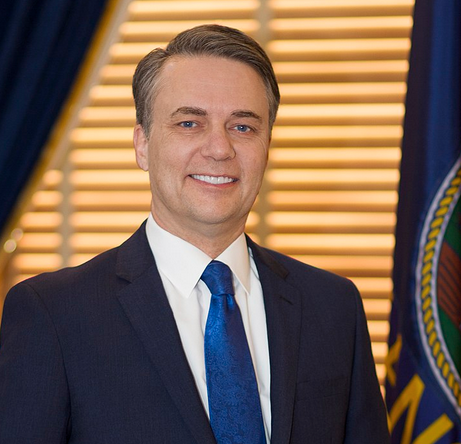
COLYER: A call to service

Colyer
By Gov. JEFF COLYER

At the close of my term as your Governor, I would like Kansans to know of my sincere gratitude for the time I have had to serve the people of this great state. I have always felt called to service, and the opportunity to do so as your governor has been one of the most fulfilling experiences of my life. It has been an honor to meet Kansans across our state and see the good they are doing.

On my first day in office, Caroline from Salina gave me some advice that I used during my time in office and that will continue to shape my mindset moving forward. She told me “There’s a reason they make the rearview mirror in a car small, and the windshield big. We are looking forward not backwards.”

As your Governor it has been my goal to move our state forward. During my first month in office I signed executive orders creating new policies about harassment in the workplace and transparency in government. It is my hope that these policies will continue to set the standard for many years to come. I’m also proud of what we have accomplished with the economy. Unemployment is at record lows, we have more people working than ever before, and job creation is on the rise. Truly Kansas has a brighter future because of the hard work done by so many over the past year, and we can’t go back.

In my inaugural address, I asked the people of Kansas to take up the call to serve; to look outside themselves and find ways to help their neighbors and their communities. In the past year as your Governor and the seven years before that as Lt. Governor, I have seen this happening in every corner of our state. The brightest example of this spirit of service is exhibited in our young people. It’s inspiring to see them excited to make a difference in their communities. They are our future, and they love to serve.


As I leave office, it is my hope that we will all find ways to do a little more good in the world around us. Search out opportunities to serve your fellow man and make the world, our country, and the state of Kansas a better place. I myself plan on continuing to serve my patients, the public, and my fellow Kansans. I’ve often said that Kansas is the true heart of America; you all are the reason that statement rings true. I love this state and the people who call it home. May God continue to bless you, and may God continue to bless the great state of Kansas.

MARSHALL: Doctor’s Note Jan. 12

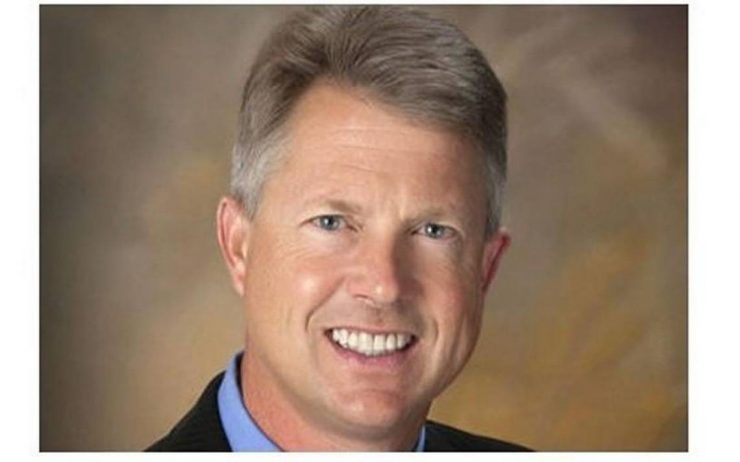
Dr. Roger Marshall, R-Great Bend, is the First District Kansas Congressman.

Friends,

As we enter the weekend, the government will be going on its 21st day of being shut down. I want to express what I am finding in D.C. that is continually frustrating.

Too often, when we talk about the immigration issue, we are led to believe that we must choose between a binary option of either border security or compassionate immigration reform.

This is an opportune moment to quit kicking the can down the road and actually work together to couple border security priorities with long term immigration fixes. We have a chance to make historic changes and improvements to the course of our nation.

Kansans know that we can have both and that’s what I’m fighting for in Washington.

Securing our borders

We have tens of thousands of immigrants arriving at our entryways every month, and as a result, thousands of drugs, criminals, and violence spilling into our country. The crisis on our southern border is real, and we must stop refuting the facts and do our most sacred duty, protect our nation. Without secure borders, we cannot ensure our nation’s safety.

In his address to the nation this week the President stressed the urgent humanitarian crisis at our southern border. I challenge those that deny this crisis to go and see the stress on our borders first hand. I did, and it was eye-opening.

Just last year alone, there were a total of 1.7 million pounds of narcotics seized by customs and border patrol. In the same year, 17,000 adults attempted to enter our southern border with existing criminal records, and we are now averaging 60,000 illegal and inadmissible aliens a month on our Southern Border.

According to DHS and numerous border patrol agents, illegal trafficking has dropped more than 90 percent in places that walls and barriers exist. Walls work, and the $5.7 Billion that the President is asking for is an investment that will pay off for decades.

This week I addressed the House floor to stress the urgency that we supply the President with the adequate funds for border security and in doing so re-open our government.

5 yr.-old raising awareness for Hydrocephalus

This week Caleb Wiggs from Leoti, Kansas celebrated his fifth birthday.

Caleb is grateful for many things this milestone, but perhaps one thing that many 5-year-olds overlook, he is grateful for his life. At the age of five, this condition has caused him to undergo three life-saving brain surgeries.

Caleb has been selected as one of the 2019 National Ambassador for Hydrocephalus Awareness for the Pediatric Hydrocephalus Foundation. As an ambassador, he will educate people across the country on this disease that so desperately needs medical advancements and treatment solutions. He will also participate in the 2019 Hydrocephalus Issues & Action Conference in Washington this August where he will meet with my fellow lawmakers.

Hydrocephalus can develop at the time of birth or later. As an obstetrician, I understand the severity of this condition from having to prepare new mothers for the challenges ahead and ensuring the best care for these newborns. Sadly, one to two of every 1,000 babies are born with hydrocephalus but there is hope. Robust medical research partnered with patient advocates like Caleb can bring new advancements to the finish line.

Caleb, your bravery and voice will have an impact on thousands of lives, including the many families fighting this condition.

National Law Enforcement Appreciation Day

This week we celebrated National Law Enforcement Appreciation Day. In honor of this, we thanked our officers that serve our communities and sacrifice so much.

I also honored my father, who was the Chief of Police and Fire Chief in El Dorado, Kansas for nearly 25 years. As the Chief he loved protecting and serving others, often getting calls on the holidays and weekends. Still, to this very day, my father always aims to help others. He is reliable, trustworthy, and an all-around leader in his community.

As a young boy, I couldn’t quite grasp the risks and dangers that he faced at his job day to day. He always seemed so calm, cool and collected. But his fellow officers would often tell me stories about his leadership and bravery while helping people at some of the most dangerous crime scenes and fires.

I want to express my sincerest gratitude to our officers for everything that they do to keep our communities safe. Thank you!

Welcome, Mike!

Kansas Governor-Elect Laura Kelly announced this week the appointment of Mike Beam to head the Kansas Department of Agriculture.

I have had the pleasure of working with Mike in his role with the Kansas Livestock Association and as the Executive Director of the Ranchland Trust of Kansas.

Mike has been a tireless advocate for Kansas agriculture and the preservation of our state’s native resources and grasslands. As I continue my work in Washington D.C. on behalf of farmers and ranchers, I look forward to working with Mike and his staff at the KDA to ensure our state’s most valuable industry has the support it needs to continue to grow.

POTUS Nominates Kansan to NTSB

This week, President Trump nominated Kansan, Michael Graham to join the National Transportation Safety Board. This is exciting news for Kansas and the Navy veteran who began his career as a Naval Aviator flying A-7’s and F/A-18’s. Graham has been at Textron Aviation, Inc., a company based in Wichita, for more than 20 years, and currently serves as their Director of Flight Operations Safety, Security and Standardization.

If confirmed by the U.S. Senate, Graham would complete a five-year term. Graham has been a tireless advocate for aviation across Kansas. He chairs the Air Charter Safety Foundation heads the National Business Aviation Association Safety Committee Single-Pilot Safety Working Group. Graham is also a member of the General Aviation Information Analysis Team of the Aviation Safety Information Analysis & Sharing (ASIAS) program.

With his leadership and experience, I could not think of anyone better for the role. It will be great to have a Kansans serving the Administration in this capacity!

Dr. Roger Marshall, R-Great Bend, is the First District Kansas Congressman.

Now That’s Rural: Mike Pray and Jake Trummer, Friendship House

Ron Wilson is director of the Huck Boyd National Institute for Rural Development at Kansas State University.

By RON WILSON
Huck Boyd National Institute for Rural Development

Friendship and food. That’s what a person can expect to find in a special restaurant and bakery in a pretty small town setting in a northeast Kansas community. This enterprise has also significantly expanded its catering business in the region.

Mike Pray and Jake Trummer are co-owners of the Friendship House in Wamego, Kansas. The rich history of this eating establishment goes back to the 1980s.

In 1988, an old Dutch windmill was relocated into Wamego’s City Park and used as a site to grind flour. The production of the stone-ground wheat flour gave birth to an idea: Why not bake the flour into a finished product for Wamego’s visitors and residents? Three Wamego women purchased a house adjoining the city park to establish such a place.

Rosemary Crilly, Barbara Meinhardt, and Kathy Freeze went together to establish this business. Those three women named it Friendship House. “They were just looking for a friendly place to get together for a cup of coffee and a roll,” Mike Pray said. Baked goods and tasty lunches were the key elements of their offerings.

After 11 years, the restaurant was purchased by the Feyh family which operated it for another nine years. As the Feyhs neared retirement, they announced that the Friendship House would close if no one purchased it. Mike and Margo Pray bought it in 2008.

Mike had traveled the world in an Air Force family. He came back to the Wamego area where his grandparents lived, went to K-State, and worked in the fast food industry. After he bought the Friendship House, he was joined by Jake Trummer in 2009.

Jake had grown up in a big family at the rural community of Belvue, population 205 people. Now, that’s rural.
“We had a big garden and nine fruit trees,” Jake said. “I loved cooking and all aspects of food.” Jake worked in a butcher shop and then trained under a couple of chefs. Today he is head chef and part-owner with Mike of the Friendship House in Wamego.

“I fell in love with this little town,” Jake said. He and Mike have significantly expanded the business in the years since they began together.

Today, the Friendship House is open seven days a week for breakfast and lunch. A full homemade breakfast is available every day, with a brunch on Sundays from 11 to 2. On other days, the Friendship House is open till 3.

The goal continues to be “home cooking just like Grandma makes.” Baked goods are baked every day. This includes breads, cookies, bierocks, and delicious pastries. The menu includes soups, salads, sandwiches, gourmet burgers, daily specials, kids menu, and more.

A major change at the Friendship House has been the expansion of the catering business. “We are providing home-cooked food, prepared from scratch daily,” Jake said. “Not many caterers can provide dinner rolls that were baked fresh that day.”

The Friendship House got a contract to cater K-State football and basketball events, and is doing many more events of all kinds. In 2015, they converted the outside dining area into a catering kitchen to keep up with the demand. “When I started, catering was 5 to 10 percent of our revenue, and now it is 40 to 45 percent – while our overall revenue has grown much larger too,” Jake said.

“Wamego is a wonderful community,” Mike Pray said. “They do so many activities. The pyro crew that does the Fourth of July fireworks is amazing. Then there is the Oz Museum. I have pictures of me with the munchkins who come here for Oztoberfest.”

“People here really support you,” he said. “It’s like a family.”

For more information, see www.friendshiphouse.biz.

Friendship and food. Those things and much more can be found at this remarkable eating establishment in Wamego. We salute Mike Pray, Jake Trummer, and all those involved with the Friendship House for making a difference with home-cooked food serving multiple communities. The goal continues to be fantastic food, fun friendships, and family feeling.

BOOR: Consider the unborn calf when feeding supplements

Alicia Boor
Can you feed your pregnant cows so their steer calves gain more weight and more heifer calves get pregnant?  Recent research suggests that proper supplementation pays off.

As winter forage quality declines and cow nutrient demands increase, wise operators feed protein supplements to assure healthy calves plus cows that will rebreed rapidly. But protein supplements are expensive, so we usually feed only what the cow needs to stay healthy.

New research, though, suggests that this strategy of minimizing input costs may overlook the impact supplements have on the future performance of the unborn calf.

Recent research has shown that properly supplementing the cow can increase profitability of the calf she’s carrying. In one study, steers born from cows that received protein supplement while grazing winter range produced an extra 60 pounds of carcass weight per animal compared to steers from non-supplemented cows.

In other studies, the pregnancy rate of heifers calved from cows that received protein supplements while grazing corn residue or winter range was higher than heifers from non-supplemented cows. And steers from these supplemented cows graded choice more often.

This outcome, where supplementing protein to the cow improves the performance of her calves later in life is called fetal programming. It is thought to occur partly because cow nutrition affects development of fetal organs and muscles, which is highest during the last third of gestation. Since most winter feeding and grazing programs use forages that are low in protein, adequate supplementing can pay big dividends.

As your cows approach calving time, don’t overfeed but also don’t scrimp on the protein. Feed what is needed, both for the cow and her calf.  You’ll be money ahead.

Alicia Boor is an Agriculture and Natural Resources agent in the Cottonwood District (which includes Barton and Ellis counties) for K-State Research and Extension. You can contact her by e-mail at [email protected] or calling 620-793-1910

INSIGHT KANSAS: Kansans anticipate change with Kelly governorship

After a whirlwind transition, Gov.-elect Laura Kelly will be sworn in as the 48th governor of Kansas on Monday, and Kansans will have their first glimpse of how she grasps the key levers of governance.

H. Edward Flentje is professor emeritus at Wichita State University.

Having assisted former Gov. Mike Hayden in his transition of 1986-87, I experienced first-hand how high political expectations and rigid time constraints confront a new administration.

Governors rise and fall on the quality of appointments they make to top positions, and Kelly has set a high bar for herself. She has stated her administration will be “diverse, dynamic, and highly skilled. People who know what they’re doing. Highly-skilled people will be our No. 1 choice. We need really top-notch managers.”

Remember that former Gov. Sam Brownback started off his administration with a cast of partisans and ideologues, many with limited competence. A budget director associated with Americans for Prosperity could not keep his numbers straight. A securities commissioner purged nonpartisan staffers and used his office as a political campaign. A social welfare agency head vowed to transform social services with religious fervor and lasted less than a year.

The short transition will challenge Kelly to assemble an administrative team that is not only skilled but also rises to her ideal of a bipartisan path forward.

Kelly brings a wealth of experience to the budget process, having served on the Senate Ways and Means Committee for 14 legislative sessions, most of those as the ranking minority member. She has reviewed the budgets proposed by four governors, two Democrats and two Republicans, but has never had to put together her own budget from scratch.

The new governor will want to address her top priorities, education and Medicaid expansion, but also begin to repair other state services that have been allowed to deteriorate over the last eight years. In doing so, will she be able to keep spending in line with tax revenues, not only for year one, but also for years two, three, and four?

Be assured that Republicans will be gaming Kelly on taxes. Their siren call will likely begin with “return the windfall.” Of course, estimating any “windfall” resulting from national tax reform of 2017 is guesswork at best, and to whom any windfall should be returned is completely unknown. Kelly should not hesitate to remind these gamers of her newly acquired veto pen and of her top priority for tax reform—phasing out the sales tax on food.

Kelly may be less well acquainted with borrowing, the third leg of state finance, and will be besieged by debt wizards and highway lobbyists who see more debt as the answer to any budget squeeze. Self-described “conservative” Republicans compiled an appalling record on borrowing over the last eight years, repeatedly pushing current obligations onto future generations and issuing historic levels of tax-supported debt dramatically out of line with surrounding states. They swept the proceeds of long-term highway debt to pay for a disastrous tax experiment instead of highway improvements. The governor should proceed with caution here.

Every new governor is easily diverted by the many dozens of meritorious and conflicting claims for state action of one kind or another. Kelly’s disciplined campaign demonstrated her ability to keep a focus on key issues, while attracting a broad political coalition. Maintaining that discipline will constantly test her governorship.

Kansans see their governor as the face of state government and should expect Kelly to chart new direction for the state. She is also challenged to depart from discredited practices in governance of the last eight years.

H. Edward Flentje is professor emeritus at Wichita State University and served with former Kansas Governors Bennett and Hayden.

LETTER: Ellis County sales tax for buildings successful

Commissioners thank voters, City of Hays

On May 14, 2013, Ellis County voters approved a one-half cent per dollar local sales tax to construct a new building for Fire and Emergency Medical Services and extensively renovate the County Courthouse and Law Enforcement Center. That sales tax went into effect on October 1, 2013, and sunset five years later on September 30, 2018.

At the time of the election, the sales tax was projected to generate $14,352,000 over the five-year period to repay bonds issued to finance construction of the two facilities. Reconciliation of the sales tax receipts through December 28, 2018, indicates that the tax actually generated $16,299,016.69. Expenditures on construction and associated expenses totaled $14,887,328.70, leaving a remaining balance of $1,411,687.99. Ellis County Commissioners will consider in February of 2019 plans for spending that remaining balance.

The County Commissioners would like to thank the voters of Ellis County for their trust in County government. Using proceeds of the sales tax, the new Fire and EMS building at 1105 E. 22nd Street in Hays was completed and occupied in late 2015 and the Courthouse and Law Enforcement Center were reoccupied in March 2016, with final bond payment being made in August 2018.

Commissioners would also like to thank the Hays City Commission. Of the $16.3 million raised by the sales tax over its five-year life, nearly 54 percent ($8,785,609.64) was from the City’s portion of the countywide tax that the City of Hays contributed for these building projects. “This is a great example of what we can accomplish when we work together as a community, irrespective of jurisdictional lines,” said outgoing Ellis County Commissioner Barbara Wasinger.

Added County Commission Chair Dean Haselhorst, who served as Project Manager for completion of the construction: “As exciting as it was to open our facilities, it is thrilling to have the bonds paid off and to have funds remaining. I look forward to working with our new Commission to determine the best use of these additional proceeds and I’m proud that we were able to sunset the sales tax as promised.”

— Submitted by Ellis County Administrator Phillip Smith-Hanes

HAWVER: Legislature likely to get off to frenzied start

Martin Hawver

It’s the week before Inauguration Day, and all through the House (and Senate and governor’s and insurance commissioner’s and secretary of state’s offices) the creatures are stirring — and we haven’t seen any mice.

Well, let’s call that a little dramatic, but this is the week before Monday’s (Jan. 14) Inauguration Day and state government is essentially starting all over again. There are no carryover bills, just a few pre-filed measures that legislators thought up over the summer.

And there are those 30-some new legislators moving in, figuring out where the bathrooms and the lactation room are located, and just why the southeast elevator in the Statehouse won’t open onto the 2nd floor — because its door is inside the governor’s office.

Incoming lawmakers and electeds finally get rid of that pesky “-elect” preamble to their names and get busy…at some point.

After the swearings-in and the Inaugural Ball, we’re figuring that as in the past, it may be noonish on Jan. 15 for some newly inaugurated officials to get their blood alcohol content below .08 percent and be ready for work, but the thing to remember is that they just make law…can’t break the skin.

So, how quickly do things start? Look for legislators new and old to inundate the Revisor of Statute’s office with those ideas that have been pulled from campaign speeches and printed on door cards. It’s the revisors that turn those new lawmakers’ ideas into actual bills.

But the real start to this session, probably a few days after the inauguration, will be Gov. Laura Kelly’s State of the State Address to a joint session of the House and Senate.

Most newspaper readers could probably be background singers for that speech. We know that Kelly wants Medicaid (called KanCare here) expanded to bring new federal dollars—and, yes, some state money, too—to providing health care to generally poor Kansans and their children, and we know she wants the state to write roughly $90 million in checks over the next five years to provide what the Kansas Supreme Court last year determined to be “adequate” state financing for K-12 schools.

There’s a lot more we may learn in that first official speech as governor—ranging from voting rights to transportation to pay for state workers and probably some nibbling around reducing the sales tax on groceries.

Don’t look for that speech to contain any mention of general tax cuts. Kelly has made clear that she wants to know the trickle-down effect of federal tax cuts before she knows for sure their impact on Kansas revenues. Sorta like checking your wallet to decide whether you’ll order chicken or steak for dinner.

The real start button for the Legislature will be her budget, and she has until Feb. 3 (yes, a Sunday) to present it to lawmakers. Practically, there probably isn’t much need for dramatic changes to it except for some minor shuffling of money for the remainder of this fiscal year. It’s the budget for the year that starts July 1 that is the key to a Kelly administration, and for Kansans, just what the next two years are going to look like.

So…count on a frenzied, but relatively slow start. But don’t count on it staying slow for more than a couple weeks…

While the governor is in the saddle for four years, the entire House and Senate stand for reelection in just two years.

That means that senators, sometimes off-the-leash in the first two years of their four-year terms, start thinking twice about the last two years and the campaign ahead, when it is most likely we’ll remember what they did…or didn’t.

Syndicated by Hawver News Company LLC of Topeka; Martin Hawver is publisher of Hawver’s Capitol Report—to learn more about this nonpartisan statewide political news service, visit the website at www.hawvernews.com

SCHLAGECK: ‘It’s up to me’

John Schlageck writes for the Kansas Farm Bureau.
Food packaging today is really about marketing and making money – lots of it. Food handlers and marketers care about competing for shelf space and selling their product. They’re in the business of selling their packaged products to consumers. Can’t blame them. It’s the American way.

Environmental consequences, consumer satisfaction and selling a product at a fair and equitable price doesn’t rank at the top of the ptiotity list of priorities for food marketers.

It’s estimated the global food packaging market is expected to reach $411.3 billion by 2025, according to a new report by Grand View Research, Inc. Due to changing lifestyles that may alter eating habits, an increase in demand for convenience foods will propel their growth in the global market.

You know, processed, tasteless food you can pop out of your freezer, microwave and eat in a jiffy.

The industry exhibits rapid growth for single-serve and portable food packs. Increasing purchasing power of buyers owing to rising per capita income is expected to boost growth. Furthermore, increasing urban population and attraction toward ready-to-eat meals by consumers is expected to escalate industry growth.

As the amount of packaging increases, so does waste and environmental costs not to mention the added costs to consumers. The plastic bottle containing your favorite soda or the aluminum can that holds your favorite brew costs more than the soda or beer.

On average a beer can or bottle may cost three, four, five or maybe six times the cost of the beverage. The same is true for sodas. It depends on the company and the product.

Don’t get me wrong, I understand the need for packaging that provides a protective coating between the food product we wish to eat and our environment, thus keeping the contents safe and ensuring hygiene.

Some packaging prolongs the food life while other packaging is necessary for safe and efficient transportation. And lastly, God bless their souls, other packaging is used to provide consumers with information and instructions for which there are some legal requirements. You know, like the small, rectangular preservative pack inside a bag of beef jerky with the instructions, “Do not eat.”

However, all this convenience, marketing and profit comes with a price – additional waste for this nation’s landfills and the rest of the globe. In this country and other wealthy nations, a decrease in the size of households has resulted in more people purchasing smaller portions of food and that means more packaging.

A higher living standard around the globe has also resulted in the desire to acquire “exotic” foods from other lands and eat them. Transportation of such food and the ability to keep it fresh also costs more in packaging.

So how much waste has this galloping packaging industry produced?

It’s difficult finding information like this in our country. Seems like our folks in the food, beverage and packaging companies would rather talk about their proposed plans to eliminate waste in the future, never mind the past.

Still, the packaging industry may be making some headway. According to figures by the Grocery Manufacturers Association, the food, beverage and packaging companies intend to eliminate an additional 2.5 billion pounds of packaging waste in the United States during the next couple years. These companies already have avoided creating 1.5 billion pounds of packaging waste since 2005, the trade group says.

Because plastic wasn’t invented until the late 19th century, and production only took off around 1950, we have a mere 9.2 billion tons of the stuff to deal with. Of that, more than 6.9 billion tons have become waste. And of that waste, a staggering 6.3 billion tons never made it to a recycling bin – a figure that stunned the scientists who crunched the numbers in 2017.

To achieve a change toward more sustainable packaging, it’s not just the packaging that requires alterations but also our lifestyles and habits of consumption.

Support companies that use packaging most efficiently. Avoid buying disposable items, such as non-refillable razors, alkaline batteries, etc. Recycle. Buy in bulk. Reuse shopping bags and buy only recycled products.

Change comes with personal responsibility and the ability to look in the mirror and say, “It’s up to me.”

John Schlageck is a leading commentator on agriculture and rural Kansas. Born and raised on a diversified farm in northwestern Kansas, his writing reflects a lifetime of experience, knowledge and passion.

AAA: Lagging demand for fuel pushing pump prices even lower

Average Kansas gas price now $1.93, 18 cents lower than last month

AAA
WICHITA – Further falling prices at the gas pumps mean Kansas motorists continue to get good news when they fill up their tanks. At $1.93/gallon, the Sunflower State’s average gas price is now 31 cents lower than the national average and ninth cheapest in America. Kansas’ average gas price, which has fallen steadily for about the past three months, is now 15 percent lower than this time last year.
“Despite the recent busy holiday travel period, gasoline demand has remained low, while supply is still plentiful in the market,” said AAA Kansas spokesman Shawn Steward. “The result is great news for motorists, who get to enjoy the cheap prices at the pumps.”
Steward noted that two Kansas metro areas are among the Top 50 cheapest gas prices in America this week. Wichita, at $1.85/gallon, checked in with the 34th lowest gas prices among larger metro areas. Kansas City, Kan. ($1.88) is 44th lowest.
Of the 10 Kansas cities regularly highlighted by AAA Kansas (see chart below), seven registered average prices under $2/gallon. All except Salina, which rose two cents, experienced price declines in the past week. The largest price drops were seen in Garden City (-8 cents), Hays (-6) and Emporia (-5).
According to AAA Kansas, this week’s Kansas gas price extremes are:
HIGH: Elkhart (Morton County) – $2.50
LOW: Galena (Cherokee County) – $1.72
National Perspective
The latest Energy Information Administration (EIA) data registers gasoline demand at 8.6 million b/d for the week ending December 28 – the lowest level on record since February 2017. Despite record motor vehicle travel for the holiday, demand was down nearly 900,000 bbl, suggesting that demand this winter could be lower than expected.
Today’s national gas price average is $2.24 and has declined for 12 weeks in a row. The national average is three-cents cheaper on the week, 20-cents cheaper than last month and 25-cents cheaper year-over-year.
“As the global crude market continues to be oversupplied, oil prices are dropping, continuing last week’s trend,” said AAA Kansas’ Steward. “This is good news for motorists filling up at the pump.”
Quick Stats
The nation’s top 10 least expensive markets are: Missouri ($1.82), Oklahoma ($1.90), Arkansas ($1.91), Texas ($1.91), Alabama ($1.91), South Carolina ($1.91), Mississippi ($1.91), Louisiana ($1.93), Kansas ($1.93), and Ohio ($1.95).
The nation’s top 10 yearly decreases are: Michigan (-55 cents), Illinois (-49 cents), Ohio (-47 cents), Indiana (-47 cents), Iowa (-47 cents), Wisconsin (-46 cents), Nebraska (-41 cents), Missouri (-41 cents), Kentucky (-39 cents), and Delaware (-36 cents).
Today’s national gas price extremes:
High: California – $3.32
Low: Missouri – $1.82

News From the Oil Patch, Jan. 7

By JOHN P. TRETBAR

Kansas Common crude at CHS in McPherson ended the year 2018 at $36.75 a barrel. That price was down six dollars from December 1st, and was fifteen dollars less than a year earlier. The average price in December was $50.75 per barrel.

The government reports a slight drop in U.S. crude oil production last week to 11.695 million barrels per day. Inventories remained virtually unchanged for the second straight week.

The weekly Rotary Rig Count from Baker Hughes reported a drop of eight oil rigs nationwide over the last week. Two of those were offshore rigs. California’s count dropped five rigs, Louisiana was down two and New Mexico dropped by one.

Independent Oil & Gas Service reports a slight increase in its weekly drilling rig count in Kansas. There were ten active rigs in eastern Kansas, down one, and 27 out west, up three. Operators are preparing to spud two new wells in Stafford County.

Operators filed six new drilling permits last week, including one in Barton County and one in Russell County. Independent Oil & Gas Service says there were 43 wells completed last week across Kansas, including one in Stafford County. There were 17 new completions in Western Kansas, of which four were dry holes.

The Kansas Geological Survey reported statewide crude-oil production figures for September were slightly lower than the month before at 2.77 million barrels. Cumulative statewide production through the third quarter of 2018 was just over 23.4 million barrels, about three million barrels less than last year, which was the worst year for Kansas production in a decade.

KGS said Barton County produced more than 136-thousand barrels in September, Ellis County added nearly 213-thousand. Russell County reported production of 122-thousand barrels, and Stafford County chipped in 78-thousand.

For the first time in recent memory, Barton County led the state in the number of intent-to-drill notices filed last year. A search the Kansas Corporation Commission Web site shows 61 intents filed in Barton County for the year, 58 in Ellis County, 17 in Russell County and 40 in Stafford County. Regulators approved 102 intents across the state last month, bringing the year-end total to 1,903. That’s nearly 400 more than last year, and nearly 800 more than the year before, but down more than five-thousand intents from the boom year of 2014.

Triple-A reports at least nine states, including Kansas, have average gasoline prices below two dollars a gallon. The average in the Sunflower State Monday was just over $1.93 per gallon. You can find regular gasoline as cheap as $1.87 in Great Bend, and $1.98 in Hays. Your 15-gallon fill-up will cost you about a dollar less than last week, and nearly four dollars cheaper than a month ago. The auto club says the national average Monday was $2.237, down nearly 20 cents from a month ago and 38 cents a gallon cheaper than a year ago.

The latest Energy Information Administration totals show national gasoline demand at 8.6 million barrels per day for the week ending December 28, the lowest on record since February of 2017. AAA said despite record motor vehicle travel for the holiday, demand was down nearly 900,000 barrels. Demand is expected to dwindle further during the winter months.

Output from OPEC fell by the most in almost two years in December, according to a Bloomberg survey. The half-million barrel-a-day reduction preceded a cut that was scheduled to start this month, highlighting the urgency the cartel feels to stem a market that’s been in free fall.

Exploring Outdoors Kansas: I’m just sayin’

Steve Gilliland
Several years ago while at an outdoor writers retreat and turkey hunting with a guide around Milford Lake, we veered off the beaten path into a piece of unbelievably thick woods. While walking the ¼ mile back out along a gravel road, we came upon one of those once-in-a-lifetime photo opportunities.

On one side of the road a wooded hill rose several feet above us; on the other side, the ground dropped 50 feet or so and opened up into a picturesque valley. We came to an opening where we could see plainly into the valley below, and a beautiful tawny colored whitetail doe stood grazing there in lush green grass still glistening with morning dew. Just a few feet away from the grazing doe stood a wild turkey hen, and as we watched, the hen jumped up onto a log less than 4 feet from the doe. Like actors on a stage, both animals held their positions for a precious couple of seconds before the turkey darted for cover. It was a National Geographic kind of moment! This was pre-smartphone days and my small digital camera was tucked into my pocket as usual, but any movement to retrieve it would have spooked both actors.

I’m just sayin,’ what if I’d had some sort of high-tech camera built into my glasses that would have allowed me to snap a photo by simply touching a button on the side of my glasses, or better yet, just by blinking my eye! A device like that would allow me to photograph whatever I could see. I don’t think I’ve ever ventured into the outdoors without seeing a multitude of sights that would have all made fantastic photos.

This got me thinking about all the inventions I’ve wished for over the years. My casting prowess with a fishing rod is the stuff of legends… bad legends! Each time I cast an expensive jig into the treetops or hang one up on the roots of a tree I wonder why someone hasn’t addressed this problem (heaven forbid I should just practice!) Suppose my fishing rod had a sight of some sort on it, a trigger in the handle and a device on the tip that would propel the bait. Haphazard casters like me could place the butt of the rod against our shoulder, align our intended target in the sight and merely squeeze the trigger, producing the perfect cast! I’m certain the money saved on lost jigs and such would pay for the device in 20 to 30 years. With inventions like these I’m sure we’d all be better sportsmen…or would we?

I’m betting our forefathers would roll over in their good old fashioned graves if they knew we used GPS technology rather than landmarks on the bank to find the best crappie brush piles. Or if they knew we could measure shooting distance with laser range finders rather than pacing off and mentally recording the number of yards to certain spots in our shooting lane. Or if they knew we had game calls that incorporate the latest in electronics.

I’ll always remember this story from 15 years ago (when I won’t remember what I had for breakfast.) I worked part-time for a guy who loved technology. He still had a flip phone, but when I came to work that particular morning he was nothing short of ecstatic about a new “app” on his old flip phone that let him type and send messages (now known as texting.) I thought to myself, “How dumb, that’ll never catch-on!

Don’t get me wrong, I’m not against change or against keeping up with the times if it brings me more enjoyment from my sport or helps me better utilize God’s creation. I’m just sayin’ that maybe we should each step back in time on occasion and do things like grandpa did them. If nothing else, it would bring us new appreciation for the outdoors prowess of our ancestors. These high tech toys are no substitute for knowing the habits and habitat of our quarry. Now, if you’ll excuse me, my trolling motor battery is dead and I was texting the entire time as my high-dollar GPS controlled trolling motor drove me to this spot on the lake, so I have no idea where I am.

I may or may not find my way back in time to write next week’s column, so if you hear nothing from me next week, please shoot me a text or an email and help me find the boat ramp! I’m just sayin’…..Continue to Explore Kansas Outdoors.

Steve Gilliland, Inman, can be contacted by email at [email protected].

MARSHALL: Doctor’s Note Jan. 5

Dr. Roger Marshall, R-Great Bend, is the First District Kansas Congressman.

Friday Senator Pat Roberts announced that he would be retiring at the end of his term in 2020. Senator Roberts has been an idol, mentor, and friend. We appreciate his dedication and endless contributions to Kansas and our country. He’s been a resilient voice advocating on behalf of Kansans for decades, and we will greatly miss his leadership here in Washington. He’s been an exceptional public servant and a tireless leader for Kansas farmers, rural communities, veterans, and our servicemen and women. It was a great privilege to work with him for the past two years to pass the 2018 Farm Bill. 

Laina and I wish both the Senator and Franki all the best and look forward to continuing to work with him and seek his counsel throughout his term and beyond. 

Day 14 of the Partial Government Shutdown:

The current funding levels and resources are inadequate to meet the demands and scope of the problem at our borders. Walls and barriers work, and the Democrats know this, they’ve supported these types of barriers in the past. Just ten months ago, Democrats were willing to give President Trump 5 times the amount he is asking for today for border security. We must negotiate, and I believe the president is doing the right thing by hosting these meetings at the White House with congressional leaders to try and find common ground- This has become a choice between open borders and open government.

The president says he believes the shutdown will be over soon, but that he will not accept anything that doesn’t prioritize border security. I believe there are win-win-wins to be found and the president has said he’s opening to negotiating a deal. 

The next Secretary of Defense

This week I wrote an op-ed in The Hill discussing our national security goals and objectives in the Middle East, and the role the new Secretary of Defense should play.

It is imperative that our nation’s next Secretary of Defense pursues missions with a clear and precise exit strategy.

As leaders, often we have to say, “Weigh the anchor, full speed ahead,” and be willing to tact into the headwinds. While the Middle East has many headwinds awaiting, I for one am glad we have a Commander in Chief whose priority is not just to win wars, but also get our troops home.

Job Report: Exceeding Expectations

The economy continues to exceed expectations. Friday the Department of Labor reported that 312,000 jobs were added in December. These numbers highlight the strength of our economy due to the 115th Congresses pro-growth agenda and the success of the Tax Cuts and Jobs Act. As we begin 2019, it is essential that we continue to uphold and expand this economic growth. With more than 30 million small businesses across the country and nearly 255,000 throughout Kansas, a booming economy certainly helps business increase wages and opportunities.

Blessing the 116th Congress

Thursday morning we swore in the 116th Congress. Before the ceremony members of all faiths gathered to pray for our country, and to pray for our leaders. I was honored to join my colleagues and friends in reading scripture at the bipartisan prayer service.

God is indeed alive and well in this country.

Dr. Roger Marshall, R-Great Bend, is the First District Kansas Congressman.

Copyright Eagle Radio | FCC Public Files | EEO Public File