We have a brand new updated website! Click here to check it out!

Now That’s Rural: Blake Lynch, K-State kicker

Ron Wilson is director of the Huck Boyd National Institute for Rural Development at Kansas State University.

By RON WILSON
Huck Boyd National Institute for Rural Development

Does a little guy have a chance in football? The game of football is obviously populated with big, strong players. For example, the players on the Kansas State University offensive line in 2018 averaged 6 feet 5 inches tall and 306 pounds in weight. Those are some big guys. But sometimes I like to cheer for the underdog – the little guy. Today we’ll meet a young man from rural Kansas who is small in stature but has made a big mark on K-State’s football season.

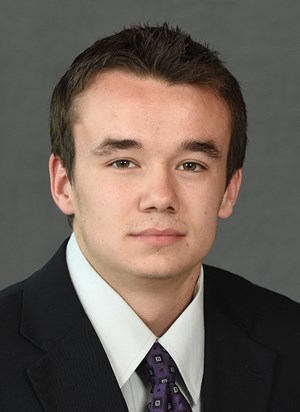
Blake Lynch from Goddard, Kansas, was the starting placekicker on the K-State football team during the past season. His was one of the feel-good stories of 2018.

Blake grew up west of Wichita at Goddard, a rural community of 4,746 people. Now, that’s rural. His parents are Jason and Kim Lynch. Jason has a roofing and construction business in the Wichita area. Kim attended K-State and Bethel College.

At Goddard, Blake played soccer in his freshman and sophomore years. During the next two years, he lettered on the football team where his younger sister also took up kicking.

Blake got expert training. He attended camps with former K-State kicker Anthony Cantele.

Blake Lynch / K-State Sports

During Blake’s senior year, he made 7 of 11 field goals, including an amazing kick of 51 yards. For his accomplishments that season, he was named an all-state player by the Topeka Capitol-Journal and the Wichita Eagle.

Blake went to K-State where he majored in financial management. He also went out for the football team. He began as a grayshirt and then redshirted the following year.

At that time, K-State’s placekicking was dominated by Matthew McCrane, who was the most accurate placekicker in K-State history and went on to the NFL. But when McCrane graduated, K-State fans wondered who would take his place?

Blake Lynch was described by some as the third string kicker on the roster when camp began. One thing was evident when he took the field: He didn’t look very big. He was officially listed at 5 feet 5 inches tall and 141 pounds. That made him the smallest player on the K-State roster. A video later in the season noted that he had to jump up in order to high five his holder, who was 6 feet 1.

But something else was evident when Blake took the field: He worked very hard, he was highly competitive, and he sought to improve. That improvement showed itself.

By the time the season began, he had worked himself into the starting field goal kicker position. His performance was tested quickly. In K-State’s first game of the season, he was called upon to attempt four field goals – and he made all four.

In fact, all four makes came in the first half, including a long of 44 yards. His four first-half conversions were the most since 1999. That also represented the most field goals of any K-State placekicker in their debut.

In the course of the 2018 season, Blake Lynch was 6 for 6 in kicks from 20 to 29 yards, 5 for 5 in kicks from 30 to 39 yards, and 3 for 3 in kicks from 40 to 49 yards. How does a guy who is not very big kick the ball so far and so accurately? One report said that he focused on contact, not leverage. Whatever his system, it clearly worked.

On K-State’s senior day in November 2018, Blake Lynch was again called on four times to attempt field goals. Again, he made all four. His performance in the team’s 21-to-6 win over Texas Tech was recognized by the Big 12 Conference. On Nov. 19, 2018, the smallest player on the K-State roster was named the Special Teams Player of the Week by the Big 12.

“It is so fun to watch him,” said his mother Kim.

Is there a place in football for a little guy? The performance of Blake Lynch suggests that there is. We commend Blake Lynch and all small town Kansas players who are making a difference with their willingness to outwork the bigger competition. Hooray for the little guy.
INSIGHT KANSAS: Jenkins gets her beak wet

Well, that sure did not take long.

Former Kansas Congresswoman Lynn Jenkins is becoming a lobbyist. Via Twitter, she recently announced the formation of a new venture, LJ Strategies LLC, already registered to lobby in the state of Kansas.

Michael A. Smith is a Professor of Political Science at Emporia State University.

Ethics laws prohibit ex-members of Congress from lobbying that body for one year after leaving, so LJ Strategies will formally lobby only at the state level during its first year. After that, the field is wide open for Jenkins to use her years of institutional knowledge and insider connections to lobby her former colleagues.

Nothing about this is illegal. Jenkins and her partners know the law and followed it to the letter. But that does not make it right.

Jenkins’ gambit perfectly encapsulates voters’ anger at the so-called political establishment. Rage against it helped fuel President Trump’s rise among rank-and-file Republicans, who still approve of his performance in office at levels approaching 90%. Hillary Clinton came to personify The Establishment, also provoking the surprise challenge of Senator Bernie Sanders for the Democratic nomination in 2016. Sanders is still in the game, and continued frustration also propels Democrats’ adoration for younger figures like the outspoken new Congresswoman Alexandria Ocasio-Cortez of New York. Ocasio-Cortez has even been discussed as a possible presidential candidate, despite the fact that she just took office and has yet to shape policy decisions.

By contrast, Jenkins and her ilk are seasoned politicos, with decades of real-world experience learning how Congress, state legislatures, and executive agencies really work. For example, Jenkins’ role in moving the National Bio- and Agro-Defense Facility (NBAF) to Manhattan was so important that it interfered with redistricting in 2012. Though population shifts seemed to dictate that Manhattan and NBAF be moved out of Jenkins’ district, the Kansas Legislature refused. Moving NBAF could jeopardize the whole project. Unable to agree on a map, legislators chucked the whole thing into the federal courts, making Kansas one of the last states to redistrict after the 2010 Census. The judges immediately and logically moved Manhattan to the First District.

Jenkins was also instrumental in a successful, multi-year effort to pass a new farm bill that was spearheaded by Senate Agriculture Committee chair Pat Roberts. The bill finally came to fruition last month, just weeks before the end of Jenkins’ term. Controversies, including changes in eligibility for SNAP benefits (formerly called Food Stamps), had delayed progress. This time, farmers’ alarm over the possible impact of Trump’s tariffs propelled the bill to passage. In addition, Jenkins was a member of House Republican leadership. Among other roles, she served on the powerful House Ways and Means Committee, writing tax policy.

Jenkins is respected, but her knowledge and skill cast a dark shadow. She is part of that inside-baseball, political culture that cannot resist—in Stephen Colbert’s pithy phrase—getting their beaks wet. They dip in, keeping up with their old friends in power and using their connections for a little extra cash.

Maybe more than a little.

Governing is complicated. We desperately need experienced hands at the tiller. Unfortunately, that is become a tough case to defend, when so many long-timers see themselves as part of an elite political class, trading on political connections far removed from the lives of those they used to represent.

Lynn Jenkins accomplished some remarkable things as a state legislator, state treasurer, and Member of Congress. Now, with the formation of LJ Strategies, LLC, she becomes part of the problem.

Michael A. Smith is a Professor of Political Science at Emporia State University.

MASON: A year worth celebrating

Dr. Tisa Mason

The holidays and the New Year give us both pause and impetus to reflect back on the year past. For Fort Hays State University, it has been quite a year, and I thought I would list some of the highlights in a Top 10 list – well actually my top 11 (I snuck an extra point in – similar to the extra cookie I treated myself to at the holiday party!)

The list isn’t ordered, nor is it all-inclusive – so many good things happen every day at FHSU – but it gets at some of the more important happenings in 2018. So here we go:

  • Kansas legislators restored $15 million in higher education base funding – which was more than an additional $635,000 for Fort Hays State. We are very grateful for their support.
  • In May we graduated 4,533 students – an increase of 11.2 percent. This commencement ceremony also included our first six graduates from the Doctor of Nursing Practice program.
  • Following a record spring enrollment last January, this fall we celebrated 18 consecutive years of record growth with 15,523 students – an increase of 423 students. Most importantly, Fort Hays State University is currently providing educational opportunities to over 7,800 Kansans, an increase of more than 30 percent over the past 10 years. Key to our growth is our increasing retention rate – now at 74 percent. FHSU has improved student retention by an average of nearly 8 percent over the past five years.
  • People place their faith in FHSU in so many ways – including providing grant funding and donations. In June, we wrapped up the fiscal year with a noteworthy $5,264,707 in grants. The FHSU Foundation Journey campaign ended the calendar year at more than $68 million dollars in the $100 million campaign scheduled to conclude during Homecoming 2021. In all, nearly 7,000 donors have chosen to invest in the education of current and future Tigers – remarkable!
  • Men’s soccer made the Final Four in the national championship competition. Football won the MIAA conference for the second year in a row in addition to making it to first round of the playoffs. By the way, 2019 shows much promise with our women’s basketball team currently 10-0, ranked sixth in the WBCA Division II Coaches Poll and fourth in the Division II SIDA Media Poll. We are so proud of our student athletes and coaches.
  • Safety for its students and the campus community is a top priority for Fort Hays State, and students and staff alike help keep it that way. Those measures drew the attention of others as FHSU was ranked as one of the safest colleges in America by the National Council for Home Safety and Security.
  • Forsyth Library sponsored open education textbook initiatives that helped keep the cost of an FHSU degree extra affordable. Over 40 FHSU faculty attended a workshop last fall to learn how to adopt high quality textbooks that are available at no cost through the Open Textbook Network, and most took the next step to review an open textbook in their area of teaching. Grants to faculty encourage open textbook adoption and currently save students $60,000 annually. Four new faculty grants will increase student savings even more in 2019.
  • Dr. Laura Wilson (associate professor of geosciences) and Kris Super (B.S. 2017) coauthored a paper in the preeminent journal Nature. This was the first Nature publication by FHSU faculty in 17 years, the first time ever that an FHSU student coauthor was involved, and it was the first by a woman from FHSU.
  • The College of Education continues to be leader in meeting the needs of PK-12 education in Kansas. We have over 1,600 students intending to become an elementary or secondary teacher, more than 300 students working towards school leadership as a principal or superintendent, and 480-plus students being prepared as specialists in counseling and special education.
  • Dr. Keith Campbell, a professor of sociology, teaches grant writing and non-profit development. He invited three of his best students to work with small non-profit organizations in Holmes County, Mississippi, one of the poorest counties in the country. Each of the students is consulting with a representative of the non-profit and writing a free grant proposal on the organization’s behalf. I love how our faculty provide opportunities for students to bring value to local communities and at the same time hone professional skills.
  • The College of Heath and Behavioral Sciences saw a lot of equipment upgrades in 2018 to further enhance real world learning experiences for our students: Nursing, in partnership with Hays Medical Center, constructed an advanced educational training center in Stroup Hall to simulate life-like medical scenarios; Psychology expanded its screening clinic; Allied Health developed state-of-the-art imaging laboratory facilities with up-to-date equipment and SonoSim ultrasound training kits; Communication Sciences and Disorders installed an innovative video/audio system in the Herndon Speech Language Clinic, providing immediate instructional feedback to students; and Health and Human Performance enhanced equipment in the areas of exercise physiology, kinesiology, and neuromuscular rehabilitation.

And of course, I cannot conclude without thanking the community for the wonderful welcome back and a memorable inauguration. As I said then, the ceremony was a formality, but it was not a celebration of me, it was a celebration for us. It was an inauguration not of a person, but of an institution, and it was our opportunity to pause and reflect on the things that make FHSU so special: Our spirit of hard work, our remarkable community, and our enduring legacy of innovation.

WOW! It has been quite a year for FHSU, and these are just a very few of our highlights. Thank you for helping me celebrate Tiger Nation 2018 as we continue to write our transformative story together. Happy New Year to you and yours, and to FHSU!

HAWVER: Kelly’s pre-session quiet is disconcerting

Martin Hawver
Two weeks before state Sen. Laura Kelly, D-Topeka, is sworn in as governor, she’s already accomplished an amazing feat…darn it.

Besides hiring a handful of administration staffers, she’s managed to keep her Cabinet secretaries who will run state agencies confidential and she has kept quiet on the initiatives that will become the headlines for what is likely to be a dramatic change in the way the state operates.

It’s all generalities so far. No details, just pretty much repeating the same issues that she holds important—and has for years…darn it.

It means little hot news as outgoing Republican Gov. Jeff Colyer makes sure that he didn’t leave anything embarrassing in a desk drawer that Kelly is going to get the keys to in two weeks.

And that’s why the handful of remaining Statehouse reporters are scurrying around trying to find out what’s going on. Call it secret, call it businesslike, call it what you want, but this is one of the quietest not-quite-yet changeovers in the governor’s office in recent memory.

Just how long things keep quiet is not-quite unclear.

Kelly will appoint her Cabinet probably a couple days before she takes the oath of office—or maybe not. The state pay period ends on Jan. 12, and you gotta figure that current Cabinet officers are going to want to buy that new car while they are still on the state payroll, and that new Cabinet officers aren’t going to be getting a car loan before they officially have a job.

Kelly, as a first-term governor, has 21 days from swearing-in to release her first budget according to the Kansas Constitution. (Carryover governors have just eight days after the Legislature convenes for the session to issue their budget.)

So, we could be looking to Feb. 3 (a Sunday, so probably a day or two earlier) for release of her budget. And that’s the real key to the session. The Inaugural Address, well, that’s largely where she wants the state to go, not tax-dollar by tax-dollar how she intends to get it there.

Of course, we know she wants to finance at a constitutional level K-12 public education. She and the rest of the state have a Kansas Supreme Court order that says the state needs to spend about $90 million a year more to get it to that level. And everyone wants the kids to get a good education, so they can support themselves and their families, and the state prospers with a good work force right here at home.

And Kelly wants to expand Medicaid (call it KanCare) in Kansas, to take full advantage of federal assistance to provide health care to the poor, the elderly, the disabled and their children. Call it public health, call it assisting health-care providers, so we keep hospitals open in small rural towns. Call it what you want, but it’s a priority for Kelly and depending how you phrase it, it’s a priority for Kansas.

Don’t forget that she also wants good highways and other transportation for Kansans driving to work and to visit their relatives, and…for the transport of goods to keep the Kansas economy strong.

Nothing there most Kansans don’t want…but it’s how much and whose money is used to achieve those priorities that will be the scrap this session.

So that’s why this pre-session secrecy is tantalizing.

Who’s going to run what, what’s going to be funded, who is going to pay for it and what Republicans do in the way of agreeing with Kelly or painting her vision for the state as “un-Kansas” or unaffordable?

But—at least we Statehouse reporters—would like a drib or drab of news in the meantime…

Syndicated by Hawver News Company LLC of Topeka; Martin Hawver is publisher of Hawver’s Capitol Report—to learn more about this nonpartisan statewide political news service, visit the website at www.hawvernews.com

SCHLAGECK: A question of balance

John Schlageck writes for the Kansas Farm Bureau.
“I know farming is expected to be just another business. But I believe farming will always be a way of life as much as a business for me.”

A longtime farmer friend conveyed this message at Kansas Farm Bureau’s centennial annual meeting. He is not a retired farmer thinking of old ways and old days.

While he’s cultivated and no-tilled many an acre, harvested thousands of bushels of wheat, raised countless cattle and more importantly a wonderful family, this gentleman remains a vibrant, modern farmer from western Kansas.

Truth be known, there are many, many like-minded individuals who take pride in their chosen professions of farming and ranching.

Without a doubt today’s farmer/rancher knows very well his or her vocation constitutes a business. Many carry a ton of debt on their shoulders while at the same time realizing their livelihood hinges on the fickle fate of Mother Nature. Still, they understand this business of agriculture is more than dollars and cents.

“My most important possessions remain my family and way of life,” my sage friend said. “That’s who I am. That’s who I will always be.”

Some of his fondest memories include late suppers during the bustle of wheat harvest with everyone gathered around the back end of a pickup, eating cold cuts as the golden Kansas sun sinks under the horizon on the wide-open Kansas plains. Other recollections involve covered picnics in the hay field on a late summer Sunday.

How could he forget a story about a walk through the old red barn about midnight to check on a young heifer ready to calve while listening to other cows shifting in their stanchions and chewing their cuds.

And the smells – not just manure, but freshly turned soil, or new-mown hay, a just-filled trench silo full of silage or a barn full of Holstein cows on a cold, winter day.

It’s no secret the farm and ranch vocation may be one of the few remaining holdouts where those who toil on the land seek to balance the headlong search for economic viability with emotional and spiritual wellbeing.

Most family farmers and ranchers have not lost sight of this tight-rope act. They understand to stay in this business of farming/ranching, they must continue to learn how to farm more efficiently, and smarter. Without a profitable operation, they would be forced to leave their land. To exist anywhere else would be inconceivable.

Farmers and ranchers remain emotionally tied to the sights, sounds, smells and the rewarding performance of planting, growing and harvesting crops as well as feeding, raising and continuing the life cycle of healthy livestock. The indefinable desire to carve out a life with the earth and sky remains an overpowering force that belongs in their hearts.

Could it be when asked about their vocation, farmers and ranchers often refer to it as a “business,” rather than a way of life?

Or could it be they are wise enough to know – that must be their answer?

John Schlageck is a leading commentator on agriculture and rural Kansas. Born and raised on a diversified farm in northwestern Kansas, his writing reflects a lifetime of experience, knowledge and passion.

SCHROCK: 2018 — The year in K-12 education

John Richard Schrock is a professor at Emporia State University.

The educational buzzword for this year is “personalized education.” This computerized revival of individualized instruction from the 1970s also wins the 2018 oxymoron award. Pitched by the techno-educational industry, so-called personalized education isolates a student in a digital world, progressing alone at their own speed, essentially the most “depersonalized” form of instruction possible.

If there was any bright light in the dark world of modern teaching, it was the demise of No Child Left Behind (NCLB). After over a decade of teaching-to-the-test to make Adequate Yearly Progress (AYP), the requirement that one hundred percent of students be proficient by 2014 was finally seen to be as unattainable as having one hundred percent of those who enter a hospital emerge completely cured. The best of doctors lose patients and the best of teachers lose students.

But its replacement (ESSA) has not restored teachers’ professional judgement or jurisdiction over classroom content and testing. External assessments remain. And AYP was replaced by AMD (annual meaningful differentiation) involving four different measures. It is applied building by building, rather than by district. The beancounting continues.

Veteran teachers continued to retire early or switch professions, often from assessment fatigue. Education Week reported the most common teacher had 15 years of experience in 1987-88, but today is in their first 3 years of teaching. Average age of a teacher was 55 in 2007-08, but is now in the mid-30s to mid-40s. Forty-four percent of new teachers continue to leave the profession within five years.

2018 data from Kansas regents universities show only 5,273 students are enrolled in programs leading to teacher certification, compared to 8,991 in 2011. An initial decline in students entering teaching that began with the introduction of NCLB in 2001 accelerated with the loss of teacher tenure in Kansas five years ago. In several states, including Oklahoma, where teacher salaries were very low and were significantly increased, college students have not returned to teacher-training programs. While the numbers of special education students nationwide has declined one percent, the number of special education teachers has fallen 17 percent.

Math scores on the ACT have dropped to the lowest level in twenty years, causing a call for major reform of teaching math nationwide. Scores fell for all subgroups, except Asian American students whose scores went up! Nevertheless, all blame was directed toward teachers and math curriculum without considering that the ethnic study-effort might be a factor. And while Asian-American students were a discussion point in the Harvard University affirmative action lawsuit, they are dramatically “over-represented” at the specialty science high schools in New York, leading Mayor DeBlasio to propose affirmative action against them at the secondary level.
Lumina and other educational policy groups have called for increasing high school graduation rates. Many school district administrations complied, raising high school completion from below 70 percent to the mid-80 percent and higher. However, many administrative actions resulted in passing students who were chronically absent or otherwise failing. Some schools are heavy users of “credit recovery” programs, computer-based easy click tests that are substituted for actual class achievement.

More Kansas high school students are taking dual credit courses that provide both high school and college credit. As of September of 2017, the high school instructors of such courses were to possess a masters degree including 18 graduate credit hours in the field taught. Since their courses awarded college credit, the Higher Learning Commission requires instructors to have one degree higher than the course being taught. Regents schools who accept those credits could apply for a time extension to get the high school instructors credentialed. However, some did not, and some Kansas high school students are continuing to take dual credit courses under non-qualified high school teachers. Neither the KSDE nor the KBOR polices these credentials. In addition, the Kansas Legislature has moved to increase funding to make dual credit available to high school students across Kansas whether they are college able or not.

The second most common reason for teachers leaving the public school classroom is student discipline problems. The continued movement toward “no touch” policies and “restorative discipline” talk sessions has caused some teachers to feel helpless to address physical misbehavior.

If tobacco use across America has gone down, the use of e-cigarettes or Juuling in schools is soaring. Vaping devices are particularly difficult to curtail; they are small and resemble recharge devices.

Meanwhile, use of opioids has caused life expectancy in the United States to actually decline, the only lifespan decline in a developed country in modern history. Meth addiction still remains a serious problem, contributing to an unprecedented need for foster homes. Combined with the growing rate of childhood poverty and homelessness, many more teachers find their job involves counseling, food distribution and much more than teaching.

But to end on a more sunny note, some middle and high schools are moving forward their start times to begin school after 8:30am. Initial reports suggest that their students are getting more sleep at home and improving their performance in classes and on assessments at school.

John Richard Schrock is a professor at Emporia State University.

News From the Oil Patch, Dec. 31

By JOHN P. TRETBAR

U.S. crude oil production is spiking again. The Energy Information Administration reports total production of 11.697 million barrels per day for the week ending Dec. 21, an increase of 99-thousand barrels per day over the previous week and 1.9 million barrels per day more than a year ago at this time.

The government reported U.S. commercial crude oil inventories remained virtually unchanged from the previous week. At 441.4 million barrels, U.S. crude oil inventories are about 7% above the five year average for this time of year.

EIA said imports averaged 7.7 million barrels per day, up by 233,000 barrels per day from week before. Over the past four weeks, crude oil imports averaged about 7.4 million barrels per day, 2.3% less than the same four-week period last year.

It’s been a bumpy ride for oil prices, which posted two percent losses last Thursday after gains of 8% on Wednesday. Those were the biggest price gains in two years. But the U.S. and international crude oil benchmarks have lost more than a third of their value since the beginning of October and are heading for losses of more than 20 percent for the year. At $35.50 per barrel last Friday, Kansas Common crude at CHS in McPherson has dropped more five dollars since the beginning of the month, and is about $20 lower than the price at the end of October.

Crude oil output has more than doubled in New Mexico over the last four years, but a change in state leadership to Democratic control in January has industry executives fearing tougher regulations and reduced revenues are on the way. The incoming Governor and State Land Commissioner plan to limit new leasing on state lands where drillers planned to tap freshwater aquifers. The incoming administration also has pledged to crack down on methane waste by flaring. The new Land Commissioner will oversee nine million acres of state land. She wants to increase the production royalty by at least a third, which would match Texas’ royalty rate and boost revenues for funding schools and hospitals.

An offshore oil platform toppled by Hurricane Ivan in 2004 continues to leak oil into the Gulf of Mexico off the coast of Louisiana. The company that has failed to end the 14-year-old leak is now suing to an order by the Coast Guard to design and install a containment system. A new estimate shows that between 10-thousand and 30-thousand gallons of crude oil are leaking into the ocean each day. Taylor Energy is trying to block an administrative order from October that includes daily civil penalties of up to $40,000 if it fails to comply.

Five conservation groups filed a lawsuit to block oil production from a proposed artificial gravel island in federal Arctic waters off Alaska’s north coast. The groups asked the 9th U.S. Circuit Court of Appeals to review an offshore production plan approved for the Liberty project in the Beaufort Sea that they say violates federal law.

The latest report from North Dakota shows another all-time record for oil and gas production and the number of producing wells. It also shows the state’s average gas-capture rate heading in the wrong direction. Preliminary numbers from the Department of Mineral Resources show total statewide oil production of more than 43 million barrels in October. That’s 1.39 million barrels per day, an increase of more than 32-thousand barrels per day over the month before. But North Dakota operators “flared,” or burned off, more than 20% of the natural gas produced at oil wells in the state, an increase of two percent over the month before. Last month the state announced it was “relaxing” its anti-flaring goals, which haven’t been met in years.

Oil-by-rail traffic continues to increase, as pipeline bottlenecks continue. According to the Association of American Railroads, petroleum and petroleum products filled more than 30-thousand rail cars, an increase of more than 27% over last year at this time. The cumulative total for the year, nearly 584-thousand rail cars, was up more than 17% through December 15, the latest numbers available. Canada filled more than 11-thousand tanker cars, up more than 31%. Canada’s cumulative total is up 22% for the year.

With pipeline and rail tanker-car shortages driving down Canadian crude-oil prices, a new technology has emerged that boosters say will improve safety and increase the country’s distribution options. Canadian National Railways says its scientists are mixing bitumen extracted in Alberta with plastic made from grocery bags, and then encasing it in more plastic. This makes it possible to use grain hopper cars to ship what appear to be little hockey pucks containing oil that fit in the palm of your hand. The pellets float, and are sealed in their protective plastic wrap, so they are not dangerous in an oil spill. They are a bulk commodity that can go in open rail cars and transported like coal or grain. In the event of a spill, they would simply need to be picked up.

The Canadian Government has unveiled a $1.19 billion financial package to support the country’s oil and gas industry, mostly in the form of loans. The government hopes to encourage efforts to find new export markets. Reuters reported Canada reached record output of 4.9 million barrels of oil per day recently, but struggled to move the crude oil to the US due to transportation bottlenecks.

Exxon-Mobil has withdrawn an export project in Canada from an environmental assessment. The move effectively signaling that the project in Canada’s British Columbia has been shelved. It was expected to produce about 15 million tons per year of Liquefied Natural Gas, with plans for further expansion up to 30 million tons per year.

SELZER: Claims process goes smoother with preparation

Ken Selzer, Kansas Insurance Commissioner

With a little preparation, resolving a property claim with your insurance company does not have to be a frustrating, time-consuming process.

Being prepared with and keeping track of the information your insurance company needs to process the claim is critical. What you do before making the claim will help in reducing the time between the insurance incident and the resolution of your problem.

Here are some ideas to assist with the claims process:

  • Know your policy. Understand what your policy says. Because it is a contract between you and your insurance company, you need to know what’s covered, what’s not and what your deductibles are. Ask your agent to help you if you don’t understand the policy language.
  • File claims as soon as possible. Don’t let the bills or receipts pile up. Call your agent or your company’s claims hotline as soon as possible. Your policy might require that you make the notification within a certain time frame. That is one of several duties your policy might require of you.
  • Provide complete, correct information. Be certain to give your insurance company all the necessary information. If your information is incorrect or incomplete, your claim could be delayed. The company, by Kansas insurance laws, has, in most cases, 30 days to complete an investigation into your claim.
  • Keep copies of all communications. Whenever you communicate with your insurance company, be sure to document the communications. With phone calls, include the date, name and title of the person you spoke with and what was said. If you communicate with your company by email, retain the emails for future reference. This is also good for communication between you and your agent.
  • Ask questions. If there is a disagreement about the claim settlement, ask the company for the specific language in your policy that is in question. Find out if the disagreement is because you interpret the policy differently. If your claim is denied, make sure you have a letter from the company explaining the reason for the denial — including the specific policy language which caused the denial.
  • Don’t rush into a settlement. If the first offer your insurance company makes does not meet your expectations, talk with your local insurance agent or seek other professional advice.
  • Document auto/homeowners temporary repairs. Auto and homeowners policies might require you to make temporary repairs to protect your property from further damage. Document any damaged personal property for an adjuster to inspect. An easy way to do this is by photographing or videotaping the damage before making the repairs. Your policy should cover the cost of these temporary repairs, so keep all receipts.
  • Don’t make permanent repairs. A company might deny a claim if you make permanent repairs before the damage is inspected. If possible, determine what it will cost to repair your property before you meet with an adjuster. Provide the adjuster any records of improvements you made to the property, and ask him/her for an itemized explanation of the claim settlement offer.
  • Seek accident and health claims details. Ask your medical provider to give your insurance company details about your treatment, condition and prognosis. If you suspect your provider is overcharging, ask the insurance company to audit the bill, and verify whether the provider used the proper billing procedure.

Contact the Kansas Insurance Department (KID). If you continue to have a dispute with your insurance company about the terms of the claims settlement, contact the KID Consumer Assistance Hotline at 1-800-432-2484, or go to the website, www.ksinsurance.org, to use the Chat feature.

Ken Selzer is the Kansas Insurance Commissioner.

YOUNKER: Grazing cover crops can improve soil health, increase profits

Dale Younker is a Soil Health Specialist with the USDA Natural Resources Conservation Service in Jetmore.

Adding livestock into an annual cropping system and grazing cover crops that are planted between cash crops is one way to potentially increase profit to a farm enterprise. If done correctly it can also improve soil health.

The manure and urine left after the livestock graze a cover crop helps speed up the nutrient cycling because the forage has already been processed once. This waste also helps feed the soil microbes which contribute to building stable soil aggregates. Better soil aggregation means more pores spaces in the soil which increases water infiltration and water holding capacity. As the microbes die they add organic matter to the soil which also increases water holding capacity and releases additional nutrients to subsequent crops.

Based on university research in western Kansas cover crop forage production is highly variable and dependent on the weather conditions from year to year. Dry matter amounts can range from over 3,000 pounds in favorable years to less than 1,500 pounds in unfavorable years. Because of this there needs to be a lot of flexibility in the grazing system and alternative forage sources need to be available if the cover crop field does not yield as expected or fails completely. To maintain adequate soil cover and provide a carbon food source for the soil microbes only about 25-40% of the total forage should be eaten by the livestock.
The cover crop seed mix should be tailored to the nutritional needs of the class of livestock grazing it. Most actively growing cover crops will provide enough crude protein to meet the animals’ needs, but other feed sources and supplements may have to be provided to meet other nutrient requirements. A forage sample should be collected and analyzed determine if anything else is needed in the diet. The analysis will also show if there are any potential toxicity issues, like high nitrate levels.

Other considerations would include having an adequate water source at or near the cover crop field for the livestock. The cost of hauling water for any distance at all can reduce potential profit margins significantly. Field location and how easy it is to access needs to be also be considered. If the field is a good distance away from the headquarters or doesn’t have any decent roads to get to it may not be feasible to graze. What type of fencing and how the field will be fenced also needs to be determined.

One question I often get is how much soil compaction is created by livestock grazing on the field. If managed correctly and if cattle are removed, or confined to a sacrifice area, when the soil is saturated the compaction should be minimal and only in the upper couple of inches of the soil. This is especially true on long term no-till fields that already have good soil structure. The freezing and thawing of the soil in the winter should mitigate the shallow compaction left by the livestock.

Grazing cover crops can be profitable and should something to consider. Especially if you already have the livestock, facilities and equipment already in place. But every producer, field and situation is different. All costs and potential income must be considered. Fortunately, there are several universities and others that have cover crop grazing budget templates posted on the web that can help you determine if grazing cover crops is right for you.

For more information about this or other soil health practices you can contact me at [email protected] or any local NRCS office.

Dale Younker is a Soil Health Specialist with the USDA Natural Resources Conservation Service in Jetmore.

Now That’s Rural: Crawford County fried chicken

Ron Wilson is director of the Huck Boyd National Institute for Rural Development at Kansas State University.

By RON WILSON
Huck Boyd National Institute for Rural Development

Some call it a major rivalry in Kansas. It was even mentioned by ESPNU announcers during a college football broadcast in fall 2018. But this wasn’t K-State versus KU. It was about fried chicken. These announcers were talking about the preferences of one football player who pointed out that there are lots of places to get good fried chicken in southeast Kansas, but people’s restaurant choices can get competitive. Some people like a restaurant called Chicken Annie’s. Other people prefer a restaurant called Chicken Mary’s. Whatever the preference, it all means that there’s great fried chicken in southeast Kansas.

The southeast region of Kansas, and particularly Crawford County, has long been known as a great place for fried chicken. Historic restaurants have helped establish this tradition.

According to the Kansas Guidebook 2 for explorers, written by Marci Penner and WenDee Rowe of the Kansas Sampler Foundation, the tradition goes back to 1933. In that year, a coal miner named Charley Pichler suffered a disabling accident in Yale Mine No. 13 near Pittsburg, Kansas. His wife Annie needed a way to support the family, so she started selling fried chicken dinners out of their home.  In addition to mouth-watering fried chicken, she offered German potato salad, German coleslaw, a strip of green pepper, and a slice of tomato.         

The response was so positive that it grew into a famous restaurant known as Chicken Annie’s. Annie’s descendants run the restaurant today.         

A similar situation led to the creation of another famous restaurant at Pittsburg. When Joe Zerngast was unable to work in the coal mines in the early 1940s, his wife Mary also started marketing meals to support the family. They began serving chicken dinners in their home, moved into an old mining camp pool hall in 1945, and have operated in their current location since 1966. This restaurant became famous as Chicken Mary’s and is also operated by family descendants.    

The restaurants are friendly competitors and neighbors, located near each other just north of Pittsburg. Just like a football team, each has loyal fans.  

One of those is K-State running back Alex Barnes. He grew up at Pittsburg, came to Kansas State and became the top running back in the Big 12. When ESPNU announcers visited with him before the Oklahoma State game, he let them know his preference of the fried chicken restaurants at his hometown. The announcers said on air, “(Alex) would like to let everyone know that, of all the great fried chicken places in southeast Kansas, Chicken Annie’s is the best.”  

This fried chicken rivalry took another turn, in a plot twist reminiscent of Romeo and Juliet. Chicken Mary Pichler’s granddaughter Donna married Chicken Annie’s grandson Anthony. Together, they opened Pichler’s Chicken Annie’s. Wow, make it a combo, please. 

The great fried chicken story doesn’t stop there. When the Kansas Sampler Foundation had a contest to select the 8 Wonders of Kansas, one of the entries in the cuisine category was a broad group called Crawford County Fried Chicken, which included both Chicken Mary’s and Chicken Annie’s plus more. The group won! Crawford County Fried Chicken was selected as one of the 8 Wonders of Kansas cuisine.

Not only does Crawford County include Chicken Mary’s and Chicken Annie’s, it also includes other restaurants such as Pichler’s Chicken Annie’s and others. In addition to the original restaurants in Pittsburg, one can get fried chicken in other restaurants in the county. These restaurants include Chicken Annie’s in Girard, Barto’s Idle Hour in Frontenac, and Gebhardt’s Chicken and Dinners in the rural community of Mulberry, population 519 people. Now, that’s rural.

For more information, see the Kansas Guidebook 2 for Explorers and the 8 Wonders of Kansas Guidebook.  Those are available in local bookstores or from www.kansassampler.org.

Some call it a major rivalry.  It even made it onto an ESPNU sports broadcast. But this rivalry is not about football, it’s about fried chicken. We commend all of the families and owners who are making a difference by continuing these traditions in Crawford County.  At dinnertime, regardless of the rivalry, we can now say, “Winner, winner, chicken dinner.”

Now That’s Rural: Richard Baker, Perspective

Ron Wilson is director of the Huck Boyd National Institute for Rural Development at Kansas State University.

By RON WILSON
Huck Boyd National Institute for Rural Development

Perspective. One’s perspective on how he or she sees things can make all the difference. Today we’ll meet a Kansas broadcaster who has shared an educational perspective with hundreds of students and thousands of listeners across our state.

Richard Baker is a longtime news director for the K-State Radio Network where he produced daily news plus a weekly radio program called Perspective. Richard is also an instructor in the Department of Communications and Agricultural Education.

Richard’s father was career military and served in World War II and Korea. Richard was born in the rural community of Seneca, population 2,039 people. Now, that’s rural. The family later moved to Manhattan when his father served at Fort Riley.

Richard Baker

Richard went to Manhattan High. As a kid, he mowed lawns, and that’s how he met a man named Ralph Titus who would become a lifelong mentor. Ralph worked for the K-State Radio Network.

Richard went to K-State but was unsure of his career choice. “I had not a clue,” Richard said. “I didn’t enjoy studying and I didn’t enjoy tests, but I loved learning things.”

One day a fraternity brother said to him, “You talk all the time. Have you ever considered radio?” With that inauspicious encouragement, Richard decided to give radio a try. He found he enjoyed it. He took some classes and in the summer, got his first radio job at KGNO in Dodge City for $85 a week. He later worked for KVGB in Great Bend.

Richard came back to northeast Kansas to take a job with KJCK in Junction City, where he was also able to finish his degree. He went on to graduate school at K-State and got a job as a student reporter doing news for the K-State Radio Network.
His next career step was a fascinating one. He went to work for a historically black music radio station in Omaha. “I’ve always loved soul music,” Richard said. He was typically the only Caucasian in the room, but he got to emcee concerts for groups such as The Spinners and Earth, Wind, and Fire.

In 1977, he returned to Manhattan where he joined the K-State Radio Network as news director. The university’s public radio station was called KSAC and was later called KKSU.

At this station, he was re-united with his mentor, the late Ralph Titus. “Everything I do was influenced by Ralph,” Richard said. “He had a way of asking thoughtful questions which really helped me improve.”

In addition to the one o’clock and five o’clock news on each weekday, Richard produced a weekly half-hour program called Perspective. This allowed a more in-depth exploration of key issues of the day.

Of all the interviews he has done through the years, which is his favorite one? “Every time I do an interview, it’s my new favorite,” Richard said. He has never lost that zest for learning.

In 2002, he took on the additional responsibility of teaching a communications class. “I try to incorporate diversity, management, and ethics into my classes,” Richard said.

In December 2018, Richard is retiring from K-State after 41 years. At 41 years times 52 Perspective programs produced weekly, that means he has produced more than 2,000 of those programs.

“There’s probably no one who has touched the lives of more Kansans than Richard Baker,” said Dr. Steve Smethers, associate director of K-State’s A. Q. Miller School of Journalism and Mass Communications. “Whether through local broadcasting or through extension’s radio outreach, Richard has been a longstanding voice in Kansas community journalism and he has provided information that has affected the lives of every man, woman and child in this state. Just as so many who have been part of K-State’s radio legacy, Richard was a valued voice of the KSAC/KKSU radio station, and he will never be forgotten.”

Perspective. It makes a huge difference in how we see issues. We commend Richard Baker for making a difference by keeping listeners informed and students enlightened about the key issues of the day. Through the years, his programming has provided a very important perspective.

SCHLAGECK: Serious stewardship

John Schlageck writes for the Kansas Farm Bureau.

Some people have the mistaken idea that farmers and ranchers are harming our environment. You hear it everywhere: at the coffee shop, church, public forums, even in the grocery store where people buy the food farmers and ranchers produce for us to eat.

Children arrive home from school and tell parents about harmful practices farmers are using on the land. It’s easy to understand why folks think the way they do about today’s agriculture.

Few businesses are as open to public scrutiny as a farm or ranch in the United States today. While farming and ranching practices occur in the open where anyone can see, the only picture many have of agriculture is what they read in newspapers or see on television. Even fewer people have set foot on a modern farm.

The fondest wish of most farmers and ranchers is to pass their land on to their children. They work years to leave a legacy of good land stewardship. Most farmers learned about conservation and respect for the land from their parents.

Today’s farmers and ranchers are doing their part to protect and improve the environment. They use agricultural practices including early planting, pest control, good soil fertility, conservation tillage and many other innovations that help grow more food while protecting the environment.

Farmers adjust practices to meet individual cropping conditions. Such practices can vary from farm to farm – even from field to field.

As in any other business, farmers and ranchers must manage their operations on a timely basis and use all the technology available to improve quality and productivity. If they don’t, they will not be able to stay in business for long.

Today’s farmer has cut chemical usage by approximately 40 percent in many cases during the last couple of decades. Many no longer apply chemicals before planting. Instead, as the crop matures, farmers gauge potential weed pressure and apply herbicides only if needed.

Throughout the growing season, farmers do their best to provide nutritious food. From planting through harvest, they battle weather, weeds, insects and disease. Efficiency is their best defense against change including unstable world markets, political barriers and fringe groups who may attack their farming methods yet know little about this vital profession.

Ted and Lisa Guetterman own and operate a 1,100-acre row crop farm in Miami and Johnson counties. Ted represents the fourth-generation to farm and care for the land in far eastern Kansas. He and Lisa have four sons. One has returned to the farm, and the others continue to learn about the farm and conservation as they grow.

The family’s farm includes amylose and waxy corn, soybeans and soft winter wheat. Ted also feeds approximately 400 head of steers each year. Throughout the past 35 years Ted’s family integrated new practices, converting to drills, planters and sprayers equipped with GPS to become more efficient and 100 percent no-till.

Ted and Lisa identified soil erosion as a major concern in all their fields so the family-built miles of terraces and waterways. Ted also assists his landlords and other farmers in the construction of similar conservation practices.

Cropland isn’t the only focus for conservation for the Guettermans. Their livestock pens are designed so all runoff is directed to the grass filtering strips. The use of cover crops on the farm improves soil health, water infiltration and reduces erosion, all while providing feed for the cattle to graze.

The couple is passionate about taking part in programs that will benefit the land. They have enrolled in the Conservation Reserve Program, the Environmental Quality Incentives Program, Carbon Sequestering and the Conservation Stewardship Program. The Guettermans were honored as the Natural Resources award winners at the recent Kansas Farm Bureau annual meeting.

Yes, farmers and ranchers like the Guettermans and their counterparts across Kansas must live in the environment they create. They can and will do more to improve their environment. They can continue to rely less on herbicides, insecticides and fertilizers.

Agricultural producers can also conserve more water, plug abandoned wells, monitor grassland grazing and continue to implement environmentally sound techniques that will ensure preservation of the land.

In the meantime, farmers and ranchers will continue to take their stewardship seriously. They’ve devoted their lives to safeguarding their farms and families, while providing us with the safest food in the world.

John Schlageck is a leading commentator on agriculture and rural Kansas. Born and raised on a diversified farm in northwestern Kansas, his writing reflects a lifetime of experience, knowledge and passion.

HAWVER: Budget decision, western Kan. will keep Kelly busy over holidays

Martin Hawver

OK, it’s the holidays, which means cheer, gifts, family gatherings…and starting to figure out what scraps the Kansas Legislature is going to have in its upcoming session, who is on which committees, how the tilt looks on those committees, and what issues we’re likely to see starting at noon on Jan. 14.

Yes, there are gifts to be opened, dinners to cook, pets to keep away from the Christmas tree, and all that…plus preparing for New Year’s Eve celebrations.

But for a group of Kansans, the holidays mean time to figure out just what is possible from this session’s Legislature.

It’s going to be tricky. There are brand new members who are going to learn that life in the Statehouse probably isn’t what they thought it was when they were sweating on the doorsteps of voters in August.

And there are returning members who are going to be sizing up those new members to see whether they can scooch them from one position to another on issues and convince them that it’s possible—often good politics—to trade votes on issues so both have something to carry home to their constituents.

Atop all that legislative shuffling with new committees and new members, there’s Democrat Gov. Laura Kelly. She’s still putting together her cadre of Cabinet secretaries, making sure that they will be supportive of her positions on issues, and can find a way to carry them out.

Kelly

Oh, and then there are those new Cabinet secretaries who are going to have to hire their top-level staffers—and make those very important decisions on which staffers they inherit, who though not part of the campaign, have the technical and management skills to make sure that the agencies operate fairly and efficiently.

Over the holidays, Kelly is going to have to make a major decision on the upcoming budget.

Should a Democrat governor with a House and Senate run by Republicans offer up the former Gov. Sam Brownback-era two-year (biennial) budget, or should she propose a conventional one-year budget, which might politically give her a little more focused negotiation on just how the state is going to spend taxpayers’ money?

And there’s that new House committee that was established for the upcoming session, the Rural Revitalization Committee. It’s going to study specific rural development issues as the state’s rural population shrinks. There are issues out there that probably aren’t as thoroughly considered as they might be, but there’s also the background issue—reapportionment in 2022.

Beef up the rural areas, make it easier for those western Kansans and their children to stay at home, for businesses to have broadband access and find a way to keep schools open, and that remap of House and Senate districts ahead might just have a different outcome.

There’s lots of work to be done in the next three weeks, while most of us wonder when they’ll be able to use that new Christmas snow thrower on the driveway, or whether you can convince yourself that you can actually cook with one of those new air fryers that let you see through the plastic while the chicken browns.

So, while most Kansans have a holiday week ahead, there is intense work being done by those folks you elected back in November. They’ve fought for the right to represent you and start trying to figure out how do to that.

Might just keep that in mind as you run into legislators at events over the next week or so…

Syndicated by Hawver News Company LLC of Topeka; Martin Hawver is publisher of Hawver’s Capitol Report—to learn more about this nonpartisan statewide political news service, visit the website at www.hawvernews.com

Copyright Eagle Radio | FCC Public Files | EEO Public File