TOPEKA — The holiday season, when family members gather, can be a good time to have conversations about how to protect and insure relatives and property.
A focused family discussion about insurance considerations can be beneficial. With close relatives on hand, sharing how to protect your loved ones and your property will be most useful in the future.
The Kansas Insurance Department offers the following ideas for those family discussions:
Know where insurance and legal papers are. Policies, phone numbers, financial statements and legal documents such as Power of Attorney and home inventory checklists should be in a safe deposit box at your financial institution or in a fire-proof location within the home.
Know what medications are taken. Kinds, dosage, frequency, use of generics, pharmacy information — all can be important to share with close family members.
Know about the condition of family vehicles. Are they sound mechanically, serviced regularly, stocked accordingly with travel necessities?
Know what your teenagers and young adults are concerned about. Getting them to open up might take a while, but they could have questions about life situations and insurance that are important to them and to you.
Know a qualified insurance professional and financial adviser, and let him/her assess your insurance needs. Just like the generations of your family, insurance needs change.
Know when insurance premiums are due — yearly, semiannually, quarterly or monthly. Keep them on a centrally-located calendar. This idea can be truly helpful for a single adult, a young family or empty nesters on a fixed income.
Know, in the case of older family members, what their health insurance policies contain and what their medical preferences are for providers and institutions. Ask them if they have preferences on how to handle situations where they need assistance.
Discussions about these points during holiday gatherings can have a positive impact on finances, future choices and insurance needs. Whatever your life stage, it’s a comfort to know that trusted family members and financial advisers can assist you if you need it.
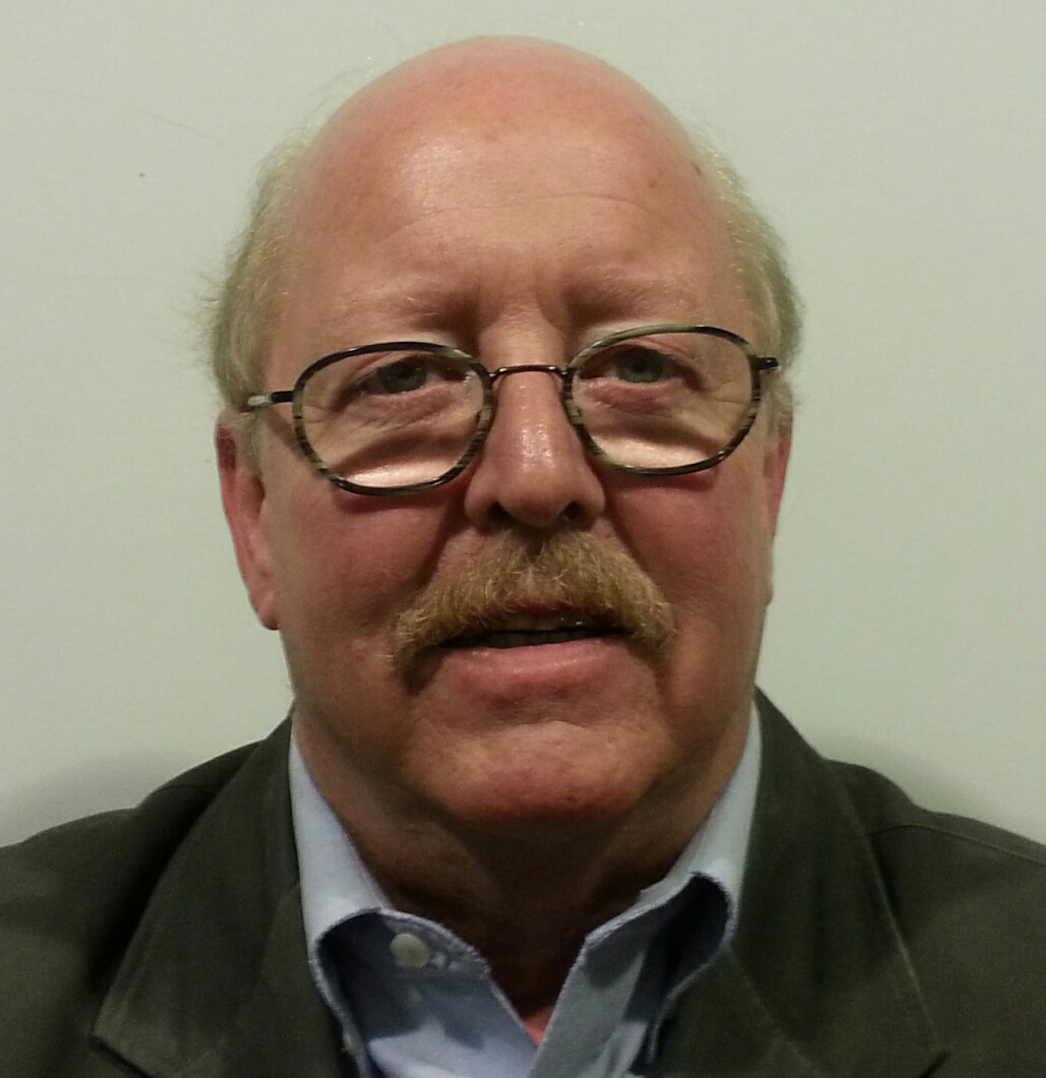
Ken Selzer, CPA, is the Kansas Commissioner of Insurance.
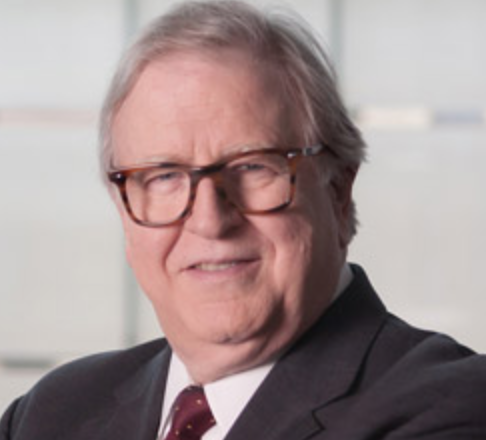
Dr. Roger Marshall, R-Great Bend, is the First District Kansas Congressman.
Friends,
Coming into this week I knew we had our work cut out for us, I did not want a government shutdown, but I also couldn’t, in good conscience ignore matters of national security. I was firm in that we should fund the $5 billion to help secure our borders.
After much back and forth, I am proud that the House voted and passed $5.7 billion in border security funds, which will fully fund President Trump’s request as the American people have demanded.
The fate of the bill is unclear as it sits in the Senate, and a partial shutdown is still possible if a final bill doesn’t reach the President’s desk by tonight. But I am fully prepared to work through the holidays to make sure border security funding is protected.
Kansas farmers back home will be working on Christmas Day, the cows have to be milked and the cattle fed. And as a physician, almost every year I delivered a Christmas baby, so I am perfectly accustomed to working through the holidays to do my job. Anyone who thinks that we are going to get a package that prioritizes border security when Nancy Pelosi takes over the House in January is delusional.
Preventing Maternal Deaths Act
Recently the House passed H.R. 1318, the Preventing Maternal Deaths Act of 2017. This legislation aims to address maternal deaths across America by improving data collection analysis. Earlier this year, I joined The Hill, a Washington-based newspaper, for an in-depth discussion focused on improving outcomes in maternal and child health in the U.S.
The number of mothers who die today from pregnancy-related causes remains far too high. According to the CDC, nationally maternal deaths have actually increased in recent years to 20.7 deaths per 100,000 live births. The good news is that Kansas has set the standard, already bucking the national trend, with maternal mortality decreasing from 19.6 to 17.7 deaths since 2016. Currently, there are gaps in identifying trends and developing
I was one of the first to cosponsor this bill and worked tirelessly with patient advocacy groups to urge Congress to pass this much-needed legislation. I am so proud that it passed through the House.
Small Business Lending Fairness Act
This week, Rep Velázquez (D-NY) and I introduced the “Small Business Lending Fairness Act,” bipartisan legislation that aims to put an end to the practice of small business borrowers signing an obscure legal document known as a “confession of judgment,” which essentially requires the borrower to waive their legal rights.
Shady lenders are using confessions of judgment as a weapon to take advantage of entrepreneurs and small business owners.
Closing this loophole ensures that predatory lenders are unable to seize the assets of small firms without due process and extends protections to small business owners looking to obtain a loan. I am proud to work across the aisle to end this scam.
Military Service Academy Nominees
This week our office announced the 2018 nominations for the U.S. military service academies.It’s a privilege and honor to nominate these young men and women to our nation’s esteemed military service academies.This year we had nine students from our district apply and seven were ultimately given nominations.I am so proud of these young men and women and their leadership. Below are the students who received nominations from our office:
U.S. Air Force Academy
Keaton Keoning, son of Kris and Emily Koening, from Manhattan, Kan.
Emmanuel Effiong, son of Joseph and Annie Effiong, from Fort Riley, Kan.
U.S. Naval Academy
Blaise Hayden, daughter of Curtis and Eileen Hayden, from Manhattan, Kan.
Rudolph Rodriguez, son of Matt and Kristy Rodriguez, from Salina, Kan.
Virginia Schaben, daughter of Doug and Shelley Schaben, from Ness City, Kan.
U.S. Marine Academy
Corbin Sanner, son of Troy and Judy Sanner, from Junction City, Kan.
Rudolph Rodriguez, son of Matt and Kristy Rodriguez, from Salina, Kan.
Parker Wilson, son of Jeremy and Mandy Wilson, from Manhattan, Kan.
U.S. Merchant Marine Academy, U.S. Marine Academy, and U.S. Naval Academy
Rudolph Rodriguez, son of Matt and Kristy Rodriguez, from Salina, Kan.
To be nominated, applicants must meet the recommendations and standards set by each academy, complete online applications and interview with at least one Member of Congress or Senate.
President Trump Signs the Farm Bill
This week President Trump signed the 2018 Farm Bill into law. I was fortunate to be invited to join the president for this signing. It truly has been an incredible journey to see this process from start to finish. I am so proud of this Farm Bill and happy to report that we have delivered on our promise to provide farmers with five-years of certainty. This Farm Bill will be a great Christmas present to our producers across Kansas who will see many wins in this bill.
In addition to the Farm bill being signed into law, the Department of Agriculture announced that it would move a key focus of the House’s Farm Bill that was lost in the final negotiations forward, Supplemental Nutrition Assistance Program (SNAP) reform. Secretary Sonny Perdue proposed a rule to restore SNAP’s integrity.
This rule helps able-bodied Americans move off welfare and into work, and cracks down on states that are waiving the 20-hour per week work requirements. We want to help people by assisting them in finding work, and preparing them with the skills and training they need so that they can prosper. I am thrilled that the Trump administration is tackling this issue.
ACA Ruled Unconstitutional
On December 14, a federal district court in Texas ruled that the ACA was deemed unconstitutional without the individual mandate. The individual mandate, repealed under the Tax Cuts and Jobs Act, was a penalty as a tax that legitimized the ACA under a Supreme Court decision years ago. Without the penalty, the federal court ruled that the health care law no longer met that Constitutional test. I’m not surprised by this decision. The ACA was and is not the solution to addressing health care.
As a physician, I’ve lived the nightmare of the ACA in rural Kansas. Where one can see a success story, I can give you a failed one. I came to Congress to work proactively with my colleagues across both sides of the aisle. I understand that there is a lot of talk about what the court’s decision means.
This court decision isn’t the end all, be all. It will most likely be appealed. Until then Congress should focus its efforts on coming together to develop bipartisan health care reform that focuses on increasing transparency and consumer choice, improves quality of care, lowers costs, and protects patients with preexisting conditions.
White House Congressional Ball with my daughter, Lauren.
My daughter Lauren spent the weekend with me in D.C. We went to the Library of Congress (one of my favorite places in D.C.), and I took her with me to the White House Congressional Ball. We admired the White House Christmas decorations and enjoyed our time at the ceremony.
I so enjoyed having Lauren in town to join me for this special event.
An end of an era:
This week we said goodbye to my friend and mentor, Speaker Ryan. From day one him and Janna were so kind and welcoming to Laina and I. In his farewell address he said, “well-done is always a better than well-said.” Speaker Ryan has been great leaders, he is genuine and thoughtful and we will miss him dearly.
Kansas needs a rational adult conversation about marijuana. State marijuana laws are changing nationally, even in solidly conservative states. Public opinion on marijuana is changing, even in Kansas. But the mindset of Kansas policymakers is stuck in 1927 when the state outlawed cannabis.
Some small policies are changing. Kansas has legalized CBD containing no THC. CBD is a marijuana derivative that may help with various medical problems, whereas THC is the component that gets users high. Kansas farmers may also soon be growing hemp.
Patrick R. Miller is an Assistant Professor of Political Science at the University of Kansas.
However, all marijuana products containing THC remain illegal in Kansas. That includes medical marijuana, which is legal in over 30 states and which voters in neighboring Oklahoma and Missouri approved in 2018. Governor-Elect Laura Kelly supports medical marijuana, so that policy may change if the legislature agrees. Of course, recreational marijuana is illegal.
Average Kansans are not super conservative on marijuana. In the 2018 Fox News voter analysis survey, 62 percent of Kansas voters believed that marijuana use should “be legal nationwide” (including nearly one-third of Kris Kobach voters), with only 36 percent opposed. The fall 2018 Kansas Speaks survey from Fort Hays State University showed that 52 percent of Kansans supported “legalizing recreational marijuana for individuals 21 and older to allow taxation by the State of Kansas,” with just 39 percent opposed.
Yes, you read that correctly. Two polls—including FOX—show that most Kansans support legalized weed. Maybe they are enticed by the huge revenue rewards that Colorado reaps from taxing recreational marijuana? You may know Kansans who visit Colorado just for weed, happily pumping money into their economy and state tax coffers. Or maybe marijuana is just not an unthinkable taboo to most Kansans?
Our lawmakers, though, are not in sync. When the legislature last debated medical marijuana, Rep. John Wheeler opined that it “could open the door to absolute chaos on the streets of Kansas,” notwithstanding that his Garden City district is near Colorado and probably flourishing with weed already. And then there is Rep. Steve Alford, who publicly implied that black people and their supposed “character makeup” and “genetics” are why marijuana is illegal (he later apologized).
Of course, the other extreme on marijuana—largely absent in Topeka—is also problematic. Much like alcohol or tobacco, marijuana has risks that should not be ignored and that merit regulation, even if recreational marijuana is legal.
Now I respect that some people are uncomfortable with legalized marijuana in any form. But the age gap in opinions on marijuana is huge. Lawmakers today may not legalize recreational weed, but their children or grandchildren will. And they will wonder why today’s politicians waited so long to reap the financial benefits.
Meanwhile, Kansas is being left behind, especially on medical marijuana. That has huge implications for the many Kansans with conditions like chronic pain or seizures who might benefit from it. And bluntly, Kansas is increasingly surrounded by states with legalized weed in some form. No system is foolproof, and that marijuana has been and will continue to make its way into Kansas. Is policing that flow where Kansans want their tax dollars spent, especially given how the majority of them feel about marijuana?
Kansas deserves an informed and smart debate about marijuana. One with less hyperbole and fewer character attacks. But also one that recognizes the public opinion and policy realities around marijuana. We will not go from zero to full legalization overnight, but right now our engine is stalled while our neighbors zoom by.
Patrick. R. Miller is an Assistant Professor of Political Science at the University of Kansas
Dr. Tisa MasonI love the holiday season! This year is extra special with our return to Hays, providing the opportunity to revisit the familiar traditions and experience new traditions. I love the church services, the outdoor lights, and the Christmas trees – I have four in the president’s residence, one in my office, one in the outer office, and so many more throughout the building, campus and city. Bill and I drive around at night and look at all of the beautiful outdoor lights.
I especially love the holiday season because it creates so many special moments for us to gather with our friends and family and to think a bit about our blessings, purpose, and aspirations. I always think of the holiday season as inclusive of Thanksgiving, Christmas, and New Year’s. The three events seem to transition both thematically and rapidly – signaling, paradoxically, both a time of heightened activity as well as a meaningful time for personal reflection.
Thanksgiving is such a great time for communities and families to come together to give thanks for their many blessings. Returning to Hays America has reminded me about the strong relationships and good people who call this area home. Clearly, a hallmark of this university is a strong town and gown relationship. Fort Hays State is blessed by a long legacy of strong leaders, extremely talented faculty, staff who care deeply about our students, and a community that rallies its support around the university in a myriad of ways.
My Thanksgiving blessings list may have been longer than Santa’s list. The Reader’s Digest version of my list included our generous donors, our students who choose FHSU, legislators who believe in higher education, and the quality of the innovative education our faculty deliver. A few blessings witnessed this fall include an 18th consecutive year of record enrollment growth, partial restoration of higher education base funding, top passing rates on national exams, and a $100 million Journey Campaign – which was supposed to be a stretch goal – outpacing the timeline.
And then, Christmas!
Christmas – a time to enjoy more beautiful decorations, holiday music, and even the snow. A time to again express our gratitude for the people in our lives as we exchange cards, gifts, and encouraging words. I also appreciate the fact that both the Thanksgiving and Christmas holiday facilitate a little extra generosity as we often provide a little extra food, gifts, and other treasures to those in need. I am so happy to be part of a community who actively engages in philanthropy and service to others all year round.
I really appreciate the person responsible for coining the phrase: the reason for the season. For me, Christmas is such a great opportunity to think deeply about my purpose – do I live my life as I have been called to do? What changes do I need to make? As I ponder about the life I lead, I realize a new year is quickly approaching.
A new year always brings new hopes, dreams, and aspirations. I once read that at the most basic level, our dreams, hopes, and wishes determine how we live our lives. Our aspirations are rooted in a strong desire to achieve something noble. Authors Jim Kouzes and Barry Posner share that if we live each day as if we matter, we offer up our unique legacy. By offering up our own unique legacy, we make the world we inhabit a better place than we found it.
This is precisely why the holiday season is the perfect time to say “thank you” not only to our donors, who have changed the lives of generations of students, but also to everyone whose aspirations lead to a better world. In Hays America I experience a community brimming with people who live their lives generously and with kindness, who change lives, offer hope and live with integrity, and who inspire me every day to live more generously.
Randy Clinkscales
I am like most people. I tend to do the same things the same way, over and over. Even in church, I gravitate to the east side, sitting in about the same pew each Sunday.
Sunday (December 9) I was running a little late. So as to disturb as few people as possible, I slipped in on the west side of the United Methodist Church, and sat in a west side pew.
Many of you know that the Hays Methodist Church has beautiful stained glass windows. By moving to a new location, I was able to see a set of windows that I do not ordinarily see—the east windows.
This was not the first time I had this view. While the view was the same as it was on those rare other occasions, it was just as spectacular, as if it was a new sight.
As I sat there, with the church decorated for Christmas, I thought about Christmas past and my family.
I always lived miles from my grandparents—the closest being 250 miles, the longest, 560 miles. But as a child, regardless of the distance, my parents packed us up and we headed to Fort Worth for our annual celebration. Even after my parents divorced, my mom and step-father continued the tradition.
And every time, every time, we were greeted with my grandparents coming out of their house, whether early morning or late at night. My grandmother would pull me into her, hugging and kissing me, telling me how “handsome” I was. My sister would go to my grandfather, “Poppa”, who would pick her up in his giant arms and call her “sissy.” Then we switched. In the house we were met with smells of macaroni and cheese, pumpkin pie, turkey dressing, and much more.
After I married Barbara, we had three sons. Barb’s parents lived in Wichita. They had their own traditions for Christmas. When we went to their home, we were met with the bustle of preparations for a large gathering. Many foods and their smells were of Mennonite origin, including bohne-beroggi and pfeffernusse. Soon a turkey would be placed in the smoker, and Barb’s dad and I would check it throughout the night to be sure it was ready for the noon meal the next day. Tradition.
After we married, each year Barbara and I coordinated visits between my grandparents and my wife’s parents. Many times it saw us on the road on Christmas Eve, Christmas Day or the day after Christmas. And it was with three little active boys in the Suburban for hours! But we made it to both places, every year.
Gosh, it was hard. And it was special and wonderful and meaningful. It was just another Christmas.
Sunday, as I sat in church, all those memories rushed at me. Barb’s parents, and my grandparents and parents, are now gone. I wish I had one more Christmas with all of them—just another Christmas. But our memories, and those of my sons, are still here. They still warm me.
As I was looking out the east windows of our church, through the stained glass, with the sun streaming in, we sang a song “People, Look to the East.” Just as we finished the last line of the song, the dark shadow of several birds flew by the windows headed to the North. I felt like it was my grandparents, my parents, and Barb’s parents, flying free, but letting me know they are still with us.
Christmas is here again. As the stain glass windows, it is the same. But I hope you will look at it from a different angle and see how spectacular it is. I hope you will appreciate that all the effort you put in to be together is worth it. Now and for generations to come.
Merry Christmas.
Randy Clinkscales of Clinkscales Elder Law Practice, PA, Hays, Kansas, is an elder care attorney, practicing in western Kansas. To contact him, please send an email to [email protected]. Disclaimer: The information in the column is for general information purposes and does not constitute legal advice. Each case is different and outcomes depend on the fact of each case and the then applicable law. For specific questions, you should contact a qualified attorney.
Many, many traditions exemplify Christmas – a decorated tree, colored lights, gift giving, parties and turkey or ham dinners. Most of these traditions are recent additions.
The greatest gift associated with Christmas is the one of caring for one another. This gift is also the ultimate Christmas story – God’s love for man.
A tradition that continues in our family is going to church and Midnight mass. In the small, northwestern Kansas community where I grew up, church was the spiritual and social center for life among rural farm people. As a youngster, I remember mother dressing us in our Sunday best and then bundling us up for the walk to St. Martin of Tours.
Magic dwelled inside our church during Christmas. On the right side, miniature statues of cattle and sheep surrounded Mary, Joseph and the Christ child. On the altar, candles flickered as their dark, tongued-shaped shadows danced on the sacristy wall. Christmas carols streamed out of the choir loft as organist Lilly Kingston offered her gift to the newborn babe.
I enjoyed every minute of the service, but it was pure torture to stay around and visit in front of the church afterwards. While we attended church services, Santa dropped by our home.
I couldn’t wait to run home and rip open packages. Like every other youngster, I counted the days. It seemed like Christmas would never arrive.
As a young child, I don’t remember seeing Santa until I was 4. That’s about the time the jolly, old fat man dropped down our chimney with gifts galore.
While Santa was a big part of Christmas in our family, the Christ child was of course more important. My family did a good job balancing the two.
My parents grew up during the Great Depression. Anything that cost money was rare at Christmas. Gifts for mom and dad consisted of useful things like clothing and maybe one toy for each child – if crops and harvest had been bountiful. Ice cream and fresh oranges were always a special treat reserved for the celebration of the Christ child.
We were more fortunate in the gift department. Santa always came to our door toting a bulging burlap bag filled with toys. You see, the Schlageck children were very good little girls and boys – at least that’s the way we pictured ourselves, especially before Christmas.
Probably my favorite gift was a “wind-up” toy train. I played for hours with that wonderful gift. If this wasn’t heaven, it was the next best thing.
Until the mid-60s our family always celebrated Christmas with a real tree. Then plastic, artificial trees dominated the market. Unfortunately, we erected one too.
Mom decorated our house with brilliant red poinsettias. While she was decorating, she would tell us the legend of how the poor Mexican boy prayed to Christ for a gift he could give. As he arose from his knees a poinsettia plant grew at his feet. The boy broke off the branches and took the beautiful poinsettia to the altar.
Our dining room table was a celebration of food during the holiday season. Christmas dinner consisted of turkey, mashed potatoes and gravy, cranberries, fresh-baked crescent rolls, green peas and a relish dish. For dessert, pumpkin pie and freshly whipped cream was the fare that completed the feast. That was our favorite, and my mother made the best.
Mom also made chocolate fudge with walnuts. I ate too many walnuts as a 5-year-old, so I picked out the walnuts and ate only the fudge. Homemade peanut brittle was another specialty my mother made for us during Christmas.
As a youngster I had plenty to be thankful for during the holiday season. A wonderfully decorated home, the smell of baking turkey and the anticipation of Christmas are memories I will cherish forever.
This Christmas, like so many folks, we will celebrate Christmas with our family and friends. We celebrate Christmas in our home with traditions of our own.
Christmas is truly for children and those who love them. The joy we see in the eyes of a child will remain always in our hearts.
Remember during this holiday season that joy springs from the heart of anyone dedicated to caring and helping others. The Christmas spirit dwells inside each of us.
This holiday season, say a prayer of peace for all, and worship the Christ child like many have for more than 2,000 years.
Merry Christmas.
John Schlageck is a leading commentator on agriculture and rural Kansas. Born and raised on a diversified farm in northwestern Kansas, his writing reflects a lifetime of experience, knowledge and passion.
Martin HawverThere’s one of those tough women’s rights issues going on now, one that may have an effect on the health care of thousands of rural Kansans. There’s an abortion aspect to it that further complicates the issue.
The court fight is over a provision of the new Kansas Telemedicine Act, which will if it stands enable Kansans in areas without handy hospitals or access to medical specialists who work in far-away or out-of-state medical centers to be treated over visual internet hookups. Like those you see on TV ads, where the grandparents and children look at and talk to each other.
That Telemedicine Act is seen as a potential life-saver for some Kansans who can’t get to a big city hospital’s specialized treatments or emergency diagnoses.
That remote telemedicine physician may be able to diagnose an illness that the local health-care provider doesn’t have the specialized training to recognize. That happens in real life.
Well, the whole telemedicine bill passed by last year’s Legislature was generally liked by the Legislature. The Senate passed the bill 32-6, the House 107-13 on the same day last spring, and the governor—that’s Gov. Dr. Jeff Colyer—signed it into law.
Sounded good, except that the measure turned out to be a vehicle for a scrap over abortion. Of course.
Here’s the key:
The bill says that “nothing in the Kansas telemedicine act shall be construed to authorize the delivery of any abortion procedure via telemedicine.”
The Center for Reproductive Rights, on behalf of the Trust Women Foundation of Wichita, has challenged that provision of the new law, asserting that it puts women, and rural women, at a disadvantage. The group wants the anti-telemedicine abortion language to be rejected, or nullified.
But it gets more complicated, a lot more complicated. Antiabortion lobbyists fought to get a so-called “nonseverability” provision in the bill, and succeeded. That narrowly targeted provision says if any specific part of the bill is found to be invalid or unconstitutional by a court, the rest of the act is untouched, still law.
…Except for that provision dealing with “not authorizing any abortion procedure via telemedicine.” If that “not authorizing” section is struck down by a court, then the whole telemedicine act is voided.
That puts pro-choice challenges such as the one being considered now in the position of win and telemedicine loses, lose and the rest of telemedicine with its social and geographic support will start quickly.
That telemedicine abortion is basically using the telemedicine interview and health records check to determine whether a woman can obtain a couple pills that cause an abortion without the need for physical presence of a physician.
Those pills, called abortifacients, are pretty safe and don’t require hands-on doctor-patient interaction. That’s why they are used in a large percentage of first-trimester abortions.
This comes down hard. For those who oppose abortion it means that a decision rejecting the Trust Women lawsuit to allow women more decision on their health keeps telemedicine on track. A victory for those who see the issue as one of women’s rights: a win could kill telemedicine in Kansas.
Whatever the decision in the Shawnee County Courthouse, count on an appeal of the ruling and an effort by both pro-choice and antiabortion forces to fight it out in the Legislature next session. That’s a fight that lawmakers don’t want to have this year when it will undoubtedly stretch into next year, and the upcoming legislative elections.
Lots at stake here…
Syndicated by Hawver News Company LLC of Topeka; Martin Hawver is publisher of Hawver’s Capitol Report—to learn more about this nonpartisan statewide political news service, visit the website at www.hawvernews.com
Steve GillilandTwas the night before Christmas but our deer camp was shaken
Not a hunter was happy cause’ no deer had been taken.
Our deer tags were hung by the chimney with care
In hopes that some big bucks soon would be there.
We hunters all snoozed in our long johns of red
While visions of jerky swirled in our head.
Our snoring echoed like growling inside
And the air carried odors I shouldn’t describe
The moon on the crest of the new fallen snow
Made our junky old house trailer twinkle and glow
When out in the woods there arose such a clatter
I sprang from my bunk and fell down the ladder.
Lucky for me I lit’ on my head
But I horsed-up my back and busted the bed
I limped to the window and what did appear
But a miniature sleigh and eight TROPHY reindeer.
I yelled for the guys to bail out of bed
And they soon filled the windows to stare at the sled.
When they all saw the reindeer a hush filled the room
As their huge antlers gleamed in the light of the moon.
Could this be St Nick and his magic reindeer?
And what in tarnation are they doin’ out here?
Each hunter had scattered to get to his gun;
I had to work fast before the shootin’ begun.
I grabbed my own rifle as I ran toward the sled
And fired several warning shots over their head.
“That should do it” I thought, “That should chase them away”
But it scared them so badly they tipped over the sleigh.
I fell to the ground and covered my head
Certain there’d be shootin’ and the deer would be dead.
But instead all my buddies stood quietly by
And pointed at something bright in the sky.
A star in the east shone so brightly that night
That we all stood there awestruck, solemn and quiet.
St Nick and the “boys” used this chance to vamoose
And streaked through the woods like an on-fire caboose
As for me and the guys, we slunk back inside
And nothing was hurt that night but our pride.
So just as the star on that first Christmas eve
Brought a savior to us for all who believe,
Its brilliance tonight once again lit the way
For St Nick to escape with his reindeer and sleigh.
And I heard him exclaim as they raced out of sight
Rudolph you blockhead, what were you thinking?
Of all the stupid places to land, in a deer hunting camp no less?
You nearly made this the last Christmas for all of us!
Seriously, if you try that again, I’ll personally hang your head in MY workshop
Bright red nose and all!
Merry Christmas from Steve and Joyce at Exploring Outdoors Kansas
Gasoline prices across the U.S. are about 28 cents cheaper than they were a month ago. EIA says gasoline inventories remain about three percent above the five-year average for this time of year, and grew last week by 2.1 million barrels, which should put more downward pressure on pump prices. AAA says the national average price for a gallon of regular is two thirty-nine nine ($2.399). Across Kansas, we’re paying an average of $2.08 a gallon. Locally most retailers are asking $2.11 per gallon, but we spotted $2.02 at one outlet in Great Bend, and $2.06 was the cheapest we saw in Hays.
Drilling rig counts were down slightly over the last week. Independent Oil & Gas Service reported 13 active rigs in eastern Kansas, up one, and 30 active rigs west of Wichita, down three. They’re about to spud a new well on one lease in Russell County and drilling is underway at a well site in Stafford County. Baker Hughes reported 1,071 active rigs nationwide, down four oil rigs. Canada checked in with 174 active rigs, down 12 for the week.
Operators filed 42 permits for drilling at new locations last week, 28 in eastern Kansas and 14 west of Wichita. There are two new drilling permits in Barton County and one in Russell County.
Independent Oil & Gas Service reports 31 newly completed wells for the last week, bringing the total for the year up to 1,517 completions. There were 15 east of Wichita and 16 in western Kansas, including one each in Barton, Ellis and Stafford counties.
The government reported a decline in U.S. crude production and inventories. According to the Energy Information Administration, U.S. crude production dropped about 100-thousand barrels per day last week to just shy of 11.6 million barrels per day. EIA said crude oil inventories decreased by 1.2 million barrels to 442.0 million barrels. That’s about 7% above the five-year average for this time of year.
A separate government report says U.S. crude production increased in November to 11.5 million barrels per day. EIA expects that for the year, U.S. crude production will average 10.9 million barrels per day in 2018, an increase of 1.5 million barrels per day over last year. The report predicts domestic production will increase to an average 12.1 million barrels per day in 2019.
For one week in November, the U.S. became a net exporter of crude and petroleum products. The government reported that during the week ending November 30, we exported more than we imported for the first time in weekly data going back to 1991. EIA said that single-week estimate is part of a longer-term trend of declining imports of crude oil and increasing petroleum exports.
Wichita State University will award an honorary doctorate to the Wichita oilman who made the largest-ever cash donation to WSU in May. It is against state policy to award honorary degrees for “philanthropic activity,” but school officials insist Wayne Woolsey’s generosity is not a motivating factor in bestowing the honorary degree. President John Bardo’s nomination letter lauds Woolsey’s introduction of large-scale hydraulic fracturing techniques to Kansas.
A federal lease sale in Alaska went on as planned this week despite courtroom attempts to derail the auction. The lease of 174,000 acres generated 16 bids and about $1.5 million in revenue, about one million more than last year’s offering. Fossil fuel giants ConocoPhillips Emerald House and Nordaq Energy were the three companies to make bids on the 16 tracts. A federal judge in Alaska dismissed two lawsuits asserting there hasn’t been adequate environmental review or consideration of the impacts of climate change.
The Trump administration is moving forward with plans to ease restrictions on oil and natural gas drilling, mining and other activities that were put in place to protect an imperiled bird species across millions of acres in the American West. Land management documents released by the U.S. Interior Department show the administration intends to open more public lands to leasing and allow waivers for drilling to encroach into the habitat of greater sage grouse.
Michigan Gov. Rick Snyder has signed legislation establishing an oversight panel for a hotly disputed tunnel and oil pipeline project beneath the waterway linking Lake Huron and Lake Michigan. The bill creates the Mackinac Straits Corridor Authority to monitor construction and operation of the tunnel in bedrock beneath the waterway. The tunnel and new pipeline segment will replace twin pipelines now resting on the bottom of the straits. They are part of the Enbridge Line 5, which runs from Superior, Wisconsin, to Sarnia, Ontario.
Colorado regulators are considering expanding the buffer zones between new oil and gas wells and school property. Coming on the heels of the election defeat of much tougher setbacks, the proposal would include outdoor areas such as playgrounds within the current rules that require new wells to be at least 1,000 feet from buildings.
China’s crude imports set a new record in November, and are on track for a record year. Reuters cites customs data reporting the Chinese imported 10.43 million barrels per day last month, the first time they’ve imported more than 10 million.
Gene PolicinskiUnlike most of Time magazine’s “Person of the Year” designees since 1927, we can be certain none of those featured this year on that iconic, red-framed cover wanted to be there.
This year, Time has four cover images, all recognizing journalists who are imprisoned, facing charges or who died in the pursuit of news on behalf of the rest of us — collectively titled, “The Guardians and the War on Truth.”
The selectees: Jamal Khashoggi, The Washington Post contributor believed killed in Turkey by a Saudi Arabian “hit squad;” the staff of the Capital Gazette newspaper in Annapolis, Md., which saw five staffers killed by a deranged gunman; Reuters news service reporters Wa Lone and Kyaw Soe Oo, who have been jailed in Myanmar for a year; and Philippine journalist Maria Ressa, whose news site Rappler, a frequent government critic, faces dubious tax-related charges.
Time said it selected the group “for taking great risks in pursuit of greater truths, for the imperfect but essential quest for facts that are central to civil discourse, for speaking up and speaking out.”
Those words, and that task, are as good a definition of journalism as we might want. The description also puts a lie to the core untruths of those critics who find any excuse to bray — mostly for political gain — about “fake news,” or who claim “alternative facts” when faced with a reality they find uncomfortable or incompatible with pre-conditioned views.
Yes, journalists — as all of us — can at times do an imperfect job. But the vast majority set out each day on that “essential quest for facts.” And in doing so, they act on our behalf, bringing us the information we need for both the decisions we make in our private lives and for the votes we cast as part of the greatest experiment ever seen in self-governance.
These “Guardians” also stand for thousands of men and women in nations around the world who put themselves in harm’s way each day to stand up to tyrants and tyranny. As the magazine noted, at least 52 journalists have been murdered this year for simply doing their jobs. Hundreds more are imprisoned and threatened. The Committee to Protect Journalists notes 262 are now being held and 60 are “missing.”
Journalists killed in the previous year, and more than 2,300 others since the early 1800s are recognized each June in a rededication of the Newseum’s Journalist Memorial, in Washington, D.C. For those who question the motives of all journalists under misleading and inaccurate references to “the Media,” — visit and learn the stories of the men and women noted on that memorial. If your view of journalism and those who practice it doesn’t shift as a result, you’re not really thinking.
The journalists’ stories were intertwined with the second part of Time’s recognition as the most “influential” in 2018 — the ongoing effort to manipulate what is true and “the many ways information is being used and abused across the globe.” In an essay, the magazine’s editor-in-chief said it was “the common thread in so many of this year’s major stories, from Russia to Riyadh to Silicon Valley.”
In the name of those who died, who are wrongly imprisoned or threatened, and in the name of “truth,” the rest of us have an obligation to step away from partisan bickering and disgraceful sloganeering — including that bogus claim by President Trump and repressive regimes worldwide that journalists are “enemies of the people.”
Call for better reporting, but also be willing to support better journalism. Continue to call for investigations and prosecutions whenever a journalist is attacked or killed; don’t settle for a politically expedient decision to excuse or ignore such criminal conduct. Defend journalism and commit to the pursuit of truth, even when it means extra effort to separate it out from misleading and false information.
In the name of those recently recognized for their courage and sacrifice, it’s Time we all did that.
Gene Policinski is president and chief operating officer of the Freedom Forum Institute. He can be reached at [email protected], or follow him on Twitter at @genefac.
Ron Wilson is director of the Huck Boyd National Institute for Rural Development at Kansas State University.
By RON WILSON Huck Boyd National Institute for Rural Development
“We had lots of happy taste testers.” That type of help in the kitchen, plus an old family recipe and an entrepreneurial spirit, has helped one family develop a remarkable business in rural Kansas. Their products are used year-round, including as customer appreciation gifts during the holidays. This is a special holiday edition of Kansas Profile.
Joe and Cathy Broeckelman are pork producers and founders and owners of a cookie dough business called The Satisfiers. Joe grew up on a farm, attended Colby Community College and K-State, met and married Cathy, and began a family farm near Selden. They had a big family: Eight children who are now raising 25 grandkids and three great-grandchildren.
“All eight were valedictorians or co-valedictorians of their classes,” Joe said proudly.
The Broeckelmans maximize the value of their hog production with niche marketing. “We market all of our pork privately,” Joe said. Rather than shipping generic hogs to a sale barn, Joe sells some as feeder pigs and grows out the rest, to have the meat processed and sold as individual cuts of meat. “We raise hogs to taste good and grow good.”
In addition to pork sausage, ham, pork chops, and bacon, they sell quarter-pound porkburger patties, brats, summer sausage, snack sticks and more. They also help non-profit groups market their production.
“We work with schools so they can do fundraisers selling our products,” Cathy said.
Over time, when the kids were still young, the Broeckelmans diversified their business. “I made cookies one day, and Joe said those were so good that we should sell them,” Cathy said. One night they both woke up, and said, “Let’s sell frozen dough.”
“We feel that this idea was given to us by God through the Holy Spirit,” Joe said.
The Broeckelmans mixed up a batch of dough from the family recipe and tried different flavors. With eight children, they had plenty of willing volunteers to taste the samples. “We had lots of happy taste testers,” Cathy said. Then they tried it out on friends and neighbors. The response was so enthusiastic that it became a business.
But what should the business be named? “We were talking to the kids about this, and we said, ‘Let’s go to the Bible,’ ” Joe said. They came upon a verse in Proverbs which spoke of heavenly satisfaction, which was the reaction they wanted from their customers. They named their products The Satisfiers.
Today, the Satisfiers includes a line of homemade food products based on the cookie dough. There are nine flavors: Chocolate chip, M&M, Reese’s, peanut & chocolate chip, peanut butter, butterscotch chip with pecans, sugar, oatmeal with butterscotch chips, and oatmeal with chopped raisins. The dough is marketed in two- or four-pound tubs.
Another popular product is hand-dipped nut clusters. Some businesses order these during the holidays to give to their customers as appreciation gifts.
Imagine a gift package containing hand-dipped chocolate nut clusters. That would tell me I’m on Santa’s good list. A biscuit and pancake mix has also been added to the product line.
With the kids grown, two women now assist Joe and Cathy with production. The products are marketed through area grocery stores and local meat lockers in western Kansas and Nebraska. The Dillons store in Colby carries their products, for example, as do many locally-owned stores.
“This has been a good family project. We think there are other couples who could benefit from this idea,” Joe said. It’s a creative way to generate value on a family farm in rural Kansas. The Broeckelman farm is located near the rural community of Selden, population 219 people. Now, that’s rural.
“Lots of happy taste testers” made for an excellent family project by the Broeckelman family. “This has helped our kids learn to work and to think,” Cathy said.
We commend Joe and Cathy Broeckelman and all their family for making a difference with entrepreneurship and creativity. That is helping this rural family get a taste of success.
“The Broeckelman family would like to wish everyone a very merry Christmas,” Joe said.
Democracy can be a thankless venture. When eligible citizens place their name on a ballot and ask neighbors for their vote, they invite scrutiny and accept the verdict at the ballot box.
In advance of the upcoming legislative session please join me in publicly thanking a small group of departing state lawmakers who cast crucial votes in restoring sanity to state finance yet in seeking re-election suffered the sting of defeat for doing what was right.
H. Edward Flentje is professor emeritus at Wichita State University.
Thanks goes to 12 public-spirited members of the Kansas House of Representatives: Steve Becker of Buhler, Steven Crum of Haysville, Linda Gallagher of Lenexa, Mary Martha Good of ElDorado, Anita Judd-Jenkins of Arkansas City, Joy Koesten of Leawood, Adam Lusker of Frontenac, Patty Markley of Overland Park, Eber Phelps of Hays, Melissa Rooker of Fairway, Don Schroeder of Hesston, and Ed Trimmer of Winfield.
In 2016, this dedicated group of Kansans saw their beloved state descending deep into financial chaos, placed their names on the ballot and campaigned to rectify that mess. Then in 2017, as elected lawmakers, they joined with others to restore their state on a steadier financial course. They sought to return to the statehouse and finish their work but were turned away at the ballot box—in part for their courageous action on state finance.
Recall briefly what these lawmakers confronted in 2017: five years of unbalanced budgets and deficit spending; total depletion of state fund balances; two unfair state sales tax increases; record levels of state debt; long-term debt proceeds diverted to pay for current expenses; and state services in disrepair.
They voted to abandon the flawed, reckless Brownback tax experiment begun in 2012. Then, in the most decisive single vote of the decade, they joined in overriding the governor’s veto of tax increases that reversed his failed policies. A majority of both political parties came together to support the override. However, without the votes of these 12 lawmakers Kansas might still be floundering in the financial abyss resulting from this sad episode in state tax policy.
Remember also that the experiment was cheered on by the Kansas State Chamber and its dark money ally, Americans for Prosperity. A faction of right-wing Republican legislators carried their water. A handful of deep pockets in Kansas underwrote the scheme and gleefully watched as state finance veered into the ditch. Public confidence in state government declined. Public trust in schools began to wane. And the safety net for vulnerable Kansans started to unravel.
To secure and later save their favored tax treatment the State Chamber and its allies repeatedly targeted candidates who defied them and spent millions in doing so. Their beguiling campaign barrage of slick postcards and media ads smeared candidates through deception, innuendo, and scurrilous charges and succeeded in defeating a number of the exemplary dozen in recent elections.
While these lawmakers will not be returning to the statehouse in January, Kansans should be pleased that 63 members of the Kansas House who supported that critical override vote will be returning. They will be joined by a number of newly-elected House members aligned with them. And most importantly, they will be guided by Governor-elect Laura Kelly, one of their own who has pledged a bipartisan path forward in restoring good government.
The legacy of this exceptional dozen will live on. They were critical in rising above the brash partisanship of recent years, re-centering Kansas politics, and securing a momentous reversal in public policy that will serve Kansas well for years to come. Their profiles in courage merit the commendation of Kansans.
H. Edward Flentje is professor emeritus at Wichita State University and served with Kansas Governors Bennett and Hayden.
My opponent in the 2018 general election race for 111th District State Representative has recently claimed that someone is trying to steal “her election.” I’m sure this was just a slip of the tongue, and that she understands that elections belong to the people, and not to the candidates. However, in light of the fact that she claims ownership of this flawed election, I have a modest proposal to put her fears at rest.
Here’s the background: The Ellis County Election Officer has been using voting computers, called iVotronics, which are more than 12 years old, have not been safely stored, have not been well maintained, and which were in many instances malfunctioning even on election day.
The Clerk has stated in a public meeting, since the election, that she did not calibrate the touch screens on all of the voting computers before this election. If that is so, then it is essential for whoever won this election to know that all of the votes recorded for him or her were actually for him or her and not the result of a misaligned touch screen. Numerous voters have claimed that on election day, when they attempted to vote for me, the machine instead showed my opponent’s name as having been voted for. The question is how many people did not notice that before they left the voting booth and pressed the vote button? Only an expert analysis of the machines themselves would tell the tale.
After I decided not to go forward with a formal contest of this election, because the information necessary to conduct a true recount was not provided in a timely manner, and it did not seem that there was time for that to occur before the legislative session begins, a nationally recognized expert on voting machines, especially the iVotronics machine, contacted local people in an attempt to let us know that he is available, at no charge, to perform an analysis of the voting computers and the audit logs from this recent election. He can do that in a matter of hours, if he has the data available to him, in electronic form. His name is Duncan Buell and his accomplishments are available on the South Carolina University website.
Because the deadline had arrived for any such scrutiny to occur, several of my supporters did file a contest in this matter. I support that contest, to the extent that it is intended to find out once and for all of the answers to two things:
1. Did the Election Officer in fact calibrate each and every of the 69 voting computers in Ellis County, Kansas, immediately prior to this election?
2. Does the internal data in those voting computers match the paper record which the Election Officer claims is the final abstract of the results?
If the answer to those is yes, then this contest should be dismissed. If it is no, then the result should be fully scrutinized and determined so that the proper totals are reported to the Kansas Legislature, which makes the final decision in this matter.
Here is the modest proposal and I ask that Barbara K. Wasinger join with me in what follows.
A. Ask the County Clerk to sign an affidavit stating that she did indeed calibrate each and every voting machine, as required by the operating manual for the iVotronics voting computer system, or admit that she did not.
B. Direct the County Clerk to provide to Prof. Duncan Buell of South Carolina University, the following logs, in electronic form:
• The event log called “EL 152” for the 2018 General Election. This is a county-level file and the event logs from each of the iVotronics (voting computers) in the County.
• The actual cast vote record called “EL 155” This is the county-level file of the combined cast vote record for the entire county.
• The system log called “EL 68A” This is the system log from the computer at county headquarters used for collecting and tabulating the results.
• The results file known as “EL 30A” which is the results file precinct by precinct.
C. No matter what the results of this inquiry are, Barbara K. Wasinger, who is a County Commissioner of Ellis County, Kansas, and whose campaign chairman is also a County Commissioner of Ellis County, Kansas, and whose fellow Republican Commissioner, Marcy McClellan, who served on the Board of Canvassers, should call upon the County Clerk to commit to no longer using the iVotronics voting computer system and, instead, use paper ballots, to be counted by machine, in every election from now on.
The cost of conducting elections on paper in a medium size county such as Ellis County is negligible compared to the cost of purchasing new computers or attempting to maintain the existing computers, which are inherently unreliable. Experts estimate that a Clerk would have to conduct 50 general elections before the cost of paper would exceed the cost of voting computers. Had Ellis County used paper only in 2018, we would know the exact results of this election.
If my opponent will join with me in this modest proposal, we can resolve this matter within a week and get on with the business of returning Kansas to fiscal responsibility and restoration of our educational system.