We have a brand new updated website! Click here to check it out!

BOOR: Tax law update and ‘Food Evolution’ screening

Alicia Boor
December is quickly going by, and before we know it 2019 will be upon us. There are still a few learning opportunities being offered in December for you to take advantage of that I would like to highlight. If you have any questions over either of the programs, please call 620-793-1910 or e-mail me at [email protected].

Tax Law Update for 2019 in Great Bend
The past few years have been difficult to navigate for producers financially. New taxing laws that will be implemented in 2019 add more stress to an already stressful situation. Having a plan and idea of what to expect in the new year is crucial for your farm and its management for the future.

On December 19th at 1:30 pm, join K-State Research and Extension and Kansas Farm Management at the Great Bend Extension office. Clay Simmons, Kansas Farm Management Economist, will present a Tax Law Update for 2019. During this program, her will update producers on the new tax laws for 2019 go over information on tax planning. A question and answer session will end the program. Pie, ice cream and coffee sponsored by Ed Junior Farms will be provided. No reservations needed.

“Food Evolution” screening and discussion in Lyons
Fact vs fear of our nation’s food supply and a brutally polarized debate marked by passion, suspicion and confusion, “Food Evolution,” by Academy Award nominated director Scott Hamilton Kennedy, explores the controversy surrounding GMOs and food.

The movie aims to reset the conversation on the science behind our food and to make the case for science to guide our decision making. Food Evolution examines genetically modified organisms (GMOs) in our food supply and the importance of the scientific method in making decisions about what we put in our bodies and our environment.

The screening of this film will be held in Rice County on Dec. 19 beginning at 6 p.m. at the Rice County Extension Building. Dr. Dan Thomson, DVM, Karen Blakeslee, Rapid Response Center and Mikey Hughes, College of Ag Ambassador will be here to lead the discussion about the science behind GMOs and the film.

Rice County Extension 701 E Main, Lyons, KS or call for questions. 620-257-5131. No reservations needed. Light snacks and drinks will be provided.

Alicia Boor is an Agriculture and Natural Resources agent in the Cottonwood District (which includes Barton and Ellis counties) for K-State Research and Extension. You can contact her by e-mail at [email protected] or calling 620-793-1910
INSIGHT KANSAS: The back and forth governorship

“Take me back, take me way, way, way back …”
— Van Morrison, “On Hyndford Street”

January 1949. Republican Frank Carlson is sworn in as Governor for a second, two-year term, a seemingly ordinary event, given the GOP’s general dominance of Kansas politics.

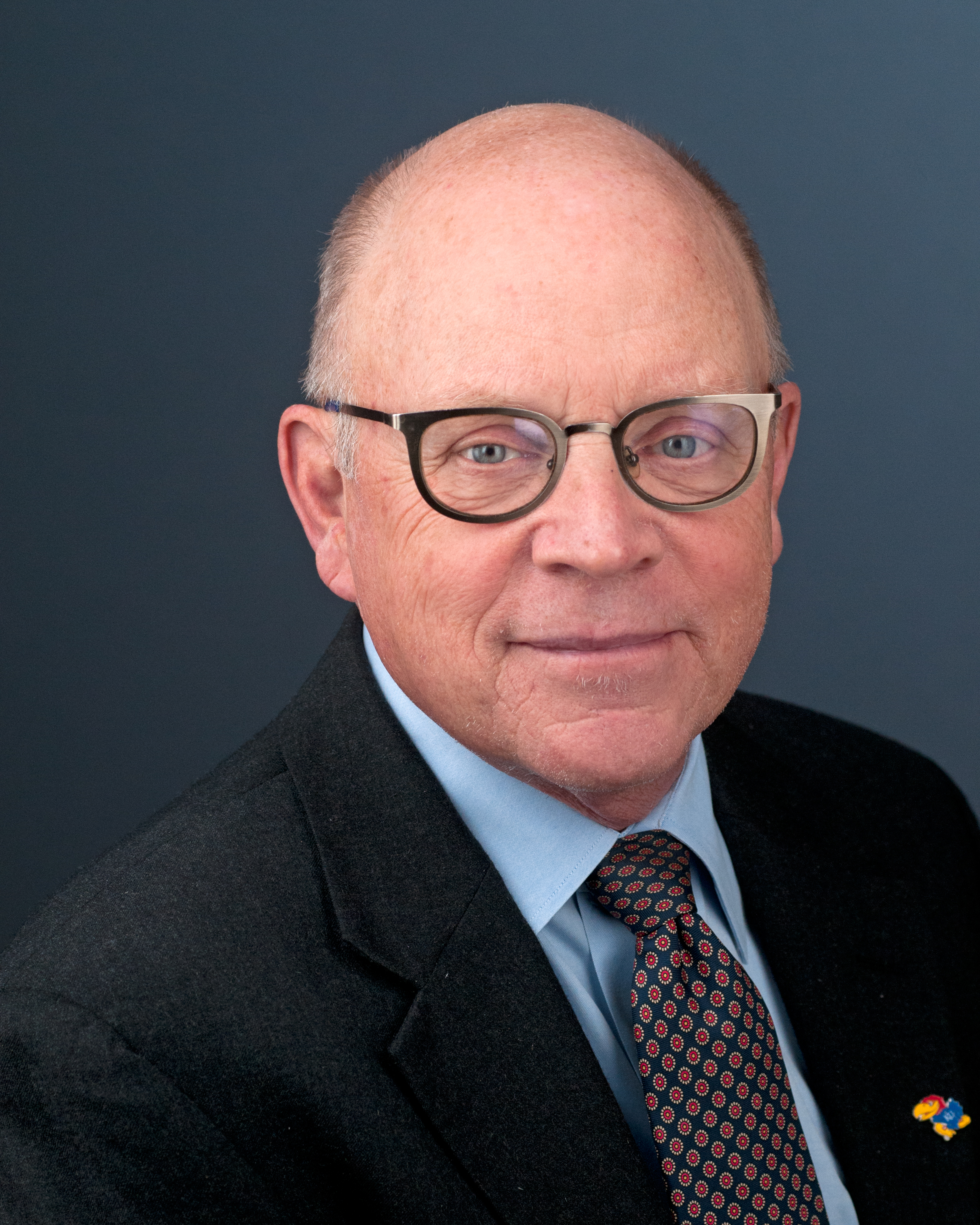
Burdett Loomis, Professor, Political Science, College of Liberal Arts and Science, University of Kansas

Who could have predicted that Republicans and Democrats would alternate in power for the next 70-plus years, with neither party controlling the governorship for more than eight consecutive years? That’s right, the dominant Republican party has not held this office for more than eight straight years since 1949.

Let’s be clear, this does not mean that Kansas has ever been a two-party state. We haven’t voted for a Democratic presidential candidate since the LBJ landslide of 1964 nor a Democratic senator since the FDR landslide of 1932. Still, every eight (sometimes four) years Kansans have consistently, and remarkably, switched their partisan horses, opting for the “outs” over the “ins.”

This alternation in power stands as a noteworthy historical quirk, but it’s far more than that. Kansas voters, while reliably Republican for most offices, have proven fully capable of steering a moderate course when governing the state is at stake. This pattern can tell us a lot about Kansas politics, past and present.

Most notably, Kansans hold their governors accountable, for both their style and substance. So, why?

First, Kansas is a small state in political terms. Of course, it covers a substantial geographic area, but politically the state is like a small town. We tend to think of our governors in personal terms – Kathleen and Sam, for example – and in 2018 the candidates quickly became Laura and Kris.

Second, Kansas voters view policies generated under the capitol dome as the governor’s responsibility, even if legislators drive the process. All governors understand that when they sign a bill into law, the legislation becomes their responsibility, even if they failed to support that version. Governor Sam Brownback’s tax cut reductions didn’t completely reflect his preferences, but he had to embrace the bill presented to him.

Moreover, governors often face attacks for things that go undone, as challengers make them campaign issues. John Carlin forged a winning issue from utility costs, while Joan Finney took advantage of issues left over from Governor Mike Hayden’s actions on property tax classification.

This year’s gubernatorial election powerfully demonstrated Kansans’ willingness — even desire – to give the “outs” a chance to govern. With Kris Kobach largely endorsing the unpopular Brownback tax cuts, Democrat Laura Kelly could campaign as the anti-Brownback/anti-Kobach/anti-far right Republican candidate. Her low-key style, based on fourteen years in the Kansas senate and an emphasis on bipartisan cooperation, provided a distinct alternative to Kobach’s scorched-earth approach.

Nevertheless, partisan alteration in power scarcely guarantees smooth sailing for any new governor. Governor Hayden, who ultimately succeeded in winning major legislative battles, took two years to figure out how best to work with a moderate Republican/Democratic legislature. Governor Finney never figured it out, as lawmakers overrode dozens of her vetoes.

This year’s alternation in power is distinct, however, in that Governor Kelly must contend with the failed results of the Brownback years, not just on tax policies, where considerable progress has occurred since 2016, but in re-building the infrastructure and personnel base of Kansas government.

The past eight years have witnessed the degradation of governance and have increased its partisanship. Governor Kelly and the Republican legislature must find a way to reestablish faith in government. We should fervently root for their success in this critical task, one that past chief executives did not need to address as they came into office.

Burdett Loomis is an emeritus professor of political science at the University of Kansas.

MASON: At FHSU, innovative thinking provides opportunity

Dr. Tisa Mason
At Fort Hays State University, we are breaking ground in today’s higher education landscape as a state university with highly accessible, award-winning programs. I have been thinking a lot about our accessibility. For many the word is quickly associated with affordability, and affordability is indeed a big part of accessibility, but access also means many other things: Our students also have access to Ph.D. faculty, undergraduate research, service learning, travel study, internships, living and learning communities, and so much more – all accessible to students from the first day they enroll, not limited to upperclassmen.

Another way we provide accessibility is through multiple delivery pathways. We meet students where they are, for instance through our distance education programs, international partnerships, and a strong military program for both active and veteran military personnel and their spouses. Or as our website proclaims: “We’re there – no matter where you’re stationed.” I once took a call from a student on a naval ship off the coast of Japan!

We are accessible not only to individuals but also to entire communities. A case in point is how the College of Education is creatively and aggressively addressing the teacher shortage in Kansas. Our Transition-to-Teaching (T2T) program is in high demand. The largest T2T program in the state, it is designed to fill the need for secondary teachers across Kansas by working with individuals who choose to change their careers to teaching. After a summer orientation experience, T2T teachers immediately enter classrooms in their local communities to teach while completing two years of coursework.

We view the T2T program as a partnership between the teacher, the school district and FHSU as the T2T teachers move from novice to expert in the classroom. T2T teachers have been very successful, as evidenced by recent recognition of program completers Justin Coffey for Kansas Teacher of the Year and Heidi Albin for the national Milken Educator Award. This past summer, we had 174 new T2Ts – a record number. When this is coupled with last year’s 130 T2Ts, we are officially over 300 currently in the program.

A unique offering in the Department of Teacher Education is the Para Pathway Program, developed in response to the need for elementary teachers in Kansas. The program, funded by a grant from the Kansas Board of Regents, provides a means for experienced para-educators to become licensed teachers in their districts. This program can be life changing as it allows para-educators to grow professionally while maintaining employment in their district. Through strategic use of scholarship funds and support, we help the schools acquire the licensed teachers they need and improve employment opportunities for Kansas citizens. Currently 218 students are in the program, with 33 program completers.

A newly developed program this summer is the pilot special education program, which allows current special education para-professionals to work as the teacher-of-record in a special education classroom while completing the graduate-level master’s program for licensure. We have 68 teachers starting the program this year which indicates we are making great strides toward addressing the high-need shortage area of special education.

Another example is Dodge City, where we are helping the public school district address language barriers. The goal is to help current teachers communicate better with students and families from different cultures. The Dodge City ESOL (English for Speakers of Other Languages) certificate program started this fall with 20 teachers. Through this partnership, FHSU provides coursework to prepare this group to add an ESOL endorsement to their teaching licenses. ESOL training will improve teacher effectiveness in Dodge City – which has the potential for tremendous impact on the local community.

The College of Education is just one area in which we demonstrate how we think differently – how we innovate. We capitalize on our resources to create new ways to address continuing issues such as teacher shortages while opening up new pathways to education.

At FHSU, access is clearly a multidimensional word. I love how our faculty provide access to multiple opportunities to learn and thrive in Hays, in Dodge City, and around the world.

SELZER: Winter preparations for the next round

Ken Selzer, Kansas Insurance Commissioner

Winter weather in Kansas appeared earlier than usual this year with the Thanksgiving weekend blizzard throughout much of the state. People were caught on the roads, halted at shelters and generally snowed in for a couple of days.

Even though we are behind in the pitch count, so to speak, regarding our Kansas weather preparations, we at the Kansas Insurance Department have some timely considerations that will help you prepare for your next winter storm event. We’ve broken them down into three areas: vehicle insurance, vehicle maintenance and family protection.

First, here are our five important vehicle insurance tips:

• Confirm your insurance is active and premiums are paid. Have a current copy of your insurance card in your vehicle or with you.
• Select liability limits that are right for your financial circumstances. If you find yourself at-fault in an accident and have insufficient liability coverages, your personal assets are at risk for paying the remaining financial obligation.
• If you rent a vehicle for a trip, check with your insurance agent to see if your policy includes coverage. Also, make sure you don’t duplicate benefits from your own policy if you decide to get rental insurance. A quick call to your agent should help determine that.
• Verify that your homeowners or renters insurance covers the theft of personal items from your vehicle, especially if you are planning to haul more expensive items. Many people believe that vehicle insurance covers replacement of stolen items from their vehicles, but that usually is not the case.
• Know if your policy includes roadside assistance, such as towing, fuel delivery, lockout service and jump-starts.

Second, we have some useful tips for trip preparation:

• Have a fully-charged cell phone — and pack your vehicle phone-charging units for your car and standard electrical outlets.
• Make sure you have an emergency kit for long trips. Include a first-aid kit, batteries, flashlights, drinking water, snacks, jumper cables, ice scrapers, tissues and towels, a tow rope, extra clothing and blankets.
• Check your battery and your tires.
• Keep your gas tank at least half-full all the time.
• Check or replace your wipers. Nothing can be as dangerous — or as aggravating — as having faulty wipers during bad weather.
• Make sure your prescriptions are adequate.

Finally, and maybe most importantly, family insurance needs should be a part of your winter preparations as well. Our top considerations for family discussions about insurance matters include the following:

• Make sure, for those young and old, that important insurance and legal papers are in a secure place that more than one person knows about.
• Assess personal insurance needs for yourself and your family. Needs for an older adult, for example, could be much different from those of a child or grandchild.
• Make sure you know what health insurance coverage you and your family have. What are your deductibles and co-pays? What preventive services are now covered? What providers are in your coverage network? Will you be covered away from home?
• Plan your expenses for insurance premiums. Chart your premiums and their due dates on a 2019 calendar.
• In this season of giving, be sure you know the recipients of your financial gifts. Unfortunately, scams abound during this time of year, and the spirit of the season is often the reason that people get taken.

Although we can’t always predict exact winter weather patterns, we can be prepared for any driving and winter event with a little planning. Here’s hoping the holidays and winter season will find you comfortable with your insurance knowledge and preparations.

Ken Selzer is the Kansas Insurance Commissioner.

HAWVER: Transparency in legislative appointment process

Martin Hawver

With the elections over and the Legislature ready to start up on Jan. 14, we’re about to enter what has become a popular issue for the news media — transparency.

It’s the concept, not all bad, of course, that everything that happens in the Statehouse — and even the process of sending people to the Statehouse — should be available to the public, generally over the Internet.

There are likely dozens, maybe hundreds, possibly thousands of Kansans who wonder what really goes on in the Legislature: Who introduced what bills, who voted for or against them in committees, even who voted on amendments to those bills in committees.

And the latest issue aborning is how legislators who quit, die, move, or maybe move up from the House to the Senate, or from the Senate to statewide office, are replaced so their constituents are represented.

This year, the replacement cycle has started. Three senators were elected to higher offices at the mid-point of their four-year terms, and they will be replaced so that their constituents are represented in the Senate. Those selections are made at conventions of their party’s precinct leaders where fill-in candidates are elected and serve out the remainder of the predecessor’s term.

That replacement procedure has drawn some criticism from the press and political activists who don’t much care for a handful of political party officials choosing new legislators.

They’re right. Everyone would like a voice in electing those fill-in candidates, but practically, do they want a new election to fill that vacant seat? And if, say, Democrats (plus some independents and likely even some Republicans) voted a Democrat into office, should everyone be able to vote again on a part-term replacement? Hard to say. How often do you think residents of a House or Senate district want to vote on who will represent them?

Oh, and at least one of those Senate seats being resigned formerly was warmed by Gov.-elect Laura Kelly, D-Topeka. State Rep. Vic Miller, D-Topeka, was chosen by his district’s Democratic precinct committeemen and committeewomen to replace Kelly. And, yes, there’s going to be another of those one-party leadership conventions at which a successor to Miller is going to be elected by the Democratic precinct leaders in his House district.

Anyone can attend those conventions, but only Democrat precinct committee officials were able to vote on Miller and will be able to vote on his successor in the House.

It’s transparent, but, well, has a funny feel to it. But if the seats are going to be back-filled by another election, it could be spring and dozens of House floor votes before voters in Miller’s House district are represented.

This is just a shard of that transparency issue, in which some of the public wants everything done out in the open, even those votes in committee that are largely strategic to push an issue to the full House and Senate where it can be amended before a very public vote.

Yes, things are going to get more complicated this session. A new Democrat governor wrangling with a conservative Republican-heavy Legislature may find transparency an issue that can be used two ways: To publicly target opposition votes, or, with a little less transparency (translucency?), get an issue to the House and Senate floor for a vote.

Just how much transparency, ranging from filling vacant House and Senate seats to recording how lawmakers vote — or maybe videos which can show whether they scratch — in maneuvering in committee will be at the forefront again.

Transparency? Politically, it goes both directions, doesn’t it…?

Syndicated by Hawver News Company LLC of Topeka; Martin Hawver is publisher of Hawver’s Capitol Report—to learn more about this nonpartisan statewide political news service, visit the website at www.hawvernews.com

SCHLAGECK: Silence is golden

John Schlageck writes for the Kansas Farm Bureau.

Today, information bombards us like a meteor shower. It’s everywhere.

Each day our eyes see thousands of images on television, smart phones and screens. Our ears hear many thousand words. A few still read thousands of words on the printed page.

People text and talk. They Facebook and walk. They Twitter and Tweet. They blog and beep. They Bluetooth — didn’t know that was even a word until a decade ago. One thing I do know – Bluetooth should not be used as a verb.

Folks who can’t speak our own English language “good” are creating their own new language every day. Good, your choice of words, not mine. That’s a whole ‘nother story.

Doesn’t anyone listen or read anymore?

Wise men and women throughout history have told us we ought to be doing more of this. Listening to people, music and reading books. Give your eyes a rest from the video world.

I listen to music every day. The earliest music I remember hearing was probably the big-band sounds of Tommy Dorsey or Benny Goodman in the early 1950s on my mom and dad’s 78 record player.

And just so you don’t think, I’m anti-new technology, I started listening to my own iPod 18 years ago.

I’ve recorded more than 200 albums and CDs including Dylan, Led Zeppelin, Little Richard, Iris DeMent, Hank Williams, Handel, Mozart, Sinatra, Billie Holiday, Miles Davis, Duke Ellington, Robert Johnson, Willie Dixon – bluegrass, blues, classical, jazz rock – you name it, I listen to it on my small, wafer-thin, black music box.

Yep, eight GB of memory, 2,094 songs and 5.8 days of music and that’s not counting several hundred LPs (long-laying vinyl) and CDs at home. Analogue remains the best for sound quality, it has no equal. And I don’t do much live streaming. I’d rather select my own music favorites to listen to.

Reading is another passion. I can’t begin to think of how many books I’ve read during the last 60 years. I read every day and sometimes I have two or three books going at the same time.

One of my favorite authors, Leo Tolstoy (War and Peace and Anna Karenina), used to choose a theme and offer a wise thought for each day of the year. He coupled this with quotes from some of the greatest philosophers of all times.

Here are a few of the thoughts on which Tolstoy and others reflected. Most have to do with listening.

After a long conversation, stop and try to remember what you have just discussed. Don’t be surprised if many things, sometimes all things you discuss, are meaningless, empty and trivial.

A stupid person should keep silent. But if he knew this, he would not be a stupid person. —Saadi.

If you want to be a clever person, you must learn how to ask cleverly, how to listen attentively, how to respond quietly and how to stop talking when there is nothing more to say.

People whose only motivation is to say something original utter many stupid things. —Voltaire.

If you have time to think before you start talking, think.

Will what I have to say harm anyone? Is it necessary to speak?

Nothing can support idleness better than empty chatter. People would do better to keep silent rather than speak the boring, empty things they routinely say to entertain themselves.

First think, then speak. Stop when told, “enough.” —Saadi.

Those people speak most who do not have much to say.

People are taught to speak, but their major concern should be how to keep silent.

I have spent all my life amongst wise people, and I have found nothing better than silence in this world. If a word costs one coin, then silence costs two. —Talmud.

Keep silent. Rest your tongue more often than you do your hands. You will never regret that you have kept silent, but you will often regret that you spoke too much.

Do not say words you do not feel, lest your soul be blackened with darkness. —The Book of Divine Thoughts.

Silence is golden. Listen.

John Schlageck is a leading commentator on agriculture and rural Kansas.

YOUNKER: Wet harvest conditions may result in soil compaction

Dale Younker is a Soil Health Specialist with the USDA Natural Resources Conservation Service in Jetmore.

The highly unusual wetter than average fall season had many of us harvesting fall crops in very wet soil moisture conditions. This resulted in leaving wheel tracks and ruts across the fields. Even where we didn’t rut up the field we may have compacted the soil to the point to where plant rooting and water infiltration will be affected. The question now is what we do to correct some of these issues we created.

If there are significant ruts across the field there may be no choice but to do at least some tillage to smooth out those areas just to facilitate future field operations. Probably not a big deal to those that typically do some tillage in their cropping system. But for us no-tillers we may have consider doing some spot tillage just to get the field smoothed back out. I would run the tillage implement just deep enough to fill in and smooth out the ruts. The type of implement you use may be somewhat determined to what is available but a vertical tillage tool may work the best. By design they are made to work shallow and smooth the ground.

That may take care of the ruts, but we still may have a compaction issue that was caused by heavy combine, grain cart and tractor wheel loads. But before we get to anxious about doing something we need to really determine how serious the compaction is. A soil penetrometer that measures the resistance, in pounds per square inch, as it is pushed into the soil works well to determine the amount and depth of the compaction. Another option would be to use a soil moisture probe and determine resistance by feel as the probe is pushed through the soil. There needs to be adequate soil moisture when using these tools to avoid getting false readings.

If we do have compaction that needs to be addressed there some options to correct it. If the compaction is not to severe and is shallow it may be best to let Mother Nature take care of itself. Through the winter the wet soil will freeze and thaw multiple times which will help loosen the soil to the depth that it freezes. In heavier clay soils the shrink-swell action when the soil wets and dries will also help with breaking up compaction layers.

If the compaction is significant, planting a cover crop, especially in fallow cropping systems, may be a good choice. Species with deep tap roots and robust fibrous roots should be a significant part of the seed mix. With the wetter than average conditions there should be sufficient moisture to get a cover crop established early next spring. The wetter soils will also help the plant roots penetrate through the compacted areas. After the cover crop is terminated and plant roots decay, channels will be left behind where new plant roots and soil water can follow through the compacted areas. The cover crop needs to be terminated timely to prevent excessive soil moisture use that may be needed for the next cash crop.

Subsoiling, or ripping, the field with a low disturbance ripper that leaves the crop residue on soil surface in place may also be something to consider. But before we go to that extreme we need

to think about the cost, the amount of time it is going to take and what potential benefit we are going to gain. University research in the corn belt suggest that ripping done at the proper time, proper soil moisture level, and at the correct depth and speed can break up compaction layers. But typically, that benefit is short lived and after one or two tillage operations the soil consolidates and gets compacted again at the tillage depth.

For more information about this or other soil health practices you can contact me at or any local NRCS office.

Dale Younker is a Soil Health Specialist with the Natural Resources Conservation Service in Jetmore.

Now That’s Rural: Lona DuVall, DFA and milk processing

Ron Wilson is director of the Huck Boyd National Institute for Rural Development at Kansas State University.
By RON WILSON
Huck Boyd National Institute for Rural Development

Production leads to processing which leads to progress. That is the desired path of value-added economic development. It was true for the Kansas beef industry in the 1980s and 1990s, and it is now coming true in the Kansas dairy industry. Milk production in western Kansas has grown to the point that new milk processing capacity has developed there as well.

Last week we learned about the western Kansas Rural Economic Development Alliance, or wKREDA, which works on various regional issues including growing the dairy industry in western Kansas. Many of the leaders of wKREDA had seen the boom in jobs which resulted from the growth of meatpacking in the region during the 1980s and ’90s. It was a long progression. The production of irrigated feed grain led to the creation of concentrated cattle feeding. Then the packing plants wanted to be close to the source of production, and large beef packing facilities were built in southwest Kansas.

Production led to processing which led to lots of jobs and population growth. During the 25-year period from 1971 to 2007 — while most rural counties lost population — Ford, Finney and Seward counties in southwest Kansas grew faster than Kansas City and Wichita.

This model of value-added growth led regional leaders to look for another engine for development. In the early 1990s, the dairy industry was identified as a possibility.

Clare Gustin of Sunflower Electric Power Corporation in Hays was one of those involved in the dairy recruitment process. She said that businesses and communities made significant commitments to attract dairies. Rural electric cooperatives such as Pioneer Electric and Wheatland Electric Cooperative offered financial bonuses to the first dairies to locate in their territories. “There was a banker at Syracuse who was one of the early leaders in recruiting the dairies,” Clare said. Syracuse is a rural community of 1,812 people. Now, that’s rural.

Syracuse and other western Kansas communities were successful in attracting dairies. Large dairy farms came to Kansas and others grew. According to the National Agricultural Statistics Service, milk production in Kansas has doubled since 1994. The next step in the value-added model was for that production to lead to processing which creates jobs and economic activity.

“The whole goal was to get processing,” Clare said. “It was a chicken-and-egg thing,” she said. “The producers wanted nearby processing and the processing plants needed the producers.”

Lona DuVall is president and CEO of Finney County Economic Development and current chair of the wKREDA dairy committee. “Our dairy producers had done their part,” Lona said. “But they were losing efficiencies because they had to ship their milk so far away. We wanted to attract milk processing to our region.”

Just as in the beef industry, it made sense for the processing to move closer to the source of the product. In April 2011, Lona called on the nation’s largest dairy cooperative, Dairy Farmers of America, with headquarters in Kansas City. She encouraged them to invest in a processing plant in southwest Kansas.

DFA did a comprehensive market study and eventually committed to build a processing plant in Garden City. “I can’t say enough about how great they were,” Lona said.

In fall 2017, the new state-of-the-art DFA milk processing plant opened. This plant is operating 24 hours a day and daily receives 80 truckloads of milk.

When people think of southwest Kansas, they sometimes worry about whether there will be enough water supply. In this case, the plant is generating water, not using it up. The plant converts fluid milk into powdered milk for export, which means that excess water is a byproduct of the process. The plant generates nearly 800,000 gallons of water per day which can be recycled and used in a region which needs it.

Production leads to processing which leads to progress. We commend Clare Gustin, Lona DuVall, and all those involved in dairy recruitment for making a difference in the region’s economy. It has been quite a project.

And there’s more. Growth has also come about from other industries. We’ll learn about that next week.

First Amendment: Misinformation, hoaxes, hyperpartisan news

Lata Nott

“Misinformation” is Dictionary.com‘s word of the year. The site defines it as “false information that is spread, regardless of whether there is intent to mislead” and is careful to distinguish it from disinformation, which does require a deliberate intent to mislead. Note that that the word of the year is not “fake news.” That’s SO 2016.

For anyone concerned about the varieties of false information, the recent U.S. midterm elections were seen as a test of whether or not, in the past two years, we’ve learned anything about how to deal with them.

Good news: we kind of have! Unlike in 2016, this election cycle did not have a huge spike in misinformation, according to media researchers at the University of Michigan. Facebook and Twitter were much more vigilant this election cycle. (The night before the election, Facebook shut down 115 accounts for suspected “coordinated inauthentic behavior” linked to foreign groups trying to interfere with the midterms.)

But the nature of false information itself has fundamentally changed in the past two years. As CNN’s Brian Stelter wrote a few days before the election: “Are midterm voters being fooled by made-up stories? I’ve been talking with experts and scouring social media websites for answers. My impression is that the specific ‘fake news’ problem is less pronounced this election season. But the threats have morphed and multiplied.”

About a week before the election, I decided to go hunting for some of these threats. I aggregated the most-shared articles about 2018’s midterm elections and used the Newstrition web browser extension — a tool developed by my organization, the First Amendment Center — to quickly fact-check them. Who were the publishers behind them? What kind of content was being shared? News? Opinion pieces? Full-blown hoaxes?

Here’s what I found:

Content from lesser-known publishers can rack up a lot of engagement, even when users have no idea what kind of publisher it is.

Unsurprisingly, a lot of the most-shared content was from well-known national media outlets like CNN, Fox News, The Washington Post and Breitbart. But social media still affords plenty of opportunities for articles from lesser-known media outlets to go viral. That’s not necessarily a bad thing, but it does mean that users aren’t always fully aware of what they’re sharing. Case in point, satirical news site “The Babylon Bee” published a story with the headline, “Dems: Trump’s Refusal To Admit Caravan Into Country Is An Egregious Act of Voter Suppression,” which was shared thousands of times on Twitter and Facebook. Just to be clear, The Babylon Bee isn’t a fake news or hoax site; it has plenty of fans who immediately knew that this wasn’t a real headline, and if you look at its website, it doesn’t really hide the ball about being satirical. But given some of the outraged reactions on Facebook, my guess is that not everyone knew that.

Outright hoaxes going viral have been dramatically reduced, but misleading headlines are still going strong.

One thing I came across quite a bit were headlines that were a lot more salacious than the actual articles. I’d click on a link titled, “Joe Biden THREATENS Republican Candidate — Tells Union GOONS to ‘Show Him a Threshold of PAIN!’ and find a story about Biden expressing his support for unions while campaigning in North Dakota. A quick fact-check revealed that the “Threshold of PAIN!” quote was accurate but taken out of context, but anyway, the article wasn’t a case for Biden being a homicidal maniac so much as a piece of political commentary about Democrats “pretending they’re just as bada** as Trump, while simultaneously pretending they are the party of civility.” Which is fine, but…the headline promised me an ARMY of GOONS!

This bait-and-switch also cropped up in articles with fewer all caps in their headlines. In most cases, the full article would provide nuance and context that the headline didn’t. The only problem is that nobody actually reads full articles anymore; research shows that 59 percent of the links shared on social media have never actually been clicked.

That leads to another related phenomenon.

Hyperpartisan news may be the toughest problem for platforms, and for all of us.

Hyperpartisan news is an interesting thing. It’s not fake news, per se — the events aren’t fabricated, although they’re often sensationalized and viewed through a very specific lens. You can argue with the underlying point of view, but you can’t really debunk something that’s essentially just opinion. As Claire Wardle, the head of First Draft says, “[C]urrently there is little the platforms can do with this type of content. It can not be fact-checked in a formal sense and some would argue that this type of content is ‘politics as normal.’ What we don’t know is how to measure the drip, drip, drip of these divisive hyperpartisan memes on society.”

My guess would be that the impact of these divisive hyperpartisan memes on our society isn’t great. And it looks like Russia agrees with me! According to a former NSA official (now a cybsersecurity threat analyst), “Russian accounts have been amplifying stories and internet ‘memes’ that initially came from the U.S. far left or far right. Such postings seem more authentic, are harder to identify as foreign, and are easier to produce than made-up stories.”

These types of articles don’t have misleading headlines. Their headlines are perfectly in sync with what’s in the full article. You can probably predict exactly what they have to say without even clicking on them.

And that might be the point. We’re increasingly swapping the sort of stories that aren’t really meant to be read. Instead, this kind of content is designed solely to be shared on social media, as a kind of badge of who are you are and a signal to others about where you stand.

Lata Nott is executive director of the First Amendment Center of the Freedom Forum Institute. Contact her via email at [email protected], or follow her on Twitter at @LataNott.

BOOR: In search of the perfect Christmas tree

Alicia Boor
Many people look forward to Christmas time and the smell of a fresh cut evergreen tree can bring back the happy memories of Christmas past.

If you have not picked out your perfect tree for this season, here are a few tips about picking one out.

Bringing home a tree is not the end of the work though. Proper care for the tree once it is in your house may help it stay looking good throughout the holiday season.

If selecting a cut tree, watch for these signs that the tree is too far gone.

• Needles are a dull, grayish-green color
• Needles fail to ooze pitch when broken apart and squeezed
• Needles feel stiff and brittle
• Needles pull easily off tree

Once you have your tree home, recut the trunk about one inch above the original cut. This will open up clogged, water-conducting tissues. Immediately place the trunk in warm water.
Locate the tree in as cool a spot as possible. Avoid areas near fireplaces, wood-burning stoves and heat ducts as the heat will result in excess water loss. Make sure the reservoir stays filled.

If the reservoir loses enough water that the bottom of the trunk is exposed, the trunk will need to be recut. Adding aspirins, copper pennies, soda pop, sugar and bleach to the water reservoir have not been shown to prolong the life of a tree.

Alicia Boor is an Agriculture and Natural Resources agent in the Cottonwood District (which includes Barton and Ellis counties) for K-State Research and Extension. You can contact her by e-mail at [email protected] or calling 620-793-1910

INSIGHT KANSAS: Here come the Democrats

Democrats had a lot at stake this year. They won a qualified victory, and they owe it all to new voters.

Sharice Davids captured the KC-area, 3rd Congressional District from incumbent Kevin Yoder, while Laura Kelly defeated the drama-seeking Kris Kobach for the governorship. Davids is a former White House fellow with a bold approach. She will be Kansas’ first openly gay, and first female Native American member of Congress. Kelly’s more subdued, all-business approach contrasts sharply with Kobach’s antics.

Michael A. Smith is a Professor of Political Science at Emporia State University.

However, in the 2nd Congressional District, Paul Davis could not quite pull off the win against newcomer Steve Watkins.

In the state’s two largest counties, Johnson and Sedgwick, Kris Kobach received more votes this year than Sam Brownback did in 2014. However, Democrats overwhelmed them with new voters. These are voters who simply did not materialize back in 2014, the last midterm election. Democratic vote totals jumped by more than 50,000 in Johnson County, more than 15,000 in Sedgwick County. In Davids’ case, she did flip about 10,000 former Yoder supporters to her side this time, but the rest of her increase over 2014—about 30,000—came from voters who are new to voting in midterms.

Things start to drop off as we head west. The 2nd District merges Lawrence and Topeka with several rural counties, and a majority there supported Trump in 2016. Even so, Paul Davis got about 30,000 more votes than did 2014 Democratic nominee Margie Wakefield. Only about 4000 of Davis’ increase came from former Republican voters. The rest were new. According to politico.com, with his less-than-2000-vote deficit, Davis came closer to winning that seat than did Democrats in similar districts elsewhere, such as Kentucky, but he fell just short of the goal line.

Turnout also rose in counties with smaller cities like Lyon (Emporia), Saline (Salina), and Finney (Garden City), but the increase split more evenly between both parties, plus independent Greg Orman. Turnout and party splits changed little in rural counties with very small populations.

What are the takeaways?

First, Kansas mirrors the nation. Democrats regained the House majority this year by targeting seats which Hillary Clinton won in 2016, and Davids’ victory is a case in point. As things become more rural — and more pro-Trump — Democrats benefit a good deal less.

Second, this election was about the bombastic duo of Kris Kobach and Donald Trump. Kobach tied himself closely to Trump while campaigning, and also featured his own outspoken rhetoric about immigrants, plus dramatic behavior in several court hearings and frequent FOX News appearances. Even 2014’s controversy over former Gov. Brownback’s tax-slashing, budget-draining “glide path to zero” just could not bring out voters the way hot-button issues and national controversy can.

Finally, it is a new day in Kansas’ Congressional delegation. Watkins remains a wild card, for now. As for Davids, my money is on her teaming up with fellow progressive Democrat, Kansas City (Mo.) Rep. Emmanuel Cleaver. With plenty of shared, urban and suburban interests that cross state boundaries, the “Kansas City caucus” may compete with the Kansas caucus for Davids’ attention. Yet Kansas issues like water, agriculture, and transportation still effect the whole state—and still need bipartisan attention. Davids’ support is critical. She will be the only Kansas member of the House’s new, Democratic majority.

The campaigns are over. Now the real work begins.

Michael A. Smith is a Professor of Political Science at Emporia State University. His columns and those of all Insight Kansas contributors are archived at insightkansas.wordpress.com.

CORRECTED to clarify that Sharice Davis will be the first female Native American congresswoman from Kansas.

Exploring Outdoor Kansas: How in the world did that happen?

Steve Gilliland

Archery fall turkey season here in Kansas has been open since October1 and fall turkey gun season will open December 10. I see fall turkey season as the most under-utilized hunting season in Kansas; I shouldn’t preach, I haven’t hunted fall turkeys myself for years. But every time I think about fall turkey season, I think of this story from years ago.

Ordinarily being inducted into any sort of members-only club or organization is an honor; something to be proud of, something to be pleased about, a reason to hold ones head high. One weekend several years ago, however, I was unintentionally and involuntarily given membership in an organization I’m ashamed to be a part of… Let me explain.

It was dusk and a chilly wind blew from the west. I had finally aligned my priorities, and number one was labeled “bag a fall turkey.” Our hunting blind was tucked under some craggy low hanging trees in front of an old silo. An alfalfa field lay in front of me, and the river with its fringe of trees and scrub brush, lay behind. I couldn’t see much to my left, but the west wind had been bringing with it the clucks and cackles of wild turkeys for nearly an hour. Fall turkey hunting is as different from spring turkey hunting as east is from west. The turkeys are grouped in large flocks for the winter, often a hundred or more around here, and hunting them becomes a game of cat and mouse, (ideally the turkeys play the part of the mouse.) Maybe I hunt overly paranoid and ultra-suspicious turkeys, but when the dust settles, I often end up looking more like the mouse myself.

Anyway, there I sat, straining to see the birds I could hear. Slowly black specks appeared in the alfalfa until the field was black, like a pepper shaker had spilled onto a green tablecloth. In two distinct groups they ever-so-slowly filed across the field, strutting, flapping and twittering like school kids after recess. As the first group crossed in front of me they were too far away for a shot, and when they finally disappeared into the trees to my right, I thought my evening’s hunt was over. However, the sounds of turkeys still wafted on the wind and a second large group materialized through the branches to my left, this bunch much closer than the last. I slowly and quietly eased the 12 gauge barrel through the open slit in front of the blind, released the safety and waited, already tasting fresh wild turkey breast.

My best shot was through an opening in the trees about as wide as the blind, and one large hen in front of the flock soon stood there. As she cocked her head and looked my way, I put the front sight of the barrel on the base of her neck, and squeezed off the shot. Even as the sound of the blast still hung in the air, wild turkeys flew everywhere; I mean all the turkeys, every last one of them including the hen I’d shot at!.. I sat in the silence of the dark blind, somehow trying to deny the fact that I had just blown an easy shot. I walked around in the alfalfa as if I expected the earth to suddenly spew forth a dead turkey it had hidden from me as a cruel joke. I gazed in the direction of the fleeing birds as if I planned to see a dead turkey appear without warning somewhere in the distance. I had been told by other hunters that sooner or later every turkey hunter misses an easy shot, and I had just joined that club. I was now a card carrying member of TWITS (That Was Incredibly Terrible Shooting.)

Walking to my pickup, I had to chuckle and wonder what was going through that turkeys mind (since it was not pellets from my shotgun shell.) I knew I could count on a compassionate and understanding response from my wife at home, and, sure enough, she replied “How in the world did that happen?” Continue to Explore Kansas Outdoors.

Steve Gilliland, Inman, can be contacted by email at [email protected].

SCHLAGECK: Where we live

John Schlageck writes for the Kansas Farm Bureau.

Reflection is good for the soul. It allows you to see where you’ve been and hopefully chart a better course on where you’re going. During the Thanksgiving holiday I took the time to contemplate my early life in the small community where I grew up.

Located in northwestern Kansas, Seguin was a small farm/ranch community of approximately 50 hearty souls. It was located in Sheridan County, three miles south of Highway 24 and the Union Pacific railroad used to run through our small village.

Seguin was a community where families were raised and principles – good and sometimes bad – were instilled. Looking back, those fortunate enough to grow up there like I did in the ‘50s and ‘60s were surrounded by people with core values that helped guide us throughout our lives.

At the top of this list of virtues my community provided was spiritual in nature. A spiritual quality like, seek ye first this kingdom of God and his righteousness and all things shall be given unto you.
We all grew up with Monsignor Mulvihill and the Sisters of St. Joseph, went to mass six days a week and learned to abide by the golden rule.

Next, was the courtesy level of our town. This was measured by the ordinary civilities a total stranger could expect. Residents of Seguin and the outlying community always welcomed family and friends back for special events – many centered around our church and its congregation.

Transient laborers, especially during wheat, milo and corn harvest, were also treated well because of their valuable contributions during these critical periods.

Rootedness or a sense of commitment on the part of a town’s people was another cornerstone in our little community. Dependent on the fertile, sandy loam soil of the High Plains, Seguin’s families lived by the unspoken agreement that this was a place to stay, put down roots and build a family, a farm, a business and a future.

This quality is closely related to a sense of place, which now grows more rare with each passing day.
Diversity – not necessarily in the form of many nationalities – but rather in the form of creative disagreement was another building block in our community. This meant our little town enjoyed a certain confidence that all its inhabitants didn’t have to echo one another in order to make progress.

On the contrary, a community, like a country, can profit by its differences. Believe me, nearly everyone I ever knew in Seguin spoke up, voiced their opinions and let their ideas be heard.

Loyalty was the fifth attribute our community was blessed with. Loyalty is often confused with conformity, though the two are really opposites.

It is precisely loyalty to the community, to posterity and to principle that moves a citizen not to conform. A dissenter may never be so loyal as when refusing to go along quietly.

Loyalty is a virtue, but not a simple one. Certainly, it is not as simple as those who use it as a club to enforce their will on an individual or a community.

Generosity was the sixth attribute and not just with material support but a generosity of spirit akin to humility. This broader, deeper attribute sets aside not only personal interests for the sake of community, but personal grudges, slights and obsessions.

One might call this trait charity, but charity in our society has acquired an unfortunate connotation of being optional – not obligatory. Some believe charity is what you do with what you have left over. Those who believe they owe a debt to their community and embrace the opportunity to repay it practice charity, the real thing.

Pride in our little burg was also readily apparent. Self respect may be a better word for this civic virtue. It has to do with much more than clean streets, green lawns and painted buildings. It also explains good schools, honest law enforcement and other amenities that make for a proud, self respecting community.

Openness was the final attribute in our small northwestern Kansas community. Without openness all these other virtues would only be a façade. Our community was an open book. Everyone knew everyone else and everything that was going on. Candor, candidness, frankness, sincerity and plain dealing were the only way of doing business and conducting each day of your life.

Everyone who lived in Seguin was a member of the community and part of our town. Didn’t matter who you were, where you lived, how old you were or whatever else. Our community was a place of human and humane values.

Sometimes in the rush of every day life we forget to live by such values. Know your neighbors, coworkers and the members of your community. And, yes, it’s all right to argue and disagree with them about what is best for the community.

What is important is to care about your community. Think of its best interests and don’t let your mind be diverted by lesser concerns or scattered holdings.

Just like the little community I grew up in and the family and neighbors who helped shape who I am today, each of us live in communities that have values and fine traditions to uphold. Be part of yours.

John Schlageck is a leading commentator on agriculture and rural Kansas. Born and raised on a diversified farm in northwestern Kansas, his writing reflects a lifetime of experience, knowledge and passion.

Copyright Eagle Radio | FCC Public Files | EEO Public File