We have a brand new updated website! Click here to check it out!

SCHROCK: Science illuminates the world

John Richard Schrock is a professor at Emporia State University.

“Science knows no country because knowledge belongs to no country and is the torch which illuminates the world.” These are the words of the great French chemist Louis Pasteur.

Recently, I spoke at a National Agricultural Conference here in Yangling, China. Other speakers here were from the United Kingdom, India, Turkey, two from the U.S.D.A (one from Manhattan, KS) and an assortment of smaller countries that had interests in the continually expanding knowledge about our soils, better crop production, reducing pesticides, identifying new insects, etc. There were also local Chinese researchers who spoke. They shared recent Chinese advances that in turn would be taken back and shared worldwide.

But the day before, I added the above quote by Pasteur as my last “slide.” Why? I am disturbed by recent rhetoric and proposals that condemn students and professors who study and teach across national borders. Some want researchers, who travel to teach and spread our latest scientific knowledge at conferences and in classrooms, to stay home.

Parties in Washington D.C. have discussed sending huge numbers of certain foreign students home. University programs that recruit professors to teach overseas are being portrayed as just attempts at espionage. This scapegoating, coming from the highest levels in America, suggests we should hunker down and hold all of our knowledge to our chest. –That the U.S. is always the inventor, the leader. –And that the rest of the world only rises because they steal from us.

But every table of chemical elements that hangs in the labs of Europe, Africa, China, Russia and the United States–is the same. While helium was suspected as a new element from its absorption in light spectra, the first time it was actually captured and identified was in oil well gasses by the Chemistry Department at the University of Kansas. But K.U. cannot and did not patent helium. This is knowledge that makes up the body of science. It is taught worldwide. It belongs to all.

Certainly there is research conducted by private enterprises and a country’s military, sometimes in cooperation with their universities. Such projects of course have obligations to filter their personnel and protect their inventions. But such projects are very limited. But these political discussions and actions are broad brush, casting doubt on whole international exchange programs and whole groups of students and teachers.

University World News reported that “In May, the Trump administration announced that the validity of visas issued to Chinese graduate students studying in the fields of science, technology, engineering and mathematics would be shortened to only one year.”

There are now unjustified wholesale attacks on Confucius Institutes and exchange systems such as the “Thousand Talents” program. For ten years, I have seen the Chinese “Thousand Talent” program recruit experts from around the world to teach in China for five years. I personally know several, one American in forestry and another who is Chinese and brought his 10 years of expertise in modern agricultural practices. These scholars also come from Europe and Australia and elsewhere. In many ways, it is just a longer term version of our Fulbright awards. Are our Fulbright scholars spies?

Of the nearly 7,000 Thousand Talent scholars sponsored over this last decade, there are currently about 2,600 currently working in China. In some fields, those that return to the U.S. will be bringing back some state-of-the-art academic knowledge because, contrary to popular knowledge, China is now leading the world in various fields of science, particularly in physics.

This politicization of science is not new. This condemning of whole groups of teachers and students is scapegoating. The egregious show trials of Senator Joe McCarthy of the early 1950s cost us dearly in science talent. It was wrong then. And it is wrong now.

This was understood by no less than the Frenchman Louis Pasteur and the German Robert Koch who revolutionized medicine with their new germ theory in the 1870s. France and Germany were not friendly countries. Yet both scientists respected and fed off of each other’s work for the mutual benefit of all humanity. It was unthinkable to either of them to hide their work and results so as to only cure their countrymen.

Indeed, Pasteur said precisely that. “One does not ask of one who suffers: what is your country and what is your religion? One merely says: you suffer, that is enough for me….” Amen.

John Richard Schrock is a professor at Emporia State University.
SELZER: Kansans should increase diabetes awareness

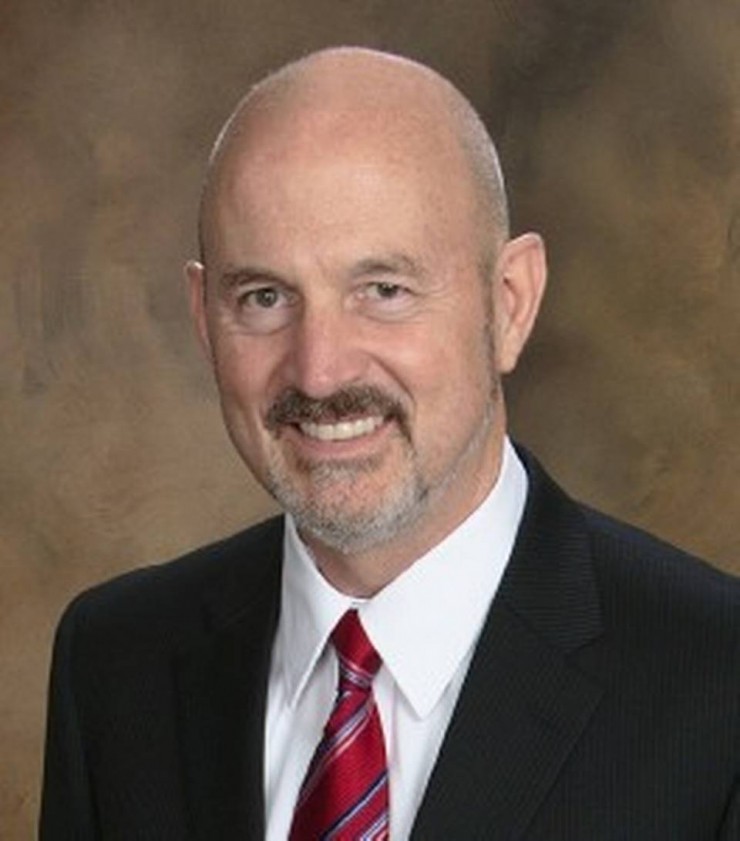
Ken Selzer, Kansas Insurance Commissioner

I urge all Kansans during National Diabetes Month in November to increase their knowledge of diabetes and the ways that it can be managed to reduce the negative impact on a person’s life. Watching for the signs, conferring with your medical provider and engaging in a healthy lifestyle could contribute to reduced risks and costs of this disease.

According to the American Diabetes Association, a total of 30.3 million American adults have diabetes, with 7.2 million of those undiagnosed. In 2015, the association said, 84.1 million Americans age 18 and older had prediabetes, which is a warning sign that their blood glucose level (blood sugar level) is higher than normal, but not high enough to be considered diabetes.

Other warning signals of potential diabetic problems include increased thirst, increased hunger, dry mouth, frequent urination or urinary infections, unexplained weight loss, fatigue, blurred vision and headaches. Left unchecked, diabetes can lead to increased risk of heart disease, stroke, eye problems and blindness, kidney disease and leg or foot amputations, medical experts say.

“With the onset of those warning signs, Kansans would be wise to seek counsel from their medical providers,” Commissioner Selzer said. “Medical experts say diabetes can be a manageable condition with proper medication, diet and exercise. However, ignoring the warning signs could put people at greater risk of deteriorating health and financial hardships down the road.”

Nine out of 10 people with diabetes have Type 2 diabetes, according to the Centers for Disease Control and Prevention. With Type 2 diabetes, a person’s body cannot use its own insulin well and cannot keep blood sugar at normal levels. With Type 1 diabetes, a person’s body does not make any insulin and has to receive injections every day.

For more diabetes information, go to www.diabetes.org, the website of the American Diabetes Association.

Ken Selzer is the Kansas Insurance Commissioner.

MARSHALL: Doctor’s Note Nov. 9

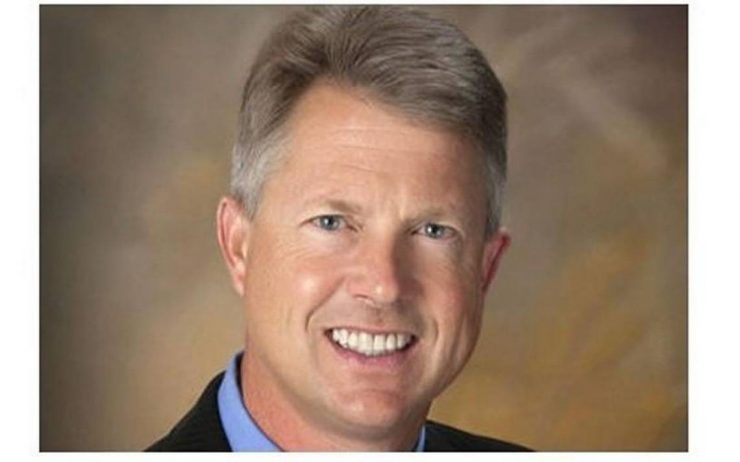
Dr. Roger Marshall, R-Great Bend, is the First District Kansas Congressman.

Friends,

I would like to thank each and every one of you for your support this election. I am humbled to have your trust in representing the Big First.

This Congress has made landmark steps toward reviving American industries by slashing harmful government regulations that were once suffocating Kansan businesses, and unleashed our economy by modernizing our tax code so American consumers have more money in their pockets. I congratulate our new freshman legislators, and I look forward to working with them across the aisle.

In other news, non-farm payroll employment rose by 250,000 jobs in October, smashing economists’ expectations once again. This makes for the longest consecutive streak of positive monthly job numbers in American history. With monthly job gains averaging 213,000 per month, the economy has added 4.5 million jobs since November 2016. These employment gains are widespread, as we see over 40,000 jobs created in the hospitality, education, and health service sectors. Manufacturing and construction services also grew by 32,000 and 30,000 jobs respectively. According to the Bureau of Labor statistics, American workers are being pulled off of the sidelines and unemployment across all demographics is at a record low.

Trade with Cuba
With net farm income resting at a 12-year low, it is imperative that the United States seek new export outlets for American agriculture. With one of these new markets just 90 miles offshore. Cuba, with its population of 11 million people, imports $2 billion of agricultural products each year from faraway producers in Vietnam, China, and the European Union. This could present a huge opportunity for the United States.

Read my Op-ed here.


National Veterans Small Business Week

On Thursday, the Kansas Small Business Development Center (SBDC), in collaboration with the Veterans Business Resource Center and the U.S. Small Business Administration, hosted a networking event in Manhattan for military veterans who double as small business owners. Veterans pitched their entrepreneurial ideas each other and developed closer business relationships. I would like to thank the organizations responsible for organizing such an event. With over 22,963 veteran owned small businesses in Kansas alone, I am proud to see our country giving back to those who risked it all.

Dr. Roger Marshall is the Kansas 1st District Congressman.

Now That’s Rural: Roy and Bobbi Reiman, Netawaka Family & Fitness Center

Ron Wilson is director of the Huck Boyd National Institute for Rural Development at Kansas State University.
By RON WILSON
Huck Boyd National Institute for Rural Development

“Our fitness center – is getting nearer – use it often – you’ll love your mirror.” That’s a message on a series of roadside signs in sequence – Burma Shave style – that one sees on the way to the fitness center in Netawaka, Kansas. It’s today’s Kansas Profile.

Roy and Bobbi Reiman are major donors who helped build this wonderful family fitness center in Netawaka. Bobbi is from Netawaka and graduated from high school there. In fact, she was valedictorian – of a class of 9. Her parents ran the Snappy Inn Café in Netawaka.

Bobbi went to work in Topeka. She became executive secretary to the editor of Capper’s Farmer newspaper. There she met a young man named Roy Reiman. Roy had grown up on a farm in Iowa and graduated from Iowa State before taking the job in Topeka. The two married and began a long life and career together.

Roy’s career took them to Milwaukee. He worked in a business which produced magazines for various companies. One day he came home and announced he was quitting his job to do freelance work. “We had four kids and were expecting a fifth,” Roy said. “My wife was very brave and supportive.” He put a typewriter on a TV tray in the basement and started working.

Roy went to an ag editor’s meeting in Chicago where it was announced that a 1.3 million-circulation farm magazine was dropping its women’s section. “I thought to myself, `That’s more than a million jilted farm women,’” he said.

He set out to create a magazine targeted to the interests of those farm women. What’s more, he had the radical idea of supporting the magazine entirely through subscriptions, with no advertising. The magazine was called Farm Wife News, and it was an immediate success. Eventually it was renamed Country Woman.

That was the beginning of a whole series of Reiman Publications magazines such as Farm and Ranch Living, Country magazine, and Reminisce. At one point, Reiman Publications had 14 national magazines, 16.3 million subscribers, and 640 employees. “Every eighth home in America got one of our magazines,” Roy said.

The Reimans sold the business in 2000 and established a foundation. When Bobbi heard about the plans for a fitness center in her hometown of Netawaka, they became major donors. “We’ve always believed in giving back,” Bobbi said. “We hope this center can help revitalize the whole area.”

There had been interest in a health clinic in the area. With the increased emphasis on wellness, the plans evolved into a fitness center which could serve the entire region.

In September 2013, the Netawaka Fitness Center opened its doors. This beautiful 30,000-square-foot facility includes a fully-equipped weight room, cardio and fitness equipment, a full-size basketball court, an indoor sports training turf room, aerobics, dance, health and wellness classes, event space, childcare facilities, and an 8,000-square-foot heated swimming pool with wheelchair access. The event space and concessions area is named Snappy Inn Café after Bobbi’s family restaurant, complete with historic photos of the community. A physical and respiratory therapy service is based in the facility as well.

“We’ve had some really gratifying experiences,” Bobbi said. They were told about a wheelchair-bound woman who said, after therapy in the pool, “It’s the first time I’ve been out of pain in two years.”

Today the Netawaka Family & Fitness Center has 700 members and is seeking more. The facility has become a community gathering place, especially popular with retirees from the surrounding area who use the indoor walking track and like the opportunity it provides to make new friends.

Burma Shave-style signs with humorous messages are posted around the community to promote the center. The center is a huge asset for the rural town of Netawaka, population 143 people. Now, that’s rural.

For more information, go to www.netawakafc.com.

We commend Roy and Bobbi Reiman and the board and staff of Netawaka Family & Fitness Center for making a difference by building health and fitness in this way. As the signs said: “If getting fit – is what you oughta – then bring your bod – to Netawaka.”

INSIGHT KANSAS: Voters chose Kelly, reject brash partisan politics

Shock and awe! Kansas voters nailed the coffin shut this week on the discredited Brownback era. They chose a bipartisan path forward by electing Democratic State Senator Laura Kelly as governor and soundly rejecting her opponent, Secretary of State Kris Kobach.

H. Edward Flentje is professor emeritus at Wichita State University.

Kobach was embraced by President Donald Trump, but campaign rallies on Kobach’s behalf by Trump, Vice President Pence, and Donald Trump, Jr., could not overcome Kelly’s disciplined campaign.

Kelly’s message to voters was consistent and focused: Support our public schools. Do not turn back to the brash partisanship of Brownback, as Kobach promised to do.

Kelly came across to voters as calm, reasoned, and understated, a dramatic contrast to bombastic Kobach. She also topped Kobach on fund-raising.

Kelly’s campaign showcased bipartisanship by assembling endorsements from an array of high-profile Republicans, including former U.S. Senator Nancy Kassebaum, former Governors Mike Hayden and Bill Graves, and dozens of current and former state lawmakers.

Voters in the five large urban counties—Douglas, Johnson, Sedgwick, Shawnee, and Wyandotte—gave Kelly a hefty 110,000 vote cushion that assured her statewide victory.

Kelly’s challenge in governing for the next four years will be to carry forward on her commitment to bipartisanship. Two years ago voters elected a legislative coalition that not only abandoned Brownback’s radical tax experiment but had the votes to override the governor’s veto.

The numbers for a potential bipartisan coalition have tightened due to the successful targeting of legislative seats by the Kansas State Chamber and its dark money ally, Americans for Prosperity. House Democrats will begin the 2019 legislative session with 39 seats, one short of the past two years, and centrist Republicans with roughly 35, a handful short. However, this coalition will not likely be confronted by a gubernatorial veto.

Republican lawmakers aligned with the Kansas Chamber will control the party caucuses in both the House and Senate, but their numbers fall way short of majorities in their respective chambers. To accomplish anything of substance their leaders would have to convince Democrats or centrist Republicans, as well as the new governor, to join them.

Kelly’s success will depend on working effectively with centrist Republicans and their leaders in both the House and the Senate. These centrists will face challenges in keeping their numbers together while navigating the legislative process with a friendlier governor and potential allies across the aisle.

However the legislative process unfolds, Kansans should expect Kelly to chart a more moderate course for Kansas:

In tone. Brownback’s rhetorical pomposities (“shot of adrenaline,” “a real live experiment,” “look out Texas”) will be retired to the dustbin of history.

School funding. Outstanding issues of concern to the Kansas Supreme Court will be addressed quietly and effectively. Talk of a constitutional amendment to stiff the court on school finance will fade.

Taxes. Tax policy will be guided by balance and diversity in taxes—assuring lower tax rates overall, reducing tax competition with other states, and promoting tax fairness based on income. Serious attention to cutting the sales tax on food will be underway.

Judicial selection. Any constitutional amendment proposing to replace merit selection of the Kansas Supreme Court judges with partisan selection will be dead. Consideration will be given to restoring by statute merit selection of judges to the Kansas Court of Appeals.

Federal aid. Federal funds of assistance to vulnerable Kansans will no longer be blocked by the governor’s office, as in the past. The expansion of Medicaid for low-income working Kansans will move ahead.

Kansas voters opted for a bipartisan path forward, and Governor-elect Laura Kelly has an extraordinary opportunity to point the way.

H. Edward Flentje is professor emeritus at Wichita State University and served with Kansas Governors Bennett and Hayden.

MASON: Regents visit provides opportunity to shine – and learn

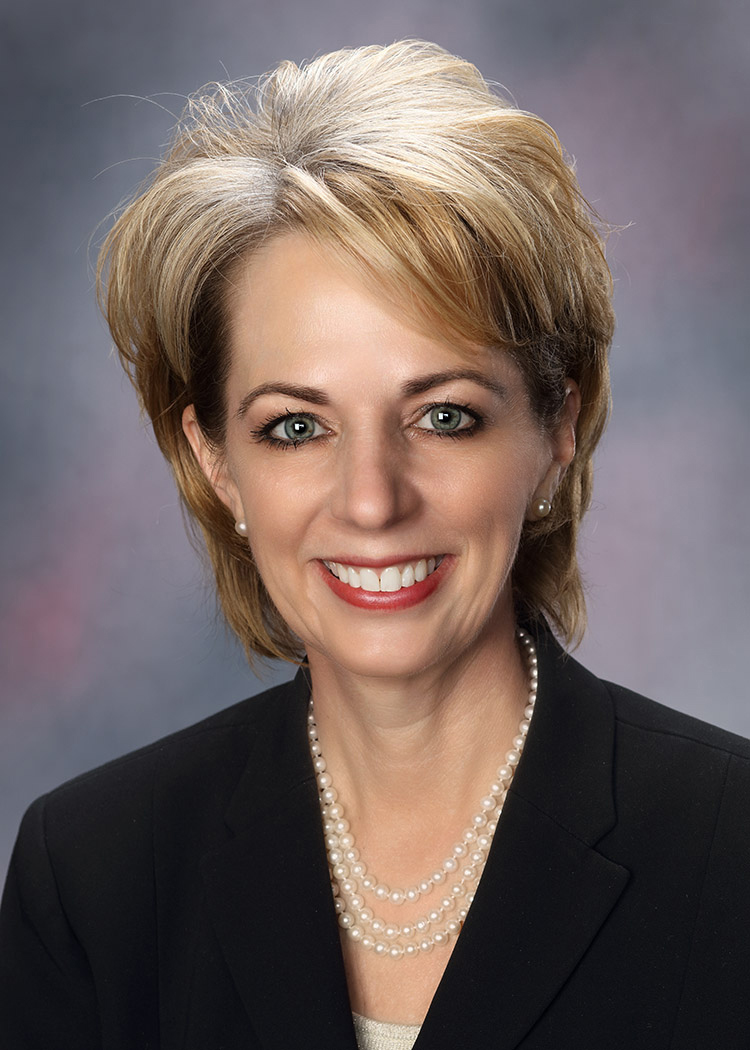
Dr. Tisa Mason

Recently Fort Hays State University had the opportunity to host the Kansas Board of Regents for a campus visit. I was very grateful to have time set aside for the Regents to focus on FHSU and for us to demonstrate our remarkable success and innovative, hands-on education. The visit included getting to know two new Regents – Hays’ very own Allen Schmidt and Mark Hutton (Wichita). I faced one major problem: Which of our many forward-thinking programs should we highlight?

The visit began with a dinner hosted in the Center for Applied Technology – a spectacular building and the new home for students studying industrial technology, technology and engineering education, and sculpture. Students can learn in engaging spaces such as computer CAD labs, instructional and graphic labs, STEM labs, woodworking labs, metalworking labs, plastic labs, power and energy labs, robotic labs, construction management labs, sculpture studios, and metal foundry studios.

The Center for Applied Technology was the perfect location for a theme of educational innovation. The Regents witnessed an aluminum pour and the demonstration of an in-progress recreational charging station. They had the opportunity to interact with students, who showed the Regents how to manipulate drones, 3-D printers, robots and more. Regents could also explore the FHSU Maker Van.

Experiences the next morning featured the Department of Communication Sciences and Disorders and the Department of Allied Health and the innovative learning technologies available.

Students in communication sciences and disorders gain practical, real-world experience with clients through the Herndon Clinic. The Regents observed a live demonstration of a tympanometry and otoacoustic emissions (OAE) procedure. Tympanometry tests how well the eardrum moves and the middle ear functions. The OAE test is used to find out how well the hair cells of the inner ear, specifically the cochlea, works. It measures otoacoustic emissions – the sounds given off by the inner ear when responding to a sound.

Regents were also able to watch a live demonstration of a fiberoptic endoscopic evaluation of swallowing (FEES). The scope is introduced through the nasal cavity in order to view the laryngeal and pharyngeal structures (i.e., the throat) and function during swallowing. The state-of-the-art technology with which faculty teach and students learn here was truly impressive – and I sincerely hope the student who volunteered to be scoped received extra credit!

Staying with the theme of the healthcare industry, the Regents attended classes in the Allied Health Department. Imaging technologists operate sophisticated equipment to assist physicians in diagnosing and treating a range of health problems. As highly skilled employees in a growing field, imaging technologists often work in multiple specialty areas, including radiologic technology, computed tomography, magnetic resonance imaging, sonography, cardiovascular-interventional technology, bone densitometry and mammography.

I loved how the students spent a lot time in the roles of both patient and practitioner. Students earning a degree from the Department of Allied Health have vast opportunities to align with many different medical providers and facilities – a message Regents, students, and parents love to hear.

At the intersection of culture, communication, and technology, the Institute for New Media Studies is developing a number of interactive projects that visualize, conceptualize or apply information. Here, Regents had the opportunity to visualize the human brain, fly through a virtual campus, experience augmented reality, play with a smart table and meet the students and faculty who make it all happen. Our leading edge on learning technologies and artificial intelligence is truly remarkable – and enviable.

We ended by helping the Regents to a better understanding of how we approach online course development and why FHSU Virtual College faculty and students are so successful. Faculty and instructional designers provided interactive simulations enabling the Regents to experience what it is like “inside” an online course. I also had some fun exploring.

In health and human performance classes, for example, online students attach headphones to their computers where they can hear a heartbeat and practice blood pressure readings. Somewhat similar to playing an online version of the child’s game “Operation,” I learned how to attach specific electrodes to the correct area of the human body in order to perform a 12-lead ECG.

Experiencing these activities and others demonstrates that, at FHSU, online learning is much, much more than reading and responding to static information on a computer screen.

While any of our academic programs could have been highlighted with equal positive impact, I am extremely grateful for the faculty, staff and students who took the time a few weeks ago to highlight why we are so successful in unlocking untapped potential and preparing students for an exciting and rewarding future!

Dr. Tisa Mason is the president of Fort Hays State University.
HAWVER: Crucial revenue report will closely follow election

Martin Hawver
On Friday afternoon, just three days after Kansas voters have decided just whose name will go on the checks that will provide the $99,636 salary we pay our governor, a small panel of economists and tax experts will deliver the second-biggest news of the week in Kansas.

It’s the obscure Consensus Revenue Estimate (CRE) panel, and it will deliver the real news which is the experts’ best estimate of just how much money that governor is going to have to spend in his/her first year at the top of the governmental food chain.

Now, there isn’t going to be a reception with drinks and finger-foods as the results are announced, but just how much money the governor will have to provide Kansans the services that they campaigned on is a big deal.

That CRE will become the baseline for the new governor’s budget and is the key to not only fulfilling campaign promises, but to providing basic services to thousands of Kansans who receive state-financed social services and health care from the state, plus things like highway work, aid to public education, public safety, the judiciary and everything else.

It’s a big deal.

In last year’s estimate, the group of scholars predicted that the state would take in $6.8 billion for the current fiscal year, which ends on June 30, 2019. That was a $108 million boost over the previous year. And in April, the CRE was adjusted, and this year’s revenues were estimated at $7 billion, a boost of $217 million for the current budget year, for which spending was approved last spring.

Not a bad boost in revenue, was it?

Well, Friday we find out whether there is more money that the Legislature can spend—or return to Kansans in the form of tax cuts for the current fiscal year, and the amount that the governor/Legislature will have to spend or not spend or return to Kansans through tax rate reductions in the fiscal year that starts next July 1.

Yes, that’s the real result of that CRE estimate Friday. Spend more money or cut taxes. Republican Kris Kobach talks about income tax cuts, Democrat Laura Kelly talks food sales tax cuts, after meeting Kansas Supreme Court orders for more spending on K-12 education.

Best estimates are that the Kansas economy is relatively strong now, lots of people working, and jobs out there for the unemployed if they care or have the skills to land those jobs. Count on the CRE showing some more revenue to spend or save or return.

The income and sales tax increases of the past couple years are now solidly in effect. We’ve seen what they produce in revenue, and this CRE ought to be a pretty good measure of just how strong the Kansas economy is. The income tax boost of a couple years ago? Well, the administration never really knows how much those tax hikes raise until people have been paying them for at least a year, and that year is over.

So, what happens after Friday?

It’ll be mostly under-the-covers planning for adjustments of current year spending, most of which has already been approved by the Legislature, with some touch-ups for unanticipated spending needs.

But the real news will be that the CRE is a new governor’s blank check for her/his first budget, and a definition of just what the new governor believes is important, either for the state or for the governor’s future…

New governor? That’s big news. And how that new governor plans to spend our tax dollars? That’s big news, too…

Syndicated by Hawver News Company LLC of Topeka; Martin Hawver is publisher of Hawver’s Capitol Report—to learn more about this nonpartisan statewide political news service, visit the website at www.hawvernews.com

SCHLAGECK: In praise of hunting

John Schlageck writes for the Kansas Farm Bureau.
During the early days of our country, settlers hunted out of necessity. While farming and trading provided them with a great deal of food, it wasn’t enough for sustenance. To survive, they hunted, fished and trapped wildlife where they lived and worked.

Today, hunting in America offers two major benefits to society: wildlife management and an economic boost.

Most wildlife populations continue to thrive under conservation programs put into place in the early 1900s. For example, the white-tailed deer population was a meager half a million 100 years ago. With careful conservation efforts, plentiful crops, well planned hunting seasons and reasonable limits for hunters, the population has grown to approximately 32,000,000.

Almost every other wildlife species has flourished as well. Most of these animals number in the millions today. This wasn’t the case before the efforts of hunters and wildlife enthusiasts became commonplace.

Just as impressive are the numbers on the economic impact of hunting. With approximately 6 percent of the U.S. population hunting today, business is booming.

For countless small businesses in rural Kansas communities, hunter spending plays a major role in economic success.

Local shops, outfitters, hotels, convenience stores, restaurants and landowners across the United States all benefit. In 2011, nearly 13.7 million hunters spent $38.3 billion, according to a 2011 U.S. Fish and Wildlife Service survey.

In addition to the 680,000 jobs supported by hunters, hunting generated nearly $12 billion in tax revenues for federal, state and local coffers. Wildlife agency positions are also supported by sportsmen through the purchase of hunting licenses and funds collected as excise taxes through the long-running Federal Aid in Wildlife Restoration.

These sportsmen contribute on average $8 million per day nationally, much of which goes toward conservation efforts. Billions of dollars have been used to protect fish and wildlife habitats throughout the country.

Through conservation efforts, money generated and jobs created, hunting remains a positive engine in this country’s economic industry. What many fail to understand about this sacred tradition is that it isn’t just about the act itself.

Hunting provides the opportunity to experience nature. Some sportsmen will tell you the best part about hunting isn’t shooting. It’s the peacefulness and serenity of being outdoors.

Some may even feel a connection with their ancestry while hunting. It’s also an opportunity to pass such traditions to their children and friends.

For generations, families have shared these experiences and it has strengthened their relationships. It is a visceral feeling that can strengthen family bonds. Hunting remains a way of sharing in nature’s beauty and the dynamic between human and animal have few comparisons in society today.

Hunting prevails as a part of our American identity. Millions of people take pride in hunting. Their experiences are much bigger than themselves and create this community we call hunting.

John Schlageck is a leading commentator on agriculture and rural Kansas.

News From the Oil Patch, Nov. 5

By JOHN P. TRETBAR

Kansas oil-and-gas operators filed 165 intent-to-drill notices with the KCC last month, including eight in Barton County, five in Ellis County, eight in Russell County and six in Stafford County. So far this year, the KCC reports 1,635 new intents, compared to 1,298 through October of last year. By this time in 2014, when prices were starting to drop from record highs, operators had filed drilling notice on 5,815 new wells.

Baker Hughes reported 1,067 active rigs across the U.S., down one oil rig. Texas was down four rigs, while Oklahoma gained three.

Independent Oil & Gas Service reports a slight increase in the weekly drilling rig count in Kansas. There are 30 rigs in western Kansas that are moving in, rigging up, drilling or relocating, up one from last week. The count east of Wichita was unchanged at ten active rigs. Operators are about to spud one well in Ellis County, two in Russell County and one in Stafford County. They’re moving in rotary drilling tools at another Stafford County lease, and they’re moving in completion tools at one site in Ellis County.

There were 60 permits for drilling at new locations filed last week across Kansas, 38 east of Wichita and 22 in the western half of the state. There are four new permits in Ellis County, two in Russell County and three in Stafford County. So far this year, 1,539 permits are on file, which marks a big improvement over the 1,190 permits filed through the first week in November last year.

Independent Oil & Gas Service reports 41 new well completions for the week, 1,294 so far this year. There were 25 new completions in eastern Kansas and 16 west of Wichita, including one each in Barton, Ellis, Russell and Stafford counties.

Crude inventories spiked last week, increasing by 3.2 million barrels to 426 million, about two percent above the five-year average for this time of year. Crude production also increased. EIA reported total production of 11.188 million barrels per day for the week ending October 26. That’s up 315 thousand barrels per day over the week before, and 1.6 million barrels per day more than a year ago.

Texas regulators reported a significant drop in production. The state produced an estimated 90.3 million barrels in August, the latest numbers available from the Texas Railroad Commission. That’s down more than eight million barrels from the month before, and about 300,000 barrels lower than August of last year.

The Trump administration announced it is exempting eight countries from the Iran oil sanctions, which officially resumed Monday. Those exemptions reportedly included some of the largest importers of oil from the Islamic republic. Those countries’ imports from Iran have already dropped dramatically, and officials say shipments from Iran are expected to drop by as much as 1.7 million barrels a day. Reuters reported major Asian buyers of Iran’s crude have already cut purchases to a 32-month low. China, India and South Korea last month imported 1.13 million barrels per day from Iran, down nearly 41% from a year ago and the lowest totals since the previous sanctions were lifted.

Chevron doubled its profits in the third quarter on record high quarterly production of nearly three million barrels per day. Chevron posted a profit of $4.05 billion for the quarter, more than double its earnings from a year ago. Royal Dutch Shell reported third quarter profits were up 60% to $12.1 billion, the highest in four years. Exxon Mobil beat expectations for quarterly profit and revenue, but reported another drop in total oil and gas production. Quarterly profits for the world’s largest publicly traded oil and gas company surged 57 percent to $6.24 billion.

Oil and gas giant Chesapeake Energy reported third-quarter net income of $84 million, after reporting a loss in the same period a year ago. The Oklahoma company also announced its purchase of Texas producer WildHorse Resource Development for nearly $4 billion.

The Canadian Press reports record oil exports by rail out of Canada in August, an eleven percent increase to more than 229-thousand barrels per day. That’s nearly double the oil-by-rail exports from Canada in August of last year. An analyst from the Royal Bank says Canadian producers are losing millions of dollars a day in discounted prices. The region does not have enough export pipeline space, and those barrels can’t go into storage in Alberta because there’s no room. The traditional solution, to put the stranded oil in railroad cars, won’t work because that capacity is also full and growing too slowly to make a difference. The bank predicts fourth-quarter rail exports will increase to about a quarter million barrels per day.

Some Canadian producers are getting so desperate to get crude to market they’re using trucks, some of them traveling 500 to 600 miles to the nearest pipeline or rail terminals. Bloomberg reports the country’s crude-by-truck exports nearly doubled due to pipeline bottlenecks to almost 230,000 barrels in August.

Exploring Outdoors Kansas: Who’s around your campfire?

Steve Gilliland

From where we parked near the entrance to Kanopolis State park, we could see the mountain man encampment scattered among the trees across the road.

White canvas tents of all sizes and descriptions, including teepees dotted the little valley. The sharp smell of wood smoke from campfires hung in the air, stinging our eyes and slightly provoking my grandsons asthma. Mountain man rendezvous began in the early 19th century as opportunities for mountain men to gather for social interaction, to trade furs and goods and to purchase needed supplies they couldn’t make or harvest for themselves like traps and rifles.

Shooting and knife & tomahawk throwing competitions were a part of such gatherings, and as we walked into the encampment the booming sounds of muzzleloader fire echoed through the trees as both men and women shooters tried to best each other. I could only try to imagine what welcome sights and sounds these would have been to the mountain men of generations ago as they gathered together after months of trapping, hunting and living alone in the mountains.

The Prairie Long Rifles (PLR) mountain man club started in 1978 with 11 members (7 of which are still in the club today) and began holding annual rendezvous open to the public in a pasture just east of Salina, KS. They changed rendezvous venues a couple times and in 1993 chose Ottawa State Fishing Lake near Minneapolis, KS.

Wendy Bowls, a conservation worker at Kanopolis Reservoir attended PLR’s rendezvous there at Ottawa State Fishing Lake in 2000. The weather had been wet and rainy and the side roads leading to the site were muddy, greatly restricting public access, and parking was terrible. Wendy convinced her bosses at Kanopolis Reservoir to invite PLR to hold their annual fall rendezvous there at Kanapolis Lake where they have been now since 2001. Wendy’s daughter Lacey first shot a muzzle loading rifle at their fall get together when she was 4 years old, and has returned to shoot again each year for the past twenty years. Prairie Long Rifles presently has 30 active members.

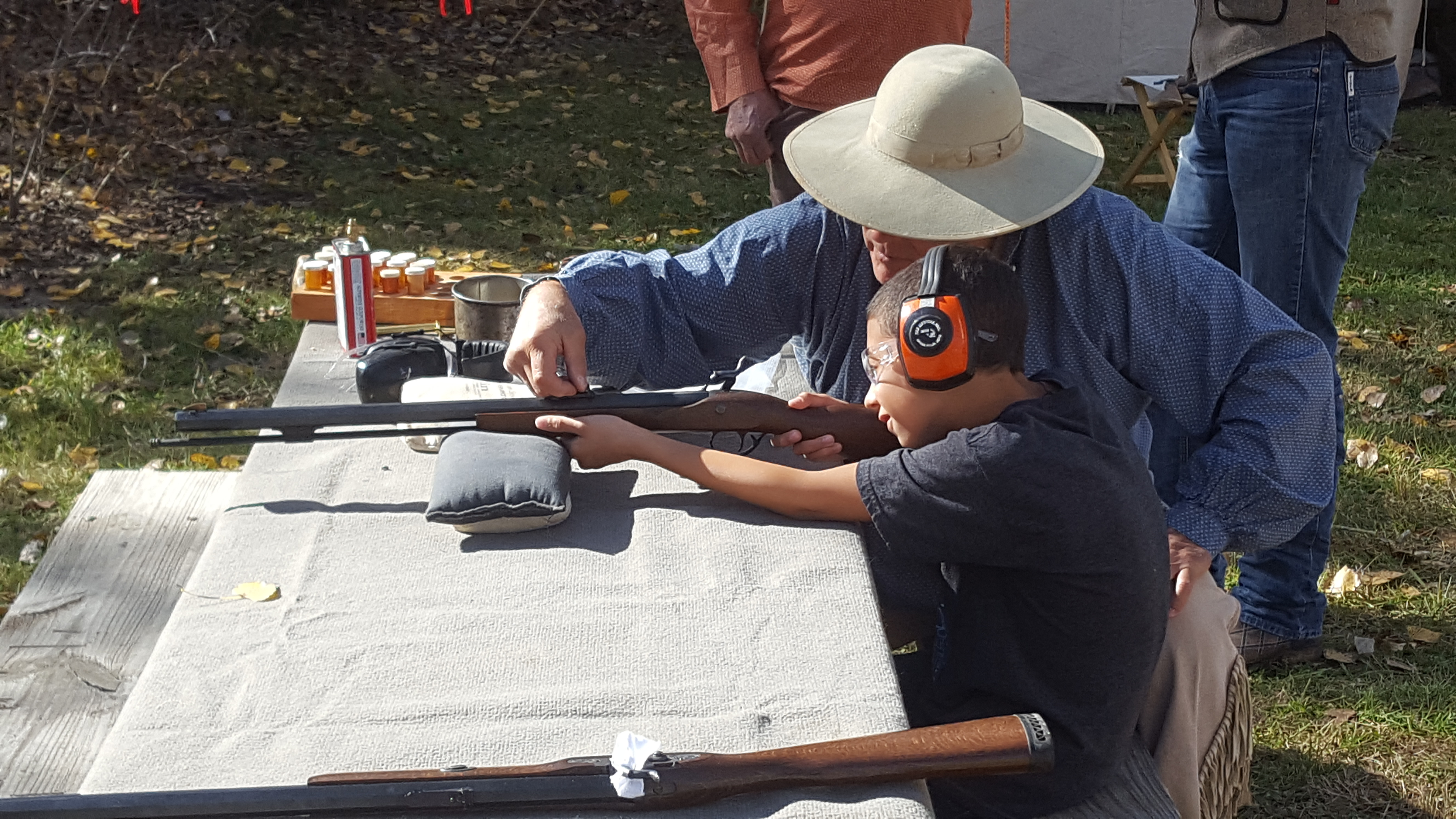
I was certain my 10 year old grandson Jacob would turn himself inside-out for a chance to learn how to throw a big knife and a tomahawk (known in camp as a “hawk”) at a wooden target, but when he strongly declined, I wasn’t even going to suggest he shoot a muzzle loading rifle. But when asked, he was eager to do just that. Paul Riedel, a retired school counselor from Minneapolis has been helping teach kids to shoot muzzleloaders at PLR rendezvous for at least 20 years.

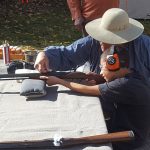
A special range was setup for kids with small steel buffalo targets balanced side-by-side on a board and a picnic table for a shooting bench. Dennis Wolf, known around camp as “Wolf” sat down with Jacob and explained to him the workings of a muzzle loading rifle and how to safely load and shoot one. With each shot, a puff of blue smoke enveloped them both for a couple seconds, and Jacob’s third shot spun the buffalo around on the board. With the firing line secured, Wolf walked downrange with Jacob, showed him where he hit the target and hung a medallion around his neck that said “I shot a muzzleloader.”

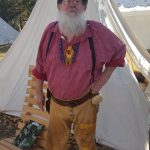
George Mills, known around camp as Bart, lives in Tonganoxie, KS and by day helps make “Cheese It” cheese crackers at the Kellogg Bakery in Kansas City. On his time off, he becomes “Bart” and attends mountain man rendezvous where he sells and trades leather goods he’s made. He told me “I make leather shirts, pants, moccasins and about anything a mountain man uses.”

Bart sports a nice beard and years ago he was told he looked like a mountain man Santa. So he wears his Santa hat from Thanksgiving till Christmas and plays Santa at the annual Salina Trade Show, a mountain man trade show where one can buy or trade for anything needed to enjoy the pastime of mountain man living. George says he enjoys the mountain man lifestyle “Cause’ it allows me to spend time like the old folks did.”

Paul Ottensmeier is a retired purchasing agent that was given the name 2 Paws when he was young by his grandfather. His wife Teresa, known in camp as Songbird is the kitchen manager at McKinley school in Abilene. Their son Jonathon, aka Shooting Star, his wife Jean and their kids all participate in mountain man activities with 2 Paws and Songbird. 2 Paws made all the buckskin period clothing the group wears, and puts out a “trading blanket” on the ground covered with clothing and other mountain man necessities to buy, sell and trade. They belong to the Turkey Creek Muzzleloaders but are welcomed at all PLR events.

I asked everyone I spoke with why they enjoy reliving the lives of mountain men and their families. Some liked the historical aspect of it, some liked what it taught their kids, some liked the challenges of that life, but everyone without fail liked the simplicity of that lifestyle of days gone by; all wonderful reasons in my book to Continue Exploring Kansas Outdoors!

Steve Gilliland, Inman, can be contacted by email at [email protected].

`

WINKEL: Needle drop on arborvitae, pines and spruce 

Rip Winkel
It’s that time of the year where we see a very noticeable needle drop on some evergreens such as arborvitae, pines and spruce.

In fact, just this last past week I have received a number of calls on this very issue. Not to worry, as this is normal, and to be expected. Evergreens do not keep their needles indefinitely but will drop them after one to several years. This is a process that happens with these types of conifers, where 2- to 4-year-old needles, usually in the interior of the canopy by this time, turn yellow, then brown, and eventually drop off.

For example, Ponderosa and Scotch pines usually keep their needles for three years. However, this pattern may vary from tree to tree and year to year. Also, this process may be a gradual one, or all the older needles may turn in a very short period of time.

If the needle dropping is sudden, and people are not familiar with this process, it is often that they become concerned about the health of these trees. Again, this natural phenomenon occurs every year, and does not by any means hurt the tree. Having said that, be sure to check that only the older needles towards the center of the shrub or tree, are the ones browning and dropping.

The needles on the ends and tips of the branches should look fine, having their normal green color. Check to see that there is no spotting or banding on the needles on the ones that are turning yellow. If spotting or banding is noted, take a sample to your local county extension office for diagnosis. What’s more, if the tips of the branches (candles) have turned brown, brittle, and are hollow inside, or if whole branches and sections of the plant have died back, again, be sure to contact your local Extension office. They have information for the proper remedial actions to take.

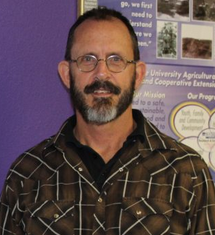
Rip Winkel has been the Horticulture agent in the Cottonwood District (Barton and Ellis Counties) for K-State Research and Extension. You can contact the office by e-mail at cottonwood.k-state.edu or calling either 785-682-9430, or 620-793-1910.

Now That’s Rural: Starbuck Fire – Gardiner Ranch, Part 3

Ron Wilson is director of the Huck Boyd National Institute for Rural Development at Kansas State University.
By RON WILSON
Huck Boyd National Institute for Rural Development

March 6, 2017. Members of the Gardiner family were working cattle on their ranch in southwest Kansas when they started to smell smoke. Little did they know that almost their entire ranch was about to be consumed by the largest wildfire in the history of Kansas.

In the last two weeks, we’ve learned about Mark, Greg and Garth Gardiner who operate Gardiner Angus Ranch. They were at the epicenter of this disastrous fire in 2017.

In February 2017, an ice storm loosened overhead power lines in Oklahoma. When high winds arose in March, the lines banged together, arced and started to melt, causing sparks which set fire to the dry grass below.

“We were working cattle when we started to smell smoke. We could tell it was pretty intense,” Mark said. He went to alert the neighbors. When the wind speed rose to 80 miles an hour and changed direction, disaster was on its way.

“There was a wall of flames as far as I could see,” Mark said. He called all the people he could and told them to get out of the path. Mark and his wife Eva hurried to their house which was directly in the path of the flames. He called his brother Greg and told him to bring a trailer to rescue the horses there.

Mark and Eva found flames racing toward the house. They ran in to try to rescue the dogs. Mark was able to grab the kids’ baby pictures and some boxes of letters, but he lost Eva in the smoke.

Meanwhile, Greg had arrived with the horse trailer. Confronted with a 60-foot wall of flames, he drove the truck and trailer out to the wheat pasture in blinding smoke, with embers hitting the windshield.

“I felt so bad that I left,” Greg said, but it turned out to be a blessing. “It was a God thing,” Greg said in retrospect. “Mark’s house is built in a place where there’s only one way in and one way out. If I hadn’t moved the truck when I did, he would have been trapped inside.”

Greg met Eva in the wheat field, but they didn’t know if Mark had survived. He had doubled back to fight the fire. Twenty minutes later, firemen confirmed to them that Mark was alive.

Much of Clark County was consumed in the fire. One man perished when his semi-truck jack-knifed in the smoke and he tried to escape on foot. “You couldn’t outrun it,” Mark said.

Thanks to the hard work of firefighters and other volunteers, the towns in the county were spared. Those include the rural towns of Ashland, population 867; Protection, population 514; and Englewood, population 77 people. Now, that’s rural.

When it was all over, Mark and Eva Gardiner’s home was burned up along with 42,000 acres, 7,000 bales, 270 miles of fence, and hundreds of cattle. Hundreds more had to be euthanized. However, their key genetic beef seedstock survived, as did their horses.

The response to the disaster was heartwarming. “I didn’t leave the ranch for 48 hours, but as I did, a semi hauling hay bales was already coming into the drive,” Greg said.

“People came from all over to help,” Mark said. They were truly making a difference.

The Ashland Community Foundation, Kansas Livestock Association, and Working Ranch Cowboys Association helped provide major relief.

“Senator Jerry Moran and Congressman Roger Marshall were really helpful,” Mark said. He credits local banker Kendal Kay and veterinarian Randall Spare with providing the Gardiners key support which they needed.

“I did everything in the aftermath with a joyful heart, because my family had survived,” Greg said. “Within nine months, we had completely rebuilt and improved our infrastructure,” he said. What’s more, late spring rainfall enabled the recovery of the grassland.

The Gardiners keep it all in perspective. “People say to me, `I’m sorry for your loss,’” Mark said. “Hey, I didn’t lose anything,” he said. “All I lost was just stuff. It’s the people that matter.”

That is a powerful lesson for all of us from March 6, 2017.

Copyright Eagle Radio | FCC Public Files | EEO Public File