
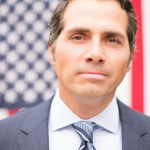
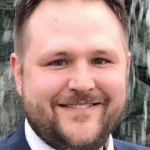
Former Wichita Eagle reporter and the staff of the Kansas Press Association compiled profiles of each of the five candidates for Kansas governor.
Click on the links below to find out more about each candidate.
Former Wichita Eagle reporter and the staff of the Kansas Press Association compiled profiles of each of the five candidates for Kansas governor.
Click on the links below to find out more about each candidate.

Although it has absolutely nothing to do with the outdoors, I still feel the need to ask you all to observe a moment of silence just now, as the woman credited with creating the Green Bean Casserole has died. Dorcas Reilly who passed away this week at the age of 92 worked in the home economics department of Campbell’s Soup and helped create many of the recipes listed on the soup cans including the iconic green bean casserole. Now that I have that out of my system and have composed myself, on to this week’s column.
Fall is my favorite time of the year, and I love the savory smell of wood smoke in the autumn air. When I was younger, I heated my home with wood for several years. Today, my checkbook curses me each time I pay the monthly winter gas bill, but my back curses me each time I again think of cutting firewood. Nevertheless, I do miss the rumble of a powerful chainsaw in my hands, the smell of the fresh wood chips as they’re spit from the saw, and of course, the wonderfully soothing feel of wood heat that results from it all. You know the old saying, wood is the fuel that heats you twice; once when you cut it, and again when you burn it.
I like to think that my prowess with a chain saw was unparalleled…once I got the tree on the ground. Up to that point, however, my lumberjack skills weren’t worth a hoot. Maybe because I am directionally challenged, I don’t know, but the trees I cut never went the direction they were supposed to go. The clearest memory from my wood cutting days is of a tree-felling gone horribly wrong, that wasn’t entirely my fault.
Where I grew up, our farmstead sat back a very long lane, and just as it reached the house, the lane made a sharp 90-degree turn and became a large, oblong circular drive. At that 90-degree turn, and directly across the lane from the house was a big wild cherry tree. The tree had been dead for a while, and dad had decided its time was at hand, the problem being that it leaned toward the house and the electric lines.
Like most old barns in that part of the country, our barn was designed primarily for storing hay, and still had the steel track high against the roof on which the old hayforks ran. These forks were used to unload loose hay from the wagons and to carry it up high enough to be dumped into the loft. A large diameter rope run through a set of pulleys and hitched to a horse or tractor, pulled the loaded forks from the wagon up into the barn, and that rope still hung high in the rafters… We had an idea!
I clambered as high into the tree as I could and secured a heavy log chain, and then came the old hay rope salvaged from the barn. One end was tied tightly to the chain, the other end to a clevis on the drawbar of the old Farmall “H.” With dad on the tractor ready to pull the dead behemoth away from the house, I began to cut. The diameter of the tree was more than double the length of my chain saw bar, so it was a slow process. I finished the notch, then moved around the tree and started cutting in from the backside. As I reached the point of no return, I gave dad the high sign, and he tightened the “old” rope. The dead beast began to list in his direction. Life was good! However, the smile on my face evaporated at the gnawing, snapping sounds of rope fibers stretching and breaking. I watched in horror as the old rope unraveled and ripped in half, leaving the outcome of this undertaking in the hands of my chainsaw ability!
Time slipped into slow motion as half a years supply of fire wood snapped upright again, then slowly headed for the house and power lines. We had never worried about the house, which was safe by a mile, but like a fullback protecting a football as he dove for the goal line, the power lines were tucked snugly beneath its branches as the tree crashed across the driveway. Bad enough you say? Not quite, as the calamity had torn something loose somewhere, knocking the entire neighborhood out of power. Certainly bad enough now, you think! No not yet, because it was Saturday, and the power company guys had to come out on their day off, not to mention the fact that the televised Ohio State football game was interrupted. (you K State and KU fans can understand this I’m sure) Saying all the neighborhood football fans were steamed is being kind. As I remember it, they were so hot we could have heated the house that winter with their thoughts, and let the tree stand!
Since I don’t cut firewood anymore, the trusty old chain saw sets alone in the dark, now used only for the occasional pruning job around the deer stand. It’s probably all for the better though, because I am still as directionally confused today as ever, and to top it all off, now I wear bifocals!…Continue to Explore Kansas Outdoors!
Steve Gilliland, Inman, can be contacted by email at [email protected].
 It is refreshing to see how many of the moderate Republican in the Kansas Legislature have quietly been reaching out to Eber Phelps and encouraging people in Ellis County to send Eber back to Topeka.
I know that Republicans and Democrats really do want what I best for our state, and they are fed up with tax experiments, inter-party fighting, and the Brownback/Koch crowd.
More importantly they value the experience that that Eber Phelps has gained over the years enabling him to thoroughly understand the issues facing our state. They enjoy working with Eber, they trust him and know that Eber votes for the best interests of both our state an our community.
Eber is getting the job done for us in Topeka, and I urge you to take the time to vote for him so that we can keep Kansas on the track to recovery.
Janis Lee
Hays
Editor’s Note: The deadline for submission of letters related to the November general election will be Nov. 1.

Huck Boyd National Institute for Rural Development
How can beef be better? How can producers be compensated for improved quality? Those vexing questions were facing the cattle industry in the 1990s when an innovative group of producers tackled those issues head on. Their work became a success story in building demand by responding to customer needs.
Last week we learned about Mark Gardiner of Gardiner Angus Ranch. He told us about changes in beef marketing through the years.
As mentioned, the 1990s were a challenging time for the beef industry. Beef demand had fallen, compared to other proteins. Industry leaders commissioned a national beef quality audit, and the results were not good. “The audit said that one in four beef eaters was not getting a good steak,” Mark Gardiner said. “We were losing beef demand left and right.” The cattlemen felt they were being taken advantage of in the marketplace by the beef packers and wanted to capture more of the processing value.
With the encouragement of a new farmer-owned cooperative, the 21st Century Alliance, a group of innovative cattle producers got together to see if they could market their beef more effectively. In 1995, 21 cow-calf producers first met to discuss the concept of forming a marketing cooperative that would vertically integrate the beef industry for its members. These producers came from around Kansas, including rural communities such as Maple Hill, population 371; and Long Island, population 174 people. Now, that’s rural.
The cattlemen agreed to form a new organization called U.S. Premium Beef. Among the founding board members was Mark Gardiner.
The board selected Steve Hunt as CEO of the company and began exploring options for business. They concluded that, in order to have their own packing plant, they had to build it or buy it.
In 1997, U.S. Premium Beef agreed with Farmland Industries to purchase up to 50 percent of what is now known as National Beef Packing Company – the nation’s fourth largest beef processing company and an international leader in the value-added arena.
Another challenge was to find a way to reward higher beef quality. “We went all over the U.S.,” Mark said. He asked one beef packer, “What kind of cattle make the most money for you?” The answer was: High quality cattle. In other words, the cattle which produced prime and choice steaks generated more revenue for the meat processor than the poorer cattle.
U.S. Premium Beef then designed a grid system which offered producers a financial premium for cattle which met certain quality standards that would produce better beef. “The goal was value-based marketing,” Mark said. “We need to get paid what the cattle are worth.” The incentives in the grid system rewarded higher quality.
In order to finance the purchase of an interest in the packing plant, U.S. Premium Beef successfully conducted a stock offering in fall 1997. The ownership interest conveyed to producers the right and obligation to deliver cattle meeting certain standards. The system also conveyed carcass quality information back to the producer to help them make continuous improvement.
U.S. Premium Beef has evolved since that time. Mark Gardiner became board chair. In 2004, U.S. Premium Beef transitioned into a limited liability company. In 2011, a majority interest in National Beef Packing was purchased by Leucadia National Corporation.
U.S. Premium Beef’s performance through the years has been outstanding. According to Mark, from 1997 to 2018, U.S. Premium Beef had 15 million head of cattle delivered and generated grid premiums of $500 million, patronage payments of $84 million, and distributions of $993 million. That represents a benefit of $1.58 billion dollars to its members.
For more information, see www.uspremiumbeef.com.
How can beef be better? These cattlemen found a way to do it. We commend Mark Gardiner, Steve Hunt, and the visionary cattlemen of U.S. Premium Beef for making a difference by finding better ways to market beef, improve beef quality, and respond to consumer demand. They found that bonus bucks provided incentive to build better beef.
And there’s more. For the Gardiner family, everything changed on one windy day in March 2017. We’ll learn about that next week.

By DAVID NORLIN
Back when, Halloween and Fall Football were always accompanied by Charlie Brown. Charlie was the world’s greatest kicker, ’til Lucy betrayed him — again!
As she jerked the football away, Charlie’s heroic effort left him planted on his posterior, pondering yet again how he could have trusted Lucy one last time.
After October, November’s election looms. And voting Republicans could be the new Charlie Browns.
Despite the fact that Kansas has only recently begun to pluck itself from Brownbackian depths of despair, there are signs that Republicans may fall for it again, leaving us mired in a 50-yard-line mudhole.
It’s not just Republicans who must look skeptically for information before they vote.
Lucifer’s Lucy-like Republican candidates, with rare exceptions, simply refuse to debate.
Consider populous, solid-center Salina’s League of Women Voters forum for 1st District Congressman, Attorney General, and Secretary of State. Every. Single. Democrat … agreed to show up. Not. One. Republican … did so. And only one even offered the courtesy of a response.
Rep. Marshall did one debate on Wichita TV, but refused to show up in person, in-studio, and in-district for his-home-office Salina’s radio debate next morning. Meanwhile opponent Alan LaPolice and AG candidate Sarah Swain were there to meet the people in person.
Republican candidates don’t respect you enough to debate. They think they don’t have to.
But they do. It’s your Democracy, your voice, and your vote. You hold the football, not them.
We all know what’s at stake here: And it is not Peanuts.
David Norlin is Chairman of the Salina Planning Commission, former President of Salina Access TV, and a former College Director of Broadcasting and English Department Chair. He has twice run for Kansas State Office.

Unfortunately, there are many who are not open minded, who have been indoctrinated and not privy to the truth, but most voters can clearly distinguish good politics and government, from bad. That’s why Trump became our president.
It is my opinion, the majority of voters, a few weeks away, during the midterm elections, will not vote Democrat. There will be a red wave, not a blue one, and I will explain why I am going out on this limb with my prediction.
The division among Republicans and Democrats has never been worse, therefore, voters too are divided. The old days of some sort of compromise or coming together between left and right appears to be a thing of the past. There are no compromises.
The upcoming election will determine what kind of America most people in this country want. On the one hand there are those who want to make this country great again as in the past, while on the other hand some want a different country entirely. It’s imperative voters know the differences.
For starters, Democrats lean toward socialism. We became the greatest country on earth in large part with an economy based on capitalism, not a socialistic government controlling everything.
Speaking of division, who wants an America where one particular party does everything possible to divide us based on race, gender, sexuality and, of course, the haves and the have nots? Add to that Christianity on the right versus secularism on the left. A united country insures progress while a divided one causes chaos, and Democrats want chaos in order for government to take over everything.
Most of us can clearly see what the Democrat Party is all about, and it’s not a pretty picture. They don’t even try to hide unconscionable mob like mean spirited behavior, or an agenda that would stand this country on its head. What they are all about is right there for God and the whole world to see.
The Democrat Party and its base has never been more radical. Too bad so many seniors still vote Dem not realizing their party has completely changed from what it was years ago. For some cockamanie reason they support all the extreme left wing agendas when in reality they are actually conservatives.
Since Obama became president, Democrats have lost some 1200 elections at all levels of government for being too far to the left. Now the party is going even further left. That’s another big reason I am optimistic about Republican chances. We’re not a country that believes we should be way out in left field.
Do we as voters want a political party in control of our government that promotes violence, orchestrated protests, lacks civility, etc. The hit job on Trump’s nominee to the Supreme Court crossed the line. Brett Kavanaugh’s personal life and his family were put through the ringer like no other nominee before in American history. The accusations by Dems about Kavanaugh never showed one scintilla of evidence. There was perjury by accusers as Kavanaugh was never given our most precious right of due process and presumption of innocence.
How does the left justify ruining a man’s life and his family mostly due to the unadulterated hatred of Trump? Who among us wants to vote to support hate? Besides the totally disgusting behavior toward Kavanaugh due to Trump hatred, Dems are fearful of two other things as Kavanaugh takes the bench on the Supreme Court. The man is a constitutionalist and will not rule in favor of laws created by liberal judges in lower courts, laws that belong to congress and we the people, not the bench.
Thirdly, Kavanaugh’s pro life beliefs scared the living daylights out of Democrats who then went on to make his confirmation a matter of life or death, if you get my point. Point is, most voters will want to save lives of unprotected unborn babies as opposed to run away abortions. Trump chose Kavanaugh in part to protect the unborn.
Democrats make no bones about destroying a Trump presidency. How much worse can it get in this country when a political party openly tries, in every which way possible, to overthrow a duly elected presidency. For what? For starters, we currently have one of the best economies ever. There is no evidence of Russia collusion by Trump, in fact, indisputable evidence of collusion by Democrats.
Let’s get this straight voters. As things stand now, there is nothing to warrant impeachment. Who in their right mind wants to support an agenda to take out our president for no good reason? The desire for Hillary to be president is not a good reason.
Do voters want to sit through years of schemes to impeach Trump. I don’t think so. And, it would be insane to vote in support of their other agendas. Open borders would ruin us literally as a country where illegals are favored over American citizens, where foreigners get to choose our government leadership in congress, even our 2020 president.
Do we want a political party in control of our government that is anti law enforcement? Eliminating ICE is ludicrous. Promoting sanctuary cities to protect illegals, even criminals, is insanity. Talk about putting foreigners ahead of American citizens!
Tell me it isn’t so! Dems are campaigning on the promise to roll back the Trump tax cuts and tax reforms. How outrageous can you get? Why would any voter in their right mind vote to ruin a good thing that benefits all Americans? Trump is making America great again with his policies and the promises he made to Americans.
One of the worst things to ever occur in this country’s history to a president of these United States is the media’s failure to report the great many successes and accomplishments of President Donald J. Trump. Far too many Democrat voters are completely in the dark about how America is becoming great again. And, sad to say, many don’t even care.
Our economy is booming! Unemployment at historic lows. The lowest unemployment numbers in American history for African Americans and Hispanics. Good job opportunities for women and young people. More jobs available than people to fill them.
Add to those positives, consumer confidence is at an all time high, companies are returning to America from foreign countries, wages are up, food stamp enrollment down dramatically, GDP growth at an astounding 4%, stock market at historic highs, etc.
Trump is doing something about our trade deficits, ISIS threat to our national security, stifling Obama regulations eliminated, restoring American world leadership, and of course, working hard to secure our borders.
Voting to throw away all these positives would be nothing short of insanity. The Washington Examiner on October 12 published an astounding 289 Trump accomplishments of less than two years by this administration.
There are many reasons Democrats can’t afford to lose this election and not take over control of Congress. Perhaps the biggest are the ongoing investigations in congress of massive corruption. Should Dems take control, they will bring the investigations to a halt even though there is indisputable proof of Obama, Hillary, the FBI and DOJ doing everything possible morally and illegally to destroy a Trump presidency. Dems will want the corruption in our government swept under the rug.
That being said, look for shennanighans like never before in an election. There could be any number of things, but at the top of the list will no doubt be voter fraud.
Perhaps a better title for this letter to the editor should be “How to vote and why.” Truth be known, I feel a moral responsibility to make my case to readers in this writing for an election that many claim is the most important in our lifetime.
Les Knoll lives in Victoria and Gilbert, Ariz.

To be sure, the appeal of autumn’s foliage changing all around us is it’s plethora of subtle and intense colors. There are shrubs and trees that turn various hues of red, purple, yellow, orange and brown.

The causes for this array of colors are plant pigments found within the leaves. The normal green color that leaves exhibit during summertime comes from the familiar pigment chlorophyll, the compound that uses the energy of the sun along with water and CO2, to produce sugars and O2. The color green that we see is actually the color being reflected by the chlorophyll, as the other colors in the visible light spectrum given by sunlight are being absorbed.
Other pigments reflecting hues of red, yellow, orange, etc., are sometimes seen in certain plants all season long like purple leaf plums, or golden euonymus’ as examples. But the real showcase is in autumn when one sees shrubs and trees exhibiting various colors all around town.
It is interesting to know, however, the red and purple colors are primarily caused by a pigment called anthocyanins (or Betalains). The colors of yellow are caused by the xanthophylls pigments, where the oranges are by a combination of carotenes (of which there are 6 kinds) and xanthophylls. Browns are the result of tannins present in the leaf. Most of these compounds are present throughout the growing season, but are drowned-out by the green color reflected by the dominating chlorophyll pigment. Anthocyanins (red and purple) are the exception and are produced after the chlorophyll is destroyed, and phasing out in the fall. (Note: blueish colors are usually the result of refracted light rather than a pigment, or a combination of certain pigments.)
If you have ever seen pictures of the north eastern US in the fall, you might have wondered why trees in Kansas do not look the same way in the fall. This difference is in part due to the tree species mostly found in New England. Certain oaks and maple varieties just naturally produce great fall color. These colors can also be determined by the weather.
Warm, sunny days and cool nights are requisites for good fall color. Sunny days encourage photosynthesis causing sugars to be built-up in the leaves. As fall progresses, the leaves develop a callus (abscission) layer at the base of the petiole (leaf stem) preventing these sugars from being transported down to the roots for winter storage. This high sugar content in the leaves produces those intense colors. Likewise, cloudy days and warm nights prevent some of the sugar build-up, resulting in less vibrant colors being reflected from the leaves.
The weather at other parts of the growing season can also have an effect. Both heavy rains in the early spring or hot, dry weather during the summer months can have a diminishing effect on fall color. Furthermore, the length of time trees or shrubs keep their fall color also depends on the weather. The pigments that cause red, yellow and orange hues are short-lived when and if trees undergo frosts and freezes.
Rip Winkel is the Horticulture agent in the Cottonwood District (Barton and Ellis Counties) for K-State Research and Extension. You can contact him by e-mail at [email protected] or calling either 785-628-9430, or 620-793-1910.
We tried to hold a candidate forum. Half the candidates wouldn’t show up. Salina League of Women Voters, a non-partisan, nonprofit volunteer organization, invited candidates for Kansas Secretary of State, Attorney General and U.S. House 1st District to meet in Salina.
We decided that if any race had both a Democrat and a Republican willing to appear, we would hold the forum.
In not a single race would both parties attend. In two of the races, the absent candidate would not even reply to our invitation, despite repeated attempts.
It’s a grave concern when candidates for public office refuse to face the public. A political ad is highly edited and may not be accurate or complete. There are few better ways to research voting decisions than to meet a candidate in-person.
We urge you to seek candidate information from other reliable sources. LWV recommends www.vote411.org. Enter your address there to find the candidates who will be on your ballot and information about them. Some candidates have answered questionnaires at our website: lwvsalina.org (under “Elections & Voting”).
The local candidates, parties, offices for which they are running, and their responses to our forum invitations are as follows:
Kansas Secretary of State:
Brian McClendon, Democrat– willing to attend
Rob Hodgkinson, Libertarian – willing to attend
Scott Schwab, Republican – no response
Kansas Attorney General:
Sarah Swain, Democrat – willing to attend
Derek Schmidt, Republican – no response
U.S. House, District 1:
Alan LaPolice, Democrat – willing to attend
Roger Marshall, Republican – responded, unable to attend
LWV has a 98-year record of providing non-partisan information for informed voters. We regret that this year we are unable to hold a forum for you to meet statewide candidates.
Vote on or before Nov. 6.
Your voice – your vote – is crucial to our democracy.
Salina League of Women Voters
Lori Trow, President
Ann Zimmerman, Vice President
Carla Strand, Secretary
Margaret Wyatt, Treasurer
Editor’s Note: The deadline for submission of letters related to the November general election will be Nov. 1.
In 2016, the voters of the 111th District elected Eber Phelps to return to the Kansas Legislature as their representative. The election of Eber was tremendously important for this district’s residents and all Kansans.
In the 2017 legislative session, Eber led other Democrats and moderate, responsible Republicans in the successful fight to end Sam Brownback’s failed tax experiment. This bipartisan action by the Legislature began to restore the state’s ability to meet its financial obligations including adequately funding education and investing in highways.
Informed legislators, like Eber, who put the people of Kansas first and reject extreme political ideology remain critically important to the state. He will again fight to fully fund education and focus on making health care available and affordable. By returning Eber to the Kansas House of Representatives, residents of the 111th District and all Kansans will benefit from good policy not bad politics.
We fully support the re-election of Eber Phelps this year just as we supported his election in 2016. He will continue to serve with wisdom and honor.
Gary Sherrer, former Republican Lieutenant Governor
John Moore, former Democratic Lieutenant Governor
Editor’s Note: The deadline for submission of letters related to the November general election will be Nov. 1.
Like Napoleon, Hillary Clinton’s long career ended in Waterloo. Only in her case, it was Waterloo, Iowa. She trailed Barack Obama’s 2012 totals by 9 percent in Waterloo’s Black Hawk County, helping President Trump win the White House, which he did by capturing votes in areas that Democrats overlooked.

In fact, Iowa, our almost-neighbor, had one of America’s largest swings from Democrat Barack Obama in 2012 to Republican Donald Trump in 2016. How—and where—did it happen, and what does that mean for Kansas this year? For one thing, it means that on Election Night, Lyon County is one to watch—an electoral battleground, the Iowa of Kansas.
In Iowa, the 2016 race was not won or lost in the state’s more-populated, Democratic strongholds like Polk, Johnson, and Story Counties (Des Moines, Iowa City, and Ames, respectively). These areas did not shift much between 2012 and 2016, going almost as strongly for Hillary as they had for Obama. Instead, Hillary got shellacked in Iowa’s rural counties. In many, support for Democrats dropped 15 percent or more between 2012 and 2016. Most of those rural areas had voted for Romney in 2012—but the huge drop in Democratic percentage, in many cases going from the mid-40s to less than 30% in only four years—was pivotal. These are the places where many Obama-to-Trump voters live, and those voters are the ones that decided the election. Similar patterns are evident in larger states like Ohio.
What about Kansas? This state may not be competitive in presidential races, but we did see one of the closest races in recent state history when Paul Davis challenged Sam Brownback for the governorship in 2014. The comparison is cruder, because turnout is lower in midterms, but it is still telling. In fact, boosting midterm Democratic turnout in these areas is a crucial piece of the puzzle, and it can be tough when people get discouraged, because they know they are a minority among their neighbors.
Identifying the counties with the biggest Davis-to-Trump shifts shows us where to look. It is important not to overlook counties that Davis did not in fact win, but where he performed much better than did Hillary Clinton. This means places like Pawnee County (Larned)—44% for Davis in 2014 but only 21% for Hillary in 2016.
Butler County (El Dorado) is similar—38% for Davis but only 21% for Clinton. In Lyon County (Emporia), Davis won outright with 62%, while Clinton could only muster 37%–one of the biggest shifts in the state. Even very-Republican, western Kansas counties have persuadable voters. Davis’ 28% in tiny Lane County (population 1750) may seem low, but clearly surpasses Clinton’s abysmal 12%.
If 2016 was a realigning election—if these new changes are long-term—then Democrats are in a world of hurt here. But such large swings are likely to be temporary, influenced in part by Hillary Clinton’s personal unpopularity. Kelly and the others do not need to win most of these counties outright, but Democrats should not ignore the voters here. Their few urban and college-town Kansas strongholds are not enough. Johnson County has become a battleground to be sure, hardly safe Democratic territory.
Wichita and Topeka remain highly competitive. Democrats certainly need to win in the cities and suburbs, but they also need to remember the voters in counties they usually do not win. If they turn out their base, cut their losses outside the cities, and bring home the Davis/Trump voters, the Democrats may just capture the Governor’s Mansion this year.
Michael A. Smith is a Professor of Political Science at Emporia State University.

I love every opportunity I have to celebrate Fort Hays State University – and that keeps me both brimming with joy and very busy. Indeed, we have a lot to celebrate.
Recently, I had the honor of attending the FHSU Hall of Fame Celebration. The 2018 Hall of Fame inductees were Carolyn Bird, who was lovingly honored posthumously; Weston Harding (wrestling, 1987-91); Dave Nehls (baseball, 1985-86); Jose Salcido (football, 1993-95); and Ed Schumacher (men’s basketball, 1974-76).
I arrived filled with anticipation and eager to hear the stories of inspiration and excellence. I was not disappointed. I was inspired. I knew the event would be emotional. I smiled when I noticed that someone had discreetly placed a package of tissues at the podium. Story after story, athlete after athlete, demonstrated the character and incredible successes of the honorees.
Carolyn Bird spent 23 years of her career working with Fort Hays State’s student-athletes and 25 years total at the university. She started a study program for FHSU’s student-athletes in 1991 at the request of then FHSU President Dr. Edward H. Hammond and Athletic Director Tom Spicer. Working closely with coaches and administrators, her efforts made an impact on the lives of many through the years. Graduation rates and grade-point averages for our athletes improved significantly as a result of her leadership.
Weston Harding was a three-time All-America performer and four-time national qualifier for Tiger wrestling, compiling a career record of 130-40-4, winning 76 percent of his matches. Harding is now one of the top high school coaches in the state of Oklahoma, guiding Collinsville High School to seven 5A state championships over the last eight years (2011-16, 2018). Collinsville has also claimed five dual state championships in that run, and Harding has been named The Tulsa World’s All-Metro Coach of the Year seven times.
Dave Nehls earned NAIA All-America honors in 1985 as a shortstop, setting the single-season record for stolen bases at FHSU with 52, a record that still stands. He was a two-time all-conference and all-district performer and a member of Fort Hays State’s only two teams to win more than 40 games in a season during the program’s NAIA history. He helped the Tigers to a 45-21 record in 1985 and a 47-16-1 mark in 1986.
Ed Schumacher, as a junior, was an All-American for the Tigers in men’s basketball for the 1974-75 season. He averaged 18.7 points, 9.1 rebounds, and 2.1 assists per game, shooting 43.8 percent from the field and 73 percent at the free-throw line. Schumacher was a two-time All-GPAC First Team and All-District 10 selection alongside teammate Barton Snow.
A strong student-athlete program is core to who we are as an institution. We look to our student athletes to help us tell our story by how they practice and play, their character on and off the field, and their success in the classroom and in the boardroom. When you think about it, when we need inspiration, we often turn to athletes, who give us such visible and emotional examples of grit and determination, perseverance and triumph over adversity. These are all qualities and characteristics that are hallmarks of Fort Hays State University.
One story in particular drew me in – that of football player Jose Salcido. Jose played three years for the Tigers, from 1993 to 1995. He ranks third in tackles during the NCAA Division II era at Fort Hays State with 342 over three seasons (averaged 114 per season), leading the team in the category all three years. He also accumulated 35 tackles for loss, tied for fourth in the NCAA era, and 11 interceptions, tied for third most. He owns the FHSU career (nine) and single-season (five) records for blocked kicks in a season. He also had six interceptions in 1993, tied for second most in a season at FHSU.
Jose was introduced by former Tiger Head Coach Tim O’Connor, who was a linebacker coach when Jose was playing. After sharing a list of incredible statistics, Coach O’Connor described Jose as an exceptional player. But what really resonated with me is when Coach O’Connor shared that what made Jose exceptional was his ability to lead and inspire his teammates: Jose worked at practice, in the weight room, and in the classroom. He had God-given talent, but he worked to maximize that talent, and in doing so he made his teammates better.
That is the story line that fills my heart every day. Example after example of students, professors, staff and community members who work hard and excel through pure determination – maximizing their gifts – leaders who inspire by living lives defined by the impact they have on those around them. They provide illustration after illustration of how we triumph over adversity: We ROAR!
For me, these examples define what it means to be a Fort Hays Tiger. And I smile. I realize that our “hall of fame” is boundless, and that I am blessed to live among so many everyday heroes.

And whether Democrat Sen. Laura Kelly (who has reserved parking now) or Republican Secretary of State Kris Kobach (who has reserved–but outside–parking near his current office) wins the governorship, nearly everyone else in the building is wondering not just about parking, but jobs.
Because the governor names his/her own cabinet members, 11 jobs are immediately on the line as the new governor prepares to start work. Those agencies? Administration, Aging and Disabilities Service, Agriculture, Children and Families, Commerce, Corrections, Health and Environment, Labor, Revenue, Transportation and Wildlife/Parks/Tourism.
They’re now Republicans, or at least acceptable to the current Republican Gov. Jeff Colyer. He did change out the Secretary of Children and Families from Gov. Sam Brownback appointee former Rep. Phyllis Gilmore to Gina Meier-Hummel, largely to deal with legislative angst toward Gilmore, but not much else changed at the Cabinet table when Colyer moved up to governor earlier this year.
But…it’s clear the key agency leaders who carry out the governor’s programs and attitudes for state services are going to change after the election. That’s part of the reward that comes with being elected governor—choosing secretaries who will carry out their campaign promises and philosophies.
And, yes, there is some anxiety among those current secretaries. Catch them in the Statehouse hallways, and they aren’t talking about whether they plan to leave or retire. They generally look at their watches, and say they have an appointment or maybe lunch reservation and don’t really have time to discuss what the gubernatorial candidates have talked about in terms of policy for their agencies.
Most are expecting Kobach to be able to keep some Cabinet secretaries, except for a couple agencies that his campaign managers have shown interest in—say, Rep. J.R. Claeys, R-Salina–for Transportation. Kobach isn’t answering any questions about whom he’d hire.
For Kelly, well, it’s not gotten specific yet, though look for some of her supporters to start queuing up for jobs if she is elected. Kelly is similarly quiet, though she said Kansans can expect a more “diverse” Cabinet if she is elected. And that’s where she stops.
Orman? Well, he’s quiet, also, though as an independent he’ll have some friends who could wind up in his Cabinet…or maybe he’ll have interested Kansans quiz out for the jobs.
Downstream from the Cabinet secretaries is their staff, and they have dozens of jobs within agencies that are unclassified, which means that they have no actual rights to their jobs and serve at the pleasure of their bosses. Look for scores of those jobs to change as secretaries surround themselves with like-minded employees who have widely varying amounts of authority over just how agencies provide or don’t provide services to Kansans.
That vote on Nov. 6 for governor means that we’ll have a general idea of who’s going to run this state, his/her general philosophies and concerns and issues, but not a clue about who will interpret and implement those gubernatorial philosophies at street-level where most Kansans actually interact with the state.
***
Every candidate talks about efficiency, about performance, about serving Kansans better or more fairly, but once you get below the actual office of governor, you’re in the “swamp.” And whom the governor wants in that swamp and out of that swamp.
See how this one comes out, won’t we…?
Syndicated by Hawver News Company LLC of Topeka; Martin Hawver is publisher of Hawver’s Capitol Report—to learn more about this nonpartisan statewide political news service, visit the website at www.hawvernews.com

More than a foot of rain fell on the Ted Guetterman farm in Johnson County during a three-day stretch from Oct. 5-7. At roughly the same time, nearly four inches of rain fell on the Roger Glenn family farm in Finney County, approximately 365 miles west.
The Guetterman family walked around in water standing atop their no-till fields and the Glenns were slip-sliding away on their no-till land. Combines chomping at the bit to harvest the bountiful corn, bean and milo crops sat dead still.
It would be two weeks before the machines would move and that depended on no additional moisture. Kansas grain farmers waited on pins and needles from the eastern border of Kansas to the Colorado border hoping for sunshine and dry weather.
Glenn, who’s farmed with his father-in-law for 32 years can’t remember a fall so wet. Fortunately, he’d harvested some of his corn crop and sowed his winter wheat crop. Only one bin full of milo came out of his fields before the deluge during the first week of October.
Rainfall on the family farm in Finney and Kearny counties sprawls 25 miles from one end to the other. Moisture ranged from 2.6-3.8 inches during this rain event.
“We try to keep a rain gauge on every quarter of land,” Glenn says. “This allows us to check actual rainfalls and remains the most accurate method of charting rainfall so we can determine what crop to plant on every field.”
An October rainfall of this magnitude results in excellent crops for the winter wheat and next year’s corn and milo planted in the spring of 2019. Water stands in some of the low spots throughout their land. Some grader ditches stood nearly full and while others were at least half full.
While checking his fields after the three-day rain, Glenn probed several of the family quarter sections and punched his six-foot probe within four inches of the end of the steel rod.
“Every once in a while, we’re blessed with a full profile of moisture in our fields during the spring, but not like this in the fall,” Glenn says. “We finished drilling our wheat two days before the rain came and the new crop has emerged and looks really good – thick, green and lush. This new crop will really pop once the sun comes out and we have some more fall-like days.”
The early October rains made sure Glenn could drill his winter wheat within an inch from the top of the soil and residue. He says this newly-planted crop has the potential to be one of their best stands in a long while.
While the milo crop itself is dry and ready to cut, the leaf canopy will shade the ground and push harvest several days into the future. Glenn can’t wait to begin milo harvest.
“Two years ago, we cut one of our best milo crops ever,” the southwestern Kansas farmer says. “This year our milo looks like the best we’ve ever grown. The heads are big and full and while we don’t like to predict what a crop will make, we’re hoping for better than 100 bushels to the acre and some may make 130 bushels.”
Once the fall harvest begins again, it will no doubt take more time. Fields are saturated with water and trucks and grain carts will be kept out of the fields to prevent compaction and tearing up the soil.
“Anytime we receive rain in October, we’re happy for it,” Glenn says. “It may be Thanksgiving before we finish, or even later if it keeps raining. We’ve been faced with harvest delays before and we’ll finish up when we’re finished.”
John Schlageck is a leading commentator on agriculture and rural Kansas.