We have a brand new updated website! Click here to check it out!

Exploring Outdoors Kansas: State fishing lake renovations

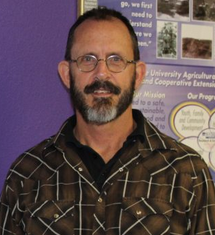
Steve Gilliland

Home renovation TV shows are quite the rage today. Whether they choose the worst house in the best neighborhood, try to renovate every house in a certain neighborhood, buy houses to renovate and resell or simply remodel homes for current owners, the premise of those renovations is to remove everything they don’t want in the house and remake it the way they want it.

Four state fishing lakes in Kansas are also preparing for renovations this winter, Neosho State Fishing Lake, Pottawatomie State Fishing Lake #1, Shawnee State Fishing Lake and Washington State Fishing Lake. This will involve removing fish called gizzard shad that have become overpopulated and are threatening sport fish within those lakes.

In the past, “renovating” a lake meant drawing the water level down as low as possible and killing off all fish in the lake and basically starting over. A major downside to that process was the amount of time needed for newly-stocked fish to grow to harvest size. Sometimes a complete renovation is still required if the balance between sport fish and shad is really out-of-whack, but a new strategy called a “partial renovation” targets specific fish, in this case the gizzard shad and kills mainly those fish, solving the problem of the time needed for sport fishing to resume at that lake.

Avid fishermen in Kansas know the gizzard shad as the predominate bait fish in all large water impoundments that are actively pursued by sport fish like walleye, stripers, wipers etc, known by biologists as “open water” predatory fish. These fish keep shad numbers under control in large lakes and reservoirs. In smaller fishing lakes however where these open water predatory fish don’t exist, shad populations can quickly get out of control as they compete with smaller prey fish for available food, thus upsetting the balance that biologists call the “food web.”

Here’s how the partial renovation process will work. Sometime in late October the water level in each lake will be drawn down to approximately 3 feet below normal lake elevation. Then when weather permits in November or December, a fish toxicant called Rotenone will be applied at a concentration found to kill gizzard shad but not affect other sport fish. Rotenone is a plant –based compound mostly used as an insecticide that is toxic to fish and other gill-breathing animals, but in the amounts used in these lake renovations does no harm to humans, birds, pets and other air-breathing animals. Animals that consume fish killed by rotenone will suffer no ill effects either, and Rotenone breaks down rapidly in sunlight and will be undetectable after only a couple weeks. Boat ramps at each lake will be closed to boat traffic on the day Rotenone is applied, but all fishing regulations and limits will remain in effect. Gizzard shad found dead around the lake after this process will be legal to collect for personal use such as processing into bait.

For a complete lake renovation, Rotenone is applied at a high rate of 2,000 -3,000 parts per billion to kill all fish. Municipal water supplies allow drinking water to contain Rotenone concentrations of 40 parts per billion. These partial lake renovations will be using Rotenone at approximately 7.5 parts per billion, much less than even allowed in drinking water, so the process should be very safe and controlled. Bear in mind, even though this process should be very safe to sport fish, some small unexpected fish kills are possible, and the lake will be restocked if larger than expected numbers of non-targeted fish happen to die.

Our Kansas Wildlife, Parks and Tourism people do a good job of managing our state’s fish and wildlife and I applaud them for using this new technique. Although hunting seasons are the main focus this time of year, fall fishing in Kansas waters can still be fantastic. Remember to purchase a trout stamp and give Kansas trout fishing a try this fall and winter. Starting November 1, nearly 30 lakes around Kansas will be stocked twice monthly with rainbow trout.

So for you non-hunters, instead of spending those cool fall days in your recliner, why not grab a kid or a friend and go fishing, and Continue to Explore Kansas Outdoors!

Steve Gilliland, Inman, can be contacted by email at [email protected].

LETTER: Phelps’ negative attack mailers make the choice clear

Recently, mailboxes in Ellis County received two pieces of campaign junk mail from Eber Phelps.  The first came directly from Eber’s campaign, warning ‘attack dogs’ from special interest groups in Eastern Kansas were coming to harm his campaign. 

The very next day, another piece of mail – this one from the Kansas Democratic Party – arrived, targeting his Republican opponent, Barb Wasinger, by name and with a photo of her darkened to look sinister.  

This political flip-flopping by Eber is hypocrisy at its finest.  To bemoan special interest involvement and negative campaigning on one day, only to turn around and do it yourself the following day!   We think he holds Ellis County voters in low regard if he thinks they will be swayed by such dishonest characterizations.


We’ve known Barb Wasinger for several decades.  Anyone who knows Barb also knows she’s a smart, strong conservative who thinks independently and will battle for what is right just as she has as an Ellis County Commissioner. She is firm, but fair.  We also know she’s a decent and ethical woman who has promised to run a clean and positive campaign. BARB HAS NOT APPROVED OF, OR CONSULTED WITH, ANY GROUP ATTEMPTING TO PAINT HER OPPONENT IN A NEGATIVE LIGHT.

Frankly, she doesn’t need to. Her campaign is focused on the real issues facing our state and our district – issues like economic security, safe schools for our children and making Hays and Kansas a location of choice for future generations.

You would think after 18 years Eber would bring forth solutions to these issues, rather than slinging negativity and invective. 

Frankly, these mailers reek of desperation.  Ellis County voters deserve better, and they will get it by voting for Barb Wasinger as State Representative for the 111th District.

Dean Haselhorst, Co- Chair Barb for Kansas
Sandy Jacobs, Co-Chair Barb for Kansas

LKM: Gov. Colyer brought open dialogue with cities in Kansas

Governor Jeff Colyer held a press conference on June 11, 2018 announcing an increase in the exchange rate for local public agencies seeking to fund local projects with state funds through the Federal Fund Exchange Program. His office worked to return the exchange rate to $.90 in state funds made available for every $1.00 in federal funds awarded a local agency, upon the agency’s request.

LKM

TOPEKA  —  At the League of Kansas Municipalities Annual Conference last week, the League presented Governor Jeff Colyer, M.D. with the 2018 Intergovernmental Leadership Award.

Since 1995, the Intergovernmental Award seeks to honor those who support cooperation between the various levels of government. Recipients of this award have demonstrated, in both promise and practice, an understanding that public servants at all levels serve the same citizens and should work together to provide the best service possible.

“We are pleased to present Governor Colyer with our Intergovernmental Leadership Award,” said Erik Sartorius, Executive Director of the League. “Upon assuming the governorship, Governor Colyer brought a renewed commitment to open dialogue with cities in Kansas. Cities have been asked for opinions, ideas, and feedback during his tenure. The tone he set has carried throughout the levels of state government.”
Colyer was sworn into office as the 47th Governor of Kansas on January 31, 2018 and was twice elected as Lieutenant Governor in 2010 and 2014. Prior to his statewide leadership role, he served in the Kansas Senate from 2009 to 2011 and the Kansas House of Representatives from 2007 to 2009.
“The wonderful thing about the American government is that it is ‘of the people, by the people, and for the people’,” said Governor Jeff Colyer. “At every level, be it national, state, or local, we have a responsibility to do what is right for those we represent. Part of that responsibility is finding ways to make different levels of government work together effectively. When I took office, one of my main goals was to have open lines of communication and cooperation between my office and the various local governments in Kansas. I am proud that in my time as Governor I have been able to strengthen the lines of communication among all levels of government and I hope that the benefit is passed on to those who I have been honored to represent.”

The Governor’s Office was supportive of some of the League’s legislative efforts during the 2018 session. He signed bills authorizing the Joint Legislative Transportation Task Force and the Statewide Broadband Expansion Planning Task Force, both of which have League representation. He signed HB2597 which amends when a mayor is considered a member of the governing body under K.S.A. 12-104. The Governor also signed H Sub for SB310, the bill that clarified the previously adopted Amusement Ride Act.  In June, the Governor announced that the Federal Fund Exchange Program, which assists local governments in funding local transportation projects, would return to the $.90-cents-on-the-dollar exchange rate (the level was decreased in 2017).

Governor Colyer launched the “Land in Kansas” strategic economic development initiative in July which takes a comprehensive, multi-agency approach to economic growth. The key components of the plan include a new state marketing campaign, a top-down review of economic development programs in the state, and a pilot program to enable communities across the state to better target specific areas for economic growth. Under the plan, several state agencies will each appoint an economic development liaison who will serve as the primary contact for economic development projects. The campaign will highlight the opportunities for individuals and industry to live and do business in Kansas, while also showcasing the strategic advantages of the state – including our central location, well-trained workforce, and pro-business atmosphere.

“As Kansas residents, we all want this state to succeed and grow and become the envy of other states,” said Sartorius. “To bring this about, all levels of government need to be able to cooperate and recognize the important roles they each play in providing services to residents. We at the League are grateful for Governor Colyer’s partnership and leadership this year.”

The Governor signed SB331, a bill that designated the Flint Hills Trail State Park and Little Jerusalem Badlands State Park as part of the state park system. The bill also established the Flint Hills Advisory Council to study and assess the development, staffing, maintenance, and promotion of the Flint Hills Nature Trail. Other bills were signed in the 2018 legislative session which address municipal concerns including alcoholic liquor taxation, asset forfeiture, and new rules for law enforcement personnel records.

Governor Colyer is a fifth-generation Kansan raised in Hays. Dr. Colyer earned a bachelor’s degree in Economics from Georgetown University, a master’s degree in International Relations from Cambridge University, and a medical doctorate from University of Kansas, School of Medicine. Colyer was a White House Fellow under Presidents Ronald Reagan and George H.W. Bush, working in international affairs. Dr. Colyer and his wife Ruth reside in Johnson County and have been married since 1991. They have three daughters Alexandra, Serena, and Dominique.

We appreciate Governor Colyer’s efforts and public service. We appreciate his willingness to engage in an open dialogue and work to foster a greater quality of life for the residents of Kansas.

Now That’s Rural: Dan Senestraro, Kansas dairyman

Ron Wilson is director of the Huck Boyd National Institute for Rural Development at Kansas State University.
By RON WILSON
Huck Boyd National Institute for Rural Development

“Go East, young man, and grow up with the country.” Actually, that is the opposite of the original saying made famous by editor Horace Greeley, who told his readers to go west in 1865. But in 1994, one entrepreneur found that his path to growth was to go east, and that led him to rural Kansas.

Dan Senestraro is the owner of Eastside Dairy in Stanton County, Kansas. Dan is the westernmost Kansan on the Board of Directors of the Dairy Farmers of America.

Dan grew up on a dairy farm in California. He went to veterinary school at the University of California at Davis. “I was determined not to be in the dairy business,” he said with a smile. He graduated in 1986. By 1989, he found himself in the dairy business again.

“I was in a partnership on 800 dairy cows in rented space in southern California,” Dan said. As California became more crowded and urbanized, he looked to relocate and grow.

Western Kansas was actively seeking to attract dairies, touting such advantages as dry climate, abundant feed, and a pro-agriculture state economy. In 1994, Dan moved to Kansas and became part of the dairy expansion.

Today, Dan and his partner Clayton Winger own and operate Eastside Dairy on the east side of Stanton County. They milk approximately 3,400 cows and have that many heifers being raised for future production, so they have roughly 7,000 total head of cows. Their heifers are custom raised up to four months of age. Each year they farm more than 800 acres of crop ground in corn, sorghum and wheat.

“We’re sustainable,” Dan said. “We have a closed loop system and we reuse all the waste water and nutrients. We catch every drop of runoff.” For example, water that is used to clean off pens is captured and fed through the water pivots to irrigate crops.

“We do nutrient recycling,” Dan said. “We do export some manure to neighbors who grow corn and silage for us. It’s a good business practice as well as environmentally sound.”

In 2000, Dan got involved in the governance of the dairy industry. Dairy Farmers of America, the nation’s largest dairy cooperative, is organized into several regions. All of Kansas was in the central region, but dairies in southwest Kansas were more similar to the ones in Texas and New Mexico so the regions were reorganized. Today in the DFA organization, Dan is chair of the southwest area, chair of the Global Trade Committee, and vice-chair of the overall organization’s Board of Directors.

Dan has seen many changes through the years, involving trade and other factors. “Fifteen or twenty years ago, we exported maybe three to four percent (of our production),” he said. “Today, 17 to 18 percent of production on a solids basis is being exported. We’re moving more and more into world markets.”

The DFA organization has also grown and changed. For years, the DFA headquarters was in a leased building in Kansas City, Missouri. In 2017, DFA built a building in the Legends area of Kansas City, Kansas. “The Kansas people bent over backwards to help us,” Dan said.

As milk production grew in southwest Kansas, opportunities grew for further processing. In September 2017, DFA opened a new milk processing plant in Garden City. “It handles four million pounds of milk a day,” Dan said. The milk is converted to whole milk powder which goes into the export market.

“We’ve made lots of progress out here,” Dan said. He serves on the city council and airport board at his rural community of Johnson City, population 1.495 people. Now, that’s rural. “Everybody needs to be involved to make things work,” he said.

“Go East, young man.” That’s the direction which Dan Senestraro took from California, and it has made it possible to grow the dairy industry. We commend Dan Senestraro, Clayton Winger, and all those involved with Eastside Dairy. Their move has enabled them to go and grow.

In coming weeks, we’ll learn more about the growth of the dairy industry in western Kansas.

WINKEL: Work garden soil in the fall  

Rip Winkel
Fall is a great time to start prepping the soil for next season’s vegetable/fruit garden. Spring is often wet making it difficult to work soil without forming clods that become a nuisance when planting, and then remain the rest of the growing season.

However, with exception to this year, the fall season is usually drier. This allows more time to work the soil when it is at the best moisture level. Even if you work the soil wet in the fall where clods are formed, the freezing and thawing that takes place during the winter will break them down, making it more malleable by the time spring arrives.

If your garden area still has the previous seasons plants laying around, insects as well as diseases often piggy-back on the old garden debris for the duration of winter. If that debris is worked well into the soil, those little critters will be less likely to make it through those cold months. Besides, that same garden debris will increase the organic matter content of the soil. Hint; turning the debris into the soil is often easier if you mow the old vegetable plants several times, forming an organic mulch. If that is not possible, at least chop the plants up by using your shovel.

As fall is an excellent time to add organic matter to the garden soil, there is more than just the old garden debris to use. There are dried leaves, rotten hay/silage, grass clippings, etc. Fresher materials (green) can also be added in the fall rather than in the spring because there is more time for them to break down before planting. As a rule of thumb, add 2 inches of organic material to the surface of the soil and till it in. Be careful not to over till the soil. You should end up with particles like grape nuts or larger. If you work your garden into the consistency of dust, you will have destroyed the soil structure.

Rip Winkel is the Horticulture agent in the Cottonwood District (Barton and Ellis Counties) for K-State Research and Extension. You can contact him by e-mail at [email protected] or calling either 785-682-9430, or 620-793-1910.

MARSHALL: Doctor’s Note Oct. 13

Friends,
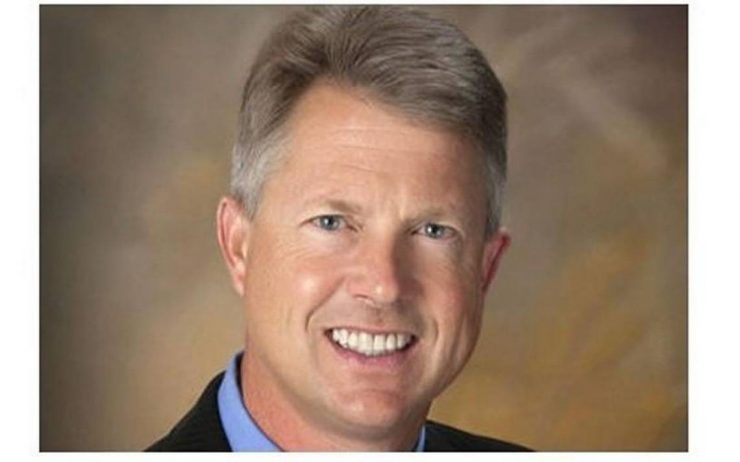
Dr. Roger Marshall, R-Great Bend, is the First District Kansas Congressman.

The House of Representatives was quiet this week, but the same cannot be said for Florida Panhandle.

Hurricane Michael made landfall on Thursday, devastating Florida’s Gulf Coast and Panhandle. My heart goes out to the victims, especially those who have lost not only their livelihoods, but their loved ones, as well. The brave men and women of the U.S. armed forces are actively conducting search and rescue efforts. 285 people were said to have remained in Mexico Beach, where some of the worst damage can be seen. Many residents are still missing, with the National Guard rescuing up to 20 survivors in one night. President Trump is expected to travel to Florida next week and survey the damage.

Kansas called to help Florida

The Kansas National Guard has received a request from the state of Florida for assistance conducting aerial search and rescue in the aftermath of Hurricane Michael. The Kansas National Guard is responding with one UH-60 Black Hawk helicopter and six crew members. The request was made through the Emergency Management Assistance Compact, a multistate agreement that expedites interstate support for disaster response and recovery operations. A huge thanks to everyone responding to the call for aid, including our departing National Guardsmen.

A-Maze-ing News!

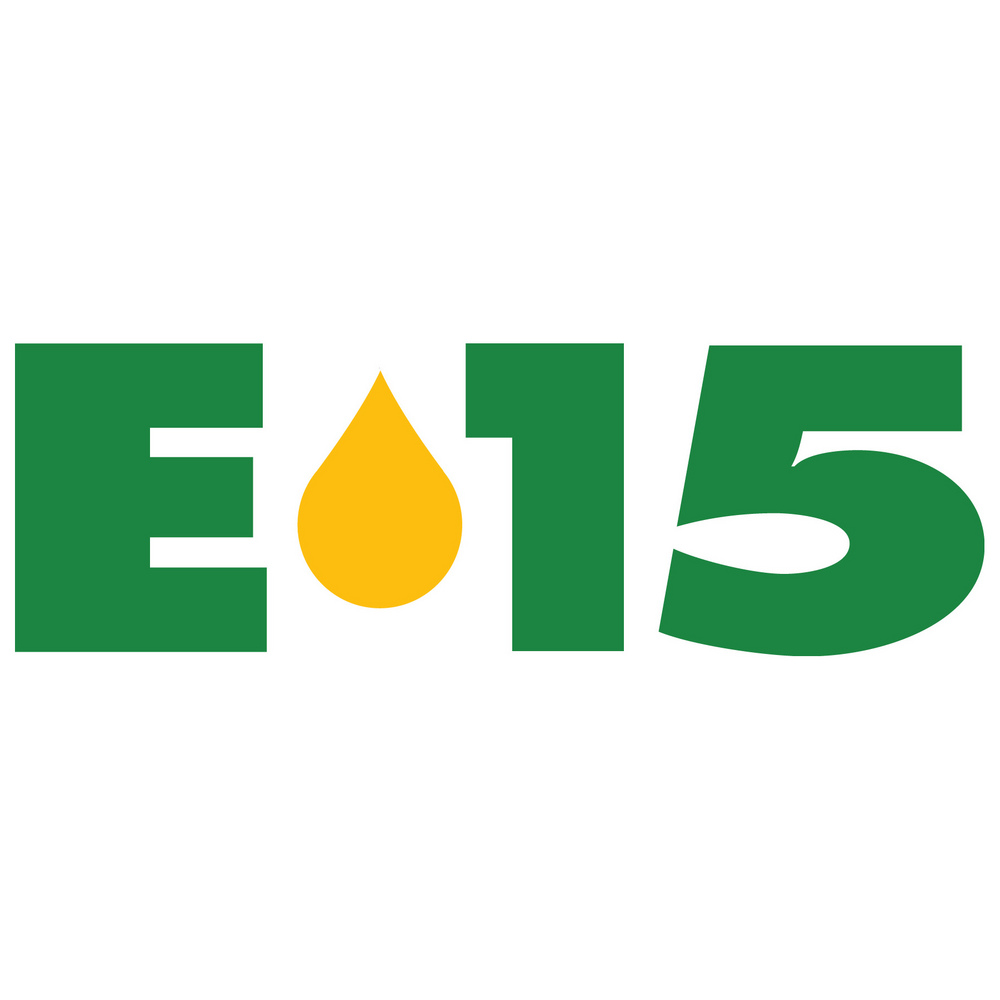
On Tuesday, President Trump announced EPA plans to allow the sale and use of E15 throughout the year.

This is a tremendous victory for Kansas agriculture and a huge step towards freeing our nation’s producers from unnecessarily strict regulations. The ban placed on E15 smothered summer consumption of ethanol and limited options for consumers. Our farmers are already seeing their net income drop to its lowest dollar level in a decade due, I am hopeful that these deregulatory measures will relieve some of that pressure.

This is a massive victory for our biofuels industry, as well. Kansas ethanol plants produce roughly half a billion gallons of ethanol a year and create over 4,000 jobs across our state. Their workers can now expect greater market certainty and job security.

I am extremely grateful to President Trump for keeping his promise to place our farmers and consumers first. 90% of cars are approved for using this cleaner, safer, and higher octane fuel, so it makes no sense to punish those who want to use it. Deregulation of E15 is a huge step in the right direction. Read my full press release here.

Happy National Farmer’s Day!

On National Farmers Day (Oct. 12) we celebrate the Kansas farmers and ranchers that are feeding the world. Agriculture is the largest economic driver in Kansas accounting for 44.5% of the state’s total economy. The agriculture sector employs 13% of Kansas’ workforce through direct and indirect careers. Kansas is the nation’s 8th largest agricultural exporting state, shipping $4.7 billion in domestic agricultural exports abroad in 2016. Agriculture in Kansas is not just about growing crops and raising animals. The Kansas agricultural sector includes renewable energy production, food processing, research and education, agribusiness and more. I am proud to represent the farmers of Kansas that provide such vital roles in our society.

So make sure you thank a farmer today!
National Blue Ribbon Schools

Kansas’s own Lee Elementary, Marion Elementary, and Sterling Elementary are now included among this year’s National Blue Ribbon Schools. The title is awarded to schools across the nation whose students exhibit exceptional academic performance.

Secretary of Education, Betsy Devos, recognized 349 public and private schools this year and, unsurprisingly, Kansas has distinguished itself once again. A special thanks goes out to Kansas educators who work tirelessly to deliver a top-notch education to our children and provide them with the tools for a more prosperous future.

Army Vice Chief of Staff Gen. James McConville

Troop Inspection

This week I sat down with Army Vice Chief of Staff Gen. James McConville to discuss Fort Riley.

We had a great conversation, and I always look forward to discussing the strengths Fort Riley brings to the Army.

As usual, it was a pleasure seeing General McConville, and a great end to AUSA week!


INSIGHT KANSAS: Secretary of state race a referendum on Kobach policy

Kansans have two chances to vote on Kris Kobach next month — on Kobach himself in the gubernatorial race, and on his legacy in the Secretary of State race.

Kobach’s tenure as SOS has been marred with mismanagement: failures to update the SOS website, shortfalls in overseeing election technology and officials, tens of thousands of Kansans unable to navigate the bureaucratic red tape that Kobach created in the voter registration process, and failed and costly court battles. Kansans must choose how to move that office forward.

Patrick R. Miller is an Assistant Professor of Political Science at the University of Kansas.

Polling shows that the SOS race is competitive. The Democrat, Brian “BAM” McClendon, is running an actual campaign, something that Kansas Democrats do not always do. McClendon is a former Google and Uber executive who has returned to Kansas, but grew up here, graduated from KU, and co-founded the nonprofit KSVotes.org to promote online voter registration. This is his first run for office.

The Republican, Scott Schwab, should normally be favored in a down-ballot race like this simply by being a Republican in Kansas, but has had a muted campaign. A native Kansan who works in healthcare sales, Schwab has served in the state legislature from Johnson County for thirteen years and, most relevant, formerly chaired the House Elections Committee. His legislative voting record easily puts him in the Brownback-Kobach mold of Republicans.

What does a secretary of state do? Kobach has been unusually visible for the office, becoming a national media darling on immigration and taking side jobs writing political columns and consulting for other states on immigration. But the main duties of the job include election administration, voter registration, registering businesses, and publishing legal and informational documents. It is a technical and bureaucratic position.

Neither candidate possesses Kobach’s flamboyant personality, but there are real issues in this race beyond style. Their answers to July 14 questionnaires in the Topeka Capital-Journal show some differences.

Schwab frames his candidacy around continuing Kobach’s policies like the proof of citizenship regulation—since ruled unconstitutional—and voter ID. He also shares Kobach’s belief that voter fraud from internal and external threats is a serious concern in Kansas. And his response to increasing voter participation indicates that he does not see that as a main responsibility of the SOS, but rather something that campaigns and local election officials should emphasize.

McClendon shares the concern for cyber security and electoral integrity, but does not share Kobach’s dubious belief that undocumented immigrants are a massive voter fraud threat in Kansas. Nor does he share Kobach and Schwab’s support for proof of citizenship regulations. He endorses voter ID laws that ensure citizen access to proof of identification. McClendon also views encouraging voter participation as more central to the SOS role than Schwab.

Importantly, Kansans may not realize that under Kobach’s Crosscheck system, they are footing the bill to allegedly quality check voter rolls in dozens of other states. Yes, readers, you are paying to vet voter rolls in states like Mississippi and Alabama. Independent studies have found Crosscheck to have major accuracy issues, leading several states to abandon it recently. Schwab supports continuing Crosscheck as is, but McClendon is more skeptical of it.

Kansans should understand that they are voting on Kobach’s policy legacy in the SOS race. Down-ballot races matter for how tax dollars are spent and the quality of services Kansans receive. The next SOS may not share Kobach’s eccentric flair, but voters can choose to continue Kobach’s policies or vote for change. Learn more about the candidates and make informed choices.

Patrick. R. Miller is an Assistant Professor of Political Science at the University of Kansas.

SCHLAGECK: Cutting cattle numbers

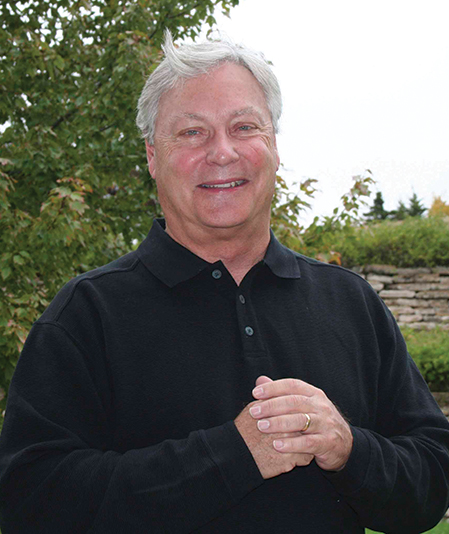
John Schlageck writes for the Kansas Farm Bureau.
Mother Nature turned the tables this year in Kansas as eastern Kansas cattle producers dealt with diminished grass for their livestock while central and western regions of the Sunflower State flourished with pastures nourished by abundant rain.

In southeastern Kansas, Jim DeGeer, veteran cattleman from Neosho County, says a long, cool spring delayed native grasses (used for summer grazing) from taking off and growing like they normally do. And when it finally did warm up, conditions were so dry, these grasses never had the opportunity to grow.

“Our pastures were extremely short all summer,” DeGeer says. “I know the guys who cut prairie hay throughout our regions and they told me production amounted to only a third to one-half the normal output.”

Yep, forage availability has been tight in much of southeastern Kansas beginning in June and running into August.

“It’s been dry most of the summer,” the veteran cattleman says. “We were drier and had less grass this summer than during the bad drought years beginning in 2011 and running through 2013.”

Then in mid-August, it started to rain, and the grass began growing and greening up a bit, DeGeer says. By the end of September, the pastures looked like they should have.

Despite the dog days of summer, DeGeer says his cows managed to stay “looking pretty good.”

So, what will this dry spell mean to cattlemen like DeGeer in the long run?

“We’re starting to pregnancy check our herd and we’re seeing more open (not with calf) cows than we normally do,” the long-time cattleman says. “I’m sure weaning weights on the calves will be less this year as well.”

While this scenario is not one any cattleman wants to be faced with, DeGeer will live with the hand he’s been dealt, make changes and move ahead.

This will mean reducing the family cow herd this year. In turn, this will allow the pastures a chance to recover from the dry summer of 2018.

Buying additional feed for his livestock will also mean steeper prices for big round bales. Prices for this coveted commodity have jumped from $30-35 a bale to $75-100 each.

“We buy a lot of hay anyway,” the Neosho County cattleman says. “We’ll need to pay the piper to keep our cow herd well fed.”

DeGeer isn’t the Lone Ranger when it comes to cutting cow numbers. Neighbors and other livestock producers are faced with the same dilemma.

“I laugh to myself this year,” DeGeer says. “I grew up in south-central Kansas, in the Gypsum Hills around Medicine Lodge, and cattlemen have received more rain out there than we have in south-eastern Kansas during the summer.”

This year is one DeGeer is looking forward to closing the book on. He does not relish paying top dollar for feed at the close of the year especially when some will not even be the best quality.

“It’s kind of been one of those years,” the veteran cattleman says with a shrug of resignation in his shoulders. “Next year’s going to be better.”

John Schlageck is a leading commentator on agriculture and rural Kansas.

1st Amendment: Whereabouts of missing journalist should concern us all

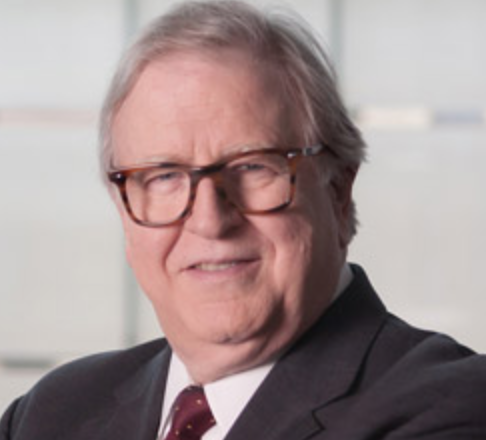
Gene Policinski
Journalist Jamal Khashoggi is missing — and the world does not know if he is alive or dead.

That there is no answer yet is, in itself, a tragedy. But depending on that answer, it may well become an atrocity.

Turkey’s government said on Oct. 8 that Khashoggi, a prominent journalist from Saudi Arabia now living in the United States and a regular contributor to The Washington Post’s Global Opinions page, apparently was killed in the Saudi Consulate in Istanbul last week.

Saudi Arabian officials strongly deny that declaration. But the government of Turkey — even though it’s rated as one of the most repressive nations in terms of press freedom — stands by its assertion.

What we do know is that Khashoggi entered the Saudi Arabian mission offices on Oct. 2 and has not been seen since that time. His fiancée, who waited outside for hours that day, said she has not seen him since he went into the mission. A surveillance camera outside the consulate shows Khashoggi entering, but no video has been produced showing him departing.

We also know that Khashoggi was a vocal critic of Saudi leaders — and of a government that has been cracking down on dissent and criticism.

Khashoggi had fled to the United States over his criticism of the Saudi royal family and its influence in that nation. He went to the embassy in Turkey to obtain copies of personal papers needed for a planned marriage to a Turkish citizen.

“If the reports of Jamal’s murder are true, it is a monstrous and unfathomable act,” Fred Hiatt, The Washington Post’s editorial page editor, said in a statement. “Jamal was — or, as we hope, is — a committed, courageous journalist. He writes out of a sense of love for his country and deep faith in human dignity and freedom. He is respected in his country, in the Middle East and throughout the world. We have been enormously proud to publish his writings.”

Khashoggi’s disappearance and possible murder comes at nearly the same time when, in Bulgaria, the body of Viktoria Marinova, a journalist with TVN, was discovered Oct. 6. Marinova, 30, had been raped, beaten and strangled, according to media reports and Bulgarian police. Reporters Without Borders, an international group that tracks assaults on journalists, now lists 57 journalists, 14 citizens working in journalism and four press aides as having been killed thus far in 2018.

In its latest report, the nonpartisan human rights organization Freedom House notes that just 13 percent of the world’s population lives in nations where the press is considered free.

You may well be asking, “Why should I get angry over the as-yet undetermined fate of a journalist whose work, outside of the Washington, D.C. area, it’s likely I have not seen?”

Well, each time a Khashoggi disappears under suspicious circumstances or a Marinova is savagely killed, it diminishes all of our freedoms; there’s a bit more tarnish on what our still-strong First Amendment protection for a free press has always meant to the world.

It’s as simple as that. We care because we value freedom — the freedom to differ with those in power or others in our society, the freedom to speak or write our views, without the fear that someday we may enter a government building on a simple task and vanish.

Yes, there’s great debate around what a free press means today in the United States. But even the most vitriolic attacks often have a call for journalism’s essential values of fairness and accuracy. It’s those values we defend in defending journalists, even those we don’t know.

As a nation, we must declare every time that an attack on journalists anywhere in the world — through violence, threat or faux rule of law — is an attack on a core principle of our democracy. And we do not surrender those principles to tyranny, injustice or criminal acts.

Where is Jamal Khashoggi? His family should know. His colleagues in the profession should know. Every person in every nation around the globe should know.

In the name of press freedom and what it means to us as citizens of the United States and part of humanity, we not only expect an answer, we demand it.

Gene Policinski is president and chief operating officer of the Freedom Forum Institute. He can be reached at [email protected], or follow him on Twitter at @genefac.

MASON: Students like MaKinlie are the art of Fort Hays State

Dr. Tisa Mason
Homecoming was the perfect follow-up to a successful inauguration, which celebrated our people, place, and purpose. Homecoming week allowed us to reconnect with friends, enjoy the wonderfully varied heritage and culture of Fort Hays State University, and honor outstanding alumni. I absolutely loved it!

Among the many exciting events, someone special really captured my heart: the student speaker at the construction preview for the new Department of Art and Design building. MaKinlie Hennes eloquently shared her story, from finding her academic home at Fort Hays State, to describing how our art and design students are experiencing their current academic space and envisioning their futures. She articulated succinctly and beautifully the important role art and design plays in our world.

Her description of the experience of art and design at FHSU was especially moving:

“This program does so much more than educate students on how to become amazing designers. It provides students with a platform and the tools to speak their minds and make people listen. We bring awareness to so many problems in the world through our work. We take a relatively dormant demographic and encourage them to speak up and take a stand. I have been given countless opportunities to use the tragedies that have occurred in my own life and turn them into something beautiful and helpful to others who may relate. I created a project centered around eating disorders and receiving the help that one would need in that situation. In my fine art class, I was able to create a large scale self-portrait that represents my father’s suicide and how that impacted my life. I would have never been able to accomplish these things without the support system of the staff and of my peers.”

MaKinlie also described the many space restrictions that students now face in this rapidly growing, highly successful and celebrated academic program:

“As students in the current art and design classrooms, we face many space restrictions. We are thriving in chaos. The classrooms basically look like a garage sale gone wild. There is not enough space for constructing our projects, which leaves the classrooms constantly a disaster because 20 to 30 people are trying to cut packages out, use spray adhesive in a makeshift spray booth, and print in a space suited for a smaller class size. Due to space restrictions, our current Graphics II is split into two classes this year, and students feel they are at a disadvantage because of that. Graphics II is usually a time of unity, where the classes are merged together to create their graduating class, and the peers they will design beside the rest of their academic careers. By not being with their full design class this year, it makes them feel disconnected.”

It has been well documented that place matters. There is a strong connection between students’ quality of effort and the quality of facilities and opportunities that make that effort worthwhile. MaKinlie captured that essence: “The new space will unite classes, create greater opportunities for collaboration between the arts, and provide students with advantages that previous classes never received. This new building will have state-of-the-art facilities that will take creation to a whole new level. The possibilities are endless with this new building, and students are absolutely ecstatic to move in.”

Indeed. This new building creates spaces for engagement and learning – spaces that honor our mission and help us prepare our students to succeed as educators, leaders and artists; spaces that use cutting-edge technology to foster creativity in a genuine and caring learning environment.

The students who fill our campus come from diverse backgrounds, bringing with them their own hopes and dreams. Students like MaKinlie, a senior from Downs, and professors like Karrie Simpson Voth, chair of the Department of Art and Design, make this place very special. Thank you, MaKinlie and Karrie, for leading your lives in such a caring, meaningful manner, and for making our university a place, as Karrie described, “where dreams come alive, grow and develop, preparing students to go out in the world carrying the name of Fort Hays State University.”

KRUG: Recent rains prompt mold and mildew questions

Donna Krug
It didn’t take long for the recent rains to bring a number of mold and mildew related questions to the Extension office. The saying “Water always wins” is so true. Whether it is a crack in the foundation, or a leaky roof, water damage can take a toll on the health and well-being of family members.

Molds are usually not a problem indoors, unless mold spores land on a wet or damp spot and begin growing. Molds have the potential to cause health problems. Molds produce allergens, irritants, and in some cases, potentially toxic substances. Inhaling or touching mold or mold spores may cause allergic reactions in sensitive individuals. Molds can also cause asthma attacks in people with asthma who are allergic to mold. In addition, mold exposure can irritate the eyes, skin, nose, throat, and lungs of both mold-allergic and non-allergic people.

Mold needs food in order to grow. Organic compounds like the back side of dry wall, wallpaper or paneling, the top side of ceiling tiles, or the underside of carpets and pads can feed mold. If wet or damp materials or areas are dried 24-48 hours after a leak or spill happens, in most cases mold will not grow. So you must act quickly when water damage happens.

The best course of action if you detect mold growth is to clean and repair water damage immediately. Make sure the ground slopes away from the building foundation so that water does not enter or collect around the foundation. Keep indoor humidity below 60 percent (ideally between 30 and 50 percent) and increase ventilation with the use of fans.

People are constantly asking me “How do I test for mold?” The answer I share is from Curtis Reddington, an environmental specialist from Wichita, who shared a program about mold a few years ago. “If you see it or smell it, you have it.” I have learned of a company based in Kansas City that has mold test kits available for purchase. Call me for contact information.

There is also an excellent EPA bulletin available on-line titled, “A Brief Guide to Mold, Moisture, and Your Home.” It has information on identifying and cleaning up moldy areas. Visit the following website to download your copy. www.epa.gov/mold/brief-guide-mold-moisture-and-your-home

Donna Krug is the Family and Consumer Science Agent with K-State Research and Extension – Cottonwood District. You may reach her at (620)793-1910 or [email protected]

WINKEL: Work garden soil in the fall

Rip Winkel

Fall is a great time to start prepping the soil for next season’s vegetable/fruit garden.

Spring is often wet, making it difficult to work soil without forming clods that become a nuisance when planting, and then remain the rest of the growing season. However, with exception to this year, the fall season is usually drier. This allows more time to work the soil when it is at the best moisture level. Even if you work the soil wet in the fall where clods are formed, the freezing and thawing that takes place during the winter will break them down, making it more malleable by the time spring arrives.

If your garden area still has the previous seasons plants laying around, insects as well as diseases often piggy-back on the old garden debris for the duration of winter. If that debris is worked well into the soil, those little critters will be less likely to make it through those cold months. Besides, that same garden debris will increase the organic matter content of the soil.  A hint – turning the debris into the soil is often easier if you mow the old vegetable plants several times, forming an organic mulch. If that is not possible, at least chop the plants up by using your shovel.

As fall is an excellent time to add organic matter to the garden soil, there is more than just the old garden debris to use. There are dried leaves, rotten hay/silage, grass clippings, etc. Fresher materials (green) can also be added in the fall rather than in the spring because there is more time for them to break down before planting. As a rule of thumb, add 2 inches of organic material to the surface of the soil and till it in. Be careful not to over till the soil. You should end up with particles like grape nuts or larger. If you work your garden into the consistency of dust, you will have destroyed the soil structure.

Rip Winkel is the Horticulture agent in the Cottonwood District (Barton and Ellis Counties) for K-State Research and Extension. You can contact him by e-mail at [email protected] or calling either 785-682-9430, or 620-793-1910.

MARSHALL: ‘Thrilled to see regulations being lifted on renewable fuel’

Dr. Roger Marshall, R-Great Bend, is the First District Kansas Congressman.

Today the Trump Administration announced plans for the Environmental Protection Agency to begin allowing the sale and use of E15 throughout the year. This is great news for our Kansas producers; specifically, our corn, sorghum, and our ethanol plants around the state.

The ban that was placed on E15 stifled summer consumption of ethanol and unnecessarily limited options for consumers at the pump. When net farm income is already at the lowest dollar level in an almost decade, handcuffing our producers with absurd regulations is the last thing we needed. I am thrilled for the relief and certainty this will bring to the ag economy.

This announcement ends the uncertainty that comes every year when antiquated rules take effect for portions of the country that limit the use of E15.

This is another big win for our biofuels industry, and also the Kansas consumer who will be able to purchase high quality, high octane, cleaner fuel at a lower price. Lifting these regulations is a great victory for Kansas, and I am thankful that the President and Acting EPA Director Wheeler put our farmers and consumers first.

E15 gasoline is approved for use in all vehicles made since 2001 which today, make up 90-percent of the cars on the road.

“President Trump delivered a big win for Kansas agriculture today,” Tom Willis, CEO of Conestoga Energy. “I’m grateful for his commitment to putting America and our farmers first so that we can keep doing what we do best: providing clean and affordable renewable fuel for our nation.”

Conestoga Energy is the largest ethanol producer in the state. This announcement will lead to a win-win solution that supports a multitude of jobs across our energy sector.

“We have a great product that is produced here in our state, is a cleaner, safer fuel additive, boosts octane, and lowers fuel prices,” Kansas Corn CEO Greg Krissek said. “Federal regulations were holding us back, and President Trump has held true to his promise to help us get more access to markets for our corn-based fuel.”

Kansas ethanol plants produce nearly half a billion gallons of ethanol a year and creates more than 700 jobs at these plants. Ethanol production also indirectly supports more than 4,000 jobs across the state.

“It is clear the Administration understands the importance of ethanol. This is terrific news for the ethanol industry, American farmers, and the U.S. consumer. We look forward to working with the Administration on implementing this welcome and needed change,” Ron Seeber, CEO of Renew Kansas said. Renew Kansas represents independent ethanol producers and farmers in the ethanol production industry across Kansas.

The sale of E15 is vital to our farmers, ethanol producers, and rural communities.

“We at Kansas Ethanol, LLC are very pleased to hear of the Trump Administration’s announcement to allow year-round E-15 sales and increase RINs market transparency,” Michael Chisam CEO of Kansas Ethanol, LLC. said.

With twelve ethanol plants in the state and eight of them in Congressman Marshall’s district, Kansas is in a position to be a top ethanol exporter and leader in renewable fuel production.

“It is clear the Administration understands the importance of E-15 fuel and the multitude of benefits it provides to the economy and consumers,” Chisam said. “This is terrific news for American farmers and everyone that enjoys a cheaper, cleaner-burning choice at the pump. We look forward to the full implementation of this welcome and needed change.”

Dr. Roger Marshall, R-Great Bend, is the First District Kansas Congressman.

Copyright Eagle Radio | FCC Public Files | EEO Public File