We have a brand new updated website! Click here to check it out!

Exploring Outdoors Kansas: Have you an owl in your burrow?

Steve Gilliland

As you can tell from recent columns, I love birds of prey, especially owls. Among my top ten favorite life experiences has been sitting on my brothers porch after dark, buried deep in the southeastern Ohio woods, listening to the sounds of the night.

There are whippoorwills and coyotes and all the small croaking, twittering creatures of the dark, but the main attraction is always the owls. From the eerie whines of tiny screech owls, to the deep, bass moans of great horned owls, and the tell-tale “Who cooks for you, who cooks for you too” cries of barred owls, the night time woods comes alive with owl calls.

A little known owl species here in Kansas is the burrowing owl, a medium sized owl without a unique, memorable sound, that make their home in abandoned badger and prairie dog dens. I was introduced to burrowing owls a few years back during an opening day pheasant hunt near my home. We were a large group of 15 or so hunters and were trudging across an overgrown CRP field. As we walked, birds identified by the landowner (who was with us) as hawks began taking flight, one-at-a-time from out of nowhere.

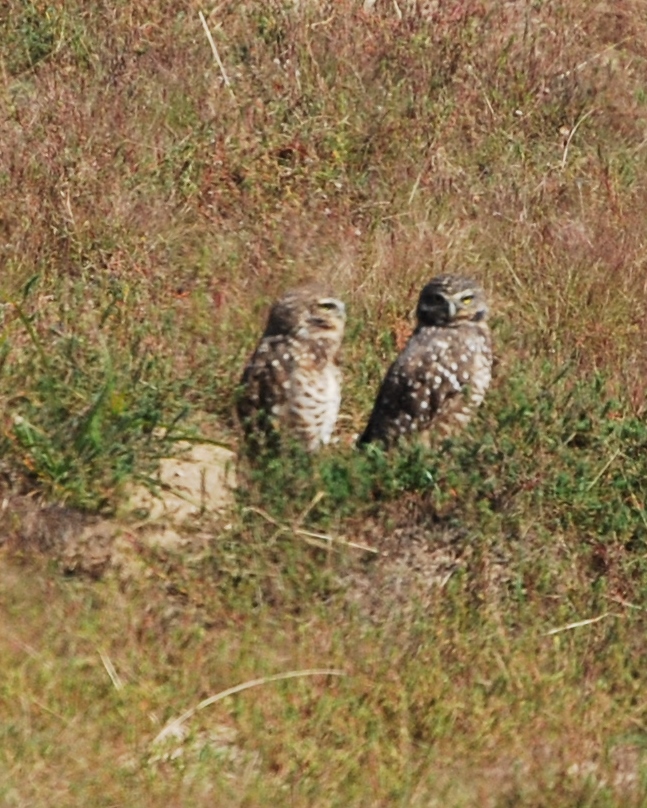
A pair of the burrowing owls near Hutchinson Walmart. Photo courtesy of Joyce Gilliland

Looking back, I believe those birds were in fact burrowing owls being spooked by our presence from their dens that were probably old abandoned badger holes.

Studies show burrowing owl populations to be in sharp decline, easily imagined here in Midwestern farm country where badger dens are not welcome and are filled-in when possible, and where prairie dogs towns as a whole are hard to come by anymore. They are listed as endangered in Canada, as threatened in Mexico and as endangered, threatened or of special concern in 9 of the United States.

Here in Kansas they are listed as “vulnerable.” Burrowing owls are active both day and night and often live in colonies of several mated pairs. They drag all manner of stuff into their dens as nesting material, and I found numerous mentions of cow manure being a favorite. Researchers believe the manure somehow helps control the microclimate of the den, plus attracts insects which the owls feed on.

Typical clutch sizes are from 3 to 12 eggs, and large families of chicks are often raised.

Their main diet is mice and moles during spring and early summer when they’re still feeding hungry chicks, then mainly grasshoppers and beetles as long as they can still be found. Burrowing owls stand 10 to 12 inches tall when mature and have long, featherless legs and white eyebrows above extremely large, bright and beautiful yellow eyes.

All birds make some sort of vocal sounds, and even though burrowing owl calls are not noteworthy at all compared to some of their vocal cousins, they do make a few cooing, chirping sounds, the most recognized being a 2-note sound reminiscent of a quail call.

We recently watched a TV documentary about swift foxes and burrowing owls living in suburban neighborhoods around Las Vegas. Since watching that documentary, we have found a couple dens of burrowing owls living in a sprawling prairie dog encampment near Walmart in Hutchinson. We can see their dens from a side street, so now every time we are in that part of town (which is way too often for me) we swing past, and if they are sitting at the entrance to their den, we stop and watch awhile. They are surrounded by active prairie dog dens and the dogs scurry about and graze as if the owls weren’t there at all.

In fact, the little owls probably benefit from the prairie dogs surveillance system. In an active prairie dog town there are always certain occupants designated as sentries whose job it is to keep watch for danger, and when intruders are spotted in the form of foxes, hawks or merely nosey humans, they sound an alarm by rising quickly up on their hind feet, stretching their heads skyward and emitting shrill high pitched chirps of danger, sending all their brethren scurrying for cover and affording the owls a chance to dive into their burrows too.

One of these days I’m going to wonder around through the prairie dog towns around Walmart to see if there are signs of any other little owls there. I’ve always wondered if there are prairie rattlesnakes living there amongst the prairie dogs too. They are common inhabitants of abandoned prairie dog dens, although not quite as cordial as the owls, given that they eat the landlords…. Continue to Explore Kansas Outdoors!

Steve Gilliland, Inman, can be contacted by email at [email protected].
SCHROCK: Butterfly stampede

John Richard Schrock is a professor at Emporia State University.

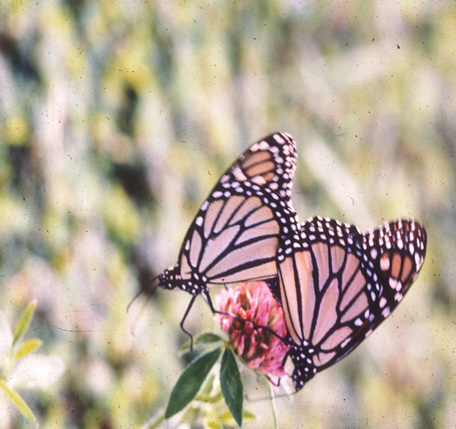
Large orange butterflies have been heading south through Kansas these last few weeks. They are monarch butterflies. This migration continues until the weather becomes cold.

Most local butterflies and moths have adapted to Kansas winters by laying eggs or overwintering in a cocoon or chrysalis stage. But monarch butterflies never evolved the cold-hardiness to survive harsh North American winters.

Populations on the West Coast migrate down to Pacific Grove, California, where they survive in milder conditions. East of the Rocky Mountains, our monarch butterflies are heading south by southwest into Mexico where they will overwinter on the hillsides of a few mountains. Their numbers will be so great that some tree limbs will break.

Monarch butterfly caterpillars feed on milkweed. The white sap that oozes from many milkweed stems contains a heart poison that seriously affects vertebrates. Very few animals can feed on milkweed without getting sick. However, monarchs are not harmed by these toxins. Not only are they one of a few insects that can eat milkweed, they keep the poisonous compound in their wings and outer exoskeletons, making monarch larvae and adult butterflies toxic to birds and other predators.

Instead of their caterpillars being green to hide from birds, they are brightly striped to advertise their bad taste. And the adults are likewise attractively bright orange. Once a young inexperienced bird tries to eat a monarch, it immediately vomits it back up. The bird has learned to leave the striped caterpillars and big orange butterflies alone.

Monarch butterfly development from egg to adult takes about 30 days. Therefore in the spring, the monarchs that move north and lay eggs in the southern U.S. will go through several generations. Those that make it to Canada will have a shorter time to cycle before fall signals it is time for their trip south.

Adult monarchs no longer grow, but they need to fuel their flight south to Mexico. Flower nectar is about 20 percent sugar and monarchs will visit many different flowers. They locate flowers by sight but use taste receptors on their feet to find the nectar.

During the summer, adults live for 2 to 5 weeks during which they mate and lay eggs. But the last generation that emerges in late summer or early fall must migrate to their overwintering grounds and will live for 8 or 9 months.

Research on monarch migration was conducted by the late Professor Lincoln Brower (September 10, 1931 – July 17, 2018) who marked monarch butterflies and then tried to trace their migration and estimate population numbers from recaptures. However, the migration was so large and the marked individuals so few that this was a difficult task.

It was Dr. Orley Taylor of the University of Kansas who expanded the research. Having worked on other butterfly research as well as the African honey bee problem, Dr. Taylor turned to the monarch migration puzzle. He enlisted school children and other members of the public nationwide in a massive tagging effort. By enlisting the aid of “citizen scientists,” it is possible to secure better estimates of the monarch population and the factors that influence its migration.

This data could not come at a better time, because the monarch migration appears to be declining in the long term. Many factors may be involved, but the use of herbicidal chemicals in the central United States has  produced massive strips of farmland with beautiful crops and absolutely no weeds—including milkweed.

Monarch Watch is Dr. Taylor’s organization based at K.U. It is not only command central for receiving nationwide data on tagged monarch butterflies, but is involved in helping the public grow milkweed gardens and appreciate the need to leave some portion of roadsides uncut.

“Biology of the Monarch Butterfly” authored by Dr. Taylor is a Kansas School Naturalist issue available free upon request. It is also accessible online at www.emporia.edu/ksn and is available in print in Spanish as well. There is a lot more to learn about these beautiful butterflies flying south right now.

John Richard Schrock is a professor at Emporia State University.

WINKEL: Fall planting and transplanting, part 2

Rip Winkel

Last week we covered the fall planting of trees and shrubs that come in containers. If, however, you are transplanting a tree or shrub from one location in your yard to another, fall is also a great time to take on this project. The first thing to remember is to wait until the plants in question begin losing their leaves for winter, that is, if they’re deciduous.  Below is a list of procedures, or a guide if you will, for transplanting procedures.

  • Before you begin, determine if the plant you are going to transplant will do well in the new location. Ask yourself if it will get too much sun or shade, will have enough space to grow as it matures, and how much water it is going to require. Also keep in mind whether or not there are local, city or state codes that would determine the location of the transplant.
  • Be sure to dig the new hole before you dig up the plant that will be relocated. Remember, be ready to get the plant out of the ground, and back in as soon as possible. The longer it is out of the ground, the less of a chance for its survival. Your tree will lose a significant amount of its root system during transplanting. So make sure it’s well-hydrated before the transplanting process begins.
  • When the digging commences, do not start right at the base of the tree or shrub. Rather, start digging about 3 feet out from the base, all along the perimeter. Get a feel for where the main mass of roots lies. Also think about what the weight of the plant, roots and soil clinging to roots will be. You might need some help to lift it. Tie up any low hanging branches to prevent damage to them while the tree/shrub is being dug. Use a sharp shovel to make clean cuts in the root system to prevent further damage. One standard for the size of the root ball of a tree is to have at least 10 inches radius and depth of the root ball for every 1 inch of trunk diameter. Shrubs should have 10 inches out from the base of the plant for every 18 inches of height.
  • The width of the new hole should be twice that of the root-ball. The depth should be kept a bit shallower, to avoid puddling and consequent rotting (especially if your soil has a lot of clay in it). When you reach the bottom of the new hole, resist the temptation to break up the soil beneath, as this may cause the plant to sink deeper later on.
  • Once you have removed enough soil from around the sides of the plant, you will eventually be able to slip your shovel under it and begin to loosen the plant’s grip on the soil below it. After it is loose, spread a tarp on the ground nearby and gently move the tree or shrub onto the tarp.
  • Drag the plant over to the new hole using the tarp as a transporting medium. Carefully slide the plant into the hole, and then set it straight. Shovel the excavated soil back into the hole all around the root ball. Place the hose into the hole, and water it as you are back filling it. This will help to eliminate air pockets, and allow good contact between the root ball and the surrounding soil.
  • Mound up the soil in a ring around the newly transplanted tree or shrub, forming a berm that will hold water like a basin. This will help keep the new transplant’s roots well-watered, until it becomes established.

Rip Winkel is the Horticulture Agent in the Cottonwood District (Barton and Ellis Counties) for K-State Research and Extension. You can contact him by e-mail at [email protected] or calling either 785-682-9430, or 620-793-1910.


Now That’s Rural: Steve Strickler, Kansas dairyman

Ron Wilson is director of the Huck Boyd National Institute for Rural Development at Kansas State University.
By RON WILSON
Huck Boyd National Institute for Rural Development

“Be a good neighbor.” That advice and other words of wisdom from his father have helped this Kansas dairyman be a positive force in his community and the dairy industry.

Steve Strickler is owner of Strickler Holstein Farm near Iola. He follows in the footsteps of his father, a longtime leader in the dairy industry.

Steve grew up on the farm which milked 120 cows at the time. Steve studied dairy science and technical journalism at K-State. After graduation, he worked for a dairy cooperative in Wisconsin and then for a national magazine, Hoard’s Dairyman, which took him coast to coast in the U.S. and beyond. He enjoyed the work but the thought of the family dairy farm drew him back home.

“The calling of the farm was too much,” Steve said. In 1979, he returned to the farm and eventually took over the operation from his father. Now Steve has three kids and four grandchildren of his own.

Steve’s siblings are also in the Iola community. Brother Tom is a banker and brother Doug does the cropping operation, while Steve has expanded the dairy. They credit their father, Ivan Strickler, with leadership and inspiration.

“My dad was a real visionary,” Steve said. The first commercial cow embryo was implanted in 1976. The Stricklers started using that breeding technology in the same year.

As artificial insemination became more common as a way to improve quality and production in dairy herds, bulls were kept at breeding services or stud farms. The Stricklers’ genetic line was very popular. “In 1985, we sold more bulls to bull studs than any other registered Holstein breeder,” Steve said.

The farm continued to expand. In 1999, the Stricklers purchased the Alta Genetics Natural Bull Sales program, which expanded their business from coast to coast. Today the Stricklers milk some 400 Holsteins. By the way, they pronounce the name of the breed Hol-stine because that is the way it was originally pronounced in Europe.

Farmer-owned milk marketing cooperatives represent a way for many dairy farmers to work together and share the costs of handling, hauling, processing and marketing milk.

“Dad was a huge believer in cooperatives,” Steve said. “He and others started a dairy co-op named Mid-America Dairymen.” Ivan Strickler eventually was elected Mid-Am President and served 13 years. Mid-America Dairymen grew through the years. In 1996, leaders from Mid-America Dairymen and other regional cooperatives met to discuss strategies for dealing with changes in the industry. In 1998, they came together to form Dairy Farmers of America or DFA, the nation’s largest dairy cooperative.

One of the current members of the Board of Directors of DFA is Steve Strickler. “I’m quite proud of DFA,” Steve said. He’s also proud of his father’s vision.

“He was so prophetic,” Steve said. “He would say that the biggest challenge to the dairy industry is in educating the consuming public. With each generation becoming even more removed from the farm, many consumers have no idea where their food comes from.”

For decades, the community of Iola had conducted an annual farm-city day to build relationships between urban and rural cousins. “About five years ago, that event almost died,” Steve said. He hated to see it lapse as a vehicle for urban-rural communication, so the Stricklers decided to host it at their farm every year. It is an opportunity to showcase to the public how farmers are using technology and achieving sustainability to conserve resources for the future.

The Strickler Holstein Farm is located near the rural community of Iola, population 5,454 people. Now, that’s rural. Steve wants his neighbors to understand the importance of the production of milk and other farm products.

“Be a good neighbor.” That advice from pioneering dairyman Ivan Strickler has served his son Steve well, along with his other sons Tom and Doug. We commend the Strickler family for making a difference by leading the dairy industry and cooperative businesses. It’s the neighborly thing to do.

And there’s more. Another Kansan serves on the Board of Directors of the Dairy Farmers of America, and we’ll learn about him next week.

INSIGHT KANSAS: Nov. 2019: Governor Kobach’s first year

Burdett Loomis, Professor, Political Science, College of Liberal Arts and Science, University of Kansas

From the vantage point of November 2019, the chaos of Kris Kobach’s initial year as governor seems inevitable. The ambitious Kobach, much like Sam Brownback, assumed that a small-state governorship could propel him into the national spotlight.

Remarkably, it has taken Kobach only a year to crash and burn, compared to Brownback’s entire first term.

In 2018, a clear majority of Kansas voters chose someone other than Kobach, who defeated Democrat Laura Kelly, 45%-44%, with 11% of the electorate selecting Independent Greg Orman (8%) or two other Quixotic candidates. Although Republicans captured both legislative chambers, just half of these GOP legislators have actively supported him.

With little popular or legislative support, his agenda — lower taxes, less spending, fewer immigrants, more stringent voting restrictions, less regulation, and limits on judicial review of education spending through a constitutional amendment – proved dead on arrival. But Governor Kobach didn’t seem to care, even as his taxing and spending proposals foundered in the Legislature.

Like his fellow far-right governors in Illinois (Bruce Rauner) and Maine (Paul LePage), Kobach embraced bruising battles with legislators and the resulting policy deadlock.

When the Kansas Supreme Court ruled that schools needed an additional $200 million to resolve the “adequacy” question, Kobach essentially said, “Over my dead body,” and vetoed a series of legislative attempts to address the issue.

Unsurprisingly, Kobach turned to executive actions to seek some victories. First, he categorically rejected accepting any federal funds for social services, saying, “Our goal is to reduce dependence and get everyone back into the workforce.”

Subsequently, after legislators rejected his proposal to strip in-state funding from undocumented Kansas high school graduates, Kobach threatened to withhold funding for institutions that offered such rates. This accompanied his budget proposal to reduce higher education funding by ten percent.

Kobach also vowed to make Kansas the test case for aggressive cooperation with Immigration and Customs Enforcement to deport undocumented immigrants. The ACLU immediately sued, noting its overwhelming record of victories over Kobach in litigation. Kansas farmers, ranchers, and meatpackers immediately felt the pinch of a declining work force, with no native Kansans picking up the slack. The governor expressed no concern, arguing that undocumented immigrants and their families were simply “self-deporting.”

As the legislative session wrapped up, the moderate-conservative majority passed omnibus funding that increased state spending by four percent, less than the revenue gains over the previous year. Governor Kobach rejected that budget, provoking a back-and-forth round of budget bills and gubernatorial vetoes.

By June 30, the end of the fiscal year, neither school finance nor the overall budget had been resolved. The Supreme Court threatened to take over Kansas schools, but demurred, waiting for a special session to address school finance.

Kobach began the July special session by demanding that lawmakers reduce the budget and resist the Supreme Court’s dictates. Around the state, newspapers unanimously condemned his positions; this simply strengthened the governor’s resolve.

The special session ended in deadlock, redeemed only by the passage of the first of month-to-month continuing resolutions that maintain current spending levels.

Despite the governor’s policy debacles, he continues to appear on Fox, write for Breitbart, and appeal to the farthest right third of the electorate, all the while claiming his administration as a great success. (Sounds familiar?)

That’s where we stand now, a year after Kobach’s narrow victory. Fiscal deadlock, no policies, a constitutional crisis, and, once again, an ambitious, delusional governor who makes Kansas the butt of jokes across the country and around the world.

Burdett Loomis is an emeritus professor of political science at the University of Kansas.

MASON: Homecoming is a celebration of all of us

Dr. Tisa Mason

Since my return here after three years away, I have been fond of saying “There’s no place like home.” I said that a lot, and wrote it a lot more, in the first few months after I came home to Fort Hays State University. Now we are in the middle of the one special week of the year that we call “Homecoming,” and I get to say it again: There’s no place like home.

From wherever they make their homes now, from near and far, thousands of people will come back to Fort Hays State this week because it is a place that makes a home in their hearts.

Here they will gather to celebrate a place where their futures began. We give special recognition to two groups, the 50-year (class of 1968) and 60-year graduates (class of 1958). They even have a special FHSU Alumni Association organization, the Half Century Club.

The Alumni Association will recognize three outstanding alumni with the Alumni Achievement Award for their accomplishments in their careers and for their service to community, state and nation, and to the university. Two others, who graduated more than 10 years ago but less than 15, will be honored with the Young Alumni Award for their accomplishments and service. One alumni will receive the Nita M. Landrum Award for volunteer service to the Alumni Association and FHSU.

These alumni return to a place that meant so much to them in their early years. They come to a place they once knew very well to see how it has changed, to take note of its growth. They come especially to see friends, classmates, faculty and staff.

One special event at every homecoming is the Half Century Club Luncheon and Induction. This year, the class of 1968 will officially be welcomed into the club.

People who are now in the beginning or middle of their working careers, like the half century Tigers, are also here to see what is the same and what is not, what is old and what is new.

The visitors will gather into various other reunion families. This year has several special events for specific disciplines and interests. There is something for everyone:

• Of several events featuring art and design graduates and students, one will involve molten iron being cast into forms.

• A social for basketball alumni, men and women from all years.

• A 10-year reunion for tourism and hospitality management graduates.

• A celebration to mark the 80th anniversary of the Department of Political Science.

• A luncheon for geosciences alumni.

• Tailgate events for Tiger Friends and Family, the College of Education, and tourism and hospitality alumni, in addition to all the tailgate parties for individual families or groups.

• A 5K Run/Walk for fitness buffs and people who just like to run or walk.

• Several T-shirt exchanges, where you can trade in some other university’s shirt and get an Tiger Gold on Friday T-shirt, instead.

• Special reunion events for alumni of the 1974 baseball team.

All of these activities and events, and many others, are not only for the graduates but for faculty, staff, family and community, because all of those things are part of what we are. This week is set aside – designed – to bring all the different parts and pieces together to rejoice in what we have done, individually and together. It means bonfires, parades, football and soccer and a host of other things that can’t be listed in a schedule of events – sights, sounds, conversations, old friends, new friends, old things and new things.

In other places and in other ways, I have said that the culture of Fort Hays State encourages and rewards hard work, dedication and perseverance. Our students, faculty and staff, our alumni and our friends, are dedicated to the proposition that we all need to be life-long learners, unafraid to experiment and innovate. We are committed to each other’s success and the success of our community, state, nation and the world. We help and encourage each other. Together, we have worked and learned.

Today, this week, at home – which, by the way, there’s no place like – we celebrate together. The welcome mat is out. Come join us.

Hays Senior Center: The place to be

By GUY WINDHOLZ
For Hays Post

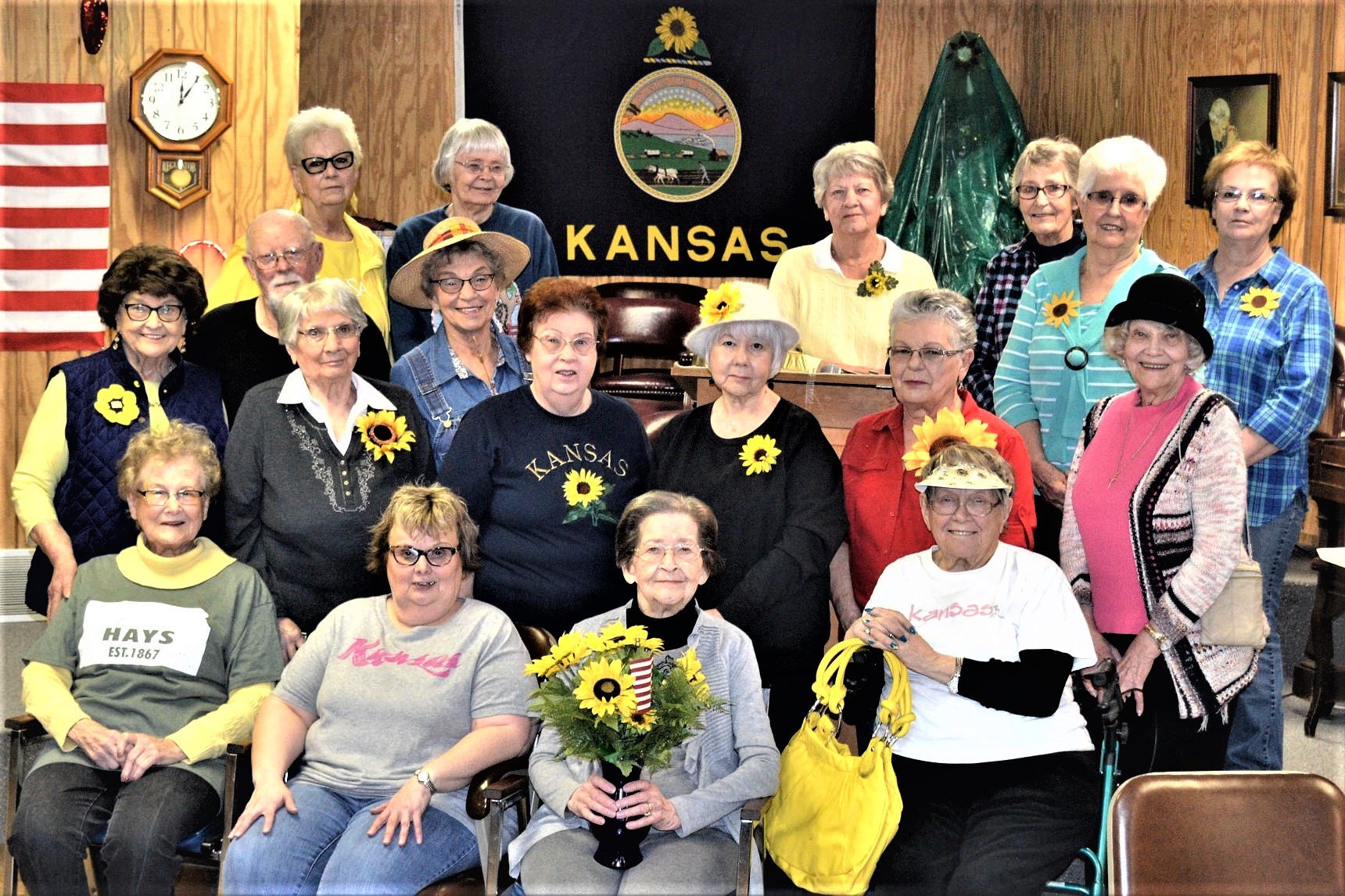
A great opportunity is here for those 55 and older to gather at the Hays Senior Center for a wide variety of activities and special events. One of the biggest draws over the last year has been special events, coordinated by Nancy Augustine, who invites patrons to think of something neat and fun to do.

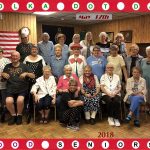
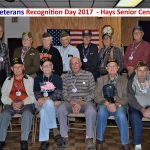
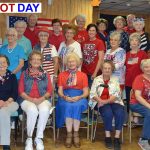
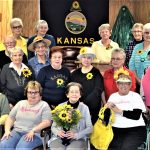
Past events included a day for Polka Dots, Hat Day combination for men and women, Kansas and Flag Day, Independence, Patriots and Senior Patrons Vets Day.

Come on in and you’ll likely find a group playing chicken foot (dominos), someone working on the latest 1,000-piece puzzle, a foursome at pinochle cards, a weekly game of BINGO, or a few of the eight pool table players who are the saltiest sharks in central Kansas.

Everyone has a story, a history and a proud career they are willing to share.

Socializing is the center point for all being here, where the men exchange ideas on how to change the world and the women are busy “chattering and gabbing.” (Your right, this was written by a man.)

Call us at 785-628-6644 and join us. It’s the place to be!

Photos and videos by Guy Windholz

HAWVER: Cross-party endorsements and ‘has-beens’

Martin Hawver
Boys, remember when your father told you to “think twice” before you speak on a first date?

Girls, remember when your mother told you that you can tell a lot about a boy on a first date by quick responses to questions—that those quick retorts are really what the guy thinks?

Who would ever think that those teenager tips from parents would turn out to be important or not when you’re voting for a governor?

We’ll likely see how that advice turns out in the governor’s race, whether an ill-considered slap at “tired has-beens clinging to the part pretending to be Republicans when they so clearly left the party a long time ago…” will split the Republican vote.

That remark came from Republican Secretary of State Kris Kobach’s campaign spokeswoman last week after former U.S. Sen. Nancy Landon Kassebaum, R-Kan., endorsed Democrat Sen. Laura Kelly for governor.

The split: A longtime respected Republican from back in the “old days” when there was more governing and less political sloganeering in campaigns, and today, when there appears to be more catch-phrase and sloganeering in political races.

Now, this may just turn out to be an issue where Democrats can hold the coats of Republicans of all ages while they fight it out under the sheets for just who Republicans want running Kansas, who they want running their political party.

***

There are still some of those Republican “has-been” voters out there who remember back to 1978–yes, 40 years ago–when they elected the first-ever woman U.S. senator to a full Senate term and didn’t just fill out the remainder of the term of her husband.

That was a pretty progressive move for Kansas Republicans who can remember the days when cars had bench seats and an FM radio was an extra-cost option on a new car.

Democrats last week just fired back that the “has been” remark was impolite and inferred that even though it was a fight within the Republican party, it wasn’t respectful.

How would you like to campaign against a candidate who had insulted many members of his own political party, a party that once had elected Kobach to the state party chairmanship? Probably not a bad deal…

***

The whole concept of cross-party endorsements is relatively new to Kansas. It was the 2014 gubernatorial election cycle when a few former GOP leaders endorsed a Democrat for governor. It didn’t work, and Gov. Sam Brownback was elected to a second term in office.

But the effect of that intra-party jab might show up in a gubernatorial election this year. And Kassebaum joined the list of other former Republican leaders who are endorsing Kelly.

Of course, there are a lot of other issues besides endorsements that are in play in the gubernatorial election. And many are relatively party-line issues, ranging from welfare and Medicaid to school and highway finance and tax policy.

There’s the chance that the “has been” voters will just put aside that intra-party jab as an ill-considered remark from youngsters.

Key is that no party has “extra” voters that they can lose through an off-hand remark.

The numbers, remember, are that in Kansas there are about 796,000 registered Republicans, 436,000 registered Democrats, 558,000 unaffiliated voters…oh yes, and 16,800 Libertarians.

Not sure how many Republican votes that Kobach can afford to lose or whether the remark gets him unaffiliated votes. Or whether there are young Democrats out there who aren’t sure why a Republican would support a “real” Democrat.

This is another one to see how it comes out…

Syndicated by Hawver News Company LLC of Topeka; Martin Hawver is publisher of Hawver’s Capitol Report—to learn more about this nonpartisan statewide political news service, visit the website at www.hawvernews.com

SCHLAGECK: Keep kids safe this harvest

John Schlageck writes for the Kansas Farm Bureau.

Keeping children safe while they live, play and work on farms can be challenging. It’s even more difficult during harvest season – a peak time for agricultural injuries.

Long hours, a flurry of activity, less-than-ideal weather conditions and work involving large machines make corn, milo and soybean harvest a potentially dangerous period.

Fall harvest marks the pinnacle of a half year’s effort to produce these crops. During harvest, farmers work long, hard hours. Fifteen-minute meal breaks are about the only real time off in days that often stretch 10 hours. People and machines are pushed to their limits.

While every machine – combine, truck, tractor, grain cart or auger – provides its own unique hazards, operator stress or error account for most harvest accidents. Years of safety features built into these machines are useless without operator safety. Exceed human limitations and accidents are bound to follow.
Carrying an extra passenger is also a safety concern. Children or young adults can fall from cabs. It’s instinct to hold onto something when jarred off balance. Some people have reached for the door handle, accidently hitting the latch and fallen out.

Operator knowledge and attitude remain the key to a smooth, well-oiled fall harvest. A safe operator knows his or her skills, limitations and condition, both physical and emotional.

The safety-conscious operator knows each piece of equipment, its condition, capacities, limitations, hazards and safety equipment. Such an operator is constantly monitoring field and weather conditions.
It’s critical to train young people and go over safety precautions before harvest begins. Beyond the tasks associated with driving harvest equipment, recognizing potential hazards should be discussed.

Consider these safeguards:
Securely fasten seat belts.
Avoid ditches, embankments and holes if possible.
Reduce speed when turning, crossing slopes and on questionable surfaces.
Avoid slopes too steep for operation.
Do not allow passengers – buddy seats may be a safer way.
Be sure everyone is a safe distance before moving.
Operate combines, tractors, trucks and grain carts as smoothly as possible.

Every fall In Kansas, thousands of acres of corn, milo and soybeans add to the pressure of slicing through those crops before foul weather or winter comes to call. With this added pressure comes the desire to take chances, short cuts and extend working hours. Such behavior only adds to fatigue and high levels of stress and tension.

Remember, harvest will take its toll if you don’t take breaks. Eating balanced meals, even if you only take 15 minutes is important.

Stop the machine. Crawl off and relax a few minutes while you’re eating.

Drink plenty of water, tea or other cold liquids during what can be hot, dry days. Jump out of your machine for such breaks at least every hour.

Walk around the machine to limber up. This will also allow you to check for possible trouble spots on your machinery.

Before harvest begins, check your equipment and perform the proper maintenance. Consult your operator’s manual or dealer if you have questions. Well-maintained machinery reduces the chance for breakdowns and related aggravation in the field.

Delays due to breakdown only force harvest crews to work longer and harder to catch up. Such delays also increase the chance of accidents during this catch-up period.

Pulling pre-harvest maintenance is easier and less frustrating than fixing such problems in the cold or heat, dirt and sweat of the harvest field. Reduce your chances of aggravation now – it will be worth it.

John Schlageck is a leading commentator on agriculture and rural Kansas.

AAA: Kansas gas prices up, in contrast to national trend

Average Kansas per-gallon price up 4 cents to $2.70; regional refinery maintenance blamed

AAA

TOPEKA – Despite a majority of states across America experiencing falling or flat gas prices, Kansas was part of a regional trend that saw prices at the pump rise over the past week. The average cost of a gallon of regular gas in Kansas rose four cents this week to $2.70. Several Great Lakes and Central states experienced increased gas prices due to shutdowns of a half dozen refineries in the region because of maintenance issues.

“Generally this time of year, we see gas prices that trend downward, and that is the case in much of the country,” said Shawn Steward, AAA Kansas spokesman. “The refinery issues in our part of the country just go to show you that retail fuel prices are always evolving, sometimes impacted by unexpected factors and, overall, hard to predict. Kansas does still fare very well, though, with gas prices 15 cents below the national average and 12th cheapest in the nation.”

Of the 10 Kansas cities regularly highlighted by AAA Kansas (see chart below), seven saw their gas prices increase, led by Salina (+10 cents), Garden City (+6) and Wichita (+5). Hays, Kansas City, Kan. and Lawrence all saw a 1-cent decline at the pumps.

Click to expand

According to AAA Kansas, this week’s Kansas gas price extremes are:
HIGH: Kensington (Smith County) – $3.01
LOW: Newton (Harvey County) – $2.56

National Perspective
Motorists in 32 states are welcoming cheaper or stable gas prices at the start of the workweek. Today’s national gas price average is $2.85, which is the same price as last Monday, one-cent more than last month and 27-cents more expensive than this time last year.

The latest Energy Information Administration (EIA) data reports that both U.S. gasoline demand and stocks declined signaling supply and demand are in sync post the summer. This is true for most regions, except in the Great Lakes and Central region where prices are increasing due to maintenance at a handful of refineries.

While the national gas price has remained stable throughout September, the price of crude oil started to increase in the last week.

“Crude oil prices pushed past $70/bbl for three days last week,” said AAA Kansas’ Steward. “If they trend above this level for a sustained amount of time, we could see a national trend reversal in pump prices meaning it may cost more to fill-up as we get closer to the end of the year.”

Today’s national gas price extremes:
High: Hawaii – $3.78
Low: Alabama and Mississippi – $2.53

News From the Oil Patch, Sept. 24: Ellis Co. state’s top producer

By JOHN P. TRETBAR

The Kansas Geological Survey reports Kansas producers pumped just shy of three million barrels of crude in June, bringing the mid-year total statewide to 17.558 million barrels. The state is about half a million barrels behind the running total at this time last year, which was the worst year for Kansas oil production since 2005.

Ellis County leads the way through June of this year with 1.31 million barrels produced, adding about 218,000 barrels for the month. Haskell County was next with 1.25 million barrels through June. Finney County’s six-month total was just over 875,000 barrels, beating out Barton County with 855,000. Rounding out the top five was Russell County with 792,000 barrels produced through June. Stafford County weighs in with more than 520,000 barrels for the first six months of the year.

Total oil production through June of 2018:
State total: 17,558,505 bbl
Ellis County: 1.315M bbl
Haskell County: 1.253M bbl
Finney County: 875K bbl
Barton County: 855K bbl
Russell County: 792K bbl
Stafford County: 520K bbl

Out of just nine completed wells reported across Kansas last week, four were dry holes, including all three completions in western Kansas (in Rooks, Finney and Ness counties). Weekly reports from Independent Oil & Gas Service show six newly-completed wells in eastern Kansas, including five producing oil wells and one dry hole in Bourbon County. So far this year, Kansas operators have completed 1,117 wells, including 230 dry holes (about 20%). By this date five years ago, operators had completed more than 4,500 wells. Out of those, 829 were dry holes (that’s about 18%).

Operators filed 39 new drilling permits across Kansas last week, 15 in Western Kansas and 24 east of Wichita. There are two new permits in Barton County and one in Stafford County.

In Kansas the active rig count was up nearly seven percent. Independent Oil & Gas Service reports 13 rigs in eastern Kansas, and 34 rigs west of Wichita that are drilling or preparing to, which is up three for the week. Operators are preparing to spud one well in Barton County, three in Ellis County and one in Stafford County. Baker Hughes reported 1,053 active drilling rigs across the U.S. Friday, down two for the week. Texas reported an increase of six rigs, Oklahoma was down three. Canada reports 197 active rigs, down 29 for the week.

Weekly crude-oil inventories continue to drop. The U.S. Energy Information Administration on Wednesday reported the fifth straight weekly decline, a drop of more than two million barrels for the week ending September 14. U.S. stockpiles are about 3% below the five-year average for this time of year. Imports are on the rise, averaging nearly 7% more than a year ago.

The government reported a slight increase in U.S. crude production, reaching 10.97 million barrels per day last week.

Russia is once again setting post-Soviet records for crude oil production, between 11.29 and 11.36 million barrels per day. Those numbers top their record set in October 2016 just before Russia’s production cut deal with OPEC began.

At least one Russian oil firm is bracing for possible new U.S. sanctions. Traders who deal with the firm told Reuters that Russian oil producer Surgutneftegaz is pushing buyers to agree to pay for oil in euros instead of dollars if the need arises. Russian firms inclusion on a Treasury Department blacklist effectively cuts them off from conducting any deals in dollars, which is the lifeblood of the global oil industry. The company’s chief executive is already on that blacklist.

One of the largest oil and gas drillers in West Texas has bought an interest in a sand mine there, as the market value for frack sand more than triples. Pioneer Natural Resources announced an agreement with U.S. Silica Holdings to buy a 15-year interest in the LaMesa sand mine north of Midland, Texas. The mine is expected to provide Pioneer at least 2 million tons of sand a year by 2020, and could cut their sand costs in half. Pioneer continues its sale of assets in the Eagle Ford play and elsewhere to become a Permian Basin “pure play.”

Pipeline capacity shortages and higher prices continue to drive up the amount of oil being transported by rail. According to the Association of American Railroads, the U.S. moved 11,649 petroleum tanker cars during the week ending September 8. That’s up 47% from the same week a year ago. So far this year, we’re averaging more than 10,000 oil by rail cars per week, an increase of 12.7% from a year earlier. In Canada, the average is more than 8,000 rail cars of crude per day, up nearly 17% from last year.

Exploring Outdoors Kansas: The Road Kill Game

Steve Gilliland
My wife has a fascination with identifying road-killed critters, so in an attempt to pad our retirement nest egg (which I believe long ago tumbled from the nest and splattered on the ground) we decided to invent and market a family-friendly game to help everyone endure those awful road trips that are often punctuated by exclamations of “Don’t make me stop this car,” or “You just wait till we get home!” It’s a game of skill where players have to spot and correctly identify road-killed animals seen along the road. Welcome to the game of Road Kill Skills!

The rules of the game are really quite simple; a point value is assigned to all manner of animal carcasses, and the first player to spot and identify the carcass gets the points. The game begins when the vehicle leaves the driveway, allowing less skilled players to accumulate quick points for spotting easily seen casualties on city streets or in your driveway. We’re still tweaking the rules, so I’m not sure how something will score that you back over as you exit the driveway. If it’s the neighbor’s cat or a friendly neighborhood squirrel, it may be a deduction; after all we’re not monsters! Points are assigned according to a very scientific set of parameters, and the person riding shotgun will be the judge and have final say in any and all appeals.

The point values all depend on the degree of difficulty. In the Olympics, the diver who merely manages to enter the water headfirst without doing a belly-flop will score fewer points than the diver who twists and summersaults in every conceivable direction and texts a greeting to their mother on the way down. So it is with points in the Road Kill Skills game; the more easily identifiable the carcass, the fewer the points. Several factors should be considered when determining point values per carcass.

First determing factor will be the size of the carcass; the smaller the carcass, the more points it will be worth. For example, a large carcass of a Holstein cow will garner the player far fewer points than that of a possum or a squirrel.

That brings us to the second determining factor, the condition of the deceased. The better condition the remains, the fewer the points. Again, an intact deer corpse not yet gnawed by coyotes will score far fewer points than that of a rabbit that’s in several pieces along the highway. That brings us to easily identifiable markings. Road killed skunks and raccoons which have tell-tale markings (or scents), no matter their condition, will be worth fewer points than rabbits or possums, simply because they should be a slam-dunk to identify even by the novice city-slicker. As a side note here, in the case of a skunk you can award bonus points to the first “smeller.”

In the real estate world, it’s all about Location, Location, Location, and another important factor determining point value of roadside carrion should be the body’s location. During the course of the game, you will probably travel a mix of four lane highways, single lane blacktop main roads and gravel side roads. In accordance with the criteria above, the harder roadside remains are to spot, the more points they are worth.

While discussing points for location of the carcass, perhaps a special category should be added to address point values of critters actually run down during the course of the game by the vehicle in which one is riding. Although drivers are not encouraged to participate while they drive, I’m of the opinion they should receive gratuity points if they run over a critter during the game and can correctly identify what they hit. Again, the smaller the varmint, the more points it should be worth. East side rules can apply here, as every situation will be different. For instance, if the driver has to back up to see what was hit, it might be seen as a deduction.

But if something is actually run over while backing up to see what was hit, it could mean double bonus points. If the driver has to stop and pry the carcass from beneath the car, maybe the rules should automatically suspend the match while the driver calls the insurance company.
The “location” category would not be complete without awarding points for the remains of road-killed carrion still on the road. Here the rules can get fuzzy; until now, the larger the body, the fewer the points. But it seems only fitting to award bonus points for large carcasses still on the roadway, as the driver might have to execute some Dale Earnhardt maneuvers to keep from running over them.

And if the players in the car are able to correctly identify the remains while careening down the road like passengers in a tilt-a-whirl gondola, their skills should be aptly rewarded. A word of warning to players here, please don’t ever remove your seatbelts during the game, as we must stress safety at all times! Bear in mind all the above suggestions are for matches played during daylight hours, so points awarded to participants after dark should be increased appropriately.

Nothing says family vacation fun like an enjoyable game to pass the time while in the car, and a lively game of Road-Kill-Skills might just be the ticket. Come up with your own point values, develop your own categories and rules or simply follow the suggestions above. Levels of achievement can be set just like in Candy Crush. Points can be redeemed for Dairy Queen treats, McDonalds cheeseburgers or for those with stronger stomachs, beef jerky at gas stations stops.

What a great way for the entire family to get off the couch and enjoy the great outdoors!

Steve Gilliland, Inman, can be contacted by email at [email protected].

Success in Diversity: Agritainment and U-pick yield surprising results

Frank Gieringer, Edgerton, has found success with diversifying this traditional crop farm to include tomato-filled hoop houses (shown here), orchards and berries, bringing his son into the operation.

Second in a series of five farmer feature profiles distributed by the Kansas Rural Center

By JENNIFER KONGS
Kansas Rural Center

EDGERTON — Frank Gieringer was raised in Edgerton and started farming outside of town when he graduated from high school. “I started with hogs,” Gieringer says, “but got out of that business in the ’80s, when things went downhill.” Fast forward to today, when he and his wife, Melanie, own 160 acres, own an additional 80 acres with their son, Bryson, and farm more than 1,000 acres. They raised row crops for years, then about 11 years ago, began to diversify.

KRC toured Gieringer’s Orchard and Berry Farm on a cool April day last spring, following a weekend with unusually low temps that reached into the teens. The Gieringer’s peach trees were just blooming—and survived the late frost—and the hoop houses were full of fledgling tomato plants and cauliflower.

The Gieringers started growing in hoop houses a little more than a decade ago. This year, the farm has planted about 400 tomato plants in each of five hoop houses. The sixth hoop house is home to the purple and cheddar cauliflower, a popular add-on buy when people come to pick strawberries.

“We’ve found a design we like from Stuppy Greenhouse in Kansas City. It is a greenhouse frame that has bigger, stronger pipe and drop-curtain sides,” Gieringer says. “We typically get our plastic and other building supplies from FarmTek. I hired someone to make custom ends with wooden frames, which probably cost us $1,500. The ends are more permanent and anyone on the farm could handle closing them if a storm is coming in. We found the zippered ends that come with the FarmTek kits to be too difficult to work with. We’ve had nine years with these custom hoop house ends.”

“We’re probably raising too many tomatoes at this point. We’re going to try to steer away from growing quite so many in future years. We’re no longer moving all the tomatoes off the farm or at the farm, likely because people come out here for fruit, and I don’t want to sell wholesale.” Gieringer says. “Having the tomatoes early brings people to our farmers market stand, but come August, we can’t move much volume because everyone has them.”

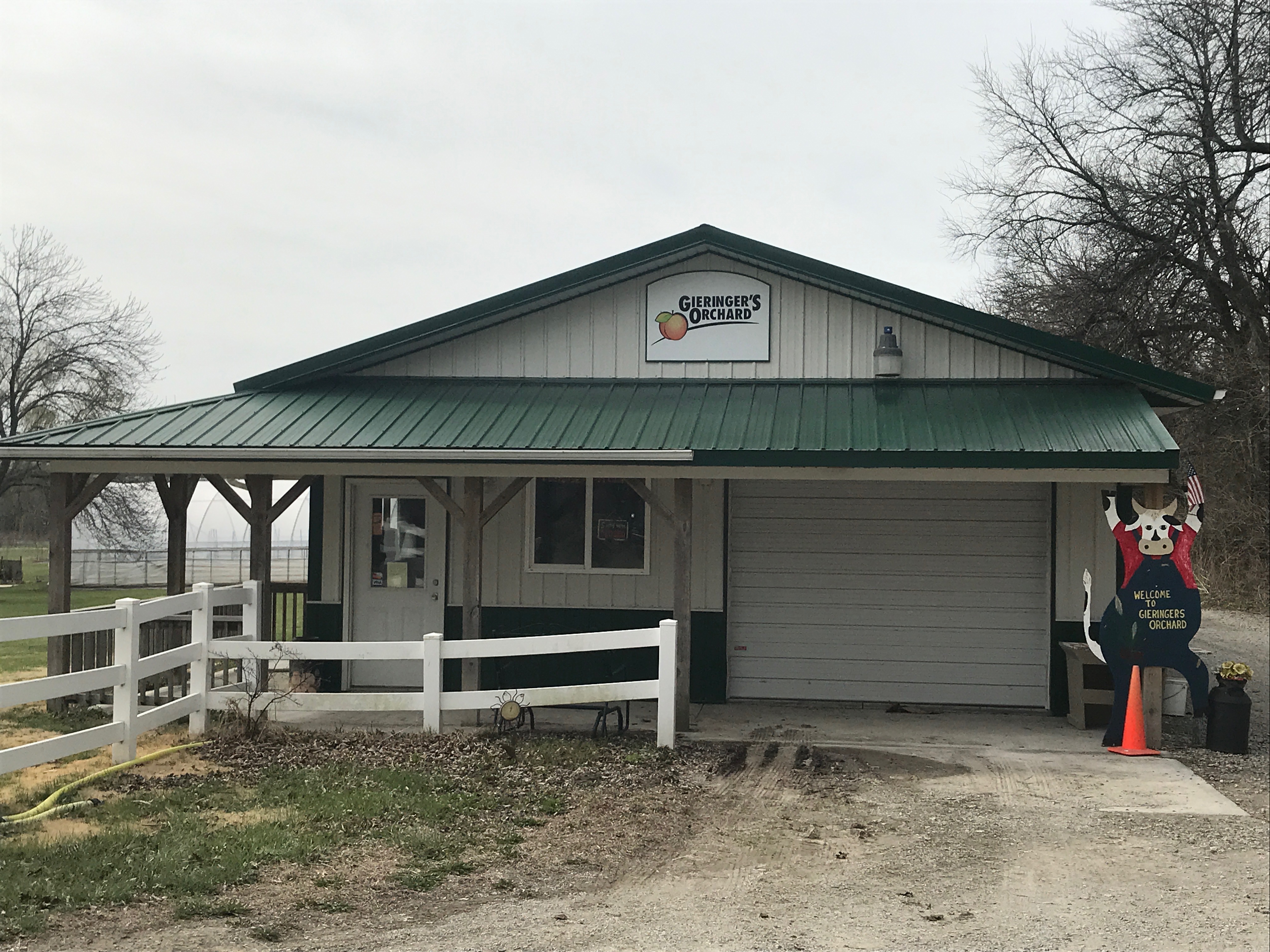
The Gieringers host a u-pick berry and orchard operation with an on-site storefront, which on their highest volume day in 2017 brought 2,200 customers to pick strawberries.


The family has a stand at the Overland Park farmers market, where, in addition to tomatoes, they sell vegetables and any fruit excess from the u-pick operation (which isn’t much). The family also uses this time with customers as a marketing tool to invite people to come to the farm for the u-pick experience.

“If you’re wanting people to come to your farm, you have to grow something that puts a little fire in their britches,” Gieringer says. “Peaches, strawberries, things like that. They may buy tomatoes or cauliflower while they are here, but they won’t drive here just to get those items.”

The u-pick and agritainment features have become the biggest focus for growth for the Gieringers. “We built our first building to sell u-pick peaches right by our house, and we are now trying to move to the adjacent 80 acres we bought down the road,” Gieringer says. “That’s where we’re trying to move to agritainment,” Franks says. The farm has a food truck for lemonade and strawberry donuts, a playground space, and offers u-pick strawberries, raspberries, blueberries, blackberries, pumpkins, and, soon, apples. In the fall, the farm adds a haystack maze for the pumpkin-patch visitors.

The family has 9.5 acres of peach trees, home to about 1,000 trees of multiple varieties. In recent years, the family added farm-to-table dinners in the orchard. “We string lights in the trees and set up tables between the rows of peach trees,” Gieringer says.

The family still raises conventional corn and soybeans, and has adapted over the years to a no-till system. “In our row-crop side, we are all no-till. We are able to do that because we grow GMO varieties and we have greatly reduced our pesticide use. We still use an herbicide to do the no-till, but we have seen a major reduction in our spraying.”

Gieringer says the diversification has been worth the work and change of mindset. He says 2017 was the first year the diversified, specialty-crop business beat out the conventional crops in net income. This new focus, and the shared buy-in to the additional acreage, was part of Bryson choosing to come back to the farm and putting real skin in the game.

“It is an incredibly expensive undertaking to expand into what we’re growing into. We’re doing bigger-scale stuff and we’ve borrowed more money, and up until now we’ve grown organically,” Gieringer says.

Take, for example, the newest expansion underway: a high-density, trellised apple orchard. “The orchard technique is largely planted in Honeycrisp on Geneva dwarfing rootstock, planted on 2-foot centers,” Gieringer explains. “The goal is to get a fruiting wall by tying the tree up a trellis, and once it reaches 10 feet, let it fruit and fill the space.” This keeps the trees narrow, meaning the aisles in between are open and the trees are more easily pickable, right at eye height. “Most orchards will be going to this, but it is incredibly expensive,” Gieringer says.

The Gieringers are adding a high-density, trellised apple orchard this year, with the goal of extending the u-pick season another month.

Or consider the plasticulture strawberry operation. The family has about 56,000 plants, replanted and rotated annually, on black plastic in rows with wide, mowed paths in between, covering about 5 acres. “We’ve got about 25 acres of deer fence, which was put up in late summer 2017. We needed it up for the strawberries, and we were tired of moving temporary fence every year we rotated our strawberries. Decided to bite the bullet and do it right,” Gieringer says.

He estimates with the deer fence, labor, plugs, irrigation, black plastic, covers, fungicide, fertilizer and harvest boxes, a farmer will invest about $10,000 an acre the first year. “But, if you following the Plasticulture Strawberries handbook out of Ohio State and do it exactly by the book — without skipping steps and each step on time — you will be successful.” Gieringer estimates you should get 1 pound of berries per plant on average. At about $3.50 per pound, you can start to estimate a payback period on the investment.

Their farm is largely supported by the large, nearby population center of Kansas City. On the highest-volume day last year, Gieringer estimates 2,200 people came out for u-pick strawberries. Subsequent years are much less investment-intensive, however, labor costs will continue to be an issue. In truth, labor costs are one of the Gieringer’s most limiting factors.

“In January, we sent out 52 W2s, most of whom are high school temps. We have four full-time people right now,” Gieringer says, “and just hired our first ‘inside’ help to handle accounting, FSMA, etc.” On one strawberry weekend this year, he says his wife sent out $1,200 in paychecks.

Another concern, as shared by other specialty-crop growers, are the regulations and FSMA. But, Gieringer says, “Anybody who’s going to do this full-time and is going to be serious needs to be FSMA compliant, because even people who are exempt will be held accountable if they have an incident. It’s going to kick out a lot of the older producers who won’t go through the process, but it will present more opportunity for somebody who is willing to go through the steps and bear the expense.”

The family is no stranger to adapting to change when necessary. For example, they modified their parking when the operation took off and began to think more about customer flow. “We had consultants come in and help us design our operation so we could handle thousands of people at a time,” Gieringer says.

With their continued growth, innovation and prime location, thousands of customers each weekend from strawberry season to the end of apple season isn’t much of a stretch of the imagination.

Jennifer Kongs is a freelance writer with Bark Media in Lawrence, Ks. who produced this story as part of KRC’s Specialty Crop Block Grant funded by the Kansas Department of Agriculture through USDA’s SCBG Program.

Copyright Eagle Radio | FCC Public Files | EEO Public File