We have a brand new updated website! Click here to check it out!

Now That’s Rural: FHSU grad Stephanie Eckroat, Kansas Dairy Association

Ron Wilson is director of the Huck Boyd National Institute for Rural Development at Kansas State University.

By RON WILSON
Huck Boyd National Institute for Rural Development

Got milk? If so, it is because some dairy farmer milked a cow, and a bunch of other people worked hard to get it to you. In the 1990s, dairy farmers in Kansas brought themselves together to promote the dairy industry more effectively than ever before. Today we begin a series about the dairy industry in Kansas.

Stephanie Eckroat is executive director of the Kansas Dairy Association and Kansas Dairy Commission. She is a self-described Army brat, but her father retired in eastern Kansas after leaving the Army. Stephanie went to high school at the rural community of Colony, Kansas, population 408 people. Now, that’s rural.

Stephanie enjoyed her agricultural education classes and participated in FFA judging contests for various types of livestock, including dairy cattle. She was on the livestock judging team at Allen County Community College and at Fort Hays State University where she got a job working at the university dairy. Eventually she became the manager of the dairy. She and her husband and family now live near Hays.

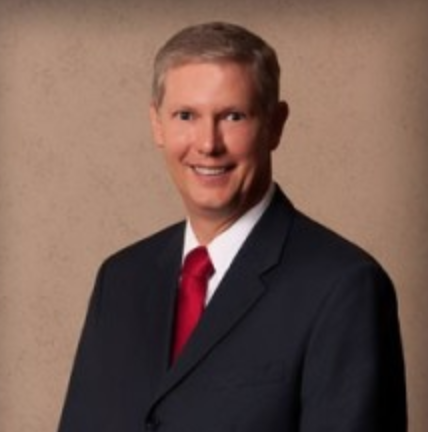
Stephanie Eckroat is executive director of the Kansas Dairy Association and Kansas Dairy Commission.

The Kansas Dairy Association began in 1994, when dairy farmer Allen Schmidt and others around the state wanted to bring together an organization to provide a unified voice for Kansas dairy farmers. K-State dairy science professors Ed Call, Dick Dunham, and Jim Morrill were among the original advisors for the group. The organization’s first executive director was Chris Wilson, who would later serve as deputy secretary and general counsel for the Kansas Department of Agriculture. Kerri Ebert and Janet McPherson provided staff support. Chris was later succeeded as dairy association director by Mike Bodenhausen.

The Kansas Dairy Association pursued the establishment of a producer-funded check-off promotional program, as other commodities have operated under. In 1996, the Kansas Legislature passed legislation to implement the program. The Kansas Dairy Commission was established to oversee the use of such funds. Similar to other producer groups, the association and commission now operate under separate farmer-elected boards with unified management.

The association works on legislative policy and advocacy, while commission funds are used strictly for research, education and promotion. In April 2014, Stephanie Eckroat succeeded Mike Bodenhausen as executive director of the Kansas Dairy Association and Kansas Dairy Commission.

The Kansas Dairy Association maintains a legislative presence at the Capitol in Topeka. KDA also operates the Dairy Bar at the Kansas State Fair, which annually attracts some 350,000 people. Ice cream sales there are a major revenue source for the association.

The Kansas Dairy Commission conducts activities in research, education and promotion, such as grants for dairy research at Kansas State University. The commission helps sponsor KSU Dairy Days and a high school educational program called Dairy U. The commission also provides scholarships for students, helps sponsor dairy shows, provides grants for the purchase of dairy products for special events, and supports the six-times-a-day live milking demonstrations at the Kansas State Fair. Even before joining the association and commission, Stephanie led the daily state fair milking demonstrations.

As mentioned, both the association and the commission operate under farmer-elected boards. “These organizations are grass-roots driven by farmers in the state,” Stephanie said. “These guys are awesome.”

As in other parts of agriculture, the dairy industry is seeing fewer and larger farms. The state’s overall milk production has boomed with the advent of large dairies in western Kansas, beginning in the 1990s.

Technology has also changed. “We have three robotic milking dairies in the state now,” Stephanie said.

More information can be found at www.ksdairy.com.

Got milk? Thank goodness for the dairy farmers, handlers, processors, and marketers who bring us fresh milk every day. We commend Stephanie Eckroat and all those involved with the Kansas Dairy Association and Kansas Dairy Commission who are making a difference by providing leadership in the dairy industry. They are helping make sure that we’ve got milk.

And there’s more. One of the members of the Kansas Dairy Commission board worked for a national dairy publication before returning to the family farm in Kansas. We’ll learn about him next week.
CROSS: Get the facts about injection wells and seismicity

Edward Cross is president of the Kansas Independent Oil & Gas Association.

By EDWARD CROSS
Kansas Independent Oil & Gas Association President

More often than not, activists’ comments and media accounts continue to get it wrong when it comes to the issue of injection wells and induced seismicity. Whether this frustrating pattern is due to a deliberate mischaracterization of the facts or if an honest lack of understanding of the issue is to blame, the unfortunate byproduct in both instances is a misinformed public. The information provided by activists and media often confuses the public with assertions that are out of context and need more information for a complete and informed discussion. So, it is worth examining some of these claims to see just how much they diverge from reality.

Regarding seismic activity in Kansas, here are some facts. Prior to 2015, there were very few seismic monitors in Kansas. Therefore, very few seismic events were recorded. When the State Task Force on Induced Seismicity was formed in 2014, one of the first things they did was install additional seismic monitors in south-central Kansas. When you install more monitors, you will almost assuredly measure more seismic activity. With these new monitors installed, more seismic events were recorded (most which are not felt earthquakes). But, that is not to say these events were not occurring prior to 2015, only that they were now being recorded.

The Kansas oil and gas industry has taken the issue of induced seismicity very seriously. The Kansas Geological Survey, Kansas Corporation Commission and Kansas Department of Health & Environment are devoting significant resources to analyzing seismicity causes. Industry has supported these efforts to provide assurance that an improved understanding of seismic issues is available to all. These efforts are producing results. The latest data (September 13, 2018) shows a 41% decrease in seismic activity in Kansas since January 2015.

Let’s look at the injection well application notice issue. Here are the facts. Between October 2008 and February 2018, about 4,300 injection well applications were reviewed by the Kansas Corporation Commission (KCC). From these reviews, 1,007 applications regarding 2,111 wells were issued injection permits after operators published notice of the permit application with a 15-day notice instead of the required 30 days. The average time between KCC’s receipt of an injection well permit application and issuance of the permit during that 2008-2018 period was about 90 days. Only 29 applications, or 2.88% of the 1,007 applications, were issued a permit in less than 30 days. It should be noted that 21 of the 29 applications were issued at 28 or 29 days, probably allowing for mailing time.

The injection wells permitted in the 2008-2018 period met the regulatory requirements, protected usable water and correlative rights and helped prevent waste. The discrepancy between the notices published by the operators and the legal protest timeframe is a harmless error that did not violate any KCC regulation. The law is clear that such discrepancies were not fatal defects to the KCC’s jurisdiction or authority to approve the injection applications. Finally, there is no evidence that any person’s due process rights were affected by the publications.

The KCC’s September 6th Order saying no action shall be taken by the KCC against the subject permits in the docket was very pragmatic and appropriate. Arguments by those who called for the KCC to revoke the permits offered no real evidence and used weak logic.

Mischaracterizing oil and gas activity has been and continues to be a common practice and strategy of activist groups across the nation.  This pattern of accusation without scientific evidence is intended to create public anxiety about oil and gas production and to discredit effective regulatory programs.  Activists across the country commonly assert that the oil and gas industry is under-regulated or even unregulated.  These are false assertions.  Examination of the issues demonstrates its mendacity.

Nevertheless, they continue tactics to denigrate and demean current state regulatory programs.  This is a tired, worn-out, unsuccessful strategy and we now see this happening in Kansas.

We continue to see activist groups attempt to advance political agendas by using fear. Fear has become a principal means of directing public opinion away from the facts, and in the case of injection wells and earthquakes, it is occurring with a well-known and historically acceptable process associated with recovering oil and gas from the earth. Fear of the unknown is primal and instinctive and is part of all of us. I cannot, and will not, criticize the fear of those who are afraid of what they do not know.

Rather, I applaud those who raise relevant questions and want answers concerning activities they do not understand. My criticism is reserved for those who exploit and pander to fear by repeatedly citing unproven anecdotes to advance political agendas.

Several recent studies and reports have found very few injection wells have been linked to induced seismicity, and the risk from these wells is low.

The most recent comprehensive study based on data from the U.S. Geological Survey (USGS) and peer-reviewed studies found that less than one percent of injection wells across the nation and in Kansas have been linked to induced seismicity.

The USGS states in its Myths and Misconceptions regarding induced seismicity that “Most injection wells are not associated with felt earthquakes.”

A report conducted by StatesFirst, an initiative of the Ground Water Protection Council and Interstate Oil & Gas Compact Commission, took a comprehensive look at potential induced seismicity associated with injection wells. The report finds that seismicity linked to oil and gas development is rare; that the risk associated with these rare occurrences are minimal; and that understanding of induced seismicity is growing and mitigation techniques are proving effective. The report also notes that a “vast majority of earthquakes are tectonic, or attributable to natural causes.”

The EPA says Class II injection wells are “a viable technique for subsurface storage and disposal of fluids when properly done.” There is extensive information available on the EPA’s website, which describes how Class II wells “protect drinking water resources” and “prevent surface contamination of soil and water.” A separate section of EPA’s website describes all injection wells, not just the Class II variety, as a “safe” option for disposal.

The bottom line is these studies and more confirm what have long been true – that seismicity induced by injection wells is rare and certainly not a widespread issue. Despite misleading claims exaggerating risks and incorrectly linking seismicity to injection wells, the risk of induced seismicity from injection wells is small, rare, and manageable.

The problem with activist and media reports on injection wells and induced seismicity is they work backward from a conclusion. They try to support their ideas by cherry-picking and misrepresenting data and information to suggest a problem, conveniently ignoring crucial details that would provide a more complete representation of the issues discussed. Their condemnations do not hew to strict scientific precision, but instead are hyperbole, heated rhetoric, and non-verifiable statements of subjective opinion. The reality is this. State regulators, in conjunction with the EPA, carefully oversee injection wells with tight regulations and high operating standards.

Activists and media have the responsibility of reporting and clarifying the facts regarding injection wells and induced seismicity. The facts are readily available. Facts are stubborn things; and whatever may be our wishes, our inclinations, or the dictates of our passions, they cannot alter the state of facts and evidence.

Neither fear-mongering nor unproven anecdotes can conceal or deny that Class II injection wells are safe and well-regulated.

Let’s not be afraid of injection wells.

Edward Cross is president of the Kansas Independent Oil & Gas Association.

1st Amendment: Corrections should not be weapons for critics

Gene Policinski
To err is human — but, it would seem, corrections are not seen by many as divine.

Inevitably, when journalists in all kinds of mediums start fresh each day, sometimes assembling the equivalent content of a paperback book, mistakes will be made.

Once upon a time — ironically, in a time when a free press was held in higher public esteem though mistakes were made — corrections were made less frequently and, at least in newspapers, often placed in lesser-read spaces.

As first thought, efforts to correct errors more quickly and prominently should bring both praise and satisfaction from news consumers — and for some, it does. But for others, the mere existence of corrections (and let’s count the lesser cousin, “clarifications” too) are signs of media malfeasance, proof that so-called “fake news” exists or is grounds for online versions of public floggings.

There’s no question that news operations should be called out when mistakes are made. Social media has made that calling much easier and much louder.

Case in point: The New York Times’ correction in print editions after the Emmy Awards, noting “A picture caption … using information from a photo agency, misidentified a woman presenting the award for outstanding lead actress in a comedy series. The woman was Angela Bassett, not Omarosa Manigault Newman.” An earlier tweet from the Times said that while the caption error was first made by Getty, the photo provider for the image, it was a mistake that should have been spotted and corrected by the Times.

The Twittersphere lit up as critics slammed the newspaper and its website for sins ranging from embarrassing carelessness to the much more serious reminder of the error’s racial overtones. One online post asked, “Do all dark-skinned black women look the same to your editors??”

There is value to be found in considering the full spectrum of those criticisms, particularly if we can avoid simple social media “piling on” that can distract from that value.

But from photo captions and factual errors to plagiarism and invented sources, what other profession fixes missteps so quickly, so publicly and so thoroughly? Answer: Few come to mind, if any.

While examples are available from any number of news outlets that make corrections quickly and publicly, for this discussion, let’s stick with corrections the Times published Sept. 18:

• “The Here to Help column on Friday about three books on the sexism women face in Hollywood misstated the year that ‘Bossypants’ was published. It was 2011, not 2018.
• “An article on Monday … gave an incorrect title for Jens Stoltenberg of NATO. He is the organization’s secretary general, not its general secretary.
• “An article on Sunday … misspelled the surname of the European Union’s Brexit negotiator. He is Michel Barnier, not Bernier.
• “An article on Monday … misidentified the winner of a game between the Los Angeles Rams and the Arizona Cardinals. The Rams won by a score of 34-0.”

None of these corrections — save perhaps the last one, for Cardinals fans — involved an earth-shattering mistake. None rose to the level of whatever fluid description applies today to the highly politicized “fake news.” Clearly, mistakes of facts, not of motives; more oversight than heinous skullduggery.

Yet, even as such corrections take place daily, in pages and online, from news organizations large and small, those who would weaken, restrict or even do away with a free press find traction in such open admissions. Better to continue in a combined effort to make news reports as accurate as possible — and perhaps to extend such self-reviews to social media posts.

Another case in point, yet again from the Times, from its Sept. 19 report about “Debunking Five Viral Rumors about Christine Blasey Ford, Kavanaugh’s Accuser” — in each of the five cited rumors, the newspaper reported, misinformation was conveyed online by a variety of individuals or groups, noting the misidentification and errors remained, days later, uncorrected or without factual support.

An unfortunate truth about the unprecedented Age of Information in which we now live is the huge amount of misinformation or outright fabrication that now clogs the systems bringing us news and information. So let’s end with a very proactive step by the Times in which, on Sept. 17, it invited the public to join its efforts to avoid misinformation.

The item, “If You See Disinformation Ahead of the Midterms, We Want to Hear From You,” says that “as November’s midterm elections approach, The New York Times is looking for examples of online ads, posts and texts that contain political disinformation or false claims and are being deliberately spread on internet platforms to try to influence local, statewide, and federal elections.”

“Times journalists are hoping to use your tips to advance our reporting. If you see a suspicious post or text, please take a screenshot and upload it” using a form provided by the newspaper.

Making corrections in a very public way will not restore all public confidence in a free press — that may be better achieved by not making mistakes in the first place — but fixing errors and taking proactive steps to sort out deliberate misinformation ought to be encouraged, not weaponized.

Gene Policinski is president and chief operating officer of the Freedom Forum Institute. He can be reached at [email protected], or follow him on Twitter at @genefac.

WINKEL: Fall planting and transplanting, part 1

Rip Winkel

The fall season is a great time to plant trees, and shrubs as well. During the spring, soils are cold and may be so wet that low oxygen levels inhibit root growth. The warm and moist soils normally associated with fall encourage root growth. Fall root growth means the tree or shrub becomes established months before a spring-planted tree and is better able to withstand summer stresses. Moreover, the best time to plant is in early September to late October.  This is early enough that roots can begin to develop and become established before the ground freezes.

Fall-planted trees and shrubs need some special care. Remember that roots are actively growing even though the part of the plant above ground is dormant. Make sure the soil stays moist, but not soggy. This may require having to water them not only in the fall but also during the winter months, especially if the winter is dry and/or unusually mild. Mulch can be helpful because it minimizes moisture loss and slows the cooling of the soil so root growth continues that much more.

Note; there are certain trees that are an exception, as they do not produce significant root growth during the fall and are better planted in the spring. These include beech, birch, redbud, magnolia, tulip poplar, willow oak, scarlet oak, black oak, willows, and dogwood.

In either case, fall or summer, here are some hints you can remember when planting containerized trees and shrubs;

  1. Dig the hole no deeper than the container bottom to the root flare or crown of the plant; on trees the flare needs to be slightly above the soil grade when done.
  2. Dig the hole two to three times the diameter of the root ball or container, and the bottom of the hole needs to be undisturbed (not loosened).
  3. When placing the plant into the hole, disturb the root ball as little as possible. Lift potted plants by the container, not by the trunk, stems or branches. Be sure to not allow the root system to dry out before or during planting.
  4. Tip the container on its side and slide the plant from the container. Place the plant in the hole by lifting the root mass. If the roots are tightly matted, use a knife to score the root mass in several places and gently loosen the root ball.
  5. Add backfill soil to the planting hole until it comes about halfway up the root ball. At this point the soil can be lightly packed by hand or foot, or by placing the hose in the hole and letting water run until the back filling is complete.
  6. Construct a 3–4″ high ridge of soil around the outer edge of the planting hole. This berm will create a basin to hold irrigation water, concentrating it over the roots.

     Next week; Part 2 of this article, discussing how to transplant a shrub or tree from one location in your yard to another.

     Rip Winkel is the Horticulture agent in the Cottonwood District (Barton and Ellis Counties) for K-State Research and Extension. You can contact him by e-mail at [email protected] or calling either 785-682-9430, or 620-793-1910.

MORAN: The DRIVE-Safe Act and Myth vs. Fact

OFFICE OF SEN. MORAN

WASHINGTON– U.S. Senator Jerry Moran (R-Kan.), along with U.S. Senators Todd Young (R-Ind.) and Jim Inhofe (R-Okla.), introduced the Developing Responsible Individuals for a Vibrant Economy (DRIVE-Safe) ActS. 3352, to address the driver shortage in the trucking and logistics industry, and enhance safety training and job opportunities for young truckers.

The apprenticeship program established by the DRIVE-Safe Act would require young drivers to complete at least 400 hours of on-duty time and 240 hours of driving time with an experienced driver in the cab with them. All trucks used for training in the program must be equipped with safety technology including active braking collision mitigation systems, a video event capture system and a speed governor set at 65 miles per hour or below. 

Due to some expressed concern regarding the safety and intent of the DRIVE-Safe Act, below is a fact sheet to highlight the rigorous training all new drivers under this bill would need to complete prior to licensing: 

MYTH #1: It obviously is going to reduce safety.” This bill will make the roads less safe because there is not adequate training for 18-year-old drivers. 

FACT:

  • It is already legal in all 48 contiguous states for 18-year-olds to drive trucks intrastate; this bill would simply allow these drivers to cross state lines with the commodities they are already transporting intrastate upon the completion of the rigorous training program.
  • It is currently legal for an 18-year-old Kansas City, Kan.-based truck driver to deliver goods 400 miles away to Goodland, Kan., and yet they are forbidden from crossing the Missouri River to make a delivery 10 miles away.
  • Further, those participating in this program would be required to complete a minimum of 400 hours of training and meet 10 performance benchmarks before being allowed to operate trucks interstate. 

MYTH #2: “Younger drivers both lack overall experience and are less safe behind the wheel than their older counterparts. 

FACT:

MYTH #3: No small-business truckers are going to be able to take advantage of that [lowered age requirements] simply because small carriers will not be able to get younger drivers insured.”

FACT:

  • Insurers have expressed a willingness to work with carriers to get younger drivers insured, so long as carriers comply with the requirements of this bill and demonstrate meaningful investments in safety. 

MYTH #4: We’ve been hearing the talk of shortage for 25 years, and when you sort through the smoke and mirrors . . . what they call a shortage is actually a retention problem… 

FACT:

  • The industry’s average workforce age, 49, is seven years older than the average American worker. The industry will need to hire 890,000 new workers over the next decade to keep up with demand, and according to the Federal Reserve’s July 2018 report of economic conditions across the country, half of all 12 Federal Reserve Districts reported trucking capacity and truck-driver shortages as an issue, despite this job being one of the most in-demand and with the biggest pay hikes of 2018. 

MYTH #5: This bill will only benefit large companies who want to “pay a starter wage and help the company make more money.” 

FACT:

  • All carriers, large and small, will benefit from a stronger labor market. Additionally, this will create good-paying job opportunities for high school graduates that were previously unavailable to them.

[1] U.S. Department of Transportation, National Highway Traffic Safety Administration, Traffic Safety Facts Annual Report TablesTable 62 Driver Involvement Rates per 100,000 Licensed Drivers by Age, Sex, and Crash Severityhttps://cdan.nhtsa.gov/tsftables/tsfar.htm.

INSIGHT KANSAS: Mainline churches must embrace diversity, or wither away

Traditionally referred to as “mainline,” many traditional, Protestant churches including Lutheran, Presbyterian, and Methodist are under great stress. Some older Catholic congregations are struggling, too. Many of these congregations are aging, with a startlingly high percentage of members (and pledgers) over 80 years old. Some have already closed their doors. More will soon join them, if trends do not change. This would be a terrible loss to our interconnected cultures of faith, community, and politics.

Michael A. Smith is a Professor of Political Science at Emporia State University.

Many unique, elaborate, and historic buildings in our cities and towns house either mainline, or older Catholic congregations. The buildings are expensive to maintain and difficult to re-purpose. Occasionally, a church building gains new life after being sold to a new congregation. Even so, many of Kansas’ most treasured historic buildings are endangered. Their loss would leave both literal and figurative holes in our communities, affecting all those local groups who meet there during the week, like Alcoholics Anonymous. Many are also used as polling places.

Even more devastating will be the loss to our faith culture. These churches represent the “moderates” extolled to get off the fence and support the Civil Rights movement in Dr. Martin Luther King, Jr’s famous Letter from a Birmingham Jail—a poignant reminder that the struggle for civil rights was faith-based and church-organized. Their moderating influence was much like political parties, back when effective leaders played a pivotal role in transforming some of the more extreme (and rash) impulses of supporters into sustainable political programs. Both parties today have thrown aside many of these old fuddy-duddies—the hated “establishment”—instead becoming captive to a small groups in their respective activist bases, who hate the other party and communicate via social media. Disgusted, most others withdraw from politics entirely.

We see this polarity in the faith community, too. Too many Americans now believe that one must either be a fundamentalist, or a “none,” the latter being the trendy new term meaning, secular. It does not have to be this way.

In their book, For the Common Good, Ed O’Malley David Chrislip relay the story of Pastor Lance Carrithers. Upon becoming pastor at First United Methodist Church of Dodge City, Carrithers noticed that in a town with a well-established and growing Hispanic population, First United Methodist’s congregation was nearly all-white, and older. The church had no plan to grow. Furthermore, there was a good deal of racism toward the Hispanic community.

Carrithers began reaching out to the Hispanic population, first by stressing faith-based messages of love and inclusion in sermons. Later, a predominantly Hispanic congregation began renting space from First United Methodist. When their own pastor moved on, they joined the regular services, led by Carrithers. Technical changes included hiring a Spanish-speaking coordinator and creating a soccer field.

Adaptive changes were harder. Carrithers set the tone early, stressing a faith-driven message of inclusivity. He also delivered straight talk during sermons. He spoke of how the church could do great new things if they embraced change—and how they would wither away otherwise. He called upon congregants to take their faith mission seriously and not be a “country club church.”

Reaction was mixed. Some longtime congregants left. Others accused the new members of being in the country illegally. Carrithers responsed that churches are for inclusion, faith, and community, not checking documents. It was painful—but rewarding, as growth and diversity came.

The experiences in Dodge City point the way to a different path—and new hope—for this state’s struggling, and still desperately-needed, mainline congregations.

Michael A. Smith is a Professor of Political Science at Emporia State University.

CLINKSCALES: Lessons from vacation … ‘Money can’t buy you love’

Randy Clinkscales

My wife and I took a couple of weeks off in late August. We went to Colorado and over the two weeks, we had various family and friends come out to visit us. It was very relaxing with no television (and all the noise and anxiety that it creates).

I always find that when I go on vacation it gives me more of a chance to reflect on recent events and happenings. Sometimes, things pop up while on vacation that inspire me.

Just as we were about to leave for vacation, I received a very kind, though heartbreaking, letter from an older woman (in her 80’s). She told me how much she enjoyed my articles, but then went on to tell me about some family members (a child and a grandchild) who had “borrowed” money from her. When she ran low on money, they became angry, quit contacting her, and have now alienated themselves from her. She is both angry and heartbroken.

Unfortunately, there are scams everywhere. Sometimes, they are sophisticated scams by third parties. It could be giving out your Social Security number over the telephone, or learning that you have won $10 million if you only send $5,000 and your bank account number. The list goes on and on.

More insidious to me are those scams by family members. “Grandma, if you love me, will you loan me $50,000 to start my business?” “Mom, if you love me, just help me pay a few bills.”

Sometimes, it is the pity train: Poor little me, if I only had someone to help me. Then, mom, dad, or the grandparents step up.

I am a lawyer that started practicing in 1980. In the mid-80’s in Hays, we went through a terrible financial downturn, with a loss of a major manufacturer, collapsing oil prices, low crop prices, and spiraling interest rates. I had a front-row seat of watching parents and grandparents filing bankruptcy because they tried to save a child or a grandchild from financial ruin. One wealthy client bankrupt himself trying to save his son. He passed away a poor man.

Scams are not restricted to third parties on the telephone; or to internet scams. Scams can be your own family.

When I work with someone, and they tell me they are going to loan a child or a grandchild some money, I ask them just to think of it as a gift. Just assume it will never be paid back. If it does, it is manna from heaven.

I myself saw this affect my family. My grandmother would fall for every organization that said it was raising money for law enforcement (my grandfather had been a policeman). There were many evangelical TV ministers that she gave to, only to have them break her heart when they were caught in some scandal.

But more hurtful was that my grandmother gave a “friend” over $30,000. Though I was helping my grandmother, I did not realize what was going on until the person that she was giving money to died. He had been helping her with her books. Only then did I realize what had occurred, the emotional impact that on my grandmother, and the risk it put her in financially.

If something smells funny, or too good to be true, please consult with an attorney. If you are a client of my firm, always feel free to pick up the phone and ask our advice if something feels like a scam. But more especially, be careful with those family loans.

Scams come in many forms. It is not just strangers; it can be family and friends as well.

I know that many times, the emotional play is “if you love me.” But as the Beatles recognized long ago, “Money can’t buy you love.” As soon as the money is gone, so is the “love.”

SCHLAGECK: Grain everywhere

John Schlageck writes for the Kansas Farm Bureau.
Throughout most of the Sunflower State, fall crops wait for combines to begin harvest. Abundant rainfall during the last week of August and the first 10 days of September stopped any attempts to cut dry-land corn.

Water stands in low places in fields and ditches throughout much of western Kansas. Country roads sport ruts from the late summer rains.

While no Kansas farmer or rancher would ever turn down moisture of any kind, this delay means most of the fall corn, milo and soybeans may be all ready to harvest at the same time. This in turn could lead to a busy, hectic 2018 harvest with all farmers scrambling to harvest their grain before the weather turns to winter.

“By this time, we’d normally be in the fields harvesting dry-land corn,” says Ryan Reed, Gray County. “But I can’t bring myself to complain about the rain we’ve received. When it’s wet, it’s always better than the alternative.”

Reed farms with his brother in Gray, Haskell and Kiowa counties. The brothers represent the fourth generation to farm in southwest Kansas.

While they once farmed a third milo, wheat and summer fallow rotation, the last few years, they’ve flexed their dry-land and irrigated acres based on economics and moisture conditions. During the last 20 years, the family farm continues to transition from irrigated to dry-land farming.

Like so many southwestern Kansas farmers, the Reeds have been suffering from lack of moisture, and in some cases severe drought, since 2005. That said, they really appreciate this turn of weather fortunes. They’ll find a way to work around the moisture and prepare to go full-tilt boogey when fields dry out.

Still, with so much of the cropland saturated, wheat drilling season may also be delayed or shoehorned in during fall grain harvest. The Reeds normally shoot for the first week of October to begin wheat drilling. This year Ryan can only hope to find time to plant his wheat.

“Each fall we try to harvest all our crops and plant our wheat by Thanksgiving,” he says. “That’s always our goal, but this year it’ll be a mad dash to finish by the end of November.”

Expectations on the Reed farm remain high once the fall grain harvest kicks into high gear. Stands look outstanding. They’ve managed to control aggressive weed pressure brought on by the abundant rain. Now all they need is dry weather to combine the corn, milo and beans.

“We’re cleaning our bins like we intend to fill them up,” Ryan says. “Grain storage will be at a premium once the machines begin to roll.”

Fortunately, the Reeds maintain a massive storage facility on their farm. Unless it’s a bin buster beyond their expectations, they should have adequate room in their bins.

Like their neighbors and farmers across Kansas will tell you, the Reeds “never look a gift horse in the mouth.” This late summer’s rain trotted across much of the Sunflower State and crop producers will find a way to work around the wet spots while dreaming about newly planted wheat with plenty of subsoil moisture to propel it into 2019.

They’re mighty thankful.

John Schlageck is a leading commentator on agriculture and rural Kansas. Born and raised on a diversified farm in northwestern Kansas, his writing reflects a lifetime of experience, knowledge and passion.

HAWVER: Wagle set to wield enormous power in Kan. Statehouse

Martin Hawver
Nope, she doesn’t get the big second-floor office, but there is a decent chance that after the election is over and a new person has been elected to take that governor’s ceremonial office, that Senate President Susan Wagle, R-Wichita, might just become the most powerful figure in the Kansas Statehouse next year.

And maybe two, maybe four years after that …

What? How does the Senate President run state government? By veto, or veto override. Why would this be different for Wagle after this gubernatorial election that follows nearly two terms of Sam Brownback, who became governor two years before Wagle became Senate president? Part is experience for Democrat Laura Kelly (Wagle can negotiate with fellow Senate veteran Kelly) and part is inexperience for Republican Kris Kobach (Wagle can tell Legislature newbie Kobach what will and won’t work).

The Senate has enough Republicans to veto a bill or to override a veto of a bill, with 30 Republicans—though the number might drop to 29 depending on who wins the southeast Kansas district that was owned by now-State Treasurer Jake LaTurner. Don’t count on that happening.

So, Wagle has two or more likely three “extra” Republicans in her chamber. Not sure what’s going to happen in the House, but it just takes one chamber with veto override numbers to essentially run the state.

Oh, it requires Wagle to make sure that all but two or three Republicans are lined up behind her, but at least she has a solid 21-vote majority now that stretches to 22 or 23 or 24 on almost every issue that isn’t a strictly local issue in her chamber.

Now, if you have the votes in your chamber to essentially become the on/off switch on legislation, you are undoubtedly the most powerful person in the Statehouse.

How would that be used? Depends on who is governor.

Take Secretary of State Kobach, who might just get elected. Practically, he doesn’t know just how the Statehouse works, having been officed across the street and showing up in the Statehouse generally to testify against illegal aliens voting or doing much of anything else in Kansas.

Elect him, and he’ll need a legislative leader to help him put together a budget, and other bills, advising him on what will work, what won’t, and what he’ll have to give up to get most of what he wants and has campaigned on put into law.

Or…take Sen. Kelly, who also might just get elected. She knows how the internal politics of the Statehouse and Legislature work and will undoubtedly be looking for expansion of Medicaid (KanCare) to provide health care for the state’s elderly, poor, disabled and their dependents, more money for schools and some way to quit swiping money from the highway fund.

That’s where Wagle is likely to see conservative Republican issues vetoed by Kelly probably create an override vote. And that’s where if Wagle can assemble a loyal 27 vote majority, she can force a bargaining match that will include provisions that both sides can call a victory. Wagle does know the negotiation process—as does Kelly—to make progress, though incrementally and slowly.

And if Greg Orman, the independent candidate, winds up governor somehow, well, it’s likely to be Wagle whose team assembles the budget, the major legislation of the session, and if she’s nice, gives Orman a chance to claim that he had some DNA in the product of the Legislature.

Much of the whoever-is-governor/Wagle scrapping will be done out of public view, if done right. Few voters are interested in that under-the-sheets fighting over provisions of appropriations bills or highway funding. They vote for leadership and making life in Kansas better.

How that works is going to be decided in the governor’s race. And just how big a new governor’s win is. Anyone expecting to line up behind a governor with…maybe 35 percent of the vote?

We’ll see, won’t we?

Syndicated by Hawver News Company LLC of Topeka; Martin Hawver is publisher of Hawver’s Capitol Report—to learn more about this nonpartisan statewide political news service, visit the website at www.hawvernews.com

News From the Oil Patch, Sept. 17

By JOHN P. TRETBAR

Kansas Common crude at CHS in McPherson gained half a dollar Friday to end the week at $59.25/bbl. That’s up $1.25 from a week ago, up $3 from a month ago, and up $19 from a year ago.

Nearly one third of the completed wells in Western Kansas so far this year have been dry holes. Independent Oil & Gas Service reports 26 new well completions in eastern Kansas last week. West of Wichita there were 18, but eight of those came up dry. For the year, Western Kansas has notched 601 well completions, with 193 dry holes…about 32%. There were two new completions in Ellis County last week, and one dry hole completed in Barton County.

Operators filed 44 new drilling permits last week, including one in Stafford County. So far this year, there are 1,270 permits for drilling at new locations across the state. Looking back, there were more than five thousand new permits in Kansas by this point in September of 2014, when Kansas Common was fetching $81 a barrel.

In it’s weekly active rotary rig count, Baker Hughes reported an increase of seven oil rigs for the week for a total of 1,055. Texas dropped three rigs, New Mexico was down one, while Oklahoma and Colorado were each up two. Canada gained 22 rigs for the week at 226. Independent Oil and Gas Service reported a slight drop in the number of oil and gas rigs moving in, rigging up or drilling across Kansas: 13 east of Wichita (down one) and 31 in the western half of the state (down two). One rig was added to the inactive list, and is now shut down awaiting drilling contracts. Operators are moving in completion tools at sites in Barton, Ellis and Stafford counties, and they’re about to spud a new well in Russell County.

The Trump administration proposed relaxing another series of Obama-era environmental mandates, this time scaling back efforts to block rogue methane leaks from oil and gas wells. EPA says this proposal would lessen the frequency of required inspections, remove a requirement that professional engineers certify some equipment designs, and make it easier for energy companies to use emerging technologies. The agency says if approved next year the changes would save an estimated $75 million a year in regulatory costs.

Reuters reports South Korea and Japan will import record amounts of US crude this month. Both need to replace imports from Iran, and both are taking advantage of our $10 discount to international prices.

The government reports US inventories dropped another 5.3 million barrels last week, and stand about 3% below the five-year average for this time of year. Gasoline stockpiles were up another 1.3 million barrels last week, and are about eight percent above the five-year average. Imports were down another 123,000 barrels per day. The U.S. Energy Information Administration reports a slight decline in US crude production, which was down about 194,000 barrels to 10.85 million barrels per day.

The government said Wednesday U.S. crude production will average 10.7 million barrels per day this year, up from 9.4 million last year. The forecast from the U.S. Energy Information Administration predicts an increase to 11.5 million barrels per day next year, which would lead the world, but is about 200,000 barrels lower than forecast earlier. EIA said the lower expected crude oil production reflects more severe constraints in pipeline takeaway capacity than previously expected in Permian region. However, EIA still expects Permian crude oil production to drive total U.S. production growth next year.

Oil and natural gas production in North Dakota both reached all time highs in July. Oil production reached 1,269,366 barrels/day. The state also set a record for the most producing wells, just shy of 15-thousand.

The Director of North Dakota’s Department of Mineral Resources said “gas capture” is among three big drivers of the state’s active drilling rig counts. The state’s oil producers do not appear poised to meet the deadline Nov.1 for reducing the amount of natural gas burned off at oil well sites. Lynn Helms, in his monthly “Director’s Cut” report, said operators have shifted from running the minimum number of rigs “…to incremental increases and decreases based on gas capture, completion crew availability, and oil price.”

The oil trading firm Trafigura is getting some blow back from Corpus Christi for the company’s proposal to build a loading and export terminal 13 miles off shore. The Houston Chronicle reports that if built the new terminal could cost the Port of Corpus Christi 12% of its annual operating revenue, or about $11.8 million per year. Port officials are hitting back hard in two appeals, including one that points to Trafigura’s federal conviction 17 years ago for violating sanctions in Iraq.

As proposed the facility would be able to fill some of the largest crude oil tankers, called Very Large Crude Carriers or VLCCs, at a rate of 500,000 barrels a day. The company tells the newspaper U.S. exports could surge to 4.8 million barrels per day in the next four years. The spokesperson insists the Trafigura facility would handle about 10% of that, and would complement and not replace exports from the Port of Corpus Christi.

Exploring Outdoors Kansas: State Fair 2018

Steve Gilliland

Well once again the Kansas State Fair has come and gone, and that allows me to take a slight detour from outdoors stuff and write about the sights, sounds and smells of the fair. And also once again I’m reminded of some very important life lessons; under no circumstances do knee socks of any description ever look good on any man wearing shorts (which my wife has been stressing for years,) that wearing both suspenders and a belt with shorts looks even dorkier than wearing both with long pants and that purple spiked hair does not really look that cool on a fat, fifty-something man.

I do have to give fair attendees kudos this year, as I saw very few wearing anything resembling PJ’s, I guess that fashion statement is reserved for Wal-Mart. I try not to judge anyone on their appearance, but there are just some things certain people should not wear out-and-about. Jeff Foxworthy has said “If you ever begin to think you have a dysfunctional family, go to a state fair!”

New to this year’s fair was the butterfly exhibit, a long narrow tent with a row of nectar-producing plants inside, and monarch butterflies by the dozens. As we entered the enclosure we were each given a small foam paint brush slathered with nectar and instructed how to feed the butterflies with our brush. The ones we saw looked so happy and satisfied feeding on the plants, we didn’t bother them. The attendant inside was telling us how a man the day before had, against her advise plucked one off the netting covering the ceiling of the tent leaving one of its legs behind in the process, and she was still quite upset over that. I’m not sure I could be that passionate about monarch butterflies, but I guess if she wasn’t then she shouldn’t have that position. After the fair, all the monarchs they have will be released to join their annual migration to Mexico.

In this day and age there is no food group immune to being deep fried and/or put on a stick, and a state fair is the mother-ship of deep fried foods. There were deep fried peaches, deep fried butter (someone please tell me how they accomplish that) and deep fried Twinkies (which just seems a waste of a good Twinkie) among others. New to the deep fried menu this year were deep fried deviled eggs and deep fried mac-and-cheese which I tasted and found to be pleasing. Available on a stick were Monkey Shine Ice Cream (an old standby,) pork chops, meat balls and prime fillet alligator (or so they claim.) Given the amount of road kill along the roads these days, I was afraid to try their so called alligator. My favorite “on-a-stick” food remains the Moink Balls, comprised of beef meatballs (the “mo”) wrapped in a slice of bacon (the “oink.”)

Next stop, the all enchanting commercial buildings with their bags of free stuff. In this magical kingdom, we could get our glasses cleaned, our shoes cleaned and our blood pressure checked all for free. This year, if the mattresses and massaging recliners for sale had been missing, half the buildings would have been empty. The freebies included pencils (which we gathered by the dozens to be used for our Operation Christmas Child shoes boxes,) pens, cups, frisbees, fans (which are no longer plastic but cardboard,) note pads, fly swatters (of utmost importance at our house) and plastic spring-clips to hold your chip bags closed or the weekly recycle schedule on the front of the fridge.

Joyce’s favorite freebie this year, which she actually had to win by spinning a wheel and correctly answering a question, was a collapsible water bottle that resembles a small hot water bottle with a drinking spout on one end. There in “freebie land” I could have bought the last mop, the last ladder and the last set of cookware I’d ever need (it makes me kinda’ nervous when they put it that way, like they know something about my future I don’t.) I was truly interested in a garden hose nozzle in one booth, as I go through hose nozzles like Kleenex. The booth seemed empty with no one tending it, but as I looked at the nozzle, a guy in the booth next to it who was peddling a rig that sliced, diced and maybe tied your shoes too, began to talk to me, asking if I wanted to see him demonstrate the nozzle. When I asked him the price, he refused to tell me until I listened to his spiel. I guess my next hose nozzle will come from Harbor Freight.

Possibly my favorite pastime at the fair is reading T-shirts and this year had some winners, including
“I have the Right to Remain Silent, I Just Don’t Have the Ability.”

“I Believe every form of Wildlife has its Place; Right next to the mashed Potatoes and Gravy”

“The only thing that should come between a Hunter and his Meat is Bread”

And my absolute favorite, which I found on license plates, shirts, signs and several other places, was “I Kneel for the Cross, I Stand for the Flag.”

Continue to Explore Kansas Outdoors!

Steve Gilliland, Inman, can be contacted by email at [email protected].

KRUG: Stay Strong Stay Healthy program offered by Extension

Donna Krug

The natural aging process offers challenges to many people. While we know from listening to the news and our personal experiences, staying active is a key component in maintaining or regaining health. But if you have noticed that your strength, flexibility or balance isn’t what it used to be you may want to consider signing up for a strength training program I will be offering, beginning in October.

“Stay Strong, Stay Healthy” is designed to increase an aging adult’s access to a safe, structured, and effective strength training program. Over 8 weeks, participants learn exercises to improve their strength, flexibility, and balance. During each session, a prescribed set of 8 upper and lower body strengthening exercises are done along with warm-ups and cool-down stretches. Participants are made to feel comfortable regardless of their current fitness level so they can safely participate and gradually build the strength beneficial to health.

The 8-week program is set to begin Tuesday, October 23rd, and ends December 20th.  It meets Tuesdays and Thursdays from 10 – 11 am at the Great Bend Activity Center, 2715 18th Street. The registration fee is $20 and may be paid at the Cottonwood Extension District – Great Bend office, 1800 12th Street, by October 10th. The class size is limited so please enroll soon. When you register we will schedule a time for a pre-assessment to be completed.

K-State Research & Extension has partnered with Missouri Cooperative Extension to bring the Stay Strong, Stay Healthy program to our state. I am excited that the Great Bend Recreation Commission is allowing us to use their facilities and weights for these classes.

Call me if you have any questions about the “Stay Strong, Stay Healthy” workshop.

Donna Krug is the District Director and Family & Consumer Science Agent with K-State Research and Extension – Cottonwood District. You may reach her at: (620)793-1910 or [email protected]

SCHROCK: Asian American students versus affirmative action

John Richard Schrock is a professor at Emporia State University.
While Asian Americans make up 5.2 percent of the U.S. population, they make up over 20 percent of the students in 23 of the most selective U.S. colleges, according to the September 14 issue of the Chronicle of Higher Education. This includes only Asian American students who are citizens and does not include nonresident international Asian students.

The academic accomplishment of Asian American students is impressive. Education idealists such as Lumina are pressing schools to increase college attendance and completion from the low 40 percent of high school graduates to 60 percent. But Asian American students have already surpassed that 60 percent college completion level.

Indeed, on all measurements of K–12 academic achievement across all 50 states, children of Asian descent consistently average higher. Labeled the “model minority,” they are often left off of subgroup comparisons because their performance as a minority is significantly greater than majority white students. Their performance is sometimes labeled the “model minority myth” since there are some Asian American students who do not score high. But distribution in academic performance is a bell curve and their curve is substantially higher than for any other racial or ethnic group. It is no myth. Asian culture values education more highly than do other ethnic groups.

California has a higher percentage of Asian American students (13.9%) than most states. In July of 1995, the University of California Board of Regents voted to eliminate affirmative action in university admissions, as reported in the August 4, 1995 Chronicle of Higher Education, A18. The number of Asian American students immediately increased. Affirmative action had clearly suppressed the Asian minority.
Today, while California’s Asian American population constitutes 13.9 percent, the percentages of Asian American students enrolled at California’s top colleges are as follows:

Cal Tech 40.7%
U.C. Berkeley 42.7%
U.C. Los Angeles 33.3%
Cal. State Long Beach 25.0%
Univ. Southern CA 24.5%
Harvey Mudd College 23.1%…and so on.

Affirmative action admission policies are still used in some states to provide greater diversity among minorities on campus, an educational benefit that was upheld by the U.S. Supreme Court decision issued June 23, 2016 in Fisher v. University of Texas at Austin. That decision found that the race-conscious admissions program in use at the time by UT-Austin was lawful under the Equal Protection Clause.

The Court accepted the rationale for having a diversity of students, that included: “destruction of stereotypes,” promotion of “cross-racial understanding,” preparation of students for “an increasingly diverse workforce and society,” and cultivation of “leaders with legitimacy in the eyes of the citizenry.” Data also showed that race-neutral use of academic criteria could not achieve this mix of students. The court also required ongoing “strict scrutiny” to ensure “…that race plays no greater role than is necessary to meet its compelling interest.”

Two weeks ago, the Department of Justice filed a brief supporting a lawsuit stating: “Harvard has failed to carry its demanding burden to show that its use of race does not inflict unlawful racial discrimination on Asian-Americans.” Harvard University is located in Massachusetts where Asian American students make up 6.1 percent of the state population but comprise 20.3 percent of Harvard’s undergraduates. Nevertheless, it is obvious from the earlier California data that, without affirmative action, Asian American students would make up an even higher portion of Harvard’s student body.

The U.S. Supreme Court recognized the difficulty of balancing the need for campus diversity with the need for fairness in admission to highly selective universities. That Fisher vote was split, with retired Justice Kennedy being the tie-breaking vote. While the country has been focused on the approval of a new Justice based on his views of Roe v. Wade, there is good reason to believe that if this lawsuit against Harvard is appealed to the Supreme Court, we could see the end of affirmative action.

John Richard Schrock is a professor at Emporia State University.

Copyright Eagle Radio | FCC Public Files | EEO Public File