We have a brand new updated website! Click here to check it out!

Now That’s Rural: Dennis Wright, Bird City’s Wright Farms

Ron Wilson is director of the Huck Boyd National Institute for Rural Development at Kansas State University.

By RON WILSON
Huck Boyd National Institute for Rural Development

The Sunflower State. That is a fitting nickname for Kansas, especially when we learn about innovative farm family members in the northwest region of the state who are adding value to their sunflower production.

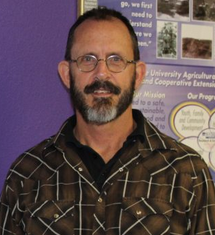
Dennis Wright and his father Don are the founders of Wright Enterprises and the makers of Wright Farms Sunflower Oil near Bird City. “We are fourth generation farmers here,” Dennis said. “My great-grandfather first homesteaded the place.”

Dennis grew up on the farm with his parents Don and Donna and went to Fort Hays State where he met Dana. They married and lived in Hays for a few years. “When we had our first child, we decided Bird City would be a good place to raise a kid,” Dennis said. They now have three children.

Dennis and Dana moved back to Bird City and joined the family farming operation in 2005. “The only constant in farming is change,” Dennis said. The Wrights looked to expand or diversify their operation, which included sunflowers and other crops. “We were asking, how can we make what we raise more valuable?” he said.

Since they produced sunflowers, they researched the possibility of producing sunflower oil and found that most such oil is sold as a refined product. The Wright’s focus groups identified consumer interest in health-conscious items. The niche which the Wrights pursued was in unrefined sunflower oil.

“Refining uses heat and chemicals to deodorize and treat the oil,” Dennis said. “Instead, we use a cold-pressing process with an expeller press that squeezes the oil while keeping all the nutrients and vitamins in it.”

They then use a plate filtering system with multiple layers of vegetable cloth to clean the oil further before bottling it. They built a plant in a small building on the original homestead. “Dad is an electrician,” Dennis said. “We were able to set up our own automation system where the seeds can feed into the press and stop automatically. It’s farmer ingenuity,” he said with a smile.

They call the product Wright Farms Sunflower Oil. The Wrights also joined the “From the Land of Kansas” program at the Kansas Department of Agriculture. “They’ve been awesome,” Dennis said of the program’s staff.

Today, the Wright’s sunflower oil is available for sale online and at approximately 30 independent grocery, gift shop, and museum stores across Kansas. “Unrefined sunflower oil is high in Vitamin E and has a lot of antioxidant properties,” Dennis said. “It’s a healthy oil in that it has a higher ratio of unsaturated fats to saturated fats. It has a lower smoke point so it is suited for low- and medium-heat cooking, rather than deep fat frying. My cousins say it is perfect for sauteeing. We use it as a marinade too. It’s more like olive oil.”

Sunflower oil also has other uses. “I call it the WD-40 of cooking oils,” Dennis said. Because it has high vitamin E, it is good when applied to skin or hair. I use it to oil chains or moisturize my hands.”

Wright Farms Sunflower Oil has been included in the “From the Land of Kansas” gift baskets which have gone from coast to coast and beyond. Since their plant was built on the original homestead, their production literally goes from field to finished product on the farm, which is located near the rural community of Bird City, population 447 people. Now, that’s rural.

“We do tastings and bread dippings,” Dennis said. “We’ve been told it cooks just like butter with a nutty taste. We also designed a continuous filtration process so it has a nice mild flavor.”

For more information, go to www.wright.farm.

Since Kansas is the Sunflower State, how fitting that a sunflower oil production process would be designed by an innovative Kansas farm family. We commend Don and Donna and Dennis and Dana Wright for making a difference with entrepreneurship and innovation in value-added agriculture. I think this sunflower oil process is in a good state.

SELZER: Know your life insurance basics

Ken Selzer, Kansas Insurance Commissioner

September is Life Insurance Awareness Month, and I urge Kansans to consider some important points about life insurance coverage.

Most of us know that life insurance is not about us, but about our families and loved ones. Having a life insurance policy can be of great significance for others over the course of a lifetime. I urge you to think about what a policy can do for your family, and how to protect it for them.

Answers to questions about life insurance are in the Kansas Insurance Department (KID) publication “Life Insurance and Annuity Basics,” which can be printed or ordered from the KID website, www.ksinsurance.org.  Some of the more common considerations are listed below.

  • Your beneficiary will receive the insurance benefits tax free, and life insurance benefits do not have to go through probate or other legal delays involved in the settlement of an estate. If you die without naming a beneficiary, the benefits will be paid into your estate and then paid out according to your will or through state laws. This delays the payment and could create a financial hardship for your beneficiary.
  • Keep your policy in a safe place.  However, do not use any place where the policy might not be readily available.  Record the basic information — such as company, policy type, policy number, insured’s and beneficiaries’ names — in a separate place.  Let your beneficiary know the kind of insurance policy you have, any changes you make, and where you keep the policy.
  • A change in beneficiary is possible after the policy is taken out, unless you have named an irrevocable beneficiary. An irrevocable beneficiary arrangement can only be changed with the beneficiary’s consent. Your insurance agent can arrange for a change in beneficiaries, or you can do it by writing directly to your life insurance company and asking for the appropriate form.
  • You can specify as many beneficiaries as you want to receive the benefits. You may also specify how the benefits are to be divided.  It is a good idea to name a second (contingent) beneficiary to receive the money in case your primary beneficiary dies before you do or at the same time as you.
  • Your beneficiary will need to notify the life insurance company of your death. Again, that is why it is important for your beneficiary to be able to locate your policy.  Companies require a certified death certificate or other legal proof of death, and they may ask for the policy. The life insurance company will pay the proceeds of the policy to your beneficiary after receiving proper notification of death.

Knowing your life insurance basics makes for peace of mind for you as well as your loved ones.

For those who have more questions about life insurance, the KID Consumer Assistance Hotline representatives can help.  Call 1-800-432-2484 or chat online with a representative at www.ksinsurance.org.

Ken Selzer is the Kansas Insurance Commissioner.

Wheat Scoop: K-State wheat breeder discusses varieties

Kansas Wheat
f262aa46-cad0-4f07-9661-628f9a63968a.pngAs wheat farmers look toward planting, there is a plethora of variety options to choose from.
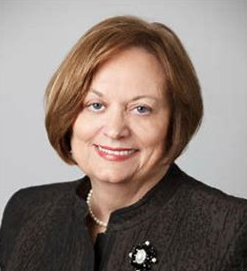
K-State wheat breeder Allan Fritz says, “There are a number of varieties that come to the top in each area of the state.”

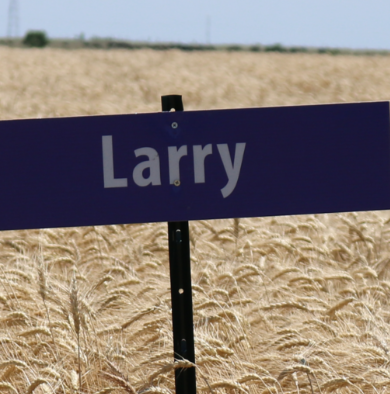
He says, “For instance, in south central Kansas, I think both Larry and Zenda fit really well. WB4269, WB4458 are strong varieties, Monument is a good performer in that area and Chrome has had some success there as well. And Gallagher is a good variety out of Oklahoma for south central Kansas.”

He says these same varieties, with the exception of Gallagher, should also perform well in areas further to the north in central Kansas.

Zenda and Larry are two varieties that were developed in Fritz’s breeding program at K-State.

He says Zenda, which has been called the Everest replacement, is recommended for all of central and eastern Kansas, and is generally significantly better than Everest for a number of characteristics.

“When I look at the data, Zenda has done really well in our ambient growing conditions where we haven’t applied fungicide, so the disease package is very strong. It has very good stripe rust resistance, it has good leaf rust resistance, has pretty good tan spot resistance, and has fusarium resistance very similar to Everest.”

Not only that, but the quality of Zenda is an improvement over its predecessor.

Fritz says, “The quality is better than Everest, so it moves our quality bar up a little bit over Everest, so that’s better for our end users.”

Larry has also performed well.

Fritz says, “Larry has just been a good, consistent performer for us. During development and as we start to look at some of the data from the variety tests over a three or four year time span, Larry has just been a very strong performer. In south central Kansas if you average that data, Larry is at the very top.”

In western Kansas, a different set of varieties take over the top of Fritz’s recommendations.

He says, “As you go into western Kansas, then you start to worry about other things – drought tolerance, wheat streak mosaic virus. There’s just a different set of varieties that are a good fit out there. ”

Another relatively-new release from K-State is Tatanka, a hard red winter wheat that was released out of the Hays program.

Fritz says, “Yield potential on Tatanka has been really good. It’s been toward the top of the trials. It is very well adapted to western Kansas. It has pretty good protection against leaf rust and stripe rust, so you have a pretty good disease package there. However, it doesn’t really have the wheat streak component that we would like for it to have.”

Wheat streak mosaic virus has been an issue in western Kansas over the past few years, causing a conservative 76.8 million dollars in direct losses to wheat farmers in 2017.

While there are a few varieties with some resistance to wheat streak mosaic virus or the wheat curl mite, Fritz says the best way to mitigate the virus is to control volunteer wheat.

“If you can encourage your neighbor to control their volunteer, that’s great. Obviously you can’t force people to do things. Somewhat delaying planting a little bit can help, but really then you’re looking at, what are your options in terms of varieties that stand up to wheat streak a little bit better. There’s some things with tolerance. There’s some things with resistance to curl mite.”

K-State has two varieties with resistance to wheat streak mosaic virus, including the hard white wheat Joe and the hard red winter wheat Oakley CL. While these have resistance to wheat streak, farmers may still see some symptoms of triticum mosaic or high plains virus on those varieties.

Joe has a well-stocked disease package, indicating resistance to stripe rust, leaf rust and wheat streak mosaic virus. It also shows good milling and baking qualities. Joe is a strong variety and high yielder for western Kansas.

The Hays breeding program, led by Dr. Guorong Zhang, is working on combining the WSM2 gene with curl mite resistance. Since the wheat curl mite carries all three viruses, this combined resistance can give some protection against the spread of all three.

In addition, Colorado State University has been working on wheat streak resistance and has released some varieties with curl mite resistance. The new hard red winter releases Canvas and Whistler have good wheat streak mosaic virus tolerance through a gene for resistance to the wheat curl mite. Monarch is a new hard white wheat from Colorado State that also has good wheat streak mosaic tolerances.

Avery and Byrd resist the wheat curl mite which gives good resistance to Wheat Streak Mosaic Virus. Langin also has resistance to wheat curl mite, which is carried from the Byrd parent.

However, Fritz says, “A bunch of those things with curl mite resistance are susceptible to stem rust. I know producers haven’t seen stem rust in a long time, but it’s my recommendation that if they’re growing those varieties with stem rust susceptibility to look at a fungicide application late in the window because stem rust is a warm weather disease.”

Wheat streak mosaic virus resistance is driving many acres to Joe, but Fritz warns that with any hard white wheat, farmers should plan where they’re going to deliver it before they plant it.

KS Venada is another new release from the Hays breeding program. It is a hard white wheat that’s adapted for central Kansas and brings with it excellent milling and baking quality. It is available to certified seed producers this fall and will be available to farmers in 2019.

Another strong option for farmers is Bob Dole, a variety that was developed by K-State, and marketed by Syngenta through the AgriPro Associates.

Fritz says, “It’s a variety with really good quality characteristics. It’s done really well in the central part of the state and well down into Oklahoma. It tolerated the drought quite well in 2018, has a good overall disease package and pretty good fusarium resistance. We think it’s a very strong option for producers.”

“We are in an environment where there are a lot of variety choices. Our release philosophy at K-State has always been relatively conservative in the sense that we really want to make sure that we are putting something that is really better out there rather than just another choice that the producers have to sort through. In general, we’ve really tried to make sure that when we bring something forward through Kansas Wheat Alliance is really what we think is a really good fit for production and has real value on acres.”

INSIGHT KANSAS: Preparing Kansas students for the future

“Can’t fight progress,” my father observed as he pitched his plan to buy our family’s first automatic dishwasher.

“Why would we want one”? I remember my mother’s counter. “We already have two daughters.”

Fortunately for me, it didn’t take long for dishwashers to make their way into homes across the country, even ours. Although my mother did not conceive of it, in a larger perspective, the progress afforded by labor-saving, home appliances of the 1950’s era did play a part in national economic development.

Dr. Sharon Hartin Iorio is Professor & Dean Emeritus at Wichita State University College of Education.

Progress, as my father rightly argued, does persist — unrelenting, unstoppable and, although neutral in itself, it’s social impact on the way we live and work can be mighty.

Today, automation and emerging technologies again are reshaping the way we work and can impact many areas of public life including the way we view public education.

Even though civic organizations and leaders in technical and higher education assert the advantages of updated school-based career preparation, public opinion appears divided between 1) those who believe Kansas can’t afford to make such an investment in schools and 2) those who believe we can’t afford not to.

State funding aside, there is good news. President Trump, in August, signed reauthorization of the Perkins Act that added $1.2 billion yearly for Career and Technical Education. This funding will promote secondary and post-secondary training by integrating STEM education into CTE efforts for jobs that do not require a four-year degree.

The law provides for increased engagement of underrepresented groups with STEM fields. It also will give states more discretion in allocating the funding so that Kansas, for example, might invest in training for aviation or wind turbine jobs or use of drones or software in agriculture.

Although educators have correctly pointed out the need for heavier emphasis on core curriculum and vital, basic STEM skills that prepare all students with broad, general understanding for citizenship and future work, this law will help Kansas students, especially those who are not college bound, for today’s constantly shifting job market and help Kansas employers find the workers they need to compete.

However, this law offers only a beginning and will not cover overall funding for career development. Although no funds are required from the states to receive new funding, each state must supplement and sustain its revamped and new programs. This means the new funds can’t be used for adding teachers or facilities.

There is no guarantee that additional funding provided this spring by the state legislature, which raised teacher salaries and restored some programs cut during previous years, will be extended next year. Even so, state funding at the current level probably cannot provide the investment needed to prepare students for new and developing workplace opportunities.

What about that progress impact? Upcoming November elections will likely go a long way in determining whether Kansans wish to cut funding for public education or invest for the future to promote Kansas’ economy and open doors to contemporary careers for our children.

Dr. Sharon Hartin Iorio is Professor & Dean Emeritus at Wichita State University College of Education.

Dave Says: ID theft protection in the baby steps?

Dave Ramsey

Dear Dave,

Where in the Baby Steps does identity theft protection fall? Should we cover the kids, too, or only the adults in our household?

Laura

Dear Laura,

Everyone needs identity theft protection. Unless you’re one of these folks who have gone completely off the grid, someone out there probably has a few of your numbers. Between sloppiness on the part of consumers, and the massive data breaches that have occurred in the last few years, almost everyone has experienced, or will experience, some sort of identity theft. Unfortunately, this is today’s world.

I don’t really consider identity theft protection part of the Baby Steps. It’s like life insurance or car insurance, in that it’s something almost everyone needs. Things like that should just be part of your budget every month.

—Dave

Dave Ramsey is CEO of Ramsey Solutions. He has authored seven best-selling books, including The Total Money Makeover. The Dave Ramsey Show is heard by more than 14 million listeners each week on 600 radio stations and multiple digital platforms. Follow Dave on the web at daveramsey.com and on Twitter at @DaveRamsey.

WINKEL: Vegetable crop rotation 

Rip Winkel
Due to being out of town this week, I am forwarding for print this article from KSU’s Horticultural Department on the importance of rotating crops that are typically grown in back yard vegetable gardens.

It is recommended that this rotation is practiced every season, in three year cycles. Rotation helps avoid soil-borne diseases like verticillium wilt, and pests like nematodes, and beetle larvae. If you opt not to rotate your vegetable crops, you may eventually find yourself fighting off problems that would have otherwise been avoided. Here is the article:

Rotating vegetable crops is a standard way of helping prevent disease from being carried over from one year to the next. Rotation means that crops are moved to different areas of the garden each year. Planting the same crop, or a related crop, in the same area each year can lead to a build-up of [various diseases]. Also, different crops vary in the depth and density of the root system as well as extract different levels of nutrients. As a rule, cool-season crops such as cabbage, peas, lettuce and onions have relatively sparse, shallow root systems and warm-season crops such as tomatoes, peppers and melons have deeper, better developed root systems. Therefore, it can be helpful to rotate warm-season and cool-season crops.


As mentioned earlier, it is also a good idea to avoid planting closely related crops in the same area as diseases may be shared among them. For example, tomatoes, potatoes, peppers and eggplant are closely related, [i.e. nightshade or Solanaceae group]. Also, broccoli, cauliflower, cabbage and brussels sprouts share many characteristics in common [i.e. Curcurbitaceae family]. So, it is recommended that you do not plant cabbage where broccoli was the previous year or tomatoes where the peppers were.
   

Why is this important to bring this up in the fall? Now is the time to make a sketch of your garden so that the layout is not forgotten when it is time to plant next year.

Rip Winkel is the Horticulture agent in the Cottonwood District (Barton and Ellis Counties) for K-State Research and Extension. You can contact him by e-mail at [email protected] or calling either 785-682-9430, or 620-793-1910.

MASON: An inauguration is more than an installation — it’s a beginning

Dr. Tisa Mason

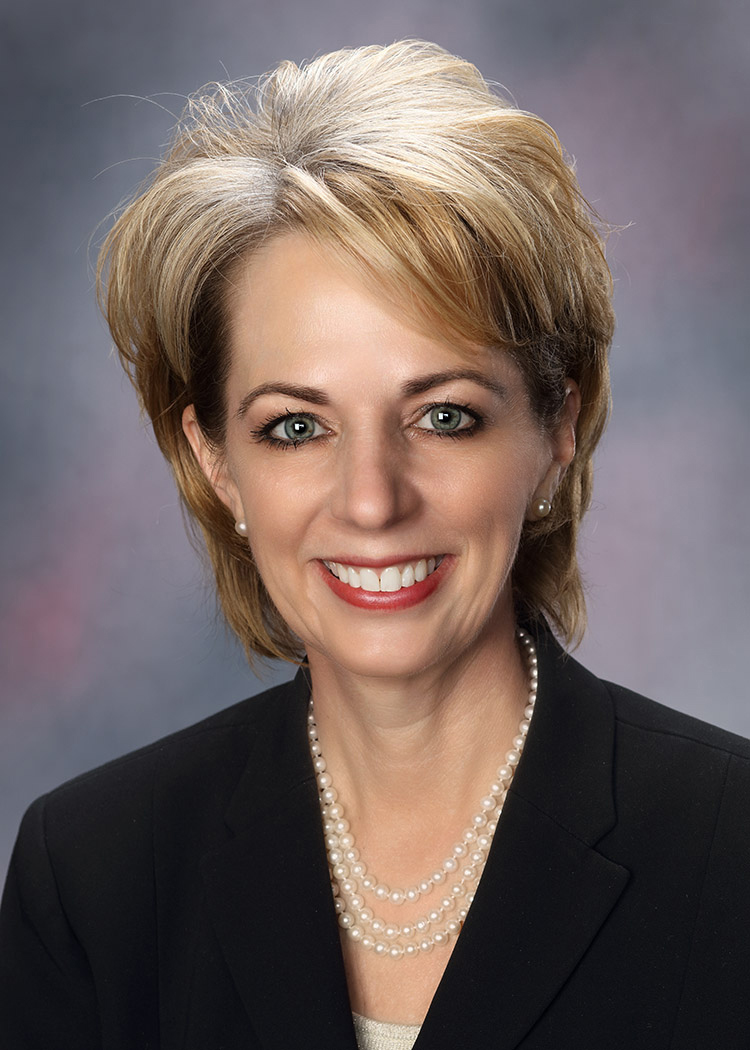
When, on Friday, I am installed as the 10th president of Fort Hays State University, it will be a day of reflection, inspiration and celebration.

It will also be a day of great joy and gratitude, because in many ways, FHSU and I took similar paths – out of humble beginnings, but with much promise, came a journey that has always been nurtured by the love and support of a family and community.

We have excelled, and we have stumbled. We have grown. We strive daily to achieve excellence and to become something or someone more magnificent than our modest beginnings, with success measured only by the positive impact we have had on the lives of others. We know that our successes are achieved through the collective efforts of many.

An inauguration ceremony serves as formal means of uniting people who care deeply about the future of a university. The theme, “Unlocking Untapped Potential to Empower the World to Greater Success,” sets the perfect tone for expressing the work ahead of us. It captures the impact on our students and alumni and the breadth of our reach, stretching out over the nation, crossing oceans and languages, transforming lives in our own backyard and around the world. I am so excited to celebrate and lead this magnificent university as we step boldly into an even brighter future. That future will be created through the power of the connections forged between staff and alumni, faculty and students, university and community, and it will be guided by our spirit through the hard work of bringing dreams to life.

The ceremony has been meticulously planned by an outstanding committee: Karen Allen, Hayley Bieker, Gordon Carlson, Cindy Cline, Melissa Dixon, Terry Crull, Anthony Gabel, Tre’ Giles, Mary Hammond, Elodie Jones, Craig Karlin, Lisa Karlin, Lisa Lang, Rhonda Meyerhoff, Karl Pratt, Adam Schibi, Jacob Ternes and Nancy Vogel, chaired by Janette Meis.

I owe them and many others an enormous debt of gratitude. So many very thoughtful elements were built into the occasion: Student honor societies will be part of the processional; people from the university and the wider community will deliver video greetings; our TGOF partners will offer discounts in local businesses; Kim Stewart, chair of the Department of Applied Technology, built a a special stand to hold the presidential medallion; the Fort Hays Singers and the FHSU Wind Ensemble will bring their glorious music.

And the Celebration on the Quad will be the perfect opportunity for everyone to gather in the name of Fort Hays State University and share their love for Tiger Nation. This is a place of heart and home.

Finally, because I start each day reading a devotional, I am grateful for my church family, Celebration Community Church, and especially Pastor Brant Rice, for hosting a morning worship service specifically for the inauguration, ensuring I begin my day grounded in and supported by my faith.

I am truly touched by the generosity of thought and effort that have gone into this event, and I hope all community members will feel welcome to come. The ceremony is open to the public, and I hope everyone who can’t come to Gross Memorial Coliseum will join us through the live-stream.

Because for me, inauguration day is a magnificent opportunity to share my beloved Fort Hays State with members of my family as well as cherished friends and colleagues who will travel to participate in the celebration. It is a day when we invite people to our metaphorical home and our community, a caring community that consistently demonstrates a genuine appreciation and love for this university.

It is, of course, a deeply personal day as well. It is the day when I will formally accept the office of president and thank those whose leadership has presented me with a vibrant, student-focused university. It is the day when I will publicly declare my commitment to relentlessly pursue the promise of our future together.

SCHLAGECK: Doodlebugs and jitneys

John Schlageck writes for the Kansas Farm Bureau.
My dad read two newspapers daily when I grew up in the ‘50s. His newspapers of choice were the Kansas City Star and Denver Post.

Both arrived on the same day and both contained the latest news from that date in history. The doodlebug or jitney brought the two papers from KC 358 miles to the east and Denver, 255 miles to our west. We farmed outside the small Sheridan County community of Seguin.

For you younger readers, people called self-propelled railroad cars doodlebugs or jitneys. Doodlebugs sometimes pulled an unpowered trailer car but were often used singly.

They were popular with some railroads during the first to middle part of the 20th century. Jitneys provided passenger and mail service on lightly used branch lines, often in rural areas with sparse populations.

By operating these two-car trains in northwestern Kansas, the Union Pacific (UP) didn’t need to use conventional trains consisting of a locomotive and coaches. Several railroads, mostly small regional and local networks, provided their main passenger services through doodlebugs in a cost-cutting effort. This also freed up the UP to use its locomotives for the transportation of wheat, milo, barley and livestock.

Our home was located a little more than a block north of the tracks and from the time I saw my first train, I was fascinated by the sound, smoke and the sight of these hulking metal monsters. I couldn’t wait to see them, hear them, count the cars and eventually ride on one of them.

Doodlebugs were considerably quieter than the steam locomotives that carried millions and millions of bushels of grain from the breadbasket of the world where I grew up to hungry mouths around the globe. These two-car trains typically consisted of a gasoline-powered engine that turned a generator and provided electricity to traction motors, which turned the axles and wheels on the trucks.

The doodlebug that stopped in our little village, population 50 with dogs and cats, usually came mid-morning, about 10:15. Back in those days you could almost set your watch by its arrival.

And that’s how my dad received his two daily papers on the same day. A half century later after the rail lines were torn up and steam engines were a distant memory my dad subscribed to the Salina Journal. One of his neighbors, Elmer Reitcheck, subscribed to the Hays Daily News. After they’d read their copies, they’d swap.

The funny thing about this is that Dad and Elmer were now reading yesterday’s papers. To be more exact, it often took two days to receive their daily papers. That’s right. With all our technology, and lightning quick U.S postal service, it still required two days to deliver a paper 94 and 188 miles.

Talk about old news. You know the old saying, “That’s a heck’uva way to run a railroad.” Well, I can’t remember how many times I heard my dad say, “bring back the railroads.”

I guess, you could blame part of the demise of today’s papers on transportation and the government, but they both take a beating daily anyway, so back to the story of doodlebugs and those days of yesteryear.

I took one of my first train rides on a doodlebug. I also accompanied my dad to see our relatives in Denver by way of the Rock Island Rocket. That was more than 60 years ago and the 250-mile trip on this streamliner took less than three hours. We literally flew across the plains traveling at speeds of 90 miles-per-hour in this red and silver rocket. It takes four hours to cover this same distance traveling on Interstate 70 today.

For my sixth birthday, I asked my parents for a train trip from Seguin to Oakley. It was a little less than 50 miles by train and Mom and Dad drove part of the way beside my sister, Cathy, and me as we dawdled in the doodlebug on our way to Oakley. This slowpoke traveled half the speed of the Rocket – maybe less.

During part of the trip the engineer allowed me to put my hand on the huge silver, metal throttle and as I told my friends later, “I drove the doodlebug part of the way to Oakley.”

Bet I couldn’t get anywhere near a train throttle or computer-operated engine room today. SOPs (standard operating procedure), rules and regulations being what they are.

I’ll remember that birthday always. And who knows, maybe one day trains will once again play a vital role in transportation. One thing is certain, they won’t carry newspapers anymore.

John Schlageck is a leading commentator on agriculture and rural Kansas.

HAWVER: School safety effort produces quick, efficient work at Statehouse

Martin Hawver
If there is an issue that almost instantly brings together parents, grandparents, legislators, and, yes, even voters, it is safety at public schools.

While other states have seen the tragedy of shootings at public schools, Kansas hasn’t.

Yet…

And it is that “yet” that spurred the House last session to think up, and the Senate approve, a “Safe and Secure Schools Initiative” that was essentially proof that with all the scrapping over general school budgets, and how those dollars are spent on education and administration and such, it is safety that gets lawmakers and the state moving—quickly—to protect the state’s children.

Remember that? The House Republican leadership proposed the bill, which made $5 million available this year for schools to step up security so that no crazed person can walk into a school building and for any reason start shooting at children.

Sounded simple, in fact, it sounded a little like a public relations effort for Republicans who didn’t want to just pour more money into schools without getting something that they could tout on a campaign palm card and chat about at lunches.

The $5 million was to be used for obviously relatively low-cost school safety efforts, ranging from locks on doors to shatterproof glass on doorways to redirection of visitors through a single school door so they could be checked before they enter. Relatively simple things, but things that school districts might have put off or in a tight budget year, might not have the available cash to get done.

Well, that effort showed, although a little obliquely, just how quickly Kansas state government can get things done.

The bill? It became effective on July 1, when most bills become law.

Amazingly, for us folks who watch the Legislature and state government grind through hearings, meetings, consultations and other delays as a matter of course, by July 16 the State Department of Education had told districts what to do and how and when and send out checks for that safety glass, the locks, the cameras, the other things that deter school violence.

In total, some 156 school districts applied for a part of that $5 million, which they would match with local moneys and make the security improvements that everyone wanted.

Some districts didn’t apply for that security funds boost.

But the amazing part of the program is how quickly that $5 million—worth a total of $10 million in security improvements with the local matches—got out to school districts.

Those state grants? They ranged from $1,043 to Healy School District 468 to $922,613 for Wichita School District 259. Total applications were for more than $13 million, so the grants were pared down, to a maximum of $18.30 per pupil in the district.

Now, there are districts which will want this kind of state aid in the future, and if this first $5 million program’s success is monitored, look for what was a one-time effort to be continued next fiscal year and likely into out-years as well.

It’s a combination of a relatively simple concept—safety for schoolchildren—and the efforts of the State Department of Education moving quickly and efficiently to get that plan executed. Rarely happens in Kansas government.

Look for this successful and inexpensive state effort to be lauded and to be further dissected next legislative session. And that’s where lawmakers have the choice of just funding some more of those grants, or deciding that they want to complicate it, slow it down and take political credit for it.

Things get complicated quickly in the Statehouse. And that’s likely next session…unless lawmakers return to the basic reason for the school security effort. That reason?

“Yet” …

Syndicated by Hawver News Company LLC of Topeka; Martin Hawver is publisher of Hawver’s Capitol Report—to learn more about this nonpartisan statewide political news service, visit the website at www.hawvernews.com

KRUG: Take steps ahead of disaster

Donna Krug

Disasters such as the tornadoes that have hit our area have been significant news stories in the past few years. Now, the devastation from Hurricane Lane in Hawaii or the wildfires in California have our attention.   

There is an excellent publication from K-State Research and Extension titled, “Get Financially Prepared: Take Steps Ahead of Disaster.” One of the authors speaks from the heart since she was a resident in Greensburg when that tornado struck.

Think about it – if you had only a few moments to evacuate your home, would you have access to the cash, banking services and personal identification needed to conduct your day-to-day financial life? Consider keeping the following items in a secure place in your home, in a waterproof, fireproof container that can be taken with you at a moment’s notice.

Create a “Grab-and-Go Box” that contains the following:

  • Identification and other key documents that may be needed to restore your financial records, including copies of your driver’s license, passports, social security cards.
  • Insurance cards, policies, or other proof of insurance coverage.
  • Household inventory
  • Immunization records
  • Bank account numbers, cash
  • Copies (front and back) of ATM, debit and credit cards
  • Phone numbers and account information for all financial service and insurance providers
  • Important telephone numbers (family members, doctors, veterinarians)
  • Names and prescription numbers for medications
  • Extra pair of glasses
  • Infant formula and diapers
  • Sleeping bag or blanket along with a complete change of clothes and sturdy shoes
  • Personal hygiene items
  • Books, games, and activities for children
  • Safe deposit box key
  • Pocket notebook and pen or pencil

If family records like birth, marriage and death certificates, wills, deeds, contracts, stocks and bonds, and titles to vehicles are not kept in a safe deposit box, these should also be kept in your grab-and-go box.

The publication includes additional tips on what to do after a disaster strikes. The importance of documenting the disaster and keeping receipts from purchases related to the disaster such as lodging, food, and clothing cannot be overemphasized.

Hopefully you will not need the information in this Extension publication but feel free to stop by either office (Great Bend or Hays) in the Cottonwood Extension District and pick up a copy.

Donna Krug is the District Director and Family & Consumer Science Agent with K-State Research and Extension – Cottonwood District. You may contact her at the Great Bend office, 1800 12th Street, (620)793-1910 or [email protected]

BOOR: Beef field day, stress management programs on tap

Alicia Boor

There are two excellent programs that will be held at the end of September that I wanted to highlight this week. Both programs will be in Manhattan, and I am planning on leaving early from Hoisington both mornings and coming back after the programs.

————–

If you are interested in attending either of the programs, contact me at 620-793-1910 to carpool. You will need to register ahead of the programs. For any questions, contact the Great Bend office before the registration deadlines.

Quality stocker production strategies, cattle pain management, livestock theft and a panel discussion on how silage fits in growing diets are among topics planned for the 2018 Kansas State University Beef Stocker Field Day on Thursday, Sept. 20.

“We are excited to host the 19th annual edition of the KSU Beef Stocker Field Day,” says Dale Blasi, K-State Animal Sciences and Industry professor and beef cattle extension specialist. “Like all the other events in the past, we bring the latest information on marketing, nutrition, health and technology for attendees to apply to their operation.”

Hosted at the K-State Beef Stocker Unit (4330 Marlatt Avenue, Manhattan, Kansas), the event starts with registration and coffee at 9:30 a.m. and the program at 10:15 a.m. A barbecue lunch is provided and the day ends with an evening social, the “Cutting Bull’s Lament 2018” at 5:30 p.m. featuring prairie oysters and Call Hall ice cream. Attendees will also have a chance to tour the new student housing at the Beef Stocker Unit and observe some of the new products from Moly Manufacturing Inc.

Topics for this year’s agenda include:
• The Role of Stocker Producer Expectations in Cattle Buying Decisions
• Producer Panel: Why Silage Fits in my Growing Diets
• An Update on Pain Management in Cattle
• Quality Stocker Production Considerations
• The Tech Revolution, Wall Street, Baseball and the Cattle Industry
• Rethinking BRD Diagnosis
• Livestock Theft in Kansas
• Treatment Failures that are not BRD Related

This year’s event is sponsored by Merck Animal Health. Pre-registration fee for the Beef Stocker Field Day is $25 if paid by Sept. 13. More information and online registration is available at KSUbeef.org. After Sept. 13, attendees must pay $35 at the event. For more information, contact Lois Schreiner at 785-532-1267 or [email protected].

———- 

Stress levels continue to climb in agriculture: Several years of low commodity prices, slipping farmland values and potential trade disruptions take a toll not only on balance sheets but farmers’ wellbeing.

 To help farmers, family members and others manage stress, K-State Research and Extension is hosting two one-day workshops in Dodge City and Manhattan.

 North Dakota State University extension specialist Sean Brotherson will present “Managing Stress and Pursuing Wellness in Times of Tight Margins” on Thursday, Sept. 20, at the Western State Bank Expo Center, 11333 US-283, in Dodge City. Lunch will be provided.

 The next day, Friday, Sept. 21, Brotherson will present the workshop in Manhattan at Kansas Farm Bureau, 2627 KFB Plaza. Lunch will be provided.

 “You don’t have to be a farmer to benefit from this workshop,” said Debra Bolton, K-State human ecology extension specialist based in Garden City. “All are welcome, including farm family members, businesses, extension agents and anyone who wants to learn about managing stress.”

 Each workshop day begins at 8:30 a.m. and ends at 4:30 p.m. The cost of the workshop is $20, which covers meals and materials.

Online registration is available.

Alicia Boor is an Agriculture and Natural Resources agent in the Cottonwood District (which includes Barton and Ellis counties) for K-State Research and Extension. You can contact her by e-mail at [email protected] or calling 620-793-1910


News From the Oil Patch, Sept. 10

By JOHN P. TRETBAR

Independent Oil and Gas Service reported 83 total active rigs in Kansas for the week, two higher than last week. There are 33 rigs drilling, moving in or rigging up to drill in the western half of the state, which is up two. They’re about to spud two wells in Ellis County and two in Stafford County. Operators are moving in completion tools at one site in Barton County, four in Ellis County and one in Stafford County. In its weekly drilling rig count Baker Hughes reported 1,048 active oil and gas rigs across the U.S. on Friday, up two gas rigs but down two rigs drilling for oil. Wyoming added two rigs to its active list, while both New Mexico and Oklahoma were down two.

Operators in Kansas filed 28 new drilling permits, 11 east of Wichita, 17 in Western Kansas, including two for new locations in Ellis County.

Independent Oil & Gas Service reported 31 well completions across the state for a year-to-date total of 1,064, compared to just 486 a year ago. Of the 18 newly-completed wells west of Wichita, 11 were dry holes, including both of the completions in Ellis County and one of two in Barton County.

Kansas Corporation Commission show just two new intent-to-drill notices filed in Barton County last month, five in Ellis County, and four in Stafford County. The official total spiked in August to 236 intents, up 54 from the month before, and up 83 from a year earlier.

The Kansas Corporation Commission has rejected environmentalists demand that 2,100 permits for disposal wells be revoked because the notices reported the wrong deadline for public response. The commission ruling said no one has been denied due process, and less than three percent of the applications were granted before the newer, longer public-comment period had elapsed. The KCC agreed with arguments put forward in legal briefs from the operators and oil and gas associations, and called it “harmless error.”

The U.S. Energy Information Administration said domestic production dropped 100,000 barrels per day last week to 11,046,000 barrels per day. The government said U.S. crude inventories dropped another 4.3 million barrels last week. Gasoline stockpiles were up again, and are now about seven percent above the five year average. Imports were up by 229,000 barrels per day, but remain about half a percent lower than last year at this time.

Oil by rail traffic continues to grow, prompted in part by dramatic increases in production and some key limitations on pipeline capacity. According to the Association of American Railroads, U.S. traders moved 12,222 oil tanker cars last week, an increase of 60% over the same week a year ago. The cumulative total this year is up nearly 12% over a year ago. The cumulative total in Canada is up more than 16% year on year.

The government of Venezuela has reported raising $3.3 billion through sales of the “petro,” the crypto-coin it claims is backed by reserves in a specific oil field. But Reuters quoted a cabinet minister saying no one has been able to make use of the petro, and that no goods had changed hands. A visit to the specified oil field showed no sign of any oil production either.

We’re seeing renewed interest in Wyoming’s Powder River Basin. Reuters reports a series of largely undisclosed Wyoming land deals, which are together worth a quarter of a billion dollars, are fueling interest in the basin’s conventional and shale formations.

Russia’s crude and condensate production averaged another near post-Soviet record 11.21 million barrels per day in August, down slightly from July’s near-record output. The US is producing about 11 million barrels per day. Saudi Arabia reports nearly 10.5 million barrels per day.

LETTER: Value behind the scenes

Gerard L. Michaud

It is easy to assume everyone understands the disabilities world, and specifically those with intellectual and developmental disabilities, but the truth is most do not.

I’d like to invite you to take a simple journey with me and ponder a question: If something is present but you don’t see it, is it invisible?  Much in the world of disabilities and services provided is unknown, unless you live in that world.

Let me shine a light and provide some simple insight about this world and how supports occur every day for people, where they live and work based on their needs. These routine supports can often occur around us, in our neighborhoods and they go without notice. I have heard the response, “I had no idea that is what you did (in our services)”.

The goal of each staff member at Developmental Services of Northwest Kansas (DSNWK) is to provide meaningful supports and services to people with disabilities in their community; the type that you and I would desire if we were the recipient of those services. My reference is to all staff, but my focus here is on those staff members who are commonly known across our nation as Direct Support Professionals (DSPs).

DSNWK, now in its 51st year, engages with these Direct Support Professionals to provide services and supports to people with disabilities to be involved in their community just like the rest of us. Those seamless, every-day services, do not happen automatically. They originate from the heart and through the hands and feet of dedicated staff who walk life’s journey with people just like you and me, only difference – these people just happen to require extra support to be successful. These amazing staff, in doing their work, make the lives of others’ better.

Something many of us may not fully realize is these same support people wear many hats in the course of their work day. They are schedulers, teachers, shoppers, planners and skill builders. They provide medication and transportation supports as well as help problem-solve many times in any typical day. With a wide range of needs of persons served, the staff might be assisting a person as they prepare a meal at one moment and the next be involved in lifting and transferring another who may have mobility support needs. In society, these wonderful people ‘participate’ and ‘contribute’ continually pouring their efforts into the lives of persons served and the community in general.

The President’s Committee for People with Intellectual Disabilities called attention to these workers noting they represent one of the highest workforces in demand.  For those closely involved, we know the turnover rates and vacancy rates in this profession are high, and the resources available have historically been lacking. Another citation from the report included that the national average starting wage for this career field is low, starting from $8.66 to $13.67 (average $10.23) per/hr.  This low-wage reality, along with low unemployment rates (particularly here in NW Kansas), and a growing demand for these valuable workers (as our population ages – and will be needing similar supports), begets the workforce crisis noted in the report. The challenge is upon us, and frankly, has been for a while.

There is much work in this arena and I believe there are two important take-a-ways worthy of calling out.  First, recognizing the importance of these service professionals and the value they bring to the lives of others each and every day is a vital first step to achieve consistent quality supports that people with disabilities need and deserve. Secondly, responding to the workforce crisis, stemming from the growing demand requires direction, resources and renewed action. National Direct Support Professionals week, September 9th – 15th, 2018, affords us an opportunity to recognize these staff. Please join us in expressing gratitude to all those who serve others in any of the many varied roles of these direct support professionals. They deserve our thanks for the value they are in the lives of others and the value they bring to our communities.

Gerard L. Michaud
President and CEO
Developmental Services of Northwest Kansas, Inc.

Copyright Eagle Radio | FCC Public Files | EEO Public File