We have a brand new updated website! Click here to check it out!

First Amendment: Can Brennan make a free speech case? Yes, to ‘us’

Gene Policinski
Does former CIA director John Brennan have a First Amendment case against President Trump for pulling Brennan’s national security clearance?

Definitely — in the court of public opinion, if not automatically in a court of law.

Our freedom of speech is most protected when we chose to speak out on matters of public concern; in short, when we join in “political speech.” We are protected against government censorship in advance of such speech, and from government retaliation afterwards, and even — though least often considered — also protected against being forced to speak if we chose not to.

So when Trump yanked Brennan’s clearance, while also threatening to do the same to about a dozen other former or current government officials, we all should view this with concern — the nonpartisan kind of concern, about constitutional rights, as tough as that may be to do in these times.

Clearly, Brennan is a vocal, frequent critic of Trump’s conduct in office: after Trump participated in July in a joint press conference with Russian President Vladimir Putin, Brennan said Trump’s failure to vigorously confront Putin over Russian meddling in U.S. elections was “nothing less than treasonous” and “giving aid and comfort to the enemy.”

Brennan often appears on NBC and MSNBC — frequent targets of Trump’s criticism of the news media as “fake news” — where he is a paid contributor, and also he offers commentary in The New York Times and other cable and print news outlets.

From a First Amendment standpoint, none of those “credentials” would automatically justify government retaliation — paid, unpaid, on network TV or in a letter to a friend, political ally or foe, free speech protection still applies. And as yet, there’s no claim from the White House of some action by Brennan that would historically justify pulling his access, such as revealing classified information.

The White House has made some effort to counter free speech concerns. What Trump termed as Brennan’s “increasingly frenzied commentary” feeds into “the very aim of our adversaries which is to sow division and chaos,” White House Press Secretary Sarah Huckabee Sanders said a day after the revocation — adding that such actions were “inconsistent” with holding a national security clearance.

But the president later said in a Wall Street Journal interview that, “Mr. Brennan was among those he held responsible for the investigation…looking into whether there was collusion between the Trump campaign and the Kremlin” — which would seem to place things back into the area of attempt to chill the speech of those who would question or oppose him.

Such a flap over national security clearances is apparently unprecedented — but attempts by government to censor contrary speech are not. From action against war protesters to attempts to stifle the free speech and free press rights of civil rights organizations and figures, the First Amendment has repeatedly had to shield those whom government officials would attempt to stifle or frighten into silence.

Over the years, the First Amendment’s protection of free speech has been buttressed by a host of U.S. Supreme Court decisions dealing with direct and indirect challenges, from protests involving the U.S. flag, to Civil Rights era attempts to silence the NAACP through a demand for its membership lists, to providing protection even for inadvertent errors in comments about public officials and public figures.

It was in the seminal 1964 Supreme Court decision involving public figures, New York Times v. Sullivan that — in a bit of name-related irony — the late Justice William J. Brennan wrote of a “profound national commitment to the principle that debate on public issues should be uninhibited, robust and wide-open, that it may well include vehement, caustic, and sometimes unpleasantly sharp attacks on the government and public officials.”

Armed with those words, Trump’s action would seem to be out of order — at least in the court of public opinion. But in the actual courts, great deference is generally given to the President absent some specific constitutional restraint. As an example, see the courts’ reluctance earlier this year to limit Trump’s restrictive immigration regulations.

The aforementioned “division and chaos” rationale might well be enough for a court to turn back a legal challenge by Brennan — though if Trump extends the revocations to others without more justification than a link to the Russian election investigation, it would seem more vendetta than vetting.

Yes, Brennan has not been silenced by losing his clearance. But others less well off or more dependent on such clearances to continue in government jobs or work with outside contractors may well decide not to speak for fear of such “punishment.”

Our nation’s founders built into the Bill of Rights such unprecedented protection for free speech, because they had first-hand experience with a system stacked to prevent and punish critics of the Crown.

Those founders saw — as did Justice Brennan two centuries later — the value to the nation and to democracy of unrestrained debate and discourse on public issues in what has come to be called “the marketplace of ideas.”

Clearly, we need to hear from Trump, Brennan and former and current officials and government staffers on matters that are controversial. Let the comments — and tweets — fly, for us all to hear.

A good approach in the era of King George, and no less valuable in the time of Trump.

Gene Policinski is president and chief operating officer of the Freedom Forum Institute. He can be reached at [email protected], or follow him on Twitter at @genefac.

Now That’s Rural: Melvin Epp, Remington Historical Society

Ron Wilson is director of the Huck Boyd National Institute for Rural Development at Kansas State University.

By RON WILSON
Huck Boyd National Institute for Rural Development

The bronze sculpture depicts a rider atop a rearing horse. It is a famous work of art created by Frederic Remington. One can find a copy of it in the Oval Office of the White House – as well as in the Kansas high school which bears Remington’s name. Today, the Frederic Remington Area Historical Society honors the legacy of this famous artist and others who lived in this rural region of south central Kansas.

Melvin D. Epp is a retired scientist, author, and president of the Frederic Remington Area Historical Society. This society’s goal is to preserve the local history in the area bounded by the Whitewater, Kansas school district, USD 206, which includes land once owned by artist Frederic Remington. Whitewater is a rural community of 718 people. Now, that’s rural.

Melvin grew up on a farm here. His family was active in the Mennonite church. Melvin attended Berean Academy (which his father helped found) and went on to earn a biology degree from Wheaton College, a master’s in botany from the University of Connecticut and a Ph.D. in genetics from Cornell University. Melvin Epp’s career as a botanical research scientist led him to St. Louis, the Philippines, and California.

In 1990 he moved back to Kansas. He ran the organic garden for the restaurant at the Riordan Clinic in Wichita and was named an honorary Master Gardener in Sedgwick County. He also got involved with the Frederic Remington Area Historical Society, for which he has served as president since 2007.

The high school in Whitewater is named for Frederic Remington because Remington once lived in this region. Remington had grown up in New York and shown an early aptitude for drawing. Horses were his favorite subject.

Remington traveled west and sketched a scene which became published in Harpers Weekly in 1882. It was Remington’s first commercially published work of art.

As of 1883, the wool trade was booming in the U.S. A friend of Remington’s convinced him to come to Kansas and try to make money in the sheep ranching business. Remington bought two quarter sections of land near Whitewater for his enterprise but chose to sell in 1884. He moved to Kansas City and eventually to New York for a career as painter, sculptor, and author. He was later termed one of our nation’s “great American painters.”

Remington’s first and most famous sculpture was the one he called “The Broncho Buster,” spelled with an extra “h” in broncho as was the spelling of the time. This sculpture has been called its century’s most popular small American bronze sculpture. After the Spanish-American War, Teddy Roosevelt’s Rough Riders presented him an original cast of this statue in appreciation. As mentioned, a copy stands in the Oval Office as well as at Whitewater’s Frederic Remington High School, in honor of its namesake.

Melvin Epp’s great-grandfather married a daughter of the man who sold Remington his farmland in 1883. A display of information about Remington stands in the high school today.

There is other rich history in the region as well, particularly about the Mennonite church. Melvin wrote a book, The Petals of a Kansas Sunflower, which describes the migration of Mennonites from West Prussia to Kansas in the 1870s, due to government regulations requiring them to join the Prussian army.

Melvin’s mother, Marie Harder Epp, was born in America to these relocated immigrants. “My mother was the village poet,” Melvin said. “People would ask her to write poems to honor someone.” Her first poem was written in 1929 and her last in 1991. The book includes 103 of her poems and describes the changes and challenges faced by these German-speaking Mennonite farmers. The book is available at booksellers such as www.amazon.com and others.

More information about the historical society can be found at its website.

Today, casts of the famous statue by Frederic Remington can be found from Washington, D.C. to rural Kansas. We commend Melvin Epp and all those involved with the Frederic Remington Area Historical Society for making a difference by preserving and sharing this history. Their commitment is like a beautiful work of art.

KRUG: Become a lifelong learner

Donna Krug

School has started just about everywhere, so kids from pre-school to graduate school are getting used to a new routine. But what about you? Are you a life-long learner? Moms and dads, grandmas and grandpas are never too old to learn something new. I don’t mean you have to enroll in a formal class, complete with a syllabus and a final exam. I’m talking about the many classes offered in our community through our Extension offices, 4-H and Youth programs, or recreation centers.

I am getting ready to participate in our annual Family and Consumer Science Agent update on campus next week. I know when I return to the office I will have some great new resources at my fingertips to share. My goal is to provide programs that meet the needs of our county residents. Realizing we live in a diverse community means we need to be cognizant of learning styles and barriers that may be present.

Programs for the upcoming months focus on topics like: Nutrition, Health and Wellness. I will be joining my colleague who helped write a new Fact Sheet titled, “Everyday Mindfulness” and we will present one of the break-out sessions. I’m planning to present the information in Great Bend in early October and will be sharing the fact sheet in Ellis County in a program early next year. My husband, John, who is a retired Chiropractor, helps with the presentation by leading a short meditation with the participants. Mindfulness is a popular topic these days and studies show effective uses in many settings. I will be offering the Stay Strong, Stay Healthy workshop again in Great Bend beginning October 23rd

The Program Development Committee that I work closely with has jumped in to help carry out a couple of events in the Hays community in September. Mark your calendar for Thursday, September 20th and bring your young children to the Armory on south Main Street in Hays from 5-7 for the Go Truck Go event. We will have a StoryWalk activity set up in the grassy area across the street from the Armory for children to enjoy the book, “If I Built a Car.” The following week, on Monday, September 24th, the Cottonwood Extension District, along with the Hays Kiwanis, and Papa Murphy’s Pizza, will be sponsoring the Family Day Make and Take Pizza Event. In its 11th year, a core of dedicated volunteers will be providing 80 pizzas for families for a small cost. You will need to call the Hays office at (785)628-9430 for more details.

I will share reminders about the events listed above as the dates draw closer. So take some time for yourself in the weeks ahead. Sign up for a class related to something you have always wanted to so. You will be glad you did!

Donna Krug is the Family & Consumer Science Agent and District Director for K-State Research & Extension – Cottonwood District.  You may reach her at: (620)793-1910 or [email protected]

WINKEL: Compost, more than you thought, part 2

Rip Winkel

When starting your compost pile, it is important to layer your browns and greens while adding water to each layer. For a quick review of last weeks’ article, the “browns” are carbon-rich, mostly dry material consisting of items like stems, dried leaves, dried grass clippings, sawdust pellets, wood ash and the like.

“Greens” however, are nitrogen or protein-rich material like herbivore manures, kitchen food scraps, coffee grounds, green lawn clippings, lawn and garden weeds (without seeds), or even green leaves.

To properly construct a compost pile, you should alternate layers of these brown (60%) and green (30%) materials. While constructing these layers, add a shovel or two every two to three layers of soil from your yard. This will give the pile a jump-start with the microorganisms needed in the composting process. An ideal size for a back yard compost pile is around 5’ x 5’ x 5’. Remember, for your compost pile to work it is important to know what can and should not be added. A lot of materials are great for composting, while others can bind up the decomposition process. See the list below for dos and don’ts.

*Be sure that grass clippings have not been treated with pre-emergent.
**Dairy, fats, animal bones and meat, and oils will begin to smell and attract insect pests and varmints.

Another point is every few weeks give the pile a quick turn with a pitchfork or shovel. This aerates the pile. Oxygen is required for the decomposition process to work, and turning the pile “adds” oxygen. You can skip this step if you have a regular supply of coarse brown material, like straw. Once you’ve established your compost pile, add new materials by mixing them in. It is not necessary to add them in by layers at this point. Mixing, or turning, the compost pile is essential to aerating the composting materials and speeding the process to completion.

Also add water to the pile as necessary. As was mentioned in Part I of this article from last week, keeping the pile moist is best for micro biotic activity; not too dry, and not too wet. The key indicator of composting is when temperature in the center of the pile warms up. These temperatures can easily warm up to 130o F due to the micro biotic activity in breaking down the organic material. The ideal temperature to achieve killing off of fungal spores and weed seeds is between 150-160o F.

Once your compost pile is uniform in consistency, it is time to start reaping the benefits. Compost can be used by simply spreading it across the surface of your garden and flower bed or by incorporating it into the soil through tilling. One resource, “Building Better Soils for Better Crops”, says that applying compost can substitute for mulch and can even suppress disease is your garden. For more information about composting follow this link, https://bit.ly/2MtlXVa , to “Building Better Soils for Better Crops” chapter called Making and Using Compost. For more information about what goes into compost and why, follow these links to videos provides by Kansas Healthy Yards called “Composting: What to Add”, https://bit.ly/2nnP3dy, and “Composting: Making Black Gold” , https://bit.ly/2nnO7G4.

Rip Winkel is the Horticulture agent in the Cottonwood District (Barton and Ellis Counties) for K-State Research and Extension. You can contact him by e-mail at [email protected] or calling either 785-682-9430, or 620-793-1910.

INSIGHT KANSAS: Greg Orman as governor, the road not taken

With seventy-some days to the 2018 general election, Greg Orman has become reviled by Democrats and others as a “spoiler,” who could easily help far-right Republican Kris Kobach win election as governor of Kansas.

It didn’t have to be that way.

Burdett Loomis, Professor, Political Science, College of Liberal Arts and Science, University of Kansas

In 2014, heading into the last few days of his U.S. Senate campaign, Orman was running neck and neck with three-term incumbent Republican Pat Roberts. His funding was adequate, his name recognition had shot up, and his independent campaign’s theme of shaking things up in gridlocked Washington resonated with Kansas voters.

Most importantly, Democrat Chad Taylor, never an enthusiastic candidate, had abandoned the race, narrowing the choice to Republican Roberts or Independent Orman.

Huge sums of outside money came in to support Roberts, nationalizing an election that could determine control of the Senate. Although polls showed them essentially tied as election day neared, Kansas Republicans eventually came home, and Greg Orman lost the race, 54 percent – 43 percent. Still, he had run a highly competitive campaign and attracted a host of supporters. At the same time, despite his protestations, Kansans viewed him as a de facto Democrat.

If, on December 1, 2014, Orman had announced that he was a Democrat and was going to work hard on behalf of Democratic candidates in 2016, with his troops, his money, and his personal appearances, he could have traveled across the state, demonstrating his talents and winning over party activists from Garden City to Gardner.

Given the historic unpopularity of Governor Sam Brownback and his tax policies, 2016 shaped up as a likely win for Democrats; indeed, it was, especially in the Kansas House. Orman, rightfully or not, could have taken credit for their performance, and many successful candidates would have expressed gratitude for his support.

In the wake of the 2016 election, he could have made the rounds of Democratic county events, talked with party elites, and likely convinced them that his moderate policies would play well in the 2018 governor’s race. With Paul Davis seeking the second district congressional seat, Greg Orman might well have cleared the field by announcing in July 2017 his candidacy for governor.

Ironically, he could have run on much the same moderate-centrist policies that he has historically espoused. With no voting record, he could glide above the issues that divided candidates in the 2018 primary. Moreover, with his independent background and Democratic label, he could attract moderate voters as right-wing Republicans faced off against each other.

Thus, heading into this September’s State Fair debate, Orman could be facing off against Kris Kobach, with his limited upside and assorted baggage. Orman would stand as the single candidate representing moderate Kansans, eager to maintain the momentum of the 2016 election and the 2017 rollback of Brownback’s tax policies.

In short, with the essential coalition of Democrats, independents, and moderate Republicans, Greg Orman might well be – right now — the favorite to win the governorship in 2018.

Of course, that did not happen, and now he sits at 10-12 percent in a tough three-way race, where his only role is as spoiler, who will allow Kobach to become governor of Kansas with 40-42 percent of the total vote.

Maybe this path was never in the cards, but for a conventionally ambitious politico, it seems straightforward. That’s not Greg Orman, who, for whatever reasons, has chosen a far more destructive route, rather than working step by step to build together a moderate majority in Kansas.

Burdett Loomis is an emeritus professor of political science at the University of Kansas.

CLINKSCALES: Bad things can happen on a good journey

Randy Clinkscales

I am writing this article as I am waiting to get a rim fixed on my car.  I tried to get away for a short weekend to do some hiking in Colorado.  Along the way, I hit a pothole, bent my rim, and I am now grounded and am being forced to stay an extra day in Colorado.  It would not be so bad except that I am grounded because I am driving around with no spare and one of those crappy little emergency tires.  

But, as I sit here, it reminds me of something that happened to me years ago.  My wife and I have three sons.  As many young families, the early days were really a struggle.  Our vacations were of two kinds: going to see family for a holiday, or camping.
 
Camping was a cheap alternative.  We would load up tents, tarps, water bottles, and the like.  We had old sleeping bags that weighed way too much.  We would venture out as if we know what we were doing (and we didn’t).

One particular year, we decided to go to a part of the state that the kids had never been to: the Sangre de Cristo Mountains.  We found a camping spot somewhere in the mountains, set up our tent and then decided to go exploring.  The road got very rough.  There were a lot of sharp rocks.  As we were trying to maneuver over a particular bad area, I got out of the car only to hear a hissing sound.  We had a tire going flat.  

Needless to say, I did not want to try to change a tire on a mountain road.  We bailed down the mountain as quickly as we could, arriving at a gas station.  The gas station attendant changed the tire.  We got the tire on and headed to the campsite.  As we got there, one of the kids pointed out that they heard a hissing sound.

Another flat.

Let me be honest.  Our tires were way overdue to be replaced.  But, like so many young struggling families, we were trying to make due as long as we could.

We went back to the gas station and got the tire fixed.  

The person at the gas station said, “Mister, I really would not be driving on these tires with three kids.”  
My wife and I talked and headed to some town (probably Pueblo) and purchased a set of tires.  I remember going to a movie, sitting there trying to figure out whether we should just go home or keep plugging along on our camping trip.

Our adventures did not end there.  A day or two later, we broke camp.  We then moved toward the Salida, Colorado area.  Suddenly, our car started making a weird knocking sound (I really do not remember now what all was going on).  We spent a day in a shop in either Salida or Canon City.  The result was a temporary repair, and we had to drive 40 miles per hour back all the way from Colorado to Hays.

I always enjoy my vacations, but I will tell you that this one stretched me to the max.

It is not unusual for clients to come in to see me when bad things are happening. They can range from health issues, financial issues, or even family issues.  Life was great, or at least fine until bad things started to happen.  Sometimes I can tell they are just ready to give up.  

One of the things that we try to do with our families is to help them step back, put the crisis in its proper place, find solutions, and then make a plan to go forward.  Sometimes it takes a third party, such as an elder care attorney, to help them step back and get a better perspective on life.  It is truly not the end; they just need a plan.

So, it was with us.  Though our first trip to the Sangre de Cristo Mountains turned out to be a challenge, we still tell stories about it.  We still talk about the flats, but also the beautiful mountains.  And, the funny part is that it has really become one of our favorite places in Colorado.  Don’t let “flat tires” stop you from enjoying life. Sometimes you just have to fix the flats and go on.   

Randy Clinkscales of Clinkscales Elder Law Practice, PA, Hays, Kansas, is an elder care attorney, practicing in western Kansas. To contact him, please send an email to [email protected]. Disclaimer: The information in the column is for general information purposes and does not constitute legal advice. Each case is different and outcomes depend on the fact of each case and the then applicable law. For specific questions, you should contact a qualified attorney.

CAMPBELL: Insect activity found in area grain sorghum

Stacy Campbell

By STACY CAMPBELL
Cottonwood Extension Dist. Ag Agent

Agriculture producers should be scouting their grain sorghum fields now due to insects being detected in fields.

Chinch bug activity

Chinch bug populations continue to increase dramatically throughout much of Kansas.  Adults are still active, mating, and ovipositing (laying eggs) in both the developing heads and around the base of plants.  There are also large numbers of nymphs, mainly feeding in and around the base of plants, but some are on the developing kernels. There is really nothing that can be done about controlling second generation chinch bugs on large plants, it is difficult for contact insecticides to reach them because of their habit of hiding behind leaf sheaths.

Headworms in milo

“Headworm” activity

‘Headworms’, both fall armyworms and corn earworms, are showing up in many fields.  On August 6th, there were all different sizes of larvae detected in milo heads in north central Kansas, according to Whitworth. Many fields are in the reproductive stages, so these ‘headworms’ will continue to be problematic in any field that is in the flowering to soft dough stage.  Past research has indicted that ‘headworms’ may cause approximately 5% loss/worm/head.  It is important to sample in a timely manner to detect these pests while they are still small, before most of the feeding damage has been done.

Corn leaf aphid activity

Corn leaf aphids (CLA) continue to cause considerable concern throughout north central Kansas as these populations are still very widespread and become more apparent as the heads start to extend out of the whorl.  However, there are many beneficials present as well.  CLA should have little to no negative impact on plant development or yield other than potentially a few individual plants.

Sugar cane aphid

Sugar Cane Aphid

Sugar Cane Aphids (SCA) have been confirmed in Barton Co. as well as other counties in the state. The numbers of SCA found in Barton Co. in fields is at a low numbers. It is important that you start scouting your milo fields at least weekly for the SCA. There are also a good number of beneficial insects in the milo fields, so it is hopeful that the aphids will not build-up to damaging levels.

myFields

If you would like to sign up to myFields which is a Multi-state monitoring effort using myfields.info to track SCA and to give you other insect information relative to Kansas. You can track county movement by visiting themyFields distribution map, or sign up for an account to receive an email alert when SCA has been detected in your area. There is other agronomy and insect related information on this sight and it is being updated on a regular basis with production information.

https://www.myfields.info/

For more information relative to sorghum insect management, please see the 2018 Sorghum Insect Management Guide: https://www.bookstore.ksre.ksu.edu/pubs/mf742.pdf

LETTER: Why the co-working space is best-kept secret in Hays

“Great things are done when a series of small things are brought together.”
– Vincent Van Gough

You may have heard of a new co-working concept launched in August in downtown Hays called BriefSpace, https://www.briefspace.com/. It is a nonprofit organization associated with Grow Hays (formerly known as the Ellis County Coalition for Economic Development). This co-working space is a best kept secret, and this is why:

• If you office from home, BriefSpace eliminates the distraction of combining your work area with your home & family space. In my case, it may have saved my marriage. More importantly, It eliminates the feeling of isolation you get when working from home.

• It is the lowest cost option to office outside of the home. It has all the amenities of a world class office space without the costs of paying for them yourself: 1 Gigabyte wireless internet speed, networked color printer, private meeting room/conferencing space and utilities to name just a few.

• All membership options are month-to-month commitments. If you know someone coming into Hays from out of town (or you just want to get out of the house for a few days a month), there are weekly and daily passes available.

However, the most overlooked benefit for making your office at a co-working space is the power of community. When different professionals and businesses come together under one roof, the results can be extraordinary.

If you are a start-up, there is free advice around almost every corner. If you are a service-based business, there are potential customers that may be right next to you. If you are thinking about starting a business, there are resources and people that can and want to help. Maybe you are between jobs and want the BriefSpace Executive-in-Residence to provide you with resume and interview tips.

If you simply want to join a thriving community of people that love to live and work in Hays, they will be there as well. I have been working out of BriefSpace for a few weeks now, and there is a positive energy that you feel when you step into the building. That energy will continue to build with every new member.

It is hard to explain, but you need to come down to 219 W. 10th in downtown Hays to experience it for yourself. Until Sept. 1, it is completely free to work or hold a meeting at BriefSpace. As the BriefSpace community grows, we will keep more of our talent local. We will launch more local businesses, and they will stay local. We will create more opportunities for existing local businesses to thrive. As Van Gough says, when these small things come together, great things will begin to happen for Hays and Ellis County.

I may not have grown up in Hays, but my love for this area is as much as if I did. I have been asked why I got involved in this project. The answer is simple: whatever little I can do to make sure my children’s children’s children call Ellis County home … I’m in. I hope to see you down here!

Tim Speno
Local Entrepreneur and BriefSpace Executive–in–Residence

If you want more info on the BriefSpace, please call 785-628-3102 or email [email protected]. You can also find us on Facebook.

Gas prices slowly, steadily declining for most Kansas motorists

Average Kansas gas price down 2 cents to $2.65

TOPEKA – As summer begins to wind down, motorists in many places across Kansas and the nation are seeing gas prices gradually drop. Today’s Kansas average is $2.65 for a gallon of regular gasoline, down two cents in the past week, and registering as the 11th cheapest gas in America.
“Compared to July, consumer demand for gasoline is waning, and prices are following suit,” said Shawn Steward, AAA Kansas spokesperson. “The Kansas and national averages are expected to keep moving lower, especially with the seasonal gasoline blend switch-over in September.”
In September, gas stations will start selling winter-blend gasoline. This blend, which is cheaper to produce, contains a fuel that evaporates at low temperatures for vehicle engines to operate properly, especially when the engine is cold.
Of the 10 Kansas cities regularly highlighted by AAA Kansas (see chart below), seven saw their gas prices fall, led by Wichita (-5 cents), Emporia (-4), Kansas City, Kan. (-3) and Topeka (-3). Hays’ and Pittsburg’s prices remained flat, while Garden City saw a 2-cent increase.
According to AAA Kansas, this week’s Kansas gas price extremes are:
HIGH: St. Francis (Cheyenne County) – $3.10
LOW: Newton (Harvey County) – $2.47
National Perspective
Gas prices across the country are getting less expensive, as well. Today’s national gas price average is $2.84, which is three cents less than at the beginning of the month. With the exception of a handful of states, the majority of motorists are seeing slow, but steady pump price drops during the last few weeks.
The national gas price average is saving motorists two-cents on the week and one-cent on the month, but motorists are paying 50-cents more than this time last year.
Today’s national gas price extremes:
High: Hawaii – $3.76
Low: South Carolina – $2.54
Gas Price Trends in Select Kansas Cities
Today
Last Week
Last Month
Last
Year
Change Over Last Year
National
$2.84
$2.86
$2.85
$2.34
21%
Kansas
$2.65
$2.67
$2.66
$2.19
21%
Emporia
$2.61
$2.65
$2.62
$2.16
21%
Garden City
$2.63
$2.61
$2.60
$2.14
23%
Hays
$2.66
$2.66
$2.68
$2.22
20%
KCK
$2.70
$2.73
$2.71
$2.25
20%
Lawrence
$2.75
$2.77
$2.75
$2.28
21%
Manhattan
$2.66
$2.68
$2.70
$2.17
23%
Pittsburg
$2.67
$2.67
$2.69
$2.10
27%
Salina
$2.55
$2.54
$2.64
$2.14
19%
Topeka
$2.61
$2.64
$2.63
$2.20
19%
Wichita
$2.59
$2.64
$2.59
$2.10
23%

HAWVER: Don’t expect rush to the political middle in Kan. governor race

Martin Hawver

If there was ever a predictable pattern in Kansas—and possibly even national politics—it is that Republican candidates for nearly every slot on the ballot tend to spend the primary election cycle pandering to the most diehard conservative members of their party to win the general election nomination.

Now, Democrats tend to do the same thing (with the move toward the more liberal Democrats), but in Kansas, it’s to smaller numbers of primary election voters. But it works with Democrats, too.

But after that primary in both parties, it’s been traditional that the party’s standard bearers move their campaign to the middle of their party, and in some measure to the middle of the general voting age population.

Well, this will be a year that will make it worth watching whether that generally Republican move to the middle of the party after the primary election occurs.

Chances are good that Sen. Laura Kelly, D-Topeka, the Democratic nominee for governor, will not have to move very far. She’s a practical Democrat who probably dreams about budgets and line-item vetoes and cutting a deal with moderates in the Kansas Legislature to keep government moving.

And chances are good that isn’t what Secretary of State Kris Kobach, who is the Republican nominee for governor, does. We’re figuring he dreams about a border wall with Mexico—or possibly Oklahoma—or that new Trump necktie that he wants…

Oh, and best-known independent candidate Greg Orman is probably dreaming about how to snag votes from both.

This year things are going to be different. Don’t expect Kobach to move toward the political middle in his campaign. Now, short-term Gov. Jeff Colyer might have, but he conceded, remember.

So, we come to a campaign where the narrow conservative side of the GOP—which includes Kobach, of course, and unsuccessful gubernatorial nomination candidate Insurance Commissioner Ken Selzer—isn’t looking for any move to the center. Nope, and had Kobach lost the GOP nomination, we’re betting he wouldn’t have let Colyer move to the center, either.

So…where does this gubernatorial race go? Who gets elected governor and has the authority to take that preposterous stuffed buffalo head off the wall of the governor’s office and, of course, run the rest of the state?

Does Kobach come up with something new that will appeal to moderate Republicans, most of whom voted for someone else in the primary? Does Kelly come up with something that will see the moderate Republicans, who are probably most of the GOP voters, furrow their brows and vote for her as long as nobody’s watching?

Or, does Independent Orman turn out to be the safety valve for Republicans who are to the left of Kobach but just can’t bring themselves to vote for a Democrat, under the suspicion that their Republican friends will find out?

And you gotta figure that moderate Republican former Sen. Jim Barnett, of Emporia when in office and Topeka now, who drew the more liberal Republican primary voters, though not enough of them, isn’t going to be touting Kobach or even letting him put a sign in his yard.

Surprising that this election might come down to the conservative Republicans of the state and the Democrats, with Orman as a possible off-ramp for those who at least talk about the general conservative values and have never read the Kansas Republican Party platform.

Oh, and whoever wins the governor’s office must remember that in just two short years, whatever the governor pushes for or against splashes back on members of both parties in the Kansas House and Senate.

We’ll see, won’t we…

Syndicated by Hawver News Company LLC of Topeka; Martin Hawver is publisher of Hawver’s Capitol Report—to learn more about this nonpartisan statewide political news service, visit the website at www.hawvernews.com

SCHLAGECK: Technology is the application of knowledge

John Schlageck writes for the Kansas Farm Bureau.
The conversations are endless. Consumers want and some demand to know the origin, safety and nutrition contained in the food they eat or feed their families.

Little more than a decade ago, seemed like most people could give a hoot about their food. Heck, 20 years ago the only time the media paid any attention to food was to tell consumers when prices went up.

It’s obvious farmers, ranchers and other people who want to sell food want to tell the public about their product. But are they being heard? Does their message resonate with today’s savvy consumer?

Or is it being sidelined by well-funded, well-managed and strategically placed ads and social media?

During the last several years, agendas championed by some environmental groups have been less than kind to agriculture. Some have flooded the public with figures on soil losses, pesticide-related mishaps and alleged failed attempts at using pesticides to reduce infestation.

Technology has often been labeled the No. 1 environmental enemy. But here’s the flip side of that coin and one agriculture must tell repeatedly – technology is our key to success.

For food producers, technology is viewed as the application of knowledge. As humans, we survive by adapting the environment to our needs.

Someone much wiser than me once said, minus technology, we would be just like other primates – confined to tropical regions and subject to extinction due to environmental changes. To survive, we must disturb the environment, conserve resources and continually create them.

Resources are made not born. Land, ores, petroleum, etc. – the raw materials of this planet – are not inherently resources. They do not inherently further human purposes.

We as humans must determine what is useful and how to use it. Topsoil becomes a resource when a farmer tills the soil and plants wheat seed for example. Ores become resources when metals are extracted from them.

During the past two centuries, technology has been creating resources more rapidly than humans have been consuming them. By every measure of price and availability, resources have become more abundant.

Without science and technology, today’s farmers and ranchers would be unable to feed the masses outside the agricultural industry. Farmers use technology responsibly. They constantly use new farming methods and practices. Their minds are like the fertile soil they farm – always ready to embrace new ideas

But new ideas and new farm technology is costly. It is in the best interest of farmers to use it carefully and sparingly. Misuse would add to production costs, which would result in an even lower return on investment.

Farmers use agricultural herbicides and pesticides only when necessary. When they use these plant protectants, farmers follow label directions designed to safeguard the public.

When new advances in biotechnology are discovered, farmers must abide by stringent testing and monitoring practices that ensure only safe products in the marketplace.

Food produced in the United States is safe. More than 40 years of Food and Drug Administration testing has shown most of our fruits and vegetables have no detectable pesticide residues. This underscores that American farmers use pesticides properly.

Every year billions of dollars are spent to support food and agricultural safety and quality inspection, according to the General Accounting Office. The private sector combined with state and local governments spend an estimated $7 billion on similar activities.

Farmers and ranchers support efforts to evaluate and enhance the current regulatory and food monitoring system. Agricultural producers are willing to work with others to maintain safe food, but this industry must avoid policy changes that are based on fear, emotion and public manipulation.

Decisions affecting the course of agricultural production are critically important and will have far reaching implications on our quality of life. We must be careful when determining long-term policies.

Farmers and ranchers must continue to maximize their production capacity with an ever-watchful eye on food safety, quality and the environment.

John Schlageck, a Hoxie native, is a leading commentator on agriculture and rural Kansas.

News From the Oil Patch, Aug. 20

By JOHN P. TRETBAR

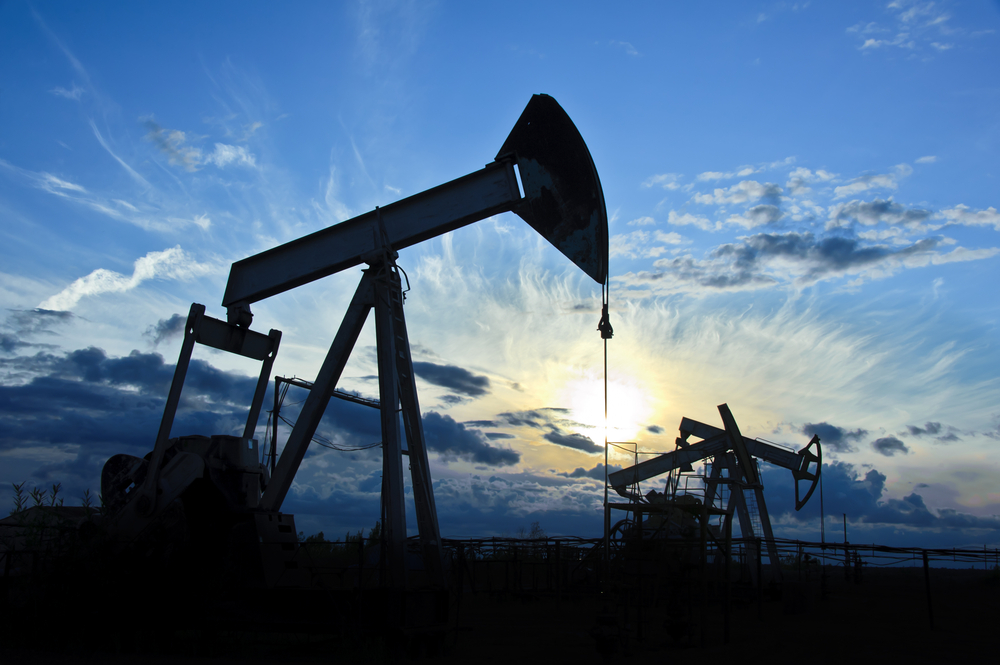
The weekly U.S. rotary rig count from Baker Hughes was unchanged Friday at 1,057 active rigs. Texas added three rigs while three fell off the list in New Mexico. Independent Oil & Gas Service reported 14 active oil and gas drilling rigs in eastern Kansas, an increase of two rigs. The count west of Wichita was unchanged at 30. Drilling is underway at two leases in Barton County and one in Stafford County. Operators are about to spud one well in Barton County and one in Stafford County. They’re moving in completion tools to two wells in Barton County, six in Ellis County and one in Stafford County.

Kansas operators filed 60 permits for drilling at new locations last week, 41 in eastern Kansas, 19 west of Wichita including one new drilling permit in Ellis County and one in Stafford County. The total so far this year is 1,103 new drilling permits across the state.

Independent Oil & Gas Service reported just eight well completions for the week, all of them west of Wichita, six of them dry holes, including one dry hole completed in Russell County. Operators have completed 950 wells so far this year. Of the 518 completions west of Wichita so far this year, 159, more than 30%, were dry holes.

TransCanada still has work to do before it can break ground on the embattled final leg of the Keystone oil pipeline system. The Rapid City Journal reports the company filed petitions last month for eminent domain property rights in South Dakota. Petitions for condemnation were filed against separate parcels of land owned by two families, at least one of which promises a court fight. The company says it has not yet secured easements on state land in South Dakota, but has 94% ownership of the easements on private property.

Dwindling pipeline take-away capacity is bolstering oil-by-rail traffic (OBR) in the U.S. and Canada. According to the Association of American Railroads, OBR traffic was up more than 15% over the same week a year earlier. The cumulative total is up 10% year-on-year, to an average 10,532 car loads per week. Canada’s total oil-by-rail traffic has jumped nearly 15% compared to a year earlier.

This week’s auction of US Gulf Coast energy leases generated $178 million in winning bids, with Exxon Mobil, BP, Hess Corp and four others bidding on 144 parcels. That’s about one percent of the more than 14,000 parcels offered up for bid.

Voters in Oklahoma will decide is the state should set aside five percent of its oil and gas tax revenue for tough times. State Question 800 would create the “Oklahoma Vision Fund,” a trust fund designed to provide long-term stability in a state where spending has been anything but stable. It’s supporters say it’s also designed to keep future lawmakers from using it for special projects. The Governor issued a proclamation last week placing the matter on the ballot November 6.

For the third consecutive Wednesday, announcements from the government sent prices tumbling last week. The U.S. Energy Information Administration reported a 6.8 million barrel increase in domestic crude oil inventories over the previous week. EIA said domestic production gained 100-thousand barrels to a rounded figure of 10.9 million barrels per day. Crude oil imports increased another million barrels per day last week. We’re importing about one percent above the average from last year at this time.

North Dakota has a record number of oil wells in production, but actual production has dipped slightly from the state’s record-high May totals. Preliminary numbers from the Department of Mineral Resources show the state pumped nearly 1.25 million barrels per day in June from 14,778 wells. Regulators say the state’s operators are still burning off 17% of the natural gas produced at oil wells. That again falls short of the statewide goal of 88% capture starting in November.

A new report from the research firm DrillingInfo shows oil producers in the state of Texas are burning off record amounts of natural gas at the well head. The report suggests drillers don’t have adequate pipeline capacity to move the associated gas to market, a problem which could slow down the state’s all-time-high oil production.

A report in the Texas Tribune asserts that energy regulators, industry groups and other experts are playing down the potential impact if Mexico follows through on the new president’s promise to end fuel imports. That would be a big hit to the Texas economy, but the report suggests Mexico “…has a long way to go to wean itself off fuel imports.” Sources also said they don’t see Mexico severing ties with a top trading partner.

Iran’s state-run oil company reduced official prices for September sales to Asia across all grades. Bloomberg reports the light crude pumped by OPEC’s third-largest producer will be sold at its steepest discount to rival Saudi Arabia in 14 years. The Saudis are also cutting their prices to the prized Asian market to lure more customers as they increase supply.

Exploring Outdoors Kan.: Barn owls, just one of God’s critter-gitters

Steve Gilliland

Two weeks ago, I wrote about erecting nest boxes to attract barn owls to help control damage caused by pocket gophers and other rodents, but said little about barn owls themselves. As “landlords’ it seems we should know a little about our tenants too.

It’s hard to convince people there are lots of bobcats in Kansas because they are rarely seen, and so it is with barn owls. Barn owls are very secretive and like nesting / roosting sites that are well hidden, so it’s tough to think there are many around. Actually barn owls are the most widely distributed of all owls, and one of the most widely distributed birds overall; they are found on every continent but Antarctica.

Barn owls are thought to be the origin of many ghost myths, as their vocalization resembles a scream and they appear “ghost-like” in a dark building. Adult barn owls in the USA are from 12 to 15 inches tall with a wingspan of over 40 inches (a contact in the UK tells me their barn owls are about have that size.) They have large, broad wings with soft feathers that allow for silent flight. Their necks are flexible enough to let their heads turn more than 180 degrees in each direction.

A very distinctive face with cupped facial discs funnels sounds out to their ears, giving them possibly the best hearing of all common owls. One talon on each foot actually has tiny serrations on one edge like a comb and is thought to help with grooming those facial discs.

Barn owls usually form monogamous pairs and as long as habitat and food availability remain, that pair will nest in the same site for years. They are “cavity nesters,” along with Kestrels and Screech Owls, so they can be attracted to nest boxes, and they adapt very readily to human activity as long as their nesting/roosting site is concealed. Clutches of eggs average from 4 to 7, but can be more if prey species are abundant. Studies show that the amount of prey available actually dictates the number of eggs laid and the number of chicks fledged, even to the point where 2 broods of chicks might be raised in a single year if prey is very plentiful. Barn owl eggs are “asynchronous,” meaning incubation begins as each egg is laid, so there will always be older and younger chicks in each brood.

Not to be over-simplistic, but the first key to attracting barn owls to a nest box is an abundance of prey. A friend just recently told me that when he had hogs, there were barn owls in every crack and crevice available in his silo and buildings, because where there are hogs, there are usually an abundance of rodents. Barn owls like open farm country and pastureland. The absolute best hunting habitat for them are areas of rough grass that only occasionally or never gets cut or grazed.

These areas of rough grass contain a deep “liter layer” on the ground made up of dead grasses from previous years that encourage rodents to build nests and tunnels. Nesting boxes on poles and in the ends of buildings should face or at least be near open farm and pasture land for them to hunt. Since barn owls are so secretive most of the year, sometimes you will only know you have them by seeing “pellets” on the ground near the nest. All owls regurgitate pellets composed of bone, fur and all other undigested material. Fresh owl pellets near a nest box or cavity is a sure sign of a renter within.

Barn owl populations are threatened when pesticides are used to kill rodents, when dead trees are cut down and old farm buildings are removed and when grasslands are turned into farm ground. In light of those challenges, manmade nesting boxes placed inside existing farm buildings or on poles along field edges are beneficial to attracting God’s “critter-gitters” to you property. So if gophers and other rodents are giving you fits, why not look into erecting an owl nest box or two. Contact me and I’ll point you in the right direction or contact Mark Browning with the Barn Owl Box Company, www.barnowlbox.com. Continue to Explore Kansas Outdoors.

Steve Gilliland, Inman, can be contacted by email at [email protected].

Copyright Eagle Radio | FCC Public Files | EEO Public File