
Are 3-D printer designs protected by the First Amendment? This was the legal defense raised by Cody Wilson back in 2015, who faced prosecution for violating federal gun export laws after he created a gun with a 3-D printer and then posted the blueprints online for others to download and use. Wilson claimed that this violated his right to share information freely.
 The State Department settled its case against him in July 2018, and for a few days Wilson was able to distribute the blueprints on his website and revel in his success at using the First Amendment to protect the Second Amendment. But by the end of last week, attorneys general in 20 states had filed suit against both the State Department and Wilson, in an effort to force the State Department to rescind its settlement. The states raised a constitutional claim of their own — that the settlement violated the 10th Amendment, which gives states the right to make their own laws, including those governing gun control. Earlier this week, a federal judge issued a temporary restraining order blocking the government from allowing the blueprints to be distributed. A follow-up hearing will take place on August 10. What does all this mean, aside from an amazing day for Bill of Rights bingo? The NRA’s official statements have been along the lines of, “absolutely nothing,” pointing out how prohibitively expensive printing a gun is at this time. It’s true that we’re unlikely to witness the rise of a 3-D printer armed militia in the next couple of weeks. But this also sidesteps the real issue. Right now, 3-D printers are expensive and clunky, but they won’t always be. How should we deal with a world where the technology has caught up with Wilson’s aspirations? As Senator Bill Nelson put it, “There are many limits on our First Amendment rights of speech. You cannot say ‘fire’ in a crowded theater. Why in the world would you assert First Amendment rights to publish instructions to [make] a plastic gun that someone could take through a metal detector into a crowded theater and start shooting in that theater instead of shouting ‘fire,’ which is clearly an understood limitation upon our First Amendment rights of speech.” That cuts to the heart of the issue — the danger inherent in a world where absolutely anyone can manufacture their own gun — but it’s not quite the right analogy. The First Amendment may not protect your right to yell “Fire!” in a crowded theater. But it does protect the right to publish something like the “Anarchist Cookbook,” which contains instructions for manufacturing explosives. It may be illegal to build your own bomb, but the government can’t censor the instructions for doing so. And to add another wrinkle: At this time, making your own gun at home actually is legal, provided that you don’t intend to sell it and you aren’t otherwise prohibited from owning one. Kits that let you assemble your own firearm have existed for years and are legally available. 3-D printing puts us in a murky situation. The law protects your right to share information. It protects your right to build your own gun. But put those two principles together, add some 3-D printing technology, and take things to their natural conclusion and the end result is discomfiting — even to staunch supporters of the Second Amendment like Guy Benson, who writes, “I’m both extremely hesitant to embrace government-imposed prior restraints, and skeptical of new regulations on guns. I do, however, realize that advancing technology can present thorny legal challenges…I am alarmed by the idea that a mental[ly] unstable individual or convicted criminal could bypass background check requirements and other important restrictions by manufacturing their own illegal firearms.” Benson goes on to express skepticism at the proposed solutions to this, observing that, “Banning people from doing things that are already illegal through other means strikes me as mostly symbolic.” Fair point. It’s already illegal for convicted criminals to manufacture their own guns, whether it’s using a 3-D printer, a kit or a garage-based gunsmithery. This isn’t a loophole in the law that needs to be closed. This is a fundamental shift in what it means to create something. In one sense, 3-D printing a gun isn’t all that different conceptually from building one from a kit. It’s the same basic idea — it’s just that 3-D printing has the potential to be much more accessible and efficient on a mass scale. And in that sense, it has the potential to change everything. (It’s kind of like how Napster used to argue that using their peer-to-peer file sharing system to download music was no different than sharing music with a friend.) There are a few different approaches we can take here. 1. We can argue that it’s not protected by the First Amendment. However, whether or not code counts as speech remains an open question. 2. We can consider the blueprints to be speech — but still regulate their dissemination. It’s a bit of an overstatement to say that the First Amendment protects speech from any government interference. The government can regulate political speech if that regulation is narrowly tailored to achieve a compelling government interest. It can regulate commercial speech as long as its laws are substantially related to an important government interest. Banning anyone from posting 3-D gun designs online isn’t exactly a “narrow” regulation, but you could argue that a gun blueprint is essentially a commercial product, and that banning someone from posting one is the only way to keep guns out of the hands of people who shouldn’t have them — an important government interest if there ever one was. 3. We can allow the blueprints to be distributed freely, but regulate the hell out of 3-D printers. The First Amendment protects speech, but doesn’t stop the government from regulating conduct. In this case, that might mean licensing the usage of 3-D printers, or the components and materials necessary to print a gun. None of these are perfect solutions. How could they be, when the implications of 3-D printing technology are so complicated? The issue’s not going away, and it’s not just about guns. It’s about how the lines between speech and conduct and information and action, are growing increasingly blurry. Lata Nott is executive director of the First Amendment Center of the Freedom Forum Institute. Contact her via email at [email protected], or follow her on Twitter at @LataNott. |
Category: Editor’s Choice/Opinion
BOOR: Cover crops keep ground active, protect against erosion
Corn and beans harvested early can leave your ground bare for seven to nine months. Instead, let’s plant some crops to grow and cover it until next season.
After silage harvest or combining corn or beans early, ground that lies bare has two things working against it. One is exposure to wind and water erosion. And two, it isn’t growing anything. Cover crops might help you overcome both problems.
But what should you plant? That depends on what you want to achieve with your cover crop. For example, hairy vetch and winter peas are good cover crops if you want to improve your soil by planting a legume that will provide 30 to 40 pounds of nitrogen per acre for next year’s crop. Or maybe use a deep-rooted radish to breakup some hardpans.
Are you still hoping for some feed this fall? Then oats, spring barley, annual ryegrass, and turnips might be better choices. These plants have the greatest forage yield potential in the fall. Oats and barley will die over winter so they won’t interfere with next year’s crop. But, dead residue from oats and barley is not very durable, so it provides less effective soil protection and for a shorter duration.
For better soil protection, winter rye is the best choice among the cereals. And cereal rye can provide abundant grazable growth early next spring to get cows off of hay sooner. Wheat and triticale also can be good cover crops. Of course, wheat then can be harvested later for grain while triticale makes very good late spring forage.
What is becoming especially popular is planting a mixture of several types of plants to reap some of the benefits of each one.
Cover crops can preserve or even improve your soil, and can be useful forages as well. Consider them following your early harvests.
To learn more about growing cover crops, especially for grazing, attend our Rotational Grazing in the Rangeland workshop on August 16th. The tour will begin at Greg Axman’s farm located at 1253 NW 80 Ave Olmitz, KS 67564. RSVP at 620-793-1910 or [email protected] for a meal head count.
Alicia Boor is an Agriculture and Natural Resources agent in the Cottonwood District (which includes Barton and Ellis counties) for K-State Research and Extension. You can contact her by e-mail at [email protected] or calling 620-793-1910
MARSHALL: Doctor’s Note Aug. 10

Friends,
I want to thank everyone for their continued support for our team! We have a jam-packed August, and if we haven’t already, we’ll soon be in a community near you! Yesterday we kicked off our Community Coffee tour in Meade County. Thank you to all who joined for coffee and conversations! Today the tour continues I’ll be stopping in Herington today and Ashland on Monday.
It’s clear from yesterday’s conversations that Kansans continue to express concerns about the cost of health care. Health care remains a top priority for me – it’s what I have done all my life. I, too, have been disappointed by Congress’ inability to pass major health care legislation during this 115th Congress, and even more disappointed in our lack of focus on controlling costs through transparency, innovation, and consumerism. I promise that I will continue to move the ball on this and advocate for necessary reforms.
Click HERE to see the full Community Coffee schedule.
I hope to see you on the road!

Visit to the Big Red One for #VictoryWeek
I was honored to spend time at Fort Riley this week, helping troops celebrate Victory Week and the decades of success and leadership of one of the Army’s oldest divisions, the Big Red One. Victory week is an annual celebration encouraging camaraderie on the base. Each soldier competes with their unit in team sports like, flag football, softball, and soccer to earn points towards “the cup.” At the end of the week, the points are counted, and the unit with the highest
points wins the Commander’s Cup.
During my time at the base, I had the opportunity to meet with 1st Infantry Division Commanding General, John Kolasheski.Major General Kolasheski was most recently Deputy Chief of Staff for U.S. Armed Forces Command at Fort Bragg, North Carolina, and has previously served two tours of duty with the 1st Infantry Division. It’s an honor to get to know and work with the 1st Infantry Division Commanding General, Kolasheski and discuss his vision and how we can help Fort Riley and the 1ID soldiers who serve our country.

I also enjoyed visiting with community members at an evening barbecue and speaking with soldiers about their experiences at Fort Riley. I am proud of this Congress’ ongoing support for our military and the continued push to rebuild our armed forces, increase pay, and boost funding to provide the resources our men and women in uniform need to keep us safe.
While at Fort Riley this week, I also had the opportunity to tour the Advanced Turbine Engine Army Maintenance (ATEAM) Program. This program at the Marshall Army Airfield is home to the state of the art turbine engine rebuilding program. The ATEAM has almost quadrupled the lifecycle of the AGT 1500 engine from the early 1990s. This program’s unmatched expertise and technical skills are invaluable. This team does excellent work at reducing fleet sustainment costs and increasing readiness both here and abroad.
Taking care of our Vets
My district is home to seven Veterans Administration (VA) community-based outpatient clinics (CBOC) that provide health care services to veterans utilizing the VA healthcare program. This week I toured the Junction City and Dodge City CBOCs to learn more about the services and physicians that provide care for our veterans.
This Congress is dedicated to taking care of our veterans; in fact, the House recently funded the VA the largest amount in history. The purpose of significantly increasing our funding to the VA is that our clinics, like those in my district, have the staff and resources necessary to provide care for our veterans.
Officials at both locations noted that additional funds would go a long way with increasing staff and growing outreach efforts to ensure all veterans, no matter their age or location, receive the health care they need and deserve. Our veterans deserve timely, quality health care and should have the opportunity to have a say in their care.

Gearing up for school, focusing on safety
As kids prepare to go back to school, they gear up with their supplies and are anxious to see old friends and make new ones. But for parents across the district, some are stricken with worry for their child’s safety.
As a father of four, it breaks my heart to see the lack of certainty of our children’s safety in public spaces. This week, I spoke with USD 443 Superintendent Dr. Fred Dierksen, and Vice Principal Jacque Feist about
Dodge City’s efforts and initiatives to ensure a safe environment for all students.
We discussed securing entryways, completing drills and making hotlines available to both students and teachers for tips on unusual or aggressive behavior.
I am a cosponsor of the Student, Teachers, and Officers Preventing (STOP) School Violence Act, which passed the House in March, and the Securing Our Schools (SOS) Act. These pieces of legislation provide our students, educators, and law enforcement officers with the resources to report and better understand the warning signs. We must identify threats and prevent violence with training, coordination, and intervention, and I’m proud to support legislation that addresses these issues.
Airports help rural areas stay competitive
Home to the Air Capital of the world, Kansas as a whole, heavily relies on our aircraft industry. Across the Big First we have six airports that are vital to the long-term prosperity of our district. Communities like Moundridge are using their airports as an economic development opportunity to diversify and grow their local economies.

This week I toured Southwind Global Aviation, located at the Moundridge municipal airport. The company contracts with Textron Aviation to deliver planes manufactured in Independence, Kan., to customers around the world. Because of Southwind’s success, Moundridge officials are in the planning phase of a runway expansion project that would allow the company to bring in larger jets for delivery. As part of the project, the community would add additional hangar space for new companies and individuals wanting to call Moundridge home.
Airports are a vital component to keeping our rural areas competitive, and I’m proud to see communities like Moundridge utilize their infrastructure assets for economic growth.
“Year of the Tree”
2018 is the “Year of the Tree,” for Rotary Clubs across the country. I joined my hometown Rotary club this week in its tree dedication ceremony. The Great Bend Rotary dedicated a Ginkgo tree for the year’s theme.

In 1940, Boy Scout Troop #110 planted a Ginkgo tree near the Barton County Courthouse that was also sponsored by The Great Bend Rotary Club. Today there are three known Ginkgo trees in Great Bend. One Ginkgo tree is located at the corner of 16th Street and Jackson, one is at 2611 Broadway, and one is at the north end of the Barton County Court House Square.
The dedication was led by my friend Lee Musil, President of the Great Bend Rotary. Dr. Franklin Reinhardt, an original member of the #110 Boy Scout Troop, joined us for the occasion. I was glad to be a part of this dedication with some of my hometown friends, one of the many perks of being back home in the First District.
INSIGHT KANSAS: How Orman could hand Kobach the governor’s mansion

How can a politician as flawed as Kris Kobach be elected governor? Easy—just divide and conquer.
A lot of politicians with deep pockets and deep ambition see 2018 as their moment to shine. Consequently, Kobach enjoys the major advantage of having “too many” opponents, letting him squeak through to the governorship with relatively few voters.

This was evident in the Republican primary results. On election night, Kobach had a 191 vote lead over Governor Jeff Colyer, with Jim Barnett and Ken Selzer playing major spoiler roles. Provisional ballots are yet uncounted, but let’s assume Kobach wins the nomination. Logic dictates that to stop Kobach with his deep core of conservative support, circle the wagons to give one candidate a clear run at him. But since when is Kansas politics logical?
Kobach is counting on a repeat in November. Kobach’s biggest advantage is Independent Greg Orman. Kansas City Star editorialists have scolded Orman for dodging specifics about many major issues. For example, when the Shawnee Mission Post offered candidates space for 500 word essays on school funding, Orman ignored them, but then his campaign attacked local media for engaging in “multiple choice journalism demanding yes or no answers.” Seriously? On issues like school funding and taxes, Star editorialists call Orman’s message “vague promises and platitudes.”
Orman’s message is mostly jabs at the two-party system, though to his credit he has stated support for several relatively uncontroversial ideas on government transparency. But Orman made a silly gaffe when he criticized state-supported party primaries based on the factually incorrect belief that parties are private organizations. In fact, the U.S. Supreme Court has ruled that parties are not private and that state supported primaries are appropriate. For someone who talks big about parties, Orman gets a lot about them wrong.
When reporters pin Orman down on issues, his positions do not match his advertising. He fancies himself a centrist, but based on his past statements, on issues like Medicaid, abortion, guns, LGBT rights, and environmental regulations, Orman is liberal. And his supporters spent much of this campaign trying to out-liberal Democratic nominee Laura Kelly, attacking her from the left on guns and voter regulations. So who is the real centrist—Orman or Kelly, a candidate his camp evidently thinks is too conservative?
As the campaign evolves, it is fair to ask how Orman and Kelly actually differ on issues. In 2009, Orman gave Kelly $1,000 for her exploratory campaign against Congresswoman Lynn Jenkins, which Kelly later dropped. Clearly, Orman saw common ground with Kelly then. Not anymore?
Orman repackages liberalism in moderate wrapping paper. The recipient of this gift is Kobach, currently on track to become governor without winning a majority. The first general election poll shows Kelly 36%, Kobach 35%, and Orman 12%. Of course, Orman was polling ahead of Senator Pat Roberts on election day 2014, but then lost by 11%. So who knows what his real vote will be. But most of Orman’s support likely comes from voters who would prefer Kelly in a two-person race. That makes Orman a spoiler, and the kind of second-tier candidate who handed Kobach his election lead on primary night.
If Orman has something distinct to offer, then he should bring it clearly and authentically. Otherwise, he is running a campaign based on generics that do not seem to represent his policies. That kind of campaign is probably not launching a political revolution, but it can elect a no-mandate Governor Kobach and flip Kansas to something even more extreme than Brownback-era politics. Is that worth it for Kansans? Kobach is depending on it.
Patrick. R. Miller is an Assistant Professor of Political Science at the University of Kansas.
LETTER: Ellis Co. spending trends are unsustainable

 By BARB WASINGER
Ellis County Commissioner
I have shared my thoughts about our budget with everyone and in my mind its very straight forward. Phil projected county deficits for the next few years which should scare all of our elected officials and all department heads in the county. The public deserves to know what will happen in the next four years if everyone doesn’t come up with ways to make their department run more efficiently.
Look at the numbers in yellow and red. As you can see, we deplete our savings and the resources available to us decrease as well. Sadly, the only two areas we see an increase in is in spending and the deficits we create. In the next four years the county will have to impose a $6.6 million tax increase in order to operate as it does now. And in 2024 the county will have an almost $10 million deficit unless, by some miracle, county valuations increase during that time.

One mill raises $389,000. To put some perspective to the serious revenue problems the county is facing in order to pay for the County’s overspending in the next four years we have to increase the mill levy by just under 17 mills just to pay the bills. That’s an almost 43% increase in four years. Or a 10% increase per year.
As I’ve said – the county’s level of spending is UNSUSTAINABLE. While I do appreciate the fact that everyone is trying to find ways of generating a little revenue and finding small ways to cut spending, unfortunately what has been done to date is superficial and mostly symbolic. It just doesn’t attack the core problem – overspending.
KRUG: Food preservation is hot topic

Gardens overflowing with shiny red tomatoes and fresh green beans at the farmer’s market remind us that it is time to get the canner out of the cupboard. Common questions at this time of year at the Extension Office relate to the recommended canning practices. Whether you are canning for the first time or have years of experience, it is a good idea to reinforce correct procedures.
K-State Research and Extension has provided hands-on food preservation workshops in the past. We learned how to dry fruit and herbs, can carrots and salsa and made jelly a couple of different ways. Care was taken to follow food safety practices with all of the recipes we prepared. The book “So Easy to Preserve” from the University of Georgia,is a wonderful guide with question and answer sections at the end of each chapter.
People are always looking for shortcuts when food preservation is concerned. Unless food is preserved in some manner, it begins to spoil soon after it is harvested. This spoilage is caused by microorganisms; physical damage such as bruising, water loss, or punctures; or by chemical changes such as those caused by enzymes. Enzymes are the chemical substances in foods that help them to grow and mature. If the enzymes in fruits and vegetables are not inactivated, they continue to work after harvest, causing flavor and texture changes. Enzymes can be inactivated by blanching, which is a quick method when the food is held at boiling temperatures for a specified period of time.
Blanching is something many people want to skip, but I encourage them not to. Blanching just takes a few minutes. Once the food has been held in boiling water for a few minutes, (usually less than 5) you will want to put it in ice water for the same number of minutes. It is an important step that really should not be skipped.
Please note that some foods may be better suited for canning; others for freezing or drying. Consider how you would prefer to store your finished products, how much it will cost and how your family will like the product.
Remember, I have a testing device to check the accuracy of your pressure canner. I can check dial gauges in a matter of minutes, so give me a call at either the Hays or Great Bend offices and we can set up a time to test your gauge.
I plan to have a booth at the Hays Farmer’s Market on Saturday, August 18th and I will be sharing copies of my fact sheet titled, “Simple Seasonal Meals”. I will also be sharing samples of a couple of seasonal recipes including Sweet Melon Salsa and Frosty Cantaloupe Smoothie. Copies of several of our food preservation publications will be available too. I hope to see you then!
Donna Krug is the Family & Consumer Science Agent and District Director for the Cottonwood Extension District – Great Bend Office. You may reach her at: (620)793-1910 or [email protected]
INSIGHT KANSAS: The old red barn (ain’t what she used to be)
When I was a youngster, one of my favorite places to play was my Uncle Joe and Aunt Anna’s red barn. My Uncle Bernie’s farm sported a barn as well. Both were must stops when we visited our cousins.
The cluttered sanctuary of these wooden structures served up a smorgasbord of playing opportunities. Both barns offered a relaxing place, especially if it was raining or snowing outside and the weather was too bad to work.
Following World War II, farm mechanization signaled the end for many barns. Some were torn down. Others were abandoned or replaced with Quonset huts made of plywood and galvanized steel.

We didn’t own a barn on our farm/ranch in Sheridan County. Instead, my dad built a machine shed and another larger building we called, “The Big Shed.”
This wooden structure, complete with a tin roof and sides, measured 90-feet long. The Big Shed housed our tractors, grain drills, trucks and other farm equipment. When blessed with a bumper wheat crop, we cleared out all the machinery and filled the shed with golden grain.
But back to Uncle Joe and Aunt Anna’s barn. This old, faded out, red structure wasn’t built from lumber sawn from timber on the farm. Heck, on the High Plains where I grew up, farms and ranches didn’t grow trees until folks drove down to the creeks, dug up cottonwood saplings, carried them back home and planted them.
Why were so many barns painted red?
Probably because of the available ferric oxide used to make red paint. Readily available and inexpensive, red became the choice of colors for barns.
These outbuildings, dotting the prairie countryside, rarely showcased cleanliness or order. In Uncle Joe’s barn, dusty horse blankets and cobweb-covered horse collars hung from wooden pegs or rusty nails.
Hay tongs also competed for space. Here and there a busted plow stock leaned against a wooden wall. Some barn corners were crowded with pitchforks and an occasional come-along. Tangled, broken, bailing twine littered the damp dirt floor mingling with the smells of rusting iron, manure and mildewed leather.
As youngsters, we hid in the hay mow (rhymes with cow) or hayloft when our parents searched for us. While wooden steps or a ladder existed to crawl up to this upper floor, we’d try to find new routes to the top. We’d risk life and limb crawling up the side of the barn grabbing onto anything that would hold our body just to wind up in the loft.
Once inside this cavernous space, we’d marvel at the wooden pattern of the rafters and shadows high over our heads. We’d yell out at the pigeons or starlings who tried to invade our private world of kid adventures.
If there were bales or scattered hay outside one of the two large doors at either end of the hayloft, we’d often make the 15-20-foot plunge into the soft landing.
Hay was hoisted up and into the barn through these doors by a system containing pulleys and a trolley that ran along a track attached to the top ridge of the barn. Trap doors in the floor allowed animal feed to be dropped into the mangers for the animals. As pre-teen youngsters, these doors also made a perfect getaway during hide and seek as we jumped through and made our escape.
I loved to explore the tack room with all the bridles and saddles. Before I could ride a horse, I’d struggle to take one of the saddles off the wall so I could place it on a sawhorse and pretend to ride like my (cowboy) hero, Roy Rogers.
And finally, who could forget the many idioms we heard about barns as children. You remember, “You couldn’t hit the broad side of a barn. Were you born in a barn?” and my favorite, “Your barn door is open.”
Today, many of the old-fashioned barns we knew as kids are long gone. They’re mainly memories when folks with farm and ranch backgrounds visit at family reunions and weddings.
Still, these memories provide a warm glow of yesteryear. I’ll never forget the bitter cold days in January when the winter winds whistled under the eaves of my Aunt Anna’s barn and the icy rain played tic-tac against the cobweb-blotched windows…
John Schlageck is a leading commentator on agriculture and rural Kansas. Born and raised on a diversified farm in northwestern Kansas, his writing reflects a lifetime of experience, knowledge and passion.
HINEMAN: Proxy Voters
 The Kansas Secretary of State has estimated that only 26% of registered voters will vote in the Kansas primary election on Tuesday. And amazingly, if it works out that way, that would be the highest participation rate in a decade.
There is plenty of reason to sigh and shake our heads at such a sorry turnout and bemoan the lack of participation in democracy.
But there is a different perspective.
If only one out of four registered voters will vote, its like three of your friends saying they trust your instincts and political viewpoint enough that they are willing to give you their proxy in the election. So when you vote, you aren’t just casting your own vote, you are voting for three of your absentee friends as well. Think of the power that gives you! Don’t let those “proxy voters” down. Be part of the 26% who show up and fill out a ballot.
Remember, the world is run by those who show up.
Don Hineman (R-Dighton) is the District 118 Representative and Kansas House Majority Leader.
HAWVER: Worker Comp and the 14th Amendment

Remember the last time the dinner table conversation was about Worker Compensation? Or maybe the last time that you went through all those Bill of Rights numbers, and came down to No. 14 for a debate?
Well, a Kansas Court of Appeals panel last week agreed 3-0 that the state’s worker compensation law was amended by the newly turned-conservative 2013 Kansas Legislature back then in a way that damaged that 14th Amendment right of Kansas workers.
Oh, the 14th Amendment? It’s the one that that prohibits states from depriving “any person of life, liberty or property without due process of law.” Pretty good little amendment. Not as political as the 1st (free speech) or 2nd (guns) but one that probably is important to everyone who works for a living.
That case the justices decided told the Legislature that back in 2013, it passed a work comp damages provision that essentially eliminated that “due process of law” provision.
Here’s what happened:
The Legislature in 2013 amended the Kansas Worker Compensation Act to sharply reduce the damages that an injured worker could receive for a job-related injury. Technically, it moved from the American Medical Association’s Edition 4 schedule to the AMA’s Edition 6 schedule. And the Edition 6 provides lower percentages of compensation than did Edition 4. That newer edition didn’t consider in computation of impairment returning to work, just basic activities of life.
Weird, but the newer version of the disability compensation doesn’t make provisions for, say, lifting boxes in the warehouse, or standing to operate a cash register…
Remember that worker compensation began as an agreement between workers and their employers. A worker is hurt? The American Medical Association has publications that assess the injury and the effect that injury has on an employee’s ability to perform his/her job. The deal between employers and their workers is that injured workers will be fairly compensated for their injuries without having to sue the employers, and the employers defending every job injury. Saved everyone a lot of money, and time. That was the deal.
Oh, and it might not become part of a bet at a bar, but Kansas and Washington state were the first to enact work comp laws, back in 1911.
Well, the Court of Appeals panel decided that the state’s 2013 change of reference for determining disability and payment to injured workers tilted the deal so that it wasn’t a fair trade, workers giving up the right to sue for damages in return for employers providing adequate and fair compensation (through their insurance policies) to those injured workers.
The issue came to the court when a Kansas delivery driver was hurt on the job, and the new disability guidelines book computed his impairment of 6 percent while the older version put his disability at 25 percent. The dollar difference? It was $14,810 for that persistent back injury, while the older AMA book put the disability award at $61,713—a difference of about $47,000.
Now, there undoubtedly have been other workers injured and compensated under the new law, but it took a specific set of circumstances, effective dates of bills and such, to make this case eligible for Court of Appeals consideration, not just the decision of the Workers Compensation Board.
This decision to return to that old Edition 4, with its consideration of not just whether you can survive but actually return to work at some point, sounds reasonable.
Sounds like a fair trade…we’ll see whether the decision is appealed to the Kansas Supreme Court…and how that goes…
Syndicated by Hawver News Company LLC of Topeka; Martin Hawver is publisher of Hawver’s Capitol Report—to learn more about this nonpartisan statewide political news service, visit the website at www.hawvernews.com.
Exploring Outdoors Kansas: Bring on the owls!
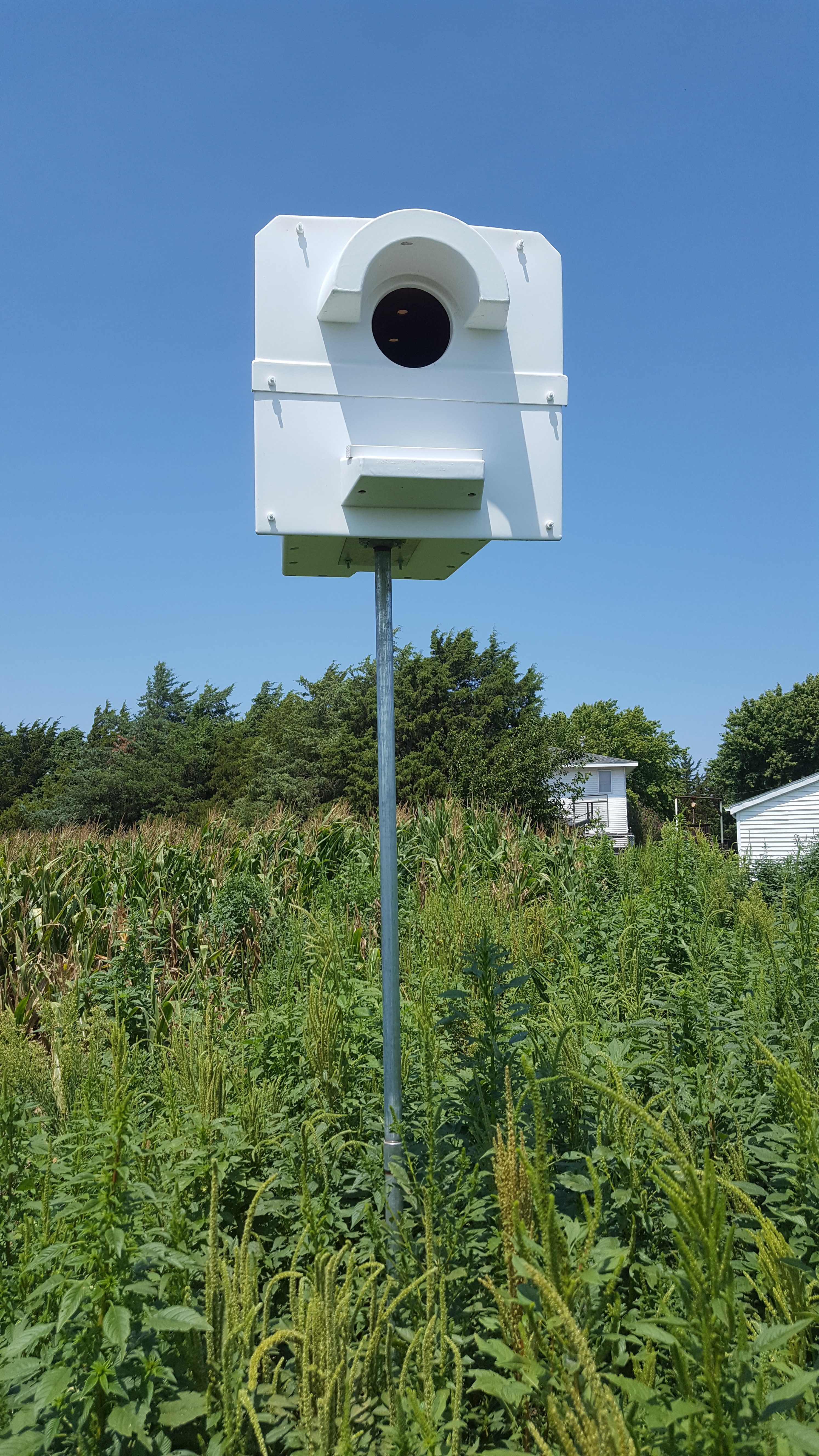

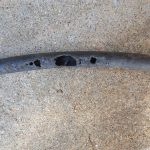
This spring local farmer Bob Friesen began finding puddles in a soybean field that’s watered by underground drip irrigation. Rodents, (likely gophers) had chewed holes in the irrigation tubing and after repairing the damage, Brian Wedel from Heartland Irrigation in Moundridge, KS suggested Bob try hanging nest boxes to attract barn owls, screech owls and kestrels to help control rodents, a fairly new concept being tested here in Kansas and all around the country.
Kansas has pocket gophers like court houses have pigeons, and whether searching for water in dry years or just because gophers like to chew stuff, pocket gophers can wreak havoc with underground irrigation which is very popular of late in irrigated farm country because of its efficiency and water conservation. Heartland Irrigation and Netafim that manufactures the irrigation tubing used by Heartland have been working with a Pennsylvania company called the Barn Owl Box Company to help drip irrigation customers implement this practice.
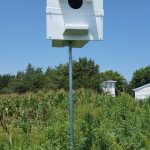
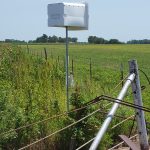
While working for the Pittsburgh Zoo as an Animal Care Specialist and Trainer, biologist Mark Browning conducted a project attempting to bolster the barn owl population in PA. Barn owls were bred and released in western PA with limited success, so their focus changed to habitat enhancement instead of a breeding program and wooden barn owl nesting boxes were erected. Making nest boxes large enough for barn owls required using plywood instead of weather resistant cedar, and the boxes soon began to deteriorate, even to the point of becoming detrimental to attracting owls. Meanwhile, owl nest boxes were attracting owls so successfully in countries like Israel and Malaysia and in the states of Florida and California, that Browning began working to design molded plastic nest boxes that stood up to adverse weather conditions. Today Browning owns and operates the Barn Owl Box Company in Pittsburgh PA, dedicated to supplying molded plastic nest boxes for barn owls, screech owls, kestrels, bluebirds and wrens, and to providing technical knowledge and support to help people provide nesting opportunities to attract these beneficial birds to their property. Check out his website www.barnowlbox.com.
While screech owls and kestrels are great help with rodent control, Browning says barn owls are the birds farmers should focus on attracting for a number of reasons. Barn owls are cavity nesters and are easily attracted to nest boxes. They are comfortable around human activity and are not territorial so they can be attracted in large numbers. Barn owls are faithful to their nest sites and return year after year. Common clutch sizes are large, from 4 to 7 chicks or more, and it’s estimated a single family of barn owls can consume over 1000 gophers or 3000 mice or voles per year. Since Barn Owl Box Company’s nest boxes are made from molded plastic, they will last indefinitely. They need only to be on an 8 foot tall pole, and while easterly facing is good for gathering the warm morning sun into the box, Browning assures me they will work just fine facing any direction. Maintenance is minimal; simple put 3 to 4 inches of course bark mulch into the box before nesting season and change it each year.
I spoke at length with Jim Hunt, Market Segment Leader for Corn and Soybeans with Netafim USA. Hunt says they have been working for years to fix the problem of rodents chewing the tubing, and he told me about all the other solutions they have tried, including toxicants, fumigants and repellents, even incorporating a repellent into the plastic itself. All were either unsuccessful or became unusable for a one reason or another. They then began working with Browning to distribute and test his owl boxes and the results have been very promising. One large Kansas farmer who reported over 100 leaks in his irrigations lines last year was very pleased to report only around 10 leaks this spring after erecting one of Browning’s barn owl nest boxes last year. Netafim continues to work on solutions to this problem, but Hunt told me “These owls are natural critter control that works 24-7-365 and that makes pretty good sense to me.”
The concept of purposely attracting barn owls for rodent control was a new concept to John Gallagher, Superintendant of Dillon Nature Center in Hutchinson. But he agrees it has great merit and told me “If we are concerned enough to use water-wise watering solutions, then using owls as natural rodent control is wonderful; just be prepared for it to be a long-term solution and not immediate.” I think everyone I spoke with agrees that putting up an owl box today probably won’t have gophers fleeing your fields tomorrow like rats from a sinking ship, but it will certainly put them on notice, and the owls will likely come. I say bring on the owls! Continue to Explore Kansas Outdoors.
Steve can be contacted by email at [email protected].
Now That’s Rural: Jean Harrison and Kim Ringwald, H & R viZion


Huck Boyd National Institute for Rural Development
In the hurricane’s aftermath, workers race to help stranded victims. They are aided by drones which fly overhead and capture images which direct the rescuers to the people who need them. If only there was a practical way to keep multiple drones powered and in the air. That vision inspired two entrepreneurs who are building such a system in the middle of Kansas.
Jean Harrison and Kim Ringwald are the founders of H & R viZion in Great Bend. They were inspired by the notion of what drones – sometimes called unmanned aerial vehicles – could do.
Jean grew up in Stafford County, married a farmer, and worked in Great Bend after he passed. Kim grew up in a Navy family. When her dad went overseas, she and her mom stayed at her grandparents’ farm near the rural community of Bison, Kansas, population 255 people. Now, that’s rural.
Eventually Kim’s family settled at Ellinwood. Kim married and later moved to Great Bend where she met Jean. They worked at the same business and became longtime friends. Now both are retired.
“I was at home watching what was happening with Hurricane Harvey,” Kim said. In 2017, Hurricane Harvey caused $125 billion in damages and multiple fatalities. Kim saw a rescue worker struggling to unload a drone and other equipment at the disaster site. “Helicopters were trying to rescue flood victims by lowering baskets to them, but it took hours to find the victims,” Kim said.
Kim thought to herself that there had to be a better way to power and deploy drones to help this situation. She sat down at a TV tray and started drawing designs, one after another. “I took the idea to Jean, and she said, `I think this will work,’” Kim said.
After lots of research, the two women formed an LLC to develop and commercialize this concept. Using the initials of their last names and an eye-catching version of the word vision, they named it H & R viZion – spelled with a Z. “Catch the viZion” is a company motto.
Essentially, the business is finalizing development of portable drone charging stations which help to keep multiple unmanned aerial vehicles in the air. “Presently drones can only fly 30 to 35 minutes,” Jean said. Their onsite charging station could service multiple drones and allow a fleet of drones to be kept in the air 24-7. Jean and Kim are now seeking investors to help grow their company.
What are the possible applications of such technology? “We’re a couple of farm girls,” Jean said. “At first, we thought about agriculture.” She remembered a bad winter storm when a friend’s cattle were scattered and drones could have helped locate them. Drones would also be helpful in finding and checking cows which might be calving and need assistance.
Other possibilities are virtually endless. In the case of an aforementioned natural disaster, drones can provide the aerial view to safely and quickly find victims and identify problems. It’s safer to have a drone check a damaged roof than ask a person to go up on the roof, for example. Drones could be used for surveillance, inspection, construction, transportation, insurance, law enforcement, and national defense purposes also.
In October 2017, the Kansas Small Business Development Center hosted an event called Encountering Innovation where innovative small businesses could present their concepts to representatives of potential federal customers, primarily the Department of Defense. H&R viZion made a presentation at that session. “We have moved to high tech materials for our final models,” Jean said. “With the round of investment we’re currently raising, we will then be ready to manufacture our product and make our dream a reality.”
Another round of Encountering Innovation will be held in October 2018 in Johnson County. For information on that session, see www.encounteringinnovation.com.
Whether assisting with natural disasters, aiding homeland security, inspecting bridges or helping with business applications, aerial views can be extremely important. We commend Jean Harrison and Kim Ringwald for making a difference with innovative technology. It is helpful to catch the viZion from above.
Day Trippin’: Check out Czech culture in Wilson, hit the trail at Wilson Lake


By CRISTINA JANNEY
Hays Post
On the map: Wilson, Kansas Distance from Hays: 50 miles Drive time: 48 minutes
On my travels across Kansas, I have been to the Irish Festival in Chapman, the Scottish Festival in McPherson, Midsummer’s Festival (Swedish) in Lindsborg and, of course, Octoberfest in Hays.
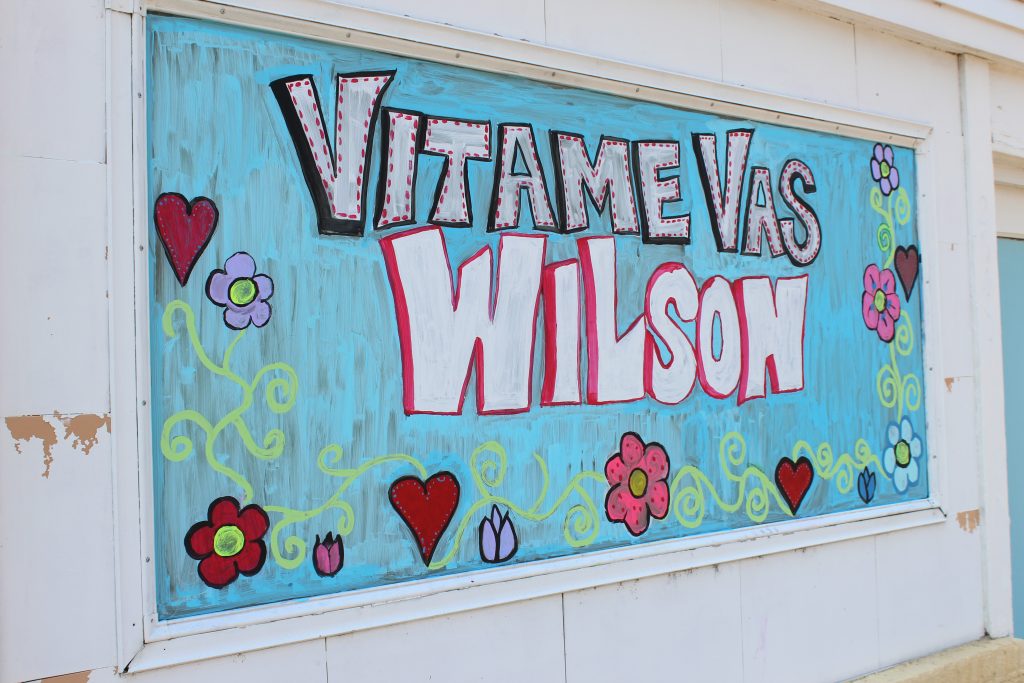
My latest international cultural excursion without leaving the state of Kansas was to the Wilson After Harvest Czech Festival.
Wilson is not shy about promoting its Czech heritage. In that vein, it commissioned a 20-foot-tall Czech egg, which stands in the center of town.

Christine Couch Slechta was this year’s Czech Festival grand marshal. An art teacher, Slechta was the artist who designed the giant 7,000-pound fiberglass Czech egg.
Although she does not have any Czech heritage, she is known for her Czech egg art. Slechta, a long-time Wilson resident, learned the art from a Czech descendant who lived in Wilson. She gave me the lowdown on the eggs.
The eggs were originally given by young ladies to young gentlemen in Czechoslovakia during the Easter season. Symbols on the eggs indicated strength and positive outlook for the future. Slechta paints chicken, goose and ostrich eggs in both traditional Czech patterns and modern designs. The designs are painted first, and then the egg is punctured to empty the contents.
Czech immigrants settled in the Wilson area in 1874. Last weekend, the community celebrated its annual Czech Festival.

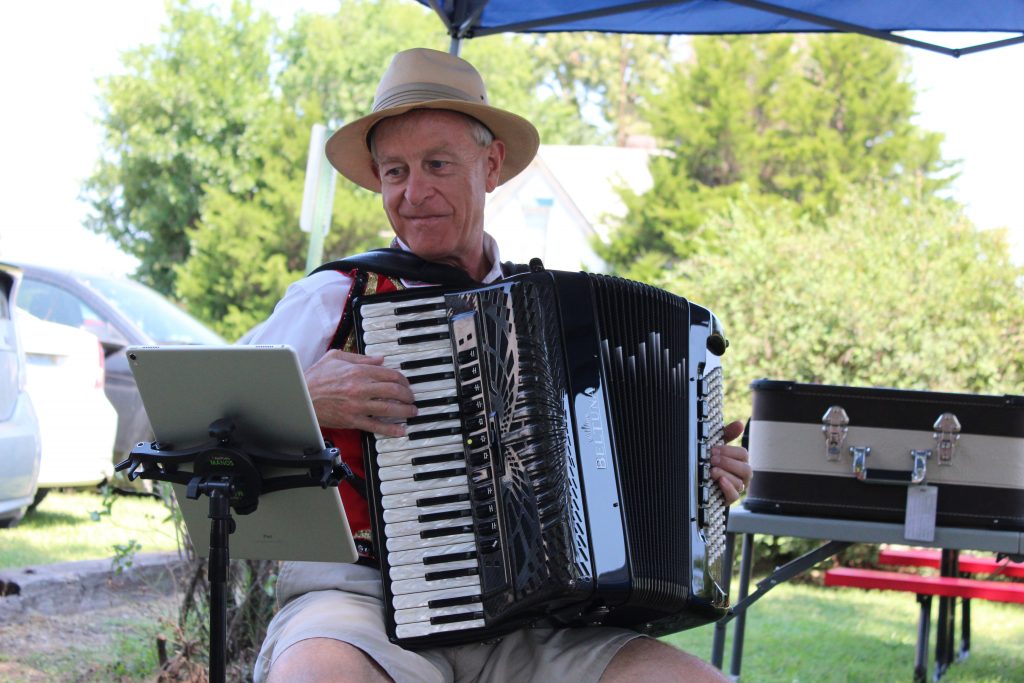
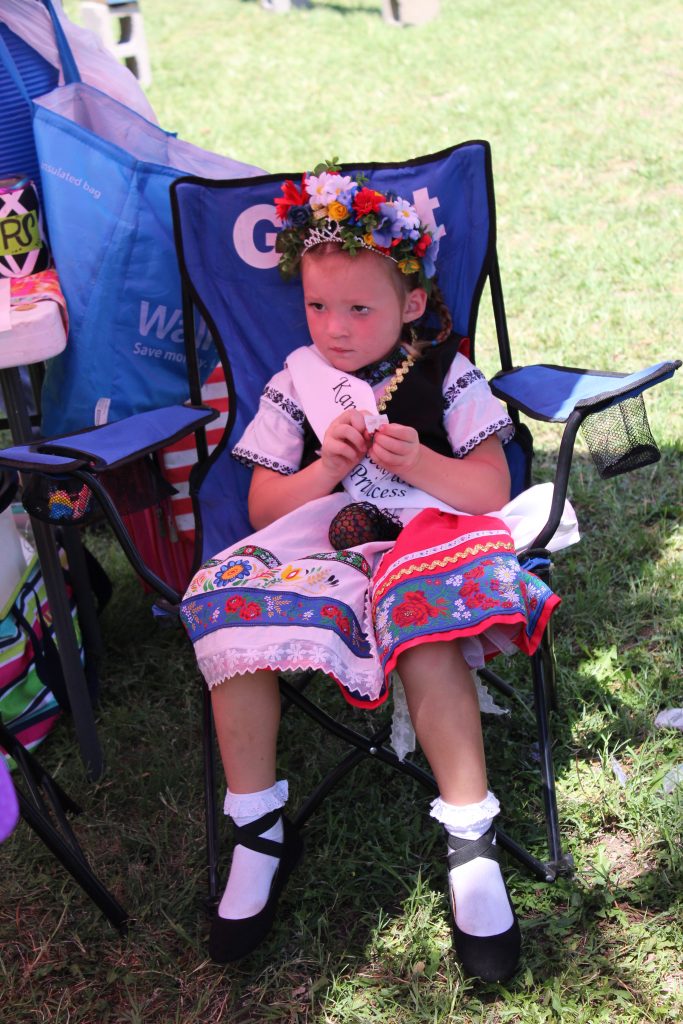
If you have a fine ear for polka, this definitely where you want to be. Young ladies also wear traditional dress to practice Czech folk dances.
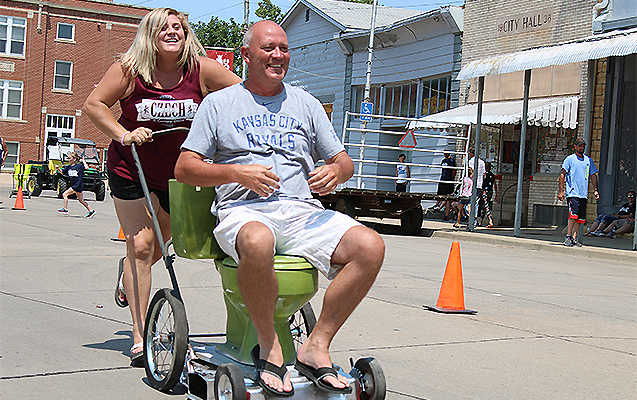
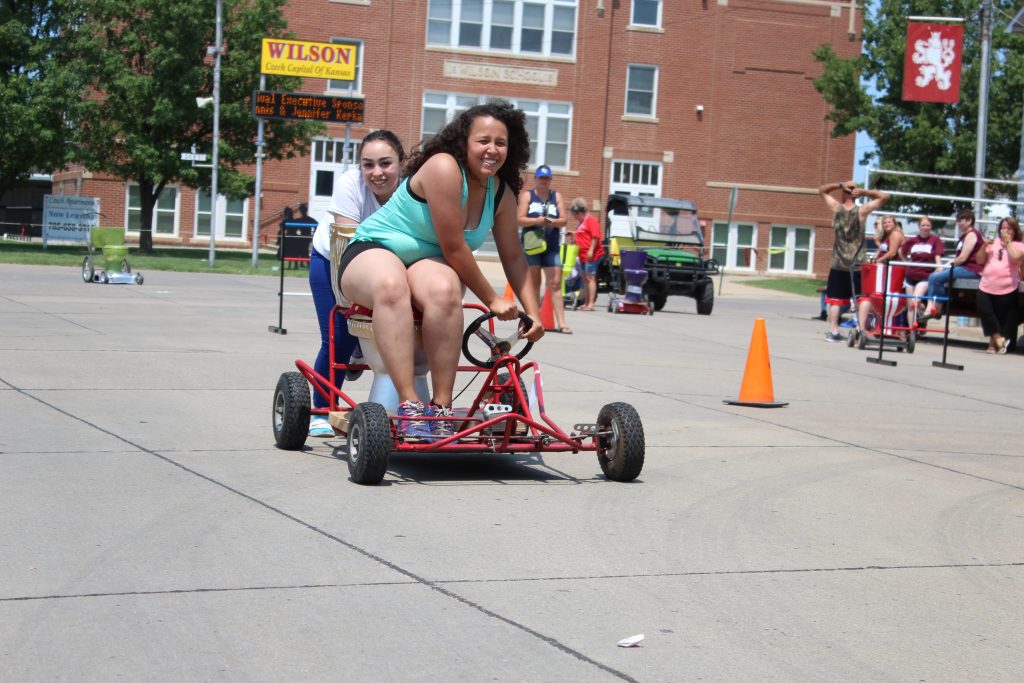
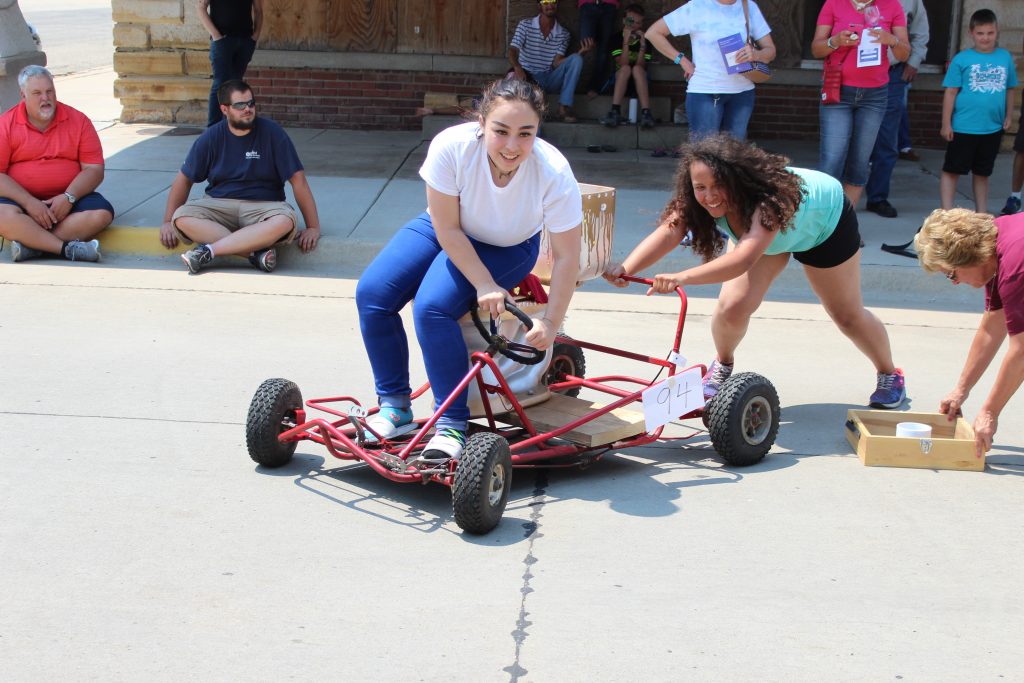
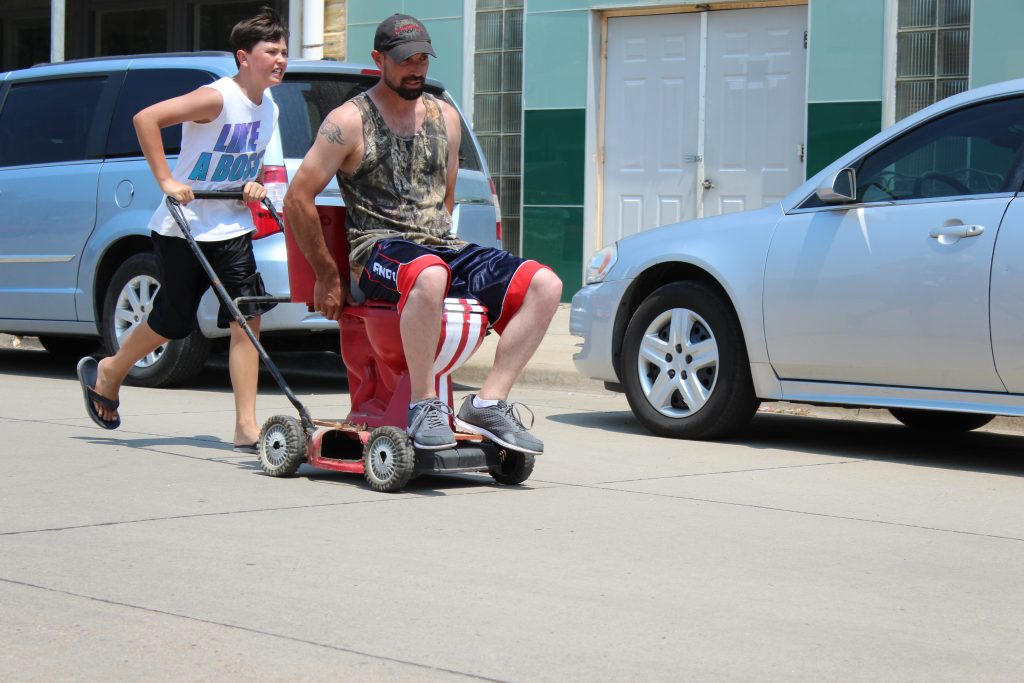
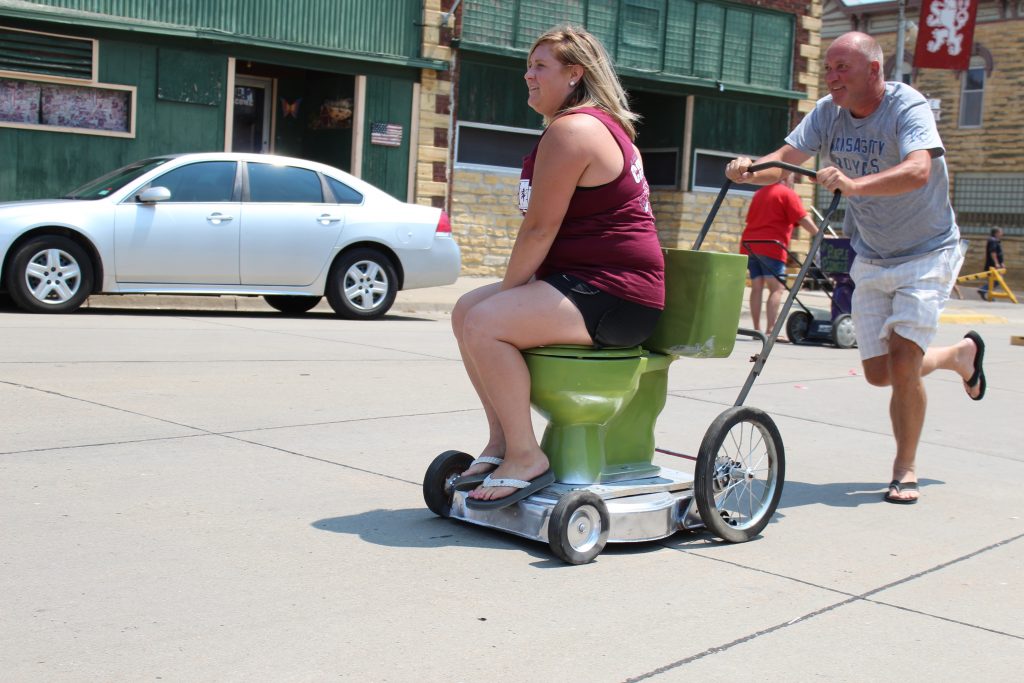
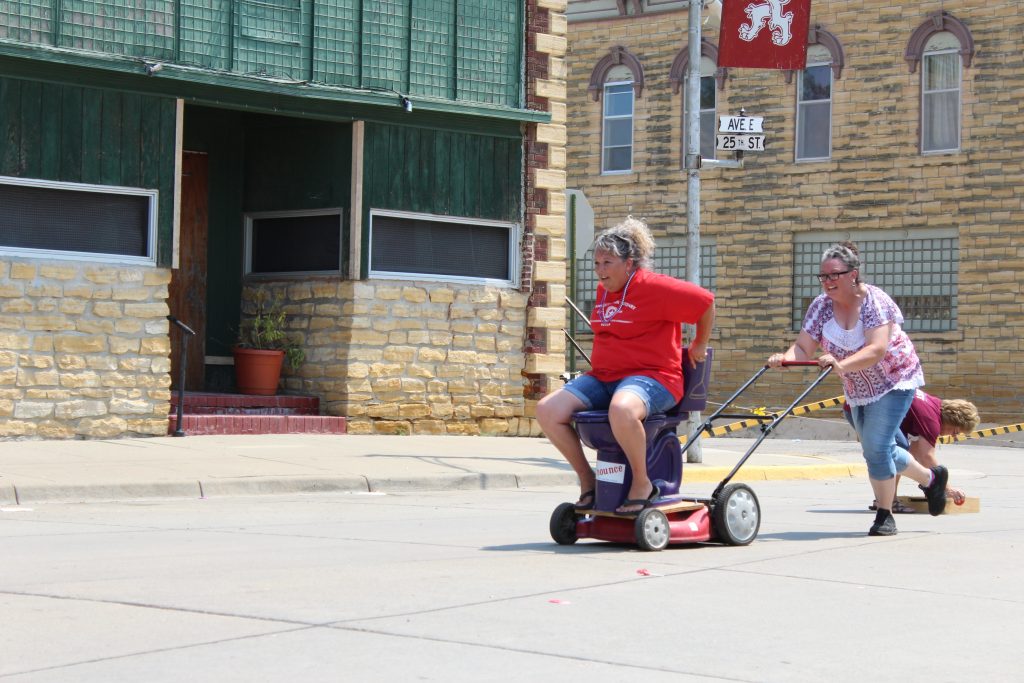
I don’t think this is Czech at all, but one of the featured events at the Czech Festival is toilet bowl races. Toilet bowls are mounted on old push lawnmower frames. One person rides, and the other person “drives” through an obstacle course. I have to give the people of Wilson points for creativity. It was a spectacle, but a bit anticlimactic. Even souped-up toilet bowls don’t go too fast.
If you are in Wilson for Czech Festival or during any other time of the year, there are a couple of foods you need to know about. One is the kolache. This is a sweet bread roll with a topping of fruit preserves. The other are case noodles. I was told this dish varies, depending how Czech you are. They are dough triangles containing cottage cheese and onion. They are usually boiled. Some serve them almost like a soup.
So I sampled both of these at Made from Scratch diner. They had a buffet and abbreviated menu due to all the visitors for Czech Fest, but look for a regular diner menu of stick-to-your ribs homestyle cooking, which includes gigantic bierocks and scrumptious pie. Don’t forget the homemade ice cream.
Enjoy the atmosphere of a 1950s soda fountain at Grandma’s Soda Shop and Diner, 2524 E. Owens, where you also can order kolaches and bierocks.
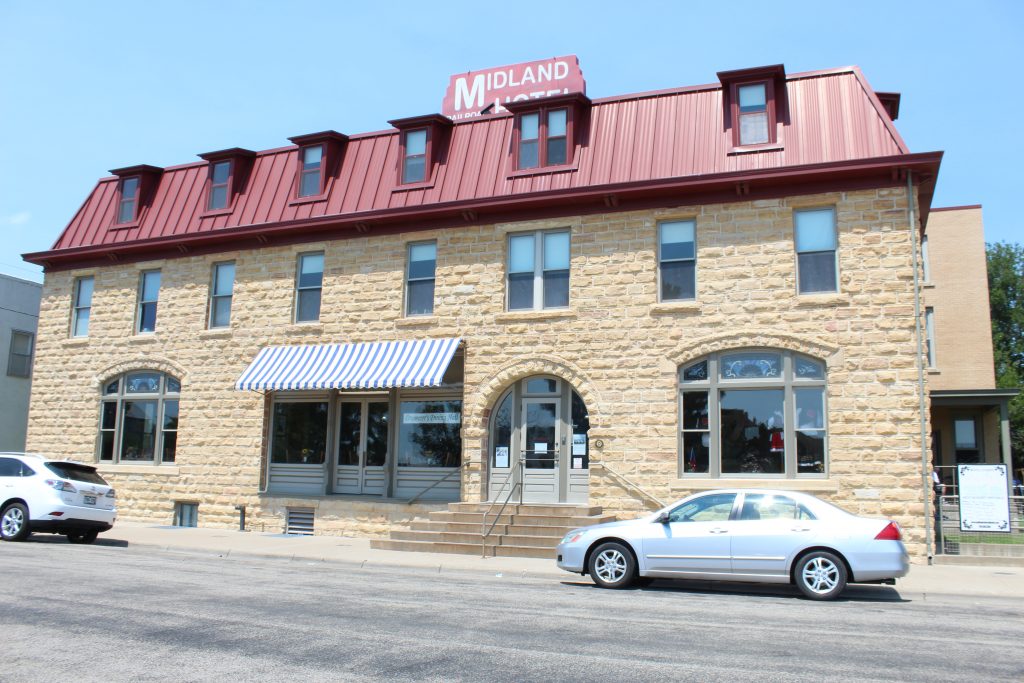
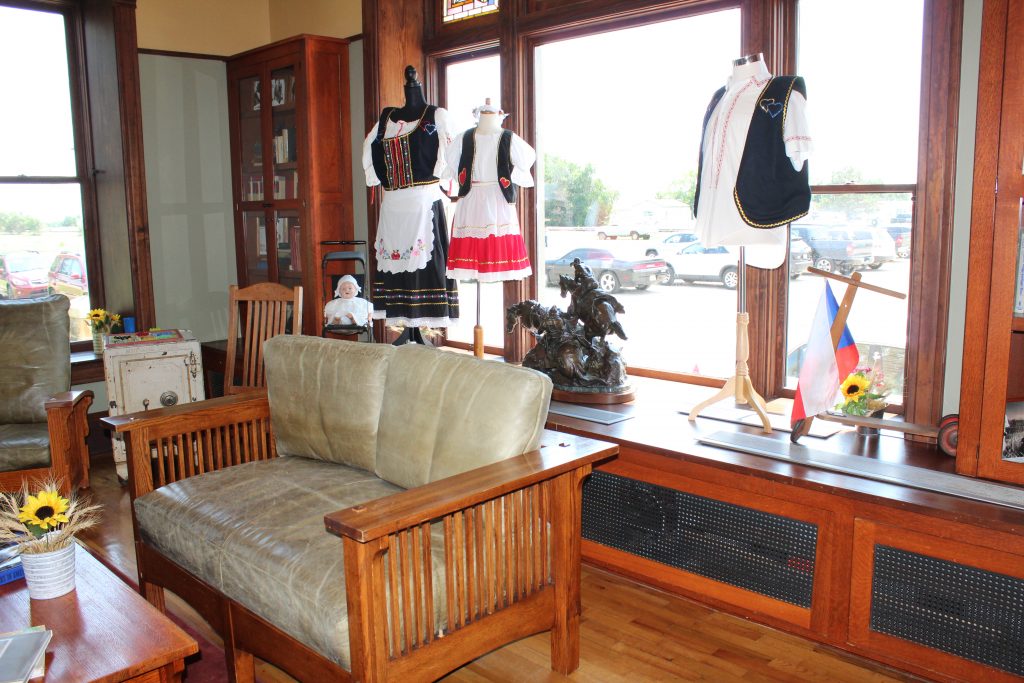
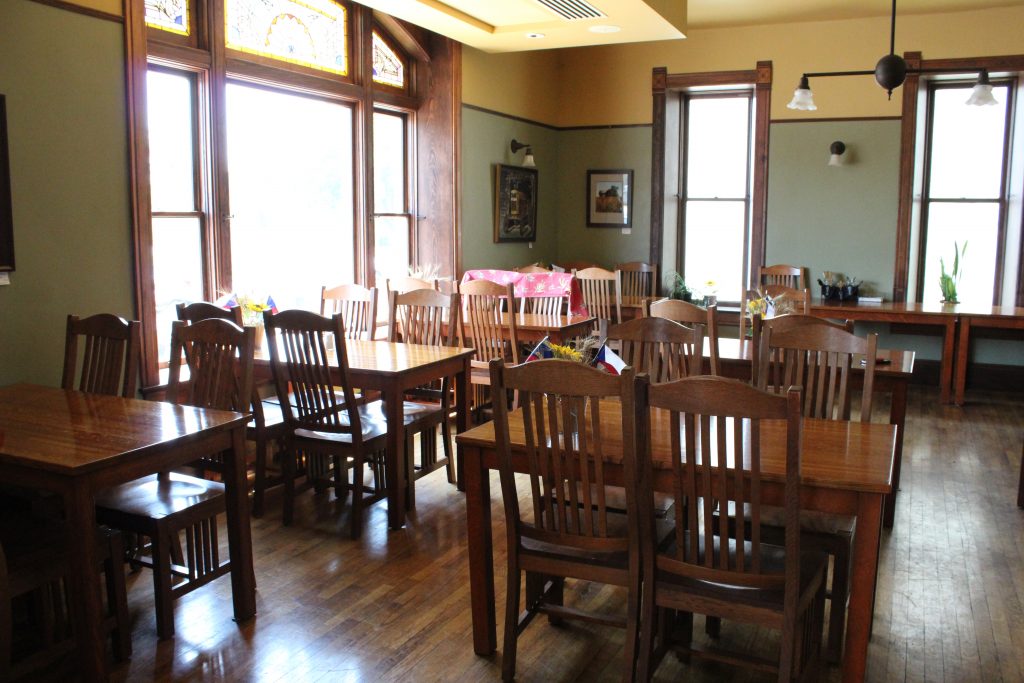
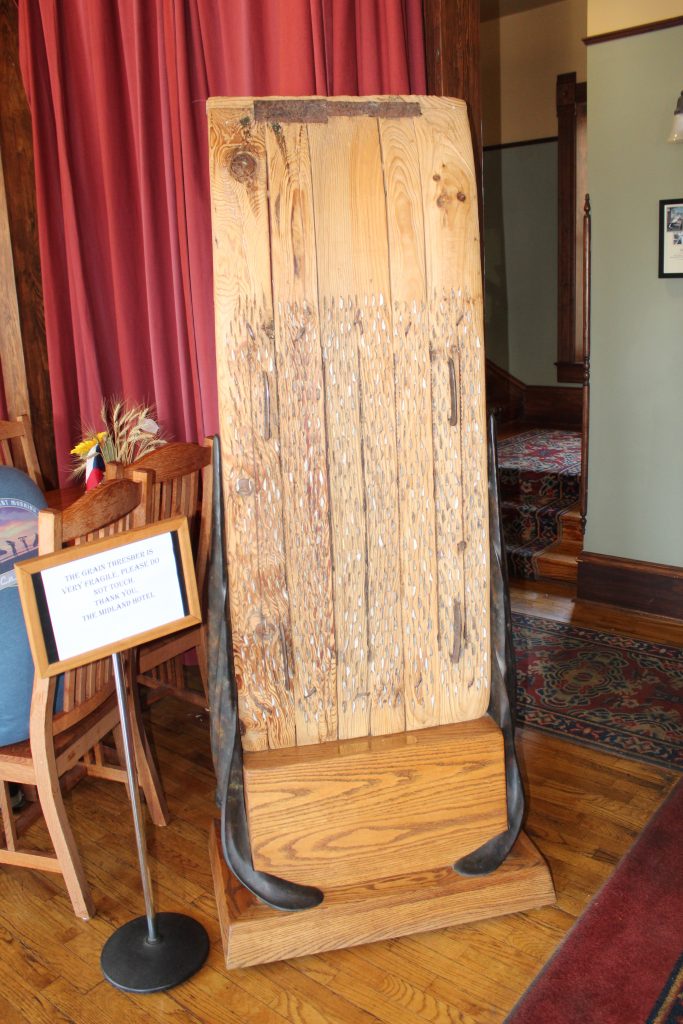
The Historic Midland Railroad Hotel, 414 26th St., offers steaks, sandwiches and pasta in the downstairs Sample Room, so named because the hotel was a popular stop on the Union Pacific route from Kansas City to Denver and businessman used the hotel to show off their wares.
The Drummer’s dining hall on the ground floor is available as an events venue. The hotel also offers special dinner events. Check their website for details.
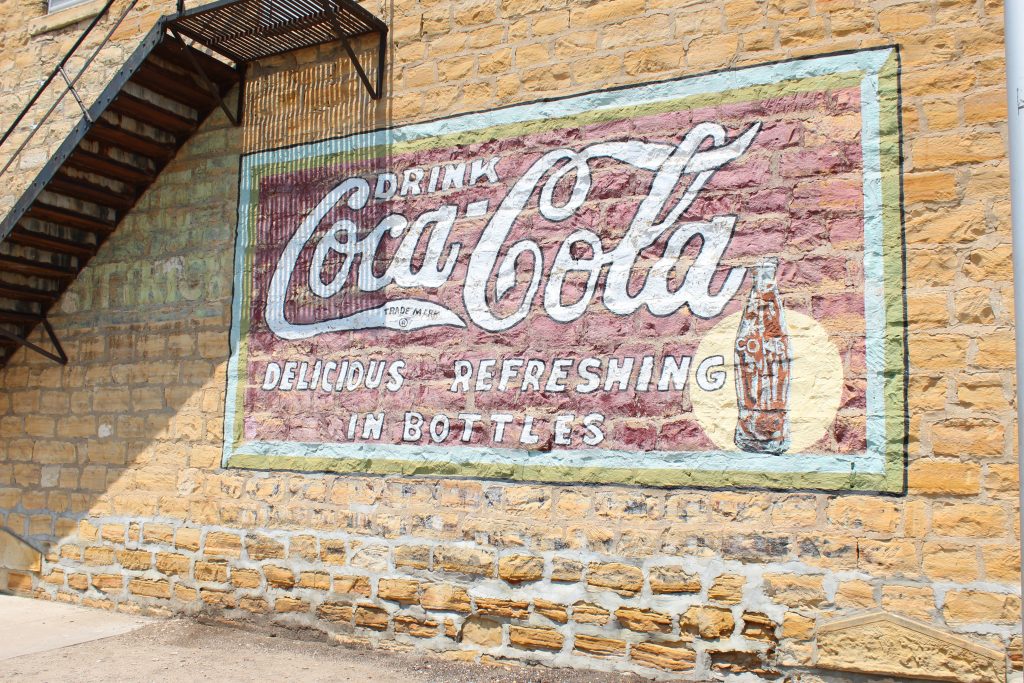
The limestone three-story hotel was built in 1899 and is on the National Register of Historic Places. The hotel underwent an extensive $3.2 million renovation and reopened in 2003 with an interior reminiscent of its 1920s glamor. Today, the hotel has 28 rooms decorated with mission-style furniture, but with modern amenities like satellite TV.
Film buffs may recognize the building as a backdrop in the 1973 film “Paper Moon,” starring Ryan O’Neal and daughter Tatum.

Also on the National Register of Historic Places is the town’s circular stone jail. The circular limestone structure was built as a water tower in 1907. It was used as a jail until 1963 to hold prisoners until they could he transported to the county jail.
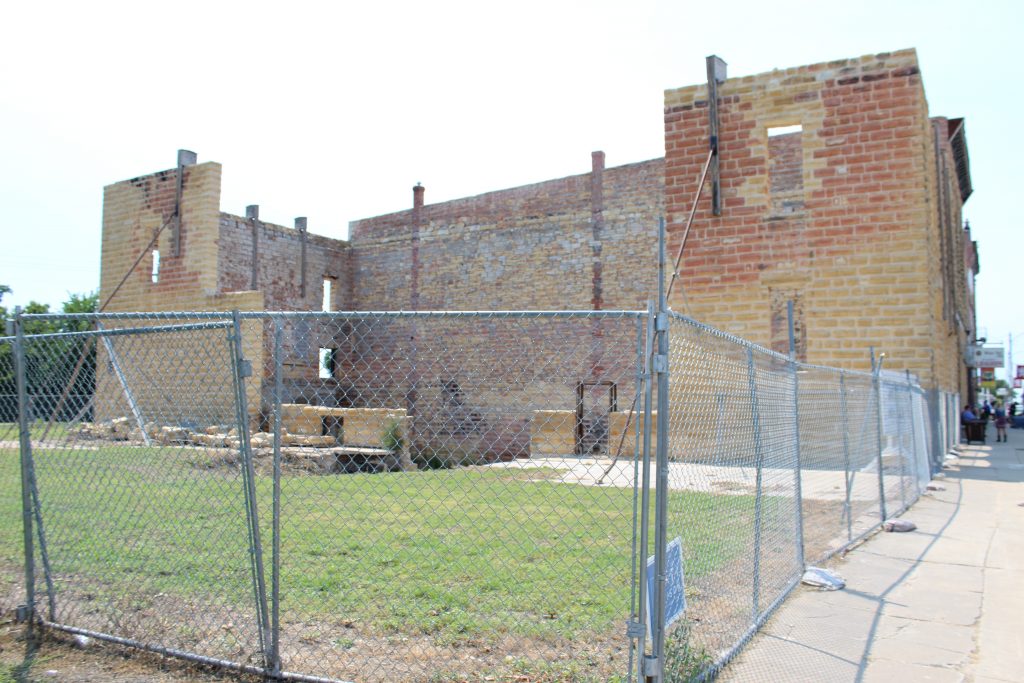
Unfortunately, one of the iconic Wilson landmarks, the limestone Wilson Opera House, built in 1901, burned in 2009. You can still see the shell of the building on Old U.S. 40 just down the street from the giant Czech egg. The opera house used to serve as the community’s historical museum, the Museum of Memories. The community hopes to resurrect the opera house by using the old stone to create a new pavilion.

Almost all of the historical items in the former museum were lost to fire or water damage. After almost 10 years, a new museum, the Wilson Heritage Museum, has opened in the former Wilson World newspaper office, 411 24th St.
The museum has been open for less than a year, and had many visitors during the Czech Festival this weekend. The museum contains items from Wilson schools, business, veterans and churches. In addition, the museum has a small collection of items commemorating the community’s Czech heritage, including dolls in traditional dress and Czech glass. In a tribute to the fire, the museum has on display a piece of molten debris that was salvaged from the opera house fire.
Also of note are two military monuments in the community. The Wilson Cemetery at 1916 Second St. features a granite statue of Civil War Union soldier, and a metal lion’s head that once filled horse troughs. In 1919, the community dedicated the World War I monument in Legion Park that features a U.S. infantry soldier.
Kansas Originals is not in Wilson, but just north of Interstate 70 at the Wilson exit. The store is run by the Post Rock Opportunities Foundation, a nonprofit corporation. Its mission is to provide marketplaces for the work of Kansas artists, craftsmen and food producers and to promote tourism, according to its website.
This is more than a tourist trap. It houses a variety of handmade products, such as jewelry, blown glass and wood products. You can also pick from a variety of Kansas-made food products, like popcorn, salsa and sauerkraut. A bookworm, I always make a quick perusal of the book section, which features Kansas authors and topics. The store carries fiction, non-fiction, guidebooks and children’s books.

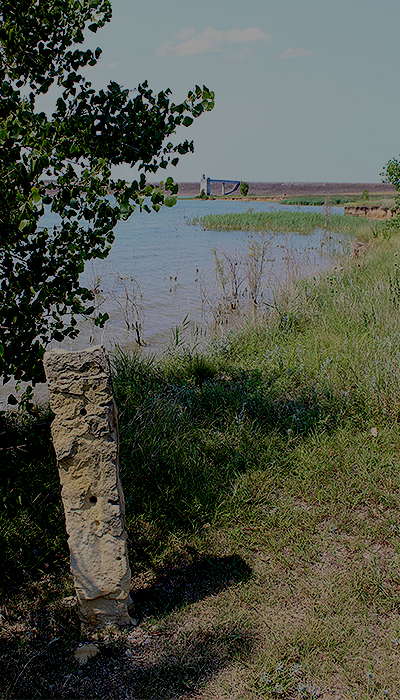
We can’t talk about Wilson without talking about the 9,000-acre Wilson Lake. The Wilson I-70 exit will take you to the east end of Wilson State Park and is the best access to the dam. You can also access the Minooka Park section of the lake via I-70 exit 199 Dorrance and the Wilson Wildlife Area via exit 193, Bunker Hill.
You will need a state park pass to legally enter the state park. You can buy a year-long State Parks Passport for $15.50 when you pay your annual tags and taxes for your vehicle. You can also self-pay day passes or buy yearly passes for slightly more at a park office. The annual passes are good for any state park.
With its picturesque cliffs, Wilson is a popular spot with kayakers. There are plenty of places along the shoreline to put in, and the water is fairly clear for a Kansas body of water.
However, you do not have to have a boat to enjoy Wilson, the state park is internationally known for its 25-mile Switchgrass Bike Trail, which winds throughout the park and will take you through native grasses and wildflowers and near impressive rock features. There are shorter loops for those who aren’t up to riding the whole trial. You can hike and run sections of the trail, but it is recommended you go counterclockwise to bikers to avoid crashes.

The trail head is at Switchgrass campground on South Shore Drive west of the Hell Creek Bridge. I picked up a Wilson Lake guide, printed by the Wilson Lake Area Association at Kansas Originals at the Wilson exit, which contains a state park map.
Wilson also offers both natural and paved hiking trails. The Cedar Trail in the Otoe area is a one-mile paved loop.
The second-annual Lovegrass Music Festival will be Aug. 10-12 at Lovegrass campground at Wilson Lake. It will feature country, bluegrass and folk music. For more information, contact Aimee Riegle at [email protected].
I usually shoot pictures rather than creatures; however, in addition to being a good locale for white bass and striped bass, the state park offers 8,069-acres of public hunting at Wilson.
If you travel to Wilson Lake dam via K-232, you will be on the Post Rock Scenic Byway, giving you beautiful views of the Kansas short-grass prairie and worth an afternoon drive in and of itself.
If you reach the dam, you will be fairly close to Lucas via Kansas Highway 232. Lucas, north on K-232, is worth a stop as well, but that adventure will be for an upcoming Day Trippin’. If you do decide to take the byway north to Lucas, look for faces carved into the region’s iconic post rock fence posts thanks to artist Fred Whitman.
Honestly, my next road trip is still up in the air, but I will definitely see you on the road soon!
Other links to check out while you are planning your trip:
Ellsworth Area Chamber of Commerce
BOOR: Rotational grazing

But as a rancher, are you taking care of your grass for optimal production? Many producers practice continuous grazing for the management of their pastures. This consists of allowing the livestock to selectively choose what forage they want to eat in a large pasture over an entire growing season.
Sometimes, the struggle to ensure that your livestock have forage all winter long can be a challenge, especially in dry years. Managing your available forages throughout the year can be an issue, but there is information and practices that may help make it easier and more profitable.
On August 16th at 9:00 am, K-State Research and Extension Cottonwood District will host a Rotational Grazing in the Rangeland workshop. The workshop will consist of a tour of Greg Axman’s rotational grazing and haying operation. Keith Harmoney, KSRE Rangeland Specialist will be there to discuss the basics of managing your rangeland including stocking rates, continuous and rotational stocking along with other subjects. Augustine Obour, Associate professor of Soil Science will also attend and speak with the producers about cover crop forage production potential and grazing impacts on your soil’s health.
There will be a meal to follow the tour with the availability to discuss practices and ask questions. To RSVP for an accurate meal count, call 620-793-1910 or email [email protected]. The meal and beverages for the workshop have been sponsored by Barton County Conservation District and The Great Bend Coop.
Alicia Boor is an Agriculture and Natural Resources agent in the Cottonwood District (which includes Barton and Ellis counties) for K-State Research and Extension. You can contact her by e-mail at [email protected] or calling 620-793-1910.