We have a brand new updated website! Click here to check it out!

FIRST FIVE: School officials need a First Amendment lesson

David Hudson Jr.

Officials at Victory Preparatory Academy (VPA), a charter school in Colorado, need to read the First Amendment and recognize that students retain free-speech rights at school. Fortunately, a recent federal district court recognized in Flores v. Victory Preparatory Academy that students retain such rights and refused to dismiss their lawsuit.

The dispute in question arose in September 2017, when the school held an assembly in the gym. During assemblies, students are expected to stand, salute the flag and recite the school pledge. Several students sat down and did not recite the school pledge. The students were concerned about the overly authoritarian atmosphere and rigid discipline at the school.

The school’s chief executive officer, Ron Jajdelski, then ordered the protesting students back to the gymnasium. He became frustrated and sent the entire student body home.

Officials expelled one student, known in court papers as V.S., for talking about the protest on Facebook and for sharing a post by another student that “Defendant Jajdelski could suck the student’s left nut.” They expelled another student for posting messages about the protest and encouraging other students to participate. Then, school officials banned Mary and Joel Flores, parents of a student at the school, for filming part of the protest at school.

These individuals and others sued the school officials, advancing a number of valid First Amendment claims. First, students have a First Amendment right not to recite the school pledge as a form of peaceful protest.

After all, the U.S. Supreme Court famously recognized that students had a First Amendment right not to salute the flag and recite the Pledge of Allegiance in West Virginia Board of Education v. Barnette (1943).  Writing for the court, Justice Robert Jackson warned “that they are educating the young for citizenship is reason for scrupulous protection of Constitutional freedoms of the individual, lest we strangle the free mind at its source and teach youth to discount important principles of our government as mere platitudes.”

Furthermore, the Supreme Court famously protected students’ black armband protests in Tinker v. Des Moines Independent Community School District (1969), emphasizing the silent passive political speech of the students.

The school officials filed a motion to dismiss this claim, arguing that the recitation of the school pledge was a form of school-sponsored speech and subject to a more deferential standard for school officials from Hazelwood School District v. Kuhlmeier (1988) — that school officials can censor student speech if it is related to reasonable educational purposes.

Fortunately, Raymond P. Moore, judge for the U.S. District Court of Colorado, recognized the fallacy of his argument. “Refusing to stand and recite the school pledge is an archetypal example of a ‘silent, passive expression of opinion’ that is protected under Tinker,” he wrote.

The judge also denied Jajdelski qualified immunity — a doctrine that often shields government officials from liability unless they violate clearly established constitutional law. Here, Jajdelski violated clear constitutional law, punishing students for refusing to recite a pledge. That is the essence of unconstitutionally compelling speech in violation of the First Amendment.

Judge Moore also found that the parents who were banned from campus stated a plausible retaliation claim. He noted “it was beyond dispute that plaintiffs Mary and Joel Flores had a clearly established right to publicly criticize VPA without facing retaliation.”

David L. Hudson Jr. is a First Amendment fellow at the Freedom Forum Institute and a law professor at Belmont University who publishes widely on First Amendment topics. He is the author of a 12-lecture audio course on the First Amendment titled,Freedom of Speech: Understanding the First Amendment” (Now You Know Media, 2018). He also is the author of many First Amendment books, including The First Amendment: Freedom of Speech(Thomson Reuters, 2012) and Freedom of Speech: Documents Decoded (ABC-CLIO, 2017).
INSIGHT KANSAS: Charting a path forward on taxes

H. Edward Flentje is professor emeritus at Wichita State University.

A couple weeks ago Governor Laura Kelly made good on her commitment to initiate a comprehensive review of the Kansas tax structure by establishing a Council on Tax Reform, co-chaired by two former state senators, Republican Steve Morris of Hugoton and Democrat Janis Lee of Kensington.

Kelly called on the Tax Council to consider reforms that advance “adequacy, equity, and stability” in taxes and “return to the ‘three-legged stool’…a sensible balance of income, sales, and property tax revenue.” The Council met for the first time earlier this week and is scheduled to deliver an interim report to the 2020 legislative session and a final report to the 2021 legislative session.

Kelly’s action follows up on her veto of multi-million dollar tax cuts favoring big business interests during the recent legislative session and successfully blocking an attempt to override her veto. She immediately drew flak from tax-cutters who claimed that the Council would become a vehicle for tax increases.

So, what is the best path forward on tax policy?

As its first order of business, the Council should affirm the wisdom of the “three-legged stool” of Kansas tax policy, as Kelly prescribed. Balance and diversity in taxes assure lower tax rates overall, reduce competition with other states, and promote fairness based on income.

Actions taken by lawmakers from the 1970s, 1980s, and 1990s achieved near-perfect balance in state tax structure by the turn of the century. However, the reckless tax experiment threw tax policy out of balance beginning in 2013. Lawmakers moved to rectify the resulting financial mess by abandoning the experiment in 2017, but restoring that balance should guide recommendations of the Tax Council.

The Council should adopt “revenue neutrality” as its second order of business. In other words, current revenues and realistic projections of current revenues should establish an overall cap on recommended revenue adjustments. Revenue neutrality will never mollify the tax-cutting crowd but should help the Council and Kelly establish credibility with the public.

The Council should embrace as its third principle the long-standing benchmark for tax reform espoused by the conservative Tax Foundation, that is, “broaden the tax base and cut tax rates,” which according to the Foundation, simplifies the tax code, removes unfair tax preferences, and creates economic growth.

Easier said, than done, of course.

However, members of the Tax Council should have as required reading the “Tax Expenditure Report,” prepared by the Kansas Department of Revenue. This 30-page report lists nearly $10 billion in various deductions, credits, and exemptions that narrow Kansas tax bases, primarily sales and income tax bases. Many of these make economic sense, but others have outlived their usefulness. Separating the wheat from the chaff among these provisions will require difficult work as each has a political constituency but could open ways forward on tax policy.

Finally, the Tax Council should tell the real “windfall” story and bury the issue for Kelly. Many businesses were gifted their first windfall with total exemptions from state income taxes during the discredited tax experiment, 2013 through 2017, and then their second windfall through trillion-dollar tax cuts at the national level in 2017.

No such businesses should be awarded a third $100 million windfall as the Kansas State Chamber and its dark money allies now shamelessly propose. Their advocacy of more corporate welfare serves neither tax fairness nor economic growth.

H. Edward Flentje is emeritus professor at Wichita State University and served with former Kansas Governors Bennett and Hayden.

WILLIAMS: Entrepreneurship is key

Doug Williams, Grow Hays executive director

Winston Churchill defined success as “moving from failure to failure without loss of enthusiasm.” When I read this, I had to chuckle as I believe it is a perfect description of the economic development process in rural Kansas but also describes the life of an entrepreneur.

At Grow Hays, our mission is business creation, business retention, and expansion and business recruitment. Pretty simple, pretty straight-forward — but far from easy. Each portion of our mission requires a strategy and planning to determine how to achieve our mission. Today, I would like to focus on the first part of our mission — business creation.

To me, business creation is synonymous with entrepreneurship. Fostering an environment that is conducive to entrepreneurship is essential if we are to grow and sustain our economy in Ellis County. We are very fortunate that Fort Hays State University is actively engaged in entrepreneurship.

The university has invested heavily in entrepreneurship and conducts events like the Faulkner Challenge and Start Up Weekend. These are excellent events that sow the seeds of entrepreneurship in the community.

At Grow Hays, we are attempting to expand those efforts through our Robert E. Schmidt Entrepreneurial Series. This series consists of several events that further foster a community environment of entrepreneurship and business creation. These events include:

Pitch It

Pitch It is our Shark Tank-type event where aspiring and existing entrepreneurs “pitch” their ideas. Each participant gives a five-minute presentation followed by questions from three judges. Each event features five presenters with the winners being awarded a $500 cash prize. The objective of the event is to not only bring new ideas to the community but to also expose these ideas and concepts to an audience of potential investors, mentors and other resources that can help turn these ideas into reality.

Youth Entrepreneurship Challenge

The YEC is a Network Kansas sponsored event consisting of high school students in Ellis County doing a trade show booth as well as presenting a business idea. Last spring, we held the first YEC in Ellis County and had over 23 participants from local high schools.

Ethan Lang from Thomas More Prep-Marian was the winner of our local YEC and then went on to win the state YEC event held in Manhattan. What a terrific first year to produce a state champion!

TriSpective Speaker Series

We have amazing talent in our community, and the TriSpective Speaker Series puts those talents on display. Each event consists of three local speakers that give 15- to 20-minute presentations on a variety of topics. These individuals tell their stories, talk about their successes and failures, and answer questions from the audience. We have had a wide range of topics ranging from marketing and branding, market segmentation, overcoming obstacles and fears, data security, and entrepreneurship. It is a terrific opportunity to hear from people who have unique skills, have overcome obstacles and have actually “done it”!

Grow Hays quarterly luncheons

Communication and education are critical to our communities success and our quarterly luncheons achieve both. At these luncheons, we bring together community leaders, provide updates regarding Grow Hays activities as well as have speakers who provide educational information on things that impact our community. We have had speakers discussing the development process, development opportunities, the property taxation process, and the oil industry and its economic impact on Ellis County.

• • •

Entrepreneurship is absolutely a key component of our economic future in Ellis County and, at Grow Hays, we are working every day to help build an environment where entrepreneurship can flourish. We are very fortunate to have The Robert E and Patricia A. Schmidt Foundation as the sponsors of our Entrepreneurial Series.

I believe it is something Bob would have been proud to have his name on.

Doug Williams is executive director of Grow Hays.

Kansas Farm Bureau Insight: Why me? Why not?

By GLENN BRUNKOW
Pottawatomie County farmer and rancher

One of my favorite cartoons is a “Hagar the Horrible” panel. The picture shows Hagar with arrows stuck in his shield, his boat sinking, obviously having a bad day. He has his hands thrown back and is looking at the heavens and proclaims, “Why me?”

The next panel shows the skies above him open up and a voice say, “Why not!” I think back on that cartoon sometimes when it comes time to advocate for agriculture. Whether it is in D.C., Topeka or a fourth-grade classroom, many times I wonder, why me? Why can’t I just stay home and work on my farm and forget the rest of the world exists?

Truth be told, I suppose I could, but the reality is the days of keeping our noses to the grindstone, minding our own business and not worrying about what anyone else thinks are long gone. I don’t know if you have noticed, but things like social media allow everyone with an opinion and a keyboard to be an expert about agriculture.

That is why it is so important for us to be involved and to advocate for agriculture. We are the true experts, and every one of us pour our blood, sweat and tears into what we do. So, I will ask you this question. If not you, then who will tell our story? We all know that answer, and the alternative is one that should scare us to death.

That is also why it is so important to be active in Kansas Farm Bureau. Alone our voices can be heard, but it is a much greater challenge. Kansas Farm Bureau and, ultimately, American Farm Bureau allow for us to come together as farmers and ranchers to achieve a common goal. It is the power of the individual member to have influence that gives us our grassroots strength.

I know each of us are incredibly busy, and it is so hard to make that sacrifice to be gone from our farms and ranches. Let me assure you the sacrifice is well worth the pain. I truly believe the time I spend advocating for agriculture, whether it is telling our story to school kids or elected officials, is just as important as the time I spend in my tractor seat.

We must all take the time to tell our story. Each of us has one to tell and the public needs to hear it. The days of assuming everyone has ties to agriculture and understands what we do are gone. The public wants to like and trust us, but they need to hear our story from us directly.

The next time your phone rings or that email pops up with an opportunity to advocate for agriculture, I want you to answer the call and tell everyone about the great work we all do every day. We feed a hungry world while protecting the soil, air and water. Why you? Why not.

“Insight” is a weekly column published by Kansas Farm Bureau, the state’s largest farm organization whose mission is to strengthen agriculture and the lives of Kansans through advocacy, education and service.

SCHROCK: Kansas Regents lower standards … again!

John Richard Schrock is a professor at Emporia State University.

More Kansas students will now qualify for admission at Emporia, Fort Hays, Pittsburg and Wichita State Universities. The more rigorous high school academic curriculum was jettisoned for an average high school grade point average (GPA) and a minimal score on the ACT. The rationale for lowering standards focuses on making the process simpler and increasing the number of students who go to college.

The ACT score remains the same as in prior standards. Required high school GPA is now 2.25, except for K-State (3.25) while the University of Kansas will require either an ACT score of 21 and a GPA of 3.25, or an ACT score of 24 and a GPA of 3.0.

The more rigorous Qualified Admissions (QA) high school curriculum, as well as being in the top third of your graduating class, was eliminated across all universities.

While nearly all KBOR discussion was focused on admissions to regents universities and comparisons with a few other state’s requirements, the major impact will be a drop in rigor of high school math and science curricula taught in Kansas high schools.

While I have been a severe critic of better-education-through-paperwork because qualified teachers and not written plans are the answer, Qualified Admissions (QA) standards that went into effect in 2001 were effective. QA caused an immediate shortage of science teachers. Any biology teacher who could add a chemistry or physics endorsement moved to teaching those courses that were mandated by QA. Those shortages continue today. QA also contributed to re-defining teacher licensure, elimination of home economics and shop classes as a “science,” and eliminated a watered down high school “general science” class.

QA also required four high school math courses (or ACT score) rather than three under KSDE requirements for a high school diploma. That fourth math requirement was not widely met. So the Kansas chief academic officers got an end run approved so students could take the fourth math at college. This was but one of many actions that diluted academic rigor in Kansas.

The regents recently forced higher education bachelors programs to reduce down to 120 credit hours. Civilization moves ahead in education requirements over the years (a medical doctor in the 1850s only required two years of college). So academic faculty had good reason to require more education. But the regents first requested and then demanded a reduction of bachelors degrees to 120 credit hours. If any other similar program in Kansas was just 120 hours, all must drop to that level.

This race to the bottom continued over many years as the regent’s committee on transfer and articulation pressured universities to accept transfer courses that had the same name but varied greatly in prerequisites and mode of delivery.
Now high school GPA will be critical. But there has no mention made about how high school GPA, while previously the best predictor of college success, has been rapidly and miraculously increasing, raising high school graduation rates from under 70 percent to over 85 percent, while scores on NAEP, SAT and ACT remain flat or fall. This “Lake Wobegone Effect” (where all children are above average) is making high school GPA less predictive.

The Board of Regents functions much like a corporate board. Unlike the Kansas State Board of Education, KBOR has not held open public forums for over a decade, an avenue where the impacts of QA on K–12 coursework and teacher training could have been discussed. And Kansas presidents and provosts appear more focused on sustaining tuition than defending academic rigor.

These Kansas actions mirror similar actions across other states where higher education bodies or legislatures are likewise lowering requirements to attend state colleges and reducing academic rigor. Many states have followed California in removing the college requirement for college algebra (except for math and science majors) because that course is a factor in many students not completing college. Some states are removing algebra from high school requirements for the same reason.

For decades, American families who host overseas K–12 students from Europe and Asia have noted how those visiting students are several grades ahead of U.S. students in math and science, and likewise how difficult it is for American students to survive at the same grade level in foreign schools. However, there has historically been more equivalency between American and foreign students at the university level, particularly when American creativity is pitted against rote memorization. However, No Child Left Behind teaching-to-the-test has reduced that American advantage at the university level.

Actions being taken by higher education governing bodies across the United States, primarily to feed more students into a university system now more reliant on tuition dollars, ensure that many future American students will lag behind foreign students at the collegiate level. International education conferences already see hallway discussions of concern about the value of the American undergraduate college degree from our non-selective public universities and online diploma mills.

Hopefully, with the Qualified Admissions curriculum gone, Kansas will not return to offering science credit for home economics. But this action does dismiss any need for chemistry and physics in the many small Kansas schools that barely offer a 1930s curriculum and should be consolidated. This regents’ action in Kansas is a symptom of America’s widespread educational race to the bottom.

John Richard Schrock is a professor at Emporia State University.

LETTER: Early childhood complex name should remember Emma Kolb

Dear USD 489 Board Members and Administration:

With respect to your right to make these decisions on behalf of all the citizens of the District which you represent, please consider the following regarding naming the buildings recently purchased by us.

The naming of a public building or improvement should serve at least two purposes: clearly identify the purpose and use of the building and encourage respect for the mission of your governmental subdivision.

In the case of the 2501 E. 13th building complex, the purpose and use of the facility is to house the early childhood education programs of the District. The opportunity to engender respect for the mission of giving our students an early and effective start in the lengthy education process is obvious — find someone who exemplifies that and put their name on it. Tell the public where it is.

Please refer to my earlier letters regarding this, and please recall that you asked the public for suggestions. To name the building complex the East 13th Street Kolb Early Childhood Education Center or some variation of that accomplishes all of the core purposes of naming the buildings.

Teachers, patrons, students, taxpayers, government leaders and the thousands of other people whose lives Emma Kolb affected in all-positive ways will appreciate knowing that this School District remembers its heroes and honors them.

This weekend is Hays High School Homecoming. Take a moment to ask the Classes of 1969, 1979, 1989, 1999 and others if they remember Emma Kolb. Ask your faculty if they have heard of her. She gave all of her adult life to the children of western Kansas and particularly Hays and I know of dozens of your current teachers who went into the profession at least partly because of her.

Adding 13th Street to the name will let the general public know where this place is.

When they enter the building they will see that you had the foresight and heart to name it after a teacher who devoted herself to early
childhood education. We will know that you listened to the people you asked to give you public input, which will help this District with its own credibility when it asks us to support new infrastructure and programs.

Respectfully,

John T. Bird
Lincoln School Class of 1960
Hays High School Class of 1966
Hays

MARSHALL: Doctor’s Note Sept. 25

Dr. Roger Marshall, R-Great Bend, is the First District Kansas Congressman.

Friends,

Last week I hosted a discussion with Cindy McCain, U.S. Senator Martha McSally, and the U.S. Health and Human Services Director of the Office of Trafficking in Persons, Katherine Chon, on human trafficking and the role health care providers play in identifying victims.

Human trafficking is an emergency across the United States, and Kansas is unfortunately no exception.

The event was focused on joining legislators, health care providers, and other leaders on this issue, with the goal of getting every hospital emergency room in the country to establish protocol for identifying and stopping human trafficking.

I want to thank everyone who came to the event and a special thanks to those who participated on our panel.

I am committed to continuing to fight for the victims of these heinous crimes and bringing an end to human trafficking in the United States and around the world.

Pet Night on Capitol Hill
Pet food manufacturers in the Kansas City Animal Health Corridor account for more than half of all pet-industry sales in the U.S., and these companies provide more than 2,000 jobs in the area. Many of Kansas’ finest commodities go into our domestic pet food production network.

I spoke at Pet Night on Capitol Hill, which convenes elected officials, industry leaders, veterinary professionals, animal welfare advocates, and research organizations to learn about the importance of pet ownership for human health.

As someone who represents one of the largest agriculture producing districts in the country, there’s a direct link between the bottom line of our farmers, producers, and pet food companies and their employees.

American Association of Pro-Life Obstetricians & Gynecologists
I was proud to receive an updated certificate of my Lifetime Membership with the American Association of Pro-Life Obstetricians & Gynecologists (AAPLOG). AAPLOG is a prolife group made up of OBGYNS across the country that focus on maternal health and protecting the unborn.

We discussed ongoing efforts in the House of Representatives to work with the Food and Drug Administration to swiftly put an end to the illegal sale of mail-order abortion drugs to the US. These illegal websites were purporting to sell these drugs without the involvement of a trained and certified healthcare provider to screen for complications, determine pregnancy term, or monitor the patient for possible adverse events like severe hemorrhaging.

As a physician, and now member of Congress, I’m proud to be able to continue my work on issues such as these to ensure the health of mothers, children, and patients everywhere.

Securing Trade Agreements
I joined members of Taiwan’s Council of Agriculture for a Letter of Intent signing ceremony to commemorate Taiwan’s commitment to buy $3.6 billion in U.S. corn, wheat, soybeans, beef, and other products over the next two years.

Thanks to the Trump Administration, the United States is securing fair and free trade deals for our great American workers and producers. Commitments from foreign partners to buy U.S. goods are critical to retaining good customers abroad, and growing existing markets and demand for American agriculture products.

Andrew Wheeler EPA
EPA Administrator Wheeler came before the House Science Committee to discuss ongoing initiatives at the agency. Members had the opportunity to hear about ways that Administrator Wheeler is modernizing the agency and taking steps to roll back burdensome regulations, while encouraging innovation and the adoption of new technologies to reduce global emissions and address environmental concerns.

We discussed the recent rollback of the Obama-era Waters of the United States (WOTUS) rule, which represented a massive federal overreach and had a dramatically negative impact on our farmers, ranchers, and landowners across Kansas. I also had the opportunity to ask about policies impacting ethanol production across the state.

Welcoming Prime Minister Morrison to America
I had the opportunity to welcome the Prime Minister of Australia to the United States. Prime Minister Scott Morrison and his wife Jennifer arrived to a 19 gun salute and full military band. Prime Minister Morrison is the second world leader to be hosted for a state dinner by President Trump and I was honored to be there for his arrival.

Australia is an important strategic ally and have historically proven that they are partners that the United States can count on. The strong relationship between Prime Minister Morrison and President Trump is great for both countries and will only strengthen our countries ties.

Raising Awareness on Childhood Cancer
I had the honor to meet with Pottawatomie County patient advocates representing the Diffuse Intrinsic Pontine Glioma (DIPG) Foundation. DIPG is the second most common form of pediatric brain cancer and is the leading cause of childhood death due to brain tumors. Sadly, the survival rate after diagnosis is less than 1% and there is not currently a consistent standard of care for those diagnosed. I am working to change that. As a supporter of House Resolution 114, I am advocating to raise awareness and encourage research into cures for this and other rare forms of pediatric cancer.

Talking with FCC Chairman Ajit Pai
My office hosted FCC Chairman Ajit Pai at Emporia State University for a conversation on broadband and economic development. We brought together community leaders, telecommunications providers, and regional partnerships working to build out broadband to discuss the challenges and opportunities that come with achieving this goal, and to learn a bit more about how the FCC is working to close the digital divide.

Chairman Pai discussed the new Rural Digital Opportunity Fund at the FCC, which was announced earlier this year and will provide $20 billion over 10 years to help with deployment in rural areas.

As we move deeper into the digital age, an internet connection is becoming a critical component to the health and growth of our communities. It can help businesses reach new customers, connect rural hospitals with the tools to provide better care for patients, and expand learning opportunities for students.

One of our local farmers was able to share about the new precision agriculture technologies available that help her increase efficiency on her farm. Unfortunately challenges with her current internet connection can keep her from utilizing those tools to grow and modernize her farm.

Ensuring that our rural communities have access to these strong internet connections is vital for their continued success and economic growth.

Dr. Roger Marshall, R-Great Bend, is the First District Kansas Congressman.

HAWVER: Kan. agencies coming together on education

Martin Hawver

There may be something subtle going on here, that first meeting in several years in which the Kansas Board of Regents sat down with the Kansas State Board of Education for, well, just a little chatting.

That meeting brought together the nine Regents, who are appointed by the governor and subject to Senate confirmation, and the 10 members of the State Board of Education, who are elected to their offices.

While the overall responsibility of both groups is to provide a good education for Kansas students, it has generally in the past been sharply divided. The Regents works on everything after high school graduation, the State Board of Education nearly everything before that.

But they have rarely worked closely together on the entire concept of education in Kansas, producing young people who are ready for more education or who are learning job and social skills that will make those students just who we want walking down our streets, competing for parking spaces and living next door.

Last week’s meeting, in which the State Board of Education members were guests, produced some of the most identifiable indications that the two boards are interesting in working together, and some new members of each wondering why the boards haven’t been working more closely together.

That’s something we don’t often see between state agencies, which generally look after their own duties and cooperate only when two agencies find their duties overlap.

One of the more interesting discussions among Regents/Board of Education members was over allowing high school students—for free—to take a few college-level courses while in high school. Big interest in English/literature skills, but the concept generally comes down to letting middle and high school students get a taste of college-level classes to explore possible interests and eventually careers.

That dab of higher education at high school is both a confidence-builder for students who are from families without parents and other relatives with higher education experience and a way for those students who are interested in, say, teaching or construction or working in some other specialized industry a chance to see what is actually involved, and whether that is the way those kids whose drivers licenses are still new can look into their future.

Nothing like early focus, is there?

Oh, that cooperation between the State Board of Education and Regents is going to be a little tricky. Sorta like a first date.

Regent money generally is state aid plus tuition, while public schools are a mix of state aid and local property taxes. That local property tax is a major issue for public schools and casts its shadow on nearly everything that is considered by the State Board of Education and the Legislature that deals with public schools.

But the possibilities? Well, let’s see what would happen if the Regents and State Board of Education could come to a common ground for proposed legislation. We have the groups that oversee multiple school districts in each legislative district binding with Regents and other higher education institutions that aren’t universally present in all districts. That produces a statewide interest group that can appeal and lobby to every legislator in the state.

Pretty good potential political muscle…

Now it’s going to take time and formation of committees and such that education leaders tend to generate like weeds in a garden, but if there becomes an “educational establishment” that can reach out to every lawmaker and every Kansan…well, it’s likely we’ll see more interest in education from kindergarten to college degrees.

Interesting to see whether this cooperation actually takes place and what it yields…

Syndicated by Hawver News Company LLC of Topeka; Martin Hawver is publisher of Hawver’s Capitol Report—to learn more about this nonpartisan statewide political news service, visit the website at www.hawvernews.com

Exploring Outdoors Kansas: The coming Kansas Raptor Mania

Steve Gilliland

I love watching hawks hunt and I love observing how they’ve learned to interact with farm equipment as it rolls across fields and stirs up rodents and small birds that scurry about and often end up as a snack for the hawk.

Our raised deer blind overlooks a grass waterway that grows up in giant sunflowers and pigweed by summer’s end, becoming a nice secure travel way for deer, but making them hard to spot during hunting season. Today I mowed that area and as I mowed the last standing weeds and sunflowers, fat field mice scurried in every direction. “Man could the hawks be feasting here,” I thought.

A couple years ago I happened by a nearby field of soybeans being cut. What caught my eye was the enormous number of hawks all around the field; I counted to thirty-some then lost count. I rolled into the field and talked with one of the combine drivers about the hawks. He said they had suddenly appeared as if from nowhere when they started cutting and had been there since. The soybean plants were extra tall and thick that year, and as they ripened and dropped their foliage, it left several inches of duff covering the ground between the rows; perfect cover for field mice and rats looking for warm concealment. As the combines lumbered through the field, they forced all those rodents from their cozy quarters and the hawks were feasting.

Soon we will again be seeing an extraordinary number of hawks of all varieties as they migrate south toward warmer climates. The extent of our Kansas winter will largely determine whether they stay here for a spell or move on south, and our milder-than-normal winters of late have been a huge draw to migrating hawks. The hawks I observed hunting the soybean stubble field that year were obviously migrants that were getting a good meal whether they stayed or not. The vast acreages of new wheat fields will be a huge draw too, as mice, voles and insects become vulnerable to the hawk’s keen eyes in the short new wheat. Another plus is the type of air currents and thermals that blow through the plains states. North winds coming down from Canada are utilized by all types of hawks, saving them precious energy by being able to soar. So in summary, the mild winters, the open fields and the beneficial wind currents all make Kansas a popular place to see hawks of many varieties this time of year.

One common hawk we see here every winter is the Northern Harrier. They are large hawks with broad, square tails and are often seen gliding effortlessly mere feet above CRP fields and pastures. We also get an influx of Red Tails from northern states as they come here for our milder winters. Swainson Hawks on their way to Argentina stop in Kansas by the thousands. Rough-Legged Hawks migrate from Canada to the western US, including Kansas. Ferruginous Hawks may be seen here as they travel from Western Kansas to parts of the South Eastern US and to Florida. All these truly make for a kaleidoscope of raptors in our Kansas sky.

This article could not be complete without emphasizing the important role raptors play in our agricultural environment. Raptors get blamed for everything from low pheasant and quail populations to stealing chickens and everything in between. Yes we all know that hawks and especially owls will steal a chicken or two given the chance, but in actuality, hawks prey on mice, rats, snakes and possums that eat quail and pheasant eggs and newly hatched young.(FYI, feral and stray cats are the worst predators alive for killing young game birds and song birds.) Owls are huge rat and mice hunters and also eat skunks that carry rabies. If not for these raptors in our midst, rodent populations would devastate farmer’s crops and our environment as a whole. And for the record, killing a raptor of any kind is illegal in Kansas!

You can’t go afield this time of year without spotting hawks silently hunting low over patches of CRP and milo stalks, waiting patiently atop power poles for prey to reveal themselves or putting on shows of acrobatic excellence as they soar above us on the fall breezes. I once overheard a raptor rehabilitator tell someone “We as humans have encroached on them, so the least we can do is let them live with us.” Continue to Explore Kansas Outdoors!

Steve Gilliland, Inman, can be contacted by email at [email protected]

YOUNKER: Fall cover crop options

Dale Younker is a Soil Health Specialist with the USDA Natural Resources Conservation Service in Jetmore.

With fall harvest underway in many parts of the state now is the time to think about planting a cover crop after your fall grain crop is harvested. A cover crop can provide many soil health benefits. This includes building organic matter, improving soil porosity, increasing nutrient cycling, and increasing soil water holding capacity. A cover crop can also provide excellent weed suppression and a fair amount of livestock forage through the winter and spring if planted timely.

Putting the right cover crop mix together is essential in having a successful planting. The species you use in the mix will depend on what you are trying to accomplish. If you are wanting to break up some compaction include some deep tap rooted plants like radishes, turnips, rape and other species from the brassica family. If increasing organic matter and water holding capacity is your goal plant a species with a vigorous fibrous root system. Winter cereal grains like triticale, barley, wheat and rye would be good choices.

To increase infiltration a combination of deep-rooted and fibrous rooted plants should be used. Decaying tap roots provide channels for water to directly infiltrate into the soil. Fibrous rooted plant help feed the soil microbes. These bacteria, fungi, and other microorganisms produce the organic glues that help bind the individual soil particles of sand, silt and clay into larger soil aggregates. This provides more pore space in the soil where water can infiltrate when it rains.

For grazing you will want to have a mix that is predominately a winter cereal grain, like wheat, barley, triticale or rye. Mixes that are heavy with these species are also good for weed suppression since they cover and shade the ground quickly and compete well with weeds.

It is best to get the cover crop planted as soon as possible after the cash crop is harvested. This will give the cover crop time to get established and get some growth before it gets to cold. If

the planting ends up being past the end of October, you will want to select species that have a fair amount of cold and frost tolerance. Triticale, rye and cold tolerant brassica plants work well in these situations.

Always consider the economics of planting a cover crop. There is no reason to plant a $30.00 – $40.00 mix when one that cost $15.00 will do the job. Wheat may be a good choice to use as a cover crop given its current price.

For more information about this or other soil health practices you can contact me at [email protected] or any local NRCS office.

Dale Younker is a Soil Health Specialist with the USDA Natural Resources Conservation Service in Jetmore.

News From the Oil Patch, Sept. 23

By JOHN P. TRETBAR

Authorities approved 34 new drilling permits across Kansas last week, 725 so far this year. There are 15 permits for drilling at new locations east of Wichita, and 19 in Western Kansas, including two in Butler County, and one each in Ellis, Russell and Stafford counties.

Independent Oil & Gas Service reports just five new well-completions across Kansas, one of those was in Ellis County. Operators have completed 998 wells across the state so far this year.

Baker Hughes reported a big drop in its weekly Rotary Rig Count Friday. Across the U.S. there are just 868 active drilling rigs, down 14 oil rigs and down five seeking natural gas. The count in Oklahoma was down ten rigs, and Texas was down seven.

There was a slight increase in the drilling rig count in Kansas. Independent Oil & Gas Service reports nine active rigs in the eastern half of the state, up one, and 28 west of Wichita, also up one.

New numbers from the Kansas Geological Survey confirm federal reports of an ongoing decline in crude-oil production in Kansas, despite a spike in national production totals. The latest state numbers show Kansas operators pumped a total of 13.77 million barrels of crude oil statewide through May of this year, down about a million barrels from a year ago. An earlier, federal report placed the total slightly higher at 13.9 million barrels through May. KGS said Barton County production was down 5% from the same figure last year, at just over 4,500 barrels per day. May production in Ellis County increased over the month before, but total production through May was down 4.7% from a year ago, at 1.04 million barrels. In Russell County operators produced more than 4,100 barrels per day, and Stafford County production topped 2,800 barrels per day through the first five months of the year.

Nationally, crude production continues at record pace. EIA reported the second-largest weekly U.S. crude-production total ever, just 77,000 barrels per day less than the record 12.5 million barrels per day produced three weeks earlier.

The government said commercial crude-oil inventories were up more than a million barrels for the week, but remained about two percent below the five-year seasonal average at 417.1 million barrels.

For the first time in over a year, U.S. oil-by-rail traffic declined last week, amid a five percent drop in all freight train traffic. The Association of American Railroads reported 11,692 train cars hauling petroleum and petroleum products during the week ended September 14. That’s a drop of more than twelve percent compared to the same week a year ago. The year-to-date cumulative total remains nearly eighteen percent over the total by this time last year. Oil-by-rail has shown growth in AAR’s weekly reports for about two years, when the spike in U.S. production outpaced our pipeline capacity.

North Dakota regulators reported record-high production of crude oil and natural gas in July. The Department of Mineral Resources reported total crude production of 44.7 million barrels, or more than 1.44 million barrels per day. DMR reported 15,943 active wells across North Dakota, which is also an all-time high.

FIRST FIVE: Does First Amendment protect speech made by AI?

Lata Nott

When we talk about our right to speak freely, most of us know intuitively that isn’t just limited to the words that come out of our mouths. Because when we say that our “speech” is protected by the First Amendment, we’re also talking about books, movies, TV shows, video games, music, virtual reality simulations, art — every way that human beings express themselves. Last week someone posed the following question: What if the expression isn’t from a human being at all? Does the First Amendment protect speech made by artificial intelligence?

Personally, I love questions like this. Some of the most exciting and unsettled First Amendment issues center on whether or not the amendment covers new forms of technology, like computer code, algorithms or blockchain. It might seem odd to consider these things to be in the same category as a fiery political speech or work of art, but they all share an important commonality in that they’re all vehicles people can use to communicate with one another and express ideas.

The history of technology and the First Amendment essentially involves our legal system slowly and reluctantly expanding the definition of speech to include new forms of communication. My favorite example is the Supreme Court’s initial take on movies. In 1915, the court decided movies weren’t protected by the First Amendment because they were a business rather than a legitimate form of expression and noted that movies were “vivid, useful and entertaining, no doubt, but … capable of evil, having power for it, the greater because of their attractiveness and manner of exhibition.”

This language seems to reflect a fear that the technology behind movies was a little too entertaining and immersive and therefore needed to be controlled. But by 1952, the Supreme Court had changed its mind completely, stating that, “It cannot be doubted that motion pictures are a significant medium for the communication of ideas. … The importance of motion pictures as an organ of public opinion is not lessened by the fact that they are designed to entertain as well as to inform.” By then, the once alarming technology had become engrained in daily life and so the court could recognize its value in facilitating expression. Many believe the same will eventually be true for things like computer code (while some lower courts have recognized code as speech, the Supreme Court has never weighed in on this).

Of course, just deciding that something “counts” as speech doesn’t mean that it’s protected by the First Amendment. Not every type of speech is. For example, if you threaten someone’s life, or hire a hitman, you are certainly engaging in the act of speech, but the First Amendment won’t protect it. There are times when speech becomes conduct — when it’s more than just an expression of an idea, but constitutes an action — and that’s usually when the government can regulate it. For example, using code to create a video game could be considered an act of expression protected by the First Amendment, but using code to launch denial of service attacks probably wouldn’t be. There are very few bright-line rules for determining whether or not something is protected by the First Amendment. Courts have to examine the context surrounding an expression and, sometimes, the intent of the speaker when making these decisions.

Artificial intelligence (AI) adds a whole other dimension to this debate, because it’s not always clear who the speaker is. Right now, most code can be considered to be the expression of the programmers behind it. But as AI grows more sophisticated and more able to think for itself, there will come a point where the things it says and does can’t be attributed to any human being. (Maybe that point has already arrived. In 2016, Microsoft created an AI system named “Tay,” which they had operate a Twitter account to tweet out as a teenage girl and learn from the Twitter accounts that interacted with it. Within 24 hours, Tay became racist and anti-semitic and Microsoft was forced to shut it down.)

When the day comes that Siri and Alexa are able to think for themselves, will the First Amendment protect their right to express those thoughts? As crazy as that might seem, there’s nothing in the text of the First Amendment that requires the speaker to be human. Furthermore, the First Amendment doesn’t just exist so that speakers can express themselves, but to protect listeners and viewers and their right to receive information. As John Frank Weaver wrote in his article, “Why Robots Deserve Free Speech Rights,” “The First Amendment protects the speaker, but more importantly it protects the rest of us, who are guaranteed the right to determine whether the speaker is right, wrong or badly programmed. We are owed that right regardless of who is doing the speaking.”

Of course, there are plenty of reasons why we wouldn’t want the First Amendment to apply to AI. It would make it just as difficult for the government to regulate computer speech as it is for the government to regulate our speech — which might be a problem considering that computers are much, much better at speaking than we are. As the wonderfully named law review article, “Siri-ously? Free Speech Rights and Artificial Intelligence,” points out, ” a number of thoughtful commentators have already extensively documented the harms caused by the speech products of existing technologies due to computers’ phenomenal speed and often global interconnectivity, harms that include deception, manipulation, coercion, inaccuracy and discrimination. We can expect such harms only to mount with the growing communicative capacities of increasingly sophisticated computers.”

But the article goes on to point out that failing to protect AI speech risks the government suppressing a valuable source of information for human beings and that we don’t need to take an all-or-nothing approach here. These are still the early days of the so-called AI revolution, so we have time to think things through before Siri takes over.

Lata Nott is executive director of the First Amendment Center of the Freedom Forum Institute. Contact her via email at [email protected], or follow her on Twitter at @LataNott.

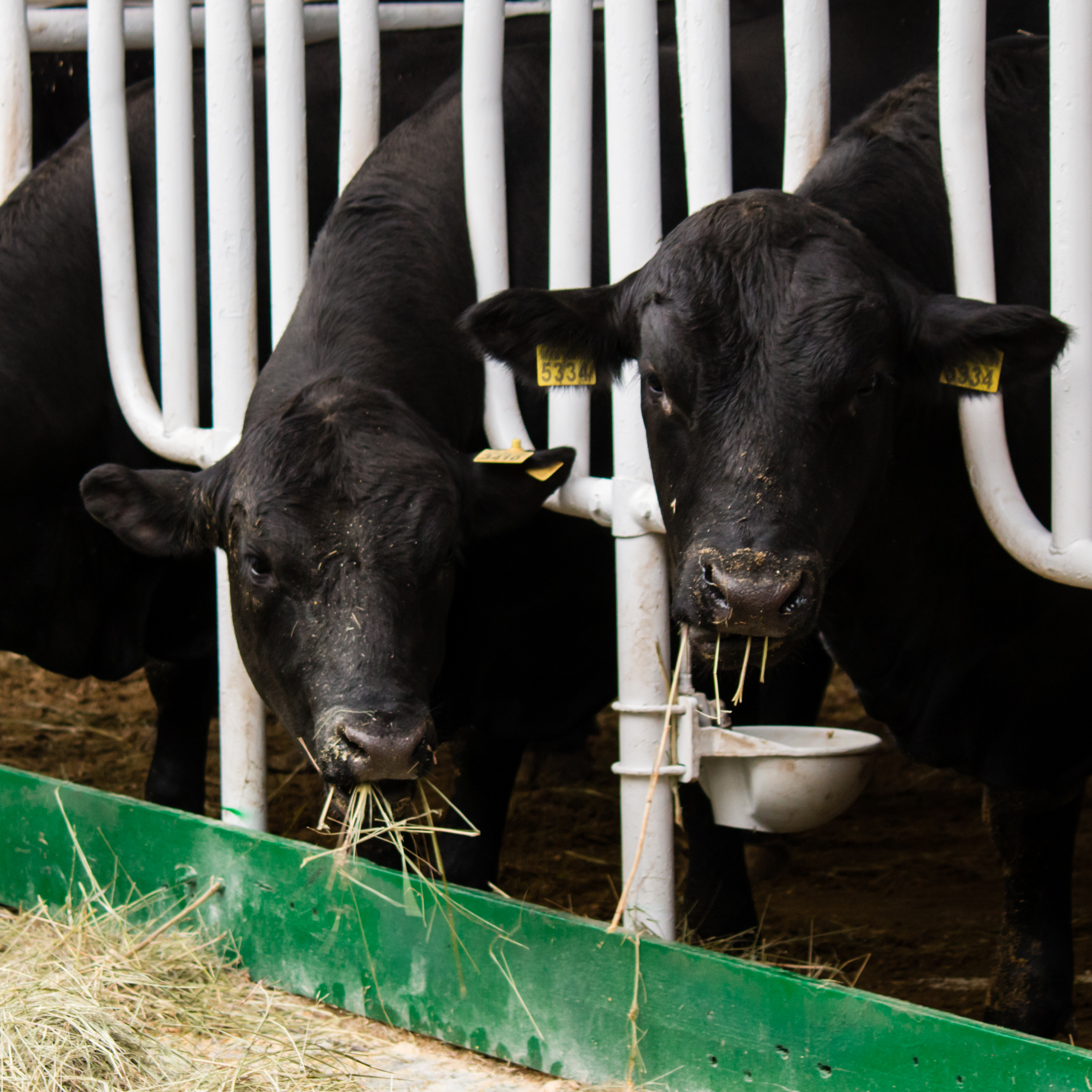
BERGMEIER: Next up for the beef industry?

Dave Bergmeier / High Plains Journal

By DAVE BERGMEIER
High Plains Journal

The aftermath of the Aug. 6 Tyson Fresh Meats fire that shuttered the Holcomb plant until January 2020 continues to linger in beef country.

Producers took note of the dramatic price drop in futures that seemed to defy cowboy logic at a time of peak summer demand. Those who study the intricacies of the industry recognized within a week the processing side of getting beef into the food chain was resuming some normalcy. Choice beef prices remain vexing and that is what is generating questions. The industry is right to want answers.

As Oklahoma State University Beef Extension Beef Marketing Specialist Derrell Peel noted in a recent High Plains Journal story, the market responded in about a week to get slaughter numbers up. He also asked important questions that should be asked. Is there enough competition so events like the Tyson fire have less influence? Also what needs to happen to fix the marketplace and what changes need to be made to fix the market functions so it is more competitive for producers and consumers?

“These are still legitimate questions,” he said. Producers at all levels would agree.

High Plains Journal columnist Jerry Nine noted in the same story, neither the American consumer nor the rancher benefited from the gyration in prices.

RELATED: Tyson plant fire sends ripples of uncertainty through cattle industry

Few disagree that packing plants need to be profitable and pay their employees so they can provide for their families. They do an exemplary job of getting meat safely into the hands of consumers. They have all been good corporate neighbors in their respective communities.

But the four largest packers — Tyson, Cargill, JBS and National Beef — all have plants in the High Plains region, and collectively they harvest more than 80% of the beef in this country. That has left an open-ended question about whether the level of concentration is too high.

That bleeds into questions about the transparency of the pricing system, which is designed to make sure producers are able to receive an equitable long-term return on their investment while recognizing individual events can and do temporarily disrupt markets.

Collectively, the beef price concerns expressed by those throughout the livestock chain caught the attention of Secretary of Agriculture Sonny Perdue, who has asked the U.S. Department of Agriculture’s Packer and Stockyards Division to launch an investigation into beef pricing margins. The beef marketing system is a complex one, and finding consensus on changes that the entire industry could accept will be a challenge. From the cow-calf producer, to the feeder to the processing plant and ultimately the consumer, all have diverse, conflicting and fickle interests.

The scope of investigating the entire system should entail the retailer’s role, too.

All of this comes at time when some companies are pursuing strategies for plant-based meat, which has raised the eyebrows of bovine, swine and poultry producers who rightfully should be concerned about how it can impact their bottom line.

Perdue deserves credit for calling for a review of what happened, but any study of how to balance the needs of the entire chain, has to be done in a way to serve the overall free market system.

Dave Bergmeier, managing editor of the High Plains Journal, can be reached at 620-227-1822 or [email protected].

Republished with permission.

Copyright Eagle Radio | FCC Public Files | EEO Public File